

Embrace the comforting flavors of autumn and winter with this exquisite Creamy Roasted Kabocha Squash Soup. Simmered to perfection with rich coconut milk, this soup is a fragrant and irresistibly smooth delight that promises warmth and satisfaction in every spoonful. Our method highlights the natural sweetness and creamy texture of kabocha squash by roasting it first, a simple step that transforms it into a flavor powerhouse. Infused with aromatic onions, fresh garlic, invigorating ginger, earthy cumin, and vibrant turmeric, this recipe transcends a simple meal to become a truly cozy vegan soup, ideal for nourishing your soul throughout the colder months.

Table of Contents
- Why This Roasted Kabocha Squash Soup is a Must-Try
- Understanding Kabocha Squash: Your Star Ingredient
- Key Ingredients for an Unforgettable Soup
- Step-by-Step Guide to Making Creamy Kabocha Squash Soup
- Serving Suggestions and Perfect Pairings
- Leftovers, Storage & Meal Prep Tips
- Expert Recipe Tips for the Best Kabocha Soup
- Explore More Delicious Squash Recipes
- Creamy Roasted Kabocha Squash Soup Recipe
Why This Roasted Kabocha Squash Soup is a Must-Try
This isn’t just another squash soup; it’s a culinary experience designed for maximum flavor and minimal fuss. Here’s why this vegan kabocha squash soup will become a staple in your kitchen:
- Unrivaled Depth of Flavor from Roasting: Many squash soup recipes call for peeling and boiling raw squash. Our secret lies in roasting the squash wedges. This simple step caramelizes the natural sugars, creating a far richer, more complex flavor profile than simmering alone. The oven time also makes the squash incredibly tender, allowing you to easily scoop out the sweet flesh without the laborious task of peeling a raw, hard squash. It’s a game-changer for both taste and convenience.
- Naturally Creamy and Luxuriously Rich: Kabocha squash is celebrated for its denser, less stringy flesh compared to other winter squash varieties. This inherent creaminess, combined with the luxurious texture of full-fat coconut milk, results in a soup that feels decadent and indulgent, without a drop of dairy cream. It’s a truly satisfying consistency that melts in your mouth, making it a perfect dairy-free and vegan option.
- A Refreshing Alternative to Butternut: While butternut squash holds a special place in our hearts, the culinary world of winter squash is vast and exciting. This recipe encourages you to step out of your comfort zone and discover the unique charms of kabocha. Its slightly sweet, nutty flavor and incredibly smooth texture offer a delightful change of pace, proving that variety is indeed the spice of life, especially from fall through winter.
- Wholesome and Nutrient-Packed: Beyond its incredible taste, this soup is packed with nutrients. Kabocha squash is a good source of vitamins A and C, and fiber. Combined with the healthy fats from coconut milk and the antioxidant properties of spices like turmeric and ginger, it’s a bowl full of goodness that nourishes your body from the inside out.
- Simple and Straightforward Process: Despite its gourmet taste, this soup is surprisingly easy to make. The steps are intuitive, and the roasting process is largely hands-off, giving you time to prepare other elements of your meal or simply relax.
Understanding Kabocha Squash: Your Star Ingredient
Often referred to as Japanese pumpkin, kabocha squash is a true gem of the winter produce season. Its distinctive dark green, sometimes mottled skin, and squat, round shape give way to a brilliant orange-yellow flesh that is remarkably sweet, slightly nutty, and famously smooth when cooked. This makes it an ideal choice for a creamy soup, as it naturally contributes to a velvety texture without needing excessive thickeners.
When selecting a kabocha squash, look for one that feels heavy for its size, indicating good moisture content and ripeness. The skin should be dull, firm, and free of any soft spots, bruises, or cracks. A healthy stem is also a good sign. Stored in a cool, dark place, whole kabocha squash can last for several weeks, making it a convenient ingredient to have on hand during peak season.
Beyond soup, kabocha squash is wonderfully versatile. It can be roasted, steamed, fried, or used in baked goods, offering a healthy and flavorful addition to many dishes. Its nutritional profile boasts high levels of beta-carotene (which converts to Vitamin A), Vitamin C, iron, and fiber, contributing to eye health, immune function, and digestive well-being.
Key Ingredients for an Unforgettable Soup
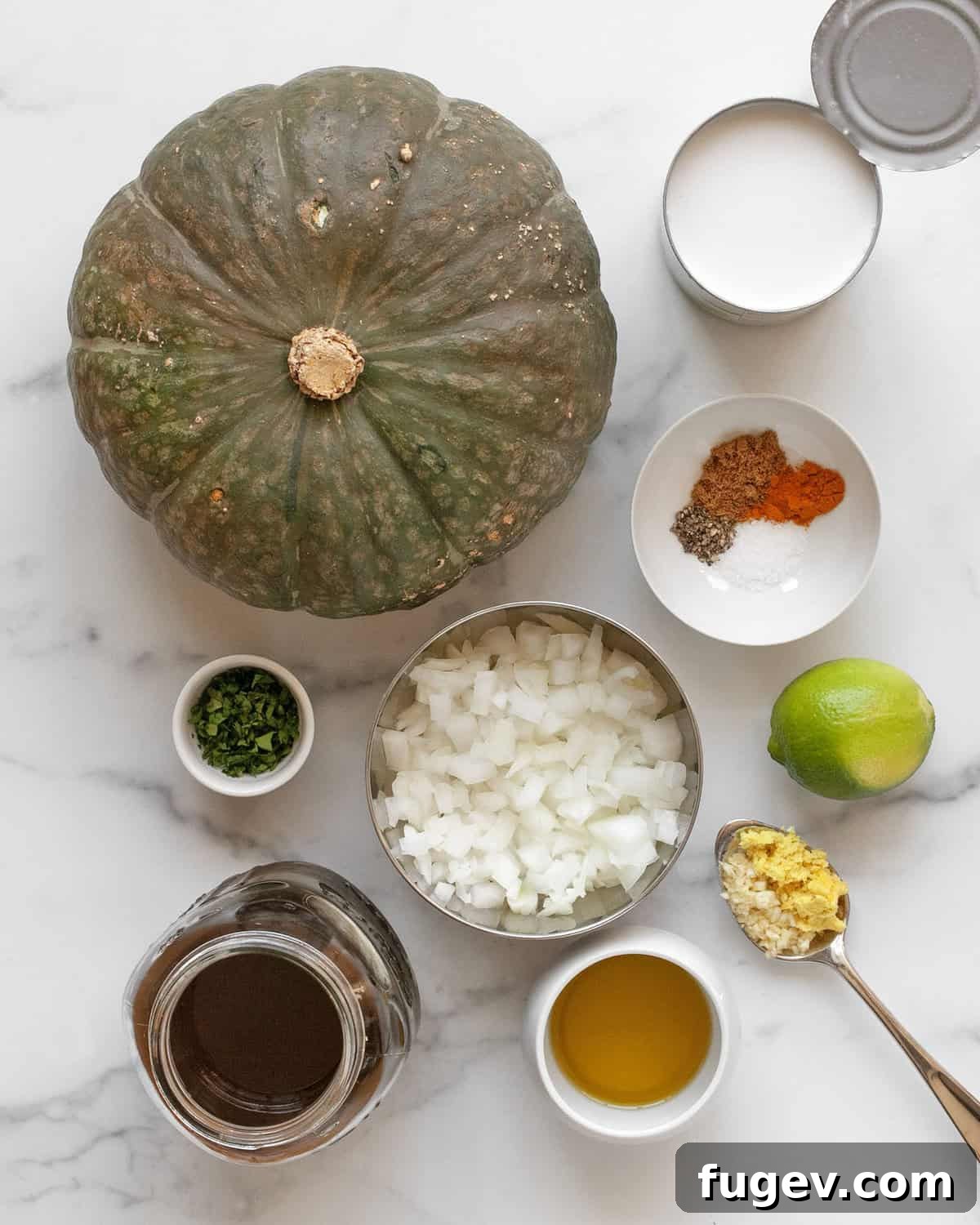
Each ingredient plays a crucial role in building the incredible flavor and texture of this creamy vegan squash soup:
- Kabocha Squash: The star of our show! As discussed, its naturally sweet, slightly nutty flavor and creamy texture are what make this soup so exceptional. A large kabocha (around 4 pounds) will yield plenty of delicious flesh. If kabocha is unavailable, good substitutes include red kuri squash, buttercup squash, or even the more common butternut squash, though the final texture might vary slightly.
- Onion, Fresh Ginger & Garlic: This aromatic trifecta forms the foundational flavor base, imparting warmth, depth, and a subtle zing. Always opt for fresh ginger; its vibrant, pungent notes are irreplaceable by ground ginger, which offers a completely different, duller flavor profile. Any color onion works, but be aware that a red onion might slightly deepen the soup’s orange hue. Mince the garlic and ginger finely to ensure their flavors meld seamlessly into the soup.
- Spices (Ground Cumin & Turmeric): These powerhouse spices elevate the soup with their earthy and warm characteristics. Cumin provides a comforting, savory depth, while turmeric adds a beautiful golden color and a mild, peppery warmth, along with its well-known anti-inflammatory benefits. Don’t forget kosher salt and black pepper for seasoning both the squash during roasting and the soup itself, allowing you to perfectly balance the flavors.
- Low-Sodium Vegetable Broth: The liquid base for our soup. Using low-sodium broth is key, as it gives you complete control over the saltiness of the dish, allowing the natural flavors of the squash and spices to shine. If you’re not strictly vegetarian or vegan, chicken broth can be used as an alternative.
- Full-Fat Coconut Milk: Essential for achieving that wonderfully silky, rich, and creamy consistency without any dairy. The fat in full-fat coconut milk provides a luxurious mouthfeel and contributes a subtle, sweet coconut flavor that beautifully complements the squash and spices. Avoid light coconut milk, as it will result in a thinner, less satisfying soup.
- Fresh Lime Juice: A squeeze of fresh lime juice at the end is a revelation! It brightens all the flavors, cutting through the richness of the coconut milk and adding a delightful zing that lifts the entire soup. This is a non-negotiable step; always use fresh lime, never bottled juice, for the best, most vibrant finish.
- Olive Oil: Used for two critical steps: coating the kabocha squash before roasting to help it brown and develop flavor, and for sautéing the aromatic vegetables and spices. A good quality olive oil enhances the overall taste.
Step-by-Step Guide to Making Creamy Kabocha Squash Soup
Creating this flavorful and creamy soup is a straightforward process. Follow these detailed instructions for a perfect bowl every time.
Before you begin, preheat your oven to 425 degrees F (220 degrees C). Line a sturdy baking sheet with parchment paper. This simple step prevents sticking and makes cleanup a breeze.
1. Prepare the Kabocha Squash: Carefully slice the kabocha squash in half using a large, sharp chef’s knife. Exercise caution as winter squash can be tough to cut. Once halved, use a spoon to scoop out the seeds and any stringy bits from the center. Then, cut each half into wedges, aiming for pieces approximately 1 to 2 inches wide. These smaller wedges ensure even cooking and faster roasting.
2. Season and Arrange for Roasting: In a large bowl, toss the kabocha squash wedges with 1 tablespoon of olive oil, 1/2 teaspoon of kosher salt, and 1/4 teaspoon of black pepper. Ensure each piece is lightly coated. Arrange the seasoned squash in a single layer on your prepared baking sheet. It might seem like a lot of squash at first, but try to fit the wedges snugly without overcrowding them. Overcrowding can steam the squash instead of roasting it, hindering the desired caramelization.
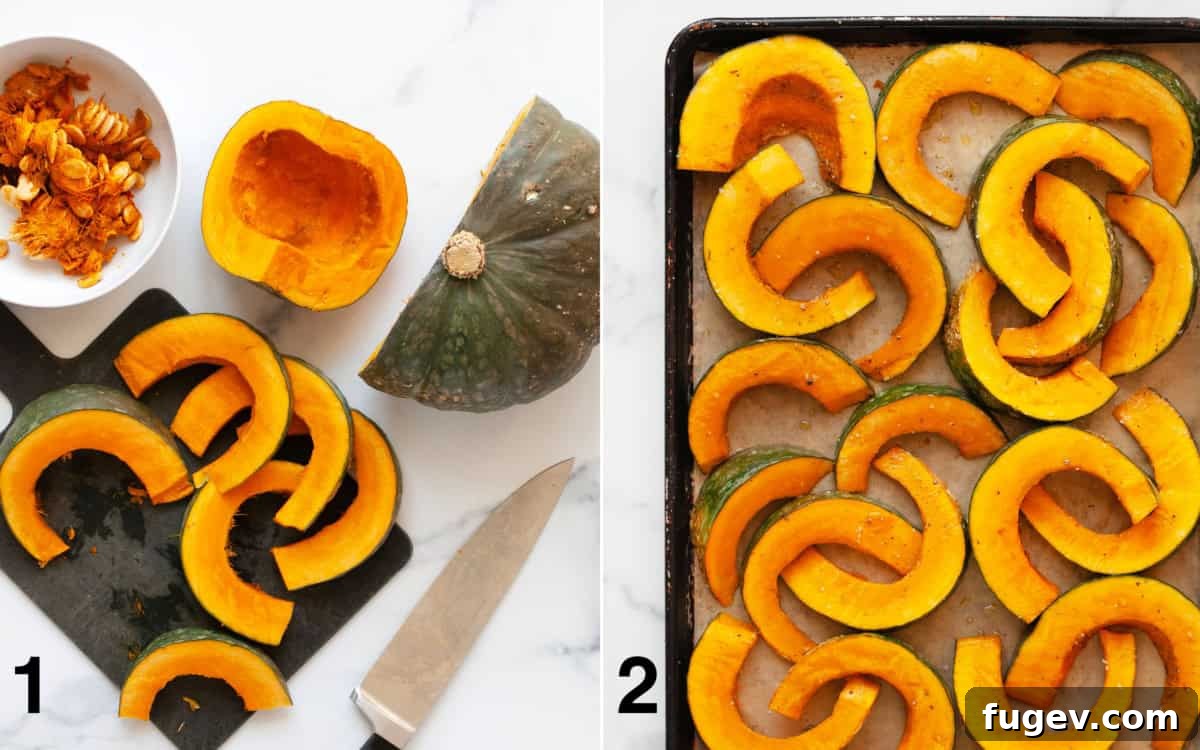
3. Roast to Perfection: Transfer the baking sheet to your preheated oven and roast the kabocha squash for 30-35 minutes. The goal is for the squash to become incredibly tender, easily pierced with a fork, and lightly browned on the edges. This browning contributes significantly to the depth of flavor in your soup.
4. Scoop Out the Flesh: Once roasted, remove the squash from the oven and let it cool for a few minutes until it’s comfortable to handle. The skin of kabocha squash is edible, but for the creamiest soup, we recommend scooping out the soft, cooked flesh with a spoon, discarding the skin. This process should be effortless if the squash is roasted sufficiently.

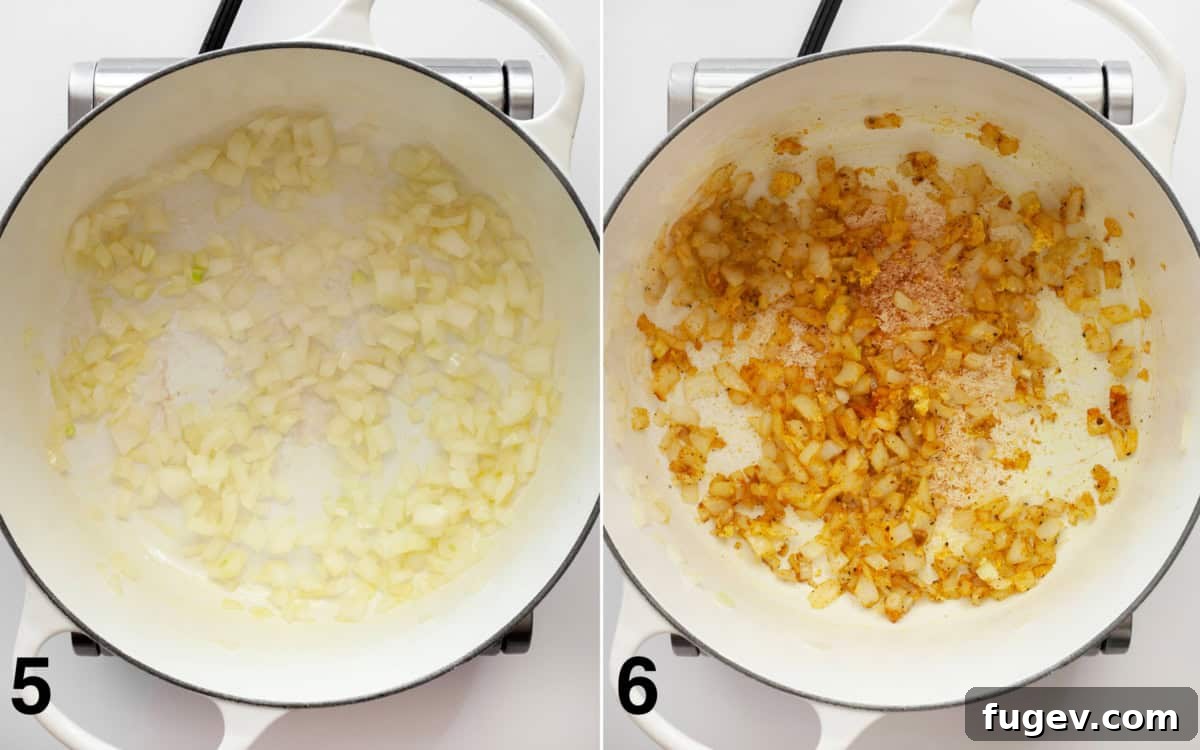
5. Sauté the Aromatics: While the squash is cooling, warm 1 tablespoon of olive oil in a large soup pot or Dutch oven over medium-high heat. Add the roughly chopped onions and sauté them for about 5 minutes, stirring occasionally, until they become translucent and begin to soften. This initial sauté brings out their sweetness.
6. Infuse with Spices: To the softened onions, add the minced garlic, minced fresh ginger, ground cumin, and ground turmeric. Continue to cook for just 1 minute more, stirring constantly. This brief cooking time allows the spices to bloom in the hot oil, releasing their full fragrant aromas without burning. Be careful not to overcook the garlic and ginger.
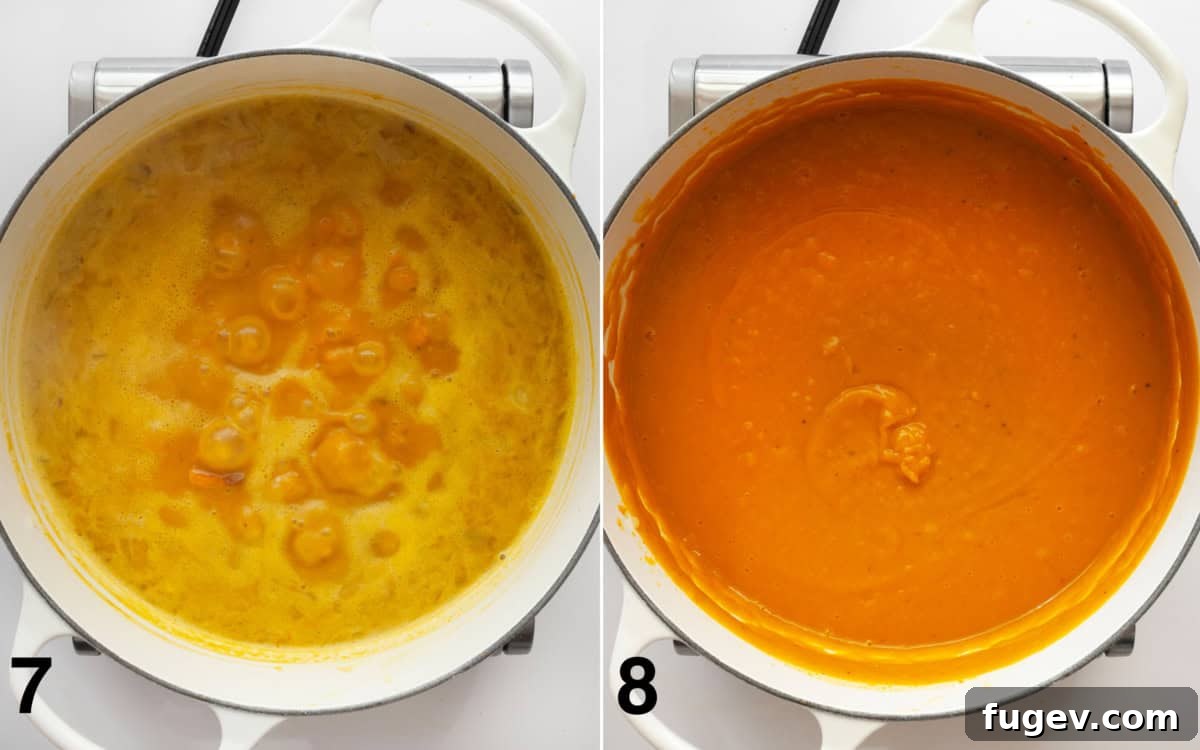
7. Simmer the Soup: Now, add the scooped-out roasted kabocha squash flesh, the low-sodium vegetable broth, and the full-fat coconut milk (remember to reserve about 1/4 cup of coconut milk for garnish later). Bring the mixture to a gentle simmer, then reduce the heat to low and let it cook for 12-15 minutes. This simmering period allows all the flavors to meld beautifully and the soup to thicken slightly.
8. Puree and Finish: Remove the pot from the heat. Use an immersion blender to puree the soup directly in the pot until it’s completely smooth and velvety. If you don’t have an immersion blender, carefully transfer the soup in batches to a high-powered blender, blending until smooth. Return the pureed soup to the pot. Squeeze in the fresh juice from one lime and stir well. Taste and adjust seasonings if necessary.
Once pureed, ladle the hot, creamy kabocha squash soup into individual bowls. Drizzle a small amount of the reserved coconut milk over each serving for an extra touch of richness and visual appeal. Finish with a sprinkle of freshly chopped herbs like parsley or cilantro and a crack of fresh black pepper. Serve immediately and enjoy the comforting flavors of this homemade delight.
Serving Suggestions and Perfect Pairings
This creamy roasted kabocha squash soup is a standalone star, but it truly shines when paired thoughtfully. Its rich, aromatic profile makes it incredibly versatile for various meals and occasions:
- As a Light Lunch: Enjoy a generous bowl with a simple slice of crusty bread or warm naan for dipping. The bread provides a satisfying contrast to the soup’s smoothness and helps soak up every last drop.
- Elegant Dinner Starter: Serve smaller portions as an impressive appetizer for a dinner party. Its vibrant color and exotic flavors are sure to tantalize your guests’ taste buds.
- Complementary Salads: The soup’s richness pairs beautifully with fresh, crisp salads. Consider an Asian-inspired salad to echo the ginger and lime notes, such as a nutty napa cabbage salad, a crunchy Asian cabbage salad, or an edamame salad with tahini ginger dressing. For a heartier option, a roasted vegetable couscous salad offers lovely textures and flavors.
- Toppings & Garnishes: Beyond the reserved coconut milk, consider a sprinkle of toasted pumpkin seeds (pepitas) for crunch, a swirl of chili oil for a touch of heat, or even some crispy fried shallots for an extra layer of savory flavor. A few fresh cilantro or parsley leaves add a pop of color and freshness.
- Sandwich Pairings: For a more substantial lunch, serve alongside a light sandwich. A grilled cheese or a veggie wrap would create a perfectly balanced and comforting meal.
Whether you’re enjoying it on a chilly evening or serving it as part of a festive meal, this kabocha soup is a delightful addition to any fall or winter table.
Leftovers, Storage & Meal Prep Tips
This homemade kabocha squash soup is not only delicious freshly made but also excellent as leftovers, making it a fantastic candidate for meal prepping. Proper storage ensures you can enjoy its comforting flavors for days or even weeks to come.
- Cooling Down: Always allow the soup to cool completely to room temperature before storing it. This prevents condensation and helps maintain its quality. If you reserved coconut milk for garnish, stir any unused portion into the main batch of soup before storage for added creaminess when reheated.
- Refrigerator Storage: Transfer the cooled soup to an airtight container. It will keep beautifully in the refrigerator for up to 3 days. Its flavors often deepen and meld further overnight, making it even more delicious the next day.
- Freezer Storage: For longer storage, this kabocha soup freezes exceptionally well. Pour the cooled soup into freezer-safe containers or heavy-duty freezer bags, leaving a little headspace for expansion. It can be frozen for up to 1 month without significant loss of quality. For convenience, consider freezing it in individual portions. This makes thawing and reheating specific quantities much easier and reduces waste.
- Thawing and Reheating:
- From the fridge: Gently reheat the soup in a saucepan over low to medium heat on the stovetop, stirring occasionally, until it’s hot throughout. Alternatively, microwave individual portions in a microwave-safe bowl, stirring halfway through, until warmed.
- From the freezer: For best results, thaw frozen soup overnight in the refrigerator. Once thawed, reheat it on the stovetop or in the microwave as you would with refrigerated leftovers. If you’re in a hurry, you can reheat it directly from frozen over very low heat on the stovetop, adding a splash of water or broth to prevent sticking, and stirring frequently until melted and hot.
- Adjusting Consistency After Reheating: It’s common for soups to thicken slightly upon cooling and reheating. If your soup seems too thick, simply stir in a bit of extra vegetable broth or water until it reaches your desired consistency.
- Meal Prep Enhancement: Doubling the recipe is highly recommended if you enjoy meal prepping. You’ll have a wholesome, flavorful soup ready to go for multiple meals, saving you time and effort during busy weeknights.

Expert Recipe Tips for the Best Kabocha Soup
Achieving the perfect bowl of creamy roasted kabocha squash soup is simple with a few insider tricks. Keep these tips in mind to elevate your culinary creation:
- Thorough Roasting is Key: Don’t rush the roasting process for your kabocha squash. It should be cooked until it’s not just soft, but truly “extremely soft.” This ensures all the natural sugars caramelize, intensifying its sweetness and making it incredibly easy to spoon out the flesh. If it’s still firm, give it more time in the oven.
- Mastering Squash Cutting Safely: Kabocha squash can be very hard. To cut it safely, start by stabilizing it on a cutting board. If it’s wobbly, slice a tiny bit off the bottom to create a flat base. Use a large, sharp chef’s knife and apply firm, steady pressure. You can also carefully pierce it a few times and microwave it for 1-2 minutes to soften the skin slightly before cutting.
- Adjusting Soup Thickness: After pureeing, the soup’s thickness might vary depending on the squash’s water content or your personal preference. If the soup seems too thick, gradually stir in additional vegetable broth or water until you reach your desired consistency. For a thicker soup, you can simmer it a bit longer to reduce.
- Always Taste and Adjust Seasonings: This is perhaps the most crucial tip for any soup recipe. Before serving, taste your soup! Flavors can change as they cook and meld. You may find it needs a pinch more salt to brighten all the ingredients, a dash more pepper for warmth, or even another squeeze of lime juice to lift the flavors. Don’t be shy about making small adjustments.
- Stick to Full-Fat Coconut Milk: For that luxurious, rich, and truly creamy consistency, full-fat coconut milk is non-negotiable. Light coconut milk simply won’t provide the same body or mouthfeel, resulting in a thinner, less satisfying soup. The fat content is essential here.
- Immersion vs. Regular Blender: An immersion blender is convenient for pureeing directly in the pot, minimizing cleanup. If using a regular blender, be extremely cautious when blending hot liquids. Work in small batches, fill the blender no more than halfway, and remove the center cap of the lid (covering the opening with a kitchen towel) to allow steam to escape. This prevents pressure buildup and potential accidents.
- Spice Adjustment: The suggested spices offer a balanced flavor, but feel free to adjust to your palate. For more warmth, add a touch more cumin or a pinch of cayenne pepper for a subtle kick. A little smoked paprika can also add an intriguing smoky note.
By following these tips, you’re well on your way to creating a perfectly balanced, incredibly creamy, and deeply flavorful roasted kabocha squash soup that will impress everyone.
Explore More Delicious Squash Recipes
If you’ve fallen in love with the versatility and deliciousness of winter squash after making this kabocha soup, there’s a whole world of squash-centric recipes waiting to be discovered. Expand your culinary repertoire with these other fantastic squash dishes:
- Turmeric Butternut Squash Apple Soup
- Spicy Chipotle Butternut Squash Soup
- Roasted Acorn Squash Salad
- Parmesan Roasted Acorn Squash
- Roasted Spaghetti Squash with Tomatoes
- Sautéed Butternut Squash and Kale
- Roasted Butternut Squash Orzo
Creamy Roasted Kabocha Squash Soup
Paige Adams
10 minutes
45 minutes
55 minutes
4

Ingredients
For roasted squash
- 1 large kabocha squash (about 4 pounds)
- 1 tablespoon olive oil
- 1/2 teaspoon kosher salt
- 1/4 teaspoon black pepper
For the soup
- 1 tablespoon olive oil
- 1 onion, roughly chopped
- 2 garlic cloves, minced
- 1 tablespoon minced fresh ginger
- 1/2 teaspoon ground cumin
- 1/4 teaspoon ground turmeric
- 1/2 teaspoon kosher salt
- 1/4 teaspoon black pepper plus more for serving
- 3 cups low-sodium vegetable broth
- 13.5 ounce can full-fat coconut milk
- 1 lime, freshly squeezed
- Chopped parsley or cilantro for serving
Instructions
- Preheat the oven to 425 degrees F (220 C). Line a baking sheet with parchment paper.
- Carefully slice the kabocha squash in half, scoop out the seeds and stringy bits. Then, cut the squash into wedges approximately 1 to 2 inches wide.
- In a large bowl, toss the squash wedges with 1 tablespoon olive oil, 1/2 teaspoon kosher salt, and 1/4 teaspoon black pepper. Arrange them in a single layer on the prepared baking sheet.
- Roast the squash for 30-35 minutes, or until it is very tender and lightly browned.
- Once the squash is cool enough to handle, use a spoon to scoop out the soft flesh, discarding the skin.
- Heat 1 tablespoon olive oil in a large saucepan or Dutch oven over medium-high heat. Add the chopped onion and sauté for about 5 minutes until it begins to soften and become translucent.
- Stir in the minced garlic, minced ginger, ground cumin, ground turmeric, 1/2 teaspoon kosher salt, and 1/4 teaspoon black pepper. Continue cooking for 1 minute, stirring constantly, until fragrant.
- Add the roasted squash flesh, vegetable broth, and full-fat coconut milk (reserving 1/4 cup for garnish). Bring to a gentle simmer, then reduce heat and cook for 12-15 minutes, allowing the flavors to meld and the soup to thicken slightly.
- Remove from heat. Use an immersion blender to puree the soup until smooth and creamy. Alternatively, carefully transfer in batches to a standard blender and blend until smooth. Squeeze in the fresh lime juice and stir well.
- Ladle the hot soup into bowls. Drizzle with the reserved coconut milk, then garnish with chopped fresh herbs (parsley or cilantro) and a sprinkle of black pepper before serving.
Notes
If the soup’s consistency is too thick after pureeing, simply add a bit more vegetable broth or water until it reaches your preferred level of creaminess.
For storing leftovers, ensure the soup has cooled to room temperature, then stir in any remaining reserved coconut milk. Store in an airtight container in the refrigerator for up to 3 days. For longer preservation, freeze the soup for up to 1 month. Freezing in smaller portions can make thawing more convenient. Reheat gently in the microwave or on the stovetop over low to medium heat.
Nutrition
|
Carbohydrates: 52g
|
Protein: 8g
|
Fat: 31g
|
Saturated Fat: 21g
|
Polyunsaturated Fat: 1g
|
Monounsaturated Fat: 6g
|
Sodium: 616mg
|
Potassium: 1921mg
|
Fiber: 11g
|
Sugar: 15g
|
Vitamin A: 6214IU
|
Vitamin C: 66mg
|
Calcium: 161mg
|
Iron: 5mg
Nutrition information is automatically calculated and should only be used as an approximation.
Additional Info
Soup
Asian
Did you make this recipe?
Mention @lastingredient on Instagram and tag it #lastingredient!