
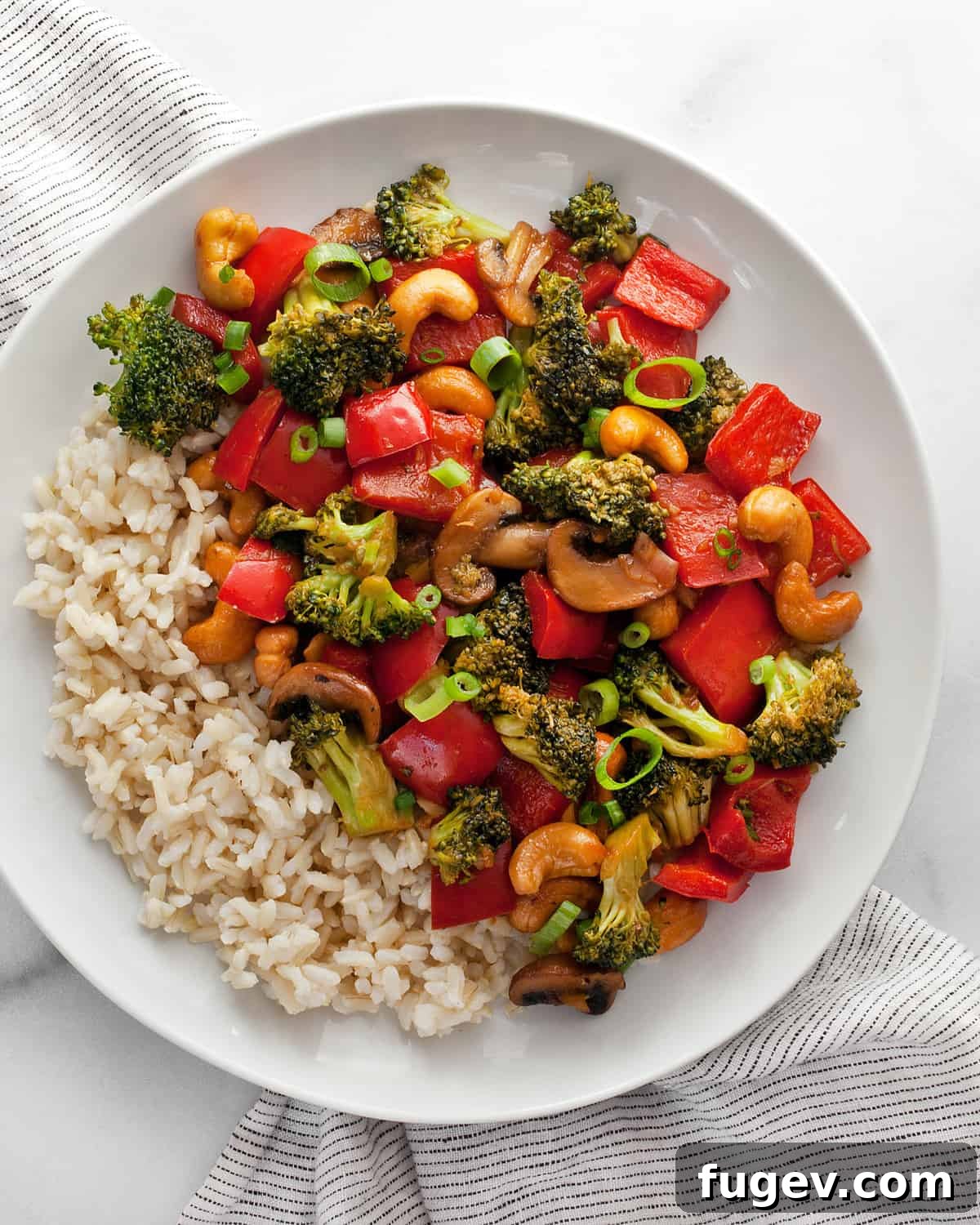
This incredibly easy and flavorful cashew veggie stir-fry is your new go-to for a quick, healthy, and satisfying meal. Loaded with a vibrant mix of fresh vegetables like crisp bell peppers, tender broccoli, and earthy mushrooms, it comes together in just 15 minutes. Perfectly balanced with a homemade stir-fry sauce that combines savory notes with a touch of natural sweetness from maple syrup (instead of refined sugar), this dish is a testament to how delicious fast food can be when made at home. Serve it alongside fluffy brown rice for a complete and wholesome dinner.
If your preference leans towards peanuts, you might also enjoy our equally delightful peanut vegetable stir-fry, offering a different nutty dimension to your meal.
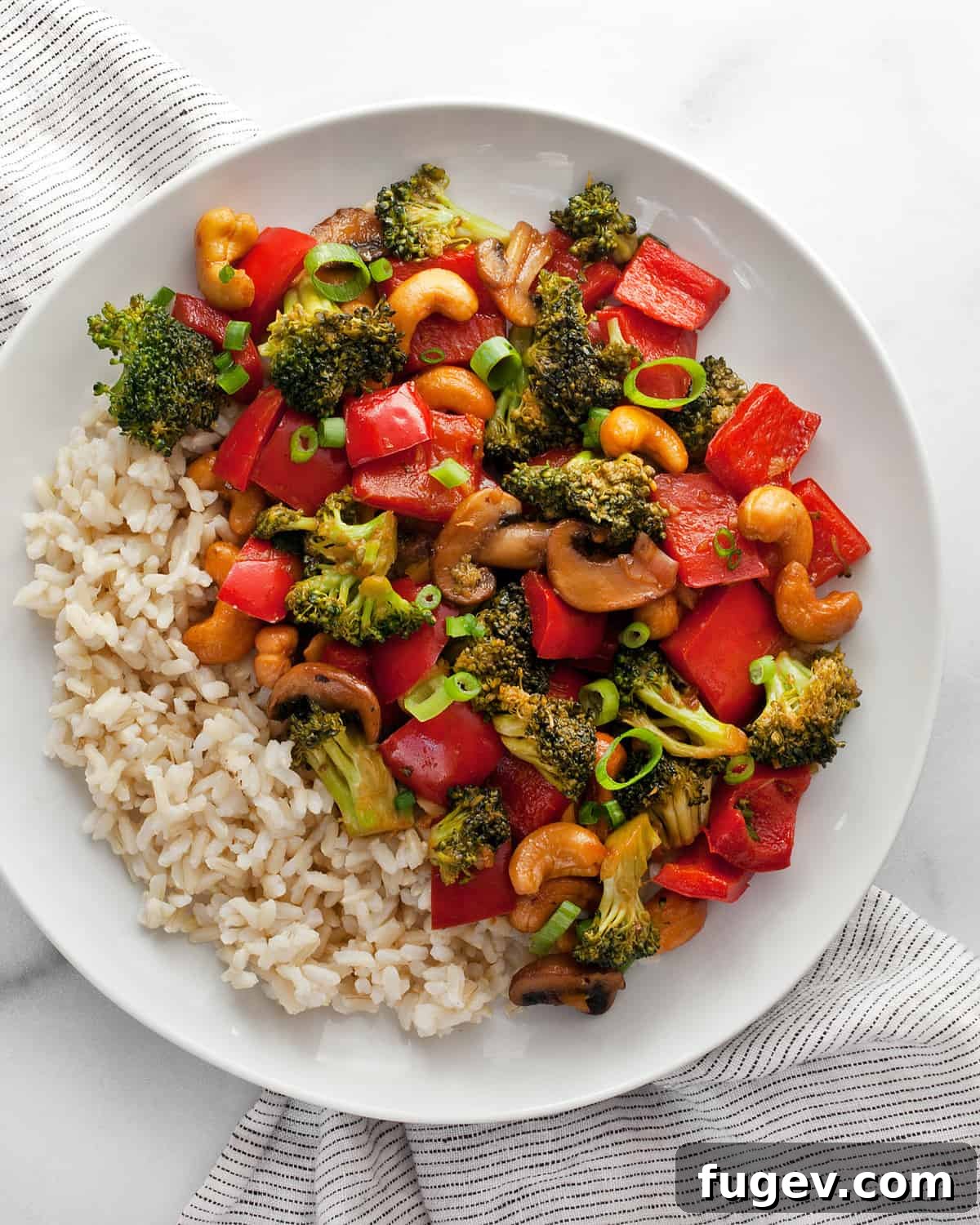
Table of Contents
- Why You’ll Love this Easy Stir-Fry Recipe
- The Art of Choosing Vegetables for a Great Stir-Fry
- Essential Ingredients & Clever Substitutions
- Step-by-Step: How To Make This Cashew Veggie Stir-Fry
- Perfect Pairings: What To Serve with Stir-Fry
- Storage and Reheating Tips for Leftovers
- Recipe FAQs
- Explore More Stir Fry Recipes
- Cashew Veggie Stir-Fry Recipe Card
Why You’ll Love this Easy Stir-Fry Recipe
There are countless reasons why this cashew veggie stir-fry deserves a permanent spot in your weekly meal rotation. It’s more than just a quick meal; it’s a vibrant, healthy, and incredibly flavorful experience that caters to busy lifestyles without compromising on taste or nutrition.
The Ultimate Weeknight Dinner Solution: When time is of the essence, few dishes deliver as much satisfaction as a simple stir-fry. While we adore our sheet pan meals, stir-fries offer an unparalleled speed and efficiency in getting a wholesome, vegetable-packed dinner on the table. This recipe, specifically, is designed to be on your plate in 15 minutes or less, making it perfect for those hectic evenings when cooking feels like a chore.
A Champion for Vegetable-Filled Meal Prep: Planning ahead is key to healthy eating, and stir-fries excel in this regard. I consistently include at least one stir-fry in my weekly meal plan and grocery list. Fresh from the skillet, they are absolutely divine, but their magic doesn’t end there. Stir-fries make fantastic leftovers, ideal for packing a nutritious lunch or repurposing into another dinner later in the week. The beauty of this dish is that delicious repetition becomes a welcome part of an efficient cooking strategy, ensuring no ingredient goes to waste and healthy meals are always within reach.
A Healthier Twist on a Beloved Classic: This cashew veggie stir-fry draws inspiration from a childhood favorite: Chinese restaurant cashew chicken or shrimp. However, we’ve transformed it into a much healthier, lighter, and entirely vegan version. By focusing on an abundance of fresh vegetables and a less heavy, naturally sweetened sauce, you get all the beloved flavors without the guilt. Cooking at home allows you to control every ingredient, ensuring a meal that is not only delicious but also genuinely nutritious and tailored to your dietary preferences. Embrace the goodness of plant-based eating with this satisfying and wholesome rendition.
The Art of Choosing Vegetables for a Great Stir-Fry
A successful stir-fry is a symphony of flavors, colors, and textures, and the choice of vegetables plays a crucial role. For this recipe, we stick to a classic and universally loved combination of crunchy broccoli, sweet red bell peppers, and savory mushrooms. These ingredients not only provide a delightful sensory experience but also cook beautifully together, maintaining their individual characteristics.
While this trio is fantastic, the true beauty of stir-frying lies in its versatility. You can absolutely swap and substitute vegetables based on what you have on hand or what’s in season. When making your selections, always consider a few key factors:
- Cutting Consistency: Ensure all vegetables are cut into roughly similar sizes. This promotes even cooking, preventing some pieces from becoming mushy while others remain raw. For tougher vegetables, a smaller dice might be appropriate, while softer ones can handle larger cuts.
- Cooking Times: Different vegetables have varying cooking times. Harder vegetables, like carrots or thicker broccoli stems, might need a head start in the wok or skillet before adding faster-cooking ones like bell peppers or leafy greens. Don’t be afraid to add ingredients in stages to achieve that perfect crisp-tender texture.
- Flavor and Texture Contrast: Aim for a mix! Broccoli offers a great crunch, bell peppers contribute sweetness and color, and mushrooms provide an earthy, umami depth. Adding vegetables like green beans, snow peas, or snap peas can introduce additional crispness and vibrant green hues. Water chestnuts or bamboo shoots can also add a delightful crunch.
Stir-fries are truly a fantastic way to utilize any leftover vegetables lingering in your fridge. Don’t be shy about throwing in a few extras – whether it’s thinly sliced cabbage, zucchini, bok choy, or even spinach. The more variety, the richer and more dynamic your stir-fry will be. Just remember to adjust cooking times accordingly to ensure everything is perfectly cooked but still retains a pleasant bite.
Essential Ingredients & Clever Substitutions
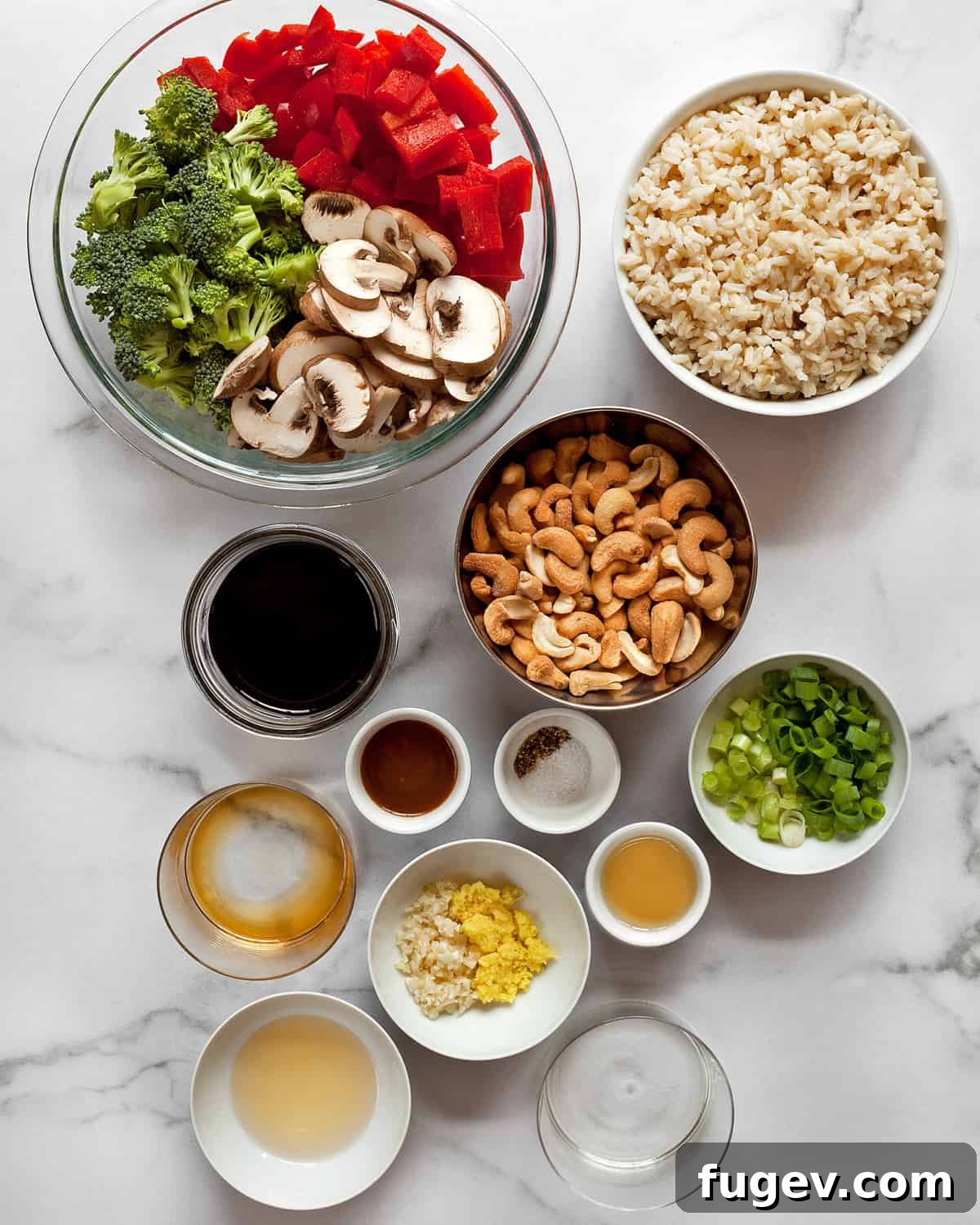
Crafting the perfect cashew veggie stir-fry requires a combination of fresh produce and a well-balanced sauce. Here’s a detailed look at what you’ll need and how you can make it your own:
Our signature stir-fry sauce is a harmonious blend of pantry staples, designed to hit all the right notes of savory, sweet, and tangy. I intentionally omit cornstarch, preferring a lighter coating on the vegetables rather than a thick, gloopy consistency. This approach allows the natural flavors of the fresh ingredients to shine through.
- Low-Sodium Soy Sauce: This forms the essential umami-rich base of our sauce. Opting for low-sodium is crucial to control the overall saltiness of the dish, preventing it from overpowering the delicate balance of other flavors. If you only have regular soy sauce, you can use less and add a splash of water, or omit the added salt in the recipe.
- Hoisin Sauce: A powerhouse of flavor, hoisin sauce contributes a unique sweet and tangy profile with a hint of spice. Made from fermented soybean paste, chilies, garlic, vinegar, oil, and sugar, it adds incredible depth and authenticity to the stir-fry. It’s a non-negotiable for that classic Asian takeout taste.
- Rice Vinegar: To cut through the richness and provide a bright, acidic lift, rice vinegar is essential. Its mild, slightly sweet tang, derived from fermented rice, complements the other ingredients beautifully without being too harsh. Apple cider vinegar can be a substitute in a pinch, though the flavor will be slightly different.
- Sesame Oil: Just a teaspoon of toasted sesame oil goes a long way. Its distinct nutty aroma enhances the flavor of the cashews and adds an undeniable warmth and depth to the sauce. Be sure to use toasted sesame oil for maximum flavor.
- Maple Syrup: Instead of refined sugar, pure maple syrup provides a natural, subtle sweetness that rounds out the sauce. Its delicate flavor doesn’t dominate, allowing the other ingredients to shine. For those not adhering to a vegan diet, honey makes an excellent alternative.
- Salt and Pepper: With so many bold flavors from the other ingredients, only a minimal amount of kosher salt and freshly ground black pepper is needed to enhance and unify the overall taste. Always taste and adjust seasoning at the end.
The stir-fry itself is a celebration of textures and robust, earthy flavors, with cashews taking center stage as the star protein. While you can certainly add tofu if you desire, the cashews offer a satisfying crunch and richness that truly makes this dish shine.
- Cashews: For optimal control over seasoning and that perfect nutty crunch, I highly recommend using unsalted roasted cashews. Toasting them briefly in the skillet before adding them to the stir-fry brings out their deep, complex flavor even further. If you only have raw cashews, a quick toast will do wonders.
- Broccoli: Look for broccoli heads with tight, compact florets and vibrant green color, avoiding any yellowing. While pre-cut florets are convenient, buying a whole head and cutting it yourself often yields fresher results and allows for custom sizing. Ensure florets are bite-sized for even cooking.
- Bell Peppers: Sweet, crisp, and colorful, yellow, orange, or red bell peppers are ideal for stir-fries. Their natural sweetness perfectly complements the savory sauce. I typically avoid green bell peppers in this recipe as they can sometimes have a slightly bitter taste that doesn’t harmonize as well with the other ingredients.
- Mushrooms: Cremini (baby bella) mushrooms or white button mushrooms add a wonderful umami depth and a tender, meaty texture to the stir-fry. Slice them evenly to ensure they cook through without becoming soggy. They absorb the sauce beautifully.
- Scallions (Green Onions): Scallions provide a mild, fresh onion flavor and a pop of green. We use both the white and green parts strategically: the white ends are sautéed with ginger and garlic to build a fragrant base, while the thinly sliced green parts are reserved for a fresh, aromatic garnish at the very end.
- Garlic: A cornerstone of Asian cuisine, fresh minced garlic is part of the aromatic trio that forms the flavor foundation of this stir-fry. It adds a pungent, savory kick that is indispensable.
- Ginger: Freshly minced ginger root provides a distinct, zesty, and slightly peppery warmth that pairs exquisitely with the nuts, vegetables, and other sauce ingredients. Always use fresh ginger for the best flavor; dried ginger powder is not a suitable substitute here.
- Oil: For stir-frying, a neutral-flavored oil with a high smoke point is essential. Non-GMO vegetable oil, canola oil, or avocado oil are excellent choices as they allow the flavors of the ingredients to shine without imparting their own taste and can withstand the high heat required for proper stir-frying.
Step-by-Step: How To Make This Cashew Veggie Stir-Fry
Creating this delicious cashew veggie stir-fry is incredibly straightforward, perfect for novice cooks and experienced chefs alike. Follow these simple steps for a perfect, flavorful meal every time:
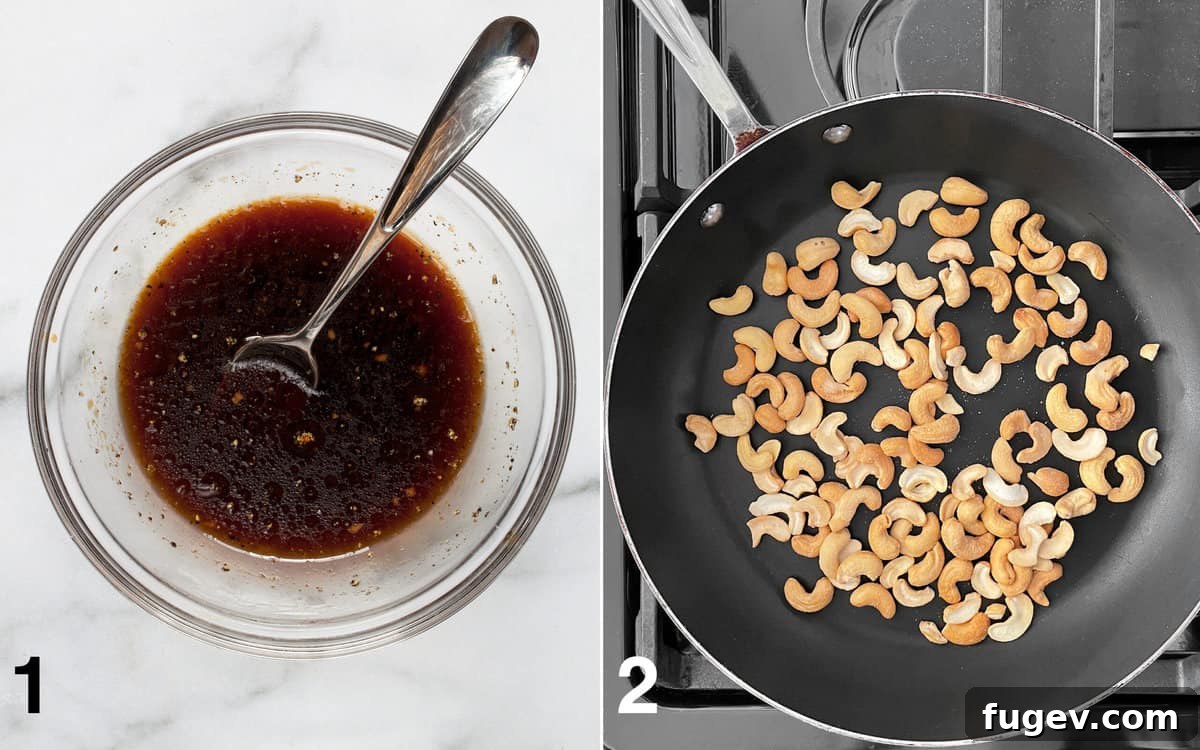
1. Prepare the Sauce: In a small bowl, combine all the sauce ingredients: low-sodium soy sauce, hoisin sauce, rice vinegar, sesame oil, maple syrup, kosher salt, and black pepper. Whisk them vigorously until everything is well combined and the maple syrup has fully dissolved. Set this aside, as having your sauce ready beforehand is key to a smooth stir-fry process.
2. Toast the Cashews: Place a large skillet or wok over low to medium heat. Add the unsalted roasted cashews to the dry pan. Toast them gently for 2-3 minutes, stirring frequently, until they turn a beautiful golden brown and become fragrant. Keep a close eye on them to prevent burning. Once toasted, immediately remove them from the skillet and set them aside on a plate. This step enhances their nutty flavor and adds an irresistible crunch.
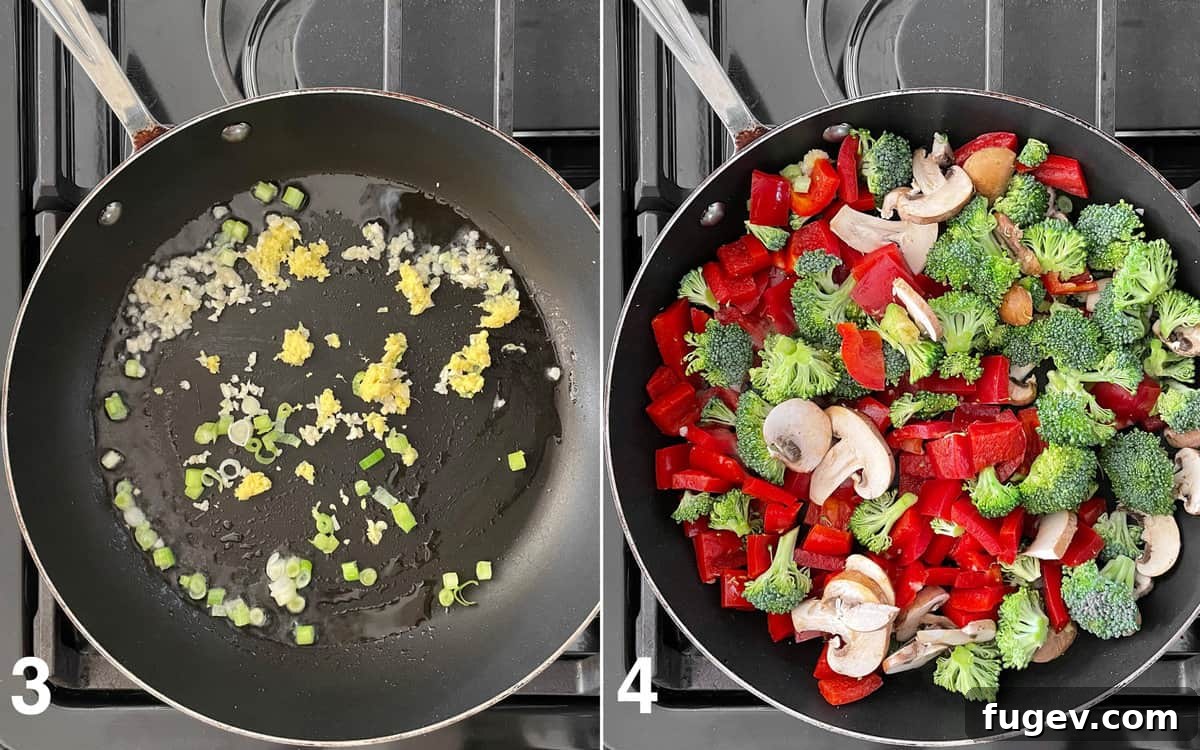
3. Sauté the Aromatics: Increase the heat in your skillet or wok to high. Add 1 tablespoon of neutral vegetable oil and let it shimmer. Once hot, add the white parts of your thinly sliced scallions, minced garlic, and minced fresh ginger. Sauté these aromatics for about 30 seconds, stirring constantly. You’ll notice a wonderfully fragrant aroma filling your kitchen – this is the flavor foundation of your stir-fry!
4. Add the Vegetables: Immediately add the broccoli florets, diced bell peppers, and sliced mushrooms to the skillet. Continue to cook them over high heat, stirring and tossing them around the pan frequently, for 3-4 minutes. The goal is to cook them until they are warmed through and tender-crisp, retaining their vibrant color and a slight bite, rather than becoming soft or mushy. Avoid overcrowding the pan; if necessary, cook vegetables in batches to ensure they stir-fry rather than steam.
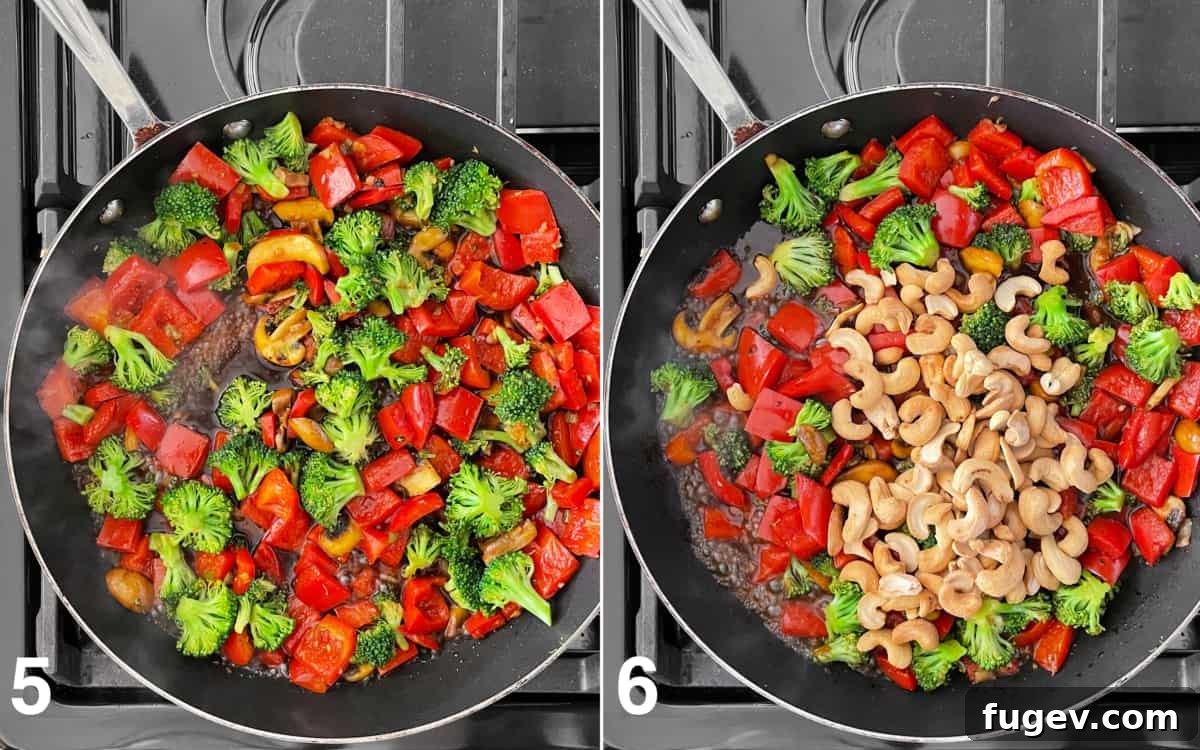
5. Introduce the Sauce: Pour the prepared stir-fry sauce directly into the pan with the sautéed vegetables. Let the mixture come to a gentle bubble and simmer for about 2 minutes, continuously folding the vegetables into the sauce. This allows the vegetables to absorb the delicious flavors and the sauce to slightly reduce and coat everything beautifully.
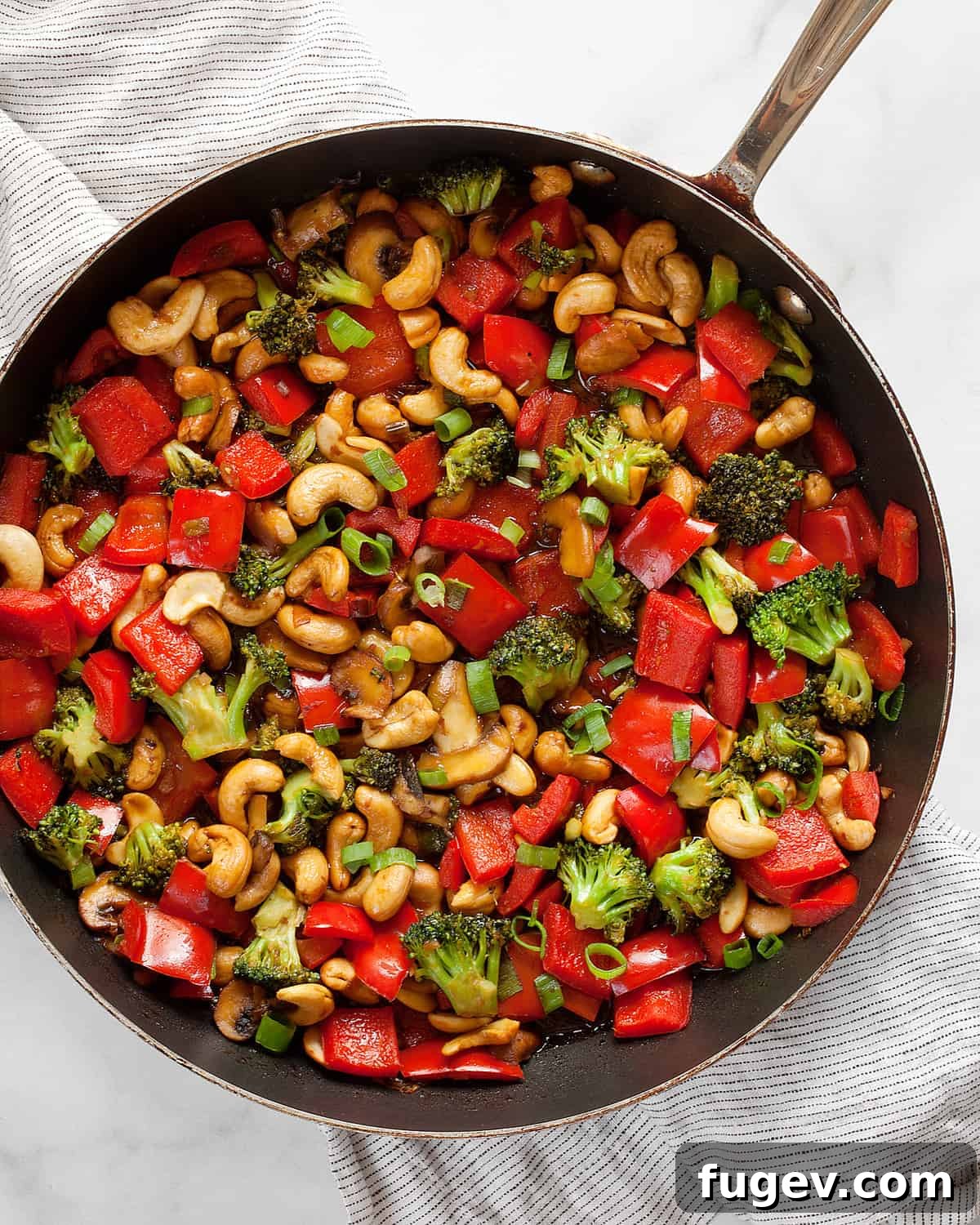
6. Finish and Serve: Finally, stir in the previously toasted cashews and the remaining sliced green scallions. Toss everything together for a final 30 seconds to ensure the cashews are well distributed and the green scallions are lightly warmed. Serve your piping hot cashew veggie stir-fry immediately with a side of steaming brown rice. Enjoy this quick, healthy, and incredibly satisfying meal!
Perfect Pairings: What To Serve with Stir-Fry
This cashew veggie stir-fry is a complete meal on its own, but pairing it with the right side dish can elevate the experience and make it even more satisfying. Since the stir-fry cooks so rapidly, strategizing your carbohydrate and side dish preparations can ensure everything is ready at the same time.
The Ideal Base: Brown Rice
Brown rice is our top recommendation for serving with this stir-fry. Its nutty flavor and wholesome texture beautifully complement the rich sauce and crunchy vegetables. A pro tip for maximum efficiency: cook a large batch of brown rice the night before! Storing it in the refrigerator means you can simply warm it in the microwave while your stir-fry cooks, eliminating any waiting time. This way, the slow cooking time of rice won’t be the bottleneck for your quick dinner.
While brown rice is excellent, don’t hesitate to explore other delicious bases:
- Jasmine Rice: For a lighter, more fragrant option, jasmine rice is a classic choice.
- Quinoa: A protein-rich alternative that adds a slightly different texture and nutritional boost.
- Cauliflower Rice: If you’re looking for a low-carb option, cauliflower rice works wonderfully to soak up the flavorful sauce.
- Soba Noodles: For a noodle-based meal, quickly boiled soba noodles can be tossed directly with the stir-fry.
Refreshing Side Salads
To add a refreshing contrast to the warm stir-fry, consider a crisp, Asian-inspired salad:
- Cucumber Carrot Salad: A vibrant and tangy cucumber carrot salad offers a cool and crisp counterpoint, cleansing the palate with every bite.
- Asian Cabbage Salad: Our Asian cabbage salad, dressed with an almond ginger vinaigrette, provides fantastic crunch and a zesty flavor that perfectly complements the stir-fry.
- Edamame Salad: For an extra boost of plant-based protein, an edamame salad with a tahini ginger dressing adds both texture and nutritional value.
No matter your choice, serving this cashew veggie stir-fry with a thoughtful accompaniment ensures a well-rounded and delightful meal experience.
Storage and Reheating Tips for Leftovers
One of the many benefits of stir-fries is how wonderfully they hold up as leftovers. This cashew veggie stir-fry is no exception, making it an excellent choice for meal prepping throughout the week.
Storage: Once your stir-fry has cooled to room temperature, transfer it to an airtight container. Store it in the refrigerator for up to 4 days. This keeps the vegetables fresh and crisp-tender, and the flavors of the sauce continue to meld and develop, often tasting even better the next day.
Reheating:
- Microwave: For a quick reheat, simply place your desired portion in a microwave-safe dish and heat on high for 1-2 minutes, stirring halfway through, until thoroughly warmed.
- Stovetop: For best results in retaining the texture of the vegetables and cashews, reheat the stir-fry in a skillet over low to medium heat with a tiny splash of oil (or water/broth if you prefer) for a few minutes, stirring gently, until heated through. This method helps prevent the vegetables from becoming overly soft.
- Enjoy Cold: Believe it or not, this stir-fry can also be enjoyed cold, straight from the fridge! It makes a refreshing and satisfying lunch on a warm day.
Freezing: I generally do not recommend freezing stir-fry leftovers. The texture of the vegetables, particularly the bell peppers and mushrooms, can become quite watery and mushy upon thawing, diminishing the overall quality of the dish. It’s best enjoyed fresh or from refrigeration within the recommended timeframe.
Recipe FAQs
For this specific cashew veggie stir-fry recipe, we highly recommend using fresh vegetables. Fresh produce maintains a superior crisp-tender texture that pairs beautifully with our sauce. Frozen vegetables tend to release more water during cooking, which can make the stir-fry watery and compromise the desired texture. If you primarily have frozen vegetables on hand, we suggest trying our dedicated recipe for frozen vegetable stir-fry, which is specifically designed to accommodate their characteristics.
Absolutely! This stir-fry is wonderfully adaptable to include your favorite protein. If you wish to add chicken, shrimp, beef, or even extra firm tofu, here’s how to do it: First, cut your chosen protein into bite-sized pieces. Sauté it in your skillet or wok with a little oil until it’s cooked through (for meat/shrimp) or nicely browned (for tofu). Once cooked, remove the protein and set it aside on a plate. Briefly wipe out the skillet if needed, then proceed with the recipe as written from step 3 (sautéing aromatics). Finally, stir your cooked protein back into the sautéed vegetables along with the sauce and green scallions in step 5 or 6, just before serving.
Making this recipe gluten-free is simple! The primary ingredient to watch out for is soy sauce. Simply substitute the regular low-sodium soy sauce with a certified gluten-free tamari. Most other ingredients in this recipe are naturally gluten-free, but always check labels for hoisin sauce, as some brands may contain wheat. If your hoisin is not gluten-free, you can find gluten-free alternatives or make your own using gluten-free ingredients.
Yes, you can easily customize the spice level to your preference. For a mild stir-fry, follow the recipe as written. If you enjoy a little heat, consider adding a pinch of red pepper flakes along with the garlic and ginger, or incorporate a dash of sriracha or chili garlic sauce into your stir-fry sauce. For a bolder kick, a few slices of fresh red chili peppers can be sautéed with the aromatics.
While cashews provide a unique buttery crunch that complements this dish perfectly, you can certainly experiment with other nuts. Peanuts are a popular choice and would lend a similar texture and savory note (as demonstrated in our peanut vegetable stir-fry). Almonds (sliced or slivered) or even walnuts could also work, offering a different flavor profile. Make sure to toast any alternative nuts briefly before adding them to enhance their flavor.
Explore More Stir Fry Recipes
If you’re a fan of quick, flavorful, and versatile stir-fry meals, you’re in luck! Here are more recipes from our collection that celebrate the delicious art of stir-frying and Asian-inspired cuisine:
- Soba Noodles with Mushrooms and Bok Choy: A hearty and comforting noodle dish featuring earthy mushrooms and crisp bok choy, all tossed in a savory sauce.
- Broccoli Edamame Pea Fried Rice: A vibrant and wholesome fried rice packed with green vegetables, perfect as a main course or a flavorful side.
- Frozen Vegetable Stir-Fry: For those times when fresh produce isn’t an option, this recipe expertly transforms frozen veggies into a satisfying stir-fry.
- Ginger Garlic Veggie Tofu Stir-Fry: A protein-packed and aromatic stir-fry featuring tender tofu and a medley of fresh vegetables in a zesty ginger-garlic sauce.
Cashew Veggie Stir-Fry
Print Recipe
Ingredients
For the Sauce
- 1/3 cup low-sodium soy sauce
- 1 tablespoon hoison sauce
- 1 tablespoon rice vinegar
- 1 teaspoon sesame oil
- 1 teaspoon maple syrup
- 1/4 teaspoon kosher salt
- 1/4 teaspoon black pepper
For the Stir-Fry
- 1 cup roasted unsalted cashews
- 1 tablespoon vegetable oil
- 2 scallions, thinly sliced, green and white parts separated
- 2 garlic cloves, minced
- 1 tablespoon minced fresh ginger
- 2 cups broccoli florets
- 2 red bell peppers, diced
- 1 cup sliced cremini or white mushrooms
- Brown rice for serving
Instructions
-
For the sauce, in a small bowl, whisk together the soy sauce, hoison, rice vinegar, sesame oil, maple syrup, salt and pepper until well combined. Set aside.
-
Toast the cashews in a large skillet or wok over low to medium heat until browned in spots and fragrant, about 2-3 minutes. Remove the cashews immediately and set aside on a plate.
-
Increase the heat to high and add 1 tablespoon vegetable oil to the skillet. Sauté the white parts of the scallions, minced garlic, and minced fresh ginger until fragrant, about 30 seconds. Add the broccoli florets, diced bell peppers, and sliced mushrooms, sautéing for 3-4 minutes until the vegetables are cooked through but still bright and crisp-tender.
-
Pour in the prepared sauce and let it bubble and simmer for 2 minutes, stirring around the vegetables to ensure even coating.
-
To finish, stir in the toasted cashews and the remaining sliced green scallions. Toss for another 30 seconds.
-
Serve immediately with brown rice.
Notes
Store leftovers in an airtight container in the refrigerator for up to 4 days. Rewarm them in the microwave or in a skillet over low heat with a little oil or water until heated through.
If you wish to add a protein such as chicken, shrimp, or tofu, sauté it in the skillet first until cooked through or browned. Then set it aside, wipe out the skillet, and cook the recipe as written. Stir the cooked protein back into the sautéed vegetables with the sauce and green scallions at the end.
Nutrition
Carbohydrates: 12g |
Protein: 18g |
Fat: 7g |
Saturated Fat: 2g |
Polyunsaturated Fat: 3g |
Monounsaturated Fat: 2g |
Trans Fat: 0.02g |
Cholesterol: 37mg |
Sodium: 1132mg |
Potassium: 687mg |
Fiber: 3g |
Sugar: 6g |
Vitamin A: 2207IU |
Vitamin C: 119mg |
Calcium: 47mg |
Iron: 2mg
Nutrition information is automatically calculated, so should only be used as an approximation.
Additional Info