
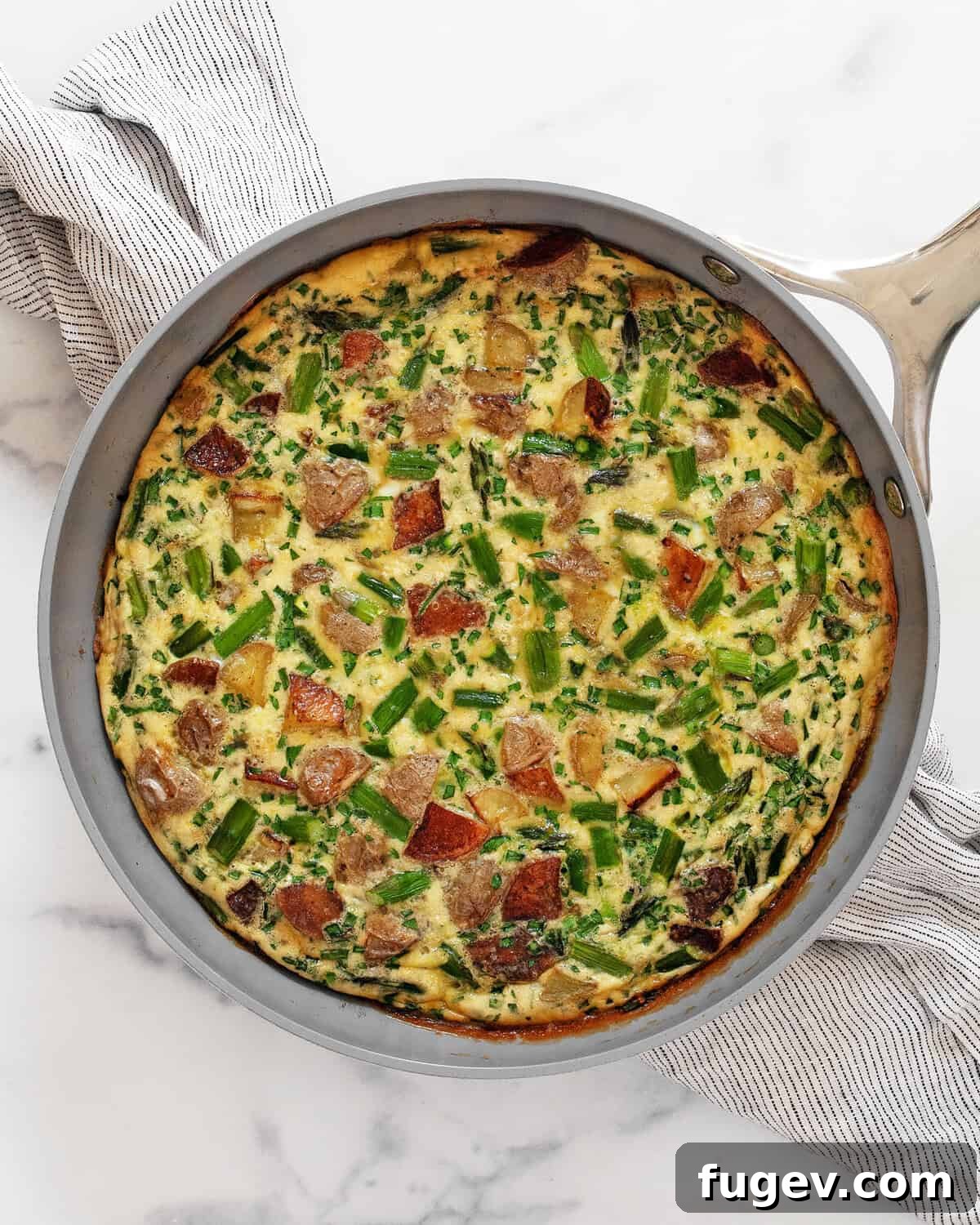
Easy Roasted Asparagus Potato Frittata: A Delicious Spring Delicacy
Embrace the vibrant flavors of the season with this incredibly simple yet elegant Roasted Asparagus Potato Frittata. This versatile egg bake is a true celebration of spring’s bounty, bringing together tender-crisp roasted asparagus and perfectly caramelized baby potatoes within a fluffy, herb-infused egg base. We elevate the flavor profile by whisking in rich grated Parmesan cheese, fresh parsley, and aromatic chives into the egg mixture before assembling the frittata on the stovetop and finishing it in the oven. This vegetarian recipe is not only effortless to prepare but also promises exceptional taste, making it an ideal choice for a convenient meal-prep breakfast, a relaxed weekend brunch, or a festive Easter gathering. Prepare to delight your palate with a dish that’s both wholesome and utterly satisfying.
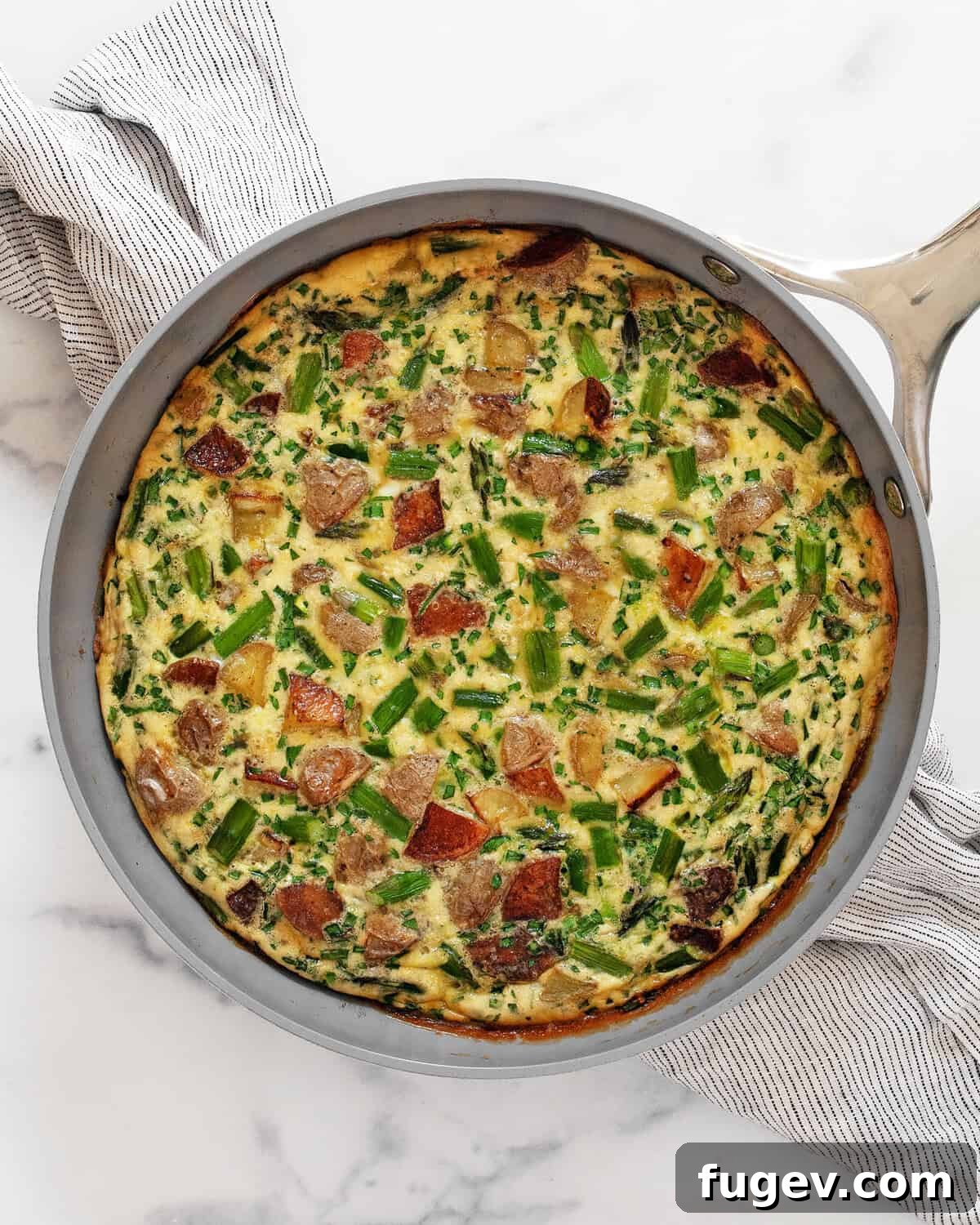
Table of Contents
- Why You’ll Love This Recipe
- Key Ingredients for Success
- Step-by-Step: Crafting Your Frittata
- Serving Suggestions & Perfect Pairings
- Complete Roasted Asparagus Potato Frittata Recipe Card
Why You’ll Absolutely Love This Roasted Asparagus Potato Frittata
This roasted asparagus potato frittata transcends the ordinary egg dish, offering a blend of convenience, exceptional flavor, and nutritional benefits perfectly suited for today’s dynamic lifestyles. Here are the compelling reasons why this recipe is destined to become a firm favorite in your culinary repertoire:
The Irresistible Magic of Roasted Vegetables
Roasting transforms simple vegetables into deeply flavorful, caramelized gems that simply cannot be achieved through other cooking methods. The high heat of the oven draws out the natural sugars in the potatoes and asparagus, creating a delightful caramelization and crisp-tender texture. This process, known as the Maillard reaction, is responsible for the rich, savory, and complex flavors that make roasted vegetables so appealing. Instead of merely sautéing the potatoes, which would necessitate an initial parboiling step to ensure they cook through, roasting them keeps the preparation streamlined and efficient. Since your oven will already be preheated for baking the frittata, utilizing it for the vegetables beforehand is a logical and time-saving choice. This method guarantees that every bite of your frittata is imbued with that irresistible, concentrated vegetable goodness, providing a superior taste and texture that stands out from frittatas made with less thoughtfully prepared produce.
The gentle char and tender interior of the roasted potatoes provide a comforting earthiness, while the asparagus gains a bright, slightly nutty sweetness. This contrast in textures and flavors forms the perfect backbone for the fluffy egg custard, elevating the entire dish beyond a simple breakfast item to a gourmet experience suitable for any meal.
Effortless Meal Prep and Unmatched Versatility
Far from being solely a dish for feeding a crowd at brunch, this vegetable-packed egg bake is a superstar for your weekly meal prep routine. Frittatas are incredibly forgiving and taste just as fantastic, if not better, when enjoyed as leftovers. They offer a fantastic solution for healthy, protein-rich meals on busy weekdays, significantly cutting down on cooking time when you’re short on minutes. You can easily reheat individual slices in the microwave for a quick warm meal, or, for a refreshing change, savor them cold straight from the refrigerator. A particularly delightful way to enjoy leftover frittata is to chop a slice and toss it with fresh baby arugula, spinach, and a bright, zesty lemon vinaigrette for an instant, satisfying salad. This remarkable flexibility makes it an ideal solution for nutritious breakfasts, quick lunches, or even a light yet fulfilling dinner.
Its robust structure and ability to hold its form make it perfect for packing in lunchboxes or bringing to potlucks and gatherings. The frittata retains its deliciousness, whether served immediately or enjoyed hours later, making it a truly convenient and adaptable recipe that caters to various schedules and dining preferences.
A Celebration of Fresh Spring Flavors
This recipe is a jubilant celebration of fresh spring vegetables, encapsulating the very essence of the season in every delightful bite. Asparagus, with its distinct earthy, slightly sweet, and vibrant green stalks, is often considered one of the first true harbingers of spring, symbolizing renewal and fresh produce. Its delicate flavor pairs exquisitely with the comforting, starchy goodness of roasted baby potatoes. Together, they create a harmonious blend of different textures and complementary flavors. The tender-crisp asparagus provides a refreshing counterpoint to the soft, golden-brown potatoes, ensuring an exciting culinary dynamic. The inclusion of fresh herbs like bright parsley and subtly oniony chives further enhances the dish, adding a fragrant, herbaceous lift that ties all the individual spring elements together beautifully. This frittata isn’t merely a meal; it’s an edible ode to the rich and invigorating bounty that springtime offers.
Key Ingredients for a Perfectly Balanced Frittata
The secret to a truly outstanding frittata lies in selecting fresh, high-quality ingredients and understanding the role each one plays in the final dish. Here’s a detailed guide to what you’ll need:
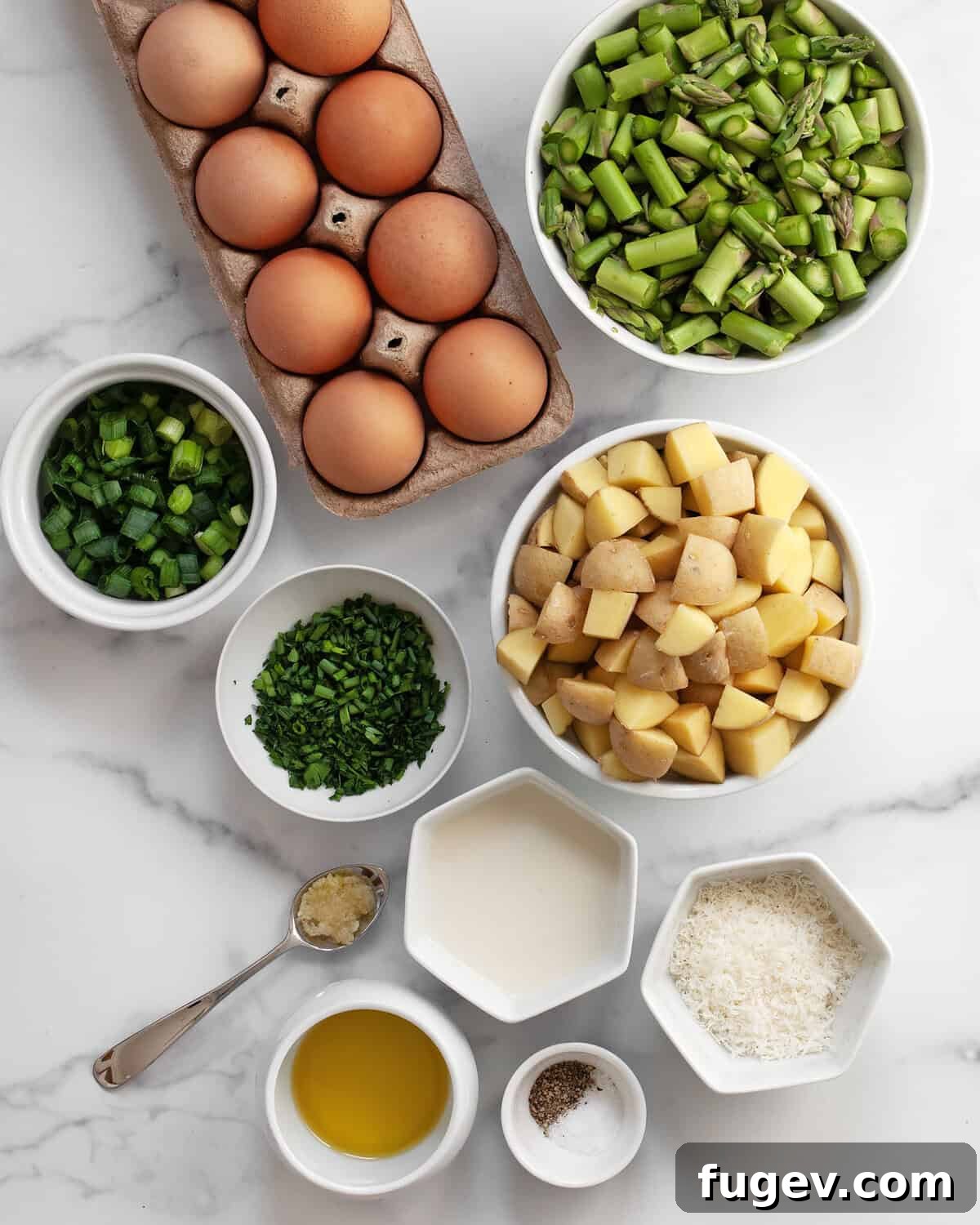
- Large Eggs (8): These form the foundational structure and richness of your frittata. Using eight eggs ensures a substantial base that perfectly complements the generous quantity of vegetables, creating a balanced bite where neither eggs nor veggies overpower the other.
- Asparagus (1 pound): Look for firm, bright green spears with tightly closed tips, indicating freshness. Cutting the asparagus into ½-inch long pieces is essential for this recipe. While longer stalks might look elegant, shorter pieces integrate seamlessly into the egg mixture, making the frittata much easier to slice and ensuring an even distribution of asparagus in every forkful.
- Baby Potatoes (1 pound): These small, tender potatoes are a dream for cooking because their thin skins mean no peeling is required, saving you precious prep time. The specific color (yellow or red) doesn’t matter; both varieties will roast beautifully, adding a creamy texture and mild, comforting flavor to the frittata.
- Parmesan Cheese (¼ cup, grated): Grated Parmesan is whisked directly into the eggs, infusing the entire frittata with its distinctive salty, nutty, and savory umami notes. Unlike larger chunks of cheese, grated Parmesan melts seamlessly, providing a consistent depth of flavor without creating dominant cheesy pockets. Freshly grated Parmesan will always yield the best results, offering a more nuanced and intense flavor.
- Scallions & Garlic (2 scallions, 1 clove): These aromatics establish a foundational layer of flavor. Scallions provide a milder, fresher onion essence compared to diced yellow or white onions, which can sometimes be too strong in a frittata. Minced garlic adds a sweet, pungent warmth. Both cook quickly and gently, contributing to the dish’s overall aromatic complexity without overwhelming other ingredients.
- Fresh Herbs: Parsley & Chives (1 tablespoon each): Do not underestimate the power of fresh herbs! Both parsley and chives are critical for injecting bright, herbaceous, and clean notes that perfectly complement the spring vegetables and the richness of the eggs. Their fresh aroma and vibrant flavor elevate the dish, adding a professional touch and a burst of springtime essence.
- Milk (¼ cup): Adding milk to the egg mixture helps achieve a lighter, fluffier frittata texture. It prevents the eggs from becoming too dense or rubbery, resulting in a more tender and pleasant consistency. Any type of milk, dairy or plant-based, will work.
- Olive Oil (2 tablespoons total): A high-quality olive oil is crucial for both roasting the potatoes and asparagus to a golden perfection and for gently sautéing the scallions and garlic. It contributes to the overall Mediterranean flavor profile and ensures even, consistent cooking.
- Kosher Salt and Black Pepper (½ teaspoon each for vegetables, ½ teaspoon each for eggs): Proper seasoning is paramount for bringing out the best in your ingredients. Kosher salt enhances the natural flavors of the roasted vegetables and seasons the egg base evenly, while freshly ground black pepper adds a subtle warmth and a gentle peppery kick.
By thoughtfully combining these fresh, high-quality ingredients, you’re well on your way to creating an irresistibly delicious and perfectly balanced Roasted Asparagus Potato Frittata.
Step-by-Step Guide: Crafting Your Perfect Asparagus Potato Frittata
Creating this delightful frittata is a straightforward and rewarding process, designed for ease and maximum flavor. Follow these detailed instructions to achieve a perfectly cooked, golden, and flavorful spring egg bake:
Preparation First: Begin by preheating your oven to a robust 425 degrees F (220 degrees C). This high temperature is crucial for achieving beautifully caramelized vegetables and ensuring your frittata bakes evenly and efficiently.
- Roast the Potatoes and Asparagus to Golden Perfection:
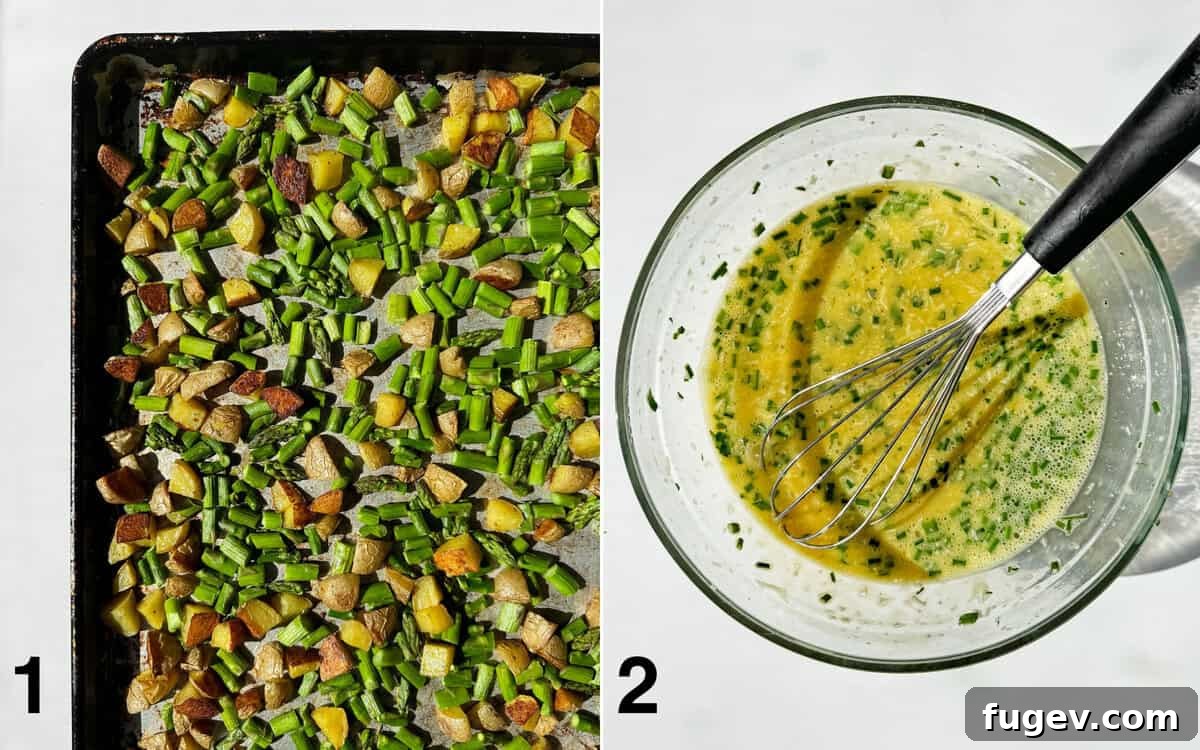
On a large, rimmed sheet pan, combine the diced baby potatoes with 1 tablespoon of olive oil, ½ teaspoon of kosher salt, and ¼ teaspoon of black pepper. Toss everything thoroughly to ensure the potatoes are evenly coated. Spread them into a single, uncrowded layer on the pan – this is key for optimal browning and crisping. Place the sheet pan in your preheated oven and roast for an initial 20-22 minutes, or until the potatoes begin to turn golden brown around the edges and show signs of tenderness. After this initial roasting period, carefully add the trimmed, ½-inch pieces of asparagus to the same pan. Gently toss them with the potatoes and return the pan to the oven. Continue roasting for an additional 8-10 minutes. The asparagus should emerge bright green and tender-crisp, while the potatoes will be perfectly tender in the middle and wonderfully golden brown and slightly crispy on the outside.
- Prepare the Flavorful Egg Base:
While your vegetables are roasting, take a large mixing bowl and whisk together the 8 large eggs, ¼ cup of milk (this helps create a lighter, fluffier texture), ½ teaspoon of kosher salt, ¼ teaspoon of black pepper, 1 tablespoon of finely chopped fresh parsley, 1 tablespoon of minced fresh chives, and ¼ cup of grated Parmesan cheese. Whisk vigorously until all the ingredients are thoroughly combined and the mixture appears light and airy. This ensures that the savory cheese and aromatic herbs are evenly distributed throughout every bite of your frittata.
- Sauté the Aromatics in Your Skillet:
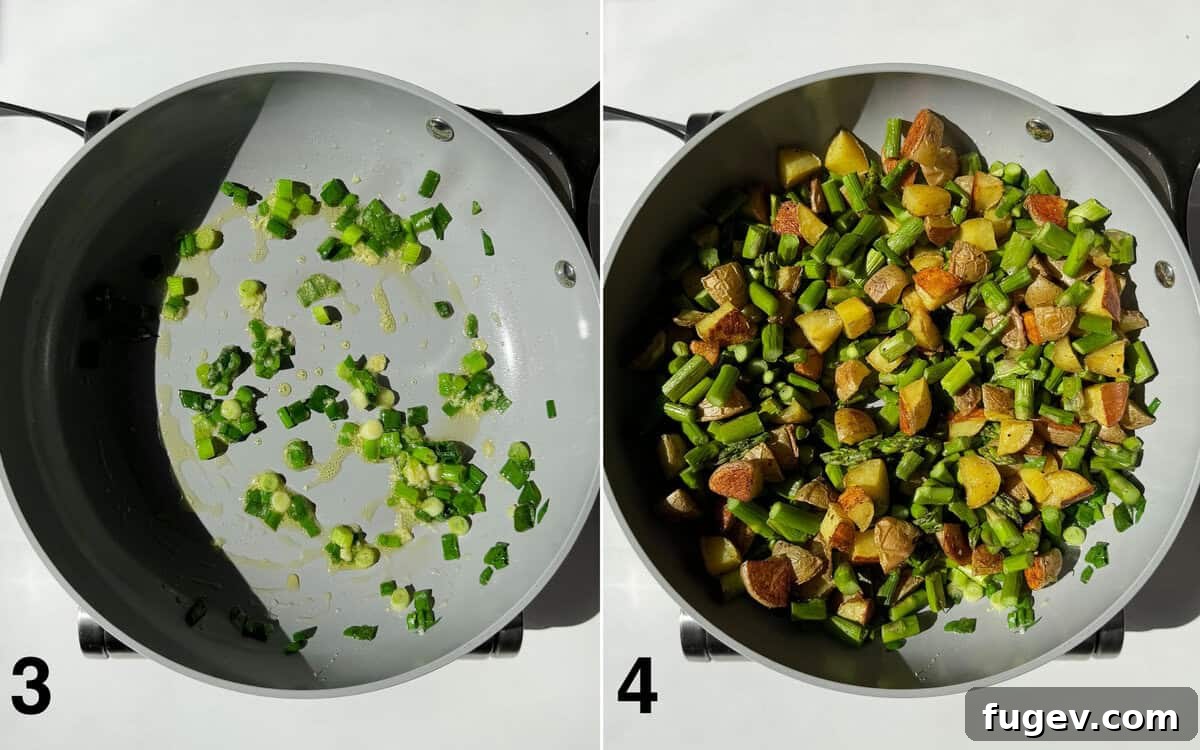
Heat 1 tablespoon of olive oil in a 10-inch non-stick, oven-safe skillet over medium heat. Once the oil is shimmering, add the thinly sliced scallions and minced garlic. Sauté for 1-2 minutes, stirring constantly, until they become fragrant and slightly softened. It’s important to be vigilant here and avoid burning the garlic, as burnt garlic can impart a bitter taste. This step builds a foundational layer of aromatic flavor directly in the skillet that will infuse the entire frittata.
- Combine Roasted Vegetables in Skillet:
Carefully transfer the hot, roasted asparagus and potatoes from the sheet pan directly into the skillet with the sautéed aromatics. Gently spread the vegetables evenly across the bottom of the skillet, creating a uniform layer for the egg mixture.
- Pour in the Egg Mixture and Set on Stovetop:
Pour the prepared egg mixture evenly over the vegetables in the skillet. Allow the frittata to cook undisturbed on the stovetop over medium heat for 2-3 minutes. This crucial initial cooking step helps the edges of the frittata to set and firm up, preventing it from sticking to the pan and ensuring a beautiful, cohesive structure once baked.
- Bake Until Perfectly Set:
Once the edges are set, carefully transfer the skillet from the stovetop directly into your preheated oven. Bake for approximately 12-15 minutes, or until the center of the frittata is just set. You can test for doneness by gently pushing down on the middle with a spatula or your finger; if it springs back slightly, it’s ready. Avoid overcooking, as this can result in a dry or rubbery texture. The top should appear lightly golden and slightly puffed.
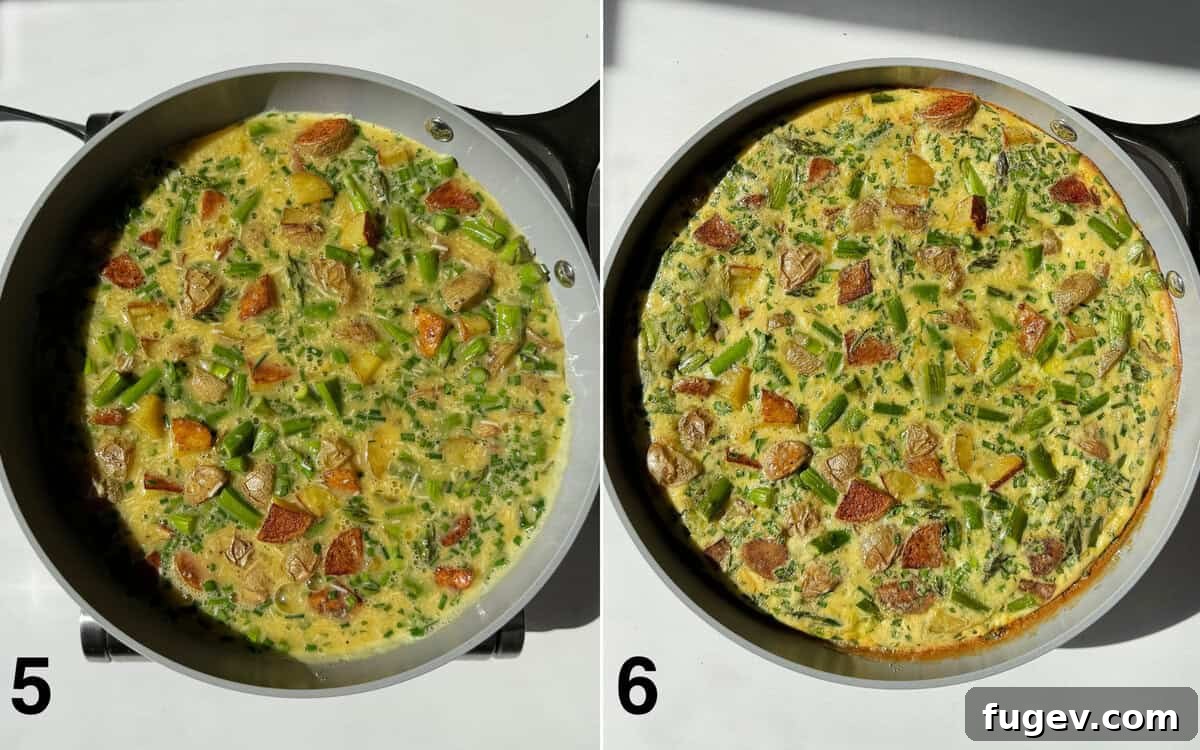
Once baked to perfection, carefully remove the frittata from the oven. Allow it to rest in the skillet for a few minutes before slicing and serving. This resting period allows the frittata to set completely, making for cleaner cuts and an even more enjoyable texture. Enjoy your magnificent homemade frittata!
Serving Suggestions & Perfect Pairings for Your Frittata
Frittatas are wonderfully versatile and can be enjoyed far beyond the traditional breakfast or brunch settings. They make an excellent centerpiece for any meal of the day and are particularly beneficial if you’re looking to effortlessly boost your daily vegetable intake. Here are some inspired ideas for serving your delicious Roasted Asparagus Potato Frittata:
- For Brunch, Lunch, or Dinner: Serve generous wedges of this savory frittata alongside a crisp, fresh salad. A peppery lemon arugula salad offers a delightful contrast to the rich frittata, while a classic “better-than-a-restaurant” house salad provides a refreshing and balanced accompaniment. The lightness of a vibrant green salad beautifully complements the hearty eggs and flavorful roasted vegetables.
- Ideal for Easter Celebrations: With its bright spring flavors and elegant presentation, this frittata is a fantastic option for your Easter spread. Complement the dish with a beautiful bowl of fresh seasonal fruit, such as a medley of berries, sliced melon, or juicy grapes, to add a burst of natural sweetness and vibrant color to your festive table.
- Simple & Satisfying Standalone: The frittata is hearty enough to be enjoyed on its own for a quick and satisfying meal. For a little extra, consider serving it with a side of warm, crusty sourdough bread or a freshly baked baguette to soak up any lingering flavors.
- Enhance with Dips & Sauces: Elevate the experience by offering a dollop of creamy Greek yogurt, a drizzle of herbaceous pesto, a sprinkle of extra fresh chives, or a tangy salsa on the side. These additions can introduce another layer of flavor and customize each bite to your preference.
- Morning Power Start: For a robust breakfast, pair a slice with a glass of freshly squeezed orange juice or a warm cup of coffee. Its protein and vegetable content will keep you feeling full and energized.
No matter how you choose to present it, this Roasted Asparagus Potato Frittata is guaranteed to be a crowd-pleaser, offering a delicious, wholesome, and incredibly adaptable option for virtually any dining occasion.
Complete Roasted Asparagus Potato Frittata Recipe Card
This roasted asparagus frittata is a splendid spring vegetarian egg bake featuring tender baby potatoes, rich Parmesan cheese, fresh scallions, fragrant parsley, and bright chives, all baked to golden perfection.
Currently, there are no ratings for this recipe.
By Paige Adams
Prep time: 10 mins
Cook time: 50 mins
Total time: 1 hr
Yields: 6 Servings
Print Recipe
Ingredients
For the Roasted Potatoes and Asparagus:
- 1 pound baby potatoes, cut into ½-inch dice
- 1 tablespoon olive oil
- ½ teaspoon kosher salt
- ¼ teaspoon black pepper
- 1 pound asparagus, ends trimmed, cut into ½-inch-long pieces
For the Frittata Base:
- 8 large eggs
- ¼ cup milk (any type)
- ½ teaspoon kosher salt
- ¼ teaspoon black pepper
- 1 tablespoon chopped fresh parsley
- 1 tablespoon minced fresh chives
- ¼ cup grated Parmesan cheese
- 1 tablespoon olive oil (for sautéing)
- 2 scallions, thinly sliced
- 1 garlic clove, minced
Instructions
- Preheat Oven: Preheat your oven to 425 degrees F (220°C).
- Roast Potatoes: On a large sheet pan, toss the diced baby potatoes with 1 tablespoon olive oil, ½ teaspoon kosher salt, and ¼ teaspoon black pepper. Spread them into a single layer. Roast for 20-22 minutes until they begin to brown.
- Add Asparagus: Add the asparagus to the sheet pan with the potatoes and continue roasting for another 8-10 minutes, until the asparagus is bright green and tender-crisp, and the potatoes are tender and golden brown.
- Prepare Egg Mixture: In a large bowl, whisk together the eggs, milk, ½ teaspoon kosher salt, ¼ teaspoon black pepper, chopped parsley, minced chives, and grated Parmesan cheese until well combined.
- Sauté Aromatics: Heat 1 tablespoon olive oil in a 10-inch non-stick, oven-safe skillet over medium heat. Sauté the thinly sliced scallions for 1-2 minutes until fragrant, then add the minced garlic and cook for another 30 seconds, being careful not to burn it.
- Combine in Skillet: Transfer the roasted asparagus and potatoes from the sheet pan into the skillet with the sautéed aromatics, spreading them evenly.
- Set on Stovetop: Pour the prepared egg mixture evenly over the vegetables in the skillet. Cook on the stovetop over medium heat for 2-3 minutes, allowing the edges of the frittata to set.
- Bake to Finish: Transfer the skillet to the preheated oven and bake for approximately 12-15 minutes, or until the center of the frittata is just set and lightly golden.
Notes & Tips
Cheese Substitutions: Feel free to experiment with different cheeses! Instead of Parmesan, you can use an equal amount of shredded cheddar, mozzarella, Gruyère, or even crumbled feta cheese for a distinct flavor profile.
Storing Leftovers: Allow any leftover frittata to cool completely to room temperature before storing. Transfer slices to an airtight container and refrigerate for up to 4 days. Frittata is delicious served cold, at room temperature (simply let it sit out for 15-20 minutes before serving), or gently reheated. For quick reheating, individual slices typically need only a 10-12-second blast in the microwave.
Freezing Instructions: To preserve leftovers for a longer period, wrap individual slices tightly in aluminum foil or plastic wrap, then place them in a freezer-safe bag. Freeze for up to 1 month. Thaw frozen frittata in the refrigerator overnight before serving or reheating.
Nutrition Information (Approximate Per Serving)
Nutrition information is automatically calculated and should only be used as an approximation. Values may vary based on specific ingredients and preparation methods.
- Calories: 223 kcal
- Carbohydrates: 18 g
- Protein: 12 g
- Fat: 12 g
- Saturated Fat: 3 g
- Polyunsaturated Fat: 2 g
- Monounsaturated Fat: 6 g
- Trans Fat: 0.02 g
- Cholesterol: 222 mg
- Sodium: 555 mg
- Potassium: 596 mg
- Fiber: 3 g
- Sugar: 3 g
- Vitamin A: 1064 IU
- Vitamin C: 21 mg
- Calcium: 115 mg
- Iron: 3 mg
Additional Recipe Information
Course: Breakfast & Brunch, Lunch, Dinner
Cuisine: Italian-inspired, American
Did you try this delightful recipe? We’d love to see your creation! Mention @lastingredient on Instagram and be sure to tag it with #lastingredient!