
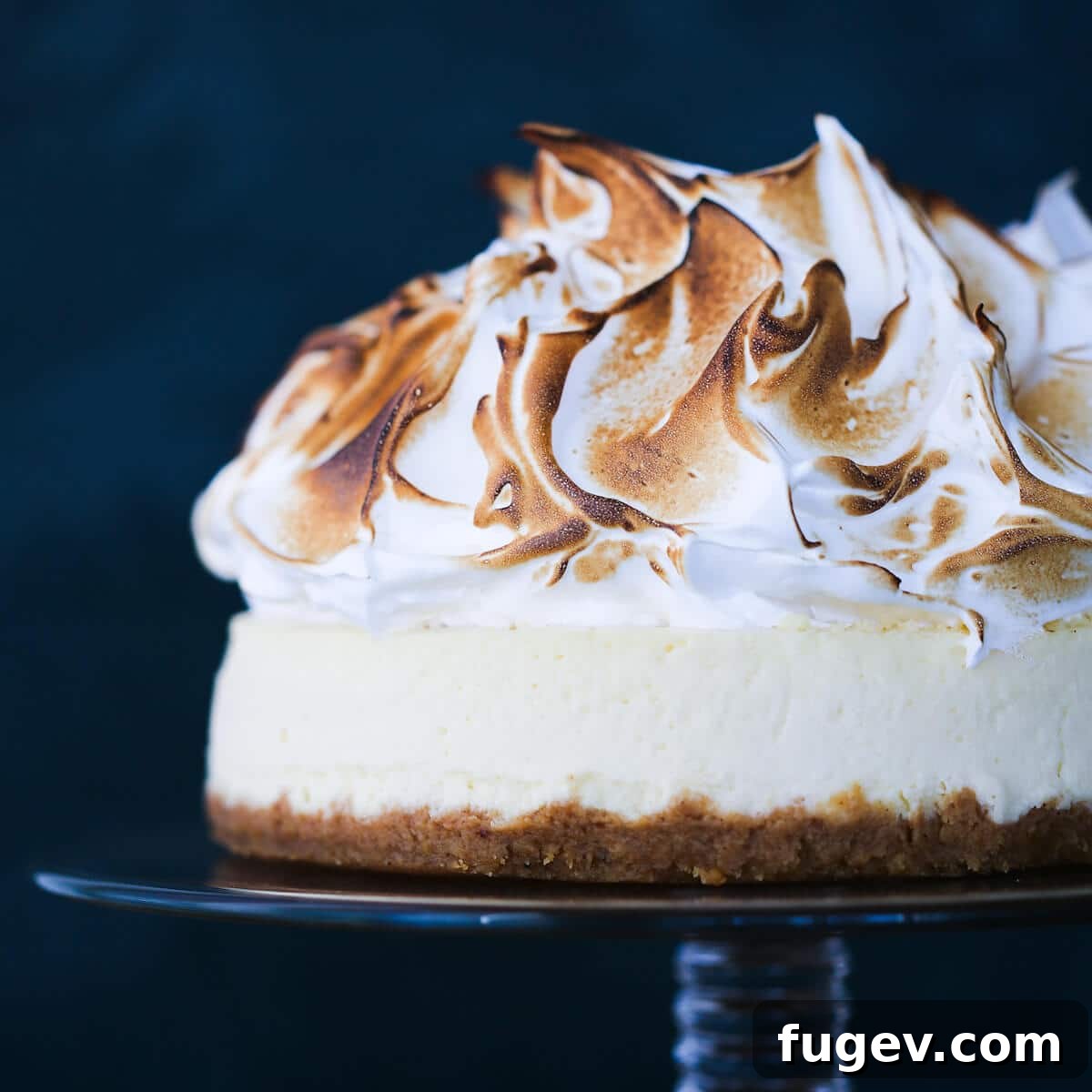
The Ultimate Lemon Meringue Cheesecake: A Bright and Tangy Delight
Prepare to impress with this spectacular Lemon Meringue Cheesecake. This recipe delivers a perfectly creamy lemon cheesecake, boasting a delightful tartness that is incredibly refreshing. Crowned with a generous, cloud-like mound of fluffy marshmallow meringue, this dessert is a true showstopper, guaranteed to be an unforgettable treat for any occasion.
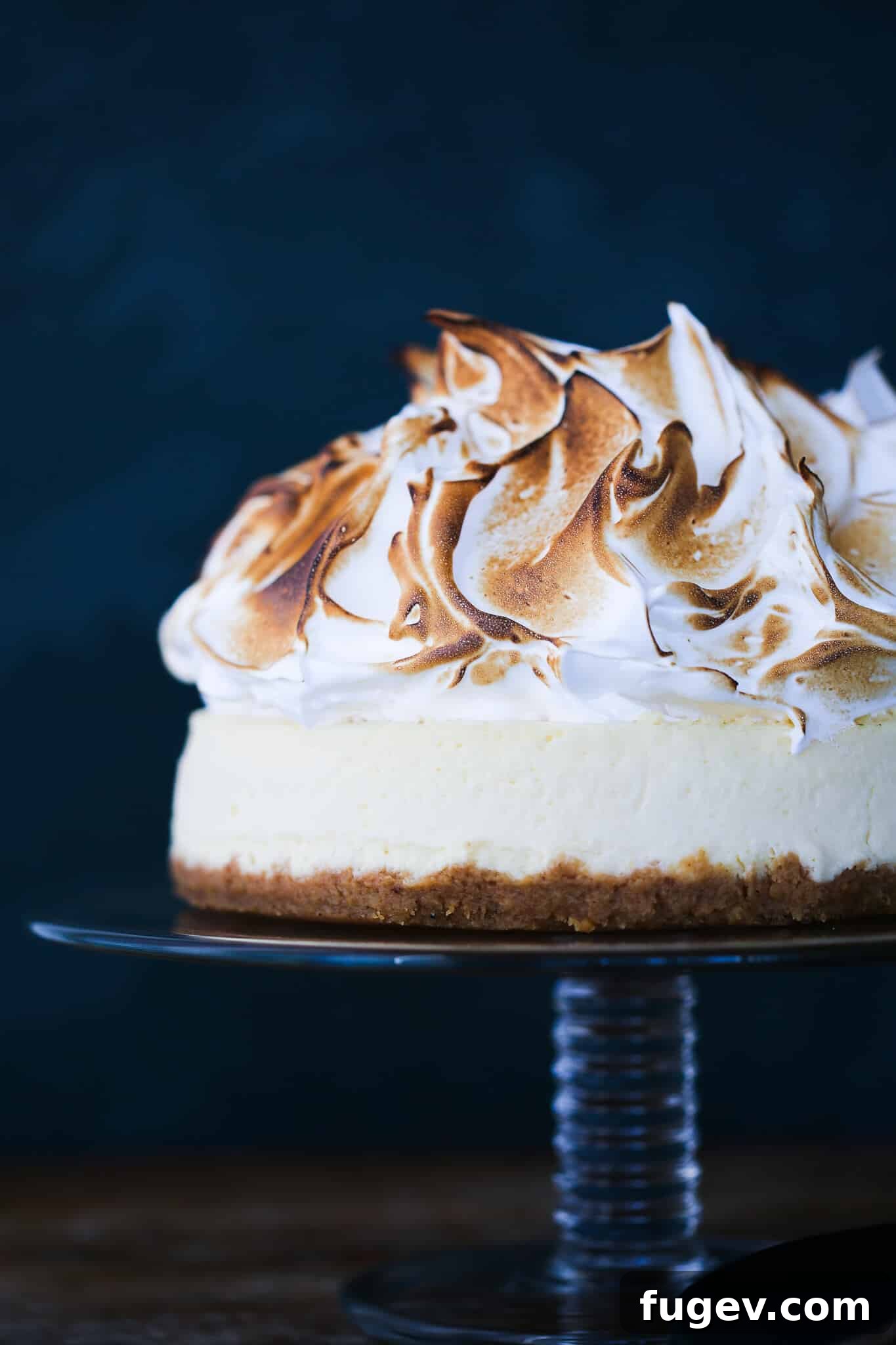
My Lemon Meringue Cheesecake consistently earns rave reviews and is a go-to crowd-pleaser for its exquisite balance of flavors and textures. Each forkful reveals a melt-in-your-mouth smooth and creamy lemon filling, offering a vibrant tartness that dances on the palate. This is beautifully contrasted by the subtle, buttery crunch of the graham cracker crust. I meticulously refined this recipe, pushing the boundaries to incorporate as much fresh lemon juice as possible without compromising the creamy texture of the cream cheese or making the batter too loose. For an extra layer of irresistible tang and luxurious creaminess, I artfully folded in some full-fat sour cream.
While this cheesecake is absolutely divine served simply unadorned, or perhaps with a delicate blueberry sauce, the true magic unfolds with the addition of its epic meringue topping. This soaring, toasted marshmallow meringue creates a breathtaking visual and a delightful textural contrast that is overwhelming in the most delicious way. The harmonious blend of tart lemon and sweet meringue elevates this dessert to a realm of pure indulgence. This recipe proudly joins my collection of cherished lemon recipes, sitting alongside favorites like my classic lemon meringue pie, legendary perfect lemon bars, moist lemon olive oil cake, and delightful lemon coconut cupcakes. It’s more than just a dessert; it’s an experience.
Table of Contents
- Why This is the Best Lemon Meringue Cheesecake Recipe
- Professional Tips for Baking a Perfect Lemon Cheesecake
- Essential Ingredients for Your Lemon Meringue Cheesecake
- Cheesecake Layer and Topping Variations
- Mastering a Crack-Free Cheesecake: The Water Bath Method
- Step-by-Step Guide: How to Make Lemon Meringue Cheesecake
- Chef Lindsey’s Expert Baking Tip
- Frequently Asked Questions About Lemon Meringue Cheesecake
- Complete Lemon Meringue Cheesecake Recipe Card
- Explore More Delicious Desserts
Why This is the Best Lemon Meringue Cheesecake Recipe
- Unabashedly Lemony Perfection: This recipe truly celebrates lemon at its peak. Every bite bursts with bright, tangy, and incredibly refreshing notes, making it an ideal dessert for any season. The carefully calibrated amount of fresh lemon juice ensures a prominent, natural citrus flavor that isn’t overpowering but perfectly balanced.
- Luxurious New York-Style Cheesecake Texture: The texture of this lemon cheesecake is nothing short of extraordinary. It’s incredibly rich, wonderfully thick, and boasts a silky-smooth consistency reminiscent of the finest New York-style cheesecakes. Achieving this perfect mouthfeel was a labor of love, involving extensive testing and retesting to incorporate the precise amount of lemon juice while maintaining structural integrity and an unparalleled creamy texture.
- Expertly Perfected by a Professional Pastry Chef: Crafted and perfected by a professional pastry chef, this recipe offers a transparent, step-by-step process. It features the ideal ratio of ingredients, meticulously measured by both weight and volume, ensuring consistent, flawless results every time. Bake with confidence, knowing you’ll achieve a smooth, crack-free cheesecake that looks as stunning as it tastes.
Professional Tips for Baking a Perfect Lemon Cheesecake
- Always Use Fresh Lemon Juice: Just like with my tangy lemon curd and delicate lemon posset, fresh lemon juice is non-negotiable for this recipe. Lemon is the star flavor, and its quality directly impacts the final taste. Store-bought lemon juice, especially if it appears dark or has been sitting for a while, will lack the vibrant, fresh zestiness crucial for this cheesecake. If squeezing fresh lemons isn’t an option, look for high-quality, fresh-squeezed lemon juice in the freezer or refrigerated sections of your grocery store.
- Ensure Your Cream Cheese is Cold: This is a crucial distinction for lemon cheesecakes. Unlike recipes such as my chocolate chip cheesecake or chocolate cheesecake, where room-temperature ingredients are vital for a smooth batter, for this lemon version, your cream cheese should be cold. Cold cream cheese helps to prevent the batter from curdling or breaking when the acidic lemon juice is added, ensuring a beautifully smooth and stable custard.
- Gradual Cooling and Adequate Refrigeration are Key: To achieve a crack-free cheesecake with an optimal texture, resist the urge to rush the cooling process. After baking, allow the cheesecake to cool completely to room temperature before covering it and refrigerating. This slow, gradual cooling prevents sudden temperature changes that can cause cracks. Furthermore, refrigerating the cheesecake for at least 4 hours (or ideally overnight) is essential for it to fully set, firm up, and develop its rich, dense texture. It also significantly aids in easy removal from the springform pan.
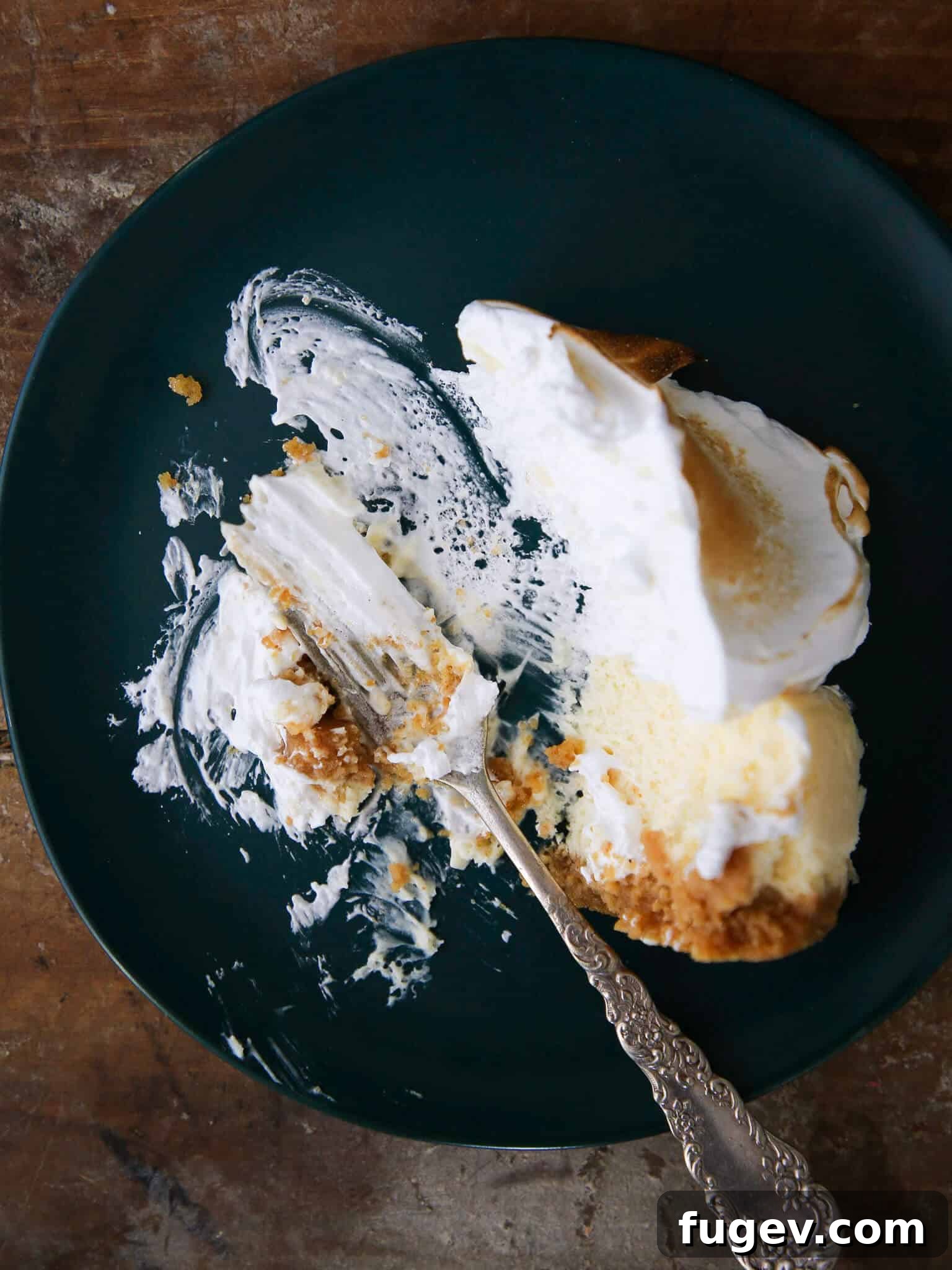
Essential Ingredients for Your Lemon Meringue Cheesecake
The quality of your ingredients significantly impacts the final flavor and texture of your cheesecake. Here’s a breakdown of the key components and why they matter:
- Cream Cheese: For all my baked goods, especially cheesecakes, I rely on original, full-fat Philadelphia Cream Cheese. Its firm, brick-style texture is crucial for stabilizing the custard and achieving a dense, perfectly set cheesecake. Avoid using whipped or low-fat varieties, as they can lead to a softer, less stable result.
- Granulated Sugar: Provides essential sweetness, balancing the tartness of the lemon and contributing to the creamy texture of the filling and the stability of the meringue.
- Whole Egg: Acts as a primary binder and thickener for the cheesecake custard, contributing to its smooth consistency and structure.
- Egg Yolk: Egg yolks are powerhouse thickeners in custards, similar to whole eggs, but they bring rich fat content without the added moisture from egg whites. This results in an exceptionally thick, dense, and luxurious cheesecake.
- Sour Cream: I always opt for full-fat sour cream. The fat content is vital for stabilizing the cheesecake custard, especially when combined with acidic ingredients like lemon juice. While low-fat sour cream can be substituted, be aware that your cheesecake may not set as firmly.
- Heavy Cream: Adds an extra layer of richness and contributes to the velvety smooth texture of the cheesecake filling.
- Lemon Juice: The very soul of this dessert! The flavor of this lemon cheesecake with meringue hinges entirely on the quality of the lemon juice. Always aim for fresh-squeezed. As mentioned before, you can sometimes find fresh-squeezed options in the freezer or refrigerator sections of gourmet markets. For an alternative lemon flavor, consider using my easy lemon curd within the cheesecake filling.
- Graham Crackers: For the crust, convenience is key. Once I discovered that graham cracker crumbs are readily available pre-crushed, my food processor got a well-deserved break! These provide the perfect base.
- Butter: I consistently use unsalted butter for baking. This allows me to precisely control the salt content in the entire recipe, ensuring optimal flavor balance.
- Light Brown Sugar: Adds a subtle hint of caramel and a deeper flavor profile to the graham cracker crust, making it more complex and delicious.
- Kosher Salt: A pinch of kosher salt enhances all the flavors in both the crust and the meringue, preventing them from tasting flat.
- Egg Whites: For the most stable, silky, and shiny meringue (or marshmallow frosting), freshly separated egg whites are superior. While pasteurized carton whites can be used, the resulting meringue may be less stable, prone to weeping sooner, and have a slightly less satiny texture.
- Water: Combined with sugar to create the hot sugar syrup for the Italian meringue.
- Cream of Tartar: This ingredient (cream of tartar) acts as an inexpensive yet effective insurance policy for your meringue. It helps stabilize the egg whites, ensuring they whip up to stiff peaks and hold their structure beautifully. While optional, it’s highly recommended for best results.
- Vanilla Extract: Add vanilla extract to the meringue only after it has reached stiff peaks. Adding it too early can inhibit the egg whites from achieving their full volume potential.
For precise quantities and a complete ingredient list, please refer to the recipe card below.
Cheesecake Layer and Topping Variations
While the classic Lemon Meringue Cheesecake is exceptional, don’t hesitate to customize it to your personal preferences. Here are some delicious ideas for variations:
- Marshmallow Topping Alternatives: If marshmallow meringue isn’t your preference, this cheesecake is still fantastic on its own. Alternatively, consider topping it with a light and airy lemon curd whipped cream for an extra citrusy kick, or a simple, elegant vanilla whipped cream. For a quick and easy meringue-like effect, my marshmallow fluff frosting recipe can be generously mounded on top.
- Embrace the Lemon Zest: To amplify the lemon flavor and add a touch of sophistication, consider incorporating lemon zest. You can create a delightful candied citrus peel for a beautiful and edible topping. Another wonderful technique is to infuse your granulated sugar with lemon zest, as I do for my lemon blondies, which imbues the entire cheesecake with aromatic lemon oils.
- Creative Crust Swaps: The graham cracker crust is a classic, but feel free to experiment with your favorite cookie crusts. An Oreo cookie crust would provide a decadent chocolate contrast, while a lemon Oreo or vanilla wafer crust would offer a complementary flavor profile. I’m also particularly fond of the gingersnap crust from my pumpkin cheesecake, which would add a spicy warmth.
- Explore Different Citrus Flavors: Why limit yourself to just lemon? This recipe provides an excellent foundation for other citrus-infused cheesecakes. Experiment with a vibrant lime meringue cheesecake or a sweet orange meringue cheesecake. Be cautious with oranges, as they tend to be sweeter, requiring a potential adjustment in the sugar content of the filling. For lime, my Easy Key Lime Pie recipe can serve as a fantastic starting point for understanding lime custard ratios. Or, for a truly adventurous twist, draw inspiration from a mango meringue pie – a tropical delight!
Mastering a Crack-Free Cheesecake: The Water Bath Method
Achieving a perfectly smooth, unblemished cheesecake surface without unsightly cracks is a hallmark of professional baking. The most reliable method for baking a cheesecake without cracks is to use a water bath (also known as a bain-marie). This technique provides slow, even, and gentle heating to the cheesecake custard, preventing it from baking too quickly and cracking due to rapid expansion and contraction. The consistent moisture from the water bath also helps to create a humid environment in the oven, further discouraging surface cracks and promoting a wonderfully creamy texture. The eggs in the custard set gradually without being exposed to harsh, high heat, ensuring a silky-smooth finish. If you’re looking for a delightful dessert without any baking, explore my recipe for No-Bake Blueberry Cheesecake Bars instead!
Step-by-Step Guide: How to Make Lemon Meringue Cheesecake
Creating this stunning Lemon Meringue Cheesecake is a rewarding process. Follow these detailed instructions for each component to ensure a spectacular result. Further details and precise measurements can be found in the comprehensive recipe card below!
Prepare the Crust:
- Preheat and Prepare Pan: Begin by preheating your oven to 325°F (160°C) using the conventional bake setting. To prepare your springform pan for the water bath, carefully wrap the exterior bottom and sides tightly with several layers of heavy-duty aluminum foil. This creates a protective barrier, preventing any water from seeping into the crust during baking.
- Brown the Butter: In a small saucepan, gently melt the unsalted butter over medium heat. Continue to cook the butter, stirring occasionally, until it transitions from clear yellow to a rich golden brown. You’ll notice it developing a wonderfully nutty aroma, much like toasted hazelnuts. This browned butter adds an incredible depth of flavor to the crust.
- Combine Crust Ingredients: In a medium bowl, combine the graham cracker crumbs, light brown sugar, kosher salt, and the warm browned butter. Mix these ingredients thoroughly until the crumbs are evenly moistened and resemble wet sand.
- Press and Bake Crust: Firmly press the mixture into the bottom of your prepared springform pan. Use the back of a spoon or the bottom of a flat glass to create an even, compact layer. Bake the crust in the preheated oven for just 5 minutes to set it. Once baked, remove it from the oven and allow it to cool completely on a wire rack while you prepare the filling.
Chef’s Tip for Pan Preparation: While optional, I highly recommend spraying the inside of your springform pan with cooking spray and then lining the bottom with a circle of parchment paper. This extra step ensures a completely non-stick surface, making it much easier to release the cooled cheesecake cleanly from the pan.
Prepare the Lemon Cheesecake Filling:
- Whisk Creams: In a small separate bowl, whisk together the cold sour cream and heavy cream until thoroughly combined. Set aside.
- Beat Cream Cheese: In the bowl of a stand mixer fitted with the paddle attachment (or using an electric hand mixer), beat the cold brick-style cream cheese on medium-low speed. Continue beating until it becomes incredibly silky, creamy, and completely smooth, with no lumps remaining. Add the vanilla extract and beat to incorporate.
- Incorporate Sugar: Gradually add the granulated sugar to the cream cheese mixture, beating on medium speed. Continue to beat for approximately 5 minutes, or until all sugar granules are completely dissolved and the mixture appears visibly shiny and light. For the best, smoothest texture, resist the urge to rush this crucial step.
- Add Eggs Gradually: Add the whole eggs and the additional egg yolk one at a time. After each addition, beat the mixture for exactly one minute to ensure full incorporation and to add air. Finally, add the sour cream and heavy cream mixture and beat on low speed until just combined.
- Introduce Lemon Juice: Reduce the mixer speed to low. Slowly pour in the fresh lemon juice in a steady stream. Once all the lemon juice is added, increase the mixer speed slightly to fully incorporate it into the batter. The mixture will become noticeably looser, so be careful not to overmix or turn the speed up too high, as this can introduce too much air.
Important Note on Consistency: The cheesecake batter will have a looser consistency after the lemon juice is added. This is normal. Avoid over-beating at this stage, as excessive air can lead to cracking during baking.
Bake the Cheesecake:
- Prepare Water Bath: Carefully pour the prepared lemon cheesecake filling into the cooled graham cracker crust. Place the springform pan (still wrapped in foil) into a larger roasting dish. Transfer this assembly to the preheated oven.
- Fill Water Bath and Bake: Once the roasting dish is in the oven, carefully pour hot water into the roasting dish, filling it approximately halfway up the sides of the springform pan. Bake for 1 hour and 40 minutes, or until the edges are set, but the center still exhibits a slight wobble. When gently shaken, the entire cheesecake should move as one cohesive unit, not like ripples of liquid. The top will also puff slightly during baking.
- Cool and Refrigerate: Once baked, carefully remove the roasting pan from the oven. Let the cheesecake cool in the water bath for about 30 minutes, then remove it from the water bath and allow it to cool completely to room temperature on a wire rack. This slow, gradual cooling is vital to prevent cracking. Once fully cooled, wrap the cheesecake tightly with plastic wrap and refrigerate for at least 4 hours, or ideally overnight, for optimal setting and flavor development.
Prepare Your Marshmallow Meringue Frosting:
- Start Sugar Syrup: In a small, heavy-bottomed saucepan, combine the granulated sugar and water. Bring this mixture to a boil over high heat. As it boils, use a wet pastry brush to scrape down any sugar crystals clinging to the sides of the pan. Clip a candy thermometer onto the side of the saucepan, ensuring it doesn’t touch the bottom.
- Whip Egg Whites: While the sugar syrup is boiling, place the egg whites, cream of tartar, and kosher salt into the bowl of a stand mixer fitted with the whisk attachment. Begin beating on medium-high speed until the egg whites form stiff, glossy peaks.
Meringue Timing is Key: The most important aspect of making perfect marshmallow fluff is control and timing. You are in command of both the mixer speed and the sugar syrup temperature. Adjust either as needed to ensure your egg whites reach stiff peaks just as the sugar syrup reaches the soft ball stage (238-240°F / 114-116°C). Practice makes perfect!
- Synchronize Stages: Aim to have your egg whites reach firm, stiff peaks precisely when your sugar syrup hits the soft ball stage (238-240°F or 114-116°C) on your candy thermometer.
- Pour Hot Syrup: As soon as the sugar syrup reaches the correct temperature, and with the mixer still running on high speed, carefully and slowly pour the hot syrup in a thin stream down the side of the mixing bowl. It’s crucial to avoid pouring directly onto the whisk, as this can cause the sugar to crystallize and splatter.
Safety First: Pouring hot sugar syrup requires caution. Always pour steadily down the inside wall of the bowl, away from the moving whisk, to prevent splashing and ensure smooth incorporation.
- Beat Until Cooled and Stiff: Continue to beat the meringue on high speed for approximately 7 minutes, or until the mixture is very stiff, shiny, and has cooled down significantly to room temperature. The bowl should no longer feel warm to the touch. Beat in the vanilla extract during the last minute of mixing.
Assemble and Serve:
- Top with Meringue: Once your cheesecake is completely chilled and firm, and your meringue is prepared, generously mound the marshmallow meringue frosting on top of the cheesecake. You can pipe it decoratively or simply spread it with a spatula to create dramatic peaks.
- Torch or Broil (Optional): For that classic toasted marshmallow flavor and beautiful golden-brown finish, gently toast the meringue using a kitchen torch. Alternatively, you can carefully place the cheesecake under a preheated broiler for a very short period.
Broiler Caution: If using a broiler, watch the cheesecake constantly! Work very quickly and move the cheesecake frequently to ensure even toasting and prevent burning the meringue or over-softening the chilled cheesecake. Even a few seconds too long can make a difference.
Chef Lindsey’s Expert Baking Tip
To further safeguard against cheesecake cracks, I often employ an additional cooling technique. After the baking time is complete, I turn off the oven and leave the cheesecake inside with the oven door slightly ajar for a full hour. This allows the cheesecake to cool very gradually within the diminishing warmth of the oven, minimizing any sudden temperature fluctuations, which are notorious culprits for causing cracks on the delicate surface of cheesecakes!
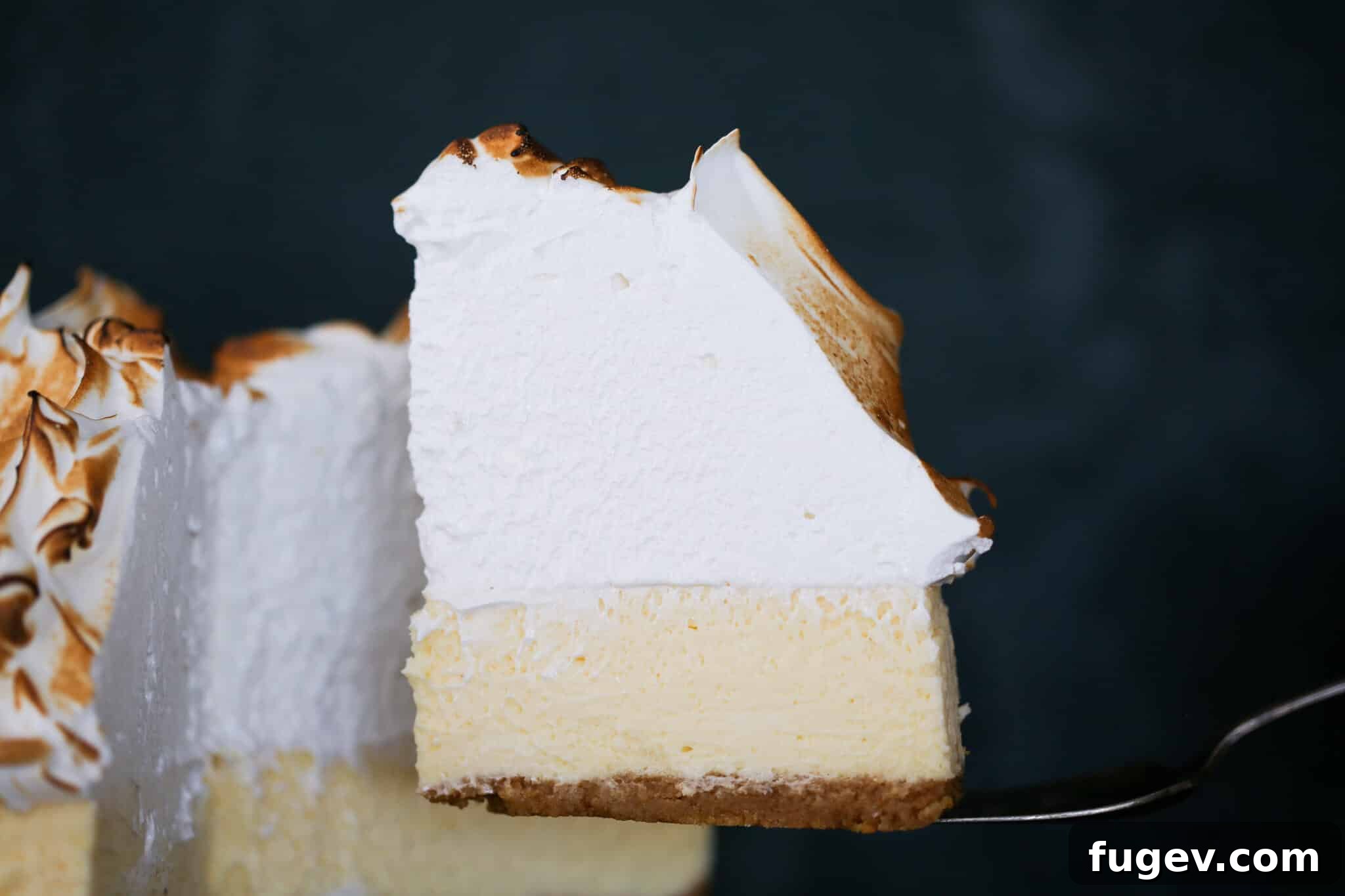
Frequently Asked Questions About Lemon Meringue Cheesecake
The finished Lemon Meringue Cheesecake can be stored, well-wrapped, in the refrigerator for up to 4 days. Please note that the meringue topping will naturally begin to “weep” (release moisture) after a few days, especially if it has not been toasted. For longer storage, the baked cheesecake (before adding the meringue) can be tightly wrapped in several layers of plastic wrap and then foil, and frozen for up to 3 months. To serve, simply thaw the unwrapped cheesecake in the refrigerator overnight, then prepare and add the fresh meringue topping just before serving.
One of the most common reasons for a lemon cheesecake batter to curdle or appear broken is using cream cheese that is too warm. The trick to successfully making a cheesecake with acidic ingredients like lemon juice or passion fruit juice is to start with cold cream cheese. Room temperature cream cheese, while often preferred for other cheesecake recipes, breaks down more easily and can curdle when it comes into contact with acid, resulting in a soupy, grainy custard. Cold, firm cream cheese helps to maintain stability and yields a beautifully smooth, sliceable cheesecake every time.
Determining when a cheesecake is perfectly done requires a gentle touch and keen observation. A finished cheesecake will jiggle like a firm Jell-O when gently shaken at its center. The key is that the entire cheesecake should appear to move together as one cohesive unit. If the center still looks like ripples in a pond, or if only the outer edges move while the center remains very liquid, then it needs more baking time. The internal temperature, if checked, should ideally be around 150°F (65°C).
This majestic Lemon Meringue Cheesecake can undoubtedly stand alone as a perfect dessert, requiring no accompaniments. However, for those who enjoy enhancing flavors, it would be absolutely delightful with a simple blueberry sauce, adding a burst of fruity contrast, or with my easy strawberry jam for a sweet and familiar pairing. To lean further into the lemon theme, serve it with a luscious swoosh of lemon curd and a scattering of fresh mixed berries for a bright, summery flavor. For a festive winter dessert, try pairing it with jewel-toned pomegranate arils, which offer a beautiful tartness and textural pop.
If you tried this incredible recipe and loved it, please take a moment to leave a 🌟 star rating and share your experience in the comments below. Your feedback brightens my day and helps other bakers!
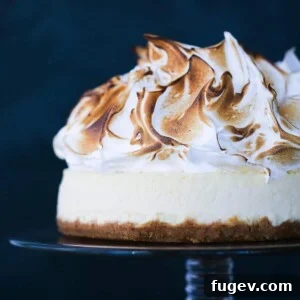
Lemon Meringue Cheesecake
Comment
Print Recipe
Ingredients
Lemon Filling:
- 4 cups cream cheese cold
- 1 ¼ teaspoons vanilla extract
- 1 ½ cups sugar
- 3 eggs
- 1 yolk
- ⅔ cups sour cream
- ¼ cup heavy cream
- ¾ cup lemon juice
Crust:
- 3 cups graham cracker crumbs
- ½ teaspoon kosher salt
- 11 tablespoons unsalted butter
- 6 tablespoons light brown sugar
Marshmallow Fluff Frosting
- 1 cup granulated sugar
- ½ cup water
- 3 egg whites
- ⅛ teaspoon cream of tartar
- ⅛ teaspoon kosher salt
- 1 teaspoon vanilla extract
Instructions
Prepare the crust:
-
Preheat the oven to 325°F (160°C) conventional. Wrap your cake pan in aluminum foil so that no water can enter.
-
In a small saucepan melt the butter and continue to cook, stirring occasionally, until the melted butter has browned and smells nutty like hazelnuts.
-
Combine all ingredients for the crust and mix well. Press into the bottom of the springform pan.
-
Bake in a preheated oven for 5 minutes. Cool completely.
Prepare the filling:
-
In a small bowl, whisk together the sour cream and heavy cream.
-
In the bowl of a stand mixer fitted with the paddle attachment (or with an electric hand mixer), beat the cream cheese until silky, creamy and smooth. Beat in vanilla extract.
-
Add the sugar and beat until no granules are visible. It will begin to look shiny.
-
Add the eggs and egg yolk one at a time and beat one minute after each addition. Add the sour cream mixture and beat to combine.
-
Reduce mixer to low speed and slowly add the lemon juice. Increase mixer speed to incorporate well.
-
Pour into the cooled crust. Place the pan in a large roasting dish and place in the preheated oven. Pour hot water into the pan approximately halfway up the sides of the pan.
-
Bake for 1 hour and 40 minutes or until set but still wobbly. The top will puff a little and the whole cheesecake will move in one motion rather than like ripples of liquid.
-
Allow to cool completely. Wrap and refrigerate at least 4 hours or overnight.
Prepare your meringue frosting:
-
Combine sugar and water in a sauce pot and boil over high heat. Scrape down the sides with a wet pastry brush, and clip on your candy thermometer.
-
While the syrup boils, beat egg whites and cream of tartar in a stand mixer using the whisk attachment until stiff peaks.
-
Try to time the whites arriving at stiff peaks to the sugar syrup reaching soft ball stage (238-240°F).
-
When the sugar syrup reaches soft ball stage, slowly pour the syrup into the whipping whites with the mixer on high speed.
-
Continue to beat until the meringue is stiff, shiny and cooled, about 7 minutes.
Assemble:
-
Top your cooled cheesecake with frosting. If you like, torch using a kitchen torch or under the broiler.
Notes
Flavor Tips – Use fresh lemon juice for the best vibrant flavor!
Variations – You could leave the topping off for a simpler cheesecake, or top it with a lemon curd whipped cream or a vanilla whipped cream. It is also delicious with my marshmallow fluff frosting recipe mounded on top.
Storage – The cheesecake (before meringue) can be stored, well wrapped, for 7 days in the refrigerator or up to 3 months in the freezer. Add meringue fresh before serving.
Nutrition
Carbohydrates: 52g |
Protein: 7g |
Fat: 33g |
Saturated Fat: 19g |
Polyunsaturated Fat: 2g |
Monounsaturated Fat: 9g |
Trans Fat: 0.3g |
Cholesterol: 131mg |
Sodium: 402mg |
Potassium: 165mg |
Fiber: 1g |
Sugar: 42g |
Vitamin A: 1179IU |
Vitamin C: 5mg |
Calcium: 93mg |
Iron: 1mg
Like this? Leave a comment below!
Explore More Delicious Desserts
If you’ve enjoyed mastering this Lemon Meringue Cheesecake, I invite you to explore more of my delightful, pastry chef-created Cake Recipes. Or, if you’re craving another classic, head straight to my indulgent chocolate cheesecake recipe or my vibrant cherry cheesecake next! Happy baking!