
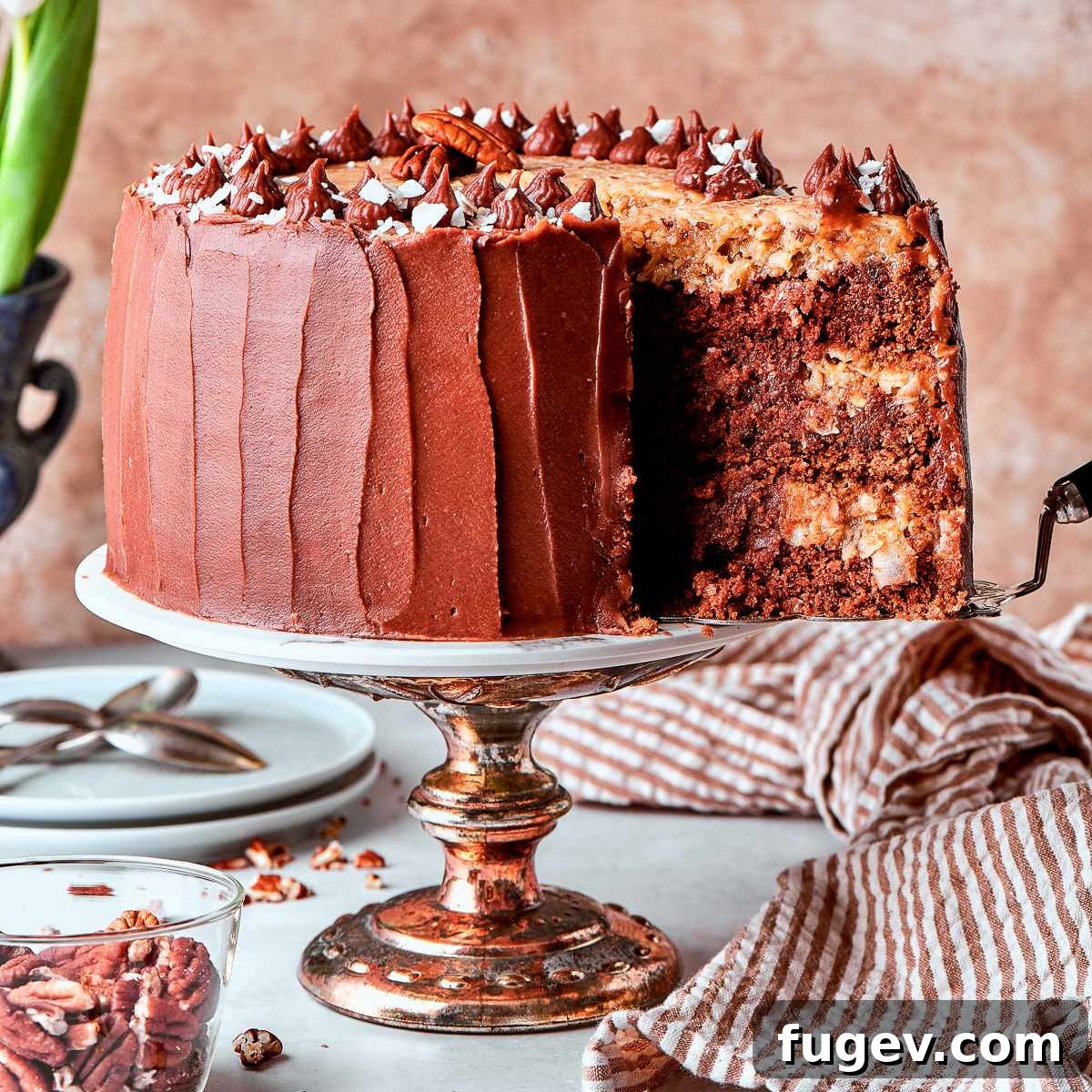
The Ultimate Classic German Chocolate Cake Recipe
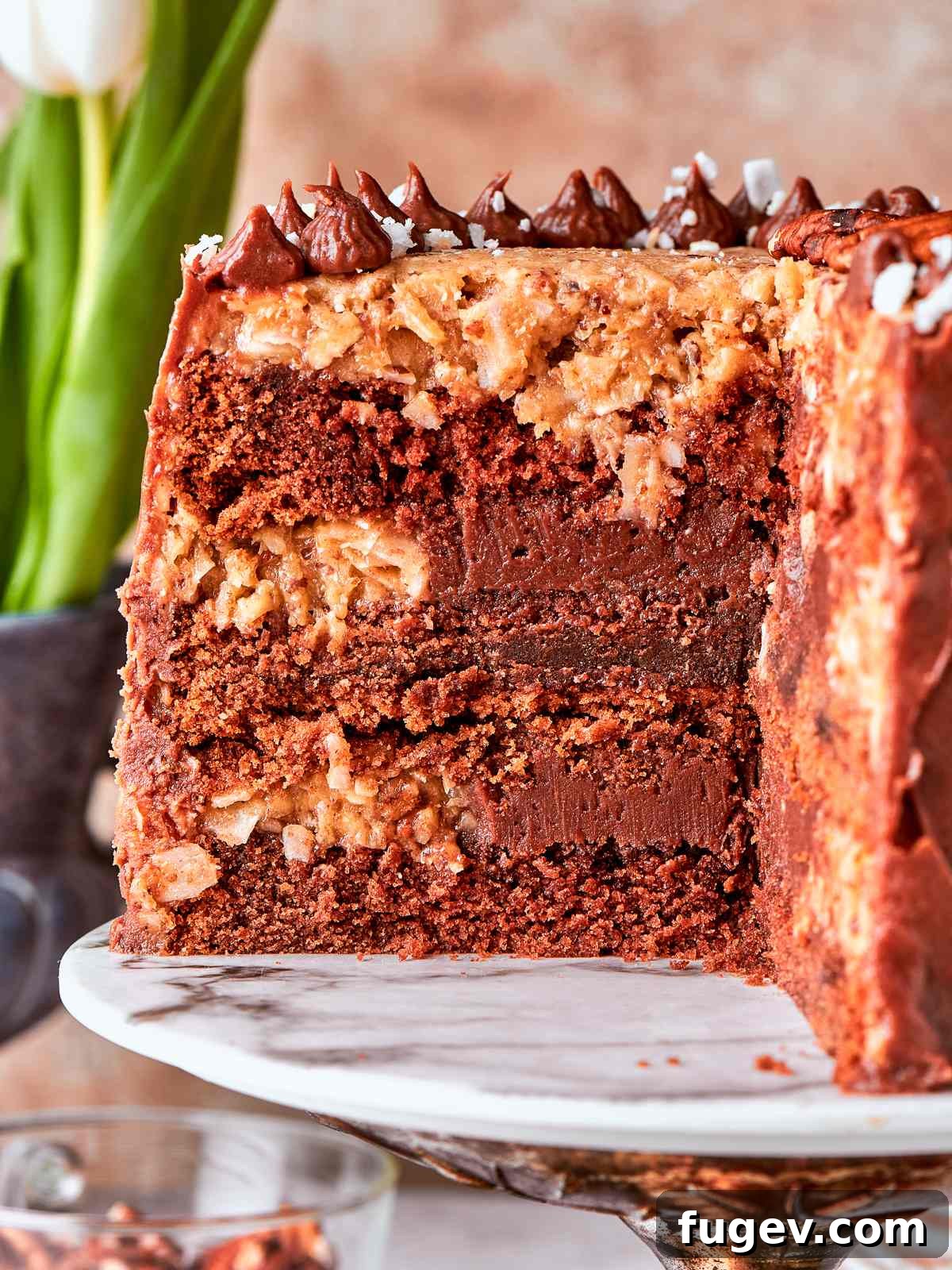
This German chocolate cake recipe is the classic perfected. Experience bliss with tender chocolate layers, a rich butter ganache, and our signature caramelized coconut pecan frosting, ensuring every slice is a dream come true!
A Quick Look At The Recipe
This is a brief summary of the recipe. Jump to the full recipe for complete details and instructions.
Jump to Recipe
Prep Time
45 minutes
Cook Time
23 minutes
Cooling & Assembly
1 hour
Total Time
2 hours 8 minutes
Servings
14 slices
Difficulty
Intermediate — achievable with clear, step-by-step guidance.
Calories *
802 kcal per serving
Technique
Creaming method with whipped egg whites; stovetop custard-style coconut pecan frosting; butter ganache emulsion.
Flavor Profile
Delicate chocolate cake, rich caramelized coconut pecan topping, silky chocolate ganache layers.
* Based on nutrition panel
Summarize & Save this content on
google ai
perplexity
grok
I’ve made a lot of German chocolate cakes, but the tip about beating the coconut pecan frosting in the mixer until thick enough to spread made all the difference. It held the ganache perfectly and sliced so cleanly. The cake was light and tender, not dry at all. Absolute perfection. ⭐⭐⭐⭐⭐
Lauren
Why This German Chocolate Cake Recipe Works So Well
Crafting the perfect German chocolate cake is an art, and this recipe delivers consistent, mouthwatering results every time. Here’s why this particular approach stands out:
- Authentic German’s Chocolate is Key: This is far more than just a chocolate cake with coconut frosting. The use of Baker’s German’s chocolate is non-negotiable for its signature mild sweetness and distinct, balanced flavor. This specific chocolate provides a unique caramel note that defines a true, classic German chocolate cake. Without it, the flavor profile simply isn’t the same.
- Cake Flour for an Incredibly Delicate Crumb: The secret to a melt-in-your-mouth cake lies in its texture. By using cake flour, we achieve a much lighter, finer, and more delicate crumb compared to all-purpose flour. This, combined with the gentle folding of whipped egg whites, creates an airy structure that mirrors the exquisite tenderness found in my white cake recipe, ensuring your layers are never dense or heavy.
- Thickened Coconut Pecan Frosting Maintains Structure: A common challenge with this cake is a runny frosting that struggles to hold its shape. Our method involves properly cooking the custard-style frosting until it reaches the ideal consistency, then finishing it in a stand mixer. This critical step ensures it becomes perfectly thick and stable, providing a robust foundation that flawlessly supports the rich layered ganache without any sliding or oozing.
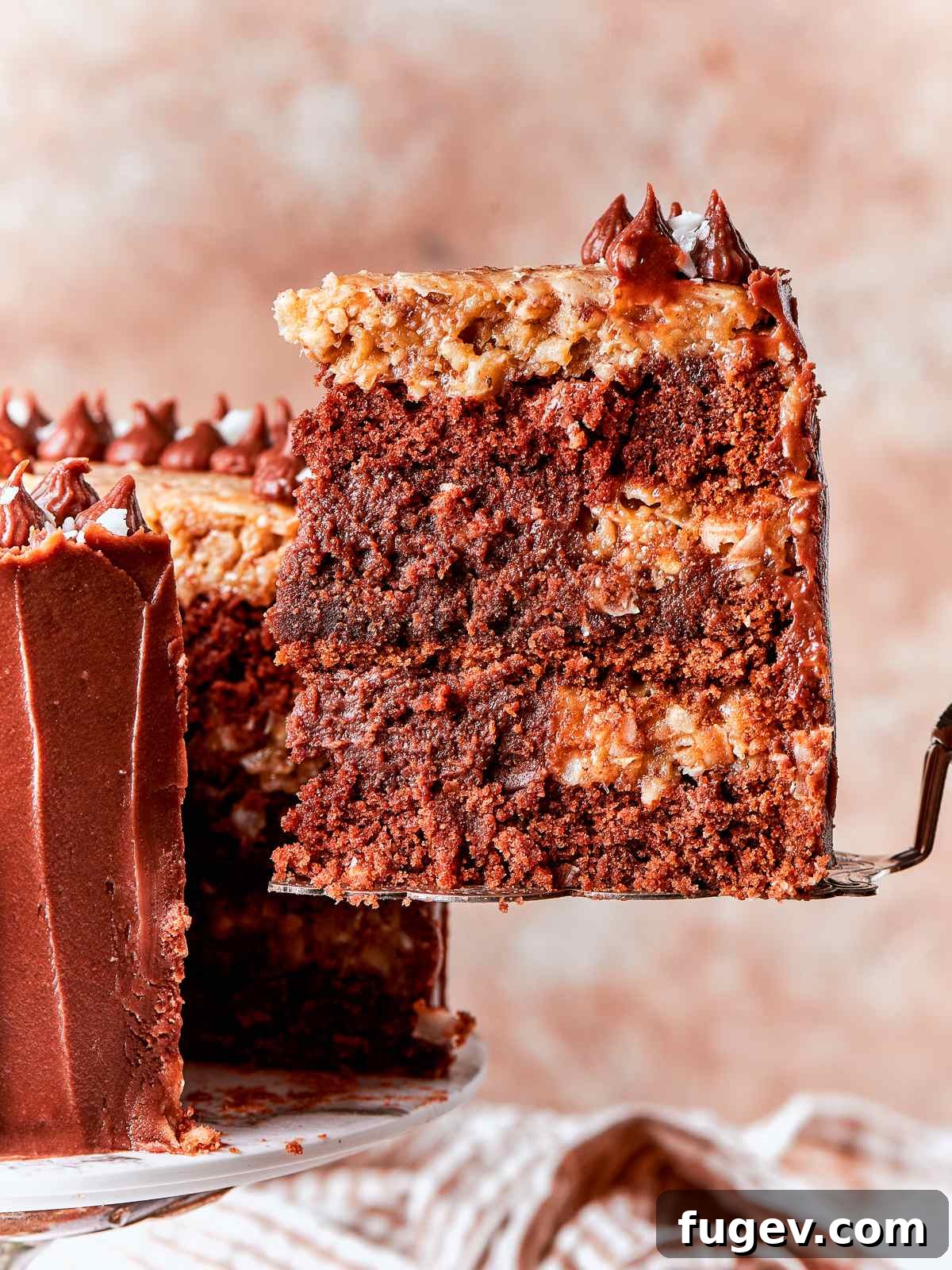
- Butter Ganache for a Silky, Sliceable Filling: While a traditional ganache can be lovely, the addition of butter here transforms it. This butter ganache creates an incredibly smooth, stable, and luxurious filling that not only complements the cake layers beautifully but also sets up perfectly. The result is a ganache that slices cleanly without squishing, making for stunning, picture-perfect cake slices every time.
Table of Contents
- Why This Recipe Works So Well
- The Sweet History of German Chocolate Cake
- Essential Ingredients & Smart Substitutions
- Creative Variations on This German Chocolate Cake
- Professional Tips for Baking Success
- How to Make the Perfect German Chocolate Cake
- Chef Lindsey’s Expert Baking Tip
- German Chocolate Cake FAQs
- Recommended Chocolate Cake Recipes
- Full German Chocolate Cake Recipe
- Before You Go
I have a real soft spot for German chocolate cake. When crafted the right way, it’s a masterpiece that needs no alteration — it’s already everything it’s meant to be. This beloved dessert has quietly become a cherished family favorite for birthdays and special occasions in our home, always leaving a lasting impression.
If your heart truly desires something deeply dark and intensely chocolate, I wholeheartedly recommend my moist chocolate cake recipe for that rich experience. However, a true German chocolate cake recipe offers a distinctly different, equally enchanting profile: tender layers with a delicate crumb, an irresistible caramelized coconut pecan topping, and just the right amount of sweetness to make you close your eyes in pure delight after the very first bite. It’s a harmonious blend of textures and flavors that captivates every palate.
The Sweet History of German Chocolate Cake
Despite its name, German chocolate cake is not from Germany. Its origins trace back to the United States, specifically to a man named Samuel German, who developed a sweet baking chocolate bar for Baker’s Chocolate Company in 1852. The product was originally named “Baker’s German’s Sweet Chocolate.” Over a century later, in 1957, a Dallas homemaker’s recipe for “German’s Chocolate Cake” was published in a local newspaper and then picked up by national publications. The cake quickly gained immense popularity, distinguishing itself from other chocolate cakes not just by its unique chocolate type but by its iconic coconut-pecan frosting. This rich history makes it a truly American classic, embodying a delightful blend of tradition and innovation in baking.
Essential Ingredients & Smart Substitutions
Achieving the perfect German chocolate cake relies on the quality and specific types of ingredients. Here’s a closer look at what you’ll need and why each component is important:
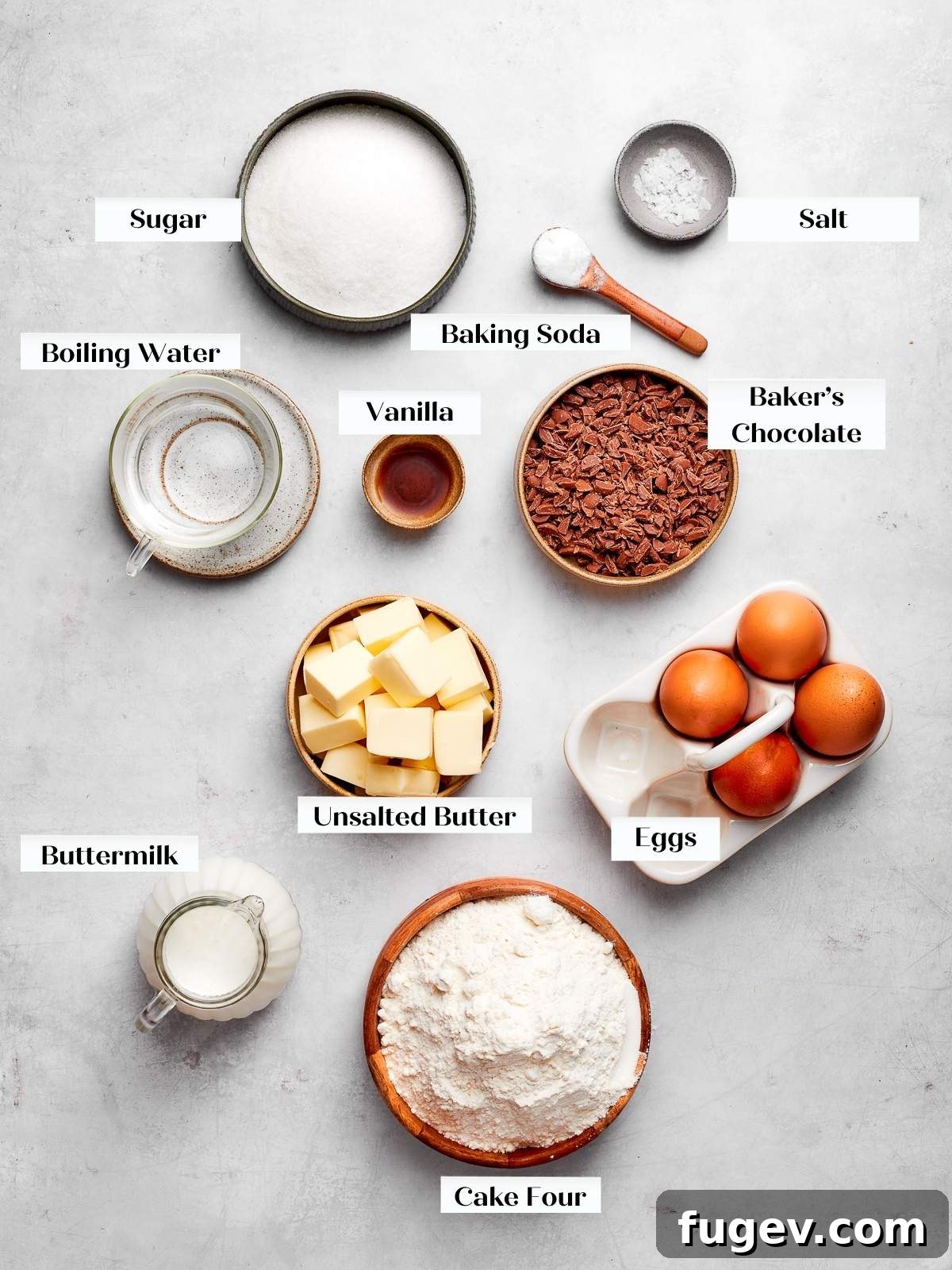
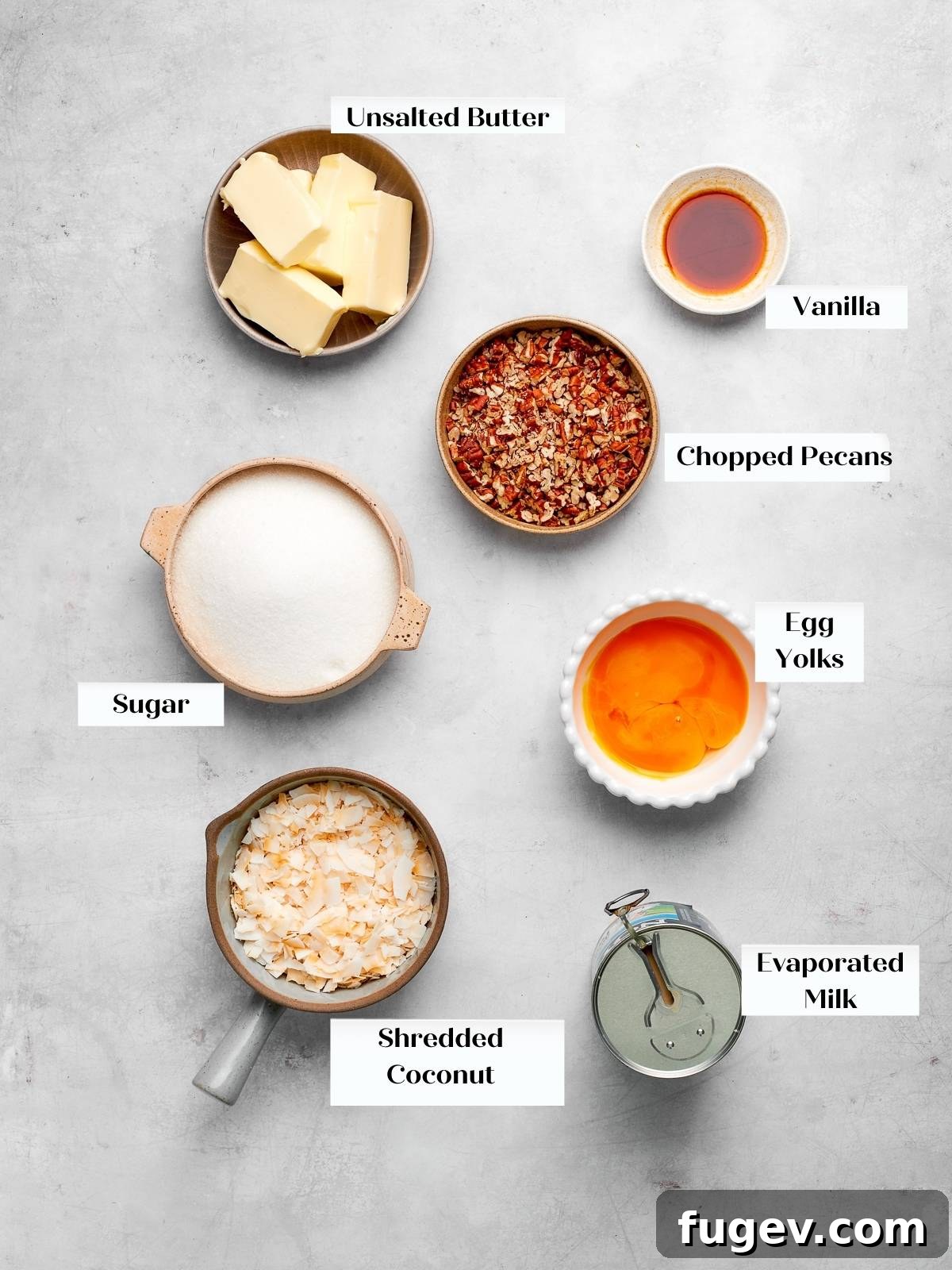
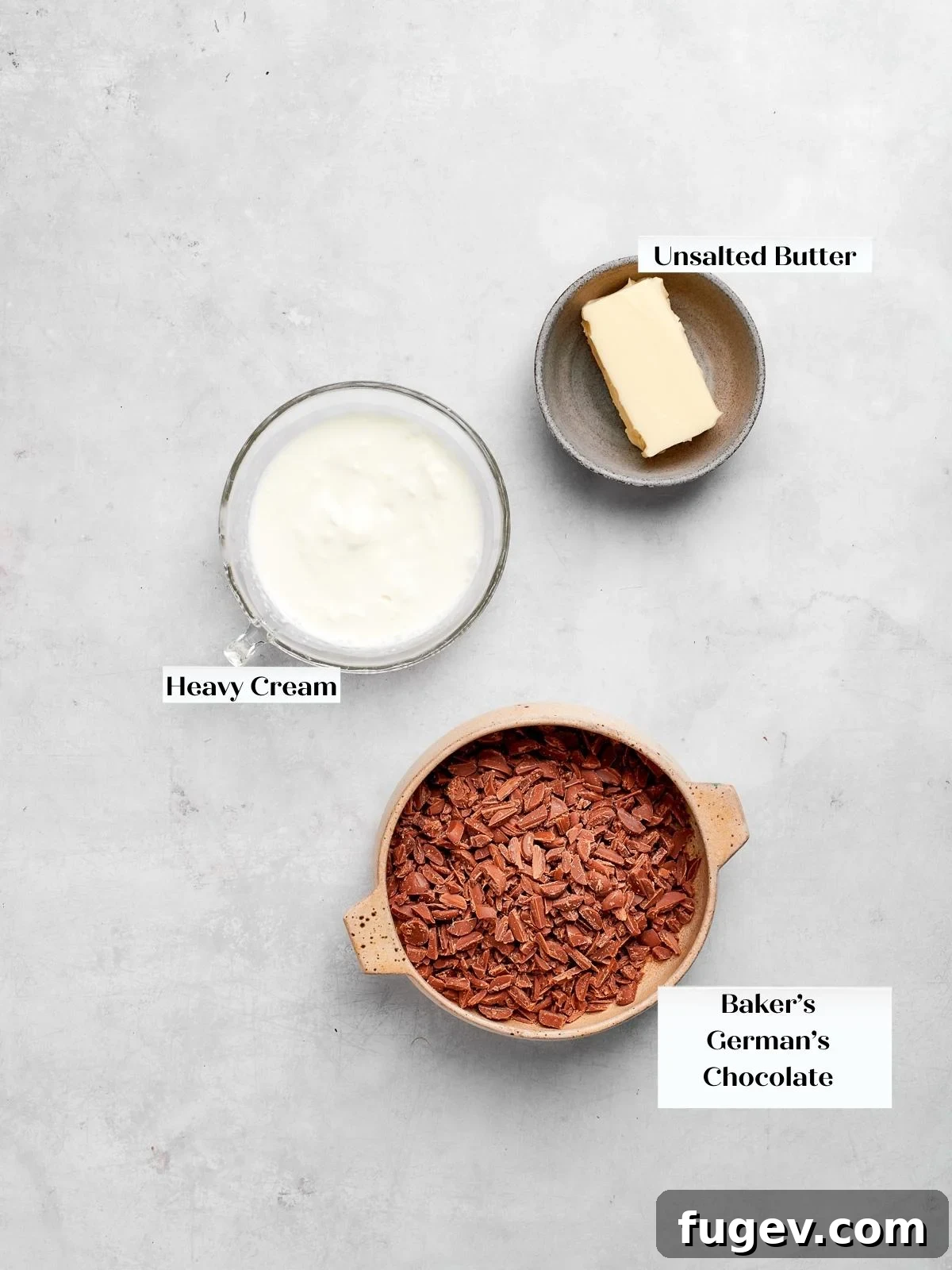
- Baker’s German’s Chocolate: This is genuinely not optional for an authentic German chocolate cake experience. It’s sweeter and milder than standard semisweet chocolate, providing the unique, nuanced flavor profile that sets this cake apart. Using any other chocolate will result in a different, often darker and less characteristic, taste.
- Cake Flour: Essential for producing that desired tender, airy crumb. Cake flour has a lower protein content than all-purpose flour, leading to a softer texture. While you *can* substitute all-purpose flour in a pinch, expect a slightly denser cake. This is the same principle I employ in my coconut cupcakes for an incredibly light and fluffy result.
- Reduced Fat Buttermilk: The acidity in buttermilk reacts with baking soda to create lift and contributes to a wonderfully soft and moist cake crumb. Its tangy note also beautifully balances the sweetness of the chocolate. Whole buttermilk can also be used.
- Unsalted Butter: Always use softened, unsalted butter for the creaming method. This ensures proper aeration and a smooth, consistent batter. Unsalted butter allows you to control the total salt content in your recipe.
- Eggs: Separated eggs play a dual role. The whipped egg whites are crucial for providing significant lift and lightness to the cake batter, creating its delicate structure. The yolks, on the other hand, enrich both the cake layers and the decadent coconut pecan topping, adding flavor and moisture.
- Evaporated Milk: Absolutely vital for the classic coconut pecan frosting. Do not mistake it for sweetened condensed milk, which is much thicker and significantly sweeter. Using sweetened condensed milk will result in a cloyingly sweet and overly dense frosting that lacks the authentic texture and balance.
- Unsweetened Shredded Coconut: Opting for unsweetened coconut is crucial to keep the overall sweetness of the frosting balanced. It allows the caramelized notes to shine without becoming overwhelmingly sugary, ensuring an authentic texture and flavor.
- Heavy Cream: This is the base for our silky butter ganache emulsion. High-quality heavy cream ensures a smooth, stable, and luxurious ganache that sets beautifully between the cake layers.
Refer to the comprehensive recipe card below for precise measurements and quantities of all ingredients.
Creative Variations on This German Chocolate Cake Recipe
While the classic German chocolate cake is perfect as is, you can certainly adapt this recipe to suit your preferences or occasion. Here are a few delightful variations to consider:
- Simplify Your Frosting: If you’re short on time or prefer a less complex assembly, you can skip the ganache filling entirely. Instead, use the creamy coconut pecan frosting between all the layers as well as on top. This creates a more uniform, yet equally delicious, flavor throughout the cake.
- German Chocolate Cupcakes: Transform this layered cake into delightful individual treats. Simply divide the cake batter into lined cupcake tins and bake for approximately 18–22 minutes, or until a toothpick inserted comes out clean. This method is similar to how I create my popular German chocolate cupcakes, complete with a ganache filling option!
- “Naked” or Rustic Style: For a more contemporary and less formal presentation, consider a “naked-style” finish. Frost only the top of the cake generously with the coconut pecan topping, and apply just a very thin, scraped coating of frosting to the sides, allowing the beautiful chocolate cake layers to peek through. This offers a charmingly rustic aesthetic.
- Add a Boozy Kick: Infuse your cake with a hint of liqueur. Brush the cooled cake layers lightly with a complementary spirit like a coffee liqueur (e.g., Kahlúa), dark rum, or even a bourbon. This adds an extra layer of flavor complexity and moisture.
- Chocolate Shavings or Curls: For an elegant garnish, sprinkle chocolate shavings or curls over the top of the coconut pecan frosting. This adds visual appeal and a touch more chocolatey goodness.
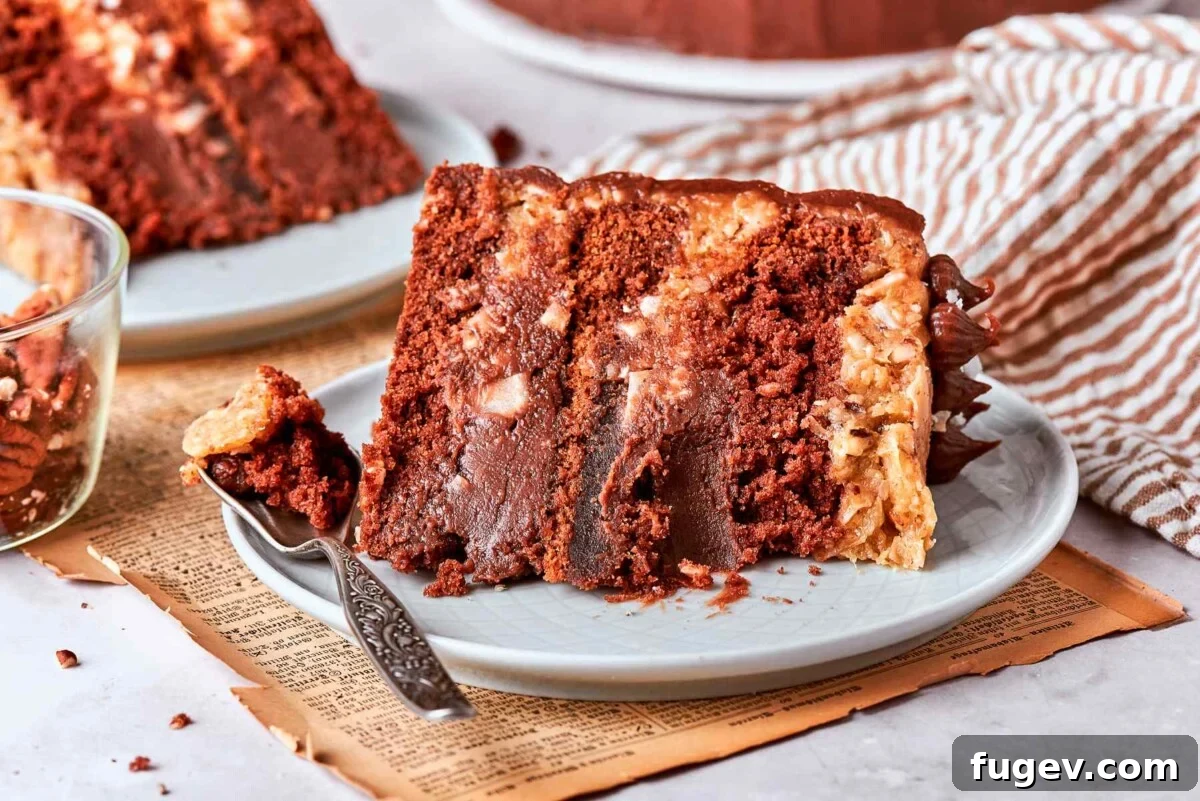
Professional Tips for Baking Success
Baking a showstopping German chocolate cake is within your reach with these expert tips, refined from years in the kitchen. They make all the difference in achieving bakery-quality results:
- Rewhisk Egg Whites Before Folding: After whipping your egg whites to stiff peaks and setting them aside, it’s crucial to give them a quick re-whisk just before you’re ready to incorporate them into the batter. This brief refresh helps to re-stabilize the foam and ensures they remain light and airy, contributing maximum lift and a delicate crumb to your cake.
- Cook Frosting Fully to the Right Consistency: The coconut pecan frosting is a custard-style frosting, meaning it needs to be cooked on the stovetop. It is absolutely essential to cook this frosting until it thickens considerably and shows signs of light caramelization. This process develops its rich flavor and, more importantly, ensures it achieves the structural integrity needed to hold up in a layered cake. If you’re comfortable making a classic pastry cream, you’ll find the technique for this frosting very similar and intuitive!
- Beat Frosting While Cooling: This is a game-changer for the coconut pecan frosting. Transferring the hot frosting to a stand mixer and beating it on medium speed as it cools serves a dual purpose. First, it helps to cool the frosting down quickly and evenly. Second, and most importantly, it develops its body and spreadable thickness, preventing it from becoming too sticky or too thin. This pro move ensures maximum stability for layering.
- Chill Between Layers for Stability: Patience is a virtue in cake assembly, especially when dealing with multiple layers and rich fillings. Incorporate at least two 20–30 minute refrigeration rests during assembly. Chilling the cake after each ganache layer allows the ganache to firm up slightly, creating a stable foundation for the next layer and preventing any shifting or squishing. This ensures beautifully neat and clean slices.
- Accurate Ingredient Measurement: Baking is a science. Using a kitchen scale to measure dry ingredients like flour and sugar by weight (grams) rather than volume (cups) will provide far more accurate and consistent results, leading to a perfectly balanced and textured cake every time.
- Don’t Overmix: Once you add the dry ingredients to the wet ingredients, mix only until just combined. Overmixing develops the gluten in the flour, which can lead to a tough, dry cake. Gentle folding of the egg whites is also paramount for maintaining airiness.
How to Make the Perfect German Chocolate Cake
Follow these detailed instructions to create a truly perfect German chocolate cake every single time! Further specifics, including precise measurements and quantities, are provided in the comprehensive recipe card below.
Step 1: Prepare Oven and Pans. Preheat your oven to 325°F (160°C) if using convection (fan-assisted) or 350°F (175°C) for a conventional oven. Prepare three 9-inch round cake pans by spraying them thoroughly with nonstick baking spray and lining the bottoms with parchment paper circles. This prevents sticking and ensures easy release.
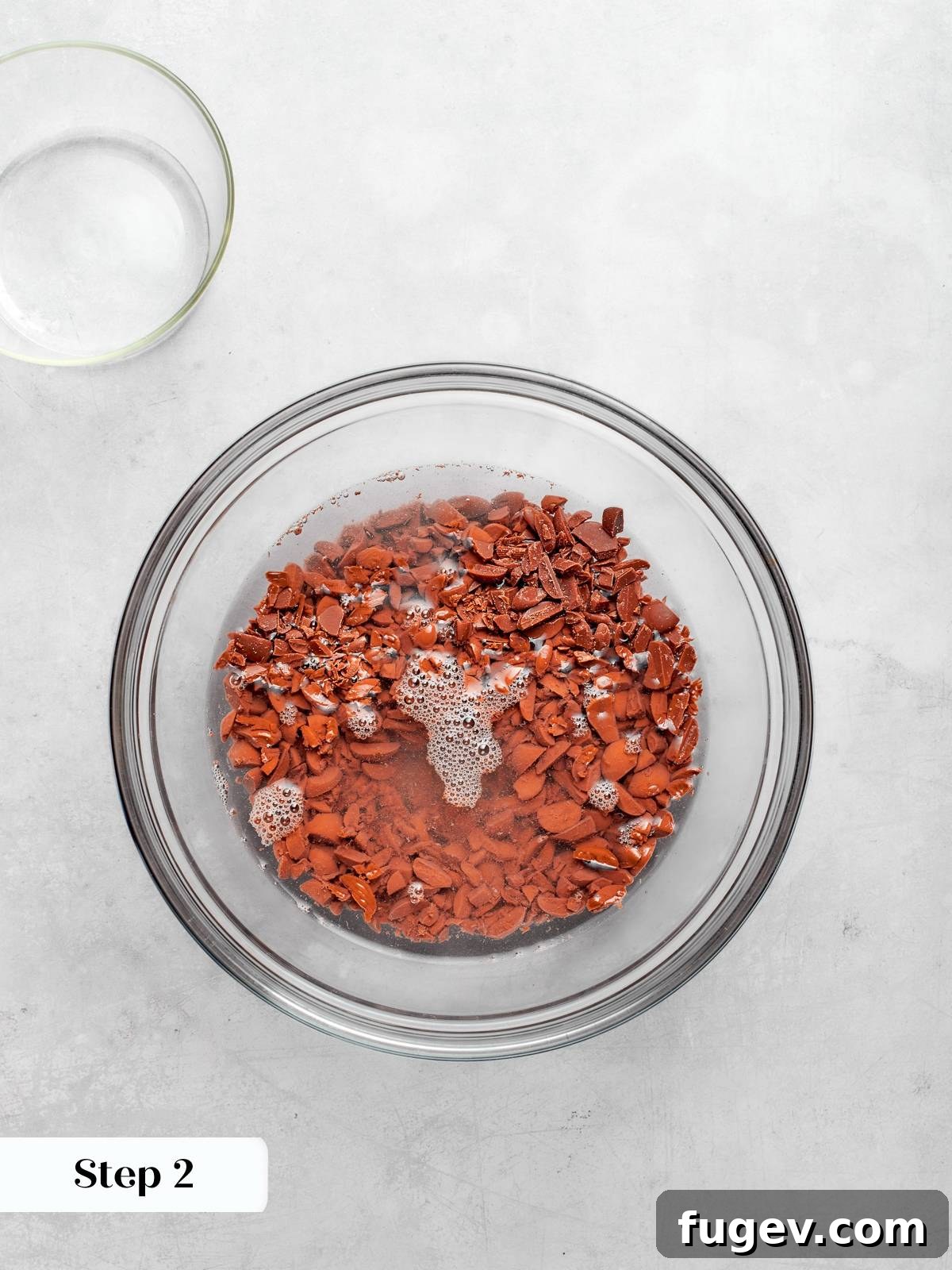
Step 2: Melt German’s Chocolate. In a small, heatproof bowl, combine 4 ounces (100g) of finely chopped Baker’s German’s chocolate with ½ cup of boiling water. Whisk continuously until the chocolate is completely melted and the mixture is smooth and glossy. Set this aside to cool completely to room temperature. This step is crucial for the chocolate to integrate properly into the batter (photo 1).
The hot water is key here; it helps the chocolate melt smoothly and prevents it from scorching or seizing, ensuring a consistent chocolate base for your cake.
Step 3: Sift Dry Ingredients. In a separate medium-sized bowl, sift together 2½ cups (300g) of cake flour, ½ teaspoon of kosher salt, and 1 teaspoon of baking soda. Sifting ensures there are no lumps and helps aerate the flour, contributing to a lighter cake. Set this mixture aside.
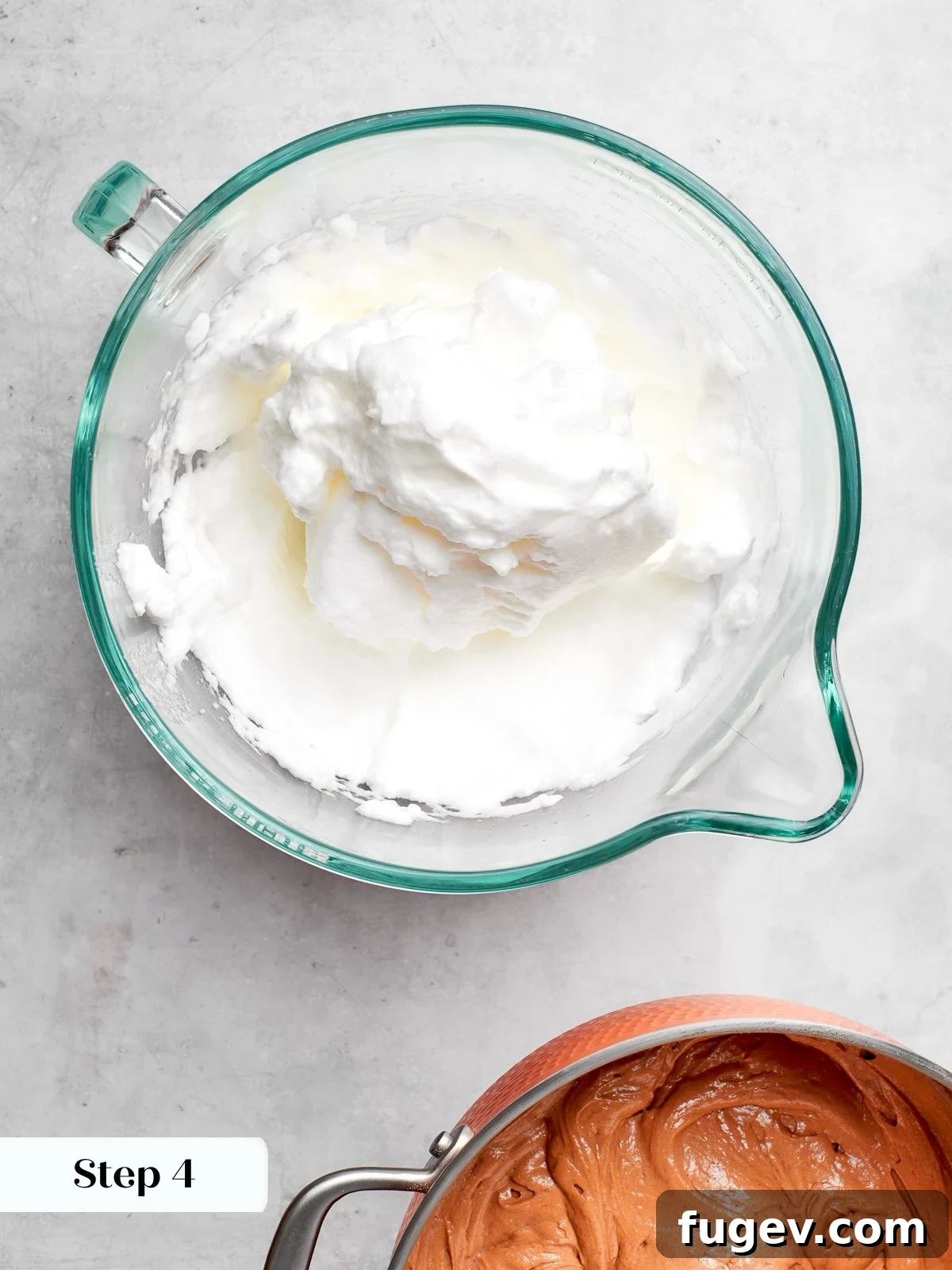
Step 4: Whip Egg Whites. In a meticulously clean, dry bowl (preferably a stand mixer bowl), beat the 4 egg whites using the whisk attachment until they form stiff, glossy peaks. Be careful not to overbeat, as they can become dry. Gently set these aside for later (photo 2).
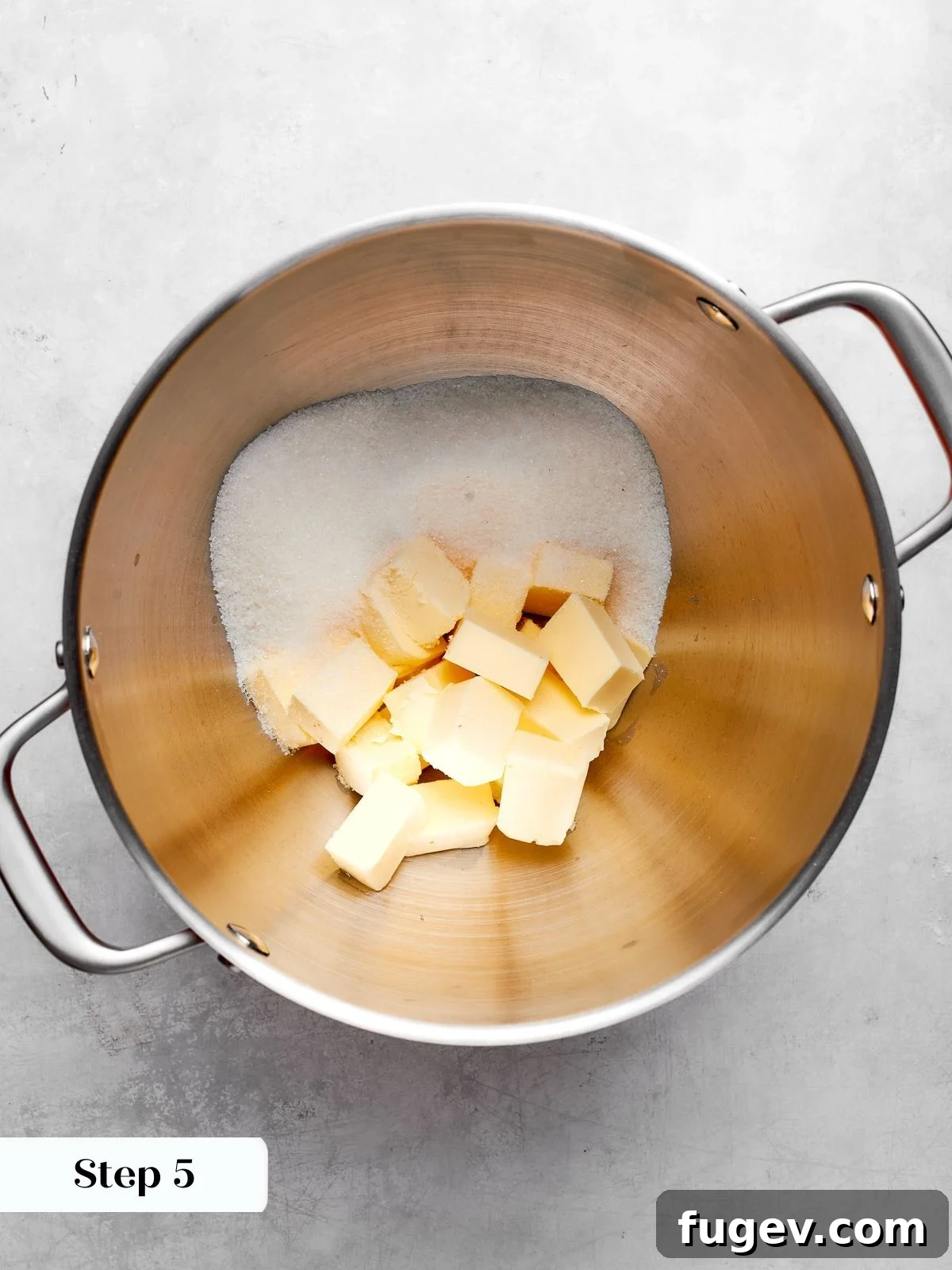
Step 5: Cream Butter & Sugar. In the bowl of a stand mixer fitted with the paddle attachment, beat 1 cup (226g) of softened unsalted butter with 2 cups (460g) of granulated sugar on medium speed. Continue beating for about 3–4 minutes, until the mixture is visibly lightened in color and fluffy in texture. This creaming process incorporates air, which is fundamental for a tender cake (photo 3).
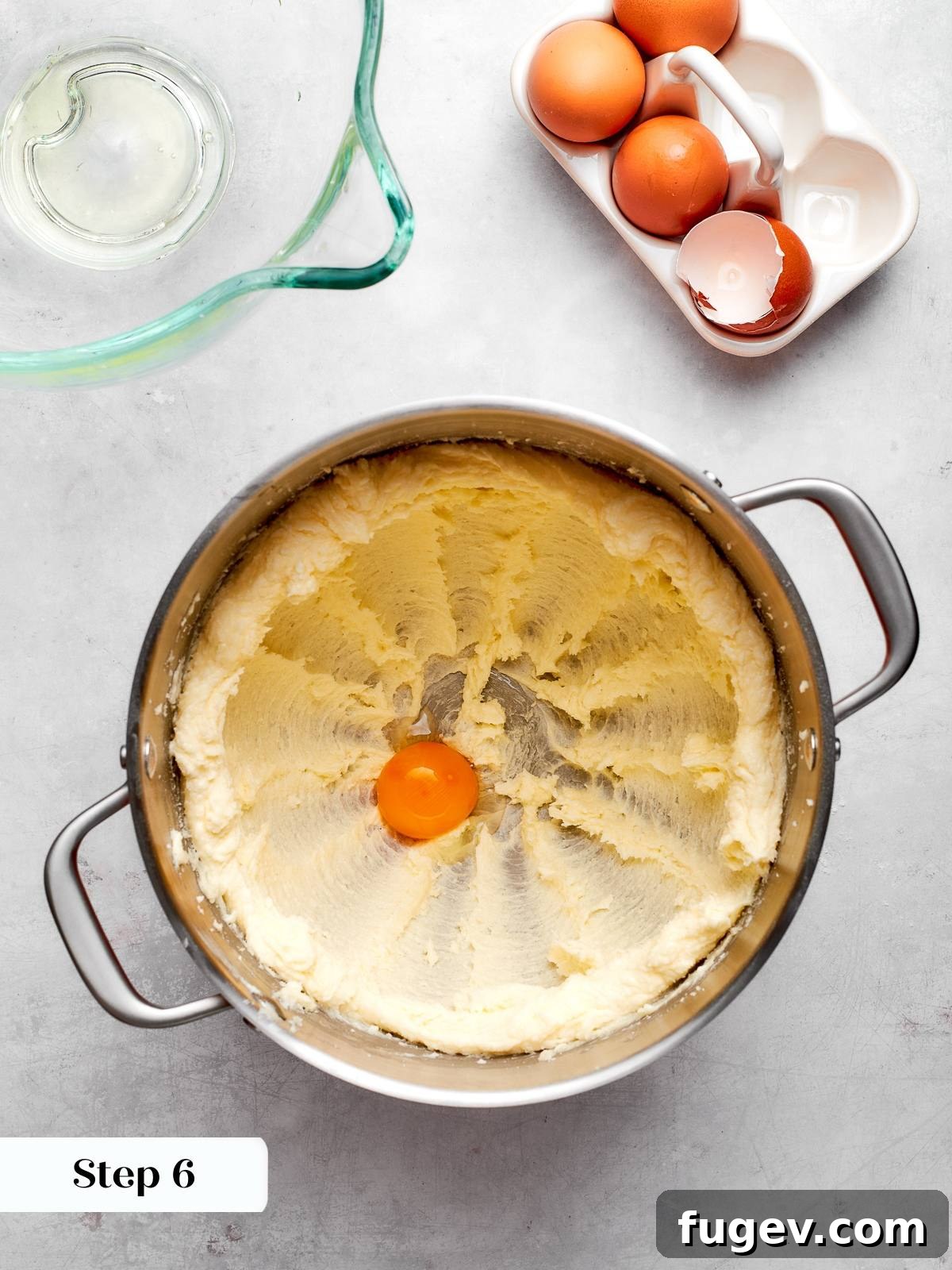
Step 6: Add Yolks and Vanilla. Add the 4 egg yolks to the creamed butter and sugar mixture, one at a time, beating well after each addition to ensure full incorporation. With the final egg yolk, add 1 teaspoon of vanilla extract. Scrape down the sides of the bowl to ensure everything is thoroughly mixed (photo 4).
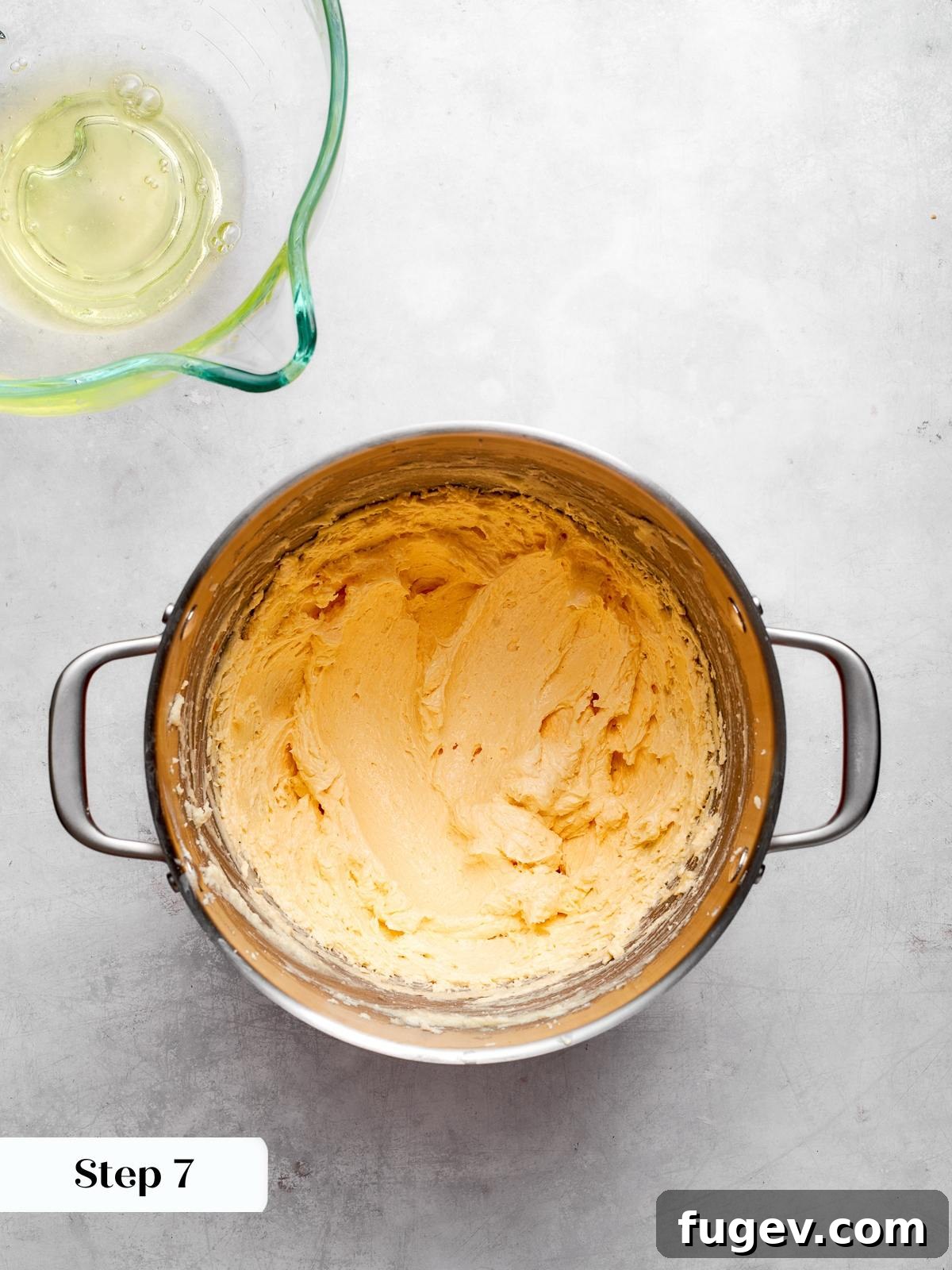
Step 7: Alternate Dry and Wet Additions. With the mixer set to low speed, begin to alternately add the sifted dry ingredients and 1 cup (260g) of buttermilk. Start and end with the flour mixture, adding them in three additions each. Mix only until the ingredients are just combined and no streaks of flour remain. At this stage, your cake batter should appear silky smooth and beautifully emulsified (photo 5).
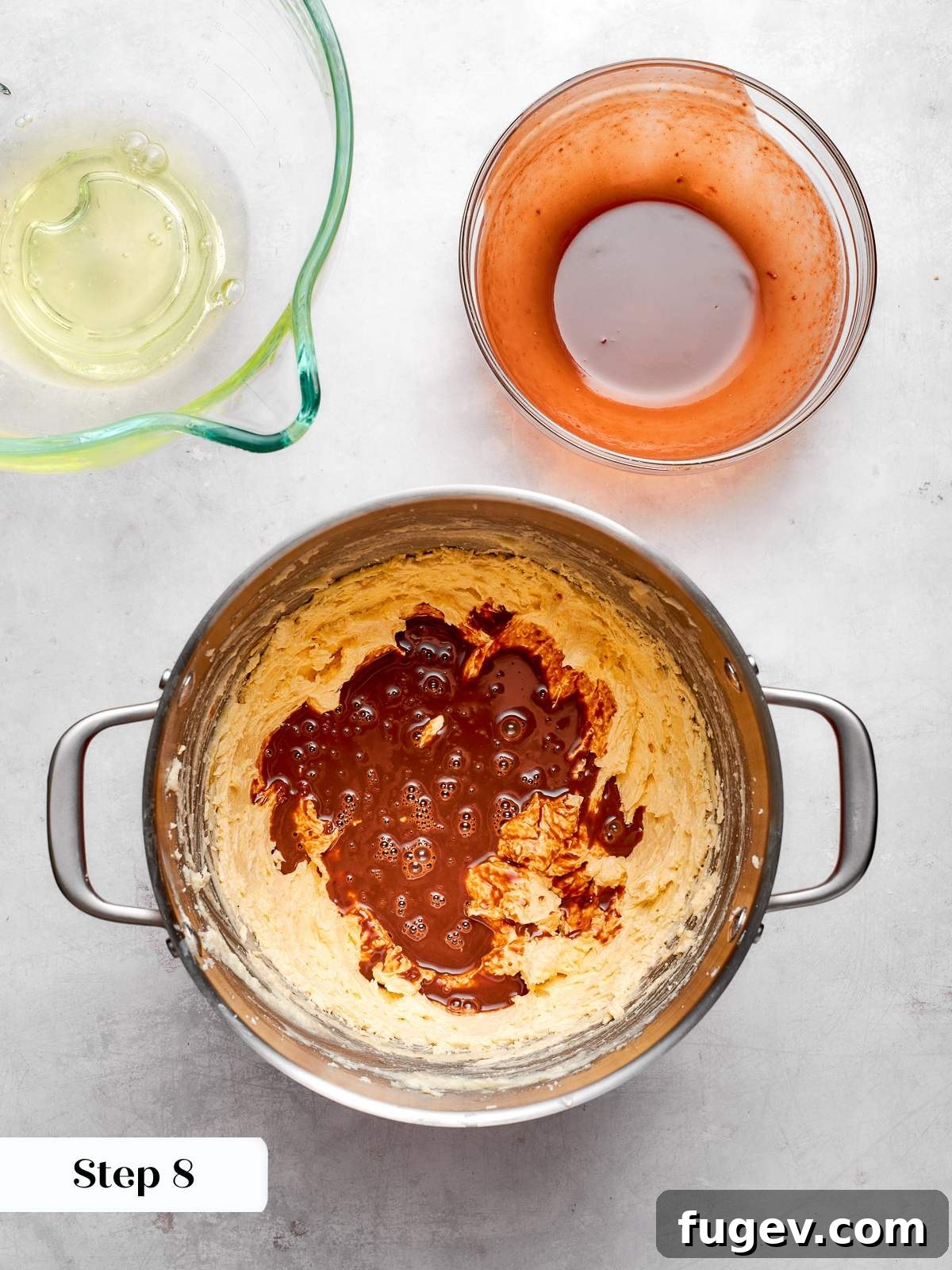
Step 8: Incorporate Melted Chocolate. Gently mix in the completely cooled German’s chocolate mixture until it is fully combined and the batter has a uniform chocolate color. Be careful not to overmix (photo 6).
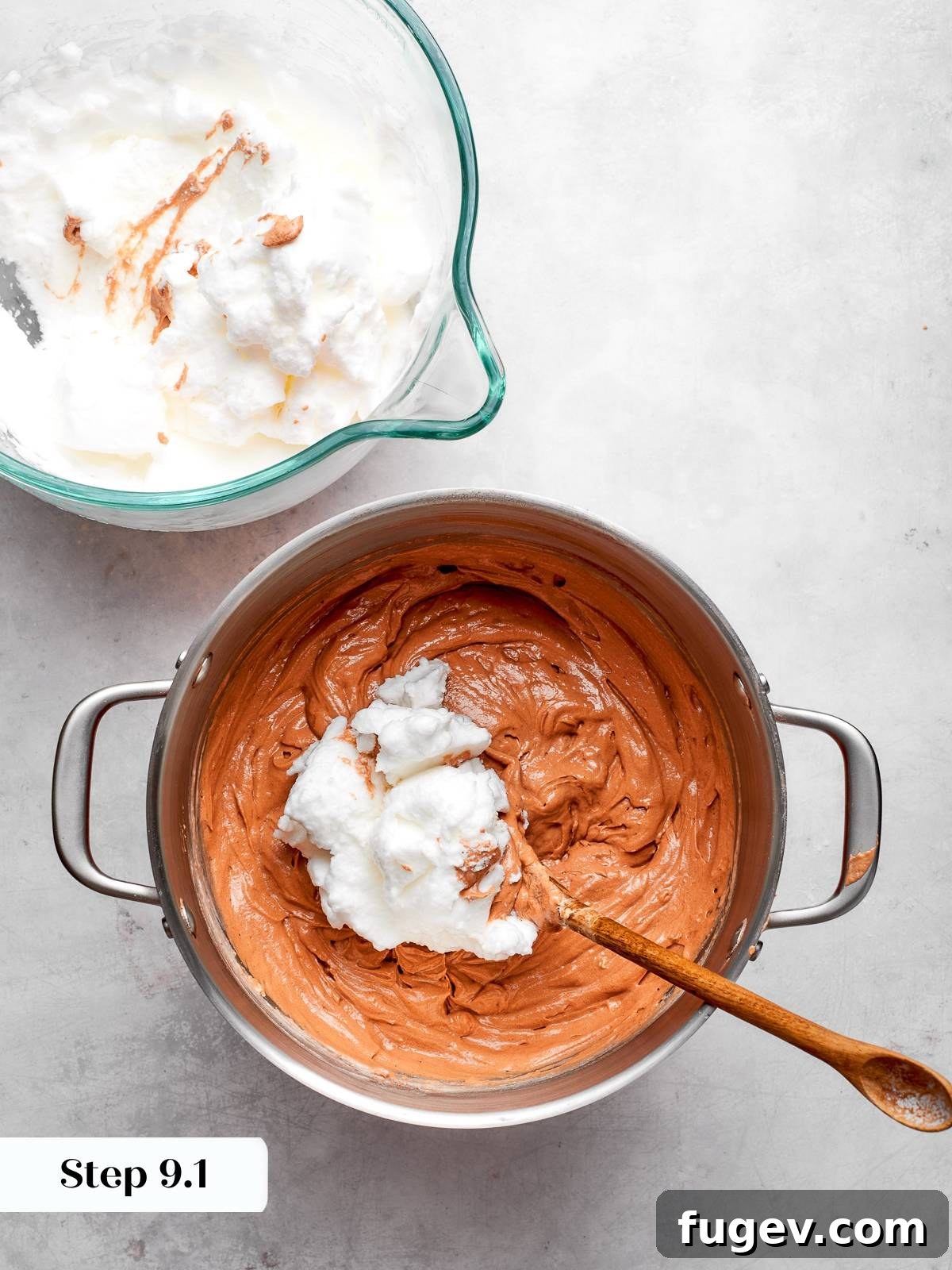
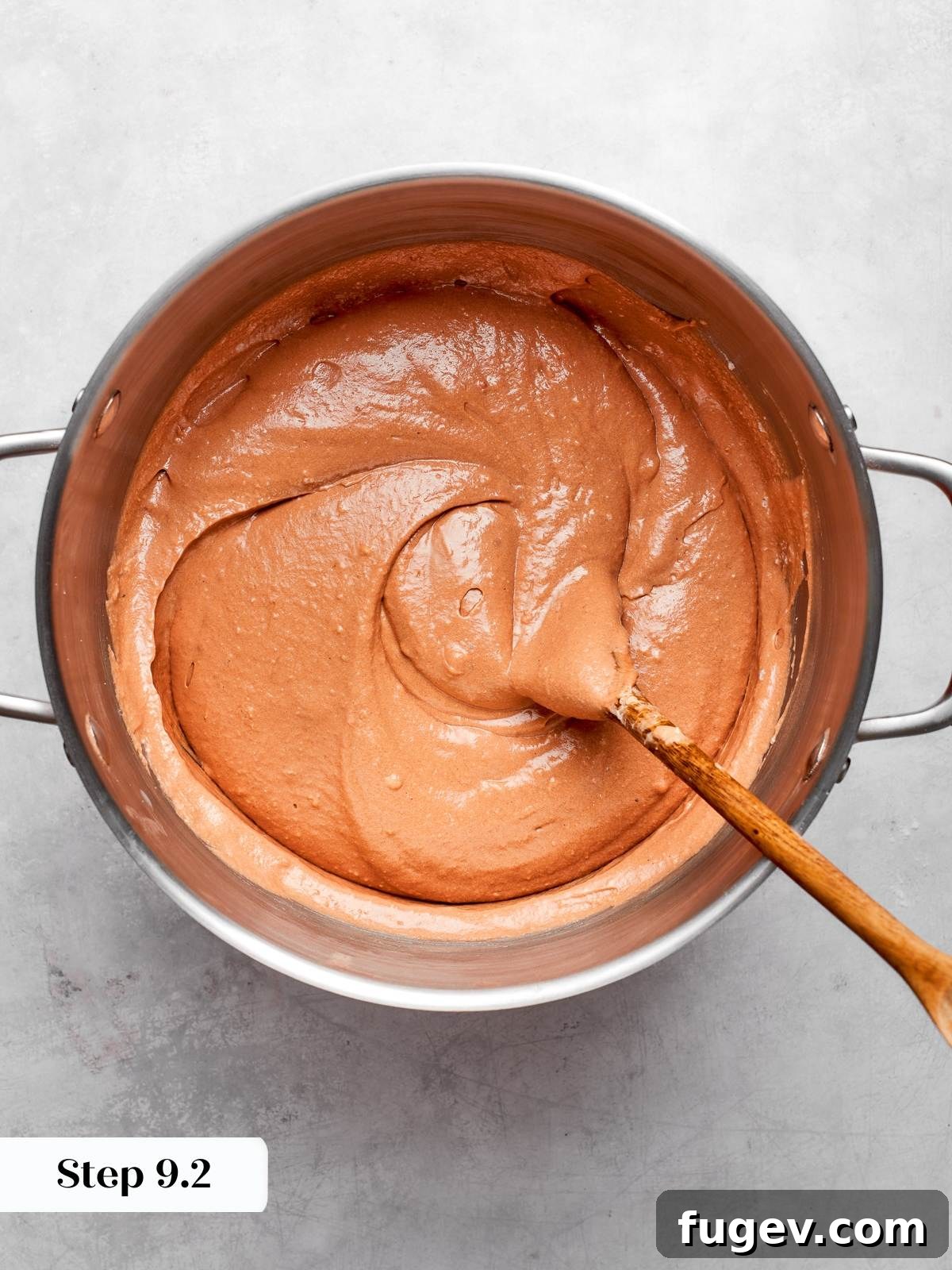
Step 9: Fold in Whipped Egg Whites. If necessary, re-whisk the reserved egg whites briefly to ensure they are still at stiff peaks. Then, very gently fold the whipped egg whites into the chocolate batter using a spatula. Use a light, lifting motion until no white streaks are visible. This crucial step adds lightness and airiness to your cake (photos 7 & 8).
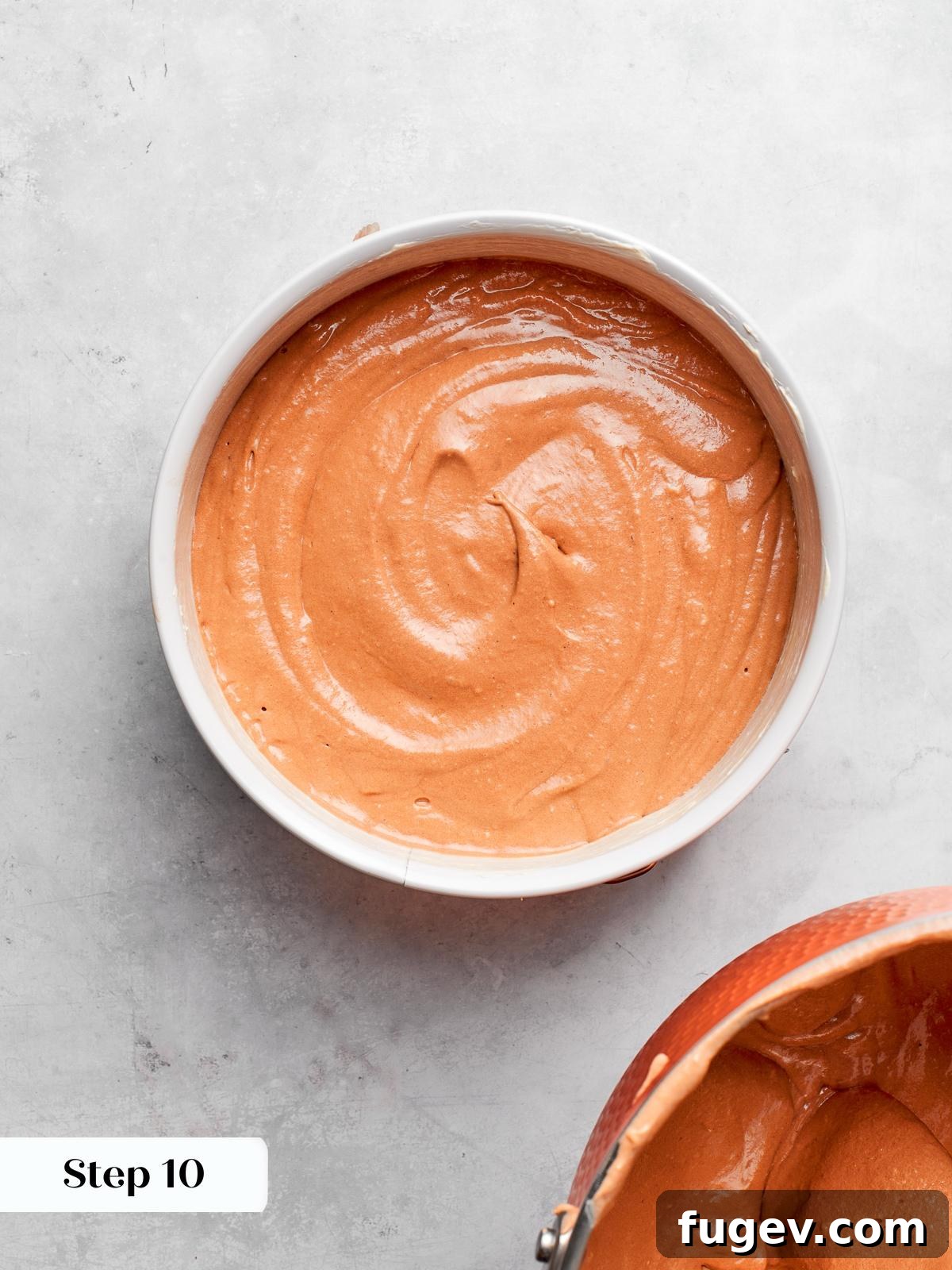
Step 10: Bake Cake Layers. Divide the batter evenly among the three prepared cake pans. Bake for 25–28 minutes, or until the centers spring back lightly when gently touched, and a toothpick inserted into the middle comes out clean. Avoid opening the oven door too frequently during baking (photo 9).
Step 11: Cool Cakes Completely. Once baked, allow the cakes to cool in their pans for 10 minutes. Then, carefully invert them onto wire racks to cool completely. Ensure they are fully cooled before attempting to frost, otherwise your frosting will melt.
If you’re preparing ahead, wrap the cooled cake layers tightly in plastic wrap and store them in the fridge overnight. This keeps them moist and fresh for assembly the next day.
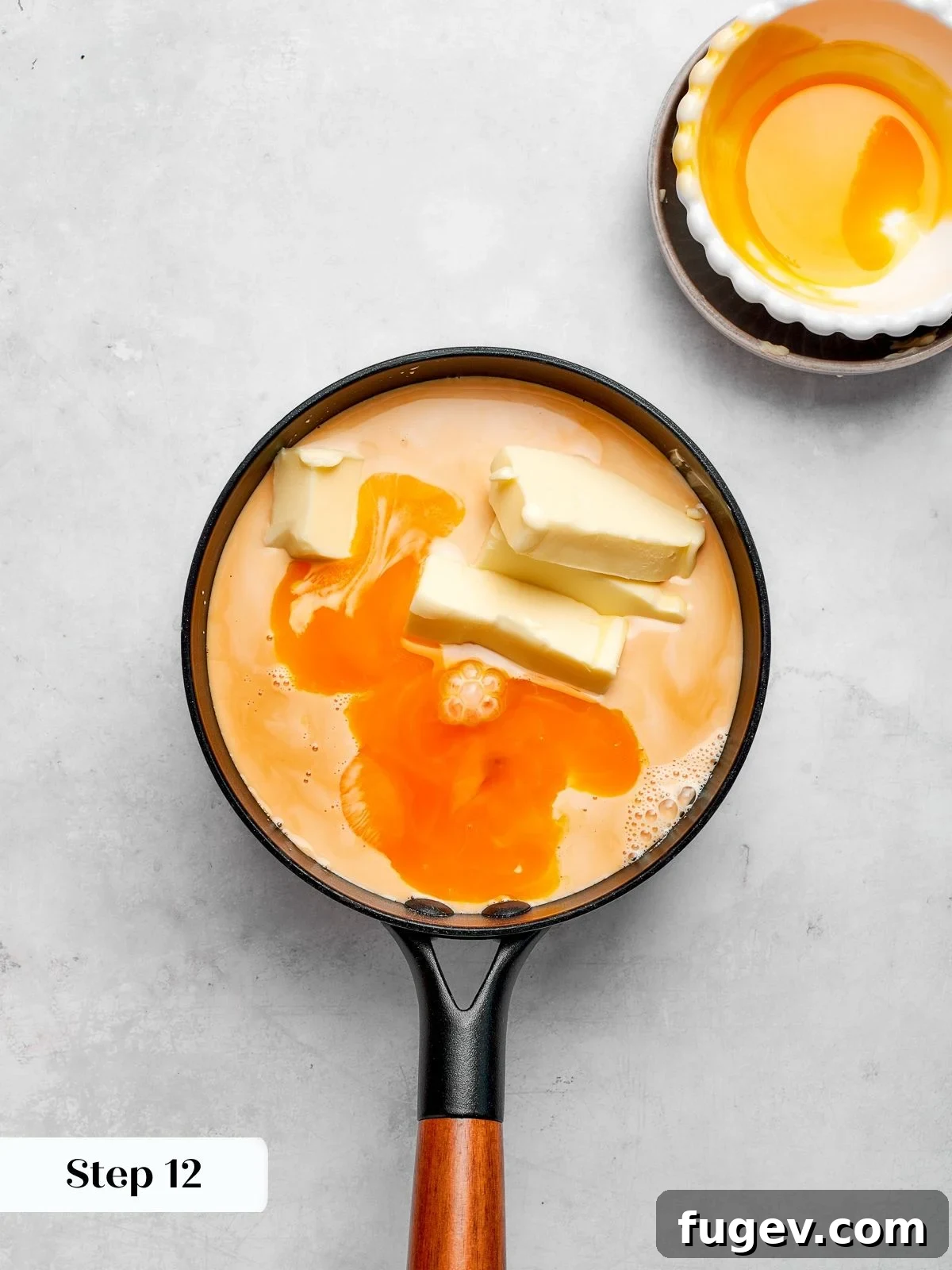
Step 12: Cook Custard Base for Frosting. In a medium saucepan, whisk together 12 ounces of evaporated milk, 1½ cups (345g) of granulated sugar, 3 large egg yolks (60g), ¾ cup (170g) of unsalted butter, and 1½ teaspoons of vanilla extract. Cook this mixture over medium heat, stirring constantly with a whisk or rubber spatula. Continue cooking until the mixture thickens significantly and lightly caramelizes, which should take approximately 10–12 minutes. The constant stirring prevents scorching (photo 10).
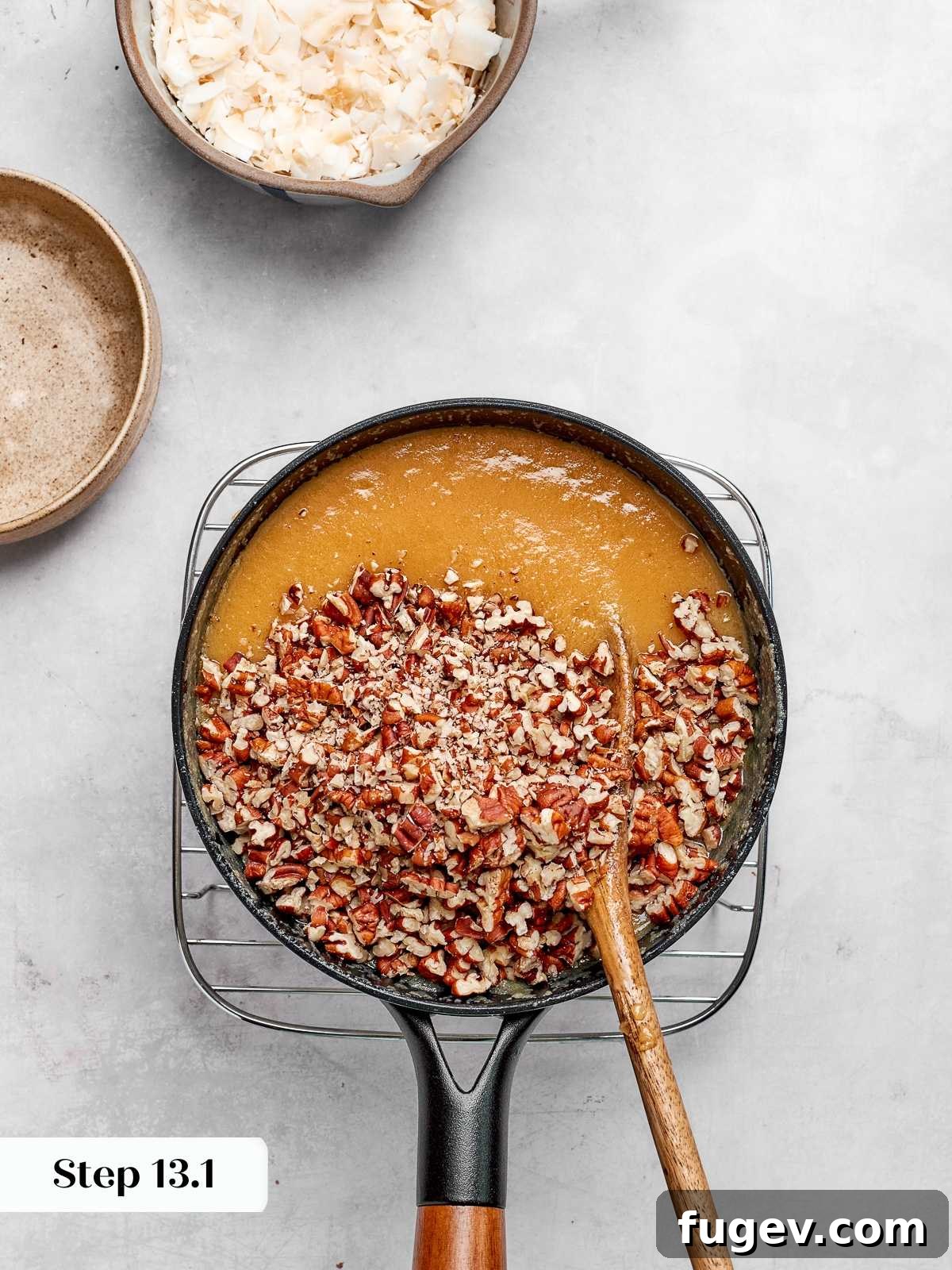
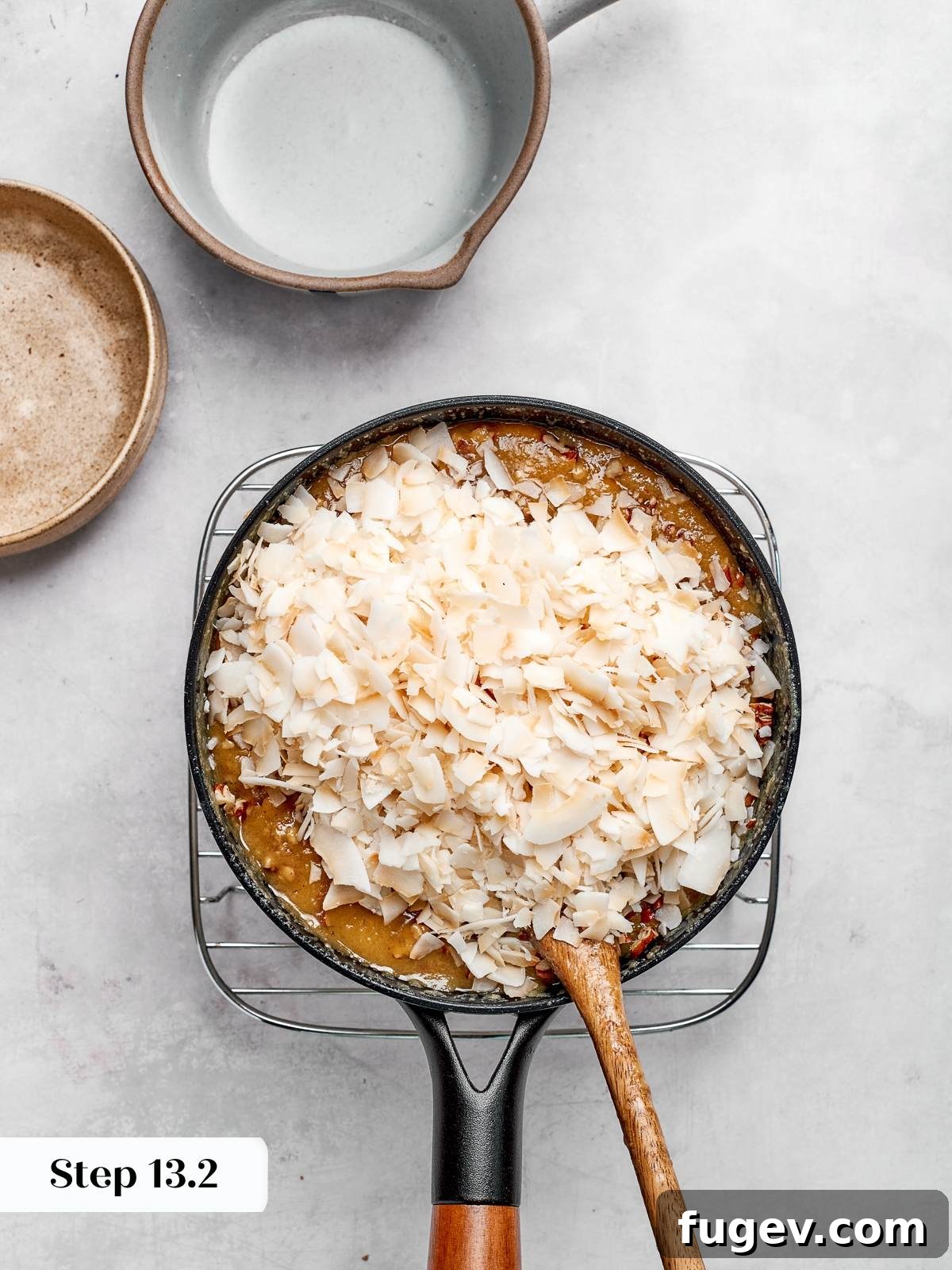
Step 13: Add Coconut & Pecans. Remove the saucepan from the heat. Immediately stir in 1½ cups (100g) of unsweetened shredded coconut and 1¼ cups (125g) of chopped pecans. Ensure they are evenly distributed throughout the warm custard base (photos 11 & 12).
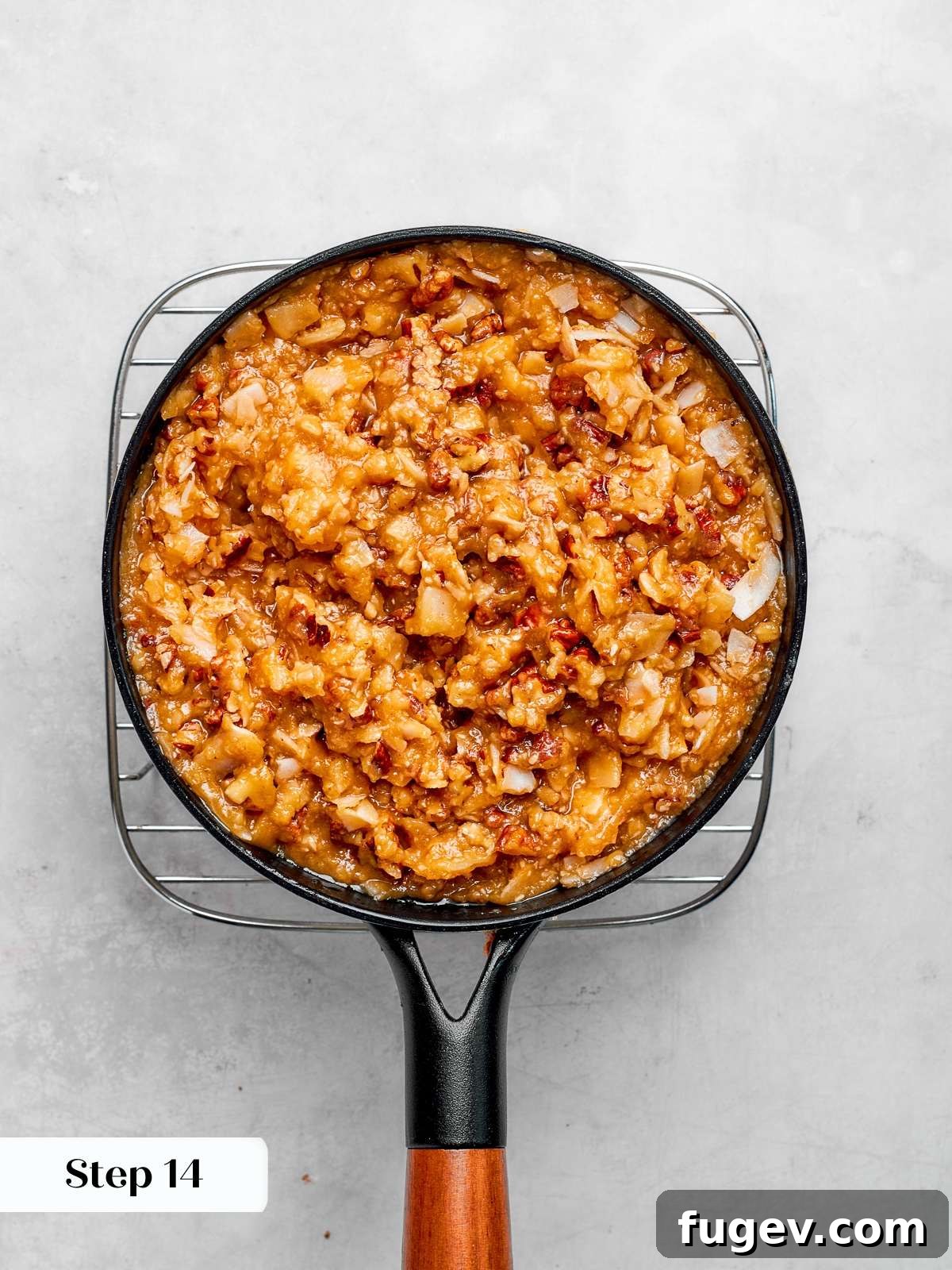
Step 14: Beat Frosting Until Thick. Transfer the hot coconut pecan mixture to the bowl of a stand mixer fitted with the paddle attachment. Beat on medium speed until the frosting cools down and thickens to a spreadable consistency. This can take about 10-15 minutes. This step is key for a stable frosting (photo 13).
If you’re new to making emulsions, my professional chocolate ganache recipe provides a comprehensive breakdown of ratios, troubleshooting tips, and texture guidance to master the technique!
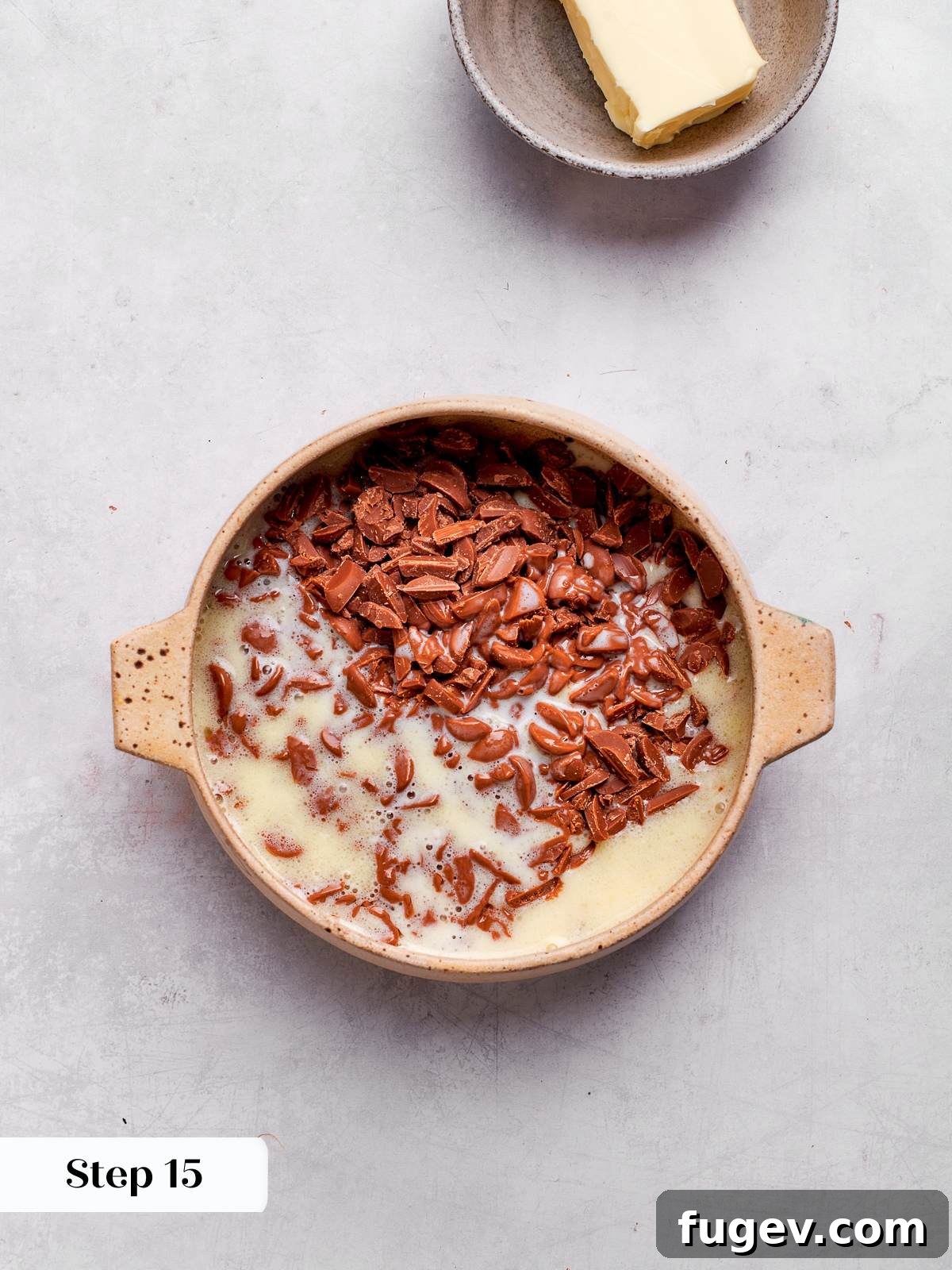
Step 15: Prepare Ganache Base. Finely chop 4 ounces of Baker’s German’s chocolate and place it in a heatproof bowl. In a small saucepan, heat ¼ cup of heavy cream just until it comes to a boil, ensuring it’s very hot (photo 14).
Step 16: Emulsify Ganache. Pour the hot cream directly over the finely chopped chocolate. Let it sit undisturbed for 1 minute to allow the heat to melt the chocolate. Then, starting from the center of the bowl and working outward, whisk gently until the mixture is smooth, glossy, and fully emulsified. This creates a beautifully homogenous ganache.
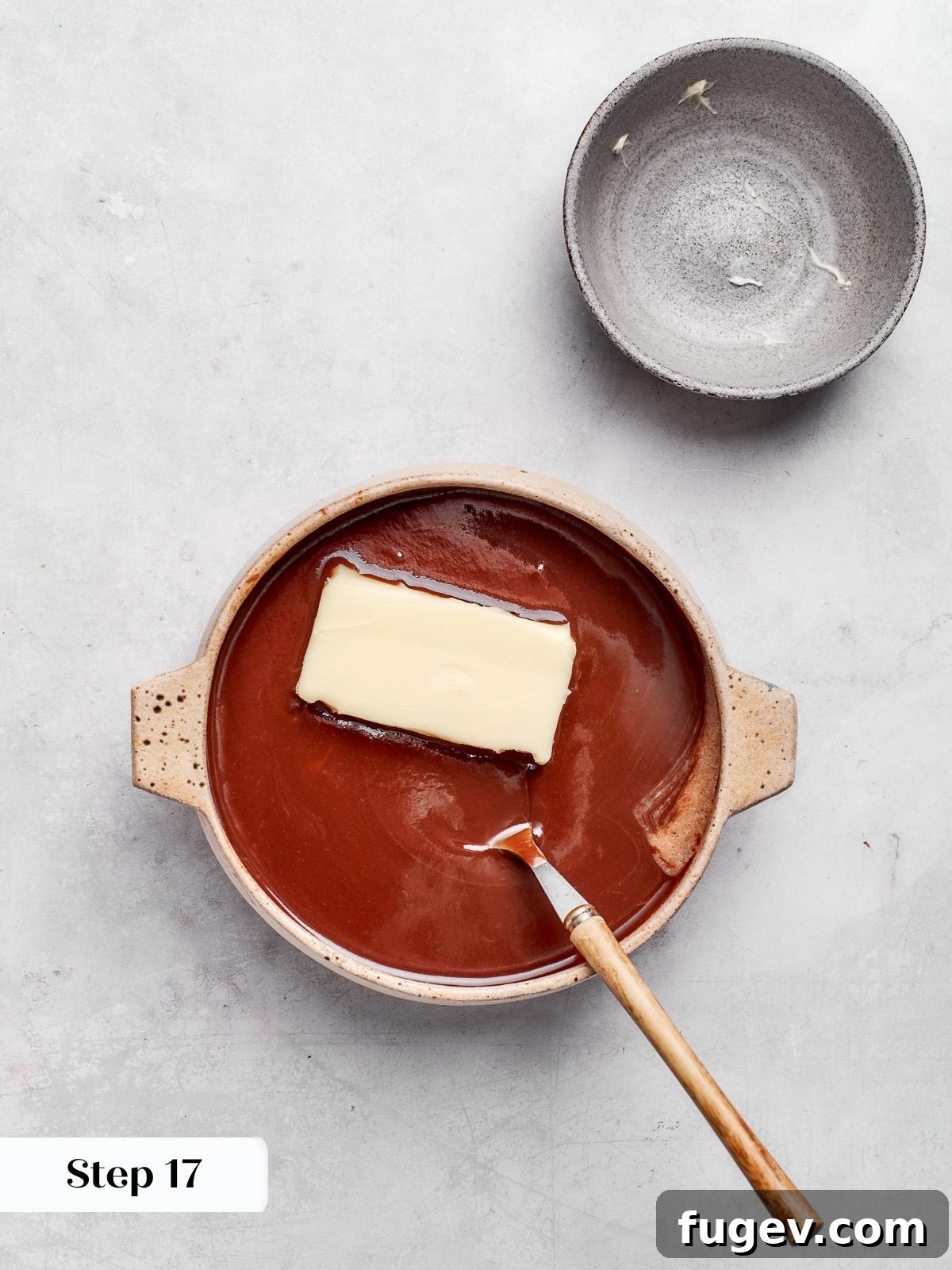
Step 17: Add Butter to Ganache. Whisk in 2 tablespoons of softened unsalted butter until it is completely incorporated and the ganache is wonderfully glossy and smooth. If the ganache seems too fluid, let it sit for a few minutes to thicken slightly before using (photo 15).
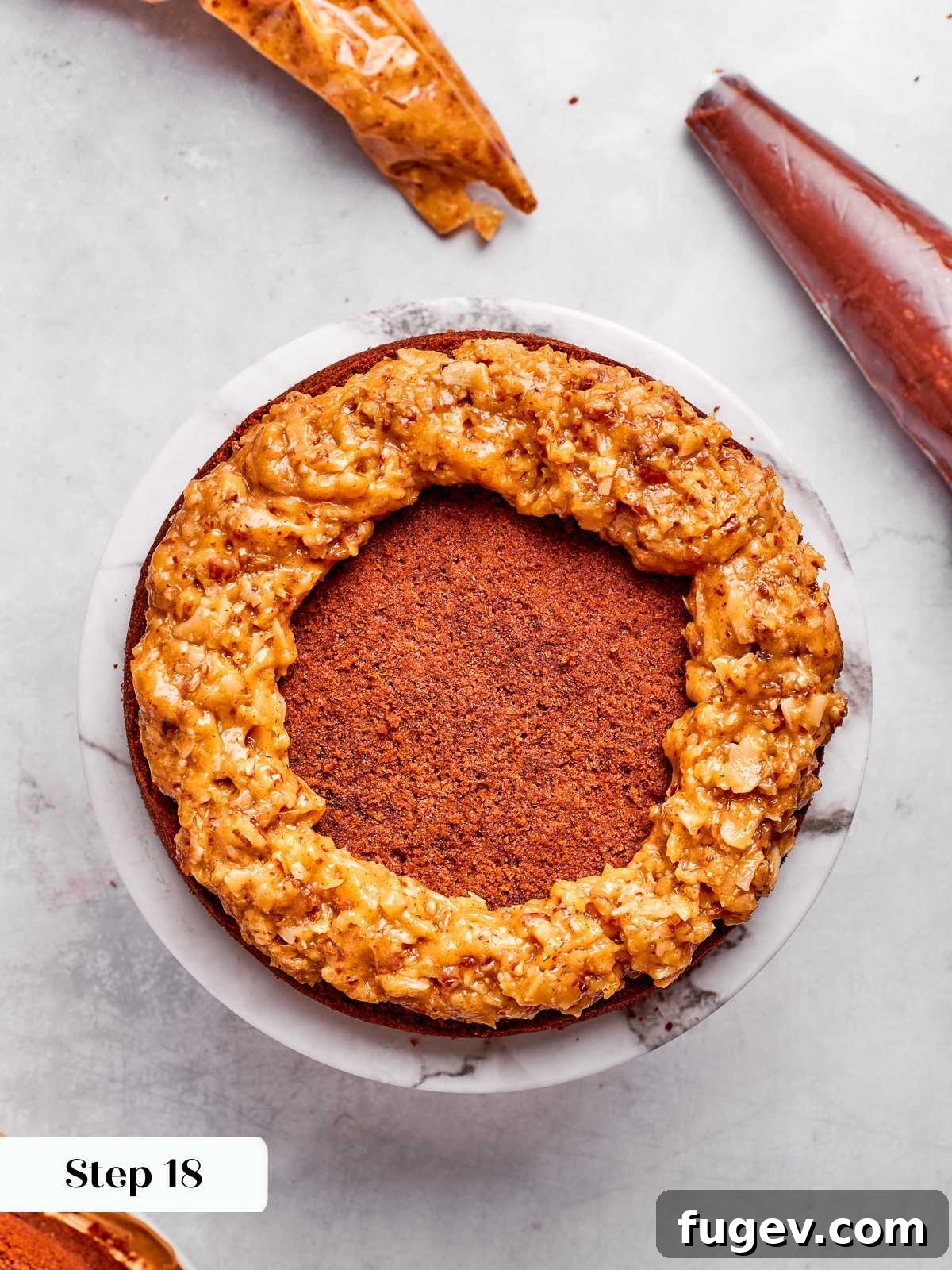
Step 18: Pipe Frosting Dam. Place the first cooled cake layer on your serving plate or cake stand. Using a piping bag or a spoon, pipe or spread a sturdy ring of the coconut pecan frosting around the very edge of this cake layer. This “dam” will contain the ganache filling (photo 16).
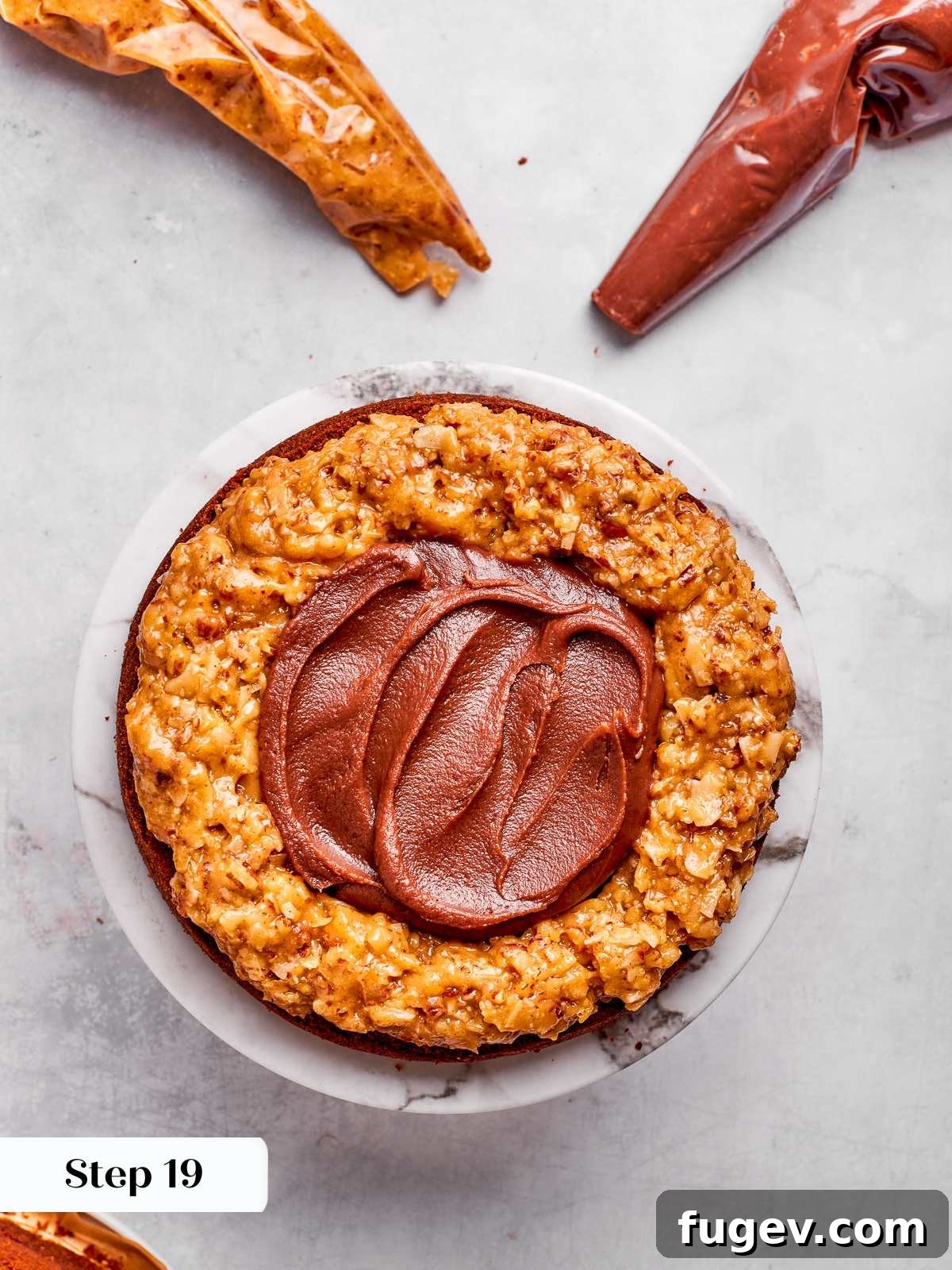
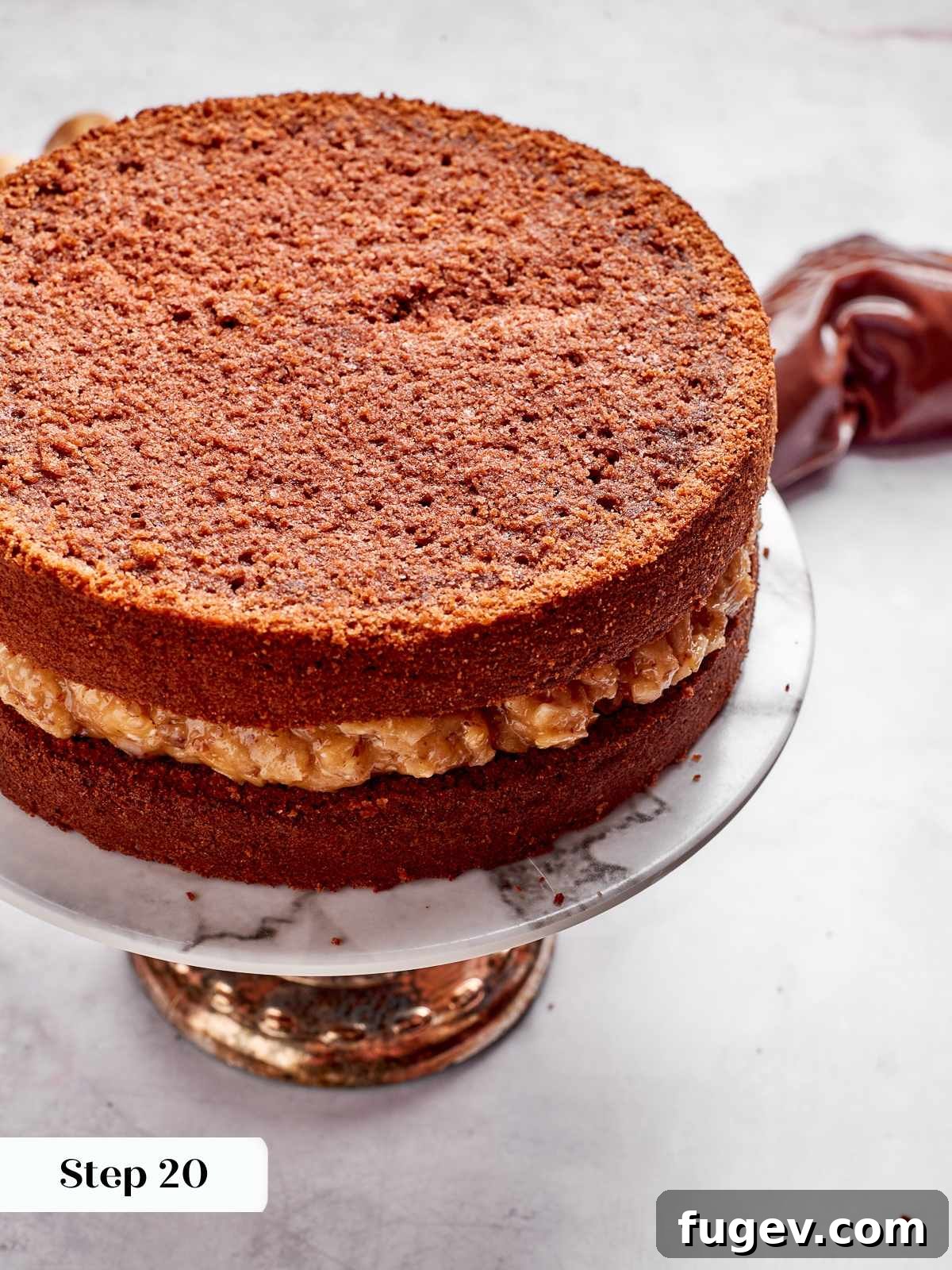
Step 19: Fill with Ganache & Chill. Carefully spread half of the prepared butter ganache inside the coconut pecan frosting dam on the first cake layer. Once filled, place the cake in the refrigerator for 20–30 minutes to allow the ganache to set slightly (photo 17).
Step 20: Repeat Layering Process. Carefully place the second cake layer on top of the chilled ganache. Repeat the process: pipe another ring of coconut pecan frosting around the edge, fill with the remaining ganache, and then top with the final cake layer. Chill the cake again for another 20–30 minutes to ensure stability (photo 18).
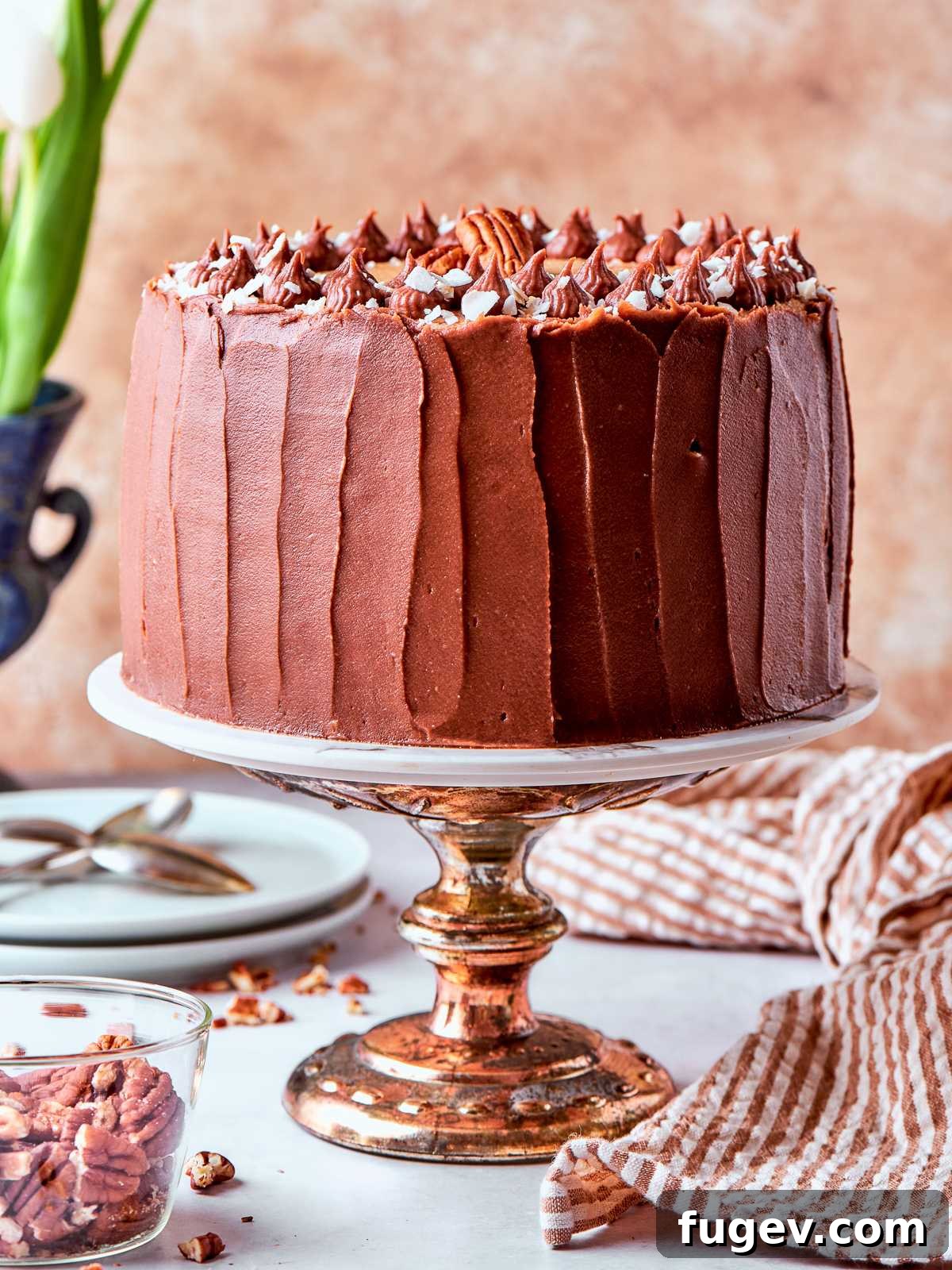
Step 21: Final Frosting & Garnish. Now for the grand finale! You can either spread a thin layer of the remaining coconut pecan frosting on the sides of the cake for a lightly frosted look, or leave the sides completely “naked” to showcase the beautiful layers. Finally, generously mound the remaining coconut pecan frosting on top of the cake. For an extra flourish, you can garnish with additional toasted pecans or shredded coconut if desired, adding both visual appeal and a textural crunch (photo 19).
For a more structured and elegant finish, I sometimes opt to pair similar layered cakes with a smooth caramel Swiss meringue buttercream instead of traditional custard-style toppings, offering a delightful contrast in texture and presentation.
Chef Lindsey’s Expert Baking Tip
German chocolate cake is renowned for its light and delicate texture. If your cake turns out dry, it is almost always due to overbaking or improper creaming of the butter and sugar. Achieving proper aeration during the creaming stage and diligently adhering to the specified baking times are far more critical for moisture and tenderness than attempting to compensate by adding extra oil. Trust the process for that perfect, moist crumb.
German Chocolate Cake FAQs
The primary distinction between a regular chocolate cake and a German chocolate cake lies in two main aspects: the type of chocolate used and the characteristic frosting. A traditional chocolate cake typically uses cocoa powder or a darker, richer chocolate (like bittersweet or semisweet) and is often finished with a variety of frostings such as buttercream, ganache, or cream cheese frosting. In contrast, a German chocolate cake is specifically made with Baker’s German’s sweet chocolate, which is known for its milder, sweeter flavor profile and a subtle caramel undertone. Crucially, it is always layered with its iconic cooked coconut pecan frosting, which sets it apart from any other chocolate cake. The texture of a German chocolate cake is also generally lighter, and its overall flavor is more balanced and distinctly caramel-forward, making it a unique and beloved dessert.
Without a doubt, the best chocolate for an authentic German chocolate cake is Baker’s German’s sweet chocolate. This specific chocolate was developed by Samuel German for the Baker’s Chocolate Company, and its unique composition gives the cake its distinct mild sweetness and specific flavor. This is what makes a German chocolate cake *German chocolate cake*. Using semi-sweet or dark chocolate as a substitute will result in a cake that has a heavier, more intense chocolate flavor, deviating from the classic profile. While you might be able to approximate the sweetness by adding a small amount of sugar to semi-sweet chocolate, the overall flavor and nuances will still differ from the traditional taste.
Yes, German chocolate cake freezes exceptionally well, making it a great make-ahead dessert. To preserve its freshness and texture, it’s best to wrap individual cake layers tightly in several layers of plastic wrap before freezing. If the cake is already assembled, you can freeze individual slices or the entire cake (unfrosted or frosted, though frosted can be trickier) by first chilling it until the frosting is firm, then wrapping it tightly in plastic wrap and a layer of aluminum foil. Properly wrapped cake layers or slices can be stored in the freezer for up to 2 months. When ready to serve, thaw the cake in the refrigerator overnight and then bring it to room temperature before enjoying for the best flavor and texture.
Several common pitfalls can affect your German chocolate cake. Firstly, overbaking the cake layers is a frequent mistake, leading to a dry, crumbly texture instead of the desired moistness. Always bake until a toothpick comes out clean and the center springs back lightly. Secondly, not cooking the coconut pecan frosting long enough can result in a runny, unstable topping that struggles to hold its shape. Ensure it thickens and lightly caramelizes on the stovetop. Thirdly, substituting Baker’s German’s chocolate with darker chocolates will alter the authentic flavor profile significantly. Stick to the specified chocolate for true results. Lastly, overmixing the cake batter after adding the dry ingredients or folding the egg whites too vigorously can deflate the batter and make the cake tough. Gentle handling is key to a tender crumb.
More Recommended Chocolate Cake Recipes to Explore
If you’ve fallen in love with the rich flavors of this German chocolate cake, you’ll surely enjoy these other decadent chocolate creations:
Cake Recipes
Devil’s Food Cake: The Ultimate Indulgence
Dive into the deepest, darkest chocolate experience with this classic Devil’s Food Cake, perfect for serious chocolate lovers.
Cupcake Recipes
Death by Chocolate Cupcakes: Irresistibly Decadent
These intensely chocolatey cupcakes are a must-try for any celebration, delivering a rich and moist bite every time.
Date Night
Easy Chocolate Desserts for Any Occasion
Craving chocolate but short on time? Explore these simple yet satisfying chocolate dessert recipes, perfect for quick fixes.
Cupcake Recipes
St. Patrick’s Day Cupcakes: Guinness, Baileys & Caramel
Celebrate with these rich chocolate stout cupcakes, topped with creamy Baileys buttercream and a hint of salted caramel.
If you tried this recipe and loved it, please leave a 🌟 star rating and let me know how it goes in the comments below. I love hearing from you; your comments make my day!
German Chocolate Cake
Chef Lindsey
45 mins
23 mins
1 hr
2 hrs 8 mins
14 slices
Comment
Print Recipe
Ingredients
For the Cake:
- 4 oz Baker’s German Chocolate chopped
- ½ cup water boiling
- 1 cup unsalted butter softened
- 2 cups granulated sugar
- 4 large eggs separated
- 1 teaspoon vanilla extract
- ½ teaspoon kosher salt
- 1 teaspoon baking soda
- 2½ cups cake flour
- 1 cup buttermilk reduced fat
For the Coconut Pecan Topping:
- 12 oz evaporated milk
- 1½ cups granulated sugar
- 3 large egg yolks
- ¾ cup unsalted butter
- 1½ teaspoons vanilla extract
- 1½ cups unsweetened shredded coconut
- 1¼ cups chopped pecans
For the Ganache Filling:
- 4 ounces Baker’s German’s chocolate
- ¼ cup heavy cream
- 2 tablespoons unsalted butter softened
Instructions
Prepare the Cake Layers
-
Preheat the oven to 325°F (160°C) convection (fan) or 350°F (175°C) conventional. Spray three 9-inch round cake pans with nonstick spray and line the bottoms with parchment paper.
-
In a small bowl, whisk 4 oz (100g) chopped Baker’s German’s chocolate with ½ cup boiling water until smooth. Set aside to cool completely.
-
In a medium bowl, sift together 2½ cups (300g) cake flour, ½ teaspoon salt, and 1 teaspoon baking soda.
-
In a clean bowl, beat 4 egg whites to stiff peaks. Set aside.
-
In the bowl of a stand mixer fitted with the paddle attachment, beat 1 cup (226g) softened butter with 2 cups (460g) sugar on medium speed until light and fluffy, about 3–4 minutes.
-
Add the 4 egg yolks one at a time, beating well after each addition. Add 1 teaspoon vanilla extract with the final yolk. Scrape down the bowl.
-
With the mixer on low speed, alternately add the flour mixture and 1 cup (260g) buttermilk in 3 additions, beginning and ending with the flour. Mix until just combined.
-
Mix in the cooled chocolate mixture until fully combined.
-
Rewhisk egg whites briefly if needed, then gently fold into the batter until no streaks remain.
-
Divide batter evenly between prepared pans. Bake 25–28 minutes, or until the center springs back lightly and a toothpick comes out clean.
-
Cool cakes in pans for 10 minutes, then turn out onto wire racks and cool completely.
Prepare the Coconut Pecan Topping
-
In a medium saucepan, whisk together 12 oz evaporated milk, 1½ cups (345g) sugar, 3 egg yolks (60g), ¾ cup (170g) butter, and 1½ teaspoons vanilla extract. Cook over medium heat, stirring constantly, until thickened and lightly caramelized, about 10–12 minutes.
-
Remove from heat and stir in 1½ cups (100g) unsweetened shredded coconut and 1¼ cups (125g) chopped pecans.
-
Transfer mixture to the bowl of a stand mixer fitted with the paddle attachment and beat on medium speed until cool and thick enough to spread.
Prepare the Ganache
-
Finely chop 4 oz Baker’s German’s chocolate and place in a heatproof bowl. Bring ¼ cup heavy cream just to a boil.
-
Pour hot cream over chocolate. Let sit for 1 minute. Whisk from the center outward until smooth.
-
Whisk in 2 tablespoons of softened butter until glossy and fully incorporated. Let thicken slightly if needed.
Assemble the Cake
-
Place one cake layer on a cake board or plate. Pipe or spread a ring of coconut pecan frosting around the edge to create a dam.
-
Spread half the ganache inside the ring. Top with the second cake layer. Refrigerate 20–30 minutes.
-
Pipe another ring, fill with remaining ganache, and top with the final cake layer. Chill again 20–30 minutes.
-
Spread a thin layer of coconut pecan frosting on the sides (or leave sides exposed). Mound remaining frosting on top. Garnish with additional pecans or coconut if desired.
Notes
- Yield: 1 9-inch 3-layer cake
- Flavor Tip: Properly caramelizing the frosting enhances its depth and rich flavor.
- Technique: Do not rush the custard thickening process for the frosting; patience ensures perfect consistency.
- Storage: Refrigerate the German chocolate cake for up to 4 days. For optimal enjoyment, bring it to room temperature before serving.
Nutrition
Carbohydrates: 84g |
Protein: 9g |
Fat: 50g |
Saturated Fat: 28g |
Polyunsaturated Fat: 4g |
Monounsaturated Fat: 13g |
Trans Fat: 1g |
Cholesterol: 166mg |
Sodium: 242mg |
Potassium: 251mg |
Fiber: 3g |
Sugar: 63g |
Vitamin A: 1017IU |
Vitamin C: 1mg |
Calcium: 119mg |
Iron: 2mg
Before You Go
I sincerely hope you enjoyed creating and savoring this nostalgic layered German chocolate cake as much as I do. Its unique blend of delicate chocolate, sweet coconut, and crunchy pecans is truly a timeless pleasure. If you’re passionate about classic baked goods, I invite you to explore my other cherished classic cake recipes next. Happy baking, and enjoy every sweet moment!