Cherry Sourdough Bread with a Slow Rise
Prep 45 minutes · Cook 45 minutes · Rest 4 hours · Total 5 hours · Yield 20 slices
Set out g Water, g Sourdough starter any % water, and g All Purpose Flour before you start Cherry Sourdough Bread with a Slow Rise. The batch is written for 20 slices.
Count on 45 minutes of prep, 45 minutes of cooking, 4 hours of resting, about 5 hours from the first measurement to the plate.
What goes in the bowl
For the Liquid Levain Build (Instructional Video Here)
- 116 g Water
- 10 g Sourdough starter any % water
- 94 g All Purpose Flour
For the Dough
- 400 g All Purpose Flour
- 134 g Whole Wheat Flour
- 339 g Water
- 200 g Liquid levain
- 2 g Dry Active Yeast optional
- 15 g Kosher Salt
- 80 g Toasted Pecans
- 80 g Dried Cherries
How the cooking goes
Build your Liquid Levain
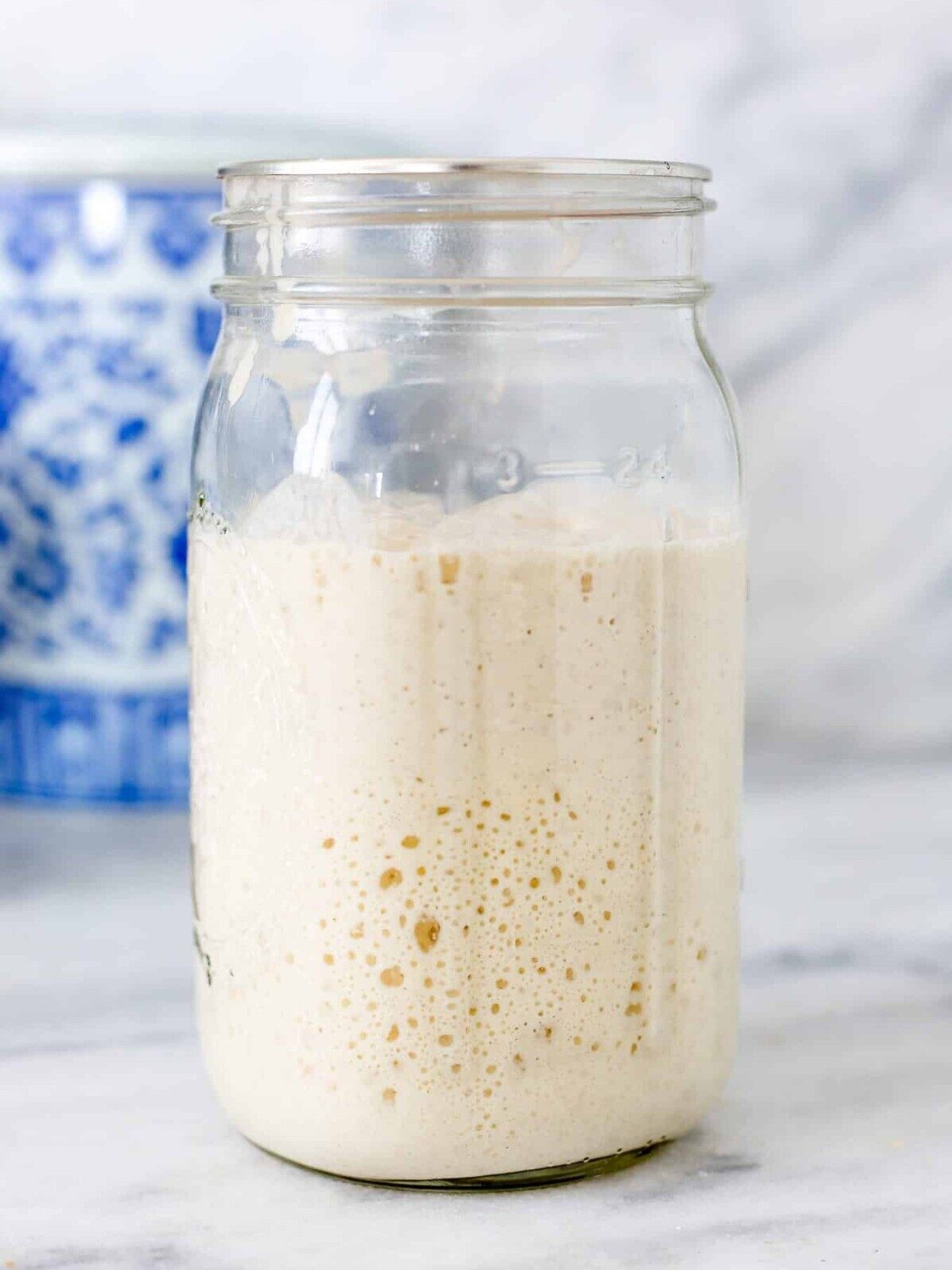
- The night before, build your liquid levain from your starter. In a clean container, mix the flour, water, and starter. Stir with a small spatula until the water has hydrated the flour. With this small quantity, it is easier to double the amount of the starter build; you have enough to make your dough and feed the starter. Here is a whole tutorial on building a liquid levain.
Make the Final Dough
- Whisk together the active dry yeast and warm water in the bowl of a electric mixer to hydrate and ensure there are no clumps. Allow the yeast to bloom for 10 minutes, or until it becomes bubbly.
- Add all-purpose flour, whole wheat flour, and starter to the bowl. With the paddle attachment on low, mix until all the flour has been completely incorporated. Let the dough sit for 15 minutes (autolyze) to develop the gluten.
- While your dough autolyzes, toast the pecans in a preheated oven at 350°F for about 10 minutes, then set them aside to cool. Then cover the dried cherries with hot water and allow them to soak for 30 minutes. Drain very well and keep it to one side.
- Add the salt to the bowl, switch to the hook attachment, then then mix on low to incorporate the salt.
- Turn the mixer up to medium speed to develop the gluten. Mix until you can pull a windowpane. It will be harder to pull a windowpane with the whole wheat flour.
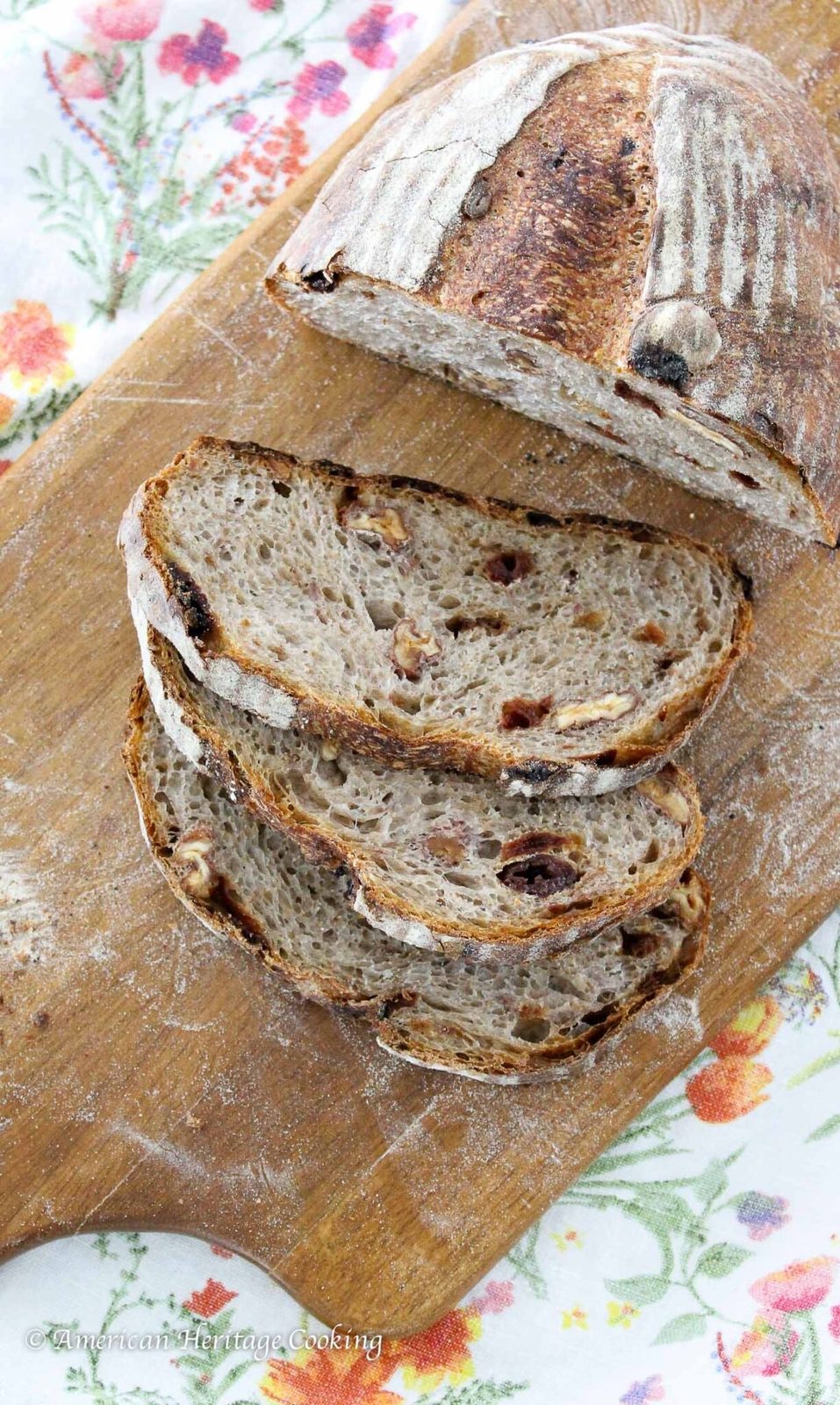
- Put the toasted, cooled pecans and the strained cherries, and mix on low until they are evenly distributed throughout the dough and not all on the outside.
Proofing
- Portion the dough into a large, oiled bowl and cover with plastic wrap. Place in a warm spot for an hour.
- Set of folds: Fold each of the four sides into the center, pulling the dough up and allowing it to smack down on top of the remaining dough in the bowl. This is developing more gluten!
- Cover and proof for an additional hour, or until doubled in size and light and airy. You want to oil or flour your hands before you handle the dough. It should feel light and airy and not stiff or dense.
Shaping and proofing
- Pre-shape: Dust the top of the dough in the bowl with flour. Turn the dough out onto a lightly floured surface. Divide the dough into two equal portions, each weighing 625g. Fold each of the four sides towards you into the center, turning the dough after each fold. This will create a little packet. Flip the dough so the seam is on the counter. Shape it into a round by using both hands to pull the dough towards you. Once you have a round ball with a smooth top, allow it to sit and bench rest for 15 minutes.
- Final Shape: Repeat the same process as with the pre-shape until you have a tight round ball. Place the dough on a piece of baking paper or flip it seam-side up into a proof basket that has been dusted with rice flour. Cover with plastic wrap.
- To bake the same day: Place the basket back into the warm spot and allow to rise another 1-2 hours or until it feels light and airy and has doubled in volume in the basket. The volume will be tough to tell if you are proofing it on parchment because it doesn’t contain or control the shape of the sourdough. Proceed to the baking step below.
Baking
- Warm the oven to 450°F convection or 470°F non-convection with the Dutch oven, challenger bread pan, or baking pan inside.
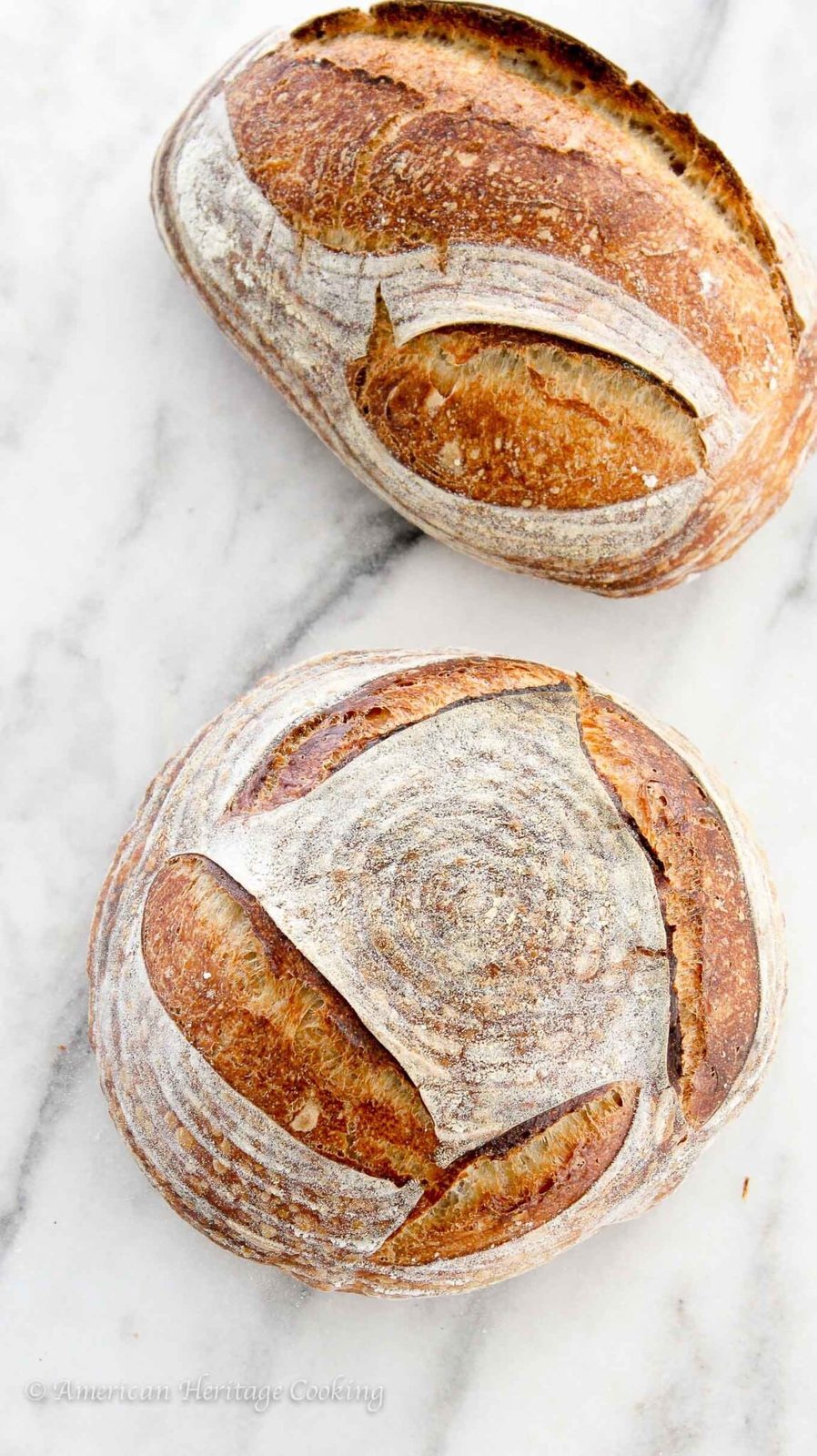
- Meanwhile, cut a piece of parchment a little larger than the loaf. When your oven is ready, toss a little flour onto the dough, then turn the dough out of the basket onto the parchment. [If you proofed your dough on parchment, skip this step] Score the dough using a lame, razor blade, or paring knife. You want to score midway between the bottom and the top.
- Take the preheated Dutch oven from the oven, gently lower the dough into the pot, and cover it with the lid. Place in the oven then bake for 20 minutes. Remove the lid and continue baking for 25 minutes or until the loaf is a dark amber brown.
- Remove the loaf from the Dutch oven, carefully remove the parchment, and then cool until it is no longer warm. This allows the crumb to set.
After it comes off the heat
Wait until the loaf is cool before slicing. Wrap it at room temperature, and freeze slices you will not eat in a couple of days.
If you want another plate from Sourdough, open Panettone for the Home Table and Sourdough Starter Rested Before Slicing.