
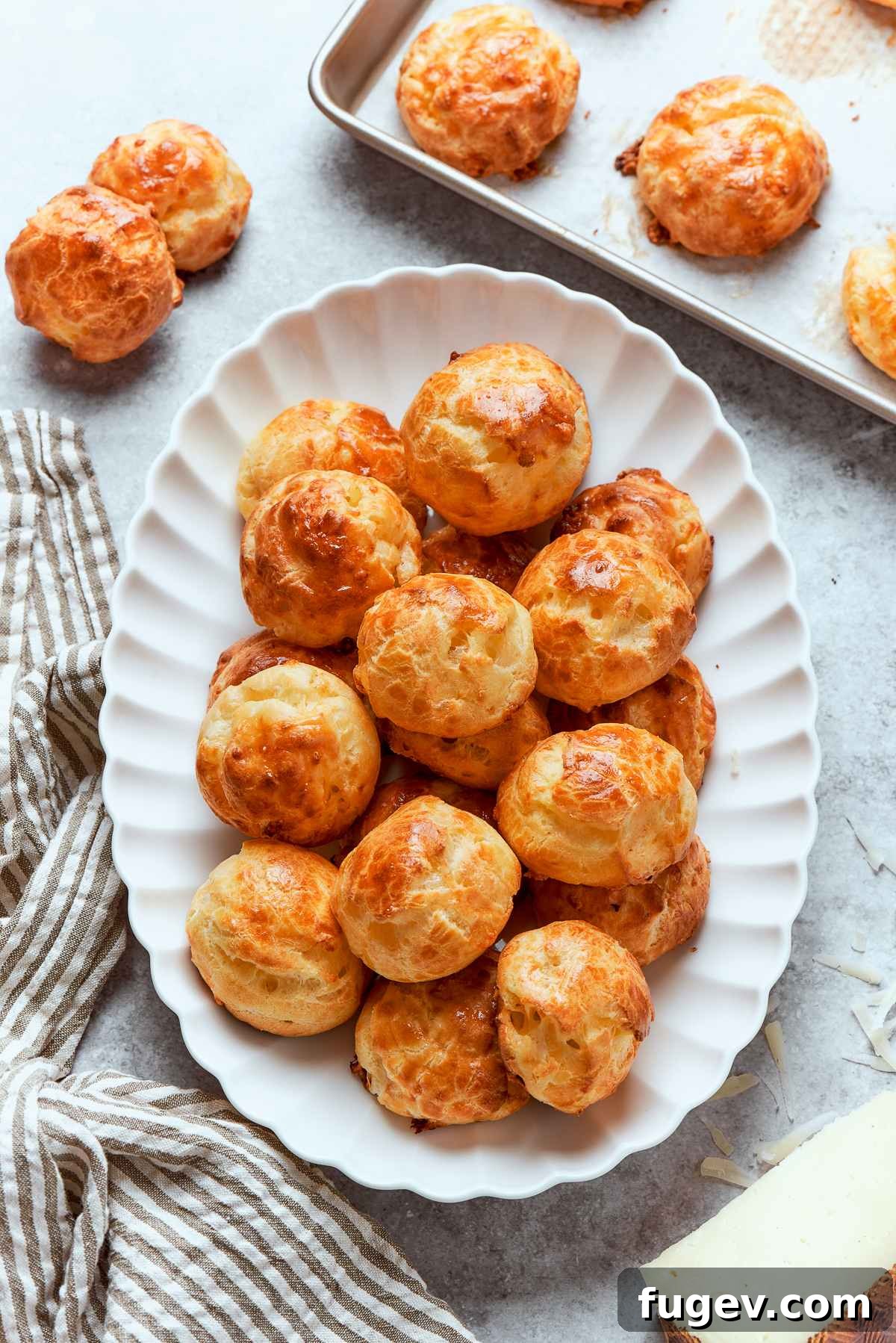
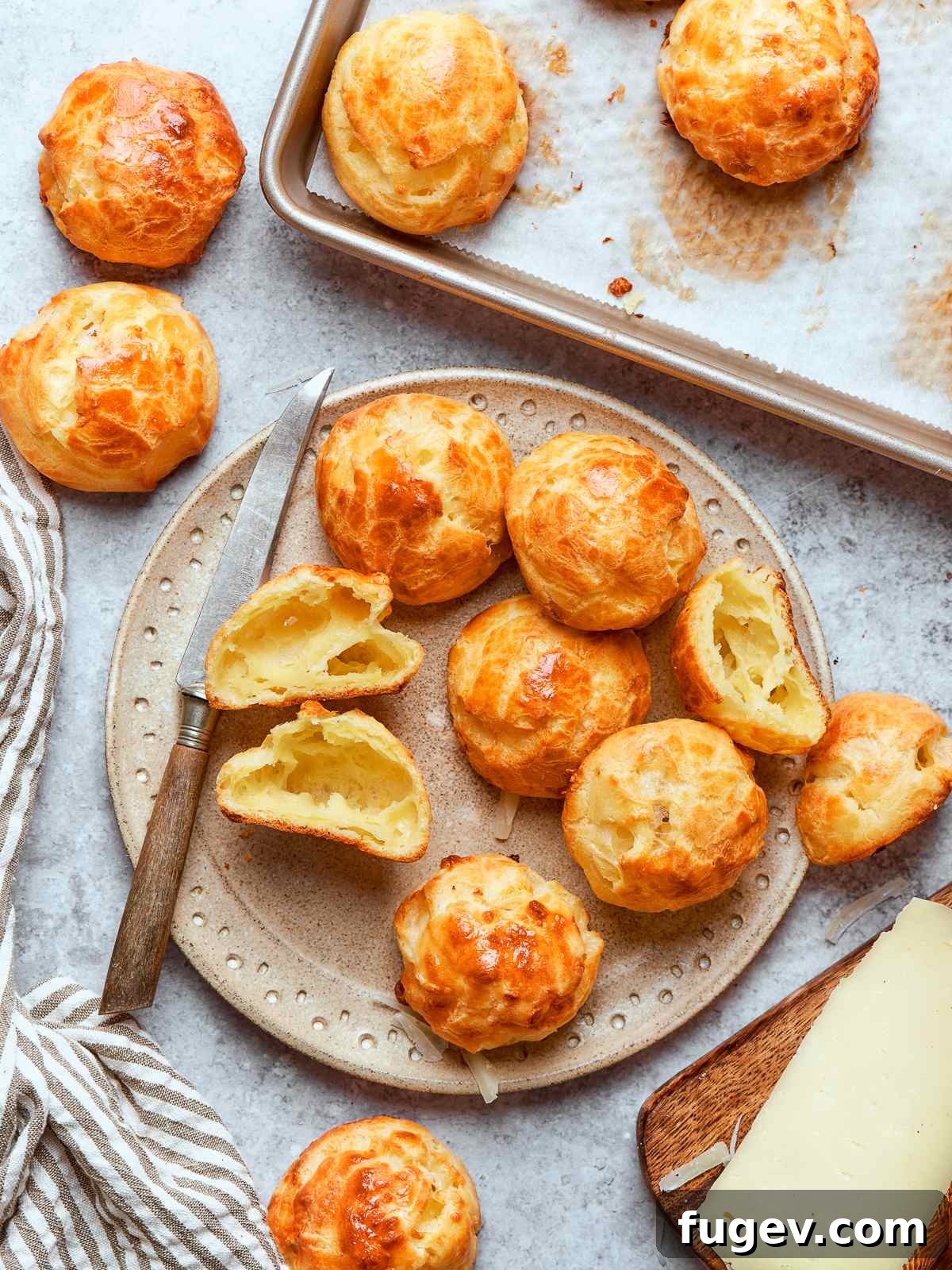
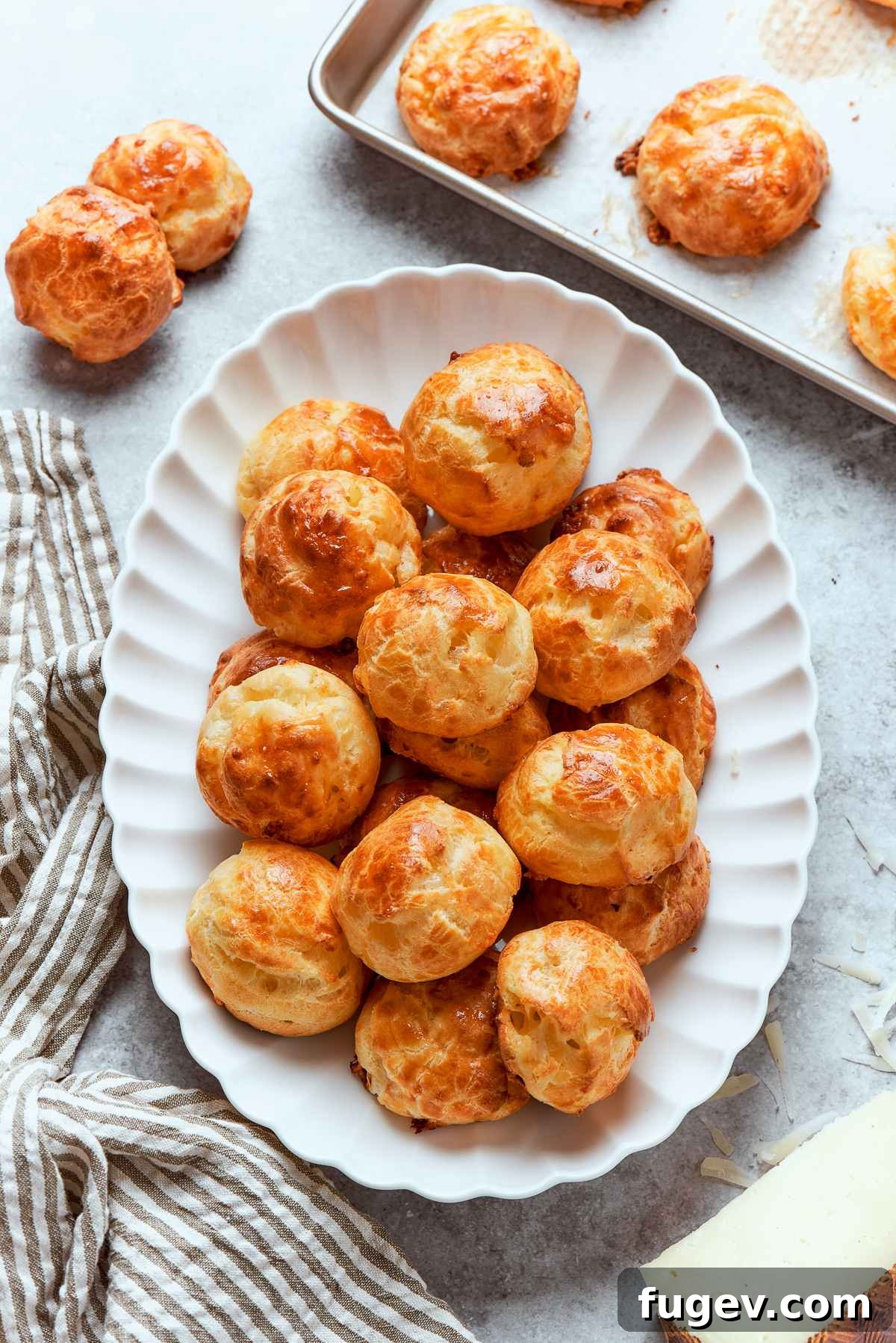
Gougères are exquisite French cheese puffs that, despite their elegant appearance, are surprisingly straightforward to master. Many home cooks are initially intimidated by the concept of pâte à choux, the foundational dough for these delightful bites. However, with the right guidance and a keen eye for technique, Gougères quickly transform from a daunting task into an easy-to-execute yet incredibly impressive appetizer. This comprehensive, step-by-step guide is designed to demystify the classic pâte à choux process, ensuring you achieve that signature crisp, golden shell and a wonderfully hollow, airy interior with every batch. Get ready to elevate your culinary skills and impress your guests with these irresistible savory treats.
A Quick Look At The Recipe
This is a brief summary of the recipe. Jump to the recipe to get the full details.
Jump to Recipe
Prep Time
35 minutes
Cook Time
25 minutes
Cooling Time (optional)
1 hour
Total Time
2 hours
Servings
150 2cm gougères
Difficulty
Intermediate — stovetop choux paste with piping and a simple consistency test before baking.
Calories *
27 kcal per serving
Technique
Stovetop choux paste, piped and baked until puffed and golden.
Flavor Profile
Savory sharp cheddar, buttery, lightly salty, golden brown.
* Based on nutrition panel
I had always been intimidated by choux pastry, but the trench test was the detail that finally made it click for me. My gougères puffed up beautifully and had that hollow interior I had only seen in bakeries. I added a little gruyère alongside the cheddar and they disappeared within minutes. ⭐⭐⭐⭐⭐
Lauren
Why This Gougères Recipe Works Every Time
Achieving perfect Gougères doesn’t have to be a mystery. This recipe stands out because it focuses on clear, actionable steps and vital details that guarantee success. Here’s why this guide will transform your baking experience:
-
Classic Choux Paste Technique, Fully Explained: The heart of any great Gougère is a perfectly made pâte à choux. Many recipes rush through this critical stage, but ours breaks down every single phase. From combining the initial ingredients to forming the panade and incorporating the eggs, we provide clear visual cues and precise instructions. You’ll never be left guessing whether your choux paste is ready, empowering you with the confidence of a professional baker. Understanding the science behind each step, especially the moisture evaporation during panade creation, is key to light and airy puffs.
-
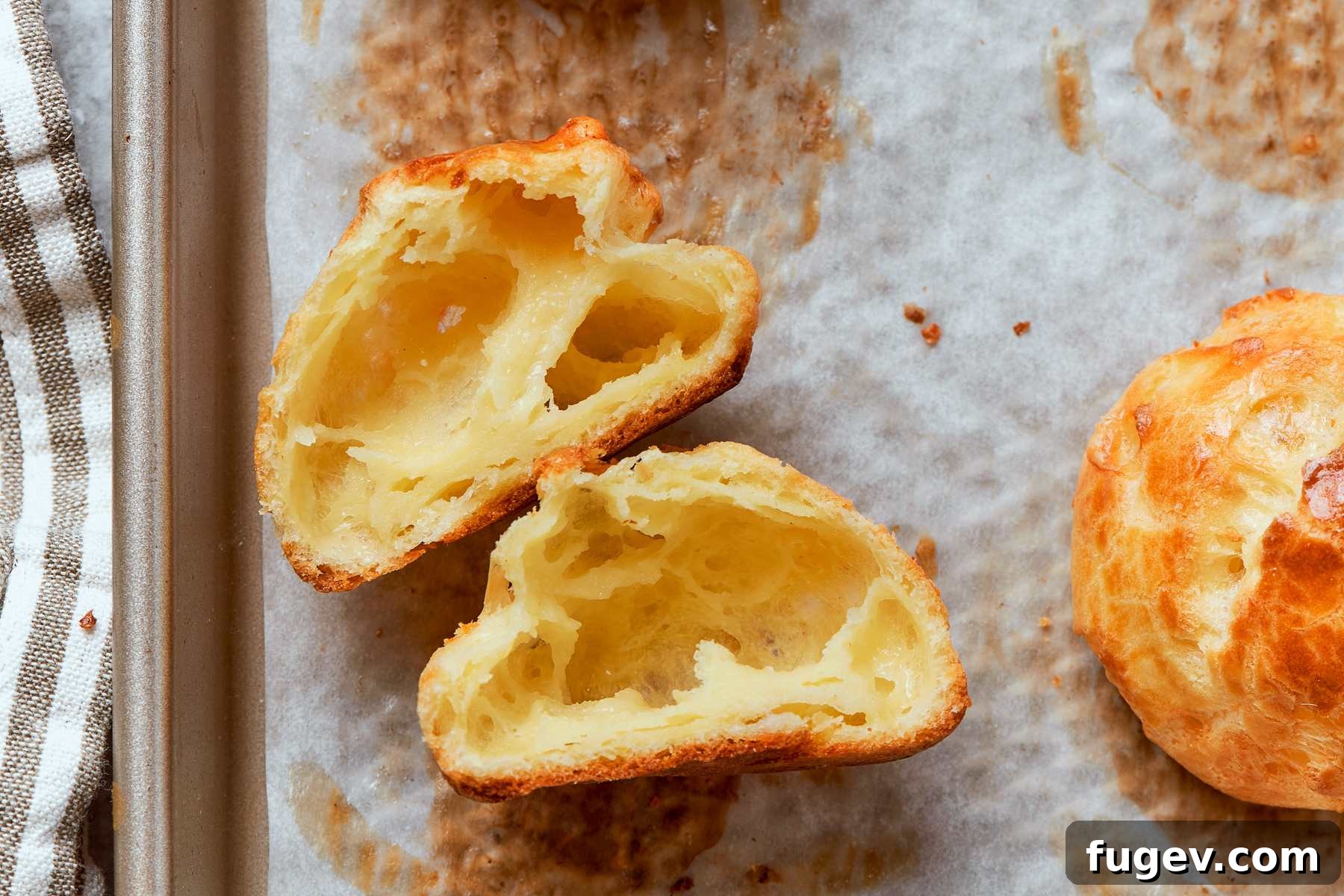
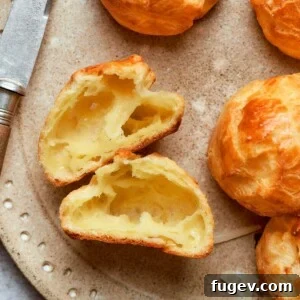
Hollow, Airy Interior with a Golden Crust: The ultimate goal for any Gougère is that characteristic hollow center, encased in a shatteringly crisp, golden-brown shell. Our secret weapon? The egg wash. This simple yet crucial step keeps the surface of the choux moist during the initial baking phase, allowing the pastry to fully expand and rise without prematurely setting its crust. This expansion creates the ideal internal cavity, while the egg wash simultaneously contributes to the deep, even browning and irresistible texture of the exterior. It’s a small detail that makes a monumental difference.
-
Completely Make-Ahead Friendly for Stress-Free Entertaining: Life is busy, and last-minute party prep can be a nightmare. This Gougères recipe is designed with convenience in mind, offering fantastic make-ahead options. The piped and egg-washed Gougères can be tightly wrapped and refrigerated for up to three days, or even frozen for up to a month. This means you can prepare a large batch well in advance, then simply bake them fresh when your guests arrive. Imagine serving warm, perfectly puffed Gougères without any last-minute stress – it’s the ultimate party hack!
-
Simple Yet Sophisticated Flavor Profile: While Gougères can be customized, this recipe celebrates the classic combination of savory sharp cheddar, rich butter, and a touch of salt. The granulated sugar, often a surprise ingredient, doesn’t add sweetness but rather enhances the browning and balances the savory notes, creating a complex and deeply satisfying flavor that is universally loved. It’s a testament to the power of high-quality ingredients and balanced seasoning.
Table of Contents
- Why This Recipe Works
- Ingredients & Substitutions for Perfect Gougères
- Creative Variations on Gougères
- Professional Tips for Gougères Success
- How to Make Gougères: A Step-by-Step Guide
- Chef Lindsey’s Recipe Tip: The Secret to Light & Airy Choux
- Gougères Recipe FAQs
- More Classic French Recipes to Explore
- Recommended Appetizer Recipes
- Gougères (French Cheese Puffs) Recipe Card
- Before You Go: More Culinary Delights
In my professional kitchen, Gougères were always a crowd-pleaser and a reliable go-to appetizer. The recipe I consistently returned to was simple and pure: classic pâte à choux made with excellent quality cheese, without any unnecessary frills or complex additions. These one-bite wonders are endlessly customizable and have a magical way of disappearing from the tray before any other appetizer. Their irresistible appeal makes them a must-have for any gathering, proving that sometimes, the simplest recipes are the most spectacular.
If you’re looking to expand your repertoire of perfect appetizers and party favorites, be sure to explore these other fantastic recipes: savory ricotta meatballs, the quintessential perfect deviled eggs, or this refreshing and flavorful tzatziki recipe. Each offers a unique way to delight your guests and elevate your entertaining game.
Ingredients & Substitutions for Perfect Gougères
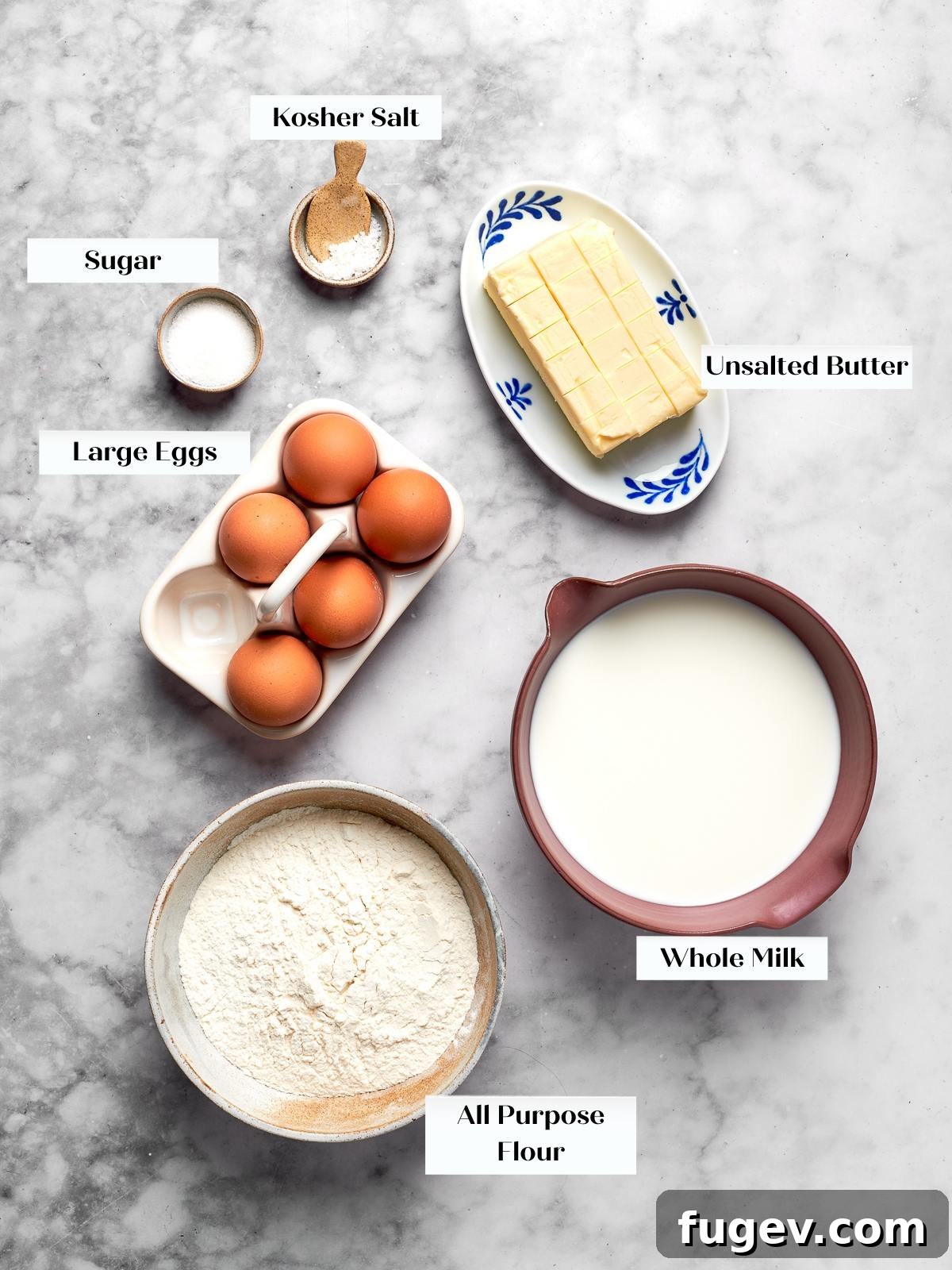
Crafting perfect Gougères begins with understanding the role each ingredient plays in creating the desired texture and flavor. Using high-quality components and knowing how to properly handle them will make all the difference in your final product. Here’s a detailed look at what you’ll need and why:
-
Unsalted Butter: Butter is the primary fat component in pâte à choux, imparting a rich, luxurious flavor to your Gougères. Opting for unsalted butter is crucial as it allows you complete control over the dough’s overall salt content, ensuring a perfectly balanced taste. The fat also contributes to the tender crumb and delicate texture of the finished puffs.
-
Whole Milk: Milk serves as the essential liquid in the choux paste. When heated in the oven, this moisture converts into steam, which is precisely what causes the choux to inflate and create its signature hollow interior. Using whole milk is highly recommended as its higher fat content contributes to a richer, more custardy interior and promotes superior browning of the shells, resulting in a more appealing and flavorful Gougère. Lower-fat milk varieties can lead to paler, drier shells.
-
All-Purpose Flour: Flour provides the structural framework for your choux pastry. The starches within the flour gelatinize when stirred into the hot milk and butter mixture, forming a cohesive paste known as the panade. This gelatinized starch matrix is what enables the dough to trap steam during baking, allowing the Gougères to puff up dramatically. For consistent and accurate results, it is absolutely essential to weigh your flour using a kitchen scale rather than relying on volume measurements, as flour can pack differently depending on how it’s scooped.
-
Kosher Salt: Salt is vital for seasoning the dough, enhancing the savory notes of the cheese, and balancing the overall flavor profile. It prevents the Gougères from tasting bland and helps to bring out the richness of the other ingredients.
-
Granulated Sugar: While Gougères are savory, a small amount of granulated sugar is included in this recipe. Its purpose is not to add sweetness, but rather to aid in the desirable golden-brown coloration of the pastry during baking and to subtly round out the savory flavors, providing a more complex and satisfying taste experience.
-
Large Eggs: Eggs are a multi-functional ingredient in pâte à choux, contributing structure, moisture, and emulsified fat. They are arguably the most critical variable in determining whether your Gougères puff correctly. Adding too many eggs can result in a dough that is too loose, leading to flat, greasy puffs that fail to hold their shape. Conversely, too few eggs will make the dough too stiff, preventing proper expansion. For optimal incorporation into the warm panade, use room-temperature eggs. Most importantly, take the consistency test—the “trench test”—very seriously. The texture of the dough matters more than the exact count of eggs, as the amount of water that evaporates during the panade stage influences how much egg the dough can absorb. Over-adding egg is the most common pitfall and can loosen the paste beyond recovery.
-
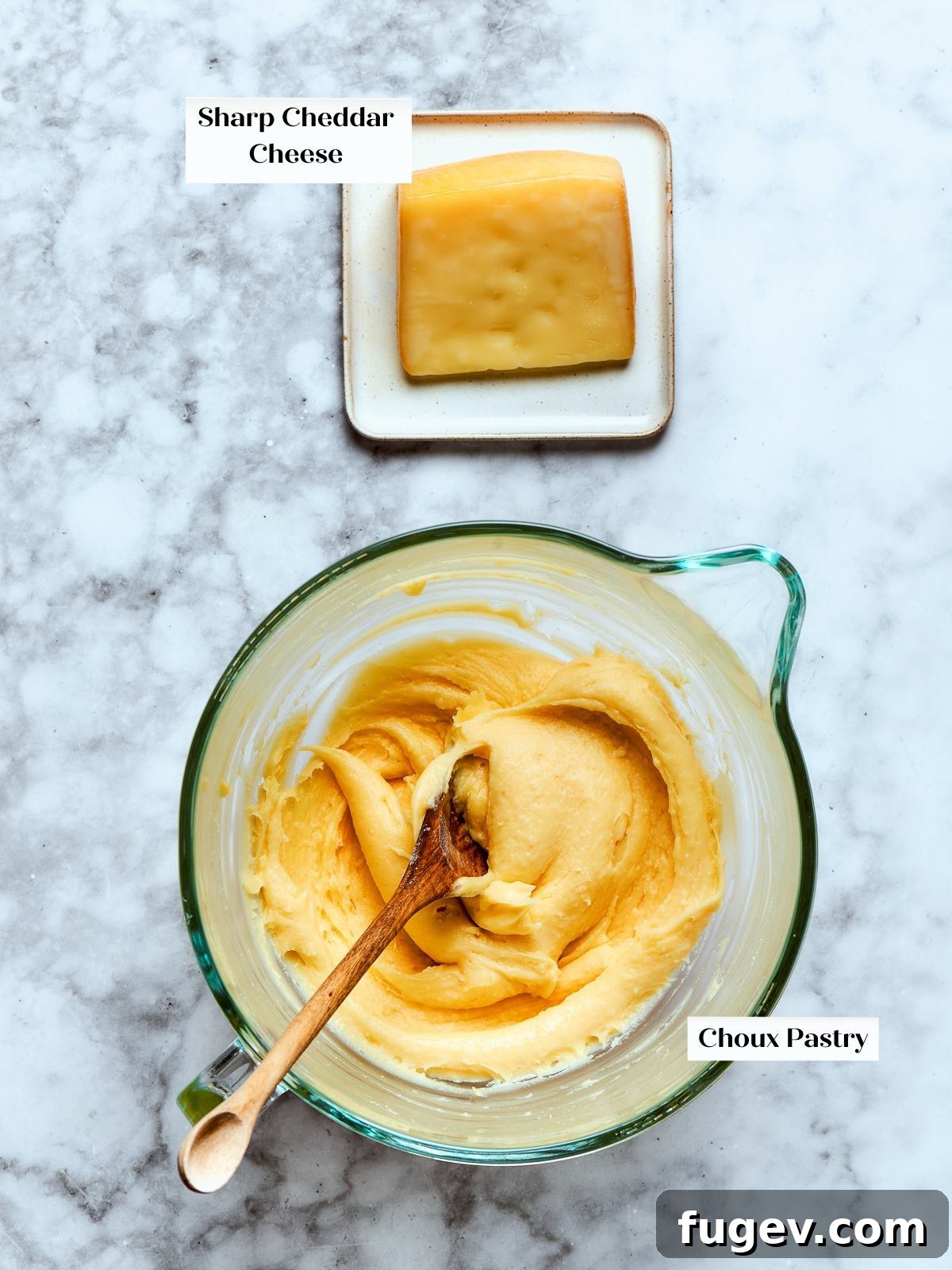
Sharp Cheddar Cheese: Sharp cheddar is the star of these cheese puffs, providing a bold, savory, and slightly tangy flavor profile. Beyond taste, the cheese contributes additional fat and salt directly to the dough, enhancing its richness. For optimal melting and even distribution throughout the choux paste, finely shred your cheese. This prevents the formation of greasy pockets or dense, uneven spots within the delicate pastry, ensuring every bite is perfectly flavored.
See the full recipe card below for precise measurements and detailed quantities.
Creative Variations on Gougères: Elevate Your French Cheese Puffs
While the classic sharp cheddar Gougère is undeniably delicious, one of the joys of working with pâte à choux is its incredible versatility. Gougères offer a fantastic canvas for culinary creativity, allowing you to experiment with different cheeses, herbs, spices, and even fillings to create a truly personalized appetizer. Here are some inspiring variations to try:
-
Experiment with Different Cheeses: Don’t limit yourself to just cheddar! Swap the sharp cheddar for other robust, meltable cheeses like nutty Comté, salty Pecorino Romano, or a sophisticated blend of Gruyère and Emmentaler for a more traditional French flair. A touch of Parmesan or Asiago can add a wonderful sharp kick. Remember that each cheese will have varying salt and fat content, so taste your finished choux paste before piping and adjust the added salt accordingly to maintain balance.
-
Infuse with Herbs and Spices: Fresh herbs are a fantastic way to add aromatic depth to your Gougères. Finely chop fresh chives, thyme, rosemary, or a combination of herbes de Provence and fold them directly into the finished choux paste along with the cheese. For a subtle warmth or a spicy kick, add a pinch of smoked paprika, cayenne pepper, black pepper, or even a touch of finely grated nutmeg, which pairs beautifully with cheese.
-
Savory Cream Cheese Filling: Take your Gougères to the next level by transforming them into bite-sized filled delights. Once the Gougères are baked and cooled, use a small round piping tip to insert a savory cream cheese filling into the base of each puff. A simple filling of cream cheese, a touch of herbs (like chives or dill), garlic powder, and a dash of salt and pepper can create an incredibly satisfying contrast to the crisp choux shell.
-
Gourmet Toppings or Fillings: Embrace gourmet flavors by incorporating unique toppings and fillings. For a delightful twist, sprinkle your piped Gougères with a generous amount of everything bagel seasoning before baking. Once cooled, fill them with herbed cream cheese for savory “everything bagel” Gougères. Alternatively, incorporate grated Gruyère directly into the choux dough and fill the baked puffs with rich, sweet caramelized onions, creating a sophisticated nod to the flavors of the best French onion soup.
-
Transform Them into Sweet Treats: While traditionally savory, the underlying pâte à choux is also the foundation for many beloved sweet pastries. To make a sweet version, simply omit the cheese from the dough and proceed with the recipe. Once baked and cooled, these light choux shells can be filled with a variety of sweet delights such as creamy pudding, rich pastry cream (crème pâtissière), or a luscious crème légère. For a classic sweet treat, you can also follow my dedicated cream puff recipe!
Professional Tips for Gougères Success: Mastering Pâte à Choux
Achieving consistently perfect Gougères, with their signature crisp exterior and airy interior, comes down to understanding a few critical professional techniques. These insights will help you navigate the nuances of pâte à choux and ensure a flawless result every time:
-
Cook the Panade Thoroughly Until a Film Forms on the Pot: This is arguably the most crucial step in preventing flat, greasy Gougères. The process of cooking the flour mixture with the butter and milk (known as creating the panade) is designed to gelatinize the starches and, more importantly, drive off excess moisture. An underdeveloped panade retains too much water, making the dough too wet to hold its shape during baking. You need to continue stirring vigorously over medium-high heat until the dough pulls cleanly away from the sides of the pot and a thin film visibly coats the bottom of the saucepan. This film is your cue that sufficient moisture has evaporated, setting the stage for perfectly puffed choux.
-
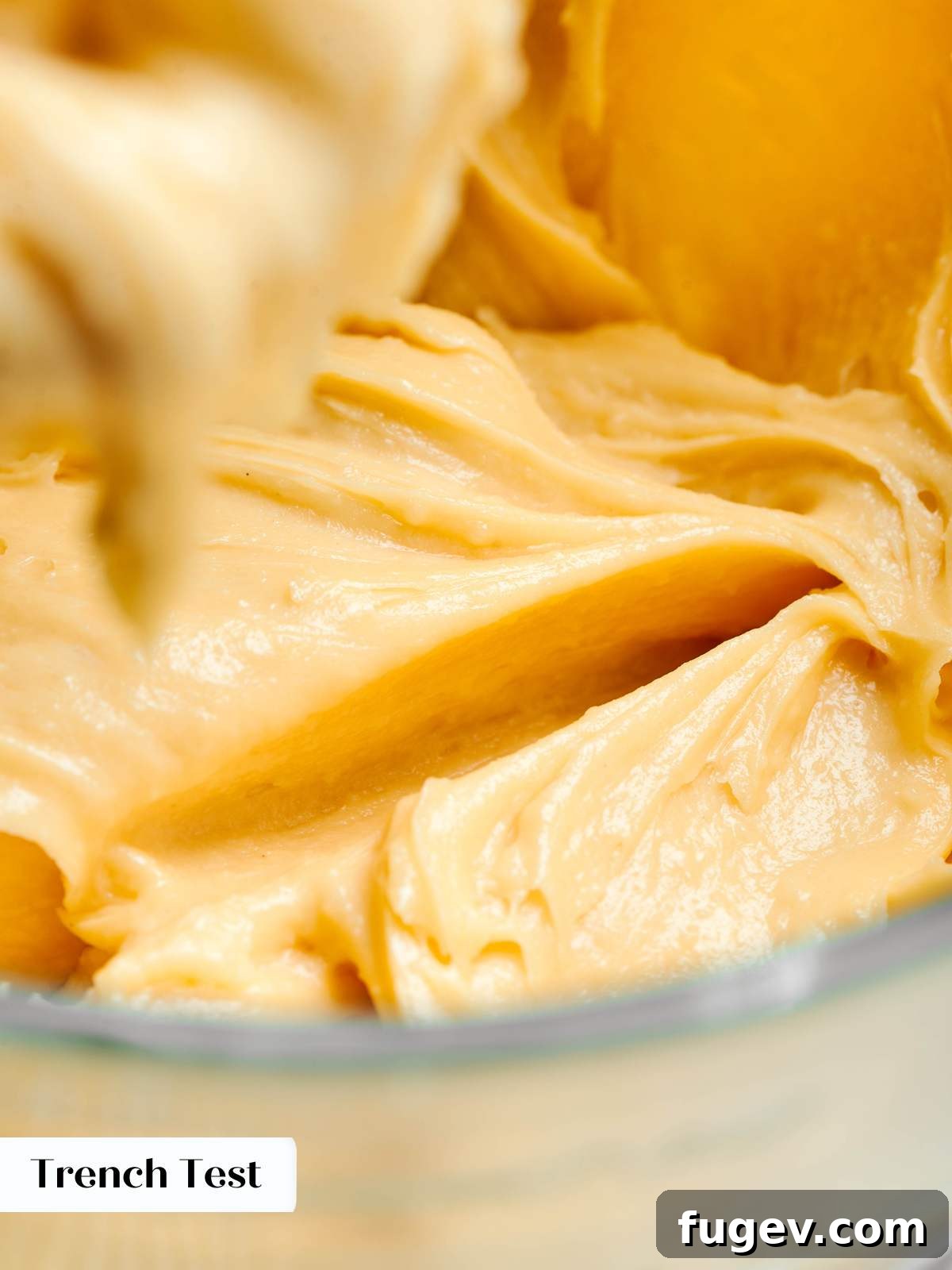
Stop Adding Eggs When the Dough Passes the “Trench Test”: Over-adding egg is the most common reason Gougères fail to puff properly, leading to a runny dough that spreads rather than rises. The precise amount of egg needed can vary slightly depending on factors like flour type, humidity, and how much moisture evaporated during the panade stage. This is why a visual consistency test is paramount. My preferred method is the “trench test”: drag your finger through the dough, and the channel it creates should slowly and steadily close back together, forming a gentle “V” shape. If the sides do not move at all, the choux is too stiff. If it runs back together immediately, it’s too loose. When in doubt, err on the side of slightly stiffer dough rather than looser. For a more in-depth explanation of proper pâte à choux consistency testing, refer to our comprehensive post on choux pastry.
-
Ensure Ample Spacing for Piped Rounds on the Baking Sheet: Gougères rely on steam to puff up dramatically during baking. If the piped rounds are placed too close together on the baking sheet (less than 2 inches apart), they create a shared, humid micro-environment. This can inhibit proper steam circulation, causing them to bake unevenly, stick together, and sometimes even collapse. Proper spacing allows each puff to expand fully and achieve a consistently crisp exterior and light interior. Use multiple baking sheets if necessary to give them the room they need to flourish.
-
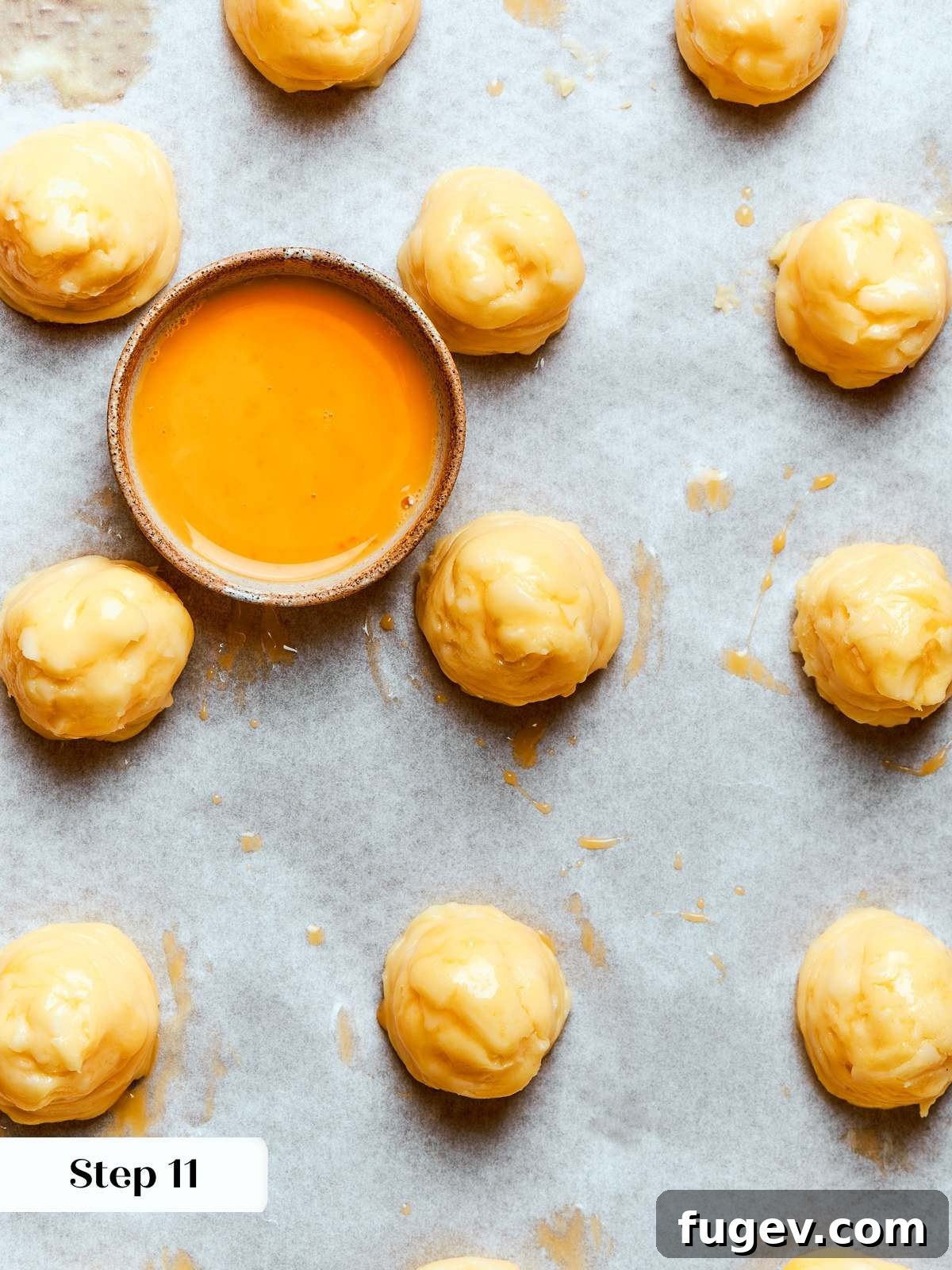
Apply an Even Egg Wash and Smooth Out Any Peaks: The egg wash serves two critical functions. Firstly, it keeps the surface of the choux pliable during baking, allowing the dough to expand without prematurely forming a rigid crust. This ensures maximum puff. Secondly, it contributes to the beautiful, deep golden-brown color and appealing sheen of the finished Gougères. Before baking, gently brush each piped round with beaten egg. Crucially, use your fingertip or a lightly dampened pastry brush to gently press down any pointed tips or “tails” left by the piping bag. These sharp points are prone to burning well before the rest of the puff is cooked and golden, resulting in an unevenly baked product. A smooth, even surface ensures uniform baking and a perfect appearance.
How to Make Gougères: A Step-by-Step Guide to French Cheese Puffs
Creating perfect Gougères is a rewarding process that moves quickly once you start. To ensure success, gather and measure all your ingredients (mise en place) before you even turn on the heat. This preparation is key for a smooth and enjoyable baking experience.
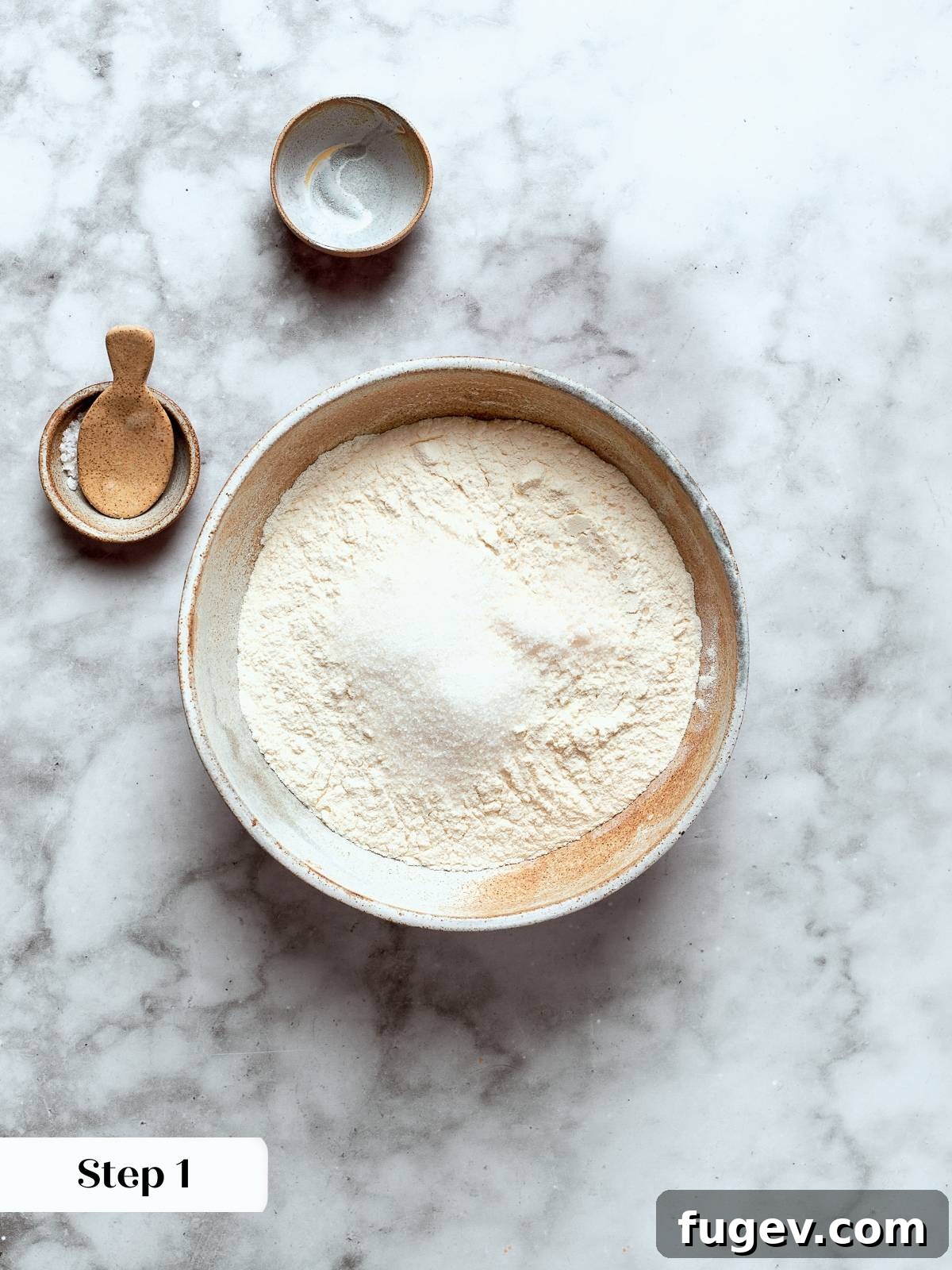
Step 1: Prep Your Ingredients and Preheat the Oven. Begin by combining your dry ingredients – the flour, salt, and granulated sugar – in a single bowl and set them aside. In a separate bowl, crack your large eggs and keep them ready. Preheat your oven to 350°F (175°C) if using convection, or 375°F (190°C) for a conventional oven. If you plan to make the dough ahead of time and refrigerate it before piping, hold off on preheating the oven until you are ready to bake. This thoughtful preparation ensures a seamless flow once you begin cooking the choux paste. (photo 1)
TIP: Cutting the butter into small cubes before adding it to the saucepan helps it melt more quickly and evenly, ensuring it’s fully melted precisely when the milk reaches a boil. Do not allow the milk to continue boiling once it gets there; precise timing is important.
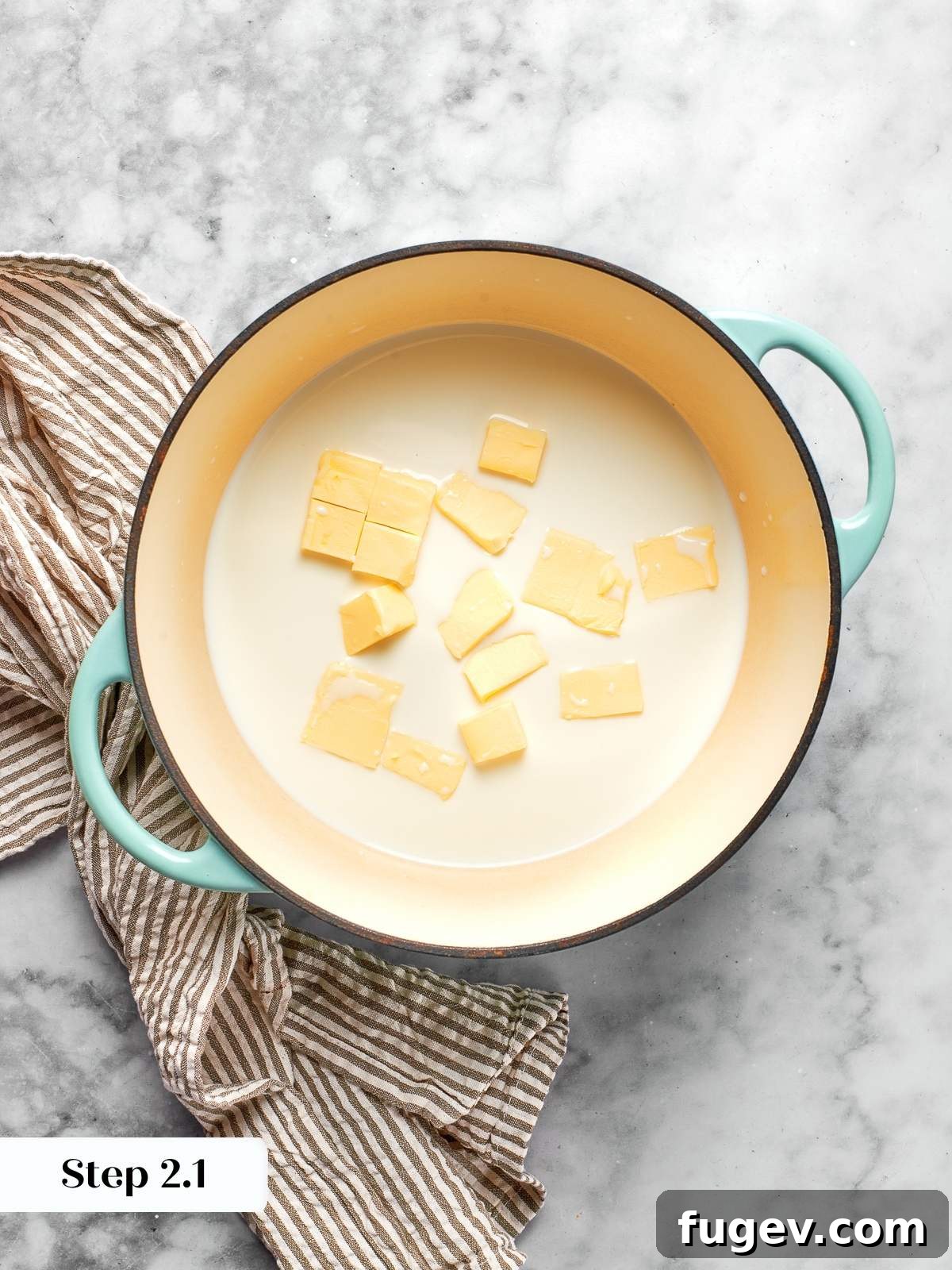
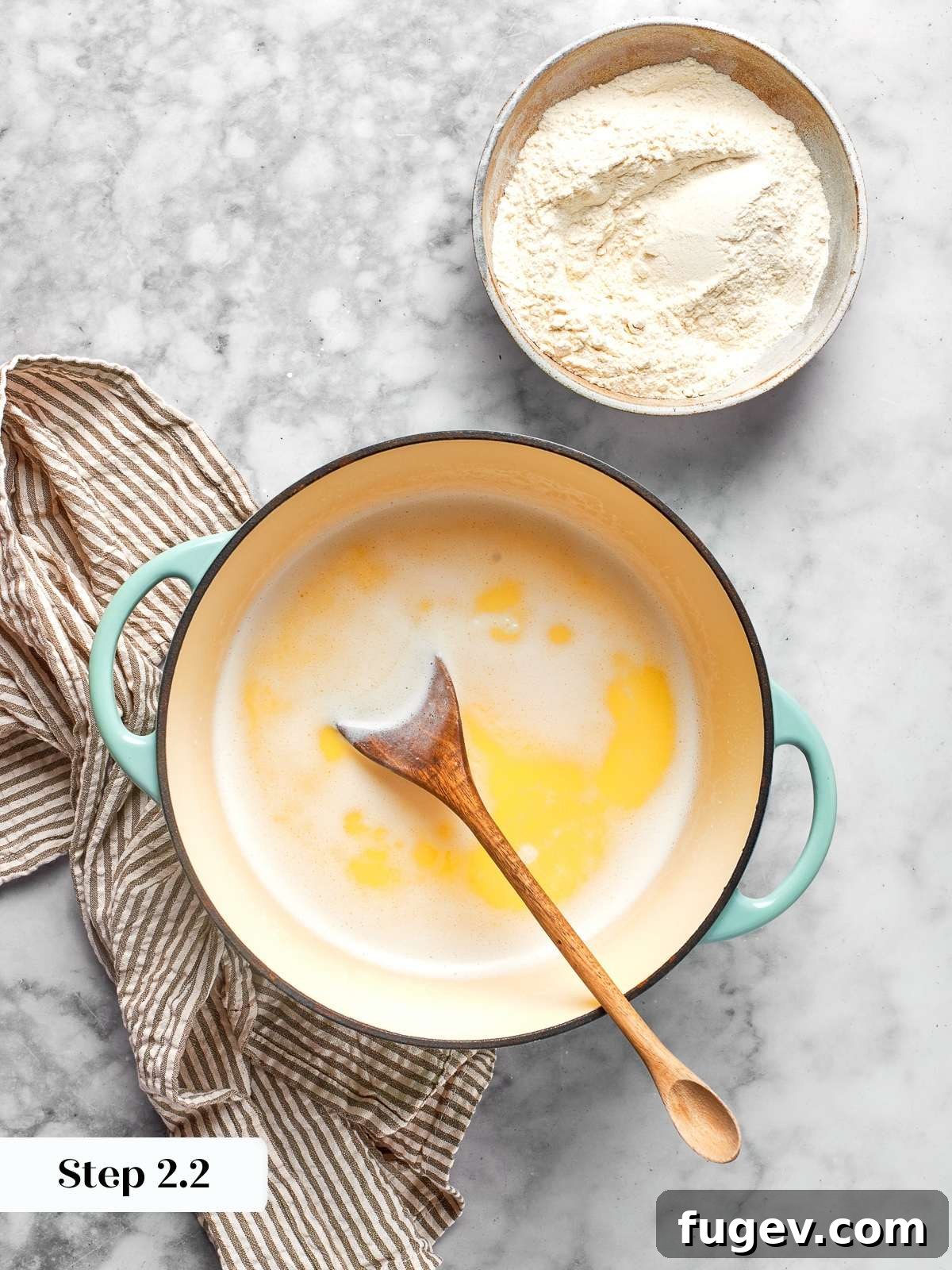
Step 2: Heat the Butter and Milk Together. Add the cubed unsalted butter and whole milk to a high-sided, heavy-gauge saucepan. Place the saucepan over high heat. The objective here is precise timing: you want the butter to be completely melted at the exact moment the milk just reaches a rolling boil. This synchronicity is essential for creating the ideal base for your choux. (photo 2 & 3 above)
Step 3: Add the Flour and Form the Panade. As soon as the milk boils and the butter is melted, remove the saucepan from the heat and immediately add the combined flour, salt, and sugar all at once. Begin stirring carefully at first to prevent splashing, then transition to stirring more vigorously as the mixture quickly thickens, aiming to smooth out any lumps. Return the pan to medium-high heat. Continue cooking, stirring constantly and energetically, until the dough comes together as a cohesive mass (known as the panade), pulls cleanly away from the sides of the pot, and leaves a thin, visible coating on the bottom. This coating is your crucial indicator that enough moisture has evaporated, resulting in a perfectly dense and pipeable paste. This process typically takes about 2 minutes of vigorous stirring.
Tip: Using a sturdy wooden spoon or a high-quality silicone spatula that you can grip securely is important. Mixing choux paste effectively requires a good amount of arm strength and constant stirring; a slippery plastic spoon can make this hard work even more challenging than it needs to be.
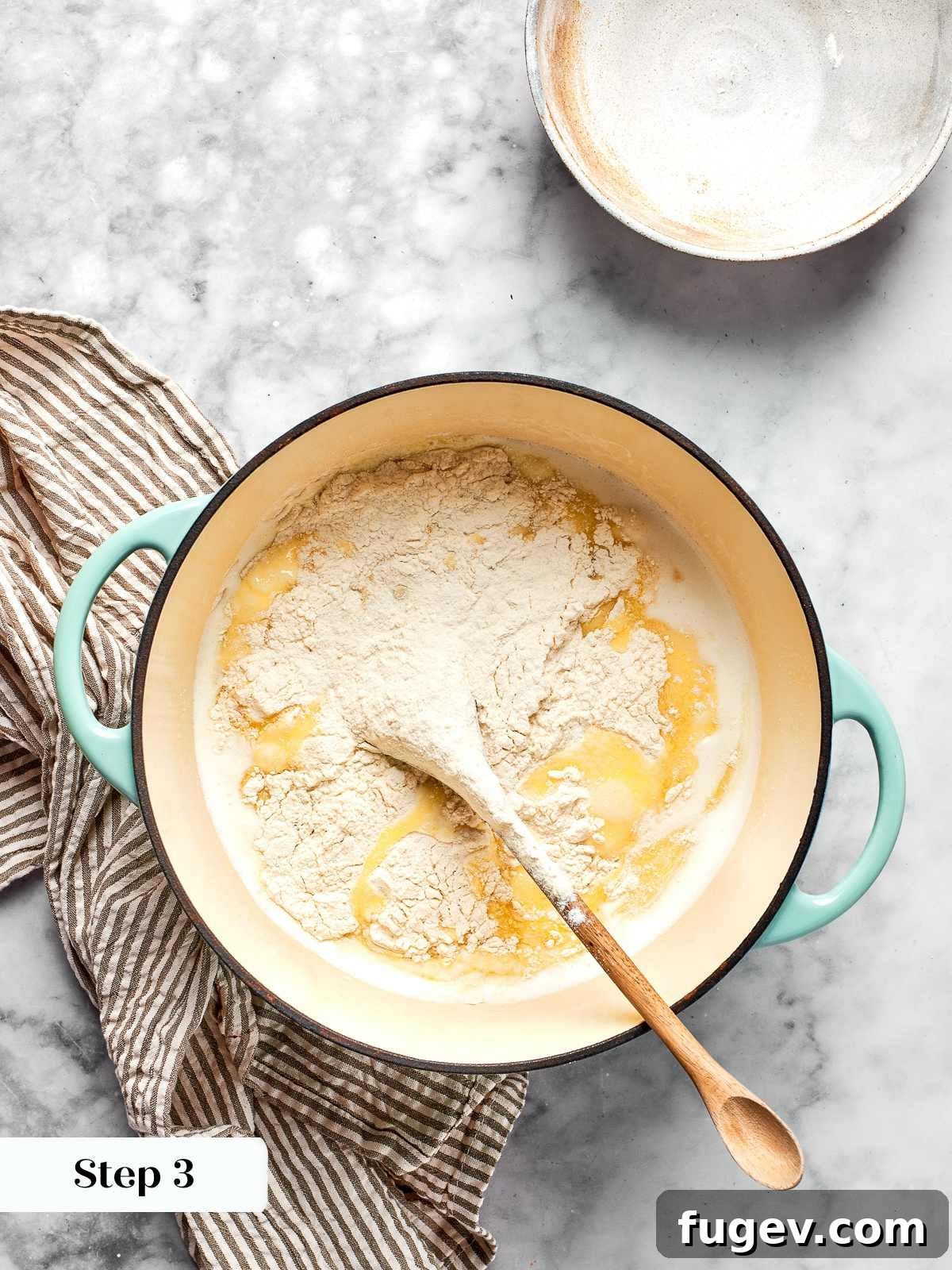
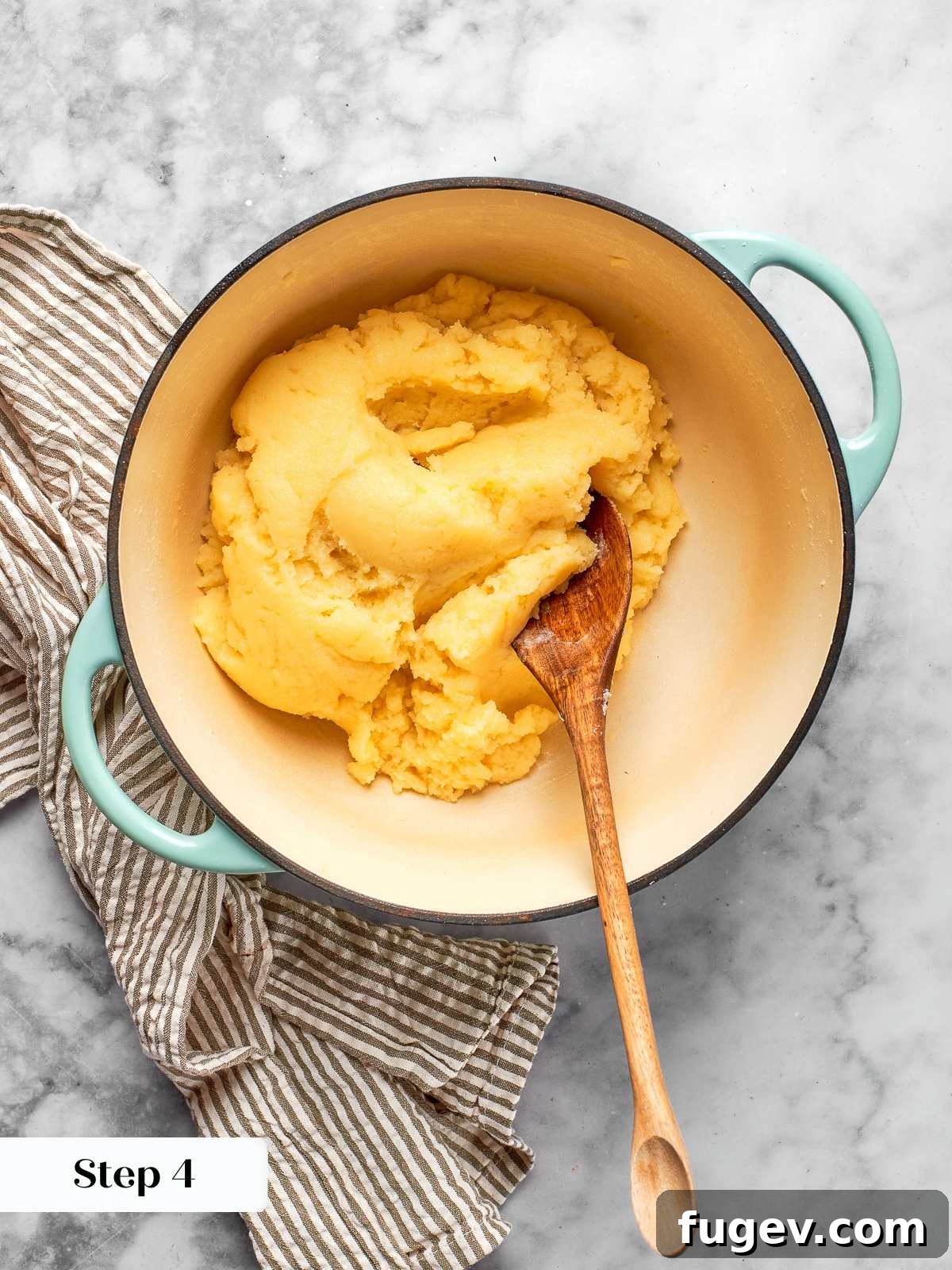
Step 4: Cool the Dough in the Stand Mixer. Immediately transfer the hot panade to the bowl of a stand mixer fitted with the paddle attachment. Begin beating the dough on medium-high speed. The purpose of this step is to release the steam trapped within the dough and to cool it down significantly. It is absolutely crucial to wait until the dough stops steaming and has cooled before you add any eggs. Adding eggs too early, while the dough is still very hot, will result in the eggs scrambling and ruining the texture of your choux. Beat for several minutes until the steaming subsides and the bowl feels warm to the touch, not hot.
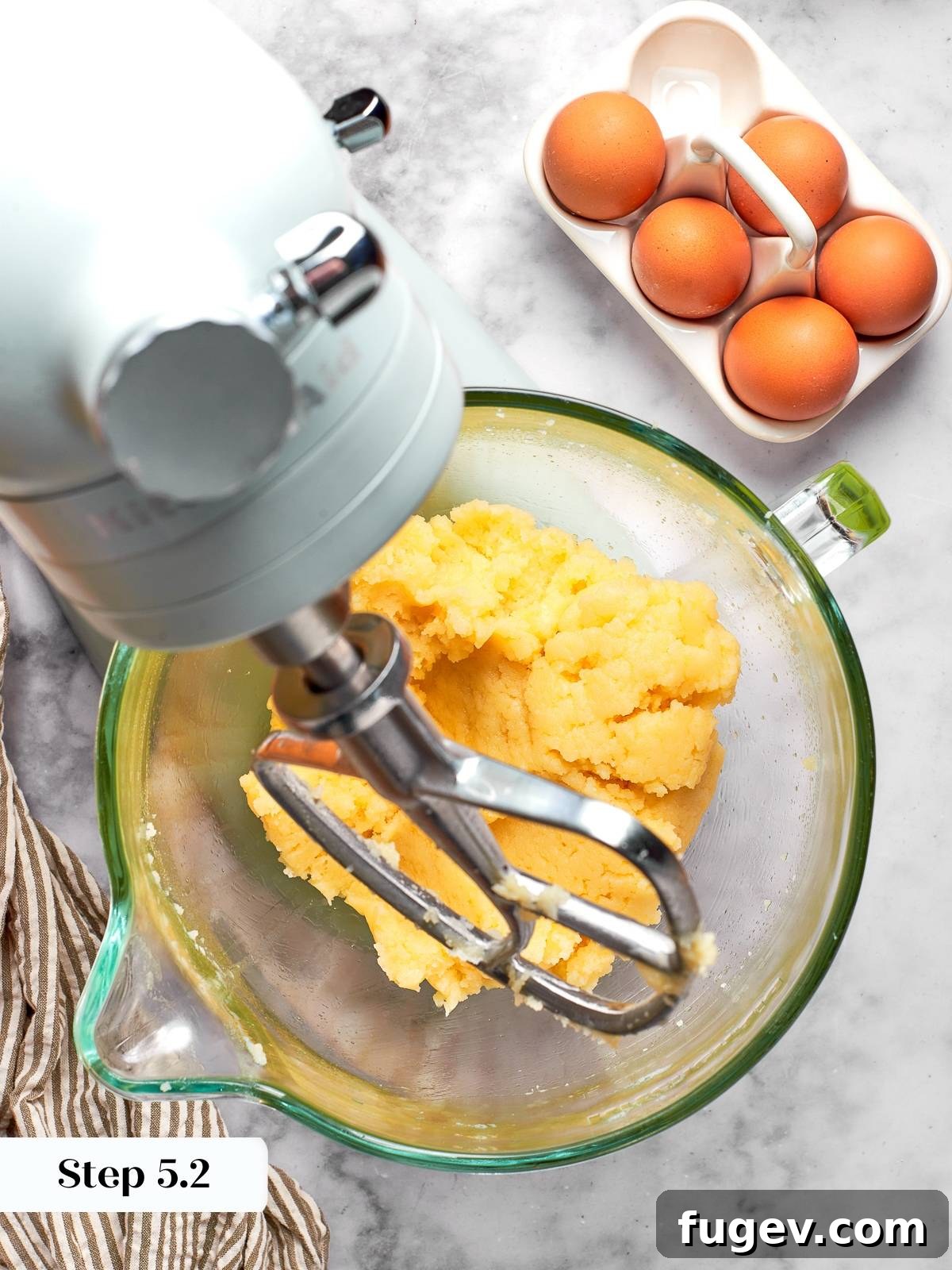
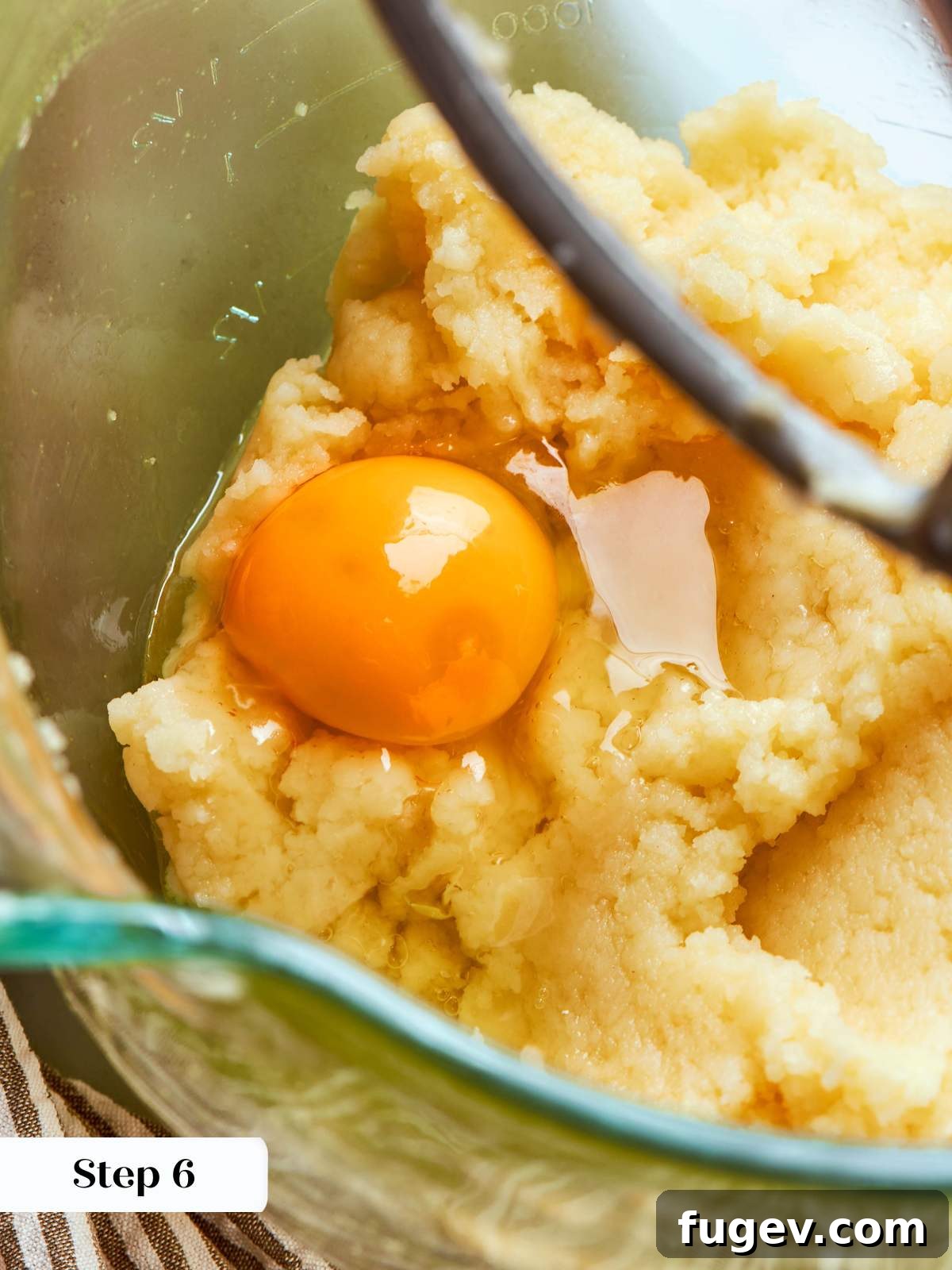
Step 5: Add the Eggs One at a Time, Testing for Consistency. With the mixer running on medium speed, begin adding the room-temperature eggs, one at a time. It is vital to beat thoroughly after each egg addition, ensuring it is fully incorporated into the dough before adding the next. This gradual incorporation is similar to the precise emulsification required when making a rich chocolate chip cheesecake batter. After you have added most of the eggs specified in the recipe card, perform the indispensable “trench test”: stop the mixer, and drag your finger firmly through the dough. The channel created should slowly and steadily close in on itself, but it should not immediately run back together. If the sides do not move at all, the choux is too stiff and needs more egg. If you’ve added all the recipe’s eggs and the dough is still too stiff, beat a sixth egg in a separate bowl and add it in very small increments, retesting after each tiny addition. Remember that cooler dough will close more slowly, so avoid over-correcting based on temperature alone. Any leftover beaten egg can be reserved for your egg wash.
Tip: Based on years of daily choux preparation, it was a rare occasion that a single batch required more than half an additional egg beyond the standard amount. When in doubt, always err toward using less egg rather than more; it’s easier to add than to fix an overly loose dough.
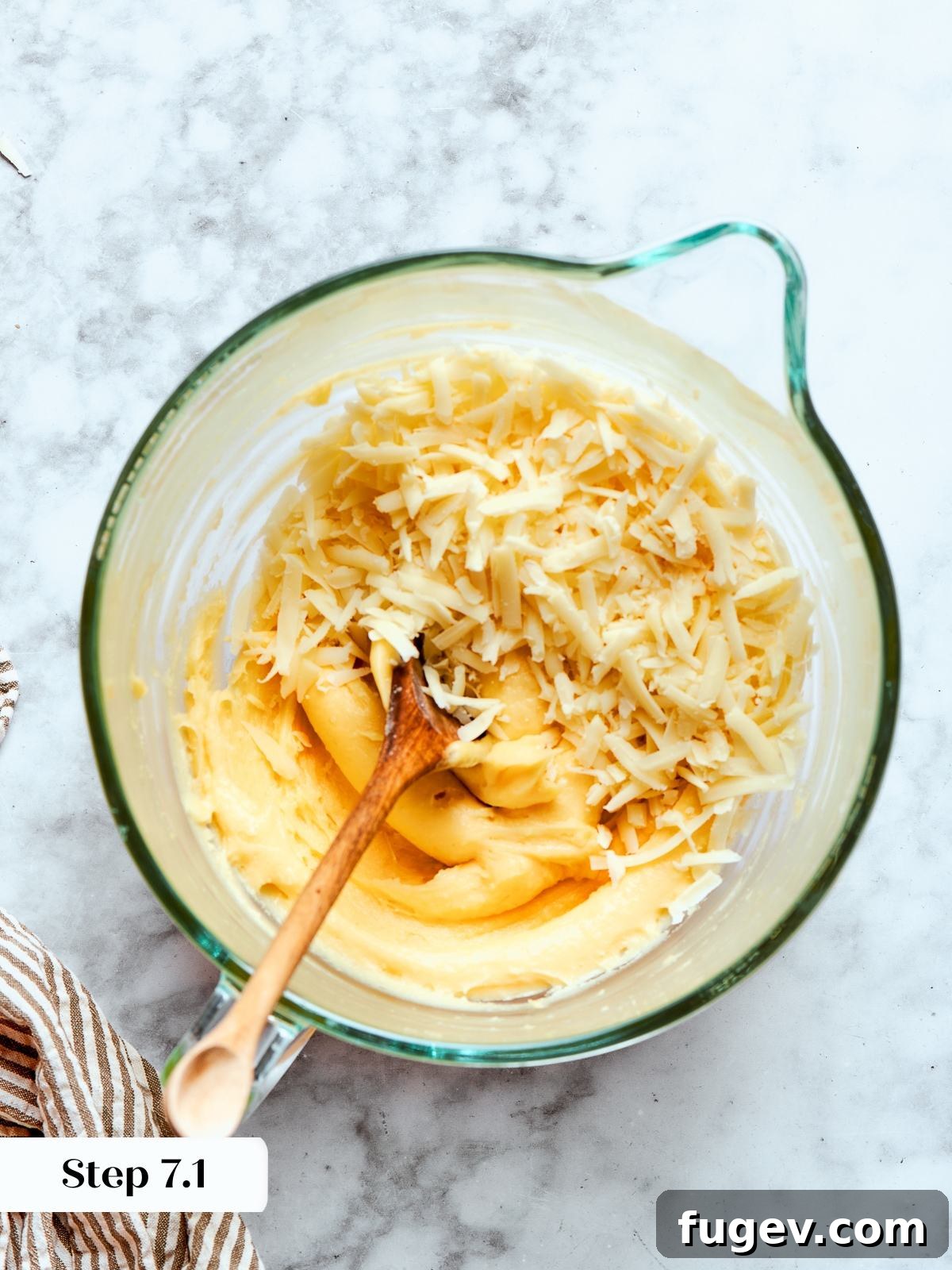
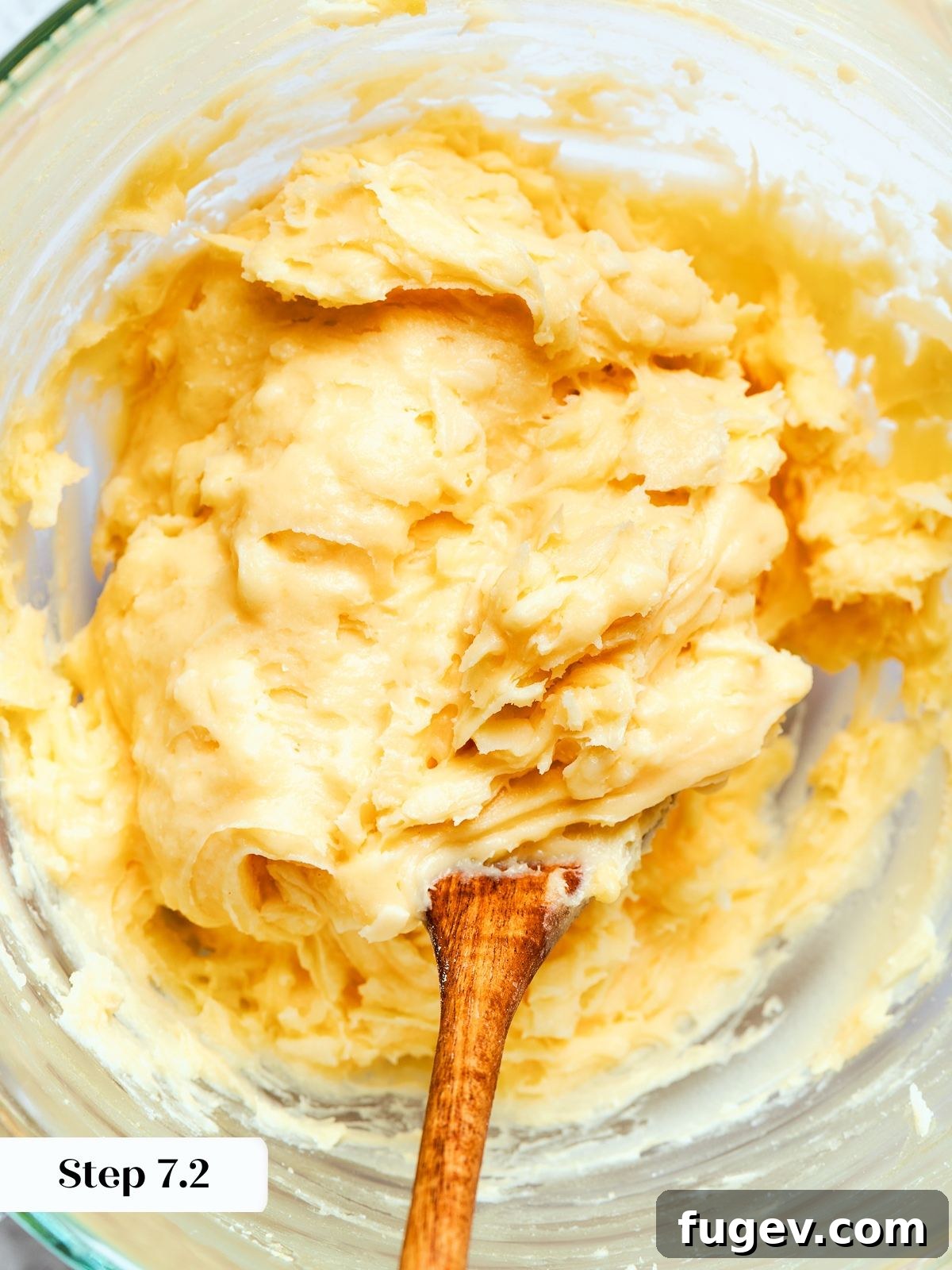
Step 6: Mix in the Cheese. Once your choux dough has reached the perfect consistency, add the shredded sharp cheddar cheese to the mixer bowl. Beat on medium speed just until the cheese is evenly distributed throughout the dough. Avoid overmixing once the cheese is incorporated. (photo 9 & 10 below)
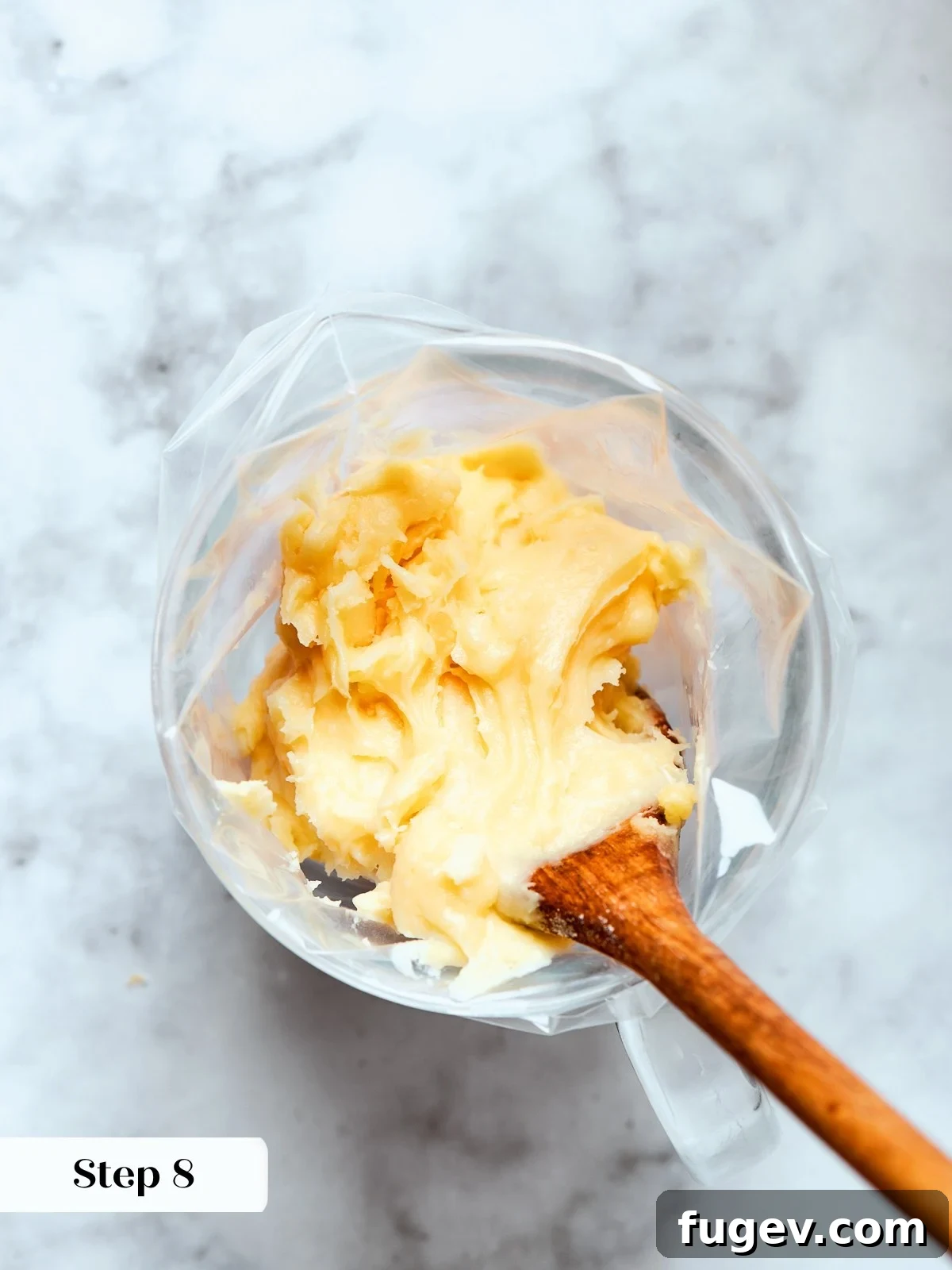
Step 7: Transfer to Piping Bags and Secure. Carefully scoop the prepared choux dough into sturdy piping bags. If you’re not using a specific piping tip, you can simply snip the end later. Twist or tie off the tops of the piping bags securely with a piece of plastic wrap or a rubber band. This crucial step prevents the dough from drying out, which can affect its ability to puff properly. You can either pipe the Gougères immediately or refrigerate the sealed bags for up to 3 days. I’ve found that refrigerated choux dough actually pipes more easily and tends to produce a superior puff with a larger, more pronounced air pocket in the center. If you choose to refrigerate, allow the dough to sit at room temperature for about an hour before piping for the very best results.
Step 8: Prepare the Piping Bag. When you are ready to pipe, take your chilled or room-temperature piping bag. Using a pair of kitchen scissors, cut the bottom of the bag straight across, creating an opening approximately 2 centimeters (about ¾ inch) wide. For a cleaner, more consistent round, also trim off any excess seam that runs up the side of the bag, being careful not to split the bag open entirely. This small detail helps ensure uniform Gougère shapes.
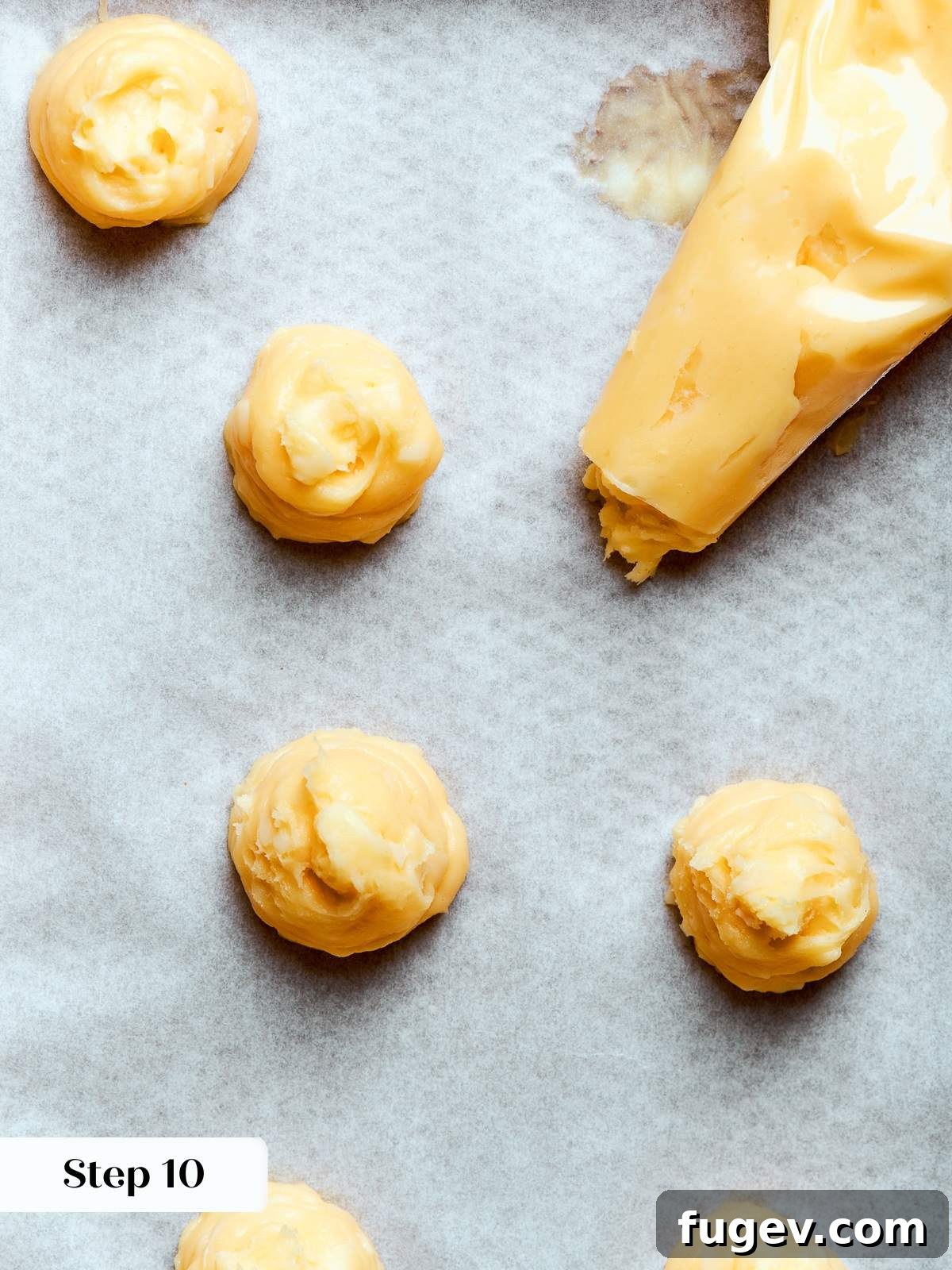
Step 9: Secure the Parchment Paper and Pipe the Gougères. To prevent your parchment paper from sliding around while piping, squeeze a small dot of choux paste onto each corner of your baking sheet and one in the center. Then, gently press a sheet of parchment paper on top, allowing the choux to act as a “glue.” This simple trick is essential for piping even, well-shaped Gougères. To pipe, hold the tip of the bag about a centimeter (½ inch) above the parchment. Apply firm and steady pressure to create a round dollop, stopping once you have a ball roughly 2 centimeters (¾ inch) across. Finish each one with a quick wrist twist across the top to cleanly detach the paste, avoiding any pointy tips. Space the Gougères at least 2 centimeters (¾ inch) apart to allow for proper expansion. For better control over pressure and shape, always squeeze the piping bag from the middle, not just the very end.
Step 10: Apply the Egg Wash. Once all your Gougères are piped, it’s time for the egg wash. Use a pastry brush to carefully coat the tops and sides of each Gougère with beaten egg. Any leftover beaten egg from making the dough works perfectly here. Use this moment to gently press down any pointed tips or tails that might have formed during piping with the brush. The egg wash is crucial; it keeps the surface moist and flexible as the Gougères bake, allowing the choux to fully expand before the crust hardens. Furthermore, it gives the finished Gougères their characteristic deep golden color and appealing sheen.
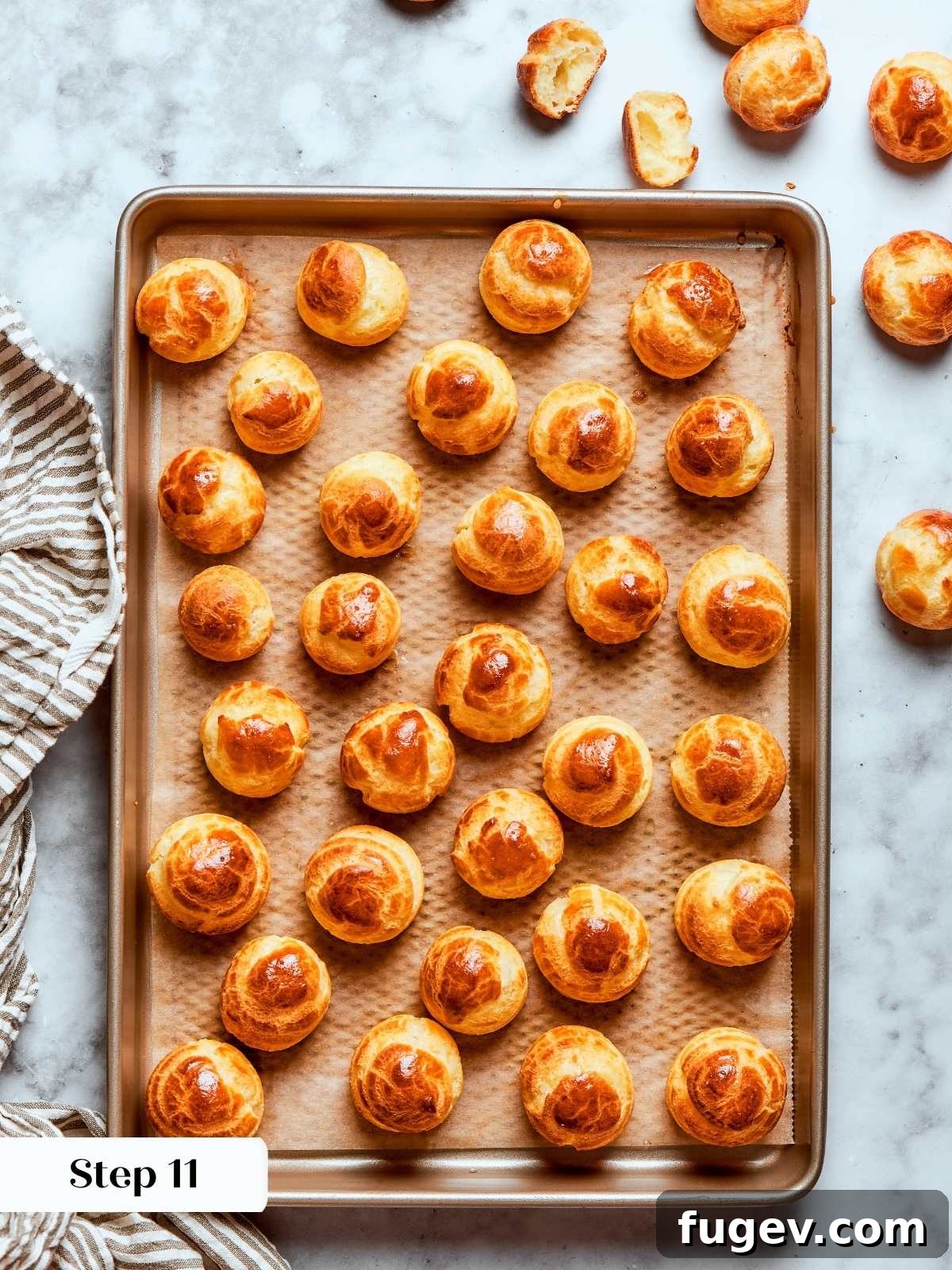
Step 11: Bake Until Puffed and Golden Brown. Place your prepared baking sheets into the preheated oven. Bake at 350°F (175°C) for convection ovens or 375°F (190°C) for conventional ovens for approximately 18 to 20 minutes for 2-centimeter (¾ inch) Gougères. For even baking, rotate the trays halfway through, around the 10-minute mark. Your Gougères are perfectly done when they are fully puffed, exhibiting a deep, even golden-brown color all over, and feel noticeably light when gently lifted from the tray. Larger Gougères, up to 3 to 4 centimeters (1.2-1.6 inches), will require a slightly longer baking time, typically 20 to 25 minutes. I do not recommend attempting to make them larger than this, as they may not puff or bake evenly.
Tip: Begin checking for doneness around the 18-minute mark. The key indicator is a uniformly golden color. Resist the urge to pull them early, as underbaked Gougères will deflate and become soggy as they cool. They should feel firm and crisp.
Step 12: Cool Briefly and Serve. Gougères are undeniably at their absolute best when served straight from the oven, still warm and irresistibly crisp. However, they are also excellent at room temperature, making them a versatile appetizer. If you have baked them ahead of time, simply refresh them on a baking sheet in a 350°F (175°C) oven for 5-7 minutes until they are warmed through and their exterior crisps back up beautifully. This quick refresh restores their perfect texture, ensuring a delightful experience every time.
Chef Lindsey’s Recipe Tip: The Secret to Light & Airy Choux Pastry
The single most critical detail that distinguishes a perfectly hollow, well-puffed Gougère from a dense, flat, or greasy one lies in how thoroughly you cook the panade before incorporating the eggs. Many home cooks tend to pull the panade off the heat the moment the dough comes together in a ball. However, this is premature. You must continue stirring vigorously over medium heat until a visible, thin film coats the bottom of the pot, and the dough no longer emits aggressive steam. This additional minute or two of cooking is essential for driving off excess moisture from the dough. If too much water remains, your choux paste will be too wet to maintain its structure in the oven, leading to disappointing results. No amount of careful egg addition can compensate for a panade that hasn’t been cooked long enough to achieve the correct dry consistency. Master this step, and you’ll master Gougères.
Gougères Recipe FAQs: Your Questions Answered
Even with a detailed recipe, a few common questions often arise when baking Gougères. Here are answers to help you troubleshoot and achieve consistently perfect results:
Properly baked Gougères will be magnificently puffed, boasting an evenly golden-brown color across their entire surface, and should feel remarkably light when you gently lift one off the baking tray. If they appear firm but still pale, it’s crucial to bake them for an additional 2 minutes rather than pulling them out early. Underbaked choux pastry will inevitably collapse and become soggy as it cools, losing its signature airy texture.
Absolutely, Gougères are remarkably well-suited for make-ahead preparation, making them an ideal choice for entertaining. The piped, egg-washed rounds can be tightly wrapped and refrigerated for up to 3 days, or frozen for as long as 1 month. When you’re ready to serve, simply bake them straight from the refrigerator or freezer. This convenience allows you to enjoy fresh, warm Gougères without any last-minute stress.
Unfilled, baked Gougères can be stored in an airtight container at room temperature for up to 2 days, or frozen for up to 1 month. To refresh them and restore their crispness before serving, simply warm them on a baking sheet in a 350°F (175°C) oven for a few minutes. If you prefer to store the raw choux paste instead, keep it in a piping bag in the refrigerator for up to 3 days. However, be aware that paste stored longer than a day may start to spot and discolor, and the resulting puffs might not rise as well or have as large an air pocket as those made with freshly prepared paste. For the very best results and ultimate convenience, I highly recommend piping and egg-washing the rounds, then freezing them unbaked.
The two most frequent culprits for flat Gougères are an undercooked panade and an excessive amount of egg in the dough. If the panade isn’t cooked long enough on the stovetop, it retains too much moisture, preventing the dough from effectively holding its shape and trapping steam in the oven. Similarly, if too much egg is incorporated, the dough becomes overly loose and will spread out rather than puff upwards. Always rely on the “trench test” (dragging a finger through the dough) and cease adding egg the precise moment the sides of the channel slowly and steadily close back together.
While Gougères are certainly enjoyable at room temperature, they truly reach their peak of perfection when served warm, fresh from the oven. This warm serving experience delivers that exquisite contrast of a crisp shell and a soft, airy, cheesy interior that simply cannot be replicated once they have fully cooled. This is precisely why the make-ahead piping and freezing method is so valuable: baking them fresh to order, even from a refrigerated or frozen state, takes less than 25 minutes and guarantees that sensational texture and flavor that will delight your guests.
More Classic French Recipes to Explore
Dessert Recipes
Choux Pastry (Pâte à Choux)
Dessert Recipes
Puff Pastry Recipe
Custard Recipes
Pastry Cream Recipe (Crème Pâtissière)
Pies and Tart Recipes
Apple Tarte Tatin
If you tried this recipe and loved it, please leave a 🌟 star rating and let me know how it goes in the comments below. I love hearing from you; your comments make my day!
Gougères (French Cheese Puffs)
Chef Lindsey
Gougères are classic French choux pastry puffs made with sharp cheddar, baked until golden, hollow, and crisp. One-bite, make-ahead, and endlessly customizable with different cheeses, herbs, or savory fillings.
35
25
1
2
150
2cm gougères
Comment
Print Recipe
Ingredients
-
1
cup
unsalted butter
cubed -
2
cups
whole milk
-
2
cups
all-purpose flour
-
1 ¼
teaspoons
kosher salt
-
1
teaspoon
granulated sugar
-
5
large eggs
variable quantity -
2
cups
sharp cheddar cheese
shredded
Instructions
-
Preheat the oven to 350°F convection or 375°F conventional. Measure and separate the flour, salt, and sugar into one container and the eggs into another.
-
Combine the butter and milk in a high-sided, heavy-gauge saucepan. Heat on high until the butter has melted and the milk just reaches a boil simultaneously. Do not allow the milk to continue boiling.
-
Add the flour mixture all at once and stir to incorporate with a wooden spoon. Once the mixture thickens, stir vigorously to smooth out any lumps.
-
Continue cooking on high heat, stirring constantly, until a cohesive dough (panade) forms, pulls away from the sides of the pot, and leaves a visible film on the bottom of the pan, about 2 minutes.
-
Transfer the dough to the bowl of a stand mixer fitted with the paddle attachment. Beat on medium-high to release steam.
-
Once the mixture stops steaming, add the eggs one at a time on medium speed, beating fully after each addition. Test consistency using the trench test: drag a finger through the dough and the channel should close slowly and steadily. If needed, beat a sixth egg separately and add in stages, stopping at no more than half an additional egg.
-
Add the shredded cheddar and mix on medium until evenly distributed. Transfer the dough to piping bags and tie the pastry bag shut.
-
Cut the bottom of the piping bag about 2 centimeters across, removing the excess seam along the side. Squeeze the bag from the middle rather than the end for better pressure control.
-
Adhere parchment paper to the baking sheet by squeezing small dots of choux paste at the corners and center, then pressing the parchment on top.
-
Pipe 2-centimeter rounds, holding the tip about 1 centimeter above the parchment and applying firm, consistent pressure. Twist the wrist across the top of each ball to detach cleanly. Brush the tops with beaten egg and reshape any points with the brush.
-
Bake at 350°F convection or 375°F conventional for 18 to 20 minutes for 2-centimeter rounds, rotating the trays at 10 minutes. Larger rounds (up to 4 centimeters) will take 20 to 25 minutes. Gougères are done when puffed, evenly golden brown, and feel light when lifted.
Notes
Trench Test: Drag a finger through the dough after the fifth egg. The channel should close slowly. Stop adding egg the moment it does; too much egg will cause the choux to spread rather than puff.
Doneness Cue: Gougères should be puffed, evenly golden brown, and feel noticeably light when lifted off the tray. Pale but firm rounds need 2 more minutes; underbaked choux collapses as it cools.
Larger Gougères: Cut a slightly larger hole in the piping bag, then slowly lift your hand while squeezing steadily to form a larger ball. Larger puffs will bake between 20 to 25 minutes, and I do not recommend going beyond 3 to 4 centimeters.
Storage: Unfilled baked gougères can be frozen for up to 1 month. Refresh in a 350°F oven to crisp before serving. Raw choux paste is kept in a piping bag in the refrigerator for up to 3 days, though paste stored longer than a day will spot, discolor, and produce a smaller puff.
Nutrition
Calories:
27
kcal
|
Carbohydrates:
1
g
|
Protein:
1
g
|
Fat:
2
g
|
Saturated Fat:
1
g
|
Polyunsaturated Fat:
0.1
g
|
Monounsaturated Fat:
1
g
|
Trans Fat:
0.1
g
|
Cholesterol:
11
mg
|
Sodium:
33
mg
|
Potassium:
10
mg
|
Fiber:
0.04
g
|
Sugar:
0.2
g
|
Vitamin A:
66
IU
|
Calcium:
16
mg
|
Iron:
0.1
mg
Appetizer
French
27
Like this? Leave a comment below!
Before You Go: More Culinary Delights Await!
These exquisite cheese puffs have a tendency to vanish faster than almost anything else I prepare in my kitchen, perhaps with the sole exception of my beloved thick chocolate chip cookies—for which I always find myself making a double batch! I encourage you to explore more fun and inspiring party ideas within my curated collections of appetizer recipes or dive into a world of sweet indulgence with my dessert recipes. Happy cooking, and bon appétit!