
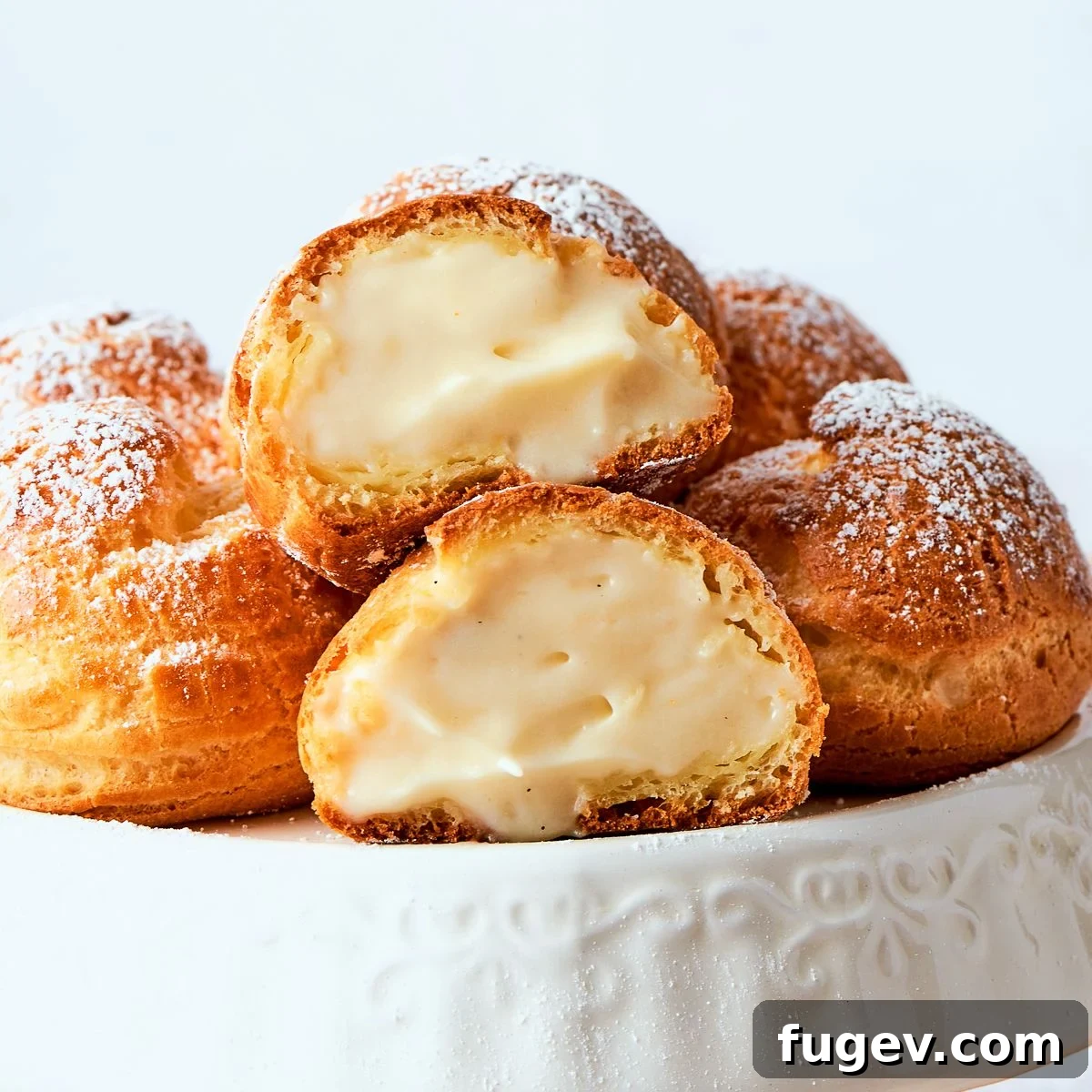
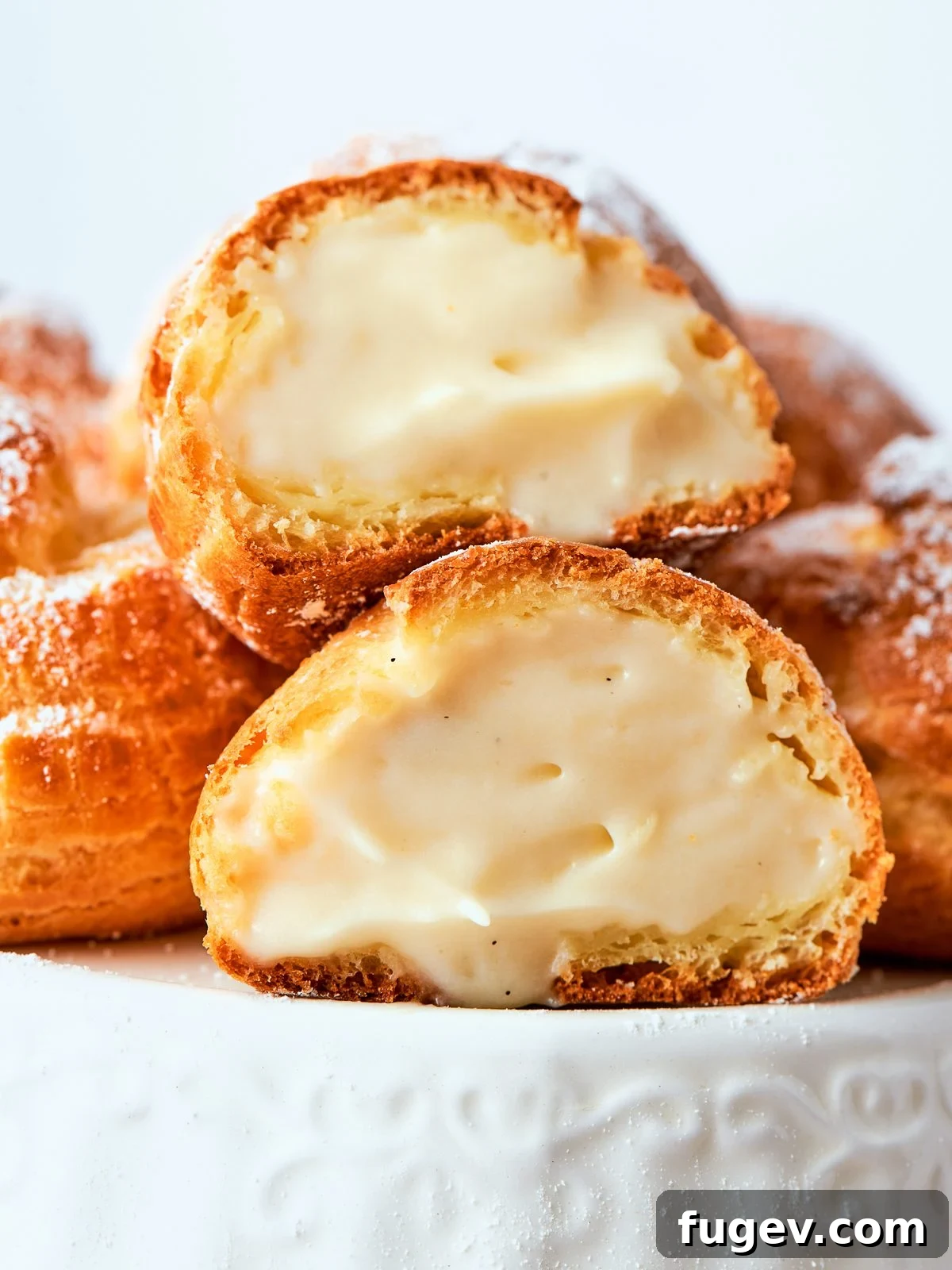
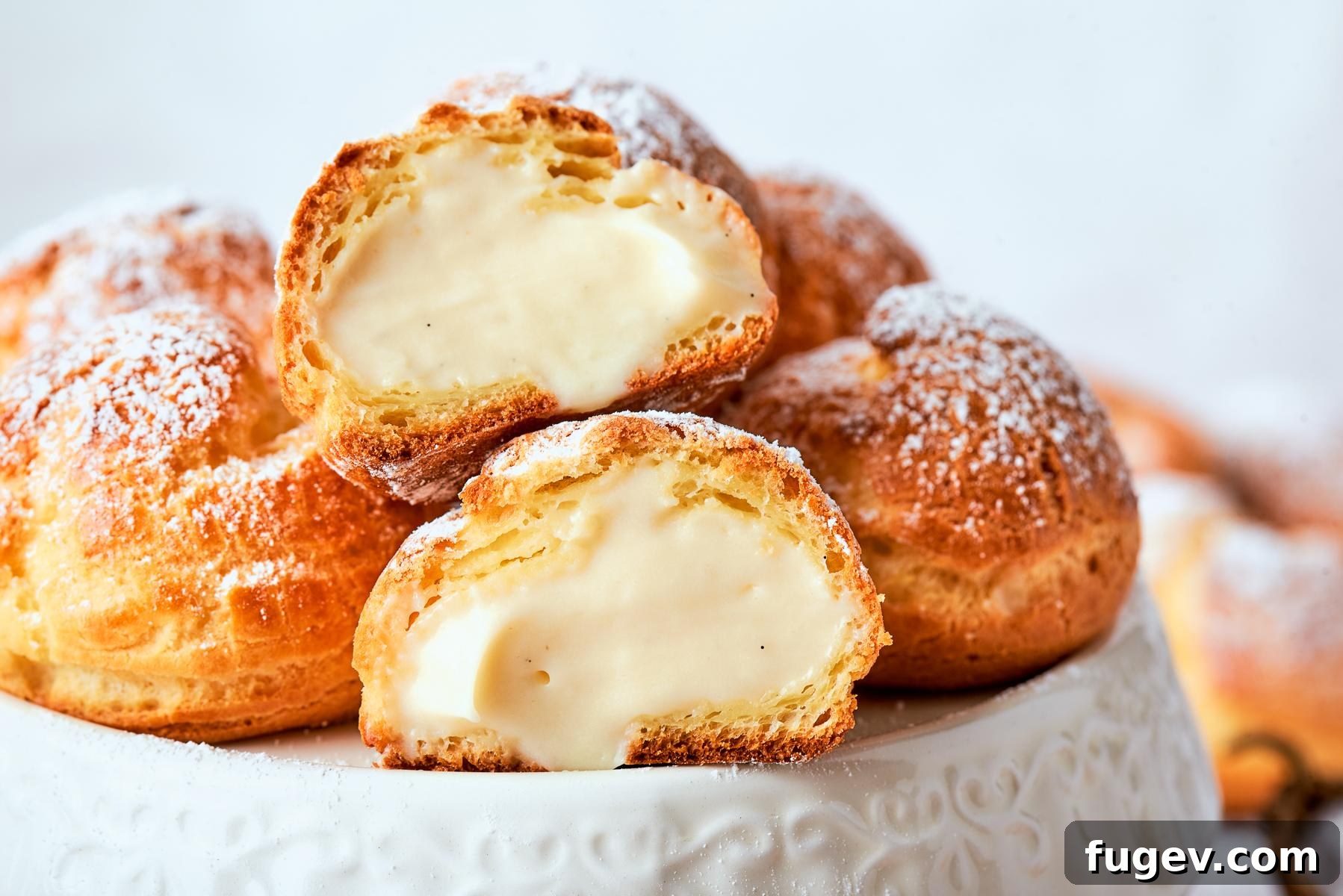
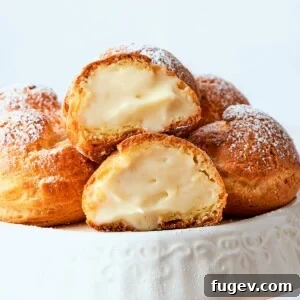
Crème Légère, pronounced “krem leh-JEHR,” is a cornerstone of French patisserie, renowned for its delicate texture and exquisite flavor. It is essentially classic French pastry cream (crème pâtissière) elevated and lightened with the gentle incorporation of freshly whipped cream. The result is a filling that is exceptionally silky, wonderfully airy, and bursting with true vanilla bean essence. This versatile cream lends itself beautifully to a myriad of dessert applications, from elegant fruit tarts and layered mille-feuille to being the quintessential filling for delicate choux pastry creations like cream puffs and éclairs.
A Quick Look At The Recipe
This is a brief summary of the recipe. Jump to the recipe to get the full details.
Jump to Recipe
Prep Time
20 minutes
Cook Time
10 minutes
Cooling Time
1 hour
Total Time
1 hour 30 minutes
Servings
75 large cream puffs
Difficulty
Intermediate — requires making pastry cream from scratch and folding in whipped cream without deflating it.
Calories *
23 kcal per serving
Technique
Stovetop custard method for the pastry cream base; whipped cream folded in after the base is fully chilled.
Flavor Profile
Vanilla, lightly sweet, rich, and creamy.
* Based on nutrition panel
I used this crème légère to fill a fresh strawberry tart and it held its shape beautifully for hours. The tip about chilling the pastry cream completely before folding in the whipped cream made such a difference — no deflating at all. The vanilla flavor comes through so clearly. This is my new go-to filling. ⭐⭐⭐⭐⭐
Lauren
Why This Crème Légère Recipe Stands Out
Crafting the perfect Crème Légère is an art, and this recipe guides you through each critical step with precision. Here’s why this particular approach guarantees success:
- Classic French Ratio, Precisely Calibrated: The secret to Crème Légère’s delightful texture lies in the exact balance of pastry cream to whipped cream. This recipe employs a carefully developed ratio that ensures the filling is robust enough to maintain its structure within delicate choux pastries, layered mille-feuille, or an elegant trifle, while still offering an ethereal, melt-in-your-mouth lightness that defines this classic. It’s a balance that prevents sogginess and ensures every bite is perfect.
- Properly Tempered Eggs Prevent Scrambling: The foundation of any great pastry cream is a smooth, lump-free custard. Our method meticulously outlines how to temper the eggs by gradually adding hot milk to the yolk mixture. This slow and steady increase in temperature gently acclimates the eggs to heat, preventing them from scrambling and resulting in a consistently velvety base. This crucial step ensures a flawless texture every single time.
- Whipped Cream Folded at the Right Consistency: The consistency of your whipped cream is paramount when creating Crème Légère. We aim for soft peaks – peaks that hold their shape but still gently flop over. Whipping to soft peaks ensures the cream incorporates effortlessly into the chilled pastry cream, preventing over-whipping and separation. This delicate consistency is key to achieving the characteristic airy, cloud-like texture that makes Crème Légère so irresistible.
- Remarkable Versatility Across Multiple Applications: Mastering this Crème Légère recipe unlocks a world of possibilities in your baking repertoire. Beyond classic applications like filling cream puffs, éclairs, and mille-feuille, it also layers beautifully in trifles, offering a more substantial yet equally delightful alternative to plain whipped cream. Imagine it in a vibrant fresh fruit tart or enriching a dessert like this coconut trifle. One foundational recipe, countless elegant uses.
Table of Contents
- Why This Recipe Works
- Ingredients & Substitutions
- Irresistible Crème Légère Variations
- Professional Tips for Perfect Crème Légère
- The Art of the Fold: Mastering Crème Légère Texture
- How to Make Crème Légère: A Step-by-Step Guide
- Chef Lindsey’s Recipe Tip
- Recipe FAQs
- Serving Suggestions & Creative Pairings
- More French Classics
- Recommended Dessert Recipes
- Crème Légère Recipe
- Before You Go
Crème Légère is not merely a recipe; it’s a fundamental technique that every aspiring baker and dessert enthusiast should master. It is a true staple of the French pastry kitchen, and learning to prepare it flawlessly unlocks a wide array of classic desserts that all begin from this single, versatile base.
This delicate cream pairs naturally and harmoniously with rich, buttery classics such as puff pastry and the feather-light pâte à choux. However, its adaptability extends far beyond formal patisserie; it works just as beautifully when simply spooned into something casual and comforting, like a trifle. Consider substituting it for the lightened lemon curd in my vibrant berry trifle for an equally delicious, yet distinctly different, experience.
If you’re curious to explore the pastry cream base in a slightly different context, my indulgent Banana Cream Pie utilizes the very same foundational custard, albeit with a slightly richer and more decadent finish. Understanding the core pastry cream empowers you to adapt and innovate across countless dessert creations.
Key Ingredients & Smart Substitutions for Crème Légère
Each ingredient in Crème Légère plays a vital role in achieving its signature flavor and texture. Understanding their functions will help you master the recipe and confidently make substitutions when needed.
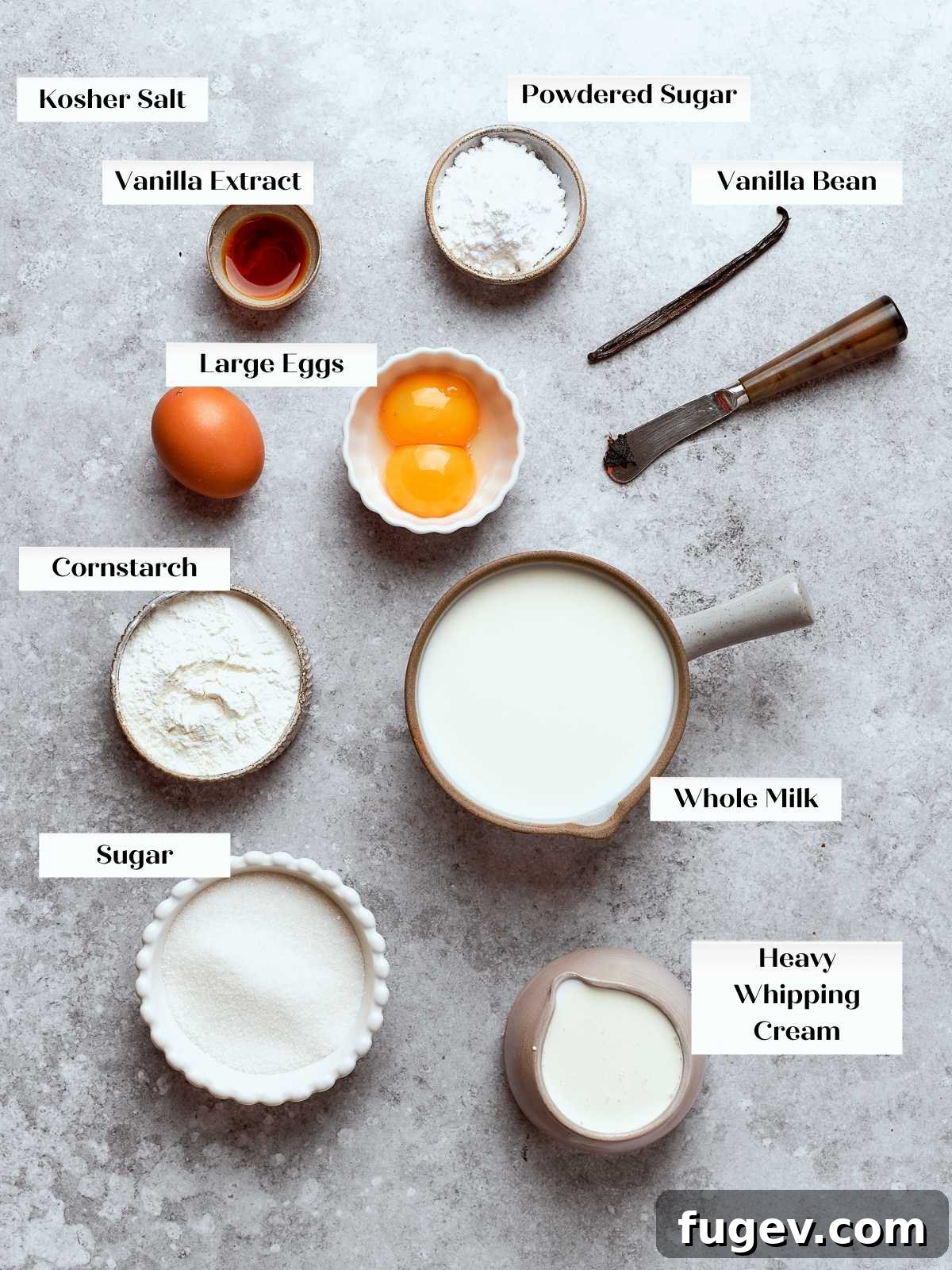
- Whole Milk: The choice of milk is crucial for the richness and luxurious mouthfeel of your Crème Légère. Whole milk, with its higher fat content, provides the necessary body and velvety texture. Using lower fat milk, such as 2% or skim, will result in a thinner, less satisfying custard that sets softer and lacks the desired richness.
- Vanilla Bean: A vanilla bean is the star here, infusing the milk with a deep, complex, and intensely aromatic vanilla flavor that beautifully complements the richness of the eggs and cream. Steeping the split and scraped bean in hot milk extracts both its profound flavor compounds and delicate aromas. Scraping the tiny black seeds directly into the mixture ensures that classic speckled appearance indicative of high-quality pastry cream. For a simpler yet equally flavorful vanilla experience, my Homemade Vanilla Pudding showcases the same vanilla bean infusion technique.
- Substitution: If a vanilla bean isn’t available, you can use 1-2 teaspoons of high-quality vanilla bean paste or pure vanilla extract, added at the very end of cooking the pastry cream or into the whipped cream. While delicious, neither will offer the same visual appeal or depth of flavor as a real vanilla bean.
- Granulated Sugar, divided: Sugar not only sweetens the custard but also plays a crucial functional role. It helps to tenderize and protect the egg proteins from curdling when exposed to heat, contributing to a smooth texture. Dividing the sugar between the milk and the egg mixture ensures both components dissolve smoothly, preventing lumps and ensuring even sweetness throughout the final cream.
- Egg and Egg Yolks: This combination is essential for both structure and richness. The whole egg provides structure and body to the custard, helping it set firmly. The egg yolks, rich in fat and natural emulsifiers, are the primary thickening agents, imparting a luxurious smoothness and deep yellow hue. Together, they create a custard base with sufficient body to hold its shape while remaining silky enough to be delicately folded with whipped cream.
- Cornstarch: Cornstarch is the chosen starch thickener for this recipe, providing critical stability to the pastry cream. It ensures the cream sets firmly and, importantly, prevents it from “weeping” (releasing liquid) once combined with whipped cream and chilled. For optimal thickening, the cornstarch must be fully dissolved in the egg mixture before heating and then brought to a full boil to fully activate its thickening power.
- Heavy Whipping Cream: This is the ingredient that transforms a rich pastry cream into a light and airy Crème Légère. Whipped separately to soft peaks and then carefully folded into the chilled pastry cream, it adds volume and a delicate, cloud-like texture. It’s imperative to use heavy cream with at least 36% fat content to ensure it whips to stable medium peaks and holds its structure in the finished filling without collapsing. If you love working with whipped cream in more complex applications, my White Chocolate Mousse offers another opportunity to refine your technique.
- Powdered Sugar: Added to the heavy cream before whipping, powdered sugar (confectioners’ sugar) serves a dual purpose. It sweetens the whipped cream and, thanks to the small amount of cornstarch it typically contains, provides a subtle stabilizing effect, helping the whipped cream hold its shape longer. Its fine texture dissolves instantly, ensuring a smooth, non-gritty whipped cream.
- Vanilla Extract: While the vanilla bean provides the initial depth of flavor, vanilla extract serves to reinforce and brighten that vanilla profile once the mixture is cold. Aromas tend to be more muted at lower temperatures, so adding a touch of extract to the whipped cream or cooled pastry cream allows you to fine-tune the intensity and ensure a vibrant vanilla flavor in the final Crème Légère.
See the recipe card for full information on ingredients and quantities.
Irresistible Crème Légère Variations for Every Palate
While classic vanilla Crème Légère is divine, its versatility allows for exciting flavor variations to suit any dessert and occasion. Experiment with these ideas to personalize your creations:
- Matcha Cream: For an earthy, sophisticated twist, whisk 1-2 tablespoons of high-quality matcha powder directly into the milk before heating. This infuses the pastry cream base with a beautiful green hue and a delicate, slightly bitter, verdant flavor. This is a technique I proudly demonstrated on Beat Bobby Flay, proving its professional appeal. Adjust the amount of matcha to your preferred intensity.
- Decadent Chocolate Version: To create a rich chocolate Crème Légère, add finely chopped dark or milk chocolate (about 4-6 ounces for this recipe) directly to the hot pastry cream immediately after it comes off the heat. Stir continuously until the chocolate is fully melted and smoothly incorporated into the cream before chilling. The residual heat of the pastry cream will melt the chocolate perfectly. For an even more indulgent and complex filling, consider adding chocolate to my caramel pastry cream recipe before lightening it with whipped cream.
- Adjusted Cream Ratio for Desired Texture: The beauty of Crème Légère is its customizable texture. You can easily modify the proportion of whipped cream to achieve your desired consistency:
- For a Lighter, Mousse-like Filling: Increase the amount of whipped cream by an additional half cup to a full cup. This will yield a more delicate, airy, and mousse-like Crème Légère, perfect for spooning into parfaits or lighter tart fillings.
- For a Denser, Firmer Texture: Reduce the amount of whipped cream by half. This will result in a denser, more structured cream that holds its shape more firmly, making it ideal for applications requiring clean slices, such as layered cakes or mille-feuille.
- Citrus Zest Infusion: Add 2-3 strips of lemon, orange, or lime zest to the milk when infusing the vanilla bean. Remove the zest before tempering the eggs. The citrus oils will impart a bright, aromatic freshness to the vanilla base.
- Coffee/Espresso Crème: Dissolve 1-2 tablespoons of instant espresso powder or strong instant coffee into the milk before heating for a rich mocha flavor.
Professional Tips for Perfect Crème Légère Every Time
Achieving the sublime texture of Crème Légère requires attention to detail. These professional insights will help you avoid common pitfalls and ensure your cream is consistently light, airy, and stable:
- Chill the Pastry Cream Completely Before Folding: This is arguably the most critical tip for successful Crème Légère. Adding whipped cream to pastry cream that is even slightly warm is the single most common reason for a dense, flat, and deflated result. The warmth will instantly melt the delicate fat structure of the whipped cream, causing it to lose all its air and volume. Your pastry cream must be thoroughly cold, ideally at refrigerator temperature (around 38-40°F / 3-4°C), before you even think about folding in the whipped cream. Planning ahead for adequate chilling time is essential.
- Boil the Pastry Cream for a Full Minute: Do not underestimate the importance of this step. Cornstarch, the primary thickener in our pastry cream, requires sustained heat to fully activate its thickening power. Pulling the cream off the heat too early will leave the cornstarch undercooked, resulting in a runny pastry cream that will “weep” (release liquid) and thin out once combined with whipped cream and chilled. You’ll observe a distinct transformation as the mixture boils: it will transition from a glossy, somewhat loose consistency to a visibly thick, smooth, and stable cream that holds its shape. That visual shift and sustained boil for a full 60 seconds is your definitive cue.
- Refresh the Pastry Cream Before Combining: After chilling, pastry cream can become quite stiff and even lumpy. Before folding in the whipped cream, it’s crucial to “refresh” it. Even a simple, vigorous beating with the back of a stiff spoon or a silicone spatula (or preferably in a stand mixer with a paddle attachment) will loosen the cornstarch bonds just enough. This process brings the chilled pastry cream back to a smooth, flowing consistency, allowing for much easier and more even incorporation of the whipped cream. This reconditioning maximizes volume and significantly increases the stability of the final Crème Légère.
- “Sacrifice” Some Whipped Cream for Better Incorporation: This is a clever baker’s trick that makes the folding process much smoother and more effective. “Sacrificing” means you take a small portion (about one-third) of your lighter component (the freshly whipped cream) and vigorously combine it with the much stiffer, reconditioned pastry cream. Don’t be gentle here; the goal is to intentionally deflate this small portion of whipped cream to loosen and aerate the dense pastry cream base. This initial aggressive mix creates a lighter, more pliable base, allowing for much easier and gentler incorporation of the remaining whipped cream, resulting in a perfectly light and smooth Crème Légère with minimal air loss.
The Art of the Fold: Mastering Crème Légère Texture
Beyond the quality of your pastry cream and whipped cream, the technique used to combine them is paramount to achieving the signature lightness of Crème Légère. This delicate process is often referred to as “folding,” and doing it correctly is a skill that will elevate your results.
The goal is to gently incorporate the airy whipped cream into the smooth, rich pastry cream without deflating the precious air you’ve worked so hard to build. The “sacrifice” step (discussed in professional tips) prepares the pastry cream by making it more pliable. Once that’s done, the remaining whipped cream needs a light touch.
Use a wide, flexible spatula. Add the remaining whipped cream in one or two additions. Begin by cutting down through the center of the mixture, then sweeping your spatula across the bottom of the bowl and up the side, turning the mixture over itself. Rotate the bowl as you fold, repeating this motion. The key is to be swift yet gentle. Over-mixing will crush the air out of the whipped cream, leading to a dense, heavy filling. Stop folding the moment the two creams are just combined and uniform in color and texture. A few faint streaks of white are perfectly acceptable – and often preferred – over an overworked, heavy filling. This gentle touch ensures the Crème Légère retains its airy, cloud-like consistency.
How to Make Crème Légère: A Step-by-Step Guide
Follow these detailed instructions to create a flawless Crème Légère, the classic French pastry cream lightened with freshly whipped cream, perfect for all your patisserie needs.
Tip for Faster Cooling: Spreading the hot pastry cream thinly on a large sheet pan dramatically reduces cooling time compared to leaving it in a deep bowl. This is my go-to trick when I need the cream ready the same day.
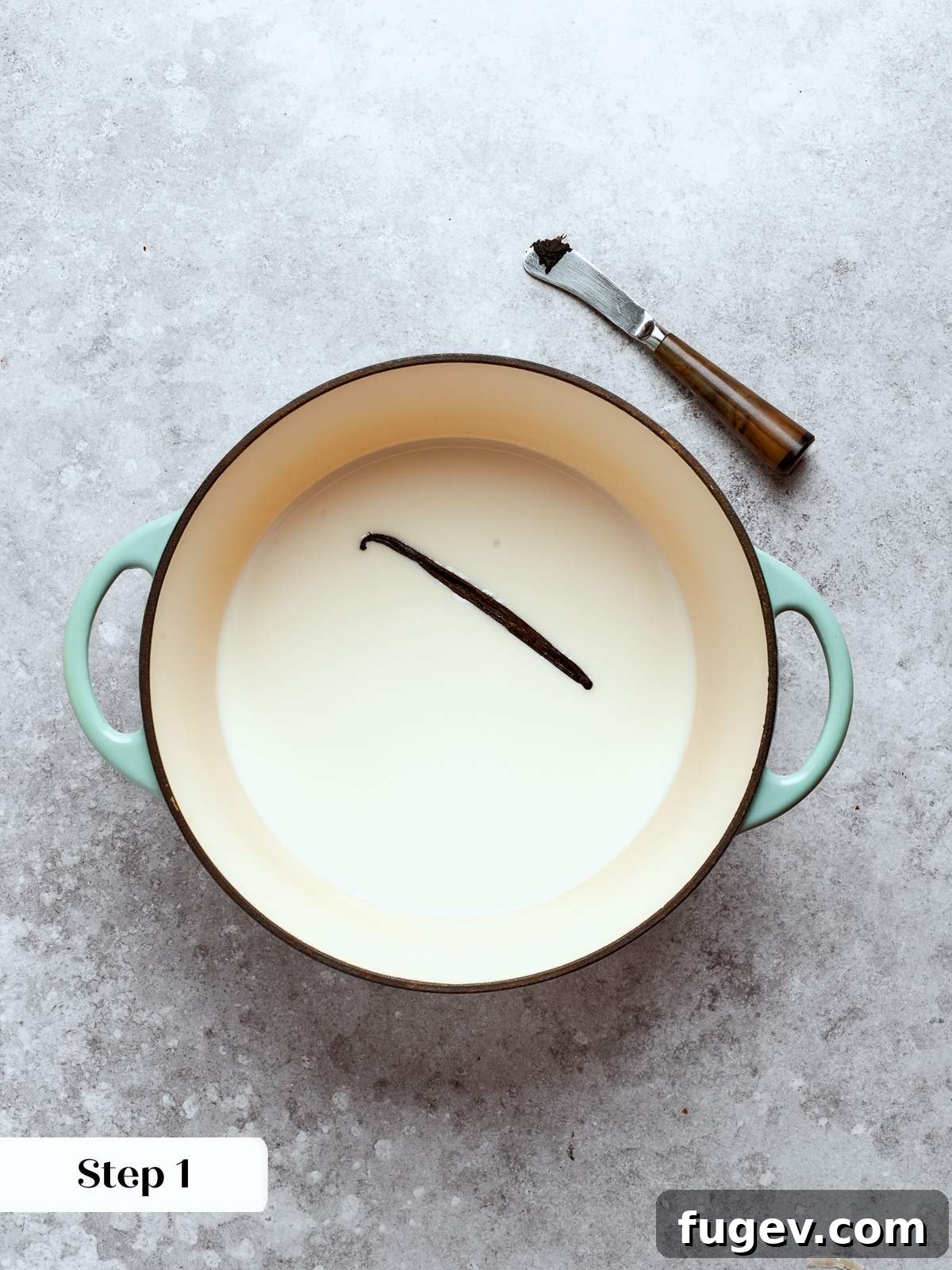
Step 1: Infuse and Heat the Milk. In a large, high-sided saucepot, combine the whole milk, the split vanilla bean pod along with its scraped seeds, and approximately half of the granulated sugar (photo 1). Stir the mixture gently to ensure the sugar begins to dissolve. Place the pot over medium-high heat and bring it to a full rolling boil, stirring occasionally to prevent scorching and ensure even heating. Observe how the milk may foam as it approaches boiling temperature; this is a normal part of the process.
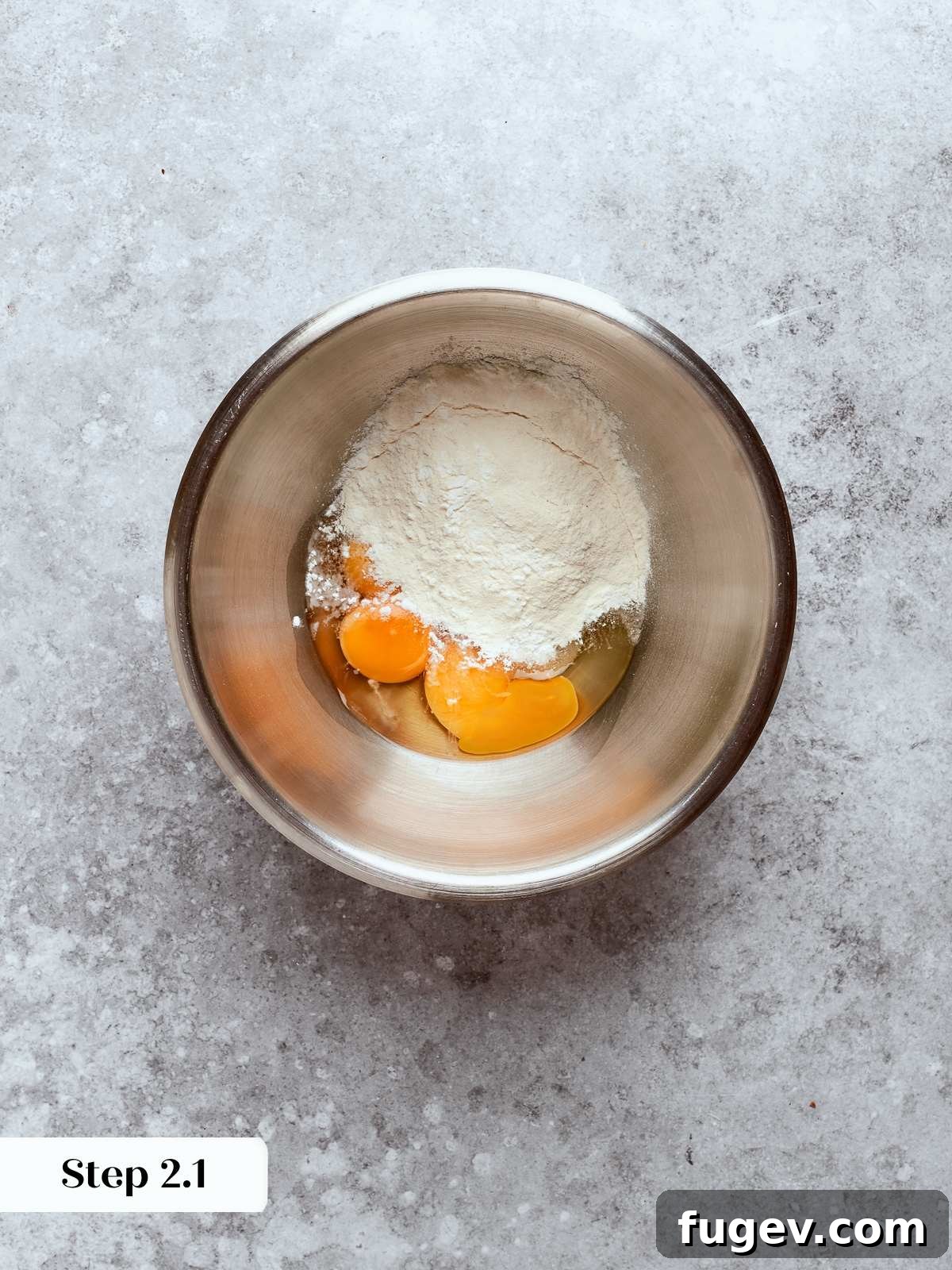
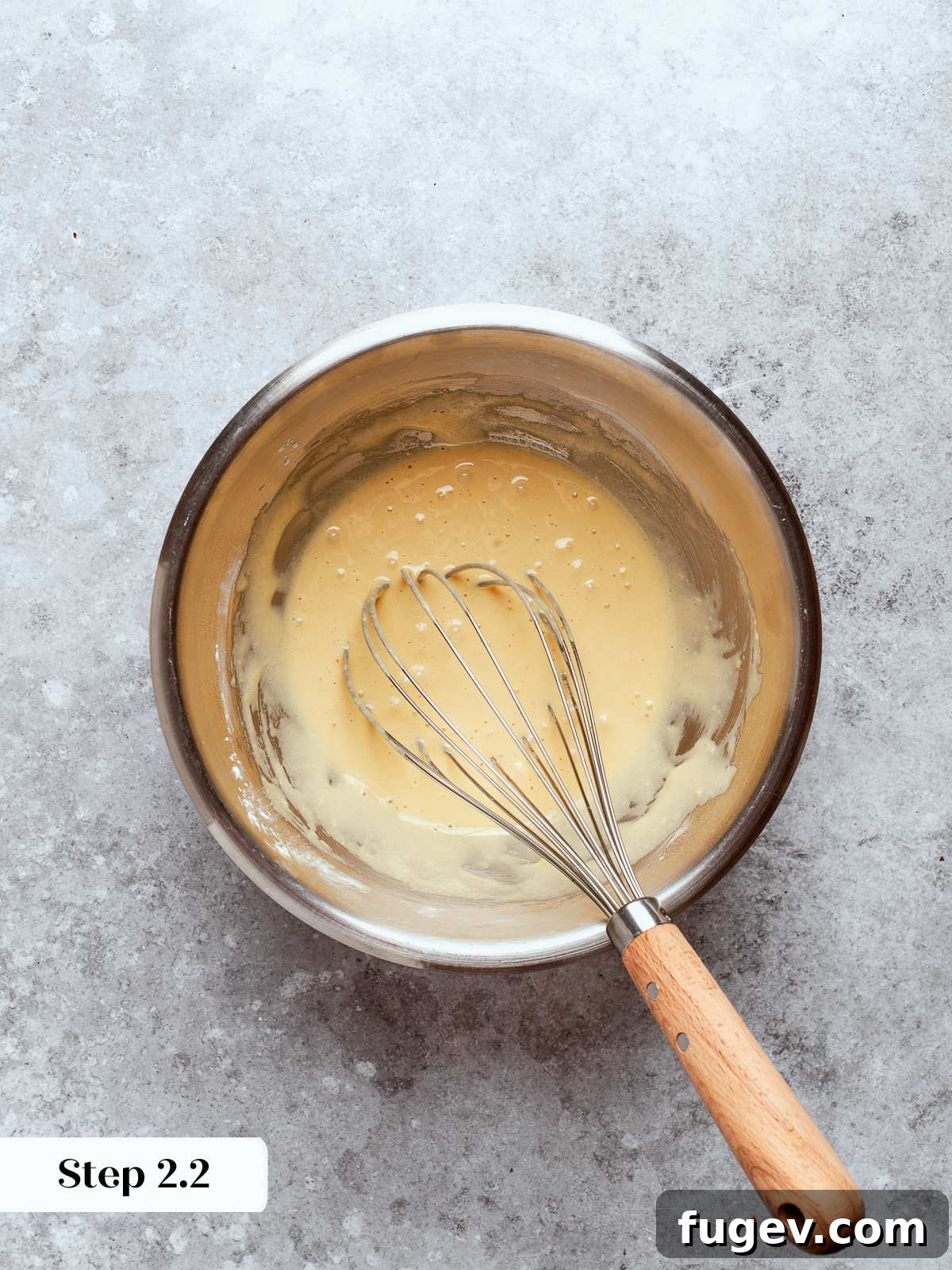
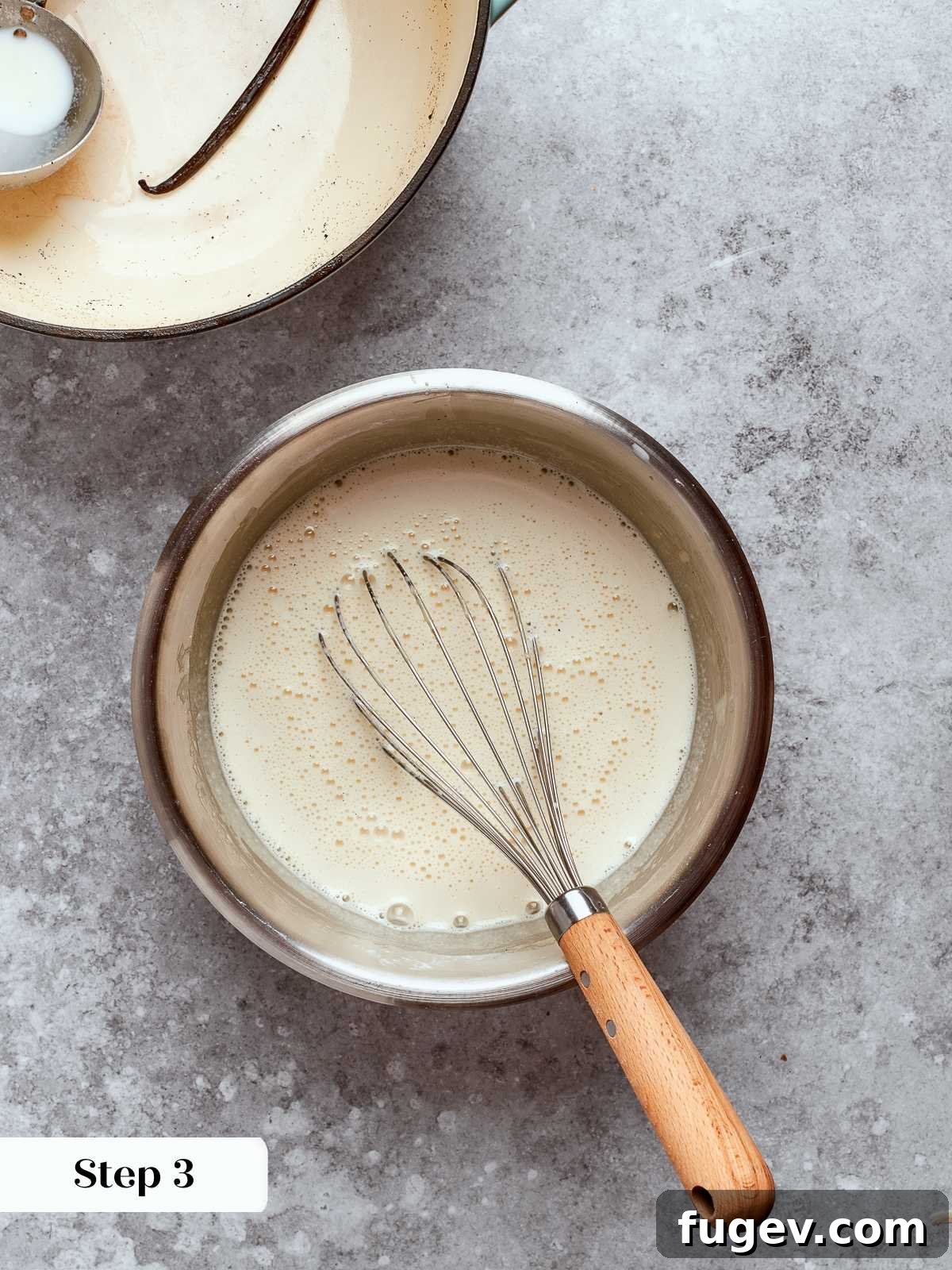
Step 2: Prepare the Egg Mixture and Workstation. To create a stable mixing environment, place a large mixing bowl on a damp paper towel or a non-slip mat to prevent it from sliding around during whisking. In this bowl, whisk together the whole large egg, two egg yolks, cornstarch, and the remaining half of the granulated sugar. Whisk vigorously until the mixture transforms into a pale, even yellow color and appears smooth and slightly thickened (photo 2 & 3). While the milk heats, prepare a baking sheet by lining it with plastic wrap or parchment paper. This will be used later to quickly spread and cool your finished pastry cream.
Step 3: Temper the Eggs Gently. Once the milk reaches a robust, full rolling boil, give your egg mixture one final quick whisk to ensure it’s perfectly smooth. Begin the tempering process by slowly pouring a small amount (about ¼ cup) of the hot milk into the egg mixture while whisking constantly and vigorously. Continue to gradually add more hot milk, a little at a time, whisking continuously, until you have incorporated roughly half of the hot milk. This slow, steady addition gently raises the temperature of the eggs without shocking them. Finally, pour in the remaining hot milk and whisk vigorously one last time to fully combine. This gradual tempering is crucial to prevent the eggs from scrambling, ensuring a silky, lump-free custard base (photo 4).
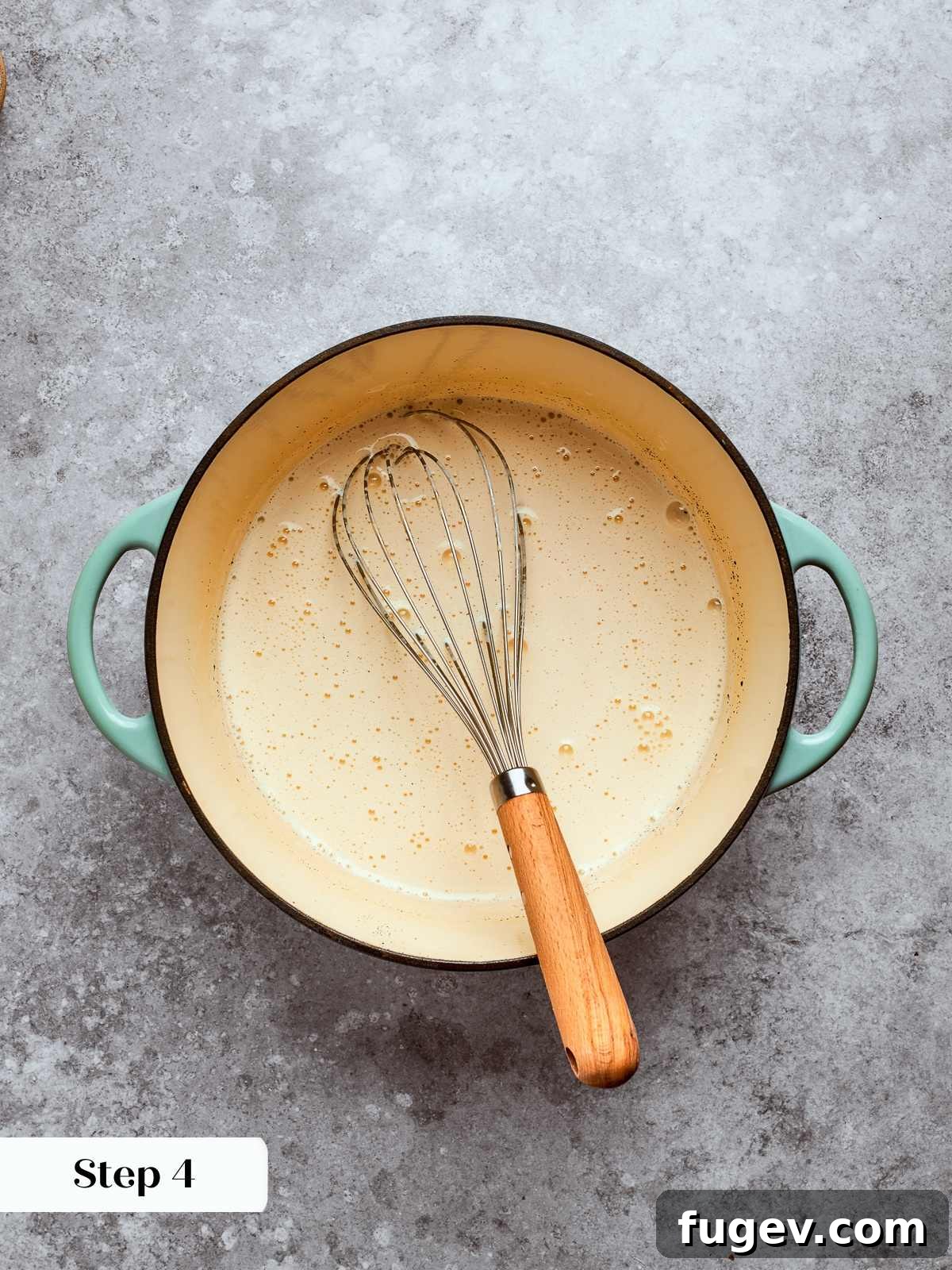
Step 4: Cook the Custard Base to a Boil. Pour the tempered custard base back into the same high-sided saucepot you used for the milk (photo 5). Return the pot to medium-high heat. Stir constantly with a heat-resistant silicone spatula, paying meticulous attention to scraping the bottom and edges of the pot to prevent scorching. For several minutes, the mixture will appear thin and loose. Then, you will gradually begin to feel it thicken and drag against the spatula. The very moment you detect this initial thickening, immediately switch from the spatula to a sturdy whisk.
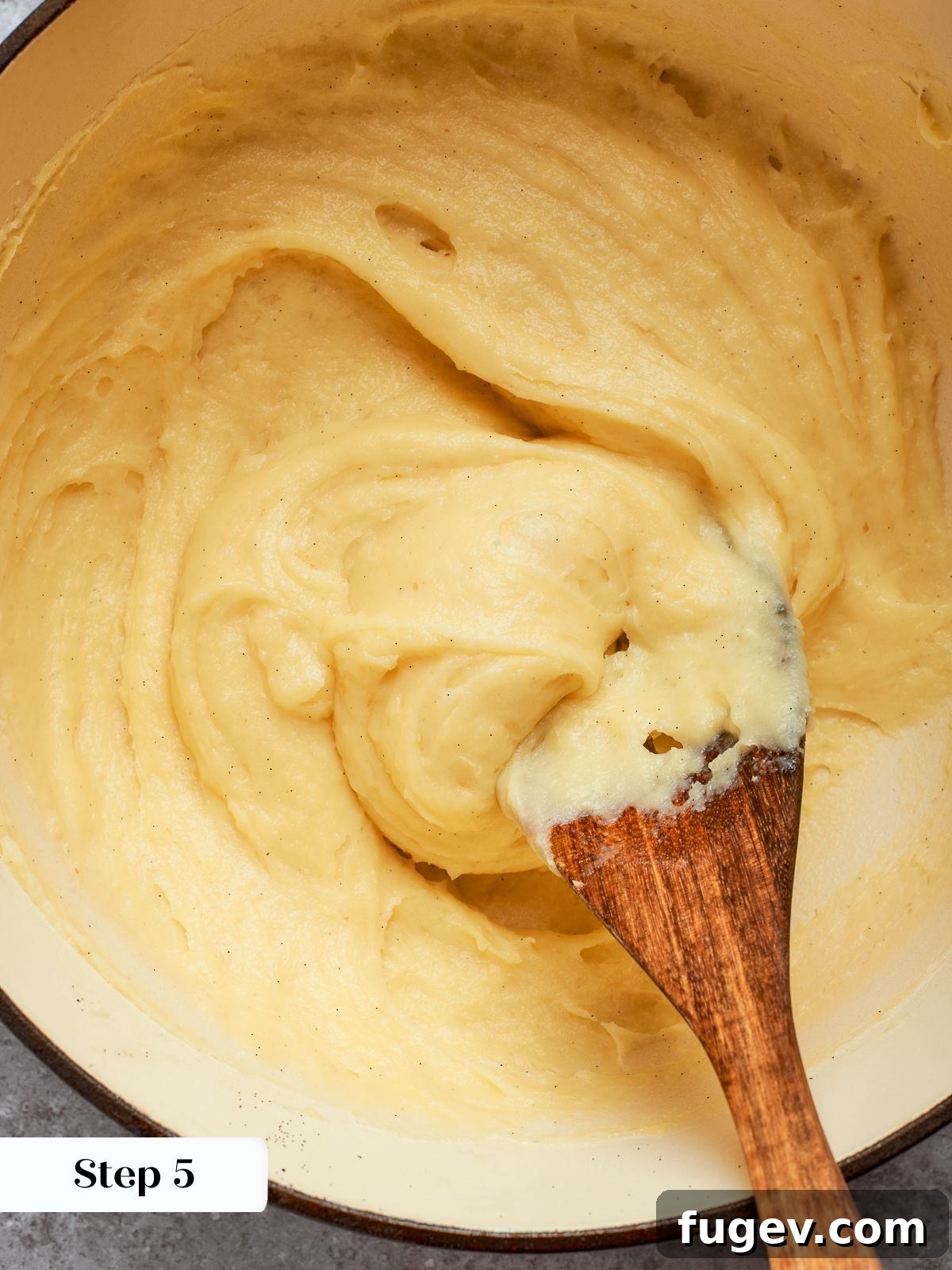
Step 5: Boil the Pastry Cream for One Full Minute. Continue whisking vigorously, ensuring the whisk reaches every corner of the pot to prevent lumps. Bring the pastry cream to a full, rolling boil. Maintain this boil for one full minute. This step is absolutely critical and non-negotiable: boiling fully activates the cornstarch, eliminating any starchy flavor that undercooked pastry cream often has, and ensures the cream sets properly. The finished pastry cream will be visibly thick, glossy, and should hold its shape beautifully on the whisk (photo 6).
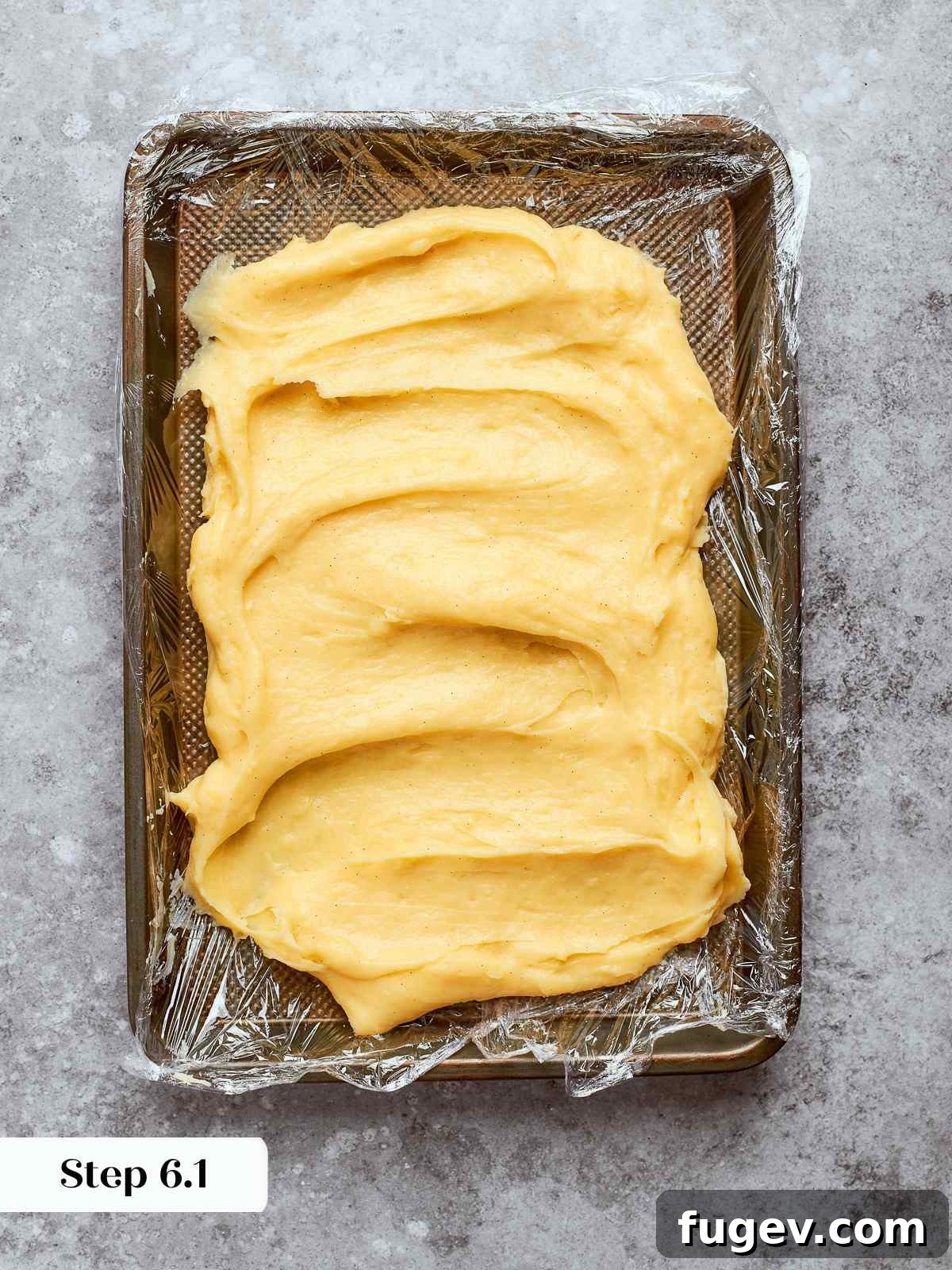
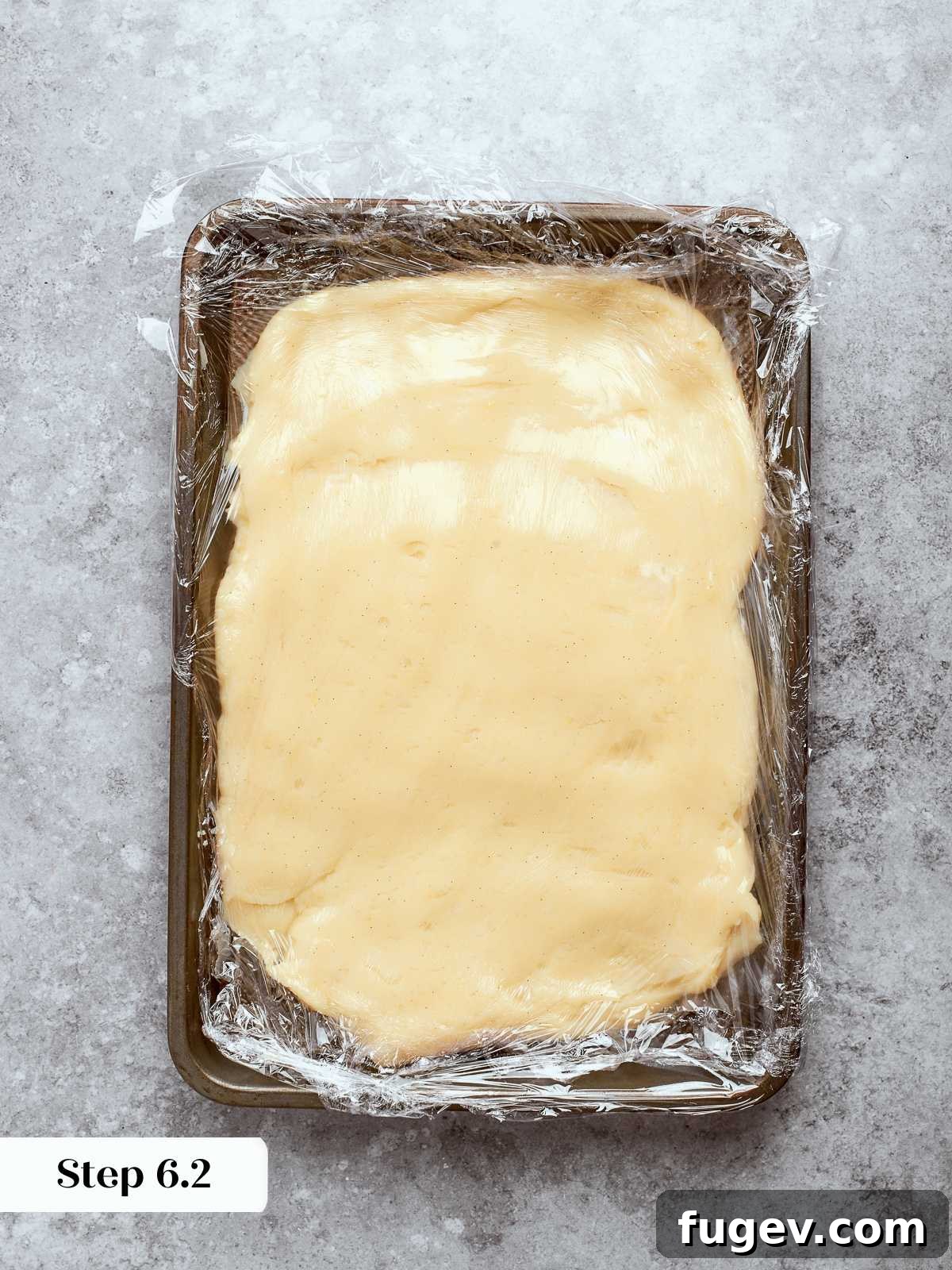
Step 6: Cool the Pastry Cream Rapidly. Immediately after boiling, scrape the hot pastry cream onto your prepared baking sheet (lined with plastic wrap or parchment). Using an offset spatula or the back of a spoon, spread the cream into an even, thin layer (photo 7). This maximizes surface area for rapid cooling. Press a piece of plastic wrap directly onto the entire surface of the pastry cream to prevent a skin from forming, and poke a few small holes in the plastic to allow steam to escape. Refrigerate the cream until it is completely cold throughout, which will take at least 1 hour but can be done overnight for best results (photo 8).
Step 7: Whip the Cream to Soft Peaks. In the impeccably clean bowl of a stand mixer fitted with the whisk attachment, combine the chilled heavy whipping cream, powdered sugar, and vanilla extract. Begin whipping on medium speed, gradually increasing to high speed. Continue whipping until soft peaks form: these are peaks that stand up briefly when the whisk is lifted but then gently flop over. It’s crucial not to over-whip at this stage; you want the cream to just barely hold its structure, not be stiff. Carefully transfer the whipped cream to a separate clean bowl and set it aside in the refrigerator while you prepare the pastry cream. (photo 9).
Step 8: Smooth and Recondition the Pastry Cream. Remove the chilled pastry cream from the refrigerator and discard the vanilla bean pod. Transfer the firm, chilled pastry cream to the stand mixer bowl (the same one you used for whipping cream, no need to wash). Fit the mixer with the paddle attachment – a scraper paddle works exceptionally well if you have one. Beat the pastry cream on medium-high speed until it becomes completely smooth, luscious, and resembles a thick, flowing batter. Cold pastry cream will be quite stiff and potentially lumpy straight from the refrigerator, so this reconditioning step is vital to bring it back to a perfectly workable, silky consistency, ready for folding (photo 10 & 11).
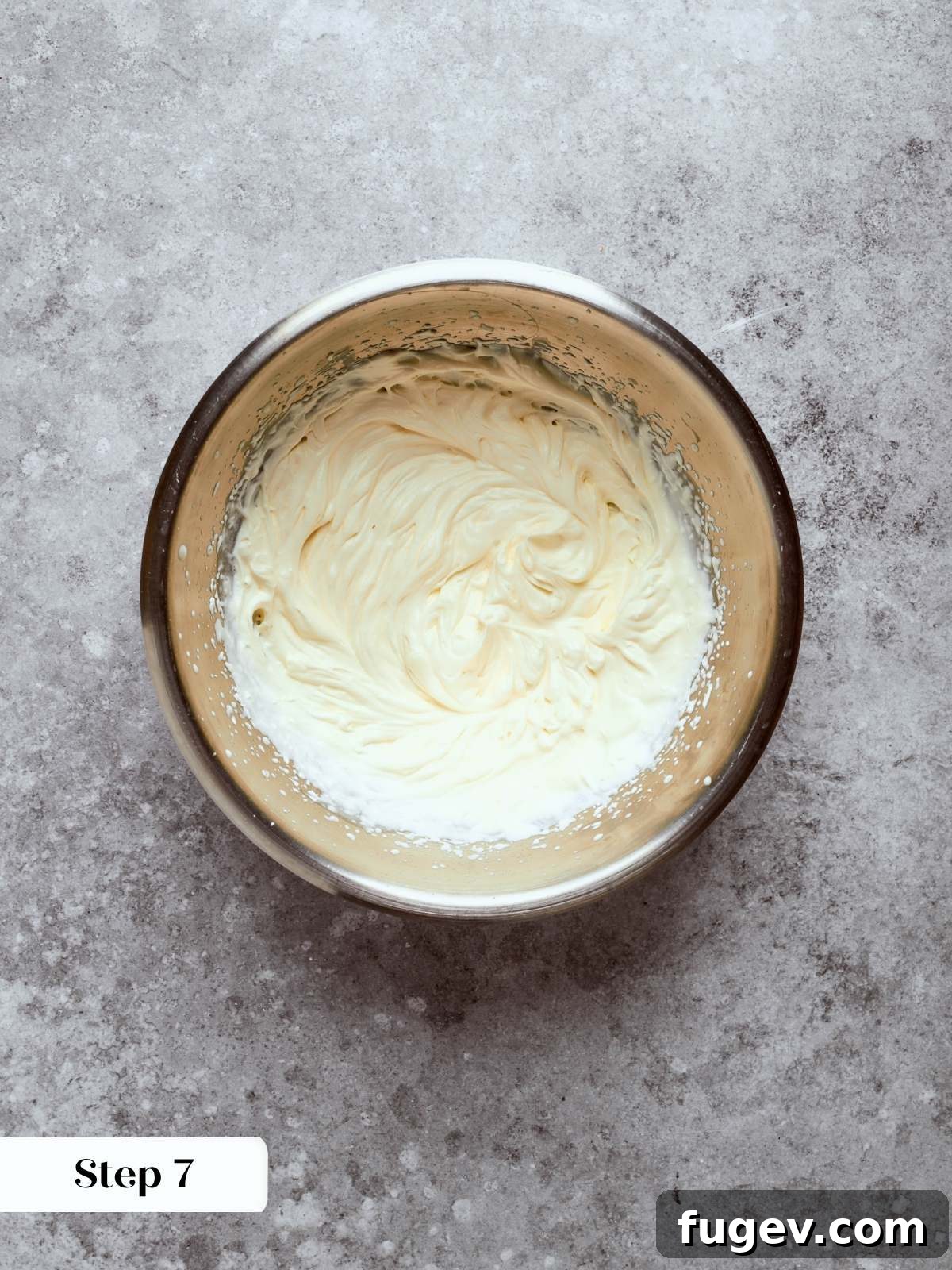
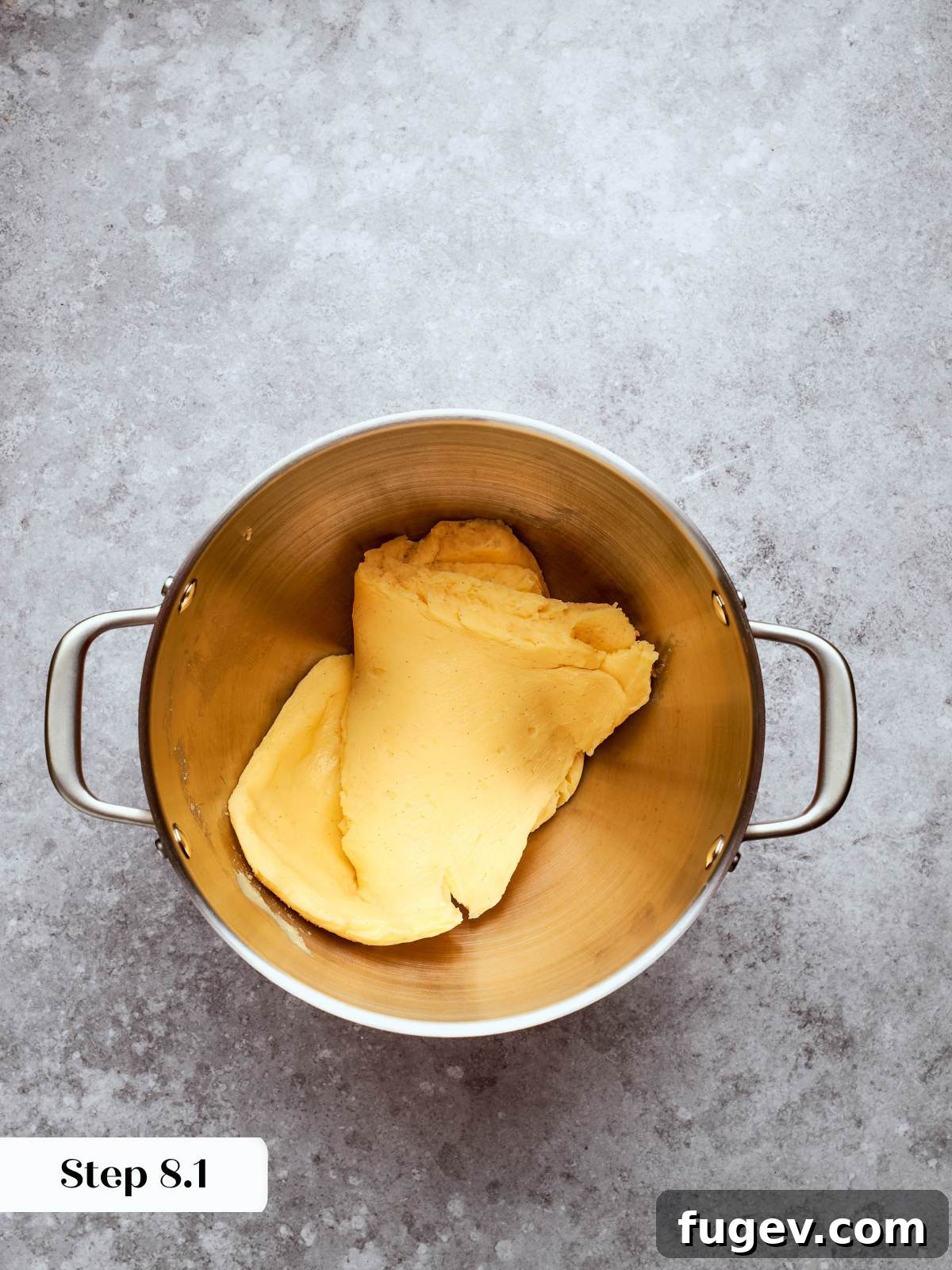
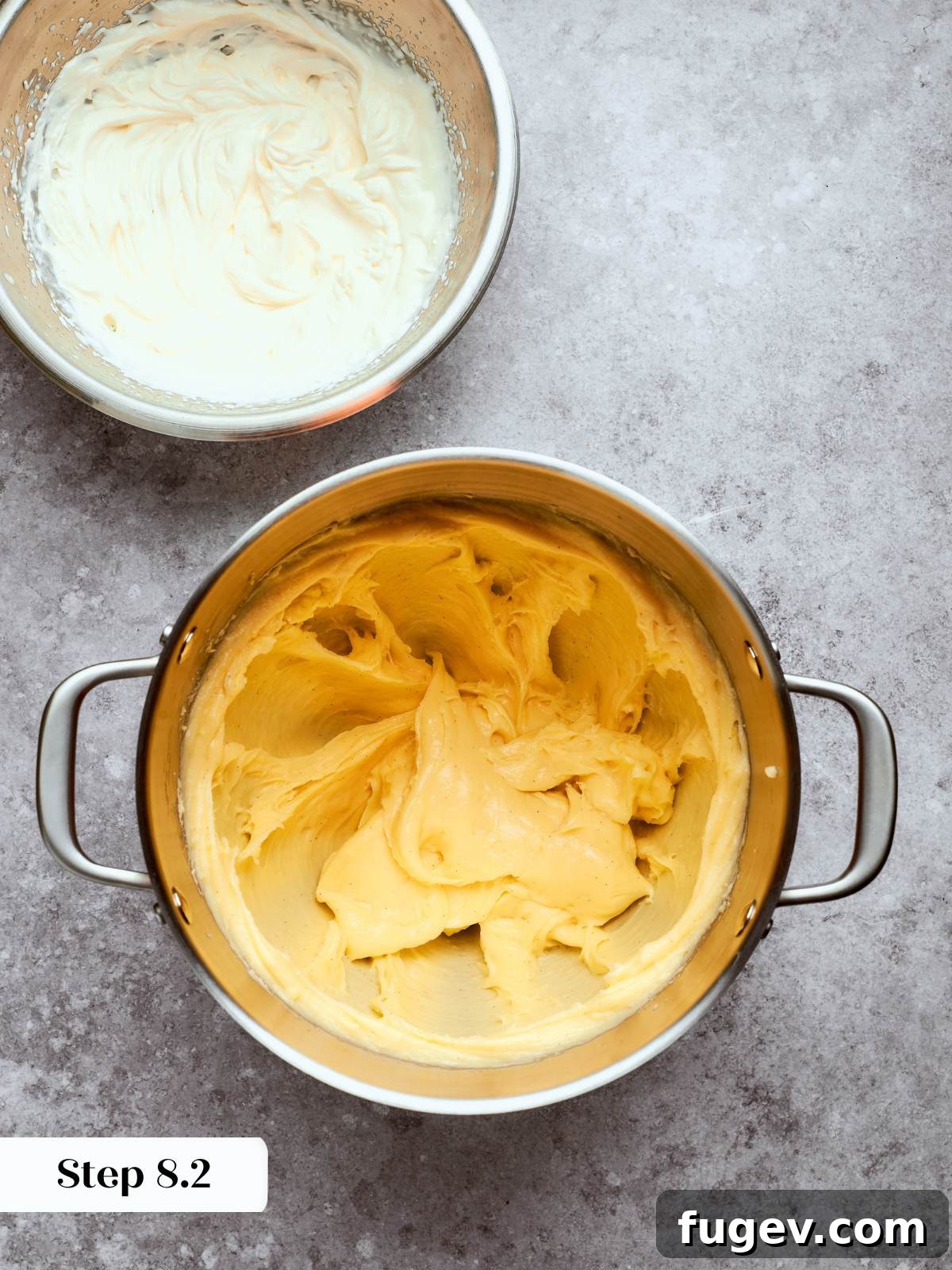
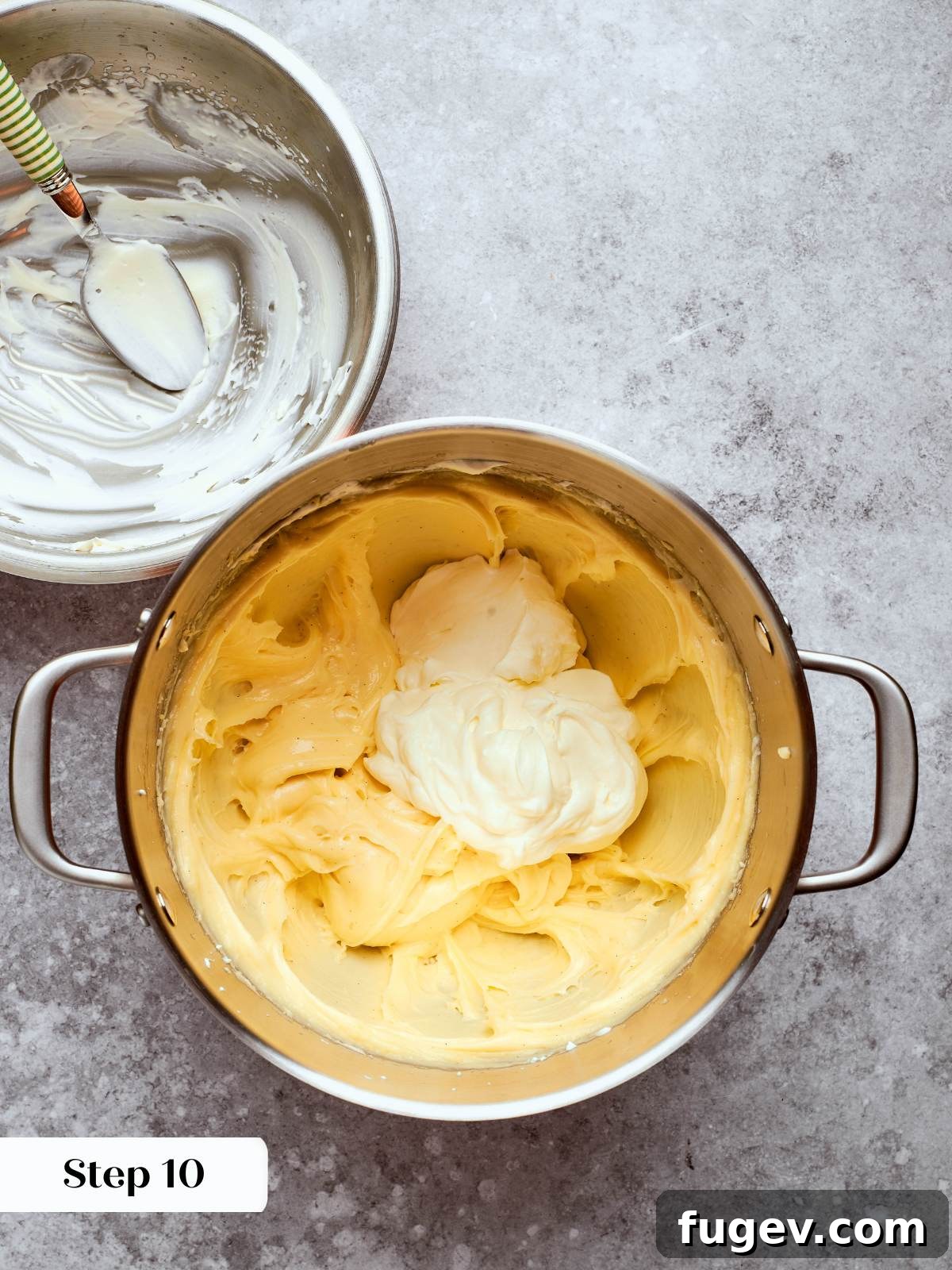
Step 9: Sacrifice a Third of the Whipped Cream. With your reconditioned pastry cream in the mixer bowl, add about one-third of the reserved whipped cream. Using a spatula, aggressively fold this portion of whipped cream into the pastry cream. Don’t be gentle here! This technique, known as “sacrificing,” intentionally deflates a small amount of the whipped cream to loosen and aerate the much denser pastry cream base (photo 12). This creates a more yielding consistency, making the incorporation of the remaining whipped cream significantly easier and preventing lumps.
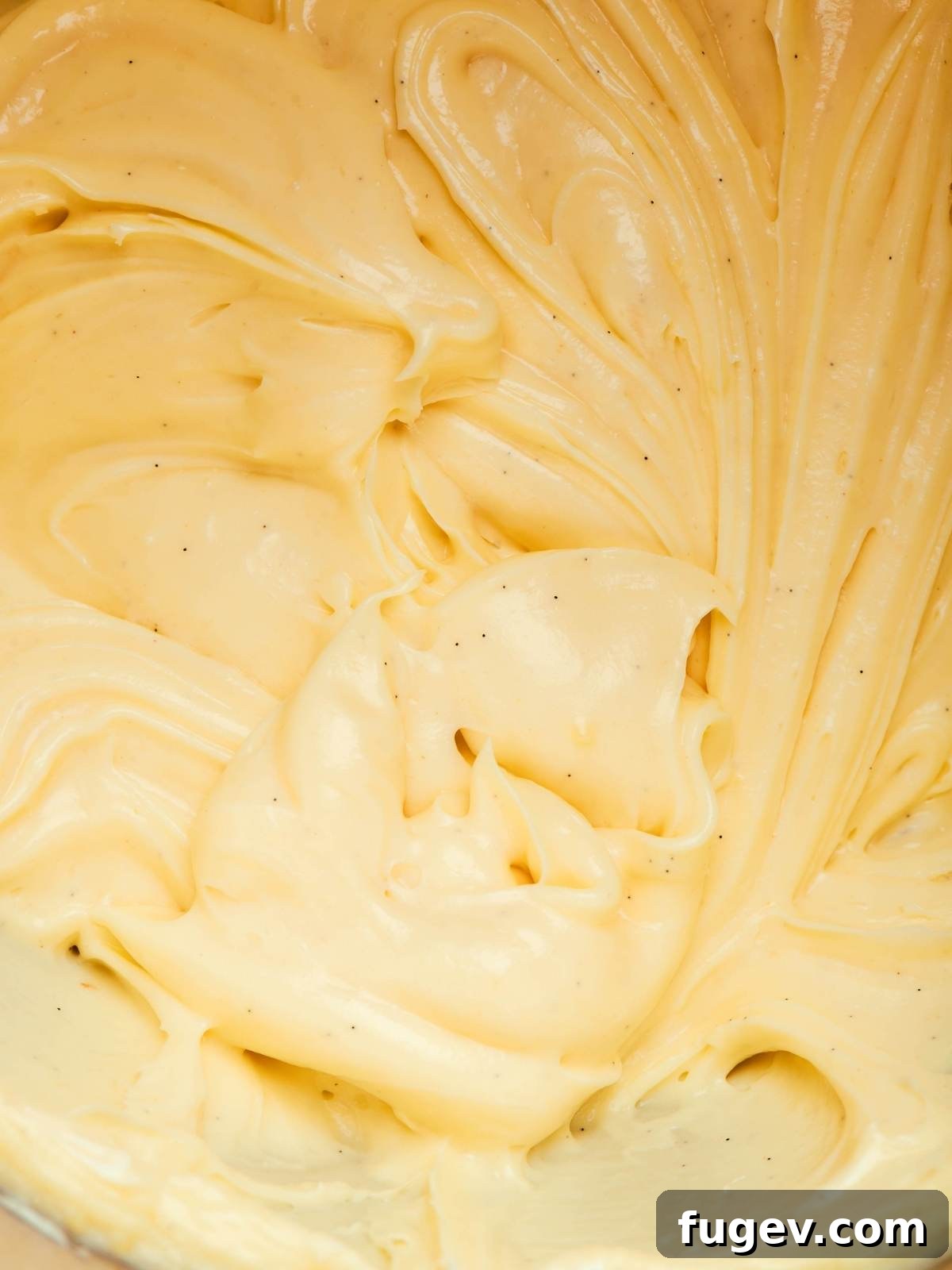
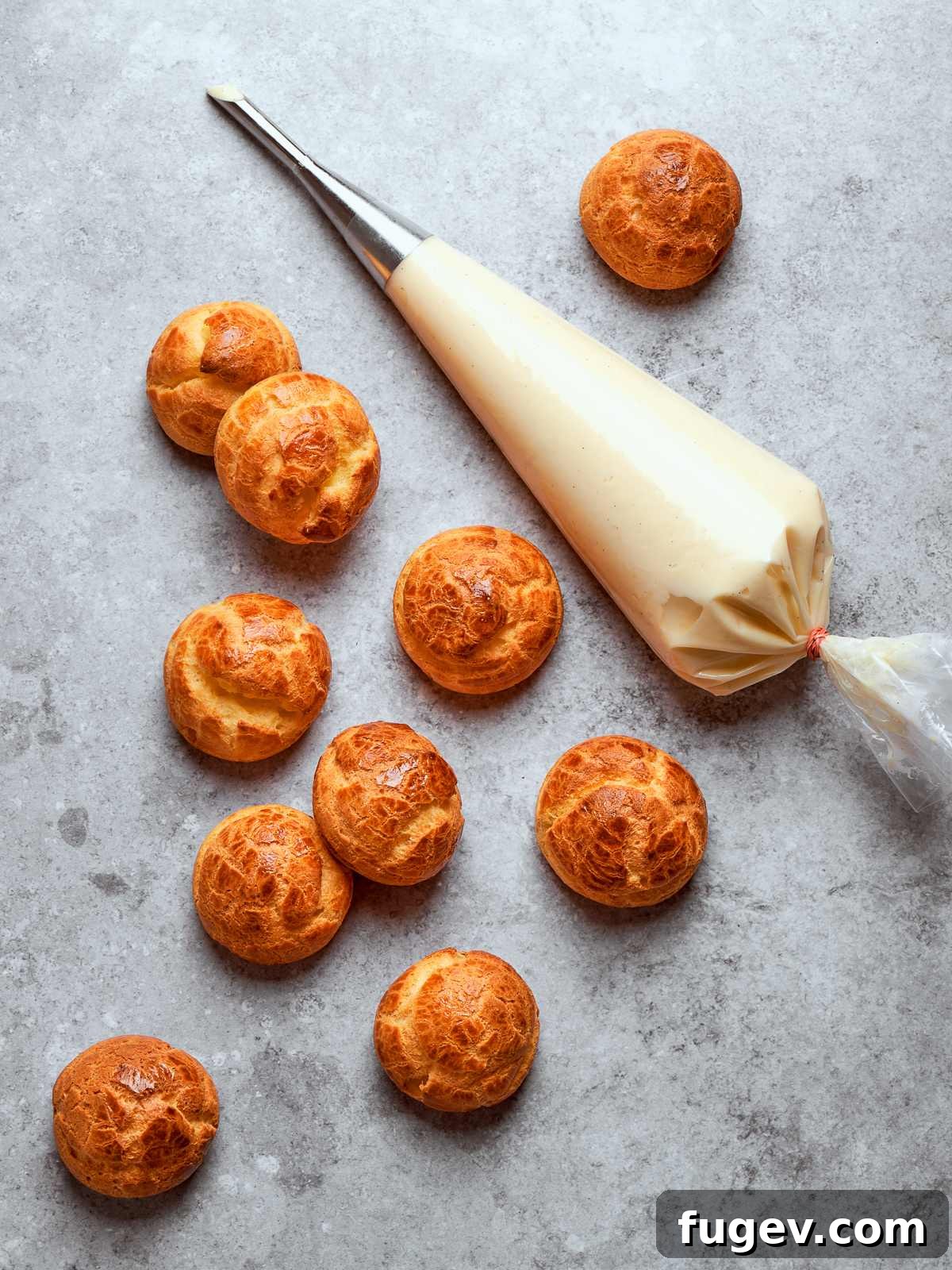
Step 10: Fold in the Remaining Whipped Cream. Once the pastry cream base is lightened and smooth from the “sacrifice” step, add the remaining two-thirds of the whipped cream. Now, fold gently. Use wide, sweeping strokes with your spatula, moving from the bottom of the bowl up and over the top, then rotating the bowl. Continue folding just until the mixture looks smooth, uniform, and fully combined. The finished Crème Légère should be wonderfully light, airy, and possess just enough thickness to hold its shape when spooned or piped. Avoid over-mixing, as this can deflate the cream. Transfer the Crème Légère to a piping bag for precise applications or simply leave it in a bowl, then refrigerate until you are ready to use it. (photo 13 & 14).
Chef Lindsey’s Essential Recipe Tip
The most crucial aspect of mastering Crème Légère lies in understanding its dual nature: it is fundamentally a two-component recipe, and both components must be in their absolute ideal condition before they are combined. Imagine introducing freshly whipped cream to pastry cream that is even slightly warm – the fat structure within the delicate whipped cream will melt almost instantly upon contact, and all the precious air and volume you’ve built will be lost before you even begin the folding process. This results in a dense, disappointing filling rather than the light, ethereal cream you desire. Therefore, ensuring your pastry cream is completely chilled to refrigerator temperature before combining is non-negotiable.
Beyond temperature, the actual folding motion is critically important. Employ a wide, flexible spatula and use gentle, sweeping strokes. Your motion should be from the bottom of the bowl, lifting the mixture up and over itself, rotating the bowl as you go. The goal is to incorporate the whipped cream with the least amount of disruption to its air cells. Crucially, stop mixing the very moment the two components are just combined and uniform. A few faint, barely visible streaks of white whipped cream are far preferable to an overworked, heavy, and deflated filling. This careful attention to temperature and technique is the secret to a truly sublime Crème Légère.
Recipe FAQs: Your Crème Légère Questions Answered
Crème Légère (also known as diplomat cream) is a sophisticated French cream that starts with a base of classic pastry cream (crème pâtissière) and is then lightened by gently folding in freshly whipped cream. Pastry cream on its own is dense, rich, and firm, making it suitable for certain fillings. Crème Légère, however, has a significantly softer, airier, and more delicate texture, making it perfectly suited for applications where you desire a filling that feels light, fluffy, and elegant rather than heavy. The specific ratio of whipped cream to pastry cream can be adjusted to control how mousse-like or structured the final result is, allowing for great versatility.
Absolutely, Crème Légère is an excellent component to prepare in advance. Once fully made and folded, place the finished Crème Légère in an airtight container and refrigerate it. It needs to cool completely for at least 1 hour, and can be stored overnight for convenience. Ensure it is covered tightly to prevent it from absorbing any other flavors from the refrigerator. Before using, give it a gentle stir with a spatula to refresh its texture, especially if it has been sitting for several hours.
Due to its dairy and egg content, Crème Légère should be stored in an airtight container in the refrigerator and will keep well for up to 3 days. It’s important to keep it chilled and avoid leaving it at room temperature for extended periods to maintain food safety and quality. For optimal texture and freshness, pastries and desserts that have been assembled and filled with Crème Légère are best served on the same day they are prepared.
Adding whipped cream to warm pastry cream is a common mistake and will lead to an immediate and irreversible issue. The warmth of the pastry cream will melt the delicate fat structure in the whipped cream almost instantly, causing it to deflate completely before you even have a chance to finish folding. The result will be a dense, heavy, and flat filling, entirely lacking the light, silky, and airy texture that Crème Légère is famous for. For this reason, chilling the pastry cream completely before folding is not merely a suggestion, but a mandatory step for success.
Lumps in pastry cream are typically caused by one of a few factors: either the egg proteins denatured (cooked) too quickly when combined with the sugar, the eggs weren’t tempered slowly enough with the hot milk, or you failed to switch to a whisk and stir continuously once the mixture began to thicken. A runny result, on the other hand, almost always indicates that the pastry cream was not cooked to a full, sustained boil, meaning the cornstarch never reached its full thickening potential. Both of these common issues are entirely avoidable: always whisk constantly throughout the cooking process, pour the hot milk in a thin, steady stream while tempering, and ensure you keep the heat steady until you visibly see the mixture thicken and bubble vigorously for a full minute.
Crème Légère is incredibly versatile and can elevate a wide range of desserts. It is the undisputed classic filling for elegant mille-feuille and works equally well in beloved cream puffs, sophisticated éclairs, and vibrant fresh fruit tarts. Beyond these traditional uses, it layers beautifully in a trifle, offering a more substantive and luxurious alternative to plain whipped cream alone. You could also serve it as a light accompaniment to a rich slice of flourless chocolate cake, or even as a lighter, more aerated take on vanilla bean ice cream. Essentially, anywhere you would typically use pastry cream but desire a softer, more aerated, and delicate result, Crème Légère is the perfect and most delicious choice.
Serving Suggestions & Creative Pairings for Crème Légère
Crème Légère is not just a filling; it’s a versatile component that can enhance almost any dessert. Here are some ideas to inspire your culinary creativity:
- Classic French Pastries: Its primary use, and for good reason! Pipe it into freshly baked cream puffs, elegant éclairs, or layer it between crisp sheets of puff pastry for a traditional mille-feuille.
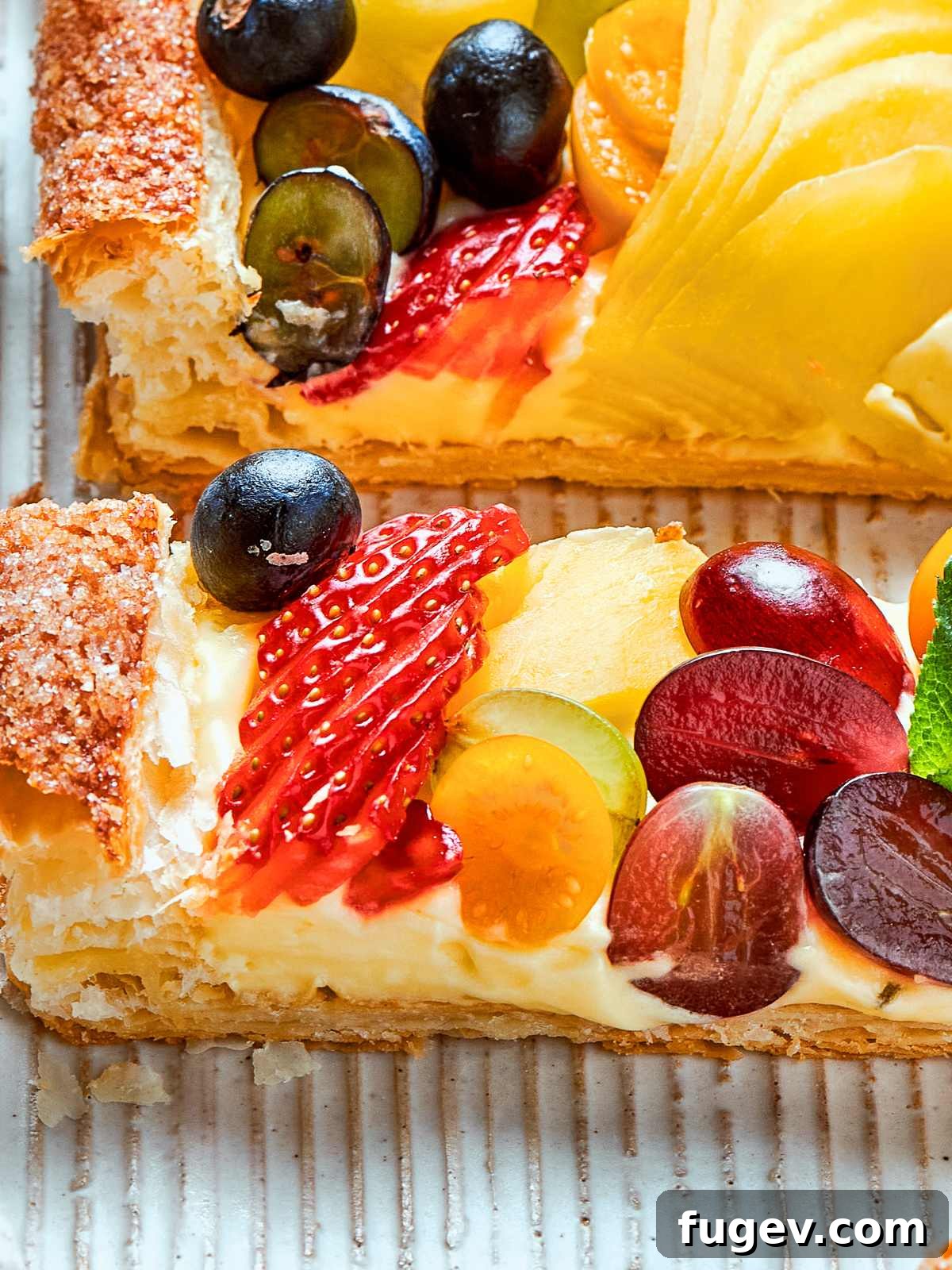
- Fruit Tarts: Spread a generous layer of Crème Légère into a pre-baked tart shell. Arrange fresh seasonal berries, sliced kiwi, peaches, or any fruit of your choice on top for a stunning and delicious dessert. The lightness of the cream balances the tartness of the fruit beautifully.
- Trifles and Parfaits: Layer Crème Légère with sponge cake pieces, fresh fruit, and perhaps a drizzle of fruit purée or caramel sauce in a clear glass for an elegant trifle or individual parfaits. Its airy texture makes it perfect for such layered desserts.
- Cake Filling: Use it as a lighter, yet stable, filling for layer cakes. Its vanilla flavor complements chocolate, red velvet, and many fruit-flavored cakes. For a rustic touch, you could even use it to fill delicate crepes.
- With Fresh Fruit: Simply spoon Crème Légère into small bowls and top with a medley of fresh berries, a sprinkle of toasted nuts, or a grating of dark chocolate for a simple yet sophisticated dessert.
- Creative Toppings: Drizzle with a homemade berry coulis, chocolate ganache, or a salted caramel sauce. A sprinkle of cocoa powder, finely chopped pistachios, or candied citrus peel can add extra flair and texture.
More French Classics to Explore
Dessert Recipes
Choux Pastry (Pâte à choux)
Pies and Tart Recipes
Puff Pastry Fruit Tart
Date Night
Homemade Vanilla Pudding Recipe
Dessert Recipes
Puff Pastry Recipe
If you tried this recipe and loved it, please leave a 🌟 star rating and let me know how it goes in the comments below. I love hearing from you; your comments make my day!
⭐
⭐
⭐
⭐
Crème Légère
Chef Lindsey
20 minutes
10 minutes
1 hour
1 hour 30 minutes
75 large cream puffs
Pin Recipe
Comment
Print Recipe
Ingredients
(US Customary)
- 2 cups whole milk
- ½ vanilla bean split and seeded
- ½ cup granulated sugar divided
- 1 large egg
- 2 egg yolks
- ¼ cup cornstarch
- 1 cup heavy whipping cream
- 2 tablespoons powdered sugar
- ½ teaspoon vanilla extract more to taste if desired
Instructions
-
Combine the milk, vanilla bean pod and seeds, and half the sugar in a large high-sided saucepot. Stir to combine and bring to a rolling boil over medium-high heat, stirring occasionally until the sugar dissolves.
-
Set a large bowl on a damp towel to stabilize it. Whisk together the whole egg, egg yolks, cornstarch, and remaining sugar until pale yellow. Line a baking sheet with plastic wrap or parchment paper.
-
When the milk reaches a full rolling boil, whisk the egg mixture once more, then slowly pour in a small amount of the hot milk, whisking constantly. Gradually add more milk until you have added about half, then pour in the rest and whisk vigorously to combine.
-
Return the custard base to the saucepot over medium-high heat. Stir constantly with a silicone spatula until it begins to thicken, then switch to a whisk.
-
Whisk vigorously, including the corners of the pot, until the cream thickens and comes to a boil. Boil for 1 minute.
-
Scrape the hot pastry cream onto the prepared baking sheet and spread it out. Cover the surface directly with plastic wrap and poke a few holes. Refrigerate until completely cool, at least 1 hour to overnight.
-
In the bowl of a stand mixer fitted with the whisk attachment, combine the heavy cream, powdered sugar, and vanilla extract. Whip on high speed until soft peaks form. Transfer to a clean bowl.
-
Add the cold pastry cream to the stand mixer bowl, removing the vanilla bean pod. Fit with the paddle attachment and beat on medium-high speed until smooth and the texture resembles a thick batter.
-
Fold about one-third of the whipped cream into the pastry cream aggressively to loosen it. Add the remaining whipped cream and fold gently until smooth and combined.
-
Transfer to a piping bag or bowl. Refrigerate until ready to use.
Notes
Chilling: The pastry cream must be completely cold before folding in the whipped cream. Even slightly warm pastry cream will deflate the whipped cream on contact.
Variations: Change the flavor by infusing the milk with matcha, folding chopped chocolate into the hot pastry cream before cooling, or using a caramel pastry cream base.
Nutrition
Carbohydrates: 2g |
Protein: 0.4g |
Fat: 1g |
Saturated Fat: 1g |
Polyunsaturated Fat: 0.1g |
Monounsaturated Fat: 0.4g |
Cholesterol: 7mg |
Sodium: 4mg |
Potassium: 14mg |
Fiber: 0.004g |
Sugar: 2g |
Vitamin A: 61IU |
Vitamin C: 0.02mg |
Calcium: 11mg |
Iron: 0.02mg
Dessert
French
23
Like this? Leave a comment below!
Before You Go: Continue Your Culinary Journey
Crème Légère is truly one of those foundational components that subtly yet significantly elevates everything it graces, transforming simple desserts into elegant masterpieces. From perfectly filled pastries to exquisitely layered cakes, mastering this recipe equips you with a powerful tool in your baking arsenal.
If you’ve enjoyed delving into the nuanced world of French patisserie with this recipe, I encourage you to continue exploring. Browse my extensive collection of Dessert Recipes for more sweet inspirations, or dive deeper into the creamy, comforting realm of Custard Recipes to expand your repertoire even further. Happy baking!