
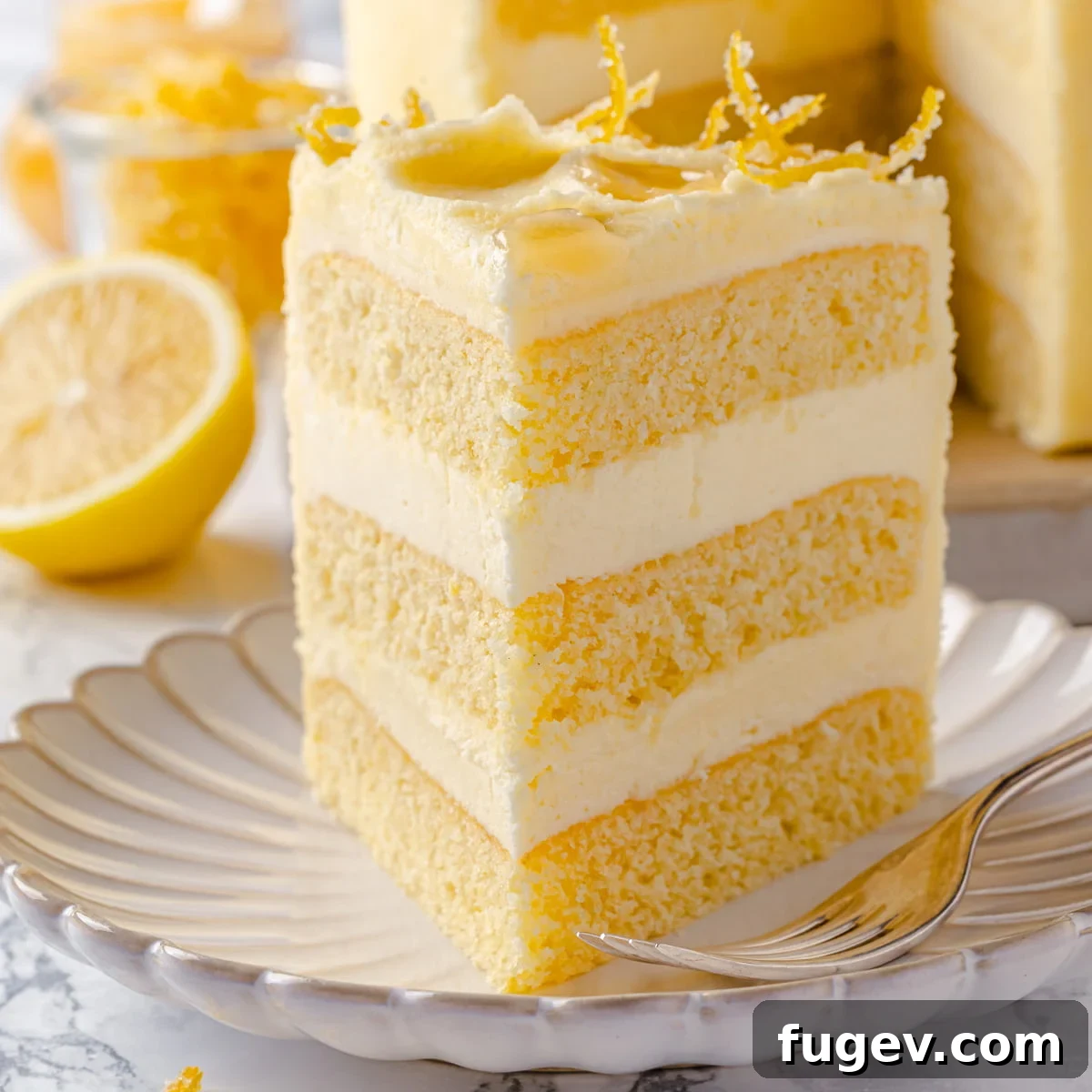
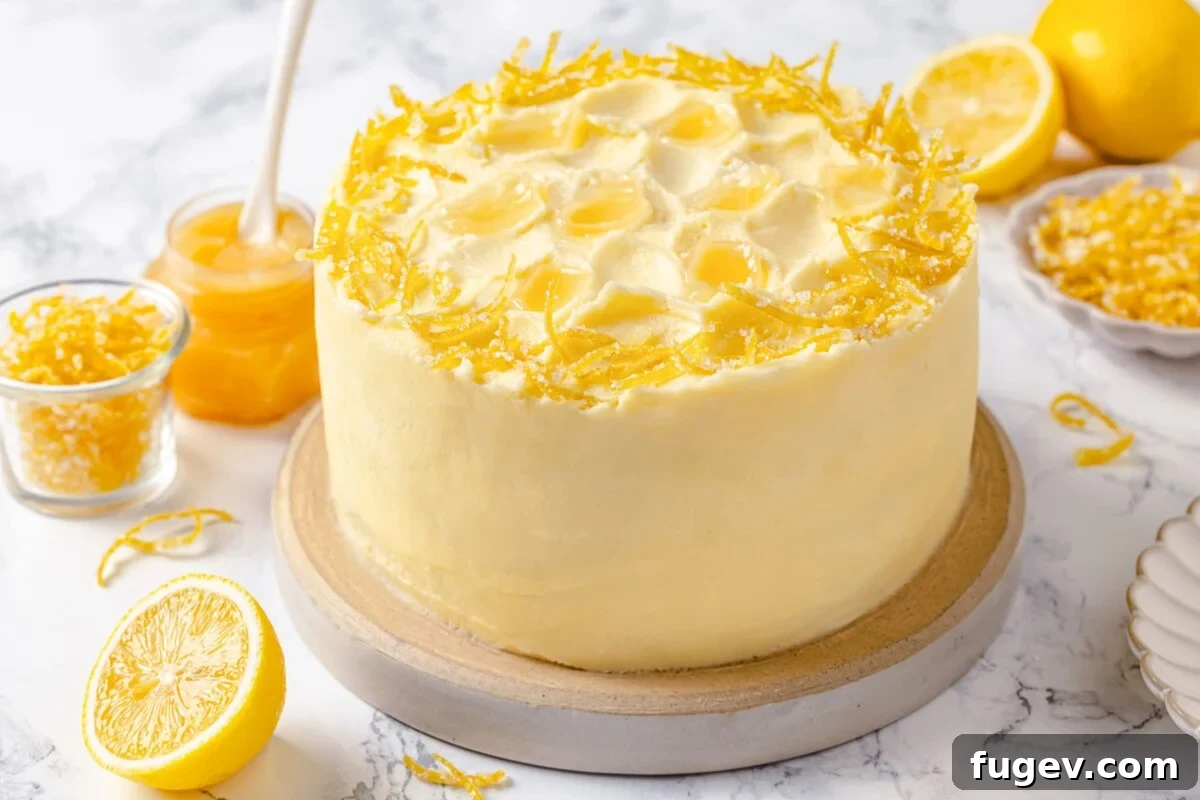
Unlock the secret to a truly exceptional Lemon Cake Recipe that stands out from the rest. This isn’t just any lemon cake; it’s a masterpiece of balanced flavors and luxurious textures, featuring a remarkably soft and tender lemon cake complemented by an exquisite, silky lemon buttercream. What makes this recipe truly special is the ingenious use of real lemon curd to flavor the frosting, ensuring a rich, authentic citrus profile without any harshness. Forget the overly sharp or cloyingly sweet lemon cakes you might have encountered – this recipe is meticulously crafted to deliver a perfectly harmonious taste that’s both bright and comforting. Prepare to bake a cake that not only comes together quickly but tastes like it came straight from a gourmet bakery.
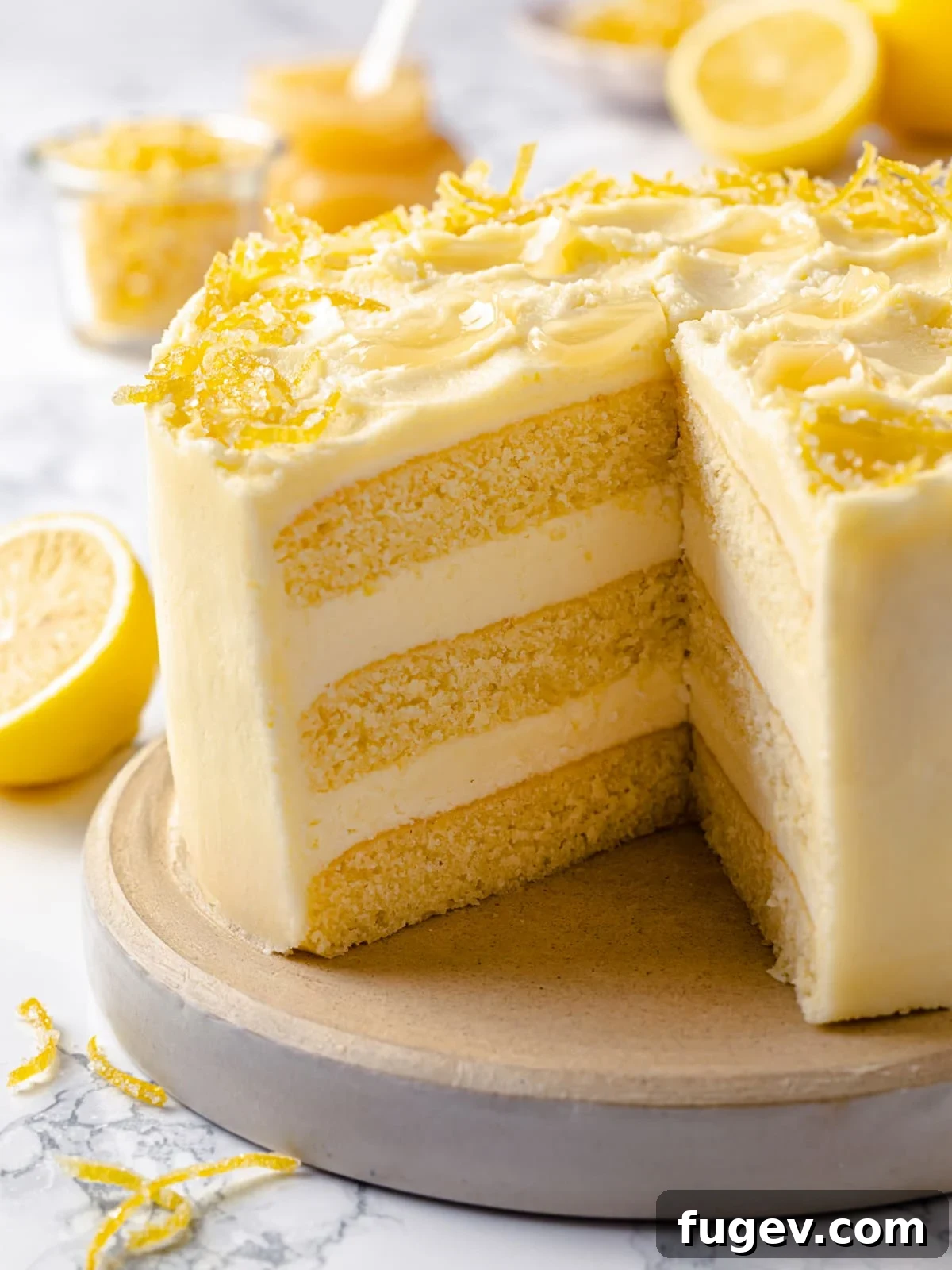
A Quick Look At This Delicious Recipe
Get a brief overview of what makes this lemon cake extraordinary. For full, step-by-step instructions and ingredient lists, jump directly to the recipe section below.
Jump to Recipe
Prep Time
35 minutes
Cook Time
15 minutes
Total Time
50 minutes
Servings
16 generous servings
Difficulty
Intermediate (Achievable with clear, precise steps)
Calories *
543 kcal per serving
Technique
Creaming method for cake; Classic Swiss meringue buttercream with lemon curd finish.
Flavor Profile
Vibrant lemon, subtly tart, perfectly sweet, with an ultra-tender crumb.
* Based on estimated nutritional analysis.
Summarize & Save this content for later
Google AI
Perplexity
Grok
“The tip about rubbing lemon zest into the sugar was a game-changer! My kitchen smelled amazing, and the cake had such an incredible fragrance even before baking. The buttercream was surprisingly light yet packed with lemon flavor, and your detailed meringue instructions truly saved me from overcooking the egg whites. ⭐⭐⭐⭐⭐”
— Lauren, Home Baker
Why This Lemon Cake Recipe Is Unbeatable
Creating the perfect lemon cake requires precision and an understanding of flavor balance. This recipe isn’t just a set of instructions; it’s a carefully developed guide to achieving a truly remarkable dessert. Here’s why this Lemon Cake will become your go-to recipe:
- Bright, Yet Perfectly Balanced Lemon Flavor: Our unique method of rubbing lemon zest directly into the sugar allows the essential citrus oils to permeate every granule, infusing the cake with a deep, fragrant lemon essence. Fresh lemon juice and a touch of buttermilk contribute a clean, uplifting acidity without any of the harsh bitterness often found in less refined recipes. The result is an incredibly fresh and vibrant lemon taste that shines through in every single forkful.
- Exceptionally Tender and Moist Crumb: Achieving a cake that is both light and incredibly moist is an art. We utilize delicate cake flour, which has a lower protein content than all-purpose flour, to create an exceptionally fine and tender crumb. Furthermore, baking at a slightly lower temperature ensures that the cake layers remain beautifully soft and retain their moisture, preventing any dryness.
- A Not-Too-Sweet, Silky Frosting: The accompanying Swiss meringue buttercream is a revelation in itself. Unlike many overly sweet frostings, this one boasts a wonderfully light and silky texture. The secret to its robust lemon flavor and stable emulsion is the incorporation of real lemon curd instead of plain lemon juice. Lemon curd delivers concentrated citrus notes without introducing excess acidity that can cause meringue-based buttercreams to break. This results in a frosting that enhances, rather than overwhelms, the delicate flavor of the cake.
- Professional Versatility for Any Occasion: This lemon cake recipe is incredibly adaptable, making it suitable for a wide range of occasions. Whether you’re aiming for an elegant tiered layer cake for a special celebration, a convenient sheet cake for a crowd, or charming individual cupcakes, this recipe scales beautifully. Its robust structure and balanced flavor make it a professional choice for any baker, from novice to expert.
Table of Contents
- Why This Lemon Cake Recipe Is Unbeatable
- Essential Ingredients & Smart Substitutions
- Delicious Variations for Your Lemon Cake
- Professional Baking Tips for Success
- Step-by-Step Guide: How to Make Lemon Cake
- Chef’s Special Serving Suggestion
- Lemon Cake Recipe FAQs
- More Recommended Lemon & Cake Recipes
- Complete Lemon Cake Recipe Card
- Before You Go: Explore More Deliciousness
This lemon cake is meticulously designed to deliver a profoundly lemony flavor without ever veering into harshness or becoming excessively sweet. This philosophy guides all my lemon desserts. The key innovation lies in thoroughly working the lemon zest into the granulated sugar at the outset. This simple yet powerful technique ensures that the aromatic citrus oils are evenly dispersed throughout the batter, mellowing any sharp acidity and contributing to an incredibly tender crumb. It’s the same thoughtful approach I employ in my popular Lemon Olive Oil Cake, where the lemon flavor remains wonderfully bright yet perfectly calm and integrated.
For the luxurious buttercream, we elevate the flavor by using lemon curd instead of raw lemon juice. This is a crucial detail, as direct acid can destabilize a delicate meringue-based buttercream, causing it to “break.” My easy lemon curd provides a concentrated, bold lemon flavor while preserving the frosting’s smooth, stable structure – a technique I successfully replicate in my Lemon Cupcakes. The resulting buttercream achieves the same light, balanced elegance as featured in my American Flag Cake, where the lemon frosting beautifully supports the cake’s character without overpowering it, creating a truly harmonious dessert experience.
Essential Ingredients & Smart Substitutions for Your Lemon Cake
Crafting the perfect lemon cake begins with understanding each ingredient’s role. Here’s a detailed look at what you’ll need and potential substitutions, ensuring you get the best results every time:
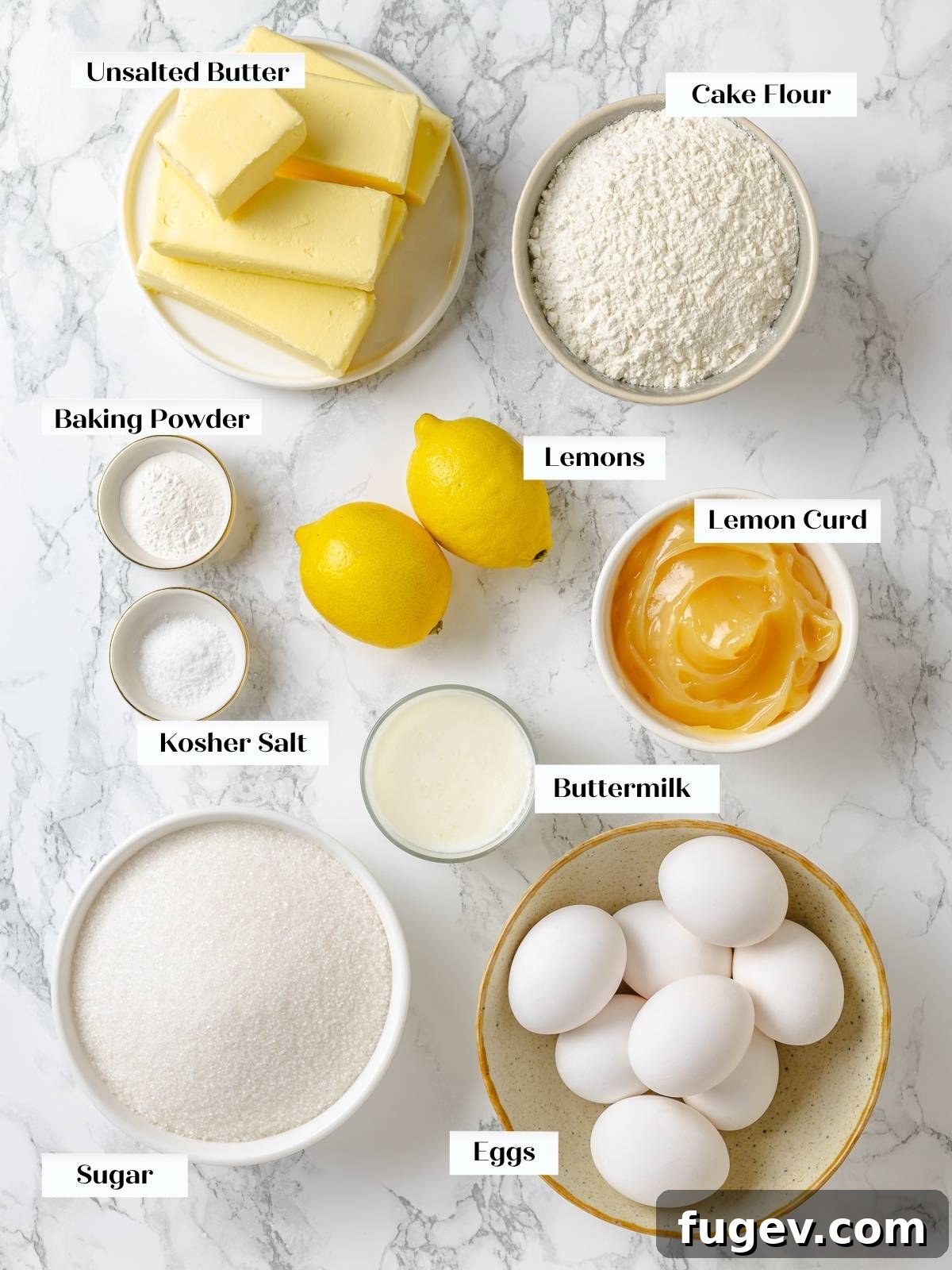
- Cake Flour: This is our secret weapon for an unbelievably fine, soft, and tender crumb. Cake flour has a lower protein content compared to all-purpose flour, which means less gluten development and a more delicate texture. If you don’t have cake flour, you can substitute it with all-purpose flour by measuring out 2 ⅓ cups of AP flour, removing 2 tablespoons, and replacing them with 2 tablespoons of cornstarch. Sift this mixture together thoroughly. However, note that the cake’s texture will be slightly denser than with pure cake flour.
- Unsalted Butter: The foundation of flavor and structure in our lemon cake. Using unsalted butter allows you to control the overall salt content of the recipe. It’s crucial that your butter is at **room temperature** for proper creaming. This process incorporates air into the butter and sugar, creating a light, fluffy base for the cake batter and contributing to its rise and tender texture.
- Granulated Sugar + Fresh Lemon Zest: The combination that creates the magic! Rubbing the finely grated lemon zest into the granulated sugar with your fingertips is not just a preparatory step; it’s a flavor infusion technique. This action releases the potent aromatic oils from the lemon zest, allowing them to perfume the sugar, which then evenly distributes that intense, bright lemon flavor throughout the entire cake batter. This is far more effective than simply adding zest to the wet ingredients later.
- Buttermilk: This acidic dairy product plays a critical role in activating the baking powder, contributing to the cake’s lift and tender crumb. Its slight tang also enhances the lemon flavor and provides essential moisture, resulting in a wonderfully moist lemon cake. If buttermilk isn’t readily available, you can create a reasonable substitute by adding one teaspoon of fresh lemon juice or white vinegar to a measuring cup, then filling the rest with regular milk (whole or low-fat) to equal ¾ cup. Let it sit for 5-10 minutes until it slightly curdles. While this works, the flavor will be less nuanced and slightly flatter than genuine buttermilk.
- Fresh Lemon Juice: Used in the cake batter, a small amount of fresh lemon juice brightens and balances the flavors. Always measure the juice *after* juicing the lemons, as the exact acidity is important for the cake’s overall balance and structure.
- Large Eggs: In the cake, eggs provide structure, moisture, and richness. Ensure they are at room temperature to emulsify properly with the butter and sugar, leading to a smoother, more uniform batter.
- Egg Whites (for Swiss Meringue Buttercream): These form the light, stable, and airy base of our silky Swiss meringue buttercream. Using only the whites ensures a bright white frosting that won’t dull the lemon color.
- Lemon Curd: This is the secret to an intensely flavored, perfectly stable lemon buttercream. Homemade lemon curd is highly recommended for its superior flavor and texture, but a high-quality store-bought lemon curd can also be used successfully. It provides concentrated lemon flavor and richness without introducing excess liquid or acidity that could break the buttercream emulsion, which is a common challenge when trying to add citrus to meringue-based frostings.
- Kosher Salt & Baking Powder: Essential leavening agents and flavor enhancers. Baking powder provides lift, while salt balances the sweetness and enhances all the other flavors.
For precise quantities and a complete list of ingredients, please refer to the comprehensive recipe card located at the bottom of this article.
Delicious Variations for Your Ultimate Lemon Cake
While this lemon cake recipe is perfect as is, it also serves as a fantastic foundation for creative variations. Here are some ideas to customize your lemon cake for different tastes and occasions:
- Elevate with an Extra Lemon Curd Filling: For an intense burst of lemon flavor, pipe a dam of lemon Swiss meringue buttercream around the perimeter of each cake layer and generously spread an additional layer of homemade lemon curd in the center. This adds an exquisite tartness and a luxurious creamy texture that pairs beautifully with the cake.
- Create a Vanilla-Lemon Delight: If you prefer a slightly milder lemon profile or wish to highlight other flavors, consider frosting your lemon cake with a classic vanilla American buttercream or a tangy cream cheese frosting. These options offer a softer, sweeter complement to the bright lemon cake layers. You can also simply dust the cooled cake with confectioners’ sugar for an elegant, understated finish, or drizzle with a simple vanilla or lemon glaze made from powdered sugar and liquid.
- Transform into Delightful Lemon Cupcakes: This versatile lemon cake batter is perfect for cupcakes! Simply scoop approximately 54g (about ¼ cup) of batter into each cupcake liner. Bake at 325°F convection (or 350°F conventional) for about 18 minutes, or until a wooden skewer inserted into the center comes out clean. Lemon cupcakes are ideal for parties, bake sales, or mixed dessert platters. For a diverse offering, they pair wonderfully with other favorites like carrot cake cupcakes with cream cheese frosting, especially when catering to a larger crowd with varied preferences.
- Adapt to Different Pan Sizes: This scratch lemon cake recipe is incredibly adaptable to various bakeware.
- Sheet Cake: For a larger, simpler presentation, bake the entire batter in a greased and parchment-lined half-sheet pan (approximately 13×18 inches). Spread the batter to about 2.2 cm (just under 1 inch) thickness and bake for 15–18 minutes, or until a toothpick comes out clean. This is fantastic for serving many guests at a casual gathering.
- Loaf Cake: For a more rustic or everyday treat, pour the batter into a greased and floured standard loaf pan (approximately 9×5 inches). Bake at 325°F (160°C) until a wooden skewer inserted into the center comes out clean, usually around 45-60 minutes, depending on your oven. Monitor carefully and tent with foil if the top browns too quickly. A loaf cake is wonderful for slicing and serving with tea or coffee.
Remember, regardless of the pan size, always adjust your baking time accordingly and rely on visual cues and the toothpick test for doneness.
Professional Baking Tips for Lemon Cake Success
Achieving a bakery-quality lemon cake at home is entirely possible with a few professional insights. These tips will guide you to perfection:
- Master the Creaming Method: This initial step is paramount. Creaming butter and sugar together for the specified duration (3-4 minutes on medium-low speed) isn’t just about combining ingredients. It’s about incorporating air into the mixture, which creates lift and tenderness in your final cake. Look for visual cues: the mixture should lighten in color, become notably fluffy, and the sugar granules should appear less compact, beginning to separate slightly. Do not rush this step; it’s the foundation of a light cake.
- Alternate Wet and Dry Ingredients Carefully: When adding the flour mixture and buttermilk, always begin and end with the dry ingredients. This technique helps to create a stable emulsion and prevents the batter from separating. More importantly, it minimizes gluten development, which can lead to a tough cake. Mix only until just combined after each addition. Over-mixing at this stage is a common pitfall that can ruin the texture of your tender lemon cake.
- Monitor the Bake, Don’t Overbake: Overbaking is the quickest way to a dry cake. Every oven is different, so rely on more than just the timer. The cake is done when the edges show a faint golden hue, and the center, when gently pressed with a fingertip, springs back immediately. A wooden skewer or toothpick inserted into the center should come out clean or with a few moist crumbs attached, but not wet batter.
- Be Patient with Swiss Meringue Buttercream: If you’re new to Swiss meringue buttercream, don’t be alarmed if it looks “broken” or soupy after adding the butter. This is a very common stage in the emulsification process. It often appears curdled or like a liquid mess before it transforms. The key is perseverance: keep mixing on medium speed. The mixture will eventually come together, thickening into a smooth, silky, and stable buttercream. Trust the process and continue beating.
Step-by-Step Guide: How to Make Your Perfect Lemon Cake
Follow these detailed steps carefully to achieve a soft, tender lemon cake with a perfectly balanced citrus flavor, crowned with a smooth, stable lemon Swiss meringue buttercream. Full ingredient amounts are conveniently listed in the recipe card below.
Step 1: Prepare Your Pans and Preheat Oven. Begin by preheating your oven to 325°F (160°C) if using convection, or 350°F (175°C) for a conventional oven. Prepare your cake pans by thoroughly spraying them with nonstick baking spray, then line the bottoms with parchment paper circles. This ensures your cake layers release effortlessly.
Chef’s Note: I recommend using three 8-inch cake pans for thinner, more elegant layers that bake evenly. If you opt for two 8-inch pans, your layers will be thicker and require a slightly longer baking time. Adjust accordingly!
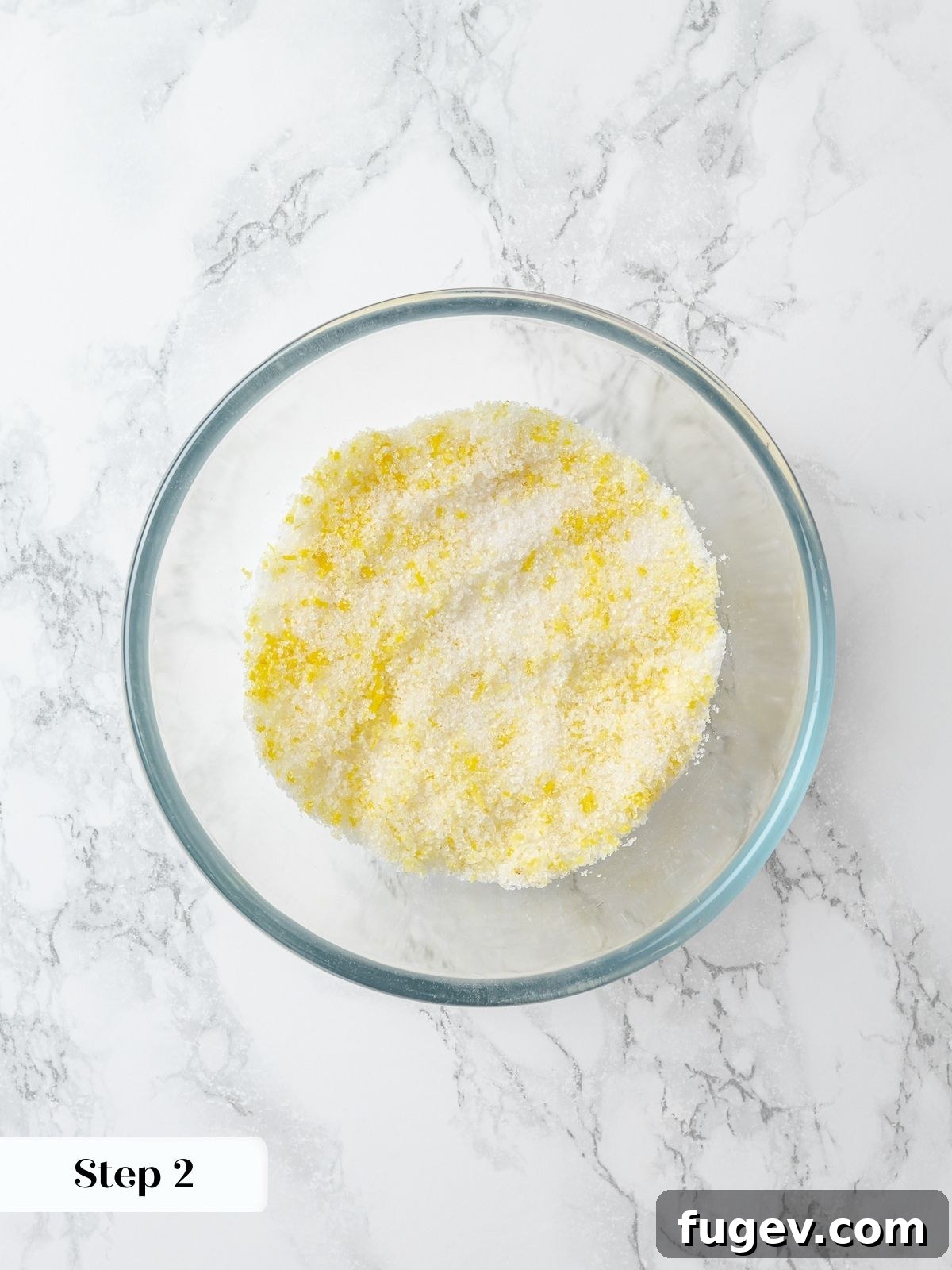
Step 2: Infuse the Sugar with Lemon Zest. In a small, separate bowl, combine the granulated sugar and the freshly grated lemon zest. Use your fingertips to thoroughly rub the zest into the sugar. Continue this process for 1-2 minutes until the sugar becomes noticeably fragrant and slightly damp from the released citrus oils (photo 1). This step is crucial for an intense lemon flavor throughout the cake.
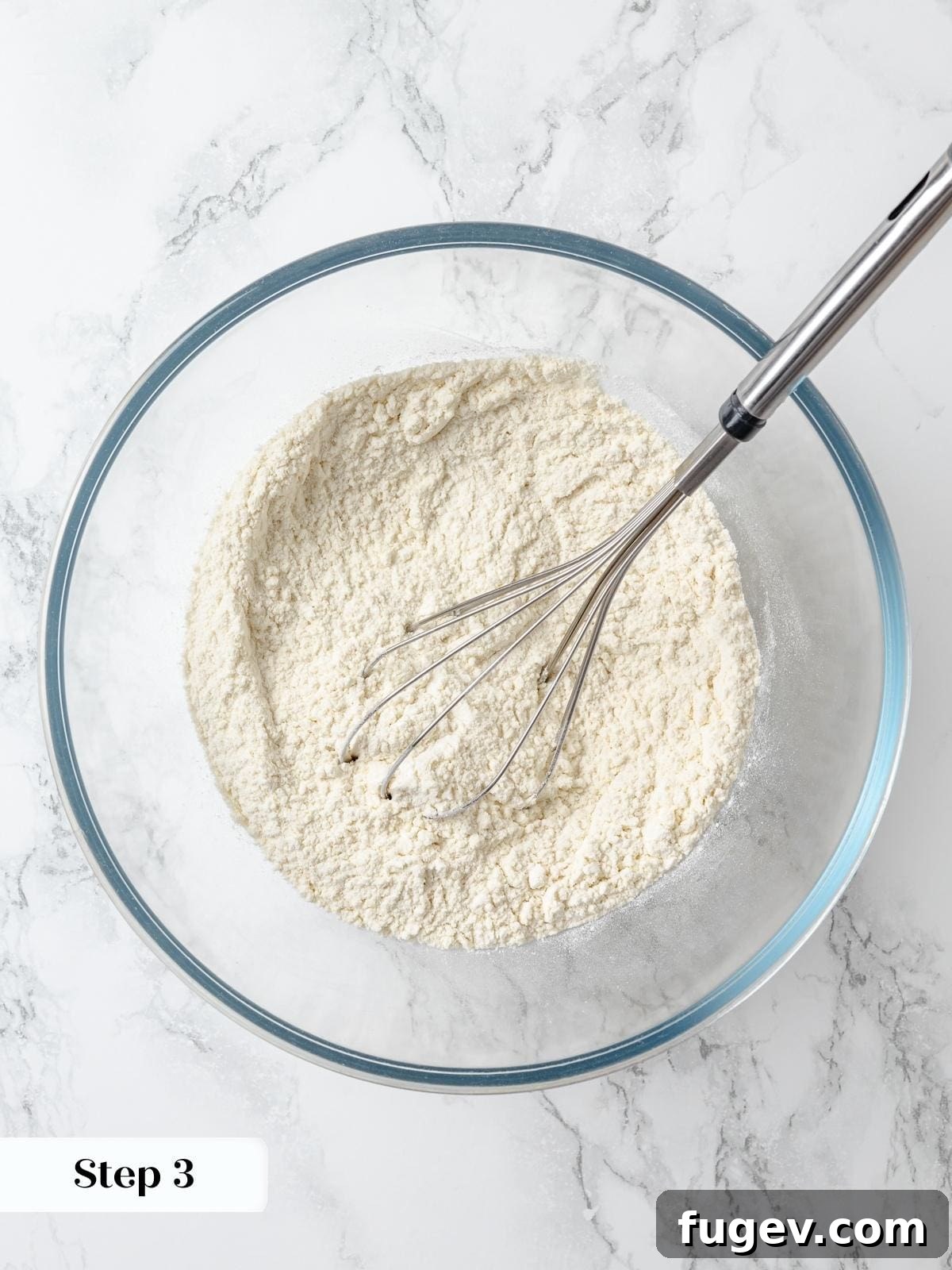
Step 3: Combine the Dry Ingredients. Sift together the cake flour, kosher salt, and baking powder onto a piece of parchment paper or into a large mixing bowl. Sifting prevents lumps and aerates the flour, contributing to a lighter cake. Set this mixture aside while you prepare the wet ingredients (photo 2).
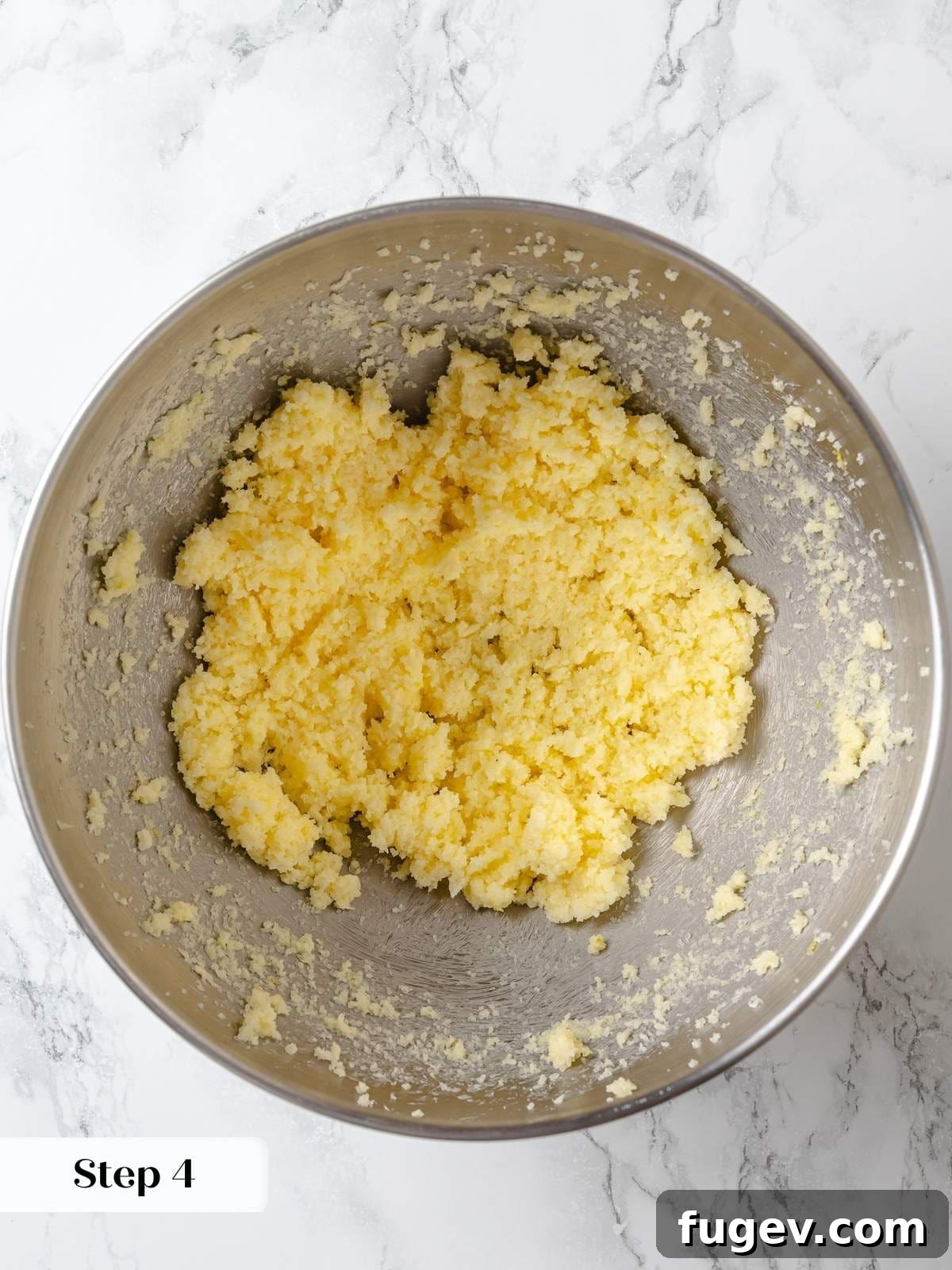
Step 4: Cream the Butter and Lemon Sugar. In the bowl of a stand mixer fitted with the paddle attachment, add the room temperature unsalted butter and the lemon-infused sugar. Cream on medium-low speed for approximately 3–4 minutes. The mixture should lighten significantly in color, become fluffy, and the sugar granules should appear slightly separated rather than a pasty consistency (photo 3). This step incorporates vital air into your batter.
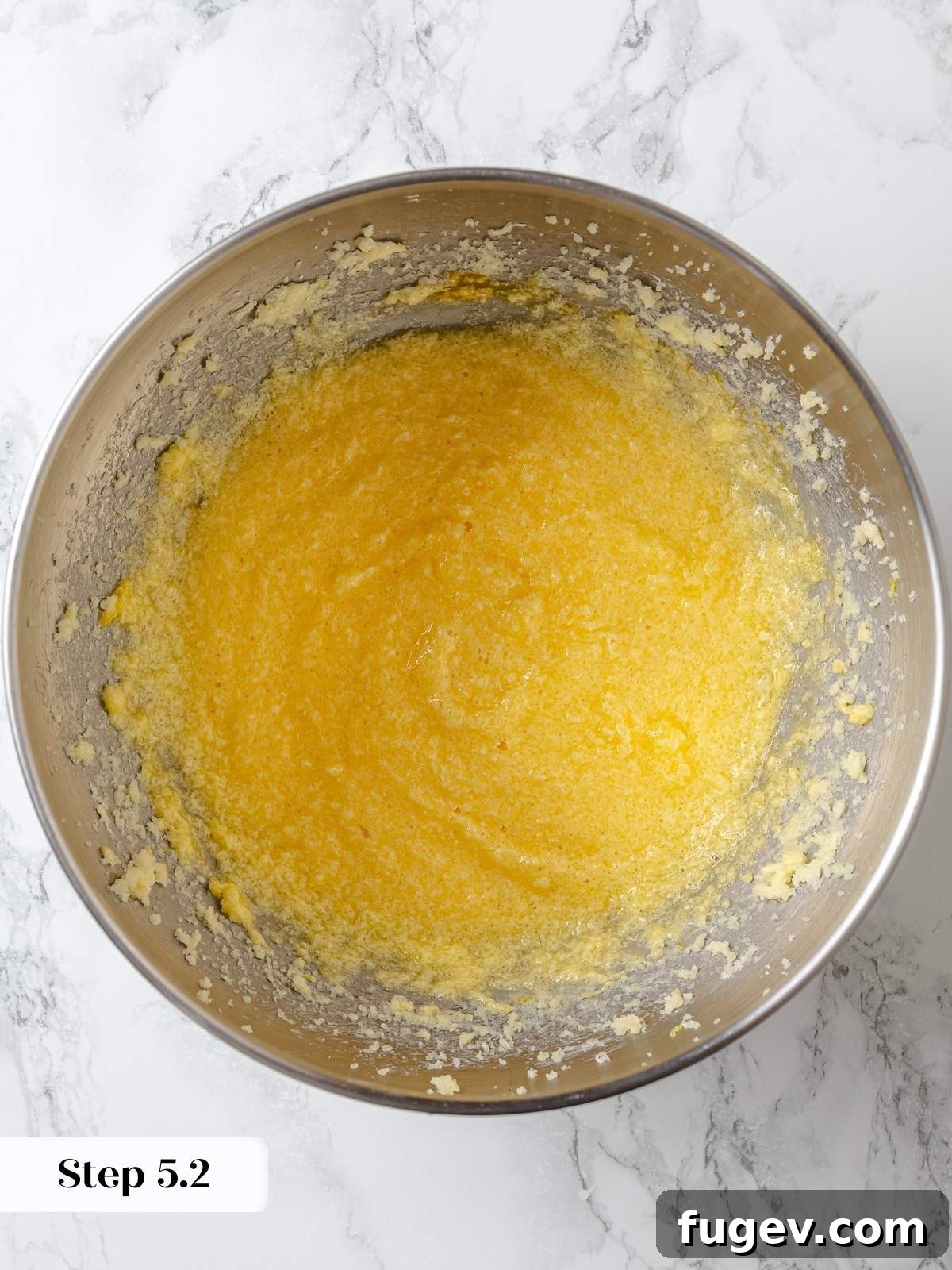
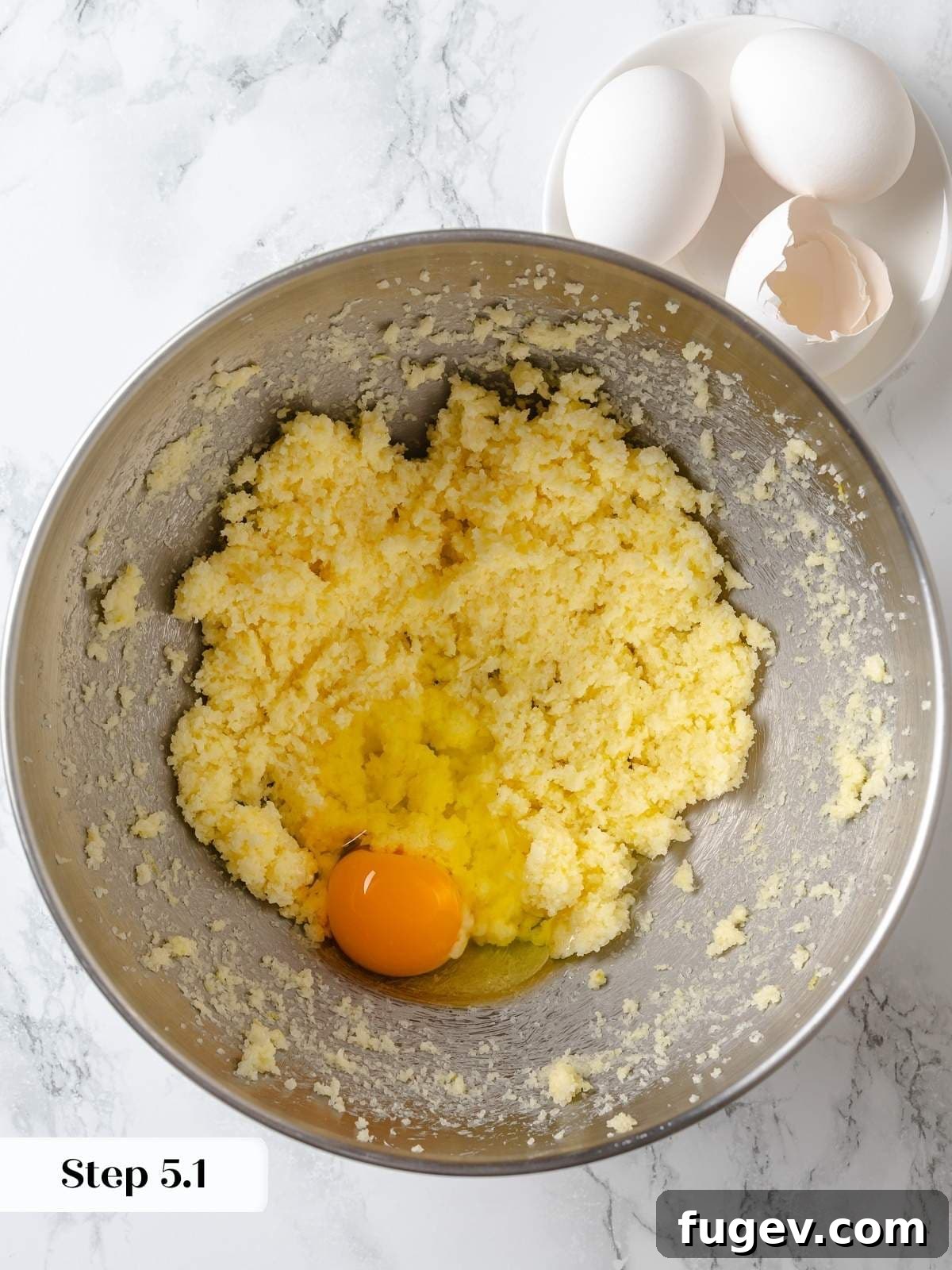
Step 5: Add the Eggs Gradually. With the mixer running on medium speed, add the large eggs one at a time. Ensure each egg is fully incorporated into the butter mixture before adding the next (photos 4 & 5). This helps to create a stable emulsion and a smooth batter.
Professional Tip: After every other egg, stop the mixer and thoroughly scrape down the sides and bottom of the bowl with a spatula. This ensures all ingredients are evenly mixed, especially where butter and sugar often cling, preventing streaks in your final cake.
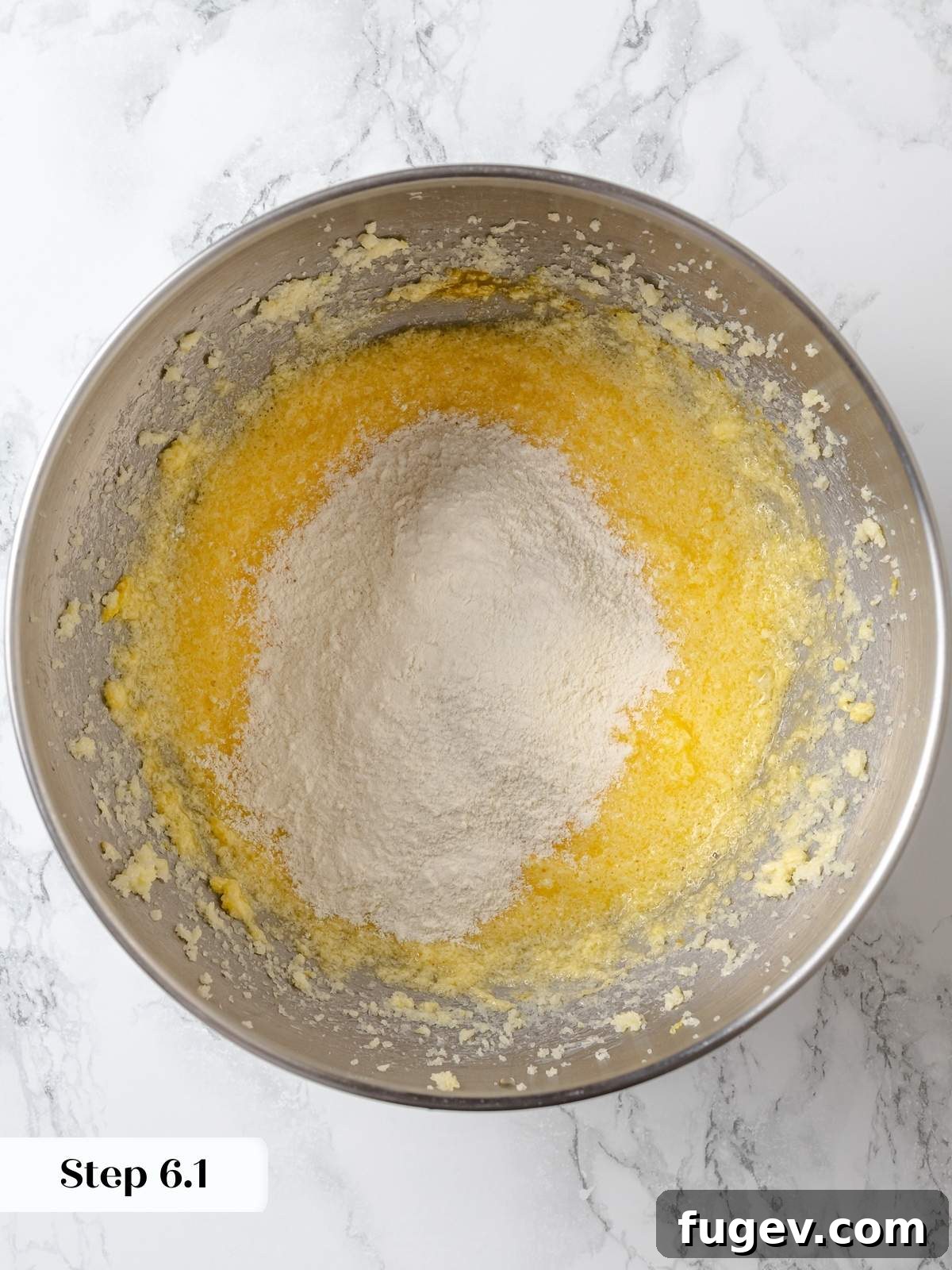
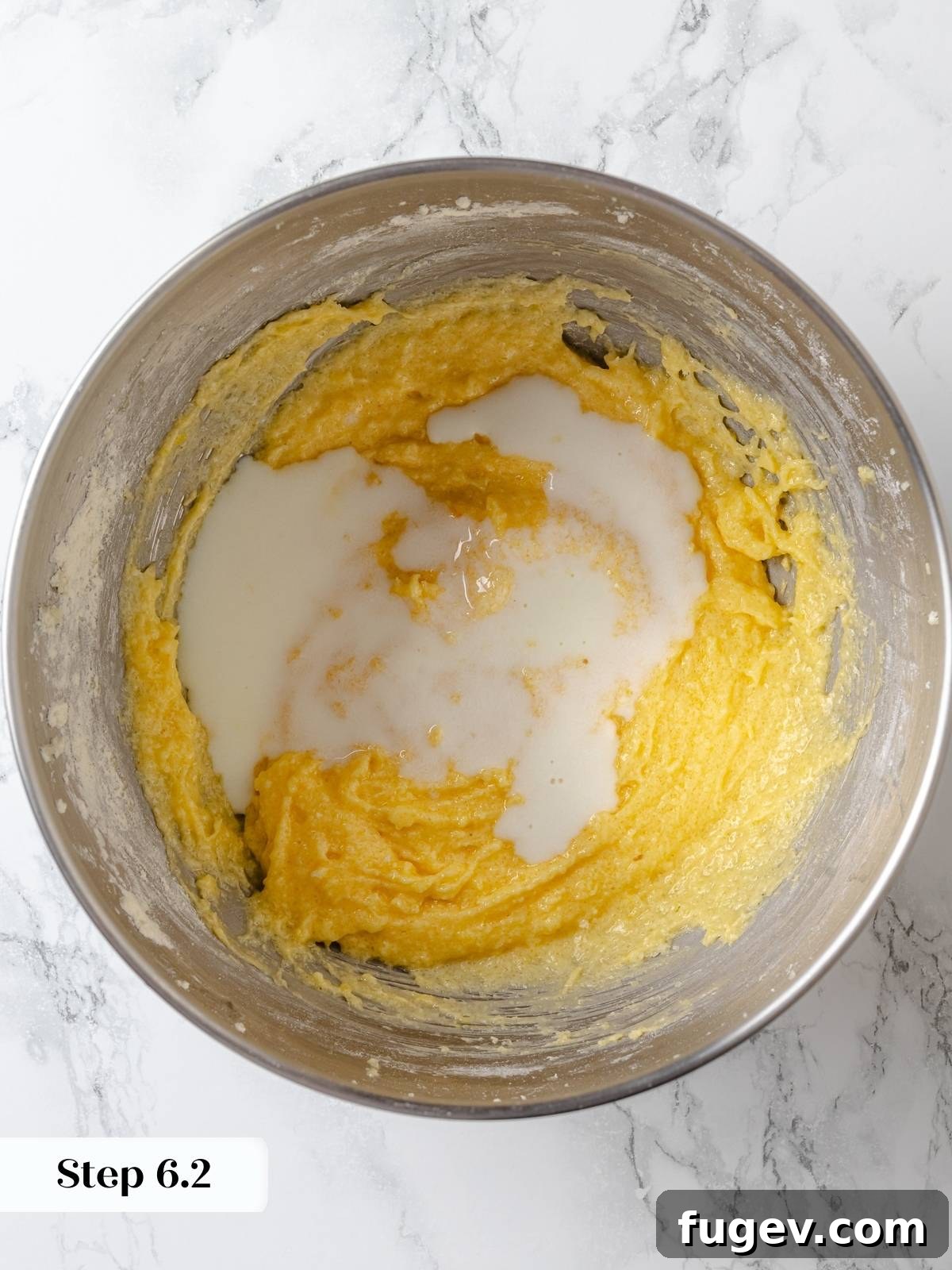
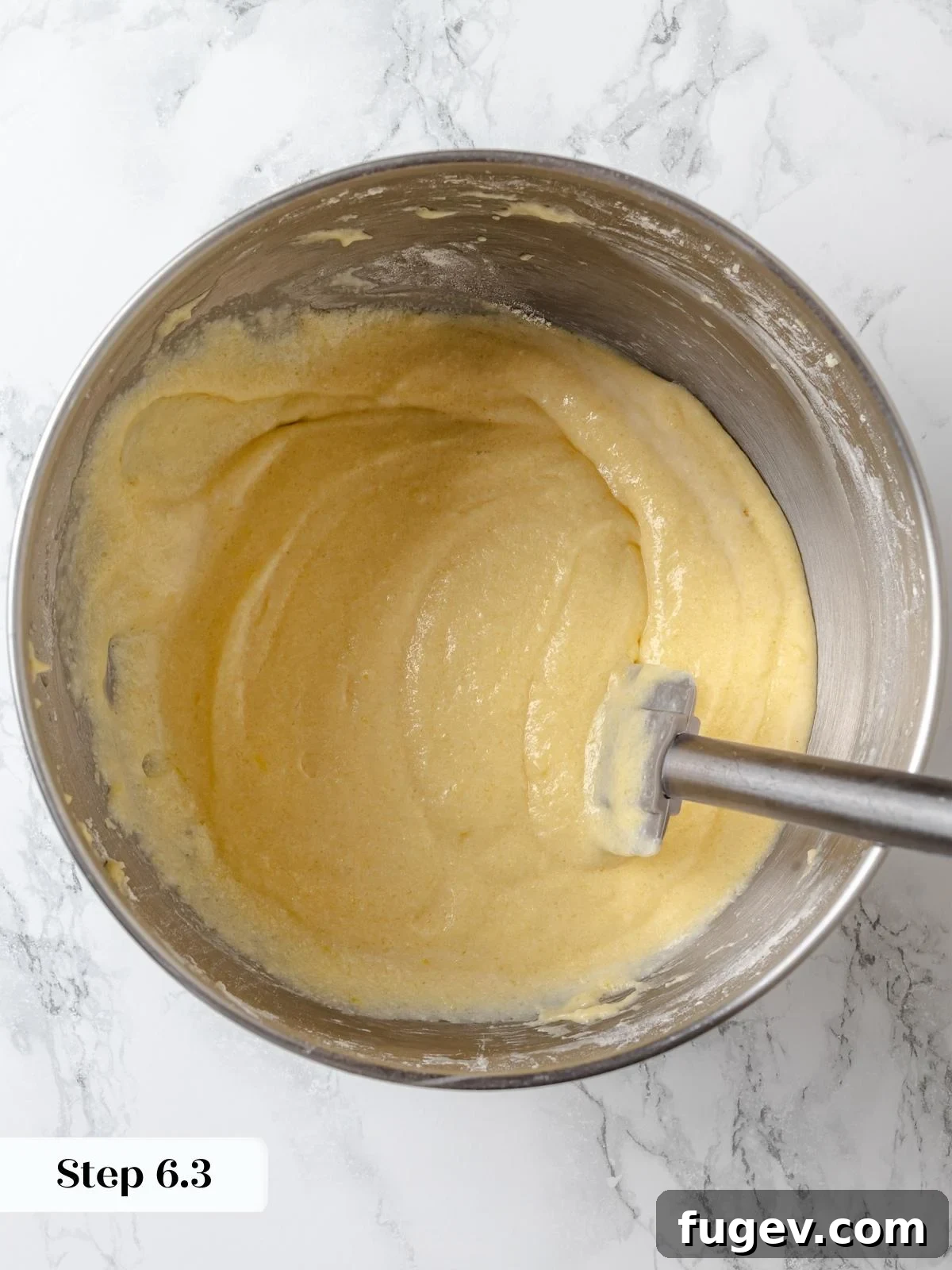
Step 6: Alternate Wet and Dry Ingredients. Reduce the mixer speed to low. Add the sifted flour mixture in three separate additions, alternating with the buttermilk (which has been mixed with the fresh lemon juice) in two additions. Always begin and end with the dry ingredients (photos 6-8). Mix only until the ingredients are just combined. You should see very few, if any, streaks of flour remaining.
Chef’s Note: Stop the mixer just before the last few streaks of dry ingredients disappear. Finish the mixing gently by hand with a spatula. This prevents overmixing, which can lead to a tough, dense cake by over-developing the gluten.
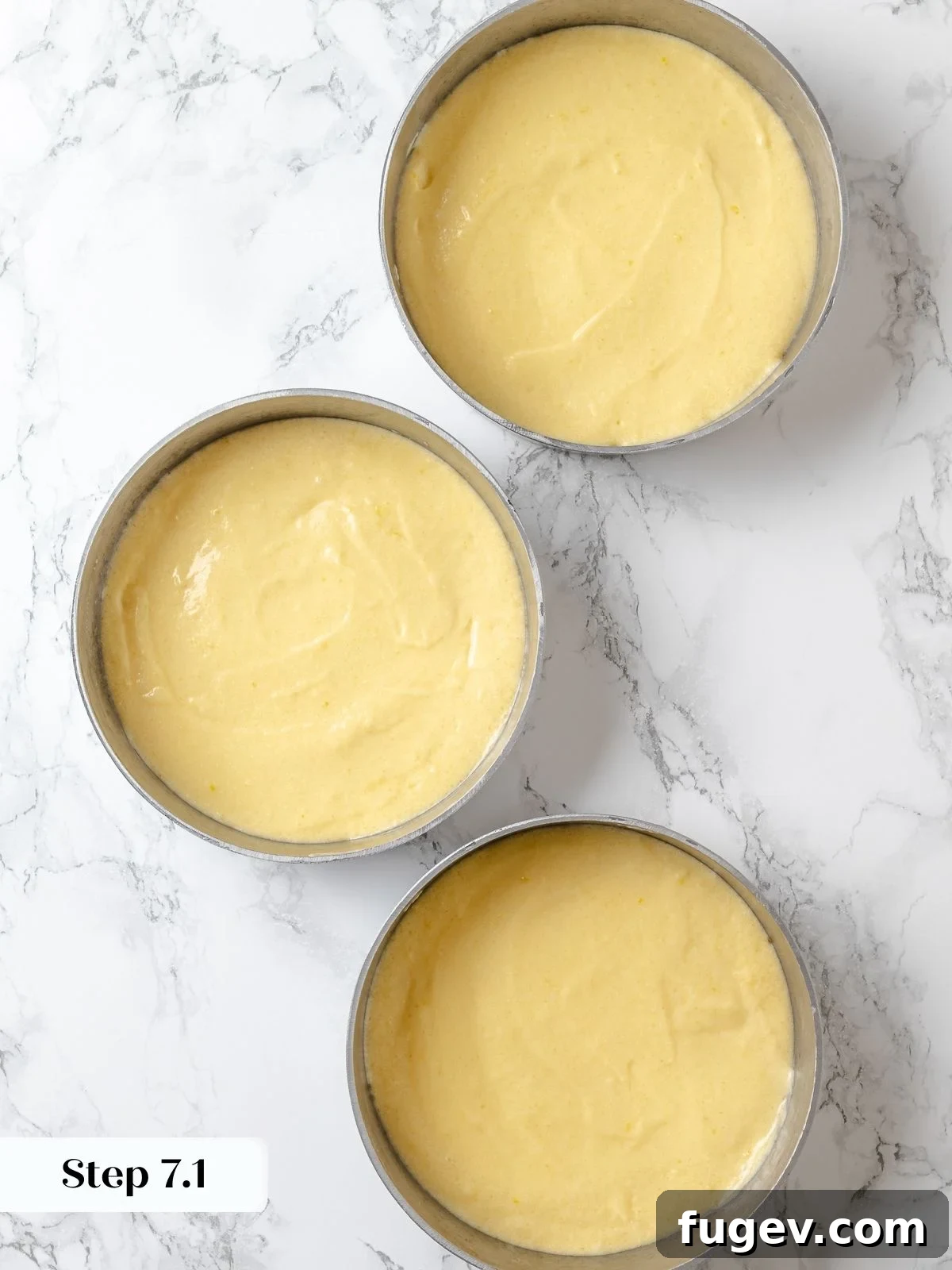
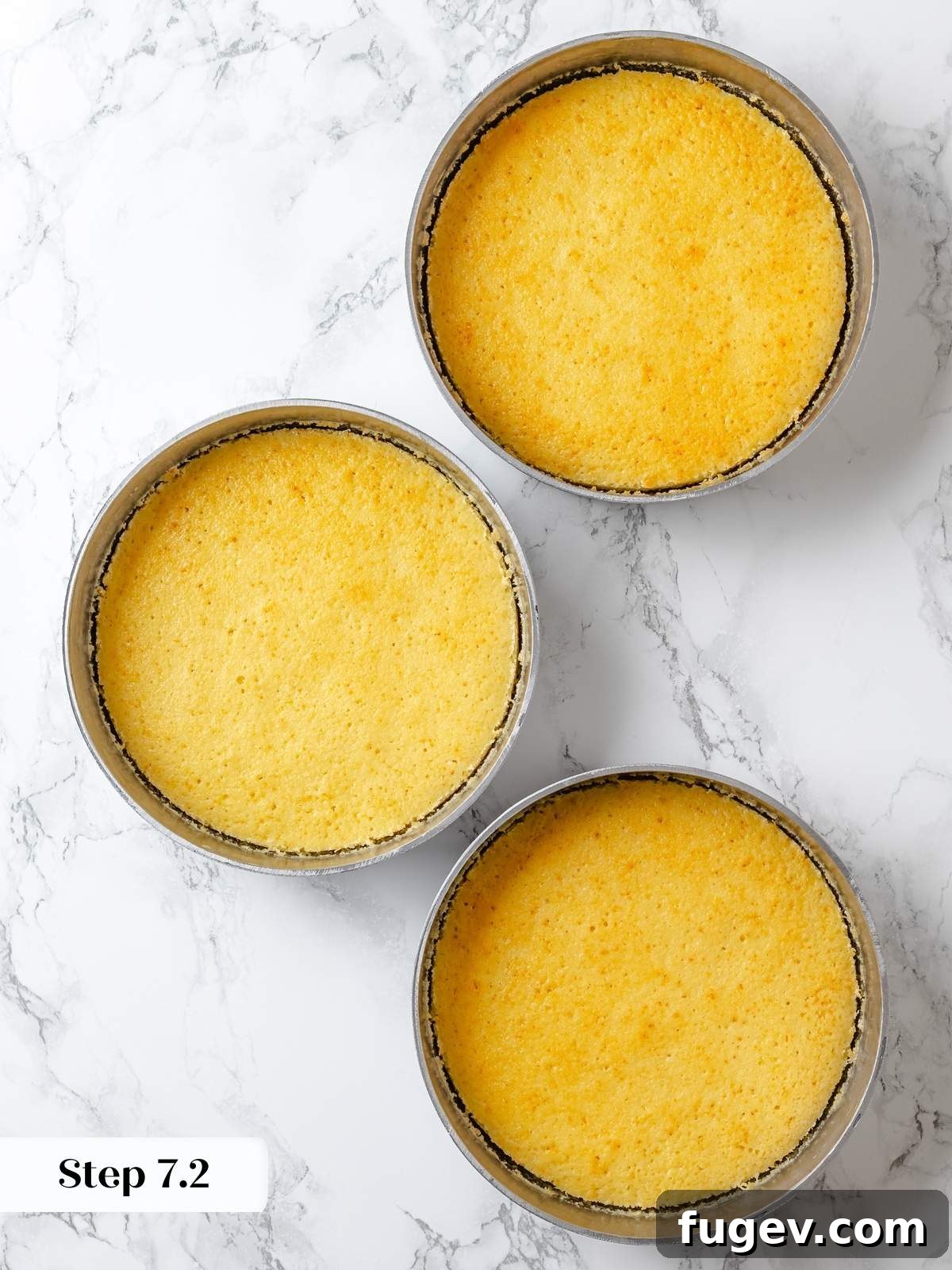
Step 7: Divide and Bake the Cake Layers. Evenly divide the finished lemon cake batter between your prepared cake pans. For three 8-inch layers, this will be approximately 380g of batter per pan. Smooth the tops of the batter with an offset spatula. Bake for 15–18 minutes, or until the edges are just lightly golden and the center of the cake springs back when gently pressed. Immediately transfer the pans to a wire rack to cool slightly before carefully inverting the cakes onto the rack to cool completely (photos 9 & 10). Cooling completely is essential before frosting to prevent the buttercream from melting.
How to Make Silky Lemon Swiss Meringue Buttercream
This buttercream is renowned for its light texture and stable consistency, making it ideal for decorating. The lemon curd adds an incredible depth of flavor.
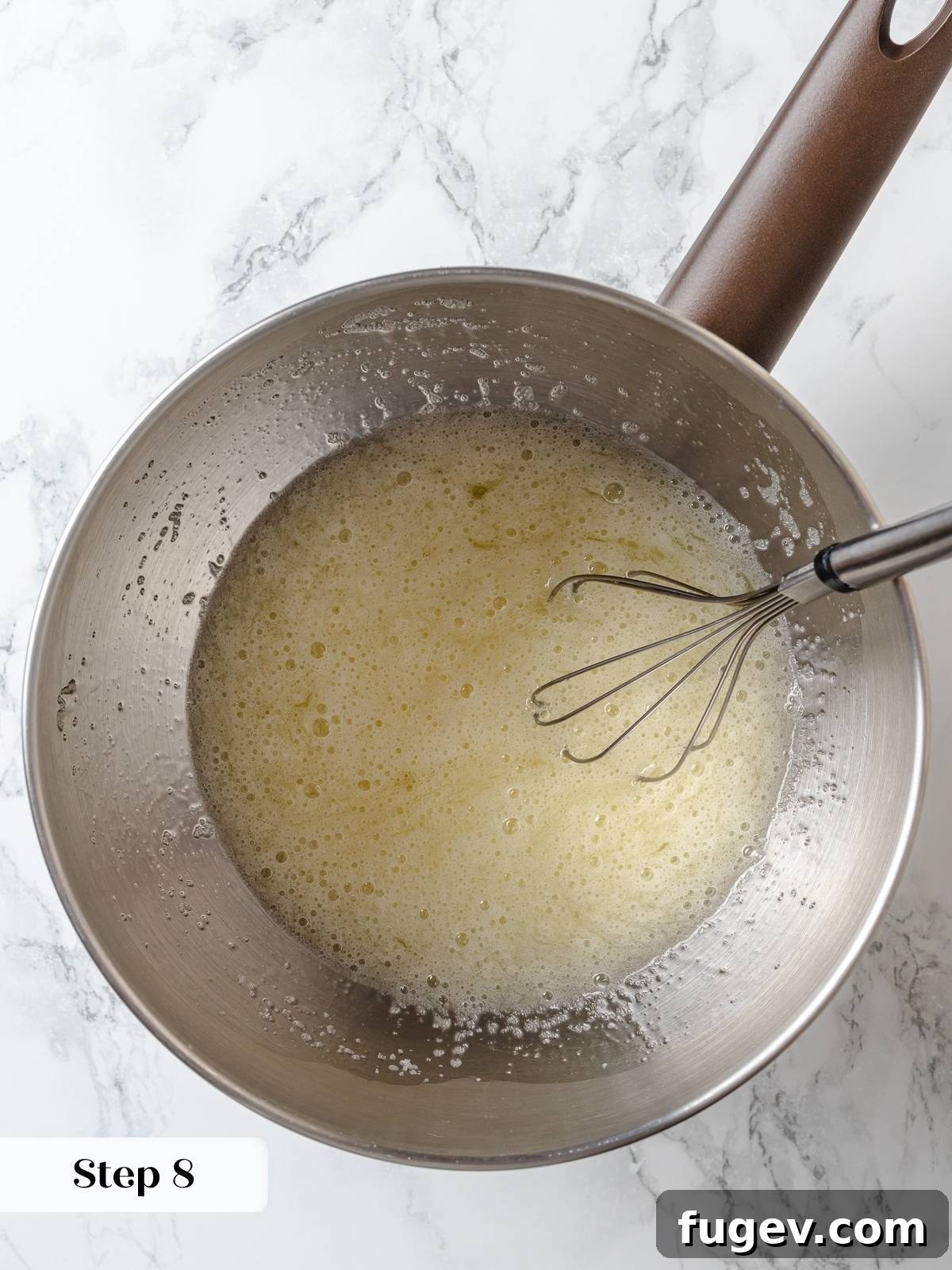
Step 8: Prepare the Egg Whites and Sugar for Meringue. In the bowl of your stand mixer, whisk together the egg whites, granulated sugar, and kosher salt. Set this bowl over a saucepan containing about 1 inch of gently simmering water, ensuring the bottom of the mixer bowl does not touch the water. This creates a double boiler effect.
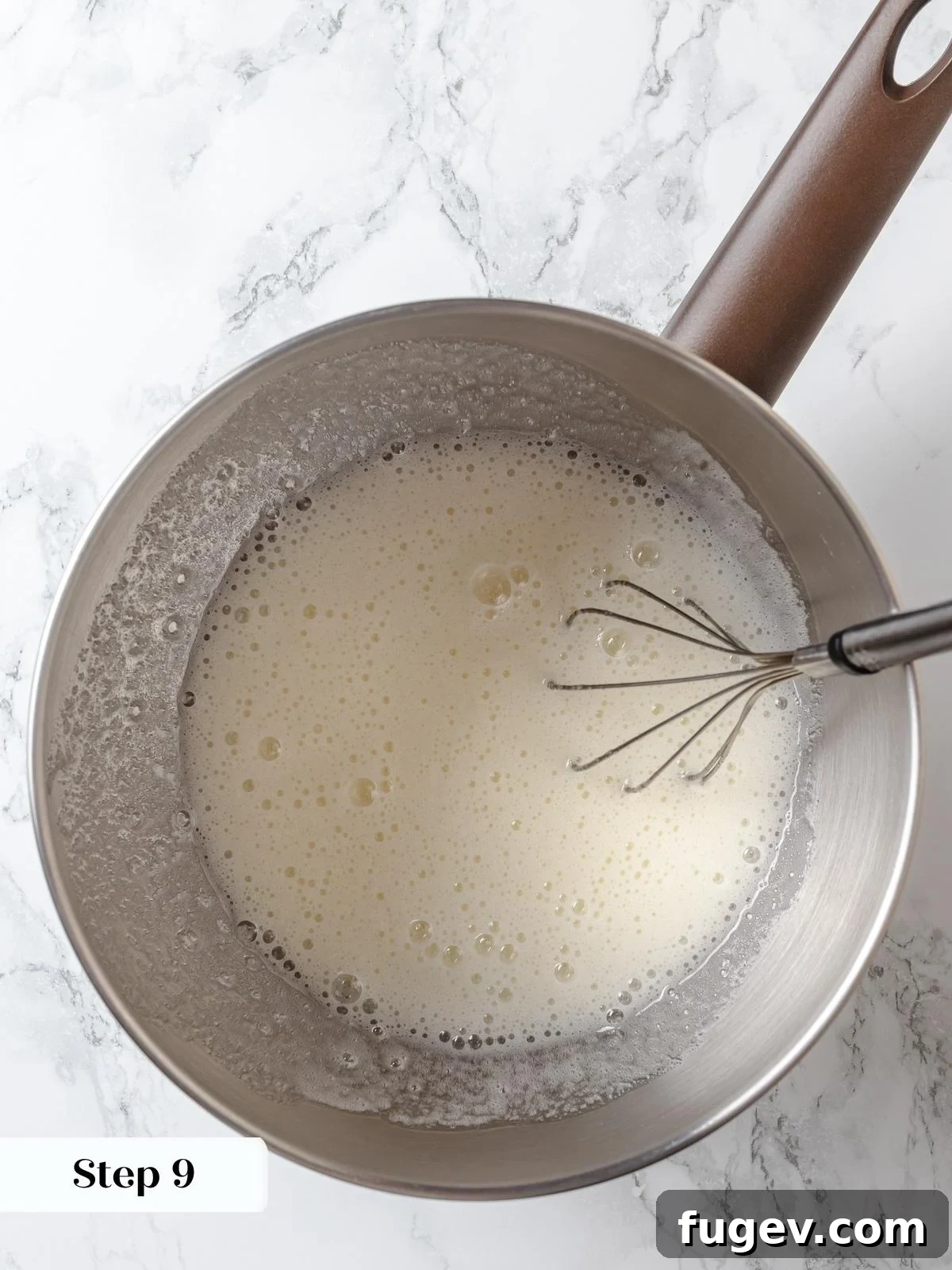
Step 9: Cook to Dissolve the Sugar. Continue whisking the egg white mixture constantly over the simmering water. This continuous motion prevents the egg whites from scrambling. Cook until the mixture reaches a temperature of 120–130°F (49–54°C) on an instant-read thermometer, and crucially, until the sugar is fully dissolved. You can test this by rubbing a small amount between your fingers – it should feel perfectly smooth, with no grittiness. The mixture will appear slightly foamy and lighter in texture (photos 11 & 12).
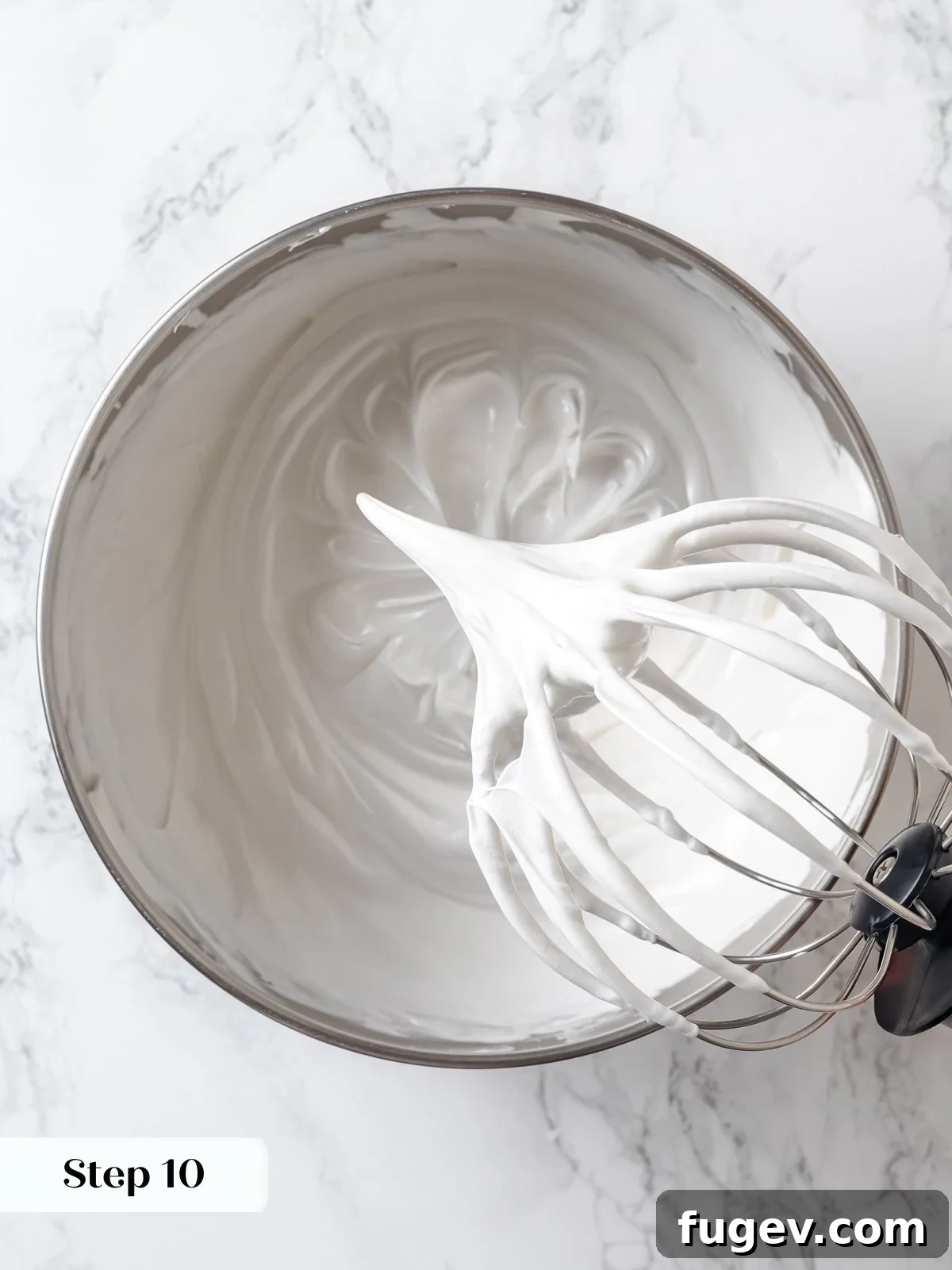
Step 10: Whip the Meringue to Stiff Peaks. Once the sugar is dissolved and the mixture is warm, transfer the bowl immediately to your stand mixer fitted with the whisk attachment. Beat on high speed for 5–7 minutes. You’re looking for firm, glossy stiff peaks to form, and the mixer bowl should feel just slightly warm or even cool to the touch (photo 13). This cooling process is vital for stable meringue.
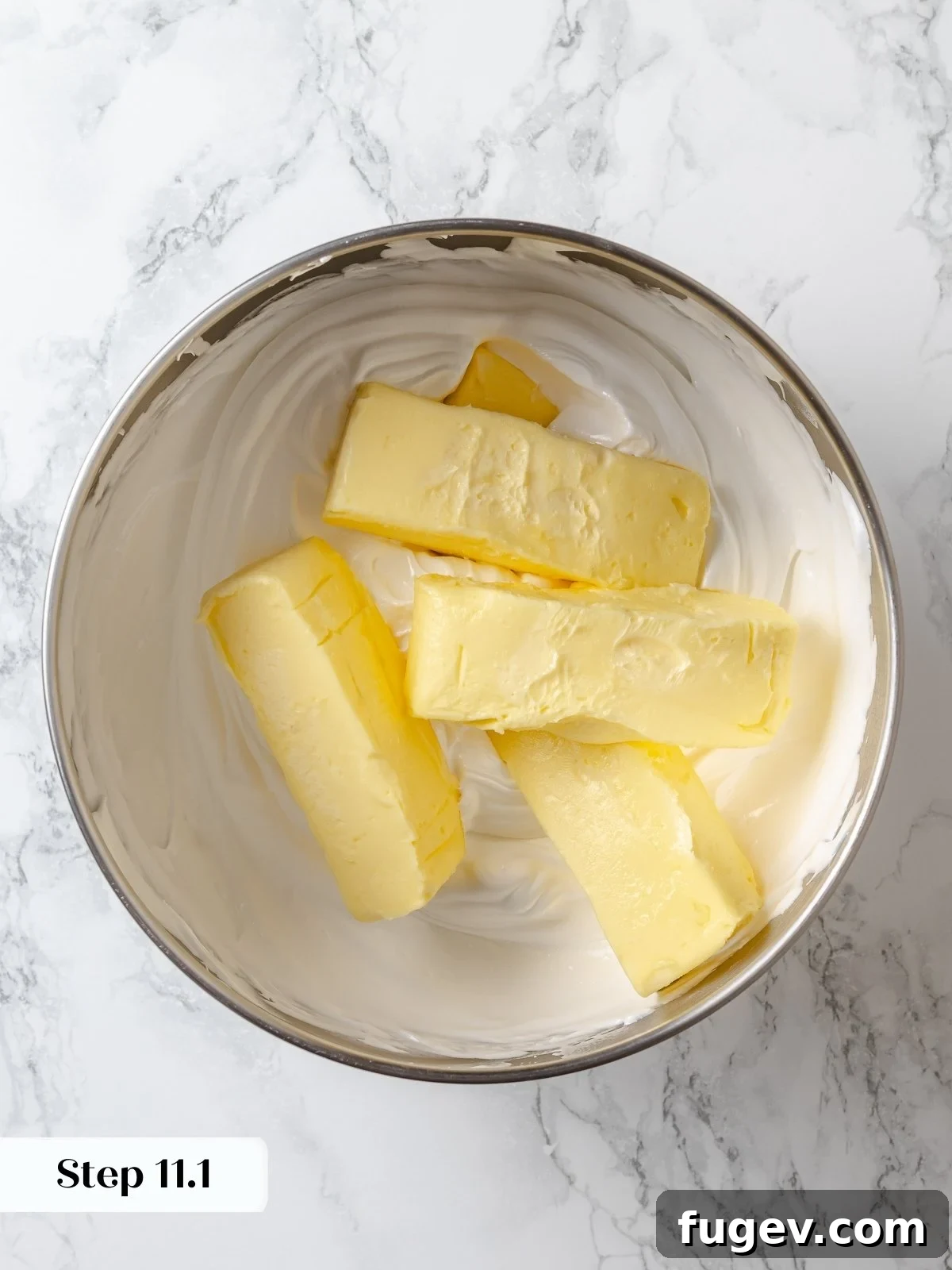
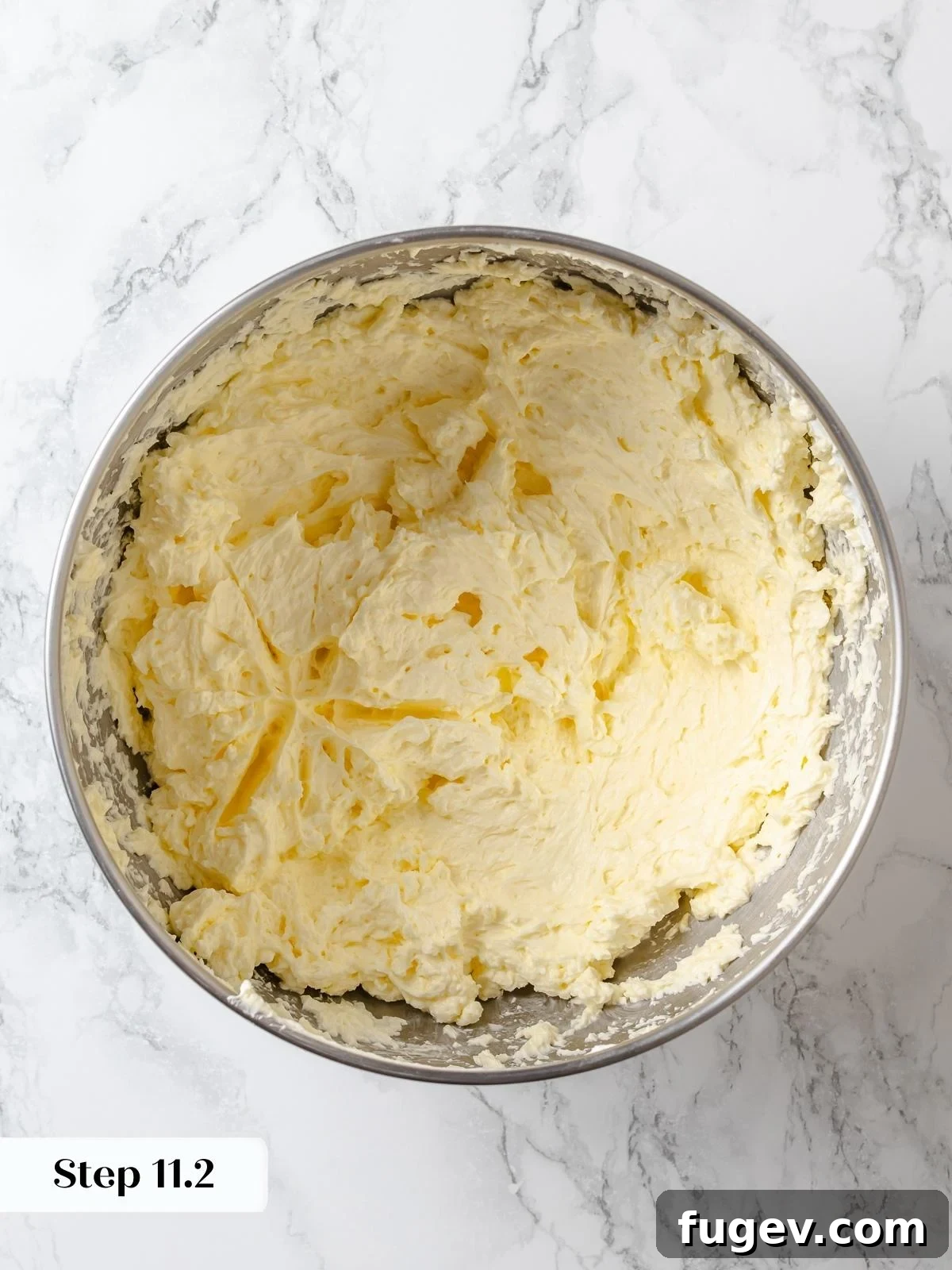
Step 11: Incorporate the Butter. Switch from the whisk attachment to the paddle attachment. With the mixer running on medium speed, add the room temperature unsalted butter all at once. Continue beating, allowing the buttercream to fully emulsify and come together (photos 14 & 15).
Crucial Meringue Buttercream Tip: Do not be alarmed if the buttercream appears curdled, soupy, or “broken” after adding the butter. This is a normal stage! Continue beating on medium speed for several minutes, and it will eventually transform into a smooth, luscious, and silky buttercream. Patience is key here!
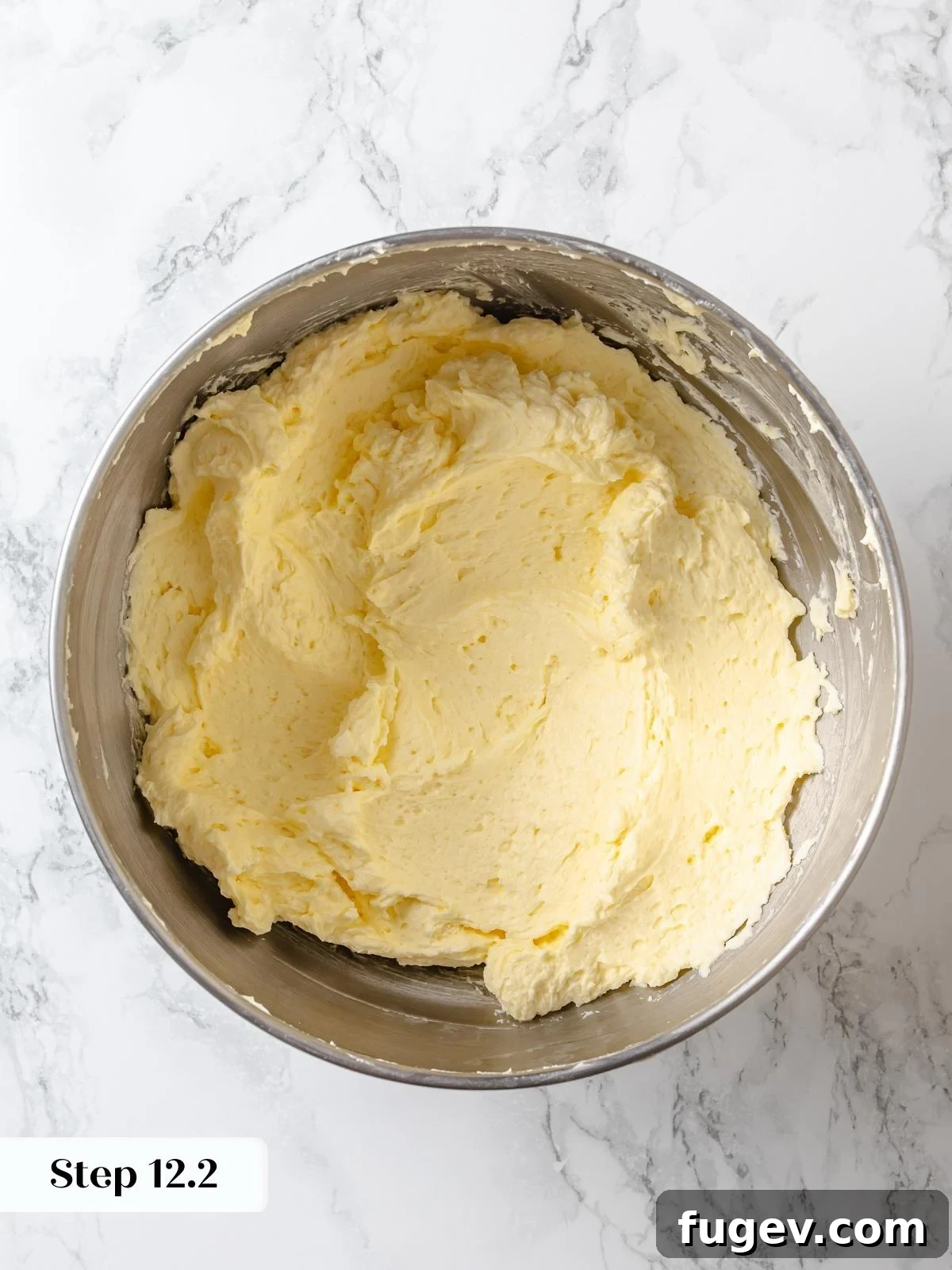
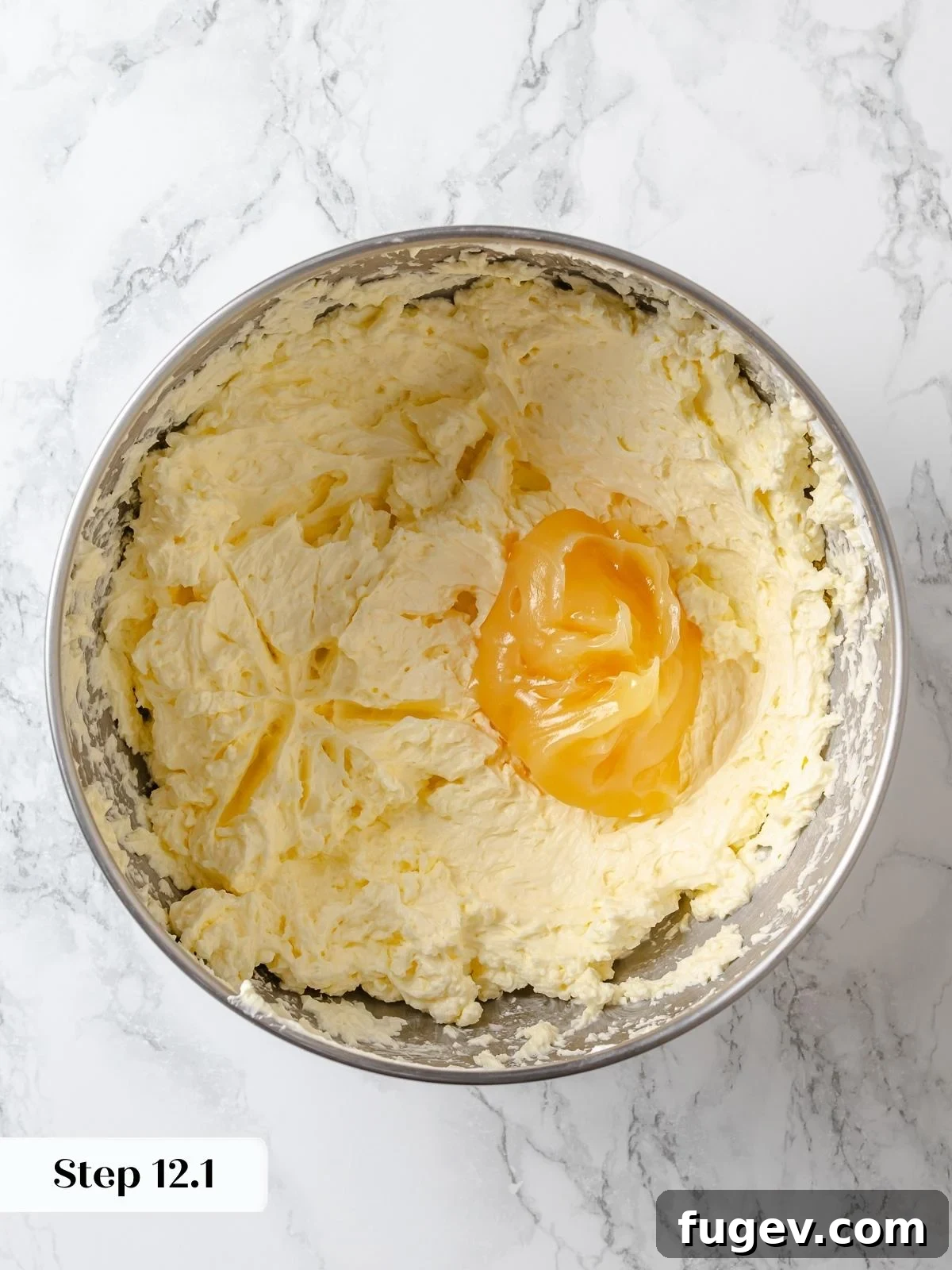
Step 12: Finish with Lemon Curd. Once your buttercream is smooth and silky, add the prepared lemon curd. Switch back to the whisk attachment and beat on medium-high speed for 1–2 minutes until the buttercream is light, fluffy, and the lemon curd is perfectly and evenly combined throughout (photos 16 & 17). This step infuses the frosting with vibrant, natural lemon flavor.
Assemble Your Bakery-Quality Lemon Cake
Now that your cake layers are baked and cooled, and your lemon Swiss meringue buttercream is ready, it’s time to assemble your beautiful cake.
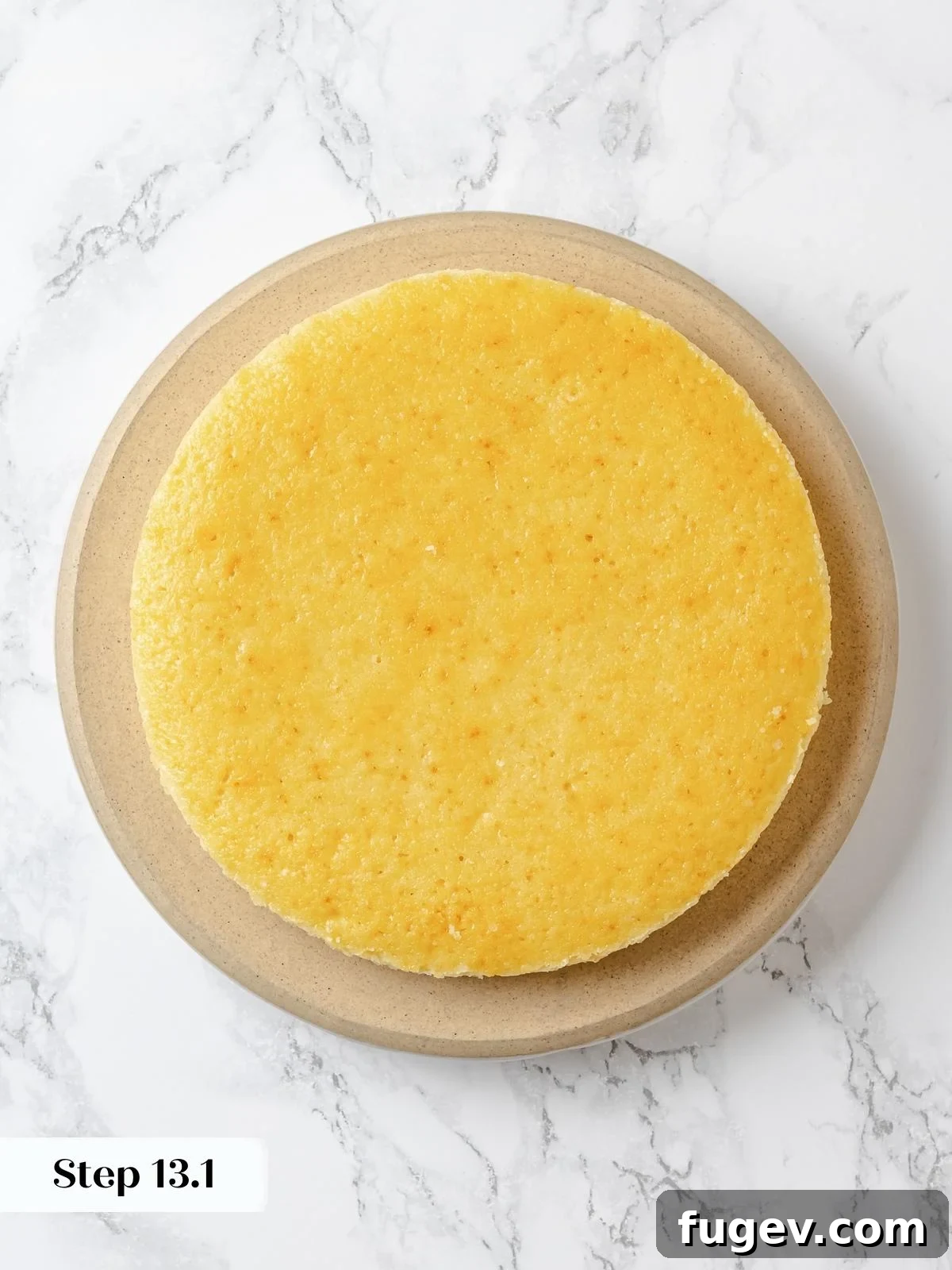
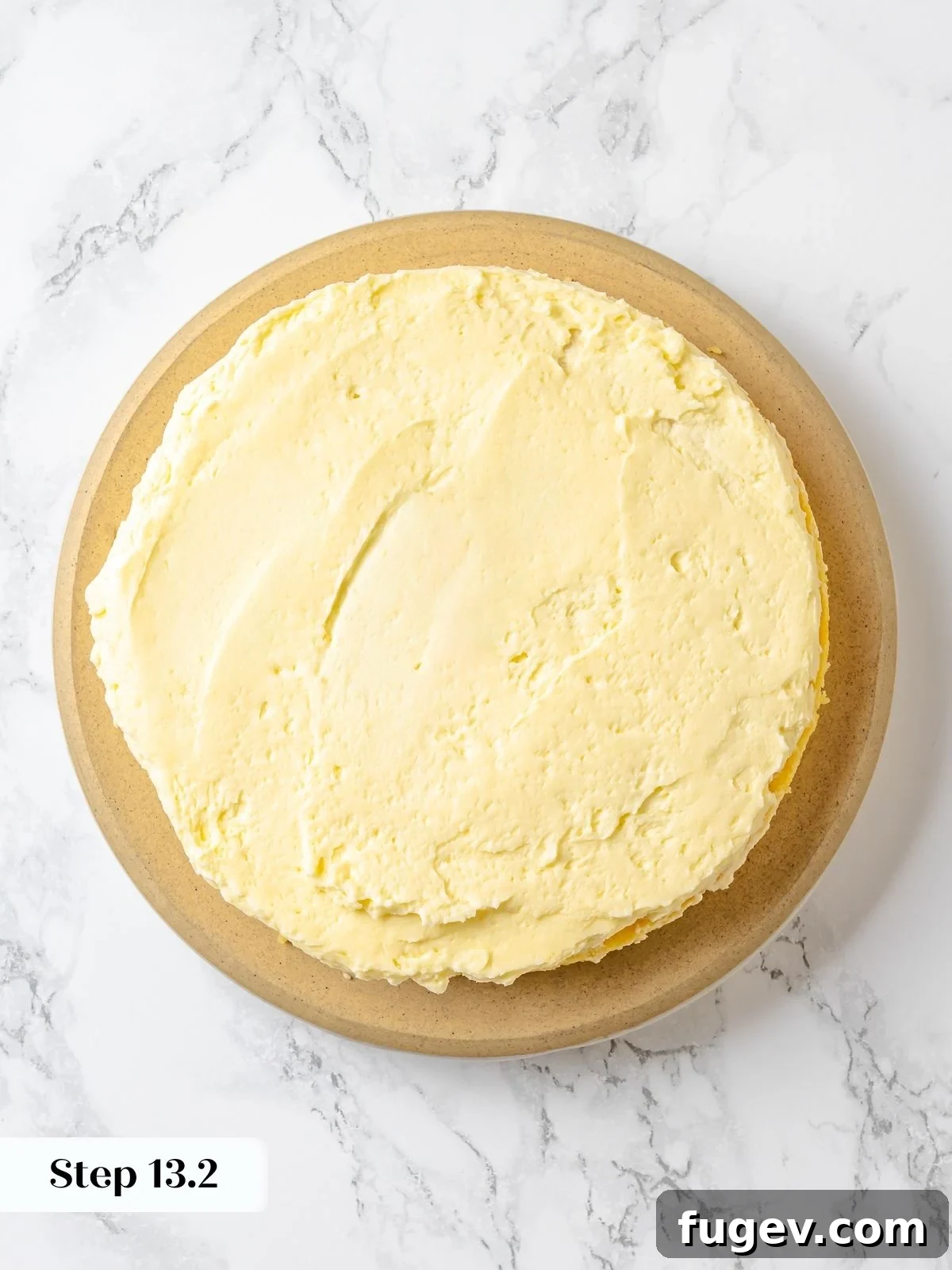
Step 13: Fill the Layers. Place one completely cooled cake layer onto a cake board or your desired serving plate (photo 18). Spread about 1 cup of the luscious lemon buttercream evenly over the top of this layer, extending almost to the edges (photo 19).
Optional Flavor Boost: For an extra burst of moisture and intense citrus flavor, you can brush your slightly warm cake layers with a light lemon simple syrup before applying the buttercream. Simply combine equal parts sugar and lemon juice, heat until sugar dissolves, cool, and brush lightly. This technique creates an incredibly moist lemon cake.
Step 14: Stack and Crumb Coat. Carefully place the next cake layer on top of the frosted layer, pressing gently to secure it. Repeat the frosting process with the remaining layers. For the final top layer, place it upside down. This uses the flat bottom of the cake as the top, creating a perfectly level surface for frosting. Next, apply a very thin “crumb coat” of buttercream all over the entire cake – top and sides. This thin layer traps any loose crumbs. Chill the cake in the refrigerator for at least 30 minutes (or until the crumb coat is firm) before applying your final, smooth layer of buttercream.
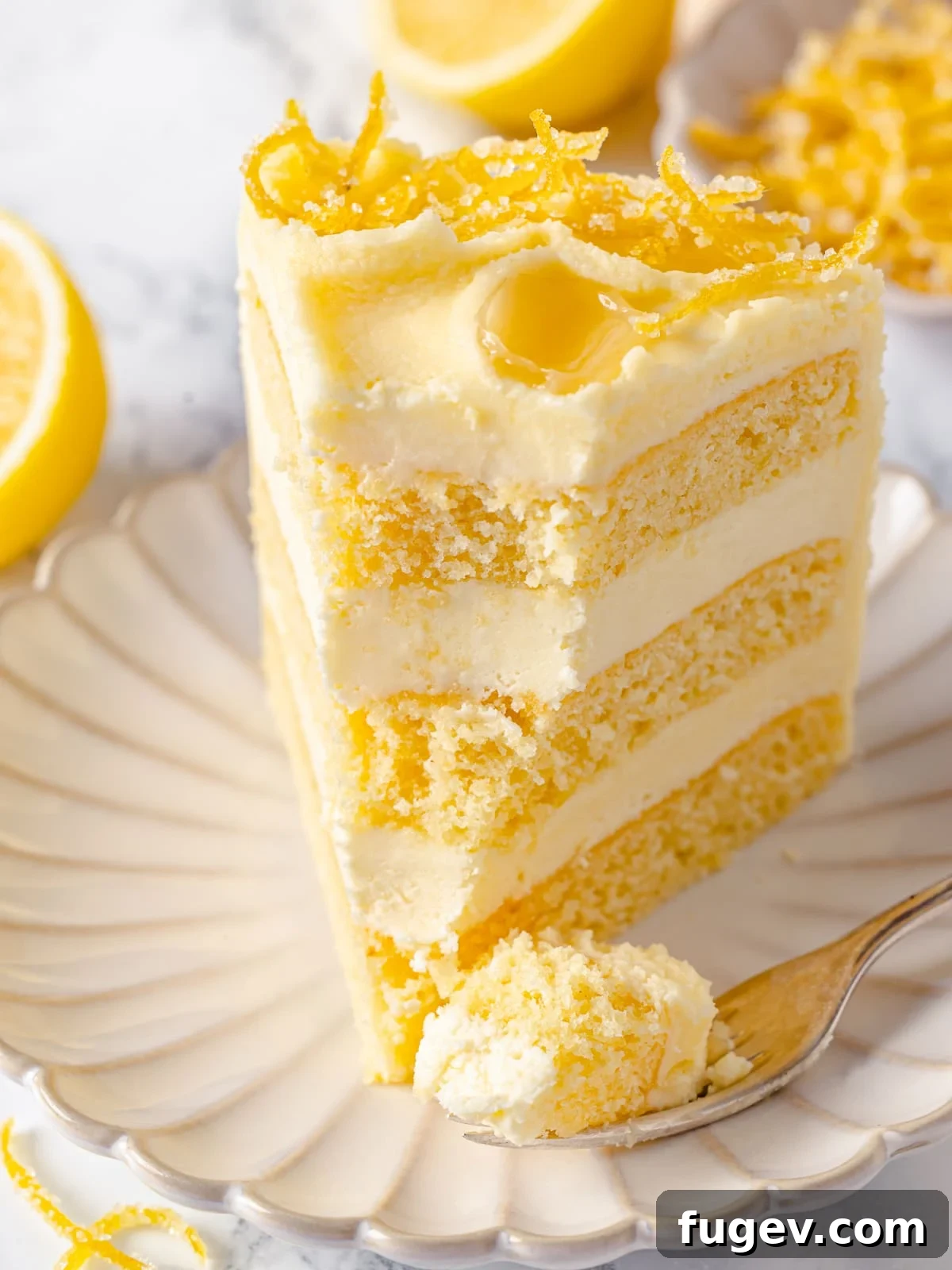
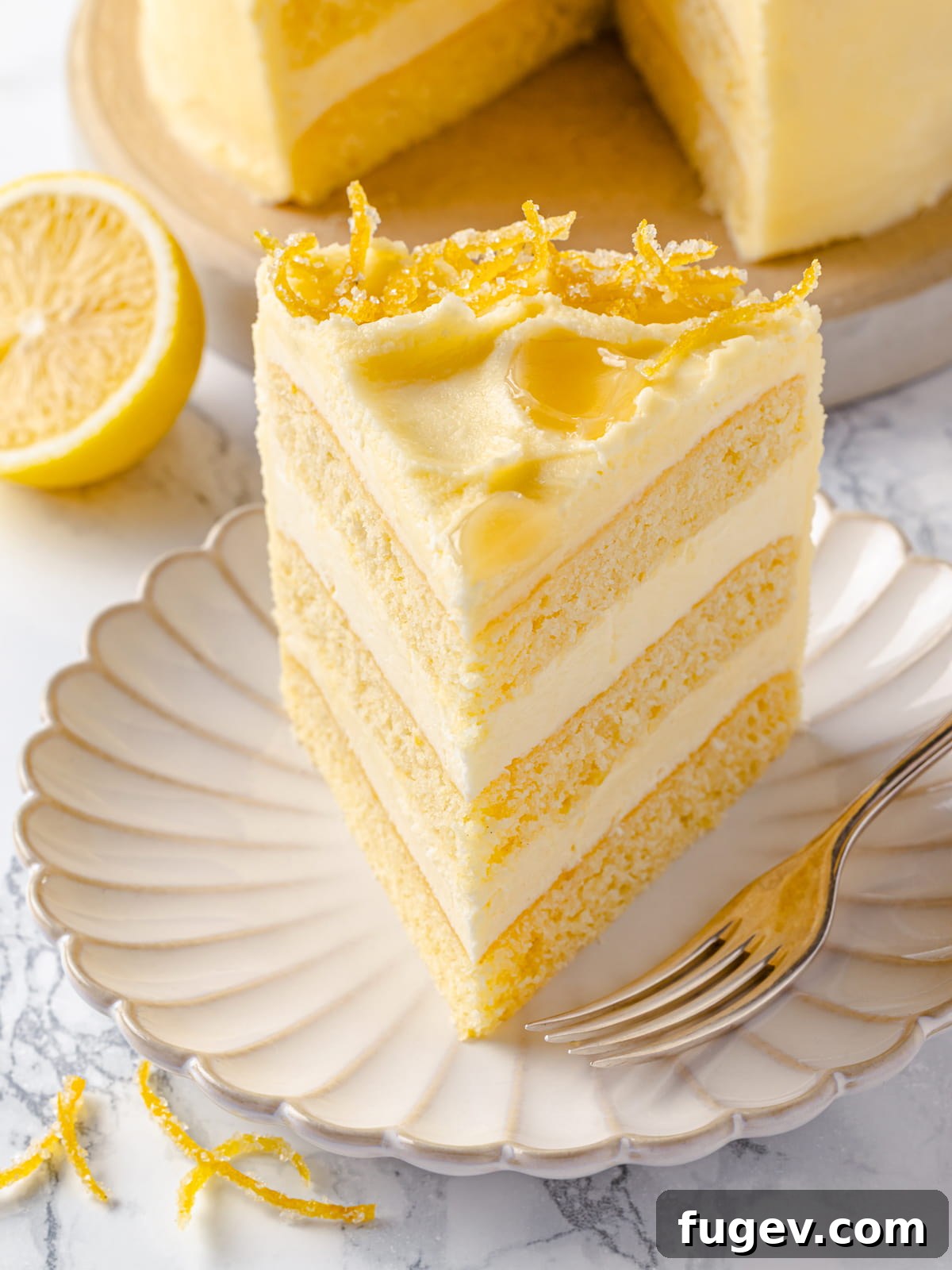
Step 15: Final Frosting and Serve. Once the crumb coat is firm, apply the remaining lemon buttercream in a thicker, even layer, smoothing the sides and top as desired for a polished, bakery-style finish. Garnish with fresh lemon zest, candied lemon slices, or a sprinkle of edible flowers if you like. Allow the cake to come to room temperature for about 15-20 minutes before slicing and serving. This allows the buttercream to soften slightly, ensuring the best texture (photo 20).
Professional Chef Tip for Plated Dessert
For an elevated plated dessert experience, serve a slice of this vibrant lemon cake alongside a small spoonful of delicate white chocolate mousse. The creamy, gentle sweetness of the mousse provides a beautiful contrast and balance to the bright, tangy citrus notes of the lemon cake, creating a truly unforgettable culinary combination.
Lemon Cake Recipe FAQs
The most impactful secret is harnessing the power of lemon zest rather than relying solely on excess juice. The zest contains concentrated aromatic oils that are resilient to baking temperatures and impart a vibrant, natural lemon essence. Over-reliance on lemon juice can thin the batter, compromise the cake’s structure, and often results in a less pronounced lemon flavor after baking. In this recipe, the zest is thoroughly rubbed into the sugar to maximize flavor infusion, with juice added judiciously only for balance and moisture.
Achieving a moist lemon cake involves several critical factors:
- Proper Fat Content: Adequate amounts of butter contribute richness and moisture.
- Quality Ingredients: Ingredients like buttermilk add essential moisture and tenderizing acidity.
- Gentle Mixing: Overmixing develops gluten, leading to a tough, dry cake. Mix just until ingredients are combined.
- Using Cake Flour: The lower protein content of cake flour results in a finer, more tender crumb that retains moisture better.
- Controlled Acidity: While lemon juice is important, too much can interact negatively with leavening agents and contribute to dryness.
- Precise Baking Time and Temperature: The most common culprit for dry cakes is overbaking. Bake until just done, using visual cues and the toothpick test. A slightly lower baking temperature, as used in this recipe, also helps retain moisture.
Professional bakeries rely on these same fundamental principles – balanced formulas and precise execution – not mysterious additives, to create their consistently moist cakes.
For this specific lemon cake recipe, regular Eureka or Lisbon lemons are the superior choice. These common varieties possess a higher acidity and a more assertive, classic lemon flavor. This robust profile ensures that the lemon taste remains bright, clear, and distinct even after being combined with sugar, butter, and undergoing the baking process. In contrast, Meyer lemons are sweeter and less acidic, and their delicate flavor can become muted and less noticeable once baked into a cake and paired with rich buttercream.
More Recommended Lemon & Cake Recipes
Date Night
Lemon Olive Oil Cake
Cake Recipes
Lemon Pound Cake with Strawberry Icing
Summer Dessert Recipes
Lemon Berry Pavlova Cake
Cupcake Recipes
Lemon Cupcakes
If you tried this wonderful Lemon Cake recipe and loved it as much as we do, please consider leaving a 🌟 star rating and sharing your experience in the comments below. Your feedback truly makes my day and helps other bakers discover this delicious creation!
Bakery-Style Lemon Cake with Silky Buttercream
Chef Lindsey
35
15
50
16
servings
Comment
Print Recipe
Ingredients (US Customary)
For the Lemon Cake
- 2 ⅓ cups cake flour
- 1 teaspoon kosher salt
- 2 ½ teaspoons baking powder
- ¾ cup unsalted butter room temperature
- 1 ⅓ cups granulated sugar
- 2 lemons zested and juiced (approx. 2 tbsp juice)
- 3 large eggs
- ¾ cup low-fat buttermilk
For the Lemon Swiss Meringue Buttercream
- 5 egg whites
- 1 ¼ cups granulated sugar
- ¼ teaspoon kosher salt
- 2 cups unsalted butter cool but pliable (approx. 2.5 sticks)
- 1 cup lemon curd prepared or high-quality store-bought
Instructions
Make the Lemon Cake
- Preheat the oven to 325°F convection or 350°F conventional. Spray cake pans with nonstick spray and line bottoms with parchment paper.
- In a small bowl, rub the lemon zest into the granulated sugar with your fingertips until fragrant and slightly damp.
- Sift together cake flour, kosher salt, and baking powder; set aside.
- In a stand mixer fitted with the paddle attachment, cream the butter and lemon-infused sugar on medium-low speed for about 3–4 minutes, until lightened in color and the sugar granules look slightly separated.
- Add eggs one at a time, mixing on medium speed after each addition until fully incorporated. Scrape the bowl well after every other egg.
- Reduce mixer speed to low. Add the dry ingredients in three additions, alternating with the buttermilk mixed with lemon juice in two additions, beginning and ending with the dry ingredients. Mix just until combined.
- Remove the bowl from the mixer and fold once or twice with a spatula to ensure a smooth batter and prevent any overmixing.
- Divide batter evenly between prepared pans (about 380g per 8-inch pan for 3 layers). Bake 15–18 minutes, until the edges are just lightly golden and the center springs back when gently pressed. Cool completely on a wire rack before frosting.
Make the Lemon Swiss Meringue Buttercream
- Bring about 1 inch of water to a gentle simmer in a medium saucepan.
- Whisk egg whites, sugar, and salt together in the heatproof bowl of a stand mixer. Place the bowl over the simmering water (water should not touch the bowl) and whisk constantly until the mixture reaches 120–130°F (49-54°C) and the sugar is fully dissolved (no grittiness when rubbed between fingers).
- Transfer the bowl to the stand mixer fitted with the whisk attachment. Beat on high speed for 5–7 minutes, until stiff, glossy peaks form and the bowl is just slightly warm to the touch (or cool).
- Switch to the paddle attachment. Add the butter all at once (cool but pliable) and beat on medium speed until the buttercream comes together and looks smooth and silky. This process can take several minutes and may look broken or curdled before it emulsifies properly – keep mixing!
- Once smooth, add the lemon curd. Switch back to the whisk attachment and beat on medium-high speed for 1–2 minutes until the buttercream is light, fluffy, and the lemon curd is evenly combined.
Assemble the Cake
- Place one completely cooled cake layer on a cake board or serving plate.
- Spread about 1 cup of buttercream evenly over the top of the cake layer.
- Repeat with remaining cake layers, stacking them. For the final top layer, place it upside down to create a perfectly flat surface.
- Apply a thin “crumb coat” of buttercream over the entire cake (top and sides) to trap any loose crumbs. Refrigerate for at least 30 minutes, or until the crumb coat is firm.
- Frost with the remaining buttercream, smoothing the final coat as desired. Serve at room temperature for the best texture.
Notes
- Yield: One 8–9 inch layer cake, providing approximately 16 servings; yields about 1 ½ quarts of lemon Swiss meringue buttercream.
- Flavor Tip: For an even more intense lemon experience, feel free to add additional lemon zest to both the cake batter and the buttercream. The more zest, the brighter the flavor!
- Storage: The frosted lemon cake can be stored, covered, in the refrigerator for up to 3 days. For longer storage, unfrosted cake layers can be wrapped tightly in plastic wrap and then foil, and frozen for up to 1 month. Thaw at room temperature before frosting and serving.
Nutrition (per serving)
Carbohydrates: 56g |
Protein: 5g |
Fat: 34g |
Saturated Fat: 21g |
Polyunsaturated Fat: 1g |
Monounsaturated Fat: 9g |
Trans Fat: 1g |
Cholesterol: 115mg |
Sodium: 339mg |
Potassium: 91mg |
Fiber: 1g |
Sugar: 42g |
Vitamin A: 1028IU |
Vitamin C: 7mg |
Calcium: 71mg |
Iron: 0.5mg
Dessert
American
543
Before You Go: Explore More Deliciousness
I sincerely hope you savored every bite of this bright, bakery-style lemon cake and found this comprehensive guide helpful. Crafting such a delightful dessert truly is a rewarding experience! If you’re eager to continue your baking adventures and explore more chef-tested recipes that promise exceptional results, I invite you to delve into the rest of my cake recipes. You’ll find a curated collection designed to inspire your next delicious creation. Happy baking!