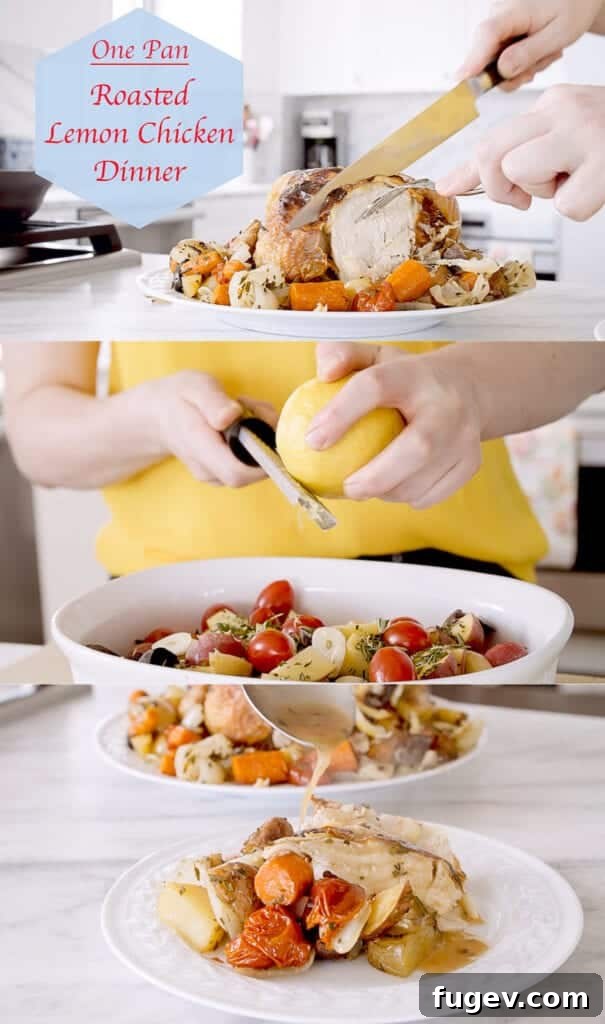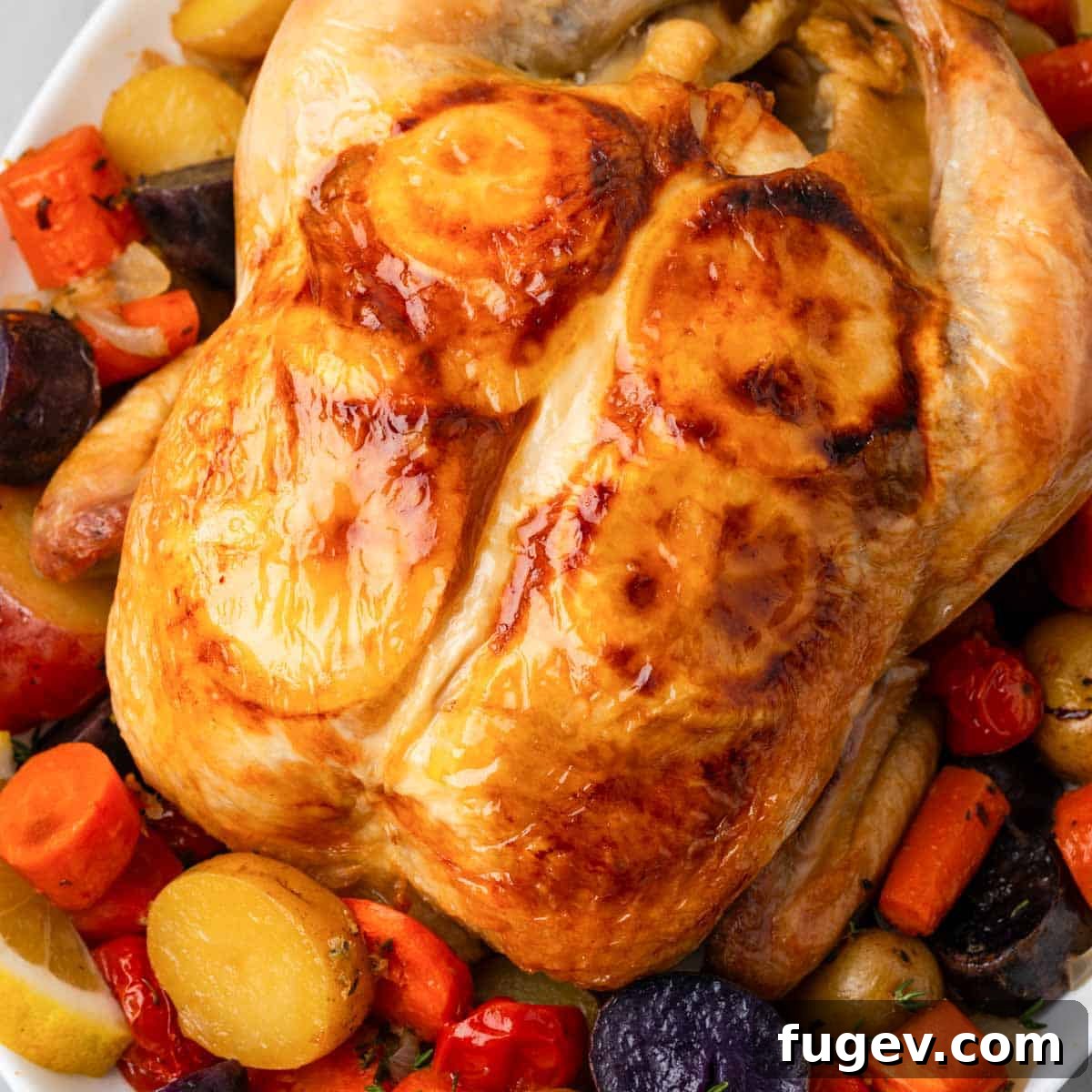
Prepare to elevate your weeknight dinners or special occasion feasts with this incredible lemon roasted chicken recipe. Imagine succulent, tender, and incredibly juicy meat infused with the bright zest of fresh lemons and a medley of aromatic herbs, all cooked to perfection on a vibrant bed of colorful, caramelized roasted vegetables. This isn’t just a meal; it’s an experience – an easy-to-follow recipe that consistently delivers restaurant-quality flavors and is sure to impress everyone at your table.
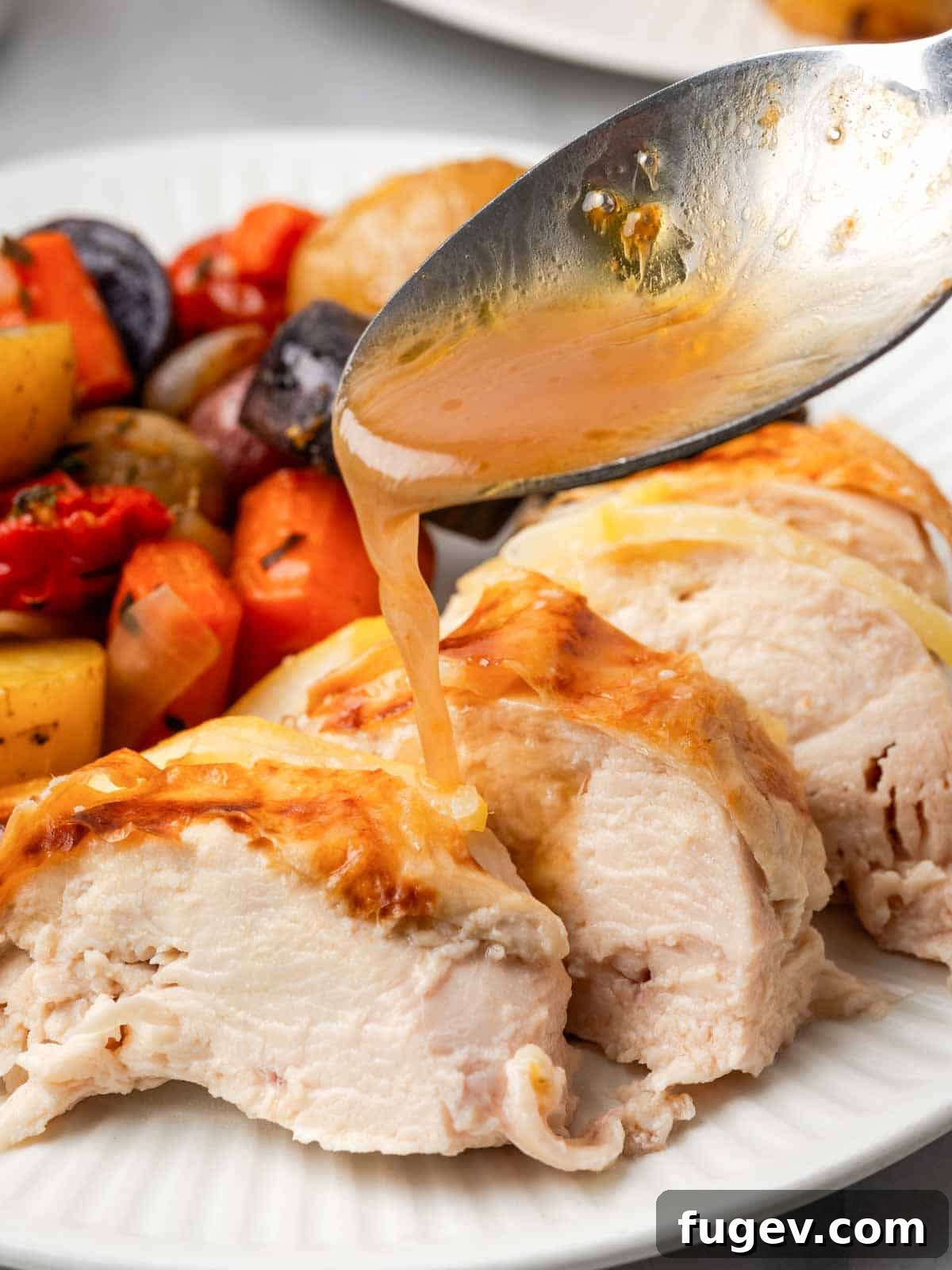
The magic of this dish lies in the harmonious blend of savory roasted chicken, deeply browned and slightly sweet roasted vegetables, fragrant fresh herbs, and the distinctive bright, tangy notes of lemon. Every component contributes to a symphony of flavors that is both comforting and sophisticated. For an extra layer of decadence and flavor, we highly recommend preparing the optional pan sauce. This luscious sauce, made from the rich, savory pan drippings combined with a splash of fresh lemon juice, truly transforms a traditional roast chicken into something extraordinary. Just as my Chicken in White Wine Sauce proves, a well-crafted sauce is a game-changer, taking a simple dish to gourmet heights.
Table of Contents
- Why This Lemon Roasted Chicken Will Be Your New Favorite
- Expert Tips for the Perfect Roasted Lemon Chicken
- Key Ingredients for Flavorful Roasting
- Exciting Variations to Customize Your Meal
- Step-by-Step Guide: How to Make Roast Chicken with Lemon
- Chef Lindsey’s Essential Recipe Tip
- Frequently Asked Questions About Roasted Chicken
- Printable Lemon Roasted Chicken Recipe Card
- Explore More Delicious Chicken Recipes
Why This Lemon Roasted Chicken Will Be Your New Favorite
- Achieve Flawless Texture: The roasting method employed in this recipe is meticulously designed to create the perfect contrast: remarkably crispy, golden-brown skin that crackles with every bite, encapsulating unbelievably tender and juicy meat. Say goodbye to dry, uninspired chicken and hello to a truly satisfying culinary experience.
- Effortless Elegance: Don’t let the gourmet results fool you; this recipe requires no complicated cooking methods. By roasting the chicken and a colorful assortment of vegetables together in one pan, you create a cohesive, restaurant-quality meal with minimal fuss and maximum flavor. It’s ideal for busy weeknights or when you want to impress without spending hours in the kitchen.
- A Masterpiece of Balanced Flavor: This dish is a testament to perfectly balanced tastes. The rich, savory notes of the chicken, enhanced by fragrant herbs, are complemented by the natural sweetness of the roasted vegetables. The bright, tangy acidity of lemon cuts through the richness, creating a dynamic and outstanding depth of flavor that will have everyone asking for seconds. It’s a harmonious blend that delights the palate.
Expert Tips for the Perfect Roasted Lemon Chicken
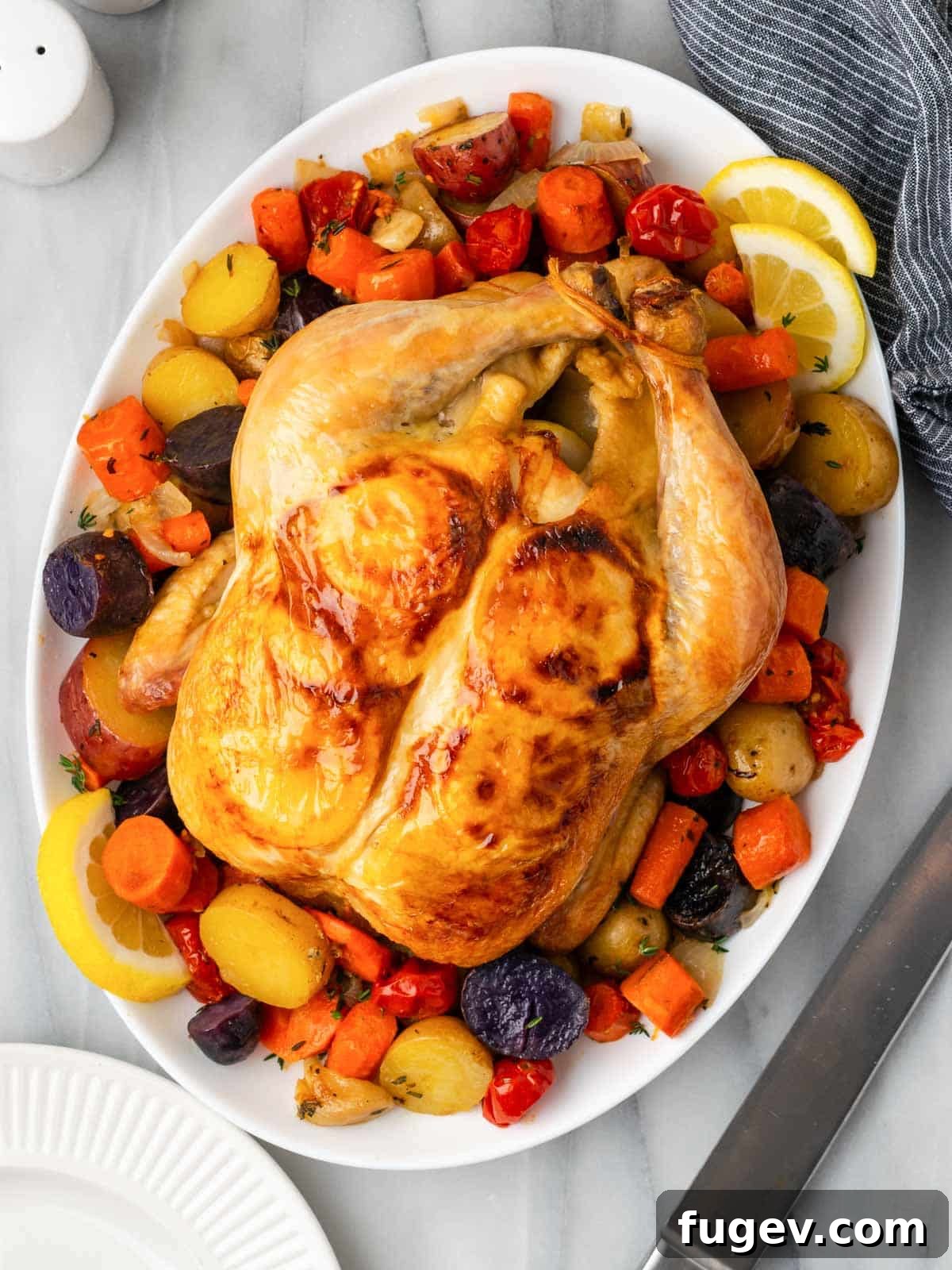
- Ensure Uniform Vegetable Cuts: Precision in cutting your vegetables is paramount for even cooking. Aim for pieces that are roughly the same size – typically ½ to ¾ inch. This consistency allows all vegetables to roast at the same rate, preventing some from becoming mushy while others remain undercooked. This principle applies to any dish with mixed ingredients, just like my Hungarian Chicken Paprikash where uniform chicken pieces are key to a balanced stew.
- Master the Art of Trussing: Trussing might sound intimidating, but it’s a simple technique that yields significant benefits. By tying the chicken’s legs together and tucking its wings underneath, you create a compact, even shape. This promotes uniform cooking, ensuring that all parts of the bird cook at the same speed, preventing the breast from drying out before the thighs are done. It also helps the chicken retain its precious moisture, resulting in a juicier final product.
- The Essential Instant-Read Thermometer: For perfectly cooked chicken that’s safe to eat and never overcooked, an instant-read meat thermometer is your best friend. Insert it into the thickest part of the thigh, avoiding the bone, and aim for a reading of 165°F (74°C). This guarantees that your chicken is fully cooked, moist, and flavorful, removing any guesswork from the roasting process.
- Pat Your Chicken Dry: Before seasoning, take a moment to thoroughly pat your whole chicken dry with paper towels. Removing excess moisture from the skin is crucial for achieving that coveted crispy, golden-brown exterior. Moisture creates steam, which prevents the skin from crisping up.
- Bring Chicken to Room Temperature: For optimal roasting, allow your chicken to sit at room temperature for about 30-60 minutes before placing it in the oven. This helps the chicken cook more evenly and efficiently, reducing the overall cooking time and preventing the outside from overcooking while the inside struggles to catch up.
Key Ingredients for Flavorful Roasting
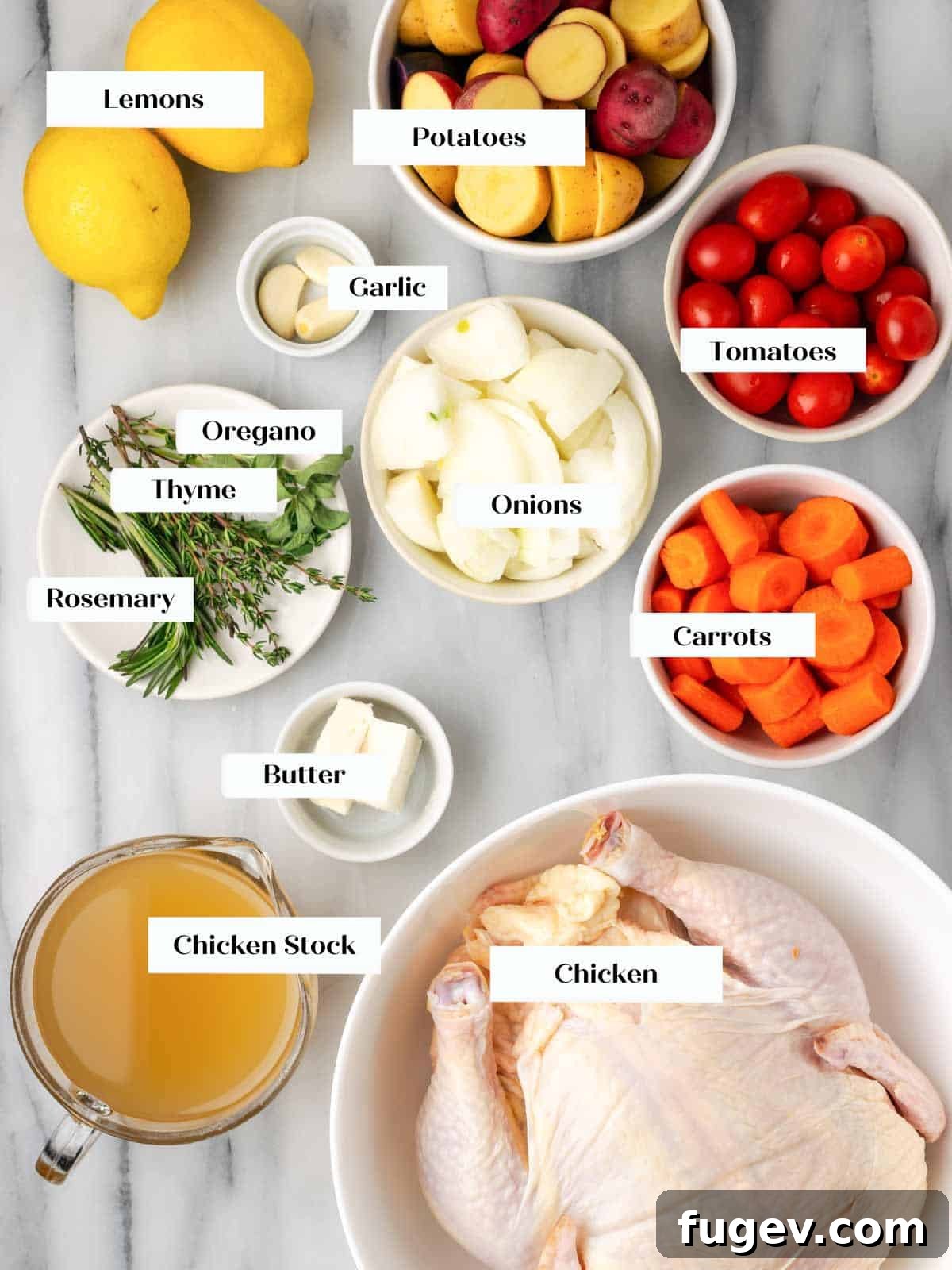
Crafting the perfect Lemon Roasted Chicken starts with selecting high-quality ingredients. Here’s what you’ll need and some tips for choosing the best:
- Lemons: Opt for lemons that feel heavy for their size; these typically yield the most juice and zest. The zest provides potent aromatic oils, while the juice adds a bright, essential tang. We’ll be using both zest and slices to infuse the chicken with maximum lemon flavor.
- Potatoes: Baby potatoes of various colors not only add visual appeal but also a creamy texture when roasted. Their small size means less chopping and quicker cooking, perfectly complementing the chicken.
- Cherry Tomatoes: These burst with sweet and juicy flavor when roasted, adding a lovely acidity and freshness that balances the richness of the chicken. They contribute significantly to the pan sauce.
- Onions: I’m a firm believer that you can never have too many roasted onions. Adding 2-3 to the dish allows them to deeply caramelize, releasing their natural sugars and imparting a wonderful sweetness and depth of flavor to the entire meal.
- Garlic: Fresh garlic cloves, crushed or minced, infuse the vegetables and chicken with a savory, slightly sweet, and pungent aroma. While jarred chopped garlic can be a substitute in a pinch, fresh whole heads offer superior flavor.
- Carrots: Whether peeled or unpeeled, carrots add a touch of sweetness and vibrant color. Unpeeled carrots offer a slightly firmer texture after roasting and retain more nutrients. Cut them uniformly for even cooking.
- Rosemary: Fresh rosemary is a powerhouse herb, imparting a distinct piney, earthy, and slightly floral flavor that pairs exceptionally well with poultry and lemon. Its robust nature stands up well to high heat roasting.
- Thyme: Fresh thyme offers a bright, subtly minty, and peppery herbal flavor that adds incredible depth and aroma to this dish. It complements the lemon and rosemary beautifully, contributing to the overall Mediterranean-inspired profile.
- Oregano: Earthy and slightly bitter, fresh oregano rounds out the herb blend, providing a classic Mediterranean touch that enhances both the chicken and the vegetables.
- Whole Chicken: Choose a whole chicken that is an appropriate size for your party. A four-pound bird typically serves about four people generously. Look for a fresh, high-quality chicken for the best flavor and texture.
- Chicken Stock: This is a crucial liquid for roasting and the base of our optional pan sauce. If you have homemade chicken stock on hand, like my homemade chicken stock recipe, it will undoubtedly offer the richest flavor, similar to how it enhances my Baked Chicken Marinara. Otherwise, choose a good quality, low-sodium store-bought chicken broth to control the overall saltiness of your dish. It’s also excellent for your favorite soup recipes!
- Unsalted Butter: I prefer unsalted butter as it gives me complete control over the seasoning level. It helps the chicken skin crisp and adds a rich, luscious flavor to the pan drippings. If you prefer, a good quality olive oil can be used as a substitute.
- Salt: Kosher salt is my go-to for seasoning because its larger crystals make it easier to distribute evenly and control the saltiness without overdoing it, unlike finer table salts.
- Freshly Ground Black Pepper: Essential for adding a subtle warmth and aromatic kick, freshly ground black pepper enhances all the other flavors.
- Lemon Juice (for sauce): Freshly squeezed lemon juice is vital for the pan sauce, providing a bright, tangy finish that cuts through the richness and ties all the flavors together.
- Liquid From Roasting Pan: Do not discard this! These flavorful pan drippings are the foundation for our incredible, optional pan sauce.
For precise measurements and detailed ingredient quantities, please refer to the complete recipe card below.
Exciting Variations to Customize Your Meal
This lemon roasted chicken recipe is wonderfully versatile, allowing you to easily adapt it to your preferences or whatever ingredients you have on hand. Here are some fantastic ways to switch things up:
- Explore Different Vegetables: While potatoes, tomatoes, and carrots are classic, feel free to experiment with other robust, good-for-roasting vegetables. Sweet potatoes, broccoli florets, asparagus spears, bell peppers, or even Brussels sprouts would make excellent additions or substitutions. Just ensure they are cut into similar-sized pieces for even cooking. For more veggie inspiration, check out my Easy Thai Peanut Chicken Noodle Stir Fry or Gochujang Chicken recipes!
- Use Chicken Pieces Instead: If you prefer not to roast a whole chicken, this recipe works beautifully with individual chicken legs, thighs, or even bone-in, skin-on chicken breasts. Adjust the cooking time accordingly, as smaller pieces will cook faster (check for 165°F internal temperature). You could even save the wings for a separate appetizer, perhaps my ever-popular Sweet and Spicy Baked Chicken Wings Recipe.
- Experiment with Different Seasonings: The herb blend of rosemary, thyme, and oregano is a fantastic starting point, but don’t hesitate to get creative with other seasonings. Fresh parsley, sage, or marjoram would also complement the lemon and chicken wonderfully. For a smoky kick, a pinch of paprika could be added. You can even explore different pre-made seasoning blends if you have them. If you’re feeling adventurous and have shake ‘n bake in the pantry, this air fryer shake ‘n bake chicken breast is a fun, quick alternative!
Step-by-Step Guide: How to Make Roast Chicken with Lemon
Follow these detailed steps to create a show-stopping Lemon Roasted Chicken that’s bursting with flavor:
Step 1: Prepare Your Oven. Begin by preheating your oven to a steady 375°F (190°C). Allowing the oven to come to temperature fully is key for consistent roasting.
Step 2: Chop and Arrange Vegetables. Take all your chosen vegetables—potatoes, tomatoes, onions, garlic, and carrots—and cut them into approximately ½ to ¾ inch pieces. The goal is uniformity, especially for the potatoes, to ensure they cook evenly. Place these uniformly cut vegetables into a 2 ½ quart baking dish or a similarly sized roasting pan. The idea is to have a layer of vegetables about 2 inches deep, which will create a protective bed for the chicken, preventing it from cooking too quickly on the bottom.
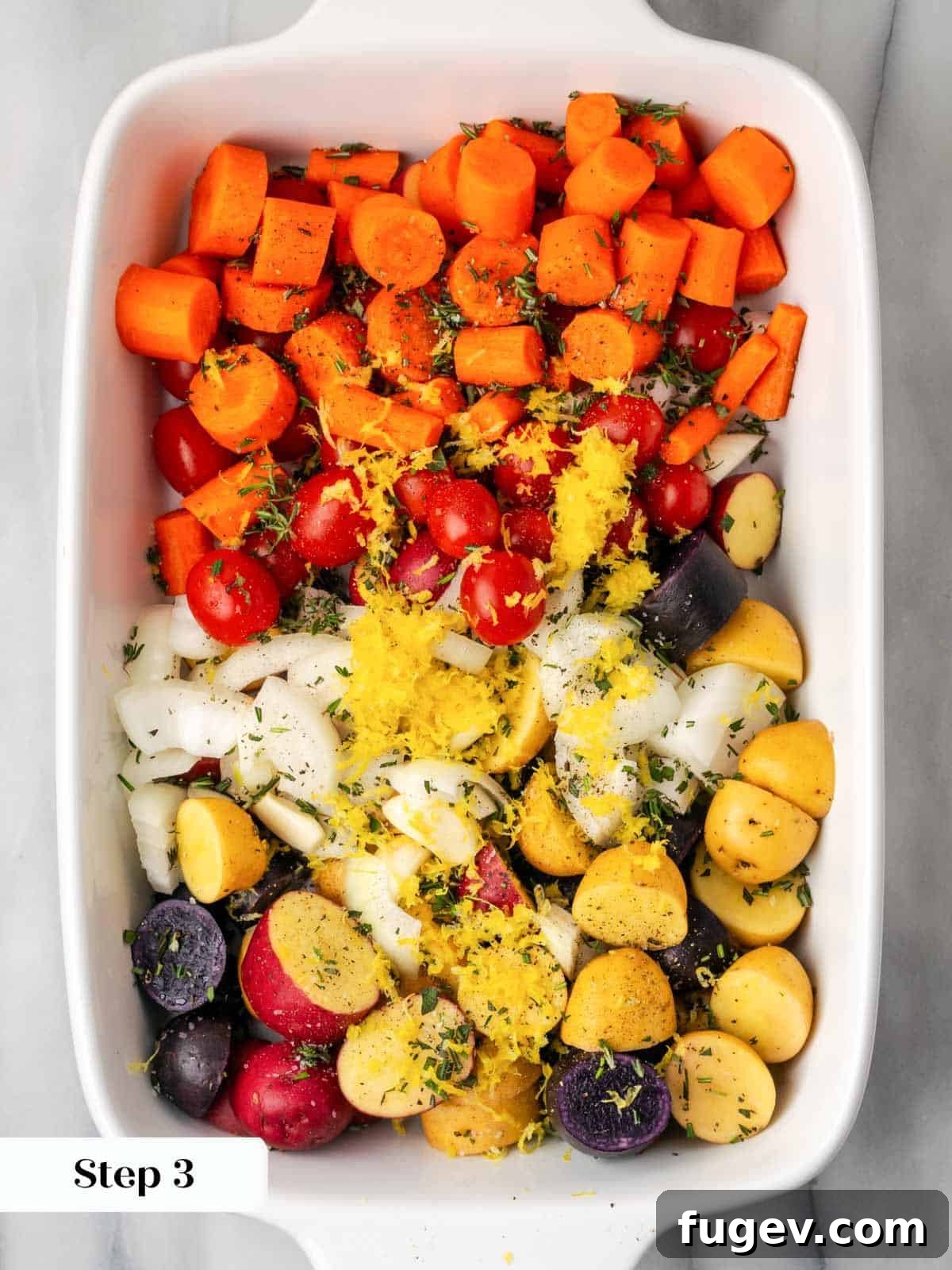
Step 3: Season the Vegetables. Finely pick the leaves off your fresh rosemary and oregano sprigs, then chop them before tossing them over the prepared vegetables in the baking dish. Add the fresh thyme leaves, a generous amount of freshly ground black pepper, and one or two substantial three-finger pinches of kosher salt. This initial seasoning forms the flavor base for your roasted vegetables.
Step 4: Zest Your Lemon. Carefully zest one of your lemons directly over the seasoned vegetables. The fragrant oils from the zest will infuse the vegetables as they roast, adding a vibrant citrus note. If you plan to make the pan sauce, set this zested lemon aside for juicing later.
Step 5: Toss the Vegetables. Use your hands or a spoon to thoroughly stir and toss the vegetables, ensuring they are evenly coated with the herbs, lemon zest, salt, and pepper. This helps distribute the flavors and ensures even seasoning.
Step 6: Prepare the Lemon for the Chicken. Take the second lemon and thinly slice half of it into delicate rings. These will be placed under the chicken skin for maximum flavor infusion. Squeeze the juice from the remaining uncut half of this lemon over the vegetables in the pan. Don’t let anything go to waste! Once squeezed, place the spent lemon half directly into the body cavity of the whole chicken. This will impart a subtle lemon aroma to the chicken from the inside out as it roasts.
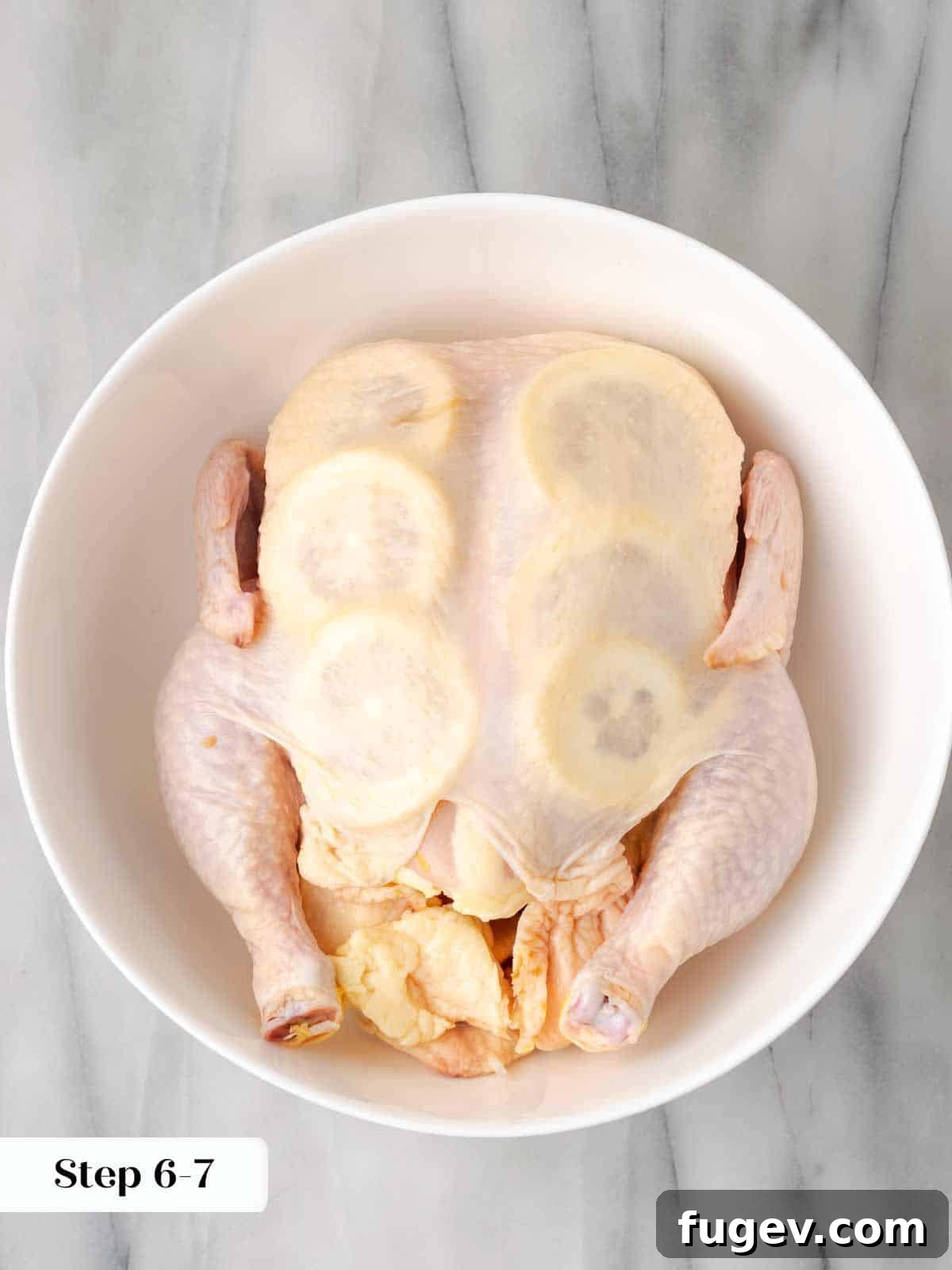
Step 7: Infuse with Lemon Slices. This step is a secret to maximum lemon flavor and exceptionally tender breast meat. Working gently, carefully separate the skin from the breast meat of the chicken. Start near the larger end of the breast and carefully slide your finger between the skin and the meat, using a gentle “windshield wiper” motion to slowly detach the skin all the way down. Once a pocket has been created, slide the thin lemon rings you prepared earlier directly between the skin and the breast meat. This allows the lemon to steam and infuse the breast meat directly as it roasts, keeping it moist and flavorful.
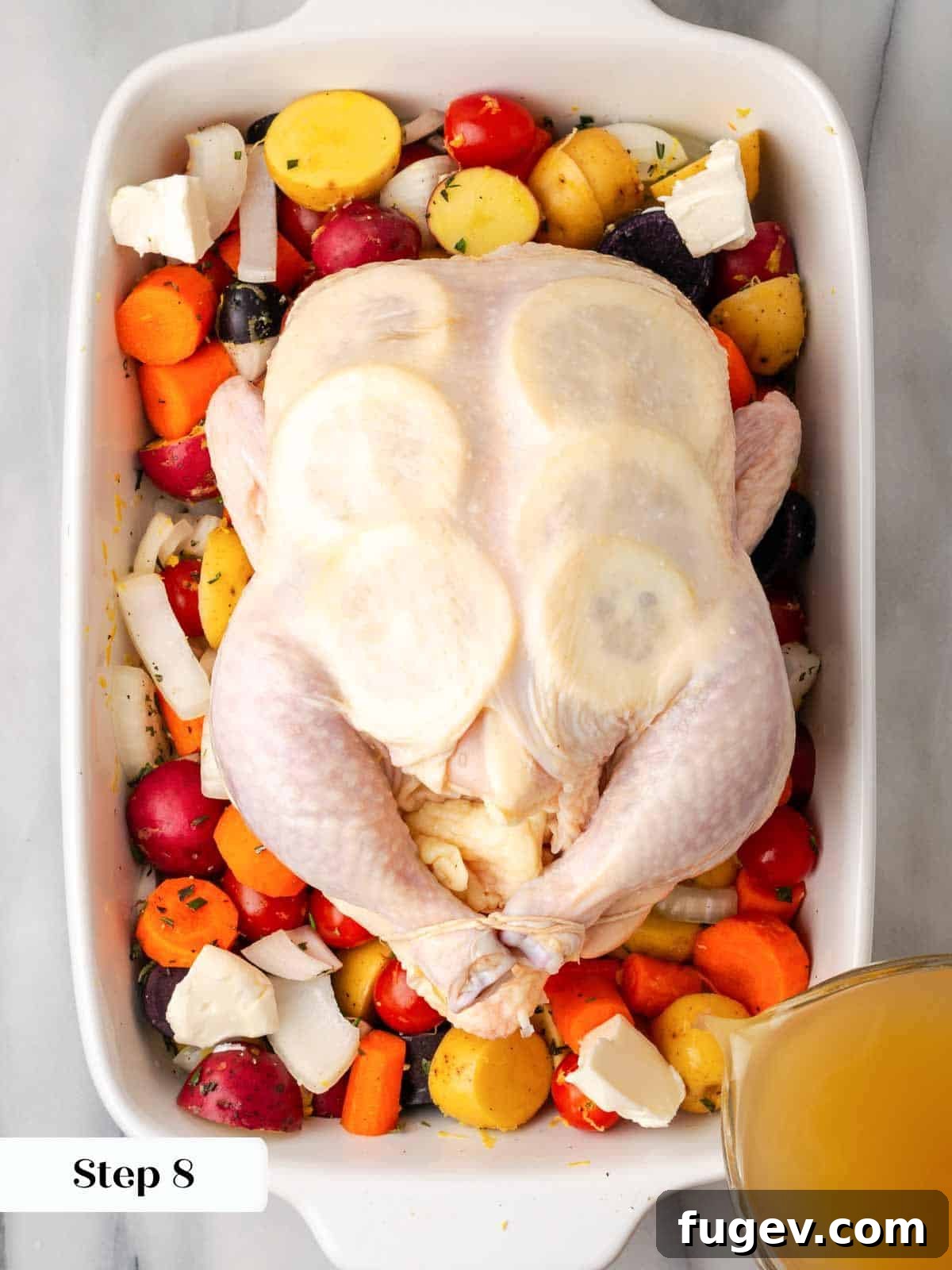
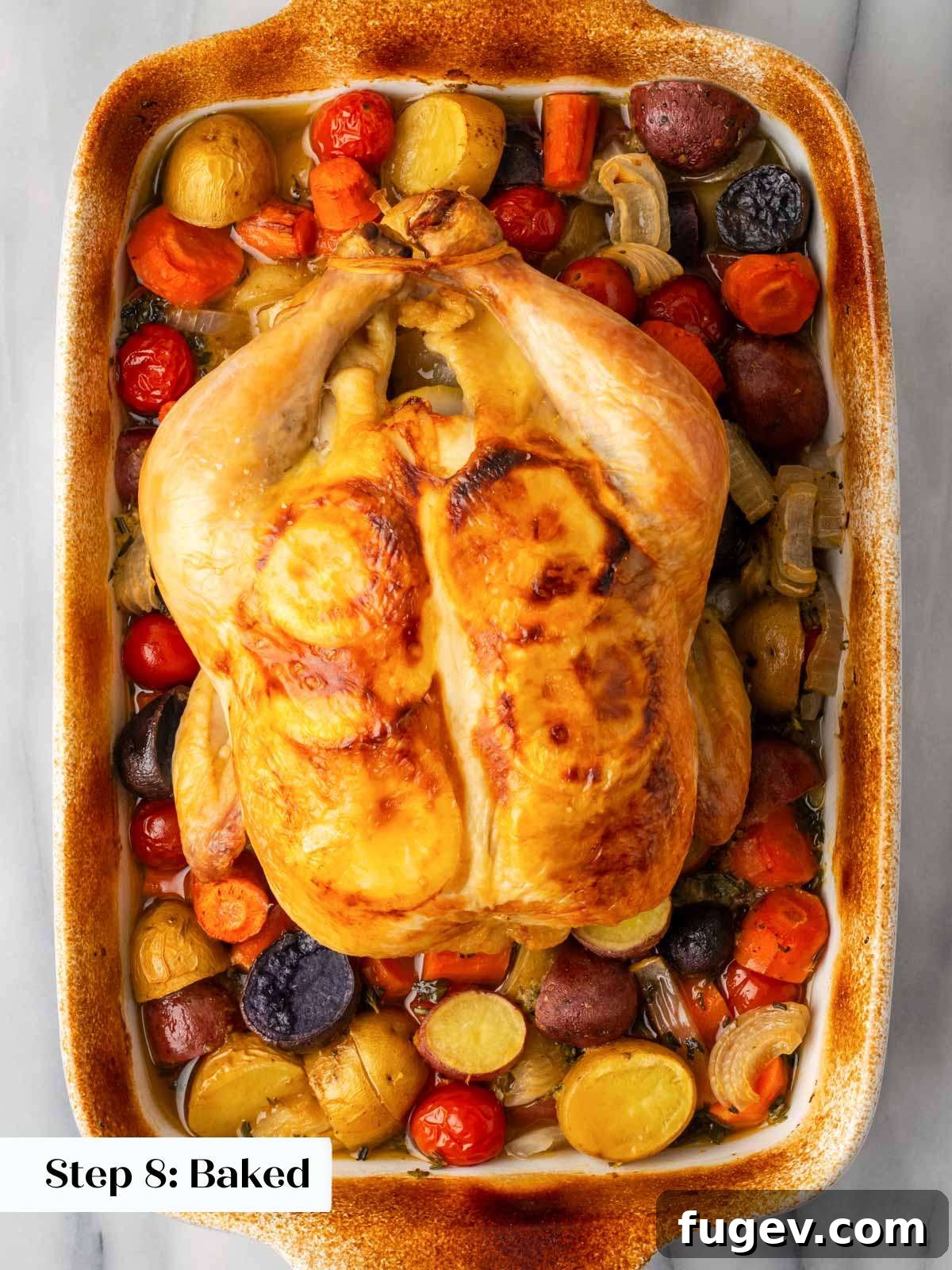
Step 8: Truss and Roast. Now it’s time to truss your chicken. If you need a visual guide, my one-pan roasted chicken video provides helpful instructions. Once trussed, carefully place the chicken directly on top of the bed of seasoned vegetables in your baking dish. Sprinkle the chicken skin generously with kosher salt for crispiness and flavor. Dot the chicken with butter (or drizzle with olive oil) and pour the chicken stock into the bottom of the pan, around the vegetables, but not directly over the skin of the chicken. Transfer the dish to your preheated oven and bake until the thickest part of the chicken thigh registers an internal temperature of 165°F (74°C) using an instant-read thermometer. The cooking time will vary significantly based on the size of your chicken, but expect it to take at least an hour, potentially longer for larger birds.
Cooking the chicken directly on top of the vegetables adds incredible flavor to both, as the chicken drippings baste the veggies. However, this method can slightly increase the overall cooking time for the vegetables. To ensure your vegetables cook at a similar rate to the chicken and achieve optimal caramelization, consider using a cast iron skillet or a dark, heavy-bottomed roasting pan instead of a ceramic baking dish, as cast iron retains and distributes heat more efficiently.
Step 9: Prepare for Crispier Veggies (Optional). If you prefer your roasted vegetables to be extra crispy and deeply caramelized, place a separate baking sheet into the oven during the last 15 minutes of the chicken’s cooking time. This preheating step will ensure the baking sheet is scorching hot, ready to crisp up your vegetables quickly.
Step 10: Rest the Chicken. Once the chicken reaches 165°F, remove it from the oven and transfer it to a cutting board. Tent it loosely with foil and let it rest for at least 10 minutes before carving. Resting allows the juices to redistribute throughout the meat, ensuring a more tender and juicy chicken. If you’re skipping the pan sauce, your delicious dinner is ready to be served! If not, continue to the next steps.
Before carving and serving, always taste a small piece of the chicken and vegetables for seasoning. Adjust with additional salt and freshly ground pepper if needed to perfectly enhance the flavors.
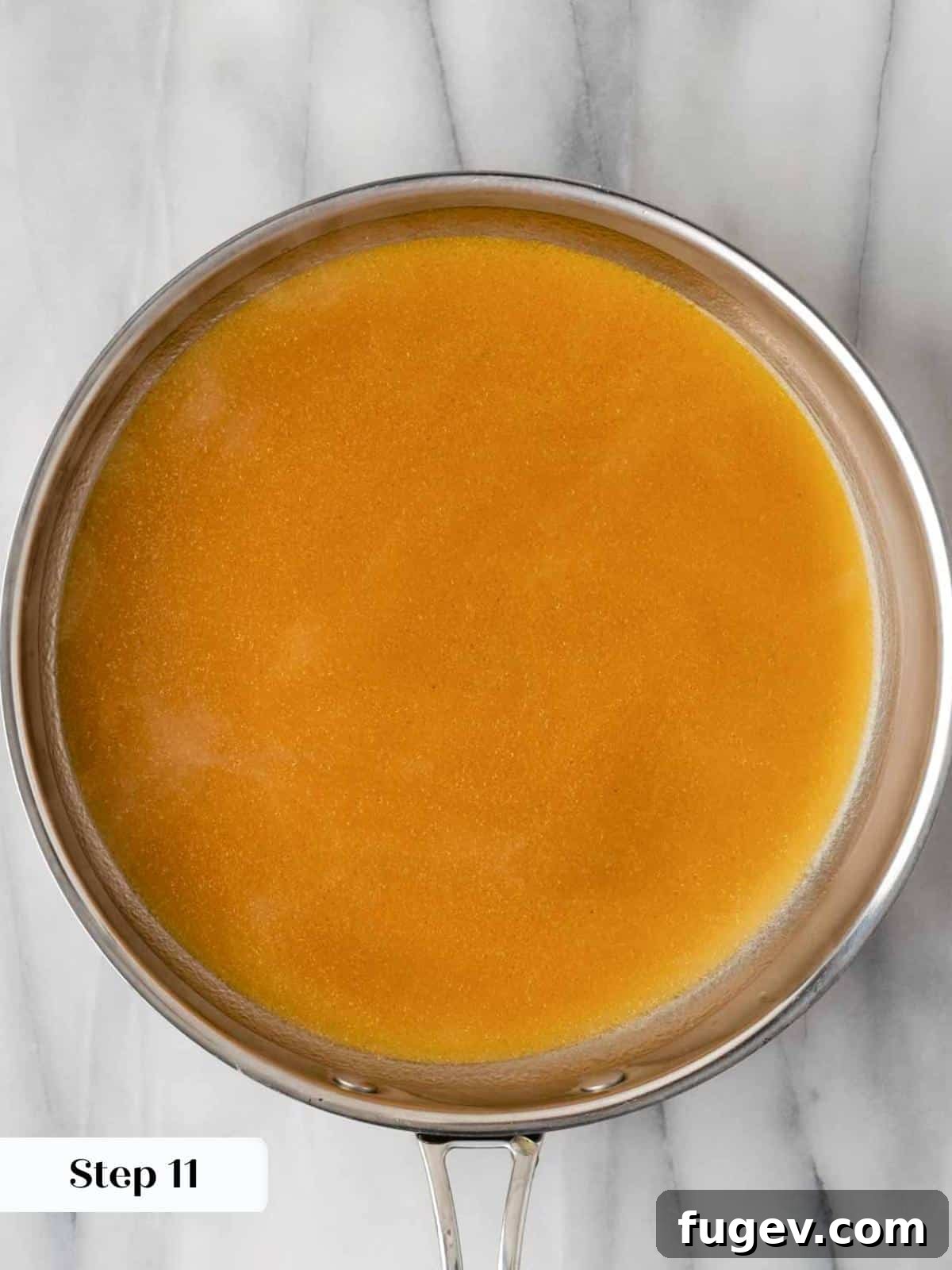
Step 11: Begin the Pan Sauce. While the chicken rests, carefully pour all the accumulated liquid and drippings from the baking dish into a medium sauté pan. Place the pan over medium-high heat and bring the liquid to a simmer. Allow it to reduce for approximately 2-3 minutes, stirring occasionally, until it thickens to a sauce-like consistency. You’ll know it’s ready when it coats the back of a spoon rather than running off like water. This reduction concentrates all the savory flavors.
Step 12: Crisp the Vegetables. While your pan sauce is reducing, if you’re aiming for extra crispy vegetables, carefully transfer the roasted vegetables from the baking dish onto the preheated baking sheet you placed in the oven earlier. Return them to the hot oven for another 5-10 minutes, or until they reach your desired level of crispness and caramelization.
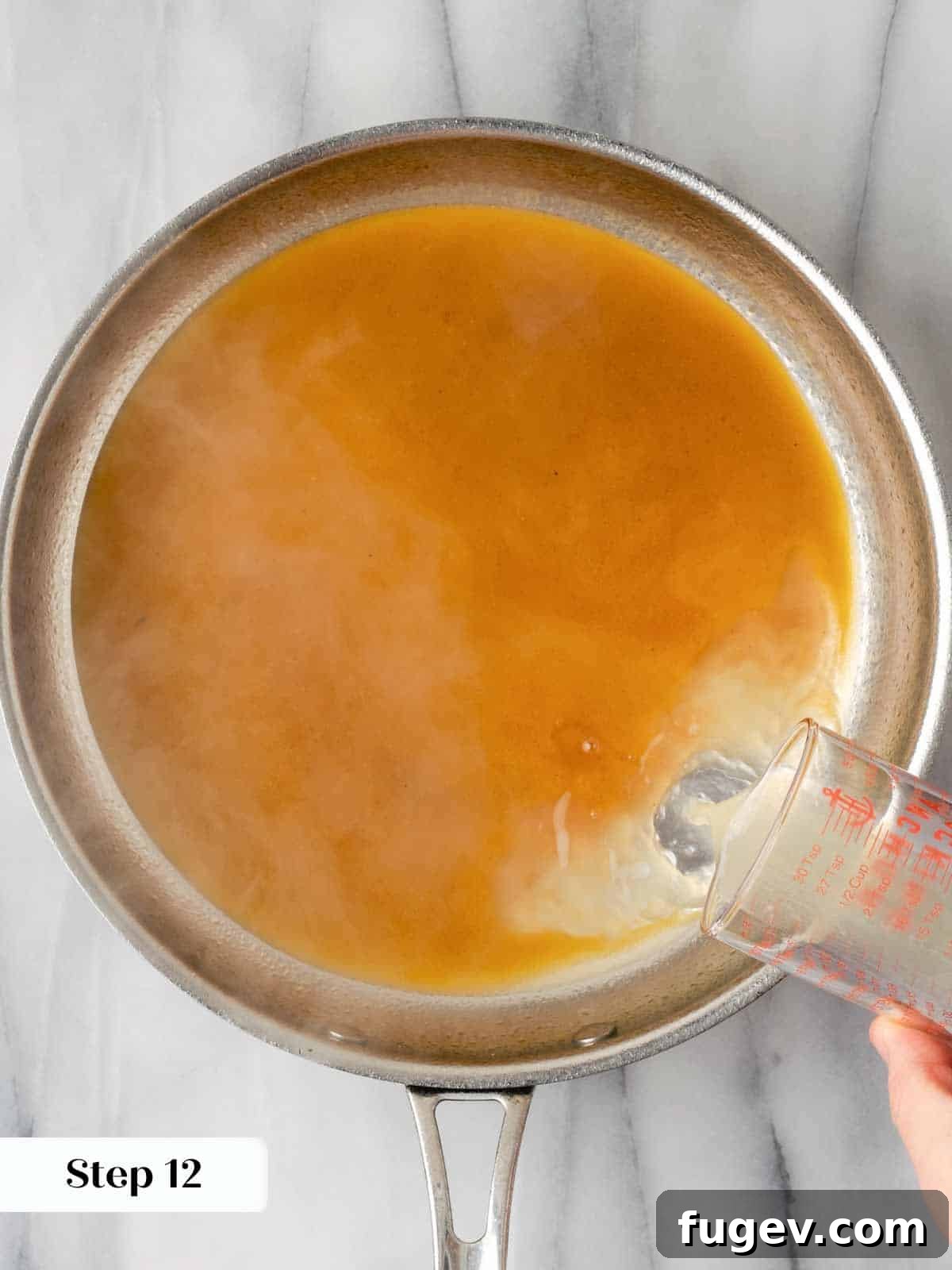
Step 13: Finish the Pan Sauce. Once the sauce has reduced to the desired consistency, add the fresh lemon juice to the pan. Bring it back to a rapid boil for just 30 seconds to allow the flavors to meld. Taste the sauce and adjust the seasoning with more salt and pepper if necessary. The lemon juice adds that final essential zing!
Step 14: Carve, Serve, and Enjoy! Carve your beautifully roasted chicken, arrange it on a platter with the perfectly roasted vegetables, and generously spoon that delectable pan sauce over everything. Serve immediately and savor every flavorful bite!
Chef Lindsey’s Essential Recipe Tip
Invest in an Oven Thermometer: Many home ovens have temperature sensors that can be off by as much as 50-100 degrees Fahrenheit (up to 55 degrees Celsius). This inaccuracy can significantly impact baking and roasting results, leading to undercooked or overcooked dishes. To ensure you’re always cooking your chicken and vegetables at the precise temperature recommended in this recipe, and to achieve consistent, perfect results every time, a reliable oven thermometer is an invaluable kitchen tool. It provides an accurate reading of your oven’s internal temperature, empowering you to adjust your oven dial as needed for flawless cooking.
Frequently Asked Questions About Roasted Chicken
Proper storage is key to enjoying your delicious leftovers. Once the roast chicken has cooled completely to room temperature, transfer any remaining meat and vegetables into an airtight container. It can be safely stored in the refrigerator for 3-4 days. For longer preservation, leftover roast chicken freezes exceptionally well. Place cooled chicken (off the bone, if preferred) into freezer-safe bags or containers, removing as much air as possible, and freeze for 3-4 months. Thaw in the refrigerator overnight before reheating.
Lemon juice serves multiple beneficial purposes when added to chicken. Firstly, its acidity helps to tenderize the meat by gently breaking down muscle fibers, resulting in a more succulent and moist cooked chicken. Secondly, lemon imparts a bright, fresh, and tangy flavor that cuts through the richness of the chicken, enhancing its overall taste profile and preventing it from tasting heavy. It also contributes to that delightful aromatic quality. For another excellent example of lemon’s tenderizing and flavoring power, check out my Meyer Lemon Chicken Recipe.
While chicken can be successfully roasted within a range of temperatures from 325°F (160°C) to 450°F (230°C), I highly recommend roasting your chicken at 375°F (190°C). This temperature is ideal because it allows the meat to cook slowly enough to retain its moisture, ensuring it stays incredibly juicy and tender. Simultaneously, it’s hot enough to promote excellent browning and crisping of the skin before the internal meat is fully cooked, giving you that perfect golden, crackly exterior without drying out the inside.
Generally, there is no need to cover a whole chicken or skin-on chicken pieces when baking or roasting. Leaving the chicken uncovered is actually preferable, especially for cuts with skin, as it allows the hot air to circulate freely around the bird. This direct heat exposure is crucial for achieving that desirable crispy, golden-brown skin, which is often a highlight of a perfectly roasted chicken. Covering the chicken would trap steam, leading to soggy skin rather than crisp.
If you tried this recipe and loved it, please take a moment to leave a 🌟 star rating and let me know how it went in the comments below. Your feedback truly makes my day!
Lemon Roasted Chicken
Pin Recipe
Comment
Print Recipe
Ingredients
For the Chicken & Vegetables
- 2 lemons
- 10 baby potatoes (various colors recommended)
- 1 cup cherry tomatoes
- 2 onions (I often use 2-3 for extra sweetness)
- 3 cloves garlic
- 3 carrots (peeled or unpeeled)
- 3 sprigs fresh rosemary
- 6 sprigs fresh thyme
- 2 sprigs fresh oregano
- 1 whole chicken (approximately 4-5 pounds)
- 2 cups chicken stock
- 2 tablespoons unsalted butter (or olive oil)
- kosher salt
- freshly ground black pepper
For the Pan Sauce (Optional):
- ¼ cup fresh lemon juice (from the zested lemon)
- All the liquid from the roasting pan
Instructions
-
Preheat the oven to 375°F (190°C).
-
Cut all vegetables into approximately ½ – ¾ inch pieces, ensuring potatoes are roughly the same size for even cooking. Place them in a 2 ½ quart baking dish or a similar-sized roasting pan, aiming for a 2-inch deep layer to cradle the chicken.
-
Pick and chop the fresh rosemary and oregano, then toss them over the vegetables. Add the fresh thyme leaves, a generous amount of freshly ground black pepper, and two large pinches of kosher salt.
-
Zest one lemon directly over the vegetables. If making the pan sauce, reserve this lemon for juicing later.
-
Thoroughly stir the vegetables to ensure all seasonings and lemon zest are evenly distributed.
-
Thinly slice half of the second lemon into rings. Squeeze the juice from the remaining uncut half over the vegetables, then place the squeezed lemon half inside the chicken’s body cavity.
-
Gently separate the skin from the breast meat of the chicken, working your fingers to create a pocket. Slide the lemon rings between the skin and the breast meat.
-
Truss the chicken (refer to the video if needed), and place it on top of the seasoned vegetables. Sprinkle the chicken skin generously with salt, dot with butter, and pour the chicken stock into the pan around the vegetables. Bake in the preheated oven until an instant-read thermometer inserted into the thickest part of the thigh reads 165°F (74°C). Cooking time will be at least an hour, varying with chicken size.
-
If you plan to crisp the vegetables further, place a separate baking sheet in the oven to preheat during the last 15 minutes of the chicken’s cooking time.
-
Remove the chicken from the oven and let it rest for 10 minutes before carving. If no pan sauce is desired, dinner is ready! Otherwise, continue with the next steps.
-
Pour all the remaining liquid from the baking dish into a medium sauté pan. Reduce the liquid over medium-high heat for approximately 2-3 minutes, until it achieves a sauce-like consistency that coats the back of a spoon.
-
While the sauce reduces, transfer the vegetables onto the preheated baking sheet (if using) and return them to the oven for 5-10 minutes for extra crispness.
-
Once your sauce is reduced, add the fresh lemon juice and boil for just 30 seconds more. Taste and adjust for salt as needed.
-
Slice the rested chicken, remove the perfectly roasted vegetables from the oven, pour that delectable pan sauce over everything, and enjoy your masterpiece!
Video
Notes
Variations – Chicken Legs: Instead of using a whole chicken, you can make this recipe with chicken legs or chicken thighs.
Storage – Store leftover roast chicken in an airtight container in the fridge for 3-4 days. You can also freeze leftover roast chicken for 3-4 months. Ensure the chicken has cooled completely before storing.
Nutrition
Carbohydrates: 32g |
Protein: 29g |
Fat: 24g |
Saturated Fat: 8g |
Polyunsaturated Fat: 5g |
Monounsaturated Fat: 9g |
Trans Fat: 1g |
Cholesterol: 108mg |
Sodium: 236mg |
Potassium: 1004mg |
Fiber: 5g |
Sugar: 7g |
Vitamin A: 5585IU |
Vitamin C: 56mg |
Calcium: 78mg |
Iron: 3mg
Explore More Delicious Chicken Recipes
I sincerely hope you enjoyed preparing and savoring this professional chef-tested Lemon Roasted Chicken recipe. It’s truly a testament to how simple ingredients, when handled with care, can create an extraordinary meal. Don’t let your culinary journey end here! I invite you to delve into our collection of other delicious, chef-developed chicken recipes, each designed to bring gourmet flavors to your home kitchen. For a different twist on poultry, why not head straight over to try my flavorful Fiery Chili Chicken Burgers with Lemon-Mint Yogurt Sauce next? Happy cooking!