
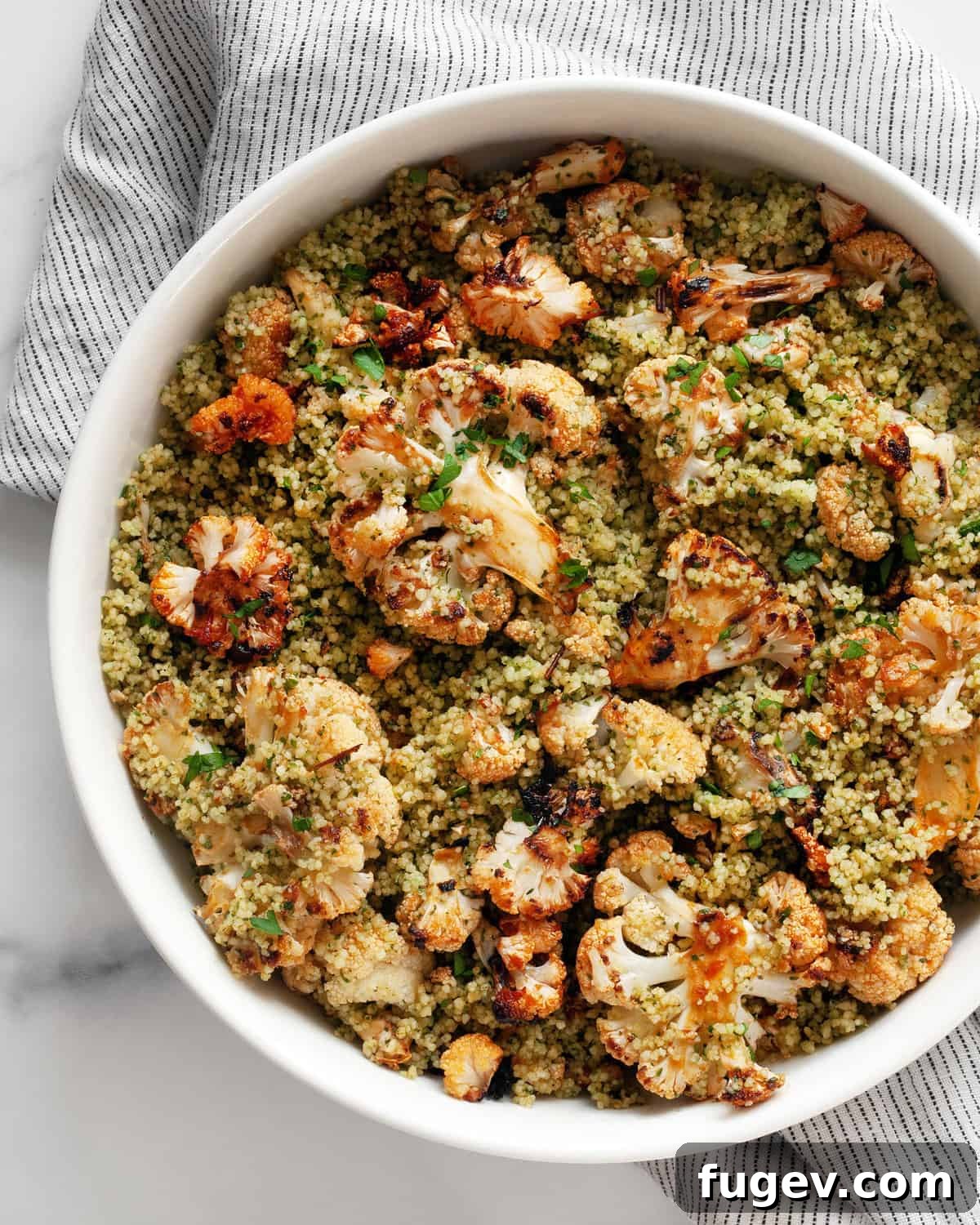
Harissa Roasted Cauliflower Couscous: A Flavorful Vegan Delight
Embark on a culinary journey with this incredibly flavorful Harissa Roasted Cauliflower Couscous. This dish brilliantly brings together the warmth of North African spices with the freshness of Mediterranean herbs, creating a harmonious and utterly delicious experience. Each bite offers a delightful contrast of textures and tastes: tender yet crisp caramelized harissa-spiced cauliflower florets, mingling with light, fluffy couscous vibrant with fresh parsley, cilantro, and bright lemon. This recipe isn’t just a meal; it’s a celebration of simple, wholesome ingredients transformed into something extraordinary. Perfect as a satisfying vegan main or a robust side dish, its ease of preparation makes it ideal for both busy weeknights and special gatherings.
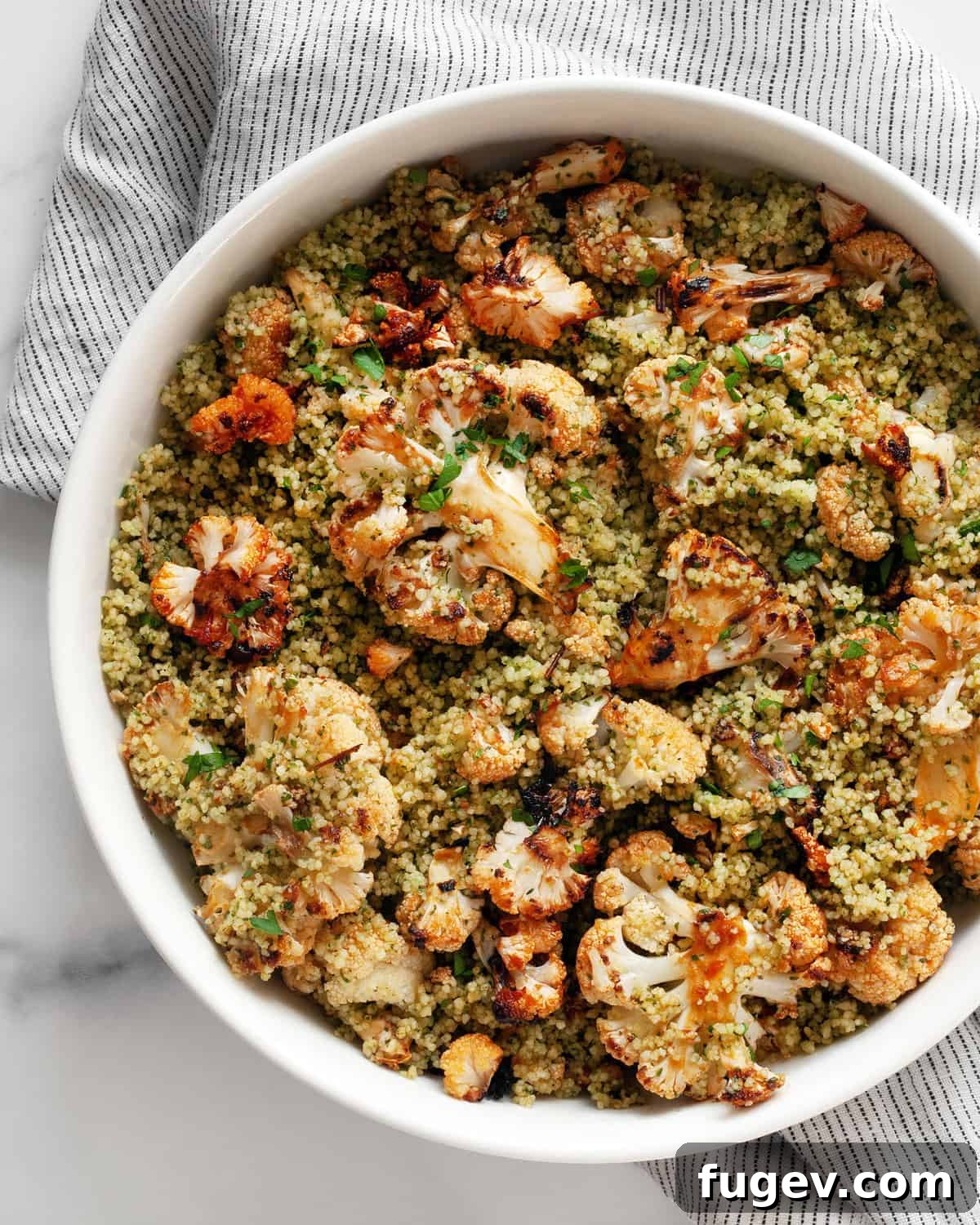
Table of Contents
- Why You’ll Adore This Recipe
- The Essential Ingredients
- How To Craft Harissa Roasted Cauliflower Couscous
- Serving Suggestions
- Storage & Leftovers: Maximizing Freshness
- Pro Tips for Recipe Success
- More Couscous Creations to Explore
- Harissa Roasted Cauliflower Couscous Recipe Card
Why You’ll Adore This Recipe
This Harissa Roasted Cauliflower Couscous is more than just a meal; it’s a culinary experience designed for ease, flavor, and health. Here’s why it’s destined to become a staple in your kitchen:
The Magic of Roasted Cauliflower
If you’re already a fan of roasted vegetables, you know the incredible transformation that happens to cauliflower in the oven. Roasting unlocks a depth of flavor that raw cauliflower simply can’t match. Its florets turn delightfully nutty, with beautifully caramelized, slightly crispy edges that are packed with savory goodness. This cooking method not only enhances its natural sweetness but also creates a tender interior, offering a truly satisfying bite. Beyond its fantastic taste, cauliflower is a nutritional powerhouse, rich in fiber, vitamins C and K, and antioxidants, making this dish both indulgent and incredibly healthy.
Effortless Flavor with Harissa Marinade
Harissa paste is a true pantry hero, offering an explosion of North African flavor with minimal effort. This aromatic chili paste, typically made from roasted red peppers, Baklouti peppers, garlic, olive oil, and various spices like caraway, coriander, and cumin, provides an instant flavor boost. In this recipe, it coats the cauliflower, infusing it with a smoky, spicy, and earthy profile that deepens during roasting. It’s an incredibly quick and easy way to achieve complex flavors without needing a long list of individual spices. Whether you prefer a mild kick or a fiery heat, harissa offers versatility to suit your palate, transforming simple cauliflower into a gourmet delight.
Unbeatable Versatility: Vegan Main or Savory Side
One of the standout qualities of this harissa roasted cauliflower couscous is its incredible adaptability. It shines brightly as a fulfilling vegan main course, offering a complete and balanced plant-based meal that’s rich in flavor and nutrients. Alternatively, it makes an outstanding side dish, complementing a wide range of proteins or other vegetable preparations. Whether you’re planning a light lunch, a hearty dinner, a vibrant potluck contribution, or a healthy meal prep option for the week, this dish fits seamlessly into any menu. You can easily adjust the portion size to serve a crowd or keep it intimate, making it a truly flexible recipe for any occasion.
The Essential Ingredients for This Masterpiece
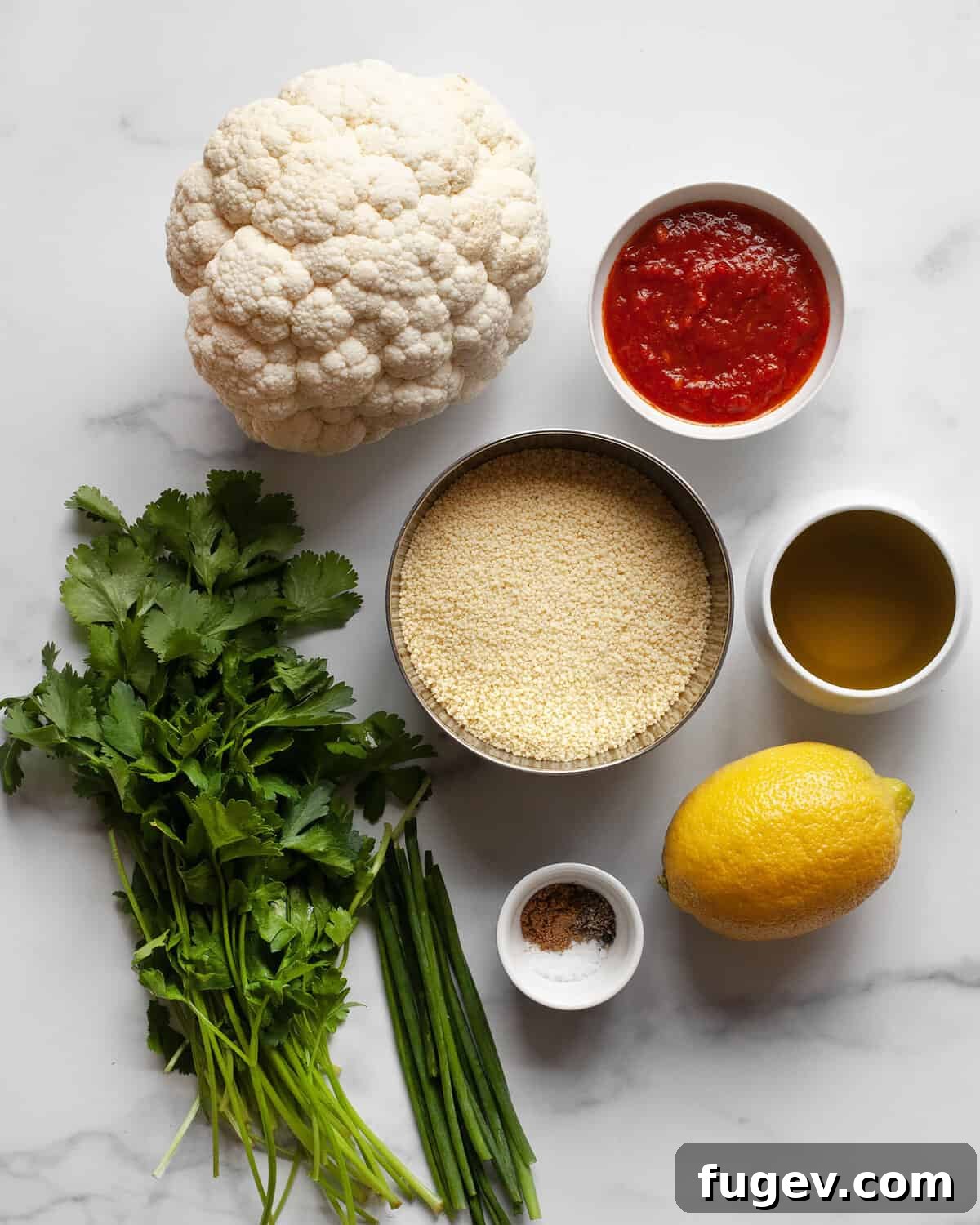
Crafting this delicious dish begins with selecting high-quality ingredients. Here’s a closer look at what you’ll need and some tips for each:
- Cauliflower: The Star Veggie
Choose a head of cauliflower that feels heavy for its size and has a uniform, creamy white (or orange, purple, green, depending on variety) color without any dark spots. The florets should be tightly packed. Roasting elevates cauliflower, making it nutty and tender with crispy, caramelized edges. Ensure you cut the florets into roughly equal sizes for even cooking. - Harissa Paste: The Flavor Bomb
Harissa is a vibrant and spicy red chili paste originating from North Africa. It’s typically a blend of chile peppers, garlic, olive oil, and spices like caraway, coriander, and cumin. You’ll usually find it in the international aisle of your grocery store, often near other Middle Eastern or Mediterranean ingredients. Some brands offer mild or hot versions, so pick one that suits your spice preference. Its smoky, complex notes are crucial to this dish’s unique character. - Couscous: The Fluffy Grain (Actually Pasta!)
Despite its appearance as tiny grains, couscous is technically a pasta made from semolina flour. This quick-cooking variety is common in North African cuisine and prepares in minutes, providing a light and absorbent base for the robust flavors of the cauliflower and herb oil. Look for “instant” or “quick-cook” couscous for this recipe. For a gluten-free alternative, you can substitute quinoa or rice. - Fresh Herbs: Parsley, Cilantro, and Chives
This trio of fresh herbs is paramount for the vibrant, aromatic herb oil.- Parsley: Offers a fresh, slightly peppery, and earthy note.
- Cilantro: Brings a distinct bright, citrusy, and slightly pungent flavor that is quintessential to many global cuisines. If cilantro isn’t to your liking, feel free to increase the amounts of parsley and chives for a similarly fresh, but different, aromatic profile.
- Chives: Provide a delicate, oniony bite without overwhelming the other flavors.
Always use fresh herbs for the best flavor and brightest green color in your herb oil.
- Spices: Cumin, Salt, and Pepper
- Cumin: Adds a warm, earthy depth to the harissa marinade, enhancing its North African roots.
- Kosher Salt & Black Pepper: Essential for seasoning, bringing out and balancing all the flavors in both the cauliflower marinade and the herb oil. Proper seasoning is key to a truly delicious dish.
- Lemon: The Zesty Brightener
Fresh lemon juice is indispensable in the herb oil, providing a crucial burst of acidity and brightness that cuts through the richness and complements the savory and spicy notes. Always opt for fresh lemons over bottled juice for superior flavor. A little zest can also be added for an extra aromatic lift. - Olive Oil: The Unifier
A high-quality extra virgin olive oil is vital for both roasting the cauliflower and creating the luscious herb oil. It acts as a flavorful medium, helping the cauliflower crisp up beautifully and binding the fresh herbs and lemon juice into a vibrant, emulsified dressing for the couscous. Its fruity, peppery notes enhance the overall Mediterranean profile of the dish.
How To Craft Harissa Roasted Cauliflower Couscous
Creating this delicious dish is straightforward. Follow these steps for a perfectly flavored and textured meal:
Before you begin, preheat your oven to 425 degrees F (220 degrees C). Lightly grease a large baking sheet with a small amount of olive oil. This is important as direct contact with the hot pan helps the cauliflower achieve that desirable crispy caramelization.
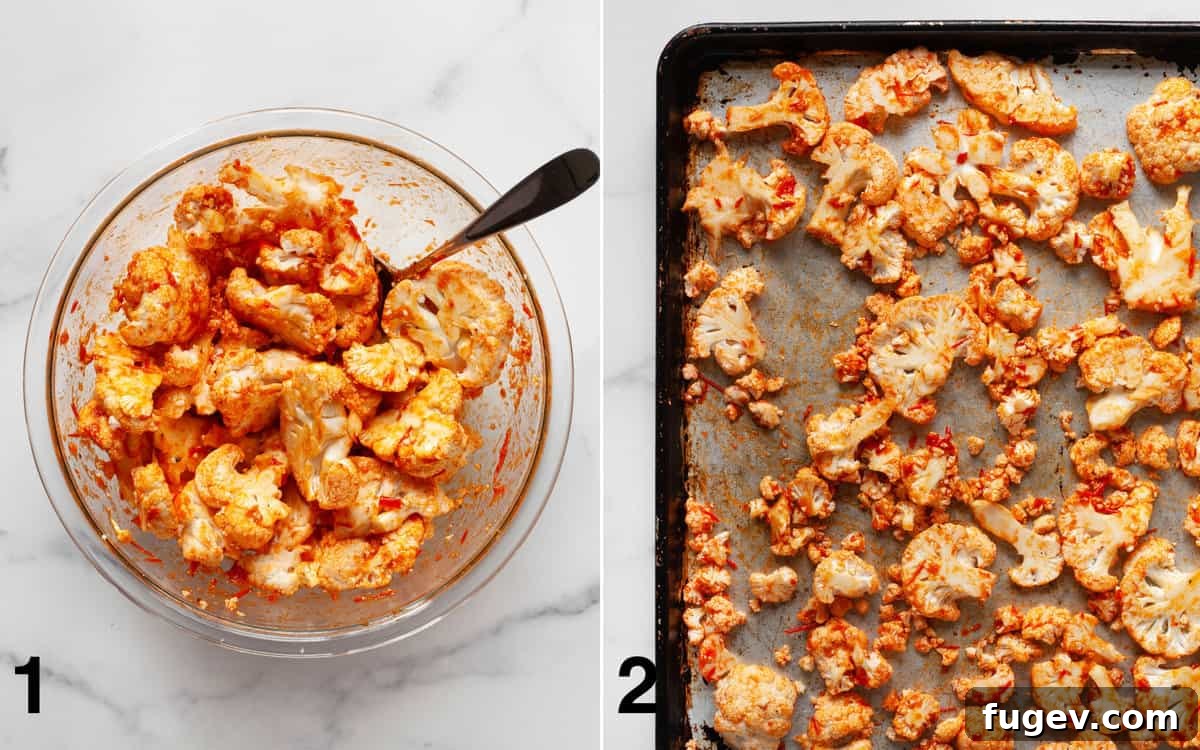
- Prepare and Marinate the Cauliflower: In a large mixing bowl – one big enough to comfortably toss all your cauliflower florets – combine 1 tablespoon of olive oil, the harissa paste, cumin, 1/2 teaspoon of kosher salt, and 1/4 teaspoon of black pepper. Whisk these ingredients together until well combined. Add your cauliflower florets to the bowl and toss thoroughly, ensuring every piece is evenly coated in the rich, spicy harissa marinade.
- Arrange for Roasting: Carefully spread the marinated cauliflower florets in a single layer across your prepared baking sheet. It’s crucial that the florets do not overlap; crowding the pan will steam the cauliflower instead of roasting it, preventing those delicious crispy edges from forming. Give each floret a little space to breathe!
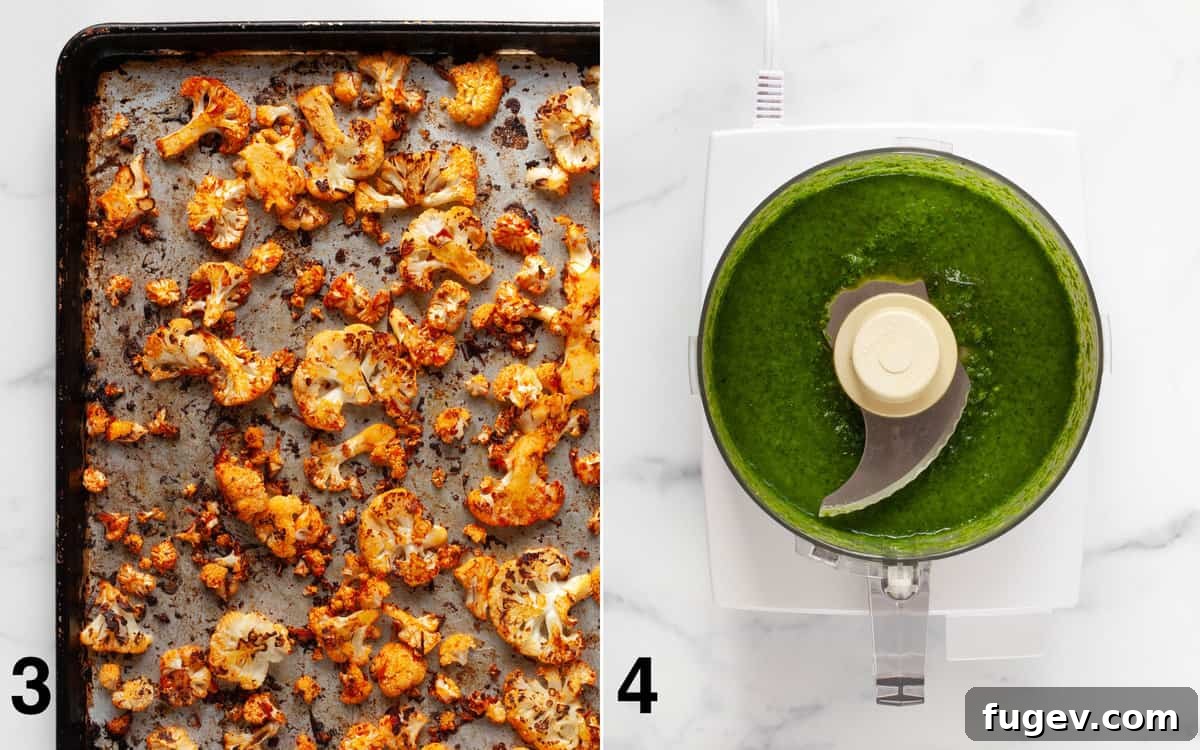
- Roast to Perfection: Place the baking sheet in your preheated oven and roast for 20-25 minutes. About halfway through the roasting time (around the 10-12 minute mark), gently flip the cauliflower florets with a spatula. This ensures both sides make direct contact with the hot metal of the pan, resulting in uniformly crisp-tender cauliflower with beautiful browned and caramelized edges.
- Whip Up the Herb Oil: While the cauliflower is roasting, prepare your vibrant herb oil. In the bowl of a food processor or a high-speed blender, combine the fresh parsley leaves, cilantro leaves, the juice of one lemon, 1/3 cup of olive oil, 1/2 teaspoon of kosher salt, and 1/4 teaspoon of black pepper. Process the mixture until the herbs are very finely chopped and the oil takes on a brilliant, bright green hue. It should have a slightly thick, emulsified consistency.
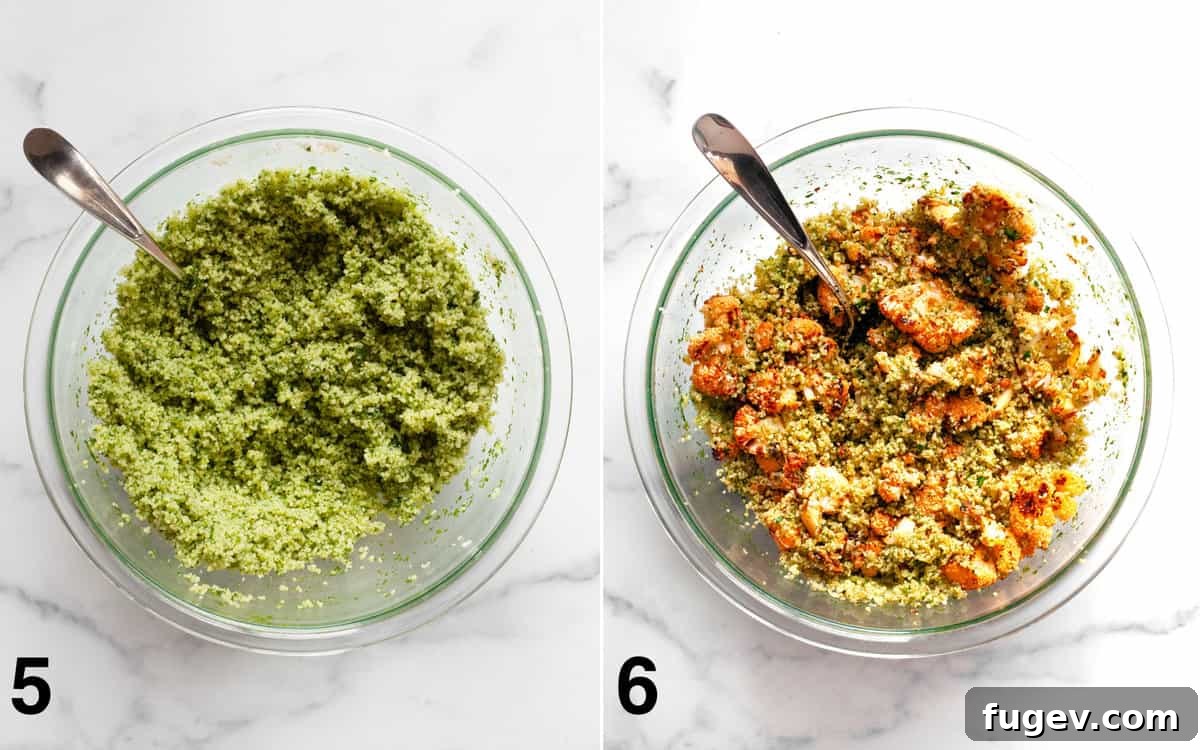
- Prepare and Infuse the Couscous: In a large mixing bowl, combine the dry couscous grains with 1 cup of boiling water. Immediately cover the bowl tightly with a lid or plastic wrap and let it sit undisturbed for exactly 5 minutes. This allows the couscous to absorb the water and steam perfectly. After 5 minutes, uncover and use a fork to fluff the couscous, gently breaking up any clumps to ensure it’s light and airy. Once fluffed, stir the prepared herb oil directly into the warm couscous, ensuring it’s evenly distributed and coats every grain.
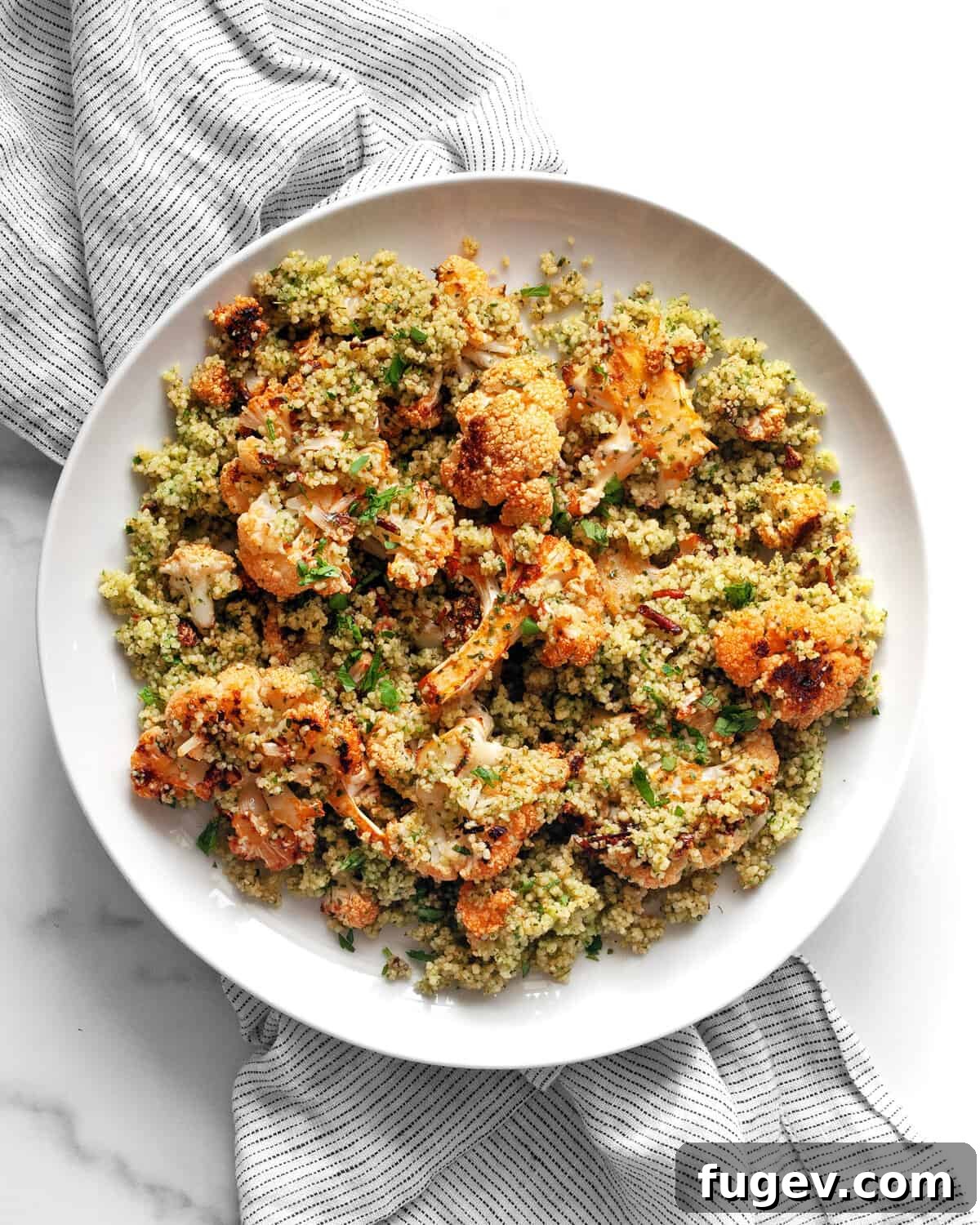
- Combine and Serve: Finally, gently fold the warm, roasted harissa cauliflower into the herb-infused couscous. Mix until the cauliflower is well integrated, but be careful not to mash the florets. Before serving, sprinkle with additional freshly chopped herbs like parsley or chives for extra freshness and visual appeal. Serve immediately and enjoy the symphony of flavors!
Serving Suggestions for Every Occasion
The beauty of this Harissa Roasted Cauliflower Couscous lies in its incredible versatility. It’s a dish that can adapt to almost any mealtime need, making it a fantastic addition to your culinary repertoire.
As a Standalone Main Dish
This recipe is hearty and flavorful enough to be a complete meal on its own, especially for those seeking a fulfilling plant-based option. The combination of nutrient-rich cauliflower, wholesome couscous, and vibrant herbs provides a satisfying balance of carbohydrates, fiber, and healthy fats. For an even more substantial vegan main, consider adding a sprinkle of toasted nuts (like almonds or pistachios) for extra crunch and protein, or a handful of roasted chickpeas for added texture and plant-based protein.
As a Dynamic Side Dish
This couscous dish excels as a vibrant and exciting side. It pairs beautifully with a wide array of main courses, enhancing rather than overpowering them.
- Grilled or Roasted Proteins: Serve alongside grilled chicken, pan-seared salmon, roasted lamb, or succulent shrimp for a balanced and complete meal. The spicy, herby notes of the couscous perfectly complement the richness of these proteins.
- Other Vegetarian Mains: It’s excellent with grilled halloumi, pan-fried tofu, or lentil patties.
- Seasonal Variations: Adapt the concept to seasonal vegetables. While cauliflower is fantastic year-round, imagine this with roasted butternut squash in the fall, or asparagus and cherry tomatoes in the spring.
Creative Toppings and Additions
Elevate your dish with a few thoughtful additions:
- Creamy Drizzles: A swirl of tahini sauce or a dollop of plain Greek yogurt (if not strictly vegan) can add a lovely creamy contrast.
- Freshness Boost: A final squeeze of fresh lemon juice or a sprinkle of lemon zest brightens the entire dish.
- Crunch and Texture: Toasted pine nuts, chopped almonds, or even crunchy fried onions can add an appealing textural element.
- Spice Adjustment: If you love extra heat, a drizzle of extra harissa oil or a pinch of red pepper flakes can kick things up a notch.
Ultimately, whether it’s the star of your dinner table or a supporting act, this Harissa Roasted Cauliflower Couscous is designed to delight and impress.
Storage & Leftovers: Maximizing Freshness
This Harissa Roasted Cauliflower Couscous is delicious fresh, and it also makes for excellent leftovers with a little care in storage. Here’s how to handle them:
Storing Leftovers
To keep your leftovers fresh and flavorful, transfer the cooled couscous and cauliflower mixture to an airtight container. Store it in the refrigerator for up to 2 days. While the flavors meld and deepen over time, it’s worth noting that the roasted cauliflower will naturally soften the longer it sits in the fridge. This doesn’t detract from the taste, but the texture will be less crisp than when freshly made.
Reheating Options
If you prefer to enjoy your leftovers warm, the microwave is your best friend. Heat in short intervals, stirring occasionally, until warmed through. Be careful not to overheat, as this can dry out the couscous. A splash of water or vegetable broth can help keep it moist during reheating.
Enjoying Cold as a Salad
One fantastic way to repurpose leftovers is to transform them into a refreshing cold salad. This is especially delightful for a quick and healthy lunch. Simply take the chilled couscous mixture and stir in some fresh, crisp greens like baby arugula or spinach. For an extra layer of flavor and moisture, a splash of your favorite vinaigrette dressing can do wonders. The slight softening of the cauliflower works perfectly in this context, offering a tender texture that blends well with the fresh greens and tangy dressing.
Whether warm or cold, your Harissa Roasted Cauliflower Couscous leftovers are a testament to its enduring flavor and adaptability.
Pro Tips for Recipe Success
Achieving culinary perfection often comes down to a few key techniques and considerations. Keep these expert tips in mind to ensure your Harissa Roasted Cauliflower Couscous turns out flawlessly every time:
- The Unlined Baking Pan Advantage: Resist the urge to line your baking sheet with parchment paper or foil when roasting the cauliflower. While convenient for cleanup, direct contact between the cauliflower florets and the hot metal of the pan is essential for optimal browning and caramelization. Lightly greasing the pan with oil is sufficient to prevent sticking and allows the cauliflower to develop that irresistible nutty flavor and crispy texture.
- Embrace Fresh Lemon Juice: This rule applies to virtually any recipe calling for citrus: always use freshly squeezed lemon juice. Bottled lemon juice, while convenient, often lacks the bright, nuanced flavor and vibrant acidity of fresh lemons. The fresh juice in the herb oil is crucial for balancing the rich flavors of the harissa and herbs, adding a zingy, uplifting finish to the entire dish.
- Precision with Couscous Cooking: Quick-cooking couscous is incredibly fast, but precision is key. Do not allow the couscous to sit for longer than the recommended 5 minutes after combining with boiling water. Over-steeping can result in mushy, clumpy couscous that is difficult to fluff. The goal is light, separate grains. Once the 5 minutes are up, immediately fluff with a fork to ensure each grain is distinct and airy.
- Even Cauliflower Florets: When cutting your cauliflower, try to make the florets roughly the same size, ideally 1/2-inch thick slices broken into small to medium pieces. This ensures that all pieces cook evenly, preventing some from becoming overcooked and mushy while others remain too firm.
- Don’t Crowd the Pan: As mentioned in the instructions, spreading the cauliflower in a single layer without overlapping is paramount. Crowding traps steam, which will lead to steamed rather than roasted cauliflower. If you have a lot of cauliflower, use two baking sheets.
- Taste and Adjust Seasoning: Always taste your components as you go. Before combining, taste the roasted cauliflower and the herb-infused couscous. Adjust salt, pepper, or lemon juice as needed to suit your personal preference. A perfectly seasoned dish makes all the difference.
- Cilantro Substitution: If cilantro isn’t your favorite, feel free to adjust the herb blend. You can easily omit it entirely and increase the quantities of fresh parsley and chives to maintain a vibrant, fresh herb profile.
By keeping these tips in mind, you’re well on your way to creating a truly memorable Harissa Roasted Cauliflower Couscous that’s bursting with flavor and perfect texture.
More Couscous Creations to Explore
If you’ve fallen in love with the versatility and quick preparation of couscous, there’s a whole world of delicious recipes waiting for you. Here are some more inspiring couscous dishes and roasted vegetable creations to add to your repertoire:
- Roasted Vegetable Couscous
- Lemony Snap Pea Couscous
- Roasted Tomato Olive Couscous
- Grilled Corn Couscous
- Roasted Vegetable Salad
- Tahini Roasted Cauliflower Couscous
Looking for even more roasted veggie inspiration? Check out my seasonal guide to easy roasted vegetable recipes, complete with ideas for pastas, salads, sides, and much more!
Harissa Roasted Cauliflower Couscous
Paige Adams
10 minutes
30 minutes
40 minutes
4
Pin
Ingredients
- 1 tablespoon plus 1/3 cup olive oil (and more for greasing pan)
- 1/4 cup harissa paste
- 1/4 teaspoon cumin
- 1 teaspoon kosher salt
- 1/2 teaspoon black pepper
- 1 head cauliflower (leaves removed, bottom stem trimmed and cut into 1/2-inch-thick slices and broken into small to medium pieces)
- 1 cup parsley leaves (plus more chopped for serving)
- 1 cup cilantro leaves (plus more chopped for serving)
- 2 tablespoons minced chives (plus more for serving)
- Juice of 1 lemon
- 1 cup couscous
- 1 cup boiling water
Instructions
-
Preheat the oven to 425 degrees F (220 C). Lightly grease a sheet pan with oil, ensuring even coating.
-
In a large mixing bowl, combine 1 tablespoon of olive oil, harissa paste, cumin, 1/2 teaspoon of kosher salt, and 1/4 teaspoon of black pepper. Whisk until well combined.
-
Add the prepared cauliflower florets to the harissa marinade. Stir vigorously to ensure all pieces are thoroughly coated.
-
Spread the marinated cauliflower evenly across the baking sheet in a single layer, making sure florets do not overlap. Roast for 20-25 minutes, flipping them halfway through, until they are crisp-tender and beautifully browned at the edges.
-
While the cauliflower roasts, prepare the herb oil. In a food processor or blender, combine the parsley leaves, cilantro leaves, fresh lemon juice, 1/3 cup of olive oil, 1/2 teaspoon of kosher salt, and 1/4 teaspoon of black pepper. Process until the herbs are very finely chopped and the oil is a vibrant, bright green.
-
For the couscous: In a large bowl, combine the dry couscous grains with 1 cup of boiling water. Immediately cover the bowl and let it sit for precisely 5 minutes.
-
Uncover the couscous, then use a fork to fluff it thoroughly, breaking up any potential clumps to achieve a light and airy texture.
-
Pour the prepared herb oil into the fluffed couscous and stir gently until the couscous is evenly coated and fragrant.
-
Finally, gently fold the roasted harissa cauliflower into the herb-infused couscous. Serve immediately, garnished with additional chopped fresh herbs for extra flavor and visual appeal.
Notes
Leftovers can be stored in an airtight container in the refrigerator for up to 2 days. The cauliflower’s texture will soften over time, but the flavors will continue to meld beautifully. You can reheat the couscous gently in the microwave for a warm meal. Alternatively, transform leftovers into a refreshing salad by stirring in fresh greens like baby arugula or spinach, along with a light splash of vinaigrette, and enjoy it cold.
Nutrition
Carbohydrates: 47g |
Protein: 9g |
Fat: 19g |
Saturated Fat: 3g |
Polyunsaturated Fat: 2g |
Monounsaturated Fat: 13g |
Sodium: 871mg |
Potassium: 691mg |
Fiber: 6g |
Sugar: 6g |
Vitamin A: 1721IU |
Vitamin C: 100mg |
Calcium: 78mg |
Iron: 3mg
Nutrition information is automatically calculated and should only be used as an approximation.
Additional Info
Side Dishes, Main Dish
Mediterranean, North African
Did you make this recipe?Mention @lastingredient on Instagram and tag it #lastingredient!