
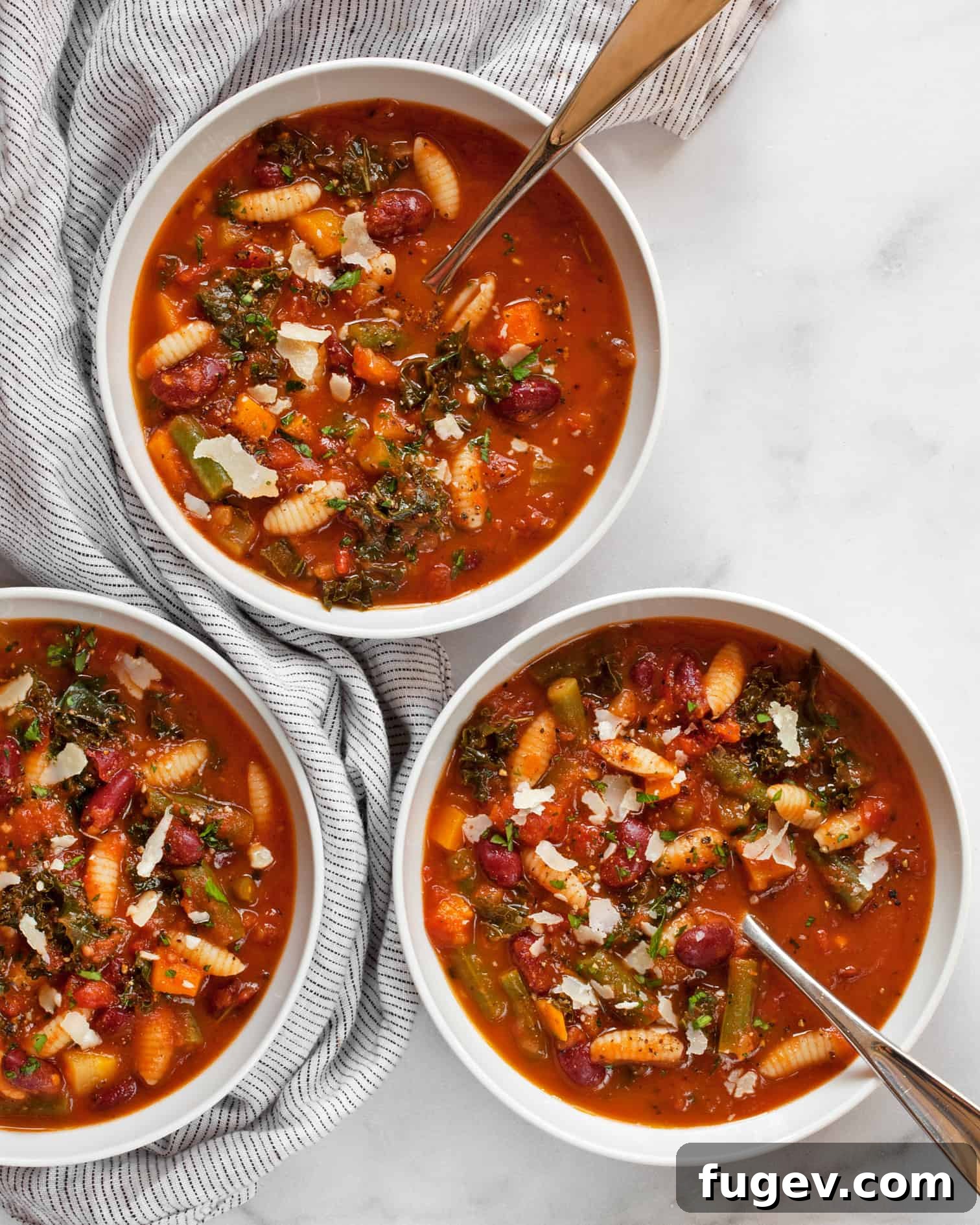
Hearty Vegetarian Minestrone Soup: An Easy & Healthy Recipe for Comfort Food Lovers
Warm your soul with this incredibly flavorful and easy-to-make vegetarian minestrone soup. Bursting with fresh green beans, hearty kidney beans, nutrient-rich kale, and perfectly cooked pasta, all swimming in a wonderfully herby tomato broth, this dish is a true celebration of comforting Italian flavors. Seasoned with aromatic minced garlic, fragrant rosemary, and earthy oregano, you can bring this wholesome meal to your table in just 30 minutes. It’s an ideal choice for a nutritious family dinner or efficient meal prepping for the week ahead, offering both convenience and a burst of vibrant taste.
Craving more delightful tomato and bean soups? Don’t miss our rustic Tuscan White Bean Soup Recipe for another taste of traditional Italian comfort.
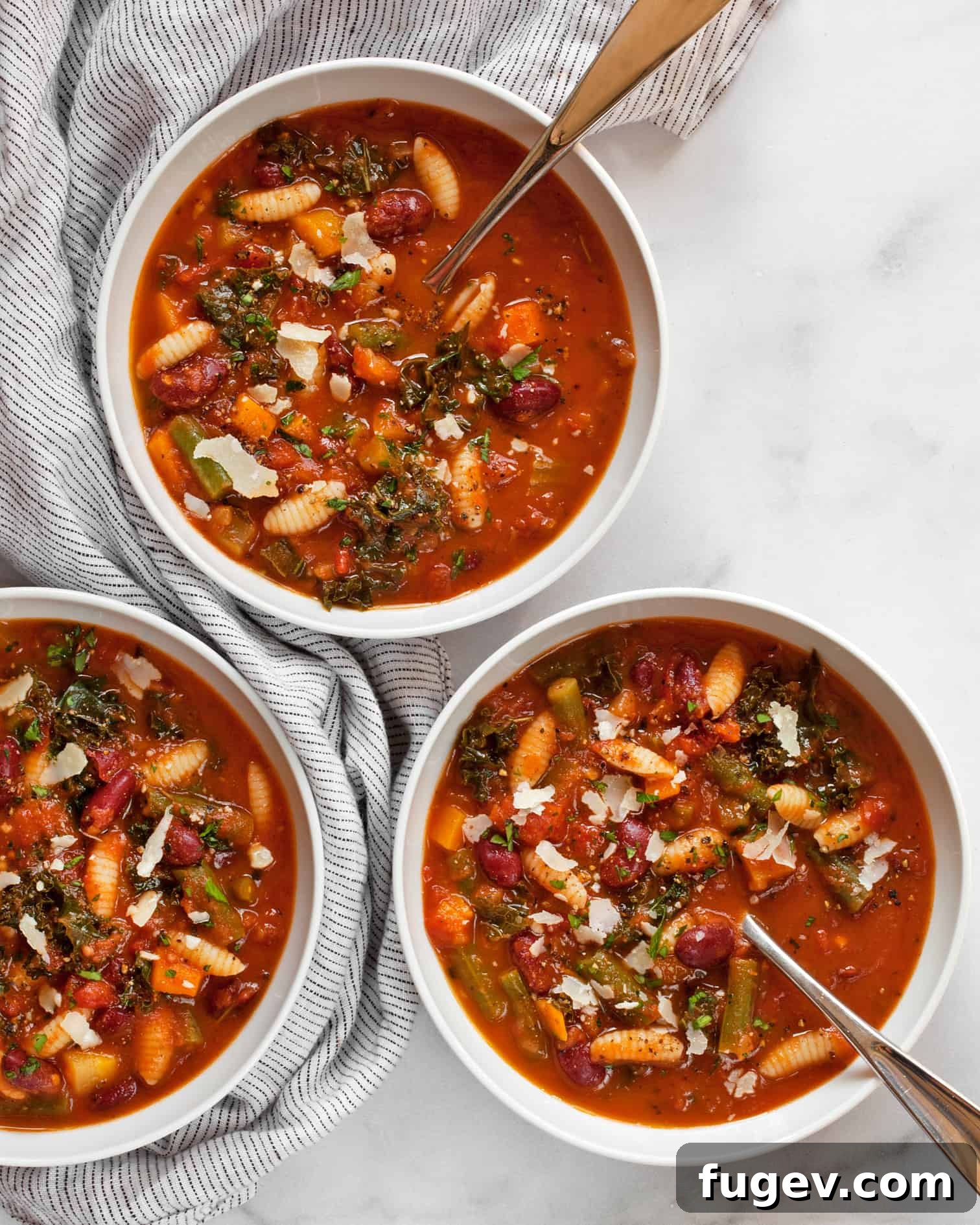
Why You’ll Absolutely Love This Vegetarian Minestrone Soup
This vegetarian minestrone isn’t just another soup recipe; it’s a culinary experience designed for ease, nutrition, and incredible flavor. Here’s why this delightful dish will quickly become a cherished staple in your kitchen:
- A Perfect Harmony of Fresh & Pantry Staples: My minestrone expertly combines the convenience of pantry ingredients like canned crushed tomatoes and robust kidney beans with the vibrant freshness of crisp green beans and nutrient-dense kale. This thoughtful blend ensures a deeply flavorful soup that is both accessible and wholesome, simplifying your grocery list while delivering maximum taste and comfort. It’s a testament to how simple ingredients can create extraordinary meals.
- Your New Favorite Meal Prep Solution: For anyone navigating a busy lifestyle, this soup emerges as an absolute lifesaver. Preparing a generous batch on a quiet Sunday transforms into effortless, nourishing lunches or dinners throughout the bustling fall and winter months. Imagine the relief of having a warm, satisfying, and incredibly healthy meal ready to enjoy, no matter how chaotic your week unfolds. This is the ultimate comfort food designed to work seamlessly with your schedule.
- Nourishing, Exceptionally Filling, and Packed with Goodness: Classic minestrone soup is celebrated for its hearty nature and impressive nutritional profile. My rendition is certainly no exception. Featuring a rich tomato broth brimming with an abundance of colorful vegetables and a substantial protein boost from the wholesome beans, it stands as a complete, satisfying meal that truly fuels and energizes. This recipe holds a special place in my regular rotation of healthy, tomato-based soups, consistently leaving me feeling full, content, and revitalized.
- Incredibly Versatile and Customizable: Whether you’re a seasoned home cook or just starting your culinary journey, this recipe is remarkably forgiving and highly adaptable. Feel empowered to swap out vegetables based on seasonal availability, what you have readily available in your fridge, or simply your family’s preferences. It offers a fantastic opportunity to utilize leftover produce creatively and tailor the soup to perfectly match your taste.
- Remarkably Quick and Easy to Prepare: Despite its complex and rich flavor profile, this minestrone comes together in a swift 30 minutes from start to finish. This makes it an ideal choice for those busy weeknights when you yearn for a homemade, wholesome meal but find yourself short on time. Simple, straightforward steps coupled with readily available ingredients mean less kitchen stress and more precious moments savored around the dining table.
Embrace the warmth and goodness of this vegetarian minestrone and discover a new favorite for your recipe collection!
Understanding Minestrone: More Than Just Vegetable Soup
While frequently grouped under the broad category of “vegetable soup,” minestrone holds a distinct and revered position within Italian culinary tradition. The very word “minestrone” originates from “minestra,” meaning soup, augmented by the suffix “-one,” which denotes something large or substantial. This etymology perfectly captures the essence of minestrone: a hearty, significant meal rather than a light broth.
What truly sets minestrone apart from a generic vegetable soup are its specific components and the method of its preparation:
- The Flavorful “Soffritto” Base: Authentic Italian minestrone invariably begins with a soffritto—a meticulously prepared aromatic foundation of gently sautéed onions, carrots, and celery. This trifecta, slowly cooked in a generous glug of olive oil until tender and fragrant, forms the profound flavor bedrock of the entire soup. It’s the secret to its deeply savory and slightly sweet character.
- Hearty Beans for Substance and Nutrition: A non-negotiable feature of minestrone is the inclusion of beans, most commonly protein-rich kidney or creamy cannellini (white) beans. These legumes are not merely fillers; they significantly contribute to the soup’s robust texture, transforming it into a substantial and fulfilling dish. Furthermore, they provide a vital source of plant-based protein and dietary fiber, enhancing the soup’s wholesome appeal.
- Satisfying Pasta for Texture and Fullness: Small pasta shapes are an integral part of the minestrone experience, adding another delightful layer of texture and making the soup even more satiating. The pasta gracefully absorbs some of the rich, herbaceous broth, thereby amplifying the overall flavor and contributing a pleasing chewiness to every spoonful.
- Rich, Herbaceous Tomato Broth: While regional variations do exist, a prominent characteristic of many beloved minestrone recipes is a vibrant, deeply flavored tomato-based broth. This savory liquid is typically enriched with classic Italian herbs such as fragrant rosemary and earthy oregano, which unite all the disparate ingredients into a harmonious and comforting symphony of taste.
In essence, while it proudly showcases an abundance of fresh, colorful vegetables, minestrone distinguishes itself through its specific combination of foundational aromatics, protein-packed beans, and satisfying pasta. It is designed to be a complete meal in itself, perfectly capable of serving as the main course for both lunch and dinner, especially when accompanied by a thick slice of crusty artisan bread for dipping.
Choosing the Best Pasta Shape for Soups and the Secret to Avoiding Soggy Noodles
The selection of pasta can profoundly influence the texture and overall enjoyment of your minestrone. To ensure that each spoonful offers a perfect balance of ingredients and remains effortlessly edible, it’s best to opt for small to medium-sized pasta shapes. These petite forms integrate beautifully with the vegetables and beans without overpowering the delicate flavors of the broth. Here are some of the most recommended pasta shapes for minestrone:
- Small Shells (Conchigliette): These miniature shells are adept at cradling small bits of vegetables and broth within their curves, adding a delightful, playful texture to the soup.
- Orecchiette: Literally translating to “little ears,” orecchiette are wonderfully suited for soups. Their unique cup-like shape is perfect for scooping up and holding broth and other ingredients, ensuring a burst of flavor with every bite.
- Ditalini: These small, thimble-shaped pasta tubes are a traditional and classic choice for minestrone. Their compact size allows them to blend seamlessly with the soup’s other components, providing a pleasant chew without dominating.
- Orzo: Though technically classified as a form of pasta that resembles large grains of rice, orzo performs exceptionally well in soups due to its small stature and soft, tender texture when cooked.
- Small Elbow Macaroni: Another excellent option, small elbow macaroni adds a familiar comfort and a good bite, perfect for absorbing the rich flavors of the broth.
Why Cook Pasta Separately? The Culinary Secret to Preventing Soggy Noodles
One of the most paramount pieces of advice for crafting an exceptional minestrone (or indeed, any soup that incorporates pasta) is to cook the pasta in a pot completely separate from the soup. Subsequently, you add the cooked pasta to individual bowls just prior to serving. While this might appear to be an additional step, it genuinely makes an immeasurable difference in the quality and longevity of your soup, for several compelling reasons:
- Prevents Overcooking and Mushy Texture: If pasta is cooked directly within the simmering soup, it will continuously absorb liquid and continue to cook even after the heat is turned off, especially during the cooling and reheating phases. This inevitably leads to pasta that is mushy, bloated, and unappetizingly soggy. Separate cooking ensures your pasta remains perfectly al dente.
- Maintains Optimal Broth Consistency and Clarity: As pasta cooks, it releases starch into the surrounding liquid. If cooked in the soup, this starch can undesirably thicken the broth, making it cloudy and altering its intended texture and mouthfeel. By cooking pasta separately, your minestrone broth retains its vibrant clarity and ideal consistency, allowing its rich flavors to shine through unhindered.
- Enhances the Quality of Leftovers: The practice of storing your cooked soup and cooked pasta in separate containers is a game-changer for leftovers. When you reheat the soup, you can simply add freshly cooked or separately stored pasta, ensuring that every subsequent serving offers that coveted perfect al dente bite. This method significantly prolongs the enjoyable texture of your meal.
- Control Over Pasta Quantity: Cooking pasta separately also gives you complete control over how much pasta goes into each serving, catering to individual preferences. Some may prefer more pasta, others less, and this method allows for easy customization.
Always ensure your chosen pasta shape is cooked until it is perfectly al dente – meaning “to the tooth” – retaining a slight firmness when bitten. This optimal texture will provide the best contrast and complement when combined with the warm, rich minestrone soup.
The Essential Ingredients for Perfect Vegetarian Minestrone
Crafting a truly authentic and incredibly delicious vegetarian minestrone begins with a thoughtful selection of both fresh produce and readily available pantry staples. Each component plays a crucial role in building the soup’s complex layers of flavor and satisfying texture. Here’s a detailed exploration of what you’ll need and the significance of each ingredient:
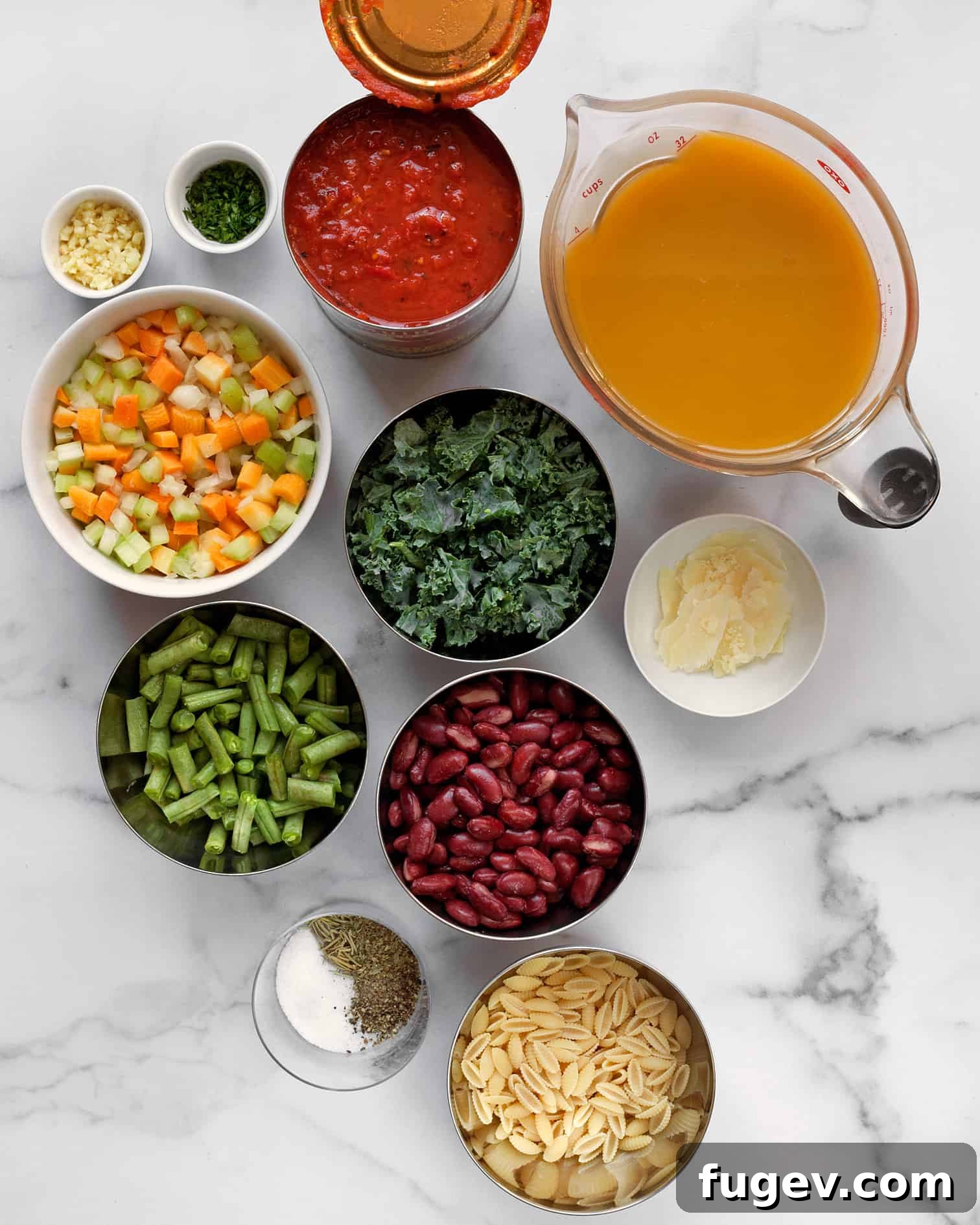
- Mirepoix (Onions, Carrots & Celery): This classic aromatic triumvirate is the foundational flavor base for countless soups, stews, and sauces across both French and Italian cuisines (where it’s affectionately known as “soffritto”). Slowly sautéing these finely chopped vegetables in olive oil caramelizes their natural sugars and unlocks their sweet, savory essence, creating a rich depth of flavor that gracefully permeates the entire soup. This initial step is paramount for developing a truly robust and nuanced minestrone, so resist the urge to rush it.
- Olive Oil: A good quality extra virgin olive oil is indispensable for sautéing your mirepoix and garlic. Beyond its role in cooking, it imparts a subtle, characteristic fruity and peppery note that significantly enhances the overall Italian character and richness of the soup.
- Garlic: Freshly minced garlic is a powerhouse of flavor, contributing a pungent, aromatic kick that is synonymous with Italian cooking. To prevent it from burning and becoming bitter, incorporate the garlic after the mirepoix has begun to soften and turn translucent. This allows its sweet, savory essence to be fully released and integrated into the cooking oil and vegetables. Two minced cloves are recommended, but discerning garlic lovers may adjust to their preference.
- Dried Seasonings (Rosemary & Oregano): These time-honored herbs are quintessential to the authentic taste of Italian cuisine. Dried rosemary offers a distinctive woody, piney, and slightly peppery aroma, while dried oregano provides earthy, robust, and subtly pungent notes. In conjunction with kosher salt and freshly cracked black pepper, these seasonings infuse the broth with a captivating aroma and flavor profile. For an added layer of complexity, consider introducing a pinch of dried thyme or a bay leaf during the simmering phase.
- Crushed Tomatoes: A 28-ounce can of high-quality crushed tomatoes forms the vibrant, rich, and slightly tangy base of the minestrone broth. Crushed tomatoes break down beautifully, providing a smooth yet rustic texture, and their natural acidity and sweetness perfectly balance the savory herbs. For variations, diced tomatoes can be used for a chunkier soup, or tomato passata/puree for an even smoother consistency.
- Vegetable Broth: Opting for a low-sodium vegetable broth is a strategic choice. It grants you precise control over the soup’s overall seasoning, particularly its salt content, allowing you to tailor it exactly to your taste preferences. While this recipe is vegetarian, if dietary restrictions are not a concern, chicken broth can be used as a flavorful alternative, though always prioritizing low-sodium options for better control.
- Kidney Beans: These hearty, protein-packed legumes are a classic and essential component of traditional minestrone, contributing a satisfying earthiness and a pleasant chewiness. Always remember to thoroughly drain and rinse canned beans under cold water to remove excess sodium and any starchy liquid, which significantly improves their flavor and digestibility. Creamy cannellini (white kidney beans) or even robust chickpeas make excellent substitutes if you wish to vary the bean component.
- Green Beans: Fresh green beans, neatly trimmed and cut into half-inch pieces, introduce a delightful crisp-tender texture and a subtle sweetness to the soup. They not only add a burst of vibrant color but also contribute an extra layer of freshness to the diverse vegetable medley.
- Kale: Stirring in a generous cup of chopped kale (or its versatile alternatives like fresh spinach or Swiss chard) near the very end of the simmering process is a brilliant strategy to significantly boost the soup’s nutritional value. The residual heat from the soup gently wilts the greens, integrating them seamlessly into the broth without causing them to overcook or become bitter. It’s a nutrient-dense addition that enhances both the visual appeal and the health benefits of your minestrone.
- Pasta: As extensively discussed, small to medium pasta shapes such as miniature shells, orecchiette, or ditalini are ideal choices for minestrone. The golden rule here is to cook them separately to a perfect al dente texture. This critical step ensures they maintain their integrity, preventing the soup from becoming starchy or the pasta from turning mushy upon serving or storage.
- Fresh Parsley: A final garnish of freshly chopped parsley is not merely for aesthetics; it adds a crucial burst of bright, herbaceous freshness that elevates and balances the rich flavors of the soup. It’s a simple yet impactful finishing touch that awakens the palate.
- Parmesan Cheese: For those who appreciate a delightful salty, umami-rich finish, a generous sprinkle of freshly shaved or grated Parmesan cheese is highly recommended. Its sharp, nutty notes provide a perfect counterpoint to the robust broth. If you are preparing a vegan minestrone, simply omit the cheese entirely or opt for a high-quality plant-based Parmesan alternative to maintain dietary consistency without sacrificing flavor.
With these carefully selected ingredients, you are well on your way to creating a minestrone that is both authentic in flavor and profoundly satisfying.
How To Make Vegetarian Minestrone Soup: Your Easy 30-Minute Guide
Creating this delicious, hearty, and flavorful vegetarian minestrone is a straightforward and incredibly rewarding experience. Follow these simple, well-defined steps to achieve a perfect bowl of comforting Italian goodness in just about half an hour:
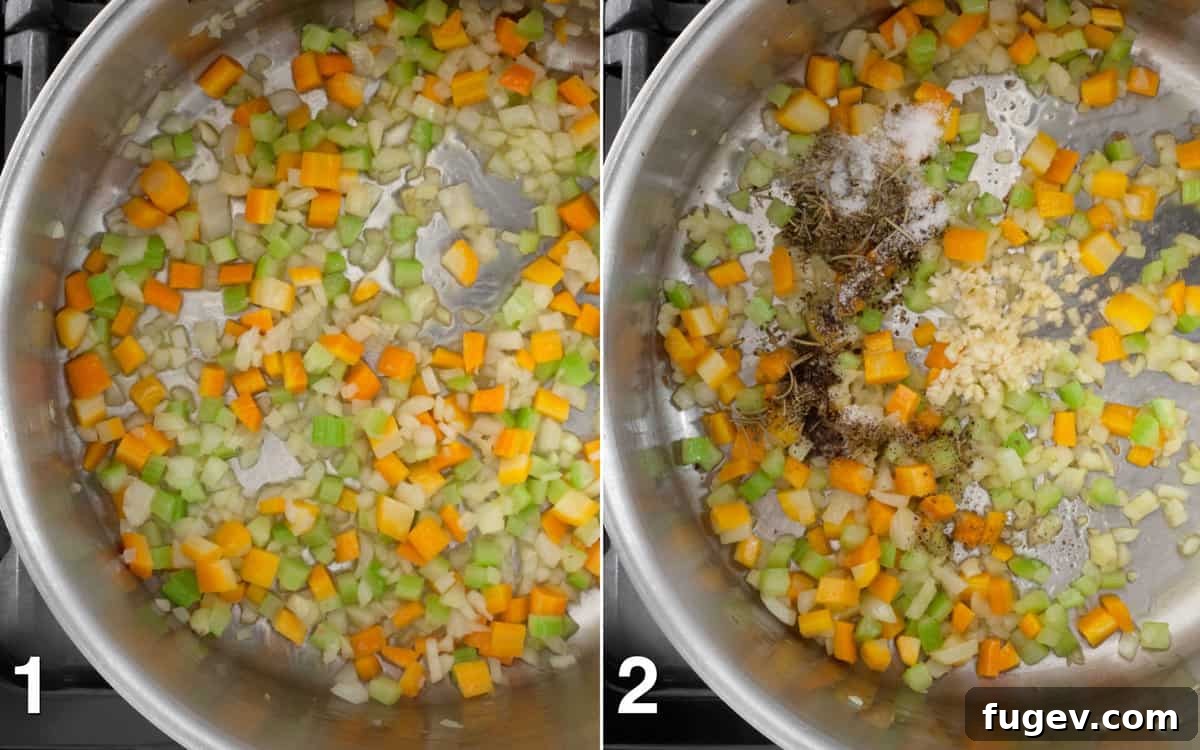
- Initiate the Aromatics (Soffritto Base): In a large, heavy-bottomed pot or a spacious Dutch oven, begin by warming the tablespoon of olive oil over medium heat. Introduce the chopped onions, carrots, and celery (your essential mirepoix). Sauté these aromatic vegetables gently for approximately 4-5 minutes, stirring occasionally. The goal here is for them to visibly soften and begin to turn translucent, releasing their foundational sweet and savory flavors. This crucial step is the very bedrock of your soup’s deliciousness, so allow ample time for proper caramelization.
- Infuse with Garlic & Spices: Once your mirepoix has achieved that desirable soft and translucent state, stir in the minced garlic along with the dried rosemary, dried oregano, kosher salt, and freshly cracked black pepper. Continue to cook for just about 1 minute more, stirring continuously. During this brief period, the garlic will become wonderfully fragrant, permeating the air and blending its pungent notes with the aromatic herbs. Exercise caution to prevent the garlic from burning, as this can impart an undesirable bitter taste.
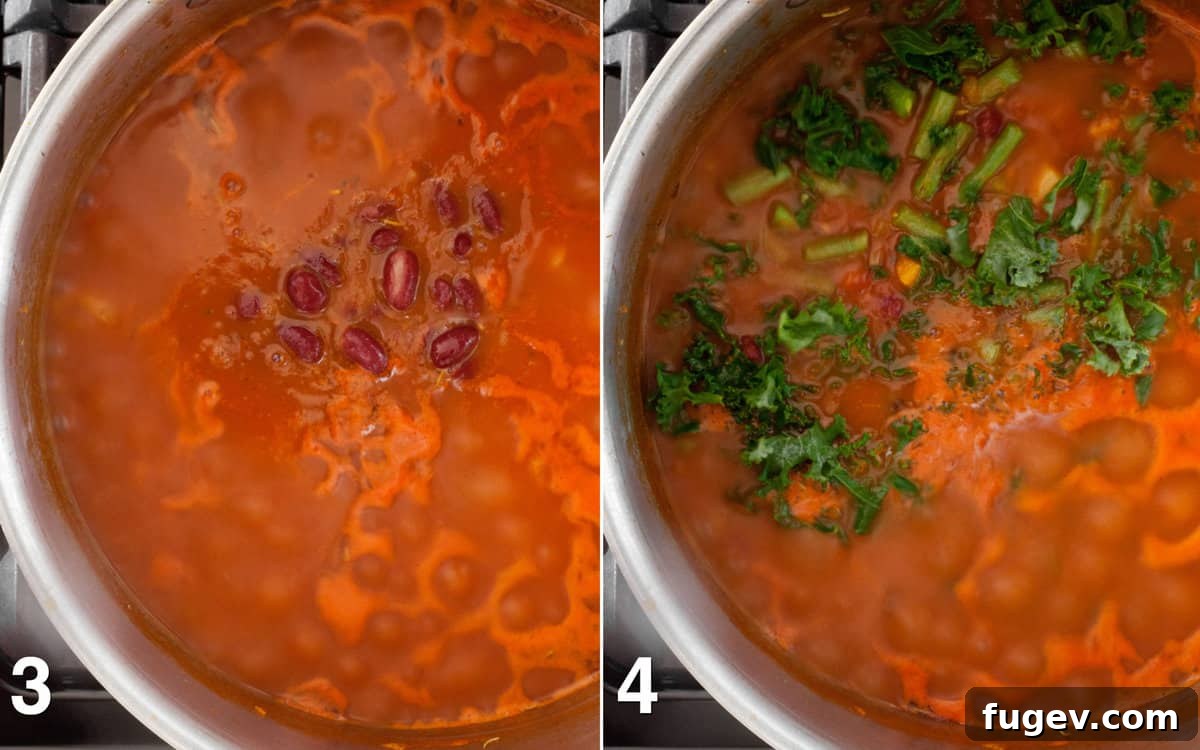
- Build the Rich Broth and Simmer: It’s time to bring the soup to life. Carefully pour in the entire 28-ounce can of crushed tomatoes, followed by the 4 cups of low-sodium vegetable broth, and finally, add the thoroughly drained and rinsed kidney beans. Give everything a good stir to combine all the ingredients. Increase the heat slightly to bring the soup to a gentle boil. Once boiling, reduce the heat to low, cover the pot, and allow the soup to simmer contentedly for approximately 15 minutes. This dedicated simmering time is vital for allowing all the incredible flavors to meld together harmoniously and for the broth to thicken ever so slightly, creating a richer texture.
- Integrate Remaining Vegetables & Prepare Pasta: After the initial simmering, uncover the soup and stir in the neatly trimmed green beans and the vibrant chopped kale. Continue simmering the soup for another 5 minutes, or until the green beans reach a crisp-tender consistency and the kale has gracefully wilted into the broth.
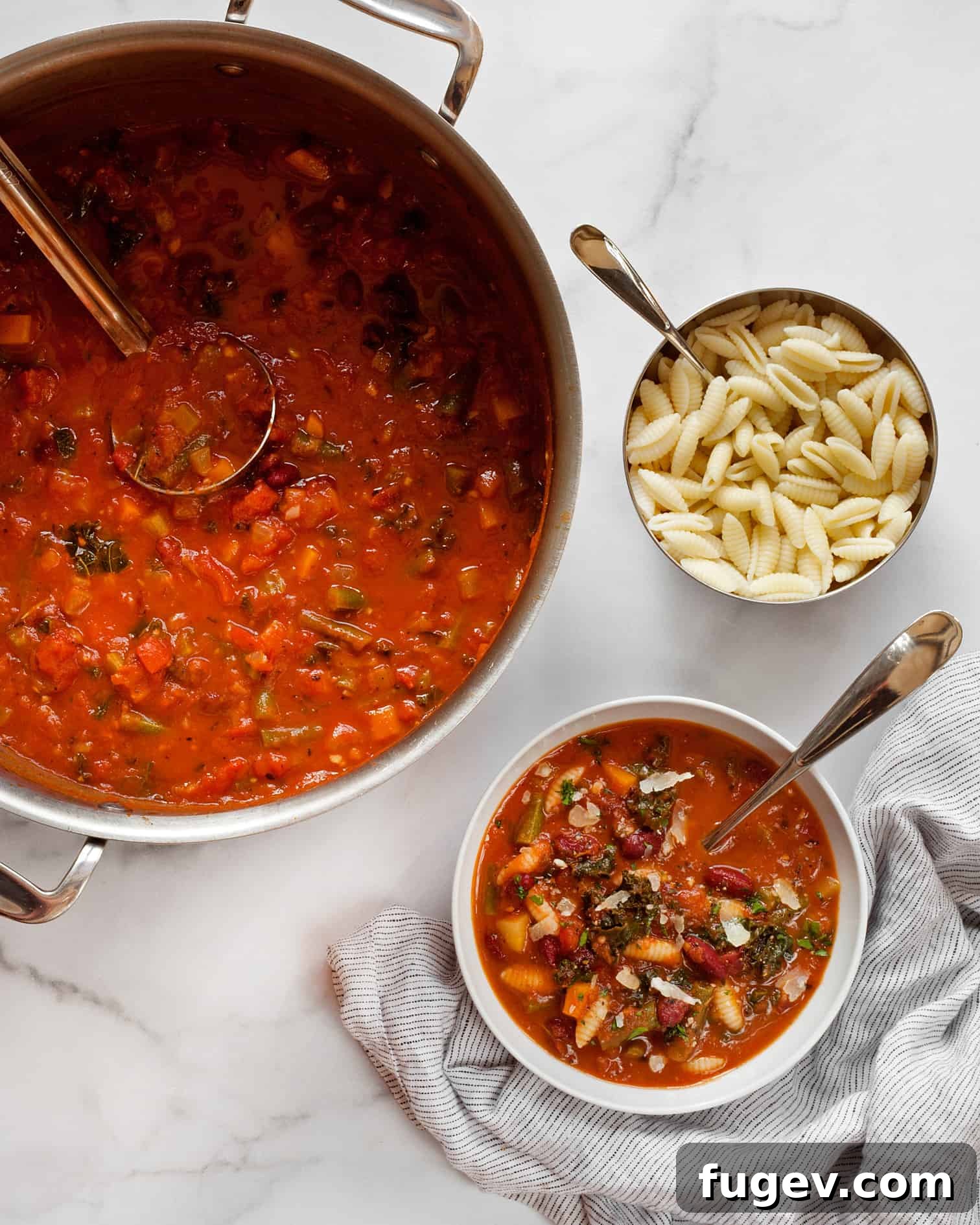
Crucially, while your soup is simmering to perfection, initiate the cooking of your small pasta shapes in a completely separate saucepan. Follow the package instructions precisely to ensure the pasta cooks to an ideal al dente texture. Once cooked, drain the pasta thoroughly. - Final Serve & Garnish: With the soup and pasta ready, it’s time to enjoy your masterpiece. Ladle generous portions of the hot minestrone soup into individual serving bowls. Add a desired amount of the separately cooked pasta to each serving, ensuring every spoonful offers a delightful mix of ingredients. Finish each bowl with a lavish sprinkle of freshly chopped parsley for a burst of fresh flavor and a flourish of shaved Parmesan cheese (or your preferred vegan alternative for a dairy-free option). Serve immediately and savor every comforting bite!
This meticulous method guarantees that your pasta maintains its perfect al dente bite, and your rich soup broth remains vibrant, clear, and unthickened by starch, promising a truly enjoyable and authentic minestrone experience.
Serving Your Delicious Vegetarian Minestrone Soup: Perfect Pairings
This robust vegetarian minestrone soup is so densely packed with satisfying ingredients—hearty beans, an abundance of fresh vegetables, and tender pasta—that it truly stands on its own as a complete and fulfilling meal. However, if you’re looking to elevate the dining experience, complement its rich flavors, or simply desire a little something extra, here are some perfect accompaniments that will turn your meal into an Italian feast:
- Warm, Crusty Artisan Bread: A thick, rustic slice of warm, crusty artisan bread is the quintessential pairing for any Italian soup. It’s absolutely ideal for tearing and dipping, allowing you to soak up every last, flavorful drop of the savory, herb-infused broth. For an extra touch of indulgence and aroma, consider serving it with fragrant garlic bread, a chewy toasted ciabatta, or a soft, olive-oil rich focaccia. These classic Italian breads are the perfect sponges for minestrone’s delicious liquid gold.
- Light and Refreshing Side Salad: A crisp, fresh side salad provides a wonderful textural and flavor contrast to the warmth and heartiness of the soup. The brightness of greens and a tangy dressing can cut through the richness of the minestrone beautifully. Consider preparing a simple Arugula Salad with Lemon Vinaigrette for its peppery notes and zesty dressing, or a classic House Salad featuring mixed greens, cherry tomatoes, and a light, herbaceous dressing.
- Gourmet Grilled Cheese Sandwich: For those seeking a more substantial and utterly comforting meal, a gourmet grilled cheese sandwich makes a fantastic and satisfying companion. Move beyond traditional cheddar and experiment with a blend of complementary Italian cheeses such as sharp Asiago, mild and melty Provolone, and creamy Mozzarella. The gooey, savory cheese from the sandwich pairs incredibly well with the vibrant tomato broth of the minestrone.
- Simply Roasted Vegetables: A side of tender, slightly charred roasted vegetables, such as asparagus spears, broccoli florets, bell pepper strips, or even Brussels sprouts, can add another delightful layer of flavor, texture, and nutritional value, further enhancing the healthy aspect of your meal.
- A Drizzle of Pesto: For an additional layer of vibrant, herbaceous flavor and a nutty richness, a small swirl of homemade or high-quality store-bought basil pesto over the top of each serving of minestrone can be truly transformative (omit for strict vegan diets). The fresh basil and garlic in pesto beautifully complement the soup’s Italian profile.
- A Sprinkle of Red Pepper Flakes: For those who appreciate a gentle kick, a light sprinkle of red pepper flakes directly into your bowl can add a subtle warmth and a touch of exciting spice, elevating the soup’s flavor without overwhelming it.
No matter how you choose to personalize your serving experience, this homemade minestrone is guaranteed to be a comforting and delicious hit at your table, inviting everyone to enjoy the wholesome goodness of Italian cooking.
Storage & Freezing Tips for Minestrone Soup
Proper storage is paramount to maximizing the enjoyment of your delicious homemade minestrone leftovers, especially when it comes to preserving the desirable texture of the pasta. Following these guidelines will ensure your soup remains as fresh and flavorful as the day it was made, preventing common issues like mushy pasta or degraded broth.
Refrigerator Storage:
For immediate consumption of leftovers, store the minestrone soup in a meticulously sealed, airtight container in the refrigerator. It will maintain its optimal quality for up to 3 days. Critically, to prevent the pasta from becoming waterlogged and soft, always store any cooked pasta in a completely separate airtight container. This simple practice safeguards the al dente texture of your pasta and ensures the soup’s broth remains unthickened and clear.
Optimal Reheating Instructions:
When you’re ready to indulge in your minestrone again, gently reheat the soup in a saucepan over low to medium-low heat on the stove. Stir it occasionally to ensure even heating until it is thoroughly warmed through. Alternatively, for individual portions, you can heat the soup in the microwave. Once the soup is almost at your desired eating temperature, retrieve the cold, pre-cooked pasta from its separate container and add it directly into the warm broth for a couple of minutes, allowing it to heat through without overcooking.
Freezing for Extended Preservation:
Minestrone soup is an excellent candidate for freezing, making it a perfect component of a strategic meal planning approach. You can confidently freeze the soup for up to 1 month, ensuring you always have a comforting meal on hand. The absolute key to successful freezing and subsequent enjoyment is to never freeze the soup with the pasta already incorporated into it. The freezing and thawing process can drastically alter pasta’s delicate texture, often resulting in an unpleasantly soft and mushy consistency upon reheating.
To prepare for freezing, allow the minestrone soup (completely devoid of pasta) to cool down thoroughly to room temperature. Once cooled, transfer it into freezer-safe containers or robust, heavy-duty freezer bags. Remember to leave a small amount of headspace in containers to accommodate for expansion during freezing. Clearly label each container or bag with the date for easy tracking.
Thawing & Reheating Frozen Soup:
When you anticipate wanting to enjoy your frozen minestrone, transfer it from the freezer to the refrigerator to thaw overnight. Alternatively, for a quicker thaw, you can leave it at room temperature for several hours. Once thawed, reheat the soup on the stovetop or in the microwave as previously described. Crucially, while the soup is warming, simply prepare a fresh batch of your preferred small pasta shape to cook to al dente perfection. Once the soup is hot and the pasta is ready, combine them in individual serving bowls just before eating.
By diligently adhering to these storage and reheating recommendations, you can relish the vibrant taste and ideal texture of your homemade minestrone for days, or even weeks, ensuring every bowl is as delightful as the first.
Expert Recipe Tips for Making the Best Vegetarian Minestrone
To truly elevate your vegetarian minestrone from good to extraordinary, and to ensure consistent success every time you prepare it, consider these invaluable expert tips. These insights will help you maximize flavor, maintain optimal texture, and streamline your cooking process:
- Harness the Power of Parmesan Rinds for Umami Depth: This is a secret weapon many home cooks overlook! Do not, under any circumstances, discard the rinds from your blocks of Parmesan cheese. These unassuming remnants are veritable treasure troves of concentrated umami flavor. I make it a habit to collect and store my Parmesan rinds in a dedicated bag within the fridge or freezer. To unlock their magic, simply drop one or two rinds into your minestrone during the simmering stage (specifically, during step 3 when you add the tomatoes and broth). Allow them to infuse the broth with their rich, savory, and nutty notes for the duration of the simmer. Remember to retrieve and discard the rind before serving. This culinary hack works wonders in all Italian-inspired soups and homemade tomato sauces, imparting a profound depth that is incredibly difficult to replicate otherwise.
- The Golden Rule: Always Cook Pasta Separately: This vital tip cannot be overstated. Cooking pasta directly within the soup broth, while seemingly convenient, carries significant risks. It almost guarantees that the pasta will become bloated, mushy, and unpleasantly soggy, particularly if you plan on saving any leftovers. Furthermore, the pasta will release starches into your broth, making it cloudy and undesirably thick. By cooking your pasta separately to a perfect al dente texture and adding it fresh to each individual bowl just before serving, you preserve its integrity and provide a far superior textural experience.
- Strategic Freezing: Never Freeze Pasta with the Soup: Building upon the previous point, if your intention is to freeze any portion of your leftover minestrone for future enjoyment, it is absolutely imperative that you do so without any pasta present in the broth. The harsh cycle of freezing and thawing is notoriously unkind to cooked pasta, irrevocably altering its texture and rendering it unpleasantly soft and mushy. When you decide to thaw and reheat your carefully prepared minestrone, simply take a few minutes to prepare a fresh batch of small pasta, cooking it to al dente, to complement the revitalized soup.
- Mastering Broth Consistency: Minestrone can naturally vary in its thickness, depending on how much liquid evaporates during simmering and the amount of starch released by vegetables. If you find your soup is thicker than your preference, feel completely free to incorporate a little extra low-sodium vegetable broth or even hot water until it achieves your desired consistency. Conversely, if the soup appears too thin, a longer simmer (uncovered, to encourage evaporation) will help to reduce the liquid and concentrate those delicious flavors further.
- The Art of Seasoning (Taste and Adjust): Always, always taste your soup before its final serving. Seasoning is a dynamic process, and flavors can evolve during cooking. You might discover that it benefits from a little more salt, a crack of fresh black pepper, or even a nuanced pinch of red pepper flakes for a subtle warmth and heat. Additionally, a final stir-in of fresh herbs like finely chopped basil or extra parsley right before serving can introduce an incredible burst of vibrant, fresh flavor that brightens the entire dish.
- Embrace Seasonal Vegetable Swaps: Minestrone is a celebration of seasonal produce and its versatility is one of its greatest strengths. While green beans and kale are fantastic, feel completely at liberty to swap them out for other seasonal vegetables that you love or have on hand. Think diced zucchini, yellow squash, tender fresh spinach (added at the very end), small cubes of potatoes (add earlier in the simmer to ensure they cook through), or even small florets of broccoli or cauliflower. Each addition will bring its own unique character to the soup.
By incorporating these expert tips into your minestrone-making routine, you’re not just cooking; you’re crafting a truly memorable and satisfying culinary experience.
Frequently Asked Questions (FAQs) About Vegetarian Minestrone Soup
Here are detailed answers to some common questions about making, customizing, and enjoying this delicious vegetarian minestrone, helping you become a minestrone master:
Transforming this minestrone into a completely gluten-free delight is incredibly straightforward and requires only one primary substitution: the pasta. The vast majority of minestrone ingredients, including all the fresh vegetables, beans, crushed tomatoes, olive oil, and vegetable broth, are naturally gluten-free. Therefore, to ensure your soup is safe for those with gluten sensitivities or celiac disease, simply choose a certified gluten-free small pasta shape. Excellent options readily available today include gluten-free ditalini, small shells, or even orzo made from corn, rice, or a blend of gluten-free grains. Always double-check the packaging to confirm it is certified gluten-free.
This vegetarian minestrone recipe is already wonderfully close to being vegan, requiring only one minor adjustment to fully align with a plant-based diet: the cheese. All the other ingredients – the olive oil, vegetables, garlic, herbs, tomatoes, vegetable broth, beans, and pasta – are inherently vegan. To make this minestrone entirely suitable for a vegan lifestyle, simply omit the Parmesan cheese as a garnish. Alternatively, you can opt for one of the many high-quality, delicious plant-based vegan Parmesan alternatives available in most grocery stores today, ensuring you don’t miss out on that savory, cheesy finish.
Infusing your minestrone with a delightful kick of heat is easy and can significantly enhance its robust flavor profile! The simplest and most effective method is to incorporate red pepper flakes. I highly recommend adding a pinch (starting with about 1/4 teaspoon for a subtle warmth and increasing up to 1 teaspoon for a more noticeable spice) of red pepper flakes into the pot along with the other dried spices (rosemary and oregano) when you are sautéing the garlic and mirepoix. This strategic timing allows the heat from the chili flakes to bloom in the hot oil and thoroughly infuse throughout the entire broth as it simmers, ensuring a consistent and pleasant warmth in every spoonful. Adjust the quantity to perfectly match your personal spice preference.
Minestrone boasts a rich and fascinating history, with its roots deeply embedded in the culinary traditions of ancient Rome. It is believed to have evolved from much simpler, rustic vegetable stews that were common fare for the working classes. Over the centuries, as new ingredients became available (like tomatoes, which arrived from the Americas), the soup became more diverse and refined. Historically, minestrone was a quintessential example of “cucina povera” (poor kitchen) – a philosophy of cooking that emphasized making delicious, nourishing meals from whatever seasonal vegetables, grains, or legumes were readily available, often utilizing leftovers. The absence of a fixed recipe is part of its charm; ingredients varied widely by region, season, and what was abundant, always including a mix of vegetables, beans, and some form of starch like pasta or rice, making it an economical, hearty, and incredibly adaptable meal that has endured through generations.
Absolutely! One of the beautiful aspects of minestrone is its inherent versatility, particularly concerning the choice of beans. While robust kidney beans are a classic and much-loved choice for their earthy flavor and firm texture, feel completely free to experiment with other hearty varieties. Creamy cannellini (white kidney beans), mild great northern beans, or even protein-rich chickpeas (garbanzo beans) are all excellent substitutes. Each type of bean will contribute a slightly different textural nuance and flavor profile to the soup, but all will consistently enhance its robust and filling nature. Regardless of your choice, remember the crucial step of thoroughly draining and rinsing any canned beans under cold running water before adding them to your soup to remove excess sodium and starchy liquid.
Minestrone is a fantastic canvas for a wide array of vegetables! Beyond the carrots, celery, green beans, and kale specified in this recipe, feel free to incorporate other favorites. Diced zucchini or yellow squash can be added with the green beans. Small cubes of potatoes (russet or Yukon Gold) can be added with the broth and beans, allowing them enough time to cook through. Fresh spinach or Swiss chard can replace kale or be added in addition to it. For extra heartiness, consider adding small florets of broccoli or cauliflower during the last 10 minutes of simmering. Peas, corn, or diced bell peppers also make colorful and flavorful additions. The key is to add harder vegetables earlier in the cooking process and tender greens towards the end to ensure everything cooks to perfection without becoming overdone.
Explore Other Delicious Italian-Inspired Soup Recipes
If you’ve thoroughly enjoyed crafting and savoring this hearty vegetarian minestrone, you’re in for a continued culinary treat! Italian cuisine, renowned for its comforting and flavorful dishes, offers a wealth of incredible soup recipes perfectly suited for any season or occasion. Expand your culinary repertoire and discover new favorites with these fantastic Italian-inspired options:
- Green Minestrone Soup: A vibrant, refreshingly light, and healthy take on the classic, artfully focusing on a medley of fresh green vegetables for a brighter flavor profile.
- Rosemary White Bean Tomato Soup: A deeply fragrant and rustic soup featuring the earthy aroma of rosemary paired with tender white beans and rich tomatoes, offering a comforting and satisfying experience.
- Pasta e Fagioli: The quintessential Italian comfort food, this robust pasta and bean soup is a hearty and traditional favorite, celebrated for its rich texture and satisfying flavors.
- Roasted Tomato Soup: Experience the intensely sweet and concentrated flavor of tomatoes, amplified by the roasting process, in this exceptionally rich and comforting soup.
- Creamy Tomato Tortellini Soup: An indulgent and wonderfully satisfying soup featuring tender, cheese-filled tortellini swimming in a luxurious, creamy tomato broth – pure comfort in a bowl.
- Italian White Bean Soup: A velvety smooth and profoundly nourishing soup, often blended to perfection, offering a light yet incredibly filling and elegant meal.
- Tomato Rice Soup: A simple, heartwarming, and classic combination of vibrant tomatoes and tender rice, making for a nostalgic and easy-to-love soup.
These diverse recipes offer a spectrum of flavors and textures, ensuring there’s an Italian-inspired soup to perfectly satisfy every craving and suit every moment, from light lunches to hearty family dinners.
Vegetarian Minestrone Soup Recipe Card
This easy vegetarian minestrone soup is a true weeknight hero! It’s packed with a colorful array of fresh vegetables like green beans and kale, complemented by hearty kidney beans and perfectly cooked small pasta, all simmering to perfection in a fragrant, herby tomato broth. A truly satisfying, wholesome, and nutritious meal you can whip up in just 30 minutes, bringing a taste of Italy right to your kitchen.
Recipe Details
- Overall Rating: 4.84 out of 5 stars (based on 6 reviews)
- Recipe by: Paige Adams
- Prep Time: 5 minutes
- Cook Time: 25 minutes
- Total Time: 30 minutes
- Servings: 4
- Course: Soup
- Cuisine: Italian
Pin Recipe |
Print Recipe
Ingredients
- 1 tablespoon olive oil
- 1 small onion, roughly chopped
- 2 medium carrots, peeled and roughly chopped
- 1 celery stalk, roughly chopped
- 2 garlic cloves, minced
- 1/2 teaspoon dried rosemary
- 1/2 teaspoon dried oregano
- 1 teaspoon kosher salt
- 1/2 teaspoon black pepper
- 1 (28 ounce) can crushed tomatoes
- 4 cups low-sodium vegetable broth
- 1 (15 ounce) can kidney beans, drained and rinsed
- 1 cup trimmed green beans, cut 1/2-inch long
- 1 cup chopped kale (or spinach or Swiss chard)
- 3 ounces small to medium pasta (e.g., small shells, orecchiette, ditalini)
- Shaved Parmesan cheese and fresh chopped parsley, for serving (optional; omit for vegan)
Instructions
- In a large saucepan or Dutch oven, heat the olive oil over medium heat. Add the chopped onions, carrots, and celery. Sauté for about 4-5 minutes until they begin to soften and become translucent.
- Stir in the minced garlic, dried rosemary, dried oregano, kosher salt, and black pepper. Cook for an additional 1 minute, stirring constantly, until the garlic is fragrant.
- Pour in the crushed tomatoes, vegetable broth, and drained and rinsed kidney beans. Stir to combine. Bring the soup to a gentle boil, then reduce the heat to low, cover, and simmer for 15 minutes to allow the flavors to meld and deepen.
- Add the trimmed green beans and chopped kale to the soup. Continue simmering for another 5 minutes, or until the green beans are crisp-tender and the kale has wilted.
- While the soup simmers, cook the small pasta shapes in a separate small saucepan according to package instructions until perfectly al dente. Drain the pasta well.
- Ladle the hot soup into individual serving bowls. Add the separately cooked pasta to each bowl and garnish generously with shaved Parmesan cheese and fresh chopped parsley. Serve immediately and enjoy the wholesome goodness.
Notes
- Vegetable Swaps: You can easily substitute kale with other leafy greens like fresh spinach or Swiss chard for similar nutritional benefits.
- Gluten-Free Option: To make this soup entirely gluten-free, simply ensure you use a certified gluten-free small pasta variety.
- Vegan Option: For a completely vegan minestrone, omit the Parmesan cheese or use a high-quality plant-based vegan Parmesan alternative.
- Refrigerator Storage: Store leftover soup in an airtight container in the refrigerator for up to 3 days. Always keep cooked pasta in a separate airtight container to prevent it from becoming soggy.
- Freezing Instructions: The soup freezes well for up to 1 month. Crucially, do not freeze the soup with pasta in the broth. When reheating thawed soup, cook a fresh batch of pasta.
- Reheating Leftovers: Gently warm the soup in a saucepan over low heat or in the microwave. Add the separately stored, cold pasta to the warm soup for a couple of minutes to heat it through just before serving.
Nutrition Information
Nutrition information provided is an estimate calculated automatically and should be used as an approximation.
- Calories: 316 kcal
- Carbohydrates: 58g
- Protein: 14g
- Fat: 5g
- Saturated Fat: 1g
- Polyunsaturated Fat: 1g
- Monounsaturated Fat: 3g
- Sodium: 1151mg
- Potassium: 1175mg
- Fiber: 14g
- Sugar: 16g
- Vitamin A: 7396 IU
- Vitamin C: 42mg
- Calcium: 181mg
- Iron: 5mg
Additional Information
- Course: Soup
- Cuisine: Italian
Did you make this recipe? We’d love to see it! Share your delicious creations on Instagram by mentioning @lastingredient and tagging it with #lastingredient!