
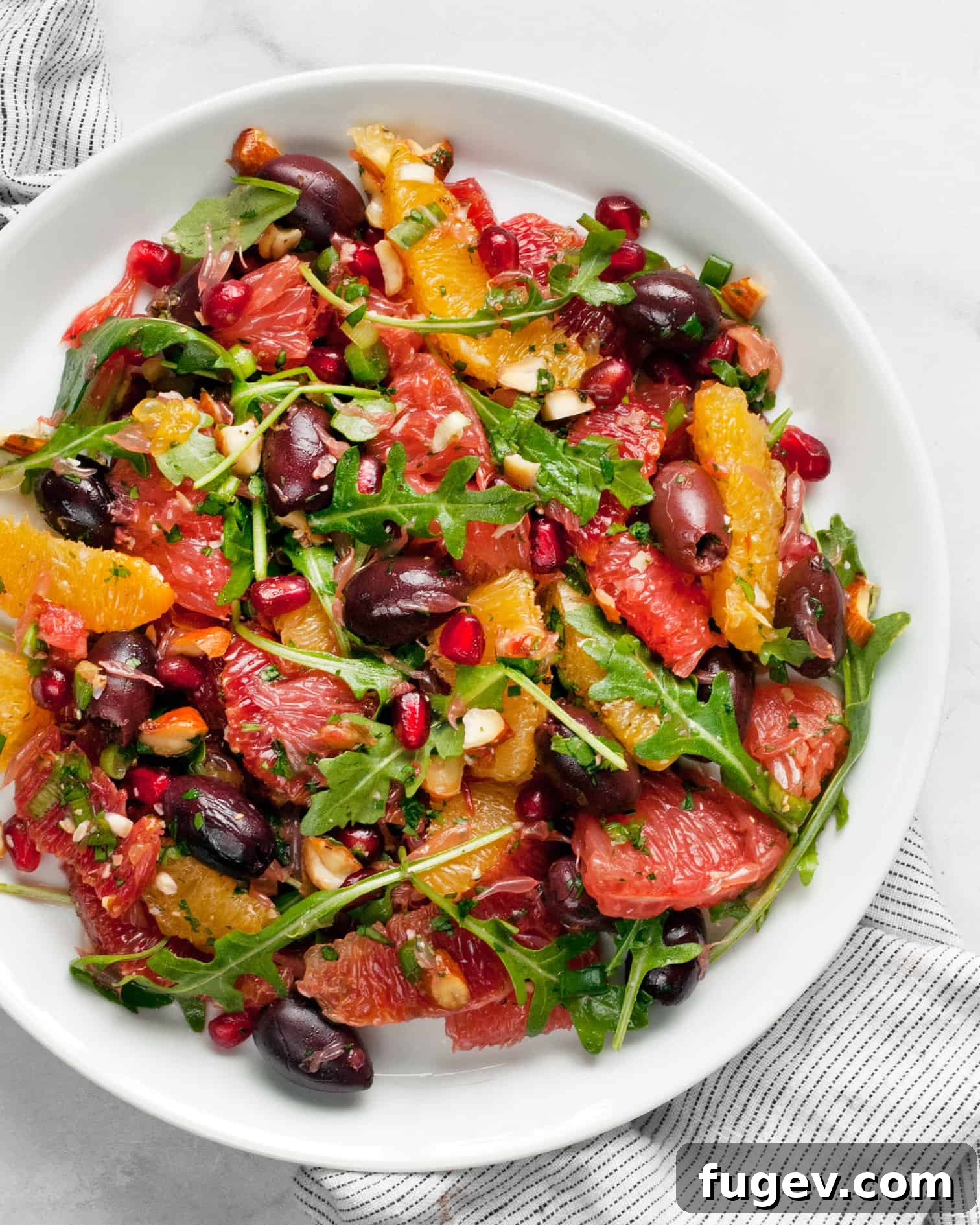
Brighten up your winter table with this exquisite Fresh Citrus Salad. This vibrant dish masterfully blends sweet, savory, and tart flavors, featuring succulent segments of grapefruit and oranges, briny Kalamata olives, juicy pomegranate seeds, crunchy almonds, and a medley of fresh herbs, all gently tossed with tender arugula in a zesty champagne vinaigrette. Ideal for a refreshing side or a light main, this easy-to-prepare winter salad can have its citrus pre-sliced and dressing made in advance, making meal prep a breeze.
For those who appreciate similar Mediterranean profiles, you might also enjoy a fennel orange salad, offering a delightful twist on these refreshing flavors.
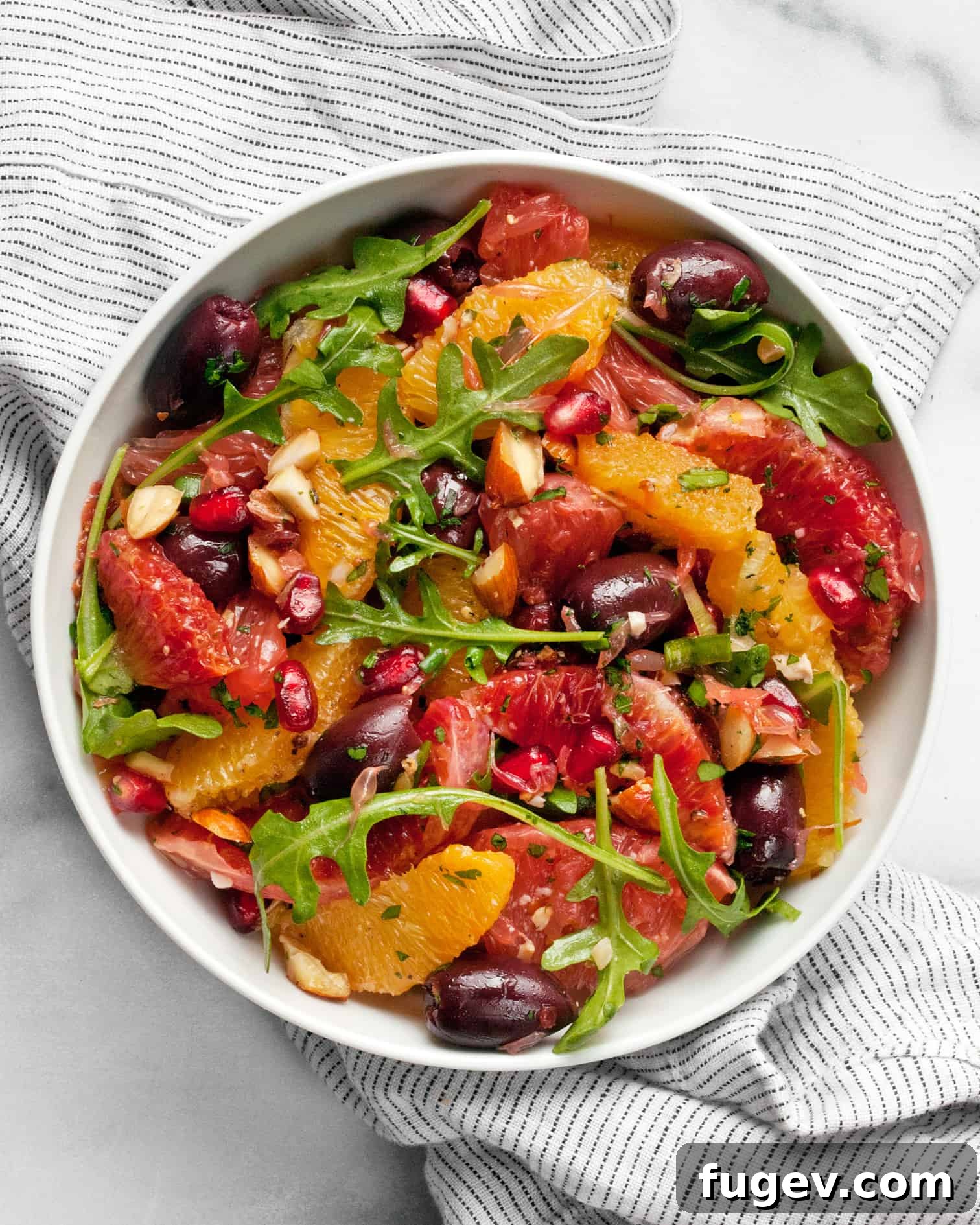
Table of Contents
- Why You’ll Love This Refreshing Citrus Salad
- Essential Ingredients & Clever Substitutions
- Exciting Optional Additions
- Mastering the Art of Supreming Citrus for Salads
- Step-by-Step Guide to Making Your Citrus Salad
- Serving Suggestions for Your Citrus Salad
- Storage & Make-Ahead Tips
- Expert Tips for a Perfect Citrus Salad Every Time
- Frequently Asked Questions (FAQs)
- Explore More Winter Salad Recipes
- Citrus Salad with Olives and Pomegranate Recipe Card
Why You’ll Love This Refreshing Citrus Salad
As winter’s chill settles in, the bright and bold flavors of a **fresh citrus salad** offer an instant escape, transporting your senses to sunnier climes. For many of us residing in colder regions, citrus fruits provide not just vital nourishment but also a much-needed burst of sunshine and joy. While snacking on oranges and grapefruits is delightful on its own, elevating them into a vibrant salad transforms them into a culinary masterpiece, combining a symphony of sweet, savory, and subtly tart notes that dance on your palate.
This particular recipe for a **grapefruit and orange salad** is more than just a dish; it’s an experience. The carefully balanced combination of varied citrus segments with savory Kalamata olives, juicy pomegranate seeds, and the crisp bite of arugula, all enrobed in a light champagne vinaigrette, creates a truly unique flavor profile. Unlike traditional salads where leafy greens take center stage, here, the citrus is the undeniable star, offering a refreshing and exhilarating taste that’s surprisingly complex.
Beyond its incredible taste, this **healthy citrus salad recipe** is a feast for the eyes. Its vivid hues of ruby red, sunny orange, and deep green make it an absolute showstopper, perfect for entertaining guests or adding a touch of elegance to any meal. It’s a wonderful way to incorporate seasonal fruit into your diet, packed with Vitamin C and antioxidants that are especially beneficial during the colder months. Prepare to impress with this effortless yet sophisticated **winter fruit salad** that delivers both on visual appeal and unforgettable flavor.
Essential Ingredients & Clever Substitutions
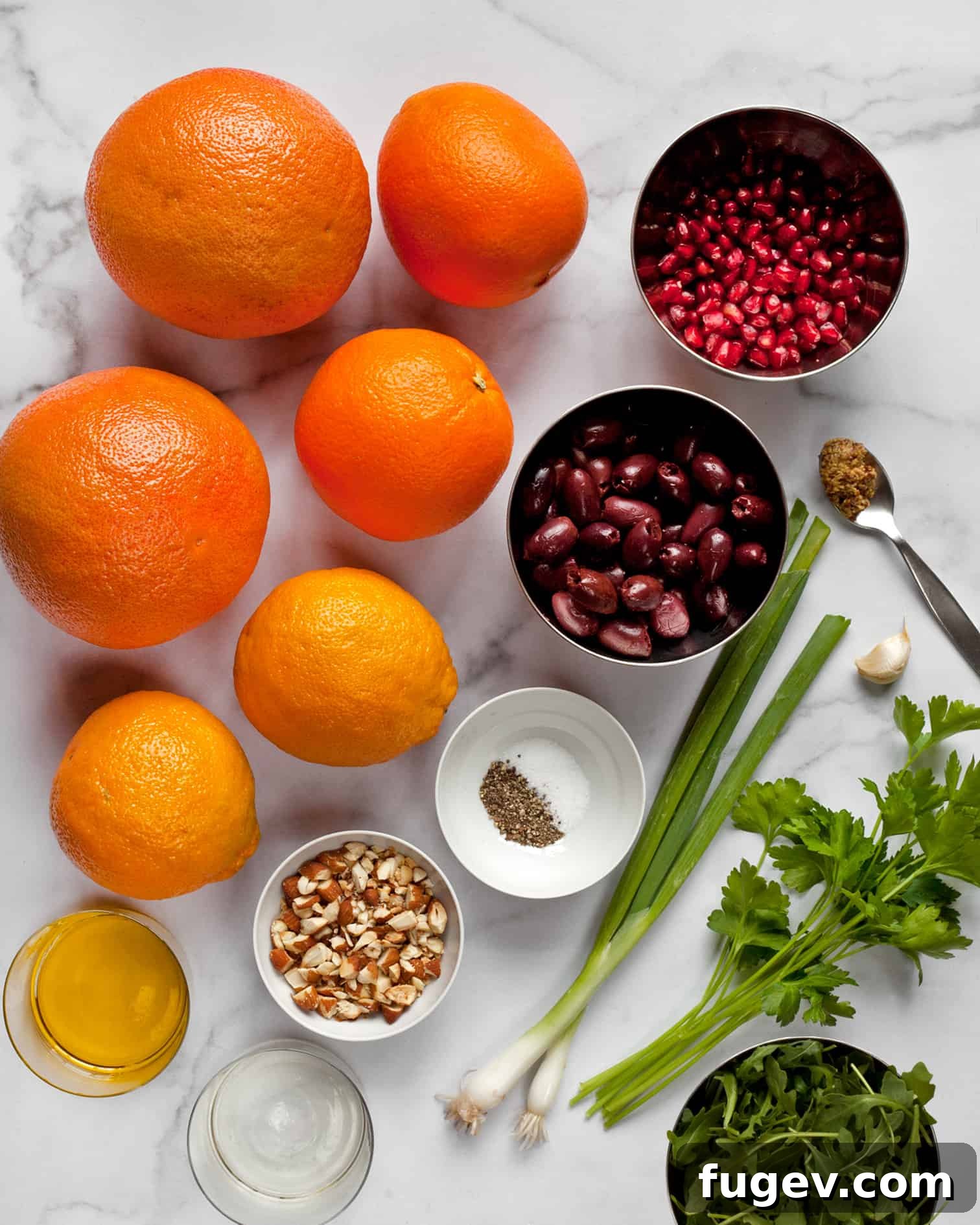
Crafting this delicious **Mediterranean citrus salad** requires a selection of fresh, high-quality ingredients. Here’s a closer look at what you’ll need and some excellent substitution ideas to tailor the recipe to your preferences or what you have on hand:
- Grapefruit: For a balance of tartness and sweetness, ruby red or pink grapefruits are my top choice. Their vibrant color and distinct flavor are key to this salad’s character. If you prefer a milder taste, you can opt for white grapefruit, though it will be less sweet.
- Oranges: I love using a mix of both navel and blood oranges. Navel oranges offer a classic sweet and juicy note, while blood oranges contribute a beautiful deep red hue and a subtly tart, berry-like flavor. This combination enhances both the taste and visual appeal of the salad. If only one type is available, any sweet orange variety like Cara Cara oranges (known for their pinkish flesh and low acidity) or even tangerines can be used effectively. The goal is a spectrum of citrus flavors.
- Olives: **Kalamata olives** are indispensable here. Their deep, almost purplish-brown color and pleasantly salty, fruity flavor are essential to the savory aspect of this **citrus and olive salad**. Always ensure you use pitted Kalamata olives for convenience and safety. If Kalamata olives aren’t available, other good quality black olives, such as Niçoise, could work, though the flavor profile will differ slightly.
- Pomegranate Seeds: These tiny jewels provide a wonderful sweet, tart, and juicy burst with every bite, adding a delightful crunch and vibrant color throughout the salad. You can often find pre-packaged pomegranate arils in the produce section, especially during winter months, making preparation easier.
- Scallions (Green Onions): Thinly sliced scallions are my preferred choice for a mild onion flavor that complements the other ingredients without overpowering them. For a sharper, more assertive taste, thinly sliced red onion makes an excellent alternative.
- Arugula: This peppery green adds a fantastic contrast to the sweet citrus. To prevent it from wilting, I recommend adding the baby arugula right before serving. Baby spinach is a good substitute if you prefer a milder green.
- Fresh Parsley: Parsley contributes a fresh, herbaceous note that brightens the entire salad. It’s incorporated both into the salad mix and the vinaigrette, ensuring its fresh flavor permeates every element. Flat-leaf (Italian) parsley is generally preferred for its robust flavor.
- Almonds: Toasted, chopped almonds lend a delightful nutty crunch and textural contrast. Feel free to substitute with other nuts like walnuts, pecans, or pine nuts for a slightly different flavor profile.
- Champagne Vinaigrette: This light, tangy dressing ties all the flavors together beautifully. It’s made by whisking together minced garlic, whole grain mustard (for a subtle tang and texture), fresh parsley, **champagne vinegar**, extra virgin olive oil, salt, and black pepper. If champagne vinegar is unavailable, white wine vinegar or apple cider vinegar are suitable alternatives, though champagne vinegar offers a slightly more delicate and complex acidity.
Exciting Optional Additions
To further customize your **citrus pomegranate salad**, consider adding one or more of these delicious ingredients:
- Diced or Sliced Avocado: Adds a creamy texture and healthy fats, complementing the brightness of the citrus.
- Crumbled Goat Cheese or Feta Cheese: Introduces a salty, tangy, and creamy element that pairs wonderfully with the fruit and olives, enhancing the Mediterranean feel.
- Thinly Sliced Fennel: Offers a subtle anise flavor and a crisp texture, echoing the flavors of a classic fennel orange salad.
- Grilled Shrimp or Chicken: For a more substantial meal, adding a lean protein like grilled shrimp or shredded chicken transforms this side dish into a satisfying main course.
- Cucumber Ribbons: For added freshness and a cool, crisp texture.
Mastering the Art of Supreming Citrus for Salads
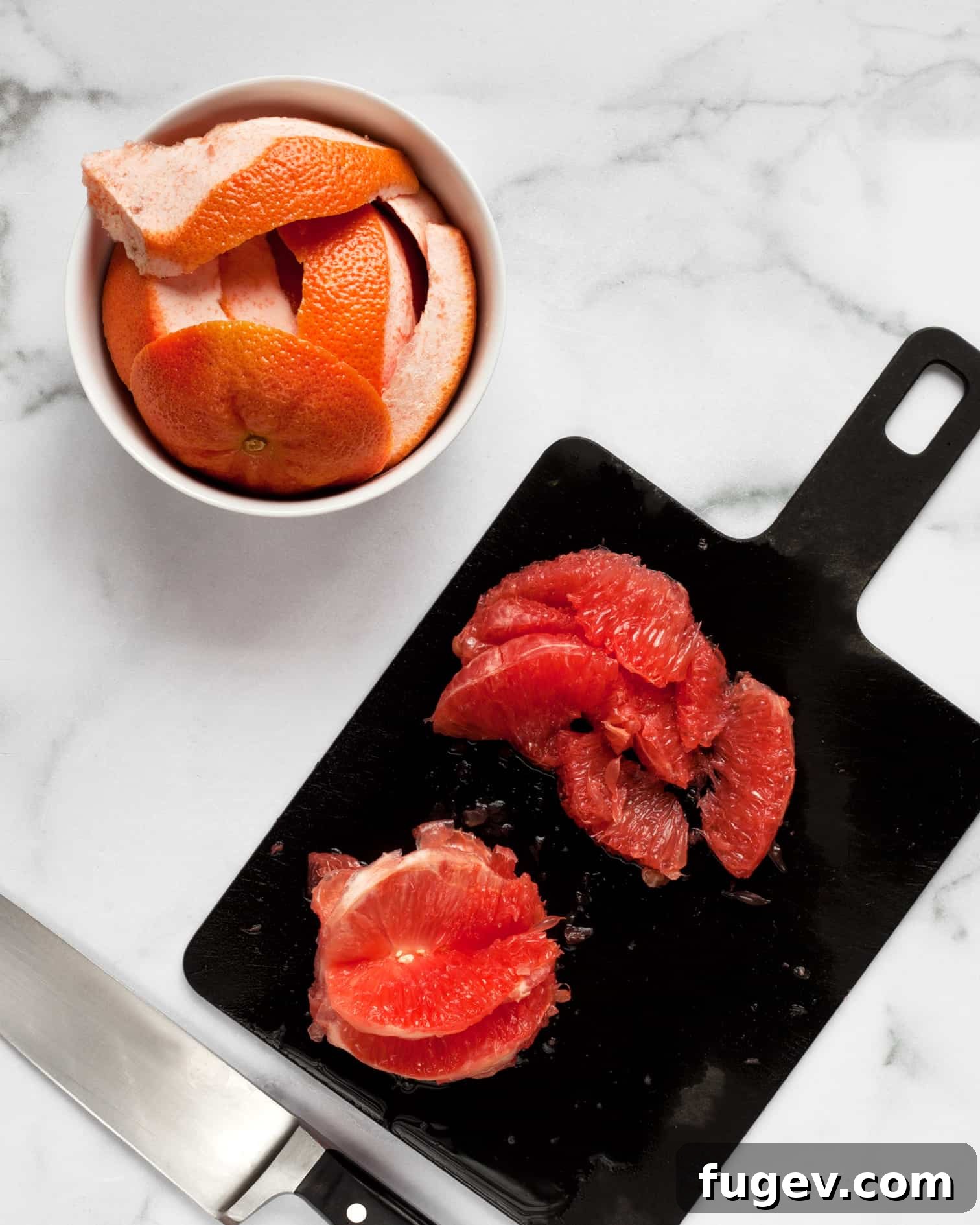
The secret to an elegant **citrus segment salad** lies in a technique called “supreming” (pronounced soo-prem). This method involves meticulously removing all the bitter white pith and fibrous membranes from citrus fruits, leaving behind only the pure, juicy segments. While it might seem a bit daunting at first, mastering supreming will elevate your salads, ensuring a clean taste and exquisite presentation. This process, though initially time-consuming, becomes much quicker with practice and is truly worth the effort for the superior texture and flavor it imparts.
Here’s a detailed guide on how to perfectly supreme citrus for your **winter citrus salad**:
- Prepare Your Workspace and Tools: You’ll need a clean cutting board and a very sharp knife (a chef’s knife or a large utility knife) for peeling, and a small, sharp paring knife for finer details.
- Trim the Ends: Start by carefully slicing off both the top and bottom of the orange or grapefruit. Cut deep enough to expose the fruit’s flesh, ensuring a stable, flat base for the next step.
- Remove the Peel and Pith: Place one of the flat ends of the fruit on your cutting board. Using your sharp chef’s knife, follow the natural curve of the fruit, slicing downwards to remove the peel and white pith in strips. Try to remove as much of the white pith as possible with each cut, but don’t worry if some remains. Rotate the fruit as you go until all the peel and pith are removed.
- Refine the Peeling: Once the majority of the peel and pith are gone, inspect the fruit. If you notice any remaining bits of white pith, use your smaller paring knife to carefully trim them away. The goal is to see only the vibrant color of the fruit’s flesh.
- Segment the Fruit: Hold the peeled citrus in one hand over a bowl (to catch any precious juice – which can be used in your dressing!). With your paring knife, carefully slice along the membrane separating each segment from the core. Gently pry each segment away from the membrane. Repeat this process around the entire fruit until all segments are freed. Don’t be concerned if some segments aren’t perfectly shaped; they will still taste delicious in your **grapefruit and orange salad**.
- Collect the Juice: After segmenting, you’ll be left with the core and membranes. Squeeze any remaining juice from this core into the bowl with your segments. This juice is fantastic for adding to your vinaigrette or enjoying on its own.
Supreming ensures that every bite of your **citrus salad** is pure fruit, free from any bitter notes from the pith or chewy membrane, providing a truly refined and enjoyable experience.
Step-by-Step Guide to Making Your Citrus Salad
Creating this **refreshing citrus salad** is a straightforward process once your citrus fruits are prepped. Follow these simple steps for a vibrant and delicious dish:
1. Prepare the Grapefruit and Oranges. Begin by supreming your grapefruit and oranges as described in the previous section. Trim the tops and bottoms, carefully slice off the peel and white pith, and then cut out the individual fruit segments. Place these beautiful segments into a large mixing bowl, ensuring any excess juice is reserved for potential use in the vinaigrette or for drinking.
2. Combine the Main Salad Ingredients. To the bowl with your citrus segments, add the pitted Kalamata olives, bright pomegranate seeds, thinly sliced scallions, and chopped roasted almonds. Gently fold in 1 tablespoon of fresh chopped parsley. Be mindful not to overmix, as the citrus segments are delicate.
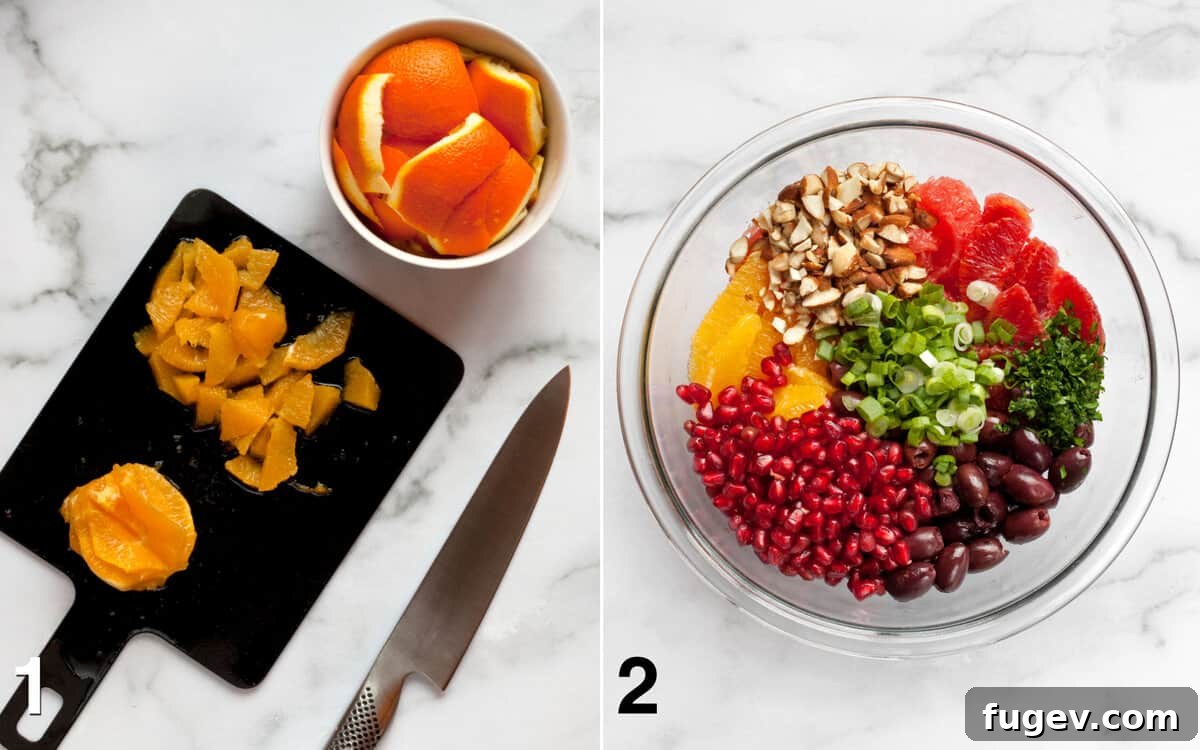
3. Whip Up the Zesty Vinaigrette. In a separate small bowl, prepare your **champagne vinaigrette**. Whisk together the minced garlic, whole grain mustard, remaining 2 tablespoons of chopped parsley, champagne vinegar, extra virgin olive oil, kosher salt, and black pepper until well combined and emulsified. The mustard helps to create a stable dressing, ensuring all flavors are evenly distributed.
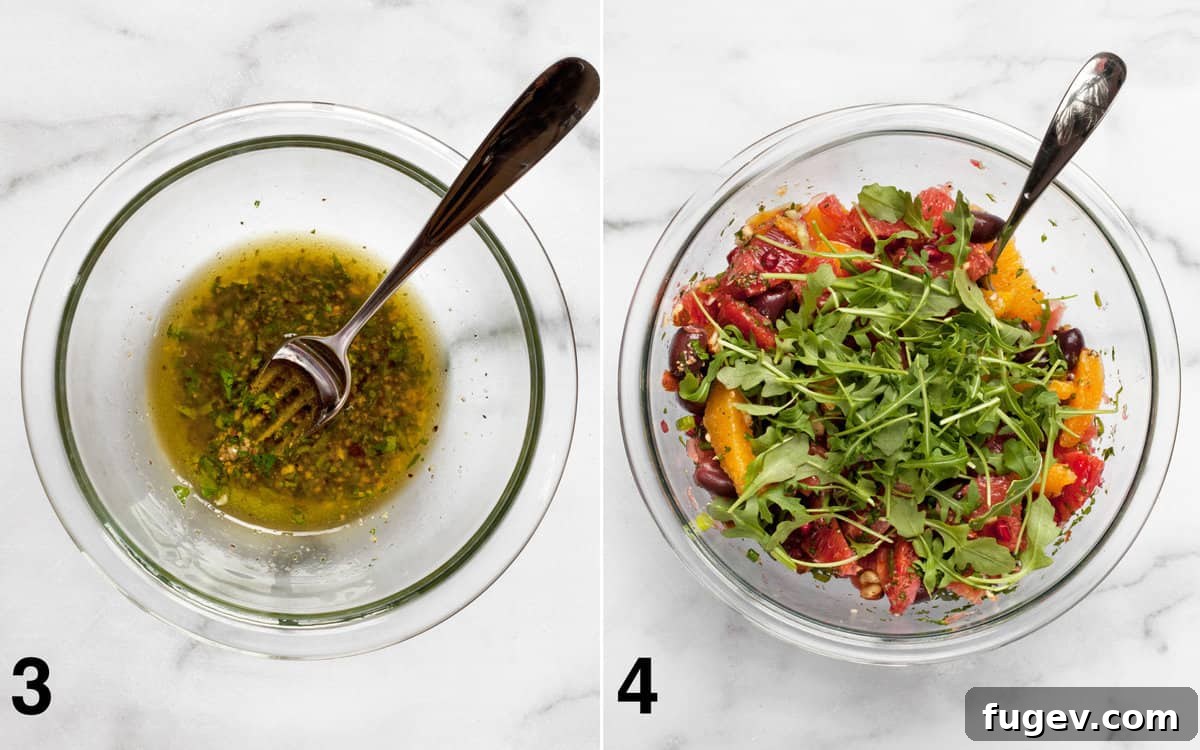
4. Dress and Serve. Drizzle the prepared vinaigrette evenly over the citrus and other ingredients in the large bowl. Gently toss the salad to coat everything thoroughly without damaging the delicate fruit segments. Just before you are ready to serve, gently stir in the baby arugula. This ensures the greens remain crisp and vibrant, adding a fresh, peppery finish to your **citrus pomegranate salad**.
Serving Suggestions for Your Citrus Salad
This **vibrant citrus salad** is as versatile as it is delicious, making it suitable for a variety of occasions and pairings. Its stunning visual appeal and refreshing taste make it a perfect choice for elegant dinner parties, festive holiday gatherings, or simply a bright addition to your everyday meals.
You can choose to serve this **winter salad** in a beautiful large bowl, allowing guests to admire its colorful layers, or arrange it more formally on individual plates. If opting for a flatter serving dish, consider overlapping the fruit segments slightly to create an appealing pattern, maintaining mostly a single layer for easy serving. The rich, varied colors of the grapefruit, oranges, and pomegranate seeds truly make this dish a centerpiece.
For a more substantial meal, consider adding fresh, diced avocado to introduce a creamy texture and healthy fats that complement the citrus beautifully. If you’re looking to incorporate protein, grilled shrimp, pan-seared scallops, or even flaky baked salmon pair exceptionally well with the bright, zesty flavors of the salad. For a vegetarian option, a sprinkle of crumbled goat cheese or feta cheese adds a lovely salty tang that deepens the Mediterranean profile.
This **healthy citrus salad** offers a light, refreshing counterpoint to richer winter meals, making it an excellent accompaniment to roasted chicken, baked fish, or a hearty vegetarian main course. It also shines as a standalone light lunch, particularly on warmer winter days when you crave something fresh and invigorating.
Storage & Make-Ahead Tips
One of the many benefits of this **fresh fruit salad** is its adaptability for make-ahead preparation, saving you valuable time, especially when entertaining. Unlike most leafy green salads that wilt quickly, the robust nature of citrus allows for advance prep.
Preparing Citrus in Advance: You can meticulously supreme your grapefruit and orange segments up to one day before you plan to serve the salad. Store the segments in an airtight container in the refrigerator. When it’s time to assemble the salad, use a slotted spoon to transfer the fruit to your mixing bowl. This crucial step ensures you leave behind any excess juice, preventing the salad from becoming watery and preserving its fresh texture. The collected juice, however, is a delicious bonus you can enjoy or use in your vinaigrette if desired.
Making the Vinaigrette Ahead: The **champagne vinaigrette** can also be prepared well in advance, up to two days prior. Simply whisk all the dressing ingredients together and store it in an airtight jar, such as a mason jar, in the refrigerator. Before using, if the olive oil has solidified due to the cold temperature, allow the jar to sit at room temperature for about 15-20 minutes, or gently run it under warm water. Give it a good shake to re-emulsify the dressing, ensuring it’s smooth and perfectly blended before drizzling over your salad.
Storing Leftovers: If you have any leftover **citrus salad**, store it in an airtight container in the refrigerator for up to two days. Be aware that the arugula will soften and wilt over time due to the moisture from the citrus and dressing. To revive leftover salad and restore its vibrancy, I highly recommend stirring in a handful of fresh arugula just before serving. This simple trick brings back the desired crispness and peppery flavor, making your leftovers almost as good as fresh.
These make-ahead strategies ensure that assembling your delicious **citrus pomegranate salad** is quick and stress-free, allowing you to enjoy more time with your guests or simply savor the convenience of a pre-prepped, healthy meal.
Expert Tips for a Perfect Citrus Salad Every Time
Achieving a truly outstanding **fresh citrus salad** involves a few key considerations and expert techniques. Here are some essential tips to ensure your salad is always a showstopper:
- Embrace a Variety of Citrus: The true magic of this salad lies in the diversity of citrus flavors. While using just one type of orange will work, the salad is best when you incorporate different kinds of citrus. A mix of sweet navel oranges, tart blood oranges, and slightly bitter grapefruit creates a complex and harmonious flavor profile. If you’re using only oranges, try to include at least two or three different varieties for a more layered taste experience.
- Be Patient with Supreming: If you’re new to supreming citrus, don’t get discouraged if your first attempt isn’t perfect. It takes a little practice to get the hang of removing the peel, pith, and membranes cleanly. Use a sharp paring knife for those smaller bits of pith you might miss with your larger knife. The effort is well worth it, as supremed citrus provides a superior texture and taste, free from any bitterness.
- Always Use Pitted Olives: This might seem obvious, but it’s crucial for an enjoyable eating experience. You certainly don’t want to be spitting out olive pits in the middle of a delightful bite of salad! Opt for high-quality pitted Kalamata olives to ensure ease of eating and consistent flavor. Whole olives are generally reserved for situations like making marinated olives, where the pits infuse flavor during the marinating process.
- Balance Flavors for Harmony: Taste your citrus as you segment it. If your grapefruit is particularly tart, you might want to use slightly more sweet oranges. Similarly, adjust the sweetness of your vinaigrette if your citrus is very sweet. The goal is a delightful balance of sweet, savory, and tart.
- Don’t Overdress the Salad: A light coating of vinaigrette is all you need to enhance the natural flavors of the citrus and other ingredients. Overdressing can make the salad heavy and soggy. Start with less and add more if needed, tossing gently to ensure even distribution.
- Chill for Enhanced Flavor: While you can serve this salad immediately, allowing it to chill in the refrigerator for 15-30 minutes before serving can help the flavors meld and intensify, resulting in an even more refreshing experience. Remember to add the arugula just before serving after chilling.
By keeping these tips in mind, you’ll consistently create a vibrant, flavorful, and beautifully presented **winter citrus salad** that everyone will adore.
Frequently Asked Questions (FAQs)
Absolutely! Using fresh citrus juice in your dressing can add an extra layer of bright, natural flavor. As you supreme the citrus, hold the fruit over a bowl to catch all the drips. This juice can replace or supplement some of the vinegar in your vinaigrette. For an example of how citrus juice is incorporated, check out this recipe for an orange olive salad with fennel, which effectively uses orange juice in its dressing.
I understand that not everyone is a fan of olives! While they contribute a unique savory and briny note to this particular salad, you can certainly substitute them. For a salty flavor with a creamy texture, I suggest adding crumbled feta cheese or goat cheese. If you’re looking for a similar briny, pickled taste, a tablespoon of capers (rinsed and drained) would also be an excellent addition, providing a delightful pop of flavor without the olives.
Yes, you can certainly experiment with other fruits! While this recipe focuses on citrus, thinly sliced apples, pears, or even berries like blueberries or raspberries can complement the flavors and add new textures. Just be mindful of the sweetness balance.
When selecting citrus, look for fruits that feel heavy for their size, as this indicates juiciness. The skin should be smooth and firm, with no soft spots or blemishes. While color is a good indicator, some varieties like blood oranges might not show their interior color on the outside. A gentle squeeze should reveal a slight give, but not softness.
Explore More Winter Salad Recipes
If you’re loving the idea of vibrant and fresh winter salads, here are more delicious recipes to inspire your culinary adventures:
Roasted Beet Salad with Oranges and Pears
Mandarin Orange Kale Salad
Shaved Sprout Salad
Roasted Broccoli Quinoa Salad
Citrus Salad with Olives and Pomegranate Seeds
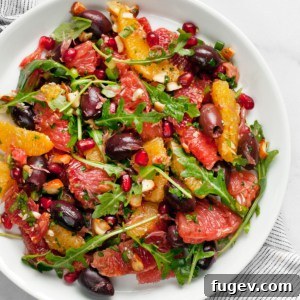
This fresh citrus salad has a mix of sweet, savory and tart flavors with grapefruit and orange segments, Kalamata olives, pomegranate seeds, almonds, fresh herbs and arugula all tossed in champagne vinaigrette.
Ingredients
For salad
- 2 pink or ruby red grapefruits
- 2 navel oranges
- 2 blood oranges
- 1 cup pitted Kalamata olives (about 6 ounces)
- 1/2 cup pomegranate seeds
- 2 scallions, thinly sliced
- 1/3 cup chopped unsalted roasted almonds
- 1 tablespoon chopped parsley
- 1 cup baby arugula
For vinaigrette
- 1 garlic clove, minced
- 1 teaspoon whole grain mustard
- 2 tablespoons chopped parsley
- 2 tablespoons champagne vinegar
- 3 tablespoons olive oil
- 1/2 teaspoon kosher salt
- 1/4 teaspoon black pepper
Save this recipe
Get it sent to your inbox plus new recipes every week.
Save to Email
Instructions
- To prep the citrus, trim off the tops and bottoms. Then use a knife to remove the peel and pith following the curve of the fruit. Slice between the membranes to cut out the individual segments. Place the grapefruit and oranges in a large bowl.
- Stir the olives, pomegranate seeds, scallions, almonds and 1 tablespoon chopped parsley with the citrus segments.
- For the vinaigrette, whisk together the garlic, mustard, 2 tablespoons parsley, champagne vinegar, olive oil, salt and pepper in a small bowl.
- Drizzle the vinaigrette on the salad tossing the ingredients.
- Stir the arugula into the salad right before you are ready to serve it.
Notes
You can use walnuts or pine nuts instead of almonds.
Instead of arugula, you can use baby spinach.
The citrus can be cut into segments up to 1 day in advance. Store them in an airtight container in the fridge. Use a slotted spoon to put it into the salad bowl, so you do not end up with excess juice.
You can also make the dressing up to 2 days in advance. Store it in an airtight container in the refrigerator. If the olive oil has turned solid stored in the chill of the fridge, let it sit out at room temperature or run the container under warm water and shake it to re-liquify the dressing.
You can keep leftovers in the fridge up to 2 days. The arugula will soften and wilt the longer you store it. Add fresh greens before you serve it.
Optional additions: You can add one or more of the following ingredients:
- Diced or sliced avocado
- Crumbled goat cheese or feta cheese
- Thinly sliced fennel
Nutrition
Calories: 327kcal | Carbohydrates: 32g | Protein: 5g | Fat: 22g | Saturated Fat: 3g | Polyunsaturated Fat: 3g | Monounsaturated Fat: 15g | Trans Fat: 0.003g | Sodium: 837mg | Potassium: 514mg | Fiber: 8g | Sugar: 19g | Vitamin A: 2226IU | Vitamin C: 93mg | Calcium: 133mg | Iron: 1mg
Nutrition information is automatically calculated, so should only be used as an approximation.