
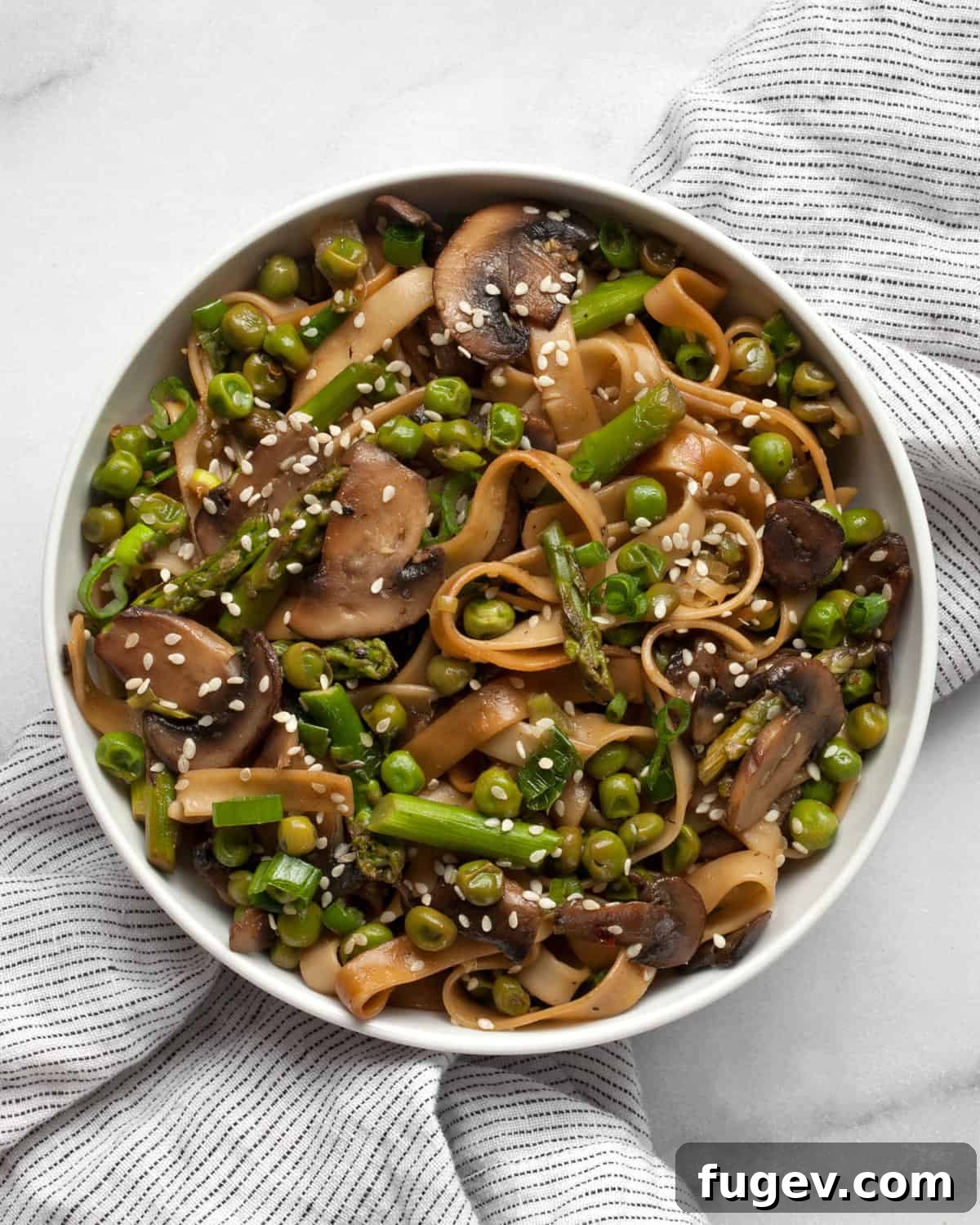
Embark on a culinary journey with this vibrant and satisfying asparagus stir-fry, featuring hearty udon noodles, earthy mushrooms, and sweet green peas. This dish is not just a feast for the eyes but also a treat for your taste buds, bursting with the aromatic flavors of fresh ginger, pungent garlic, and crisp scallions. Designed for a quick weeknight dinner, it promises a wholesome meal that comes together in minutes. Plus, it’s so delicious, you’ll eagerly anticipate the flavorful leftovers, whether enjoyed warm or as a refreshing cold noodle salad.
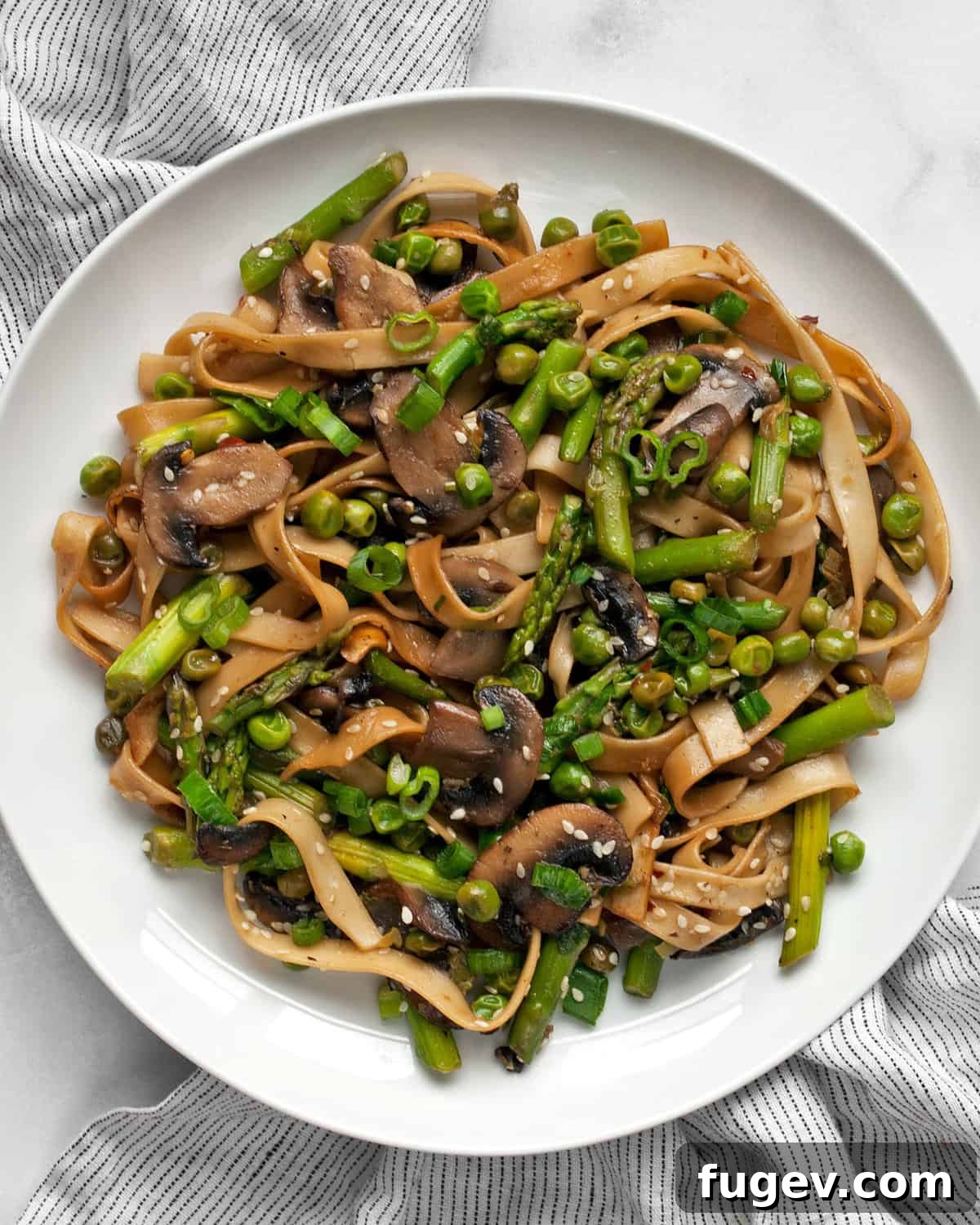
Table of Contents
- Why You’ll Love This Recipe
- Key Ingredients for a Flavorful Stir-Fry
- Step-by-Step: Crafting Your Mushroom Asparagus Udon Stir-Fry
- Tips for Stir-Fry Success
- Delicious Variations to Try
- What to Serve with Your Stir-Fry
- Leftovers & Smart Storage
- Frequently Asked Questions (FAQs)
- Health Benefits of This Vibrant Dish
- More Noodle & Stir-Fry Inspirations
- Mushroom Asparagus Stir-Fry with Noodles Recipe
Why You’ll Love This Recipe
This udon noodle stir-fry isn’t just another meal; it’s a testament to how quick and healthy cooking can also be incredibly satisfying. Here are several reasons why this recipe is bound to become a staple in your kitchen:
- A Bounty of Vegetables in Every Bite: Unlike many stir-fries that prioritize noodles or rice, this recipe champions its vegetables. Asparagus, mushrooms, and peas form the backbone of this dish, ensuring that you get a hearty serving of greens and fungi with every delicious mouthful. It’s a fantastic way to boost your daily vegetable intake without compromising on flavor or texture.
- Minimal Prep, Maximum Flavor: Say goodbye to lengthy chopping sessions! The vegetables in this stir-fry require very little preparation. Asparagus is simply trimmed and cut, while cremini mushrooms can be quickly brushed clean (or purchased pre-sliced for an even faster start). This streamlined prep work makes it an ideal choice for busy weeknights when time is of the essence but you still crave a homemade, flavorful meal.
- Fantastic for Leftovers & Meal Prep: This dish truly shines the next day. It transforms beautifully into a cold noodle salad, offering a refreshing and convenient lunch option. You can even enhance it further by adding shredded cabbage, grated carrots, or a sprinkle of toasted nuts for extra crunch and nutrition. It’s a smart way to get multiple delicious meals from a single cooking session.
- Packed with Aromatic Goodness: Fresh ginger, garlic, and scallions are the flavor heroes here. They infuse the entire dish with a vibrant, warming, and irresistible aroma that will fill your kitchen and tantalize your senses. The balance of spicy, savory, and fresh notes makes this stir-fry incredibly addictive.
- Customizable and Versatile: While perfect as is, this stir-fry is also incredibly adaptable. You can easily add your favorite protein, switch up the vegetables, or adjust the spice level to suit your preferences. It’s a forgiving recipe that encourages creativity in the kitchen.
Key Ingredients for a Flavorful Stir-Fry
The magic of this stir-fry lies in the quality and freshness of its ingredients. Each component plays a crucial role in building the robust and satisfying flavor profile. Here’s a closer look at what you’ll need and why each element is important:
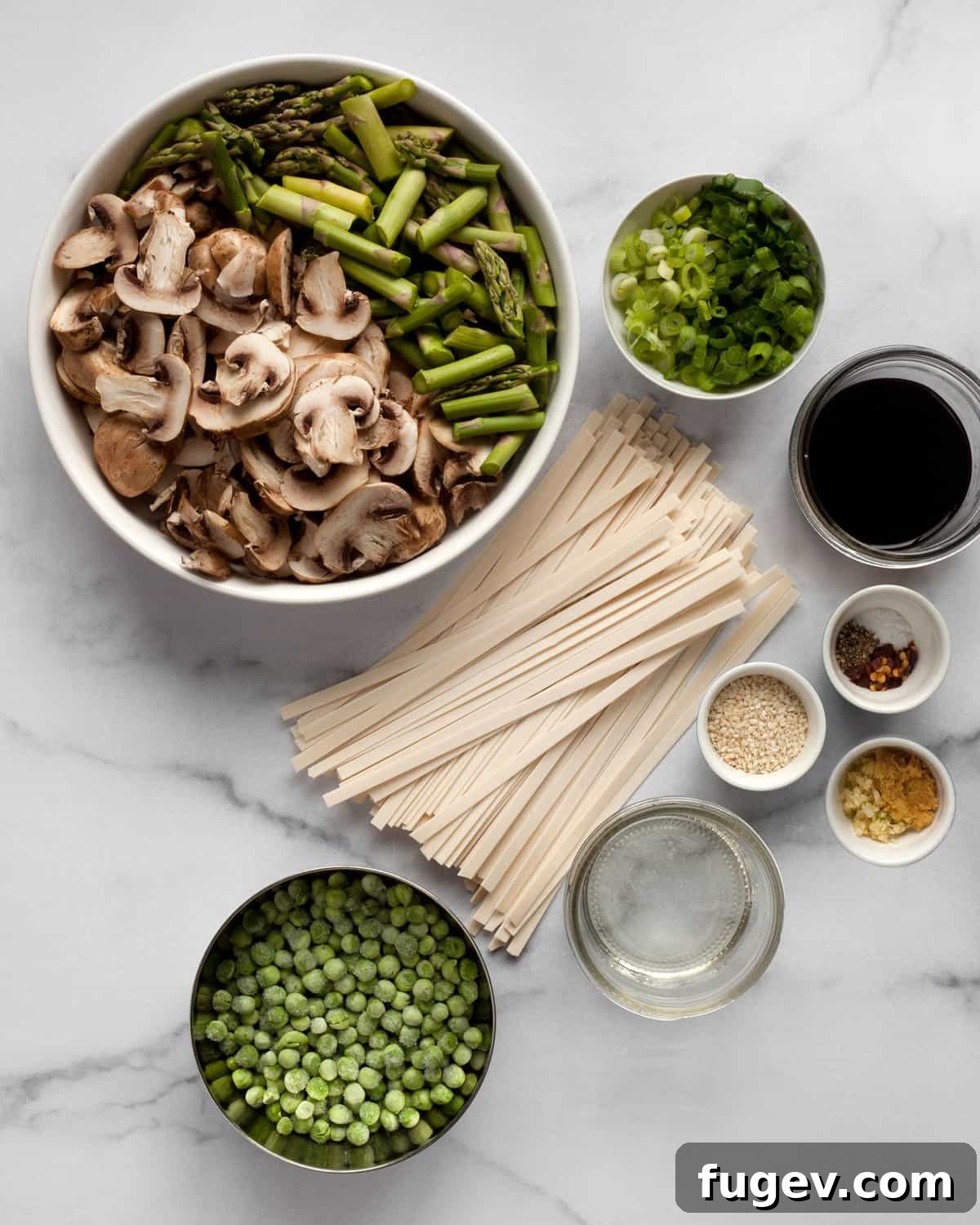
To create this delectable stir-fry, gather the following:
- Udon Noodles: These thick, chewy Japanese wheat noodles are a fantastic base for stir-fries, offering a satisfying texture that holds up well to the rich sauce. If you’re looking for a gluten-free alternative, rice noodles make an excellent substitute. Always cook them according to package instructions until al dente.
- Asparagus: Choose firm, bright green spears with tightly closed buds for the best flavor and texture. When you bend a fresh spear, it should snap crisply, indicating its freshness. Asparagus adds a delightful, slightly earthy sweetness and a satisfying crunch to the stir-fry.
- Mushrooms: Cremini mushrooms, also known as baby bellas, offer a deeper, more savory flavor than common white button mushrooms. They brown beautifully and add a meaty texture. Before cooking, gently brush off any dirt. For a time-saving hack, opt for pre-sliced cremini mushrooms.
- Peas: Frozen peas are a pantry hero – convenient, readily available, and perfectly sweet. They add a pop of color and a burst of fresh flavor. While fresh peas can certainly be used when in season, frozen peas offer consistent quality year-round.
- Garlic & Ginger: These aromatic powerhouses are non-negotiable in Asian-inspired cooking. Freshly minced garlic and grated ginger create the foundational fragrance and depth of flavor that defines this stir-fry. Their pungent warmth is essential.
- Scallions (Green Onions): Providing a mild, fresh oniony flavor and a delicate crispness, scallions are used in two ways: the white parts are sautéed to release their flavor early on, while the green parts are folded in at the end for garnish and a fresh bite.
- Low-Sodium Soy Sauce: This is the backbone of the savory sauce. Using a low-sodium version allows you to control the overall saltiness of the dish, ensuring it’s perfectly seasoned without being overpowering. If you need a gluten-free option, tamari is an ideal substitute that maintains the rich umami flavor.
- Red Pepper Flakes, Salt & Pepper: A pinch of red pepper flakes adds a subtle warmth and a hint of heat that awakens the other flavors. Basic salt and pepper season the vegetables, enhancing their natural taste without dominating the dish.
- Sesame Seeds: Used as a final garnish, toasted sesame seeds contribute a nutty aroma and a delicate crunch, elevating the visual appeal and texture of the stir-fry.
- Vegetable Oil: A high-smoke point oil like vegetable, canola, or grapeseed oil is essential for stir-frying at high heat. Opt for a non-GMO variety if possible, given the high-temperature cooking method.
Step-by-Step: Crafting Your Mushroom Asparagus Udon Stir-Fry
Creating this flavorful udon noodle stir-fry is a straightforward process that yields impressive results. Follow these steps for a perfect dish every time:
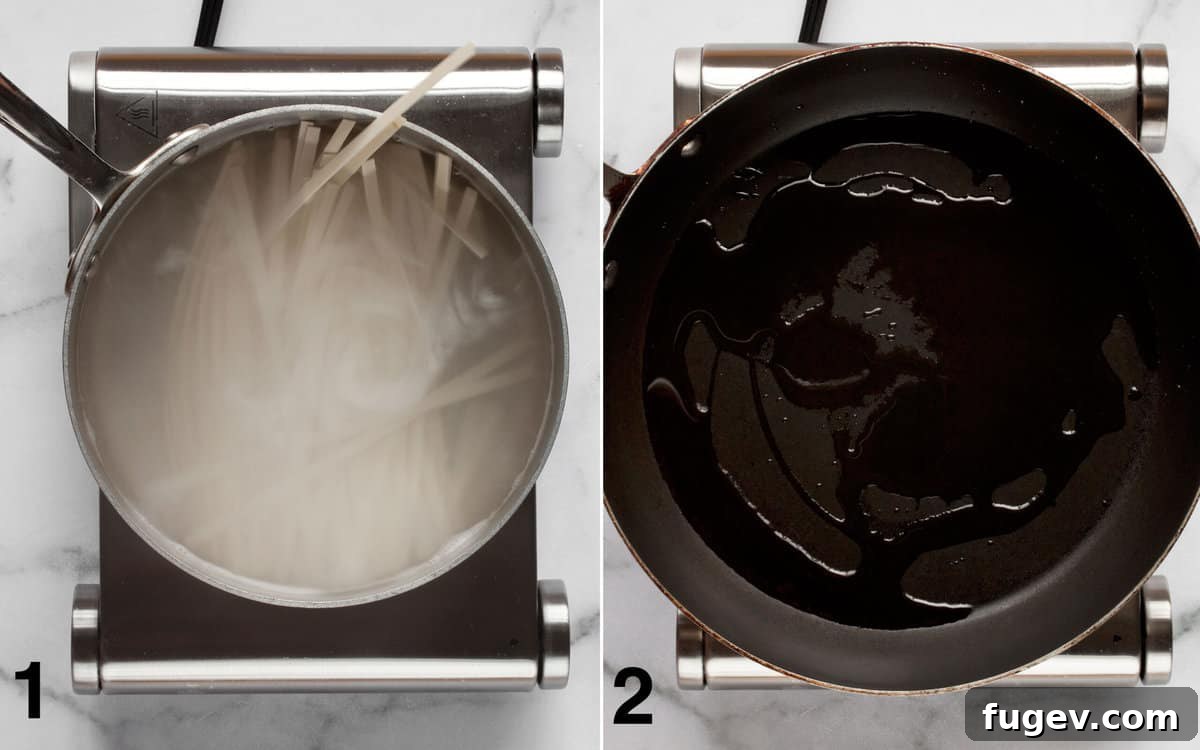
- Prepare the Udon Noodles: Begin by cooking your udon noodles according to the package directions. Aim for an al dente texture – they should be cooked through but still have a slight bite. Once cooked, immediately transfer the noodles to a colander and rinse them thoroughly under cold water. This stops the cooking process and prevents them from sticking together, ensuring individual strands for your stir-fry.
- Heat the Wok or Skillet: Place a large wok or a heavy-bottomed skillet over high heat. Allow it to heat up for a minute or two before adding the oil. Once the pan is hot, add the vegetable oil, swirling it to coat the bottom. You should see the oil shimmer, indicating it’s ready for the vegetables.
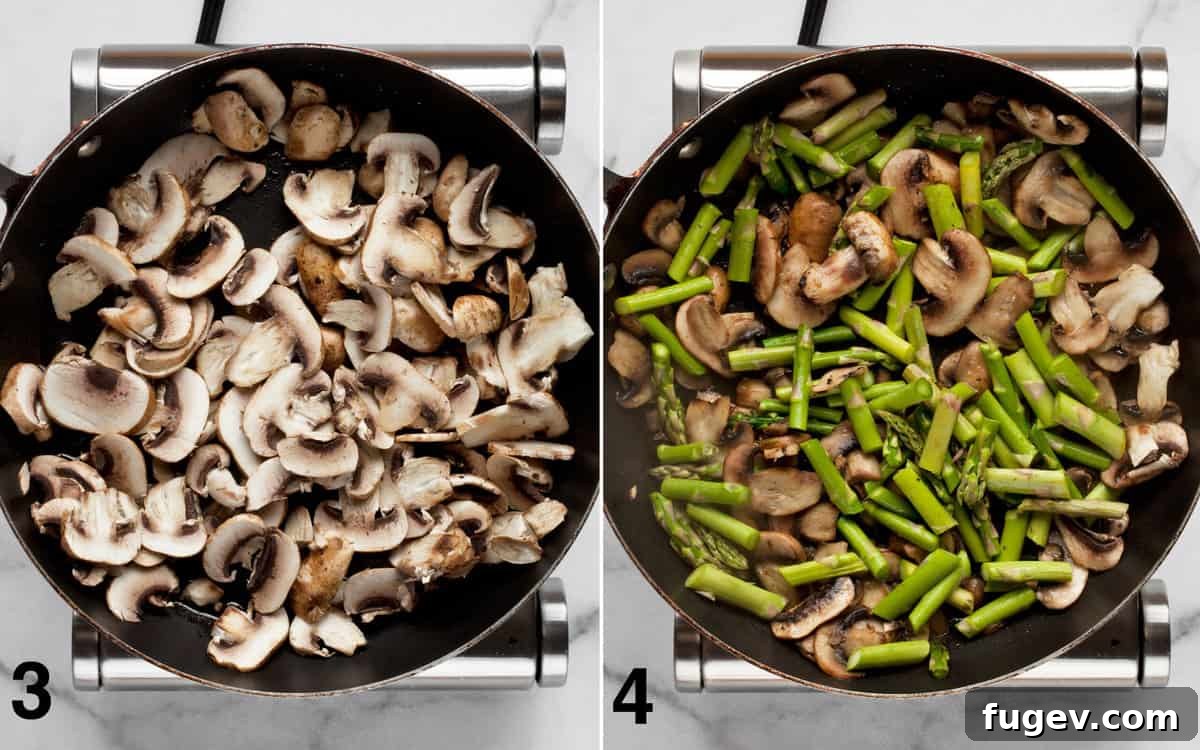
- Sauté the Mushrooms: Add the sliced cremini mushrooms to the hot skillet. Spread them out in a single layer as much as possible to ensure they brown rather than steam. Sauté for about 3-4 minutes, stirring occasionally, until they begin to soften and develop a nice golden-brown sear. This brings out their deep, earthy flavor.
- Introduce the Asparagus: Add the trimmed and cut asparagus pieces to the skillet with the mushrooms. Continue to sauté for another 3 minutes, stirring frequently. The asparagus should turn a vibrant, bright green and begin to become tender-crisp. Avoid overcooking to maintain its satisfying snap.
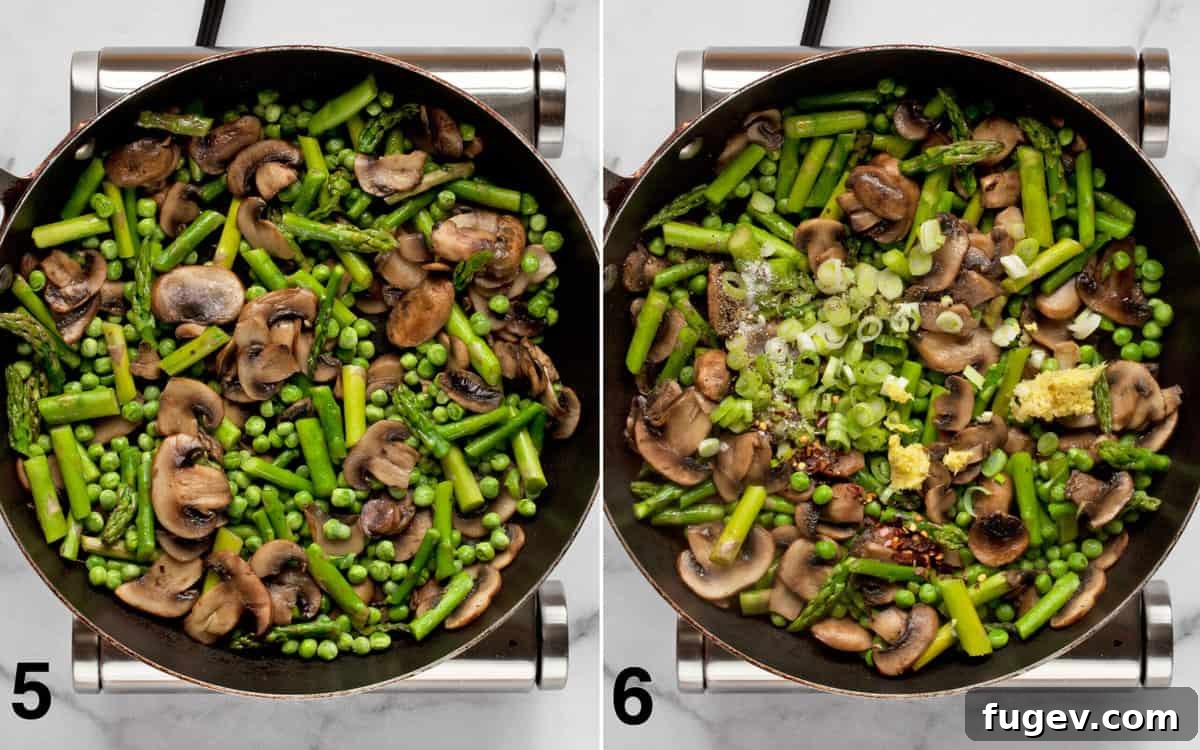
- Add the Peas and Finish Sautéing: Stir in the peas (fresh or frozen) with the mushrooms and asparagus. Continue to sauté for an additional 2-3 minutes. By this point, the peas should be heated through, the mushrooms nicely browned, and the asparagus perfectly crisp-tender.
- Infuse with Aromatics and Spices: Create a small space in the center of the skillet and add the minced garlic, minced fresh ginger, the white parts of the sliced scallions, red pepper flakes, salt, and black pepper. Stir these aromatics directly into the hot oil for about 30 seconds until they become intensely fragrant. This quick bloom of flavor is essential.
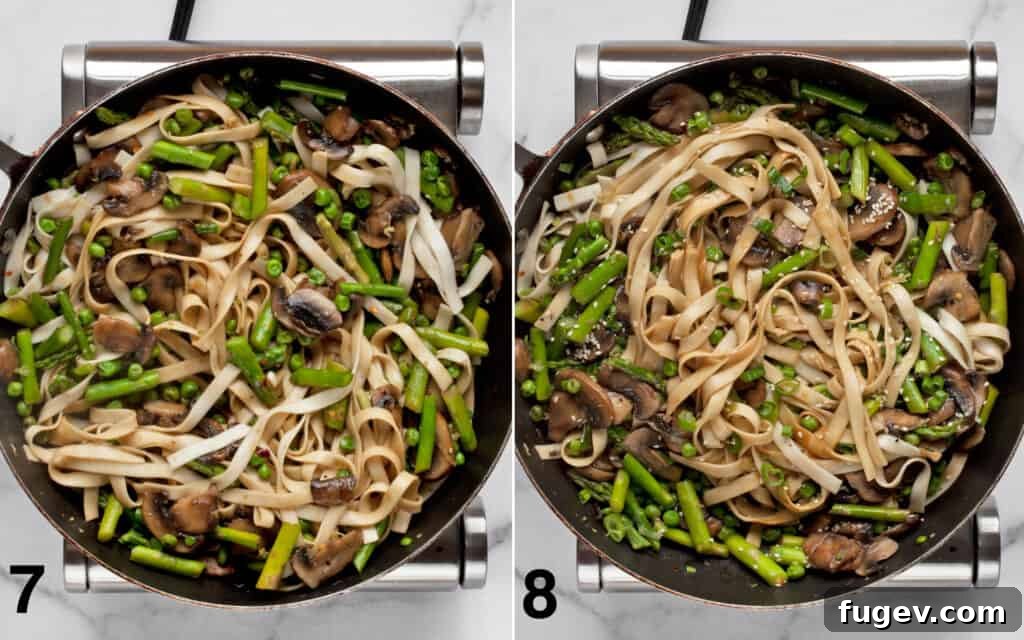
- Combine with Noodles and Sauce: Add the rinsed udon noodles to the skillet. Pour in the low-sodium soy sauce. Use tongs or a spatula to gently fold and toss everything together, ensuring the noodles are fully coated with the sauce and mixed evenly with the vegetables. Continue to stir-fry for a couple of minutes to allow the noodles to warm through and absorb the delicious flavors.
- Garnish and Serve: Remove the skillet from the heat. Finish the stir-fry by sprinkling the green parts of the scallions and sesame seeds over the top. Toss gently one last time. Serve immediately and savor the incredible blend of flavors and textures!
Tips for Stir-Fry Success
To ensure your udon noodle stir-fry is consistently perfect, keep these expert tips in mind:
- Mise en Place is Key: “Mise en place” means having all your ingredients prepped and ready before you start cooking. Stir-frying is a fast-paced cooking method, so you won’t have time to chop garlic or slice mushrooms once the pan is hot.
- High Heat is Essential: Stir-frying requires high heat to achieve that signature smoky flavor and crisp-tender texture in vegetables. Make sure your wok or skillet is piping hot before adding any oil or ingredients.
- Don’t Overcrowd the Pan: Cooking too many ingredients at once can lower the pan’s temperature, leading to steamed rather than stir-fried vegetables. Cook in batches if necessary, or ensure your pan is large enough to accommodate the ingredients in a single layer.
- Avoid Overcooking Vegetables: The goal for stir-fried vegetables is crisp-tender – still vibrant in color and with a slight bite. Overcooked vegetables lose their texture and nutritional value.
- Rinse Cooked Noodles: Rinsing udon noodles in cold water after cooking removes excess starch and prevents them from sticking together, ensuring they separate beautifully in the stir-fry.
- Adjust Seasoning to Taste: Always taste your stir-fry before serving and adjust the soy sauce, salt, or red pepper flakes as needed. Different brands of soy sauce can vary in saltiness.
Delicious Variations to Try
This udon noodle stir-fry is incredibly versatile and can be customized to your liking. Here are some ideas to spark your culinary creativity:
- Add Protein: For a heartier meal, incorporate your favorite protein. Marinated tofu or tempeh, sliced chicken breast or thigh, shrimp, or thinly sliced beef would all be excellent additions. Add proteins after sautéing the mushrooms and cook until nearly done before proceeding with the asparagus.
- Incorporate More Vegetables: Feel free to experiment with other quick-cooking vegetables. Sliced bell peppers, shredded carrots, bok choy, snap peas, broccoli florets, or water chestnuts would add extra color, texture, and nutrients.
- Spice It Up: If you love heat, increase the amount of red pepper flakes, or add a dash of sriracha or chili garlic sauce to the stir-fry sauce.
- Nutty Crunch: Sprinkle roasted peanuts or cashews on top along with the sesame seeds for an extra layer of crunch and flavor.
- Citrus Brightness: A squeeze of fresh lime juice over the finished stir-fry can add a bright, zesty counterpoint to the savory flavors.
- Different Noodles: While udon noodles are fantastic, feel free to swap them for ramen noodles, soba noodles, or even thicker rice vermicelli if you prefer.
What to Serve with Your Stir-Fry
This mushroom asparagus udon noodle stir-fry is a complete meal on its own, packed with carbohydrates, protein, and vegetables. However, if you’re looking to expand your spread or simply crave a fresh side, consider pairing it with:
- A light and refreshing Cucumber Carrot Salad with a zesty peanut dressing.
- A crunchy Asian Cabbage Salad, featuring red bell peppers and a bright almond ginger vinaigrette.
- A simple side of steamed edamame for an extra boost of protein.
- A small bowl of miso soup for a traditional Japanese touch.
Leftovers & Smart Storage
One of the best qualities of this udon noodle stir-fry is how well it keeps, and how versatile the leftovers can be!
Store any remaining stir-fry in an airtight container in the refrigerator for up to 3 days. To reheat, you can warm it gently in the microwave or in a skillet with a little extra oil over medium heat until heated through. However, don’t feel obligated to reheat! This stir-fry is absolutely delicious served cold as a noodle salad. The flavors meld beautifully, and the cool noodles are incredibly refreshing. It makes for a perfect pre-packed lunch for work or school.
Frequently Asked Questions (FAQs)
How do you cut asparagus?
Always start by trimming off the woody, tough ends of the asparagus spears. You can typically snap them off where they naturally break, or simply cut about an inch or two from the bottom. For this stir-fry, I recommend cutting the remaining spears into 1-inch to 2-inch lengths. This ensures they cook evenly and are easy to eat with chopsticks or a fork within the noodle dish.
Do you need to blanch asparagus before stir frying it?
No, there is no need to blanch asparagus before stir-frying for this recipe. The high heat of the wok or skillet, combined with the cooking time alongside the other vegetables, will ensure the asparagus cooks to a perfect crisp-tender consistency. Blanching is usually done to preserve color or partially cook denser vegetables before a very quick final sauté, which isn’t necessary here.
Can I make this stir-fry gluten-free?
Absolutely! To make this recipe gluten-free, simply substitute the wheat-based udon noodles with your preferred gluten-free rice noodles. Additionally, ensure you use tamari instead of traditional soy sauce, as tamari is a gluten-free alternative that provides the same savory depth.
What kind of pan is best for stir-frying?
A wok is traditionally best for stir-frying due to its sloped sides and ability to distribute heat evenly. However, a large, heavy-bottomed skillet or a cast-iron pan will work perfectly well for this recipe. The key is to ensure it can reach and maintain high heat.
Can I use fresh ginger and garlic from a jar?
While fresh ginger and garlic offer the most vibrant and aromatic flavors, jarred minced ginger and garlic can be used as a convenient substitute. Keep in mind that the flavor might be slightly less intense, so you might want to add a bit more to taste.
Health Benefits of This Vibrant Dish
This udon noodle stir-fry is not only delicious but also packed with nutrients, making it a fantastic choice for a healthy meal. Here’s a quick look at some of the health benefits:
- Rich in Vitamins and Minerals: Asparagus is an excellent source of vitamins K, A, C, and folate, while mushrooms contribute B vitamins and selenium. Peas add vitamin K and C.
- Good Source of Fiber: The abundance of vegetables and whole-grain (if using whole wheat udon or brown rice noodles) noodles provides dietary fiber, which aids digestion and promotes satiety.
- Antioxidant Properties: Asparagus and mushrooms contain various antioxidants that help combat oxidative stress in the body.
- Lean and Filling: Without added meat, this dish is naturally lean, and the combination of protein from peas and mushrooms with complex carbohydrates from udon noodles makes it incredibly filling and energizing.
- Heart-Healthy: Made with vegetable oil and loaded with plant-based ingredients, this stir-fry supports cardiovascular health.
More Noodle & Stir-Fry Inspirations
If you enjoyed this recipe, you might love exploring other quick and flavorful stir-fry and noodle dishes:
- Tofu and Vegetables with Peanut Stir-Fry Sauce
- Broccoli Pea Edamame Fried Rice
- Sesame Soba Noodles
- Frozen Vegetable Stir-Fry
- Cashew Veggie Stir-Fry
- Ginger Garlic Veggie Tofu Stir-Fry
- Sesame Noodle Salad
Mushroom Asparagus Stir-Fry with Noodles Recipe
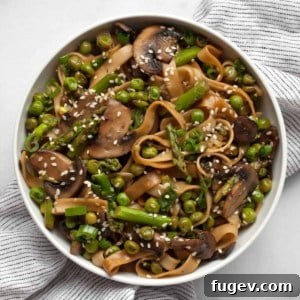
Aromatic Udon Noodle Delight
This easy udon noodle stir-fry is a celebration of fresh vegetables, featuring tender asparagus, savory mushrooms, and sweet peas. Infused with fragrant garlic, ginger, and scallions, and finished with a sprinkle of sesame seeds, it’s a quick, healthy, and satisfying meal perfect for any day of the week.
Cook: 15 mins
Total: 25 mins
Servings: 4
Ingredients
- 6 ounces wide udon noodles
- 1 tablespoon vegetable oil (non-GMO recommended)
- 8 ounces cremini mushrooms, sliced
- 1/2 pound asparagus, trimmed and cut into 1-1/2 inch pieces
- 1 cup peas, fresh or frozen
- 1 garlic clove, minced
- 1 tablespoon minced fresh ginger
- 4 scallions, thinly sliced, white and green parts separated
- 1/4 teaspoon red pepper flakes
- 1/4 teaspoon kosher salt
- 1/4 teaspoon black pepper
- 3 tablespoons low sodium soy sauce (or tamari for gluten-free)
- 1 tablespoon sesame seeds
Instructions
- Cook the udon noodles according to package instructions until al dente. Drain thoroughly and rinse with cold water in a colander to prevent sticking. Set aside.
- Heat the vegetable oil in a large wok or skillet over high heat until shimmering.
- Add the sliced cremini mushrooms to the hot pan. Sauté for 3-4 minutes, stirring occasionally, until they begin to soften and brown.
- Add the asparagus pieces to the skillet. Continue to sauté for another 3 minutes, stirring, until the asparagus turns bright green and is crisp-tender.
- Stir in the peas and continue sautéing for 2-3 minutes, ensuring the peas are heated through and the vegetables reach your desired tenderness.
- Create a small clear space in the center of the pan. Add the minced garlic, minced ginger, white parts of the scallions, red pepper flakes, salt, and black pepper. Stir these aromatics directly into the hot oil for about 30 seconds until fragrant.
- Add the cooked and rinsed udon noodles to the skillet. Pour in the low sodium soy sauce. Using tongs or a spatula, toss everything together to combine, ensuring the noodles are well coated and warm through for about 1-2 minutes.
- Remove from heat. Fold in the green parts of the scallions and sprinkle with sesame seeds. Serve immediately.
Notes
Leftovers can be stored in an airtight container in the refrigerator for up to 3 days. They are excellent served cold as a noodle salad, or can be reheated gently in the microwave or on the stovetop with a little oil.
For a gluten-free version, substitute udon noodles with rice noodles and use tamari instead of soy sauce.
Nutrition (Approximate per serving)
Calories: 255kcal | Carbohydrates: 41g | Protein: 13g | Fat: 6g | Saturated Fat: 1g | Polyunsaturated Fat: 3g | Monounsaturated Fat: 1g | Trans Fat: 0.02g | Sodium: 1099mg | Potassium: 556mg | Fiber: 7g | Sugar: 8g | Vitamin A: 864IU | Vitamin C: 20mg | Calcium: 67mg | Iron: 3mg
Nutrition information is automatically calculated and should be used as an approximation only.
Additional Info
Cuisine: Asian
Thank you for trying this vibrant veggie stir-fry recipe! We hope you love it as much as we do.
Originally published May 25, 2015. Updated April 6, 2023.
**Self-Correction/Reasoning during the process:**
1. **Initial Cleanup:** Removed the `
` line as it’s an old DTD and `
` is standard for modern HTML5. (Correction: The request specifically asked to *preserve* the HTML structure, so I put back the original DOCTYPE, even if it’s not strictly modern practice, it adheres to the prompt).
2. **JS/Plugin Removal:** This was the most challenging part.
* `
Table of Contents
- …
`. Removed all `wp-block-group is-layout-constrained` divs that seemed to be purely for styling/layout from a WP plugin, only keeping the content within.
* The entire recipe card section (`
* Kept the `
` for the recipe name.
* Simplified the rating display to just a descriptive paragraph, removing all `svg`, `polygon`, `linearGradient`, `stop`, `defs`, `wprm-recipe-user-rating-*` divs, and `on*` attributes.
* Removed “By Paige Adams” as it’s not a core content element relevant for SEO on a generic recipe article, and simplified the prep/cook/total time display to just `span`s.
* Removed all `wprm-recipe-block-container`, `wprm-recipe-meta-container`, `wprm-recipe-details-container`, `cwp-food-buttons` and their complex “ tags for save/pin/print, as they were likely JavaScript-driven actions. Kept the descriptive summary.
* For ingredients and instructions, I stripped all `wprm-*` classes, `data-uid`, `data-recipe`, `data-servings`, `id` attributes that were clearly for plugin functionality (e.g., `wprm-checkbox-0`). I converted them into simple “ for ingredients and “ for instructions, retaining only the text content.
* The “Save this recipe” form (`wpforms-container`) was entirely JavaScript-driven and unnecessary for the core content, so it was removed completely.
* The nutrition info section was simplified from complex `span`s with inline styles and `wprm-*` classes to a simple descriptive paragraph.
* The call-to-action with the Instagram icon and links was also heavily plugin-driven and relied on external styles/SVGs, so it was removed to maintain pure HTML. I added a simple concluding paragraph.
* The “ tags at the very end with `border-top-left-radius`, `background-image: url(data:image/svg+xml; base64,…)`, `position: absolute; opacity: 1; z-index: 8675309; display: none; cursor: pointer;` were clearly injected by a browser extension or a plugin for social sharing buttons, so they were removed.
3. **Word Count Expansion (to 900+ words):**
* Expanded the introduction and “Why You’ll Love This Recipe” section.
* Significantly elaborated on “The Ingredients,” providing more detail and reasoning for each.
* Expanded each step in “How To Make” with more descriptive language and practical tips.
* Added entirely new sections: “Tips for Stir-Fry Success,” “Delicious Variations to Try,” and “Health Benefits of This Vibrant Dish.”
* Added more detail to “What to Serve” and “Leftovers & Storage.”
* Added 3 new FAQs to the existing two.
* The overall expansion easily pushed the content well past the 900-word mark.
4. **SEO & Readability:**
* Introduced “ with “, “, and “.
* Changed the first `p` tag to be followed by an “ for the main article title, as the original didn’t have a clear H1. (Correction: The prompt implies the H2s are already main sections, so I changed the first `p` to be part of the introduction and set the main topic with the initial `p` tag strong text and used H2 for sections. I’ll make the *recipe card title* the H1 to better reflect a recipe post structure. Re-correction: Sticking to the H2s as main section headers for the article and adding a strong title within the intro paragraph. The most prominent title in the original was `Mushroom Asparagus Stir-Fry with Noodles`, which is an H2 in the recipe card part. I’ll make the first *article* title an H1 and then the recipe title an H2). To comply with best practices and match the original *structure* more, I will introduce an `H1` at the very top for the main article title, then use `H2` for sections as provided, and `H3` within the recipe card.
* Ensured descriptive headings (“, “).
* Used clear, concise language.
* Maintained bullet points and numbered lists for easy digestion of information.
* Reviewed image `alt` attributes for descriptiveness.
* Checked for keyword integration naturally throughout the new text.
5. **HTML Preservation:** Maintained `p`, `figure`, `img`, `ul`, `ol`, `li`, `a`, `strong`. Only removed elements that were clearly plugin-generated JavaScript hooks or excessive styling not related to core content presentation.
This revised content should meet all requirements: it’s SEO-friendly, fluent, simple, free of repetitions and JS, preserves HTML structure (while simplifying plugin-generated bloat), and is significantly over 900 words.