
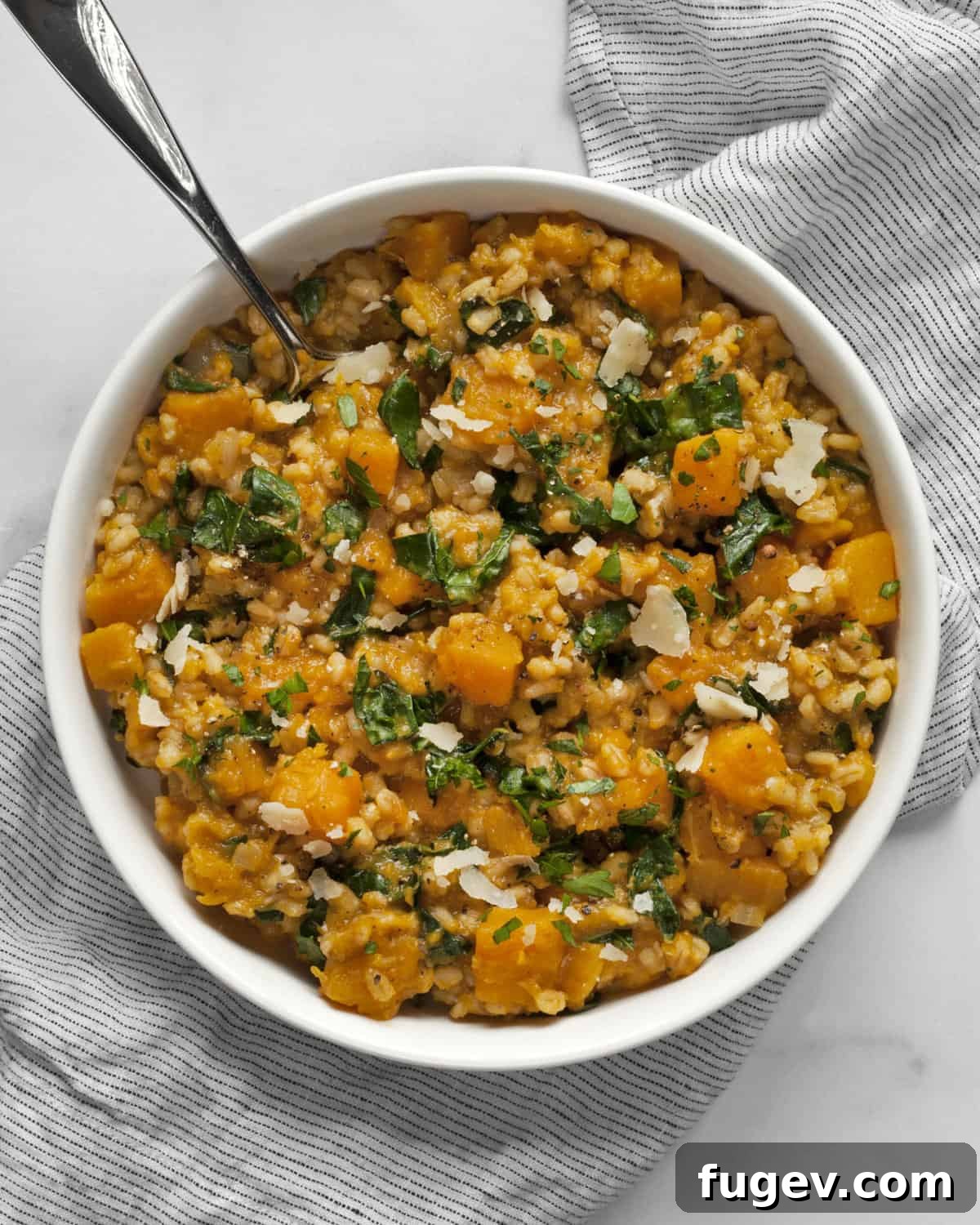
Craving a rich, creamy risotto but short on time or patience for constant stirring? This incredible Baked Butternut Squash Risotto with Barley is your new go-to. It’s a deliciously hearty and wholesome one-pot vegetarian meal that brings the comforting flavors of autumn right to your table, with a fraction of the traditional effort. Swapping out the usual Arborio rice for nutritious Italian pearl barley gives this dish a delightful chewiness and an added layer of robust flavor. The beauty of this recipe lies in its simplicity: a quick sauté on the stove to awaken the aromatics and tenderize the squash, followed by a hands-off baking period in the oven. This innovative method allows the barley to slowly absorb the savory vegetable broth, creating a perfectly creamy texture without requiring you to stand over the pot and stir continuously. It’s an ideal recipe for busy weeknights or when you want to impress without the stress, delivering a bowlful of warmth and flavor every time.
For more delightful butternut squash creations, you might also enjoy this roasted butternut squash kale orzo, topped with crunchy toasted breadcrumbs for an extra layer of texture.
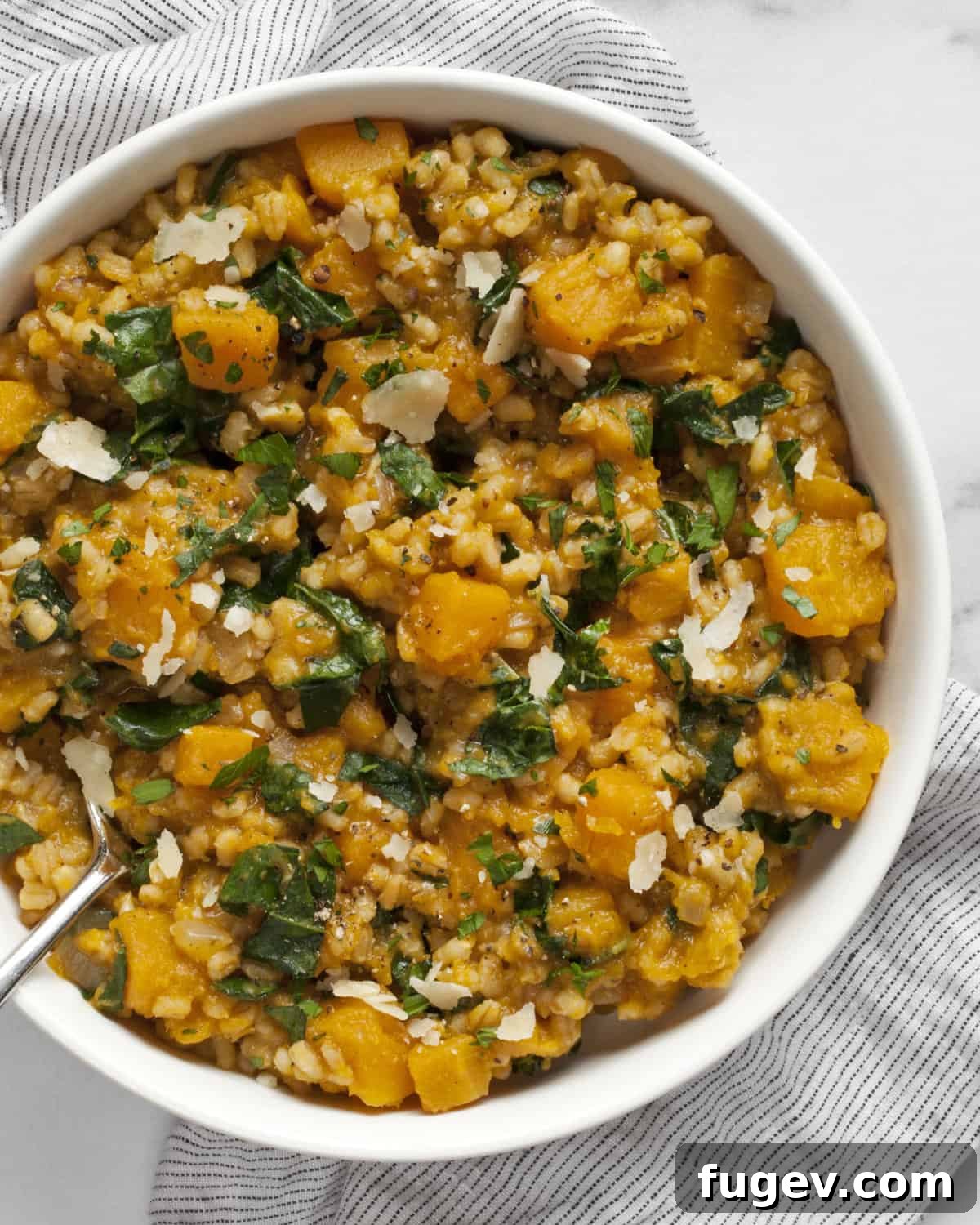
Table of Contents
- Why You’ll Adore This Baked Risotto
- Understanding Risotto: A Classic Italian Comfort
- Essential Ingredients for Your Barley Risotto
- Step-by-Step Guide: Crafting Your Butternut Squash Barley Risotto
- Perfect Pairings: What to Serve with Risotto
- Storing and Reheating Leftovers
- Butternut Squash Risotto FAQs
- More Delightful Risotto Recipes to Explore
- Full Butternut Squash Baked Barley Risotto Recipe
Why You’ll Adore This Baked Risotto
This recipe isn’t just another meal; it’s a culinary revelation that simplifies the art of risotto while maximizing flavor and nutrition. Here’s why this baked butternut squash barley risotto will quickly become a cherished favorite in your kitchen:
Effortless Elegance: Risotto Without the Fuss. Traditional risotto is renowned for its rich creaminess, but it often comes at the cost of continuous stirring and constant attention on the stovetop. This can be challenging when you’re managing multiple dishes or simply seeking a more relaxed cooking experience. Our baked method eliminates this strenuous task. By starting with a sauté and then transferring the pot to the oven, you free up your hands and your focus. The oven’s consistent heat ensures the barley cooks evenly, absorbing the broth gradually to achieve that coveted tender, creamy texture with minimal intervention. This “hands-off” approach means you can spend less time stirring and more time enjoying the process, or even tackling other meal prep tasks.
Nutrient-Rich Twist: Butternut Squash & Kale Powerhouse. Beyond its comforting appeal, this risotto is packed with wholesome goodness. Butternut squash offers a naturally sweet, nutty flavor and a vibrant orange hue, signaling its abundance of beta-carotene, a powerful antioxidant that converts to Vitamin A in the body. But we don’t stop there! We leverage the residual heat of the freshly baked risotto to gently wilt in fresh kale. This simple addition boosts the dish with essential vitamins (A, C, K), minerals, and fiber, transforming a delicious meal into a nutritional powerhouse. The slight bitterness of kale beautifully complements the sweetness of the squash and the savory depth of the cheese, creating a perfectly balanced flavor profile.
Beyond Rice: The Chewy Charm of Barley. While Arborio rice is the traditional choice for risotto, pearl barley offers a fantastic and often preferred alternative. Barley is a versatile grain you might already keep in your pantry for soups, salads, and side dishes, making it a more practical ingredient for many home cooks. When cooked risotto-style, barley develops a wonderfully pleasant, chewy bite that adds a unique textural dimension not found in rice-based risottos. It also boasts a higher fiber content compared to white rice varieties, contributing to satiety and digestive health. Its subtle, earthy flavor pairs exceptionally well with the sweet butternut squash and robust Parmesan, making this an exciting and flavorful departure from the classic.
Understanding Risotto: A Classic Italian Comfort
Originating from Northern Italy, risotto is more than just a rice dish; it’s an art form, typically served as a luxurious first course before the main entrée. The hallmark of a great risotto is its incredibly tender, creamy consistency, achieved not by adding actual cream, but by the gradual release of starch from the rice grains as they are slowly stirred with hot broth. This process creates a rich, velvety sauce that coats each grain.
Traditionally, risotto relies on specific short-grain, high-starch rice varieties like Arborio, Carnaroli, or Vialone Nano. These varieties are prized for their ability to absorb liquid while maintaining a firm core and releasing ample starch. However, culinary exploration often leads to delightful variations! I personally enjoy bending tradition by substituting these classic rice types with other robust grains like barley or even farro, preparing them with the classic risotto technique. Part of my reasoning stems from practicality; I often have these versatile grains readily available in my kitchen, and their multi-purpose nature means they’re valuable staples for a variety of recipes. The distinct texture and earthy notes of barley and farro also introduce an exciting dimension to the classic risotto experience, making this butternut squash and barley combination a particularly appealing and wholesome choice.
Essential Ingredients for Your Barley Risotto
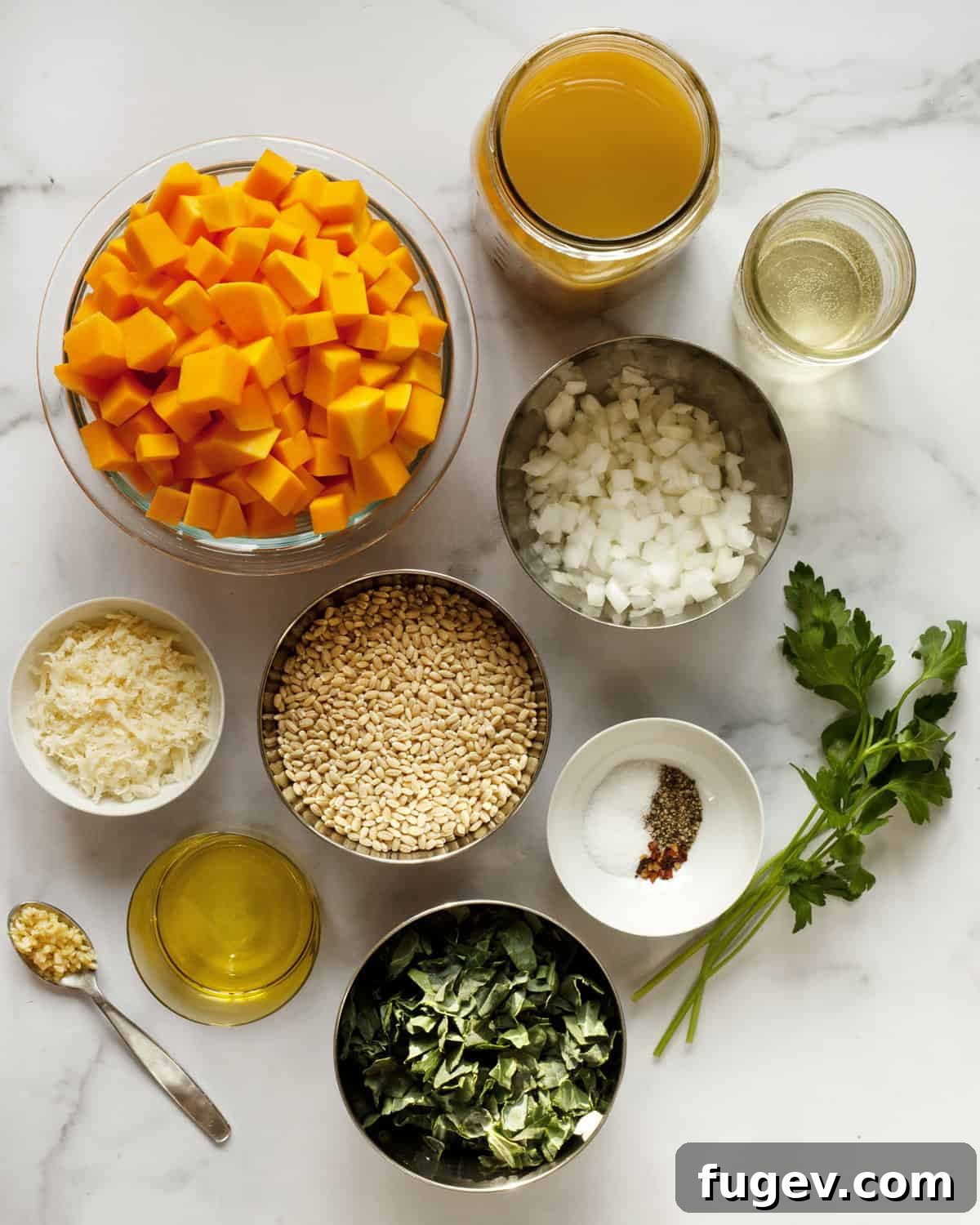
Crafting this flavorful butternut squash barley risotto requires a thoughtful selection of fresh produce and pantry staples. Each ingredient plays a crucial role in building the layers of taste and texture that make this dish so irresistible:
- Butternut Squash: The star of the show! You’ll need one medium butternut squash, peeled and expertly cut into uniform 1/2-inch cubes. The consistent size is key for even cooking and tender results. For a convenient shortcut on busy days, pre-cut butternut squash available in most grocery stores works wonderfully and saves prep time. Its natural sweetness provides a beautiful contrast to the savory elements of the risotto.
- Pearl Barley: Our unique grain for this risotto. Opt for pearl barley, which has had its outer husk and bran layers removed. This processing allows it to cook significantly faster than hulled barley, making it suitable for this baked risotto method while still offering a delightful chewiness and hearty texture that stands up beautifully to the other ingredients.
- Kale: A vibrant and nutritious addition. Both lacinato (dinosaur) kale or curly kale are excellent choices. Simply strip the leafy greens from their tough stems and chop them into bite-sized pieces. The heat from the freshly cooked risotto will gently wilt the kale, infusing the dish with its earthy notes and a boost of nutrients without overcooking it.
- Onions: The aromatic foundation. Sautéing finely chopped white or yellow onions in olive oil until translucent is the essential first step to build a complex flavor base. They provide a subtle sweetness and depth that permeates the entire dish.
- Garlic: Pungent and flavorful. The recipe suggests 1 minced clove, but don’t hesitate to add another if you’re a garlic enthusiast and desire a more pronounced flavor. It adds an irreplaceable aromatic punch that complements the squash and barley perfectly.
- Red Pepper Flakes, Salt & Pepper: These essential seasonings elevate the overall taste. Red pepper flakes introduce a subtle warmth and hint of spice, balancing the sweetness of the squash. Kosher salt and freshly ground black pepper are fundamental for seasoning the risotto throughout the cooking process, ensuring every bite is perfectly flavored.
- Dry White Wine: A secret weapon for depth. After stirring in the barley, a splash of dry white wine (such as Sauvignon Blanc or Pinot Grigio) serves to deglaze the bottom of the pan, lifting all the caramelized bits of flavor. While the alcohol cooks out during the process, it leaves behind a wonderful acidity and sharpness that beautifully balances the richness and creaminess of the risotto, adding a sophisticated layer to the flavor profile.
- Parmesan Cheese: The ultimate finishing touch. Freshly grated Parmesan cheese melts seamlessly into the hot risotto, contributing to its luxurious creaminess and infusing it with that quintessential savory, umami-rich flavor that defines Italian cooking. Have extra on hand for serving!
- Vegetable Broth: The liquid backbone. Always opt for low-sodium vegetable broth. This allows you complete control over the seasoning, ensuring your risotto isn’t overly salty before you’ve even adjusted it to taste. If you’re not strictly vegetarian, chicken broth can be a suitable substitute, offering a slightly richer flavor.
- Olive Oil: For optimal flavor, use a high-quality extra virgin olive oil to sauté the vegetables. Its fruity and peppery notes enhance the aromatics and provide a lovely base for cooking.
- Fresh Parsley or Sage: For a burst of freshness and color. I love sprinkling chopped fresh parsley over the finished dish for its bright, clean flavor. Alternatively, fresh sage leaves are a classic pairing for butternut squash. You can chop and stir them in along with the kale for a more pronounced, earthy, and aromatic presence. Sage has a strong, distinctive flavor that will take center stage, so adjust according to your preference.
Step-by-Step Guide: Crafting Your Butternut Squash Barley Risotto
Creating this delicious baked butternut squash barley risotto is a straightforward process, designed to minimize your time at the stove while maximizing flavor. Follow these simple steps for a perfect, creamy result:
Preheat your oven to 400 degrees Fahrenheit (200 degrees Celsius). This ensures your oven is perfectly heated and ready when your risotto is prepared for baking.
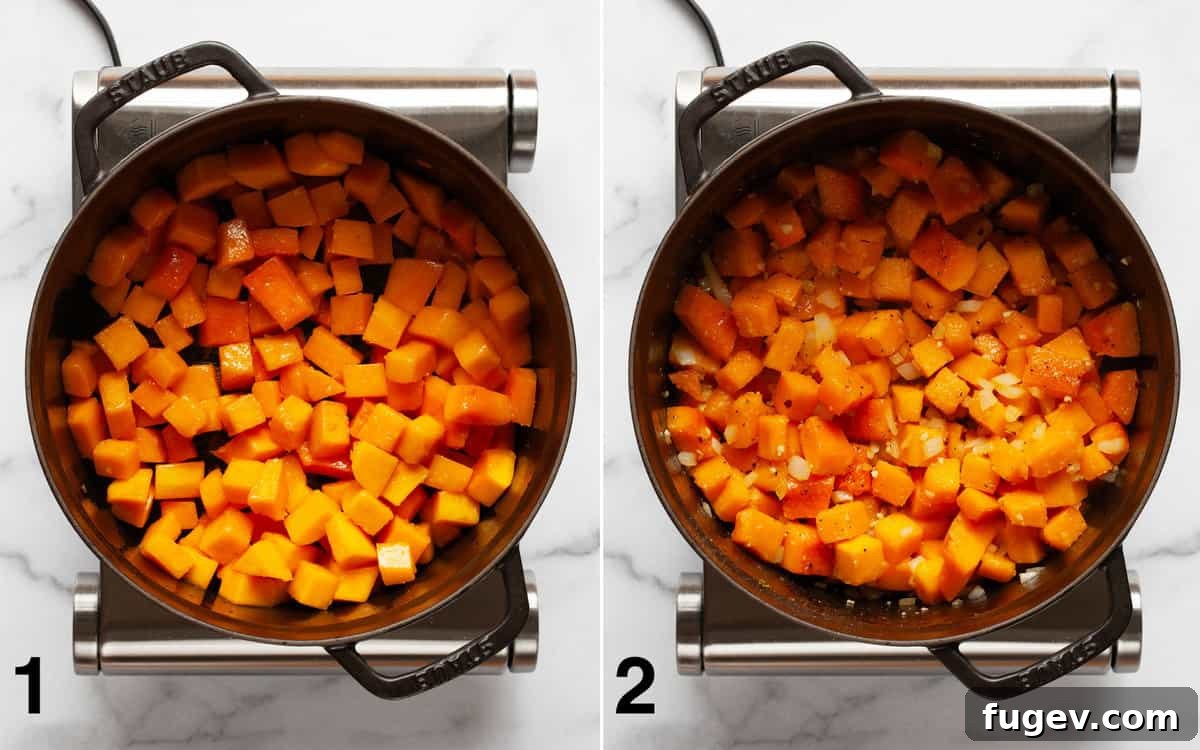
1. Sauté the Butternut Squash: Begin by warming the olive oil in a large, ovenproof saucepan or a Dutch oven over medium-high heat. Add your cubed butternut squash to the hot oil. Stir frequently, allowing the squash to soften and achieve a slight golden hue, which should take approximately 6-8 minutes. This step helps to develop its inherent sweetness and tenderize it before baking.
2. Build the Aromatic Base: Reduce the heat slightly if needed. Add the finely chopped onions to the saucepan with the softening squash. Sauté for about 2-3 minutes until the onions become soft and translucent. Next, stir in the minced garlic, kosher salt, black pepper, and red pepper flakes. Cook for just about 1 minute more, stirring constantly, until the entire mixture becomes incredibly fragrant, filling your kitchen with enticing aromas.
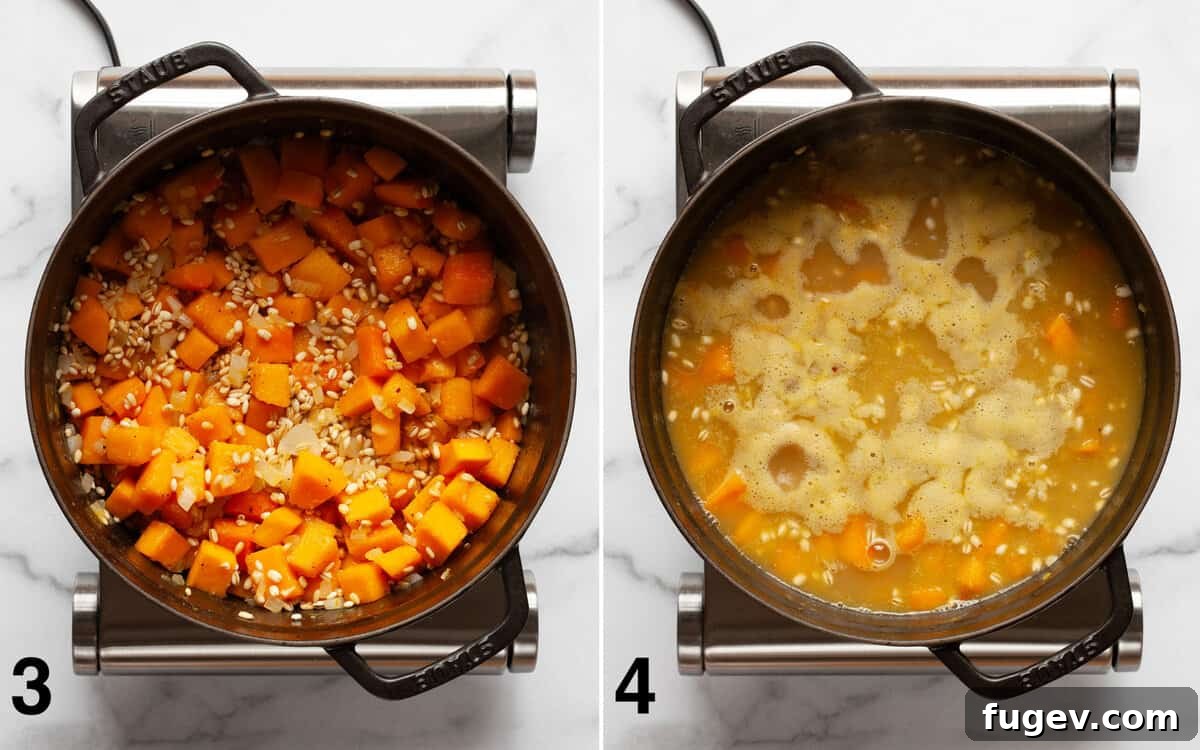
3. Toast the Barley and Deglaze: Add the pearl barley to the saucepan with the sautéed vegetables. Stir and cook for 1 minute, allowing the grains to lightly toast and become slightly opaque. This toasting step enhances the barley’s nutty flavor. Immediately pour in the dry white wine. Let it bubble vigorously for a moment, stirring to scrape up any flavorful caramelized bits from the bottom of the pan – this process is called deglazing and adds immense depth to your risotto.
4. Add Broth and Bake: Pour in the low-sodium vegetable broth, ensuring everything is well combined. Bring the mixture to a gentle boil on the stovetop. Once boiling, cover the saucepan tightly with a lid and carefully transfer it to your preheated oven. Bake for approximately 30-35 minutes. The risotto is ready when the barley is tender and most of the liquid has been absorbed, resulting in a creamy, unctuous consistency.
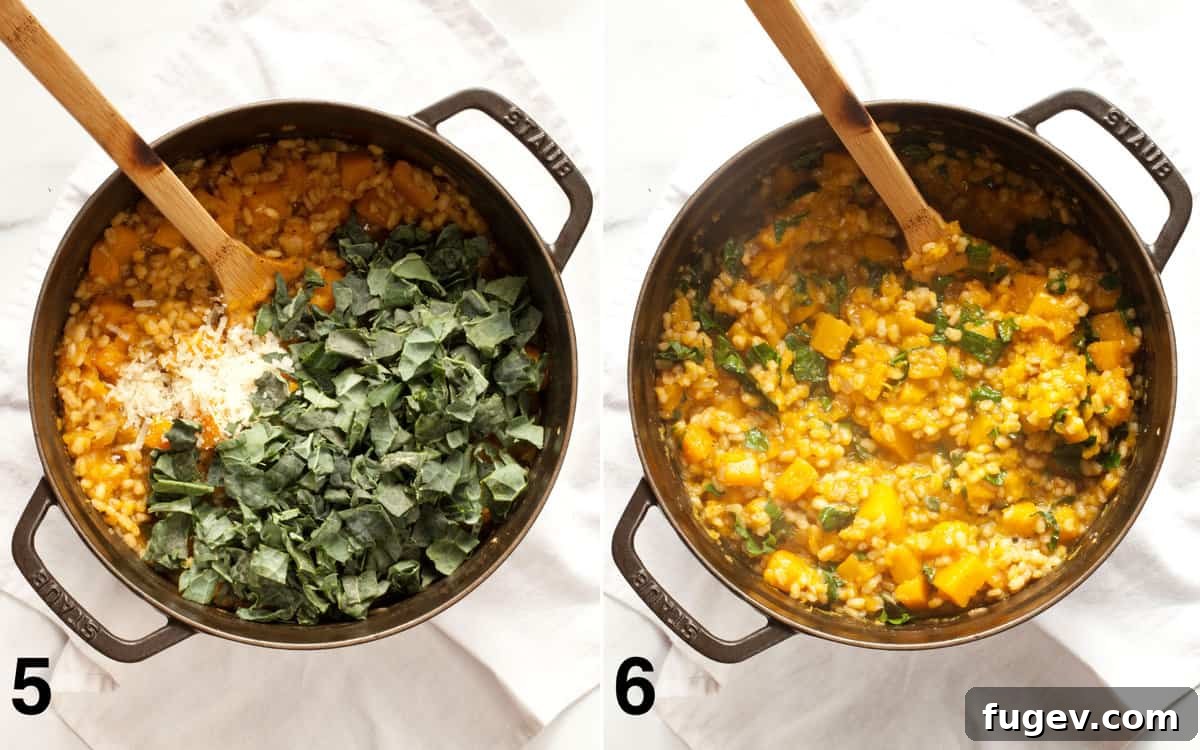
5. Stir in Greens and Cheese: Once the risotto is out of the oven, remove the lid. Add the chopped kale and finely grated Parmesan cheese directly into the hot, freshly baked risotto.
6. Finish and Serve: Give the risotto a good stir. The residual heat will quickly and gently wilt the kale, transforming it from crisp to tender, and will melt the Parmesan cheese into a rich, creamy consistency. This final stir also helps to fully incorporate all the flavors. Divide the creamy risotto into individual serving bowls. For an extra touch of freshness and elegance, garnish with additional chopped parsley or shaved Parmesan before serving immediately. Enjoy your perfectly crafted, easy baked risotto!
Perfect Pairings: What to Serve with Risotto
This hearty and flavorful butternut squash barley risotto can stand proudly as a main dish, but it also pairs beautifully with a variety of complementary sides. When choosing accompaniments, I often lean towards dishes that don’t require oven space, allowing the oven to remain free for other components of a larger meal, or simply to keep things simple. Fresh salads and quickly sautéed vegetables are excellent choices to add freshness and contrast to the rich risotto.
Consider these delightful options:
- Fresh Salads: A crisp, vibrant salad provides a refreshing counterpoint to the creamy texture of the risotto.
- Arugula Salad with Lemon Vinaigrette: The peppery bite of arugula and the bright acidity of a lemon vinaigrette cut through the richness of the risotto beautifully, offering a palate-cleansing effect.
- Classic House Salad: A simple mixed greens salad with a light dressing (perhaps a balsamic vinaigrette) is always a reliable and crowd-pleasing option.
- Italian Chopped Salad: For something a bit more substantial, an Italian chopped salad with crisp lettuce, tomatoes, cucumbers, and a zesty Italian dressing offers a medley of textures and flavors.
- Sautéed Vegetable Side Dishes: Quick-cooking vegetables can add additional nutrients and a different texture.
- Quick Sautéed Brussels Sprouts: Halved Brussels sprouts sautéed until tender-crisp, perhaps with a touch of garlic or a honey-mustard glaze, offer a slightly bitter and savory element that complements the sweet squash.
- Garlic Green Beans: Simple steamed or sautéed green beans tossed with garlic and a squeeze of lemon juice make for a fresh and easy side.
- Asparagus with Lemon: Roasted or sautéed asparagus, brightened with a squeeze of lemon, is another elegant and quick vegetable option.
No matter your choice, ensure the side dish adds a textural contrast or a fresh, bright flavor to balance the comforting richness of the risotto.
Storing and Reheating Leftovers
While this butternut squash barley risotto is undeniably best enjoyed fresh, it also makes for delicious leftovers. Proper storage and reheating will ensure you can savor its flavors for a few more days.
Storage: Once the risotto has cooled to room temperature, transfer it to an airtight container. It can be safely stored in the refrigerator for up to 3 days. Freezing is generally not recommended for risotto, as the texture can become mushy upon thawing and reheating.
Reheating: When reheating risotto, it’s important to be gentle to prevent it from drying out or becoming overly soft. The grains will naturally soften further as they sit and during the reheating process. You have a couple of good options:
- Stovetop Method (Recommended): For the best results, place the leftover risotto in a skillet over low to medium-low heat. Add a splash of vegetable broth or water (1-2 tablespoons per serving) to help rehydrate the grains and restore some of its creaminess. Stir the risotto frequently as it warms through, ensuring it heats evenly without sticking to the bottom of the pan. Continue stirring until it’s heated to your desired temperature and consistency. You may need to add a bit more liquid if it appears too dry.
- Microwave Method: For a quicker option, place a single serving of risotto in a microwave-safe bowl. Add a small splash of vegetable broth or water (about 1 tablespoon) and loosely cover the bowl. Heat in 30-second intervals, stirring in between, until heated through. Be cautious not to overheat, as this can make the barley overly soft or dry.
A fresh sprinkle of Parmesan cheese and chopped parsley after reheating can help revive the flavors and presentation of your delicious leftovers.
Butternut Squash Risotto FAQs
Absolutely! While this recipe highlights the unique texture of barley, you can certainly use traditional risotto rice like Arborio, Carnaroli, or Vialone Nano. Simply follow the same baked risotto method as outlined in the instructions. The cooking time might vary slightly, so keep an eye on the rice for tenderness and liquid absorption, typically around 25-30 minutes for Arborio.
Of course! If you’re looking to boost the amount of leafy greens in your dish, feel free to stir in more kale than the recipe specifies. I recommend adding an extra 1/4 to 1/2 cup at a time. Gently fold it into the hot risotto and allow it to wilt slightly. Then, assess if that’s the desired amount for your taste and nutritional preference. The heat of the risotto will quickly tenderize the additional kale.
As written with pearl barley, this recipe is not gluten-free, as barley contains gluten. However, you can easily make it gluten-free by substituting the barley with a gluten-free grain such as Arborio rice. When using Arborio rice, ensure all other ingredients (like vegetable broth) are certified gluten-free to maintain the integrity of the dish for those with gluten sensitivities or celiac disease.
One of the greatest advantages of this baked risotto method is that it requires very little attention. After you cover the saucepan and place it in the oven, you do not need to stir it during the baking process. The even heat of the oven allows the barley to cook consistently and absorb the broth on its own. Stirring only comes into play at the very end when you fold in the kale and Parmesan.
Yes, to make meal prep even quicker, you can certainly prepare some ingredients in advance. You can peel and dice the butternut squash a day or two before, storing it in an airtight container in the refrigerator. Similarly, you can chop the onions, mince the garlic, and strip/chop the kale ahead of time. This will significantly reduce your active cooking time on the day you plan to make the risotto.
More Delightful Risotto Recipes to Explore
If you’ve enjoyed the ease and flavor of this baked butternut squash barley risotto, you’ll be thrilled to discover more delicious and convenient risotto recipes that simplify this Italian classic. Expand your repertoire with these other fantastic variations, perfect for any season or occasion:
- Hearty Baked Kale Barley Risotto: A wonderfully nutritious and robust risotto that puts leafy greens at the forefront. This recipe focuses on the earthy goodness of kale combined with chewy barley, creating a wholesome and satisfying vegetarian dish that’s rich in flavor and texture. It’s another excellent hands-off option for a healthy and comforting meal.
- Easy Baked Pumpkin Risotto: Embrace the flavors of autumn with this incredibly simple and creamy pumpkin risotto. Using a baked method, it delivers all the comforting, sweet, and savory notes of pumpkin without the constant stirring. It’s a perfect dish for fall gatherings or a cozy night in.
- Vibrant Tomato Farro Risotto: This recipe offers a delightful Mediterranean twist, pairing sun-ripened tomatoes with the nutty, chewy texture of farro. The baked approach makes it effortlessly delicious, resulting in a bright, savory, and comforting dish that’s perfect for summer or as a refreshing change of pace.
- Bright and Zesty Baked Lemon Risotto: For a lighter, more refreshing take on risotto, this lemon version is a must-try. The zesty burst of lemon brightens the creamy grains, offering a wonderfully aromatic and invigorating flavor profile. It’s an ideal choice for spring or summer, or whenever you crave a fresh and vibrant meal.
Each of these recipes utilizes the convenient baked method, allowing you to achieve perfectly tender and creamy risotto with significantly less effort, proving that delicious home-cooked meals don’t have to be complicated.
Butternut Squash Baked Barley Risotto
Print Recipe
Ingredients
- 1 tablespoon extra virgin olive oil
- 1 medium butternut squash, peeled and cut into 1/2-inch dice (about 4-5 cups)
- 1/2 small white or yellow onion, finely chopped
- 1-2 garlic cloves, minced
- 1 teaspoon kosher salt
- 1/2 teaspoon freshly ground black pepper
- 1/4 teaspoon red pepper flakes (optional, for a hint of heat)
- 1 cup pearl barley
- 1/2 cup dry white wine (e.g., Sauvignon Blanc, Pinot Grigio)
- 3 cups low-sodium vegetable broth
- 1 cup chopped kale (lacinato or curly, stems removed)
- 1/4 cup finely grated Parmesan cheese plus more for serving
- 1 tablespoon chopped fresh parsley (for garnish)
Save this recipe
Get it sent to your inbox plus new recipes every week.
Instructions
-
Preheat the oven to 400 degrees F (200 degrees C).
-
In a large ovenproof saucepan or Dutch oven, heat the olive oil over medium-high heat. Add the butternut squash and sauté, stirring frequently, for 6-8 minutes until it begins to soften and slightly tenderize.
-
Add the chopped onions to the pan and continue to sauté for 2-3 minutes, until they become soft and translucent. Stir in the minced garlic, kosher salt, black pepper, and red pepper flakes. Cook for another 1 minute, stirring constantly, until the aromatics are fragrant.
-
Add the pearl barley to the saucepan and cook for 1 minute, stirring, until the grains appear slightly opaque. Pour in the dry white wine, allowing it to bubble and be nearly absorbed by the barley. Stir to deglaze the bottom of the pan, scraping up any flavorful bits.
-
Pour in the low-sodium vegetable broth and bring the mixture to a boil on the stovetop. Once boiling, cover the saucepan tightly with a lid and carefully transfer it to the preheated oven. Bake for 30-35 minutes, or until the barley is tender and most of the liquid has been absorbed, creating a creamy consistency.
-
Carefully remove the saucepan from the oven. Stir in the chopped kale and finely grated Parmesan cheese.
-
Continue stirring the risotto gently, allowing the residual heat to quickly wilt the kale and melt the Parmesan cheese into a rich, creamy sauce. Divide the risotto into serving bowls and garnish with additional chopped fresh parsley and/or shaved Parmesan cheese before serving immediately.
Video
Notes
For an enhanced autumnal flavor, you can stir in 1-2 teaspoons of chopped fresh sage along with the kale and Parmesan cheese. Sage has a strong, distinctive flavor that complements butternut squash beautifully.
Store any leftover risotto in an airtight container in the refrigerator for up to 3 days. When reheating, it’s best to do so on the stovetop over low heat, adding a splash of vegetable broth or water to restore moisture and creaminess, stirring frequently. Alternatively, you can microwave it in short intervals, stirring in between. Be aware that the grains will soften further upon storage and reheating.
Nutrition
Nutrition information is automatically calculated, so should only be used as an approximation.