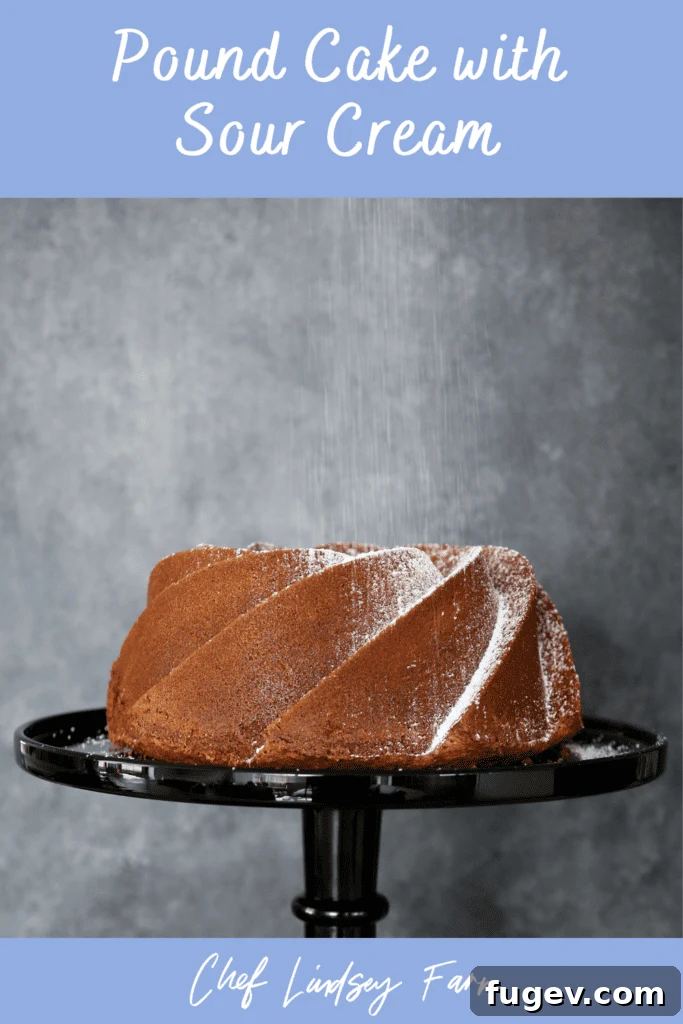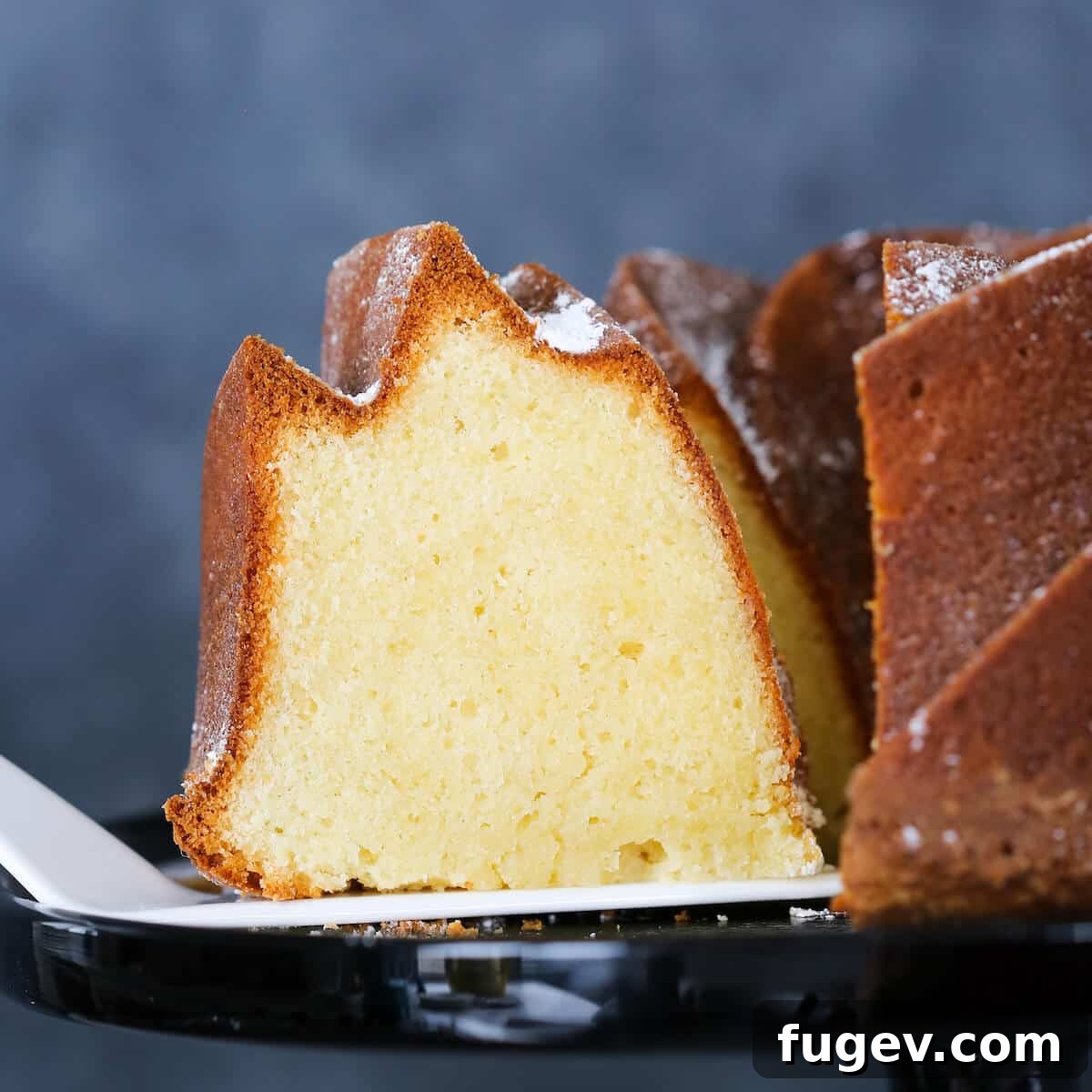
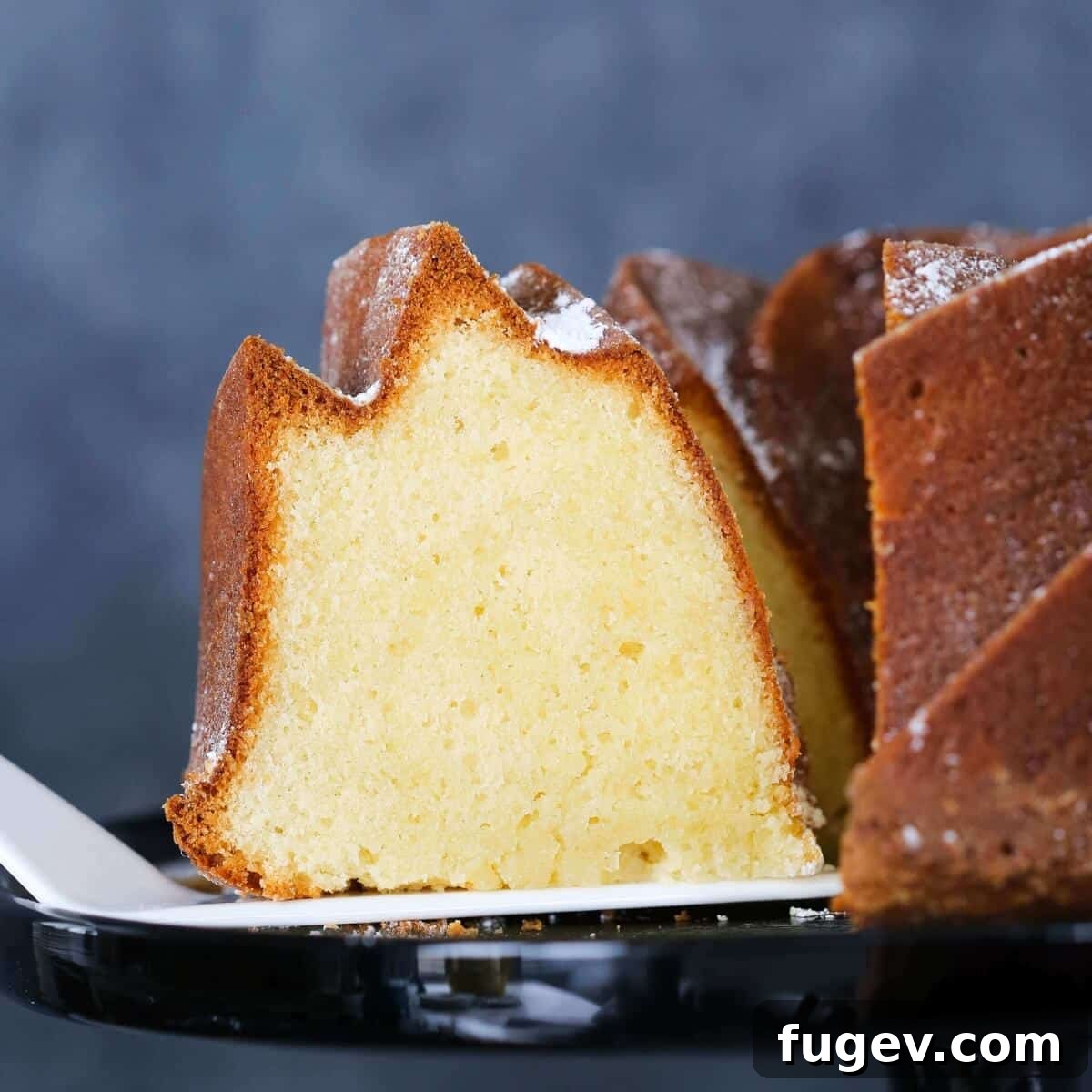
Welcome to the ultimate guide for creating the most exquisite Sour Cream Pound Cake you’ll ever taste. This recipe promises a cake that is exceptionally moist, wonderfully dense, and incredibly tender, with a subtle yet distinct character imparted by a splash of quality brandy. It is, without a doubt, the quintessential pound cake recipe you’ve been searching for.
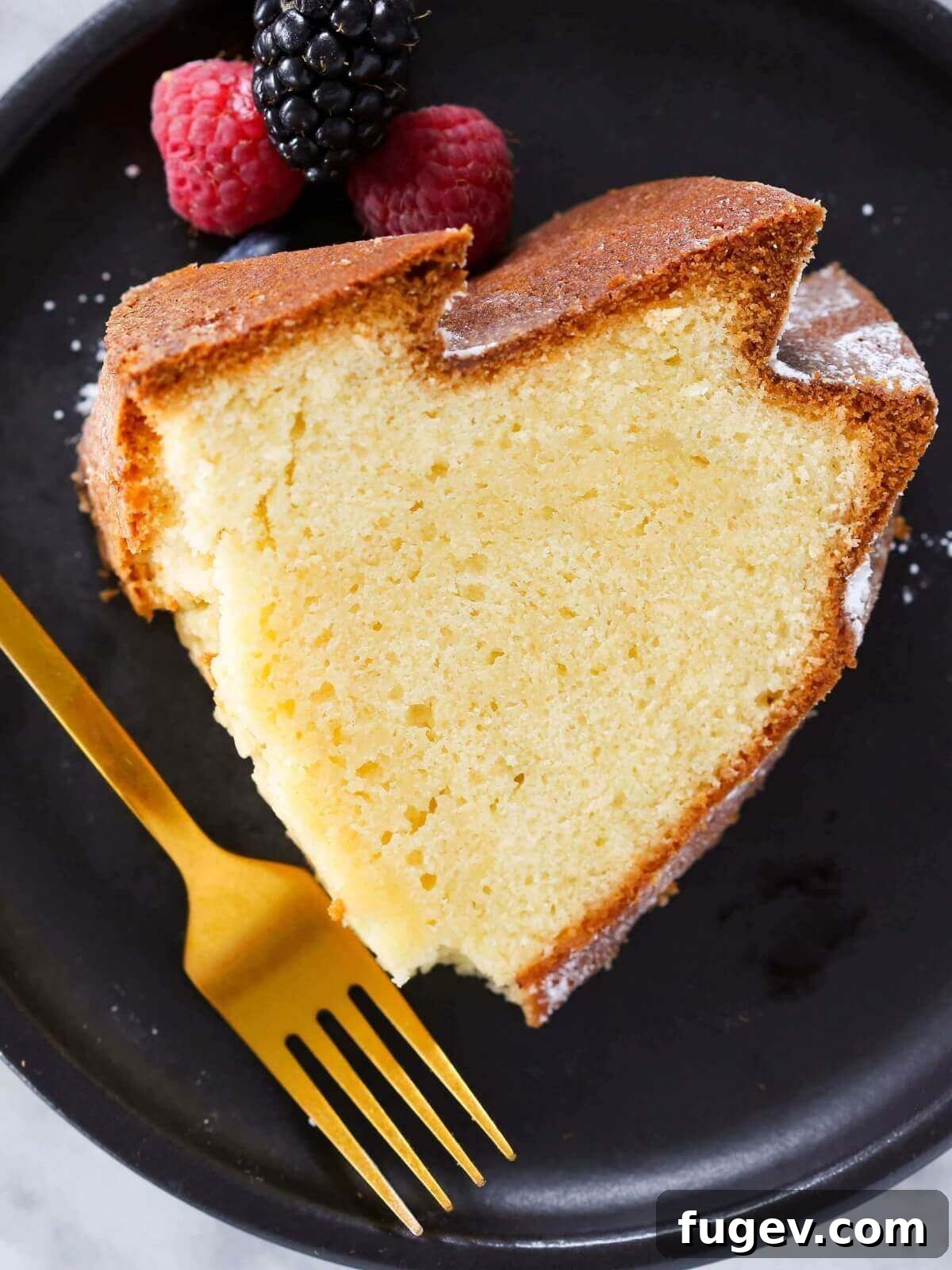
Every bite of this sour cream pound cake reveals a perfectly tight crumb that somehow still melts effortlessly in your mouth. It’s the kind of dessert that leaves you craving just one more slice, ensuring each subsequent taste is as delightful as the first. This recipe transcends the ordinary, transforming simple ingredients into a truly unforgettable experience.
My journey to perfecting the ideal pound cake texture began with this incredible apricot brandy pound cake. Once you experience that, you’ll understand my passion for these dense, flavorful bundt cakes. Join me in exploring more irresistible pound cake variations, including my decadent chocolate pound cake, the life-changing red velvet pound cake, a delightful cherry almond pound cake, or a refreshing strawberry pound cake. Each offers a unique twist on this classic dessert!
Why You Will Absolutely Love This Sour Cream Pound Cake
- The Epitome of Pound Cake Perfection: This isn’t just any pound cake; it’s *the* pound cake. It strikes a flawless balance between being wonderfully dense and incredibly tender, dissolving delightfully on your tongue. The unexpected hint of brandy acts as a secret weapon, elevating its flavor profile and moisture to a whole new level. It’s a culinary masterpiece that embodies the very essence of what a pound cake should be – rich, comforting, and utterly delicious.
- Stunning, Glazed or Naked: Few cakes possess the natural elegance of a pound cake, making it truly magnificent whether adorned with a luxurious glaze or presented simply in its unadorned beauty. Crafted in an elaborate bundt mold or a more understated loaf pan, its graceful form and golden-brown crust make it a showstopper. This cake requires no elaborate decoration to impress; its inherent charm and exquisite taste speak for themselves.
- Perfected by a Professional Pastry Chef: Rest assured, this isn’t just a casual recipe. It has been meticulously developed, tested, and re-tested by a professional pastry chef (that’s me!). I’ve fine-tuned every ratio and every step to ensure a foolproof process. You’ll find precise ingredient measurements, provided by both weight and volume, to guarantee consistent, outstanding results every single time. Say goodbye to baking guesswork and hello to consistent perfection!
Table of Contents
- Why You Will Absolutely Love This Sour Cream Pound Cake
- Key Ingredients for the Perfect Pound Cake
- The Science Behind Sour Cream in Cakes: What It Does
- Sour Cream Substitutes: What to Use in a Pinch
- Professional Baking Tips for Success
- Step-by-Step: How to Make Sour Cream Pound Cake
- Chef Lindsey’s Expert Baking Tip
- Storing Your Sour Cream Pound Cake for Maximum Freshness
- Sour Cream Pound Cake Recipe FAQs
- More Irresistible Pound Cake Recipes
- Sour Cream Pound Cake Full Recipe Card
- Before You Go: Explore More Delicious Cakes
Key Ingredients for the Perfect Pound Cake
Creating this magnificent sour cream pound cake requires a selection of high-quality ingredients, each playing a vital role in achieving its signature taste and texture. Understanding the purpose of each component is key to baking success:
- Unsalted Butter: I always opt for unsalted butter in my baking. This allows precise control over the overall salt content, ensuring a balanced flavor. Butter is fundamental for richness, moisture, and contributing to the tender crumb of the cake. Ensure it’s cool but pliable for optimal creaming.
- Granulated Sugar: This recipe calls for a substantial amount of granulated sugar, which does more than just sweeten the cake. It plays a critical role in the cake’s structure, helping to create that desired tight crumb while also ensuring it remains incredibly moist and melts in your mouth. Sugar also aids in browning and caramelization, adding depth of flavor.
- Whole Eggs: Large whole eggs are essential for adding fat, which enriches the flavor and texture, and moisture, contributing to the cake’s tenderness. They also act as a leavening agent, providing some lift, and help to emulsify the batter, creating a smooth, cohesive mixture.
- All-Purpose Flour: The backbone of most baked goods, all-purpose flour provides the structural integrity for our pound cake. It contains the right amount of protein to create a sturdy yet tender crumb, ensuring the cake holds its shape beautifully without becoming tough.
- Kosher Salt: A seemingly small but mighty ingredient, kosher salt is crucial for enhancing and balancing the flavors of all the other ingredients. It prevents the cake from tasting bland and beautifully complements the sweetness of the sugar.
- Sour Cream: This is where the magic happens! The generous addition of full-fat sour cream is paramount. Its high fat content and relatively low liquid content contribute immense flavor, lock in moisture, and, most importantly, tenderize the cake by “shortening” gluten strands. This results in that desirable dense, yet incredibly moist and tender texture that defines a perfect pound cake. Always use full-fat for the best results, as lower-fat varieties can break easily when heated or exposed to acid.
- Baking Soda: Just a quarter teaspoon of baking soda might seem minimal, but it’s perfectly calibrated for this recipe. It reacts immediately with the natural acidity in the sour cream, providing a gentle lift to the cake. This subtle leavening ensures a slightly airy quality within the dense crumb, preventing it from becoming overly heavy.
- Vanilla Extract: High-quality vanilla extract provides a classic, comforting flavor on its own, but it also remarkably boosts and amplifies the flavors of all the other ingredients, adding a layer of aromatic complexity.
- Brandy: Our “secret ingredient,” adding brandy (or any preferred alcohol) serves multiple purposes. Alcohol tenderizes the cake by inhibiting gluten development differently than water, resulting in an exceptionally soft and moist crumb. Beyond that, it imparts a sophisticated depth of flavor that truly sets this pound cake apart. Feel free to experiment with other spirits like rum or even tequila, or opt for a non-alcoholic extract if preferred.
For precise measurements and further details, please refer to the full recipe card below.
The Science Behind Sour Cream in Cakes: What It Does
Sour cream is not merely a flavorful addition to pound cake; it’s a structural and textural powerhouse. The primary reasons it’s such a star ingredient lie in its unique composition: its extra fat content and its distinct acidity, combined with a lower liquid volume compared to milk or buttermilk.
Firstly, the high fat content in full-fat sour cream contributes significantly to the cake’s richness and tender texture. Fat coats the flour particles, preventing excessive gluten development. Gluten, when overdeveloped, can make cakes tough or chewy. By “shortening” the gluten strands, sour cream ensures a delightfully soft and melt-in-your-mouth crumb. This fat also helps to retain moisture, keeping your pound cake from drying out.
Secondly, sour cream’s acidity (from lactic acid fermentation) plays a dual role. It reacts with baking soda, creating tiny carbon dioxide bubbles that provide a subtle, delicate lift to the cake without making it overtly airy. This reaction is crucial for achieving the characteristic dense yet not heavy texture of a pound cake. The acid also further tenderizes the proteins in the flour, enhancing the overall softness.
Finally, its low liquid content means it adds richness and tenderizing properties without thinning the batter excessively. This allows for a denser crumb, a hallmark of traditional pound cakes, which are known for their substantial texture. In essence, sour cream is the unsung hero that delivers the moistness, tenderness, and tight crumb structure that makes this pound cake truly exceptional.
Sour Cream Substitutes: What to Use in a Pinch
While full-fat sour cream is highly recommended for the best results in this pound cake, I understand that sometimes you might need a substitute. Here are some viable alternatives, along with considerations for each:
- Greek Yogurt: This is by far your best bet for a substitute. Greek yogurt, especially a 2% or full-fat variety like Fage 2% Greek Yogurt, has a similar thickness, fat content, and acidity to sour cream. Avoid fat-free or regular, thinner yogurts, as they won’t provide the same richness or texture. The slight tang of Greek yogurt will also complement the cake beautifully.
- Cream Cheese: While I haven’t personally tested this specific substitution in *this* recipe, cream cheese can work if thinned appropriately. You would need to soften full-fat cream cheese and then whisk in a little lemon juice and milk until it reaches a consistency similar to sour cream. This will add a distinct tangy, rich flavor to your cake. If you try this, please share your results in the comments to help fellow bakers!
- Buttermilk or Regular Milk: I would generally advise against using buttermilk or regular milk as direct substitutes for sour cream in this particular recipe. Buttermilk is much thinner, and regular milk even more so, and neither has the same high fat content. Replacing sour cream with these will significantly alter the cake’s texture, resulting in a less dense and less moist crumb than desired for a pound cake. If you’re looking for a recipe that uses these liquids, I highly recommend my delicious lemon pound cake recipe, which is designed for their consistency.
- Non-Dairy Substitute: For a vegan or dairy-free alternative, a thick, full-fat plant-based yogurt is your best bet. Cashew yogurt or coconut yogurt (ensure it’s plain and unsweetened) can mimic the creamy texture and some of the fat content of sour cream. Look for brands specifically formulated to be thick and tangy for the most comparable results.
Professional Baking Tips for Success
Baking a perfect pound cake isn’t just about the ingredients; it’s about technique. As a professional pastry chef, I’ve honed these tips to ensure your success with this sour cream pound cake:
- Always Weigh Your Ingredients for Accuracy: While this recipe provides volume measurements, I cannot stress enough the importance of weighing your ingredients, especially flour and sugar. Baking is a science, and ingredients like eggs vary in size, and a “cup” of flour can differ by as much as 50 grams depending on how it’s scooped. Using a kitchen scale (like this one) eliminates these inconsistencies, guaranteeing the precise ratios needed for that perfect pound cake texture. If you must measure by volume, always fluff your flour with a spoon, then gently spoon it into your measuring cup, mounding it slightly. Use a straight edge (like a knife) to level off the excess without tapping or compacting the flour.
- Avoid Over-Creaming Butter and Sugar: This is a critical step for achieving the dense, tight crumb of a classic pound cake. You want to cream your softened butter and sugar just until they form a thick, uniform paste – light in color, but not overly fluffy. Unlike airy cakes where you whip in a lot of air for volume, for pound cake, excessive aeration will lead to a more open, less dense texture. Over-creaming incorporates too much air, which can cause the cake to rise too quickly and then collapse, resulting in a coarser crumb. Stop as soon as the mixture is well combined and slightly lightened.
- Cool Your Cake in Two Essential Stages: Patience is paramount when cooling a pound cake. First, allow your cake to cool in its pan for at least 20 minutes. This crucial period allows the cake’s structure to set, preventing it from breaking apart when inverted. After 20 minutes, carefully invert the cake onto a wire rack to cool completely. Cutting into a warm pound cake will compress its delicate crumb, ruin its texture, and can make it seem gummy. The internal structure needs time to fully solidify and distribute moisture evenly, ensuring that desirable dense yet tender finish.
Step-by-Step: How to Make Sour Cream Pound Cake
Creating this delicious sour cream pound cake is a straightforward process when you follow these steps carefully. Detailed measurements are available in the recipe card below.
Make the Cake Batter:
Step 1: Prepare Your Oven and Pan. Preheat your oven to 325°F (160°C). Whether you’re using a convection or standard oven, this temperature allows for even baking and prevents the outside from browning too quickly. Next, meticulously prepare your bundt pan (or loaf pan). Spray every crevice generously with a high-quality non-stick cooking spray, ensuring no spot is missed. Then, dust the entire interior with all-purpose flour, tapping and rotating the pan until a thin, even layer of flour coats every inch. Tap out any excess flour; this step is crucial, especially for intricate bundt designs, to prevent sticking and ensure a perfect release.
Step 2: Combine Dry Ingredients. In a medium-sized bowl, whisk together your dry ingredients: the all-purpose flour, baking soda, and kosher salt. Whisking ensures they are thoroughly combined and evenly distributed, which is essential for uniform leavening and seasoning throughout the cake.
Step 3: Cream Butter and Sugar with Eggs. In the bowl of a stand mixer fitted with the paddle attachment, cream together the softened unsalted butter and granulated sugar. Mix on medium speed until a thick, pale paste forms, ensuring the sugar is well incorporated into the butter. This should take about 3-5 minutes. Then, add the large eggs one at a time, beating well after each addition. Scrape down the sides of the bowl frequently with a rubber spatula to ensure all ingredients are fully incorporated and the mixture remains smooth.
Step 4: Incorporate Flour and Sour Cream. Reduce the mixer speed to low. Begin to alternately add the dry flour mixture and the sour cream to the butter-sugar-egg mixture. Start and end with the flour. Mix only until the ingredients are just combined before adding the next batch. Overmixing at this stage can lead to a tough cake.
Chef’s Pro Tip for Adding Ingredients: I don’t wait for each flour addition to be fully incorporated before adding the next batch. I skillfully add the dry ingredients and sour cream alternately with two hands, in true professional style. However, I always pause the mixer to scrape down the bowl thoroughly before adding the very last portion of sour cream, ensuring every bit is mixed in for a perfectly smooth batter.
Step 5: Add Flavorings. Once all the flour and sour cream are just combined, gradually pour in the brandy and vanilla extract. Increase the mixer speed to medium-low and mix just until everything is fully incorporated and the batter achieves a beautifully silky and smooth consistency. Be careful not to overmix.
Bake and Glaze:
Step 6: Bake the Cake. Pour the prepared cake batter into your meticulously prepared bundt pan, smoothing the top with a spatula to ensure even baking. Place the pan in your preheated oven. Bake until a cake tester or a wooden toothpick inserted into the center comes out with just a few moist crumbs clinging to it, but not wet batter. My cake typically takes about 70 minutes, but baking times can vary significantly between ovens, so yours might take anywhere from 60 to 85 minutes. Start checking around the 60-minute mark.
Step 7: Cool Properly. Once baked, remove the cake from the oven and let it cool in the pan on a wire rack for precisely 20 minutes. This cooling period is vital for the cake to set its structure, preventing it from crumbling when inverted. After 20 minutes, carefully loosen the edges of the cake from the pan using a thin paring knife, then invert it onto the wire rack to cool completely. This can take several hours, so be patient!
Glazing Opportunity: While your pound cake is cooling, it’s the perfect time to prepare any glaze or frosting you desire. For an extra touch of indulgence, I highly recommend the rich cream cheese glaze from my cinnamon scones, or a simple yet delicious classic donut glaze for a touch of sweetness.
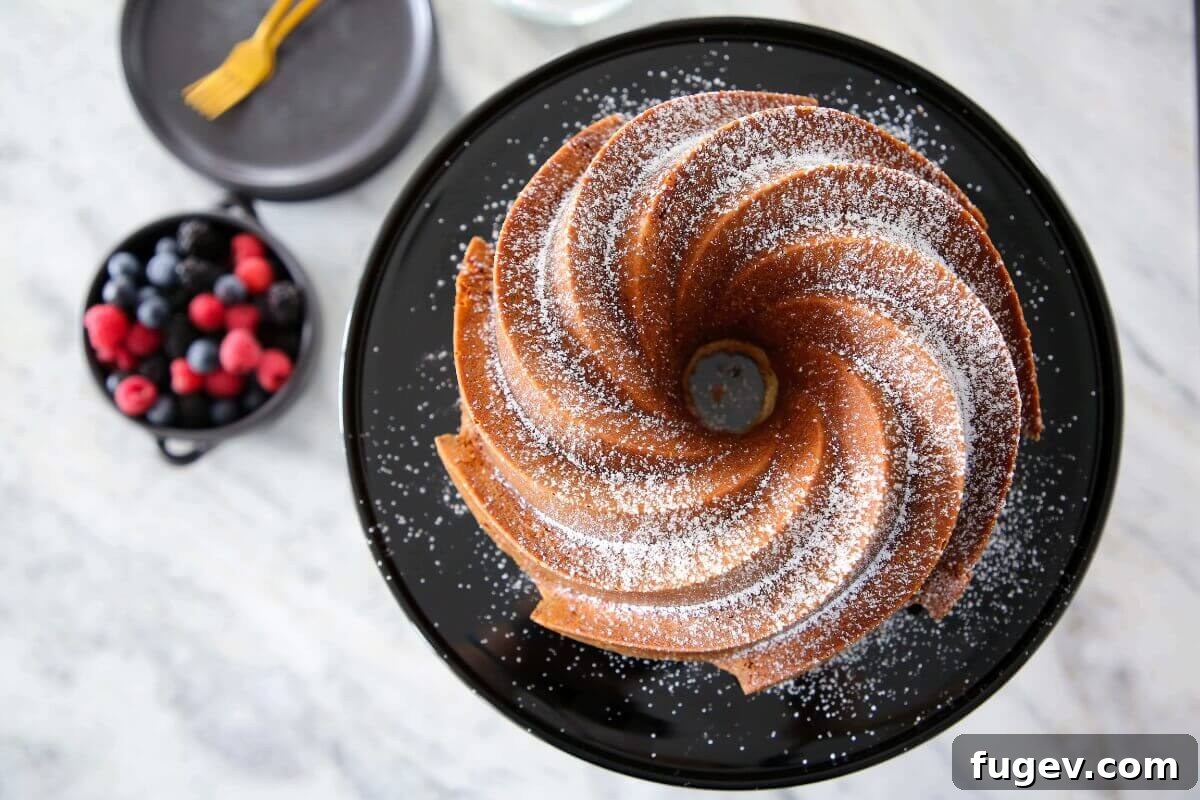
Step 8: Finish and Enjoy! Once the cake is completely cool to the touch, you can dust it generously with powdered sugar for a simple, elegant presentation, or drizzle your chosen glaze beautifully over the top. Slice and savor every delectable bite!
Chef Lindsey’s Expert Baking Tip
Vigilantly Monitor Your Cake While Baking. The difference between a perfectly moist pound cake and a dry one often comes down to just a few minutes in the oven. Overbaking this cake will inevitably lead to a dry texture. Therefore, it’s crucial to use a cake tester or toothpick inserted directly into the very center of the cake to confirm doneness. The exterior may appear beautifully golden and set, but the interior might still require additional baking time. Trust the internal test, not just visual cues, for that ideal, tender crumb.
Storing Your Sour Cream Pound Cake for Maximum Freshness
Proper storage is key to maintaining the exquisite moisture and flavor of your sour cream pound cake. Here’s how to keep it fresh, whether for a few days or for longer enjoyment:
At Room Temperature: For optimal freshness and convenience, especially within the first few days, store the pound cake well-wrapped in plastic wrap or an airtight container at room temperature. It will remain moist and delicious for up to 5 days. Ensure it’s away from direct sunlight or heat sources.
Refrigerated: If you prefer to extend its shelf life slightly or live in a very warm climate, you can refrigerate the pound cake. Again, wrap it tightly in plastic wrap or place it in an airtight container to prevent it from drying out or absorbing refrigerator odors. Refrigerated pound cake will stay fresh for up to two weeks. Allow it to come to room temperature before serving for the best texture.
Frozen: For long-term storage, pound cake freezes beautifully! Wrap individual slices or the entire cake tightly in plastic wrap, then an additional layer of aluminum foil, or place in a freezer-safe bag. It can be frozen for up to 3 months. Thaw frozen pound cake overnight in the refrigerator, then bring to room temperature before serving. Freezing is an excellent option for enjoying freshly baked taste whenever a craving strikes.
For the absolute best taste and texture, aim to serve your pound cake within 2 days of baking. Any leftovers can also be creatively repurposed in desserts like a delightful berry trifle, a rich bread pudding, or even transformed into decadent French toast!
Sour Cream Pound Cake Recipe FAQs
While sour cream is technically safe to freeze, its texture can change significantly after thawing, often becoming grainy or separating. It’s generally not recommended for recipes where its creamy texture is paramount. However, freezing *this cake* after baking is perfectly fine, as the sour cream has already been integrated and baked into the structure. I do not recommend freezing raw pound cake batter made with sour cream, as the freezing and thawing process can negatively impact the emulsion and leavening agents.
Preventing a bundt cake from sticking is a crucial step for a perfect presentation, especially with detailed bundt pans like the one I used. Do not underestimate the power of a meticulously greased and floured pan! My method involves generously spraying the entire interior of the pan with a non-stick baking spray (one that contains flour is excellent), ensuring every nook and cranny is coated. Then, add a few tablespoons of all-purpose flour to the pan, and tap, rotate, and tilt the pan vigorously until every millimeter of the surface is covered with a thin, even layer of flour. You can even repeat this step to ensure full coverage. Finally, invert the pan and firmly tap out any excess flour. This prevents those undesirable “weird patches” on the cake’s exterior and ensures a pristine release, leaving no cake behind!
The versatility of this sour cream pound cake makes it a wonderful canvas for various accompaniments. I personally adore it with a light dollop of homemade whipped cream, perhaps infused with a hint of lemon for brightness, or alongside a scoop of rich vanilla bean ice cream. A simple medley of fresh seasonal fruits, like berries or sliced peaches, provides a refreshing contrast. For a touch of decadence, try it with a warm drizzle of hot fudge sauce to introduce a chocolatey note. A spoonful of bright lemon curd offers a delightful tangy counterpoint, or for a fun, sophisticated twist, a luscious salted caramel sauce is simply divine!
More Irresistible Pound Cake Recipes
If you’ve fallen in love with this Sour Cream Pound Cake, you’re in for a treat! Explore more of my chef-tested pound cake recipes, each offering a unique and delicious experience.
Cake Recipes
Red Velvet Pound Cake
Experience the iconic flavor of red velvet in a dense, moist pound cake form, complete with a tangy cream cheese glaze.
Cake Recipes
Maple Pound Cake with Maple Glaze
Indulge in the cozy, warm flavors of real maple syrup in this irresistible pound cake, crowned with a sweet maple glaze.
Cake Recipes
Chocolate Pound Cake
For chocolate lovers, this dense and deeply flavorful chocolate pound cake is an absolute dream come true.
Cake Recipes
Lemon Pound Cake
A bright and zesty lemon pound cake, perfectly complemented by a vibrant strawberry icing, for a taste of sunshine.
If you tried this Sour Cream Pound Cake recipe and absolutely loved it, please take a moment to leave a 🌟 star rating and share your thoughts in the comments below. I genuinely love hearing from you and your feedback truly makes my day!
Sour Cream Pound Cake
Comment
Print Recipe
Ingredients
US Customary
Metric
1x
2x
3x
Metric
2x
3x
- 1 ½ cups unsalted butter cool but pliable
- 3 cups sugar
- 6 eggs large
- 3 cups all purpose flour
- 1 teaspoon kosher salt
- ¼ teaspoon baking soda
- 1 cup sour cream full fat for the best flavor & texture
- 2 teaspoons vanilla extract
- ¼ cup brandy
Instructions
Make cake batter:
-
Preheat the oven to 325°F (160°C) and prepare your pan. Spray it generously with cooking spray, then dust it thoroughly with flour, tapping the flour around until every inch is covered. Tap out any excess.
-
In a medium bowl, whisk together the dry ingredients: flour, baking soda, and salt.
-
In the bowl of a stand mixer fitted with the paddle attachment, cream together softened butter and sugars until a thick, pale paste forms (3-5 minutes). Beat in the eggs one at a time, scraping down the sides of the bowl as you go to ensure even mixing.
-
Switch the mixer to low speed, and alternately add the flour mixture and sour cream, beginning and ending with flour. Mix only until each addition is just combined before adding the next. Do not overmix.
-
Once all dry and wet ingredients are added, gradually add in the brandy and vanilla. Turn the mixer speed up slightly (medium-low) and mix just until everything is fully incorporated and the batter is silky and smooth.
Bake and glaze:
-
Pour the batter into the prepared pan and smooth the top with a spatula. Bake in the preheated oven until a cake tester or toothpick inserted into the center comes out with a few clinging crumbs (not wet batter). This typically takes 60-85 minutes, with mine usually done around 70 minutes.
-
Let the cake cool for 20 minutes in the pan on a wire rack. Then, carefully loosen the edges with a paring knife and invert it onto the wire rack to cool completely.
-
Once the cake is completely cooled, dust with powdered sugar for a simple finish or drizzle your favorite glaze over the top. Enjoy!
Video
Notes
Flavor Tips – While you can substitute the brandy for water, I highly recommend choosing an alcohol you enjoy. Alcohol hydrates flour differently than water, leading to a more tender cake.
Technique – Always cool your cake in two stages: 20 minutes in the pan, then completely on a wire rack. Cutting a warm cake can compress the crumb and negatively impact texture.
Storage – Store Sour Cream Pound Cake well wrapped in plastic wrap at room temperature for up to 5 days, refrigerated for two weeks, or frozen for up to 3 months. For peak freshness, serve within 2 days of baking.
Nutrition
Carbohydrates: 56g |
Protein: 5g |
Fat: 22g |
Saturated Fat: 13g |
Polyunsaturated Fat: 1g |
Monounsaturated Fat: 6g |
Trans Fat: 1g |
Cholesterol: 116mg |
Sodium: 328mg |
Potassium: 73mg |
Fiber: 1g |
Sugar: 38g |
Vitamin A: 710IU |
Vitamin C: 1mg |
Calcium: 33mg |
Iron: 1mg
Enjoyed this recipe? Leave a comment below!
Before You Go: Explore More Delicious Cakes
I sincerely hope you enjoyed baking and tasting this professional chef-tested Sour Cream Pound Cake recipe. It’s a true testament to the beauty of classic baking! If you’re eager to expand your baking repertoire, be sure to explore our other delicious, chef-developed Cake Recipes. You might love my elegant classic white cake recipe, the wonderfully moist yellow cake recipe, or my personal favorite, the rich and cozy maple cake! Happy baking!