
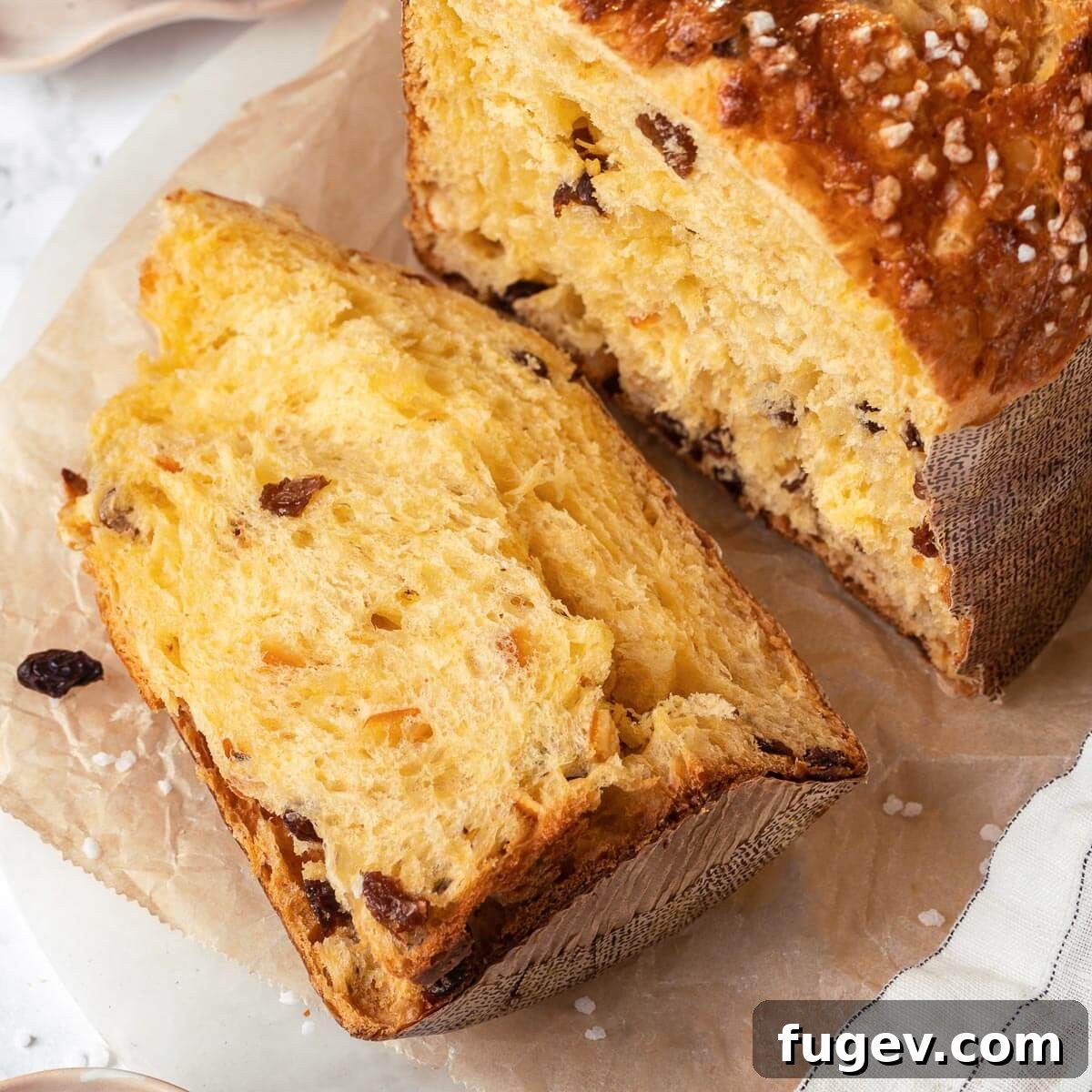
Embark on a culinary journey to bake the most exquisite sourdough panettone bread recipe, a true masterpiece of Italian Christmas tradition. This recipe promises a loaf that is incredibly soft, remarkably light, and bursting with complex flavors, making it an unforgettable holiday treat. While traditional panettone requires a commitment of time and patience, the reward is an unparalleled bread that far surpasses any quick alternative.
Forget compromise – this isn’t just a panettone recipe; it’s the definitive guide to crafting the very best, ensuring every bite is a celebration of rich taste and delicate texture.
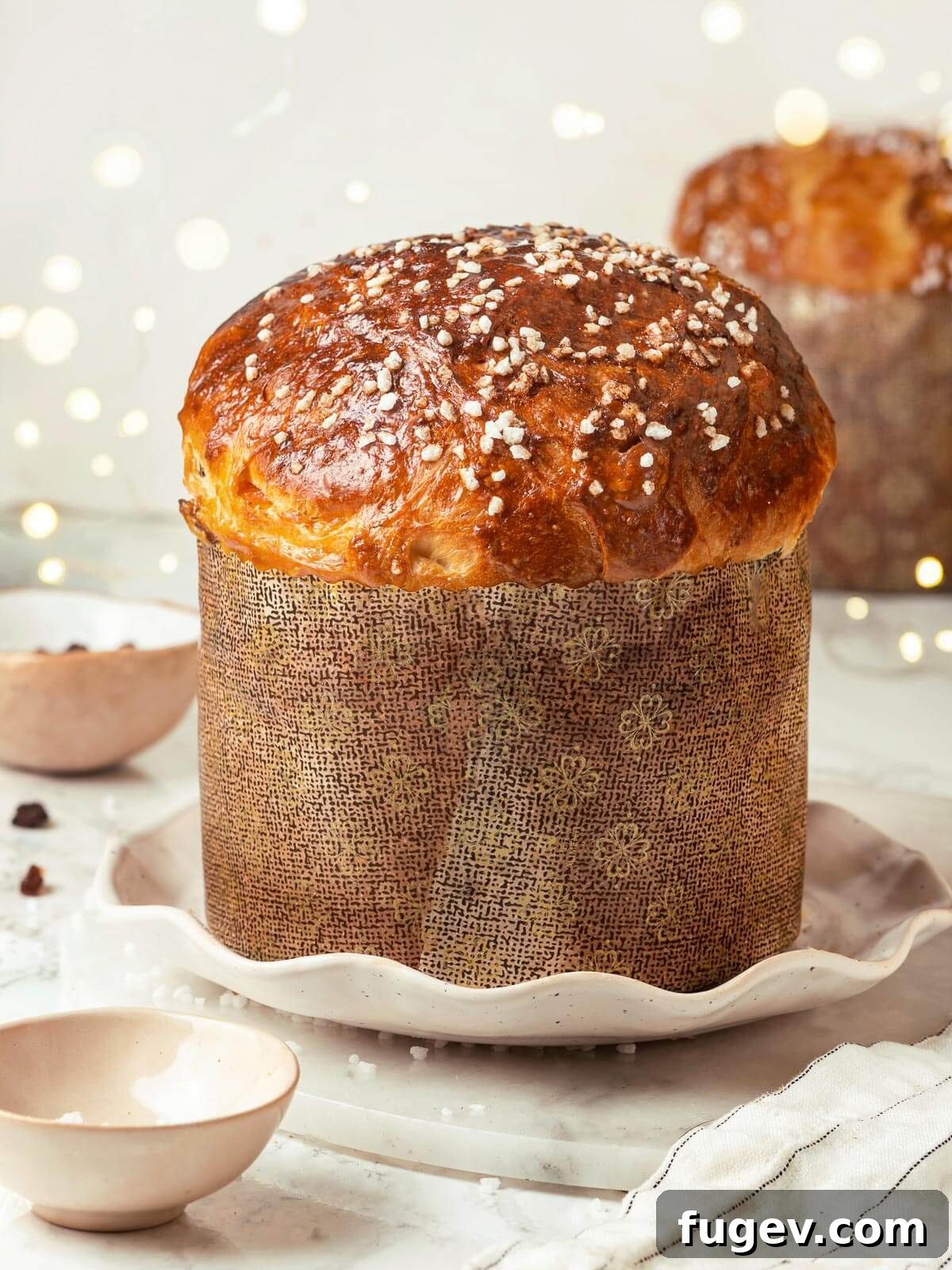
What is Panettone? The Beloved Italian Christmas Bread
Panettone is a renowned sweet bread, traditionally savored in Italy during the Christmastime festivities. These decadent, dome-shaped loaves are meticulously baked in special, decorative panettone paper molds, making them not only a delicious indulgence but also a perfect, heartfelt gift for friends and family during the holiday season. Imagine pairing a homemade panettone with other festive baked goods like the best stollen bread, fluffy sourdough cinnamon rolls, or a selection of artisanal jams such as vibrant mixed berry jam, comforting pumpkin butter, or classic apple butter.
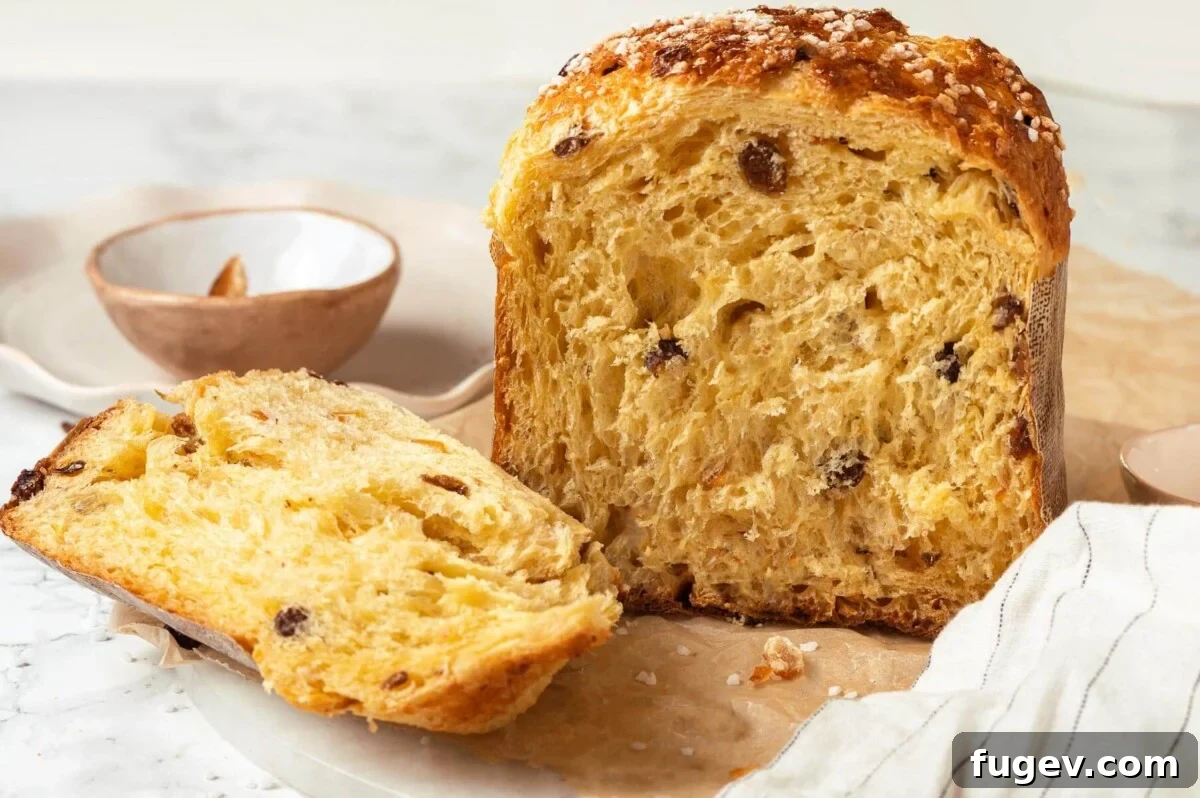
The texture of this sourdough panettone is akin to a luxurious, buttery brioche bread, offering a tender and airy crumb. What sets it apart is the sophisticated flavor profile, enriched by the distinctive tang and depth of sourdough (much like my popular sourdough raisin bread and easy sourdough bread recipe). This complexity is beautifully complemented by an abundance of plump, soaked dried fruits and aromatic candied citrus peels, creating a symphony of sweet and tangy notes that define this iconic holiday bread.
Table of Contents
- Why This Sourdough Panettone Stands Out
- Essential Ingredients & Expert Substitutions
- Creative Variations to Try
- Professional Tips for Panettone Success
- Strategic 2-3 Day Panettone Baking Timeline
- Step-by-Step Guide: How to Make Sourdough Panettone
- Chef Lindsey’s Recipe Tip
- Panettone Recipe FAQs
- More Recommended Bread Recipes
- Sourdough Panettone Recipe Card
- Before You Go: More Baking Inspiration
Why This Sourdough Panettone Stands Out from the Rest
- Unmatched Softness, Rich Flavor, and Brioche-Like Texture: This panettone truly excels with its exceptionally soft, tender crumb, reminiscent of a decadent brioche. It’s deeply flavorful, infused with succulent dried fruits and fragrant candied citrus, creating a harmonious blend that delights the palate. The natural sourdough tang adds a layer of complexity not found in yeast-only versions.
- Artisan Layers of Flavor Developed at Every Stage: The secret to this panettone’s extraordinary taste lies in building flavor consciously from the very beginning. Soaking the raisins, candied fruits, and citrus zest well in advance ensures they are plump, juicy, and infuse the dough with maximum moisture and aromatic sweetness. Furthermore, cultivating a strong levain (sourdough starter) is crucial; it not only imparts a deeper sourdough flavor but also develops stronger gluten, contributing to an impressive rise and delicate structure. The dough itself is sumptuously enriched with a generous amount of egg yolks, premium butter, fine sugar, and a touch of honey, all contributing to its rich character and extended freshness.
- Utilizes a Robust Sourdough Starter for Authentic Depth: Unlike many panettone recipes that rely on commercial active dry yeast to create a preferment like a “biga” for added flavor and complexity, this recipe harnesses the power of a natural sourdough starter. While a biga certainly enhances the bread, nothing can truly replicate the unique texture, nuanced flavor, and natural leavening benefits that an active sourdough culture brings. If you’re new to sourdough, you can find my comprehensive sourdough starter recipe here to begin your journey.
- Easier to Master Than You Might Imagine: Don’t be intimidated by the extensive ingredient list or the multi-day process often associated with traditional panettone. This recipe is designed to be approachable. The hands-on time is surprisingly minimal, and the dough itself is forgiving and easy to handle. The multi-day timeline is mostly passive waiting, allowing for deep flavor development with little active effort on your part, making the entire process much simpler than it appears.
Essential Ingredients & Expert Substitutions for Your Panettone
Crafting the perfect panettone begins with understanding each ingredient’s role and knowing how to make smart substitutions. Here’s a detailed look:
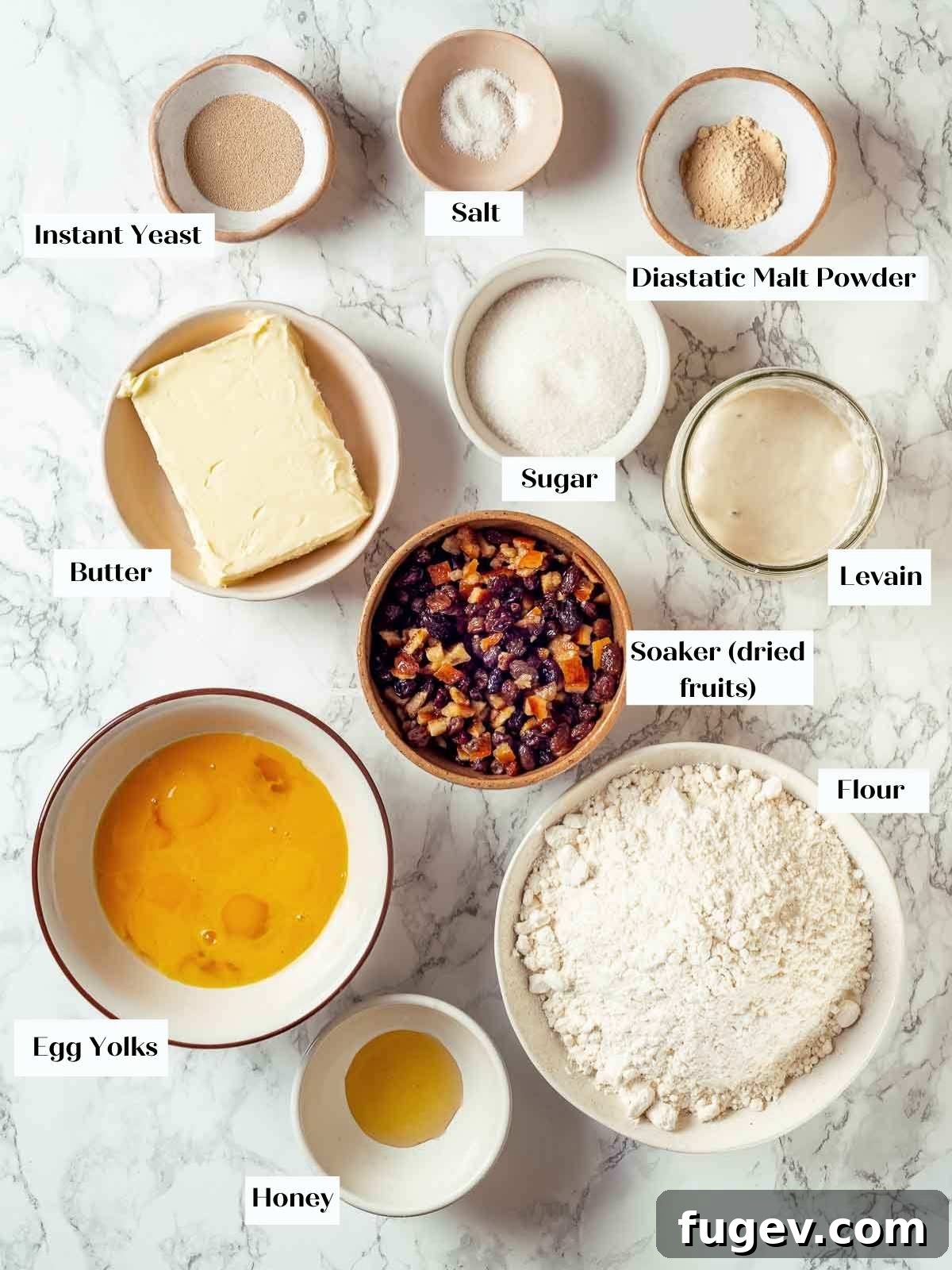
- Dark Raisins: These add natural sweetness and moisture. Beyond dark raisins, you can experiment with currants for a tangier note, dried cherries (as seen in my cherry sourdough bread), tart cranberries, finely chopped dried apricots, or a vibrant mix of several dried fruits for varied textures and flavors.
- Candied Orange Peel & Candied Lemon Peel: These are crucial for panettone’s distinctive aroma and flavor. For the best results, invest in high-quality candied orange peel and lemon peel. Alternatively, for an even fresher and more intense citrus punch, you can easily make your own candied citrus peels from scratch.
- Orange & Lemon Zest: Freshly grated zest is indispensable. Adding both orange and lemon zest directly to the soaker significantly amplifies the overall citrus aroma and brightens the flavor profile of the panettone. If you wish, you can even use the freshly squeezed juice from the zested citrus in place of some of the water in the soaker, just be sure to measure it accurately.
- Water: Water plays a specific role in both the soaker and the levain build, providing essential hydration for the dried fruits and activating the sourdough starter. Interestingly, you’ll notice there is no additional water in the final dough mix, as the hydration largely comes from the levain, egg yolks, and butter – trust in this carefully balanced process!
- Vanilla Extract: A touch of high-quality vanilla extract adds a warm, sweet, and comforting undertone that complements the fruit and citrus flavors beautifully.
- Bread Flour: I recommend using bread flour for the levain build due to its higher protein content, which aids in developing stronger gluten. This provides the levain with excellent structure and promotes a vigorous rise. However, if you only have all-purpose flour on hand, it will work perfectly fine, so don’t feel the need to purchase an extra ingredient.
- Active Sourdough Culture: This is the heart of our sourdough panettone, contributing unique flavor complexity and leavening power. If you don’t have an active sourdough starter, you can adapt this recipe by using a “poolish” instead. A poolish is a liquid preferment made with equal parts flour and water, combined with a small amount of active dry yeast, and allowed to ferment for 4-18 hours. This extended fermentation mimics some of the complex flavors found in natural yeast and also helps to develop gluten structure, similar to a sourdough starter. You would ideally start your poolish on the morning of Day 1 when you prepare the soaker. To maintain the intended hydration ratios in this recipe, a poolish is generally preferred over a stiffer biga, though both are preferments with similar benefits; a biga, however, has a much lower hydration.
- All-Purpose Flour: Used in the final dough, all-purpose flour provides a balanced protein content that contributes to panettone’s characteristic soft and airy crumb.
- Egg Yolks: A hallmark of enriched doughs, this recipe generously calls for the yolks from approximately 10 large eggs. These yolks contribute significantly to the panettone’s luxurious richness, golden color, and tender texture. Don’t waste those egg whites! They can be frozen for later use or repurposed for delightful recipes like an omelet, a light angel food cake, fluffy marshmallow fluff, creamy marshmallow frosting, delicate vanilla bean marshmallows, or a silky Italian meringue buttercream.
- Instant Yeast: While sourdough provides the primary leavening, a small amount of instant yeast is included to ensure a reliable and robust rise, especially given the richness of the dough. Instant yeast is preferred because it doesn’t require prior activation (blooming), which is convenient as there’s no additional liquid in the final dough mixture for blooming active dry yeast.
- Kosher Salt: Essential for balancing the sweetness and enhancing all the other flavors in the bread. Don’t omit it!
- Sugar: Granulated sugar provides sweetness, of course, but also contributes to the beautiful caramelization of the crust, aids in moisture retention, and acts as a humectant, keeping the panettone fresh for a longer period.
- Honey: A small amount of honey adds a subtle depth of sweetness and a delicate floral note, further enriching the flavor profile. It also helps with browning and moisture.
- Diastatic Malt Powder: This ingredient is often the secret weapon in professional bakery recipes. Diastatic malt powder contains active enzymes (amylase) that break down complex carbohydrates in the flour into simple sugars. These simple sugars are readily consumed by the yeast, boosting fermentation and producing a more robust rise, a softer crumb, and a richer, darker crust. While it significantly enhances the panettone, it can be omitted if you don’t have it or prefer not to use it, though the results will be slightly different.
- Unsalted Butter: Generous amounts of unsalted butter are what give panettone its signature richness, tenderness, and melt-in-your-mouth texture. Ensure it’s at room temperature for optimal incorporation into the dough.
- Belgian Pearl Sugar: For a stunning finish, before baking, I recommend brushing the tops of the loaves with an egg wash (simply a beaten egg) and sprinkling generously with Belgian pearl sugar or Swedish pearl sugar. These robust sugar crystals don’t melt away completely during baking, adding a beautiful festive sparkle and a delightful crunch to the crust.
For precise quantities and measurements, please refer to the comprehensive recipe card below.
Creative Variations to Elevate Your Panettone
Once you’ve mastered the classic sourdough panettone, feel free to get creative with these delicious variations:
- Experiment with Soaking Liquids for Dried and Candied Fruit: While water works well, many traditional recipes call for soaking the dried fruit in spirits. Brandy, rum, or Grand Marnier can impart a wonderfully aromatic depth. Alternatively, for a non-alcoholic twist, orange juice or even apple cider can offer a surprisingly fresh and modern take. In culinary school, we sometimes allowed the soaker to macerate for up to two weeks, which truly felt like an eternity but resulted in an incredibly rich and developed flavor profile. This extra time allows the fruits to fully absorb the liquid and deepen their inherent sweetness.
- Introduce Exciting Additions or Swaps to the Soaker: Enhance the textural and flavor complexity of your panettone by incorporating different mix-ins. Consider adding finely chopped pistachios for a vibrant color and nutty flavor, or blanched almonds for a delicate crunch alongside the soaker. If you’re a chocolate lover, chocolate chips are a fantastic addition; however, it’s crucial not to add them to your initial soaker. Instead, fold them into the final dough mixture along with the pre-soaked fruits to prevent them from melting prematurely or sinking during fermentation.
- Create Adorable Mini Panettones: For individual servings or delightful gifts, transform your panettone dough into charming mini loaves. Divide the dough into 30-gram pieces and gently shape them like small dinner rolls. Proof these small boules in individual panettone papers, which are readily available online or in specialty baking stores. These mini versions bake faster and are perfect for sharing!
Professional Tips for Panettone Success
Achieve bakery-quality panettone at home with these expert insights:
- Utilize a Stronger Levain Build for Accelerated Flavor & Gluten Development: This panettone recipe employs a unique “stronger” levain build, which deviates from a standard sourdough starter feeding. Here, the weight of the active sourdough culture is 150% of the weight of the flour, significantly higher than the typical 10% used in many builds. This higher inoculation rate vigorously accelerates the fermentation process, allowing for more rapid development of complex sourdough flavors and a robust gluten structure in a shorter timeframe, without compromising the distinct sourdough character.
- Embrace Flexible Baking and Mixing Options: This recipe is designed with versatility in mind. I’ve included detailed instructions for baking this exceptional bread even if you don’t have a sourdough starter on hand, offering alternatives like using a poolish. Furthermore, I provide guidance on how to condense the traditional 3-day timeline into a more manageable 1-day process if needed. While each extended step in the traditional method contributes to the ultimate depth of flavor and refined texture, rest assured that this panettone will still be utterly delightful and impressive even if you opt for a quicker approach.
- Master the Art of Cooling Panettone Upside Down: This step, though often overlooked by home bakers, is a professional secret to achieving panettone’s signature tall, airy structure. Traditionally, hot panettones are immediately pierced with long skewers through their paper molds and then hung upside down on speed racks to cool. This critical technique prevents the rich, tender crumb from collapsing under its own weight as it cools, ensuring it retains its impressive height and delicate airiness. You can easily replicate this professional setup at home by balancing a stainless steel pin (or two sturdy wooden skewers) between two tall cookbooks, vases, or any other stable objects you can find.
Strategic 2-3 Day Panettone Baking Timeline for Optimal Flavor
This timeline offers a suggested schedule for baking your panettone, maximizing flavor development. Remember, baking is an art influenced by your environment (room temperature, humidity), so your fermentation times might vary slightly from a controlled bakery setting. The key is to observe your dough, not just the clock, and most importantly, enjoy the process!
Day 1: Preparing for Flavor Infusion
- Morning: Mix all the ingredients for your soaker. This blend of dried fruits, candied citrus, zest, water, and vanilla will begin to macerate, softening the fruits and infusing them with aromatic flavors. To save time, you can gently warm the water or juice before mixing. The soaker is incredibly flexible and can be prepared up to two weeks in advance, or even longer if you are using alcohol, deepening the flavor over time.
- Evening: Feed your sourdough starter. This ensures it is robust, active, and perfectly primed to create the strong levain needed for tomorrow’s dough mixing.
Day 2: Dough Creation and Primary Fermentation
- 9:00 AM: Mix the sourdough levain build. This specialized build, with its higher ratio of starter, will become very active. Allow it to ferment for approximately 5 hours in a warm spot (ideally around 85°F / 29°C). If your kitchen is cooler, it may take a bit longer.
- 2:00 PM: Time to mix the enriched panettone dough! After mixing, allow it to proof (bulk ferment) at room temperature for about 1 hour to kickstart the fermentation process.
- 3:30 PM: Gently cover the top of your panettone mold paper with plastic wrap and transfer it to the refrigerator. This overnight cold proof is crucial; it dramatically slows fermentation, allowing the complex flavors to deepen and the gluten structure to relax, resulting in an even more tender and aromatic panettone. Alternatively, if you’re in a hurry, you can proceed with a final proof on the same day for 4-5 hours in a warm spot before baking.
Day 3: Final Proof, Bake, and Enjoy!
- 8:00 AM: Remove the panettone from the refrigerator. Allow it to continue proofing at room temperature for 3-4 hours. It’s ready when the top of the dough gracefully reaches the edge of the panettone mold.
- 12:00 PM: It’s baking time! Apply an egg wash and bake your panettone according to the recipe instructions. Prepare to be enchanted by the aroma filling your kitchen!
Step-by-Step Guide: How to Make Sourdough Panettone
Follow these detailed instructions to craft the best traditional panettone, a truly authentic Italian Christmas bread. For precise measurements, refer to the comprehensive recipe card located at the end of this article.
Step 1: Prepare the Aromatic Soaker
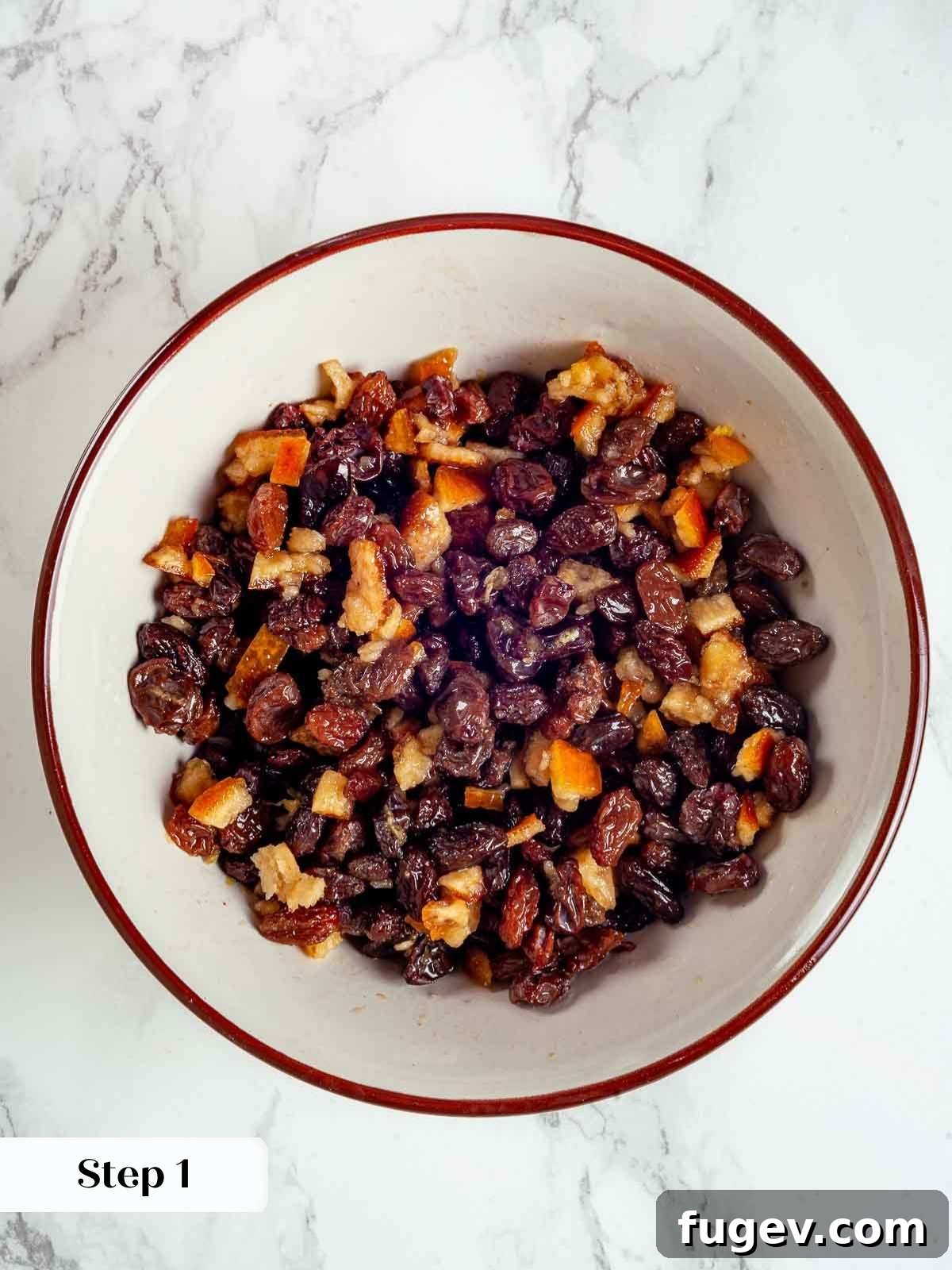
In a covered container, combine all the ingredients designated for the soaker (dried fruits, candied peels, zests, water/juice, and vanilla extract). Stir thoroughly to ensure all the fruits are well moistened. Set this mixture aside at room temperature. For optimal flavor infusion, allow it to sit overnight, or even longer (up to two weeks for deeper flavor, especially if using alcohol). Stir or shake the container gently every few days to keep the fruits evenly hydrated.
Step 2: Build the Vigorous Levain
Approximately five hours before you plan to mix your panettone dough, prepare your levain. Feed your active sourdough starter using the specific ratio listed in the recipe card (150% active culture to flour for this stronger build). You can either prepare the exact amount needed for the recipe and feed your main starter separately, or make 1.5-2 times the amount to ensure you have enough for the panettone while also having some leftover to feed and maintain your starter. Allow the levain to ferment in a warm environment (around 85°F / 29°C) for 5 hours, or longer if your room temperature is cooler, until it is very active and bubbly.
Mixing the Enriched Panettone Dough:
Step 3: Combine Dry and Wet Ingredients (Initial Mix)
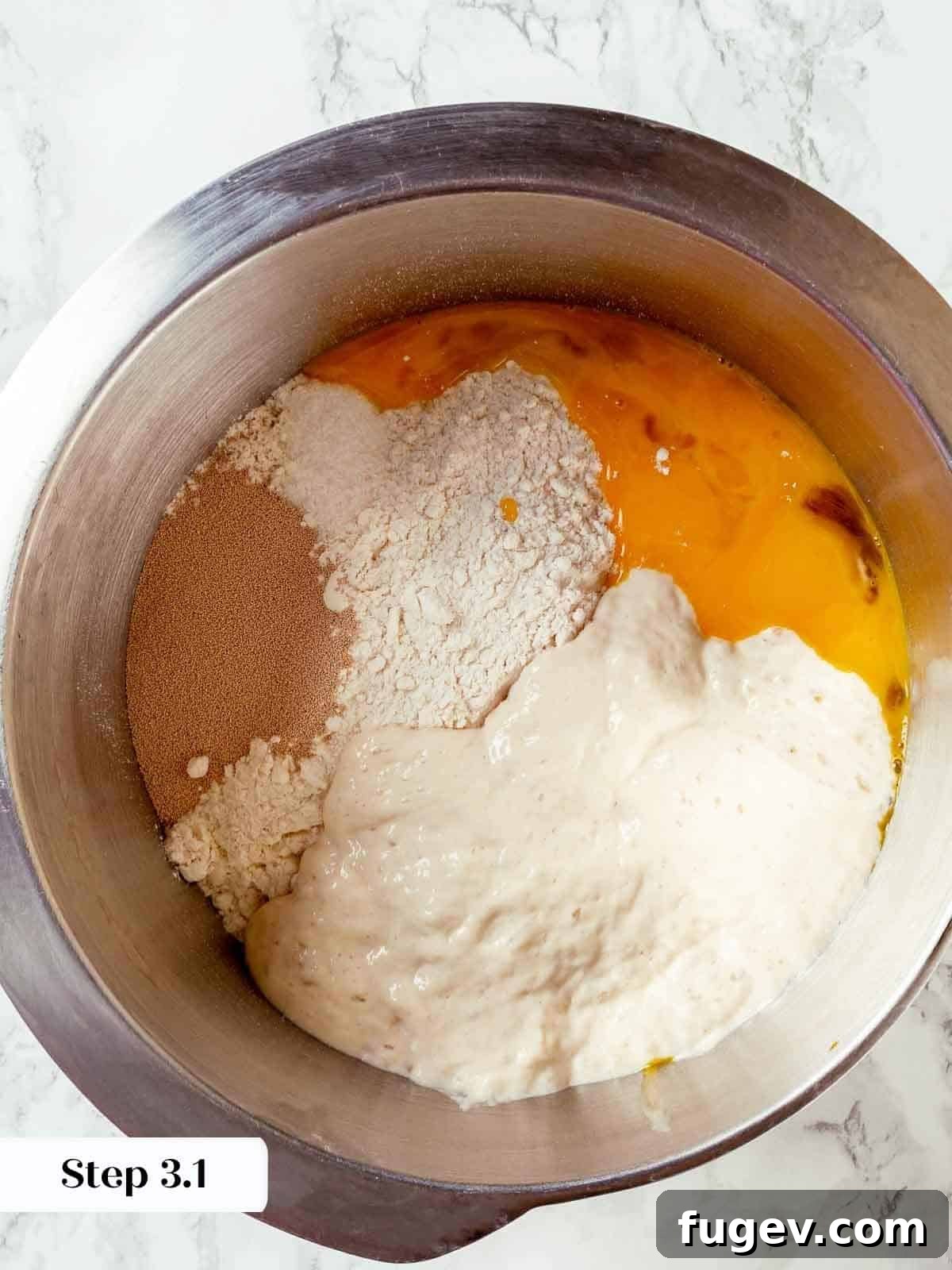
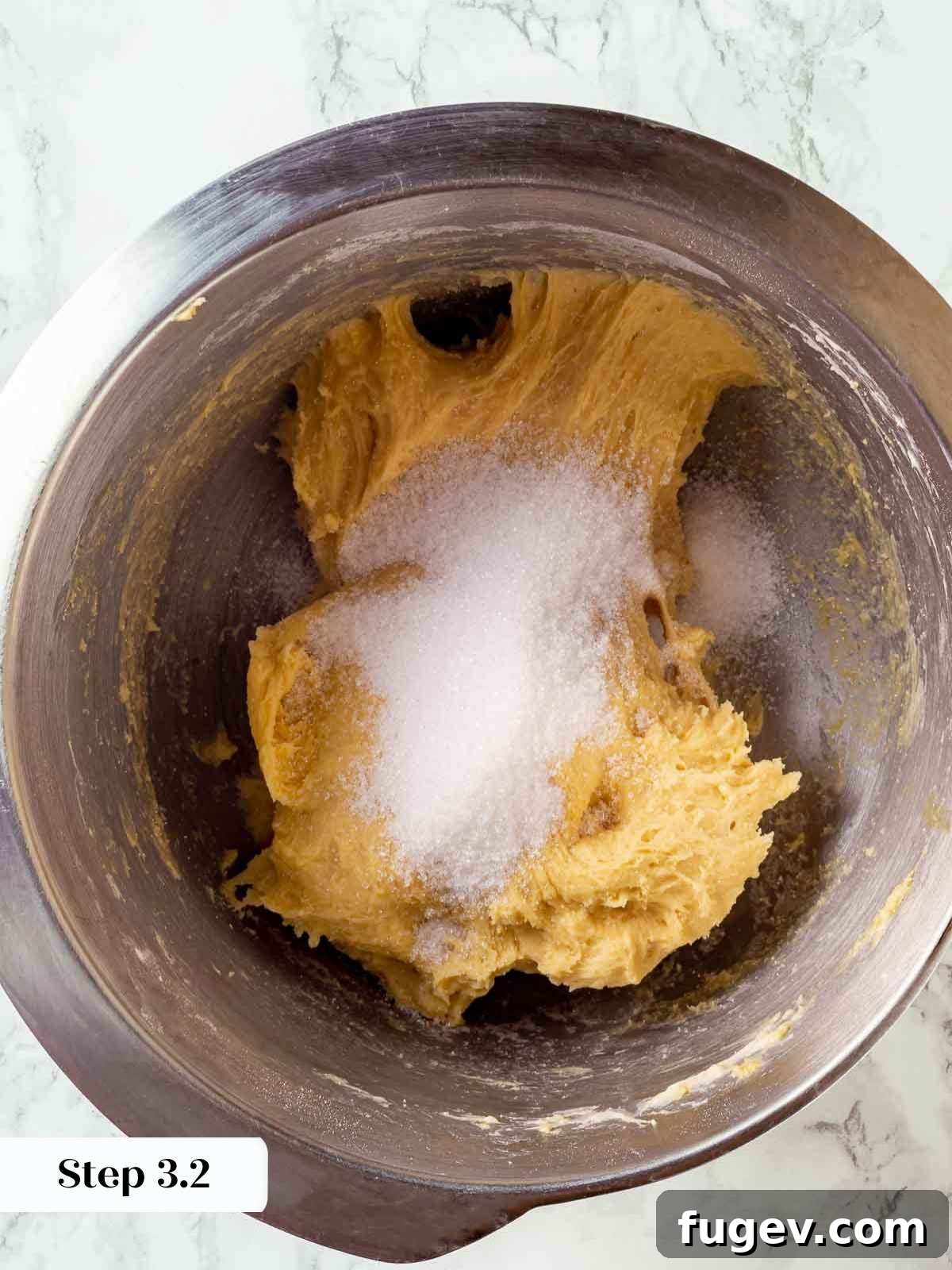
In the bowl of a stand mixer fitted with the dough hook attachment, combine the all-purpose flour, the prepared levain, egg yolks, instant yeast, kosher salt, honey, and diastatic malt powder (if using). Begin mixing on low speed until all ingredients are just combined and a shaggy dough forms. Increase the speed to medium and continue mixing to develop some initial gluten structure. Once the dough starts to come together and gain a bit of elasticity, begin adding the granulated sugar gradually, in small batches. This slow addition allows the sugar to fully dissolve and integrate without compromising the gluten development. Continue mixing until the dough is smooth and glossy.
Step 4: Incorporate the Butter
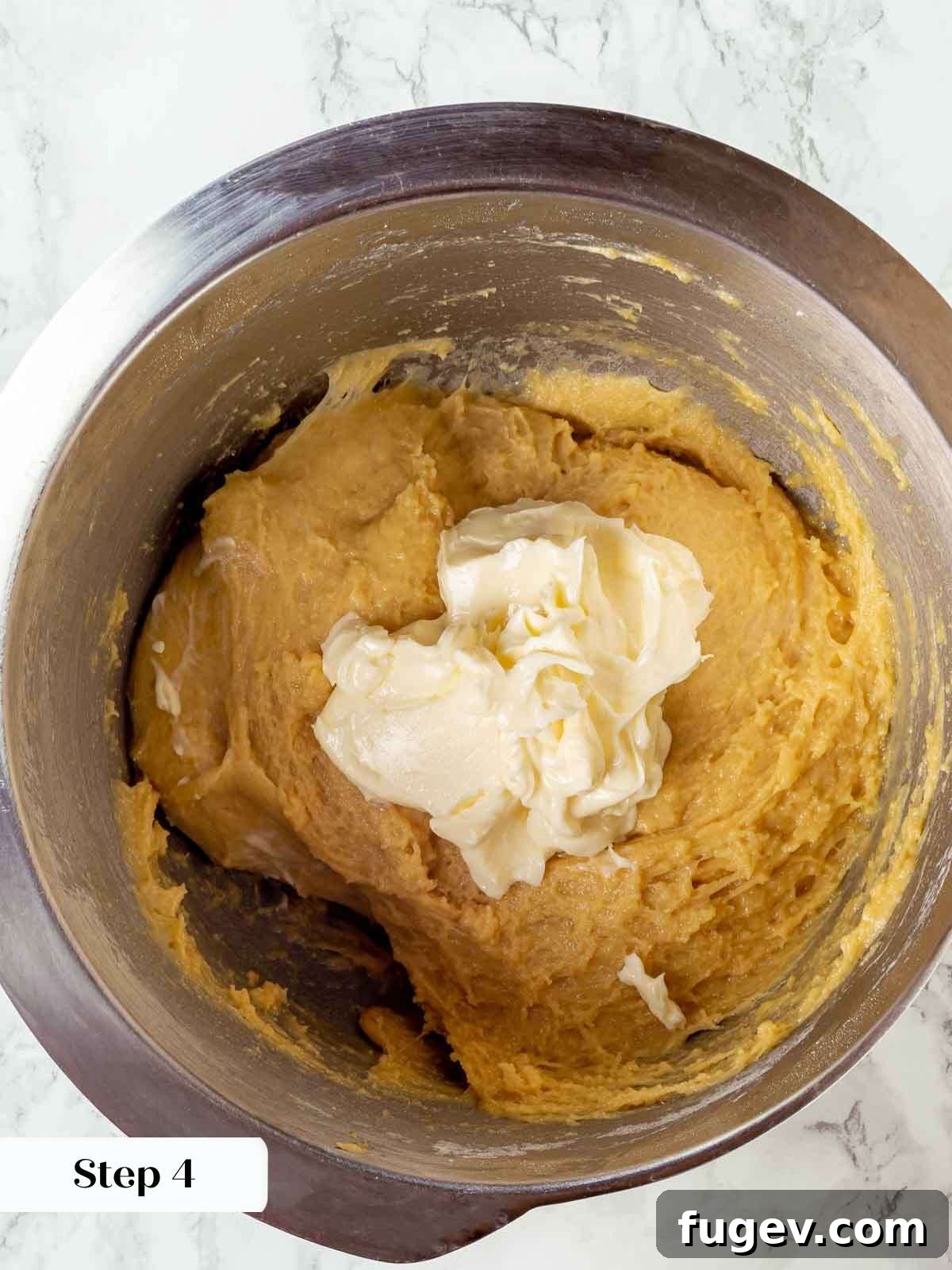
Once all the sugar has been fully incorporated into the dough and it forms a cohesive mass, gradually add the room temperature unsalted butter, one piece at a time. Continue mixing on medium-low speed until each piece of butter is fully absorbed before adding the next. This process might seem messy at first, but keep mixing until the dough becomes smooth, elastic, and pulls away from the sides of the bowl.
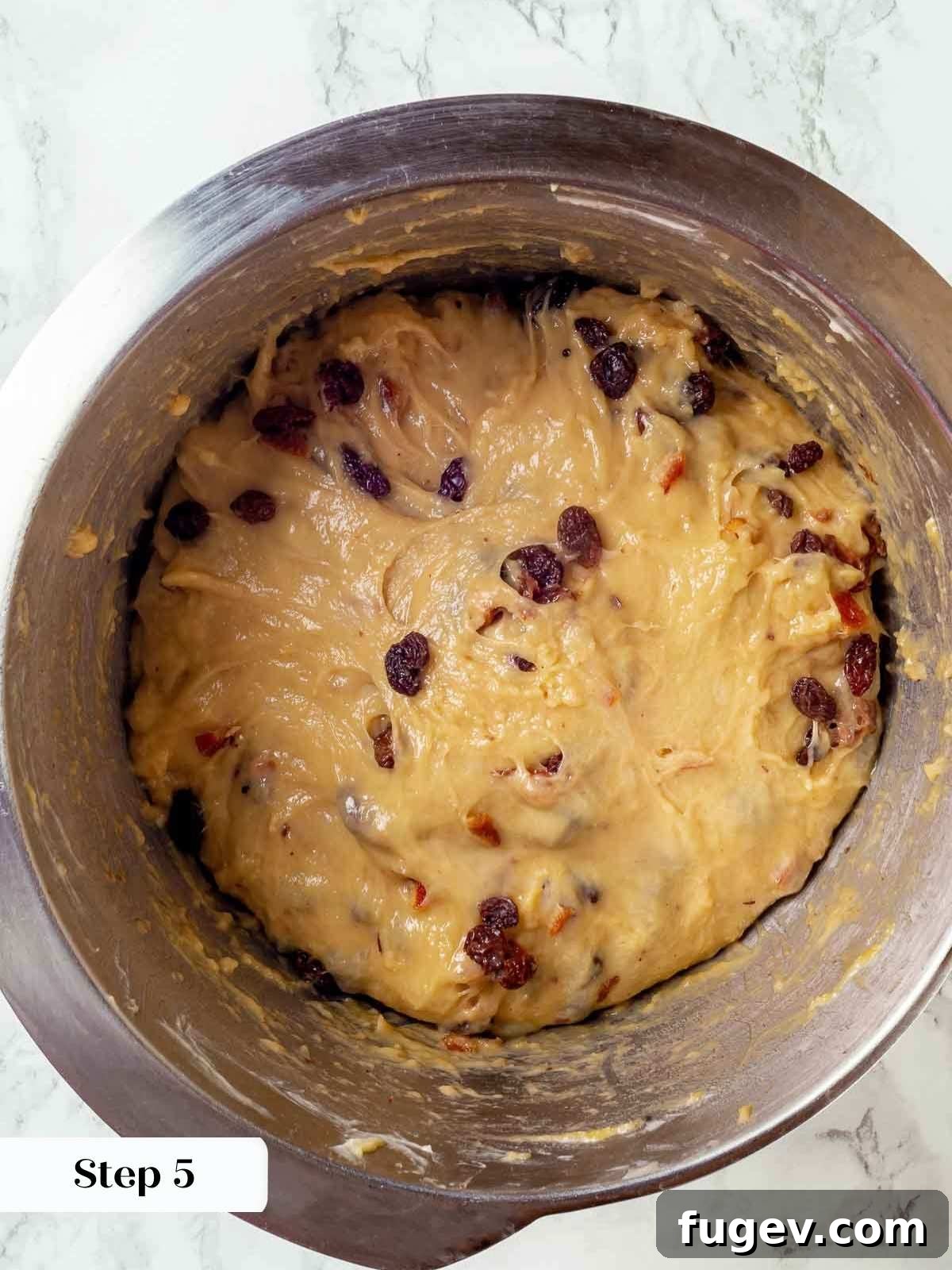
Step 5: Fold in the Soaker
With the butter fully incorporated and the dough developed, reduce the mixer speed to low. Add the entire soaker mixture (the hydrated dried fruits and candied peels) to the dough. Mix just until the soaker is evenly distributed throughout the dough. Be careful not to overmix at this stage, as the fruits can tear the gluten structure if agitated too vigorously.
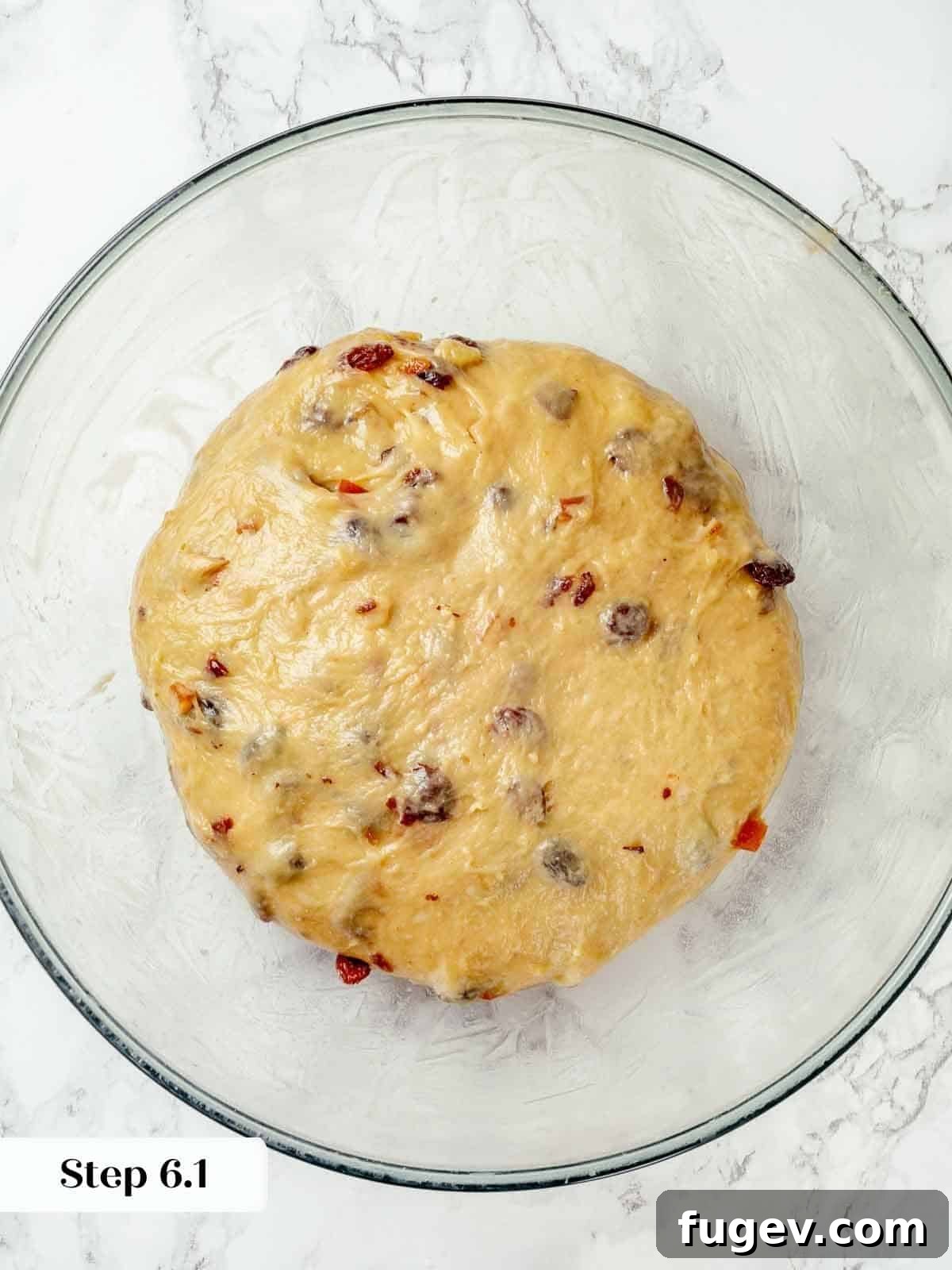
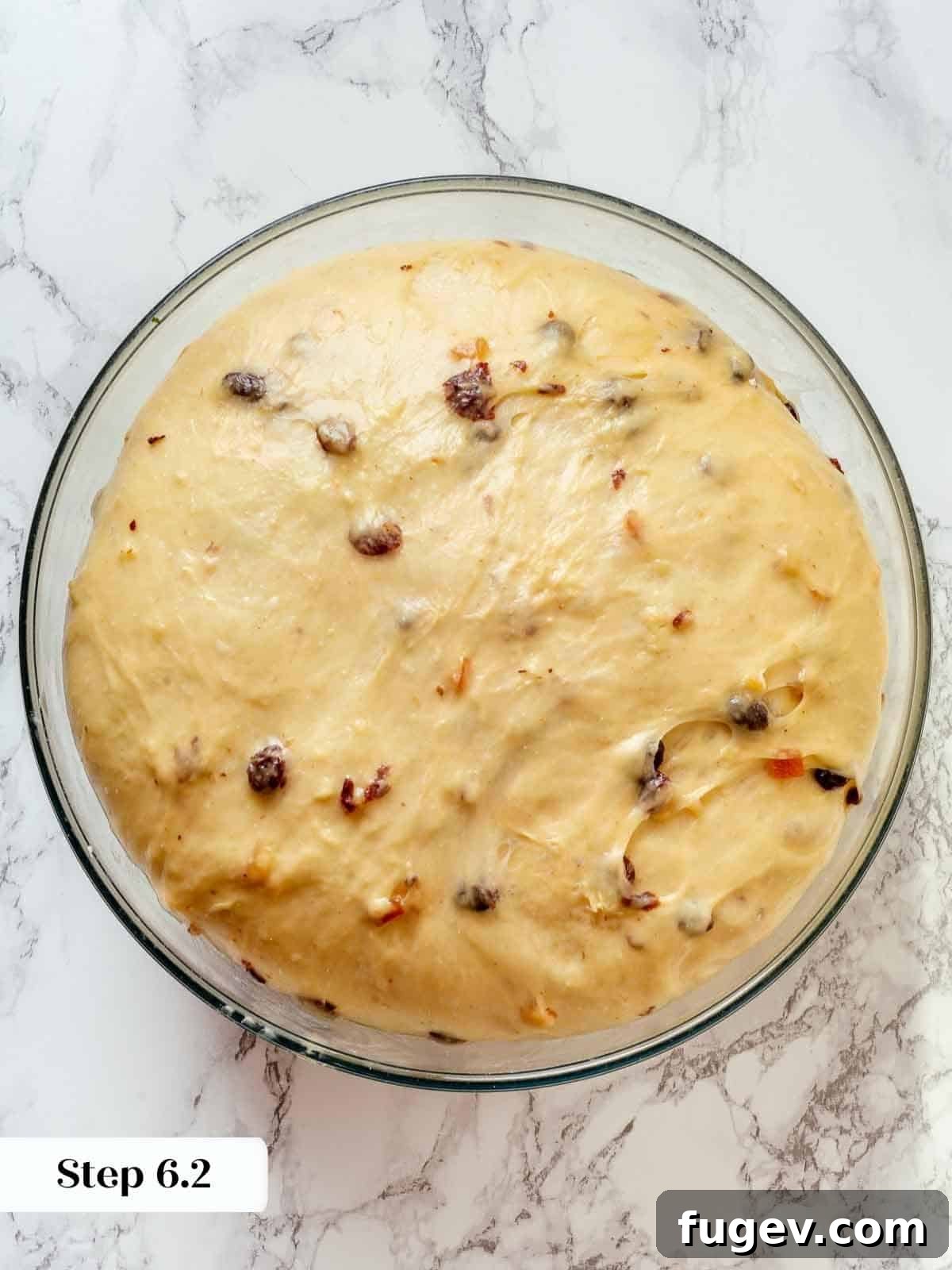
Step 6: Bulk Fermentation (First Rise)
Lightly oil a large bowl. Gently transfer the panettone dough into the oiled bowl, ensuring it’s covered tightly with plastic wrap to prevent a skin from forming. Allow the dough to bulk ferment (also known as the first proof) in a warm environment (around 85°F / 29°C) for 4-5 hours. If your kitchen is cooler, this process may take longer. The dough should become noticeably puffy and light, though it might not double in size due to its rich nature.
Step 7: Pre-Shaping for Structure
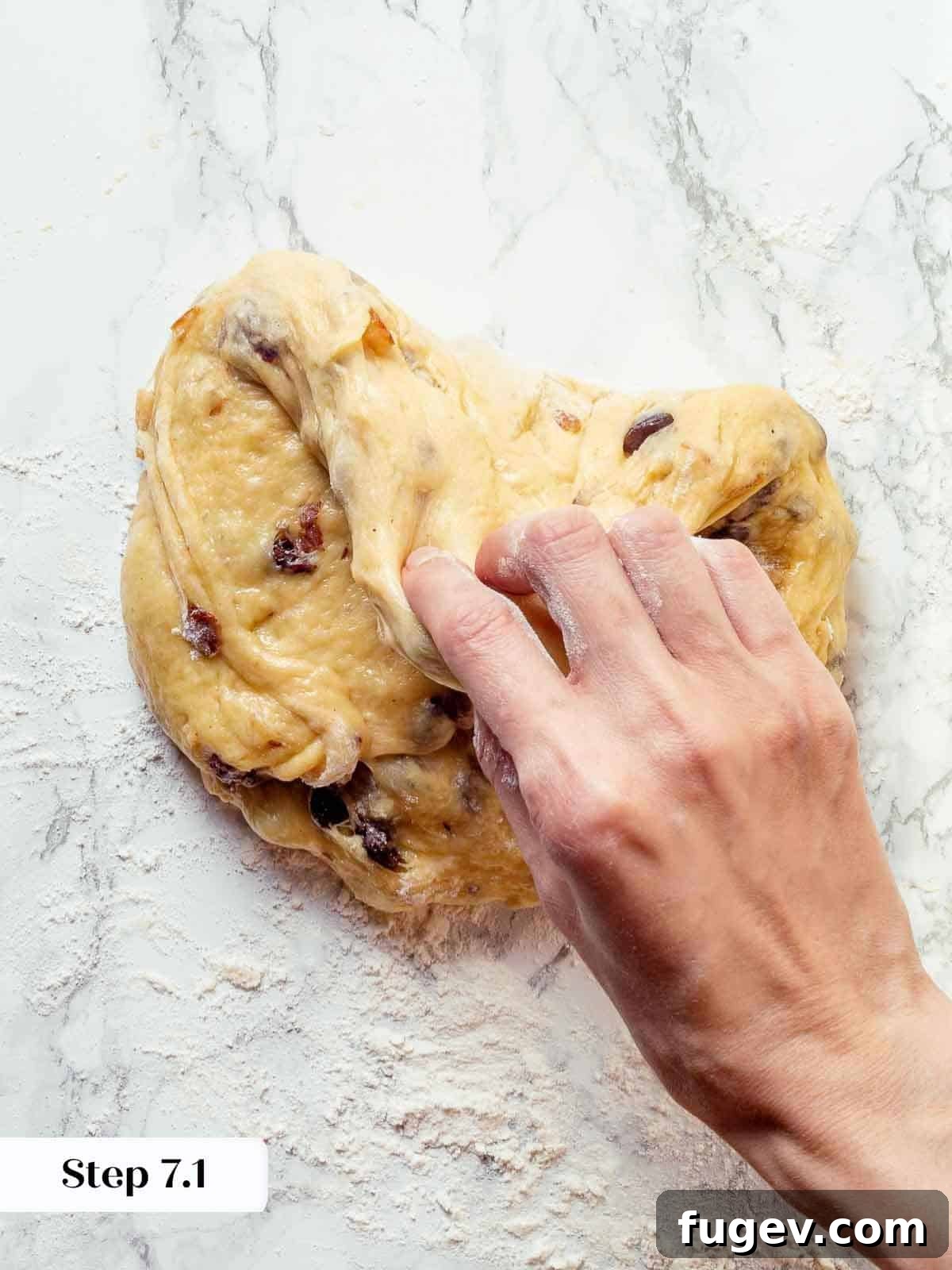
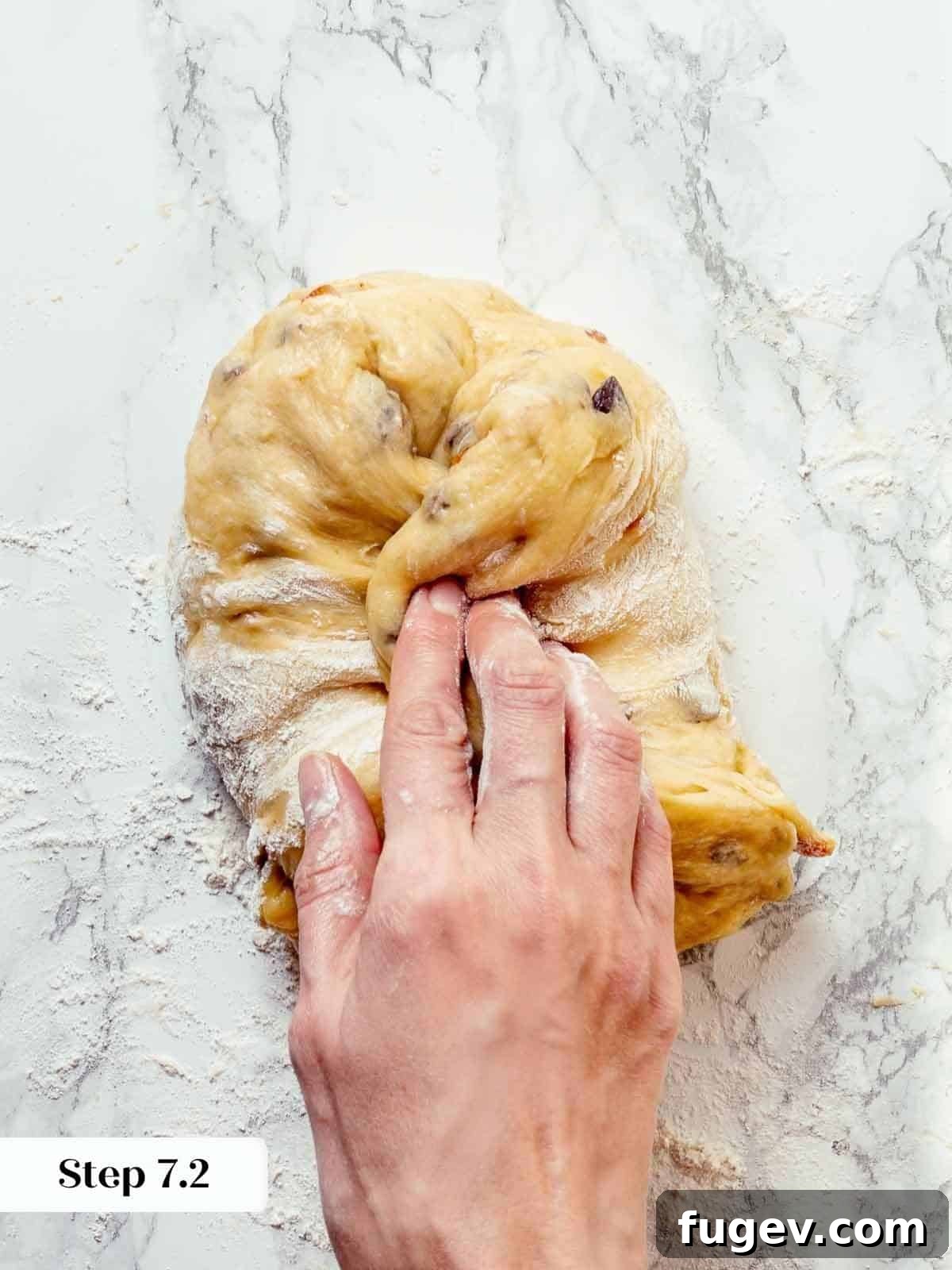
Once the bulk fermentation is complete, gently turn the dough out onto a lightly floured work surface. To pre-shape, gently stretch the dough into a rough square. Fold all four corners of the dough into the center, creating a somewhat round parcel. Flip the dough over so the seam side is down. Using both hands, gently pull the dough towards you across the work surface, tightening the top into a smooth, taut ball (a boule). Cover the pre-shaped dough loosely with plastic wrap and let it bench rest for 10-15 minutes. This brief rest allows the gluten to relax, making the dough easier to handle for the final shaping.
Step 8: Final Shaping into a Perfect Boule
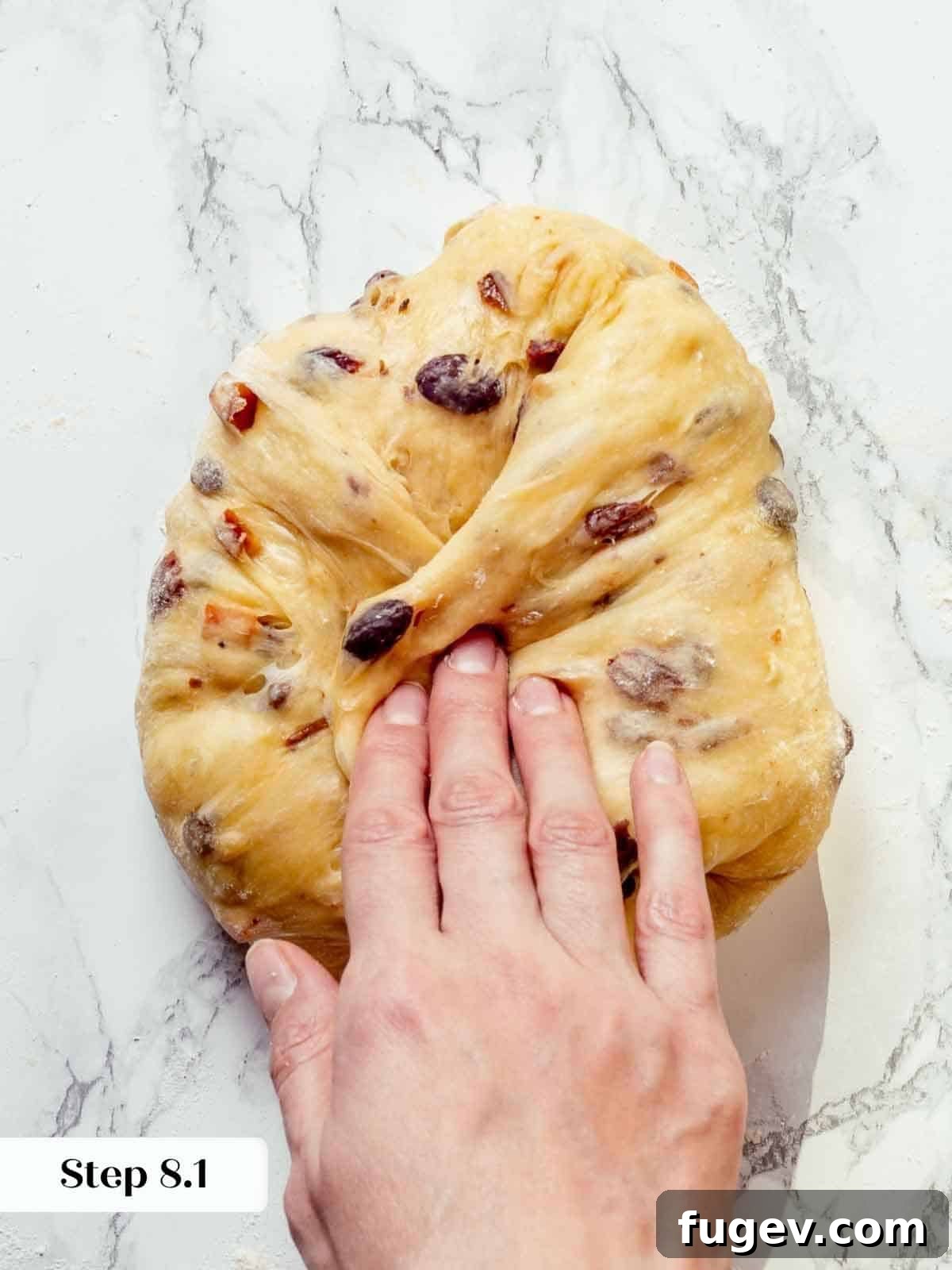
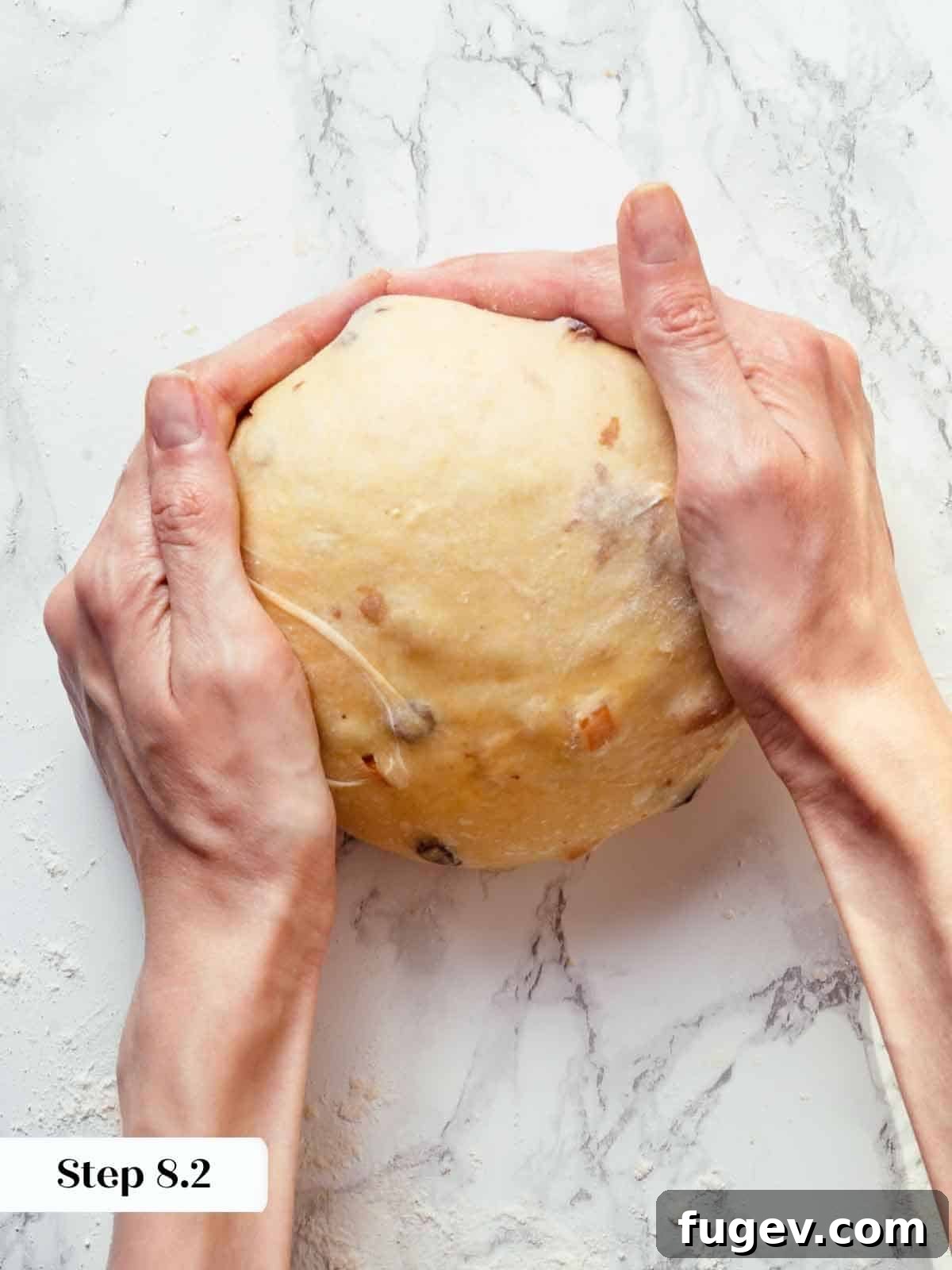
After the bench rest, it’s time for the final shape. Flip the dough over so the seam side is facing up. Again, gently fold all four corners of the dough into the center, effectively creating a tight ball. Flip it back over so the seam side is down. Using your hands, cup the dough and pull it towards you on the clean work surface. This action creates surface tension, tightening the dough into a smooth, perfectly round boule with a taut top. This tight shaping helps the panettone hold its tall, domed shape during proofing and baking.
Step 9: Place in Panettone Papers & Begin Final Proof
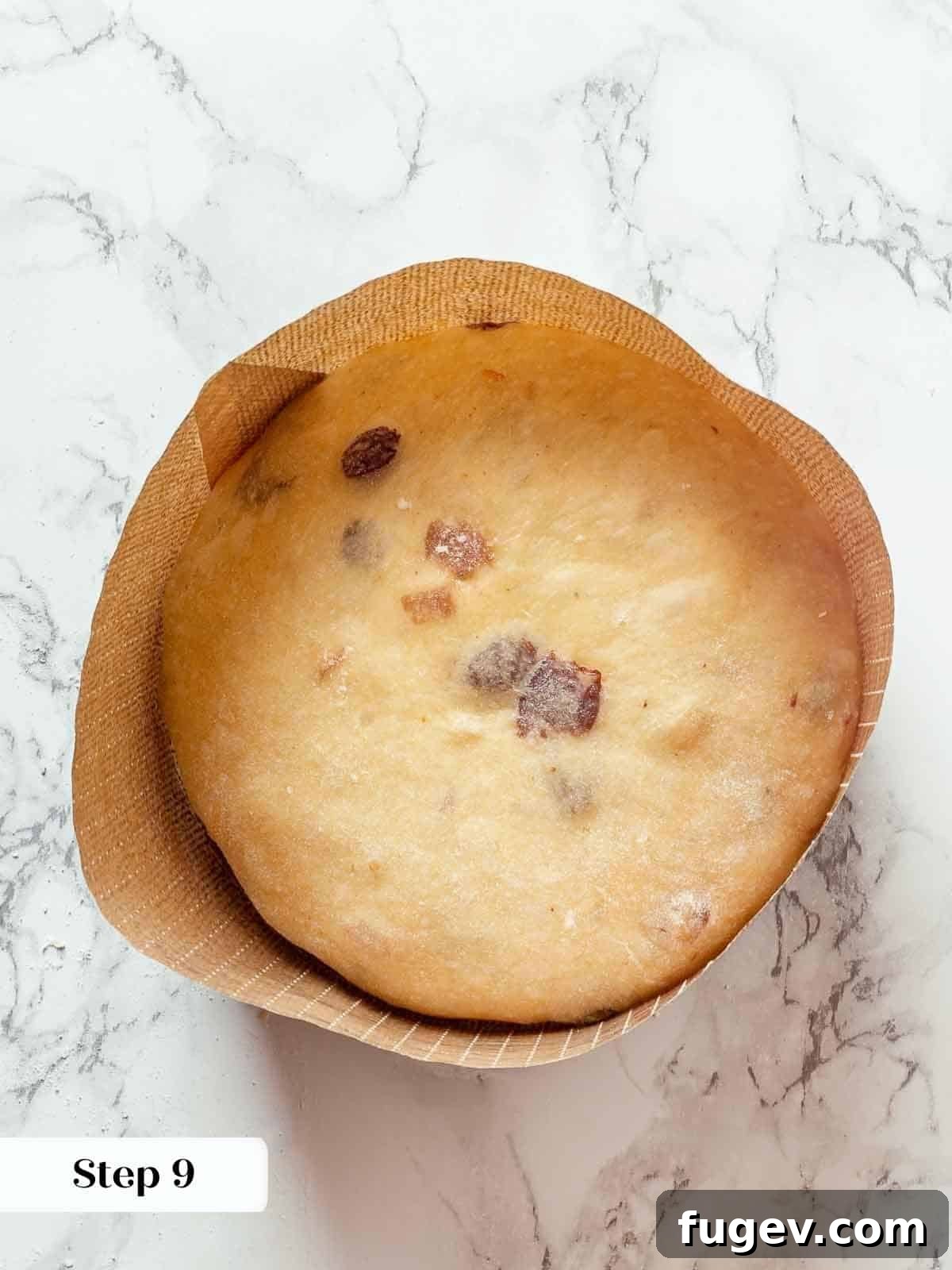
Carefully place each shaped boule, seam-side down, into individual panettone paper molds. At this stage, you have two excellent options for the final proof. For a quicker bake, you can allow the dough to final proof in a warm spot for 4-5 hours, or until the dough has gracefully risen to the very top edge of the panettone paper. For the absolute best flavor and texture development, however, I highly recommend an overnight cold proof: proof the dough at room temperature for 1 hour to initiate fermentation, then cover the molds loosely with plastic wrap and refrigerate them overnight. This long, slow cold proof deepens the flavors considerably.
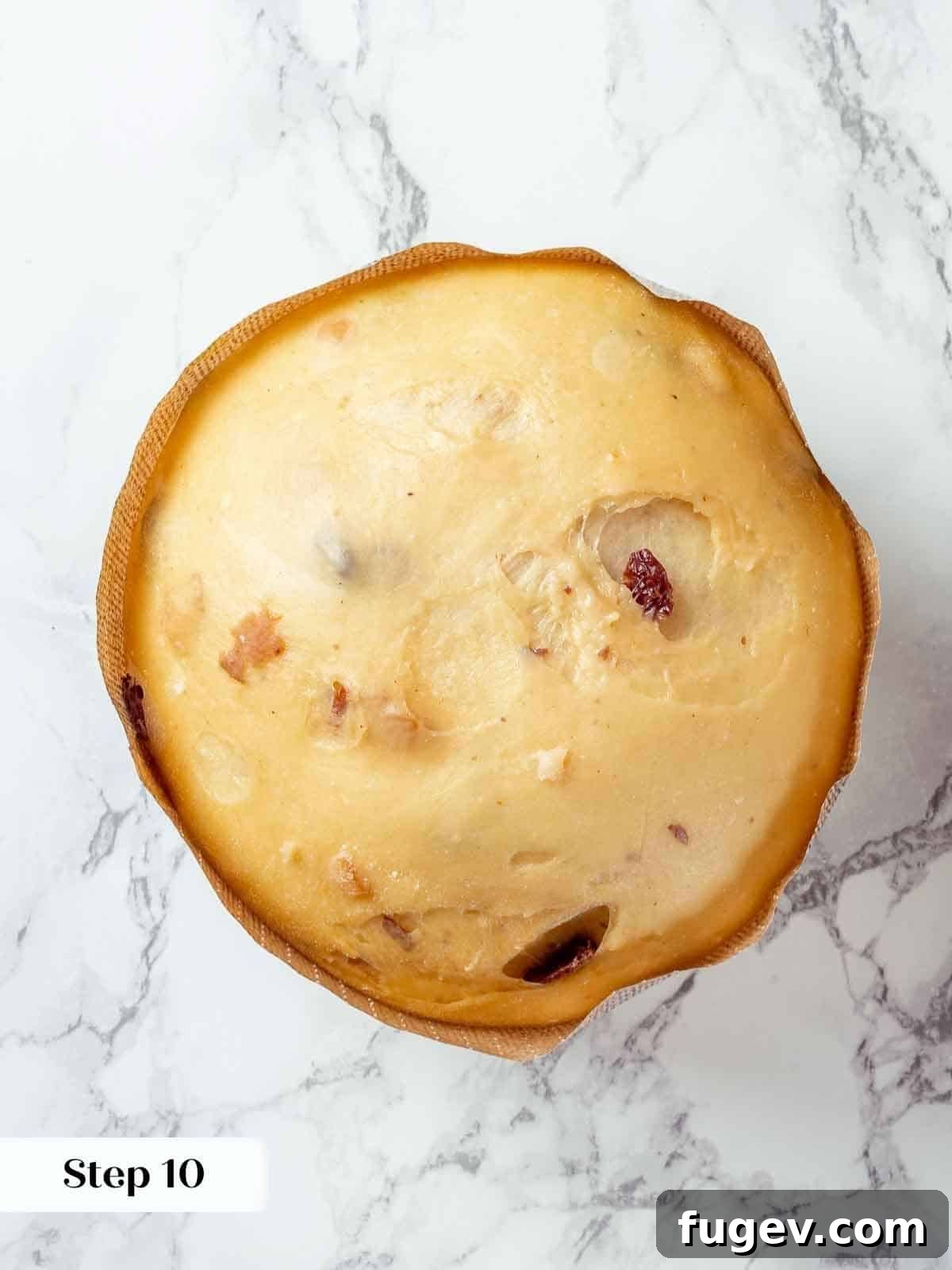
Step 10: Final Proof at Room Temperature (if cold proofed)
If you chose to proof your panettone in the refrigerator overnight, remove it from the fridge in the morning. Allow it to continue its final proof at room temperature for another 3-4 hours. It is fully proofed and ready for the oven when the dough has risen to the top edge of the panettone papers, appearing visibly lighter and airy.
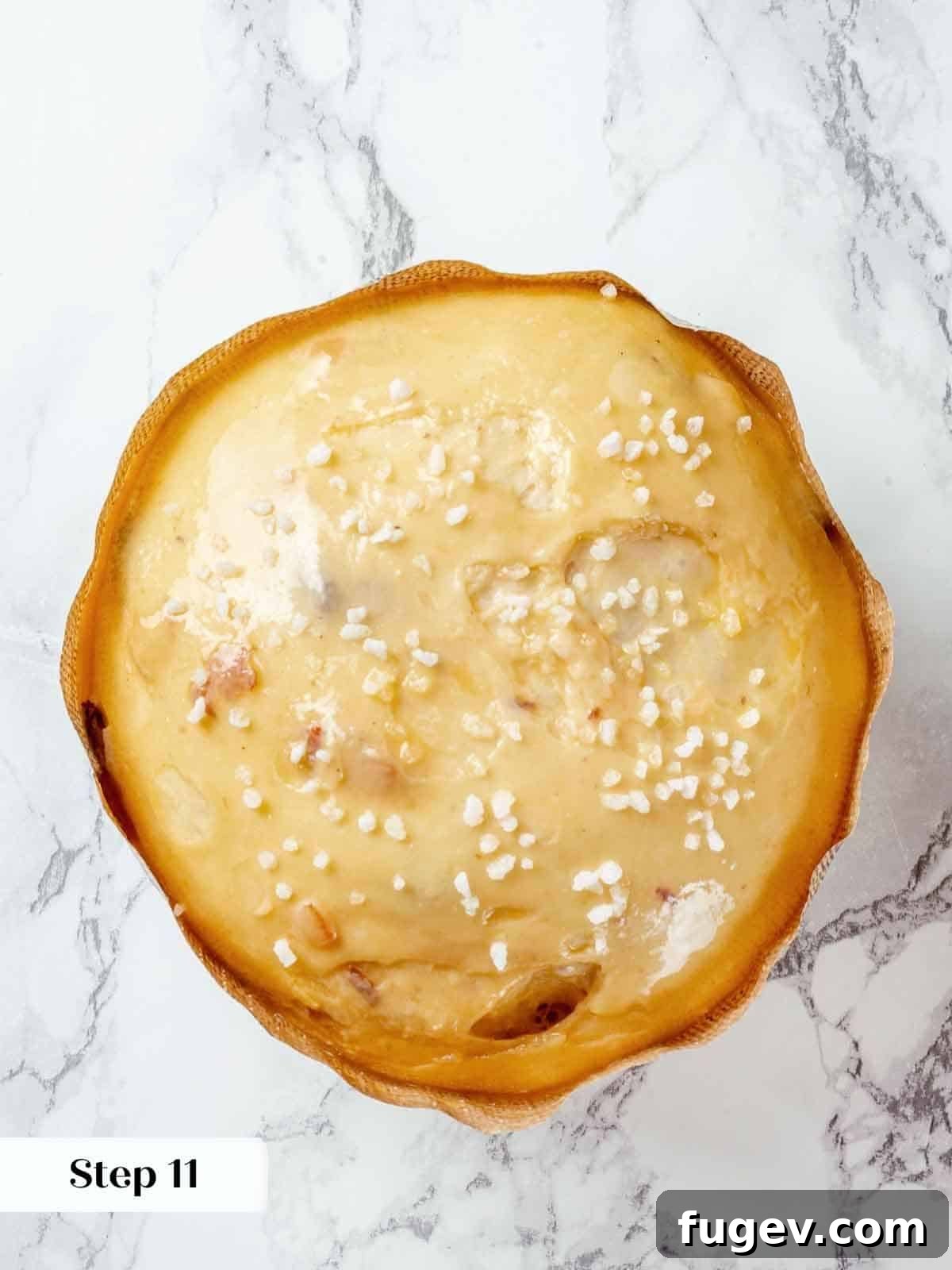
Step 11: Prepare for Baking
While your panettone is completing its final proof, preheat your oven to 350°F (175°C). Once the dough has reached the desired height at the top of the panettone papers, gently beat one egg until it is loose and liquidy to create an egg wash. With a soft pastry brush, carefully brush the top of each panettone loaf with a thin, even layer of egg wash. If desired, generously sprinkle Belgian pearl sugar crystals over the egg-washed surface. This will add a beautiful sparkle and a delightful textural crunch to the finished crust.
Step 12: Bake to Golden Perfection
Carefully transfer the panettone molds to the preheated oven. Bake for approximately 40-45 minutes. To ensure your panettone is perfectly cooked through, use an instant-read thermometer to check the internal temperature. The center of the dough should reach 185°F (85°C). The crust should be a rich golden brown. If it starts to brown too quickly, you can loosely tent the top with aluminum foil to prevent over-browning.
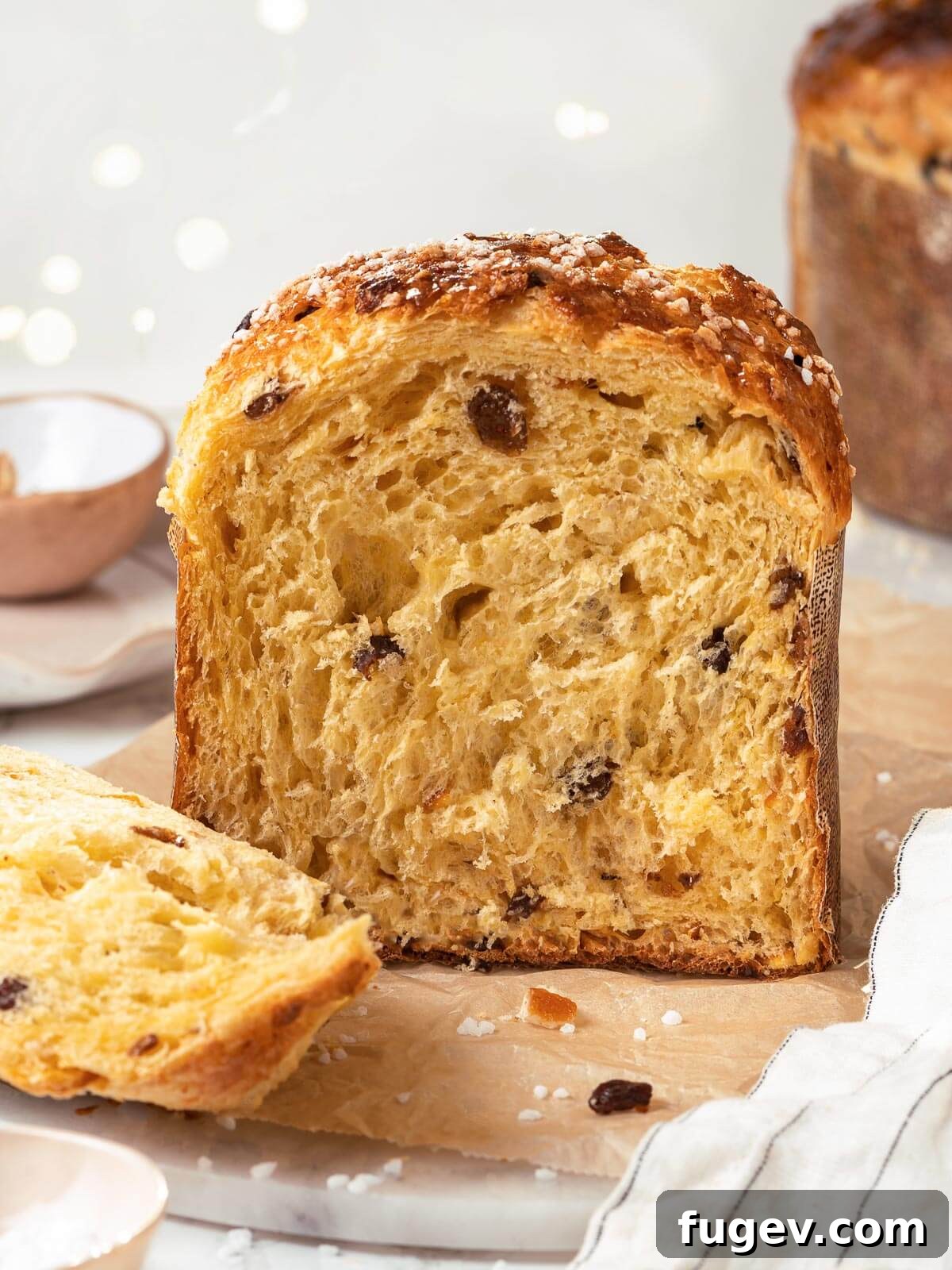
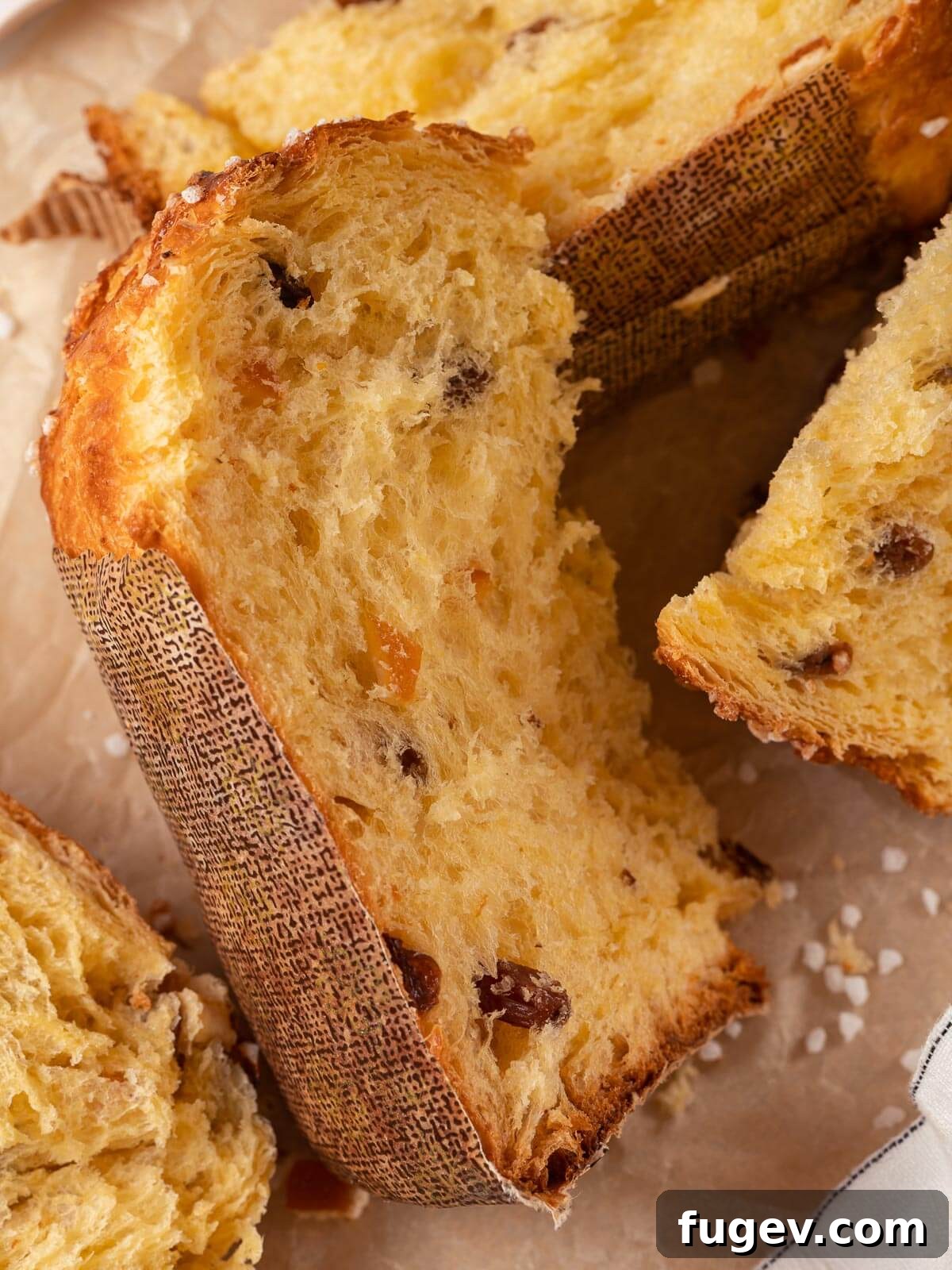
Chef Lindsey’s Expert Recipe Tip
For a beautiful presentation and ease of serving, cut slices of panettone right through the paper mold! Attempting to remove the delicate paper before slicing can often be a challenge, potentially damaging the tender structure of the loaf. Leaving the paper on not only preserves its elegant form but also makes handling and serving much simpler.
Panettone Recipe FAQs
Proper storage is key to preserving the deliciousness of your homemade panettone. Store a well-wrapped, cooled panettone at room temperature for up to 7 days. I find that it slowly begins to lose its initial moisture and softness over this period. For longer preservation, you can freeze baked and completely cooled loaves. Wrap them tightly in several layers of plastic wrap, then an additional layer of aluminum foil, or place them in an airtight freezer bag. They will keep beautifully for up to 2 months. Thaw at room temperature when ready to enjoy.
Leftover panettone is a culinary treasure, perfect for transforming into new delightful treats! It’s absolutely wonderful served simply toasted with a smear of butter and a dusting of powdered sugar. However, its rich, airy texture makes it ideal for other applications. Consider using it to make a gourmet cinnamon raisin French toast, or substitute it for the brioche bread in this comforting easy bread pudding recipe. Its delicate sweetness and fruit inclusions add an extra layer of flavor to these classic dishes.
Panettone is unequivocally a bread, albeit a very rich and sweet one. Unlike a kugelhopf, which often has a cake-like texture despite being yeast-leavened, panettone boasts a distinctly chewy, soft, and airy crumb that is characteristic of bread. Its structure comes from robust gluten development and a long fermentation, and it features numerous inclusions like dried fruits and candied peels, all contributing to its bready nature rather than a dense, crumbly cake structure. It’s a celebratory bread, not a cake.
Panettone is incredibly versatile in how it can be served. It makes a magnificent dessert, especially when accompanied by a cup of rich coffee or aromatic tea. For a simple yet satisfying breakfast or an elegant afternoon treat, serve it lightly toasted with a dollop of butter. To truly elevate the experience, pair panettone with a luxurious dipping sauce like a smooth crème anglaise, a decadent salted caramel sauce, or even a rich hot fudge sauce. Its delicate flavor also pairs beautifully with a glass of sparkling wine or a sweet dessert wine during festive gatherings.
More Recommended Bread Recipes from Chef Lindsey
Sourdough Bread Recipes
Sourdough Raisin Bread
Homemade Bread Recipes
Potato Bread
Easy Quick Bread Recipes
Traditional Irish Soda Bread with Raisins
Sourdough Bread Recipes
Easy Sourdough Bread Recipe
If you tried this recipe and absolutely loved it, please take a moment to leave a 🌟 star rating and share your thoughts in the comments section below. I truly cherish hearing from you; your feedback and comments brighten my day!
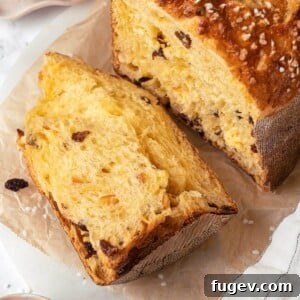
Sourdough Panettone
Comment
Print Recipe
Ingredients
Soaker
- 121 g dark raisins
- 39 g candied orange peel
- 39 g candied lemon peel
- ½ orange zested
- 1 lemon zested
- 78 g water (or juice from the citrus above)
- ¼ teaspoon vanilla extract
Levain Build
- 62 g bread flour (or all-purpose flour)
- 62 g water
- 93 g active sourdough culture
Final Dough
- 375 g all-purpose flour
- 216 g levain (all the levain build from above)
- 225 g egg yolks (approximately 10 large eggs)
- 1 ½ teaspoons instant yeast
- 1 ¼ teaspoons kosher salt
- 120 g granulated sugar
- 1 teaspoon honey
- 5 g diastatic malt powder
- 113 g unsalted butter
- Soaker (from above)
- Belgian pearl sugar (for topping)
- 1 egg (beaten, for topping/egg wash)
Instructions
- Mix the soaker: Combine all the ingredients for the soaker in a covered container. Mix to moisten and set aside at room temperature. Let sit overnight or longer, shaking or stirring every few days.
- Build the levain: Five hours before you want to mix the dough, feed the starter in the ratio listed above. You can either make the exact amount listed and feed your starter separately or make 1.5-2x the amount above to ensure you have enough left over to feed. Let ferment 5 hours in a warm spot (85°F / 29°C) or longer if it is cooler.
Mix the dough:
- In the bowl of a stand mixer fitted with the dough hook attachment, combine all-purpose flour, levain, egg yolks, instant yeast, salt, honey, and diastatic malt powder. Mix on low to combine then develop some gluten on medium speed before slowly adding in the sugar in batches.
- Once the sugar is incorporated, add the room temperature butter, piece by piece, mixing until fully absorbed and the dough is smooth.
- Once the butter is incorporated, add the soaker and mix in on low speed until evenly distributed.
- Turn out into an oiled bowl, cover, and bulk ferment (proof) for 4-5 hours in a warm spot (85°F / 29°C) or longer if it is cooler.
- Pre-shape round by folding all 4 corners into the center, flipping it over (seam side down) and tightening into a ball by pulling towards you with both hands. Cover with plastic wrap and let it bench rest 10-15 minutes to relax the gluten.
- Final shape into a round boule by flipping the seam side up, folding all 4 corners into the center. Flip it back over seam-side down and tighten into a ball with a smooth top by pulling towards you with both hands.
- Place each boule seam-side down in panettone papers. You can final proof in a warm spot for 4-5 hours or until the dough reaches the top of the panettone paper, or, for the best flavor, proof at room temperature for 1 hour and then refrigerate, covered, overnight.
- If you proofed the panettone in the refrigerator overnight, you will then want to final proof for 3-4 hours at room temperature until the dough reaches the top edge of the mold.
- Preheat the oven to 350°F (175°C), and once the dough has risen to the top edge of the panettone papers, beat an egg until loose and liquidy. Gently brush the top of the dough with the egg wash and sprinkle on Belgian pearl sugar crystals if desired.
- Bake in a preheated oven at 350°F (175°C) for 40-45 minutes. The internal dough temperature should be 185°F (85°C).
Notes
Presentation: Use traditional panettone papers for the best and most authentic presentation.
Variations: Divide the dough into 30g portions for individual mini panettones, use your favorite alcohol or juice for the soaker, or try different dried fruits, nuts, or chocolate as mix-ins (chocolate chips should be added to the final dough).
Storage: Store well-wrapped, cooled panettone at room temperature for up to 7 days, though it slowly loses moisture. Alternatively, freeze baked and cooled loaves, well-wrapped in plastic wrap, for up to 2 months.
Nutrition
Calories: 498kcal |
Carbohydrates: 69g |
Protein: 12g |
Fat: 20g |
Saturated Fat: 10g |
Polyunsaturated Fat: 2g |
Monounsaturated Fat: 6g |
Trans Fat: 0.5g |
Cholesterol: 334mg |
Sodium: 398mg |
Potassium: 283mg |
Fiber: 4g |
Sugar: 10g |
Vitamin A: 783IU |
Vitamin C: 12mg |
Calcium: 64mg |
Iron: 4mg
Like this? Leave a comment below!
Before You Go: Explore More Baking Inspiration!
I sincerely hope you enjoyed mastering this professional chef-created sourdough panettone recipe. The joy of baking, especially traditional recipes, is truly fulfilling. Don’t stop here! Be sure to explore our extensive collection of other delightful bread recipes for everyday baking and special occasions. As the holidays approach, why not plan your festive cookie baking with our curated lists? Discover the best Christmas cookies, find inspiration with these easy Christmas cookie recipes, or embrace the classics with our selection of traditional Christmas cookie recipes. Happy baking!