
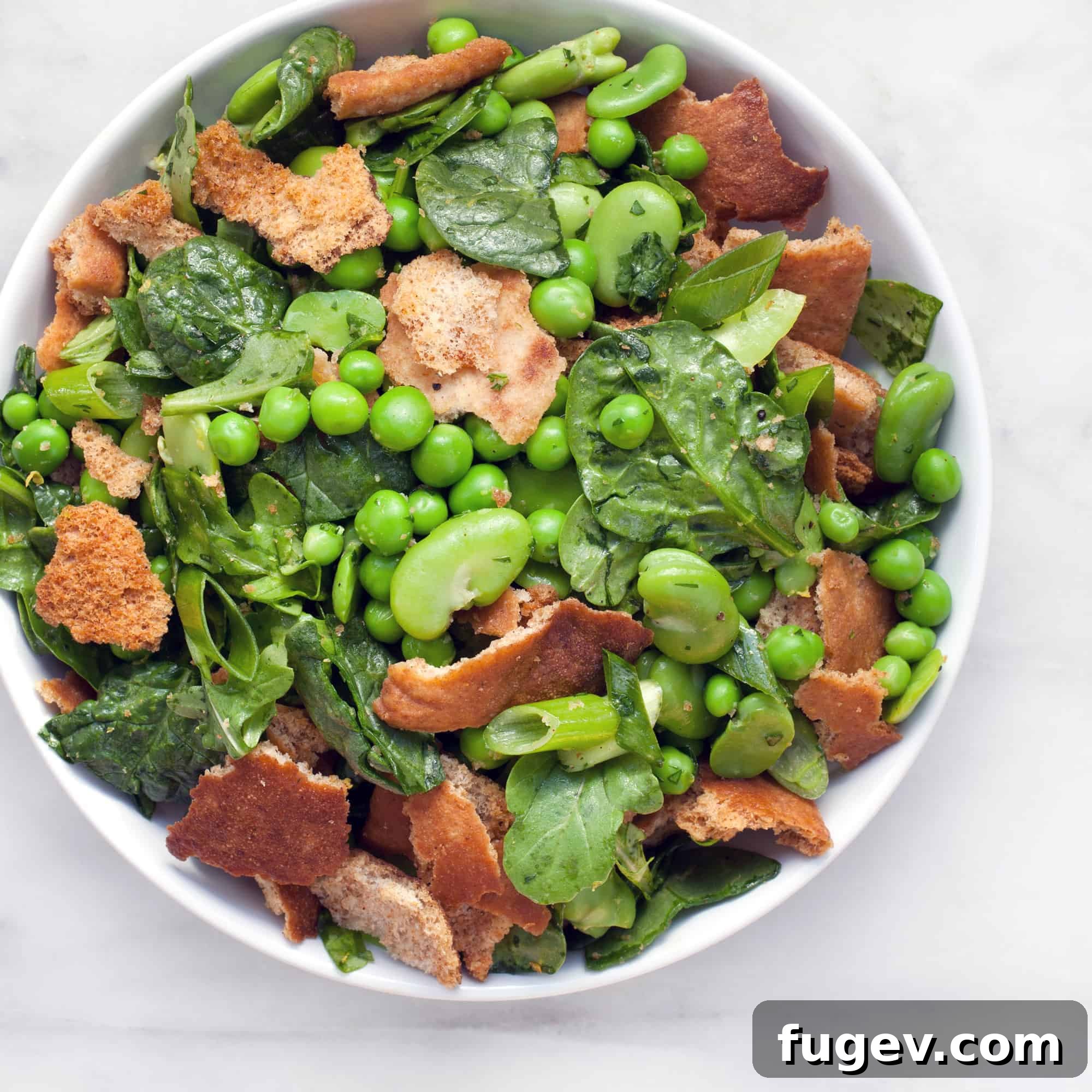
As the chill of winter reluctantly gives way to the gentle embrace of spring, our palates often yearn for lighter, more vibrant flavors. This Fava Bean & Pea Fattoush is a quintessential example, offering a delightful and seasonal twist on the beloved classic Middle Eastern bread salad. Infused with the fresh taste of spring’s bounty, this dish transforms a traditional favorite into an irresistibly crisp, green, and refreshing culinary experience, perfectly complemented by the satisfying crunch of toasted pita bread.
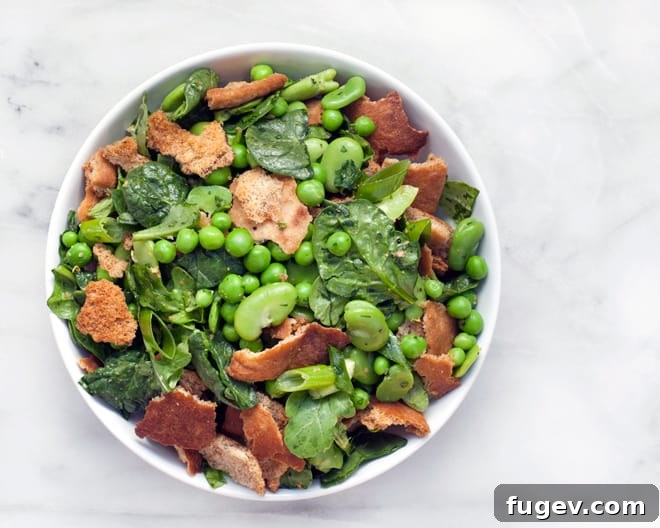
Embracing the Flavors of Spring: A Seasonal Shift in the Kitchen
There’s a unique charm to the transition from winter to spring, especially in regions where the seasons linger in a delightful back-and-forth dance. One moment, we might crave the comforting warmth of a hearty soup, and the next, our taste buds are awakened by the desire for something utterly fresh and invigorating. This culinary tug-of-war is a familiar sign that nature is preparing to burst forth with new life, and with it, an exciting array of seasonal produce.
For many home cooks and food enthusiasts, the appearance of specific ingredients at the local market is the true harbinger of spring. Rhubarb, tender fava beans, and sweet garden peas signal the official end of hibernation for our cooking repertoire. This is a moment of pure joy, when the possibilities for fresh, vibrant meals seem endless. These early spring vegetables bring not just flavor, but a sense of renewal and anticipation to the kitchen, inspiring dishes that perfectly capture the essence of the season.
Fattoush, a cornerstone of Middle Eastern cuisine, is traditionally a bread salad known for its delightful combination of fresh vegetables, herbs, and crispy toasted or fried pita bread, all tossed in a zesty sumac-lemon dressing. It’s a dish celebrated for its refreshing qualities, often served as part of a mezze spread or as a light meal on its own. While the classic version is wonderful, its versatility allows for endless seasonal adaptations. This particular recipe takes that versatility to heart, introducing the bright, sweet notes of fava beans and peas to create a spring/summer rendition that is both familiar and excitingly new.
This Fava Bean & Pea Fattoush isn’t just a salad; it’s a celebration of nature’s calendar. It elegantly bridges the gap between the last vestiges of winter’s heavier meals and the full bloom of summer’s lighter fare. The thoughtful addition of fava beans and peas elevates the classic fattoush, infusing it with an earthy sweetness and a beautiful verdant hue that screams ‘spring!’ It promises a meal that is not only delicious and satisfying but also remarkably light and wholesome.
What Makes This Fava Bean & Pea Fattoush So Special?
The magic of this Fava Bean & Pea Fattoush lies in its carefully chosen components and the harmony they create. Each ingredient plays a crucial role in delivering a symphony of textures and flavors that are both comforting and exhilarating.
The Star Legumes: Fava Beans and Peas
Fava beans, also known as broad beans, are a true delicacy of spring. Their slightly nutty, earthy flavor and tender, creamy texture bring a unique depth to the salad. While preparing them requires a few extra steps—podding, blanching, shocking, and then removing their inner skins—the effort is undeniably worth it. The result is a vibrant green bean, bursting with fresh taste and a silky-smooth mouthfeel that beautifully complements the other components of the fattoush.
Fresh green peas, on the other hand, add a pop of bright sweetness and a delightful crunch. Unlike their frozen counterparts, fresh peas offer a more intense, natural sugariness that truly sings in a spring salad. Their quick cooking time makes them an efficient addition, and like fava beans, blanching and shocking them helps preserve their vivid color and tender-crisp texture. Together, these two legumes form the heart of this seasonal twist, providing both substantiality and a burst of springtime freshness.
The Foundation: Toasted Pita Bread
No fattoush is complete without its signature toasted pita bread. In this recipe, we opt for whole wheat pita, which not only offers a slightly nutty flavor profile but also provides more fiber and a chewier texture once toasted. Tossing the torn pita pieces with olive oil, sumac, salt, and pepper before baking transforms them into golden, aromatic, and crispy shards. This provides a crucial textural contrast to the tender vegetables and fresh greens, absorbing some of the dressing while retaining its satisfying crunch.
Fresh Greens and Zesty Vinaigrette
The base of this fattoush includes a mix of tender baby spinach and peppery arugula, which contribute a fantastic freshness and a subtle bite. Fresh parsley adds another layer of herbaceousness, while thinly sliced scallions provide a delicate oniony kick. Binding all these beautiful ingredients together is a simple yet potent lemon vinaigrette. Made with fresh lemon juice, olive oil, the remaining sumac, salt, and pepper, it’s bright, tangy, and enhances the natural flavors of the vegetables without overpowering them. A hint of lemon zest adds an extra aromatic dimension, making the dressing truly irresistible.
This combination of seasonal ingredients, thoughtfully prepared and dressed, creates a Fava Bean & Pea Fattoush that is not only visually stunning but also incredibly satisfying. It’s a testament to how embracing seasonal produce can elevate a classic dish into something truly extraordinary.
Mastering the Art of Fava Bean & Pea Fattoush: A Step-by-Step Guide
Creating this delightful Fava Bean & Pea Fattoush is a straightforward process, but paying attention to each step ensures the best possible flavor and texture. Here’s a detailed guide to help you achieve perfection:
Preparing the Perfect Toasted Pita
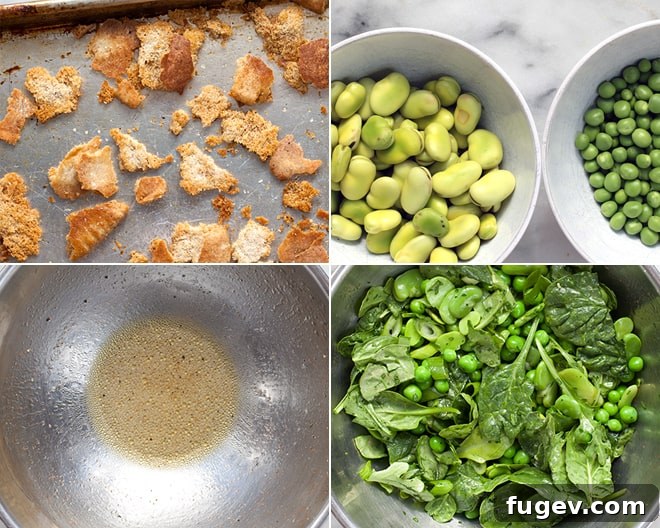
The cornerstone of any great fattoush is the crispy pita. Start by preheating your oven to a moderate 375°F (190°C). This temperature is ideal for toasting the pita to a golden crisp without burning it. Take two whole-wheat pita rounds and roughly tear them into bite-sized pieces. The rustic tearing adds to the charm of the salad. Place the torn pita on a single layer on a sheet pan. Drizzle with 1 tablespoon of olive oil, sprinkle with half of the sumac, a generous pinch of kosher salt, and freshly ground black pepper. Toss everything gently to ensure the pita pieces are evenly coated. Bake for 15-18 minutes, or until the pita is beautifully golden brown and delightfully crisp. Keep a close eye on it, as oven temperatures can vary. Once done, remove from the oven and let it cool.
Blanching and Peeling the Fava Beans
Fava beans require a little extra care to reach their tender best. Begin by removing the fava beans from their thick pods. This can be a bit time-consuming, but consider it part of the meditative cooking process. Discard the pods. Bring a large saucepan of salted water to a rolling boil. Add the shelled fava beans and cook for just 3-4 minutes. You want them tender but still vibrant. Immediately after cooking, use a slotted spoon to transfer them into a medium bowl filled with ice water. This “shocking” process halts the cooking, preserves their bright green color, and makes them easier to handle. Once cooled, gently pop the inner skins off each fava bean. This step reveals their beautiful, bright green interior and ensures a wonderfully tender texture.
Cooking the Fresh Peas
The same saucepan of boiling salted water can be used for the peas, minimizing cleanup. Add the shelled fresh peas to the boiling water and cook for only 2 minutes. Fresh peas cook much faster than fava beans. Again, use a slotted spoon to transfer them quickly to a small bowl of ice water to cool rapidly. This keeps them tender-crisp and ensures their sweet flavor and vibrant green color are locked in.
Assembling the Fresh Salad Base
In a large mixing bowl, combine your prepared fava beans and peas. Add one scallion, thinly sliced on the bias, which provides a delicate, mild onion flavor. Then, incorporate two ounces of a baby spinach and arugula mix for a fresh, leafy foundation with a pleasant peppery note from the arugula. Finally, add one tablespoon of finely chopped fresh parsley, which offers a burst of herbaceous aroma and taste.
Crafting the Zesty Lemon Vinaigrette
The dressing brings all the flavors together. In a separate small bowl, whisk together 1 tablespoon of fresh lemon juice with the remaining 1 teaspoon of olive oil, the remaining sumac, a pinch of salt, and a dash of black pepper. Whisk until emulsified. To add an extra layer of bright citrus aroma, stir in the zest of one lemon. This simple vinaigrette is the perfect complement to the fresh vegetables.
Final Assembly and Serving
Pour the prepared lemon vinaigrette over the fava bean-pea mixture in the large bowl. Toss gently to ensure all the ingredients are evenly coated. Finally, fold in the toasted pita bread pieces. Toss one last time to integrate the crispy elements. Taste the salad and adjust the seasoning as needed. You might want a little more salt, pepper, or a squeeze of lemon juice. Serve the Fava Bean & Pea Fattoush immediately to enjoy the pita at its crispiest. This salad is best served fresh but can be enjoyed later, though the pita will soften.
Fava Bean & Pea Fattoush Recipe
A fresh and vibrant Middle Eastern bread salad, perfect for spring and summer with the addition of seasonal fava beans and peas.
Prep time: 30 mins | Cook time: 15 mins | Total time: 45 mins
Servings: 4
Ingredients
- 2 whole-wheat pita rounds, roughly torn
- 1 tablespoon plus 1 teaspoon olive oil
- 1/4 teaspoon sumac
- 1/2 teaspoon kosher salt
- 1/4 teaspoon black pepper
- 1-1/2 pounds fava beans in their pods
- 3/4 pound fresh peas in their pods
- 1 scallion, sliced on the bias into 1/4-inch pieces
- 2 ounces baby spinach & arugula mix
- 1 tablespoon chopped fresh parsley
- 1 tablespoon lemon juice
- Zest of 1 lemon
Instructions
- Preheat the oven to 375 degrees F (190°C).
- On a sheet pan, toss the torn pita bread with 1 tablespoon olive oil, half the sumac, salt, and pepper. Spread in a single layer and bake for 15-18 minutes, or until golden brown and crispy.
- Carefully remove the fava beans and peas from their pods. Discard the empty pods, keeping the shelled fava beans and peas separate.
- Bring a large saucepan of salted water to a rolling boil. Add the shelled fava beans and cook for 3-4 minutes until they are tender. Using a slotted spoon, immediately transfer the fava beans to a medium bowl filled with ice water to stop the cooking process and preserve their vibrant green color. Once cooled, gently remove the inner skins from the fava beans.
- Using the same saucepan of boiling salted water, add the shelled peas and cook for 2 minutes until tender-crisp. Transfer the peas to a small bowl of ice water to cool rapidly.
- In a large mixing bowl, combine the peeled fava beans, cooled peas, sliced scallions, baby spinach & arugula, and chopped fresh parsley.
- In a separate small bowl, whisk together the lemon juice with the remaining 1 teaspoon olive oil, the remaining sumac, a pinch of salt, and pepper to create the vinaigrette. Add the lemon zest to the vinaigrette.
- Pour the lemon vinaigrette over the fava bean-pea mixture and toss gently to coat. Finally, fold in the toasted pita bread. Taste and adjust seasoning as needed. Serve immediately.
Nutrition Information (Approximate per serving)
- Calories: 259 kcal
- Carbohydrates: 43g
- Protein: 14g
- Fat: 5g
- Saturated Fat: 1g
- Polyunsaturated Fat: 1g
- Monounsaturated Fat: 3g
- Sodium: 939mg
- Potassium: 628mg
- Fiber: 11g
- Sugar: 6g
- Vitamin A: 2106 IU
- Vitamin C: 43mg
- Calcium: 74mg
- Iron: 4mg
Nutrition information is automatically calculated and should be used as an approximation.
Additional Information
- Course: Salads
- Cuisine: Mediterranean
Tips for Success and Variations
To ensure your Fava Bean & Pea Fattoush is always a hit, remember to serve it immediately after adding the pita bread to maintain its crispiness. If preparing ahead, keep the toasted pita separate and add it just before serving. For added protein, consider grilling some chicken or halloumi cheese to serve alongside. A sprinkle of crumbled feta cheese or a handful of toasted pine nuts can also elevate the flavors and textures. This salad is naturally vegetarian and can easily be made vegan by ensuring your pita bread is free of animal products.
Embrace the seasonal nature of this dish by experimenting with other spring vegetables as they become available. Asparagus, radishes, or even thinly sliced cucumber could make excellent additions, further enhancing the freshness and vibrancy of your fattoush.
Enjoyed This Recipe?
We absolutely love seeing your culinary creations! If you make this Fava Bean & Pea Fattoush, please share your photos on Instagram and tag us @lastingredient. Don’t forget to use the hashtag #lastingredient so we can see and celebrate your delicious spring salad!