
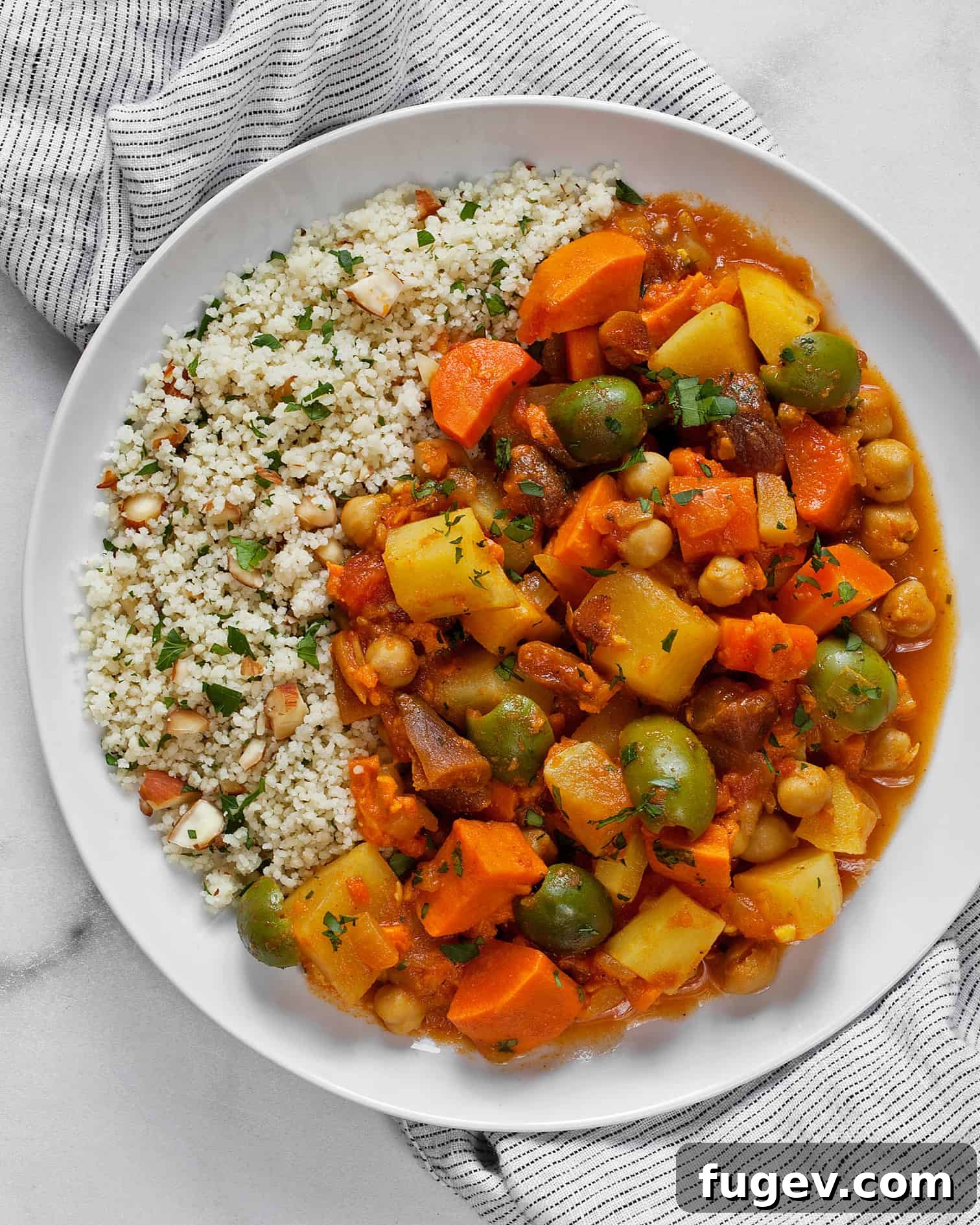
Welcome to a culinary journey that transports your taste buds straight to the vibrant kitchens of Morocco. This Root Vegetable Tagine is more than just a meal; it’s a celebration of earthy flavors, aromatic spices, and wholesome ingredients. Expertly crafted as a vegan stew, it features a delightful medley of root vegetables – sweet potatoes, carrots, parsnips, and turnips – all harmoniously blended with a signature Moroccan spice mix. Served alongside a bright and zesty lemon almond couscous, this dish offers a balanced and utterly satisfying experience that’s perfect for any occasion, especially when you crave warmth and comfort.
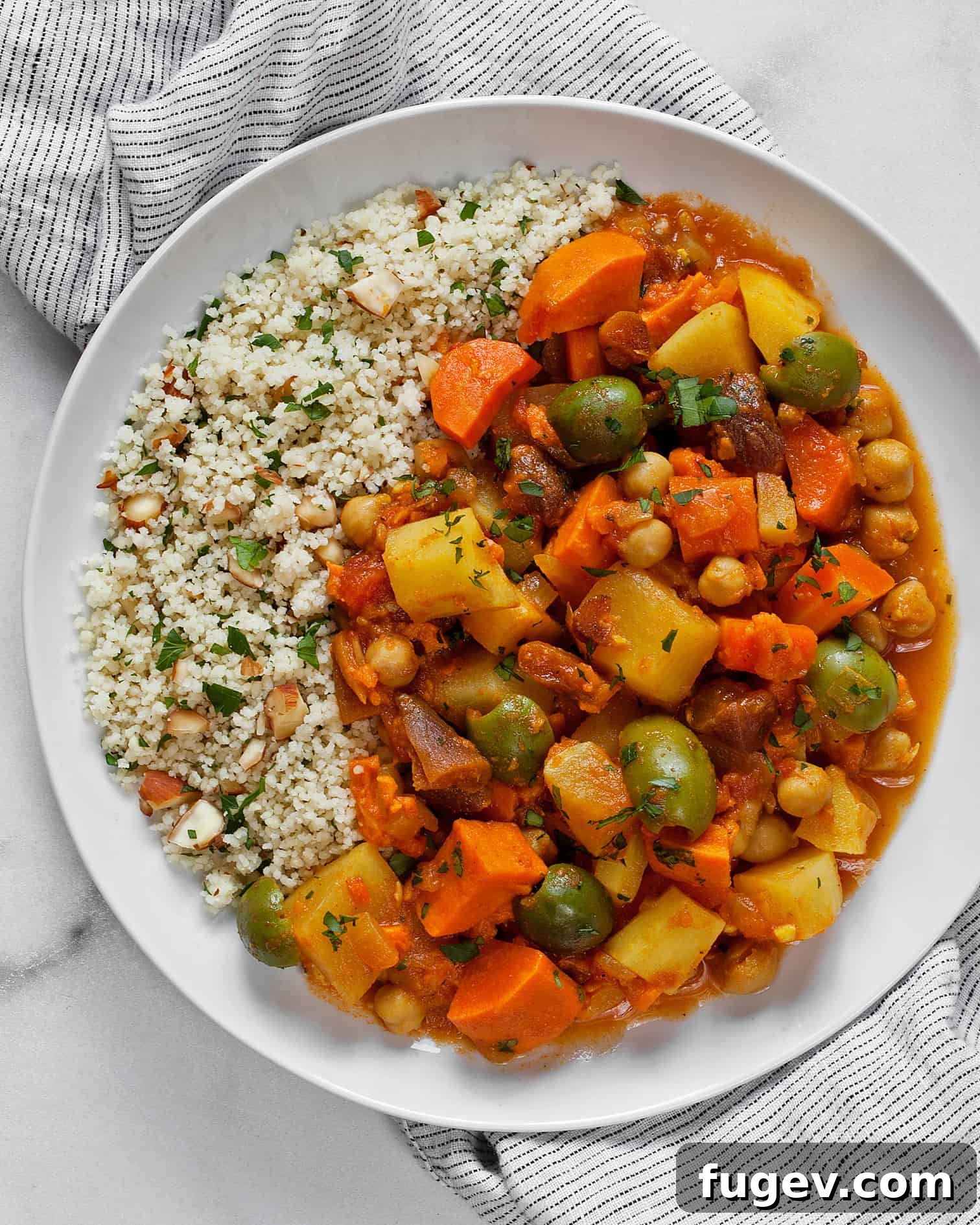
As the cooler months of fall and winter roll in, my kitchen naturally gravitates towards comforting, simmering pots. There’s something inherently nourishing about a hearty stew, brimming with fresh vegetables and infused with rich flavors. While soups offer a lighter, broth-forward experience, stews like this Moroccan vegetable tagine are characterized by their dense, luxuriant texture, packed with an abundance of wholesome ingredients. They are substantial enough to be enjoyed as a main course, whether spooned into a deep bowl or elegantly plated, and always benefit from a complementary side like fluffy rice or tender noodles, perfect for soaking up every drop of the exquisite sauce. This particular root vegetable tagine truly shines as a plant-based powerhouse, offering both incredible taste and impressive nutritional value.
The magic of this vegetable tagine begins with its foundation: humble root vegetables. Grown beneath the earth’s surface, these culinary treasures emerge in early autumn and sustain us through the longest, chilliest winter days. Carrots, sweet potatoes, parsnips, and turnips are not only incredibly versatile and flavorful but also nutritional champions. They are excellent sources of dietary fiber, promoting digestive health, and are packed with an array of antioxidants, vitamins, and minerals essential for overall well-being. Their natural sweetness and earthy notes provide a perfect canvas for the vibrant spices of Moroccan cuisine, making them ideal candidates for this fragrant and warming stew. When preparing this dish, I love opening my spice drawer and letting the aromas inspire a truly authentic and deeply satisfying experience.
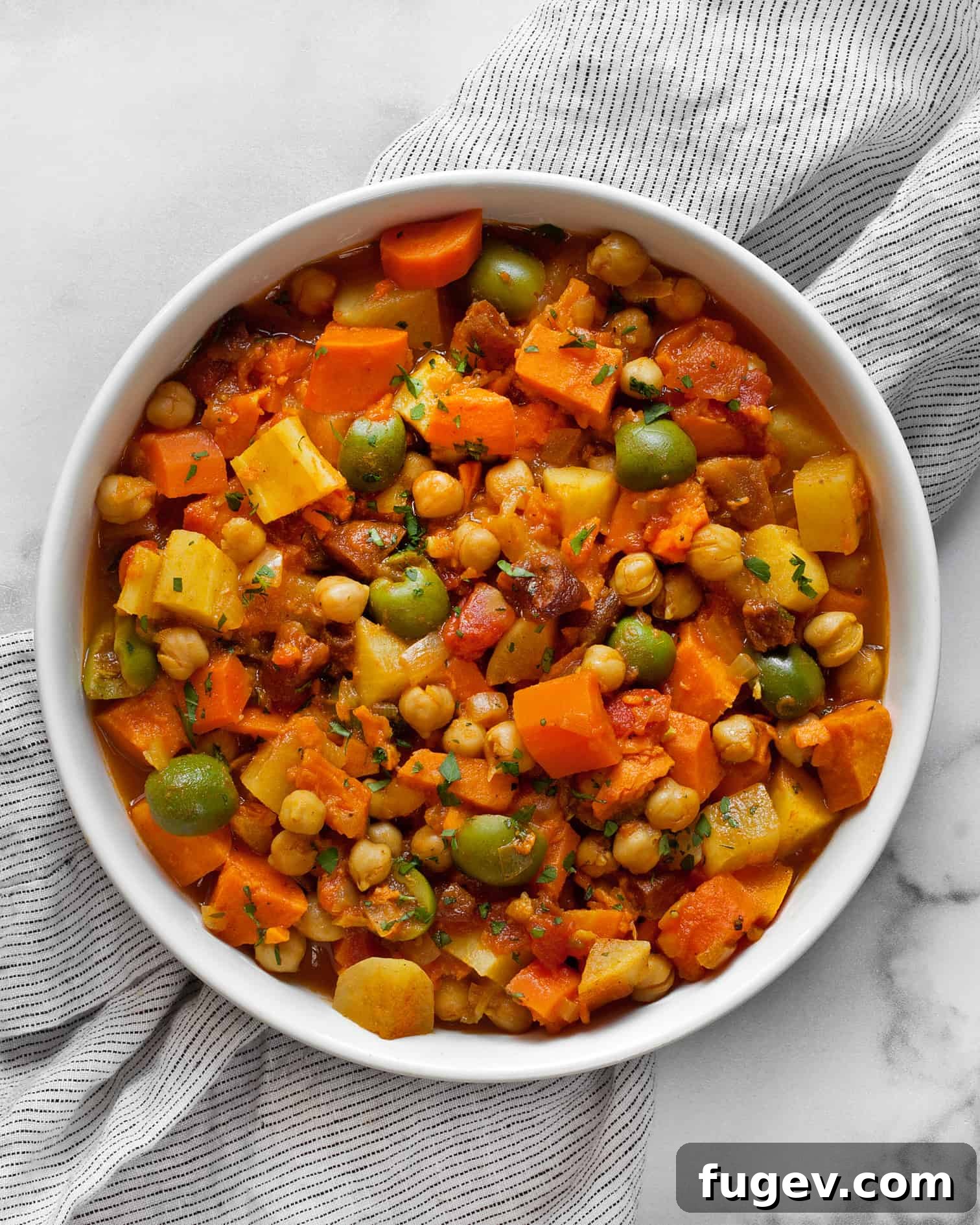
What Is A Tagine? Unveiling the Heart of Moroccan Cuisine
The term “tagine” (or “tajine”) holds a dual meaning in the culinary world, referring both to a traditional North African stew and the distinctive clay pot in which it’s slow-cooked. Originating from Morocco, the tagine pot is instantly recognizable by its heavy, shallow base and its iconic conical or funnel-shaped lid. This unique design is not merely decorative; it’s ingeniously functional. As the stew simmers over low heat, the tall lid traps steam and condensation, which then drips back down into the dish. This continuous basting process ensures that the ingredients remain incredibly moist, tender, and intensely flavorful, creating a rich, concentrated sauce without requiring excessive liquid. It’s a masterclass in slow cooking, allowing spices to deeply penetrate the food and vegetables to become wonderfully soft.
While an authentic clay tagine pot offers the most traditional cooking experience, you don’t need one to recreate the magic in your own kitchen. An ovenproof Dutch oven with a tight-fitting lid works beautifully as a substitute, effectively mimicking the tagine’s moist-heat environment. This accessibility makes it easy for home cooks to explore Moroccan flavors. Traditionally, tagines often feature various meats such like succulent chicken, tender beef, or rich lamb, which absorb the spices wonderfully. However, I believe that a tagine presents an exceptional opportunity to highlight the natural richness and diversity of vegetables. This vegetarian approach allows the vibrant flavors of the produce and the intricate spice blend to truly shine.
The soul of any tagine lies in its aromatic spices. This recipe draws significant inspiration from “Ras el Hanout,” a legendary Moroccan spice blend whose name literally translates to “head of the shop,” implying the finest spices a merchant has to offer. There’s no single definitive recipe for Ras el Hanout; each spice shop and family often boasts its unique blend, which can include anywhere from a dozen to over thirty different spices. Common components often include cardamom, nutmeg, cinnamon, turmeric, ginger, paprika, and a touch of rose petals, creating a complex, warm, and slightly floral profile. While this recipe utilizes a simpler, yet equally effective, combination of cumin, turmeric, and cinnamon, it captures the essence of that fragrant Moroccan spirit.
To elevate this root vegetable tagine further, I add two crucial ingredients towards the end of the cooking process: chopped dried apricots and pitted green olives. The dried apricots introduce a subtle, natural sweetness and a chewy texture that beautifully complements the savory spices and earthy vegetables. Their golden hue also adds visual appeal. The green olives, particularly Castelvetrano olives, contribute a delightful briny, salty counterpoint, and a tender, buttery texture that cuts through the richness of the stew, creating a balanced and multi-layered flavor experience. These finishing touches are essential for achieving the complex, authentic taste characteristic of a well-made tagine.
Essential Ingredients & Creative Substitutions for Your Tagine
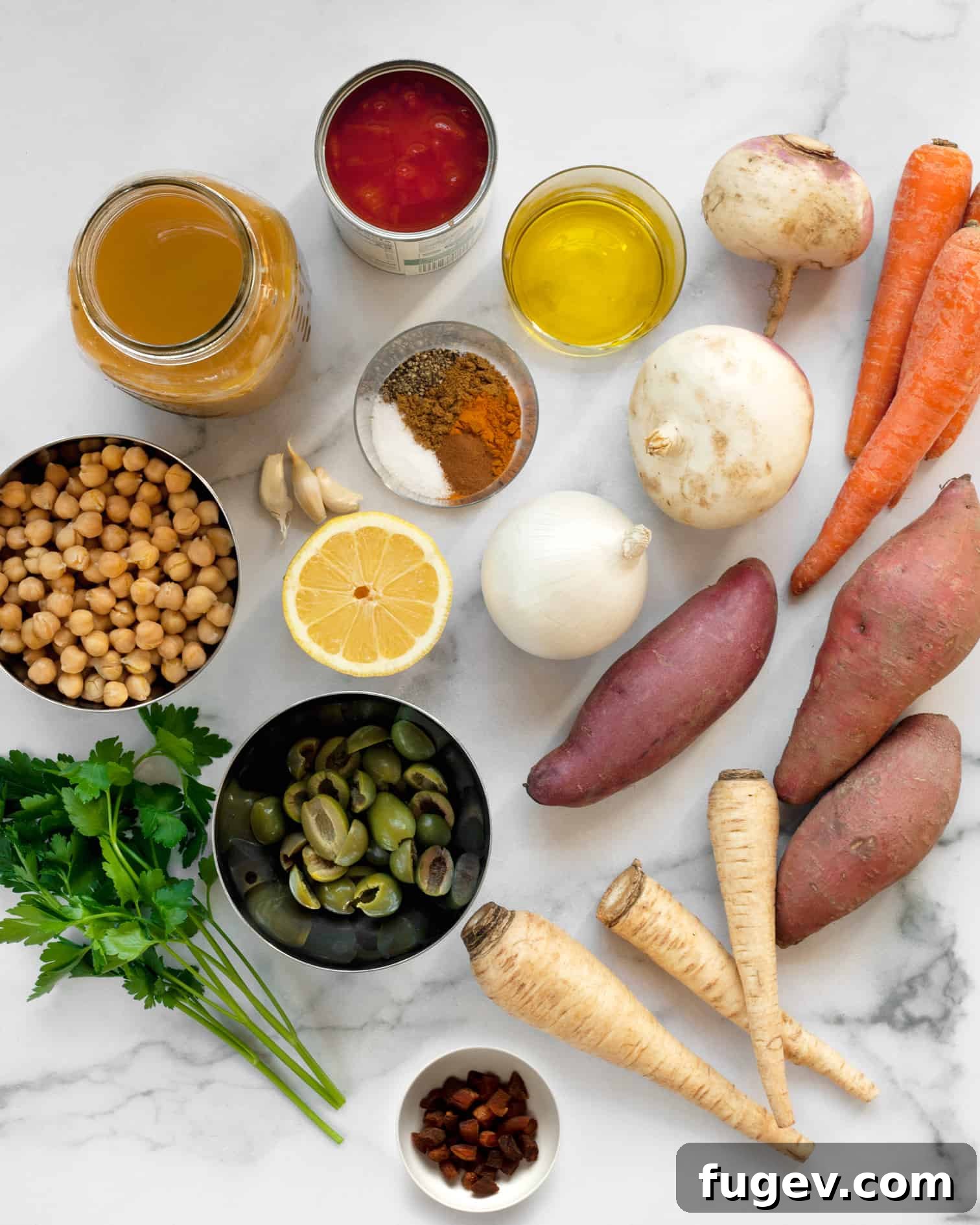
Crafting a truly memorable Root Vegetable Tagine relies on a thoughtful selection of fresh, high-quality ingredients and a harmonious blend of spices. Here’s a detailed look at what you’ll need, along with suggestions for delightful substitutions:
- Spices: The foundation of this tagine’s flavor comes from a carefully chosen combination of ground cumin, fragrant turmeric, warming cinnamon, kosher salt, and freshly ground black pepper. This blend provides a warm, earthy, and subtly sweet aromatic profile typical of Moroccan cuisine. For an even richer, more complex flavor, you could consider adding a teaspoon of a good quality Ras el Hanout blend, or a pinch of ground ginger or coriander.
- Garlic: Freshly minced garlic is non-negotiable here. Its pungent aroma, when sautéed with the other spices, creates a deep, irresistible base layer of flavor. Avoid pre-minced garlic in a jar if possible, as the fresh cloves offer superior taste.
- Root Vegetables: This recipe celebrates the diversity of root vegetables, including vibrant carrots (for sweetness and color), earthy parsnips (with their unique sweet, slightly spicy flavor), creamy sweet potatoes (providing richness and a touch of natural sweetness), and crisp turnips (offering a subtle peppery bite). The beauty of this dish is its flexibility; feel free to use your favorite root vegetables or whatever you have on hand. Other excellent options include rutabaga, celery root, or even hardy winter squash like butternut or kabocha, ensuring they are cut into similar-sized cubes for even cooking.
- Onions: Chopped onions are sautéed first to create a foundational sweetness and depth of flavor. They caramelize slightly, releasing aromatic compounds that enhance the overall taste of the stew. Yellow or white onions work best for this purpose.
- Tomatoes: A can of diced tomatoes (14.5 ounces) provides a gentle acidity and a robust body to the stew without making it overtly “tomato-y.” The tomatoes break down during cooking, integrating seamlessly into the sauce. Crushed tomatoes or even fresh, ripe tomatoes chopped could be used as alternatives.
- Vegetable Broth: Opt for low-sodium vegetable broth (3 cups) to control the overall saltiness of your tagine. This allows the nuanced flavors of the spices and vegetables to shine through. Homemade vegetable stock would be ideal for an even richer taste.
- Chickpeas: Canned garbanzo beans (chickpeas) are a convenient and excellent source of plant-based protein and fiber, adding a wonderful texture and heartiness to the stew. Remember to rinse and drain them thoroughly before adding. If you prefer, you can cook dried chickpeas from scratch, but ensure they are fully cooked before incorporating them into the tagine.
- Olives: Pitted green olives, specifically Castelvetranos from Sicily, are highly recommended for their meaty texture and sweet, buttery, and mildly briny flavor profile. These truly elevate the dish. If Castelvetranos aren’t available, other good quality green olives like Picholine or even a mix of green and black olives would work, though the flavor will vary slightly.
- Dried Apricots: Roughly chopped dried apricots add a delightful burst of concentrated sweetness and a lovely chewiness. They balance the savory and tangy notes of the tagine beautifully. Golden raisins or other dried fruits like prunes or figs, chopped, could also be used for a similar effect.
- Lemon: Freshly squeezed lemon juice (from half a lemon for the tagine, and half for the couscous) provides a crucial brightness and tanginess, cutting through the richness of the stew. This is a deliberate nod to preserved lemons, a staple in traditional Moroccan cuisine, which offer an intense, tangy, and slightly floral flavor. While this recipe uses fresh lemon, if you have preserved lemons on hand, a tablespoon or two, finely chopped, would be an exquisite addition.
- Olive Oil: Good quality extra virgin olive oil is used for sautéing the aromatics and spices, forming the initial flavor base. Its fruity notes complement the other ingredients perfectly.
- Parsley: Fresh parsley, both stirred into the couscous and used as a garnish for the tagine, provides a vibrant, herbaceous finish and a pop of color. Cilantro is another popular herb in Moroccan cuisine and can be used interchangeably or in addition to parsley for a different flavor dimension.
- Couscous: The quick-cooking nature of couscous makes it the ideal side dish to prepare while your Moroccan tagine simmers. For this recipe, the couscous is transformed into a lemony almond version by stirring in fresh parsley and chopped almonds, adding texture, nuttiness, and fresh flavor that perfectly complements the tagine. You can use instant couscous for speed, or a finer grain for a more delicate texture.
Crafting Your Delicious Root Vegetable Tagine: Step-by-Step
Creating this vegan Moroccan root vegetable tagine is a straightforward and rewarding process. Follow these steps to ensure a flavorful and perfectly cooked stew:
- Prepare Your Oven: Begin by preheating your oven to 350 degrees F (175 degrees C). This ensures the oven is at the correct temperature for the tagine to bake evenly once it’s on the stovetop.
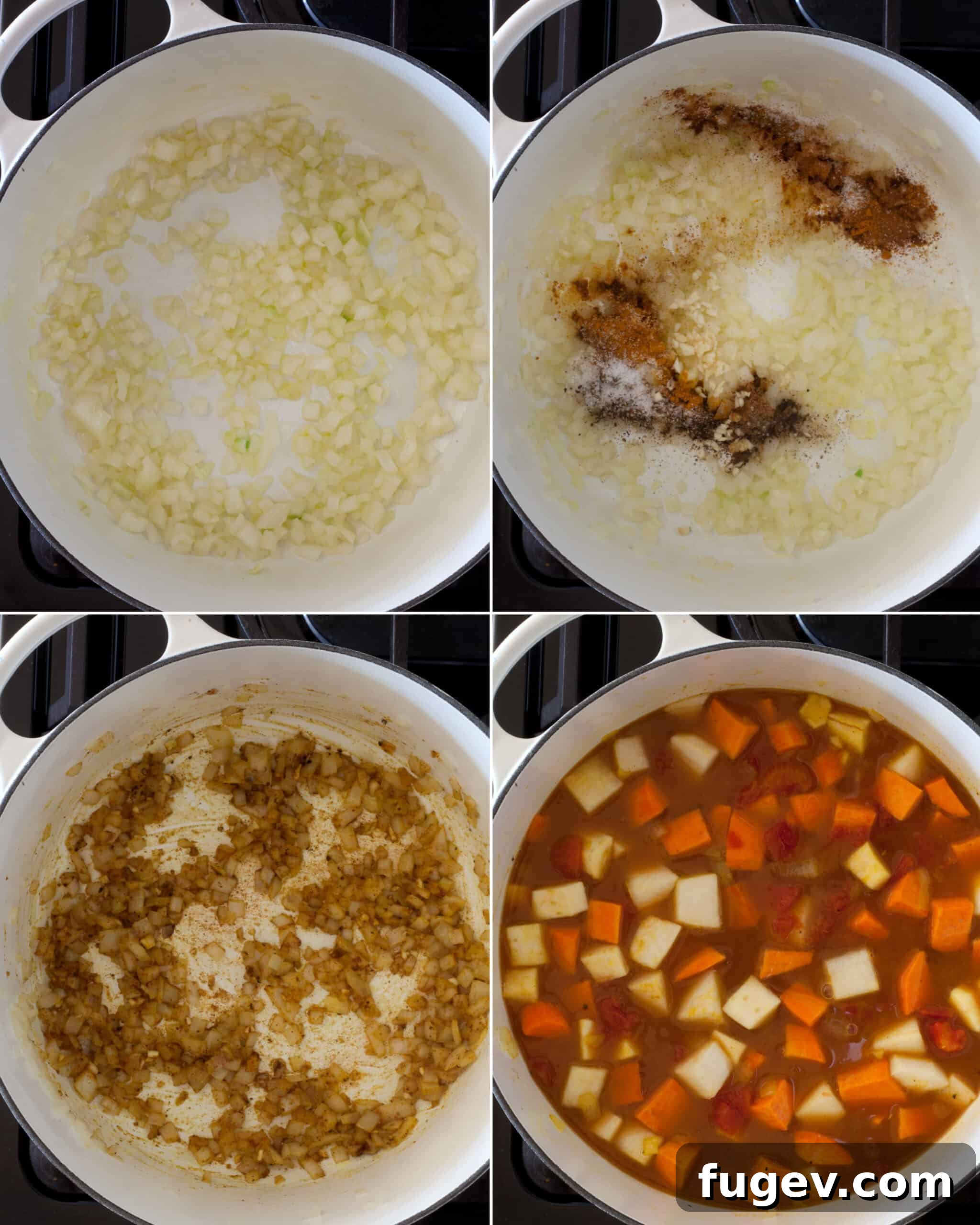
- Sauté the Aromatics: In a large, ovenproof Dutch oven or heavy-bottomed pot with a tight-fitting lid, heat the olive oil over medium heat. Add the chopped onions and sauté them for 5-7 minutes, stirring occasionally, until they become wonderfully soft and translucent. This crucial step sweetens the onions and forms the aromatic foundation of your tagine. Next, stir in the minced garlic, ground cumin, turmeric, cinnamon, kosher salt, and black pepper. Continue cooking for another 2-3 minutes, stirring constantly. You’ll notice the spices “blooming” and becoming incredibly fragrant, deepening their flavor.
- Combine and Simmer: Add the peeled and cubed root vegetables, canned diced tomatoes (undrained), and vegetable broth to the pot. Stir everything gently to combine. Bring the mixture to a gentle simmer over medium heat on the stovetop.
- Bake to Perfection: Once simmering, place the lid securely on your pot. Transfer the Dutch oven to the preheated oven and bake for approximately 30 minutes, or until the root vegetables are tender when pierced with a fork. Baking the tagine allows for gentle, even cooking, much like a traditional tagine pot, ensuring all the flavors meld beautifully and the vegetables soften without becoming mushy.
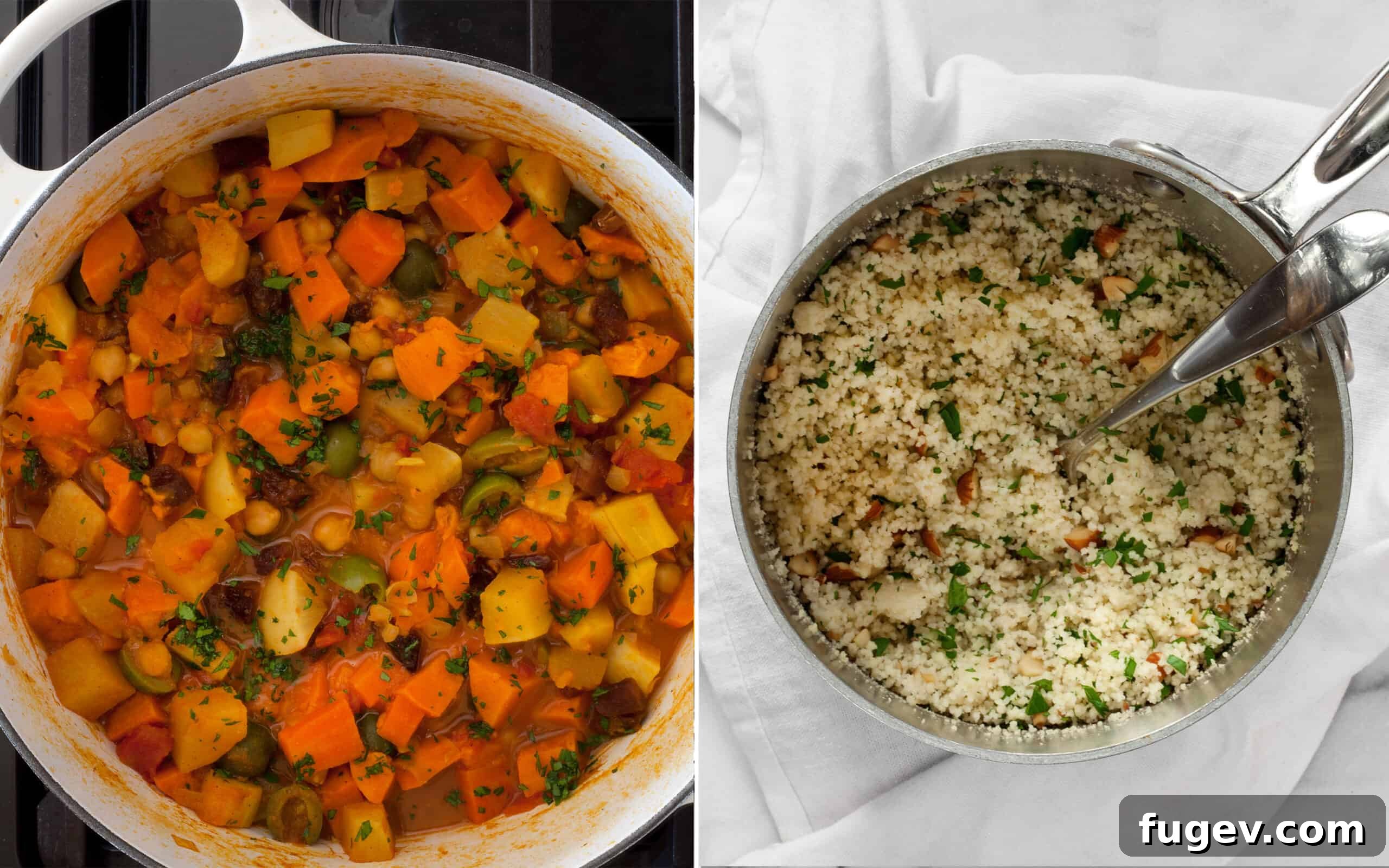
- Finish on the Stove and Thicken: Carefully remove the pot from the oven and return it to the stovetop over medium heat. Stir in the chickpeas (rinsed and drained), pitted green olives, fresh lemon juice, and chopped dried apricots. Allow the tagine to simmer gently for another 5-10 minutes, uncovered, giving the flavors a chance to fully integrate and the stew to thicken slightly to a rich, luscious consistency.
- Prepare the Lemony Almond Couscous: While the tagine is finishing its simmer, prepare your couscous. In a small saucepan, bring 1 cup of water and the juice of 1/2 lemon to a boil. Once boiling, remove the saucepan from the heat and stir in 1 cup of couscous. Immediately cover the pot with a lid and let it stand for 5 minutes. This allows the couscous to absorb the liquid and steam. After 5 minutes, fluff the couscous with a fork to separate the grains. Stir in 1/4 cup chopped fresh parsley, 1/4 cup chopped almonds, 1/2 teaspoon kosher salt, and 1/4 teaspoon black pepper. The lemon brightens the couscous, while the parsley adds freshness and the almonds provide a delightful crunch.
- Serve and Garnish: Ladle the warm Root Vegetable Tagine into bowls or onto plates. Garnish generously with additional fresh chopped parsley for a burst of color and herbaceousness. Serve immediately with the lemon almond couscous on the side. Enjoy this hearty and fragrant vegan Moroccan feast!
Serving Suggestions: Completing Your Moroccan Feast
This Root Vegetable Tagine is a marvelously easy one-pot meal that requires minimal fuss, yet delivers maximum flavor. While it’s incredibly satisfying on its own, I wholeheartedly recommend preparing the accompanying Lemony Almond Couscous. Its light, fluffy texture, combined with the fresh brightness of lemon, the herbaceous notes of parsley, and the subtle crunch of almonds, creates a perfect textural and flavor counterpoint to the rich, hearty tagine. The couscous acts as an excellent vessel for soaking up every last drop of the tagine’s aromatic sauce, ensuring no flavor goes to waste. If you’re short on time, a boxed couscous mix can be used as a convenient alternative, but don’t skip this essential side dish – it truly completes the experience.
Beyond couscous, this versatile tagine pairs beautifully with other sides. A simple bowl of fluffy white rice or a rustic, crusty bread is excellent for mopping up the savory liquid. For an added layer of freshness, a simple green salad with a light vinaigrette would provide a refreshing contrast. A dollop of plain Greek yogurt (or a non-dairy alternative for a vegan meal) can also add a creamy coolness, though it’s not traditional. No matter how you choose to serve it, this vibrant root vegetable tagine promises a nutritious, flavorful, and comforting meal that’s perfect for a cozy evening or a gathering with loved ones.
Storing & Reheating: Enjoying Your Tagine Again
One of the many joys of a hearty stew like this Root Vegetable Tagine is how wonderfully it fares as leftovers. The flavors often deepen and meld even further after a day or two, making it an excellent meal prep option. To store, transfer any cooled leftover tagine into an airtight container and refrigerate for up to 4 days. This ensures its freshness and prevents spoilage. For longer storage, the tagine freezes beautifully. Place it in a freezer-safe container or bag, removing as much air as possible, and freeze for up to 1 month. When you’re ready to enjoy it again, simply thaw it in the refrigerator overnight and reheat gently on the stovetop over low heat, or in the microwave until thoroughly warmed through. Be aware that the vegetables, particularly the root vegetables, may become a bit softer and break up slightly upon reheating after freezing, but rest assured, the delicious taste and comforting qualities will remain intact, making it a perfect quick meal on a busy day.
More Delightful Vegetable Soup & Stew Recipes
If you’re looking to explore more wholesome and flavorful plant-based dishes, these recipes are sure to inspire:
- Slow Cooker Moroccan Chickpea Stew
- Spicy Chipotle Butternut Squash Soup
- Chickpea Vegetable Soup with Harissa Paste
- Tofu Pumpkin Curry
- Roasted Eggplant Zucchini Tomato Stew
Dive deeper into the world of easy, everyday plant-based meals with my comprehensive chickpea guide, featuring everything from hearty soups to satisfying vegetarian weeknight dinners.
Root Vegetable Tagine

With a beautiful mix of Moroccan spices, this root vegetable tagine is a vegan stew filled with sweet potatoes, carrots, parsnips and turnips. It’s served with a lemony almond couscous.
Ingredients
For tagine
- 1 tablespoon olive oil
- 1 onion, roughly chopped
- 3 garlic cloves, minced
- 1 teaspoon ground cumin
- 1/2 teaspoon turmeric
- 1/4 teaspoon ground cinnamon
- 1 teaspoon kosher salt
- 1/2 teaspoon black pepper
- 3 pounds root vegetables, peeled and cut into 1/2-inch cubes (carrots, parsnips, sweet potatoes, turnips)
- 1-14.5 ounce can diced tomatoes
- 3 cups low sodium vegetable broth
- 1-15 ounce can chickpeas, rinsed and drained
- 1/2 cup pitted green olives, such as Castelvetrano
- Juice of 1/2 lemon
- 1/4 cup chopped dried apricots
- Chopped parsley for serving
For couscous
- 1 cup water
- Juice of 1/2 lemon
- 1 cup couscous
- 1/4 cup chopped parsley
- 1/4 cup chopped almonds
- 1/2 teaspoon kosher salt
- 1/4 teaspoon black pepper
Instructions
- Preheat the oven to 350 degrees F.
- Heat the olive oil in a large ovenproof saucepan or dutch oven over medium heat. Sauté the onions until they start to turn soft and translucent, about 5-7 minutes. Add the garlic, cumin, turmeric, cinnamon, salt and pepper and continue cooking for 2-3 minutes. Add the root vegetables, tomatoes and vegetable broth and bring to a simmer.
- Place the lid on the pot. Bake in the oven for until the vegetables are tender, about 30 minutes.
- Stir in the chickpeas, olives, lemon juice and apricots and simmer on the stove over medium heat for 5-10 minutes until the stew has thickened slightly.
- Serve with couscous and garnish with chopped parsley.
- For couscous: While the tagine is simmering, bring the water and lemon juice to a boil in a small saucepan. Add the couscous and cover with a lid. Remove from the heat and let stand for 5 minutes before fluffing with a fork and stirring in the parsley, almonds, salt and pepper.
Notes
Store leftover tagine in an airtight container in the refrigerator up to 4 days. Freeze up to 1 month.
Nutrition
Nutrition information is automatically calculated, so should only be used as an approximation.