
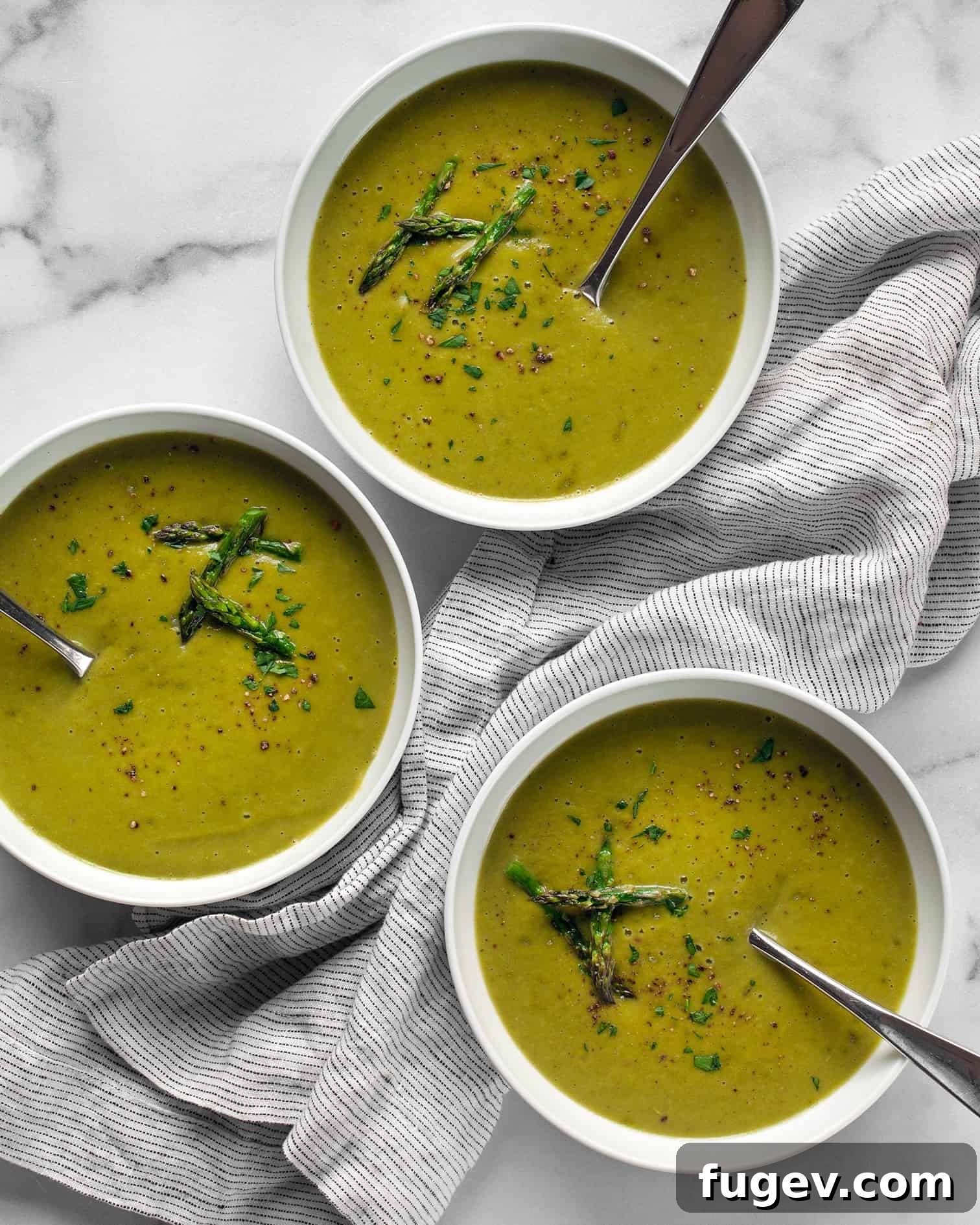
Embrace the vibrant flavors of spring with this incredibly healthy and satisfying vegan roasted asparagus soup. You won’t believe how lusciously creamy it turns out, all without a drop of dairy! This recipe is designed to highlight the delicate, earthy taste of peak-season asparagus. By roasting the spears first, we unlock their deepest flavor, then gently simmer them with wholesome ingredients like nutrient-rich spinach, starchy potatoes for natural thickness, and savory vegetable broth. The result is a smooth, comforting, and utterly delicious soup that’s perfect for a light lunch or an elegant dinner.
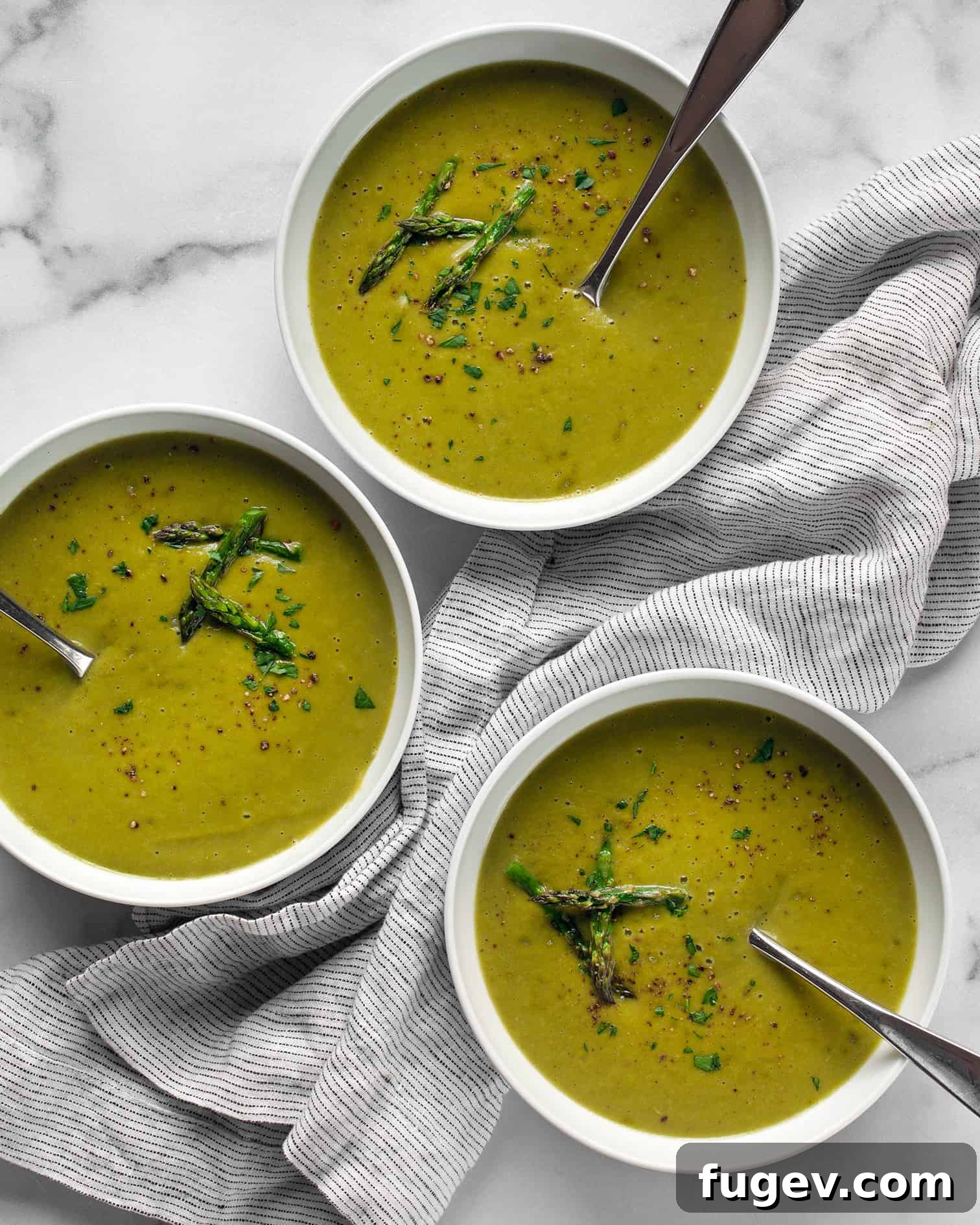
Table of Contents
- Why You’ll Love This Roasted Asparagus Soup
- The Health Benefits of Asparagus
- Essential Ingredients & Smart Substitutions
- How To Make Perfectly Creamy Roasted Asparagus Soup
- Serving Suggestions
- Leftovers & Storage Tips
- Expert Recipe Tips & Tricks
- Roasted Asparagus Soup FAQs
- More Asparagus Recipes to Explore
- Discover More Wholesome Soup Recipes
- Roasted Asparagus Soup Recipe Card
Why You’ll Love This Roasted Asparagus Soup
This roasted asparagus soup isn’t just another recipe; it’s a celebration of fresh, seasonal ingredients and simple, wholesome cooking. Here’s why you’ll want to make it your new spring favorite:
The Perfect Seasonal Delight
It’s a wonderful soup to kick off asparagus season. While modern grocery stores offer nearly every vegetable year-round, there’s a unique joy in eating seasonally. Asparagus, with its vibrant green spears and delicate flavor, is truly special because it heralds the arrival of spring. It symbolizes renewal and the abundance of fresh produce to come. This soup allows you to fully appreciate asparagus at its peak, when it’s most flavorful and tender, creating a memorable dining experience that connects you with nature’s rhythm.
Unmatched Flavor from Roasting
Roasting asparagus is undoubtedly the best way to prepare it for soup. You might wonder why not simply simmer the asparagus spears directly in the broth with the other soup ingredients. The secret lies in the magic of roasting. High heat caramelizes the natural sugars in the asparagus, developing a deeper, more complex, and slightly nutty flavor profile that boiling or steaming simply cannot achieve. This process, known as the Maillard reaction, adds an incredible depth that elevates the entire soup. Furthermore, asparagus roasts in less than 10 minutes, making this extra step quick and worthwhile. The minimal effort of washing that sheet pan is a small price to pay for such an impactful flavor boost.
Luxurious Vegan Creaminess
Despite being entirely vegan, this soup turns out incredibly creamy and satisfying. The secret to achieving its rich, silky consistency without any heavy cream or dairy is surprisingly simple: potatoes! When simmered in the broth, the starches in the diced potato break down and naturally thicken the soup, imparting a luxurious body. To ensure an ultra-smooth finish, using a high-powered blender is key. It purees the ingredients thoroughly, transforming them into a velvety texture that will impress even the most discerning palates. This ingenious method proves that you don’t need dairy to create a deeply comforting and indulgent soup.
The Health Benefits of Asparagus
Beyond its delicious taste, asparagus is a nutritional powerhouse that makes this soup not just enjoyable, but incredibly good for you. It’s packed with vitamins, minerals, and antioxidants:
- Rich in Nutrients: Asparagus is an excellent source of Vitamin K, essential for blood clotting and bone health, and Folate (Vitamin B9), which is crucial for cell growth and DNA formation.
- High in Antioxidants: It contains various antioxidants, including Vitamin E, Vitamin C, and glutathione, which help fight free radicals and reduce oxidative stress in the body, promoting overall health and potentially reducing the risk of chronic diseases.
- Good Source of Fiber: The high fiber content in asparagus supports digestive health, helps regulate blood sugar levels, and contributes to a feeling of fullness, aiding in weight management.
- A Natural Diuretic: Asparagus has natural diuretic properties, which can help flush excess fluid and sodium from the body, contributing to kidney health.
- Anti-inflammatory Properties: It contains compounds that possess anti-inflammatory effects, which can be beneficial for reducing inflammation throughout the body.
Incorporating asparagus into your diet, especially through a wholesome soup like this, is a fantastic way to boost your nutrient intake and support a healthy lifestyle.
Essential Ingredients & Smart Substitutions
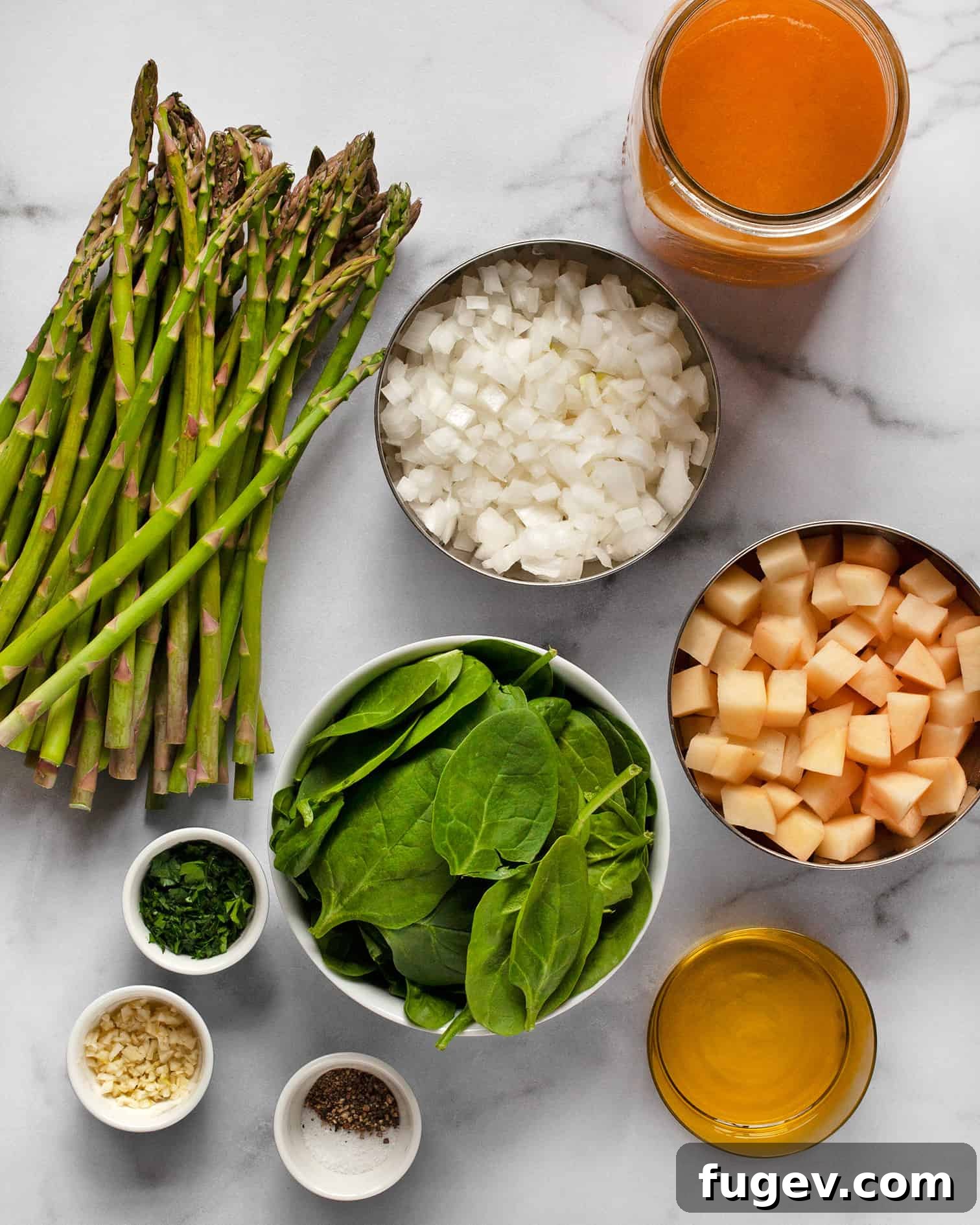
Gathering fresh, high-quality ingredients is the first step to a truly delicious soup. Here’s what you’ll need, along with some helpful tips and substitutions:
- Asparagus: When selecting asparagus, look for firm, bright green spears with tightly closed tips. They should feel crisp and snap easily, indicating freshness. Avoid any bunches with limp or wrinkled stalks. For optimal freshness, store asparagus upright in a glass with about an inch of water at room temperature or in the refrigerator.
- Spinach: Fresh baby spinach not only boosts the nutritional value but also enhances the beautiful green color of the soup. Its mild flavor blends seamlessly. Substitution: For a slightly peppery kick, consider using arugula instead of spinach. Kale, if finely chopped and simmered longer, could also work for a more robust flavor and texture.
- Onions: Chopped white onions are sautéed in olive oil to create the foundational aromatic base of the soup. They soften and sweeten, adding essential depth. Substitution: Yellow onions or even shallots can be used for a milder flavor.
- Garlic: This recipe calls for two minced garlic cloves, providing a subtle yet essential aroma that complements the asparagus without overpowering it. Feel free to adjust to your personal preference for a bolder garlic presence.
- Potatoes: A peeled and diced russet potato is the unsung hero, providing natural thickness and body to the soup, eliminating the need for any heavy cream. Russets are high in starch, making them ideal for a creamy texture. Substitution: Yukon Gold potatoes are another excellent choice for their creamy texture and slightly buttery flavor. Sweet potatoes could also be used for a different flavor profile and added sweetness.
- Low Sodium Vegetable Broth: The quality of your broth significantly impacts the final taste. Opt for a good quality, low-sodium vegetable broth to control the seasoning. This keeps the soup entirely plant-based. Substitution: If you’re not strictly vegan, chicken broth can be used, but always choose a low-sodium version. For an even richer flavor, consider making your own homemade vegetable broth.
- Olive Oil: Extra-virgin olive oil is preferred for its robust flavor, which shines through in this recipe due to the simple nature of the ingredients. It’s used for roasting the asparagus and sautéing the aromatics. To keep the recipe vegan, butter is avoided.
- Salt & Black Pepper: These essential seasonings bring out the best in the asparagus. Taste and adjust as you go, ensuring the flavors are perfectly balanced. A good pinch of flaky sea salt at the end can add a delightful textural crunch.
- Fresh Parsley: A sprinkle of fresh chopped parsley as a garnish adds a pop of color and a fresh, herbaceous note that brightens the soup.
How To Make Perfectly Creamy Roasted Asparagus Soup
Creating this delicious, creamy asparagus soup is a straightforward process that yields impressive results. Follow these simple steps for a truly flavorful experience:
Step 1: Prepare the Oven for Roasting
Preheat your oven to 425 degrees F (220 degrees C). This high temperature is crucial for achieving that desirable tender-crisp texture and caramelized flavor in the asparagus.
Step 2: Roast the Asparagus for Maximum Flavor
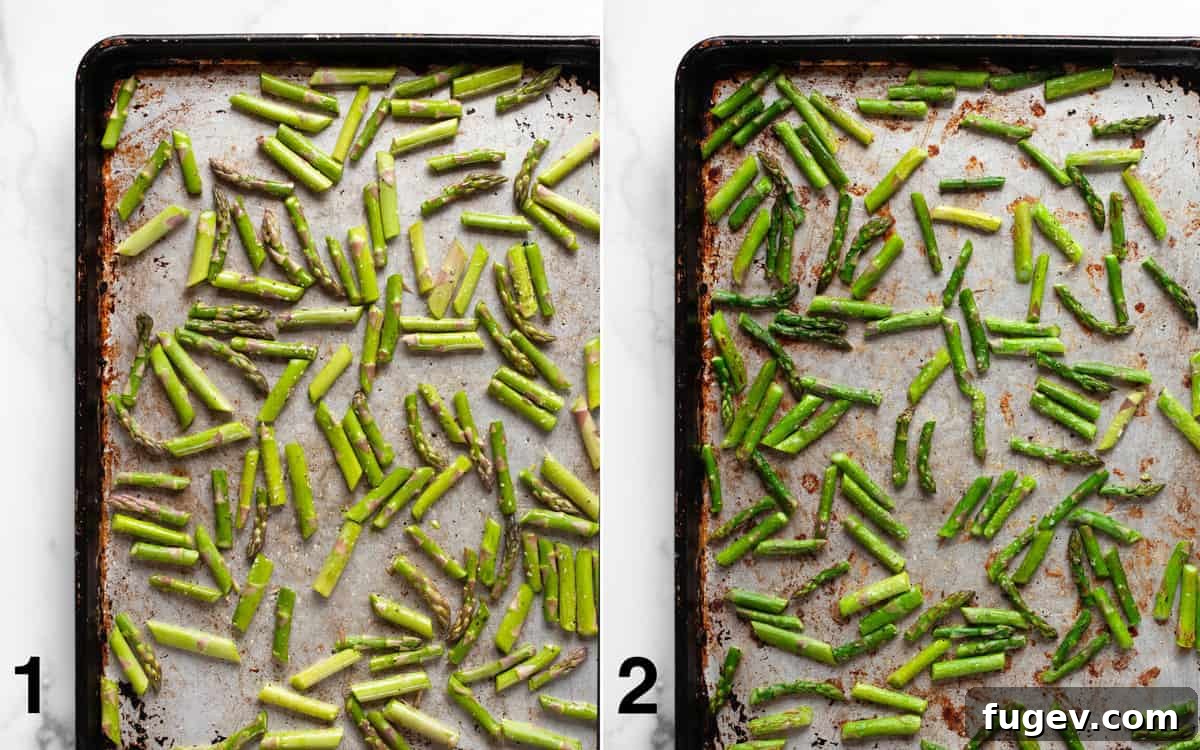
On a large sheet pan, toss the trimmed asparagus spears with 1 tablespoon of olive oil, ½ teaspoon of kosher salt, and ¼ teaspoon of black pepper. Ensure the asparagus is spread in a single layer to allow for even roasting and browning. Roast for approximately 8 minutes, or until the spears turn a vibrant bright green and are slightly tender. Be careful not to overcook them, as they will simmer further in the soup. Once roasted, set aside 10-12 of the most appealing asparagus tips to use as a beautiful garnish for your finished soup bowls.
Step 3: Sauté the Aromatics
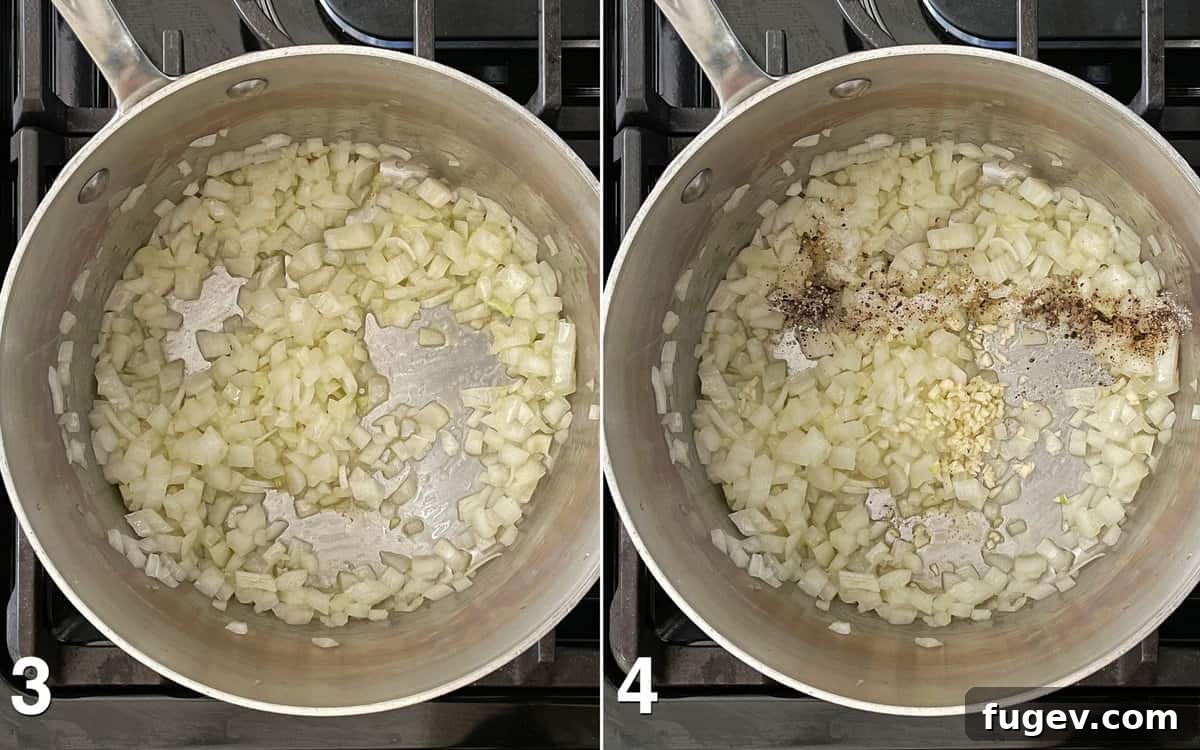
In a large saucepan or Dutch oven, heat 1 tablespoon of olive oil over medium heat. Add the roughly chopped white onions and sauté for about 5 minutes, stirring occasionally, until they become soft, translucent, and slightly golden. This step builds the aromatic foundation of your soup.
Step 4: Infuse with Garlic and Seasonings
Stir in the minced garlic, an additional ½ teaspoon of kosher salt, and ¼ teaspoon of black pepper. Continue cooking for another 30 seconds to 1 minute, until the garlic becomes fragrant and its raw edge is mellowed. Avoid burning the garlic, as it can turn bitter quickly.
Step 5: Combine and Simmer
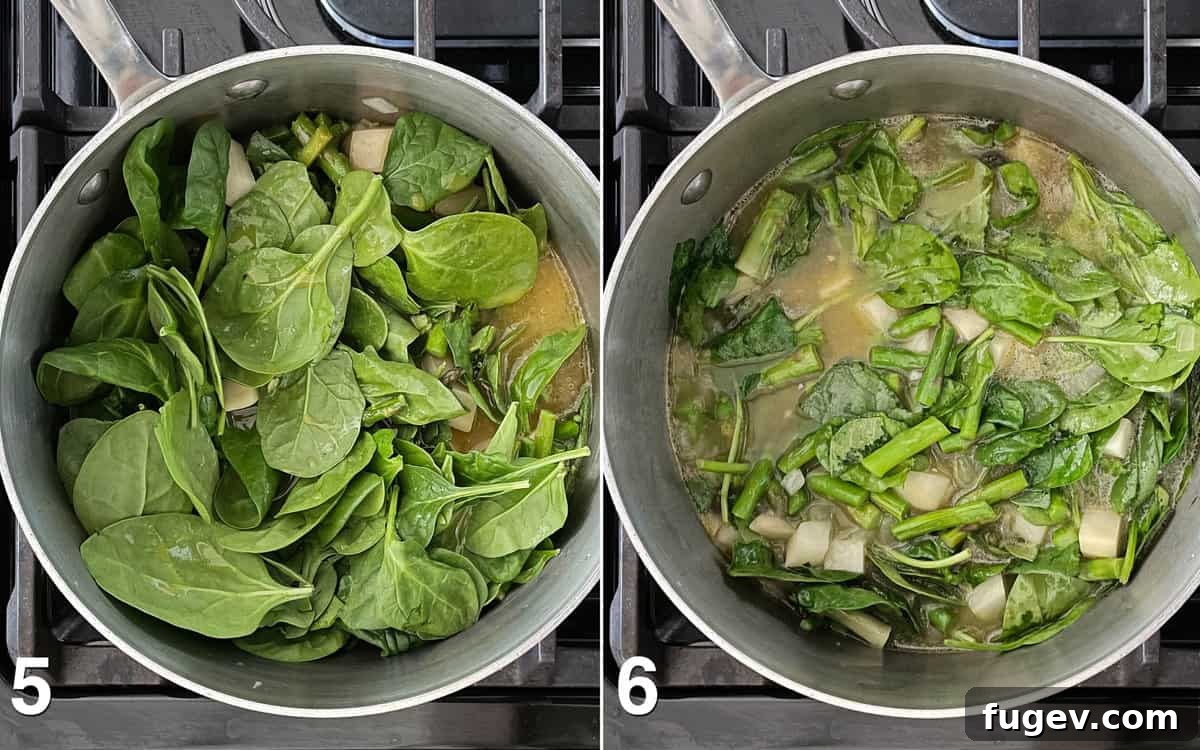
Add the roasted asparagus pieces (excluding the reserved garnish), diced potatoes, baby spinach, and low-sodium vegetable broth to the pot with the sautéed aromatics. Bring the mixture to a gentle boil, then reduce the heat to low and let it simmer for 15-18 minutes. Continue simmering until the diced potatoes are fork-tender, indicating they are ready to be pureed into a creamy consistency.
Step 6: Achieve Silky Smoothness with Blending
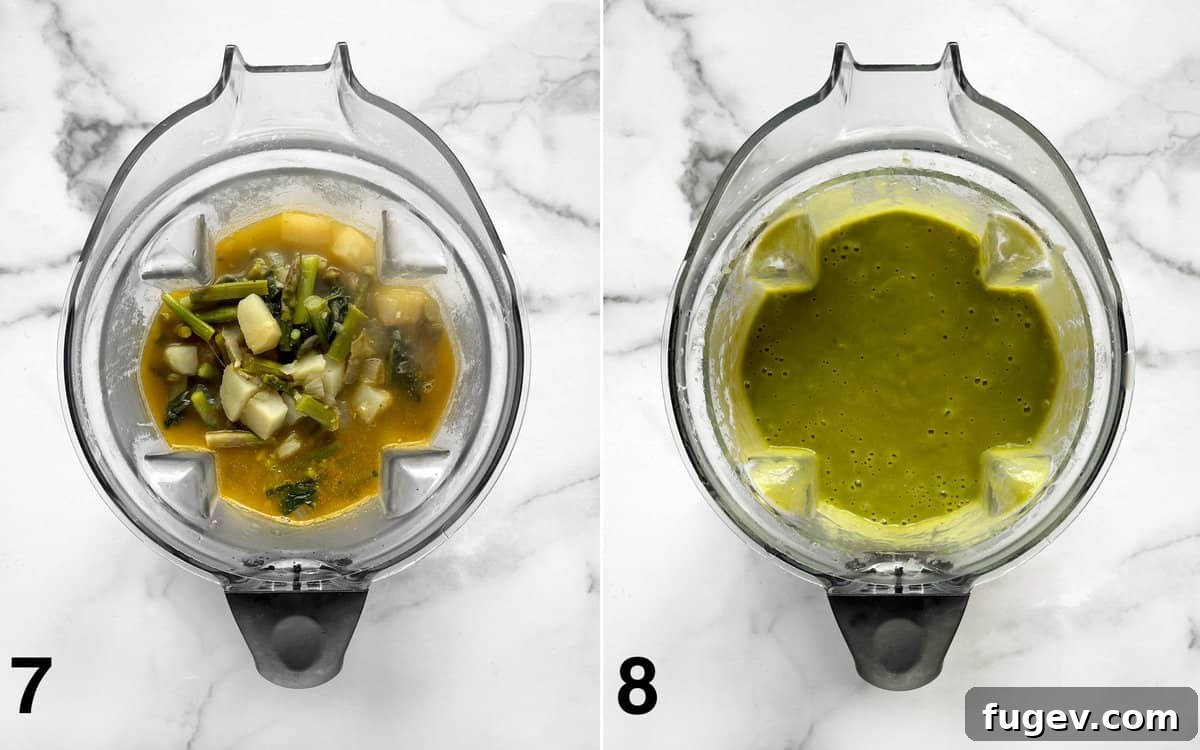
Carefully transfer the hot soup in batches to a high-powered blender. Working in batches prevents overflow and ensures thorough blending. Secure the lid tightly, leaving a small vent (covered with a kitchen towel) to allow steam to escape and prevent pressure buildup. Puree until the soup is completely smooth and creamy, without any discernible lumps. This step is crucial for achieving that desired velvety texture. While an immersion blender can work, a high-powered upright blender will yield a significantly smoother result. Once blended, return the soup to the saucepan and rewarm gently over low heat if necessary.
Step 7: Serve and Garnish
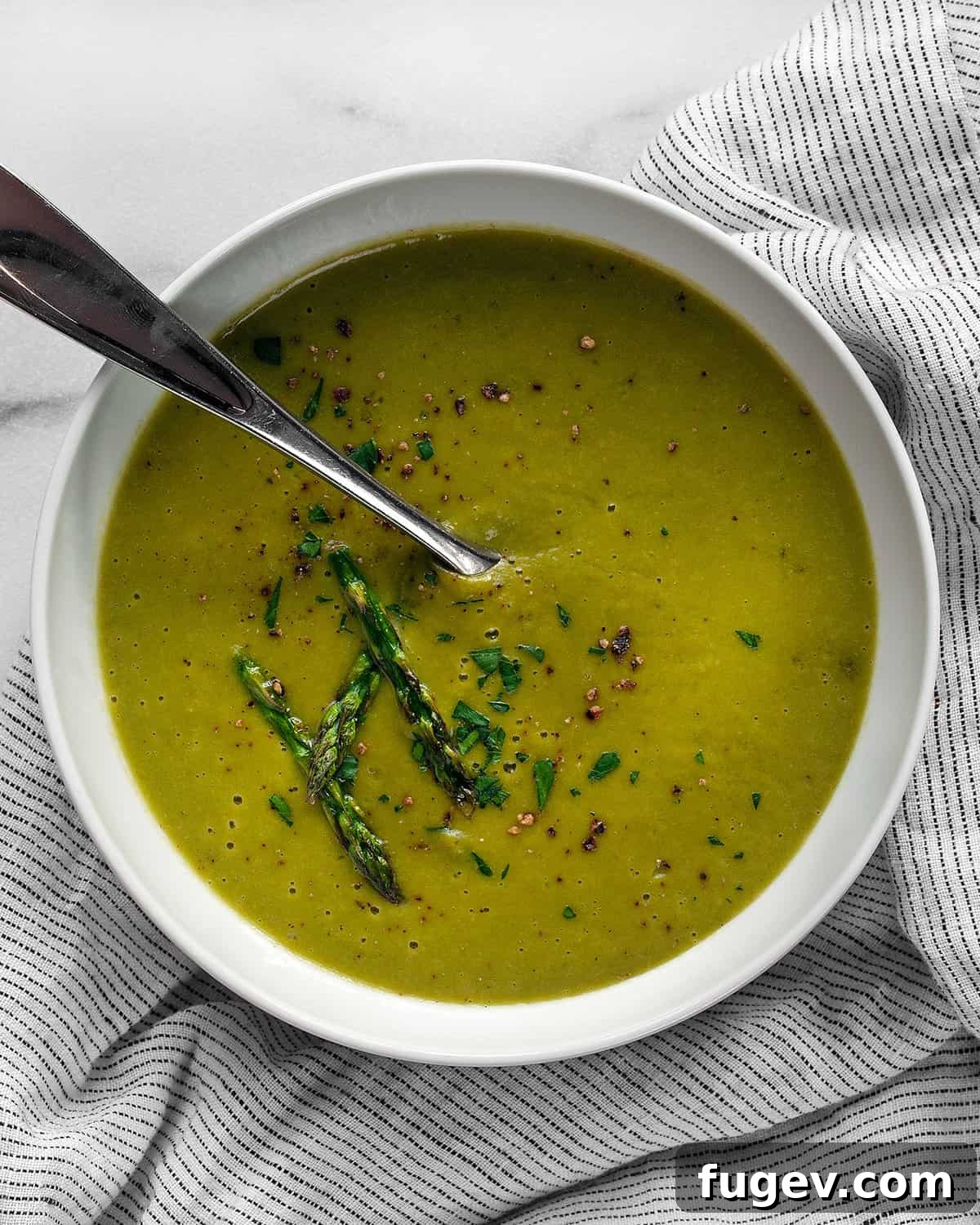
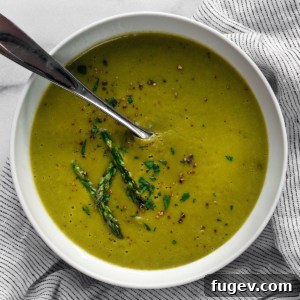
Ladle the freshly pureed soup into individual bowls. Garnish each serving with the reserved roasted asparagus tips, a sprinkle of fresh chopped parsley, a touch of flaky sea salt, and a dash of freshly ground black pepper. These finishing touches add visual appeal and enhance the overall freshness and flavor of this delightful spring soup.
Serving Suggestions
This creamy roasted asparagus soup is versatile enough to be a light starter or a fulfilling main course. For lunch or dinner, you can enhance the green theme by serving it alongside a fresh, crisp salad. Consider a Brussels sprout Caesar salad, a hearty roasted broccoli quinoa salad, or a classic Italian chopped salad. Its rich yet delicate flavor also pairs beautifully with a piece of crusty artisan bread, perfect for dipping and soaking up every last drop. For an extra touch of indulgence, drizzle a swirl of high-quality olive oil or a sprinkle of toasted croutons just before serving.
Leftovers & Storage Tips
This delicious soup is excellent for meal prep! To store leftovers, first ensure the soup has cooled completely to room temperature. Transfer it to an airtight container and refrigerate for up to 3 days. For longer storage, this soup freezes beautifully. Divide it into individual portion sizes before freezing to make thawing and reheating much easier. It can be stored in the freezer for up to 1 month. When ready to enjoy, simply let the frozen soup thaw in the refrigerator overnight, then gently reheat it in a pot over medium heat on the stove, stirring occasionally, or warm it in the microwave until heated through. Add a splash of vegetable broth if it seems too thick after thawing.
Expert Recipe Tips & Tricks
Achieving the perfect roasted asparagus soup is simple with these helpful pointers:
- No Need to Grease the Roasting Pan: When roasting the asparagus, there’s no need to grease the sheet pan. Since the asparagus pieces are tossed with olive oil, they will naturally not stick to the pan, ensuring easy cleanup and perfectly roasted spears.
- Garnish Asparagus & Freezing: If you plan to freeze portions of the soup for later, it’s best not to save roasted asparagus pieces specifically for garnishing those frozen servings. The texture of thawed and reheated roasted asparagus can become soft and less appealing. Instead, puree all the roasted asparagus with the rest of the soup ingredients, and add fresh garnishes when you serve the thawed soup.
- Choose the Right Blender for Creaminess: For the smoothest, most luxurious soup consistency, always opt for a high-powered upright blender over an immersion blender. Transferring the hot soup in batches to an upright blender allows for a more thorough and consistent puree, resulting in a velvety texture that an immersion blender often struggles to achieve.
- Don’t Overcook Asparagus: While the asparagus will simmer in the broth, ensure you don’t over-roast it initially. You want it tender-crisp to allow it to cook a little more in the soup without becoming mushy.
- Taste and Adjust Seasoning: Always taste the soup after blending and before serving. Adjust salt and pepper as needed. A squeeze of fresh lemon juice or a dash of nutmeg can also brighten and deepen the flavors.
- Cool Before Blending (Safety First): While the recipe instructs careful transfer of hot soup to a blender, for ultimate safety, you can let the soup cool slightly before blending. This reduces steam pressure and splashing risks.
Roasted Asparagus Soup FAQs
The goal of trimming asparagus is to remove the tough, woody bottom ends, which are fibrous and unpleasant to eat. A common method is to gently bend each spear until it naturally snaps, indicating where the tender part begins. However, this can result in more waste. A more precise and efficient approach is to line up 3-4 spears on a cutting board and slice off the bottom ends with a sharp knife at a slight angle. You can usually identify the tough part by its paler, less green color compared to the vibrant green of the edible stalk.
For this roasted asparagus soup recipe, peeling the asparagus is generally not necessary. Since the asparagus is first roasted and then simmered in broth, it has ample opportunity to become wonderfully tender during the cooking process. A high-powered blender will also ensure any remaining fibrous bits are fully pureed, resulting in a perfectly smooth soup without the extra step of peeling.
Absolutely! This soup is an excellent make-ahead option. Its flavors tend to meld and deepen even further after a day in the refrigerator. Simply prepare the soup as directed, allow it to cool completely, then store it in an airtight container in the fridge for up to 3 days. Reheat gently on the stove over medium-low heat, adding a splash of vegetable broth or water if it’s too thick.
While this recipe shines by focusing on asparagus, you can certainly add other compatible vegetables. A handful of green peas added during the last 5 minutes of simmering can enhance the spring theme and sweetness. Zucchini or leeks could also be sautéed with the onions for added depth. Just be mindful not to overcrowd the flavors, letting the asparagus remain the star.
More Asparagus Recipes to Explore
If you love asparagus as much as we do, you’ll want to try these other fantastic recipes:
- Sesame Tofu Asparagus
- Roasted Asparagus Potato Salad
- Sheet Pan Mushroom Asparagus Gnocchi
- Grilled Asparagus Tomato Salad
- Udon Noodle Stir-Fry with Asparagus, Mushrooms & Peas
- Roasted Asparagus with Lemon, Garlic & Parmesan Cheese
- Asparagus Salad with Cannellini Beans
- Roasted Asparagus Barley Salad
Discover More Wholesome Soup Recipes
Soup season is always in full swing! Explore more comforting and healthy soup recipes from our collection:
- Broccoli Spinach Soup
- Poblano Corn Chowder
- One-Pot Quinoa Chili
- Hearty Vegetable Soup
- Slow-Cooker Moroccan Chickpea Stew
- Roasted Carrot Soup
- Black Bean Soup
Roasted Asparagus Soup Recipe
Rating: 4.86 from 7 votes
By Paige Adams
Prep Time: 10 mins
Cook Time: 30 mins
Total Time: 40 mins
Servings: 4
Print Recipe
No cream is needed for this healthy vegan asparagus soup. It’s the perfect recipe to celebrate everything about spring and peak season asparagus, delivering a naturally creamy and deeply flavorful experience.
Ingredients
For the Roasted Asparagus:
- 1 pound asparagus, ends trimmed, sliced into 2-inch pieces
- 1 tablespoon olive oil
- 1/2 teaspoon kosher salt
- 1/4 teaspoon black pepper
For the Soup:
- 1 tablespoon olive oil
- 1 white onion, roughly chopped
- 2 garlic cloves, minced
- 1/2 teaspoon kosher salt
- 1/4 teaspoon black pepper (plus more for serving)
- 1 russet potato, peeled and diced (about 1.5 cups)
- 3 ounces baby spinach (about 3 packed cups)
- 4 cups low-sodium vegetable broth
- Chopped fresh parsley, for serving
- Flaky sea salt, for serving
Instructions
- Preheat the oven to 425 degrees F (220 degrees C).
- Toss the asparagus with 1 tablespoon olive oil, ½ teaspoon kosher salt, and ¼ teaspoon black pepper on a sheet pan. Spread into a single layer. Roast for 8 minutes until the asparagus turns bright green and is tender-crisp. Reserve about 10-12 asparagus tips for garnishing the soup later.
- Heat 1 tablespoon olive oil in a large saucepan or Dutch oven over medium heat. Add the chopped white onions and sauté for 5 minutes until they begin to soften and become translucent.
- Stir in the minced garlic, ½ teaspoon kosher salt, and ¼ teaspoon black pepper. Continue cooking for about 1 minute until fragrant.
- Add the remaining roasted asparagus pieces, diced russet potato, baby spinach, and low-sodium vegetable broth to the pot. Bring the mixture to a boil, then reduce the heat to low and simmer for 15-18 minutes, or until the potatoes are completely tender.
- Carefully transfer the hot soup in batches to a high-powered blender. Puree until the soup is completely smooth and creamy. Return the pureed soup to the saucepan to rewarm gently over low heat if needed before serving.
- Divide the soup into bowls. Garnish each serving with the reserved asparagus tips, a sprinkle of fresh chopped parsley, flaky sea salt, and a dash of black pepper. Serve hot.
Notes
For the best results and a truly silky smooth consistency, it is highly recommended to use a high-powered upright blender for pureeing the soup, rather than an immersion blender.
Before storing any leftover soup, allow it to cool completely to room temperature. Store in an airtight container in the refrigerator for up to 3 days, or freeze for up to 1 month. For easier thawing and reheating, freeze soup in individual portion sizes. Thawed soup can be reheated gently on the stove over medium heat or in the microwave.
Nutrition Information
Calories: 160kcal | Carbohydrates: 21g | Protein: 6g | Fat: 7g | Saturated Fat: 1g | Polyunsaturated Fat: 1g | Monounsaturated Fat: 5g | Sodium: 605mg | Potassium: 619mg | Fiber: 5g | Sugar: 5g | Vitamin A: 2854IU | Vitamin C: 18mg | Calcium: 66mg | Iron: 4mg
Nutrition information is automatically calculated and should only be used as an approximation.
Additional Info
Course: Soup
Cuisine: American
Did you make this recipe?
Mention @lastingredient on Instagram and tag it #lastingredient!