
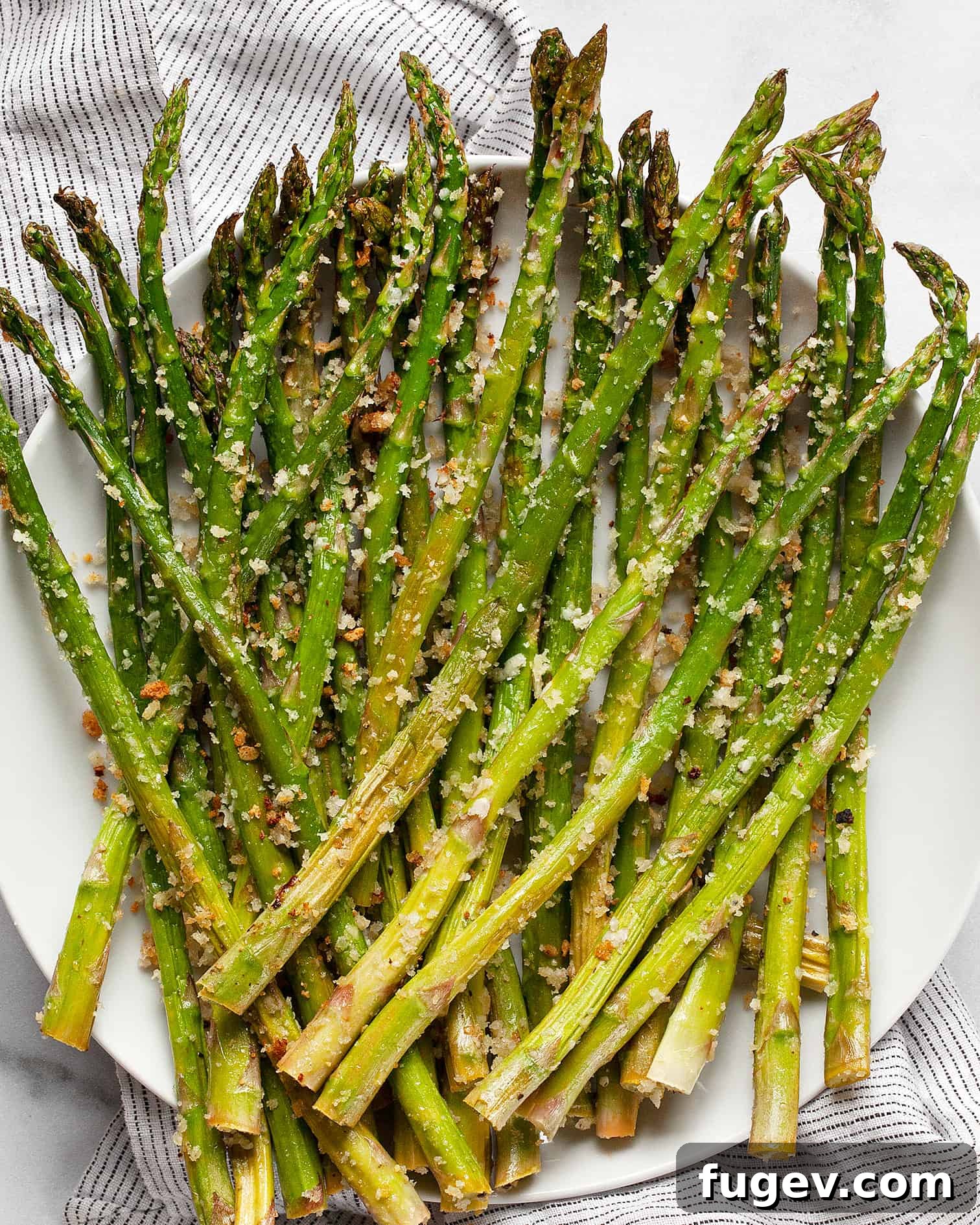
Embrace the vibrant flavors of spring with this incredibly simple yet elegant Roasted Parmesan Asparagus recipe. Featuring less than 10 ingredients, this quick side dish highlights the natural sweetness of fresh asparagus, beautifully enhanced by bright lemon, aromatic garlic, and a savory Parmesan-panko crust. Asparagus is a true harbinger of spring, one of the first fresh vegetables to appear at grocery stores and farmers markets, signaling warmer days and lighter meals. This recipe is designed to bring out its best qualities with minimal effort, making it a perfect addition to any weeknight dinner or special occasion spread.
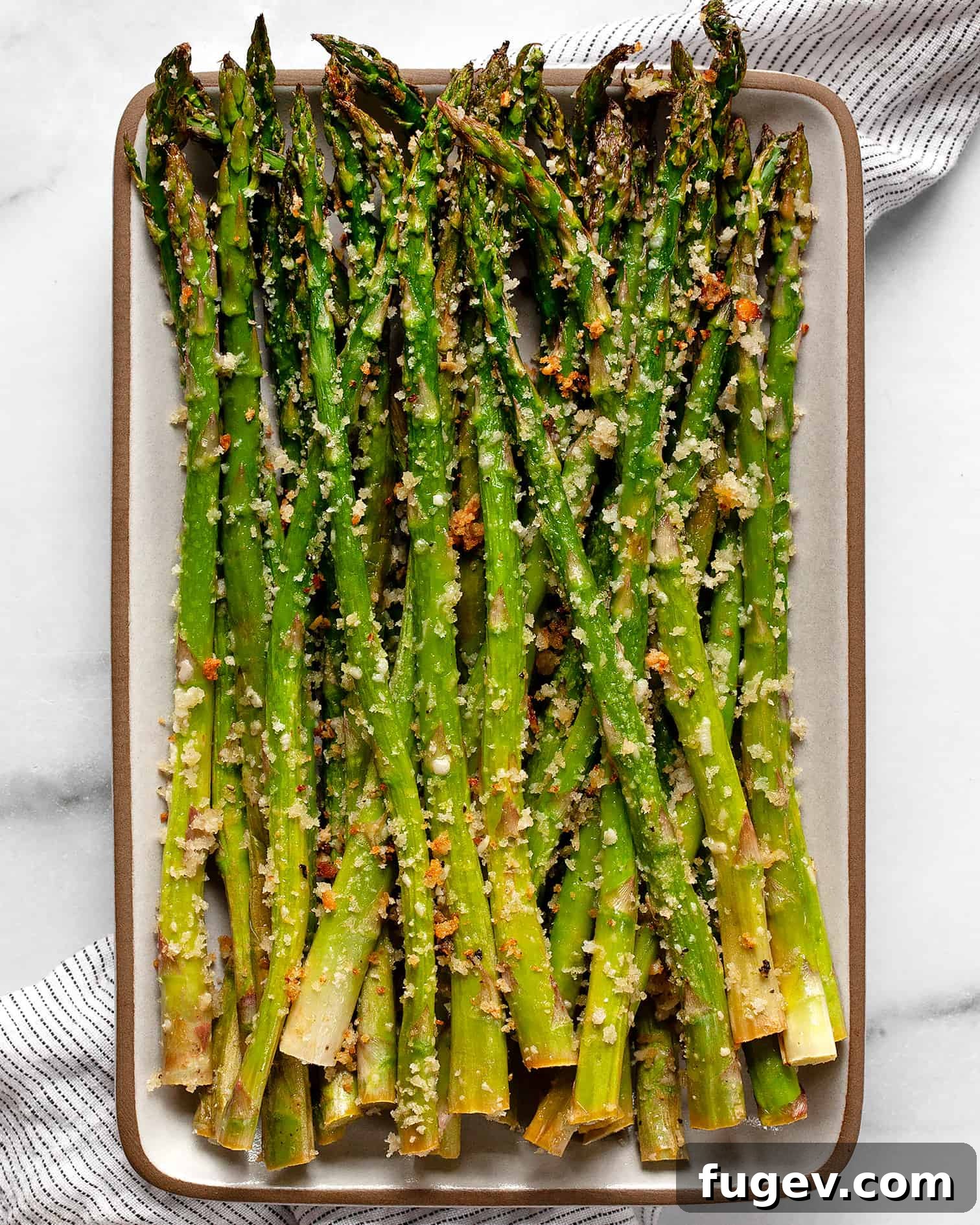
Table of Contents
- Why You’ll Love This Roasted Asparagus Recipe
- Selecting and Storing Fresh Asparagus
- Preparing Asparagus for Roasting
- Key Ingredients & Clever Substitutions
- Step-by-Step Guide: How To Make Roasted Asparagus
- Serving Suggestions for Parmesan Asparagus
- Leftovers: Storage & Repurposing Ideas
- Expert Tips for The Best Roasted Asparagus
- Frequently Asked Questions (FAQs)
- More Delicious Asparagus Recipes
- Roasted Asparagus with Parmesan and Garlic Recipe Card
Why You’ll Love This Roasted Asparagus Recipe
This Roasted Parmesan Asparagus isn’t just a side dish; it’s a culinary revelation that will quickly become a staple in your kitchen. Here’s why you’ll absolutely adore this recipe:
- Lightning-Fast Cook Time: Asparagus spears are transformed into tender, vibrant green perfection in just 7 minutes at 425 degrees F. This speed is unmatched when it comes to roasting vegetables, making it ideal for busy weeknights or when you need a last-minute addition to your meal.
- Minimal Prep, Maximum Flavor: Forget complicated steps! The prep work for this recipe is incredibly straightforward. You simply whisk together a zesty olive oil-lemon marinade, toss it with the asparagus directly on your baking sheet to minimize dishwashing, then sprinkle with a delightful blend of panko breadcrumbs and Parmesan cheese. Pop it in the oven, and that’s it – gourmet flavor with barely any fuss.
- Harmonious Flavor Profile: The magic of this dish lies in the perfect marriage of flavors. The robust, nutty notes of Parmesan, the bright tang of fresh lemon, the pungent kick of garlic, and the satisfying crunch of panko breadcrumbs all complement the distinct, slightly earthy taste of asparagus without overpowering it. This simple yet elegant approach allows the natural personality of the spring vegetable to shine through, truly enhancing its inherent deliciousness rather than masking it.
- Healthy and Nutritious: Asparagus is packed with vitamins A, C, E, K, and B6, as well as folate, iron, and fiber. Roasting it with minimal oil and fresh ingredients preserves its nutritional value while making it incredibly appealing. It’s a guilt-free side that contributes positively to a balanced diet.
- Versatile and Crowd-Pleasing: This dish pairs beautifully with a wide array of main courses, from roasted chicken and grilled fish to steak and vegetarian entrees. Its appealing presentation and universally loved flavors make it a guaranteed hit with guests and family alike.
Selecting and Storing Fresh Asparagus
The key to truly exceptional roasted asparagus begins with selecting the freshest spears. When you’re at the grocery store or farmer’s market, look for:
- Firm and Straight Stalks: Good asparagus should be rigid and stand upright. Avoid any bundles with limp, soft, or wrinkled spears, as these are signs of age and dehydration.
- Tight, Closed Tips: The tips (or “crowns”) should be compact and tightly closed, not splayed open or slimy.
- Uniform Diameter: While not strictly necessary, selecting spears that are roughly the same thickness will ensure more even cooking. Thicker spears tend to be more tender than very thin ones.
- Vibrant Green Color: The stalks should have a deep green hue, possibly with purple tints at the tips, indicating freshness.
Once you bring your fresh asparagus home, proper storage is crucial to maintain its crispness and flavor. My preferred method is inspired by floristry:
Upon returning from shopping, I immediately place the asparagus spears upright in a container, such as a vase or a wide-mouthed jar, with about a half-inch to an inch of water at the bottom. This method keeps the stalks hydrated, much like cut flowers. I then leave the container on my kitchen counter at room temperature. For optimal flavor and texture, aim to use the asparagus within 2 days.
While some people prefer to cover the asparagus (still in water) with a plastic bag and store it in the refrigerator for longer, I highly recommend cooking it sooner rather than later to enjoy it at its absolute peak. Refrigeration can sometimes lead to a slight loss of flavor and crispness. If you observe the spears beginning to grow taller, wrinkle, or if the crowns start to open, it’s a clear indication that the asparagus is losing its freshness and should be used as soon as possible.
Preparing Asparagus for Roasting
Proper preparation ensures that every bite of your roasted asparagus is tender and delicious. The main task is to trim off the woody ends, which can be tough and fibrous.
There are two popular methods for trimming asparagus:
- The Snap Method: Hold an asparagus spear with both hands, one hand near the cut end and the other about two-thirds of the way down the stalk. Gently bend the spear until it naturally snaps. The stalk will break at the point where the tough, woody part meets the tender, edible part. While intuitive, this method can sometimes be wasteful, as it might remove more of the edible portion than necessary, especially with very fresh asparagus.
- The Knife Method (Recommended): For efficiency and less waste, line up a small bunch of asparagus stalks on your cutting board, ensuring the cut ends are aligned. Use a sharp knife to carefully trim off the bottom ends. To determine where to cut, take one spear and snap it as described above. Use that snapped spear as a guide for the rest of the bunch, trimming them all to a similar length. This method is faster and generally more precise.
After trimming, give the asparagus a quick rinse under cold water to remove any dirt or grit, then pat them thoroughly dry with a clean kitchen towel or paper towels. Removing excess moisture is crucial for successful roasting, as it helps the asparagus to caramelize and crisp up rather than steam in the oven.
Key Ingredients & Clever Substitutions
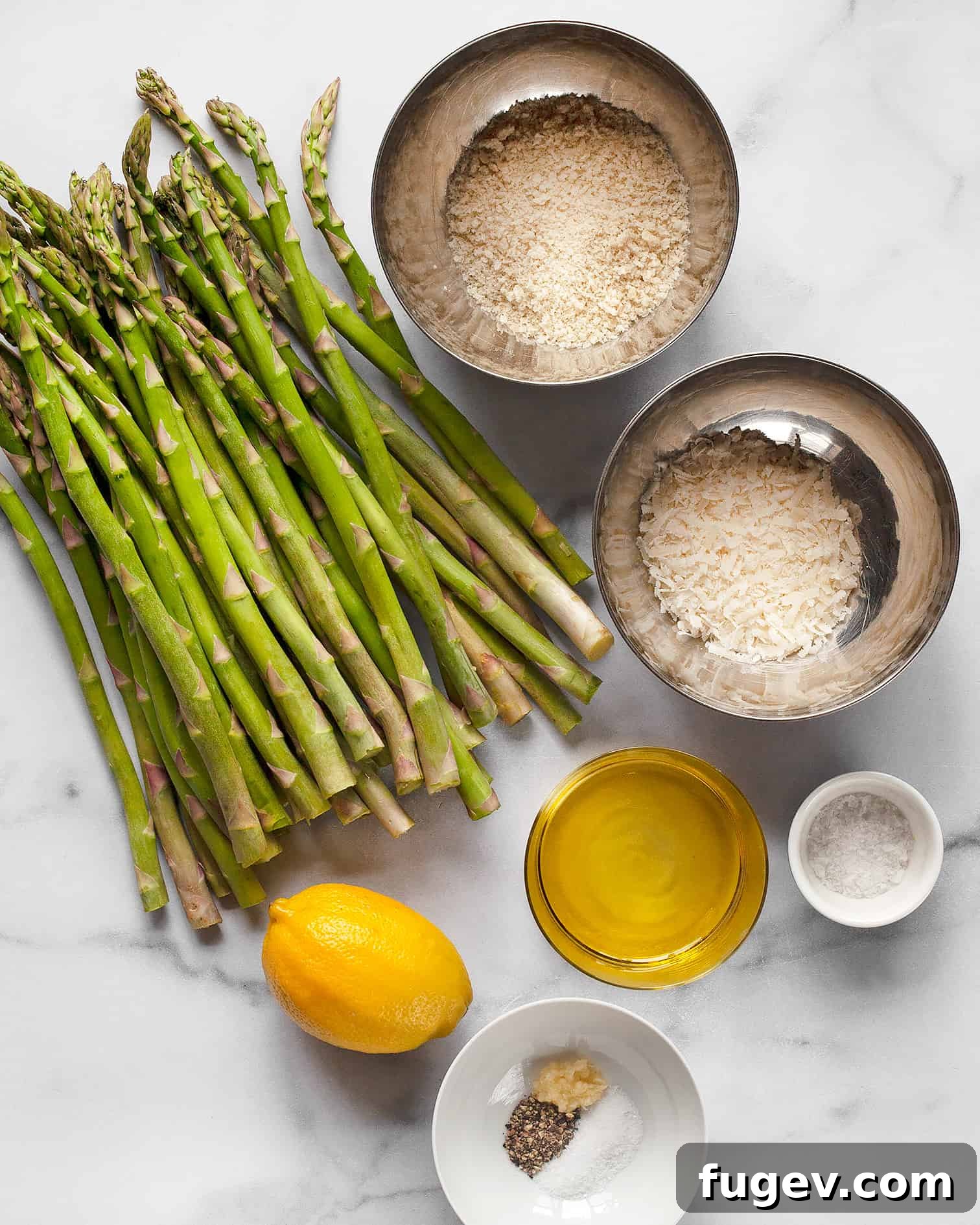
This recipe relies on a handful of high-quality ingredients to achieve its outstanding flavor:
- Asparagus: As discussed, choose firm, bright green spears with tight tips. The diameter can influence cooking time slightly; thicker spears might take an extra minute or two, while very thin ones cook even faster.
- Olive Oil: A good quality extra virgin olive oil forms the base of the marinade, helping the asparagus to roast beautifully and carry the flavors. Any neutral oil like avocado oil can be substituted, but olive oil adds a richer taste.
- Parmesan Cheese: Grated Parmesan (Parmigiano-Reggiano) is a hard Italian cow’s milk cheese renowned for its nutty, savory, and slightly salty flavor. It creates a fantastic savory crust when roasted.
- Substitution: Pecorino Romano is an excellent alternative. Made from sheep’s milk, it offers a sharper, saltier, and more pungent flavor, which can add an interesting depth to the dish. For a dairy-free option, use a good quality plant-based Parmesan substitute.
- Garlic: Freshly minced garlic is essential for that unmistakable aromatic punch. To achieve a very fine mince, almost a paste, I find a microplane grater works wonders, or a traditional garlic press is also effective. Avoid garlic powder for this recipe, as fresh garlic provides a superior flavor and aroma.
- Lemon: The recipe calls for the juice of one fresh lemon. Freshly squeezed lemon juice brightens the overall flavor profile, adding a zesty counterpoint to the rich cheese and garlic. You can also add a hint of lemon zest to the marinade for an even more intense citrus aroma. Bottled lemon juice is not recommended as it lacks the vibrant freshness of real lemon.
- Panko Breadcrumbs: These Japanese-style breadcrumbs are celebrated for their light, airy, and extra-crispy texture. They provide an incredible crunch that elevates the roasted asparagus. Panko is available in white, whole-wheat, and gluten-free varieties, all of which work well.
- Important: Steer clear of pre-seasoned breadcrumbs, as their added herbs and spices might clash with or overpower the delicate asparagus flavor. Plain panko allows the lemon, garlic, and Parmesan to truly shine.
- Salt & Pepper: A foundational seasoning of kosher salt and freshly ground black pepper is incorporated into the lemon marinade. For an extra flourish and a delightful pop of flavor just before serving, finish the roasted asparagus with a sprinkle of flaky sea salt, such as Maldon. This adds texture and a subtle burst of salinity.
Step-by-Step Guide: How To Make Roasted Asparagus
Creating this delicious side dish is incredibly simple. Follow these steps for perfectly roasted asparagus every time:
Preheat your oven to 425 degrees F (220 degrees C). A hot oven is key to achieving that desirable crisp-tender texture without overcooking.
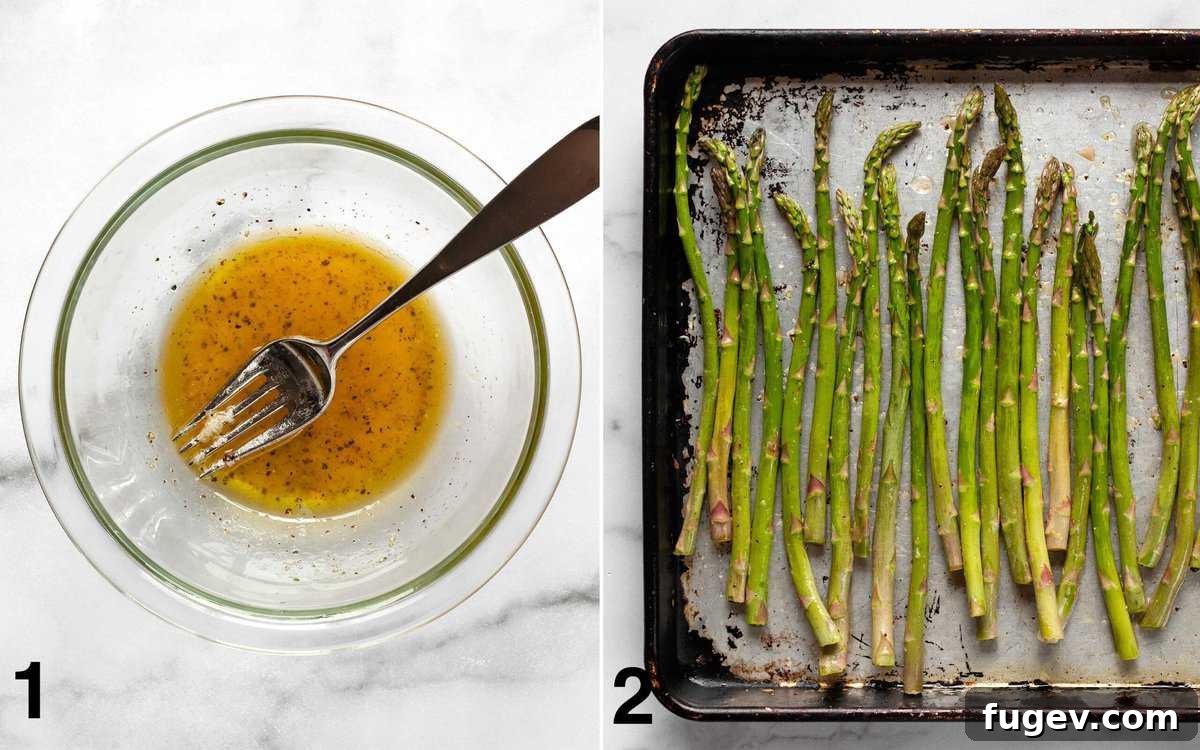
- Prepare the Marinade: In a small bowl, whisk together the olive oil, fresh lemon juice, minced garlic, kosher salt, and black pepper until well combined. This bright and zesty marinade will infuse your asparagus with incredible flavor.
- Toss the Asparagus: Place your trimmed and dried asparagus spears directly onto a large baking sheet. Pour the prepared lemon-garlic marinade over the asparagus. Using your hands or tongs, gently toss the spears to ensure they are evenly coated. This saves you from washing an extra bowl!
- Arrange for Roasting: Spread the marinated asparagus spears into a single layer across the entire baking sheet. It’s crucial not to overcrowd the pan. If the asparagus is too close together, it will steam rather than roast, resulting in a soggy texture. If you’re roasting more than a pound, use a second baking sheet. Giving each spear enough space allows for proper caramelization and crisping.
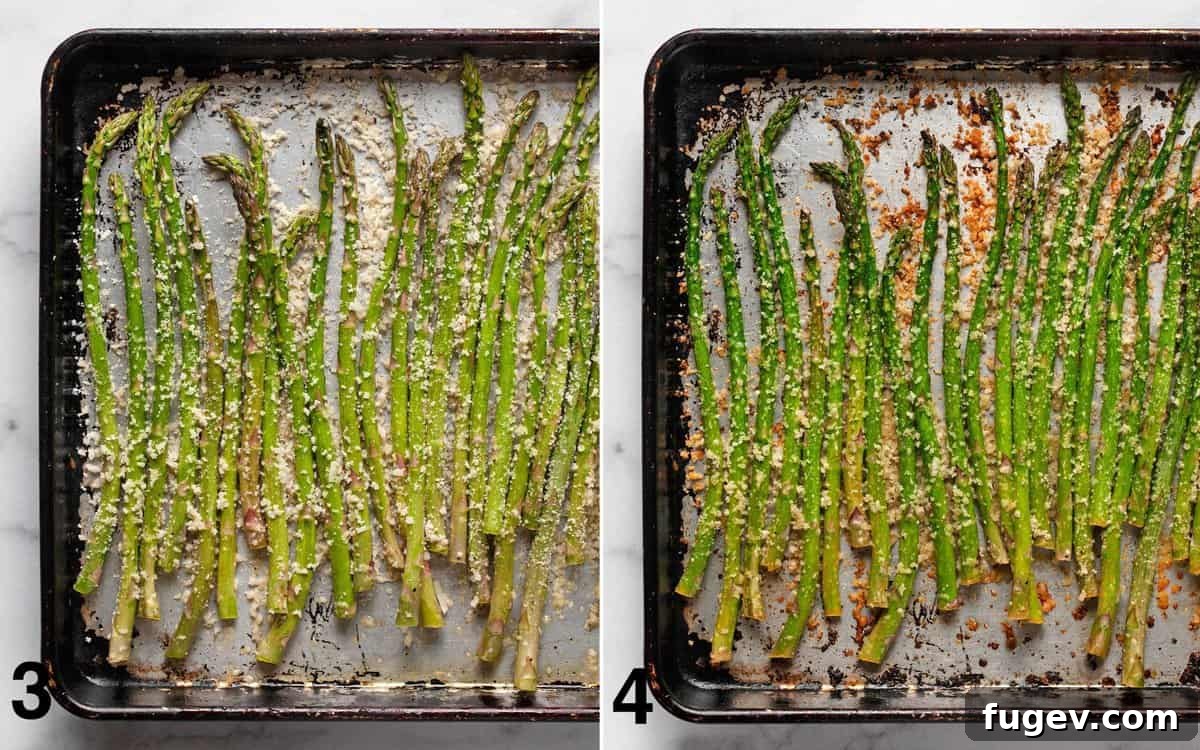
- Create the Crispy Topping: In a separate small bowl, combine the panko breadcrumbs and grated Parmesan cheese. Stir them together until evenly mixed. Generously scatter this panko-cheese mixture over the asparagus on the baking sheet. This creates a beautifully toasted, golden coating that eliminates the need for any additional garnishes at the end.
- Roast to Perfection: Place the baking sheet in your preheated oven and roast for approximately 7 minutes. Keep a close eye on it; cooking times can vary slightly depending on the thickness of your asparagus spears and your oven’s calibration. You’ll know the asparagus is done when it turns a vibrant bright green, and the panko-Parmesan topping is golden brown and crispy. It should still retain a slight “snap” when bitten, indicating it’s crisp-tender and not mushy.
- Finish and Serve: Immediately after removing the asparagus from the oven, sprinkle it with a pinch of flaky sea salt. This final touch enhances the flavors and adds a pleasant textural contrast. Serve hot and enjoy!
Serving Suggestions for Parmesan Asparagus
This roasted Parmesan asparagus with lemon and garlic is not only quick to prepare but also incredibly versatile, making it the perfect accompaniment to almost any meal. Its short ingredient list and rapid cook time (under 10 minutes!) mean it can be one of the last things you prepare, ensuring it’s served hot and fresh.
Imagine this: you’ve just pulled your perfectly roasted chicken or succulent turkey out of the oven, or perhaps your grilled steak is resting on the cutting board. This is the ideal moment to pop the asparagus into the oven. By the time your main course is ready to carve and serve, your vibrant, crisp-tender asparagus will be hot and ready, completing the meal beautifully.
Here are some more inspired serving ideas:
- Classic Pairings: It’s a natural fit for any protein. Serve it alongside baked salmon, pan-seared scallops, grilled chicken breast, tender pork loin, or even simple fried eggs for a hearty breakfast or brunch.
- Pasta Dinners: Add a burst of green and flavor to your favorite pasta dishes. Serve it alongside creamy Alfredo, a light lemon-garlic pasta, or a rich bolognese.
- Weekend Brunch: Brighten up your brunch spread. It pairs wonderfully with quiches, frittatas, omelets, or even as a side to eggs benedict.
- Vegetarian Mains: This asparagus dish can elevate vegetarian meals. Serve it with a hearty quinoa pilaf, lentil burgers, or alongside roasted sweet potatoes and bell peppers for a colorful vegetable platter.
- Gourmet Touch: For a more elegant presentation, drizzle with a balsamic glaze just before serving, or sprinkle with toasted pine nuts for added texture and richness.
Its vibrant color and enticing aroma make it a wonderful visual and aromatic addition to your dining table, proving that healthy eating can be both easy and incredibly delicious.
Leftovers: Storage & Repurposing Ideas
While roasted asparagus is undoubtedly at its best when eaten fresh out of the oven, sometimes you have leftovers. It’s important to note that reheated roasted asparagus will likely lose its signature crispness and “snap,” often becoming softer. For this reason, I usually don’t bother trying to reheat it to its original state.
Instead, I prefer to embrace its new texture and repurpose it creatively into other dishes, where its tender nature works perfectly:
- Hearty Salads: Roughly chop the cold roasted asparagus and stir it into cooked grains like quinoa, farro, or couscous. Add some leafy greens such as arugula or spinach, cherry tomatoes, cucumbers, and a light vinaigrette for a refreshing and satisfying grain bowl or pasta salad.
- Egg Dishes: Asparagus and eggs are a classic combination. Chop the leftover asparagus and fold it into a morning scramble, a fluffy omelet, or a rustic frittata. Add plenty of fresh herbs like chives or parsley for extra flavor.
- Wraps and Sandwiches: Incorporate chopped asparagus into chicken salad, tuna salad, or even a simple veggie wrap with hummus and other fresh vegetables.
- Soups: Add chopped asparagus to spring vegetable soups or pureed cream of asparagus soup for added depth and texture.
- Cold Appetizer Platters: Serve the cold spears as part of an antipasto platter with cured meats, cheeses, olives, and crusty bread.
Storage: Store any leftover roasted asparagus in an airtight container in the refrigerator for up to 3 days. Be aware that the panko breadcrumbs will likely lose their crunch due to moisture in the fridge, but the flavor will still be fantastic for repurposing.
Expert Tips for The Best Roasted Asparagus
- Do Not Overcook It! This is arguably the most critical tip. Asparagus cooks quickly. Overcooking is the most common mistake, leading to soggy, dull-colored, and mushy spears that have lost their delicate flavor and satisfying snap. Err on the side of slightly undercooked rather than overcooked. When it’s done, it should be bright green and crisp-tender.
- Use the Freshest Asparagus Possible: In recipes with few ingredients, the quality of each component truly shines. Less-than-stellar asparagus will be immediately noticeable. Purchase your asparagus close to when you plan to cook it, and follow proper storage guidelines to maintain its freshness.
- Don’t Overcrowd the Pan: For perfectly roasted, slightly caramelized asparagus, each spear needs its space. If you put too much asparagus on one baking sheet, the vegetables will release moisture and end up steaming rather than roasting, leading to a limp, watery texture. If you’re cooking more than a pound, always use two baking sheets to ensure a single layer.
- Ensure Asparagus is Dry: Before adding the marinade, make sure your trimmed asparagus is thoroughly dry. Excess moisture will prevent proper browning and crisping. A quick pat-down with paper towels after rinsing is usually sufficient.
- Use Parchment Paper: Lining your baking sheet with parchment paper is a simple trick that makes cleanup a breeze and prevents the asparagus from sticking, especially if some of the cheesy topping melts onto the pan.
- Season Generously and Evenly: Don’t be shy with the salt and pepper. Even distribution of the marinade and the panko-Parmesan mixture ensures every bite is flavorful. A final sprinkle of flaky sea salt after roasting adds a gourmet touch and enhances taste.
- Adjust Roasting Time for Thickness: While 7 minutes is a good guideline, thinner spears might be done in 6 minutes, while very thick ones could take up to 9 minutes. Always judge by color (bright green) and texture (crisp-tender) rather than strictly by time.
Frequently Asked Questions (FAQs)
Roasting asparagus at 425 degrees F (220 degrees C) for about 7 minutes is ideal. This high temperature ensures the asparagus cooks quickly, resulting in a tender interior with slightly caramelized edges and a crisp texture, retaining its satisfying bite.
Asparagus typically turns soggy if it’s overcooked. Additionally, overcrowding the baking pan during roasting can lead to soggy results. When too many spears are packed together, they release moisture and steam instead of roasting, preventing them from browning and crisping up. Always spread them in a single layer, using a second sheet pan if necessary.
Roasted asparagus is done when it transforms into a vibrant, bright green color. You might also notice some lightly browned edges on the spears and a golden, crispy crust from the Parmesan and panko. The texture should be crisp-tender, meaning it’s cooked through but still has a slight snap when you bite into it.
Absolutely! Asparagus is a highly nutritious vegetable, rich in vitamins A, C, E, K, and B6, as well as folate, iron, and dietary fiber. Roasting it with minimal olive oil and fresh ingredients like lemon and garlic keeps it very healthy, making it an excellent addition to a balanced diet.
Yes, you can easily adapt this recipe to be dairy-free. Simply substitute the Parmesan cheese with a high-quality plant-based Parmesan alternative. Ensure your panko breadcrumbs are also dairy-free (most are, but always check the label).
More Delicious Asparagus Recipes
If you’re a fan of asparagus, you’ll love exploring these other creative and tasty ways to enjoy this versatile spring vegetable:
- Roasted Asparagus Soup
- Sesame Tofu Asparagus
- Roasted Asparagus Potato Salad
- Sheet Pan Mushroom Asparagus Gnocchi
- Grilled Asparagus Tomato Salad
- Udon Noodle Stir-Fry with Asparagus, Mushrooms & Peas
- Asparagus Salad with Cannellini Beans
- Asparagus Mushroom Barley Salad
If you love roasting vegetables and are looking for fresh ideas all year long, don’t miss my seasonal recipe guide for roasted vegetables. It’s packed with inspiration to make the most of seasonal produce.
Did you try roasting this Parmesan asparagus? We’d love to hear your thoughts! Please leave a rating and comment below to share your experience. Thanks for cooking with us!
Roasted Asparagus with Parmesan and Garlic
Paige Adams
Print Recipe
5 mins
7 mins
12 mins
4
Ready in less than 15 minutes, this roasted asparagus with Parmesan, garlic, and lemon is a quick and easy side dish that’s topped with toasted panko breadcrumbs for an irresistible crunch.
Ingredients
- 1 tablespoon olive oil
- Juice of 1 lemon
- 1 garlic clove, minced
- 1/2 teaspoon kosher salt
- 1/4 teaspoon black pepper
- 1 pound asparagus, trimmed
- 1/4 cup panko breadcrumbs
- 1/4 cup grated Parmesan
- Flaky sea salt to serve
Instructions
-
Preheat the oven to 425 degrees F (220 degrees C).
-
In a small bowl, whisk together the olive oil, lemon juice, garlic, salt, and pepper.
-
On a large baking sheet, toss the trimmed asparagus in the olive oil-lemon mixture until evenly coated. Spread the asparagus spears in a single layer, utilizing the entire pan to prevent overcrowding.
-
In another small bowl, stir together the panko breadcrumbs and Parmesan cheese. Evenly scatter this mixture over the asparagus on the baking sheet.
-
Roast the asparagus for 7 minutes, or until it turns bright green and is crisp-tender with a golden-brown topping. Avoid overcooking to maintain its snap.
-
Sprinkle with flaky sea salt before serving immediately.
Video
Notes
Store leftovers in an airtight container in the refrigerator for up to 3 days. They are best eaten cold or repurposed. Try chopping them and adding them to grains, pasta, or leafy greens in a salad.
You can substitute Pecorino cheese for Parmesan if you are looking for a more salty and pungent flavor profile.
Nutrition
Calories: 100kcal | Carbohydrates: 9g | Protein: 5g | Fat: 6g | Saturated Fat: 2g | Polyunsaturated Fat: 1g | Monounsaturated Fat: 3g | Cholesterol: 5mg | Sodium: 430mg | Potassium: 271mg | Fiber: 3g | Sugar: 3g | Vitamin A: 915IU | Vitamin C: 14mg | Calcium: 95mg | Iron: 3mg
Nutrition information is automatically calculated, so should only be used as an approximation.
Additional Info
Side Dish
American
Did you make this recipe?
Mention @lastingredient on Instagram and tag it #lastingredient!
Originally published April 4, 2022. Updated: April 19, 2023.