
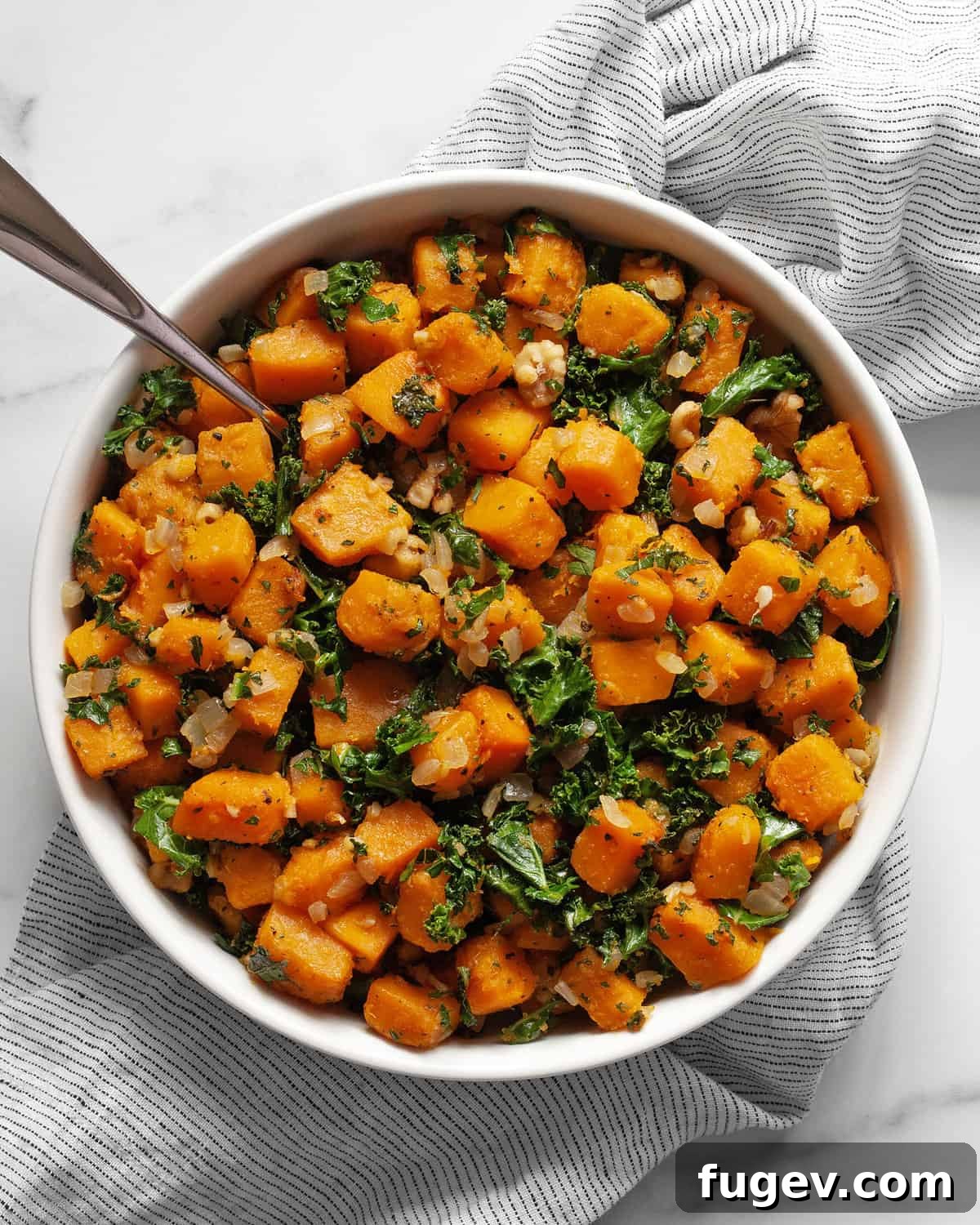
While roasting winter squash is a popular choice, don’t overlook the incredible convenience and flavor of cooking it on the stove. This incredibly easy sautéed butternut squash with kale and toasted walnuts offers a vibrant, savory, and satisfying alternative that’s ready in just about 20 minutes. We combine tender butternut squash cubes with aromatic onions, fragrant garlic, a medley of dried spices, and nutrient-rich chopped kale, all brought together with a delightful crunch from toasted walnuts. This isn’t just a simple cooked squash; it’s a complete, flavorful side dish that will effortlessly complement any meal, freeing up your oven for other culinary creations. With only 10 core ingredients, this recipe proves that quick and easy can also be wholesome and utterly delicious.
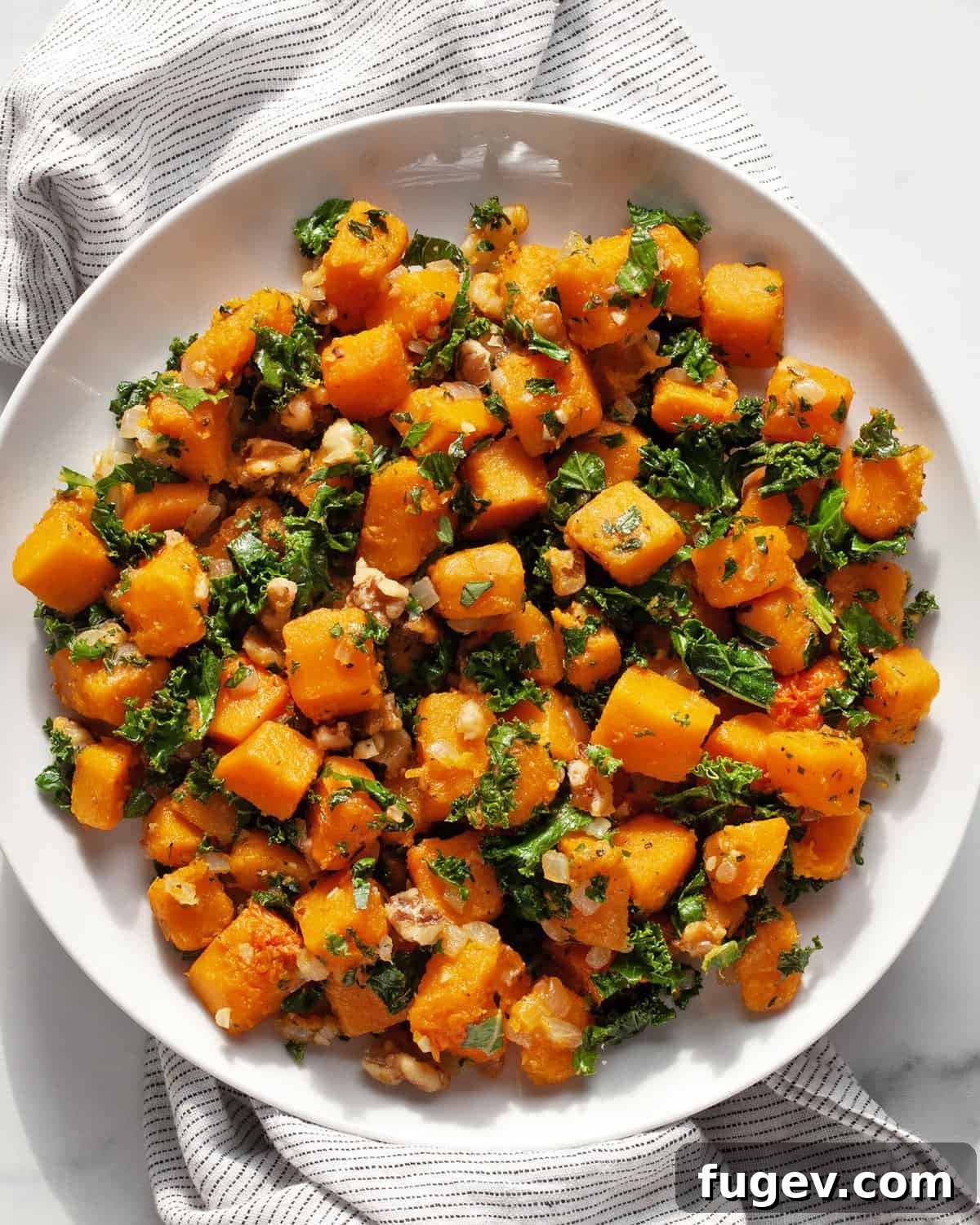
Table of Contents
- Why You’ll Love This Stovetop Butternut Squash Recipe
- Essential Ingredients for Sautéed Butternut Squash
- Optional Flavor Enhancements
- How To Make Easy Sautéed Butternut Squash
- Serving Suggestions for Your Butternut Squash Side
- Storage & Creative Leftover Ideas
- Top Tips for Perfect Sautéed Butternut Squash
- Sautéed Butternut Squash FAQs
- More Delightful Butternut Squash Recipes
- Sautéed Butternut Squash and Kale Recipe
Why You’ll Love This Stovetop Butternut Squash Recipe
This sautéed butternut squash recipe isn’t just another way to cook squash; it’s a culinary game-changer, especially during the colder months when hearty side dishes are a must. Here’s why this particular approach will become a staple in your kitchen:
It’s a Stovetop Marvel That Frees Up Your Oven. One of the biggest challenges, especially during holiday gatherings like Thanksgiving or Christmas, is managing oven space. Roasting multiple dishes can be a logistical nightmare. This sautéed butternut squash side dish eliminates that problem entirely, allowing you to prepare a delicious vegetable side without occupying precious oven real estate. This makes it a perfect choice for elaborate holiday meals, but also incredibly practical for everyday weeknights when your oven might be busy with a main course or simply not needed.
Sautéing Butternut Squash is Surprisingly Quick. Unlike roasting, which can take 30-40 minutes or more, sautéing butternut squash cuts down the cooking time significantly. In just about 10-12 minutes, your squash cubes can become tender and slightly caramelized on the edges, ready to absorb the flavors of the other ingredients. This speed is ideal for busy weeknights when you need a healthy and flavorful side on the table fast. It also offers a different texture profile than roasted squash – a bit softer, with a more direct infusion of skillet-cooked flavors.
Effortlessly Infuses Rich Flavors and Boosts Nutrition. Cooking butternut squash in a skillet provides a fantastic opportunity to build layers of flavor right in the pan. As the squash softens, it mingles beautifully with sautéed onions and garlic, which release their sweet and pungent aromatics. The dried spices adhere directly to the squash, creating a deeply savory base. Adding fresh kale not only introduces a vibrant color and pleasant texture but also significantly boosts the nutritional content, making this an exceptionally healthy side dish. Finally, the toasted walnuts add a delightful nutty crunch and healthy fats, elevating the dish from a simple vegetable to a truly well-rounded and complete accompaniment.
A Naturally Gluten-Free and Vegan Side Dish. This recipe is thoughtfully crafted to be inclusive of various dietary preferences. It is entirely gluten-free and vegan, making it an excellent option for entertaining guests with different dietary needs. There’s no butter involved; instead, it relies on the rich flavors of garlic, dried seasonings, and quality olive oil. This makes it a healthy and wholesome choice that everyone at your table can enjoy, without compromising on taste or satisfaction.
Essential Ingredients for Sautéed Butternut Squash
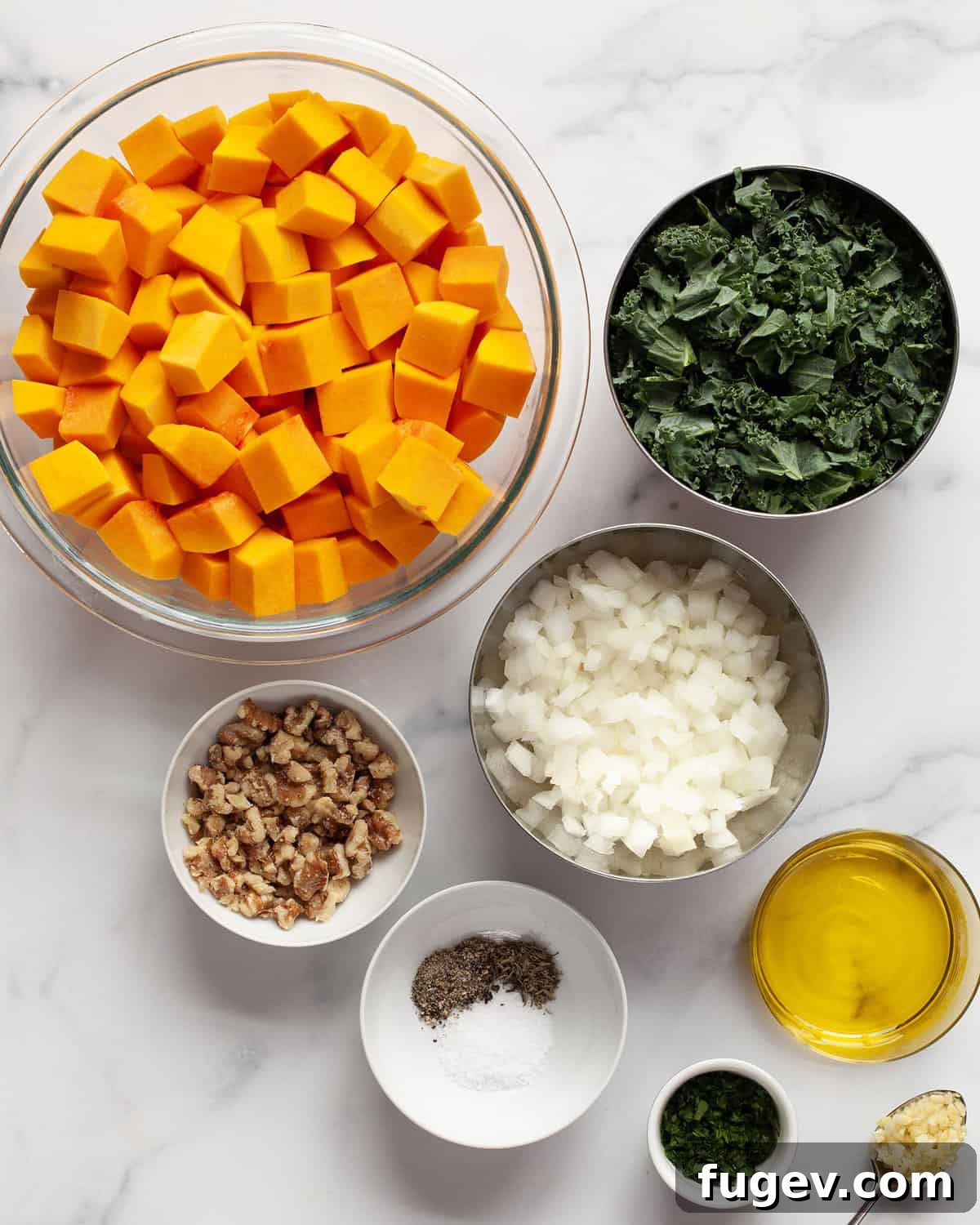
Crafting this delicious stovetop butternut squash dish requires a handful of fresh, high-quality ingredients. Here’s what you’ll need to gather:
- Butternut Squash: The star of our show! The recipe calls for one whole butternut squash, typically around 3 pounds, which will need to be peeled, deseeded, and cut into uniform 1/2-inch cubes. When selecting your squash, look for one that is firm, heavy for its size, and free of any dents, bruises, or soft spots. For a convenient shortcut, many grocery stores offer pre-cut butternut squash cubes, which can save you a significant amount of prep time.
- Kale: Fresh, vibrant kale adds both nutritional value and a lovely earthy flavor to the dish. Both curly kale and lacinato kale (also known as dinosaur kale) work beautifully here. Ensure you remove the tough stems before chopping.
- Onions: A small onion, either white or yellow, provides a foundational aromatic sweetness that develops beautifully as it sautés with the squash. Roughly chopped is perfectly fine as it will soften down.
- Garlic: Two minced garlic cloves are essential for adding a pungent, savory depth to the dish. Fresh garlic is highly recommended for its superior flavor compared to powder.
- Dried Spices: A simple yet effective trio of dried thyme, kosher salt, and freshly ground black pepper is all you need. These spices enhance the natural sweetness of the squash and complement the other savory elements. Don’t be shy to adjust salt and pepper to your taste preferences.
- Walnuts: These provide a wonderful textural contrast and a rich, nutty flavor. For the absolute best taste and aroma, it’s crucial to toast your walnuts. Spread them on a sheet pan and bake at 350°F (175°C) for 5-7 minutes, watching carefully to prevent burning. You can toast a larger batch at once and store them for other recipes like salads or oatmeal. Chopped almonds or pecans also make excellent substitutions.
- Parsley: A finishing touch of chopped fresh parsley adds a burst of freshness and a vibrant green pop. If parsley isn’t available, minced fresh chives or a combination of both would also be delicious.
- Olive Oil: Used for sautéing, a high-quality extra virgin olive oil will impart a superior flavor and contribute healthy fats to the dish.
Optional Flavor Enhancements
Feel free to customize your sautéed butternut squash with kale by incorporating one or more of these delightful additions:
- Parmesan Cheese: For a savory, umami-rich twist, stir in some freshly grated Parmesan cheese when you add the nuts and parsley. This is a fantastic option if you’re not keeping the dish strictly vegan.
- Maple Syrup or Honey: To achieve a perfectly balanced sweet and savory profile, especially if your squash isn’t naturally very sweet, stir in about 1 tablespoon of maple syrup or honey along with the garlic and spices. This slight sweetness beautifully enhances the squash’s flavor.
- Red Pepper Flakes: If you enjoy a touch of heat, a pinch of red pepper flakes added with the spices will provide a subtle warmth that invigorates the dish without overpowering it.
How To Make Easy Sautéed Butternut Squash
Creating this delicious sautéed butternut squash with kale is a straightforward process, requiring minimal effort for maximum flavor. Follow these simple steps for a perfect outcome:
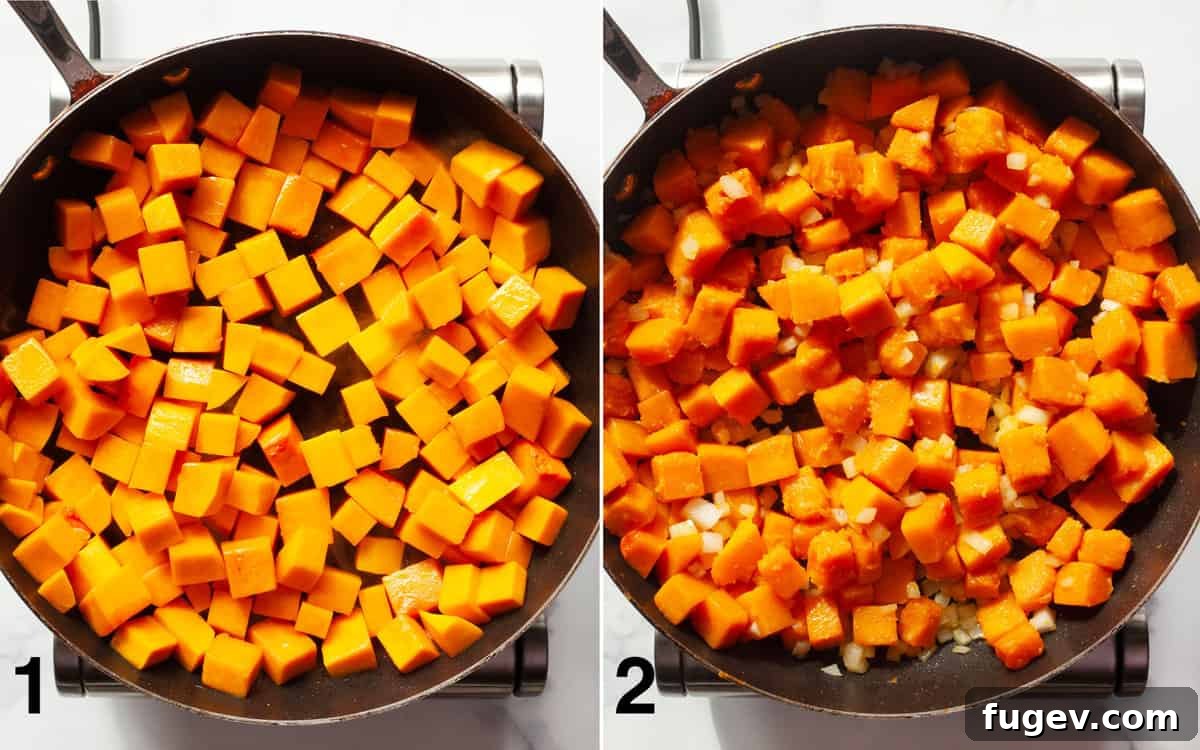
1. Sauté the Squash to Tender Perfection. Begin by heating the olive oil in a large skillet over medium heat. Once shimmering, add your uniformly cut butternut squash cubes. Stir frequently to ensure even cooking and to encourage some lovely golden caramelization on the edges. Continue to sauté for approximately 10-12 minutes, or until the squash is fork-tender and beginning to develop a slightly sweet aroma. This initial step is key to building the foundational texture and flavor of the dish.
2. Introduce the Onions for Aromatic Sweetness. Once the squash has softened, add the chopped onions to the skillet. Continue to sauté, stirring occasionally, until they become soft, translucent, and fragrant, which typically takes about 4-5 minutes. The onions will release their natural sugars and add another layer of depth to the dish. Remember to keep stirring to distribute the heat and integrate the ingredients well.
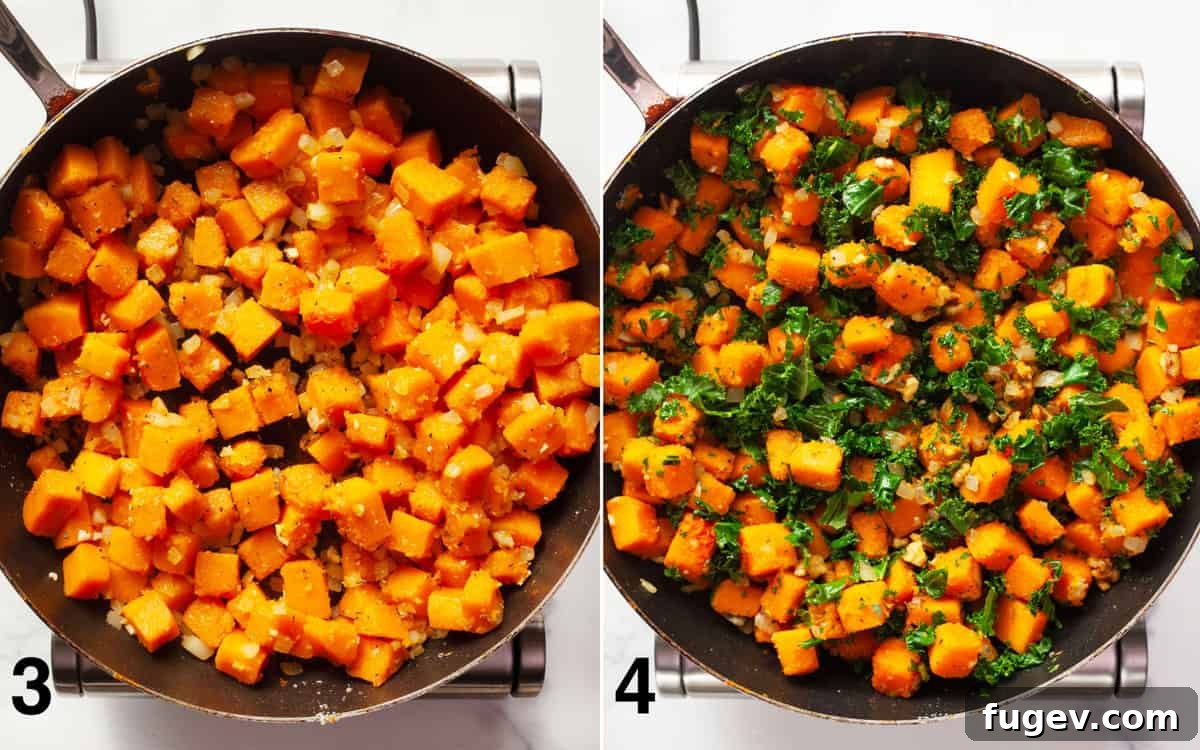
3. Infuse with Garlic and Spices. Now it’s time to add the minced garlic, dried thyme, kosher salt, and black pepper. Stir these aromatic ingredients into the squash and onion mixture. Allow them to cook for just about 1 minute, or until the garlic becomes wonderfully fragrant. Be careful not to burn the garlic, as this can turn bitter. This brief cooking time allows the spices to bloom and deeply infuse their flavors into the dish.
4. Wilt in the Kale and Finish with Walnuts & Parsley. Add the chopped kale to the skillet. Continue to stir and sauté for 2-3 minutes, allowing the kale to wilt down and become tender-crisp. Once the kale is softened, stir in the chopped toasted walnuts and fresh parsley. Toss everything together briefly to combine, ensuring the nuts and herbs are evenly distributed throughout the sautéed butternut squash.
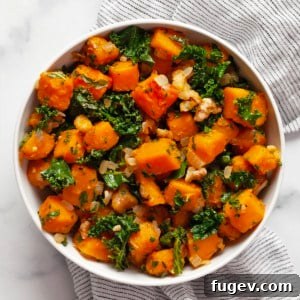
Serving Suggestions for Your Butternut Squash Side
This sautéed butternut squash with kale and walnuts is best enjoyed warm, directly from the skillet. Its quick preparation time is a huge advantage, allowing you to cook it fresh while your main course finishes up in the oven or on the stovetop. This ensures the best texture for both the squash and the kale, providing a perfect complement to a wide array of meals.
Consider this a prime choice for your holiday spread. Its vibrant colors and earthy, sweet-savory profile make it an ideal Thanksgiving or Christmas side dish, pairing beautifully with classics like roasted turkey, baked ham, or a succulent prime rib. The nutty crunch of walnuts and the slight bitterness of kale offer a wonderful counterpoint to rich holiday meats.
Beyond the holidays, don’t underestimate its versatility for weeknight dinners. It’s an excellent companion to simply roasted chicken, pan-seared salmon, pork loin, or even plant-based proteins such as lentil loaf or baked tofu. For a heartier weeknight meal, try serving this butternut squash side over a bed of fluffy quinoa, farro, or couscous, or even stirred into a simple pasta dish for added vegetables and texture. It also makes a fantastic addition to grain bowls, providing both flavor and a substantial nutritional boost.
Storage & Creative Leftover Ideas
Leftovers of this sautéed butternut squash and kale are absolutely delicious and can be stored in an airtight container in the refrigerator for up to 3 days. While the kale will naturally soften a bit more upon reheating compared to its initial tender-crisp texture, the flavors will have deepened beautifully.
To warm them up, simply add a touch of olive oil to a skillet and heat over medium heat, stirring gently until warmed through. If you desire a fresher texture for the greens, you can always stir in a handful of freshly chopped kale during the last minute of reheating. This reinvigorates the dish with vibrant color and a fresh bite.
Beyond simple reheating, these leftovers are incredibly versatile! Stir the warmed squash and kale into cooked grains like brown rice or farro for a quick and wholesome grain bowl. It’s also fantastic mixed into scrambled eggs or a frittata for a savory breakfast or brunch. Consider adding it to a warm wrap or sandwich for a boost of flavor and nutrition, or even as a topping for baked potatoes or polenta. The possibilities for repurposing this delicious side are endless!
Top Tips for Perfect Sautéed Butternut Squash
Achieving perfectly tender and flavorful sautéed butternut squash is simple with these expert tips:
- Ensure Uniform Squash Cubes for Even Cooking. This is perhaps the most crucial tip for any stir-fried or sautéed vegetable. After peeling the butternut squash with a sturdy vegetable peeler and deseeding it, use a sharp chef’s knife to cut the squash into consistent 1/2-inch cubes. Uniformly sized pieces will cook at the same rate, preventing some pieces from becoming mushy while others are still hard.
- Opt for a Non-Stick Skillet for Easy Sautéing. While you will be using olive oil, a good quality non-stick skillet or a well-seasoned cast iron pan will significantly reduce the potential for the squash to stick to the bottom. This ensures a smoother cooking process and easier cleanup.
- Taste and Adjust Seasonings for Optimal Flavor. Always taste your food as you cook, and especially before serving. Once the squash is tender, carefully take a small bite (it will be hot!). Assess if it needs a few more minutes to become perfectly fork-tender or if it could benefit from a little more salt, pepper, or even an extra pinch of thyme. This final adjustment makes all the difference in the finished dish.
- Avoid Overcrowding Your Pan. Sautéing relies on direct heat and evaporation for browning and tenderizing. If you overcrowd the skillet with too many squash cubes, the vegetables will steam instead of sauté, leading to a watery and less flavorful result. If preparing a larger batch, work in two smaller batches to ensure proper caramelization.
- Manage Your Heat Wisely. Medium heat is generally ideal for sautéing butternut squash. Too high, and the outside might burn before the inside is tender. Too low, and the squash might just sit and soften without achieving those desired golden edges. Keep an eye on the heat and adjust as needed throughout the cooking process.
Sautéed Butternut Squash FAQs
While my preference is always for minced fresh garlic cloves to achieve the best aroma and flavor, you can substitute with 1/8 to 1/4 teaspoon of garlic powder. Keep in mind that dried garlic tends to have a more intense, concentrated flavor, so start with a smaller amount and add more to taste.
Yes, it is highly recommended to peel butternut squash before sautéing. Although the peel is technically edible when cooked, it can be quite tough and fibrous. Peeling ensures a more consistent texture and a more enjoyable eating experience for your sautéed butternut squash.
No, you absolutely do not have to add kale if you’re not a fan, or if you simply don’t have any on hand. The dish will still be delicious! Just be aware that omitting the kale will reduce the overall yield of the recipe and slightly alter the nutritional profile and texture. You can also experiment with other quick-cooking greens like spinach or Swiss chard.
Typically, cooked butternut squash freezes best when pureed. Since this specific recipe includes ingredients like onions and kale, which would not puree well and might become overly soft or watery upon thawing, we do not recommend freezing this particular sautéed butternut squash dish. It’s best enjoyed fresh or from the refrigerator within a few days.
For sautéing, a good quality extra virgin olive oil is ideal. Its flavor profile complements the squash and other ingredients beautifully. If you prefer a more neutral oil or are cooking at a higher heat, a light olive oil, avocado oil, or grapeseed oil can also be used, though extra virgin olive oil is preferred for its taste benefits.
More Delightful Butternut Squash Recipes
If you love butternut squash as much as we do, explore these other delicious ways to incorporate this versatile winter vegetable into your meals:
- Baked Butternut Squash Risotto
- Fall Harvest Salad with Roasted Butternut Squash
- Roasted Butternut Squash and Kale Pasta
- Turmeric Butternut Squash Apple Soup
- Roasted Butternut Squash Broccoli Orzo
Sautéed Butternut Squash with Kale and Toasted Walnuts
Paige Adams
5 mins
18 mins
23 mins
4
Print Recipe
Ingredients
- 1 tablespoon olive oil
- 1 butternut squash, about 3 pounds, peeled, deseeded and cut into 1/2-inch cubes
- 1 small onion, roughly chopped
- 2 garlic cloves, minced
- 1/4 teaspoon dried thyme
- 1 teaspoon kosher salt
- 1/2 teaspoon black pepper
- 1-1/2 cups chopped kale
- 1/4 cup chopped toasted walnuts
- 1 teaspoon chopped fresh parsley
Instructions
-
Heat the olive oil in a large skillet over medium heat. Add the butternut squash cubes and sauté, stirring frequently, for about 10-12 minutes, until they are fork-tender and slightly golden.
-
Add the chopped onions to the skillet. Continue to sauté for about 4-5 minutes, stirring occasionally, until the onions are soft and translucent.
-
Stir in the minced garlic, dried thyme, kosher salt, and black pepper. Cook for 1 minute more, until the garlic becomes fragrant.
-
Add the chopped kale to the skillet, stirring until it wilts and softens, which will take approximately 2-3 minutes.
-
Finally, stir in the chopped toasted walnuts and fresh parsley. Toss gently to combine all ingredients before serving warm.
Video
Notes
If possible, use a non-stick skillet or sauté pan to prevent sticking.
You can substitute chopped almonds or pecans for walnuts if preferred.
If you don’t like kale, you can omit it. This will slightly reduce the recipe yield.
Store leftovers in an airtight container in the refrigerator for up to 3 days. Reheat with a little oil in a skillet over medium heat. The kale will be softer than when first sautéed; feel free to add fresh chopped kale if desired. Leftovers are also great stirred into cooked grains or pasta.
Optional Additions:
- Parmesan cheese: For a savory boost, add grated Parmesan when stirring in the nuts and parsley.
- Maple syrup or honey: To balance sweet and savory, stir in 1 tablespoon with the garlic and spices.
- Red pepper flakes: For a touch of heat, add a pinch of red pepper flakes with the spices.
Nutrition
Carbohydrates: 38g |
Protein: 5g |
Fat: 9g |
Saturated Fat: 1g |
Polyunsaturated Fat: 4g |
Monounsaturated Fat: 3g |
Sodium: 599mg |
Potassium: 1110mg |
Fiber: 7g |
Sugar: 8g |
Vitamin A: 30980IU |
Vitamin C: 70mg |
Calcium: 176mg |
Iron: 3mg
Nutrition information is automatically calculated, so should only be used as an approximation.
Additional Info
Side Dishes
American
Embrace the simplicity and rich flavors of this sautéed butternut squash with kale and toasted walnuts. It’s more than just a side dish; it’s a testament to how quick stovetop cooking can yield exceptional results, providing a healthy, versatile, and utterly delicious addition to your table. Whether you’re navigating a busy weeknight or orchestrating a grand holiday feast, this recipe is sure to become a cherished favorite. Give it a try and discover the joy of effortless, flavorful cooking!