
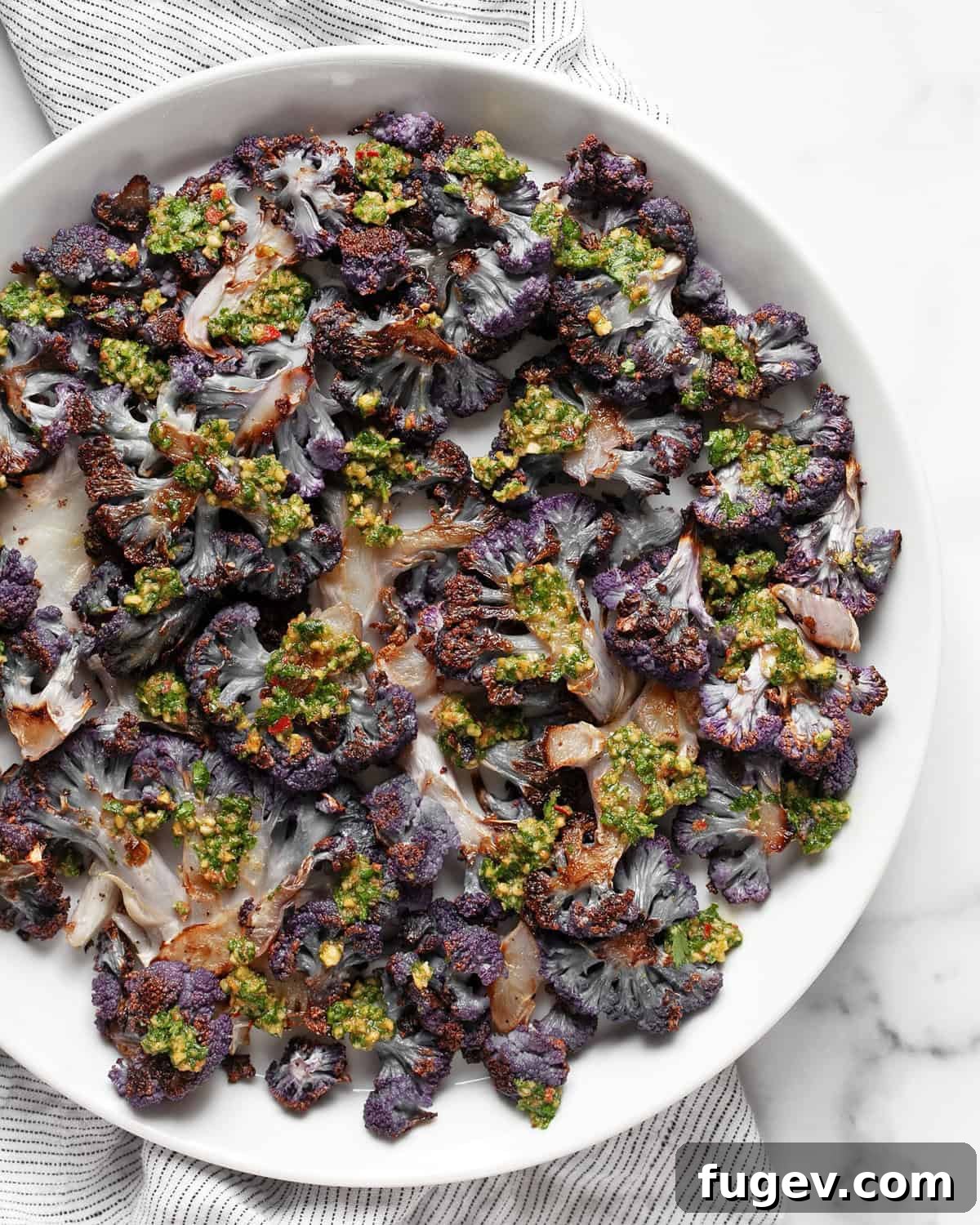
If you consider yourself a true cauliflower connoisseur, prepare to be amazed by the vibrant beauty and rich flavors of roasted purple cauliflower. No longer a rare gem found only at exclusive farmers’ markets, this eye-catching vegetable has become increasingly accessible in mainstream grocery stores. This delightful recipe transforms purple cauliflower into an easy yet elegant side dish, complemented by a fresh, zesty cilantro pesto featuring peanuts, lime, and a hint of chili.
For those who love hearty, plant-based dishes, another go-to recipe in my kitchen, especially during the colder months, is this roasted cauliflower with chickpeas and herby tahini sauce. It offers a different, equally satisfying flavor profile.
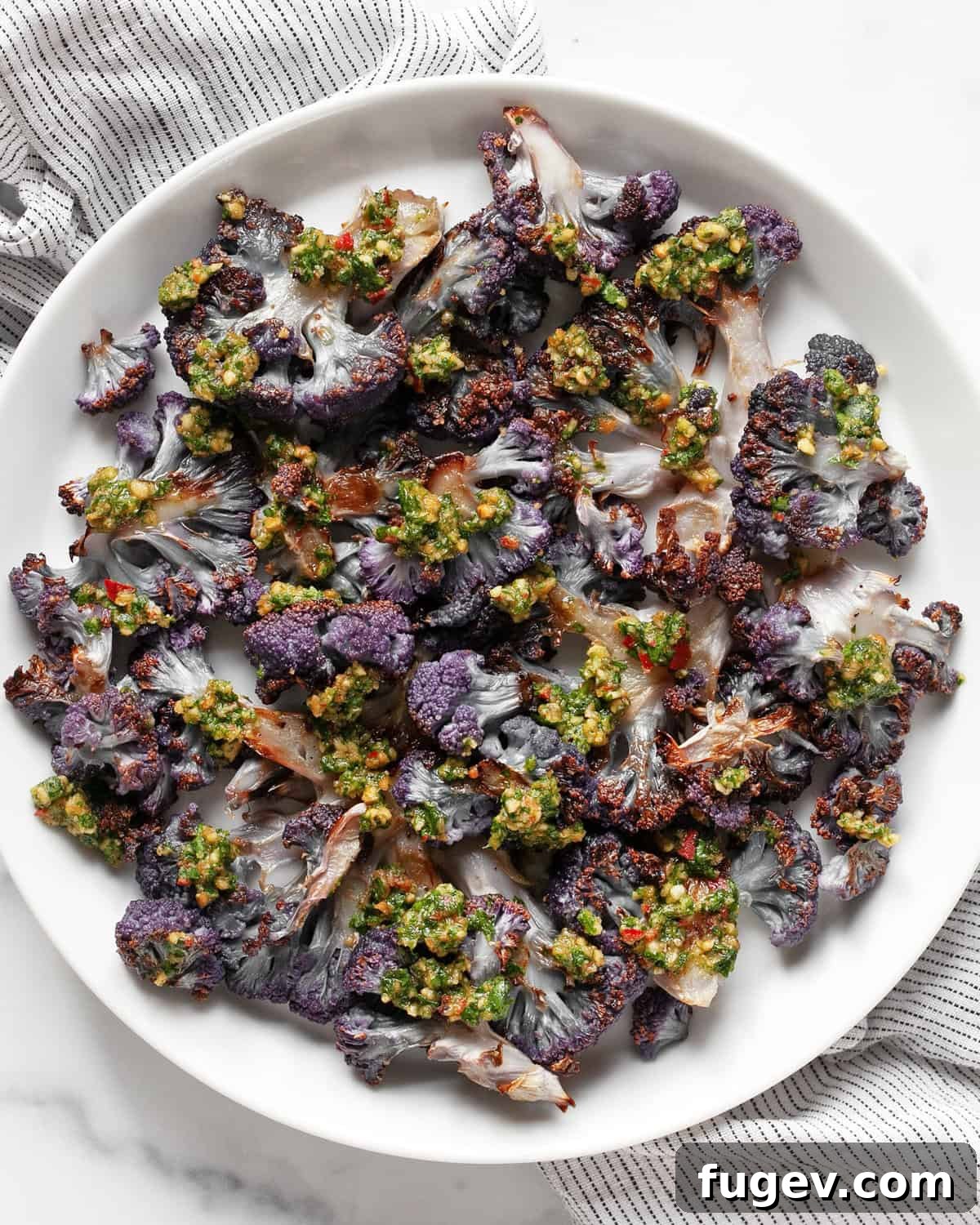
Why You’ll Fall in Love with This Recipe
This roasted purple cauliflower dish isn’t just a meal; it’s an experience. Here’s why it deserves a permanent spot in your culinary repertoire:
- A Feast for the Eyes and the Palate: Cooking during the colder seasons can often lead to a monochromatic palette of browns and beiges. This recipe is a vibrant rebellion against that trend! Its stunning purple hue, deepened by roasting, creates a visually striking dish that’s guaranteed to brighten any table. Beyond its captivating appearance, the flavor is equally impressive – subtly sweet, nutty, and wonderfully satisfying. It’s a simple way to bring bold, seasonal color and incredible taste to your plate.
- The Cilantro Pesto: A Culinary Revelation: Forget everything you thought you knew about pesto. While traditional basil pesto with pasta is undeniably delicious, the world of pesto is vast and incredibly creative. At its core, pesto is a fresh, flavorful sauce built on herbs, nuts, and garlic. This particular cilantro pesto is a game-changer. By incorporating crunchy peanuts, bright lime, and a touch of chili, and skipping the cheese, we create an unexpected, herbaceous sauce that perfectly complements the roasted cauliflower. It’s savory, tangy, and boasts a unique zest that will have you reaching for more.
- Remarkably Versatile – From Side to Star: While I classify this recipe as an ideal side dish, don’t let that limit its potential. With a few simple additions, these flavorful veggies can easily become the star of a delicious vegan main course. Serve it alongside fluffy quinoa, wholesome brown rice, or any other cooked grain for a complete meal. For an extra boost of plant-based protein, consider pairing it with black beans, creamy white beans, or perfectly seasoned tofu. Its adaptable nature makes it a perfect choice for various dietary preferences and meal planning needs.
Exploring the Unique Charm of Purple Cauliflower
Many wonder if purple cauliflower tastes distinctly different from its more common white counterpart. The difference, while subtle, is certainly there and contributes to its allure. Purple cauliflower, along with its orange and green cousins, typically offers a milder, slightly sweeter flavor profile compared to white cauliflower, often with a delightful nutty undertone. This makes it particularly appealing even to those who might be hesitant about cauliflower’s more assertive taste.
The stunning purple color of this vegetable is not just for show; it’s a marker of its rich nutritional content. This vibrant hue comes from anthocyanins, powerful antioxidants also responsible for the deep colors found in blueberries, red wine, and red cabbage. These compounds are known for their potential health benefits, including anti-inflammatory properties and support for heart health. So, when you choose purple cauliflower, you’re not just adding beauty to your plate, but also a nutritional boost. While the texture remains similar to white cauliflower – firm yet tender when cooked – the nuanced flavor and vibrant color make it a genuinely unique and exciting ingredient to experiment with.
Essential Ingredients for a Flavorful Creation
Crafting this delicious dish requires a handful of fresh, quality ingredients. Here’s what you’ll need to gather:
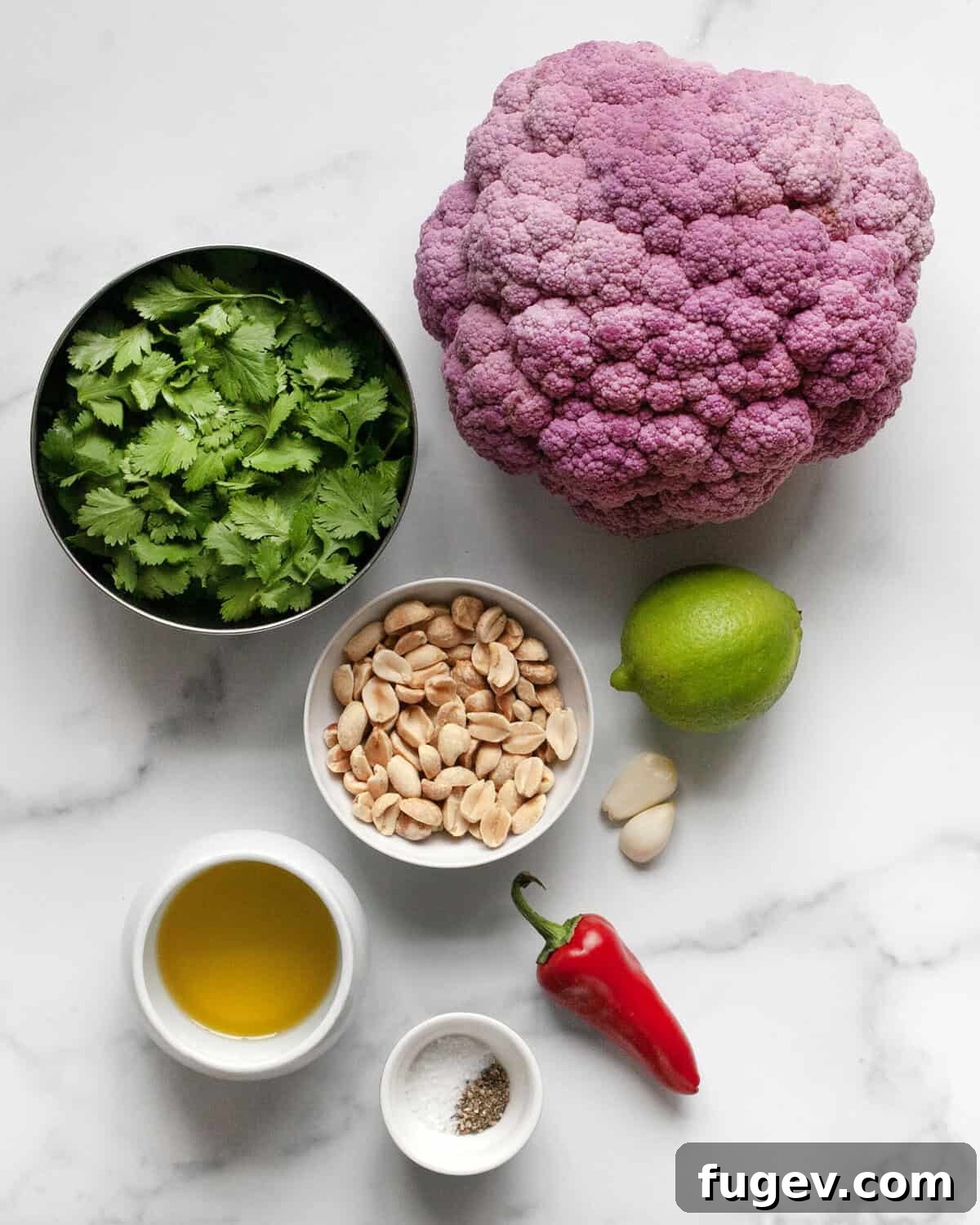
- Purple Cauliflower: This recipe’s star! Whether you’re at a large supermarket chain or a specialty grocer, colorful cauliflowers like purple, orange, and green are becoming widely available. When selecting a head, choose one that feels firm and heavy for its size, with no visible brown spots or soft areas, which indicate spoilage. The florets should be tightly packed.
- Fresh Cilantro: The vibrant heart of our pesto. You’ll want to use the fresh leaves, separating them from the tougher stems. We understand that cilantro is one of those polarizing ingredients – people either love it or vehemently dislike it. If you fall into the latter category, fear not! Fresh parsley is an excellent alternative. If using parsley, I recommend swapping lime juice for fresh lemon juice, replacing the Fresno chili with a pinch of red pepper flakes for heat, and using toasted walnuts instead of peanuts for the nutty element.
- Roasted Peanuts: These add a wonderful crunch and depth to the pesto. Opt for roasted peanuts that are lightly salted. Be mindful that salt levels can vary significantly between brands. It’s best to avoid “dry roasted” peanuts, which often contain excessive salt and can overpower the other flavors in the pesto. A good quality, lightly salted roasted peanut will provide the perfect balance.
- Fresno Chili: This pepper brings a pleasant warmth and a distinct fruity, smoky note to the pesto. Its heat level is comparable to a jalapeño, making it noticeable but not overwhelmingly spicy. Remember to quarter the chili and remove the seeds before finely chopping it in your food processor to manage the heat and ensure a smooth pesto.
- Garlic: Two fresh garlic cloves are essential for the pesto, providing that indispensable aromatic foundation. They will be minced along with the chilies.
- Lime: Crucial for adding a bright, tangy, and refreshing zest to the pesto. Always choose a fresh lime over bottled citrus juice; the difference in flavor is immense and truly makes the pesto sing.
- Olive Oil: You’ll need extra virgin olive oil for two key stages: roasting the cauliflower to help it caramelize beautifully and forming the base of your flavorful pesto. Using a high-quality extra virgin olive oil will significantly enhance the overall taste of your dish.
- Kosher Salt & Black Pepper: These fundamental seasonings are vital for bringing out the best in both the roasted cauliflower and the fresh pesto. Seasoning in layers ensures every component of the dish is perfectly balanced.
Crafting Roasted Purple Cauliflower with Zesty Cilantro Pesto
Creating this stunning and flavorful dish is simpler than you might think. Follow these steps for perfect results:
Step 1: Prepare Your Oven and Cauliflower. Begin by preheating your oven to a robust 425 degrees F (220 degrees C). While the oven heats, prepare your purple cauliflower. Instead of breaking it into small florets, slice the entire head lengthwise into ½-inch thick “steaks” or large pieces. This technique maximizes the surface area that makes contact with the hot baking sheet, encouraging better browning and delicious caramelization. Don’t worry if some pieces break apart; a variety of sizes will lead to different textures, with some becoming more deeply caramelized than others, adding to the dish’s complexity.
Step 2: Season and Spread. Place the sliced cauliflower directly onto a large sheet pan. Drizzle it generously with 1 tablespoon of olive oil, then season with ½ teaspoon of kosher salt and ¼ teaspoon of black pepper. Use your hands to toss the cauliflower thoroughly, ensuring every piece is evenly coated. Spread the seasoned cauliflower into a single layer across the sheet pan. This is crucial for optimal roasting and browning; overcrowding the pan will steam the cauliflower instead of roasting it. Spreading it on the pan also minimizes cleanup!
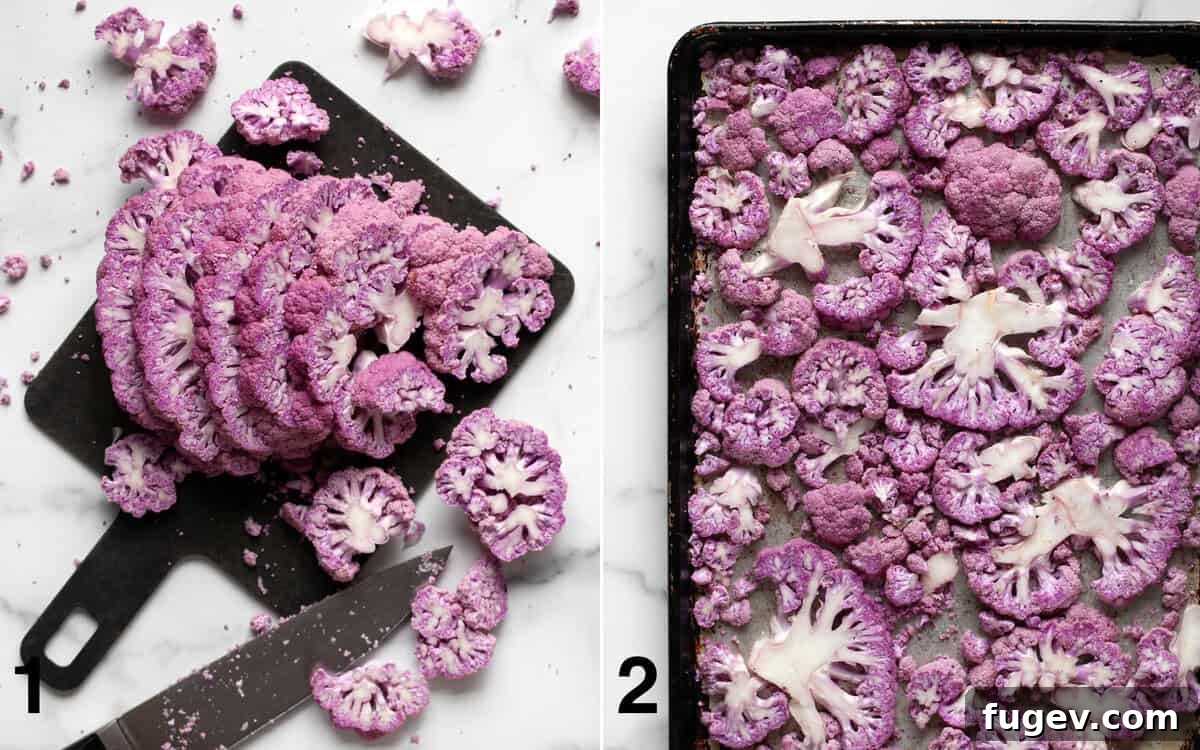
Step 3: Roast to Perfection. Transfer the sheet pan to the preheated oven and roast the cauliflower for approximately 20-25 minutes. About halfway through the roasting time, carefully flip the cauliflower pieces to ensure even browning on both sides. The cauliflower is ready when its edges are beautifully browned and caramelized, and its vibrant purple color has deepened to a richer, darker shade. It should be tender-crisp, offering a delightful texture contrast.
Step 4: Begin Your Cilantro Pesto. While the cauliflower is roasting, prepare the cilantro pesto. In the bowl of a food processor or a high-speed blender, combine the two peeled garlic cloves and the quartered, deseeded Fresno chili. Pulse the mixture until the garlic and chili are finely minced. This creates a pungent and spicy base for your pesto.
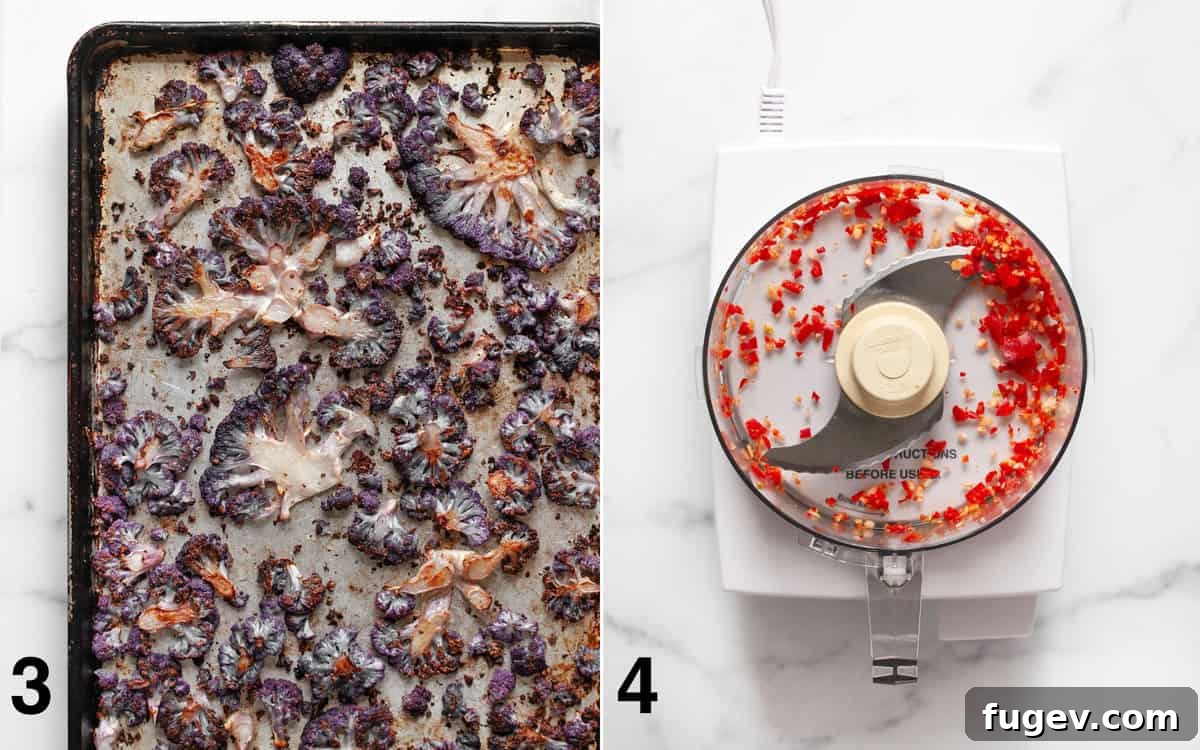
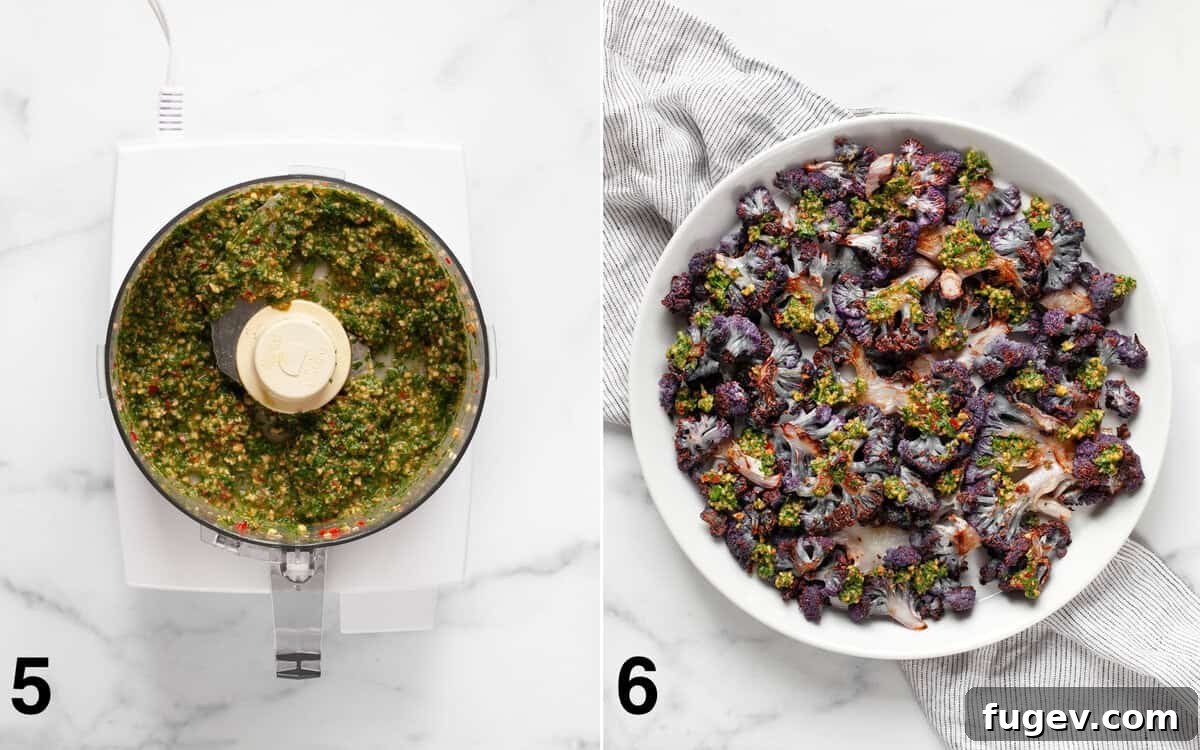
Step 5: Finish the Pesto. To the minced garlic and chili in the food processor, add the packed cilantro leaves, roasted peanuts, the juice of one fresh lime, and ¼ teaspoon of black pepper. Slowly drizzle in ⅓ cup of olive oil while pulsing the mixture. Continue to pulse until all ingredients are well combined, forming a cohesive sauce. Unlike traditional pesto, we’re aiming for a slightly chunkier texture here, which adds wonderful mouthfeel and visual interest. Be careful not to over-process; a few rough chops are all you need.
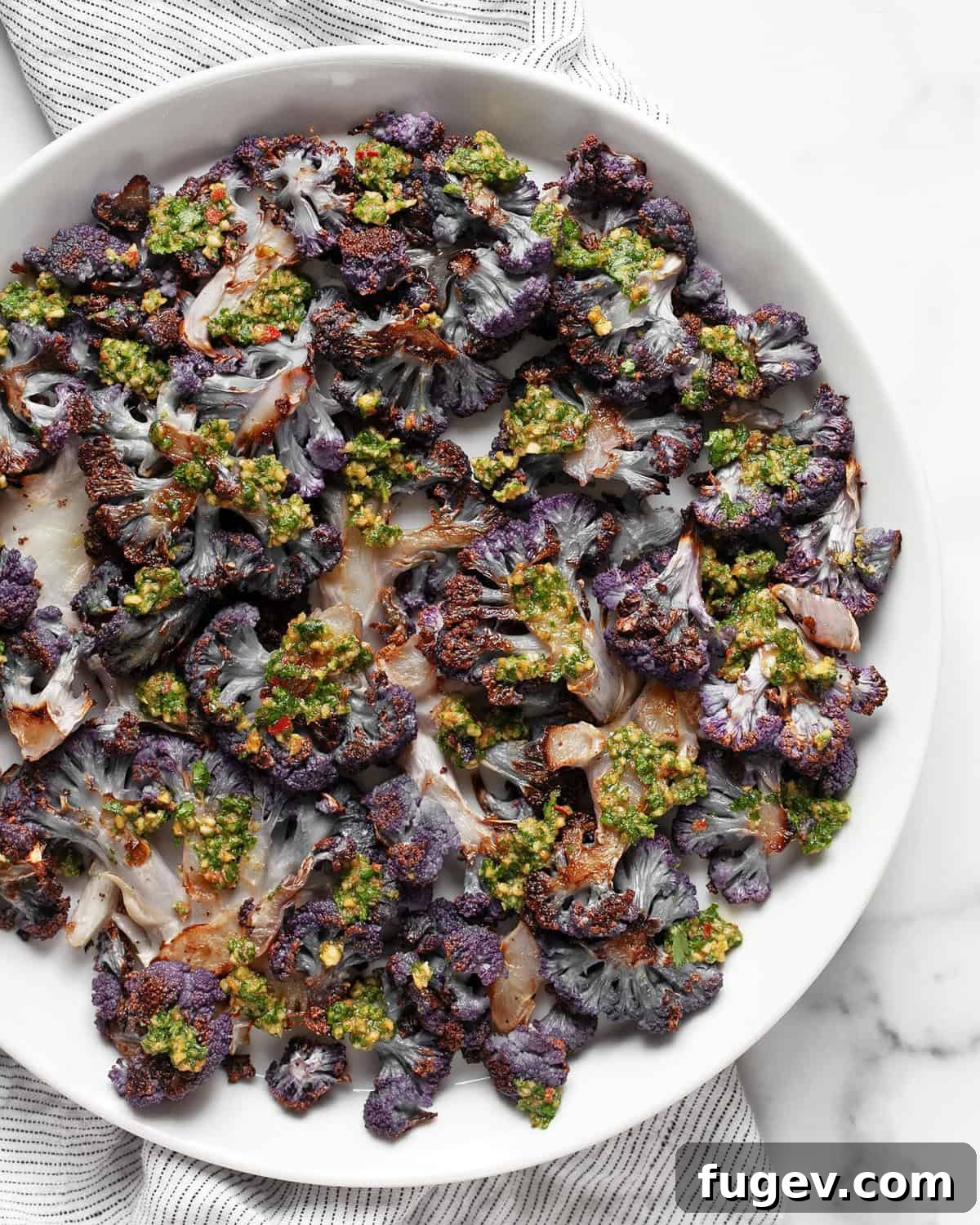
Step 6: Assemble and Serve. Once the roasted cauliflower is out of the oven, arrange the warm, caramelized pieces artfully on a serving plate. Generously spoon the fresh, zesty cilantro pesto over the top of the cauliflower. The vibrant green of the pesto against the deep purple cauliflower creates a stunning presentation. Serve immediately and enjoy!
Serving Suggestions: Elevate Your Meal
This roasted purple cauliflower with cilantro pesto is incredibly versatile and shines brightest when served warm or at room temperature. While the flavors of cilantro and peanuts might evoke certain Asian or Latin American culinary traditions, don’t hesitate to incorporate this dish into Mediterranean-inspired meals as well; its fresh, zesty profile complements a wide array of global cuisines.
Consider pairing it as a vibrant side with a light protein like grilled chicken or fish. For a truly satisfying plant-based meal, it’s excellent alongside this tahini ginger soba noodle salad, a flavorful veggie tofu stir-fry, or with a hearty sheet pan honey garlic tofu. The bright notes of the pesto cut through richness and add a refreshing contrast, making it a perfect companion to many main courses. You could also serve it as part of a larger mezze platter with hummus, olives, and warm pita bread for a delightful appetizer spread.
Leftovers & Storage: Enjoy Every Last Bite
Leftovers of this delicious roasted purple cauliflower are just as enjoyable, and with proper storage, you can savor them for days. Store any remaining roasted cauliflower in an airtight container in the refrigerator for up to 3 days. The cilantro pesto, due to its fresh ingredients, should be stored separately in its own airtight jar in the fridge. When you’re ready to enjoy the pesto again, remember to take it out of the refrigerator at least 15 minutes before serving. This allows the olive oil to return to a more liquid state and the flavors to open up, ensuring the pesto is perfectly drizzle-able and aromatic.
To reheat the cauliflower, you can gently warm it in a 350-degree F (175 degrees C) oven until heated through. Beyond simply reheating, leftovers offer a fantastic opportunity for culinary creativity! Chop the cooled roasted cauliflower and toss it into a fresh green salad with your favorite greens like baby spinach or peppery arugula. You can even transform the leftover pesto into a more liquid dressing by whisking in a little extra olive oil and a splash of your favorite vinegar, like apple cider or white wine vinegar. The roasted cauliflower is also wonderfully versatile when stirred into cooked grains such as pasta, fluffy quinoa, hearty farro, or chewy barley, creating an instant, flavorful meal.
Top Tips for Perfect Roasted Cauliflower & Pesto
Achieving culinary success often comes down to a few key insights. Here are some invaluable tips to ensure your roasted purple cauliflower with cilantro pesto turns out spectacular every time:
- Skip the Parchment Paper for Optimal Browning: While parchment paper is often a handy kitchen aid for easy cleanup, for roasted vegetables, direct contact with the hot metal of the baking sheet is preferred. The olive oil coating on the cauliflower will prevent sticking, and the direct heat transfer encourages superior browning and caramelization, leading to those coveted crispy, flavorful edges.
- Any Cauliflower Color Works Beautifully: Don’t feel limited to only purple cauliflower. If you can’t find purple, or if white, orange, or green varieties are more readily available, use them! The essence of this recipe lies in the roasting technique and the vibrant pesto. White, orange, and green cauliflowers are interchangeable here, offering slight variations in sweetness and nuttiness, but always delivering delicious results. My goal is for you to make and enjoy this recipe, regardless of cauliflower color!
- Adjust Pesto Consistency to Your Liking: Pesto consistency is a matter of personal preference. If your pesto seems too thick to drizzle easily over the cauliflower, simply add a touch more olive oil, one teaspoon at a time, and pulse again until it reaches your desired pourable texture. Conversely, if you prefer a thicker, more spreadable pesto, you might use slightly less oil or pulse it for a shorter duration, keeping it chunkier. Trust your judgment and adjust as needed.
- Plan for Leftover Pesto – It’s a Bonus! This recipe often yields a bit more pesto than you’ll need for a single head of cauliflower, which is a wonderful bonus! Don’t let it go to waste. Leftover cilantro pesto is incredibly versatile: stir it into brown rice or black beans for an instant flavor boost, use it as a vibrant topping for roasted vegetable tacos, or swirl it into a vegetable stir-fry at the end of cooking for a fresh finish. It’s also delicious spread on sandwiches or as a dip for crusty bread.
- Prepare Pesto in Advance for Easy Meal Prep: To streamline your cooking process, you can prepare the cilantro pesto up to 2 days in advance. Store it in an airtight container, like a mason jar, in the refrigerator. Before serving, remove the pesto from the fridge and let it sit at room temperature for at least 15 minutes. This allows the olive oil, which may have solidified slightly in the cold, to return to its liquid state, ensuring your pesto is smooth, vibrant, and ready to be drizzled.
Discover More Delicious Cauliflower Creations
Cauliflower is a culinary chameleon, incredibly versatile and nutritious. If you’ve enjoyed this recipe, you’ll love exploring these other fantastic ways to prepare this amazing vegetable:
- Roasted Cauliflower Kale Salad: A hearty and healthy salad bursting with texture and flavor.
- Harissa Roasted Cauliflower Couscous: A spicy and aromatic dish, perfect as a side or light main.
- Roasted Curried Cauliflower: Infused with exotic spices for a warm and comforting meal.
- Cauliflower Pizza Crust: A popular, low-carb alternative for your favorite pizza night.
- Tahini Roasted Cauliflower and Broccoli: A simple yet elegant combination of roasted vegetables with a creamy tahini dressing.
- Chipotle Roasted Cauliflower Tacos: Flavorful and satisfying tacos that are perfect for a weeknight dinner.
- Lemon Pepper Grilled Cauliflower Steaks: A fantastic grilling option that transforms cauliflower into a substantial steak.
- Tahini Roasted Cauliflower Soup: A creamy, comforting, and healthy soup that’s incredibly warming.
For even more roasted veggie inspiration throughout the year, be sure to check out my seasonal guide to easy roasted vegetable recipes, featuring pastas, salads, sides, and more.
Roasted Purple Cauliflower with Cilantro Pesto
No ratings yet
By Paige Adams
Prep: 10 mins
Cook: 25 mins
Total: 35 mins
Servings: 4
If you love cauliflower, you must try this amazing vegetable in every color, including this roasted purple cauliflower. I prepare a vibrant cilantro pesto with peanuts, lime, and chilies, then use it as an aromatic sauce for the roasted cauliflower.
Ingredients
For the Cauliflower:
- 1 large head purple cauliflower (about 2 pounds), leaves removed, bottom stem trimmed
- 1 tablespoon olive oil
- 1/2 teaspoon kosher salt
- 1/4 teaspoon black pepper
For the Cilantro Pesto:
- 2 garlic cloves
- 1 fresno chili, quartered and deseeded
- 1 cup packed cilantro leaves
- 1/3 cup roasted peanuts
- 1 lime
- 1/4 teaspoon black pepper
- 1/3 cup olive oil
Instructions
- Preheat the oven to 425 degrees F (220 degrees C).
- Cut the cauliflower lengthwise into 1/2-inch-thick slices.
- On a sheet pan, toss the cauliflower with 1 tablespoon olive oil, 1/2 teaspoon kosher salt, and 1/4 teaspoon pepper. Spread into a single layer. Roast the cauliflower until it is browned at the edges and darker purple, flipping halfway through cooking, about 20-25 minutes.
- While the cauliflower roasts, prepare the cilantro pesto. In a food processor or blender, mince the garlic and chilies.
- Add the cilantro leaves, peanuts, lime juice, 1/4 teaspoon pepper, and olive oil. Pulse the mixture until it is roughly chopped. It should have a chunkier consistency than traditional pesto.
- Spoon the pesto over the roasted cauliflower as you arrange it on a serving plate.
Notes
- If you dislike cilantro, you can use parsley instead. In that case, opt for walnuts instead of peanuts, a lemon instead of a lime, and use a pinch of red pepper flakes for heat instead of the chili.
- You can prepare the pesto up to 2 days in advance. Store it in a mason jar in the refrigerator. Let it sit at room temperature for at least 15 minutes before using it to allow the oil to soften.
- Store leftovers in an airtight container in the fridge for up to 3 days. Keep the pesto in a separate container. You can warm the cauliflower in a 350-degree F (175 degrees C) oven. Let the pesto sit out at room temperature for 15 minutes before using it so it’s not too cold.
- Leftovers can be stirred into cooked pasta, quinoa, farro, or barley. You can also enjoy them cold in a salad with kale, spinach, or chopped romaine. Add a little vinaigrette and more oil to the pesto to turn it into a dressing.
Nutrition
Nutrition information is automatically calculated, so should only be used as an approximation.
- Calories: 331 kcal
- Carbohydrates: 17g
- Protein: 8g
- Fat: 28g
- Saturated Fat: 4g
- Polyunsaturated Fat: 4g
- Monounsaturated Fat: 18g
- Sodium: 415mg
- Potassium: 856mg
- Fiber: 6g
- Sugar: 5g
- Vitamin A: 387 IU
- Vitamin C: 132mg
- Calcium: 76mg
- Iron: 2mg
Additional Info
Course: Side Dishes
Cuisine: Mediterranean