
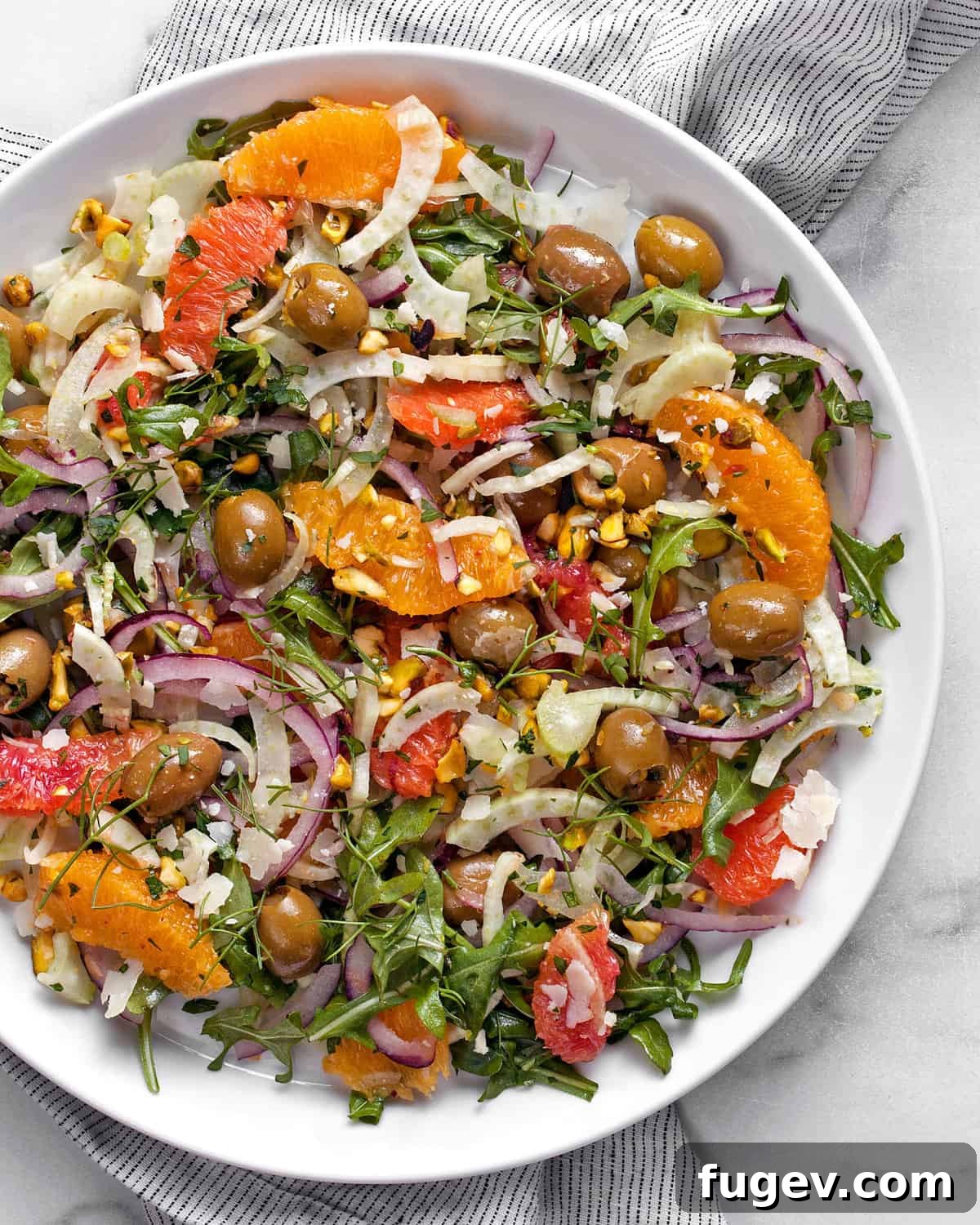
Experience a burst of sunshine with this exquisite Fennel Orange Salad, a vibrant and refreshing dish featuring the delicate crispness of fennel, the juicy sweetness of oranges, the briny depth of green olives, and the peppery kick of arugula. Enhanced with thinly sliced red onions, crunchy pistachios, and savory Parmesan, this salad is a symphony of contrasting flavors and textures. It’s a truly captivating combination that balances savory and sweet, offering a delightful escape from the ordinary.
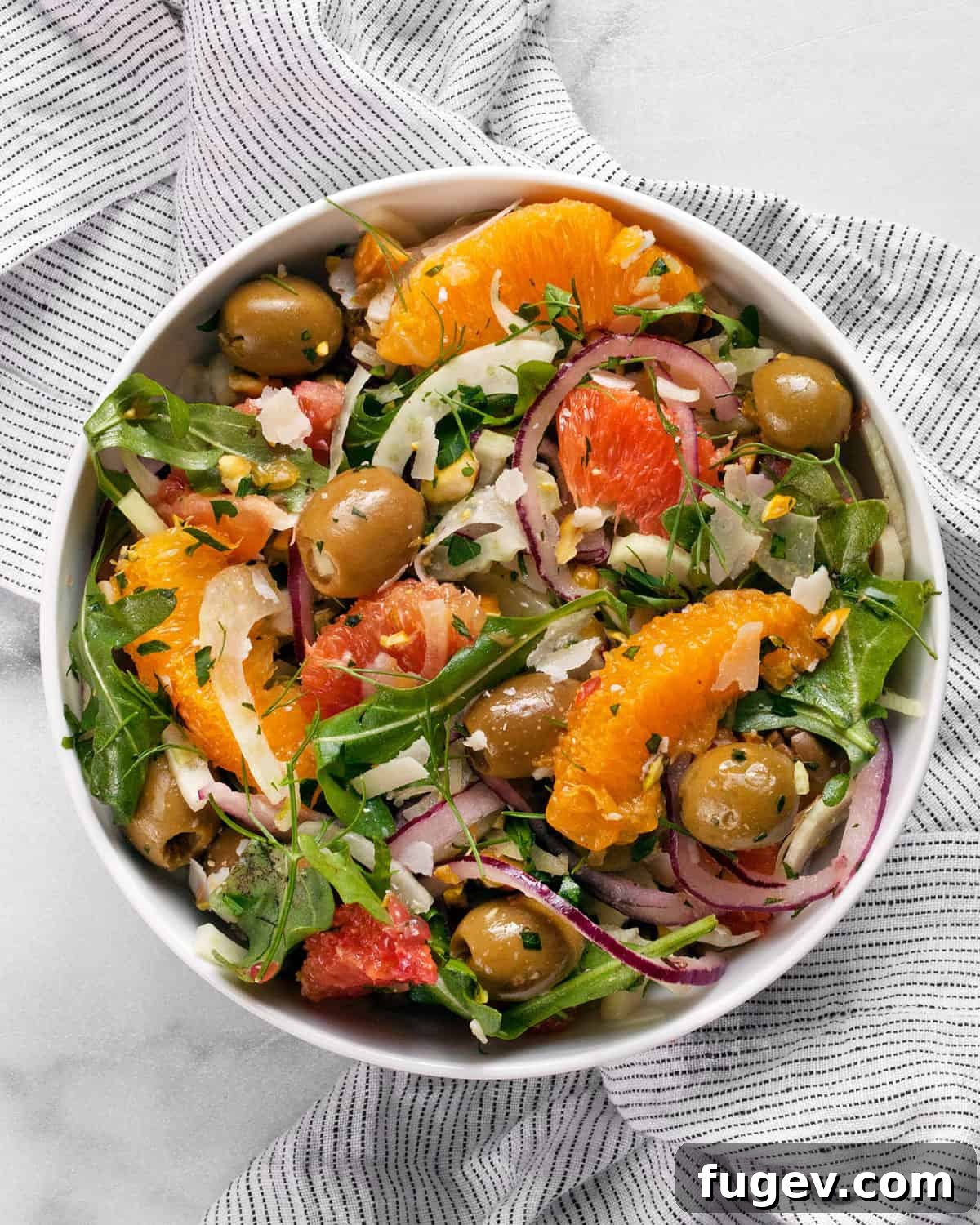
Table of Contents
- Why This Fennel Orange Salad is a Must-Try
- Understanding Fennel: The Star Ingredient
- The Key Ingredients for a Perfect Salad
- Delicious Optional Additions
- How to Master Cutting Fennel
- The Art of Segmenting Oranges
- Step-by-Step Guide to Making This Fennel Orange Salad
- Serving Suggestions and Pairings
- Leftovers & Storage Tips
- Frequently Asked Questions
- Explore More Citrus Salad Recipes
- Fennel Orange Salad Recipe Card
Why This Fennel Orange Salad is a Must-Try
This orange salad recipe isn’t just another dish; it’s an experience. It offers a masterful balance of savory and sweet flavors, creating a harmonious profile that tantalizes the taste buds. Beyond taste, it boasts an incredible variety of textures—from the satisfying crunch of thinly sliced fennel to the juicy bursts of citrus, the firm chew of olives, and the subtle snap of pistachios. Every forkful is an adventure, making you eager for the next.
Embrace culinary versatility and expand your salad horizons beyond traditional lettuce bases. While we adore salads with greens, limiting ourselves to them means missing out on a world of creative possibilities. This fennel orange salad proudly steps away from the leafy norm, showcasing how diverse and exciting salads can be. It’s proof that a truly great salad is defined by its thoughtful combination of ingredients, not just its green foundation.
Enjoy vibrant salads regardless of the season. Citrus fruits, including oranges, reach their peak during the colder winter months. This makes the Fennel Orange Salad a perfect antidote to gray days, bringing much-needed brightness and freshness to your table when you crave something lively and invigorating. It’s a delightful reminder that fresh, seasonal eating can be enjoyed all year round, even when bundling up in sweaters and coats.
Beyond its incredible flavor and appealing aesthetics, this salad is remarkably easy to prepare, making it ideal for both weeknight dinners and elegant gatherings. Its refreshing nature also means it pairs wonderfully with a variety of main courses, or it can even stand alone as a light, satisfying lunch.
Understanding Fennel: The Star Ingredient
Fennel, a striking vegetable belonging to the carrot family (though not a root vegetable itself), is a true culinary gem. Its distinctive white bulb grows above ground, crowned with long stalks adorned by feathery, dill-like fronds. What makes fennel truly special is its versatility: the entire plant is edible, from the crisp bulb to the delicate fronds and even the seeds. It boasts a unique, subtle anise or licorice-like flavor, which becomes milder and sweeter when cooked, but truly shines with a fresh, delicate aromatic note when eaten raw.
While every part of the fennel plant is usable, the crisp, pale green-white bulb is most commonly featured in recipes. Its layered structure allows for it to be thinly sliced with a sharp knife or shaved paper-thin with a mandoline, creating an incredible crunch and refreshing texture that is often compared to celery but is far less fibrous and more tender. This unique texture makes it a fantastic addition to salads, offering a refreshing counterpoint to other ingredients.
Beyond its captivating flavor and texture, fennel is also a powerhouse of nutrition. It’s remarkably low in calories yet packed with beneficial compounds. It stands out as an excellent source of vitamin C, essential for immune health, and is rich in dietary fiber, which aids digestion. Furthermore, fennel provides a good dose of potassium, important for blood pressure regulation, as well as folate, vitamin B6, and manganese. Incorporating fennel into your diet, especially in its raw form like in this salad, is a simple way to add significant nutritional value and a signature, refreshing taste to your meals.
When selecting fennel, look for bulbs that are firm, white, and unblemished. The stalks should be sturdy, and the fronds vibrant green and fresh-looking, without any signs of wilting. These indicators ensure you’re getting the freshest possible ingredient for your salad.
The Key Ingredients for a Perfect Salad
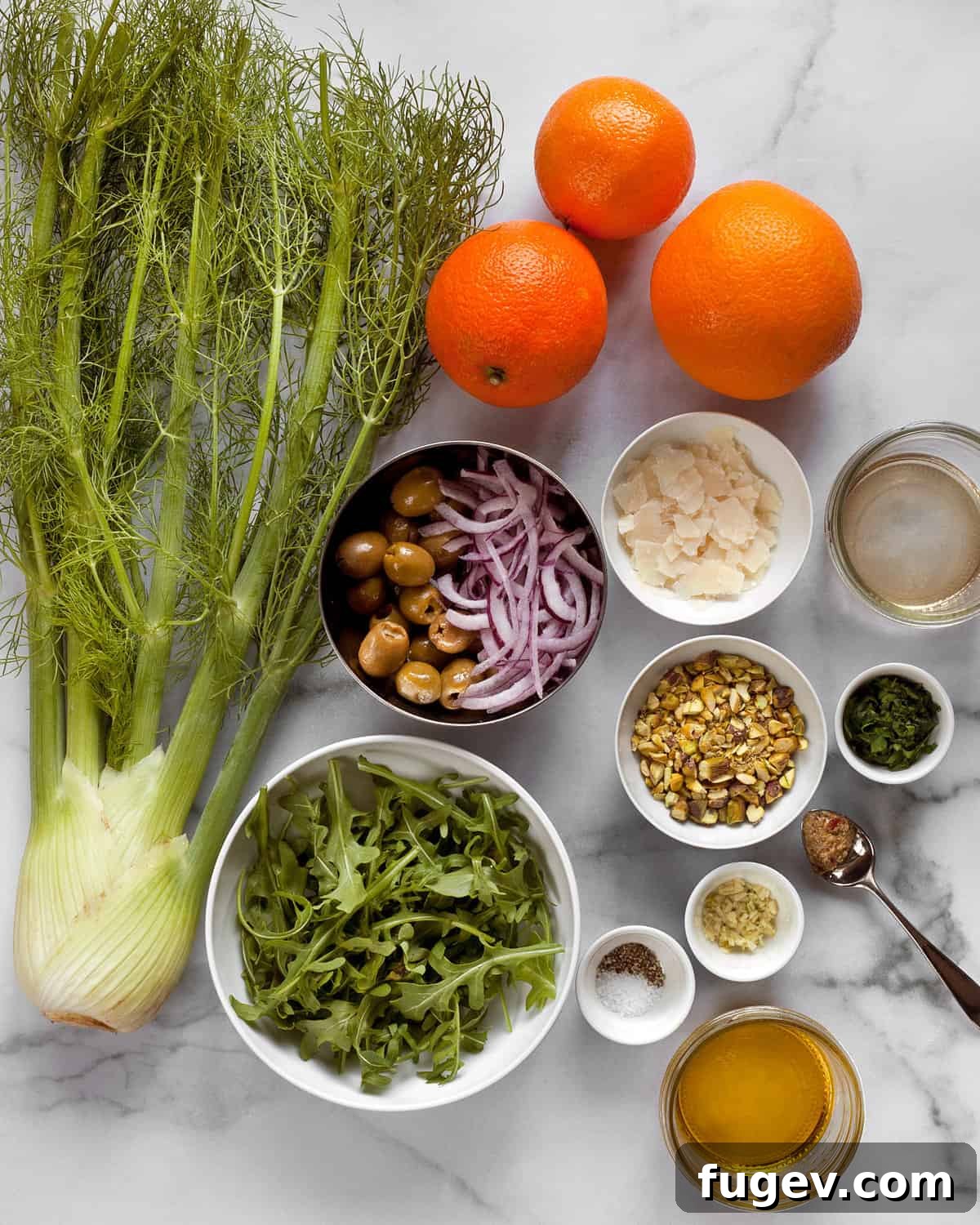
Crafting a truly memorable salad begins with selecting the finest ingredients. Here’s what you’ll need for this vibrant creation:
- Fennel: A single fennel bulb, with its stems and delicate fronds, goes a long way. When sliced thinly, its numerous layers yield a substantial amount, providing that signature crisp texture and subtle anise flavor. Ensure your fennel is firm and fresh for the best results.
- Oranges: The beauty of this salad is enhanced by using a variety of oranges. Navel oranges offer a classic sweet-tart flavor and are easy to segment. Cara Cara oranges bring a delightful sweetness with lower acidity and a beautiful pinkish flesh. Blood oranges, with their striking ruby-red color and tart-sweet complexity, add both visual drama and a unique flavor dimension. Combining these varieties creates layers of flavor and a stunning visual appeal that elevates the salad.
- Olives: For a perfect counterpoint to the citrus, green olives are ideal. Varieties like Castelvetrano, Cerignola, or Picholine offer a mild, buttery, or slightly fruity brine that complements the other ingredients without overpowering them. Always opt for pitted olives to save time and ensure a smoother eating experience.
- Arugula: While not a traditional lettuce-based salad, a generous handful of baby arugula provides a wonderful peppery bite and a touch of tender greens. Its slight bitterness beautifully contrasts the oranges’ sweetness and the olives’ saltiness. If you prefer more greens, feel free to increase the amount. Baby spinach or watercress can also serve as excellent substitutes, offering milder or more peppery notes, respectively.
- Red Onions: When thinly sliced, red onions add a sharp, pungent accent that marries wonderfully with the crisp fennel. Their vibrant purple hue also contributes to the salad’s overall visual appeal. For a milder onion flavor, you can briefly soak the slices in cold water or a touch of vinegar before adding them.
- Pistachios: These nutty gems introduce another layer of crunchy texture and a rich, earthy flavor. They are an excellent source of healthy fats, protein, and fiber. If pistachios aren’t available, pine nuts or slivered almonds make fantastic alternatives, offering similar textural contrast. Lightly toasting them beforehand can enhance their flavor even further.
- Parmesan cheese: Freshly shaved Parmesan, easily achieved with a vegetable peeler, adds a salty, umami depth to the salad. Its sharp, nutty notes are a delightful addition. For those following a vegan diet, this ingredient can be omitted, or you can use a high-quality vegan Parmesan substitute or a sprinkle of nutritional yeast for a cheesy flavor.
- Parsley: Fresh herbs are essential for brightening any salad. Chopped fresh parsley adds a clean, herbaceous note that ties the flavors together. For a different aromatic dimension, consider including minced chives for a subtle oniony taste, or a touch of fresh mint for extra refreshment.
- Orange vinaigrette: The dressing for this salad is truly special, leveraging the fresh juices collected from segmenting the oranges as its base. This homemade vinaigrette features a minced garlic clove for a gentle kick, whole grain mustard for emulsification and a tangy depth, white wine vinegar for acidity, high-quality olive oil for richness, and a seasoned touch of salt and black pepper. The use of fresh orange juice infuses the dressing with a natural sweetness and citrusy brightness that perfectly complements the salad.
Delicious Optional Additions
This fennel salad is remarkable as it is, but for those who love to experiment, these additions can elevate it further:
- Pomegranate seeds: These tiny jewels offer a delightful burst of sweet-tart flavor and a beautiful ruby-red color, adding an extra layer of freshness and crunch.
- Diced avocados: For a creamy, mellow counterpoint to the citrus’s acidity and the vinaigrette’s tang, diced ripe avocados are a perfect choice. Their rich texture adds another dimension to the salad.
- Grilled protein: For a more substantial meal, consider adding grilled chicken, flaky salmon, or even pan-seared shrimp. Plant-based options like roasted chickpeas or crumbled feta can also be fantastic.
- Toasted croutons: Add extra crunch and substance with homemade garlicky croutons.
How To Master Cutting Fennel
Preparing fennel for this salad is straightforward, and with a few simple steps, you can achieve perfectly thin, crisp slices. All you need is a sharp chef’s knife and a steady hand (or a mandoline for ultimate thinness).
- Trim the bulb: Begin by carefully trimming off the very top of the fennel bulb, where the stalks meet, and slice off the root end. Preserve the feathery green fronds; they make a beautiful and aromatic garnish for the finished salad. Discard the tough outer stalks if they are stringy or discolored.
- Halve the bulb lengthwise: Place the trimmed fennel bulb flat on your cutting board. Using your sharp knife, cut the bulb in half lengthwise, right through its core.
- Quarter the halves: Take each half and slice it lengthwise again, creating four sturdy sections from the original bulb. At this point, you can inspect for and remove any excessively tough outer layers or core pieces that might remain.
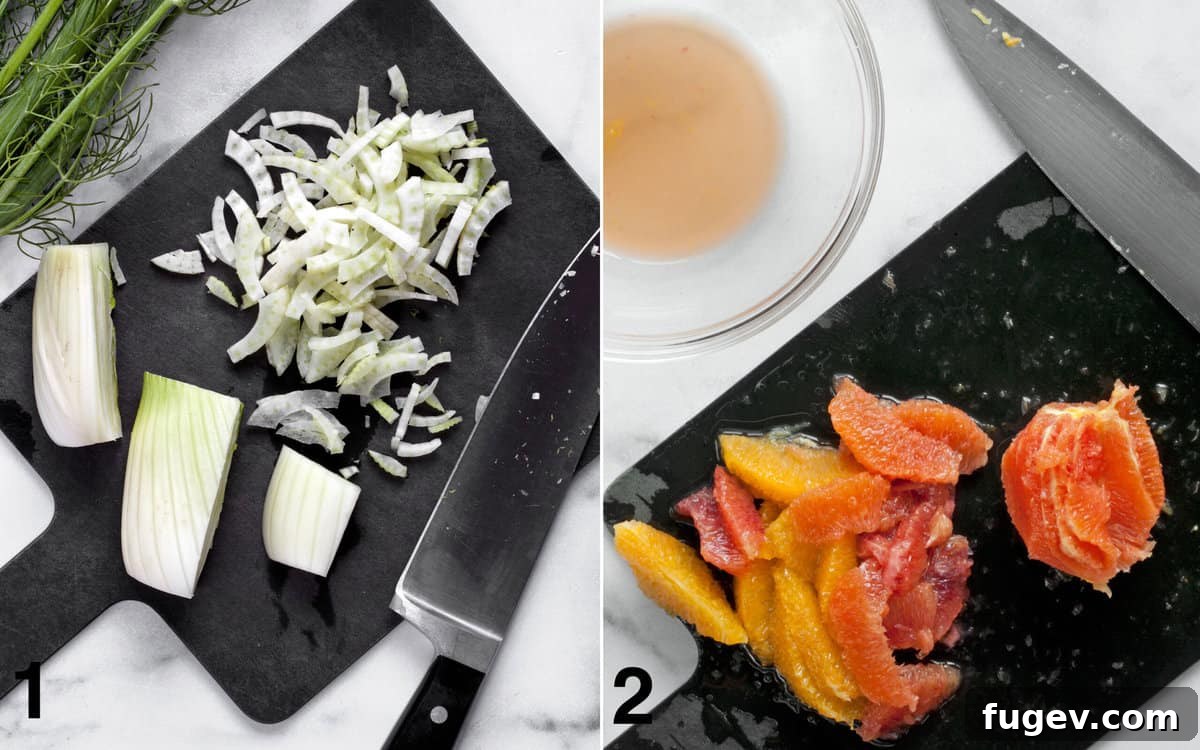
- Thinly slice crosswise: Lay each quarter flat on its cut side. Then, using your knife, thinly slice the fennel crosswise into delicate crescent-shaped pieces. The thinner you slice it, the more tender and delicate its flavor and texture will be in the salad. A mandoline slicer can achieve paper-thin results with ease, but always exercise caution when using one.
These finely sliced pieces will easily separate into individual layers, absorbing the vinaigrette beautifully and contributing a delightful crunch to every bite.
The Art of Segmenting Oranges
Segmenting an orange, also known as “supreming” (pronounced su-prem) citrus, is a technique that removes the peel, bitter white pith, and membranes, leaving behind only the juicy, tender fruit segments. While it might seem intimidating at first, it’s a skill that vastly improves the eating experience of citrus in salads, ensuring every bite is pure, unadulterated flavor. With a little practice, you’ll master it in no time.
- Prepare the orange: Start by trimming off both the top and bottom ends of the orange. You want to expose a bit of the flesh on both sides, creating flat surfaces. This helps stabilize the orange on your cutting board.
- Remove the peel and pith: Place one of the flat ends of the orange on your cutting board. Using a sharp paring knife or a small chef’s knife, carefully slice downwards, following the natural curve of the fruit, to remove the peel and the bitter white pith. Work your way around the entire orange, removing all traces of the white pith. If you miss any, go back with your knife and carefully trim it away. The goal is to expose only the vibrant orange flesh.
- Segment the fruit: Hold the peeled orange in your hand, ideally over a small bowl to catch all the precious juices (which will form the base of your vinaigrette!). Carefully insert your knife along one side of a membrane, slicing inwards towards the center of the orange until you reach the next membrane. Then, angle your knife and slice outwards, releasing the segment. Repeat this process for each segment, cutting between the membranes. You’ll be left with a membrane skeleton and a bowl full of beautiful, juicy orange segments.
The resulting segments are not only visually appealing but also offer a superior texture and flavor, free from any bitterness, making them perfect for this vibrant salad.
Step-by-Step Guide to Making This Fennel Orange Salad
Bringing this stunning salad to life is a straightforward process, focusing on fresh ingredients and simple assembly. Follow these steps for a perfect result:
1. Prepare the fennel. Using the technique described above, thinly slice the fennel bulb crosswise. Ensure the slices are as delicate as possible to enhance their crispness and mild flavor. Remember to reserve the beautiful green fronds for garnishing the finished salad.
2. Segment the oranges. Following the segmentation instructions, carefully cut out each juicy orange segment. As you work, hold the oranges over a small bowl to diligently catch all the escaping juices. These precious citrus juices will form the foundation of your bright and zesty vinaigrette.
3. Whisk the vinaigrette. In the small bowl containing the reserved orange juice, add the minced garlic clove, whole grain mustard, white wine vinegar, olive oil, kosher salt, and freshly ground black pepper. Whisk all the ingredients together vigorously until they are well combined and the dressing is emulsified. Taste and adjust seasonings as needed, aiming for a perfect balance of sweet, tart, and savory.
4. Combine the salad ingredients. In a large mixing bowl, gently combine the thinly sliced fennel, the prepared orange segments, pitted green olives, fresh baby arugula, chopped pistachios, shaved Parmesan cheese, thinly sliced red onions, and chopped fresh parsley. These ingredients create a beautiful palette of colors and textures.
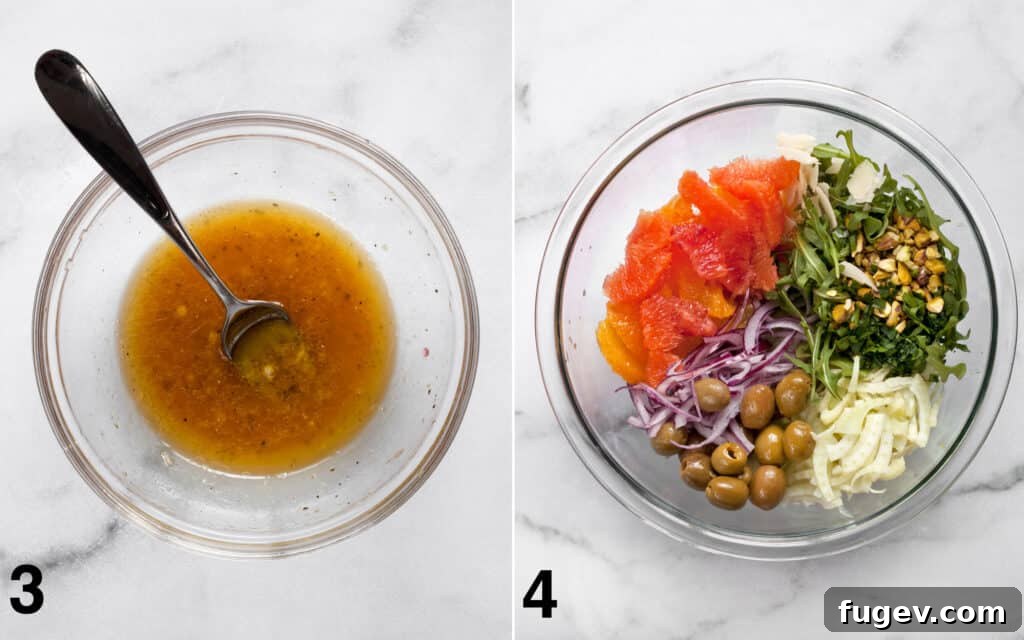
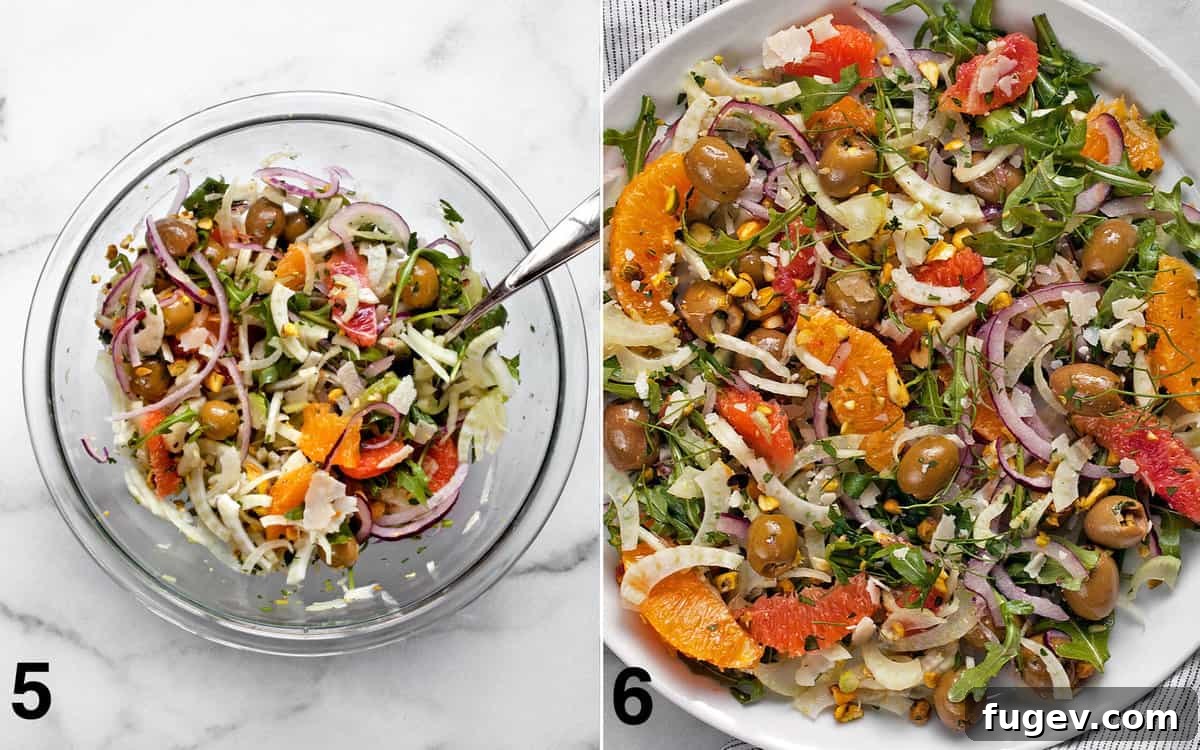
5. Dress the salad. Drizzle the freshly made orange vinaigrette over the combined salad ingredients. Toss gently but thoroughly to ensure all components are evenly coated with the dressing. Be careful not to over-mix, which can bruise the more delicate ingredients.
6. Garnish and serve. Transfer the dressed salad to a serving platter or individual bowls. Finish by artfully scattering the reserved fennel fronds over the top. The fronds not only add a delicate herbal aroma but also a touch of elegance to the presentation. Serve immediately to enjoy the freshest flavors and textures.
Serving Suggestions and Pairings
Inspired by the traditional Sicilian fennel and orange salad, this vibrant dish is incredibly versatile and pairs beautifully with a range of cuisines. Its refreshing and light profile makes it an excellent accompaniment to richer dishes or a delightful light meal on its own.
Naturally, it complements Italian cuisine exceptionally well. Consider serving it alongside pasta dishes that feature bright, fresh flavors such as Lemon Garlic Mushroom Spaghetti, Chickpea Pasta with Spinach, Lemon Pepper Spaghetti, or Broccoli Pesto Penne. The common thread of garlic and fresh lemon juice in these dishes will create a harmonious dining experience with the salad.
Beyond Italian, this salad also shines next to grilled fish, roasted chicken, or succulent pork tenderloin. Its acidity cuts through richness, cleansing the palate with every bite. For a Mediterranean-inspired spread, serve it alongside hummus, pita bread, and grilled halloumi. Its colors also make it a fantastic addition to any holiday table, adding a fresh contrast to heavier festive fare.
For a complete experience, consider pairing this salad with a crisp, dry white wine like Sauvignon Blanc, Pinot Grigio, or a light rosé. The wine’s acidity will echo the citrus in the salad, enhancing both.
Leftovers & Storage Tips
This Fennel Orange Salad is undoubtedly at its best when enjoyed immediately after preparation, allowing you to experience the full crispness of the fennel and the vibrant freshness of the greens. However, if you find yourself with leftovers, proper storage can help maintain its quality for a short period.
You can store the assembled salad in an airtight container in the refrigerator for up to 2 days. The key to preserving its freshness and preventing sogginess is to avoid dressing the entire salad if you anticipate having leftovers. The juices from the citrus and the acidity of the vinaigrette can cause the arugula and thinly sliced fennel to soften over time.
For optimal freshness, it is highly recommended to keep any extra vinaigrette in a separate, tightly sealed jar in the refrigerator. When you’re ready to enjoy the leftovers, simply toss the desired portion of salad with a fresh drizzle of dressing. This method ensures that each serving retains its crisp texture and lively flavor, making your second-day salad almost as delightful as the first.
Frequently Asked Questions
Fennel has a distinctive, delicate licorice or anise-like flavor. When eaten raw, it’s crisp and refreshing with a subtle sweetness and aromatic quality. Many compare its taste profile to tarragon. This unique flavor mellows and sweetens when fennel is cooked, but in its raw state, it adds a bright, aromatic dimension to salads.
For raw salads, the best way to prepare fennel is to slice it very thinly. This can be achieved with a sharp chef’s knife, aiming for almost paper-thin slices. For even more consistent and delicate results, using a mandoline slicer is highly recommended. Thin slices ensure a tender crunch and prevent the fennel from being overly fibrous or overpowering.
You can certainly use a single variety of orange, but for a truly spectacular salad in terms of both color and layered flavor, a mix is best. Blood oranges are prized for their unique sweet-tart flavor and stunning ruby-red flesh, which makes a dramatic visual impact. Navel oranges are widely available, sweet, and moderately tart, making them a reliable and classic choice. Cara Cara oranges are known for their distinct sweetness, lower acidity, and beautiful pinkish-orange flesh. Combining these offers a delightful spectrum of flavors and visual appeal.
While best enjoyed fresh, you can prepare some components ahead of time. Slice the fennel and onions, and segment the oranges, storing them separately in airtight containers in the refrigerator. Prepare the vinaigrette and store it in a separate jar. Combine all ingredients and dress the salad just before serving for optimal freshness and texture.
As written, this salad is vegetarian due to the Parmesan cheese. To make it vegan, simply omit the Parmesan cheese or substitute it with a plant-based alternative like nutritional yeast or a vegan Parmesan product.
Explore More Citrus Salad Recipes
If you love the bright, refreshing flavors of citrus in salads, be sure to try these other delightful recipes:
- Arugula Salad with Lemon Vinaigrette
- Citrus Salad with Oranges & Grapefruit
- Mandarin Orange Kale Salad
- Roasted Beet Salad with Oranges & Pears
This salad is also a highlighted feature in our comprehensive guide to easy salad recipes for every season, offering fresh ideas to inspire your culinary creations throughout the year.
Did you try this irresistible fennel orange salad recipe? We’d love to hear your thoughts! Please leave a rating and comment below to share your experience. Thank you!
Fennel Orange Salad
Paige Adams
20 mins
20 mins
4
This simple fennel salad makes the most of citrus season with oranges, green olives, baby arugula, pistachios and fresh herbs, creating a perfectly balanced and refreshing dish.
Ingredients
For the Salad
- 1 fennel bulb, with stems and fronds (fronds reserved for garnish)
- 3 oranges (a mix of navel, cara cara, or blood oranges for best flavor and color)
- 1/2 cup pitted green olives (such as Castelvetrano or Cerignola)
- 1 cup baby arugula
- 1/4 cup chopped pistachios (lightly toasted, optional)
- 1/4 cup shaved Parmesan cheese (omit for vegan)
- 1/2 small red onion, thinly sliced
- 1 tablespoon chopped fresh parsley
For the Vinaigrette
- 1 garlic clove, minced
- 1 teaspoon whole grain mustard
- 1 tablespoon white wine vinegar
- 3 tablespoons olive oil
- 1/2 teaspoon kosher salt
- 1/4 teaspoon black pepper
- Orange juice collected from segmenting oranges (about 2-3 tablespoons)
Instructions
- Prepare Fennel: Trim off the top and bottom of the fennel bulb, reserving the fronds for garnish. Halve the bulb lengthwise, then cut each half lengthwise again to create quarters. Thinly slice the fennel quarters crosswise.
- Segment Oranges: Slice off the tops and bottoms of the oranges. Carefully cut off the peel and white pith, following the curve of the fruit. Working over a small bowl to catch the juices, slice between the membranes to cut out individual orange segments.
- Make Vinaigrette: In the bowl with the collected orange juice, whisk in the minced garlic, whole grain mustard, white wine vinegar, olive oil, kosher salt, and black pepper until well combined.
- Combine Salad: In a large bowl, combine the thinly sliced fennel, orange segments, pitted green olives, baby arugula, chopped pistachios, shaved Parmesan, thinly sliced red onion, and chopped parsley.
- Dress Salad: Drizzle the prepared vinaigrette over the salad ingredients. Toss gently to ensure all components are evenly coated.
- Garnish & Serve: Top the finished salad with the reserved fennel fronds for an elegant presentation and extra aroma. Serve immediately.
Notes
The oranges can all be the same variety, or you can use a mix for enhanced color and flavor.
You can substitute the pistachios with pine nuts or chopped almonds for a similar crunch.
Baby spinach can be used instead of arugula if you prefer a milder green.
For best results, this salad is recommended to be eaten the day you make it. If storing leftovers, keep the vinaigrette separate from the salad ingredients and dress just before serving to maintain freshness and texture. Leftovers can be stored in an airtight container in the fridge for up to 2 days.
Nutrition
Calories: 262kcal | Carbohydrates: 21g | Protein: 6g | Fat: 19g | Saturated Fat: 3g | Polyunsaturated Fat: 3g | Monounsaturated Fat: 12g | Cholesterol: 5mg | Sodium: 711mg | Potassium: 568mg | Fiber: 6g | Sugar: 13g | Vitamin A: 645IU | Vitamin C: 63mg | Calcium: 156mg | Iron: 1mg
Nutrition information is an approximation calculated automatically and should only be used as a guideline.
Additional Info
Salad
Mediterranean
Did you make this recipe?
Mention @lastingredient on Instagram and tag it #lastingredient!