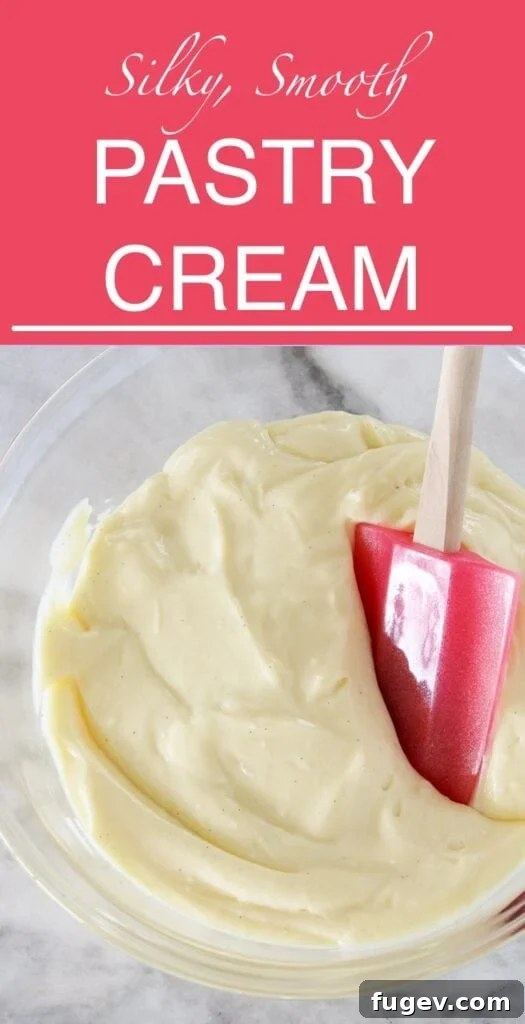
The Ultimate Vanilla Bean Pastry Cream Recipe (Crème Pâtissière)
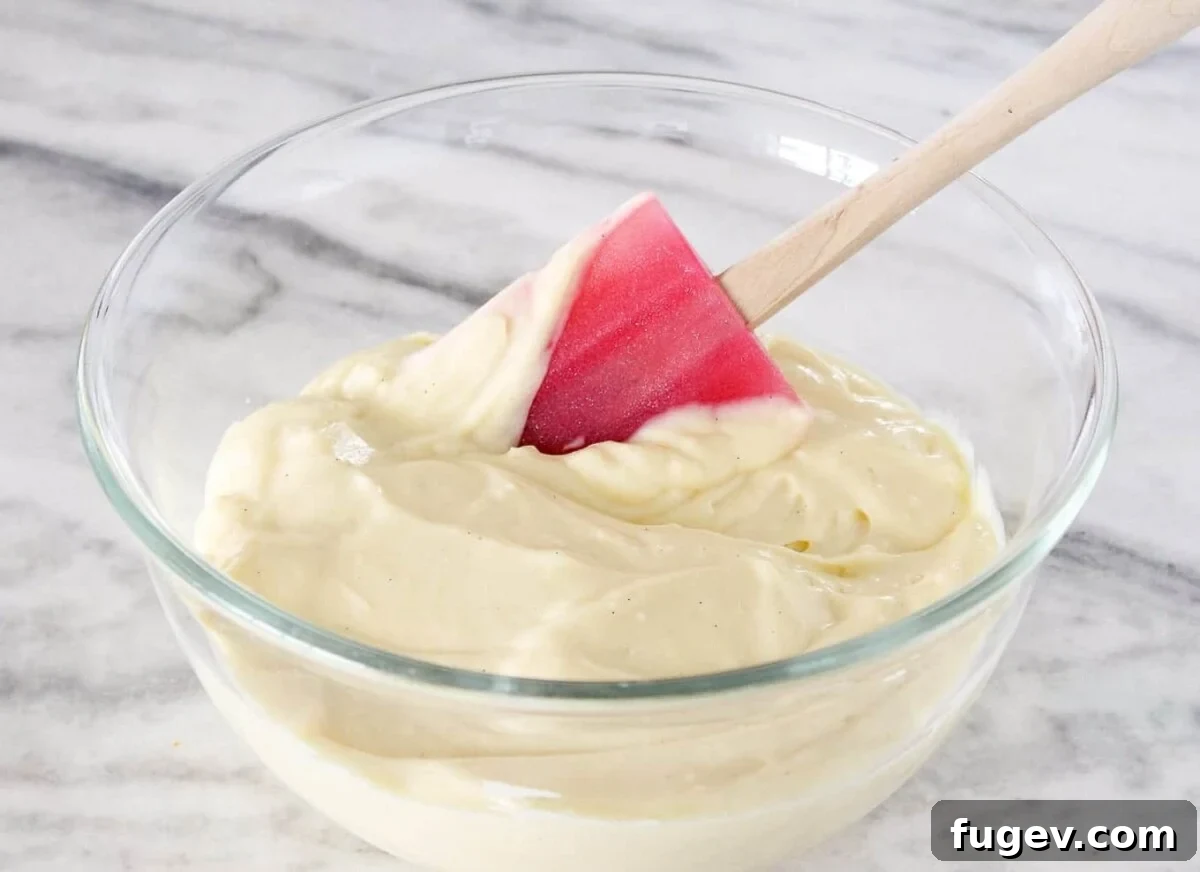
A professional pastry chef’s guide to creating the perfect vanilla Pastry Cream Recipe, also known as Crème Pâtissière. This versatile custard is a cornerstone of classic French patisserie, essential for elevating countless desserts. Whether you’re filling delicate tarts, airy cream puffs, elegant éclairs, or rich Boston cream pies, mastering this recipe will transform your baking. Learn the secrets to achieving a silky-smooth texture and rich flavor every time.
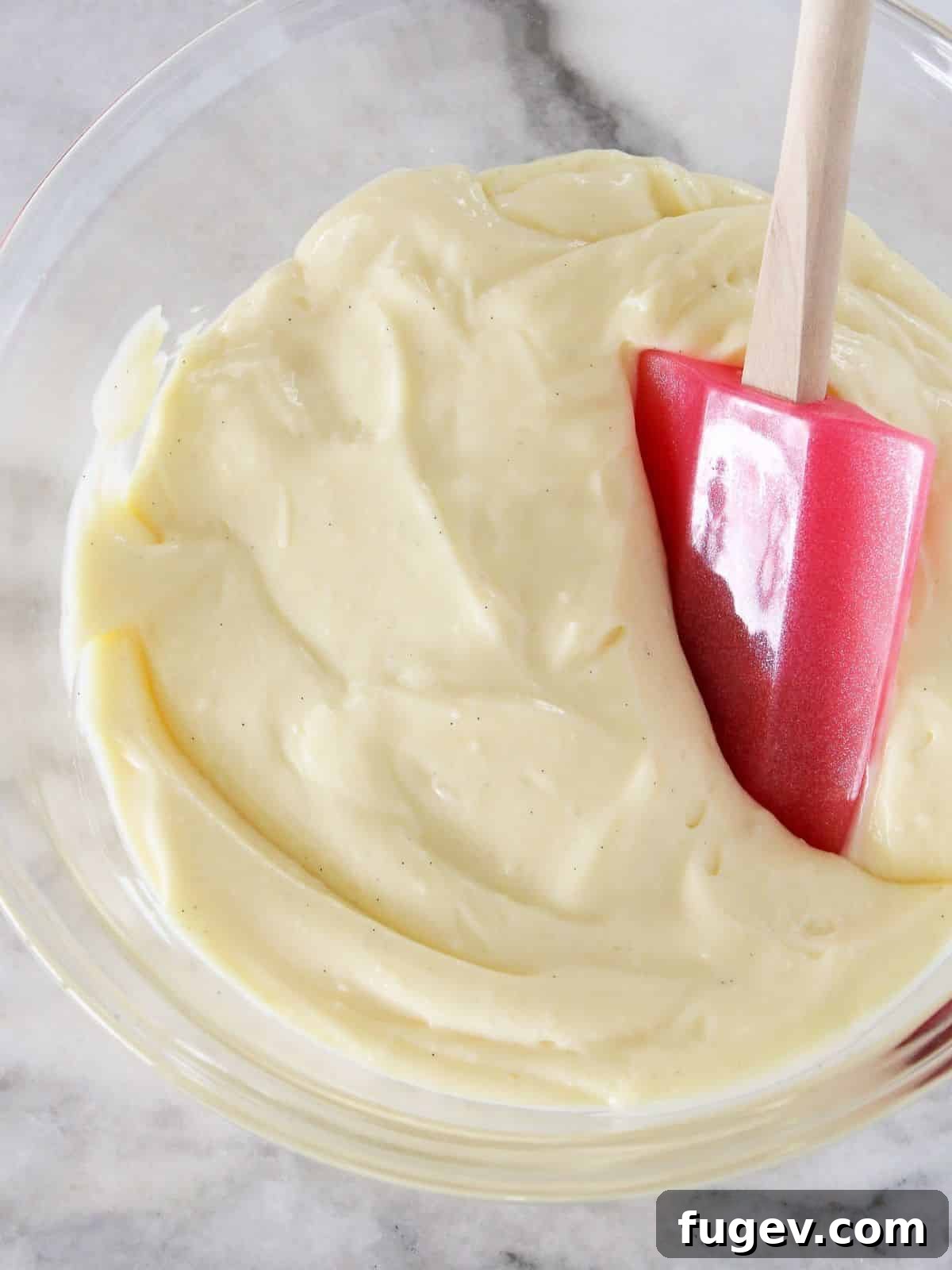
Pastry cream is not just a recipe; it’s a foundational technique in the culinary world. Its creamy texture and adaptable flavor profile make it an indispensable component for any baker. By understanding the core principles, you can infuse it with various flavors or modify its consistency to suit a wide array of exquisite desserts. Crème Pâtissière seamlessly integrates into diverse pastry creations, offering endless possibilities for culinary exploration.
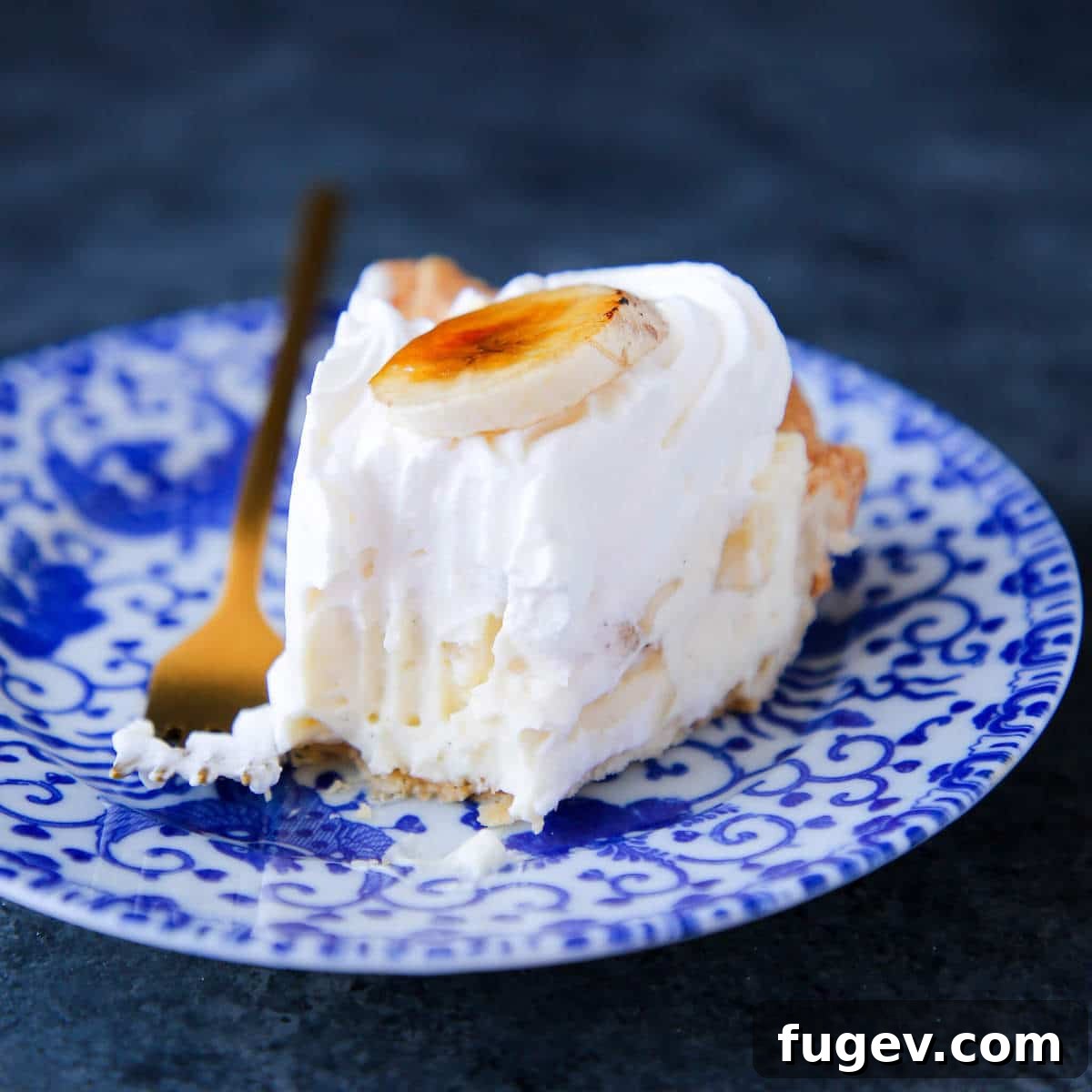
Imagine filling delicate mille-feuilles, crafting classic banana cream pies, or enhancing pithiviers when mixed with a luscious almond cream. This recipe also serves as the base for lighter, airier creams. Lighten it with whipped cream to create crème légère, ideal for fillings in fruit tarts and éclairs. Explore other variations like crème Chiboust for a mousse-like experience or crème mousseline for a richer, butter-enhanced filling in cakes.
If you’ve recently invested in premium vanilla beans (a well-deserved treat for any passionate baker!), don’t let any go to waste. Maximize their exquisite flavor by trying more vanilla bean recipes like a velvety crème anglaise, a classic vanilla bean crème brûlée, indulgent vanilla bean ice cream, or fluffy vanilla bean marshmallows. Every speck of that precious bean contributes to an unparalleled sensory experience!
Why This is the Best Pastry Cream Recipe!
- A Pastry Chef’s Masterpiece. This recipe isn’t just a collection of ingredients; it’s a meticulously developed formula by a professional pastry chef. It ensures the ideal balance of richness, sweetness, and stability, offering a flawless foundation for any dessert. You’ll achieve a consistent texture and superior flavor that stands out, making it an invaluable addition to any home baker’s repertoire.
- Unleash Endless Flavor Customization! Beyond its classic vanilla profile, this pastry cream recipe is designed for effortless adaptation. It’s not only easily scalable for any batch size, but it also welcomes a myriad of flavor transformations. From folding in melted dark chocolate for a rich cocoa indulgence to infusing the milk with aromatic spices like cinnamon or delicate floral notes, the possibilities are limited only by your imagination. Experiment with fruit purees, citrus zests, or even a hint of liqueur to create bespoke dessert experiences.
- Perfectly Balanced Ratios for Exquisite Texture. The precise proportions of sugar, eggs, and cornstarch are the secret to this recipe’s success. Just the right amount of sugar ensures a delightful sweetness without overpowering other flavors, while also contributing to the cream’s silky mouthfeel and preventing graininess. The combination of whole eggs and egg yolks provides essential fat for richness and robust thickening power, resulting in a luxurious, velvety consistency. Cornstarch acts as a crucial stabilizer, binding all the components together, preventing separation, and guaranteeing a smooth, lump-free finish that holds its shape beautifully. This meticulous balance is what sets this professional recipe apart.
Professional Tips for Making Perfect Pastry Cream
- Divide the Sugar for Optimal Tempering. A key professional technique involves splitting the sugar between the milk mixture and the eggs. Adding some sugar to the milk helps prevent it from scorching on the bottom of the pot, ensuring even heating. More importantly, whisking sugar into the eggs before tempering raises their coagulation temperature, creating a protective barrier that significantly reduces the risk of the eggs scrambling when the hot milk is introduced. This vital step ensures a smooth, lump-free custard base.
- Embrace the Whisk – Keep Stirring! For consistently smooth pastry cream, continuous whisking is non-negotiable. From blanching the eggs with cornstarch to gently tempering them with hot milk, and finally cooking the custard to its perfect thickness, constant agitation is required. This prevents lumps from forming, ensures even cooking, and helps emulsify the ingredients, yielding that desired silky texture. Invest in a comfortable, sturdy whisk; it will be your best friend throughout this process.
- Opt for a Heavy-Bottomed Pot. Using a heavy-bottomed saucepan is a small but significant detail. Its superior heat distribution prevents hot spots, which are notorious for causing milk to scorch or stick to the bottom. This added layer of protection gives you greater control over the cooking temperature, allowing the milk to come to a gentle boil without burning, safeguarding your delicate custard base.
- Master Your Mise en Place. As with all stirred custards like pastry cream or lemon curd, preparedness is paramount. Before you even light the stove, measure all your ingredients, have your bowls and whisk ready, and clear your workspace. These recipes require swift, fluid transitions between steps, and having everything prepped (mise en place) eliminates last-minute scrambling, greatly reducing the chances of errors and ensuring a smooth, stress-free cooking experience.
Ingredients for Perfect Crème Pâtissière
Each ingredient plays a crucial role in the texture, flavor, and stability of your vanilla bean pastry cream. Understanding their function will help you achieve consistent, professional results.
- Whole Milk: Whole milk is the primary liquid component, contributing richness and a creamy mouthfeel due to its fat content. While whole milk offers the best flavor and texture, you can experiment with lower-fat alternatives or plant-based milks. Be aware that using milk with less fat might result in a slightly thinner cream and may slightly alter the overall richness, so adjust expectations accordingly.
- Vanilla Bean: The star of this recipe, vanilla beans deliver an unparalleled, complex aroma and flavor that vanilla extract simply cannot replicate. While they are among the most expensive ingredients, their impact is undeniable. Make sure to split the bean lengthwise and scrape out every tiny seed. Don’t discard the scraped pods! They can be saved and reused to infuse sugar, milk for other custards like crème anglaise, ice cream bases, or vanilla pudding, maximizing your investment.
- Granulated Sugar: Sugar does more than just sweeten. In this recipe, it plays multiple critical roles: it tenderizes the egg proteins, preventing them from becoming rubbery; it helps protect the milk from scorching during heating; and crucially, when whisked with the eggs, it helps to temper them, protecting them from curdling when the hot milk is added.
- Large Eggs: Whole eggs are integral thickeners in stirred custards. Their proteins coagulate when heated, providing structure and body. Whisking them thoroughly with sugar and cornstarch first is known as “blanchir” – it helps break up the proteins, incorporates air, and prepares them for the tempering process, making them more resilient to heat.
- Egg Yolks: The addition of extra egg yolks further enhances the richness, color, and thickening power of the pastry cream. Yolks contribute more fat than whole eggs without the added moisture of egg whites, resulting in an exceptionally thick, luxurious, and intensely flavored custard. However, too many yolks can lead to an undesirable “eggy” flavor, so the ratios in this recipe are carefully balanced.
- Cornstarch: Cornstarch is the primary starch thickener in this recipe, working alongside the eggs to create a stable, smooth custard. It binds all the ingredients together as they cook, preventing separation and ensuring the pastry cream holds its shape beautifully. Unlike flour, cornstarch produces a clearer, silkier, and less opaque finished product, which is ideal for classic pastry cream.
For precise quantities and detailed instructions, please refer to the comprehensive recipe card below.
Flavorful Variations for Your Pastry Cream
One of the true joys of crème pâtissière is its adaptability. With a few simple tweaks, you can transform the base vanilla flavor into something entirely new and exciting.
- Flavor by Infusion: The easiest way to impart complex flavors is by infusing the milk. Add whole spices like cinnamon sticks, star anise, or crushed cardamom seeds to the milk as it heats. For a brighter note, try fresh ginger slices, lemon or orange zest (remove before tempering), or even a few sprigs of fresh mint. Allow these ingredients to steep in the hot milk for 10-15 minutes off the heat before straining them out and reheating the milk for the tempering process. You can also infuse coffee beans for a mocha pastry cream.
- Flavor by Adding Ingredients: Incorporating additional ingredients at various stages allows for even more customization.
- Chocolate Pastry Cream: For a rich chocolate version, simply pour the hot, finished pastry cream over finely chopped high-quality chocolate (dark, milk, or white) in a heatproof bowl. Let it sit for a minute, then whisk until the chocolate is fully melted and incorporated, creating a smooth, glossy chocolate cream.
- Matcha Pastry Cream: Whisk 1-2 tablespoons of ceremonial grade matcha powder directly into the milk before heating, ensuring it’s fully dissolved to avoid lumps. This vibrant green tea flavor was a winning move on Beat Bobby Flay!
- Fruit Purees & Citrus: For fruit-flavored pastry creams, consider folding in a concentrated fruit puree (e.g., raspberry, passion fruit) after the cream has cooled. For lemon pastry cream, while you can infuse zest, lemon juice is generally preferred for a cleaner flavor. I highly recommend using my easy lemon curd recipe and then folding it into cooled pastry cream for a vibrant lemon crème légère. Don’t forget to check out my caramel crème pâtissière recipe for another delightful inspiration!
- Crème Alternatives for Diverse Textures: Pastry cream is a fantastic base for creating lighter or richer fillings.
- Crème Légère (Diplomat Cream): This is pastry cream lightened by gently folding in homemade whipped cream after the pastry cream has cooled. It creates an airy, fluffy texture perfect for fillings in my banana cream pie recipe, fruit tarts, or trifles. For added stability, especially in éclairs or complex tarts, a crème diplomat incorporates a small amount of gelatin to prevent weeping.
- Crème Mousseline: For an incredibly rich, stable, and pipeable filling, crème mousseline is made by incorporating softened unsalted butter into cooled pastry cream. The butter is whipped in until the mixture is light and fluffy, creating a luxurious cream ideal for layering in cakes, such as my classic vanilla cake, or filling choux pastries.
- Crème Chiboust: An even lighter alternative, crème Chiboust blends pastry cream with Italian meringue, resulting in an incredibly airy, cloud-like cream. It’s traditionally used in desserts like the Saint-Honoré cake, offering a delicate balance of richness and lightness.
Smart Substitutions for Your Pastry Cream
While this recipe is optimized for specific ingredients, some clever substitutions can still yield delicious results:
- Embrace Alternative Milks: This pastry cream recipe remarkably adapts to various alternative milks. One of my personal favorites is full-fat coconut milk. When using it, be aware that the coconut flavor will be prominent, so it’s best to lean into it intentionally and pair it with complementary flavors like pineapple or lime for a tropical twist. Almond milk or oat milk can also be used, though they may result in a slightly less rich or thick cream due to lower fat content.
- Vanilla Extract or Paste for Vanilla Bean: If vanilla beans are out of reach or you’re short on time, you can substitute with high-quality vanilla extract or vanilla bean paste. For this recipe, use approximately 1.5 to 2 teaspoons of pure vanilla extract or vanilla bean paste. I highly recommend using a reputable brand like Nielsen-Massey for the best flavor outcome, adding it at the very end of the cooking process, after the pastry cream has thickened and been removed from the heat.
- Cornstarch Alternatives: While cornstarch is preferred for its clear, silky finish, in a pinch, you can use all-purpose flour. The substitution ratio is typically 1:2 (1 part cornstarch for 2 parts flour by weight). Be aware that flour can make the pastry cream slightly opaque and may impart a subtle “floury” taste if not cooked out sufficiently.
How to Make Crème Pâtissière (Step-by-Step Guide)
Follow these detailed instructions to achieve perfectly smooth, rich pastry cream every single time. More precise measurements can be found in the recipe card below.
Making Pastry Cream:
- Prepare the Milk Mixture: Carefully scale the whole milk and half of the granulated sugar into a medium-sized, heavy-bottomed pot. The heavy bottom helps prevent scorching.
- Infuse with Vanilla: Take half a vanilla bean, split it lengthwise with a sharp knife, and use the back of the knife to scrape out all the tiny, fragrant seeds. Add these vanilla seeds to the milk and sugar mixture in the pot, whisking them in thoroughly.
- Heat the Milk: Place the pot over medium heat and bring the milk mixture to a gentle boil, stirring occasionally to dissolve the sugar and prevent sticking. Watch carefully; you’re looking for small bubbles appearing around the edges and steam rising.
- Prepare the Egg Mixture (Blanchir): While the milk is heating, combine the whole egg, two egg yolks, the remaining half of the granulated sugar, and the cornstarch in a separate medium-sized, heatproof bowl. Whisk vigorously until the mixture is pale yellow, smooth, and slightly thickened – this process is called “blanchir.” This step breaks down egg proteins and incorporates air, making the eggs more stable and less likely to curdle when heated.
- Temper the Eggs: Once the milk has reached a boil, carefully and slowly pour approximately one-third to one-half of the hot milk mixture into the prepared egg mixture, whisking continuously and vigorously. This gradual addition raises the temperature of the eggs gently, preventing them from cooking too quickly. Continue pouring the remaining hot milk into the tempered egg mixture, whisking constantly until fully combined. It’s crucial to ensure all the milk is incorporated to properly temper the eggs and prevent any uncooked egg pockets.
- Cook the Pastry Cream: Pour the entire tempered mixture back into the heavy-bottomed pot. Return the pot to medium-low heat. Continue to whisk constantly and thoroughly, ensuring your whisk reaches every part of the bottom and sides of the pan. This constant agitation is vital to prevent burning, sticking, and the formation of lumps. Scrape down the edges frequently.
- Thicken and Boil: Continue cooking and whisking until the pastry cream visibly thickens and begins to boil. Once it starts boiling, set a timer for precisely 1 minute (or watch the clock) and continue whisking vigorously throughout this minute. Boiling for this duration is essential to properly activate the cornstarch, ensuring maximum thickening power, and to cook out any raw starch flavor or mouthfeel, leaving you with a clean, delicious taste.
- Cooling the Pastry Cream: Pour the hot pastry cream onto a plastic-lined sheet tray or into a shallow baking dish. The large surface area helps it cool quickly and evenly. Immediately cover the surface of the pastry cream directly with plastic wrap, pressing it down to eliminate any air pockets. This crucial step prevents a “skin” from forming as it cools. You can poke a few small holes in the plastic wrap to allow steam to escape. Cool completely in the refrigerator for at least 3-4 hours, or preferably overnight, until thoroughly chilled and firm.
Chef’s Tip: For an even deeper, more pronounced vanilla flavor, add the scraped vanilla bean pod directly to the milk mixture as it heats. Remember to remove it before tempering. The pod can also be rinsed, dried, and saved to infuse sugar or other custards like crème anglaise, ensuring no flavor goes to waste.
Chef’s Tip: Before beginning the tempering process, place a damp kitchen towel underneath the bowl containing the egg mixture. This simple trick will anchor the bowl securely, allowing you to pour the hot milk smoothly with one hand while continuously whisking the eggs with the other, preventing spills and ensuring efficient tempering.
Troubleshooting Tip: If, despite your best efforts, your pastry cream starts to develop a few small lumps, immediately remove the pot from the heat and continue whisking vigorously. Often, the residual heat will help smooth out minor clumps. If major lumps persist, you can strain the finished cream, as mentioned in the next step.
Pro Tip for Perfection: If your pastry cream has any lingering small lumps or if you want an absolutely impeccable, silken texture, immediately after cooking, strain it through a fine-mesh strainer or fine-mesh sieve directly onto your prepared baking sheet.
How to Prepare Pastry Cream for Use:
Once chilled, pastry cream needs a little preparation before it’s ready to be used as a filling.
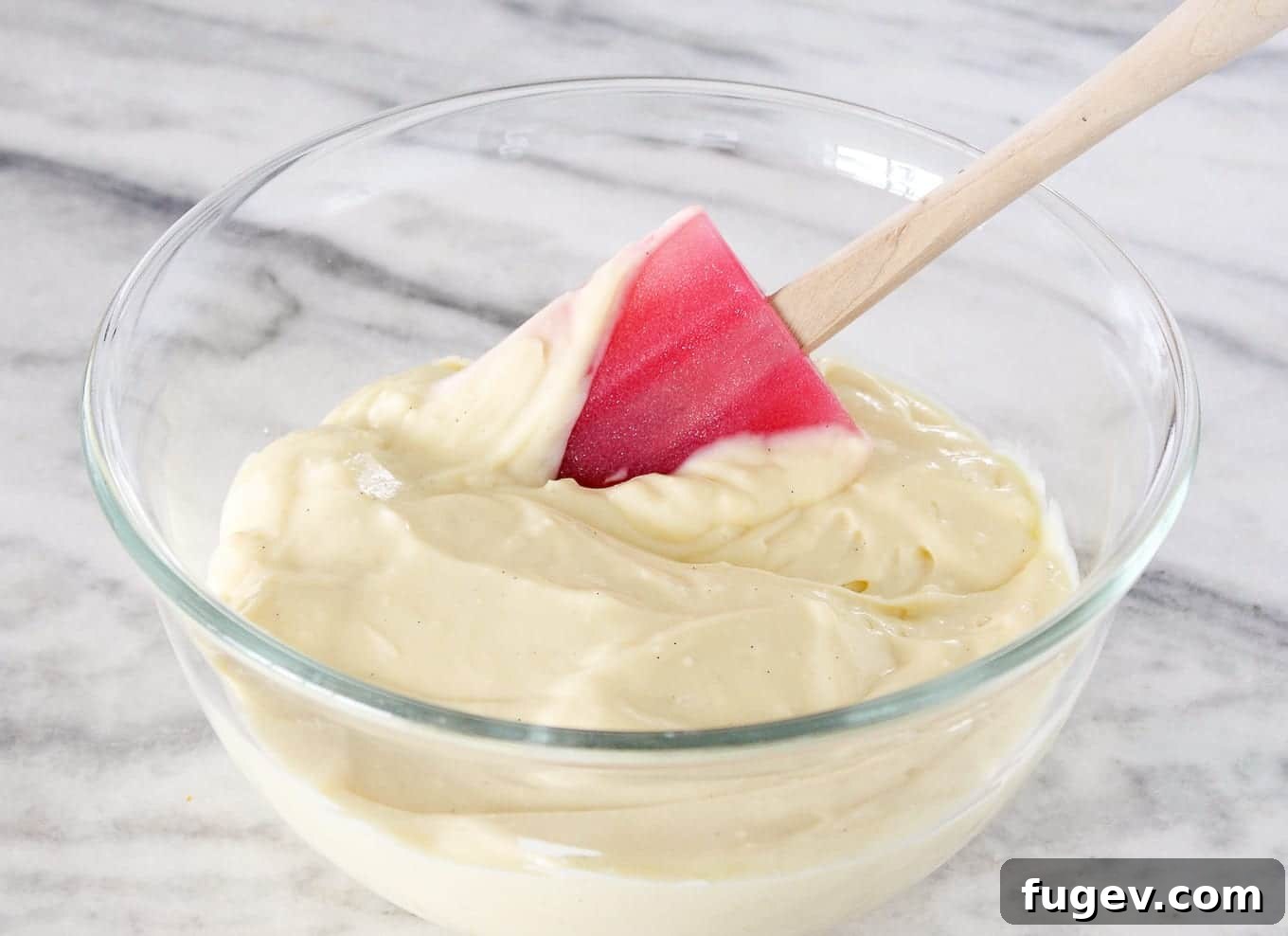
- “Refreshing” the Pastry Cream: Before using, you must “refresh” or “condition” the pastry cream. Chilling makes it quite firm. This process involves beating it vigorously to restore its smooth, silky texture. While refreshing won’t magically remove any existing lumps, it will transform the cream into a more pliable, appealing product that is much easier to work with and more delightful to eat.
- Whip Until Smooth: Transfer the desired amount of chilled pastry cream into the bowl of a stand mixer fitted with the paddle attachment. Begin beating on medium-high speed. The cream will initially appear stiff and chunky but will gradually become smooth, creamy, and spreadable. Be careful not to over-beat it; whisking for too long can cause the cornstarch to break down, resulting in a looser, less stable filling that may not hold its shape as desired. Stop once it’s smooth and homogeneous.
Chef Lindsey’s Expert Storage Tip
When storing prepared pastry cream, always ensure it is spread flat on a plastic-lined sheet tray or shallow dish, then covered tightly with plastic wrap directly touching its surface. Avoid storing it in a deep bowl, pastry bag, or ball jar for extended periods. When stored in a compact shape, pastry cream is more prone to “sweating,” which causes separation of its components. Keeping it flat and well-covered significantly slows down this process, preserving its emulsified texture and extending its freshness and shelf life.
Frequently Asked Questions About Pastry Cream
How do I properly store my pastry cream?
Store your pastry cream by spreading it flat on a baking sheet lined with plastic wrap, then cover the surface directly with more plastic wrap to prevent a skin from forming. This method slows separation and maintains its quality. Stored this way in the refrigerator, it will last beautifully for up to 5-7 days.
Can you freeze pastry cream?
I generally do not recommend freezing pastry cream. Upon defrosting, the delicate emulsion of sugar, eggs, and fat tends to break, leading to separation and a watery, grainy texture. No amount of reconditioning will fully restore its original smooth, luxurious consistency. It’s best enjoyed fresh or within its refrigerated shelf life.
Will this recipe multiply successfully?
Yes, this recipe can be multiplied beautifully, provided you have a pot and a bowl large enough to accommodate the increased volume. However, be aware that doubling or tripling the recipe will significantly increase the cooking time required for the pastry cream to reach a boil and thicken properly. This means you’ll be whisking a much larger, thicker mixture for an extended period, which can be quite a workout! Ensure you have the stamina and appropriate equipment ready.
Can I reduce the recipe?
While technically possible, I strongly advise against scaling this recipe down. Reducing the quantities, especially trying to use “half an egg” or “half an egg yolk,” becomes unnecessarily complicated and prone to inaccuracy. Furthermore, smaller batches are more susceptible to burning or developing lumps due to faster cooking and less volume to manage heat, which can also lead to an undesirable eggy taste. It’s better to make the full batch and enjoy its versatility.
How do I serve pastry cream? What are some creative uses?
Pastry cream is incredibly versatile! Beyond classic tarts and éclairs, here are some ideas:
- Lemon Berry Trifle: Lighten the pastry cream with some homemade whipped cream to create crème légère. Layer it with cubes of your favorite sour cream pound cake and fresh mixed berries for an effortlessly elegant dessert.
- Doughnut or Berliner Filling: Pipe chilled, refreshed pastry cream into homemade doughnuts or German Berliners for a sweet, creamy surprise.
- Fruit Parfaits: Layer with granola, fresh fruit, and a dollop of crème légère for a decadent breakfast or light dessert.
- Cake Filling: Use crème mousseline (pastry cream whipped with butter) for a stable and rich cake filling.
- Topping for Pancakes or Waffles: A spoonful of pastry cream can elevate a simple breakfast to a gourmet experience.
What is the difference between pastry cream and custard?
While pastry cream is a type of custard, the primary difference lies in its composition and thickening agent. Classic custards are often thickened solely with eggs, while pastry cream (Crème Pâtissière) incorporates starch (like cornstarch or flour) in addition to eggs. This starch gives pastry cream a firmer, more stable, and less delicate texture, allowing it to be piped and hold its shape, making it ideal for fillings in baked goods that require structural integrity.
If you tried this recipe and loved it, please consider leaving a 🌟 star rating and sharing your experience in the comments below. Your feedback truly makes my day!
Vanilla Bean Pastry Cream (Crème Pâtissière)
by Chef Lindsey
A professional pastry chef’s vanilla Pastry Cream Recipe. Crème Pâtissière is one of the most versatile recipes in the pastry box! Use it to fill tarts, cream puffs, éclairs and more!
Comment
Print Recipe
Ingredients
- 2 cups whole milk
- ½ vanilla bean, split and seeded
- ½ cup granulated sugar (divided)
- 1 large whole egg
- 2 large egg yolks
- ¼ cup cornstarch
Instructions
Making Pastry Cream:
- Scale the milk and half of the sugar into a medium, heavy-bottomed pot.
- Split the vanilla bean and scrape the seeds. Add seeds to the milk mixture and whisk to combine. For deeper flavor, add the scraped pod as well, removing before tempering.
- Heat the milk mixture over medium heat until it comes to a gentle boil.
- While the milk heats, whisk together the whole egg, egg yolks, remaining sugar, and cornstarch until pale and smooth (blanchir).
- Once milk boils, slowly pour about half of the hot milk into the egg mixture while continuously whisking. Then pour the tempered egg mixture back into the pot with the remaining milk.
- Cook over medium-low heat, whisking constantly and scraping the bottom and sides of the pot to prevent burning and clumping.
- Continue cooking until the pastry cream thickens significantly and comes to a boil. Whisk vigorously for a full 1 minute after it starts boiling to properly activate the cornstarch and cook out any starchy flavor.
- Pour the hot pastry cream onto a plastic-lined sheet tray or baking dish. Immediately cover the surface directly with plastic wrap to prevent a skin from forming. Cool completely in the refrigerator.
How to Prepare Pastry Cream for Use:
- Once chilled, “refresh” or “condition” the pastry cream by placing the desired amount in a stand mixer fitted with the paddle attachment.
- Beat on medium-high speed until it becomes smooth and silky. Be careful not to over-beat, as this can break down the cornstarch and result in a loose filling.
Video
Notes
Yield: Approximately 2.5 cups of pastry cream.
Flavor Tips: If vanilla beans are unavailable, use 1.5-2 teaspoons of high-quality vanilla extract or vanilla bean paste, adding it after the cream is cooked and off the heat. Nielsen-Massey is a recommended brand for excellent flavor.
Variations: For an almond pastry cream, infuse the milk with toasted almonds during heating, then add a touch of almond extract to the blanched eggs. Strain out almonds before tempering.
Storage: Store pastry cream flat on a plastic-lined baking sheet, covered with plastic wrap directly touching the surface, in the refrigerator for up to 7 days.
Nutrition Information (per serving, estimated)
Calories: 71kcal | Carbohydrates: 12g | Protein: 2g | Fat: 2g | Saturated Fat: 1g | Polyunsaturated Fat: 1g | Monounsaturated Fat: 1g | Trans Fat: 1g | Cholesterol: 38mg | Sodium: 17mg | Potassium: 51mg | Fiber: 1g | Sugar: 9g | Vitamin A: 95IU | Calcium: 41mg | Iron: 1mg
Course: Breakfast, Dessert
Cuisine: French
Calories: 71 kcal
Before You Go
I hope you enjoyed this professional chef-tested and approved recipe for vanilla bean pastry cream. Mastering this foundational custard will open up a world of possibilities in your baking, allowing you to create truly impressive and delicious desserts.
Don’t stop here! Explore our other delicious, chef-developed custard recipes for more creamy inspirations. Or, put your newly made pastry cream to excellent use by filling our amazing inverse puff pastry for an unforgettable treat!