
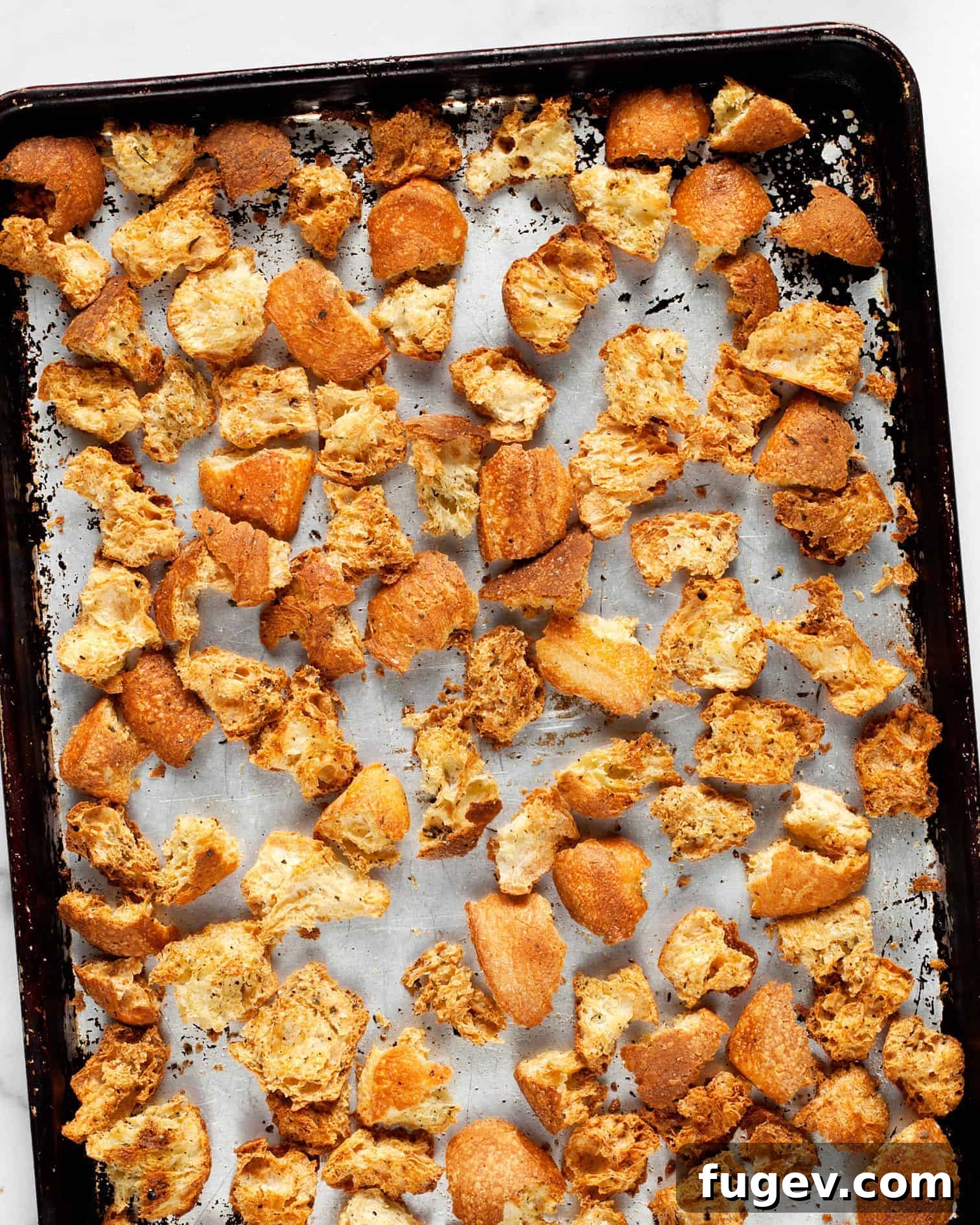
Once you experience the unparalleled taste and texture of homemade croutons, returning to the store-bought version becomes unthinkable. These culinary gems are incredibly simple to make, yet they deliver a superior crunch and a perfectly golden-brown finish that elevates any dish. Imagine transforming a simple mixed greens salad, adorned with a sprinkle of Parmesan and a drizzle of your favorite vinaigrette, into a gourmet delight with the addition of these irresistible morsels.
For an intriguing twist, you might also enjoy making these easy cornbread croutons, offering a unique flavor and texture profile to your meals.
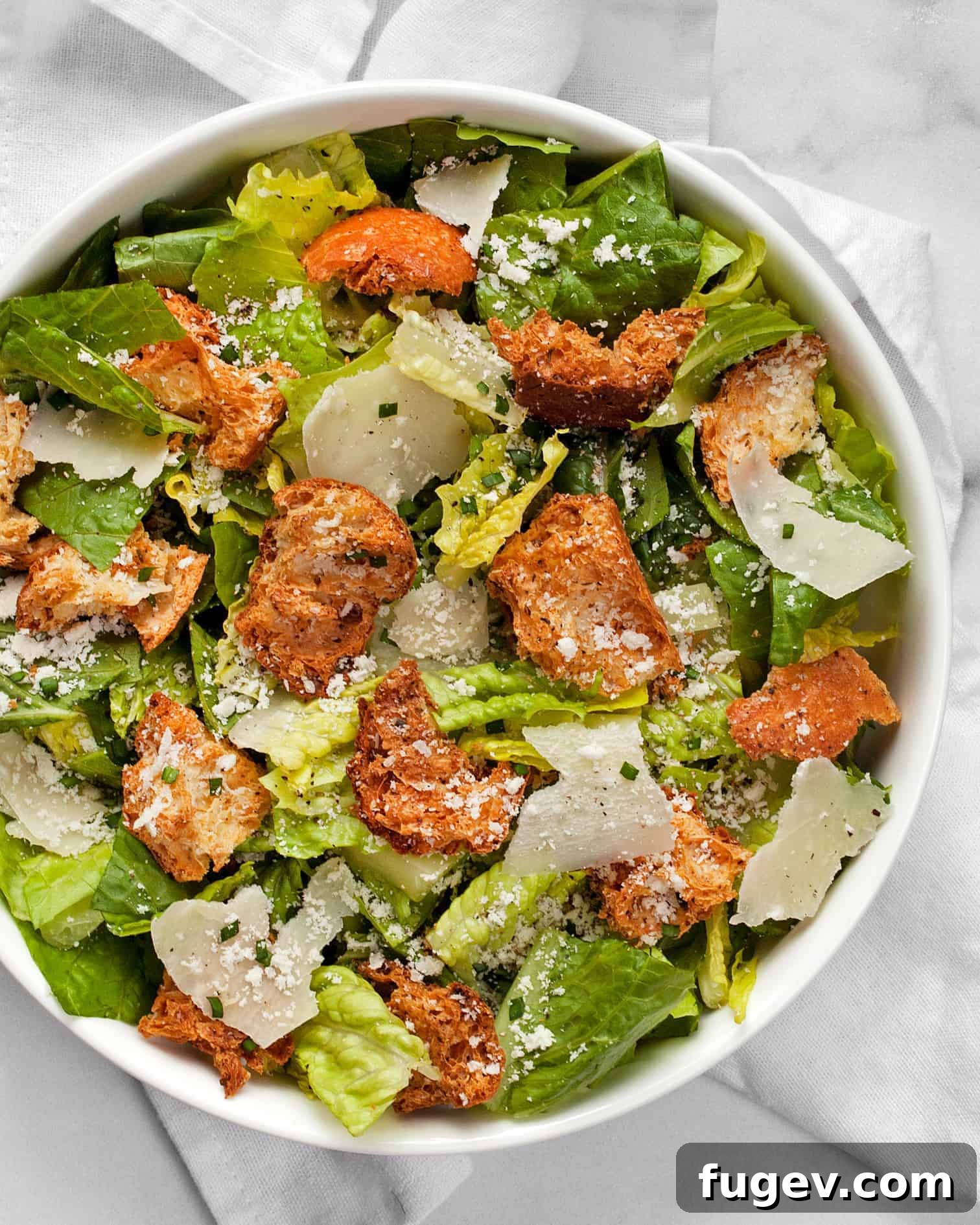
Table of Contents
- The Irresistible Appeal of Homemade Croutons
- Why You’ll Love This Homemade Crouton Recipe
- Choosing the Best Bread for Perfect Croutons
- Essential Tips for Preparing Your Bread
- Key Ingredients for Flavorful Croutons
- How To Make Homemade Croutons: A Step-by-Step Guide
- Exciting Flavor Variations for Your Croutons
- Creative Uses for Your Delicious Croutons
- Storing Your Homemade Croutons for Maximum Freshness
- Frequently Asked Questions About Homemade Croutons
- Elevate Your Salads with Homemade Croutons
- Ultimate Homemade Croutons Recipe Card
The Irresistible Appeal of Homemade Croutons
In the culinary world, sometimes the simplest additions make the most profound difference. Homemade croutons are a prime example. Far superior to their mass-produced counterparts, these crunchy, golden bits of seasoned bread offer a textural contrast and flavor boost that can transform an ordinary meal into something special. Forget the dry, hard, and often bland croutons from a bag; crafting your own allows for complete control over texture, seasoning, and freshness. Each bite delivers a satisfying crispness and a burst of flavor, proving that quality ingredients and a little effort go a long way.
Whether you’re looking to enhance a vibrant green salad, add substance to a creamy soup, or simply enjoy a delicious snack, homemade croutons are an essential skill for any home cook. They’re not just food; they’re an experience, a commitment to avoiding food waste, and a testament to the fact that gourmet flavors can be achieved with everyday ingredients right in your own kitchen.
Why You’ll Love This Homemade Crouton Recipe
There are countless reasons to fall in love with making your own croutons, but here are some of the most compelling:
- A Brilliant Solution for Leftover Bread: This recipe is an incredibly effective and delicious way to prevent food waste. Instead of letting that last half-loaf of bread go stale and eventually expire, you can give it a new, flavorful purpose. It’s a win-win: you save money, reduce waste, and get to enjoy something truly delicious and fresh.
- Preserve Bread Life Without Freezing: While freezing bread is a common strategy to extend its shelf life, it often leads to freezer burn and a loss of desirable texture over time. By transforming your bread into croutons, you bypass these issues entirely. Croutons can be stored at room temperature for weeks, maintaining their delightful crunch without the fuss or quality degradation often associated with freezing. It’s a convenient and superior alternative for long-term bread preservation that keeps your pantry organized and fresh.
- Endless Customization and Improvization: This recipe serves as a fantastic foundation, but it’s designed to inspire creativity. Feel free to adjust quantities based on the amount of bread you have, or experiment with different spice blends. Once you master the basic technique, you’re empowered to become a crouton artisan, tailoring flavors to your exact preferences or whatever dishes you plan to serve them with. From garlic-parmesan to spicy chipotle, the possibilities are endless.
- Naturally Vegan-Friendly: Unlike many store-bought or traditional homemade croutons that rely on butter, this recipe exclusively uses extra-virgin olive oil. This not only imparts a rich, fruity flavor but also makes these croutons a perfect, dairy-free option suitable for vegan diets, ensuring everyone can enjoy their crisp perfection without dietary compromises.
- Achieve Unmatched Texture and Flavor: Store-bought croutons often lack the depth of flavor and satisfying crunch that comes from freshly made ones. Our recipe guarantees perfectly browned edges, a delightful crispness throughout, and a savory seasoning blend that will make them utterly addictive. The difference is truly night and day, delivering a superior gastronomic experience.
- Quick and Easy to Prepare: Despite their gourmet appeal, homemade croutons require minimal effort and time. With just a few basic ingredients and a hot oven, you can have a batch of these golden nuggets ready in under 30 minutes, making them a perfect last-minute addition to any meal or an effortless component of your weekly meal prep.
Choosing the Best Bread for Perfect Croutons
The foundation of an exceptional crouton lies in the bread you choose. Not all breads are created equal when it comes to achieving that ideal balance of crispness and chewiness. Here’s what to look for to ensure your homemade croutons are nothing short of spectacular:
- Opt for Rustic and Artisan Loaves: My top recommendation is bread that offers a good balance of crust to interior, or crumb. Varieties like ciabatta and baguettes are fantastic choices because their structure ensures that most, if not all, of your crouton pieces will feature some of that coveted crust. This contributes significantly to the final texture and visual appeal, offering a pleasant chew along with the crunch.
- Why Structure Matters: In general, you should lean towards rustic or country-style loaves. These breads possess a more robust internal structure that holds up well during the baking process, preventing them from becoming too soft or crumbly. Their irregular holes and varied textures also provide interesting nooks and crannies for the oil and seasonings to adhere to, enhancing flavor distribution and creating pockets of intense taste.
- Sourdough’s Tangy Twist: Sourdough bread is another excellent contender. Its distinctive tang adds a wonderful depth of flavor to your croutons, making them even more complex and satisfying. The sturdy crust and chewy interior of sourdough are also ideal for developing a perfect crunch, ensuring the croutons hold their shape beautifully.
- Multigrain for Added Texture and Flavor: Don’t overlook multigrain loaves. These often bring a delightful chewiness and subtle nutty flavors to the croutons, along with visual interest from the various grains and seeds embedded within the crumb. They can make your croutons even more wholesome and satisfying.
- Avoid Soft Sandwich Breads: Steer clear of soft, pre-sliced sandwich bread. While convenient, its fine, soft crumb and thin crust mean it’s likely to result in croutons that are too delicate. They tend to turn into hard, flavorless bits rather than truly satisfying croutons, often lacking the desired structural integrity to crisp up properly without becoming overly dry or burnt.
- Embrace Stale Bread: Interestingly, slightly stale bread is actually preferable for making croutons. Fresh bread has more moisture, which can make it harder to achieve a crisp texture. Bread that’s a day or two old has lost some moisture, making it quicker and easier to toast up beautifully. Just ensure it’s not moldy or overly hard to tear; a bread that’s firm but still pliable is ideal.
Essential Tips for Preparing Your Bread for Croutons
The way you prepare your bread plays a crucial role in the final texture and appearance of your homemade croutons. Paying attention to these details will ensure your croutons are consistently perfect:
- Tearing vs. Cutting: The Jagged Edge Advantage: Instead of meticulously cutting the bread into uniform cubes with a knife, I highly recommend tearing it into pieces. The resulting jagged and uneven shapes are not only aesthetically pleasing but also functional. These irregular surfaces create more edges and varying thickness, which allows some parts to brown more intensely and develop different levels of crunch. This variety in texture is a hallmark of truly artisanal homemade croutons, giving each bite a unique character that you won’t find in perfectly uniform, machine-cut versions. Aim for pieces roughly 1 to 2 inches in size.
- Handle with Care: Preserve the Crumb: When ripping the bread apart, do your best not to squash the internal crumb structure. While it’s perfectly fine, and even desirable, for the bread to be a little dry or stale, you want to maintain its airy network. Squashing it can compact the bread, leading to denser, less crispy croutons that might feel heavy or chewy rather than light and crisp. You want light, distinct pieces that will evenly absorb the olive oil and seasoning, allowing them to become wonderfully crisp throughout. If your bread is so hard that it’s nearly impossible to tear without crushing, it might be too far gone, or perhaps a slightly less stale loaf would be better.
- Consistency in Inconsistency: While tearing creates irregular shapes, try to maintain a general consistency in size (1-2 inches). This ensures that most of the croutons will cook at a similar rate, minimizing the risk of some burning while others remain soft. A little variation is good, but extreme differences in size can lead to uneven cooking. Think of it as controlled randomness.
- Don’t Waste the Crust: Unlike some bread uses where crust is discarded, for croutons, the crust is your friend! It adds extra flavor, chew, and a satisfying crunch. Ensure your torn pieces include plenty of crust for the best texture.
Key Ingredients for Flavorful Homemade Croutons
You don’t need an extensive list of ingredients to create outstanding homemade croutons. Simplicity and quality are key, focusing on fresh bread, good olive oil, and a balanced seasoning blend:
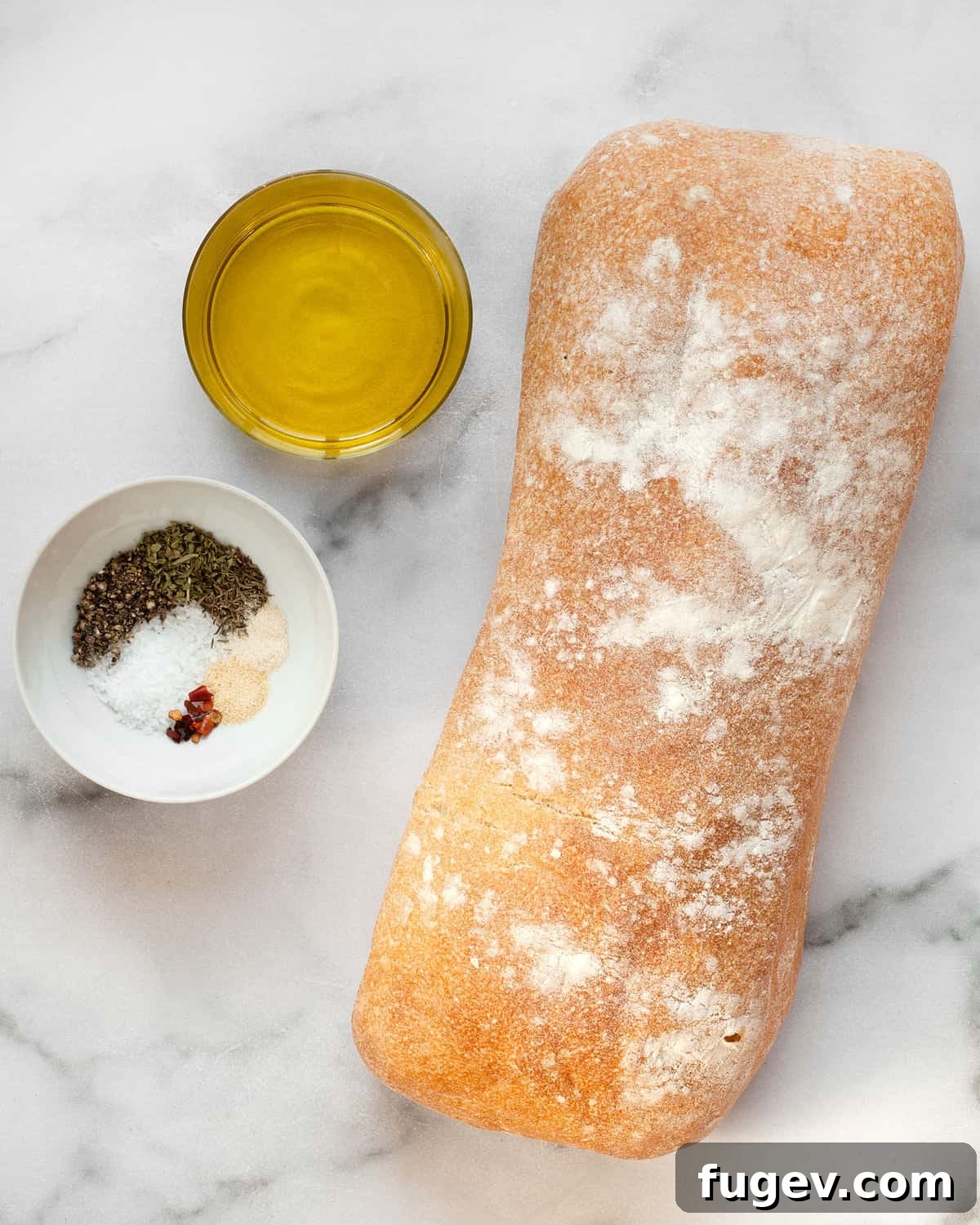
- Bread: The Foundation of Flavor
- As previously discussed, aim for an artisan, rustic loaf. Think of these as “crusty breads” that have some substance.
- Sourdough bread is highly recommended for its signature tangy flavor and excellent texture. It adds a sophisticated depth to your croutons that complements a variety of savory dishes.
- Ciabatta or Baguettes are ideal for their robust crust and open crumb, ensuring many pieces have that delightful crusty edge and airy interior, perfect for crisping.
- Multigrain loaves can also be a wonderful choice, contributing nutty notes and a varied texture with added fiber.
- The key is a bread with good structure that can hold its shape and crisp up beautifully without disintegrating or becoming rock-hard.
- Oil: The Golden Elixir
- Always reach for extra-virgin olive oil. Its quality and distinctive fruity, peppery flavor are irreplaceable. It not only helps the croutons crisp up but also infuses them with a rich, Mediterranean taste that complements the seasonings perfectly. A good quality olive oil makes a significant difference in the final taste profile.
- Avoid using bland vegetable oils, as they won’t contribute much flavor. While butter can also be used for a rich taste, olive oil keeps the croutons vegan and often yields a lighter, crispier result with a cleaner flavor.
- Dried Seasonings: The Spice of Life
- My preferred blend combines classic Italian-inspired flavors, creating a harmonious and savory profile:
- Oregano: Earthy, slightly bitter, and highly aromatic.
- Thyme: Adds a subtle, savory, and woody note that pairs beautifully with bread.
- Garlic Powder: Provides a foundational savory depth and warmth without the risk of burning fresh garlic pieces during baking. It’s a consistent flavor enhancer.
- Onion Powder: Enhances the overall savory profile, adding a sweet and pungent background note that rounds out the flavors.
- Red Pepper Flakes: A small pinch for a gentle warmth and subtle kick, entirely optional if you prefer no heat or are serving to those sensitive to spice.
- Kosher Salt: Absolutely essential for bringing out all the flavors and achieving a balanced, palatable seasoning. Its larger crystals adhere well to the bread.
- Black Pepper: Freshly ground for aromatic pungency and a subtle spicy finish.
- This combination is often found in store-bought Italian seasoning blends, making those a convenient alternative if you prefer. However, mixing your own allows for precise control over the flavor profile. Don’t be afraid to adjust quantities to your personal taste, adding a little more garlic for a bolder flavor, or skipping the red pepper for a milder crouton.
- My preferred blend combines classic Italian-inspired flavors, creating a harmonious and savory profile:
How To Make Homemade Croutons: A Step-by-Step Guide
Creating your own delicious, crispy croutons is a straightforward process that yields impressive results. Follow these simple steps for perfect, golden-brown croutons every time:
Step 1: Preheat Your Oven for Optimal Toasting
Before you begin preparing your bread, preheat your oven to 375 degrees F (190 degrees C). This temperature is ideal for toasting the bread evenly and achieving that coveted golden-brown crispness without burning the exterior before the interior is fully dried out. Allow it to fully preheat for consistent results.
- Prepare the Bread: The Art of Tearing
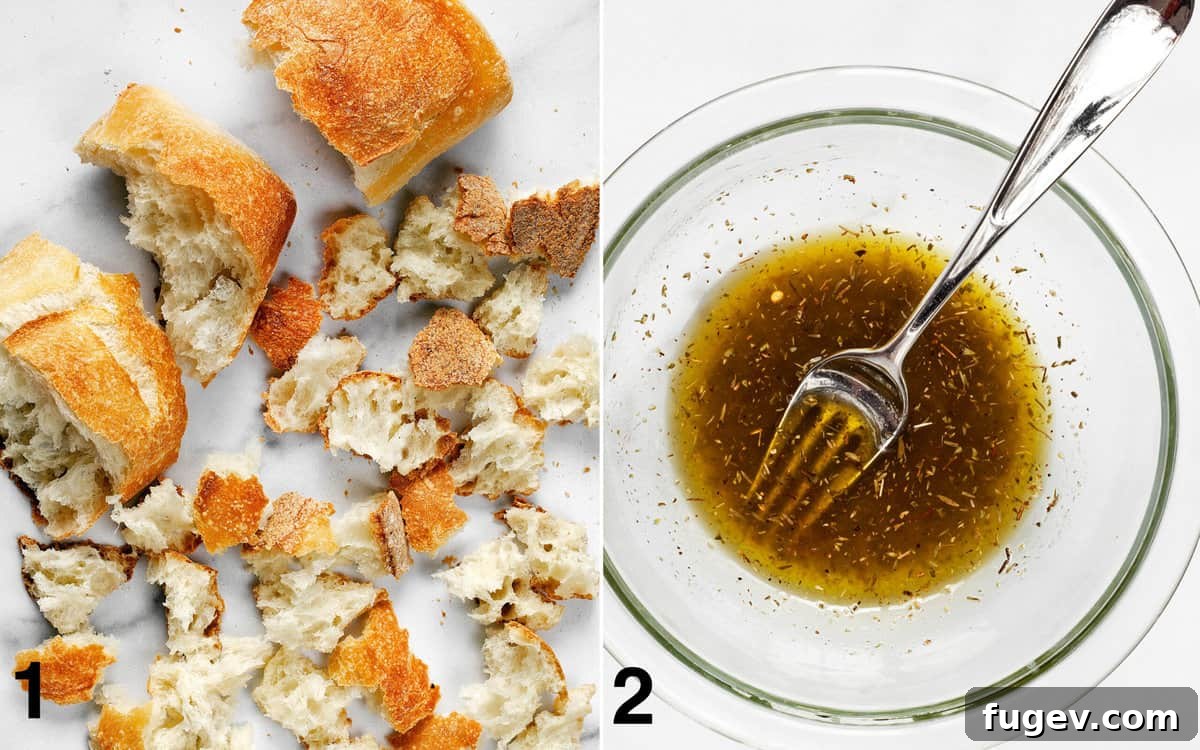
Begin by tearing your chosen bread into irregular pieces, aiming for sizes between 1-inch and 2-inches. Remember, tearing creates more varied textures and edges, which brown beautifully and add to the artisanal feel of your croutons. Place all the torn bread pieces onto a large, unlined baking sheet. Ensure there’s enough space so the bread can spread out without overcrowding. Using an unlined sheet allows for direct contact with the hot metal, which is crucial for maximizing browning and achieving superior crispiness.
- Craft Your Flavorful Oil Mixture
In a small bowl, combine the extra-virgin olive oil with all your dried spices: oregano, thyme, garlic powder, onion powder, red pepper flakes (if using), kosher salt, and black pepper. Whisk these ingredients together thoroughly until they are well combined and the spices are evenly suspended in the oil. This ensures that the seasonings are evenly distributed throughout the oil, ready to infuse every crouton piece with a burst of flavor.

- Coat the Bread Evenly and Efficiently
Pour the seasoned olive oil mixture over the torn bread pieces that are already on the baking sheet. Now, get your hands in there! Use your clean hands to gently toss and massage the bread, ensuring that each and every piece is thoroughly coated with the oil and seasonings. It’s crucial for achieving consistent flavor and uniform browning. Performing this step directly on the baking pan saves you from washing an extra large mixing bowl, making cleanup a breeze.
- Arrange for Optimal Browning and Crispness
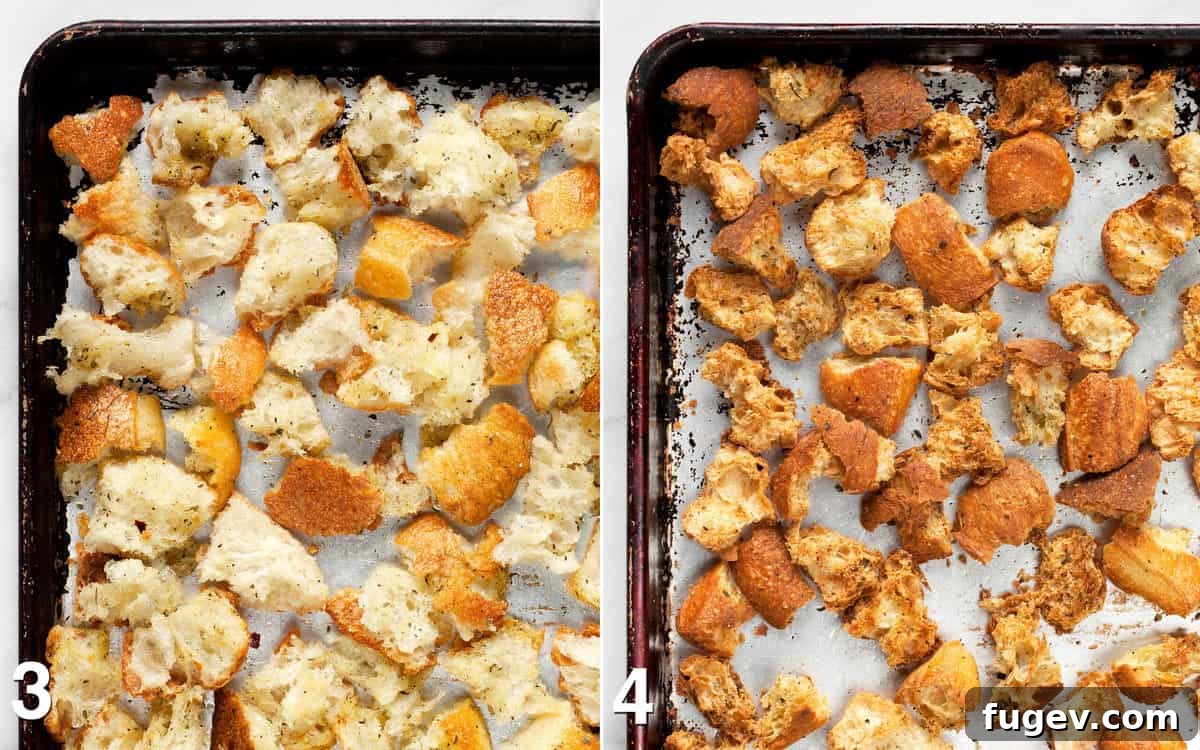
After coating, spread the bread pieces out into a single, even layer across the entire baking sheet. Avoid piling them up or having too much overlap, as this will lead to steaming rather than toasting. Steaming prevents the bread from drying out and crisping properly, resulting in soft or unevenly cooked croutons. Giving them ample space allows the hot air to circulate freely around each piece, promoting maximum crispness and golden-brown perfection.
- Bake to Golden Perfection
Place the baking sheet in the preheated oven. Bake for an initial 10 minutes. After this time, carefully remove the pan from the oven and use a spatula or tongs to flip the croutons over, disturbing them to expose different sides to the heat. This ensures even cooking and browning on all sides. Return the pan to the oven and continue baking for another 7-10 minutes, or until the croutons are a deep golden brown and feel perfectly crisp to the touch. Keep a close eye on them during the final minutes, as they can go from perfectly toasted to burnt very quickly due to their dry nature.
- Cool Completely for Ultimate Crunch
Once baked, remove the croutons from the oven and let them cool completely on the baking sheet. It is important not to rush this step. As they cool, any residual moisture will evaporate, and they will become even crisper. This cooling period is essential before using them in salads or soups, or before storing them, to ensure they maintain their delightful crunchy texture.
Exciting Flavor Variations for Your Homemade Croutons
While the classic Italian herb blend used in this recipe is undeniably delicious and universally loved, don’t limit yourself! Homemade croutons are incredibly versatile and can be customized with various seasonings to match any dish or preference, transforming them for different cuisines or occasions. Here are some ideas to spark your culinary creativity:
- Garlic Parmesan Croutons: Elevate the savory factor by adding a tablespoon or two of finely grated Parmesan cheese to your oil mixture before tossing, or sprinkle it over the croutons during the last 5 minutes of baking. The cheese will melt and crisp up, adding a salty, umami kick that is perfect for Caesar salads.
- Spicy Chipotle Croutons: For a smoky heat with a Tex-Mex twist, replace the red pepper flakes with a teaspoon of chipotle powder and a pinch of ground cumin. This variation is perfect for adding a fiery crunch to taco salads, chili, or black bean soup.
- Rosemary & Sea Salt Croutons: Mix finely chopped fresh rosemary (about 1 tablespoon) with your olive oil and a generous sprinkle of flaky sea salt. This aromatic combination is divine with creamy tomato soups, roasted chicken, or even as a simple snack.
- Herbes de Provence Croutons: Use a blend of Herbes de Provence (available in most spice aisles) in place of oregano and thyme for a fragrant, French-inspired flavor profile. This blend often includes savory, marjoram, rosemary, thyme, and oregano, making it excellent for classic French onion soup or a niçoise salad.
- Lemon Herb Croutons: For a bright and zesty flavor, add the zest of one lemon to your oil mixture along with fresh or dried herbs like parsley, dill, or chives. This variation brilliantly complements lighter salads, grilled fish, or spring vegetable dishes.
- Za’atar Spiced Croutons: Explore Middle Eastern flavors by tossing your bread with olive oil and a tablespoon of Za’atar spice blend. This blend typically features thyme, sesame seeds, and sumac, offering a tangy, nutty, and herbal taste. Great with hummus and veggie platters or Mediterranean salads.
- Sweet Croutons: Yes, sweet! For a dessert topping or a unique breakfast addition, omit savory spices and toss bread with melted butter, a generous sprinkle of cinnamon, and a tablespoon or two of brown sugar. Bake until crisp. These are perfect for topping fruit salads, yogurt parfaits, or even a scoop of vanilla ice cream.
The key is to consider the primary flavors of the dish you’ll be serving the croutons with and choose seasonings that complement or enhance them. Don’t be afraid to experiment; your kitchen is your culinary playground!
Creative Uses for Your Delicious Homemade Croutons
Croutons are far more versatile than just a salad topping. Their crispy texture, rich flavor, and ability to soak up delicious liquids can enhance a wide array of dishes, adding an exciting dimension to your meals. Here are some inspiring ways to incorporate your homemade croutons into your cooking:
- Salad Supercharger: This is the most obvious and beloved use. Homemade croutons elevate any green salad, from a simple garden salad to a classic Caesar or a hearty Panzanella. Their crunch provides a delightful textural contrast to soft greens and creamy dressings, making every bite more engaging.
- Soup’s Best Friend: Croutons are a magnificent garnish for pureed vegetable soups, adding texture, substance, and a savory counterpoint. Imagine them floating atop a bowl of creamy Roasted Tomato Soup, butternut squash soup, or a comforting lentil soup. They also pair wonderfully with chunkier soups featuring beans or lentils, such as Rosemary Tomato White Bean Soup or the Italian classic, Pasta e Fagioli, offering a hearty finish.
- Transform into Gourmet Breadcrumbs: Don’t let a single crouton go to waste! If you have extra, or simply want superior breadcrumbs, homemade croutons are the perfect base. You can crush them coarsely in a sturdy bag with the bottom of a heavy pot or skillet for a rustic texture. For finer, more uniform breadcrumbs, a food processor will do the trick quickly and efficiently. These gourmet breadcrumbs are fantastic for coating chicken or fish, topping casseroles, or as a flavorful binder in meatballs and meatloaves.
- Topping for Roasted Vegetables: Sprinkle crushed or whole croutons over roasted broccoli, asparagus, green beans, or Brussels sprouts during the last few minutes of cooking for an added layer of flavor and crunch. This simple addition can make even humble vegetables feel more substantial and exciting.
- Casserole Topping: Replace traditional store-bought breadcrumbs with homemade croutons (crushed or whole, depending on desired texture) for a richer, crispier topping on gratins, mac and cheese, or other baked casseroles. They create a beautiful golden crust that adds depth and texture.
- Breakfast & Brunch Enhancement: Roughly chopped croutons can be tossed into a savory breakfast strata, egg casserole, or even a savory bread pudding, adding texture and preventing it from becoming too soft. They absorb the egg mixture while retaining a pleasant bite.
- Stuffing or Dressing Base: While typically made from fresh bread, homemade croutons can be a quick shortcut for a flavorful stuffing or dressing. Lightly rehydrate them with broth before mixing with other ingredients for a rich holiday side.
- Savory Snack Attack: Honestly, these croutons are so good, you might find yourself snacking on them straight from the bowl! They make a surprisingly satisfying and flavorful snack on their own, especially if you’ve experimented with unique spice blends.
Storing Your Homemade Croutons for Maximum Freshness
Proper storage is essential to maintain the crispness and flavor of your homemade croutons. Without it, they can quickly go from delightfully crunchy to disappointingly soft. Follow these guidelines to keep them fresh and delicious for as long as possible:
- Cool Completely First: Before storing, ensure your croutons have cooled completely to room temperature. Storing warm croutons will create condensation inside the container, leading to sogginess and potentially mold.
- Airtight is Key: Always store your cooled croutons in an airtight container. This is the single most important step. An airtight seal prevents moisture from the air from seeping in and making them soggy, and also protects them from absorbing any unwanted odors from your pantry. A glass jar with a tight-fitting lid, a plastic container with a secure seal, or even a heavy-duty zip-top bag (with as much air removed as possible) will work perfectly.
- Room Temperature is Ideal: Keep the airtight container at room temperature in a cool, dry place away from direct sunlight. A pantry shelf, a kitchen cabinet, or a countertop out of direct light is perfect. Excess heat can shorten their shelf life and potentially affect their texture.
- Shelf Life: When stored correctly, homemade croutons will maintain their optimal crisp texture and delicious flavor for up to 2 weeks. You might find they last even longer, but their quality, especially their crispness, might slowly diminish after this period.
- Avoid Refrigeration and Freezing: It might seem counterintuitive for food preservation, but do NOT store croutons in the refrigerator or freezer. The high moisture content within these cold environments will cause them to absorb humidity, leading to a significant loss of their prized crunch and making them soft, chewy, and somewhat stale-tasting.
- Reviving Less-Crispy Croutons: If your croutons have lost some of their crispness over time (perhaps due to being left out too long), don’t despair! You can often revive them by spreading them on a baking sheet and toasting them in a 300°F (150°C) oven for 5-10 minutes, or until they’re crunchy again. Let them cool completely before re-storing them in an airtight container.
Frequently Asked Questions About Homemade Croutons
For perfectly crisp and golden-brown homemade croutons, bake them on an unlined sheet pan in a preheated oven at 375 degrees F (190 degrees C). This moderate temperature allows the bread to toast evenly without burning too quickly. The total baking time is typically between 17-20 minutes, with a flip midway through. This ensures all sides get delightfully crisp.
Croutons are incredibly versatile! Beyond salads, they make an excellent garnish for a variety of thicker soups, adding a wonderful textural contrast and a burst of flavor. You can also crush them into gourmet breadcrumbs (either coarsely or finely in a food processor) for coating proteins like chicken or fish, topping casseroles like macaroni and cheese, or as a flavorful binder in meatballs. They can also be sprinkled over roasted vegetables for extra crunch or even enjoyed as a savory snack on their own.
When stored properly in an airtight container at room temperature, homemade croutons will remain fresh, crispy, and delicious for approximately 2 weeks. To preserve their crunchy texture, it’s crucial to avoid storing them in the refrigerator or freezer, as the moisture in these environments will cause them to absorb humidity and quickly become soggy.
No, it is highly recommended *not* to line the baking pan with parchment paper or aluminum foil when making croutons. The goal is to maximize direct contact between the bread pieces and the hot metal surface of the pan. This direct contact is crucial for achieving optimal browning and the ultimate crispy texture that makes homemade croutons so delicious. Lining the pan can create a barrier that inhibits crispness, leading to less crunchy results.
Absolutely! Fresh herbs can add a vibrant aroma and flavor to your croutons. If using fresh herbs like rosemary, thyme, or oregano, chop them very finely. You might need to use a slightly larger quantity than dried herbs (a general rule is a 3:1 ratio of fresh to dried). Be mindful that fresh herbs can burn more easily during baking, so keep a closer eye on your croutons, especially during the last few minutes, to prevent scorching and ensure the herbs don’t become bitter.
There are a few common reasons why croutons might not crisp up properly. Firstly, ensure your oven is at the correct temperature and fully preheated. Secondly, avoid overcrowding the baking sheet; the bread needs ample space for air circulation to toast, not steam. Third, make sure each piece of bread is thoroughly coated with olive oil and seasonings, as the oil facilitates browning and crisping. Lastly, using slightly stale, rustic bread helps, as fresh, moist bread can be harder to crisp. If they’re still not crisp after the recommended time, continue baking for a few more minutes, flipping them periodically, until they reach your desired level of crunch.
Elevate Your Salads with Homemade Croutons
These homemade croutons are the perfect crunchy complement to almost any salad. Their unparalleled flavor and texture truly enhance the dining experience. Here are some of our favorite salads that are truly elevated by a generous sprinkling of these golden bites:
- Italian Chopped Salad: A vibrant medley of fresh greens, savory meats, tangy cheeses, and crisp vegetables, all brought together beautifully with the added crunch and robust flavor of homemade Italian-seasoned croutons. They provide a wonderful textural counterpoint to the softer ingredients.
- Brussels Sprout Caesar Salad: A modern and exciting take on a timeless classic. The tender-crisp shaved Brussels sprouts meet the savory, garlicky goodness of homemade croutons, all coated in a creamy Caesar dressing for an unforgettable experience.
- Roasted Pepper Panzanella: This rustic Tuscan bread salad is practically designed for croutons! Here, the homemade croutons absorb the delicious vinaigrette and the sweet juices from roasted peppers, creating a harmonious blend of textures and deeply infused flavors that is truly comforting.
- Brussels Sprout Apple Salad: The delightful combination of crisp, earthy Brussels sprouts and the sweet, tart crunch of apple finds a perfect textural and flavor counterpoint in savory, perfectly baked croutons. This salad is a celebration of textures and seasonal tastes.
- Caprese Salad: While traditionally simple, adding a few strategically placed homemade croutons introduces an unexpected yet welcome textural dimension to this fresh Italian classic. They offer a satisfying crunch alongside the soft mozzarella, ripe tomatoes, and fresh basil.
Looking for even more salad inspiration? Be sure to check out our comprehensive seasonal salad guide, packed with delicious recipes, expert tips on ingredient selection, meal prep strategies, and much more. It’s your ultimate resource for crafting fresh, flavorful salads all year round.
Ultimate Homemade Croutons Recipe Card
Homemade Croutons
By: Paige Adams
With a simple combination of quality bread, extra-virgin olive oil, and aromatic Italian seasonings, this easy recipe guides you through toasting bread in the oven to create the most delicious, perfectly crispy homemade croutons for all your salads, soups, and culinary adventures.
Prep Time: 5 mins
Cook Time: 20 mins
Total Time: 25 mins
Yields: 10 servings (Approx. 4-5 cups croutons)
Ingredients
- 1 loaf ciabatta, sourdough, or multigrain bread (about 12 ounces), or 2 baguettes
- 1/3 cup extra-virgin olive oil
- 1/2 teaspoon dried oregano
- 1/4 teaspoon dried thyme
- 1/4 teaspoon garlic powder
- 1/4 teaspoon onion powder
- Pinch of red pepper flakes (optional, for a hint of heat)
- 1 teaspoon kosher salt
- 1/2 teaspoon black pepper, freshly ground
Instructions
- Preheat your oven to 375 degrees F (190 degrees C).
- Tear the bread into irregular 1-inch to 2-inch pieces. Place the torn bread on a large, unlined baking sheet, spreading it out evenly.
- In a small bowl, whisk together the olive oil, oregano, thyme, garlic powder, onion powder, red pepper flakes (if using), kosher salt, and black pepper until well combined.
- Pour the seasoned olive oil mixture over the bread pieces on the baking sheet. Use your clean hands to gently toss the bread, ensuring every piece is thoroughly coated with the oil and seasonings. Spread the coated bread out into a single, even layer across the entire sheet pan.
- Bake for 10 minutes. Carefully remove the pan, flip the croutons with a spatula, and return to the oven. Continue baking for another 7-10 minutes, or until the croutons are deep golden brown and crisp.
- Remove from the oven and let the croutons cool completely on the baking sheet. They will become even crisper as they cool.
Notes
- This recipe yields approximately 4-5 cups of delicious homemade croutons.
- Store cooled croutons in an airtight container at room temperature for up to 2 weeks to maintain their crunch. Avoid refrigerating or freezing, as moisture will make them soggy.
- Beyond salads and soups, these croutons can be crushed into gourmet breadcrumbs (using a food processor or a heavy pot) for coating, topping casseroles, or as a binder in savory dishes.
Nutrition Information (Approximate Per Serving)
Nutrition information is automatically calculated and should be used as an approximation.
- Calories: 168 kcal
- Carbohydrates: 21g
- Protein: 4g
- Fat: 8g
- Saturated Fat: 1g
- Polyunsaturated Fat: 1g
- Monounsaturated Fat: 5g
- Sodium: 453mg
- Potassium: 4mg
- Fiber: 1g
- Sugar: 0.01g
- Vitamin A: 5 IU
- Vitamin C: 0.1mg
- Calcium: 3mg
- Iron: 0.1mg
Additional Info
Course: Salad, Appetizer, Snack
Cuisine: French, Italian, American (as a versatile topping)
Did you make this amazing recipe?
We’d love to see your creations! Mention @lastingredient on Instagram and tag it #lastingredient!
Originally published March 18, 2021. Updated: December 29, 2022.