
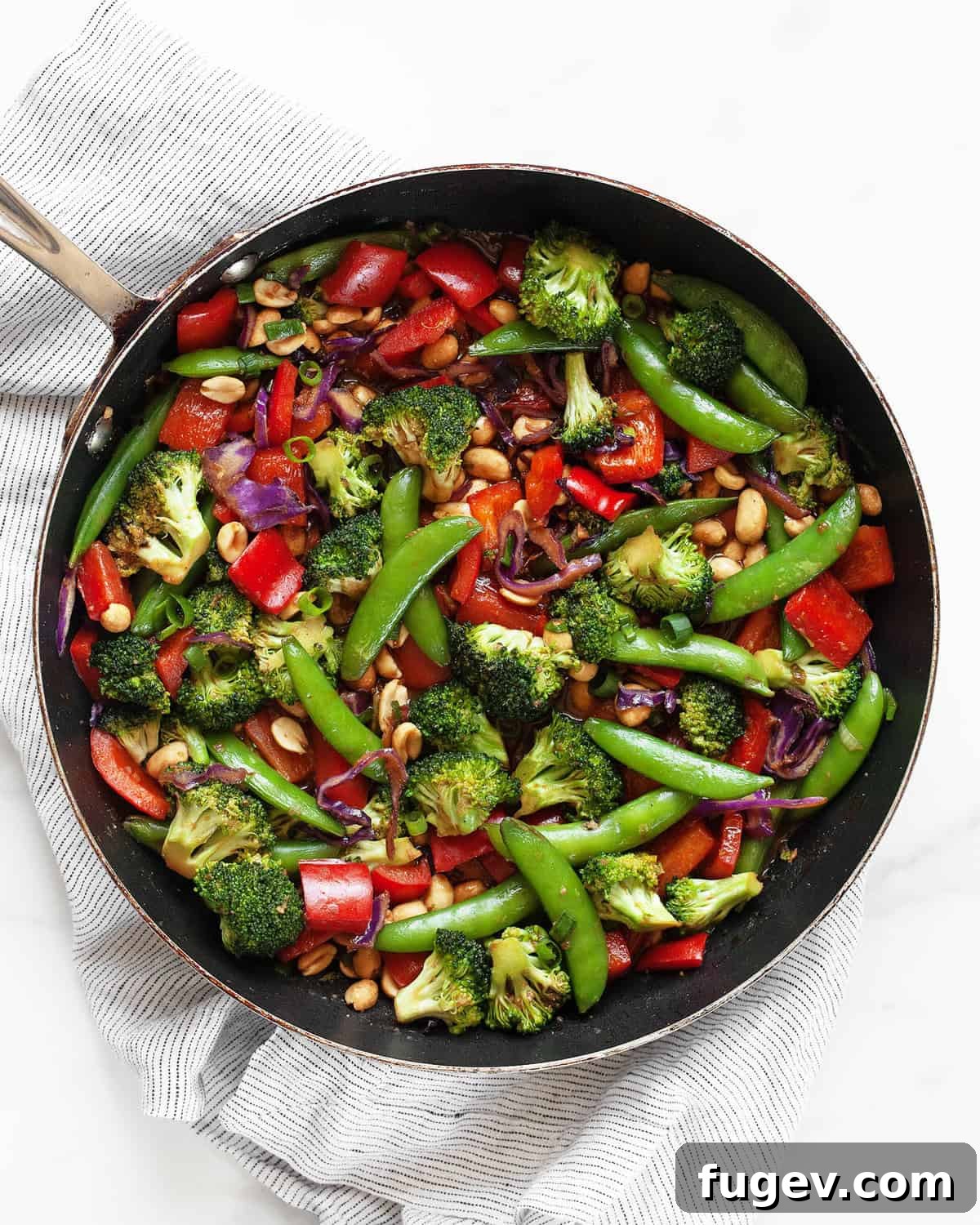
Transform your weeknights with this incredibly easy and vibrant Peanut Veggie Stir-Fry. This delicious dish is brimming with a colorful assortment of fresh vegetables, including crisp broccoli florets, sweet bell peppers, tender snap peas, and crunchy red cabbage. What truly sets it apart is the quick and flavorful homemade peanut sauce – a simple whisk-together creation that comes together in mere moments. Designed for speed and convenience, you can have this entire meal prepared and on your table in just 15 minutes, making it an absolute lifesaver for busy evenings. Serve it alongside fluffy brown rice for a complete, satisfying, and wholesome dinner that the whole family will love.
Looking for another nutty and equally delightful meal? Be sure to explore this cashew vegetable stir-fry.
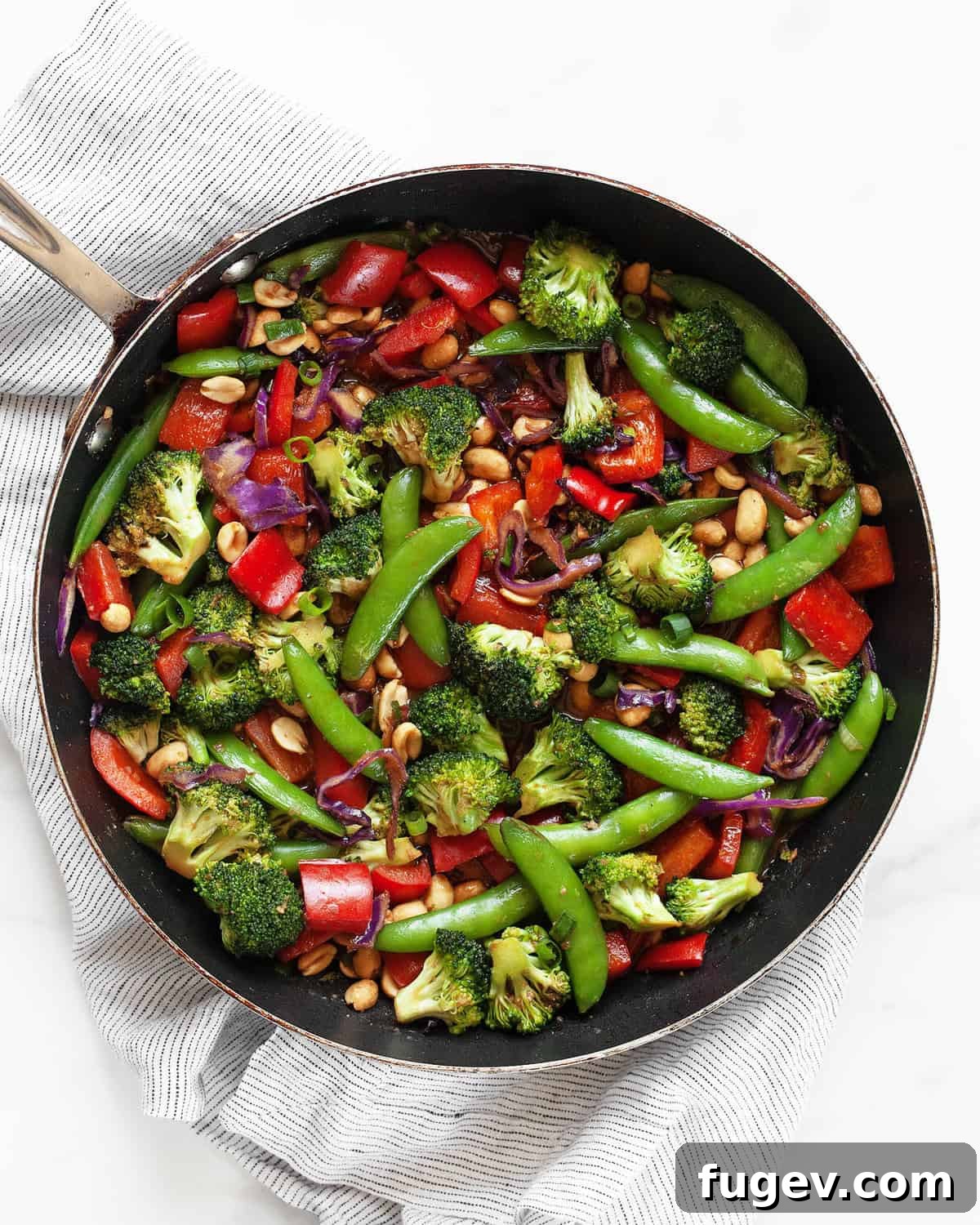
Table of Contents
- Why You’ll Love This Peanut Veggie Stir-Fry Recipe
- The Essential Ingredients for a Perfect Stir-Fry
- How To Master This Peanut Veggie Stir-Fry
- Serving Suggestions for Your Stir-Fry
- Leftovers & Storage Tips
- Pro Tips for a Perfect Stir-Fry
- Recipe FAQs
- More Stir-Fry Recipes to Explore
- Peanut Veggie Stir-Fry Recipe Card
Why You’ll Love This Easy Peanut Veggie Stir-Fry Recipe
Stir-fries have earned their reputation as a culinary hero, especially when it comes to whipping up a satisfying and nutritious meal on a busy weeknight. This particular Peanut Veggie Stir-Fry elevates the humble stir-fry to new heights, offering a myriad of reasons why it will quickly become a cherished staple in your cooking repertoire.
Unbeatable Speed and Convenience
In our fast-paced lives, finding a recipe that delivers incredible flavor without demanding hours in the kitchen is a true treasure. This easy vegetable stir-fry is designed for ultimate convenience, boasting a total preparation and cooking time of just 15 minutes. From chopping the vibrant vegetables to whisking together the rich peanut sauce, every step is streamlined to get a delicious, hot meal on your table faster than ordering takeout. It’s the perfect solution for those evenings when time is short but you refuse to compromise on healthy, homemade goodness.
A Healthier Takeout Alternative
Craving the satisfying taste of your favorite Asian takeout but without the excessive sodium, sugar, and mystery ingredients? This healthy weeknight dinner is your answer. Our homemade peanut sauce is crafted with care, utilizing low-sodium soy sauce and naturally sweetened with a touch of maple syrup and hoisin, creating a lighter yet equally robust flavor profile compared to many restaurant versions. You maintain full control over the ingredients, ensuring a meal that is both delicious and genuinely good for you. It’s an excellent way to enjoy the flavors you love in a more nutritious way.
Perfect for Plant-Based Diets and Vegetable Lovers
Packed to the brim with a generous array of colorful vegetables, this stir-fry is a dream come true for vegetarians and vegans alike. It’s not just a side dish; it’s a hearty, filling, and wholesome meal that celebrates the bounty of fresh produce. Each bite offers a delightful combination of textures and flavors from the broccoli, bell peppers, snap peas, and cabbage, ensuring you get a significant boost of essential vitamins, minerals, and fiber. For those looking to increase their vegetable intake or embrace more plant-based meals, this recipe makes it effortlessly delicious.
The Ultimate Meal Prep Solution
If meal planning and prep are part of your weekly routine, then stir-fries, and especially this meal prep stir-fry, are an absolute must-have. They store exceptionally well, making them ideal for preparing ahead for lunches or dinners throughout the week. The flavors often deepen and meld even further after a day or two in the refrigerator, meaning your leftovers taste just as fantastic, if not better, than the freshly cooked dish. This recipe promises multiple satisfying meals from a single cooking session, helping you stay on track with your healthy eating goals without the daily fuss.
The Essential Ingredients for a Perfect Stir-Fry
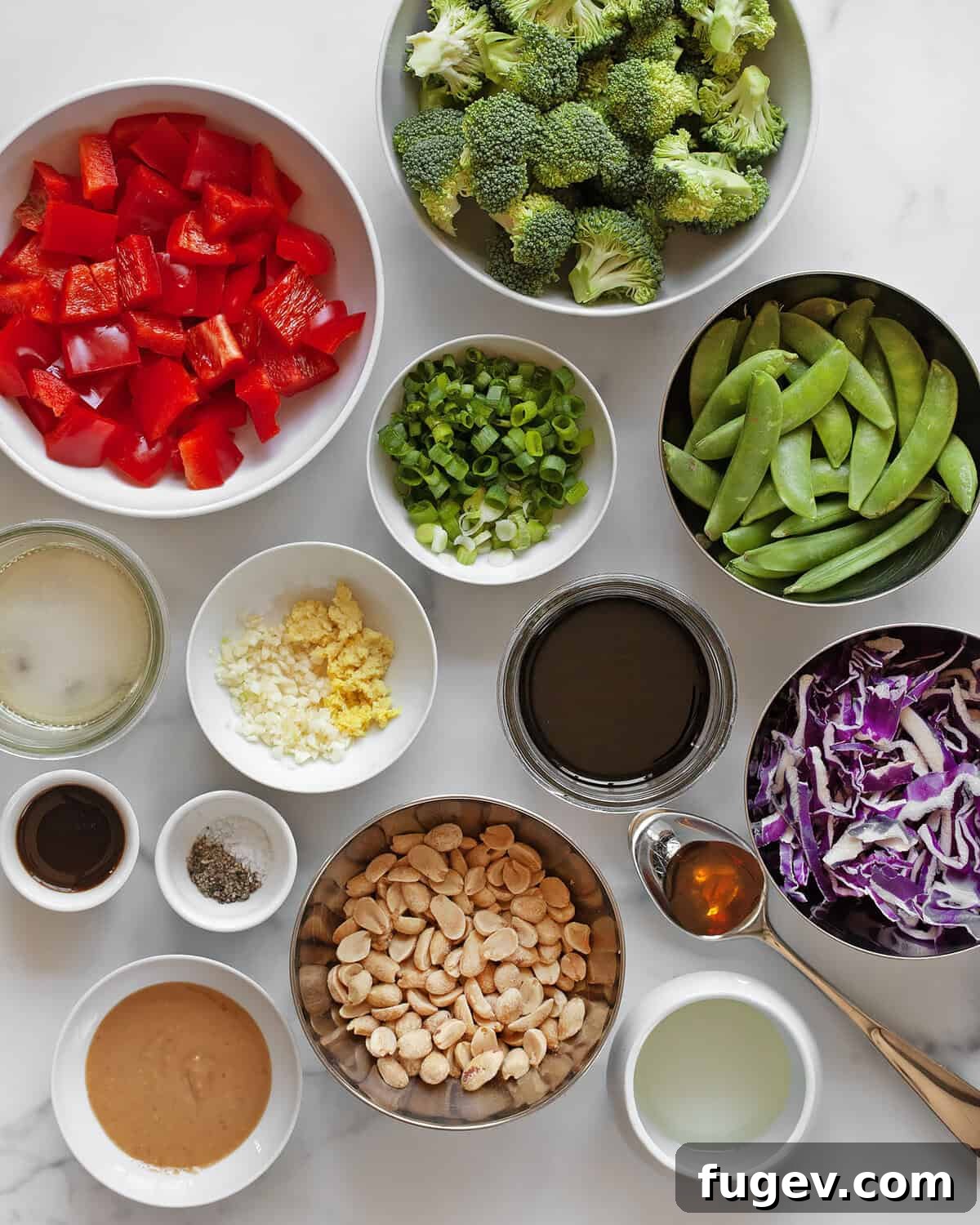
Creating an exceptional stir-fry begins with selecting quality ingredients. This recipe features a harmonious blend of fresh vegetables and a rich, savory peanut sauce, all built from components you likely already have on hand or can easily find.
The Irresistible Peanut Stir-Fry Sauce
The heart of this stir-fry is its quick and incredibly flavorful peanut sauce. I intentionally designed this sauce to be a lighter dressing rather than a thick, heavy coating, allowing the natural freshness of the vegetables to shine through. You won’t find cornstarch here; just a perfect balance of savory, sweet, and tangy notes.
- Low-Sodium Soy Sauce: This forms the foundational savory base of our sauce. Opting for low-sodium is crucial to prevent the sauce from becoming overly salty, ensuring a balanced flavor that enhances rather than overpowers the other ingredients.
- Smooth Natural Peanut Butter: For the best texture and flavor, I highly recommend using a smooth, natural peanut butter that contains only peanuts and salt (avoiding added oils like palm oil or excessive sugar). Natural peanut butter tends to be runnier, making it easier to whisk into a smooth, emulsified sauce. If yours is on the thicker side, a little warm water can help thin it out.
- Hoisin Sauce: A culinary gem in Asian cooking, hoisin sauce contributes a unique sweet and tangy depth. Made from fermented soybean paste, chilies, garlic, vinegar, oil, and sugar, it adds a complex umami and a touch of sweetness that is indispensable for an authentic stir-fry flavor.
- Rice Vinegar: This essential ingredient provides a pleasant, mild acidity that brightens the entire sauce and balances the richness of the peanut butter and hoisin. It’s derived from fermented rice and is a staple in many Asian dressings.
- Sesame Oil: A small dash of toasted sesame oil delivers an incredible aroma and an additional layer of nutty richness, elevating the overall flavor profile of the sauce. A little goes a long way!
- Maple Syrup: Rather than relying on refined sugars, a touch of maple syrup offers a natural, subtle sweetness that perfectly complements the savory elements. For a non-vegan alternative, honey can be used as a substitute.
- Salt and Pepper: Given the inherently bold flavors of the other sauce ingredients, only a minimal amount of kosher salt and freshly ground black pepper is needed to round out the seasoning.
The Fresh and Crunchy Stir-Fry Vegetables
This stir-fry embraces a rainbow of fresh, crisp vegetables that are not only delicious but also packed with nutrients. The combination offers a fantastic variety of textures and health benefits.
- Roasted Peanuts: Beyond the peanut butter in the sauce, actual peanuts provide a delightful crunch and intensified nutty flavor. Start with already roasted peanuts, and then a quick toast in the skillet further enhances their aroma and texture. You can choose unsalted or lightly salted based on your preference.
- Broccoli Florets: Look for broccoli with tight, dark green clusters and avoid any with yellowing flowers, which indicates it’s past its prime. While pre-cut florets are convenient, buying broccoli crowns and cutting them yourself often results in fresher, firmer pieces. Broccoli is an excellent source of vitamins C and K.
- Bell Peppers: Yellow, orange, and red bell peppers are preferred for their inherent sweetness and crisp texture when lightly cooked. Green bell peppers, while usable, tend to be more bitter and less sweet, altering the overall flavor profile. Bell peppers are superstars for Vitamin C.
- Snow Peas or Sugar Snap Peas: Both varieties are fantastic additions, offering a distinctive crisp bite and sweet flavor that contrasts beautifully with the other vegetables. Their vibrant green color also adds visual appeal to the dish.
- Shredded Red Cabbage: Red cabbage adds a wonderful crunch, a subtle peppery note, and a beautiful pop of color. Buying it pre-shredded saves time, but you can easily cut it yourself. If you have extra, it’s excellent in a refreshing cabbage salad. Red cabbage is rich in antioxidants.
- Scallions (Green Onions): These versatile aromatics provide a mild onion flavor. The white and light green parts are sautéed at the beginning to build a fragrant base, while the vibrant green tops are reserved for a fresh, herbaceous garnish at the end.
- Garlic: A foundational aromatic in countless cuisines, minced garlic is essential for building a rich, savory flavor base for the stir-fry. Its pungent aroma transforms into a sweet, mellow note when sautéed.
- Fresh Ginger: Minced fresh ginger is another key aromatic, contributing a warm, spicy, and incredibly distinctive flavor that pairs perfectly with the toasted peanuts and medley of vegetables. Its freshness is irreplaceable.
- High Smoke Point Oil: For stir-frying, a neutral-flavored oil with a high smoke point is crucial to achieve that perfect sear without burning. Non-GMO vegetable oil is an excellent choice, as it won’t impart unwanted flavors. Avoid olive oil, which has a lower smoke point and stronger flavor that can clash with Asian ingredients.
How To Master This Peanut Veggie Stir-Fry: Step-by-Step Guide
Creating this flavorful peanut veggie stir-fry is remarkably straightforward, especially when you follow these clear, step-by-step instructions. Remember, stir-frying is all about speed and high heat, so having all your ingredients prepped and ready (mise en place) before you start is key!
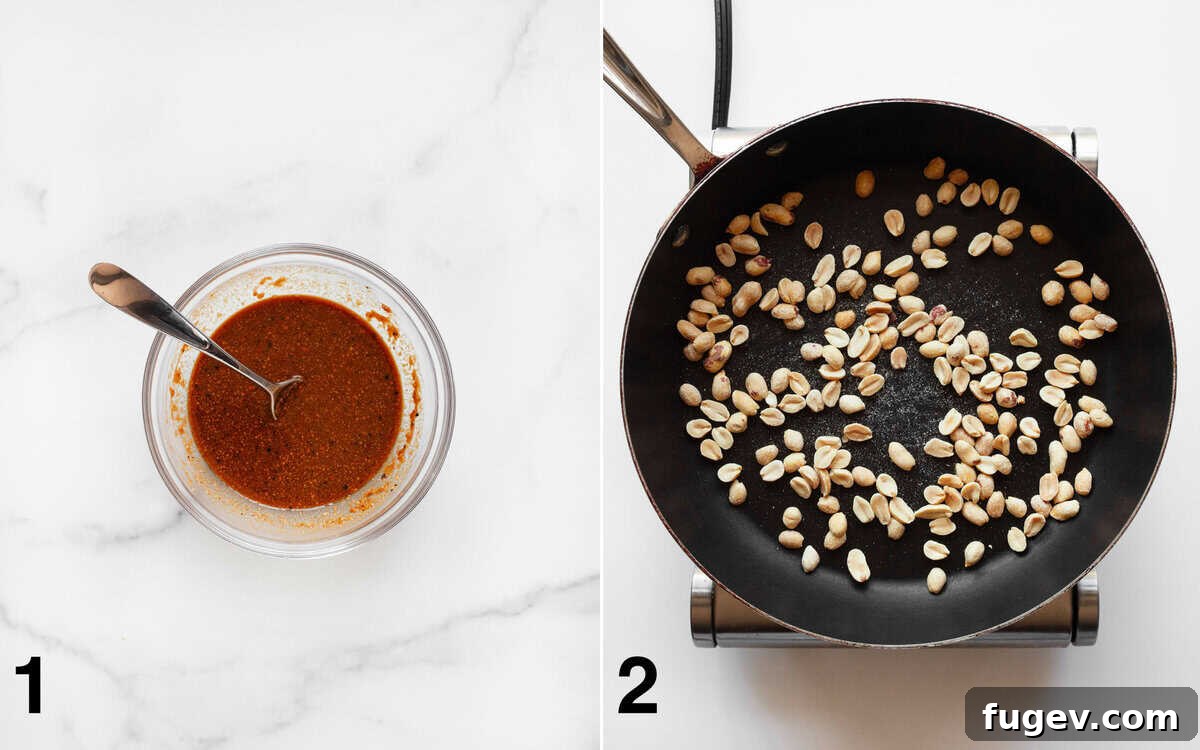
- Prepare the Irresistible Peanut Sauce: In a small bowl, combine the low-sodium soy sauce, smooth natural peanut butter, hoisin sauce, rice vinegar, toasted sesame oil, maple syrup, kosher salt, and black pepper. Whisk diligently until all the ingredients are thoroughly combined and the sauce is smooth and creamy. Set this aside; it’s the flavor powerhouse of your dish.
- Toast the Peanuts to Perfection: Place your skillet or wok over low to medium heat on your stovetop. Add the roasted peanuts and dry-toast them, stirring frequently, for about 2-3 minutes. They should become fragrant and develop a light golden-brown color in spots, intensifying their nutty flavor and crunch. Once toasted, immediately remove them from the skillet to prevent burning and set them aside on a small plate.
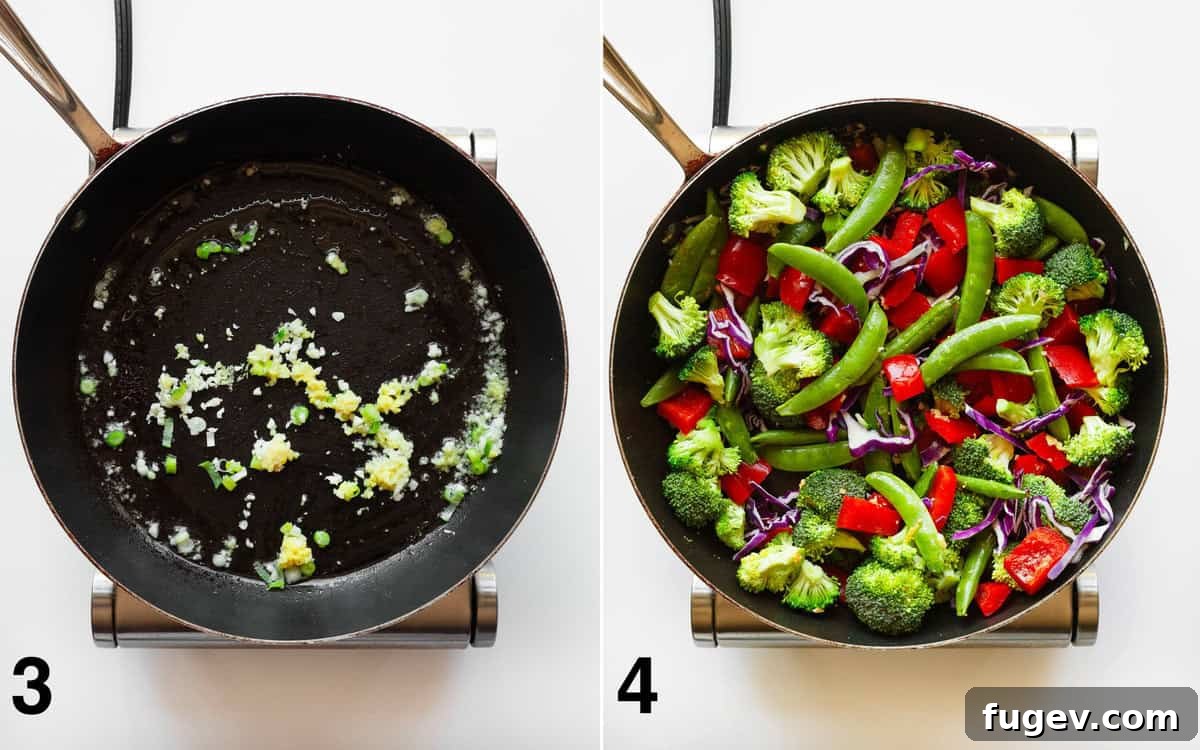
- Sauté the Aromatics for a Fragrant Base: Increase the heat in your skillet or wok to high. Add one tablespoon of your chosen vegetable oil and let it heat until shimmering. Carefully add the white parts of your sliced scallions, along with the minced garlic and fresh minced ginger. Sauté these aromatics quickly, stirring constantly, for about 30 seconds until they release their wonderfully fragrant aromas. This step lays a crucial flavor foundation for the entire stir-fry.
- Introduce the Vibrant Vegetables: Now, add the prepared broccoli florets, diced bell peppers (yellow, orange, or red), snow peas (or sugar snap peas), and shredded red cabbage to the skillet. Continue to sauté over high heat, constantly stirring and tossing the vegetables in the pan, for 3-4 minutes. The goal is for the vegetables to cook through and become tender-crisp – they should retain their bright color and a satisfying crunch, not become soft or mushy. This maintains all that good texture and bite.
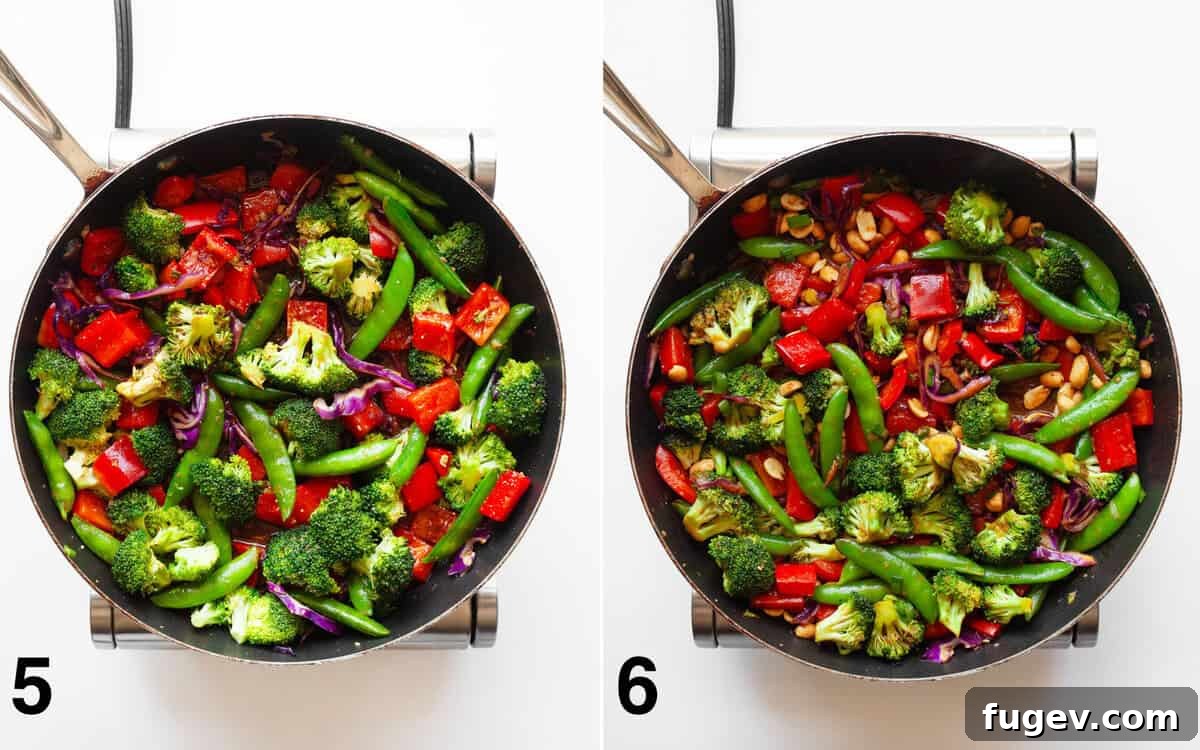
- Enrich with the Peanut Sauce: Pour the prepared peanut sauce directly over the sautéed vegetables in the skillet. Continue stirring and tossing the vegetables to ensure they are evenly coated in the luscious sauce. Allow the mixture to bubble and simmer gently for about 2 minutes. This brief simmering time allows the flavors to meld beautifully and the sauce to slightly thicken, clinging perfectly to the crisp vegetables.
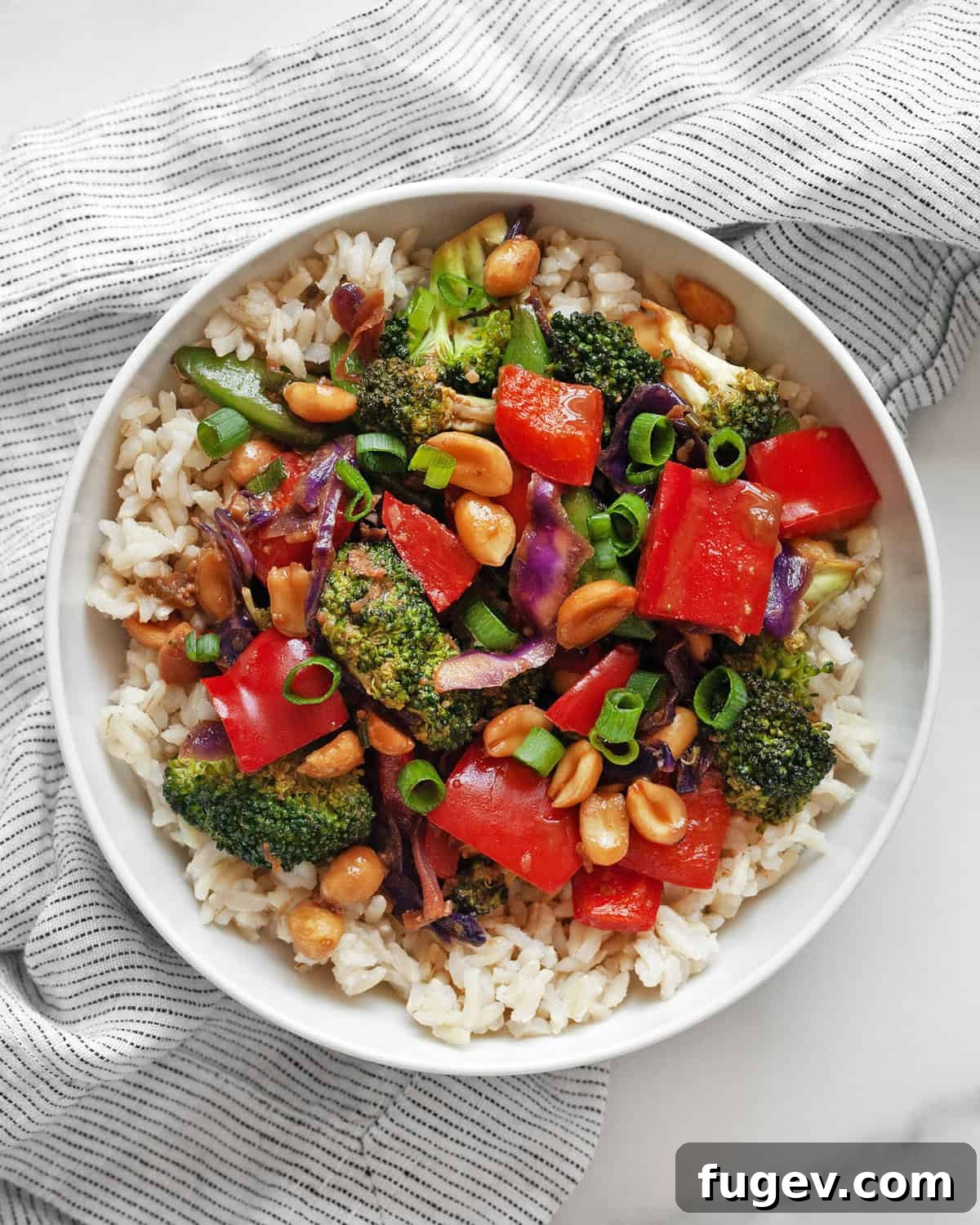
- Finish with Freshness and Serve: Finally, fold in the previously toasted peanuts and the vibrant green parts of your sliced scallions. Give everything a quick toss to combine. Your incredibly delicious and healthy Peanut Veggie Stir-Fry is now ready to be enjoyed! Serve immediately alongside warm, fluffy brown rice for a complete and utterly satisfying meal.
Serving Suggestions for Your Peanut Veggie Stir-Fry
This Peanut Veggie Stir-Fry is a complete meal on its own, especially when served with a complementary base. However, a few thoughtful additions can elevate the experience even further.
The Perfect Companion: Brown Rice
Brown rice is the quintessential pairing for this flavorful stir-fry. Its nutty flavor and wholesome texture perfectly absorb the rich peanut sauce. To truly leverage the speed of this recipe for a busy weeknight, I highly recommend cooking your brown rice the night before. Simply store it in the refrigerator and then gently warm it in the microwave or a steamer just before serving. This ensures that the rice is ready when your stir-fry is, eliminating any waiting time for dinner.
Alternative Bases for Variety
While brown rice is a classic, feel free to experiment with other bases:
- Quinoa: For an extra protein boost and a slightly different texture.
- Cauliflower Rice: A fantastic low-carb option that still soaks up all the delicious sauce.
- Soba Noodles or Rice Noodles: Toss the stir-fry directly with cooked noodles for a noodle-bowl style meal.
Fresh Side Salads for a Complete Meal
To add another layer of freshness and crunch, consider serving your stir-fry with a light, crisp side salad:
- For a refreshing contrast, try this cucumber carrot salad. Its cool, tangy notes cut through the richness of the peanut sauce beautifully.
- Alternatively, an Asian cabbage salad with an almond ginger vinaigrette would provide complementary flavors and textures.
Garnish for Extra Flair
Don’t underestimate the power of a simple garnish to add visual appeal and a burst of fresh flavor. A sprinkle of extra chopped scallions, a handful of fresh cilantro, or a squeeze of fresh lime juice can brighten the entire dish.
Leftovers & Storage Tips for Your Peanut Veggie Stir-Fry
One of the many wonderful qualities of stir-fries, and especially this Peanut Veggie Stir-Fry, is how exceptionally well they hold up as leftovers. This makes them an ideal candidate for meal prepping and enjoying delicious, healthy meals throughout your week.
Optimal Storage
Once your stir-fry has cooled down to room temperature, transfer it to an airtight container. This is crucial for maintaining freshness and preventing contamination. Store the sealed container in the refrigerator, where it will remain delicious and safe to eat for up to 4 days. The flavors often deepen overnight, making day-two stir-fry a real treat!
Reheating Your Stir-Fry
There are several convenient ways to enjoy your leftovers:
- Microwave: For the quickest reheat, place your stir-fry in a microwave-safe dish and warm in 30-60 second intervals, stirring in between, until heated through. Be careful not to overheat, which can make the vegetables soggy.
- Stovetop: For a slightly fresher texture, heat a small amount of oil in a skillet over medium-low heat. Add the stir-fry and toss gently until warmed through. This method can help revive some of the crispness in the vegetables.
- Cold: Believe it or not, this stir-fry is also surprisingly delicious enjoyed cold straight from the fridge! It makes for a perfect, quick, and refreshing lunch on a warm day.
A Note on Freezing
While many dishes freeze well, I do not recommend freezing this particular stir-fry. The high water content in many of the fresh vegetables (like bell peppers and cabbage) can cause them to become mushy and lose their desirable crisp-tender texture once thawed and reheated. The sauce can also separate slightly. For the best quality and enjoyment, stick to refrigeration.
Pro Tips for a Perfect Stir-Fry
Achieving a restaurant-quality stir-fry at home is easier than you think, especially with these insider tips to guide you:
- The Golden Rule of Mise en Place: This cannot be emphasized enough for stir-fries! “Mise en place” (everything in its place) means having all your vegetables chopped, your sauce whisked, and your aromatics minced *before* you even turn on the stove. Stir-fries cook incredibly fast over high heat, so you won’t have a moment to spare for chopping once the cooking begins. Being prepared ensures a smooth, stress-free cooking process and perfectly cooked ingredients.
- Peanut Butter Consistency is Key: For the peanut sauce, the consistency of your natural peanut butter matters. It needs to be relatively smooth and on the more liquidy side to whisk easily into the other sauce ingredients. If your peanut butter is very thick or dry (which can happen with jars closer to the bottom), you might struggle to achieve a smooth sauce. A trick is to warm it slightly or add a tiny splash of warm water to loosen it before combining with the other liquids.
- Fresh Over Frozen Vegetables: While frozen vegetables are convenient, this particular recipe truly shines with fresh produce. Fresh vegetables retain their crispness and vibrant color much better under the high heat of stir-frying, contributing to that desirable “crisp-tender” texture. If frozen vegetables are your only option, consider adjusting the cooking time slightly and be prepared for a softer texture. For a recipe specifically designed for frozen veggies, check out this frozen vegetable stir-fry instead.
- Don’t Overcrowd the Pan: This is a common mistake that leads to soggy vegetables. If your skillet or wok is too full, the vegetables will steam instead of sear. Cook in batches if necessary, especially if you’re doubling the recipe or using a smaller pan. This ensures proper caramelization and that coveted crisp texture.
- High Heat is Your Friend: Stir-frying relies on intense, quick cooking. Make sure your wok or skillet is screaming hot before adding the oil and vegetables. This high heat quickly cooks the exterior of the vegetables while keeping the interior crisp.
- The Right Tool for the Job: While a large skillet works well, a wok is designed specifically for stir-frying. Its sloped sides allow for easy tossing and provide varying temperature zones for cooking different ingredients.
Recipe FAQs: Your Questions Answered
Traditional soy sauce contains wheat, meaning the sauce as written is not gluten-free. However, you can easily make it gluten-free by substituting tamari for soy sauce. Tamari is a Japanese soy sauce that is naturally gluten-free. Always double-check the label of your tamari brand to ensure it doesn’t contain any hidden wheat ingredients.
Absolutely! This recipe is incredibly versatile. Feel free to customize it with your favorite stir-fry-friendly vegetables. Excellent additions include sliced mushrooms, zucchini ribbons, asparagus spears, bok choy, green beans, or even water chestnuts for extra crunch. Just ensure they are cut into similar-sized pieces for even cooking.
Yes, adding a protein is a fantastic idea to make this meal even more robust. Chicken, shrimp, tofu, or thinly sliced beef work wonderfully. The key is to cook your chosen protein first: sauté it in the skillet until nearly cooked through, then remove it and set it aside on a plate. Briefly wipe out the skillet if needed, then proceed with the recipe as written. Once the vegetables and sauce are combined, stir the cooked protein back into the pan to warm through just before serving.
Absolutely! If you love a bit of heat, there are several ways to spice up your stir-fry. You can add a pinch of red pepper flakes to the sauce, or even a teaspoon of Sriracha or chili garlic sauce directly into the sauce mixture. For a fresh kick, garnish the finished dish with thinly sliced fresh red chilies.
Natural peanut butter can sometimes separate or become very thick, especially towards the bottom of the jar. If this happens, try warming it gently in the microwave for 10-15 seconds to soften it. You can also add a tablespoon of warm water to the sauce mixture while whisking to help thin out the peanut butter to the desired consistency.
More Stir-Fry Recipes to Explore
If you’ve enjoyed this easy peanut veggie stir-fry, be sure to check out these other delicious and quick stir-fry inspired recipes:
Broccoli Fried Rice
Tofu-Peanut Vegetable Stir-Fry
Soba Noodles with Mushrooms and Bok Choy
Garlic Ginger Veggie Tofu Stir-Fry
Peanut Veggie Stir-Fry Recipe
This easy Peanut Veggie Stir-Fry, featuring broccoli, bell peppers, cabbage, and snow peas, is packed with fresh flavors and comes together quickly.
By: Paige Adams
Prep Time: 5 minutes
Cook Time: 10 minutes
Total Time: 15 minutes
Servings: 4
Print Recipe
Ingredients
For the Sauce:
- 1/3 cup low-sodium soy sauce
- 2 tablespoons smooth natural peanut butter
- 1 tablespoon hoisin sauce
- 1 tablespoon rice vinegar
- 1 teaspoon sesame oil
- 1 teaspoon maple syrup
- 1/4 teaspoon kosher salt
- 1/4 teaspoon black pepper
For the Stir-Fry:
- 1/2 cup lightly salted or unsalted roasted peanuts
- 1 tablespoon vegetable oil (or other high smoke point oil)
- 2 scallions, thinly sliced, white and green parts separated
- 1 garlic clove, minced
- 1 tablespoon minced fresh ginger
- 2 cups small to medium broccoli florets
- 2 bell peppers, diced (yellow, orange, or red recommended)
- 1 cup snow peas or sugar snap peas
- 1 cup shredded red cabbage
For Serving:
- Brown rice
Instructions
- Prepare the Sauce: In a small bowl, whisk together the soy sauce, peanut butter, hoisin sauce, rice vinegar, sesame oil, maple syrup, salt, and pepper until smooth.
- Toast Peanuts: In a large skillet or wok over low to medium heat, toast the peanuts for 2-3 minutes until golden brown and fragrant. Remove and set aside.
- Sauté Aromatics: Increase heat to high, add 1 tablespoon vegetable oil. Sauté the white parts of the scallions, minced garlic, and minced ginger for about 30 seconds until fragrant.
- Add Vegetables: Add the broccoli, bell peppers, snow peas, and cabbage to the skillet. Sauté for 3-4 minutes, stirring constantly, until vegetables are crisp-tender and bright in color.
- Combine with Sauce: Pour the prepared peanut sauce over the vegetables. Let it bubble and simmer for 2 minutes, tossing to coat the vegetables evenly.
- Finish and Serve: Stir in the toasted peanuts and the green parts of the scallions. Serve immediately with brown rice.
Notes
- For faster meal prep, cook the brown rice a day ahead and reheat in the microwave just before serving.
- Store any leftover stir-fry in an airtight container in the refrigerator for up to 4 days. Reheat in the microwave or gently warm in a skillet with a tiny bit of oil over low heat. Freezing is not recommended as it can alter the texture of the vegetables.
- If adding protein like chicken or shrimp, sauté it first in the skillet until nearly cooked, then remove and set aside. Wipe the skillet clean, then proceed with the recipe instructions. Stir the cooked protein back into the vegetables with the sauce in the final step.
- The provided nutrition information below does not include the brown rice.
Nutrition
Calories: 266kcal | Carbohydrates: 19g | Protein: 12g | Fat: 18g | Saturated Fat: 3g | Polyunsaturated Fat: 7g | Monounsaturated Fat: 7g | Trans Fat: 0.02g | Sodium: 1188mg | Potassium: 665mg | Fiber: 6g | Sugar: 8g | Vitamin A: 2625IU | Vitamin C: 141mg | Calcium: 84mg | Iron: 2mg
Nutrition information is automatically calculated and should only be used as an approximation.
Additional Info
Course: Main Dishes
Cuisine: Asian
Did you make this recipe?
Mention @lastingredient on Instagram and tag it #lastingredient!