
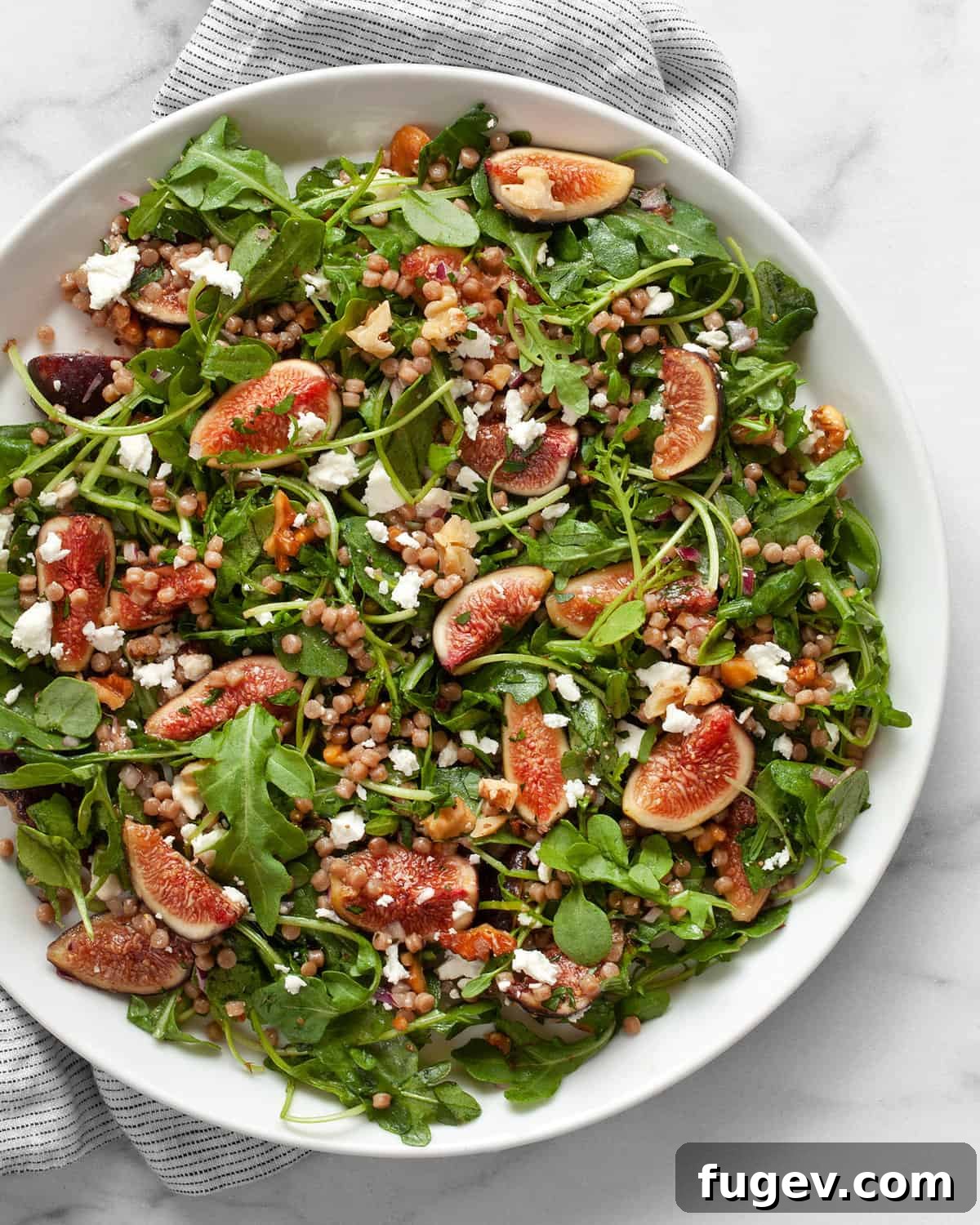
Fresh Fig Salad with Arugula, Goat Cheese & Couscous
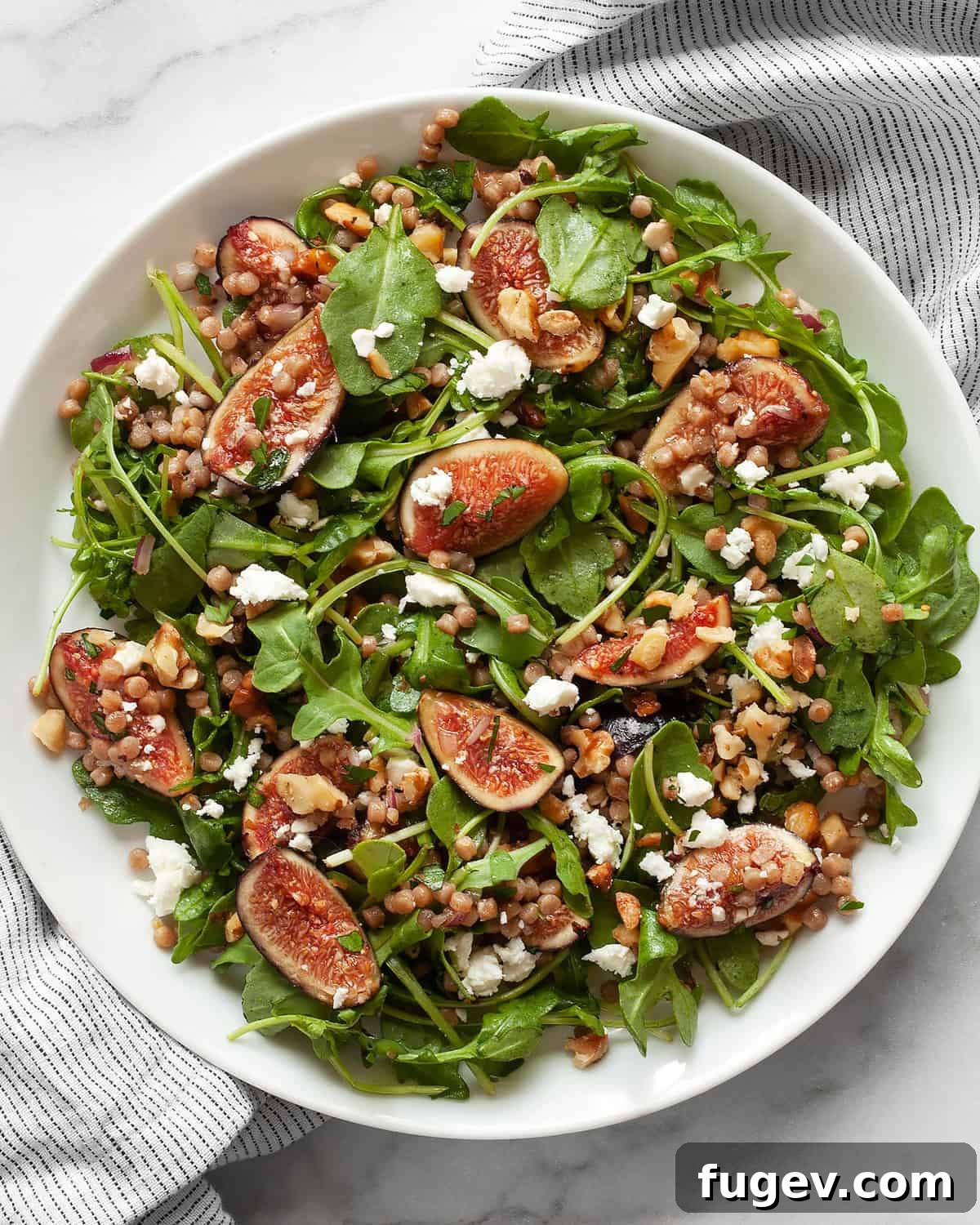
There’s an undeniable allure to fresh figs. When you encounter them at the peak of their season, whether at a bustling farmers market or in the produce aisle, it feels like a rare opportunity you simply can’t let pass. Their season is fleeting, making each ripe fig a precious delight. This recipe celebrates their exquisite taste in a classic, effortless salad. Imagine vibrant arugula, tangy goat cheese, crunchy walnuts, and finely diced red onions, all beautifully complemented by sweet, tender figs and a bright balsamic vinaigrette. It’s a symphony of flavors and textures that captures the essence of late summer and early fall.
This fig salad recipe is so captivating that it might just inspire dreams of cultivating your own fig tree. While botanically figs are not technically fruits but inverted flowers, they are commonly enjoyed in the same culinary category as fruits, and they are truly exceptional. I personally adore leafy green salads that feature fresh fruit, and figs bring a unique sweetness and soft texture that is unparalleled. If you’re eager to explore more fig creations, be sure to try them in a fig radicchio salad for a bitter-sweet contrast or a savory fig goat cheese flatbread.
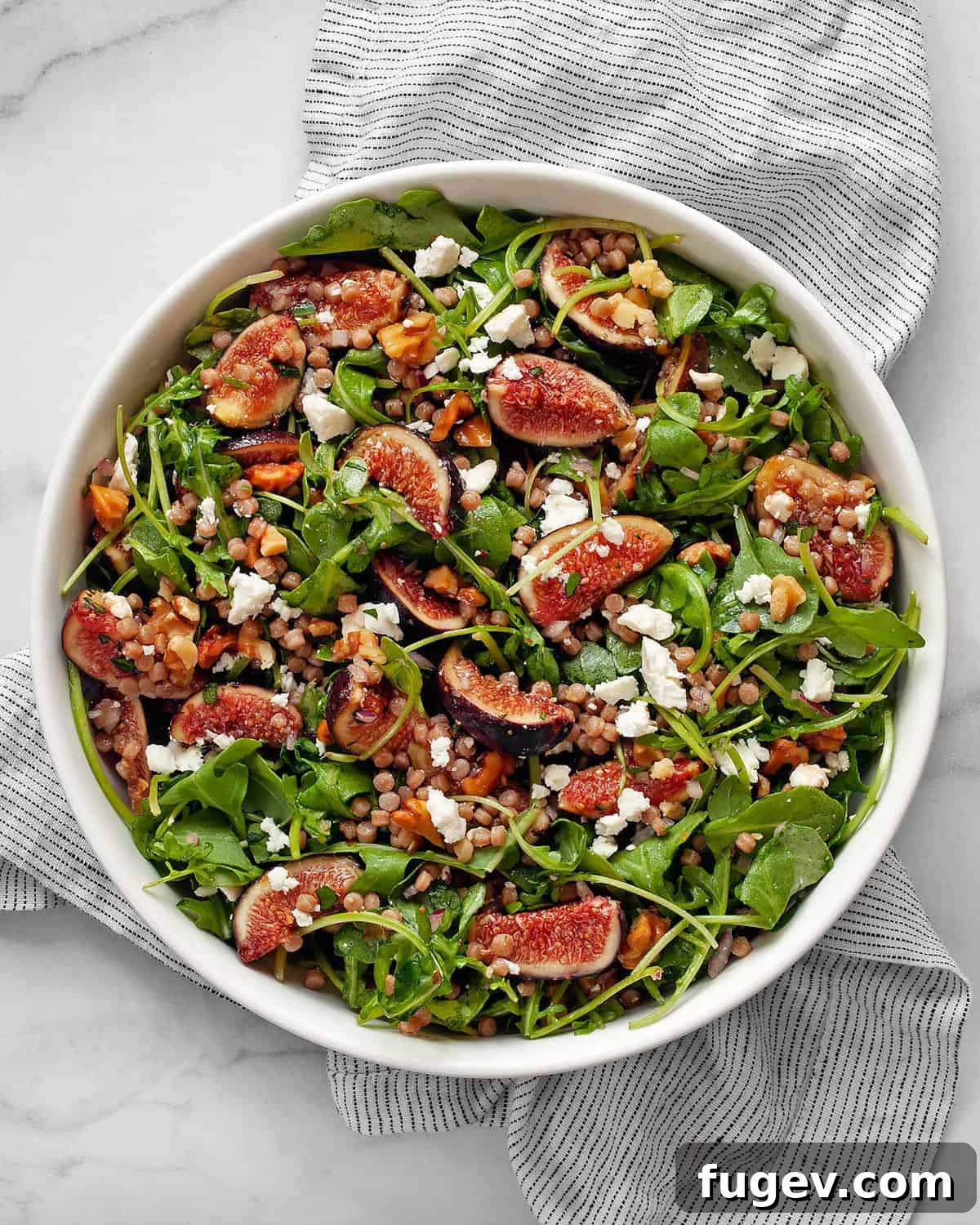
Table of Contents
- Why Fresh Figs Are a Seasonal Gem
- Selecting and Storing Fresh Figs
- The Perfect Ingredients for Your Fig Salad
- Step-by-Step: How to Make This Fresh Fig Salad
- Serving Suggestions for Your Fig Salad
- Storing Leftovers to Maximize Freshness
- More Delightful Salad Recipes to Explore
- Fig Salad with Arugula, Goat Cheese & Couscous Recipe
Why Fresh Figs Are a Seasonal Gem
Fresh figs are truly a sight to behold, a natural work of art. Their distinctive teardrop shape, coupled with their rich brownish-purple skin and a vibrant, often rosy-pink interior, makes them stand out in any produce display. What makes them particularly special is their limited availability; figs typically have two distinct seasons. The first occurs in early summer, offering a brief burst of deliciousness. The second, more abundant season stretches from late summer into early fall. This fleeting nature is precisely why I get so excited when I spot them at the grocery store or market. It’s a quiet celebration, a delicious race against time to enjoy them while they last.
Beyond their captivating appearance, figs boast a flavor profile that is subtly sweet, beautifully aromatic, and wonderfully soft. The multitude of tiny seeds within each fig provides a delicate, satisfying crunch, adding to their unique texture. However, the true magic of figs often lies in how they are paired. Their versatile nature allows them to shine in both sweet and savory applications. When thinking about accompaniments, simplicity is key. Consider the golden drizzle of honey, the savory punch of aged or “stinky” cheeses, the earthy crunch of nuts like almonds or walnuts, or the bright zest of lemon or the comforting hint of vanilla. These pairings enhance the fig’s natural sweetness without overwhelming it. Figs are also packed with fiber, essential minerals, and antioxidants, making them not just a treat for the palate, but also a nutritious addition to your diet.
Selecting and Storing Fresh Figs
Choosing Peak Ripeness: The secret to an outstanding fig salad begins with selecting the perfect figs. Look for figs that are plump and yield slightly to a gentle squeeze. These characteristics are clear indicators that the figs have reached their peak ripeness, offering maximum sweetness and tenderness. Avoid figs that are hard, as they are underripe, or those that are excessively soft, bruised, or cracked, which suggest overripeness or damage. Overly soft figs, while still usable, might be better suited for cooking, such as simmering into a jam. For instance, while this cranberry fig jam recipe primarily uses dried figs, a handful of very ripe fresh figs could be a delightful addition, bringing a burst of fresh flavor.
Handling and Storage: Fresh figs are remarkably delicate and require careful handling. They bruise easily, so transport them gently. Ideally, figs should be stored at room temperature if you plan to consume them within a day or two. For longer storage, up to 3-5 days, place them in a single layer on a plate or shallow bowl lined with a paper towel and loosely cover them before refrigerating. It’s crucial to use them as soon as possible after purchase. Keep a close eye on your stored figs; if one begins to show signs of spoilage, such as mold or excessive softness, remove it immediately to prevent it from affecting the others in the batch. Their delicate nature is part of their charm, reminding us to savor their brief season.
The Perfect Ingredients for Your Fig Salad
Crafting this incredible salad requires a thoughtful selection of components that harmoniously balance flavors and textures. Here’s a detailed look at what you’ll need and why each ingredient plays a vital role:
- Figs: For this recipe, I highly recommend using black mission figs or brown turkey figs. Both varieties feature beautiful brownish-purple skins and are widely available during their respective seasons. Black Mission figs tend to be slightly sweeter, while Brown Turkey figs offer a milder sweetness. Either will bring that essential tender texture and honeyed flavor to the salad.
- Couscous: Pearl couscous, also known as Israeli couscous, is ideal here. Its larger, round, and plump grains provide a wonderful chewy texture that stands up well to the other ingredients. Its size is comparable to the chopped nuts and onions, ensuring a consistent bite in every forkful. For a nutritional boost, opt for whole wheat pearl couscous. If pearl couscous is unavailable, hearty grains like barley or farro make excellent substitutes, adding their own unique chewiness.
- Arugula: This delicate baby green is chosen for its distinctive peppery, slightly bitter bite, which beautifully contrasts the sweetness of the figs and the richness of the goat cheese. Its tender leaves also provide a light and refreshing base for the salad. If you prefer a milder greens, baby spinach can be used as a swap, or combine arugula and spinach for a balanced flavor profile.
- Red Onions: Finely diced red onions contribute a crisp texture and a pungent, slightly sweet sharpness that cuts through the richness of the other ingredients. It’s important to dice them small so their size is close to the couscous grains and walnuts, ensuring no single ingredient overwhelms a bite.
- Walnuts: Toasting the chopped walnuts before adding them to the salad is a crucial step. This simple process enhances their nutty flavor and gives them an irresistible crunch. You can achieve this by spreading them on a baking sheet and toasting in a 350-degree F oven for about 5 minutes, or lightly toasting them in a dry skillet over medium heat. Almonds or pecans are fantastic alternative nuts that offer similar textural and flavor benefits.
- Goat Cheese: Creamy, tangy goat cheese is a match made in heaven with fresh figs. Its bright, slightly earthy flavor provides a wonderful counterpoint to the figs’ sweetness and the arugula’s spice. If goat cheese isn’t to your liking, crumbled feta, sharp blue cheese, or mild gorgonzola can offer equally delicious, distinct flavor profiles.
- Parsley: Fresh herbs are often overlooked but are essential for layering complex flavors into salads. Freshly chopped parsley adds a bright, herbaceous note and a touch of freshness that elevates the entire dish. Don’t skip this vibrant addition!
- Balsamic Vinegar: The deep, complex, and subtly sweet-tart notes of balsamic vinegar make it the quintessential choice for this dressing, as it perfectly complements the figs. For a lighter, brighter vinaigrette, consider using white balsamic vinegar or champagne vinegar.
- Whole Grain Mustard: More than just a flavor enhancer, whole grain mustard acts as an emulsifier in the vinaigrette, helping to bind the oil and vinegar together to prevent separation, resulting in a smooth, consistent dressing. It also adds a delightful, subtle tang and a slight textural element.
- Honey: A touch of honey provides a delicate sweetness to the balsamic vinaigrette, balancing the acidity and rounding out the flavors. Maple syrup is a suitable alternative for a similar natural sweetness.
- Olive Oil: Use a high-quality extra virgin olive oil for both toasting the couscous (if desired) and, most importantly, for the vinaigrette. Its fruity, peppery notes are fundamental to the dressing’s character.
- Salt & Pepper: Simple kosher salt and freshly ground black pepper are vital for seasoning the vinaigrette, ensuring that the overall salad is perfectly balanced and flavorful.
Step-by-Step: How To Make This Fresh Fig Salad
Creating this stunning fig salad is a straightforward process, breaking down into a few simple steps. Here’s how you can bring this seasonal delight to your table:
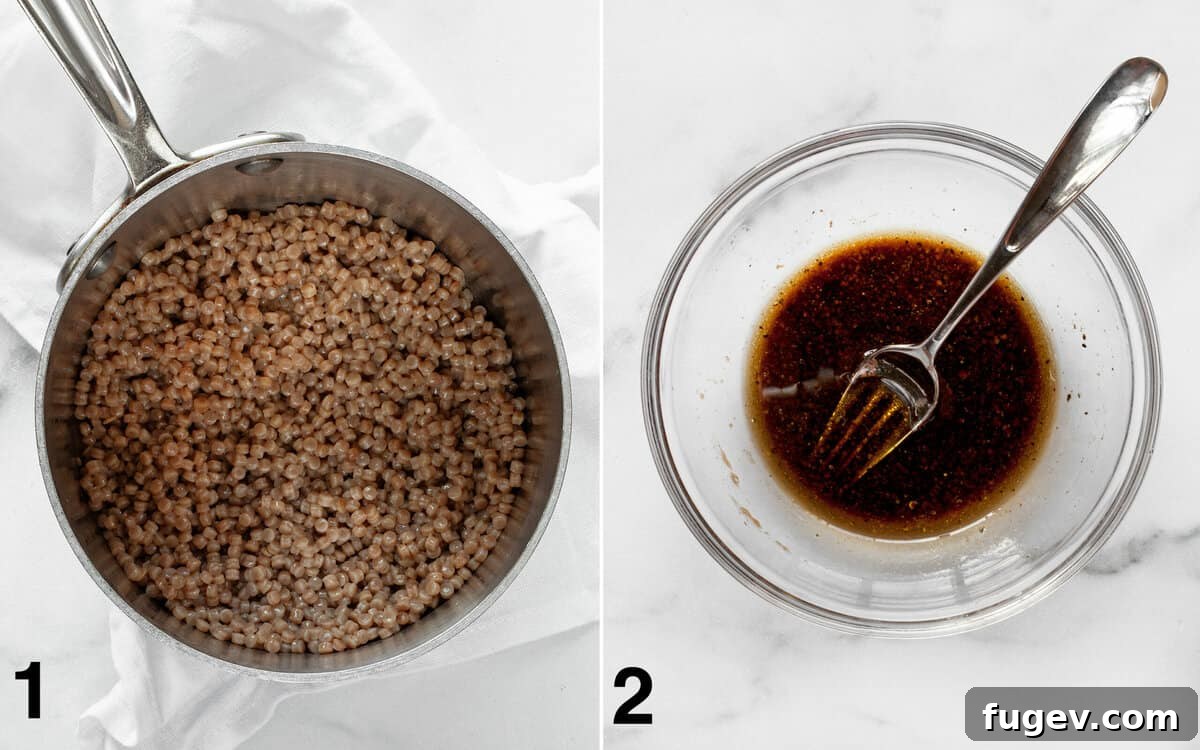
- Prepare the Couscous: Begin by heating 1 teaspoon of olive oil in a medium pot over medium heat. Add the pearl couscous and toast it for 2-3 minutes, stirring continuously until the grains turn lightly golden. This toasting step significantly enhances its nutty flavor. Carefully pour in the specified amount of water and bring it to a boil. Once boiling, reduce the heat to low, cover the pot with a lid, and let it simmer gently until the couscous is tender and has absorbed most of the water, which typically takes about 10 minutes. Once cooked, fluff with a fork and set aside to cool slightly.
- Whisk the Vinaigrette: While the couscous is cooking, prepare your balsamic vinaigrette. In a small bowl, combine the honey, whole grain mustard, balsamic vinegar, olive oil, kosher salt, and black pepper. Whisk all the ingredients vigorously until they are well combined and the dressing appears emulsified, meaning the oil and vinegar are thoroughly blended and no longer separating. Taste and adjust seasoning as needed.
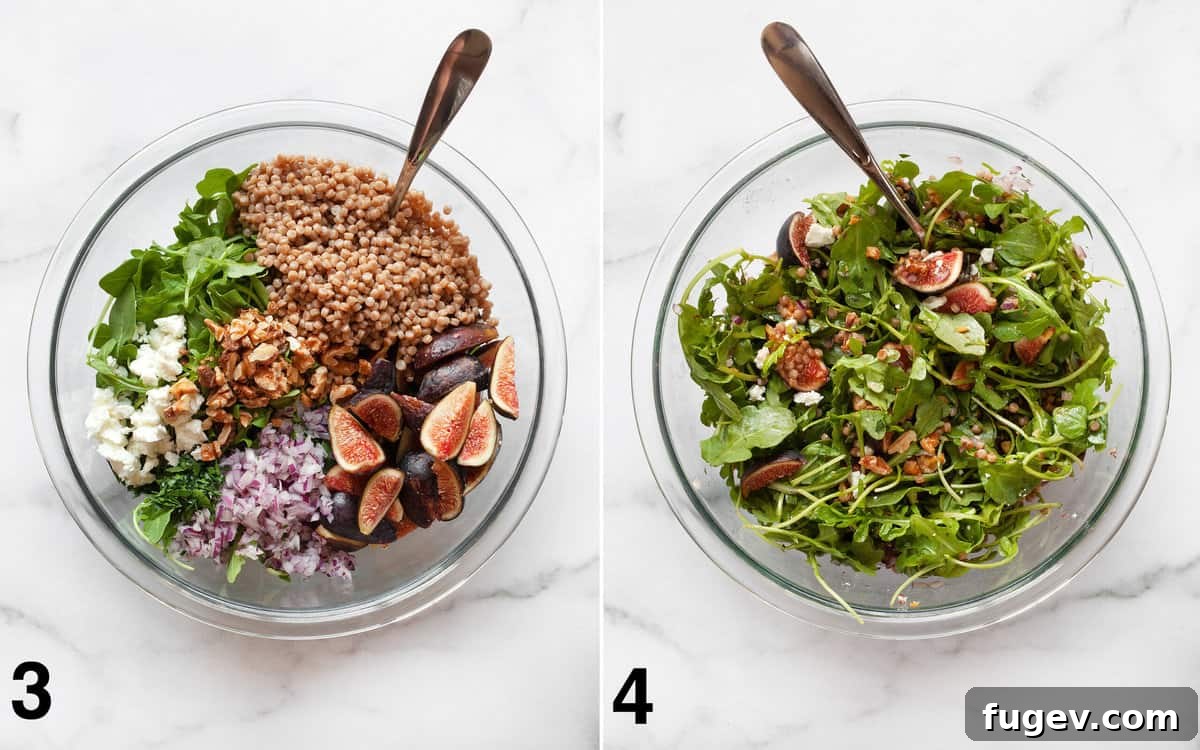
- Combine the Salad Ingredients: In a large mixing bowl, combine the cooled couscous, quartered fresh figs, finely chopped red onions, toasted walnuts, crumbled goat cheese, fresh baby arugula, and chopped fresh parsley. Ensure all ingredients are evenly distributed.
- Dress and Toss the Salad: Drizzle a small amount of the prepared balsamic vinaigrette over the ingredients in the large bowl. Start with less dressing than you think you need, as you can always add more. Gently toss the salad using large salad servers or your hands (wearing gloves, if preferred) until all the ingredients are lightly coated with the dressing. The goal is to dress the salad evenly without making it soggy. Serve immediately for the best texture and flavor.
Serving Suggestions for Your Fig Salad
This fig, arugula, and couscous salad is remarkably hearty and satisfying, making it a perfect stand-alone meal for a light lunch or a delightful dinner. The pearl couscous adds substance, transforming it from a simple side into a robust main course. If you’re looking to boost the protein content, there are several delicious additions you can consider. Shredded rotisserie chicken or freshly grilled or roasted chicken breast would integrate beautifully. For a touch of savory richness and a classic fig pairing, tear pieces of thinly sliced prosciutto and gently toss them into the salad. Its salty notes perfectly complement the sweetness of the figs and the tang of the goat cheese. For a vegetarian option, consider adding toasted chickpeas for extra protein and crunch. This salad also pairs wonderfully with a crisp white wine, such as Sauvignon Blanc or Pinot Grigio, or a light-bodied rosé. It’s also an excellent side dish for grilled fish or a simple baked chicken, making it versatile for various occasions.
Storing Leftovers to Maximize Freshness
To ensure any leftover salad remains as fresh and delicious as possible, proper storage is key. If you anticipate having leftovers, it is highly recommended to portion out the salad ingredients into individual servings before tossing them with the dressing. Once dressed, greens tend to wilt quickly, and other ingredients can become soggy. Store the undressed salad components in a clean, airtight container in the refrigerator for up to 3 days. The balsamic vinaigrette should be stored separately in a small, tightly sealed jar or container in the fridge. This way, you can dress each portion just before serving, maintaining the salad’s vibrant texture and crispness. If your arugula does wilt slightly, a quick soak in ice water for a few minutes can sometimes help revive its crispness before tossing with fresh dressing.
More Delightful Salad Recipes to Explore
If you’ve enjoyed the unique flavor combination of this fig salad, you’ll love exploring other creative and seasonal salad recipes. Expanding your salad repertoire is a fantastic way to incorporate more fresh, wholesome ingredients into your diet. Here are some more inspiring ideas to tantalize your taste buds:
- Strawberry Pistachio Goat Cheese Salad
- Crisp Apple Cabbage Salad
- Roasted Beet Salad with Oranges and Pears
- Blackberry Salad with Pesto Vinaigrette
- Vibrant Citrus Salad with Olives and Pomegranate Seeds
- Hearty Kale Brussels Sprout Pear Salad
- Inviting Fall Harvest Salad
- Savory Roasted Squash Salad
- Elegant Pear Manchego Salad
For even more fresh and exciting ideas, delve into our comprehensive seasonal salad roundup, featuring everything from light leafy greens to satisfying bean and pasta salads.
Fig Salad with Arugula, Goat Cheese & Couscous Recipe
A Delightful Seasonal Salad
This pearl couscous salad combines the best of seasonal fresh figs with peppery arugula, creamy goat cheese, and crunchy toasted walnuts, all brought together by a zesty balsamic vinaigrette. It’s a satisfying dish perfect for any occasion.
By: Paige Adams
Prep Time: 10 mins
Cook Time: 10 mins
Total Time: 20 mins
Servings: 4
Ingredients
For the Couscous:
- 1 teaspoon olive oil
- 1/2 cup pearl couscous (whole wheat, if possible)
- 1/2 cup + 1 tablespoon water
For the Balsamic Vinaigrette:
- 1 teaspoon honey (or maple syrup)
- 1 teaspoon whole grain mustard
- 2 tablespoons balsamic vinegar
- 3 tablespoons extra virgin olive oil
- 1/2 teaspoon kosher salt
- 1/4 teaspoon black pepper
For the Salad:
- 10 fresh figs, stems trimmed, quartered
- 1/4 cup finely chopped red onions
- 1/4 cup chopped toasted walnuts
- 1/4 cup crumbled goat cheese
- 5 ounces baby arugula
- 1 tablespoon chopped fresh parsley
Instructions
- Prepare the Couscous: Heat 1 teaspoon olive oil in a medium saucepan over medium heat. Add the couscous and toast for 2-3 minutes, stirring frequently, until golden. Pour in the water and bring to a boil. Reduce heat to low, cover, and simmer until the couscous is tender and most of the water has been absorbed, about 10 minutes. Drain any remaining water and let cool slightly.
- Make the Vinaigrette: In a small bowl, whisk together the honey, whole grain mustard, balsamic vinegar, olive oil, kosher salt, and black pepper until well combined and emulsified.
- Assemble the Salad: In a large bowl, combine the cooked and cooled couscous, quartered figs, finely chopped red onions, toasted walnuts, crumbled goat cheese, baby arugula, and chopped parsley.
- Dress and Serve: Drizzle the vinaigrette over the salad ingredients, starting with a smaller amount and adding more to taste. Gently toss to combine all ingredients evenly. Serve immediately.
Notes
- If you plan to save some of the salad for later, do not toss it with the vinaigrette until just before serving. Store undressed salad and dressing separately in airtight containers in the refrigerator for up to 3 days.
- Instead of walnuts, feel free to use chopped toasted almonds or pecans for a different nutty flavor and crunch.
- Goat cheese can be swapped with crumbled feta, blue cheese, or gorgonzola based on your preference for a sharper or milder flavor.
Nutrition Information (Approximate per serving)
Calories: 386 kcal | Carbohydrates: 47g | Protein: 9g | Fat: 20g | Saturated Fat: 4g | Polyunsaturated Fat: 5g | Monounsaturated Fat: 10g | Cholesterol: 7mg | Sodium: 374mg | Potassium: 526mg | Fiber: 6g | Sugar: 25g | Vitamin A: 1252 IU | Vitamin C: 10mg | Calcium: 141mg | Iron: 2mg
Nutrition information is automatically calculated and should be used as an approximation.
Additional Info
Course: Salad
Cuisine: Mediterranean
Did you make this recipe?
Mention @lastingredient on Instagram and tag it #lastingredient! We’d love to see your creations!