
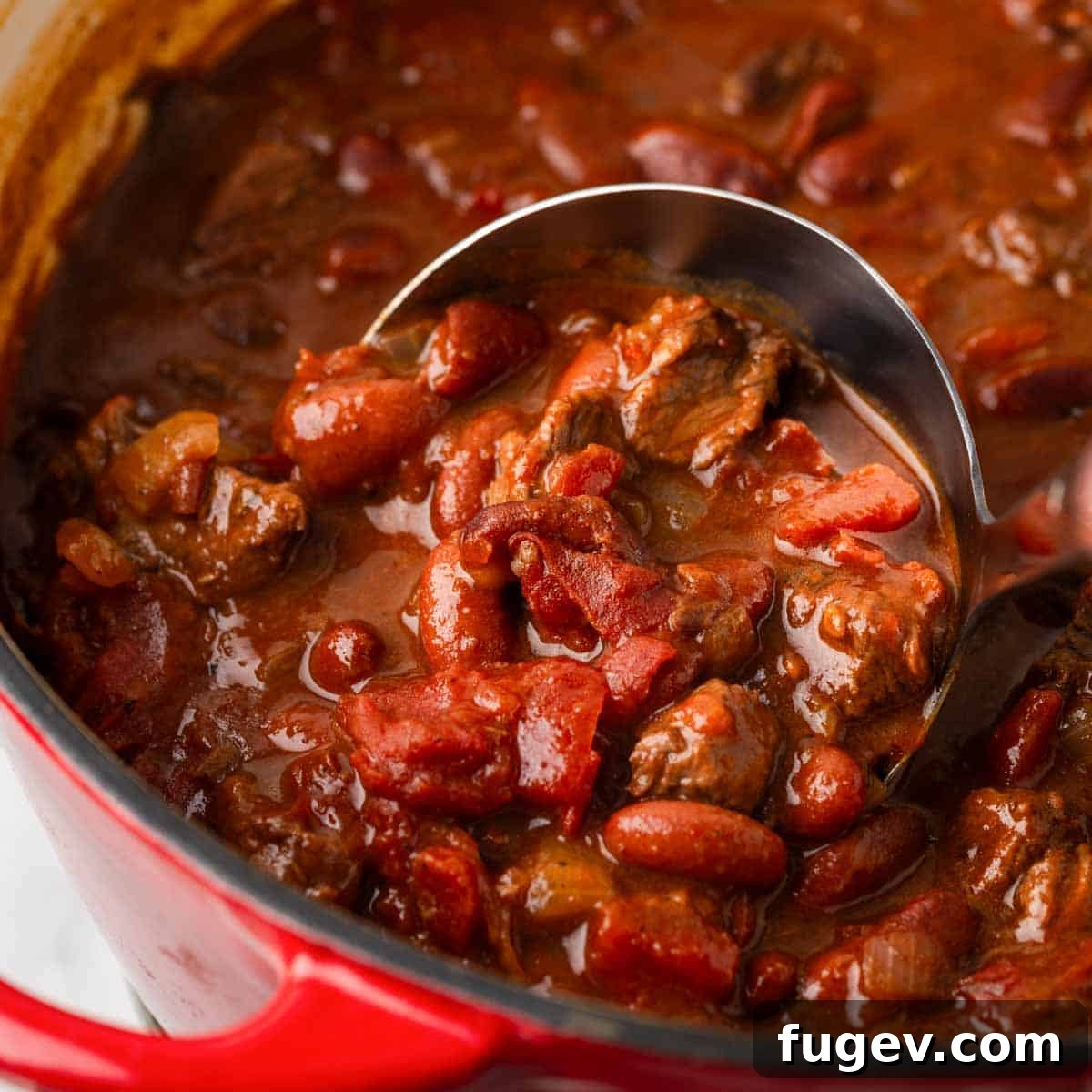
Rosemary Pinot Noir Steak Chili: A Gourmet Twist on a Classic Comfort Food
Prepare to elevate your chili experience with this extraordinary Steak Chili recipe. Unlike typical chili dishes, this version boasts succulent, fall-apart tender pieces of steak, infused with the smoky depth of premium chili powder, the bright tang of tomatoes, and the satisfying texture of savory kidney beans. What truly sets this recipe apart are the sophisticated additions of fresh, earthy rosemary and a rich, tannic red wine – specifically Pinot Noir – which contribute an elegant complexity that transforms a simple comfort meal into a culinary masterpiece. This isn’t just chili; it’s a gourmet journey in a bowl.
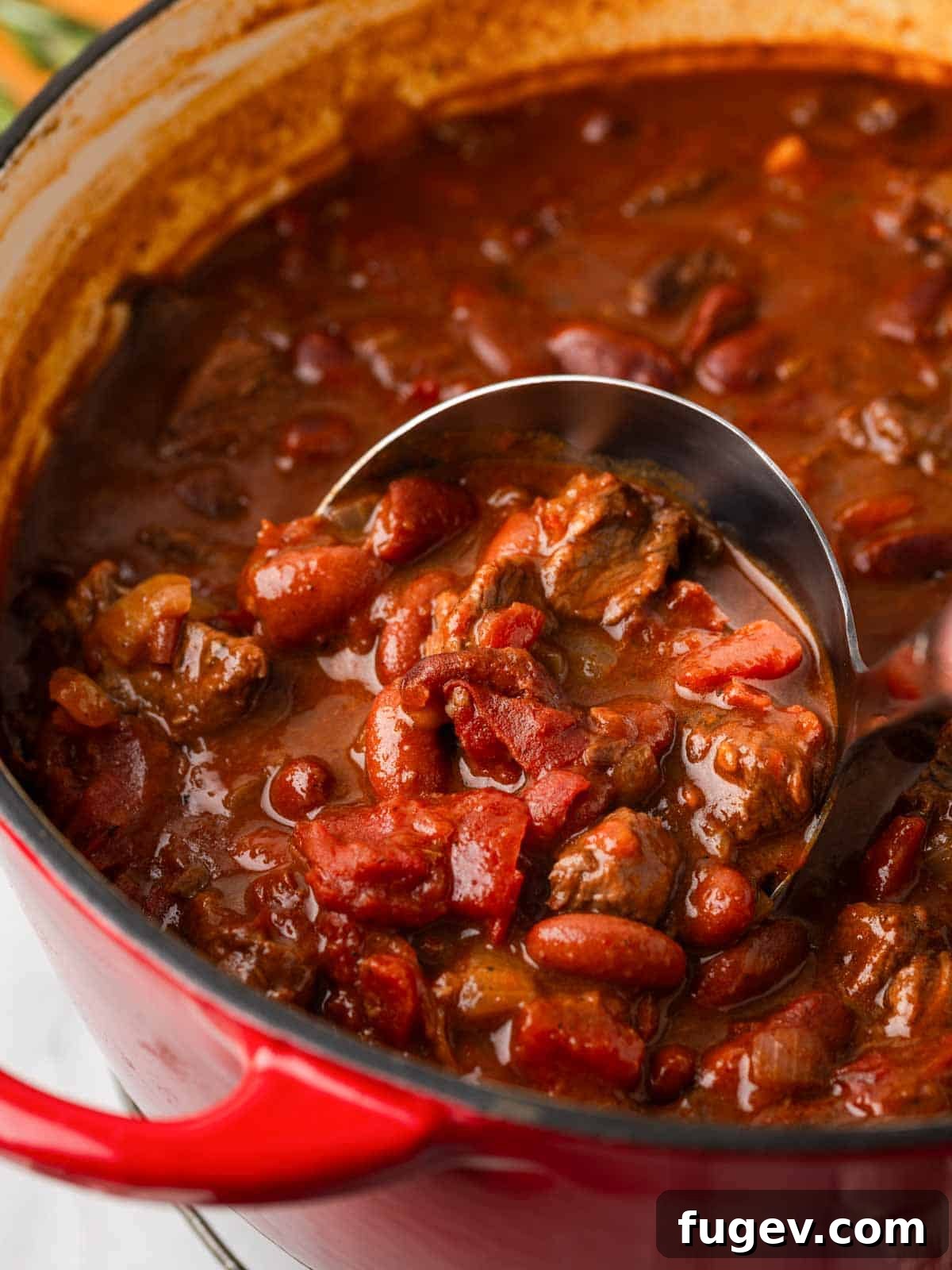
Imagine a big, steaming bowl of this hearty steak chili, perfectly paired with a slice of warm sweet cornbread or traditional Southern cornbread. It’s the ultimate antidote to a chilly, gray day, offering warmth and profound satisfaction from the first spoonful to the last. This Rosemary Pinot Noir Steak Chili is an ideal candidate for a leisurely Sunday cook, providing a truly comforting and deliciously memorable family dinner that will be requested again and again.
Our kitchen is a treasure trove of chili creations! If you love exploring different flavors, you must try our red chili recipe with ground beef, the vibrant healthy chipotle chicken chili, a delightful vegan chili with butternut squash, and what many consider to be the best turkey chili recipe! Chili is a personal favorite for a weeknight dinner, and thankfully, it’s a hit with my entire family too!
Table of Contents
- Why You Will Adore This Steak Chili
- Expert Tips for Crafting the Perfect Beef Chili
- Key Ingredients for Unforgettable Flavor
- Exciting Variations to Suit Your Style
- Step-by-Step Guide: How to Make This Steak Chili Recipe
- Chef Lindsey’s Insider Recipe Tip
- Frequently Asked Questions About Steak Chili
- Rosemary Pinot Noir Steak Chili Recipe Card
- Before You Go: More Culinary Adventures Await
Why You Will Adore This Steak Chili: A Deep Dive into Its Appeal
- An Unmatched Rich and Comforting Flavor Profile: This chili is a symphony of flavors, meticulously balanced to deliver ultimate satisfaction. Each bite offers fall-apart tender pieces of beef, robust and earthy kidney beans, the vibrant acidity of tomatoes, and a complex blend of smoky spices. The resulting flavor is not just rich and savory but also incredibly mouthwatering and deeply comforting, making it a truly soul-nourishing meal.
- Fresh Rosemary: The Secret to Elevating This Dish: What truly makes this chili a culinary standout is the inspired inclusion of fresh rosemary. Far from a humble addition, this aromatic herb transforms the entire dish, imparting subtle notes of pepper and lemon. This unexpected yet harmonious combination lifts the chili from an everyday meal to restaurant-quality fare, adding an undeniable touch of elegance and sophistication that will impress even the most discerning palates.
- Red Wine (Pinot Noir) for Unparalleled Complexity: The careful integration of red wine, specifically Pinot Noir, is another cornerstone of this recipe’s unique character. This addition contributes layers of richness, distinct fruitiness, and a subtle warmth that deepens the overall flavor profile significantly. This nuanced depth is a signature element that you’ll seldom find in traditional chili recipes, setting our Rosemary Pinot Noir Steak Chili in a league of its own. It’s an ingredient that truly makes a difference.
Expert Tips for Crafting the Perfect Beef Chili
Achieving a truly exceptional steak chili requires attention to a few key techniques. These professional tips will guide you in creating a dish that’s rich in flavor and perfectly tender:
- Select the Right Cut of Beef for Maximum Flavor: For the most tender and flavorful steak chili, choose cuts like shoulder or chuck roast. Both of these cuts are renowned for their excellent marbling – the intramuscular fat that renders slowly during cooking. This fat not only keeps the beef incredibly moist but also infuses the chili with a profound depth of savory flavor as the meat breaks down and becomes melt-in-your-mouth tender. While stew meat (sometimes labeled stew beef) can also work, ensure it has a good amount of fat. Avoid lean cuts like sirloin, as they lack the necessary fat content to develop the rich, succulent texture essential for this hearty dish.
- Embrace the Low and Slow Simmer for Tenderness: The secret to transforming tough cuts of beef into fork-tender morsels lies in patience. Chili, particularly one with larger pieces of beef, demands a long cooking time over low heat. This slow simmer allows the connective tissues in the beef to gently break down, resulting in incredibly tender and flavorful steak pieces. Resist the urge to rush the process; the extended wait is undeniably worth it for the superior texture and developed flavors. If you’re short on time, consider our easy red chili recipe, which uses ground beef and cooks faster.
- Taste and Adjust Seasoning Throughout the Cooking Process: A professional chef’s most valuable tool is their palate. It’s crucial to taste your chili at various stages of cooking. This iterative process allows you to monitor the balance of flavors and adjust seasonings – salt, pepper, and spices – to perfection. By tasting as you go, you can ensure the chili is seasoned precisely to your preferences, creating a harmonious and deeply satisfying dish every time. Don’t be afraid to add a pinch more of what you love!

Key Ingredients for Unforgettable Flavor
Crafting the perfect Rosemary Pinot Noir Steak Chili starts with selecting high-quality ingredients. Each component plays a vital role in building the deep, complex flavors of this exceptional dish. Here’s a detailed look at what you’ll need:
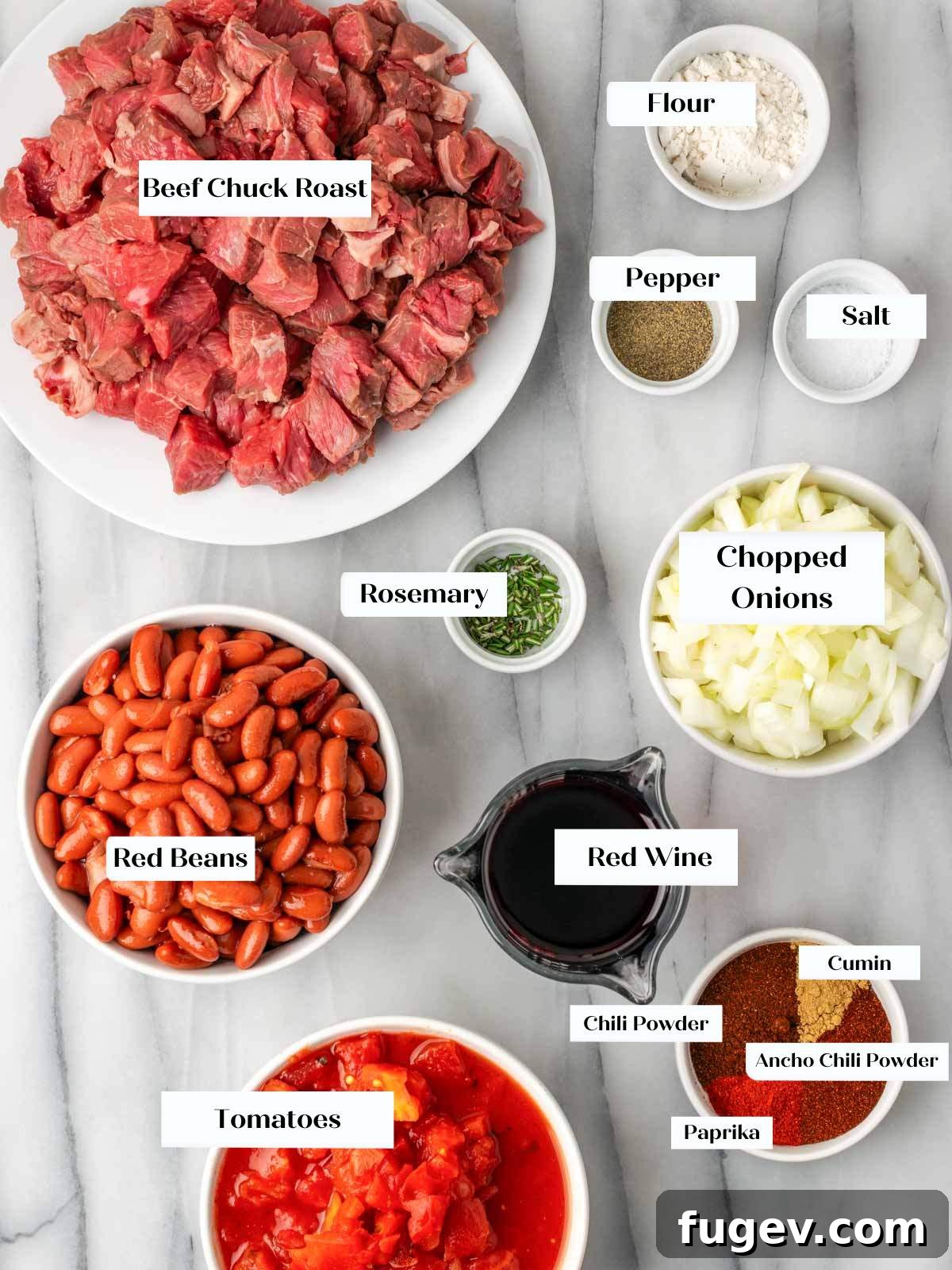
- Beef: You’ll need 2 pounds of beef for this recipe. My top recommendation is either a shoulder cut or chuck roast. These cuts are ideal because their rich marbling melts down beautifully during the slow cooking process, imparting incredible flavor and tenderness to your chili. You can also use pre-cut stew meat, often labeled as stew beef, but ensure it’s not too lean. I strongly advise against using lean cuts like sirloin, as they simply do not have enough fat to achieve the desired rich texture and depth of flavor in this hearty chili.
- Flour: Regular all-purpose flour works best here to create a light coating on the beef, which aids in browning and helps to slightly thicken the chili. If you require a gluten-free alternative, excellent options include rice flour or millet flour, both of which will perform admirably without compromising the dish.
- Salt: Essential for seasoning the beef and enhancing all the other flavors in the chili. I recommend using kosher salt for its clean taste and coarser texture.
- Pepper: Freshly ground black pepper adds a pungent, slightly spicy note that beautifully complements the robust flavors of the beef and spices.
- Olive Oil: This recipe specifically calls for extra virgin olive oil for its fruity, distinct flavor. If you don’t have it on hand, a neutral-tasting oil such as grapeseed oil or avocado oil will also work effectively for browning the meat and sautéing vegetables, allowing other flavors to shine through.
- Onions: I suggest using yellow onions or sweet onions. Both varieties provide a mild yet savory base flavor that becomes wonderfully translucent and fragrant when sautéed, forming a crucial aromatic layer for the chili.
- Rosemary: For this particular recipe, fresh rosemary is paramount. Its fragrant, piney, slightly peppery notes are far more vibrant and flavorful than dried rosemary, adding that unique elegant touch that distinguishes this chili.
- Pinot Noir: The choice of wine is important; I recommend using a Pinot Noir that you would genuinely enjoy drinking. This ensures the best possible flavor contribution to your dish. Pinot Noir offers fruity, earthy notes that harmonize beautifully with beef and spices. If Pinot Noir isn’t available or isn’t to your taste, feel free to substitute with another medium-bodied red wine like Cabernet Sauvignon or Beaujolais, which will also provide a lovely depth.
- Kidney Beans: You will need 2 drained cans of kidney beans. Their tender texture and mild sweetness are a classic addition to chili. If you wish to experiment, black beans can also be used, offering a slightly different flavor and texture profile, but I personally love the inherent sweetness that kidney beans bring to this particular recipe.
- Tomatoes: I recommend using roasted, chopped tomatoes for their concentrated flavor and slight sweetness. Diced tomatoes or crushed tomatoes are also excellent, readily available options that will contribute the necessary acidity and body to the chili.
- Chili Powder: A foundational spice in any chili, providing that classic, warm, and earthy chili flavor. Use a good quality brand for the best results.
- Paprika: Adds a sweet, peppery note and a beautiful deep red color. Both sweet and smoked paprika work well, depending on your preference for an additional smoky kick.
- Ancho Chili Powder: This special ingredient (ancho chili powder) is derived from dried poblano peppers, lending a distinct mildly sweet, fruity, and smoky taste with just a hint of gentle heat. It’s crucial for the layered flavor profile of this chili.
- Cumin: Cumin is a powerful spice that infuses this recipe with a warm, earthy, and slightly peppery depth, much like it does in my popular Ground Chicken Tacos. It’s a strong flavor, so a little goes a long way in creating that essential chili aroma.
- Sour Cream (Optional, for Serving): I absolutely adore topping this rich chili with a generous dollop of sour cream or 2% Greek yogurt. Both add a delightful tangy, creamy contrast that beautifully cuts through the richness of the chili, enhancing the overall experience.
Please refer to the complete recipe card below for precise measurements and quantities for each ingredient.
Exciting Variations to Suit Your Style
While the classic stovetop method for this Rosemary Pinot Noir Steak Chili is truly exceptional, this recipe is also incredibly versatile. Here are a few popular variations to adapt it to your preferred cooking method or flavor preferences:
- Slow Cooker Steak Chili: Transform this hearty meal into an effortless slow cooker dish. Begin by browning the meat in a skillet on your stovetop – this crucial step develops deep flavor that can’t be achieved solely in a slow cooker. After browning, sauté the chopped onions and fresh rosemary until fragrant, then deglaze the skillet with the red wine, scraping up all those delicious browned bits from the bottom. Transfer the browned meat, sautéed aromatics, and all remaining ingredients (beans, tomatoes, spices) into your slow cooker. Cook on low for approximately 8 hours, or on high for 4 hours, until the steak is wonderfully tender and the flavors have fully melded.
- Instant Pot Pressure Cooker Chili: For a faster cooking time without sacrificing flavor, the Instant Pot is your ally. Start by browning the beef directly in the pressure cooker using its “Sauté” mode. Once browned, remove the meat, then deglaze the pot with the red wine. Add the onions and rosemary back to the pot and sauté for about 30 seconds until fragrant. Return the browned beef to the pot, then add all the remaining ingredients. Secure the lid, set the Instant Pot to the “Stew” or “Meat/Stew” function, and cook for approximately 40 minutes under high pressure. Allow for a natural pressure release for about 10-15 minutes before manually releasing any remaining pressure.
- Experiment with Different Spice Blends: Don’t be afraid to customize the spice profile of your steak chili to match your personal taste. Some fantastic additions include:
- Oregano: A classic chili herb that adds a pungent, slightly bitter, and earthy depth.
- Cayenne Pepper: For those who love a bit more heat, a pinch or two of cayenne pepper can provide a vibrant kick. Adjust to your desired level of spice.
- Bay Leaves: Adding 1-2 bay leaves during the simmering process will infuse the chili with a subtle, savory, and earthy aroma, enhancing its overall complexity. Remember to remove them before serving.
- Cilantro: Fresh cilantro, stirred in at the end or used as a garnish, provides a bright, citrusy, and herbaceous note, much like it does in my beloved Cilantro Sherry Chili.
- Bean Alternatives: While kidney beans offer a wonderful sweetness, you can easily swap them for other types of beans like black beans, pinto beans, or even a mix for varied textures and flavors.
- Smoked Paprika Boost: If you enjoy a deeper smoky flavor, consider using smoked paprika in addition to or instead of regular paprika.
Step-by-Step Guide: How to Make This Steak Chili Recipe
Follow these detailed instructions to create the perfect Rosemary Pinot Noir Steak Chili every single time. For precise measurements and further details, please refer to the recipe card located below.
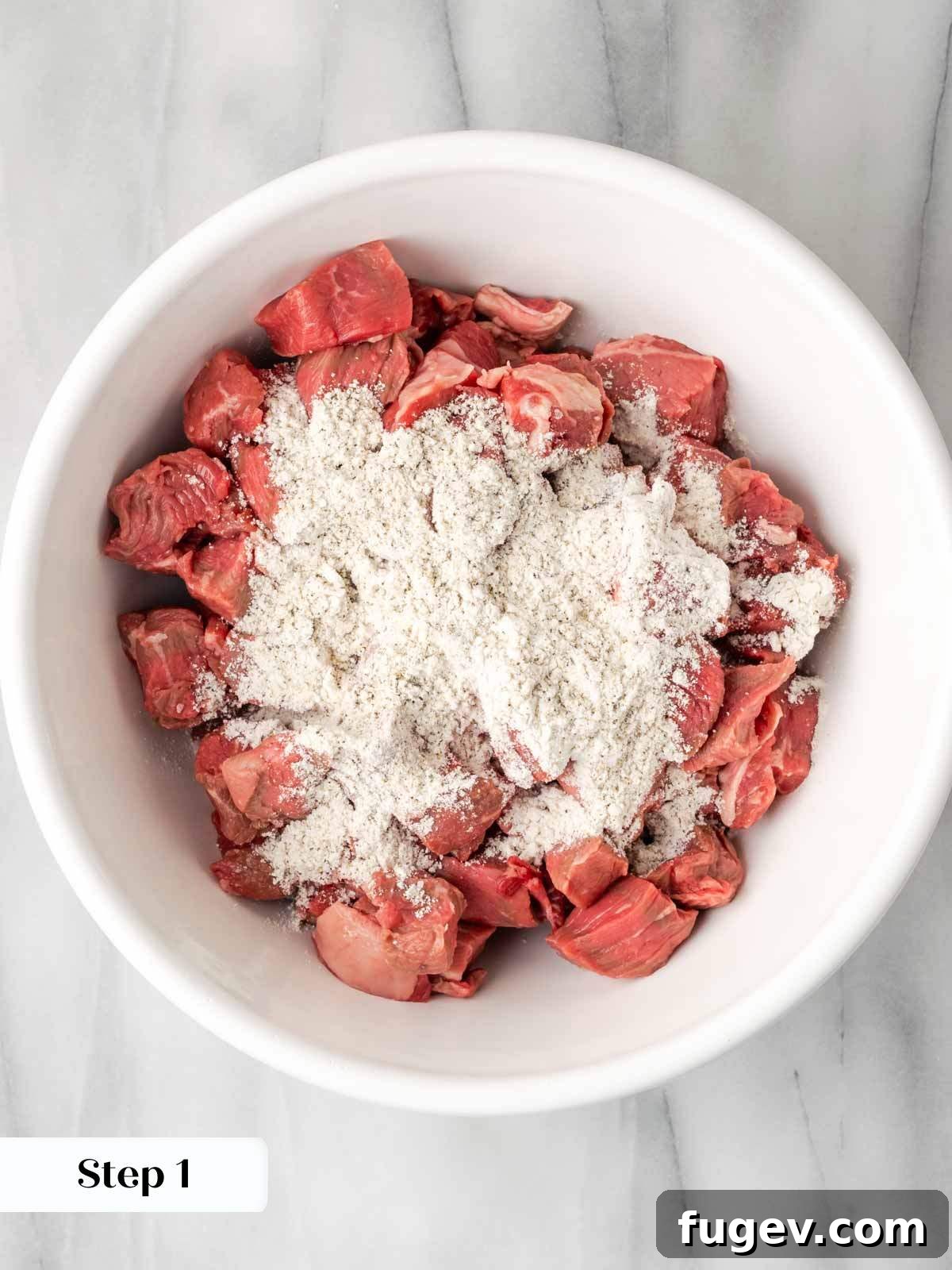
Step 1: Prepare the Beef for Searing. Begin by rinsing your beef chunks thoroughly under cold water and then patting them completely dry with paper towels. This crucial step helps achieve a beautiful, even sear. In a medium-sized bowl, combine the all-purpose flour, kosher salt, and freshly ground black pepper. Add the dried beef chunks to this flour mixture and toss them until each piece is lightly and evenly coated. This coating will help create a delicious crust when browned and also contributes to the chili’s body.
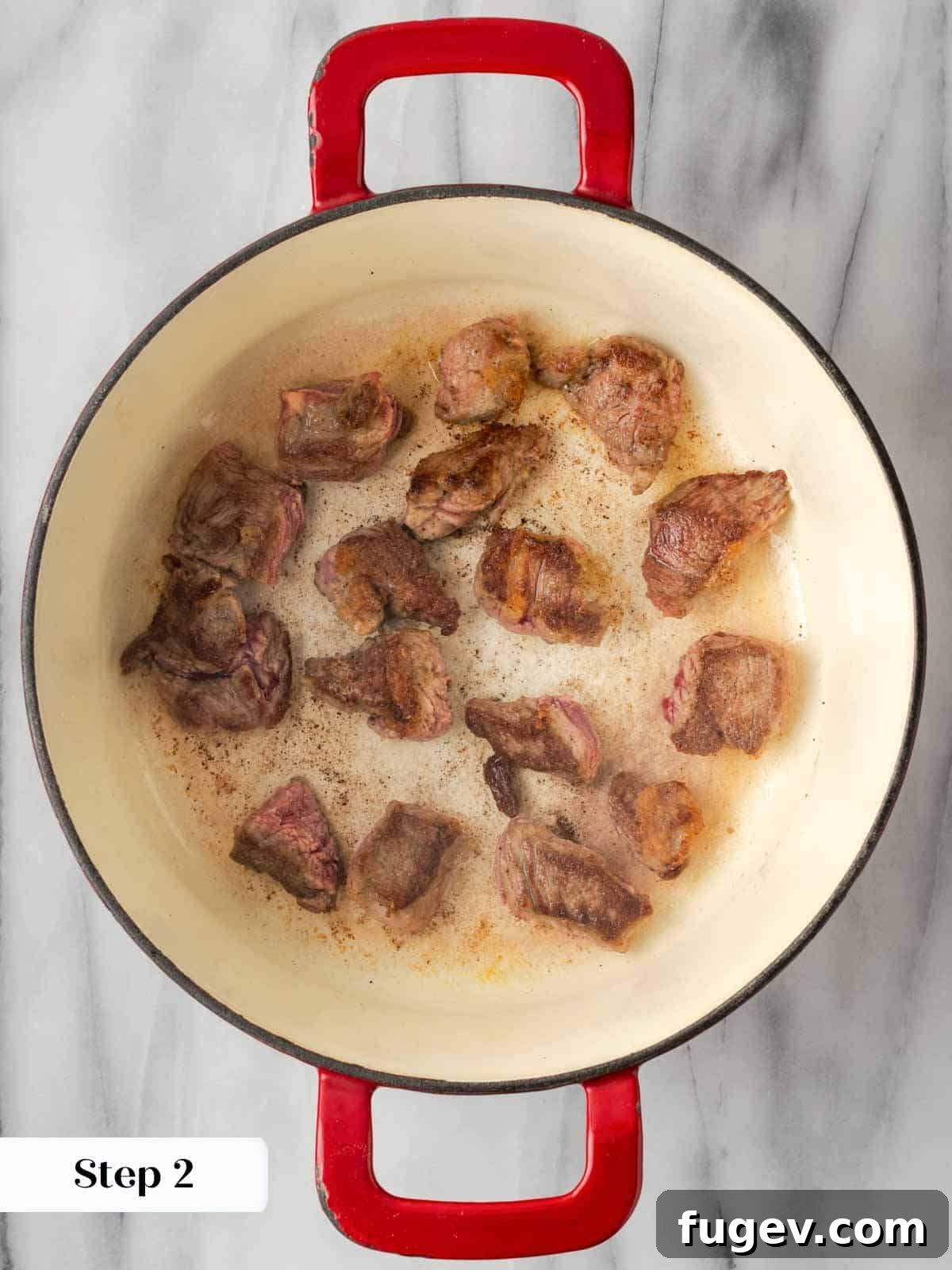
Step 2: Sear the Beef to Develop Deep Flavor. Heat a medium Dutch oven or a large, heavy-bottomed stock pot over medium-high heat until it is hot. Add just enough olive oil to lightly coat the bottom of the pot. Working in batches to avoid overcrowding (which steams the meat instead of searing it), brown the floured beef chunks on all sides until a rich, dark crust forms. This browning step is essential for developing complex, savory flavors. Once browned, remove the beef from the pot and set it aside in a bowl, loosely covered, to keep warm while you proceed with the next steps.
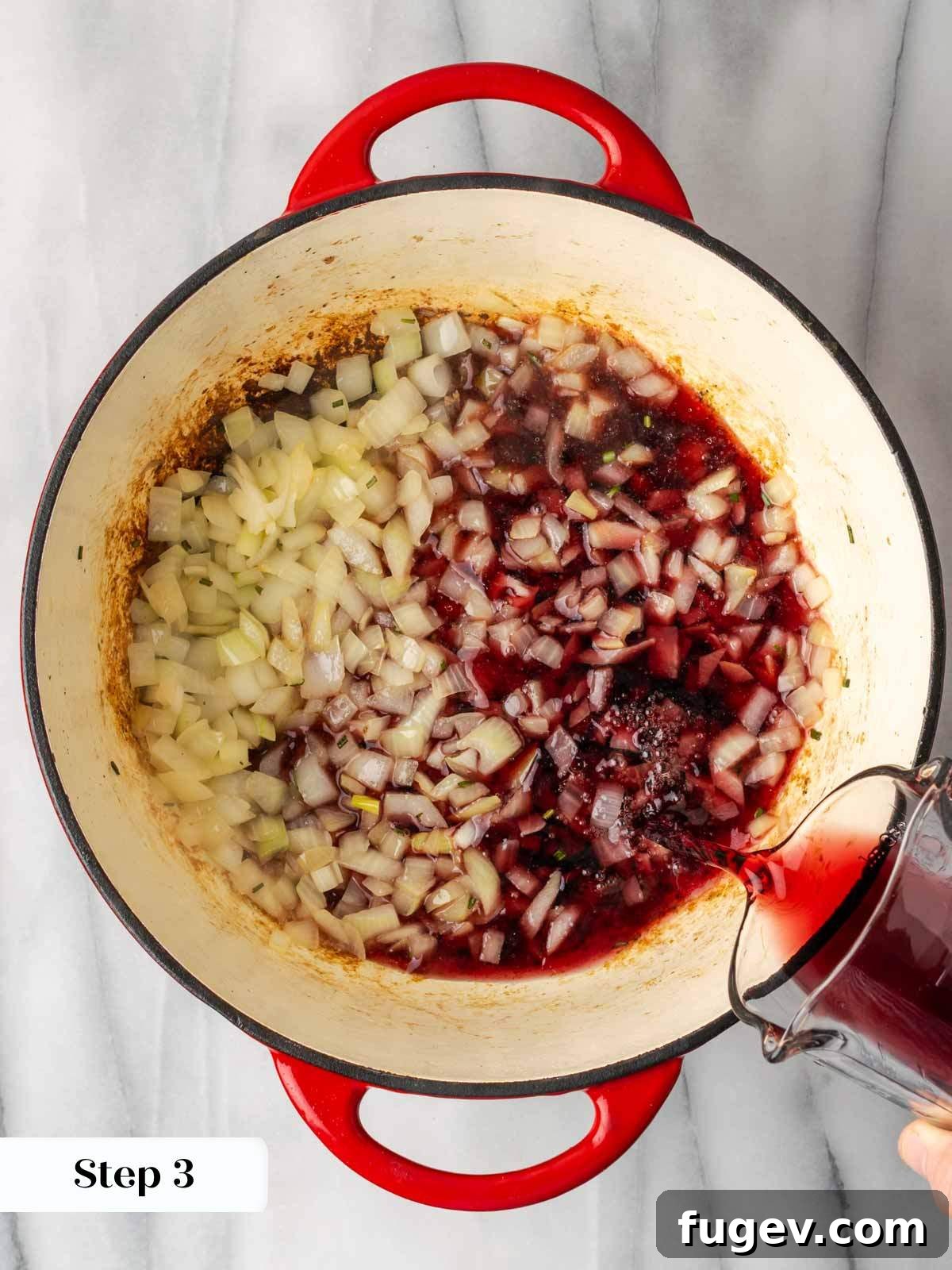
Step 3: Build the Aromatic Base. Add a little more olive oil to the same pot if needed. Reduce the heat slightly to medium. Add the chopped onions and fresh rosemary to the pot and cook, stirring occasionally, until the onions become translucent and beautifully fragrant, about 5-7 minutes. Pour 1 cup of the Pinot Noir into the pot. Use a wooden spoon to scrape up all the delicious browned bits (fond) stuck to the bottom of the pot; this process is called deglazing and infuses the chili with incredible depth of flavor. Allow the wine to simmer and reduce for about 1 minute, letting its alcohol cook off and its flavors concentrate.
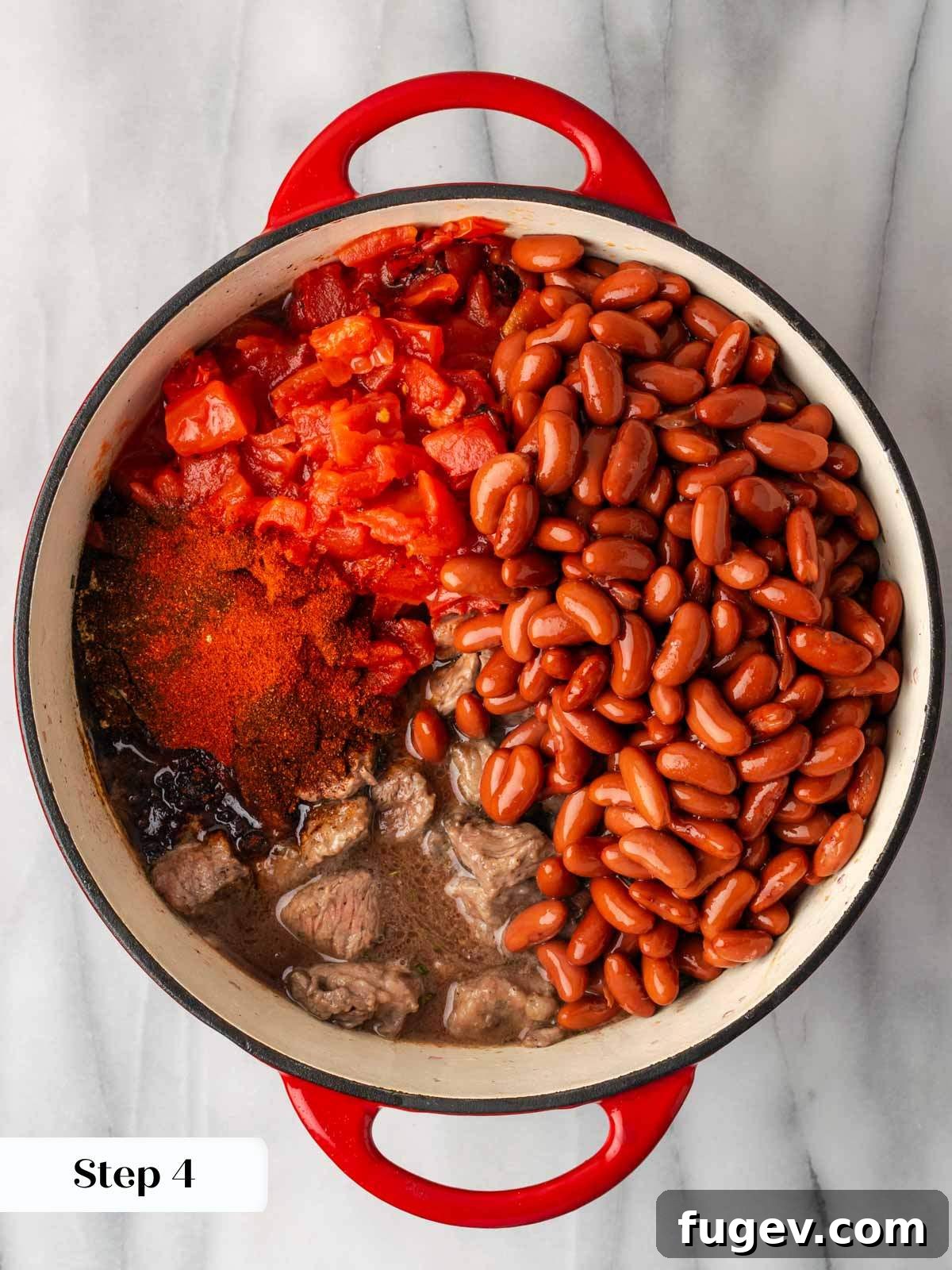
Step 4: Combine All the Chili Elements. Return the browned beef to the pot. Add the drained kidney beans, roasted chopped tomatoes (with their juices), and all the measured spices: chili powder, paprika, ancho chili powder, and cumin. Stir everything thoroughly to ensure all ingredients are well combined and the spices are evenly distributed throughout the mixture.
Step 5: Begin the Flavor Melding Process. Bring the chili mixture to a gentle simmer, then reduce the heat to low. Cover the pot and allow the chili to cook for 1 hour, stirring occasionally to prevent sticking and ensure even cooking. During this time, the flavors will begin to meld and deepen. After an hour, taste the chili for seasoning. Adjust with additional salt and pepper as needed to suit your taste preferences. Stir in the remaining ¼ cup of Pinot Noir; this late addition helps preserve some of the wine’s vibrant aromatic qualities.
Chef’s Pro Tip: Taste as You Go! One of the most important aspects of cooking is consistent tasting. By sampling your chili throughout the cooking process, you can fine-tune the seasonings and ensure the balance of flavors is exactly to your liking. Don’t be shy about adding a little more salt, pepper, or even a dash of an additional spice if it feels like something is missing. Your palate is your best guide!
Step 6: Achieve Perfect Tenderness and Richness. Continue to cook the chili over low heat for another 30 minutes, or even longer if necessary, until the beef is incredibly tender – it should almost fall apart when gently pressed with a spoon. By this point, the flavors will have fully melded into a rich, cohesive, and deeply satisfying stew. The consistency should be thick and hearty. Remove from heat and let it rest for a few minutes before serving to allow the flavors to settle.
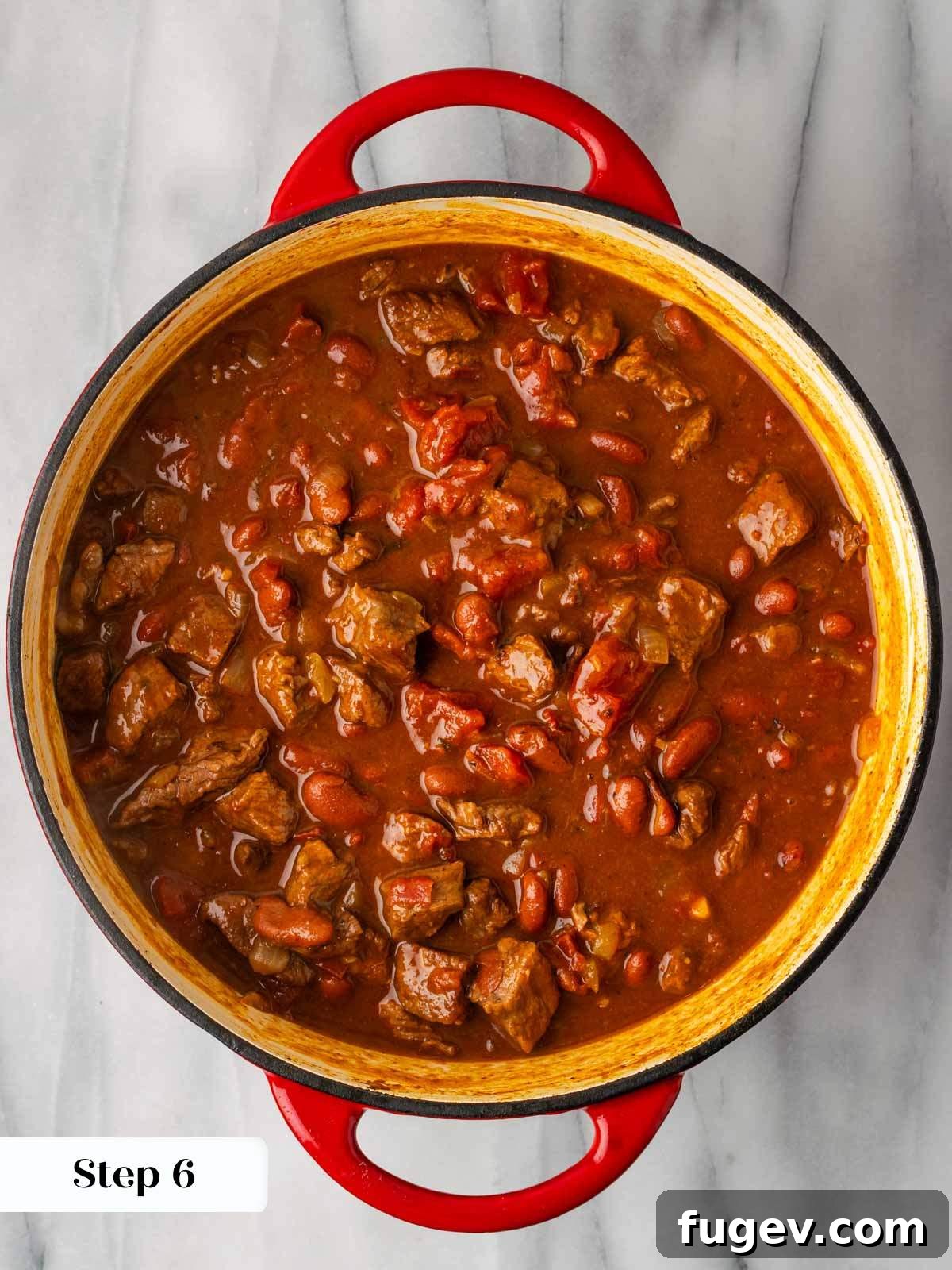
Presentation Tip: Serve it Tableside! For an added touch of rustic elegance and visual appeal, consider placing your finished chili in its beautiful Dutch oven on a decorative trivet and serving it tableside. Your family and friends will undoubtedly delight in the sight of the steaming, aromatic stew being spooned out directly from the pot, creating a wonderful interactive dining experience.
Chef Lindsey’s Insider Recipe Tip
Remember that the overall cooking time for your chili can fluctuate based on a few factors: primarily the specific cut of meat you choose (e.g., chuck roast versus stew beef) and, importantly, the size of your beef cubes. For this recipe, I typically cut my beef into pieces roughly ½ to 1 inch in size. Smaller pieces will naturally cook faster than larger ones, so always assess the tenderness of the meat as your primary indicator of doneness, rather than strictly adhering to the clock.
Frequently Asked Questions About Steak Chili
Storing leftover chili properly ensures its deliciousness for days to come. Once cooled completely, transfer any remaining chili to an airtight container and store it in the refrigerator for up to 4 days. Chili also freezes exceptionally well! For longer storage, place the cooled chili into a freezer-safe container or a heavy-duty freezer bag, ensuring to leave some headspace, and freeze for up to 6 months. Thaw overnight in the refrigerator before reheating.
Reheating steak chili is simple. My preferred method is to place the leftovers in a stockpot or Dutch oven on the stove over medium to medium-high heat. Stir occasionally, bringing the chili up to a gentle boil, then reducing it to a simmer until it is heated through evenly. This method helps maintain its texture and flavor. Alternatively, you can reheat individual portions in the microwave, using 30-second intervals and stirring in between, until piping hot. Add a splash of broth or water if it seems too thick.
Absolutely! This recipe can easily be adapted to make a delicious ground beef chili. If using ground beef, you can follow most of the instructions, but you will skip the step of coating the meat in flour before browning. Simply brown the ground beef, drain any excess fat, and then proceed with sautéing the onions and rosemary, and adding the remaining ingredients as directed. The cooking time will also be significantly shorter for ground beef, likely around 30-45 minutes of simmering. For another fantastic ground beef option, check out our Pinot Noir Chili with Ground Beef.
Steak chili is wonderfully versatile when it comes to accompaniments and toppings! I love serving this hearty dish with some freshly baked cornbread, which is perfect for soaking up all the rich sauce. For toppings, classic choices include a big scoop of Greek yogurt or sour cream (for a creamy, tangy contrast), a generous sprinkle of shredded cheddar cheese, and some finely sliced chives or green onions for freshness and a mild oniony bite. While it might sound unconventional to some, I also frequently enjoy serving my chili over a bed of tender rosemary lemon roasted cauliflower – it’s surprisingly delicious and adds a lovely vegetable component!
Yes, chili is one of those magical dishes that often tastes even better the next day! Making it ahead of time allows the flavors to deepen and meld further. Simply prepare the chili as directed, allow it to cool completely, then refrigerate it overnight. Reheat gently on the stove or in the microwave, adding a little liquid if needed, before serving. It’s perfect for meal prep or entertaining!
A heavy-bottomed pot, such as a Dutch oven or a large stockpot, is ideal for making chili. These types of pots distribute heat evenly, which is crucial for browning meat without burning and for maintaining a gentle, consistent simmer over a long period. The heavy construction also helps prevent sticking and scorching on the bottom, ensuring your chili cooks perfectly.
If you tried this Rosemary Pinot Noir Steak Chili recipe and absolutely loved it, please take a moment to leave a 🌟 star rating and share your thoughts in the comments section below. Your feedback truly makes my day, and I love hearing about your culinary successes!

⭐
⭐
⭐
⭐
Rosemary Pinot Noir Steak Chili
Chef Lindsey
15
1 30
1 45
4 people
Pin Recipe
Comment
Print Recipe
Ingredients
- 2 lbs beef (I used shoulder, cut in bite-sized cubes)
- 2 ½ tablespoons all-purpose flour
- 1 ½ teaspoons kosher salt
- 1 teaspoon freshly ground black pepper
- olive oil (as needed for browning)
- 2 onions (chopped)
- 1 teaspoon fresh rosemary (chopped)
- 1 ¼ cups Pinot Noir (divided)
- 2 15-oz cans kidney beans (drained)
- 1 28-oz can roasted chopped tomatoes
- 3 teaspoons chili powder
- 1 ½ teaspoons paprika
- 2 teaspoons ancho chili powder
- ½ teaspoon cumin
- salt and pepper to taste
- sour cream (for serving, optional)
Instructions
-
Rinse and pat the beef dry. In a medium bowl, mix together the flour, salt, and pepper, then toss the beef chunks in this mixture to coat evenly.
-
Heat a medium Dutch oven or large stock pot over medium-high heat. Add just enough olive oil to coat the bottom. Brown the beef on all sides in batches; set aside loosely covered to keep warm.
-
Add a little more olive oil to the pot if needed. Sauté the chopped onions and rosemary until the onions are translucent and fragrant. Pour 1 cup of the Pinot Noir into the pot and stir to deglaze, scraping up all the delicious browned bits from the bottom. Cook for 1 minute.
-
Return the browned meat to the pot. Add the drained kidney beans, roasted chopped tomatoes, chili powder, paprika, ancho chili powder, and cumin. Stir well to combine all ingredients.
-
Bring to a simmer, then reduce heat to low and cook, covered, for 1 hour, stirring occasionally. Taste for salt and pepper and adjust as needed. Stir in the remaining ¼ cup of Pinot Noir.
-
Continue to cook until the meat is tender and the flavors have fully melded, about 30 minutes more. Serve hot with desired toppings.
Notes
Technique: The cooking time for this chili will vary depending on the specific cut of meat you select and how large you cut your beef pieces. I typically prefer my cubes to be between ½ – 1 inch for optimal tenderness and cooking speed.
Variations: For an Instant Pot version, brown meat on sauté mode, deglaze with wine, sauté onions and rosemary for 30 seconds, then add remaining ingredients. Cook on the stew function for about 40 minutes under pressure. Alternatively, for a Slow Cooker, brown meat and sauté aromatics on the stove, then transfer all ingredients to the slow cooker and cook on low for 8 hours or high for 4 hours.
Storage: Leftover chili can be stored in an airtight container in the refrigerator for up to 4 days. For longer preservation, cool completely and transfer to a freezer-safe container or bag, then freeze for up to 6 months. Thaw in the fridge before reheating.
Nutrition
Carbohydrates: 12g |
Protein: 41g |
Fat: 46g |
Saturated Fat: 18g |
Polyunsaturated Fat: 1g |
Monounsaturated Fat: 20g |
Trans Fat: 3g |
Cholesterol: 161mg |
Sodium: 1068mg |
Potassium: 764mg |
Fiber: 2g |
Sugar: 3g |
Vitamin A: 808IU |
Vitamin C: 6mg |
Calcium: 68mg |
Iron: 5mg
Like this? Leave a comment below!
Before You Go: More Culinary Adventures Await
Thank you for exploring this chef-tested and approved recipe for Rosemary Pinot Noir Steak Chili. I sincerely hope you enjoyed creating and savoring this unique and comforting dish. If you’re looking for more delicious, chef-developed recipes to warm your soul, be sure to browse our collection of comforting winter recipes. For your next culinary endeavor, why not go straight to my incredibly popular Italian Sausage Soup? It’s another hearty favorite guaranteed to delight!