
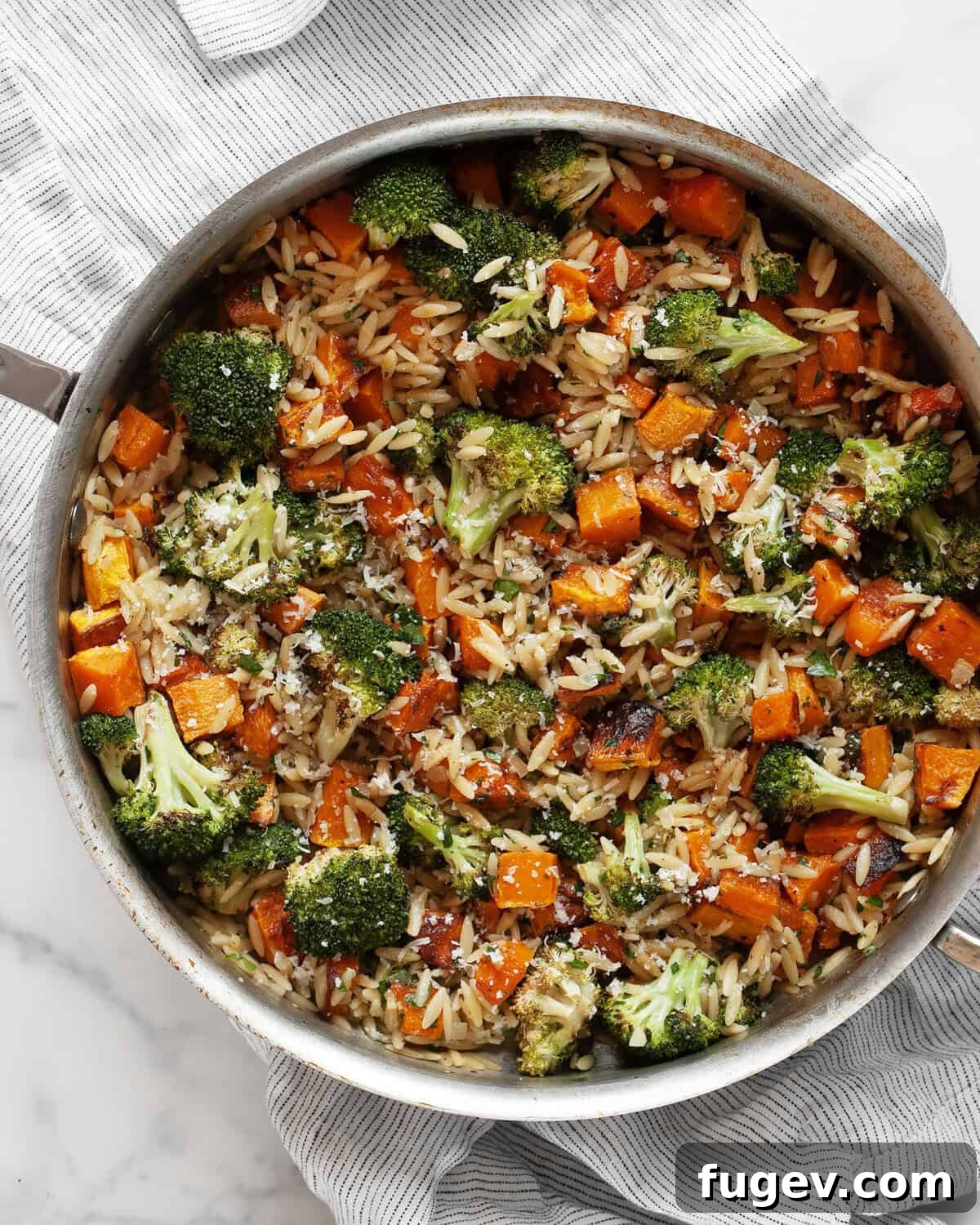
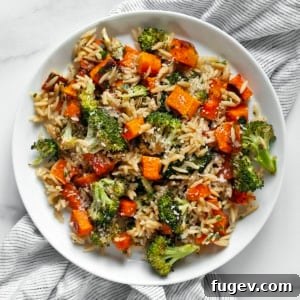
Embrace the vibrant flavors of autumn and winter with this delightful Roasted Butternut Squash and Broccoli Orzo. This vegetarian pasta dish is a true celebration of seasonal produce, offering a harmonious blend of tender, caramelized butternut squash and crisp-tender broccoli, all lovingly tossed with creamy, comforting orzo. Designed for simplicity and maximum flavor, this recipe cleverly combines the efficiency of a sheet pan meal with the rich texture of a stovetop risotto, making it an ideal choice for busy weeknights or relaxed weekend dining. Get ready to add a new favorite to your culinary repertoire!
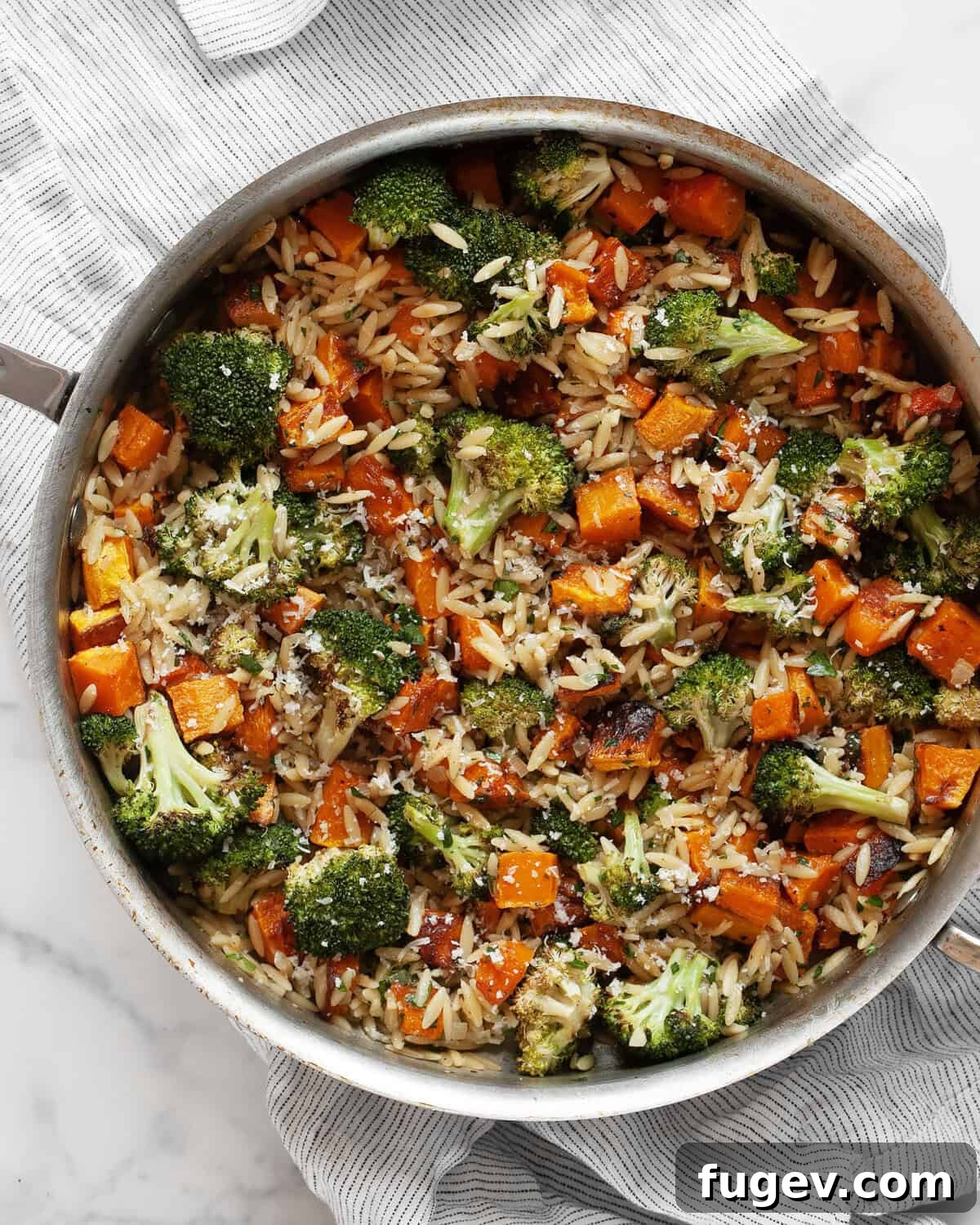
Table of Contents
- Why You’ll Love This Recipe
- The Ingredients for Success
- Optional Additions to Elevate Your Dish
- How To Make This Roasted Butternut Squash & Broccoli Orzo
- Pro Tips for Perfect Orzo
- Serving Suggestions
- Leftovers & Storage Tips
- Variations and Customizations
- Health Benefits of This Dish
- Frequently Asked Questions (FAQs)
- More Butternut Squash Recipes
- More Orzo Recipes
- Roasted Butternut Squash Broccoli Orzo Recipe
Why You’ll Love This Roasted Butternut Squash & Broccoli Orzo Recipe
This roasted butternut squash and broccoli orzo isn’t just a meal; it’s a culinary experience designed for ease, flavor, and nourishment. Here’s why it’s bound to become a staple in your kitchen:
- Effortless Combination of Cooking Methods: This recipe brilliantly merges the best aspects of sheet pan cooking and stovetop pasta. By roasting the butternut squash and broccoli on a single sheet, you achieve those coveted caramelized edges and depth of flavor with minimal cleanup. Meanwhile, cooking the orzo like a quick risotto on the stovetop ensures a creamy, comforting base that perfectly complements the roasted vegetables. It’s an ingenious way to maximize taste and minimize fuss.
- A Powerhouse of Vegetables: Boasting two incredibly nutritious vegetables, butternut squash and broccoli, this dish is packed with vitamins, minerals, and fiber. It’s an excellent way to incorporate more goodness into your diet, providing a wholesome and satisfying vegetarian meal that even meat-eaters will adore. The natural sweetness of roasted squash pairs beautifully with the earthy notes of broccoli, creating a balanced and appealing flavor profile.
- Incredibly Versatile for Any Occasion: One of the greatest attributes of this orzo dish is its adaptability. It tastes fantastic served warm as a comforting main course, delightful at room temperature for a potluck or picnic, and surprisingly delicious even cold as a hearty pasta salad. This versatility makes it ideal for meal prepping, entertaining, or simply enjoying leftovers throughout the week. Serve it as a robust vegetarian entrée, a flavorful side dish, or a vibrant pasta salad – the possibilities are endless.
- Simple, Wholesome Ingredients: With just 11 core ingredients, this recipe highlights the beauty of simplicity. Each component plays a crucial role in building layers of flavor, from the aromatic shallots and garlic to the savory Parmesan and fresh parsley. You won’t find any complicated techniques or exotic spices here, just honest, fresh ingredients coming together to create something truly special.
- Perfect for Fall and Winter: As the weather turns cooler, our cravings often shift towards warm, comforting, and hearty dishes. Butternut squash and broccoli are at their peak during the fall and winter months, making this recipe a seasonal standout. It’s the perfect meal to warm you from the inside out and bring a taste of harvest comfort to your table.
The Ingredients for Success
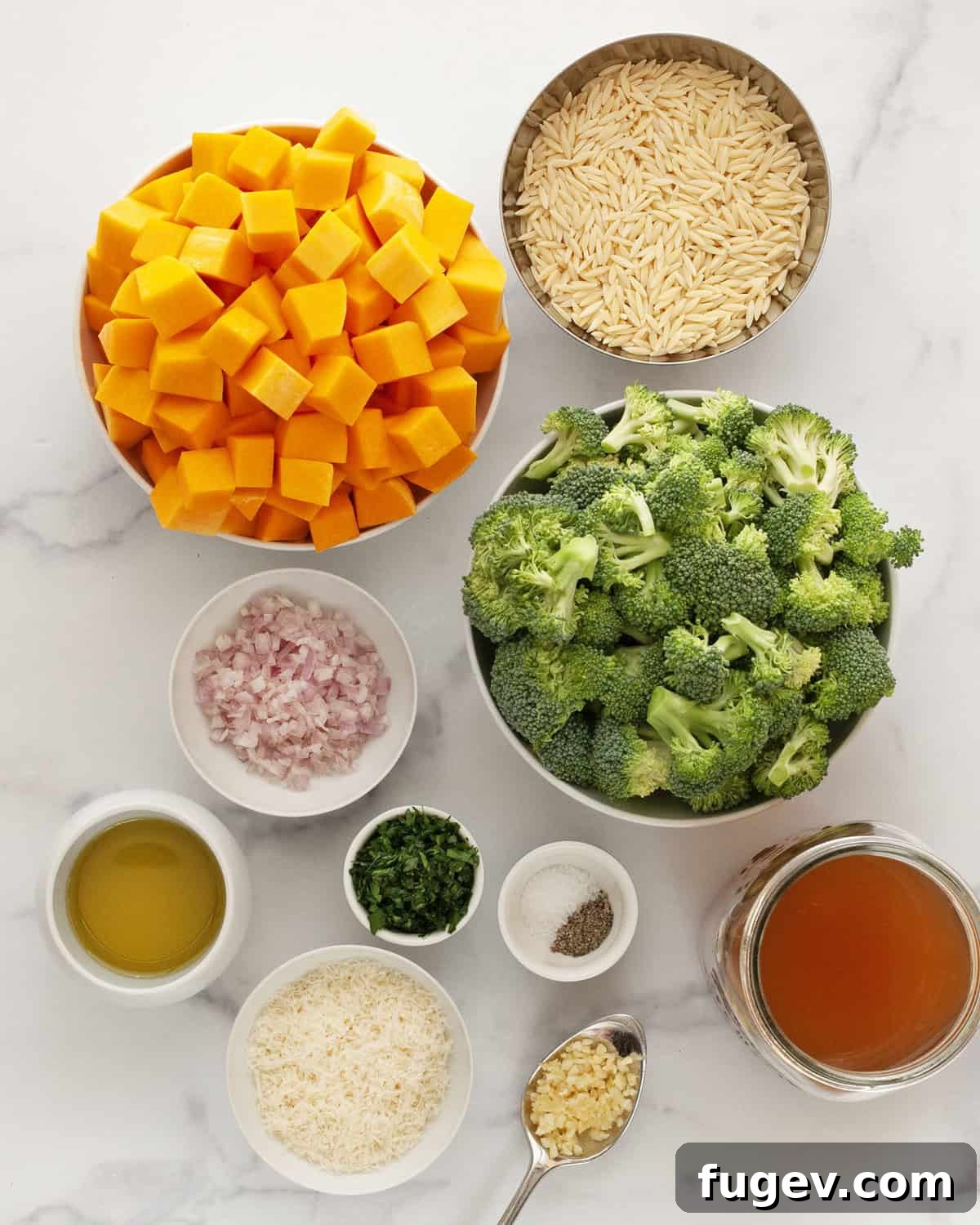
Crafting this delicious orzo begins with selecting fresh, quality ingredients. Here’s a closer look at what you’ll need and why each element is important:
- Butternut Squash: The star of the show! We recommend a medium-sized butternut squash, peeled and cut into ½-inch cubes. Its inherent sweetness caramelizes beautifully when roasted, adding a deep, nutty flavor and creamy texture to the dish. For a convenient shortcut, many grocery stores offer pre-cut butternut squash, saving you prep time. Opt for squash that feels heavy for its size and has a firm, blemish-free skin.
- Broccoli: Fresh broccoli florets provide a fantastic textural contrast and a slight bitterness that balances the squash’s sweetness. Look for vibrant green crowns with tightly packed florets, avoiding any yellowing. Like the squash, pre-cut broccoli florets are a great time-saver if you’re in a hurry. Roasting the broccoli enhances its flavor, giving it a delightful crisp-tender bite.
- Orzo Pasta: This tiny, rice-shaped pasta is perfect for absorbing flavors and creating a rich, creamy consistency similar to risotto. While it can be boiled in salted water like any other pasta, simmering it in broth for this recipe imbues each grain with incredible depth, making the final dish wonderfully savory and comforting.
- Shallots: Often described as a milder, more delicate cousin to the onion, minced shallots contribute a subtle, aromatic foundation to the orzo. Their nuanced onion and garlic notes provide depth without overpowering the other ingredients, making them an elegant choice for this dish.
- Garlic: Two minced garlic cloves are essential for adding a pungent, savory kick that truly awakens the flavors of the dish. Garlic, when gently sautéed, releases a wonderfully fragrant aroma that sets the stage for the orzo.
- Vegetable Broth: The liquid foundation for our risotto-style orzo. Using low-sodium vegetable broth is key, as it allows you to control the overall saltiness of the dish, ensuring it’s seasoned perfectly to your preference. High-quality broth makes a significant difference in the final taste.
- Fresh Parsley: A finishing touch that brings brightness and freshness. Chopped fresh parsley adds a herbaceous note and a pop of color, lifting the overall profile of the dish. Flat-leaf (Italian) parsley is generally preferred for its more robust flavor.
- Parmesan Cheese: Grated Parmesan cheese is stirred in at the end, melting into the warm orzo to provide a rich, umami depth and a touch of creaminess. Its salty, nutty flavor beautifully complements the roasted vegetables. For a vegan version, simply omit the Parmesan or use your favorite plant-based, dairy-free alternative, perhaps finishing with a sprinkle of nutritional yeast for a cheesy flavor.
- Extra Virgin Olive Oil: Used for roasting the vegetables and sautéing the aromatics, extra virgin olive oil is crucial for its rich flavor and its ability to help achieve that beautiful caramelization on the squash. Choose a good quality oil for the best taste.
- Kosher Salt and Black Pepper: These fundamental seasonings are vital for enhancing and balancing all the flavors in the dish. Using kosher salt provides a clean, pure salty taste, while freshly ground black pepper adds a subtle spice and warmth. Always season to taste.
Optional Additions to Elevate Your Dish
While this recipe is wonderfully satisfying as a vegetarian dish, it also serves as an excellent base for various additions. Feel free to customize it with one or more of these options:
- Nuts: For an added crunch and nutty flavor, stir in a handful of chopped walnuts, pecans, or almonds at the end. Toasted nuts will offer an even deeper flavor.
- Chicken: If you’re looking to add protein, shredded roasted chicken can be folded into the orzo, transforming it into a heartier main course. This is also a great way to use up leftover rotisserie chicken.
- Shrimp: Pan-seared or grilled shrimp makes another fantastic protein addition. Its delicate flavor pairs wonderfully with the sweet squash and savory orzo.
- Feta Cheese: Crumbled feta cheese can add a tangy, salty burst of flavor that contrasts beautifully with the other ingredients.
- Spinach or Arugula: Wilt in a few handfuls of fresh spinach or baby arugula at the very end for an extra boost of greens and a touch of freshness.
- Red Pepper Flakes: For those who enjoy a little heat, a pinch of red pepper flakes can add a subtle warmth and zing.
How To Make This Roasted Butternut Squash & Broccoli Orzo
Creating this flavorful orzo dish is a straightforward process that combines roasting and stovetop cooking for optimal results. Follow these simple steps to bring this comforting meal to life:
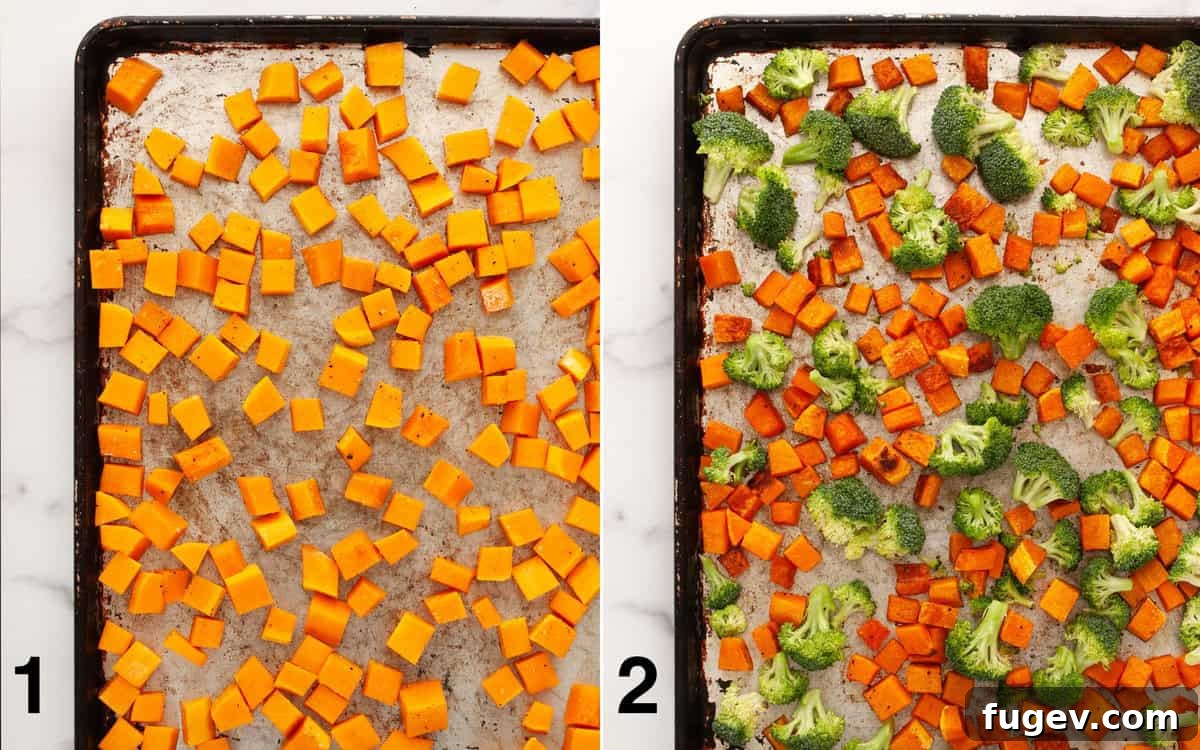
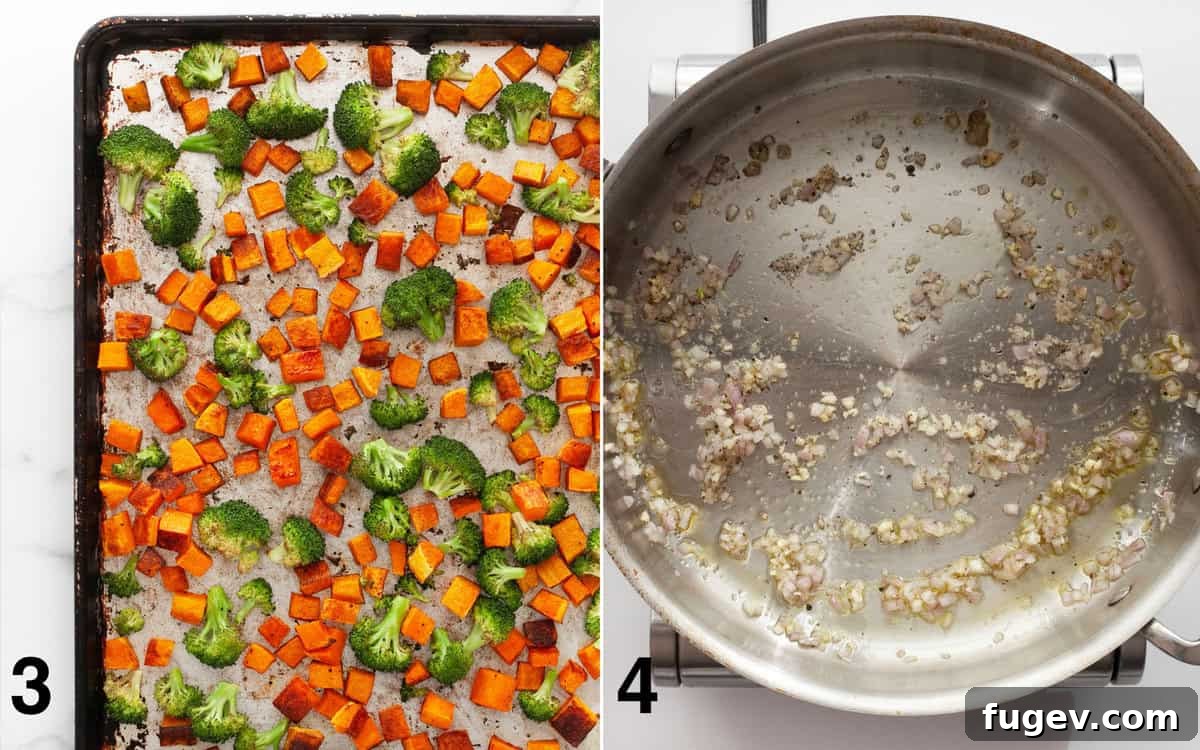
- Prepare and Roast the Butternut Squash: Begin by preheating your oven to a robust 425°F (220°C). On a large baking sheet, toss your diced butternut squash with half of the olive oil (1 tablespoon), ½ teaspoon of kosher salt, and ¼ teaspoon of black pepper. Ensure the squash cubes are spread into a single layer, allowing each piece maximum contact with the hot pan for optimal browning and caramelization. Roast the squash for 20 minutes, or until the edges begin to turn a beautiful golden brown and the squash starts to soften.
- Add the Broccoli for the Second Roast: After the initial roasting time for the squash, carefully remove the baking sheet from the oven. Using a spatula, gently flip the squash cubes to ensure even cooking. Now, scatter the broccoli florets across the pan, tossing them lightly with the roasted squash and any remaining oil. Again, arrange all the vegetables in a single layer, making sure they are not overlapping, to promote even roasting and crispness.
- Continue Roasting Both Vegetables: Return the baking sheet to the oven and continue roasting the squash and broccoli together for another 10-12 minutes. During this time, the squash should become perfectly tender in the middle with deliciously browned and slightly crisp exteriors, while the broccoli will turn a vibrant green and develop nicely darkened, crisp edges. Keep an eye on them to prevent burning.
- Sauté Aromatics: While the vegetables finish roasting, prepare the orzo. In a large sauté pan or skillet, warm the remaining 1 tablespoon of olive oil over medium-high heat. Add the minced garlic and finely chopped shallots, along with the remaining salt and pepper. Sauté for approximately 30 seconds, stirring constantly, until they become fragrant and slightly softened. Be careful not to burn the garlic.
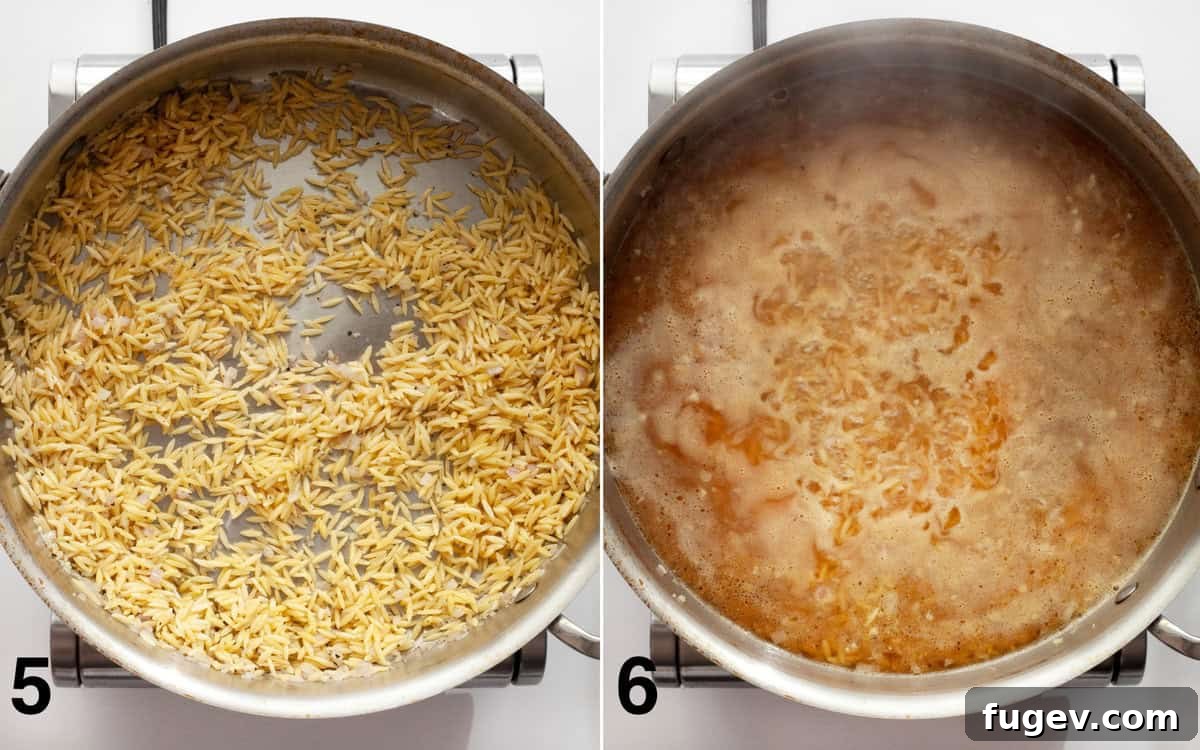
- Toast the Orzo: Add the dry orzo pasta to the skillet with the sautéed aromatics. Stir continuously for about 1 minute, toasting the orzo. This step is crucial as it imparts a deeper, nuttier flavor to the pasta, similar to how rice is toasted for risotto. It also helps prevent the orzo from becoming overly sticky.
- Simmer Orzo in Broth: Pour in the 2 cups of low-sodium vegetable broth. Bring the mixture to a gentle boil, then reduce the heat to a simmer and cook uncovered, stirring frequently. Continue to cook for about 7-9 minutes, or until the orzo is al dente – tender with a slight bite – and most of the liquid has been absorbed, creating a creamy consistency. If the orzo absorbs all the liquid before becoming tender, add the additional ½ cup of broth, ¼ cup at a time, until it reaches the desired doneness.
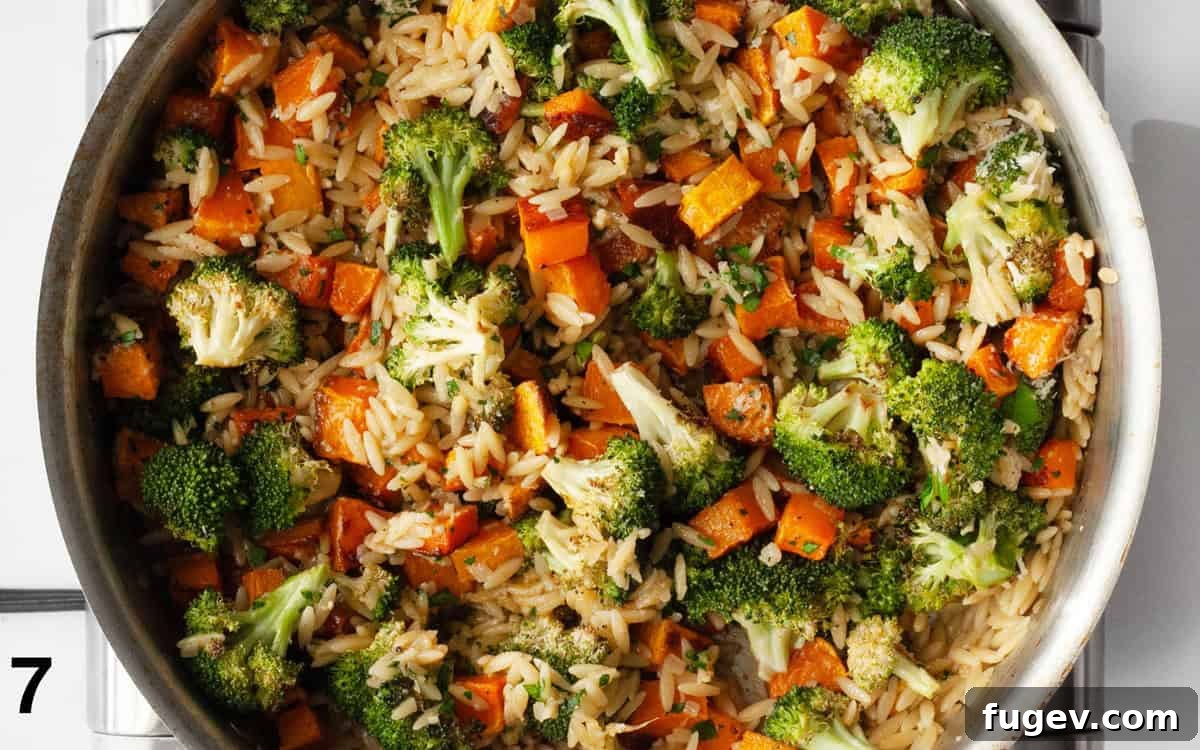
- Combine and Finish: Once the orzo is cooked to perfection, remove the pan from the heat. Gently fold in the beautifully roasted butternut squash and broccoli, the grated Parmesan cheese, and the fresh chopped parsley. Stir everything together until well combined and the Parmesan has melted into the creamy pasta. Taste and adjust seasonings as needed.
Pro Tips for Perfect Roasted Butternut Squash & Broccoli Orzo
Achieving restaurant-quality results at home is easier than you think with a few clever tricks. Here are some pro tips to ensure your roasted butternut squash and broccoli orzo turns out perfect every time:
- Even Vegetable Dicing: For consistent roasting and texture, make sure your butternut squash cubes are uniform in size (about ½-inch). This ensures they all cook at the same rate. Similarly, keep broccoli florets to a manageable, bite-sized size.
- Don’t Crowd the Pan: This is perhaps the most critical rule for roasting vegetables. Spreading the squash and broccoli in a single layer on the baking sheet allows them to roast rather than steam. If your pan is too crowded, use two baking sheets to ensure proper caramelization and crispness.
- Preheating is Key: Always preheat your oven and, ideally, your baking sheet. Placing vegetables on an already hot pan helps them start caramelizing immediately, leading to better browning and flavor.
- Stirring the Orzo: When simmering the orzo in broth, frequent stirring is essential. This prevents the pasta from sticking to the bottom of the pan and helps release starches, contributing to the creamy, risotto-like texture. Don’t leave it unattended for too long!
- Adjust Broth as Needed: The exact amount of broth can vary slightly based on your orzo brand and stovetop heat. Start with the recommended amount, but don’t hesitate to add extra broth (¼ cup at a time) if the orzo is still too firm or the pan becomes dry before it’s al dente.
- Seasoning in Layers: Seasoning throughout the cooking process, rather than just at the end, builds depth of flavor. Salt the vegetables before roasting and season the aromatics and orzo as they cook. Always taste before serving and adjust salt and pepper as needed.
- Fresh Herbs Make a Difference: While dried herbs can work in a pinch, fresh parsley adds an unparalleled brightness and aromatic quality to the finished dish. Don’t skip it if you can help it!
- Rest Before Serving: Like many pasta dishes, allowing the orzo to rest for a few minutes after combining all ingredients helps the flavors meld and the sauce thicken slightly.
Serving Suggestions
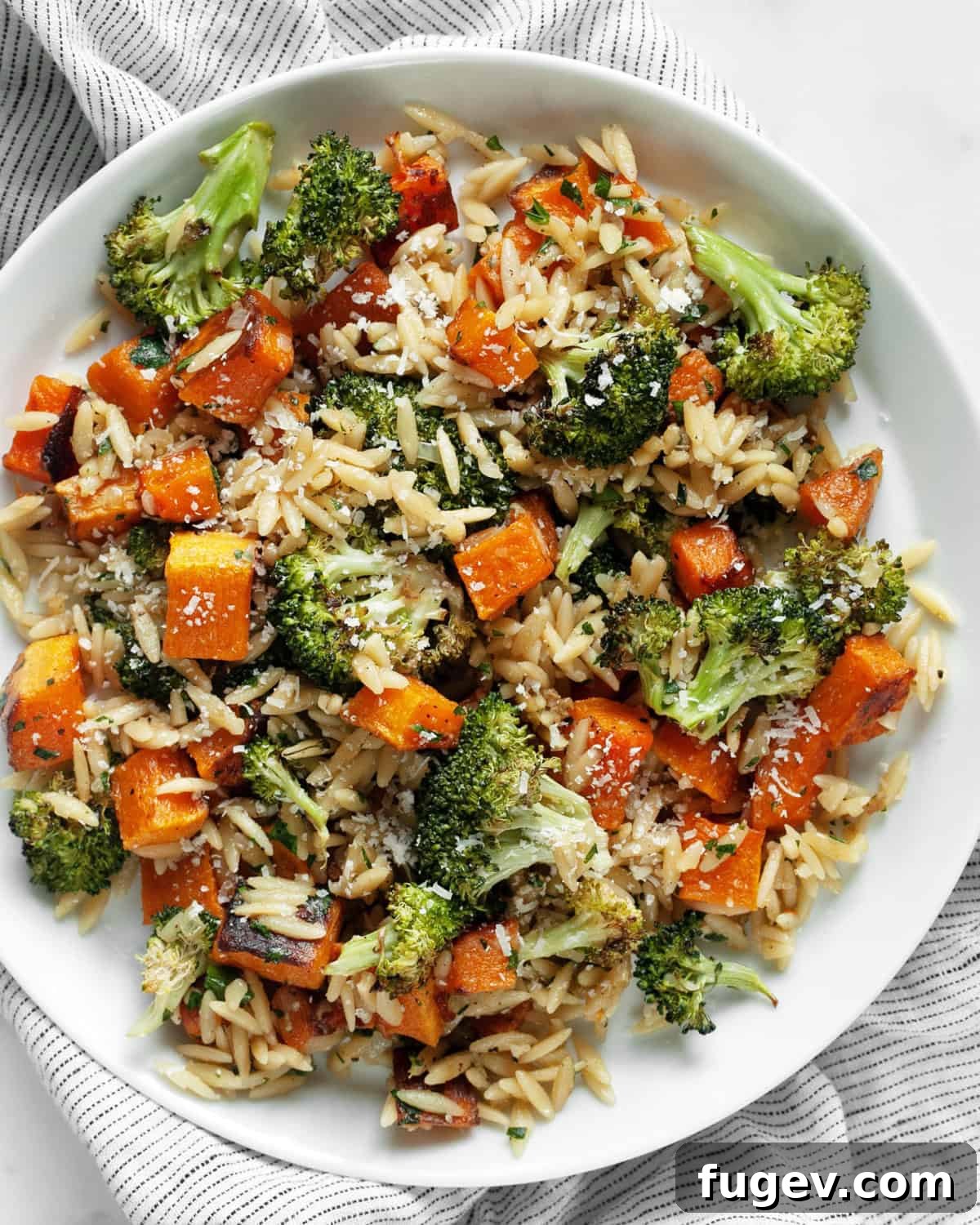
This roasted butternut squash and broccoli orzo is incredibly versatile and can be enjoyed in many ways. It stands proudly as a delicious vegetarian main dish, needing no additional vegetable sides thanks to its generous helping of squash and broccoli. However, it also makes an excellent side dish to complement a variety of proteins.
- As a Main Course: Serve it simply on its own, perhaps with a sprinkle of extra Parmesan and a fresh grind of black pepper. For a complete meal, consider pairing it with a light, crisp salad. A vibrant lemony baby arugula salad, a refreshing classic house salad, or a zesty Italian chopped salad would provide a wonderful counterpoint to the rich orzo.
- As a Side Dish: This orzo pairs beautifully with roasted chicken, grilled fish, or even a simple pan-seared steak. Its hearty nature makes it a great accompaniment to robust meat dishes.
- Pasta Salad Style: As mentioned, it’s fantastic at room temperature or cold. For a fresh pasta salad experience, toss cold leftovers with a handful of baby spinach or arugula and a light vinaigrette.
Leftovers & Storage Tips
This roasted butternut squash and broccoli orzo is a fantastic make-ahead meal or one that yields delicious leftovers. Proper storage ensures you can enjoy its comforting flavors for days.
- Storage: Store any leftover orzo in an airtight container in the refrigerator for up to 3 days. This helps maintain its freshness and prevents it from drying out.
- Reheating: To reheat, simply warm individual portions in the microwave until heated through. You might find that the orzo has thickened and the broccoli has softened slightly after refrigeration and reheating. If the pasta seems a bit dry, you can add a splash of vegetable broth or water during reheating to restore its creaminess.
- Enjoying Cold: One of the best qualities of orzo is how well it adapts to being eaten cold. Transform your leftovers into a delightful pasta salad! Stir in some fresh baby arugula or spinach, a drizzle of your favorite vinaigrette, and perhaps a few cherry tomatoes for a refreshing and light meal.
Variations and Customizations
This recipe provides a delicious foundation, but don’t hesitate to experiment and make it your own! Here are some ideas for variations and customizations:
- Other Roasting Vegetables: Feel free to swap out or add other hearty vegetables suitable for roasting. Brussels sprouts, cauliflower florets, bell peppers, parsnips, or even sweet potatoes would work wonderfully. Adjust roasting times as needed for different vegetables.
- Herb Alternatives: Instead of parsley, try fresh thyme, sage, or rosemary for a different aromatic profile. For a Mediterranean twist, use fresh oregano or basil.
- Cheese Choices: While Parmesan is classic, consider Pecorino Romano for a sharper, saltier flavor, or a creamy goat cheese stirred in at the end for a tangy richness. A little smoked gouda could add a unique depth.
- Spice It Up: Introduce a pinch of red pepper flakes with the garlic and shallots for a subtle kick. A dash of smoked paprika could also add a warm, savory note.
- Creamier Texture: For an even richer and creamier orzo, stir in a tablespoon or two of cream cheese, mascarpone, or heavy cream along with the Parmesan at the end.
- Lemon Zest: A little lemon zest grated over the finished dish can add a bright, fresh counterpoint to the rich flavors.
- Nutritional Yeast for Vegan Option: If making this dish vegan, nutritional yeast is an excellent substitute for Parmesan, offering a cheesy, umami flavor.
Health Benefits of This Dish
Beyond its incredible flavor, this Roasted Butternut Squash and Broccoli Orzo is packed with nutritional benefits, making it a truly wholesome meal:
- Rich in Vitamins and Minerals: Butternut squash is an excellent source of Vitamin A (in the form of beta-carotene), Vitamin C, and potassium. Broccoli is a powerhouse of Vitamin C, Vitamin K, and fiber. Together, these vegetables contribute to a robust nutrient profile that supports overall health and immunity.
- High in Fiber: Both butternut squash and broccoli are rich in dietary fiber, which is crucial for digestive health, blood sugar regulation, and promoting a feeling of fullness. This helps in weight management and prevents spikes in blood sugar.
- Antioxidant Properties: The vibrant colors of butternut squash and green broccoli indicate a high content of antioxidants. These compounds help protect your cells from damage caused by free radicals, potentially reducing the risk of chronic diseases.
- Heart-Healthy Fats: Extra virgin olive oil provides monounsaturated fats, which are known to be beneficial for heart health, helping to lower bad cholesterol levels.
- Complete Vegetarian Meal: This dish offers a balanced combination of carbohydrates (from orzo and squash), healthy fats (from olive oil and Parmesan), and essential vitamins and minerals, making it a complete and satisfying vegetarian meal.
Frequently Asked Questions (FAQs)
Can I use frozen butternut squash or broccoli?
Yes, you can use frozen butternut squash or broccoli florets for convenience. For butternut squash, thaw it slightly before roasting. For broccoli, you can usually roast it from frozen, but it might take a few extra minutes and won’t get quite as crispy as fresh. Adjust roasting times accordingly.
Can I make this recipe vegan?
Absolutely! To make this recipe vegan, simply omit the Parmesan cheese. You can substitute it with a plant-based dairy-free Parmesan alternative or sprinkle in some nutritional yeast at the end for a cheesy flavor. The rest of the ingredients are naturally vegan-friendly.
What kind of orzo should I use?
Any brand of standard orzo pasta will work perfectly. You can often find whole wheat orzo for an added fiber boost, which would also be a great option.
How can I make this dish gluten-free?
To make this recipe gluten-free, you would need to use a gluten-free orzo pasta. There are many excellent rice-based or corn-based gluten-free orzo options available in stores today.
Can I prepare any components in advance?
Yes! You can peel and dice the butternut squash a day or two in advance and store it in an airtight container in the refrigerator. You can also chop the broccoli florets, mince the garlic, and chop the shallots ahead of time. This will significantly reduce your active cooking time on the day you plan to make the dish.
What if I don’t have shallots?
If you don’t have shallots, you can substitute them with half a small onion (like a yellow or white onion), finely minced. The flavor will be slightly stronger, but it will still provide a good aromatic base for the orzo.
More Butternut Squash Recipes to Explore
- Baked Barley Butternut Squash Risotto
- Sautéed Butternut Squash with Kale
- Butternut Squash Black Bean Quinoa
- Roasted Butternut Squash and Kale Pasta
- Butternut Squash Apple Soup with Turmeric
- Butternut Squash and Kale Orzo
More Orzo Recipes You’ll Love
- Lemon Kale Orzo
- Roasted Broccoli Orzo
- 30-Minute Roasted Tomato Zucchini Orzo
- Grilled Vegetable Orzo Salad
- Squash, Zucchini & Parmesan Orzo
- Lemon Orzo Pasta Salad
Don’t forget to explore our comprehensive collections of simple seasonal pasta recipes and easy roasted vegetable recipes for more inspiration and culinary tips.
Roasted Butternut Squash Broccoli Orzo
Simmering the orzo in vegetable broth on the stove for this roasted butternut squash broccoli orzo makes it a quicker, creamier version of traditional risotto, packed with hearty vegetables.
By: Paige Adams
Prep Time: 15 mins
Cook Time: 40 mins
Total Time: 55 mins
Servings: 4
Print Recipe
Ingredients
- 1 medium butternut squash (about 2-1/2 pounds), peeled and diced into ½-inch cubes
- 2 tablespoons olive oil, divided
- 1 teaspoon kosher salt, divided
- ½ teaspoon black pepper, divided
- ½ pound small to medium broccoli florets
- 2 garlic cloves, minced
- 1 shallot, finely chopped
- 1 cup orzo pasta
- 2 cups low-sodium vegetable broth, plus an additional ½ cup if needed
- ¼ cup grated Parmesan cheese, plus more for serving
- 1 tablespoon chopped fresh parsley, plus more for garnishing
Instructions
- Preheat your oven to 425 degrees F (220°C).
- On a large baking sheet, combine the diced butternut squash with 1 tablespoon of olive oil, ½ teaspoon of salt, and ¼ teaspoon of black pepper. Spread the squash into a single layer to ensure even roasting. Roast for 20 minutes, or until the edges begin to lightly brown.
- Remove the baking sheet from the oven. Add the broccoli florets to the pan, tossing them with the partially roasted squash. Rearrange all the vegetables in a single layer. Continue roasting for an additional 10-12 minutes, until the squash is tender and deeply browned, and the broccoli is bright green with slightly charred edges.
- While the vegetables finish, warm the remaining 1 tablespoon of olive oil in a large sauté pan or skillet over medium-high heat. Add the minced garlic, finely chopped shallots, and the remaining salt and pepper. Sauté for about 30 seconds until fragrant and softened, being careful not to burn the garlic.
- Stir the orzo pasta into the pan with the aromatics. Toast the orzo for 1 minute, stirring continuously, to enhance its flavor.
- Pour in 2 cups of vegetable broth. Bring the liquid to a boil, then reduce the heat to a simmer. Cook the orzo uncovered, stirring frequently, for 7-9 minutes, or until it is al dente and most of the broth has been absorbed, creating a creamy texture. If the orzo is still firm and the liquid has evaporated, add the remaining ½ cup of broth, ¼ cup at a time, until the pasta is tender.
- Remove the pan from the heat. Stir in the roasted butternut squash and broccoli, grated Parmesan cheese, and fresh chopped parsley. Mix until all ingredients are well combined and the Parmesan has melted.
- Serve warm, garnished with extra Parmesan and parsley if desired.
Notes
If you prefer a vegan version of this dish, simply omit the Parmesan cheese or substitute it with a plant-based, dairy-free alternative. A sprinkle of nutritional yeast can add a lovely cheesy flavor without dairy.
Leftover orzo can be stored in an airtight container in the refrigerator for up to 3 days. Reheat gently in the microwave. Note that the broccoli may lose some of its crispness and the orzo might soften slightly. Alternatively, enjoy the leftovers cold as a refreshing pasta salad by tossing them with fresh baby arugula or spinach and a light vinaigrette.
Optional additions include:
- Chopped walnuts or almonds for added crunch.
- Shredded roasted chicken or pan-seared shrimp for a boost of protein.
Nutrition
Nutrition information is automatically calculated and should be used as an approximation.
Calories: 385kcal | Carbohydrates: 68g | Protein: 12g | Fat: 10g | Saturated Fat: 2g | Polyunsaturated Fat: 1g | Monounsaturated Fat: 6g | Cholesterol: 5mg | Sodium: 724mg | Potassium: 1287mg | Fiber: 9g | Sugar: 9g | Vitamin A: 30629IU | Vitamin C: 112mg | Calcium: 231mg | Iron: 3mg
Additional Info
Course: Pasta & Noodles
Cuisine: Italian
Did you make this recipe?
Mention @lastingredient on Instagram and tag it #lastingredient!