
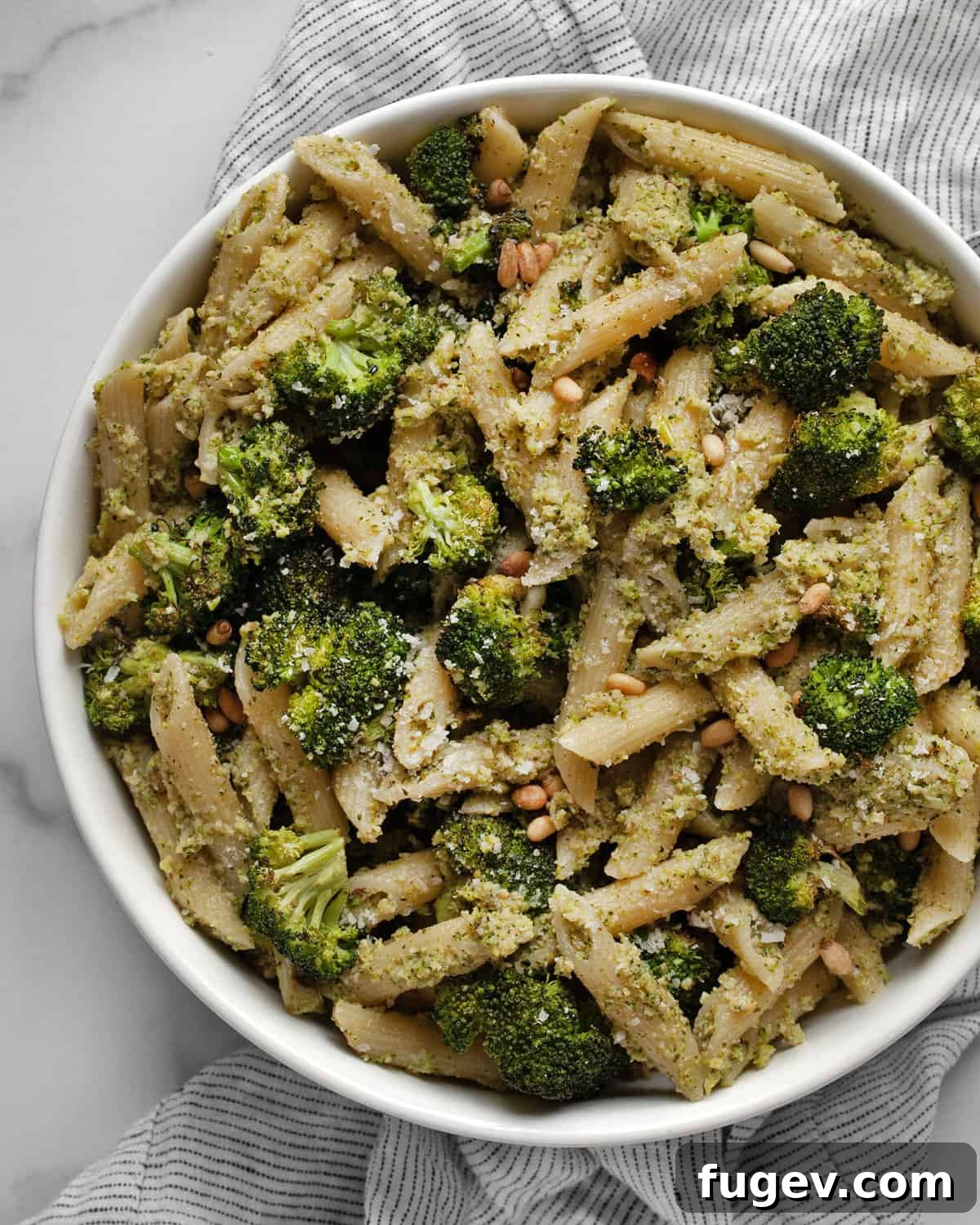
Roasted Broccoli Pesto Pasta: An Easy, Flavorful & Healthy Vegetarian Meal
This incredibly easy roasted broccoli pesto pasta comes together in less than 20 minutes and requires just a handful of wholesome ingredients. It’s a simple yet profoundly flavorful vegetarian pasta recipe, making it an ideal choice for a cozy fall or winter evening, though its vibrant taste shines any time of the year. The beauty of this dish lies in its dual use of broccoli: a portion is transformed into a rich, savory pesto, while the remaining florets are stirred directly into the penne noodles, ensuring every bite is bursting with roasted goodness.
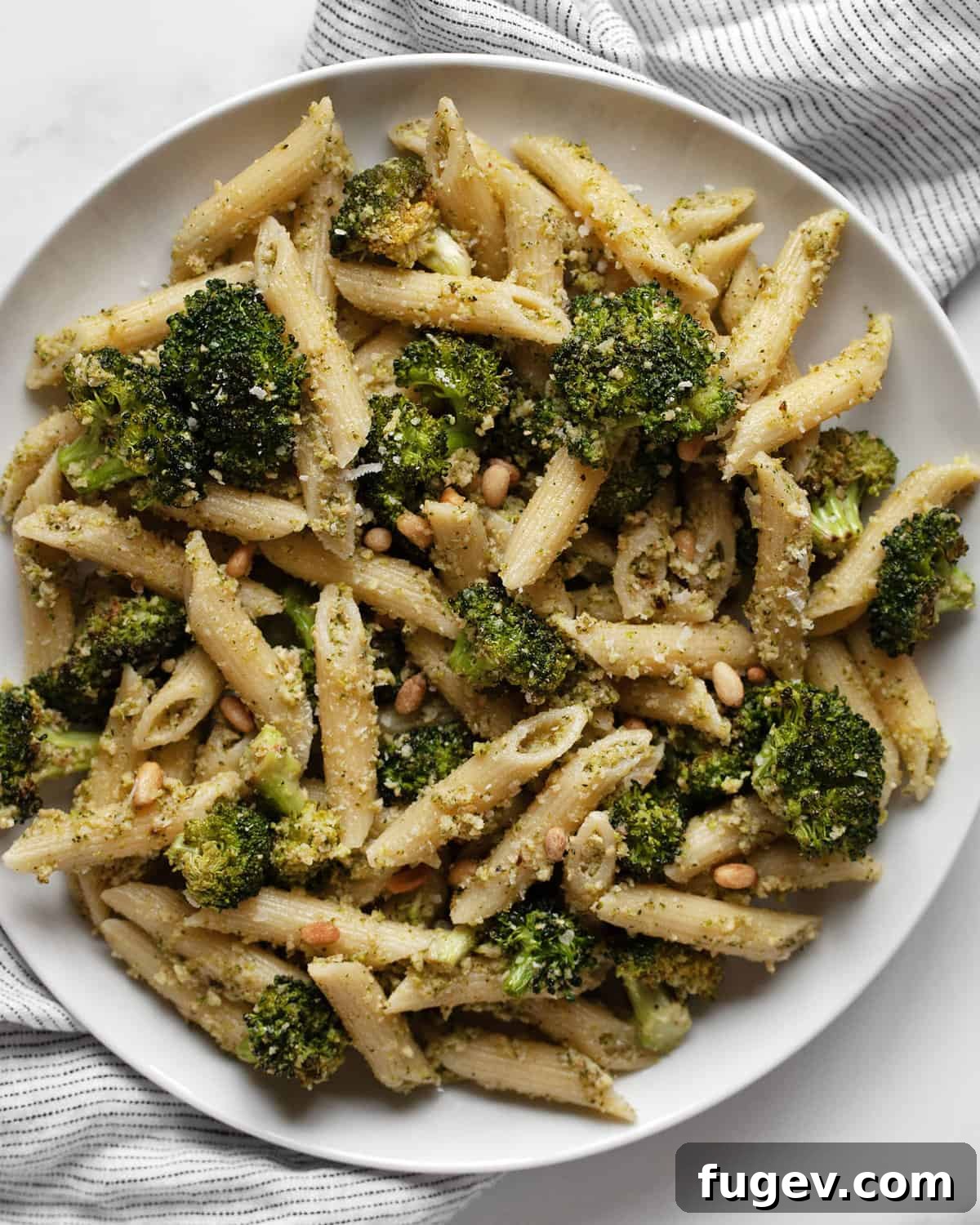
Table of Contents
- Why You’ll Love This Roasted Broccoli Pesto Pasta
- The Essential Ingredients for Broccoli Pesto
- How To Master This Roasted Broccoli Pesto Recipe
- Serving Suggestions
- Make-Ahead Tips, Leftovers & Storage
- Expert Recipe Tips
- Frequently Asked Questions (FAQs)
- More Delectable Pasta Recipes
- Creative Pesto Recipes
- Roasted Broccoli Pesto Pasta Recipe Card
Why You’ll Love This Roasted Broccoli Pesto Pasta
This particular pasta dish stands out not only for its incredible flavor profile but also for its practicality and versatility. Here’s why it’s destined to become a staple in your kitchen:
Effortless & Speedy Preparation
At its core, broccoli pesto is an extraordinarily quick and easy pasta sauce to prepare. Roasting broccoli at a high temperature works wonders, transforming it from raw florets to tender, slightly caramelized pieces in just 10 to 12 minutes. This high-heat method intensifies the broccoli’s natural sweetness and adds a depth of flavor that steamed or boiled broccoli simply can’t match. Once roasted, the magic happens in your food processor, which handles all the chopping and pureeing, creating a velvety smooth pesto in mere moments. This streamlined approach means you can have a gourmet-ttasting meal on the table in under 20 minutes, making it perfect for busy weeknights.
Minimal Ingredients, Maximum Flavor
You might be surprised to learn that this sophisticated-tasting dish relies on fewer than ten core ingredients. This recipe proves that you don’t need a lengthy shopping list or exotic components to achieve a truly delicious, vegetable-focused pasta. Each ingredient plays a crucial role, contributing to a harmonious blend of textures and tastes. This simplicity not only makes grocery shopping a breeze but also ensures that the natural goodness of the broccoli truly shines through. It’s the ultimate solution for a healthy, satisfying vegetarian dinner that doesn’t compromise on taste.
A Pesto for All Seasons
While basil pesto is undoubtedly a summer classic, the world of pesto extends far beyond basil. This roasted broccoli pesto boldly demonstrates that pesto is a versatile, year-round sauce, easily adaptable to seasonal ingredients. Broccoli, with its hearty texture and subtle earthy flavor, is particularly excellent for creating rich and comforting fall and winter pastas. By embracing different vegetables like broccoli, you can enjoy the fresh, aromatic essence of pesto throughout the year, adding variety and seasonal flair to your meals. This recipe is a testament to the fact that seasonal eating can be both easy and incredibly delicious.
Nutrient-Rich & Wholesome
Broccoli is a powerhouse of nutrition, packed with vitamins C and K, fiber, and various antioxidants. Roasting it not only enhances its flavor but also helps preserve many of its beneficial compounds. Combined with healthy fats from olive oil and protein from Parmesan and pine nuts, this pasta dish offers a well-rounded meal that nourishes your body while delighting your taste buds. It’s a smart way to sneak in extra vegetables, making it a healthy choice for the whole family.
The Essential Ingredients for Broccoli Pesto
Crafting this flavorful roasted broccoli pesto pasta begins with selecting high-quality ingredients. Here’s a breakdown of what you’ll need and how to choose the best:
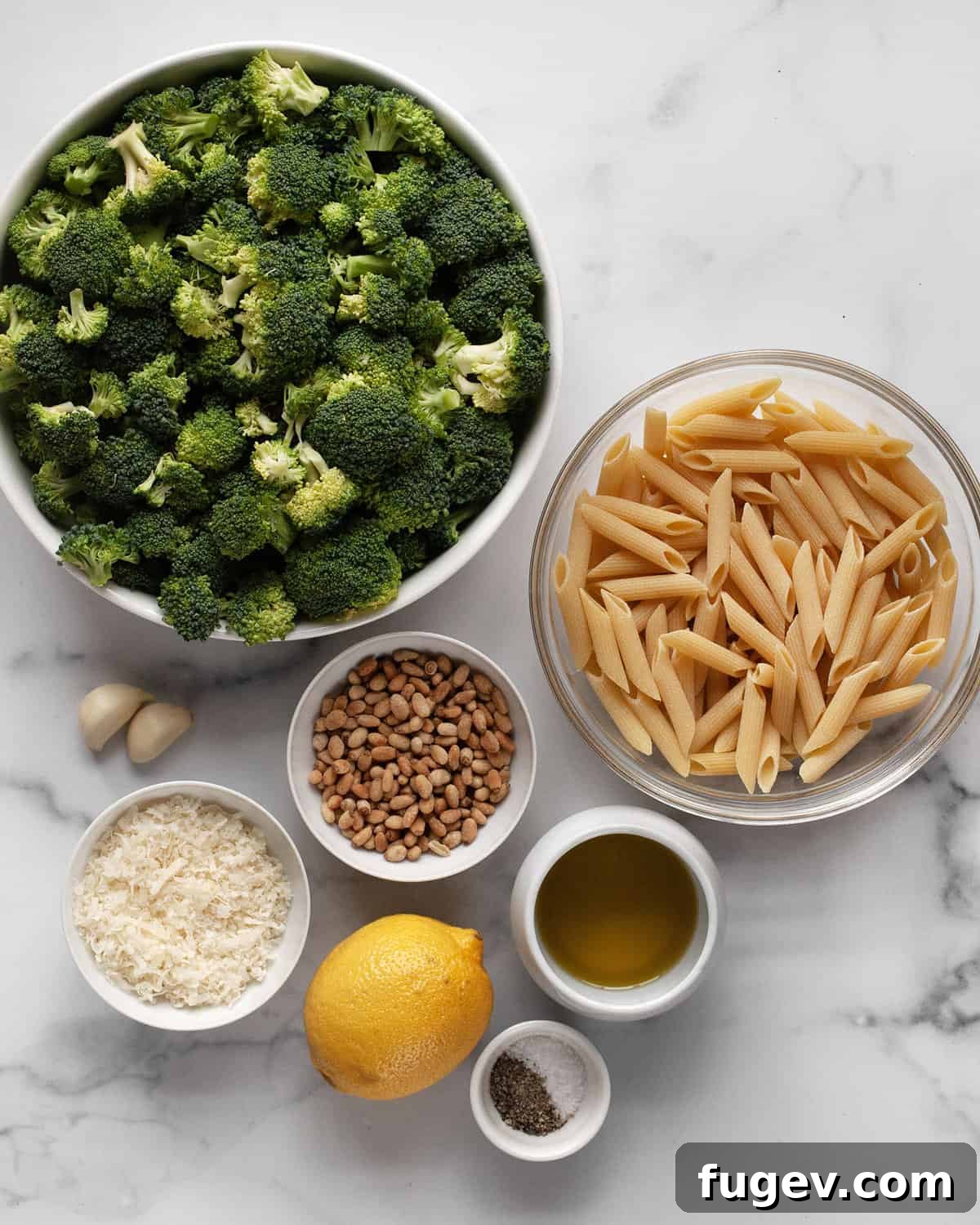
- Broccoli: When selecting broccoli, look for florets that are tightly packed and dark green in color. Avoid any yellowing, as this indicates the broccoli is past its prime and will lack freshness and flavor. Aim for small to medium florets, as they roast more evenly and quickly. Broccoli is a nutritional champion, providing essential vitamins, fiber, and antioxidants, all of which are amplified in flavor when roasted.
- Penne Pasta: My top recommendation for this chunky pesto is penne with ridges (rigati). The grooves and hollow centers of penne rigati are perfect for capturing and holding onto the robust pesto sauce, ensuring a flavorful bite every time. Other excellent short pasta substitutes include orecchiette, which cups the sauce beautifully, or fusilli, whose spirals also cling well to the pesto. Quality pasta makes a difference; choose a good brand for the best texture.
- Pine Nuts: These small, buttery nuts are essential for the classic pesto texture and flavor. To maximize their aroma and taste, always toast the pine nuts before adding them to the pesto. You can easily do this by spreading them on a sheet pan and roasting them in a 350-degree F oven for about 5 minutes, or gently toasting them in a dry skillet over medium heat for 2-3 minutes. Watch them carefully, as they can burn quickly. For a different flavor profile or if you have nut allergies, chopped walnuts or almonds make excellent alternatives.
- Garlic: The recipe calls for two fresh garlic cloves, which provide a wonderfully aromatic and pungent kick. If you prefer a milder garlic flavor, feel free to reduce it to one clove. Always use fresh garlic for the best results; pre-minced or powdered garlic won’t deliver the same vibrant taste.
- Parmesan Cheese: Just like a traditional basil pesto, this roasted broccoli version benefits immensely from the salty, umami notes of grated Parmesan cheese. For an extra layer of complexity and a more pungent, salty flavor, consider substituting with Pecorino Romano cheese. Ensure you use freshly grated cheese for superior flavor and texture compared to pre-shredded varieties.
- Lemon: Fresh lemon juice is a crucial ingredient, adding a bright, zesty acidity that cuts through the richness of the pesto and highlights the broccoli’s flavor. Always use freshly squeezed lemon juice; bottled lemon juice simply doesn’t compare in terms of freshness and vibrancy.
- Olive Oil: The quality of your olive oil truly impacts the final taste of this dish. Use a high-quality extra virgin olive oil for both roasting the broccoli and for the pesto itself. A good olive oil will impart a fruity, slightly peppery note, enhancing all the other ingredients.
- Salt & Pepper: Proper seasoning is key. I recommend seasoning the broccoli generously before roasting to bring out its best flavor. You’ll then adjust the seasoning again when pureeing the pesto, adding more to taste. Kosher salt is preferred for its pure taste and coarse texture, and freshly ground black pepper offers the best aroma.
How To Master This Roasted Broccoli Pesto Recipe
Creating this flavorful pasta dish is straightforward, but a few key steps ensure perfection. Follow these instructions for a vibrant and satisfying meal:
Step 1: Preheat Your Oven for Optimal Roasting
Preheat your oven to a robust 425 degrees F (220 degrees C). A high oven temperature is crucial for achieving beautifully caramelized and tender-crisp roasted broccoli. This ensures the florets cook quickly and develop a slightly charred exterior, which greatly enhances their flavor for the pesto.
Step 2: Prepare and Season the Broccoli
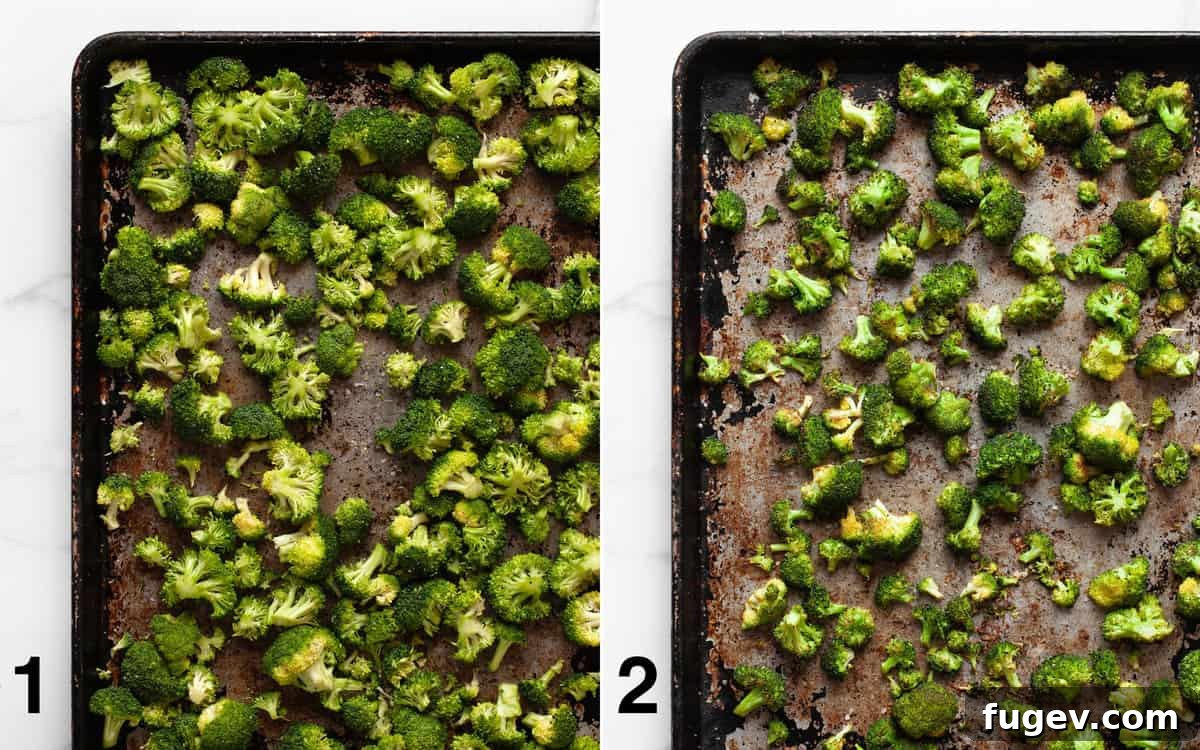
Toss the small to medium broccoli florets directly on your baking sheet with 1 tablespoon of olive oil, kosher salt, and black pepper. Ensure each floret is lightly coated. Spread the seasoned broccoli out in a single layer across the baking sheet. This is a vital step: overcrowding the pan will steam the broccoli instead of roasting it, preventing those desirable browned, crispy edges.
Step 3: Roast to Perfection
Place the baking sheet in the preheated oven. Roast the broccoli for approximately 10-12 minutes. Because the oven temperature is high, the broccoli will roast quickly. Keep an eye on it; you’re looking for florets that are crisp-tender with beautifully browned, slightly charred edges, but not burnt. This roasting process deepens the broccoli’s natural sweetness and adds a smoky dimension to the pesto.
Step 4: Assemble the Pesto Ingredients
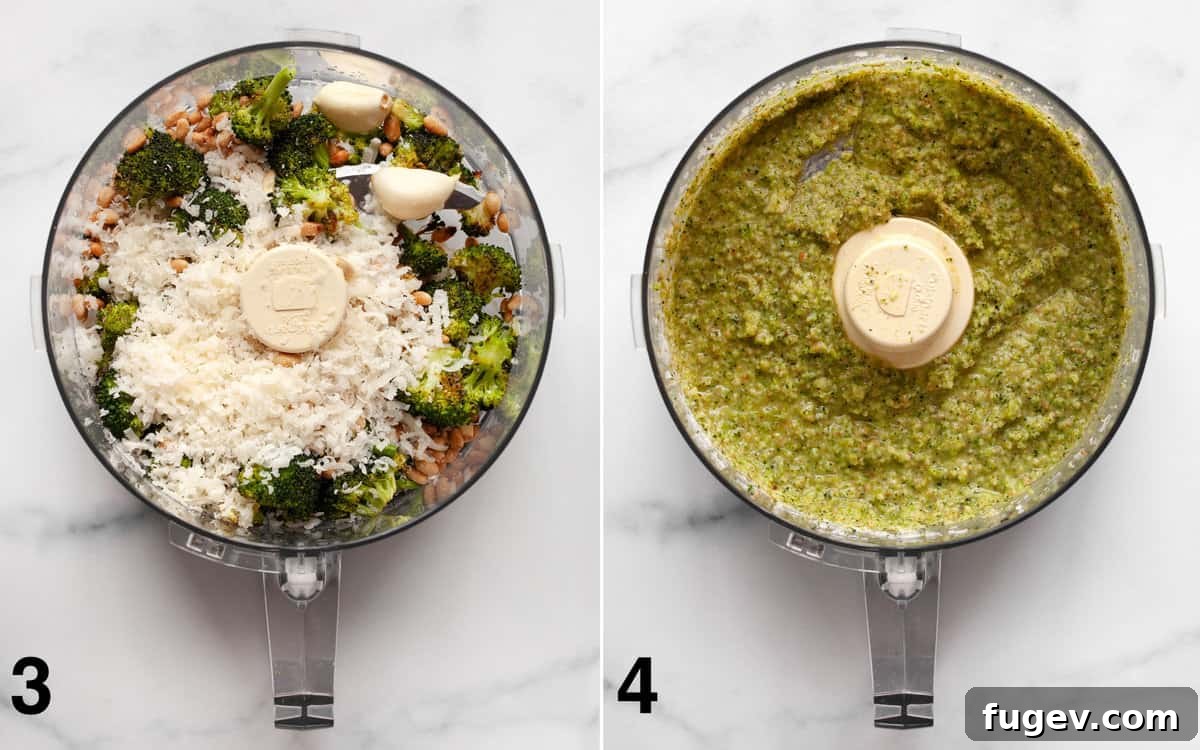
While the broccoli roasts, you can get ready for the pesto. Transfer exactly one cup of the roasted broccoli to a food processor or high-speed blender. The remaining roasted broccoli will be folded into the finished pasta later. Add the garlic cloves, toasted pine nuts, grated Parmesan, and fresh lemon juice to the food processor. These ingredients form the aromatic and savory base of your pesto.
Step 5: Blend the Pesto to a Smooth Consistency
With the food processor motor running, slowly drizzle in the remaining 1/2 cup of olive oil through the feeder tube. Continue processing until the mixture is fully combined and reaches a smooth, creamy consistency. You may need to stop and scrape down the sides of the bowl a few times to ensure everything is evenly incorporated. Taste and adjust seasoning with additional salt and pepper if needed.
Step 6: Cook the Pasta Al Dente
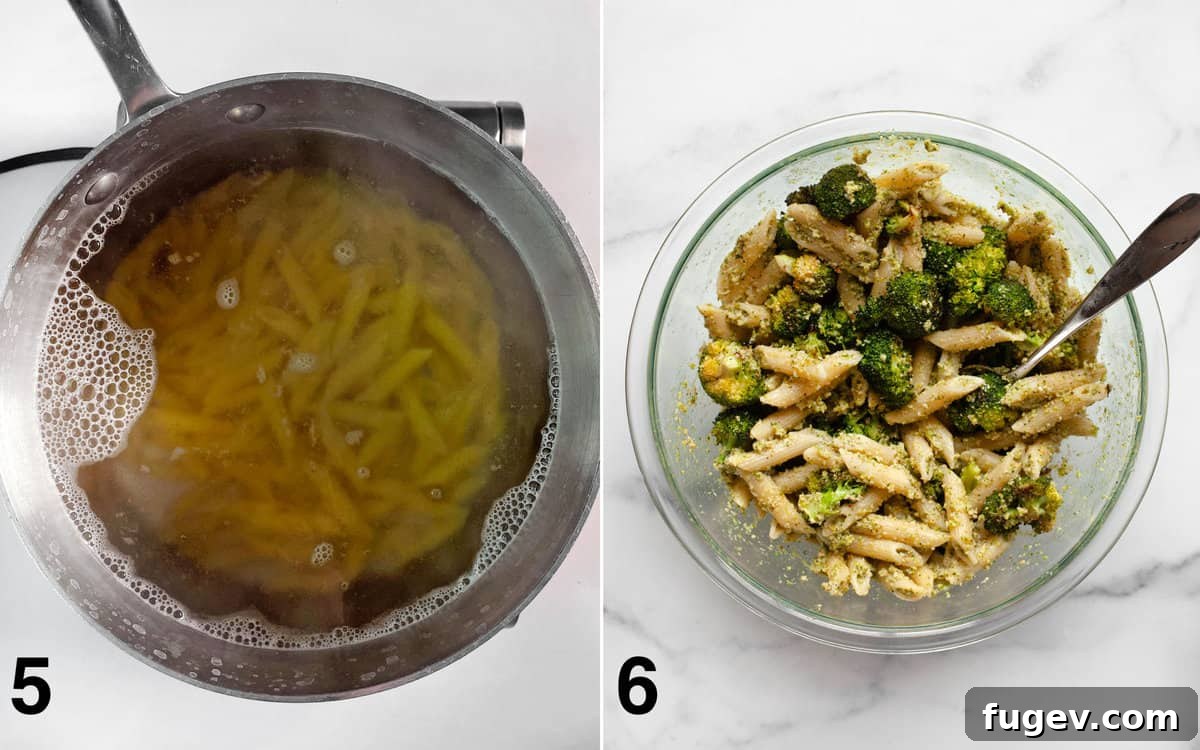
Bring a large pot of generously salted water to a rolling boil. Add the penne pasta and cook according to the package instructions until it is al dente – meaning firm to the bite, not mushy. Before draining the pasta, crucially reserve about 1/2 cup of the starchy pasta cooking water. This liquid is gold; it will help emulsify the pesto and create a silky sauce that beautifully coats the noodles.
Step 7: Combine Pasta and Pesto
Drain the pasta and immediately transfer it to a large bowl. Add the freshly made roasted broccoli pesto and stir vigorously to coat all the noodles evenly. Then, gently fold in the remaining roasted broccoli florets. If the sauce seems too thick or needs a little extra liquid to cling to the pasta, add a splash of the reserved pasta cooking water, a tablespoon at a time, until the desired consistency is achieved. You might not need the entire 1/2 cup, so add gradually.
Step 8: Final Touches and Serving
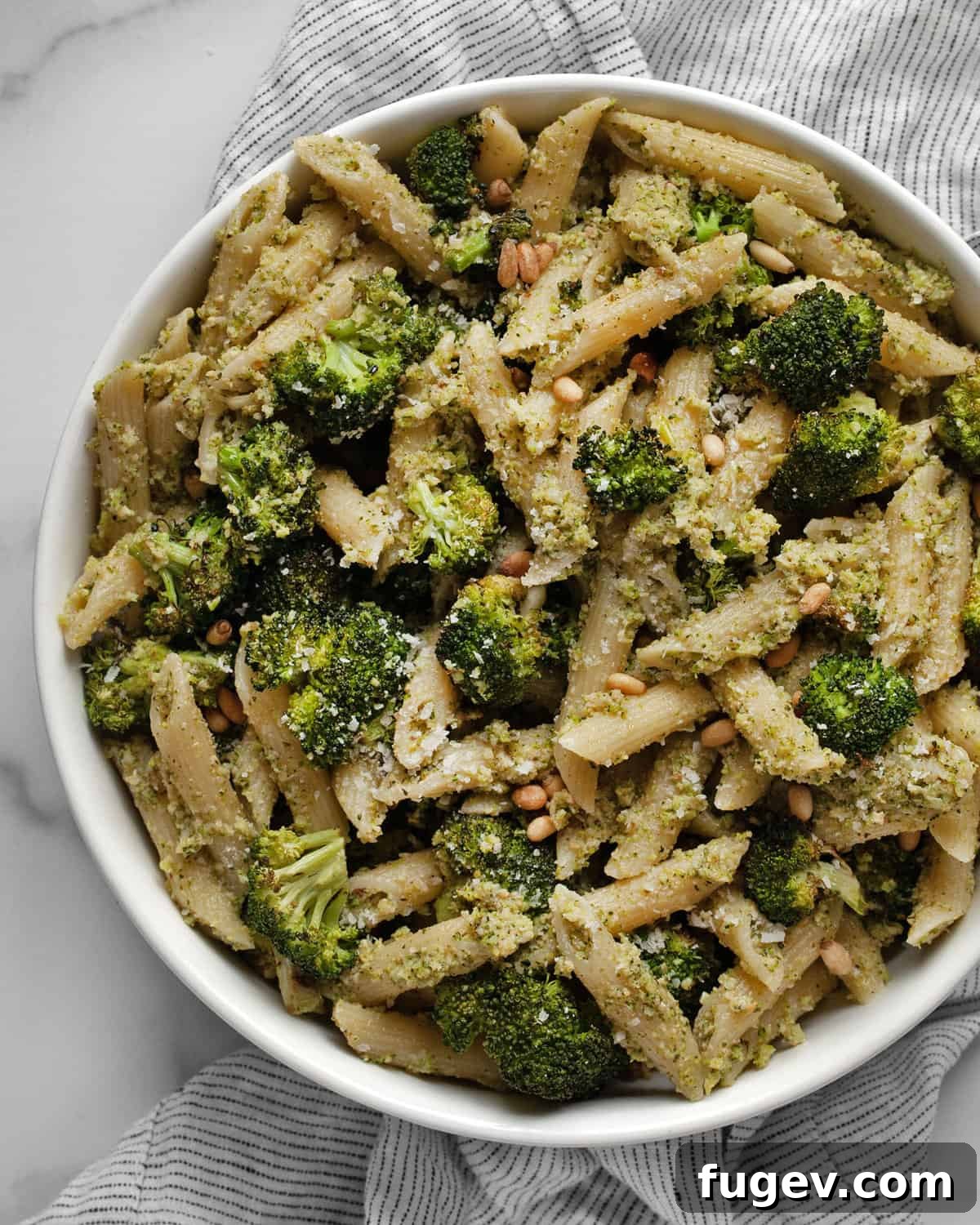
Divide the roasted broccoli pesto pasta into individual serving bowls or plates. Garnish with additional grated Parmesan cheese, a sprinkle of fresh black pepper, or a squeeze of fresh lemon juice if desired. Serve immediately and enjoy the comforting, rich flavors.
Serving Suggestions for Your Broccoli Pesto Pasta
This roasted broccoli pesto pasta is a complete and satisfying meal on its own, but it also pairs beautifully with a variety of side dishes and accompaniments to create a more elaborate dining experience. Here are some ideas to elevate your meal:
Fresh Green Salads
The richness of the pesto is wonderfully balanced by the crisp freshness of a simple green salad. Consider serving it with a bright arugula salad with lemon vinaigrette for a peppery counterpoint, or a classic house salad featuring mixed greens, cherry tomatoes, and cucumber. An Italian chopped salad with its medley of textures and tangy dressing would also be a fantastic choice, adding both freshness and robust flavors.
Complementary Vegetable Sides
If you’re looking to add even more vegetables to your plate, choose sides that offer a different texture or flavor profile. Sautéed brussels sprouts with honey mustard provide a delightful sweetness and tender bite, while sautéed broccolini with spiced almonds offers a delicate crunch and a hint of warmth. Roasted asparagus or green beans are also excellent, simple options that cook quickly.
Crusty Bread for Dipping
No pasta meal is truly complete without a good piece of crusty bread. Serve a warm, rustic loaf that you can use to soak up every last drop of the delicious pesto sauce. A ciabatta, sourdough, or a simple baguette would be perfect, offering a satisfying textural contrast to the pasta.
Garnish and Finishing Touches
Elevate the presentation and flavor with simple garnishes. A final sprinkle of freshly grated Parmesan or Pecorino Romano cheese is always welcome. A drizzle of your finest extra virgin olive oil just before serving can add a luxurious sheen and enhance the overall aroma. For a burst of fresh flavor, a scattering of fresh basil leaves (if available) or a tiny bit of red pepper flakes for a subtle kick can be delightful. A wedge of fresh lemon on the side allows diners to add an extra squeeze of brightness if they wish.
Make-Ahead Tips, Leftovers & Storage
This roasted broccoli pesto pasta is not only delicious fresh but also holds up well, making it a great option for meal prep and enjoying later. Here’s how to manage it:
Preparing Pesto in Advance
The roasted broccoli pesto itself can be made up to 2 days in advance. To store it, transfer the pesto to an airtight container. If you notice any oil separating or hardening from refrigeration, simply let it sit out at room temperature for 15-20 minutes before use. This allows the olive oil to liquefy again, making the pesto easy to stir and incorporate. Store the pesto separately from the remaining roasted broccoli florets, which should also be kept in their own airtight container in the refrigerator.
When you’re ready to assemble the pasta, gently warm the roasted broccoli (the portion that won’t go into the pesto) in a 350-degree F (175 degrees C) oven for 5-7 minutes. This will bring back its warmth and some of its texture before tossing it with the freshly cooked pasta and pesto.
Storing Leftover Pasta
Leftover roasted broccoli pesto pasta can be stored in an airtight container in the refrigerator for up to 3 days. While the flavors will meld beautifully, be aware that the broccoli will lose some of its initial crispness, and the pasta may soften slightly after being refrigerated and reheated. This is completely normal and still delicious.
Reheating Leftovers
To reheat, simply warm the pasta in the microwave until heated through. For a more even reheat, you can also gently warm it in a skillet over medium-low heat, adding a splash of water or vegetable broth to loosen the sauce if it appears too thick. Avoid high heat to prevent the pasta from drying out or becoming rubbery.
Enjoying Cold: A Pasta Salad Twist
Surprisingly, this pasta dish is also delightful served cold, making it an excellent candidate for a pasta salad! If you choose to enjoy it cold, I highly recommend stirring in a handful of fresh baby arugula or spinach just before serving. These greens will add a wonderful freshness, a slight peppery bite, and extra nutrients, transforming your leftovers into a vibrant and refreshing lunch option.
Expert Recipe Tips for Perfect Broccoli Pesto Pasta
Achieving the perfect roasted broccoli pesto pasta is simple with these additional tips and tricks:
Choose the Right Pasta Shape
While penne with ridges is highly recommended for its ability to capture the chunky pesto, if you opt for a different pasta, ensure it’s a short, robust shape. Long, thin noodles like spaghetti or linguine tend to get weighed down by thicker sauces like this pesto, and the sauce won’t cling as effectively. Shapes such as rigatoni, cavatappi, or even medium shells are excellent alternatives that will hold the pesto beautifully.
Never Overcook Your Pasta
The golden rule for any pasta dish is to cook the noodles to al dente. This means they should be firm to the bite, offering a slight resistance without being hard or chalky. Always follow the recommended cook time on the package, and taste a noodle just before the timer goes off. Overcooked pasta becomes mushy and loses its structural integrity, which can detract from the overall texture of the dish, especially with a hearty pesto.
Don’t Discard That Pasta Water!
This is perhaps one of the most crucial tips for achieving a restaurant-quality pasta sauce. The starchy water leftover from cooking your pasta is an emulsifying agent that helps bind the pesto to the noodles, creating a silky, cohesive sauce. This roasted broccoli pesto is naturally thicker than a fresh basil pesto, so a splash or two of that starchy water can make all the difference in achieving the perfect consistency. You might not need the entire half cup, but having it on hand allows you to adjust the sauce to your liking.
Achieve an Even Pesto Consistency
Before drizzling in the olive oil for your pesto, ensure you’ve finely chopped all the solid ingredients (roasted broccoli, garlic, pine nuts, Parmesan, lemon juice) in the food processor. After this initial chop, stop the machine and use a spatula to scrape down the sides of the bowl. This ensures that all ingredients are brought back towards the blades, allowing for a more even and thorough puree once the oil is added. This simple step prevents chunks from being left behind and results in a smoother, more uniform pesto.
Taste and Adjust Seasoning
Always taste your pesto before mixing it with the pasta and again after everything is combined. Salt levels can vary, especially with different types of Parmesan or Pecorino. Adjust salt and pepper as needed to bring out the best flavors. A final squeeze of lemon juice at the end can also brighten the entire dish.
Frequently Asked Questions (FAQs)
Absolutely! To make this roasted broccoli pesto entirely vegan, you have a couple of excellent options. You can simply omit the Parmesan cheese altogether, or you can substitute it with a high-quality plant-based Parmesan alternative. If you choose to skip the cheese, I highly recommend sprinkling the finished pasta dish with nutritional yeast before serving. Nutritional yeast has a cheesy, savory flavor that will help replicate the umami notes typically provided by Parmesan, ensuring a delicious and satisfying vegan meal.
Yes, you can certainly substitute traditional wheat-based pasta with your favorite gluten-free variety. The most critical aspect, regardless of the pasta type, is to cook it until it is perfectly al dente. Many gluten-free pastas tend to cook softer or more quickly than traditional pasta, so pay close attention to the package instructions and err on the side of slightly undercooking if unsure, as the pasta will continue to cook slightly when combined with the warm sauce. This particular broccoli pesto is thicker, so ensuring your gluten-free pasta holds its shape and texture is key for the best mouthfeel.
While fresh broccoli is highly recommended for roasting due to its texture and ability to crisp up, you can use frozen broccoli as a substitute in a pinch. If using frozen, thaw it completely and pat it very dry before tossing with oil, salt, and pepper. Excess moisture will steam the broccoli instead of roasting it. The texture of the final roasted broccoli may be slightly softer than with fresh, but it will still contribute great flavor to the pesto.
If you don’t have a food processor, you can still make this pesto, though it will require more effort. You can finely chop the roasted broccoli, garlic, pine nuts, and Parmesan by hand (a mezzaluna can be helpful) and then gradually whisk in the olive oil and lemon juice in a large bowl. The texture will be chunkier, more rustic, but equally delicious. A good blender can also work, but you might need to stop and scrape down the sides more frequently to ensure an even blend.
More Delectable Pasta Recipes
If you’ve enjoyed this roasted broccoli pesto pasta, explore these other delicious and easy pasta recipes:
- Rigatoni with Tomato Sauce: A timeless classic, perfect for any occasion.
- Chickpea Spinach Pasta: A hearty and healthy protein-packed option.
- Sun Dried Tomato Pasta: Bursting with concentrated sweet and tangy flavors.
- Roasted Brussels Sprout Pasta: Another fantastic way to enjoy roasted vegetables with pasta.
- Vegan Avocado Pasta: Creamy, quick, and entirely plant-based.
Creative Pesto Recipes Beyond Basil
Pesto is incredibly versatile! If you’re keen to experiment with more non-traditional pestos, try these exciting variations:
- Roasted Cauliflower Pasta with Spinach Pesto: A clever way to incorporate more veggies.
- Pesto Gnocchi with Sun Dried Tomatoes: Soft gnocchi paired with rich pesto and sweet tomatoes.
- Parsley Pesto: A fresh and herbaceous alternative to basil.
- Arugula Pesto Pasta: For those who love a slightly peppery kick.
- Pea Pesto Pasta: A vibrant, sweet, and seasonal pesto.
This pasta is part of my comprehensive guide to easy pasta recipes for every season, featuring delicious, veggie-packed ideas perfect for year-round enjoyment.
Roasted Broccoli Pesto Pasta
Paige Adams
5
12
17
4
Ingredients
- 1 pound small to medium broccoli florets
- 1 tablespoon plus 1/2 cup olive oil
- 1 teaspoon kosher salt
- 1/2 teaspoon black pepper
- 2 garlic cloves
- 1/4 cup toasted pine nuts
- 1/4 cup grated Parmesan plus more for serving
- Juice of 1 lemon
- 8 ounces penne pasta
Save This Recipe
Get this recipe sent directly to your inbox, along with new recipes every week.
Instructions
-
Preheat the oven to 425 degrees F (220 degrees C).
-
Toss the broccoli with 1 tablespoon olive oil, salt, and pepper. Spread it across a large sheet pan in a single layer to ensure even roasting.
-
Roast the broccoli until it is crisp-tender and begins to brown at the edges, typically about 10-12 minutes.
-
For the pesto, combine 1 cup of the roasted broccoli, garlic, pine nuts, Parmesan, and lemon juice in a food processor or blender. Process until finely chopped. With the motor running, slowly pour in the remaining 1/2 cup of olive oil through the feeder tube, blending until the pesto is fully combined and smooth.
-
Cook the penne pasta in generously salted boiling water until al dente, according to package instructions. Before draining, reserve 1/2 cup of the starchy pasta cooking water.
-
In a large bowl, stir the prepared pesto into the drained pasta until well coated. Then, gently fold in the remaining roasted broccoli florets. Add a little of the reserved pasta cooking water, a tablespoon at a time, as needed to help the pesto coat the noodles smoothly. You may not need the entire 1/2 cup.
-
Divide the pasta into serving bowls or onto plates and garnish with additional grated Parmesan cheese as desired. Serve warm.
Notes
If you prefer a milder garlic flavor, use just 1 garlic clove instead of 2 in the pesto.
To make this recipe vegan, simply omit the Parmesan cheese or use a plant-based vegan Parmesan alternative. If skipping the cheese, a sprinkle of nutritional yeast over the finished dish can provide a cheesy, savory note.
The broccoli pesto can be made up to 2 days in advance. Store it in an airtight container in the refrigerator. If the oil solidifies, let it sit at room temperature for 15-20 minutes and stir before use. Store any remaining roasted broccoli separately. Before assembling, warm the refrigerated roasted broccoli in a 350-degree F (175 degrees C) oven for 5-7 minutes.
Leftover pasta can be stored in an airtight container in the refrigerator for up to 3 days. Reheat gently in the microwave or on the stovetop. Alternatively, enjoy it cold as a pasta salad; stirring in baby arugula or spinach adds a delightful fresh element.
Nutrition
Carbohydrates: 54g |
Protein: 14g |
Fat: 9g |
Saturated Fat: 2g |
Polyunsaturated Fat: 3g |
Monounsaturated Fat: 2g |
Cholesterol: 5mg |
Sodium: 732mg |
Potassium: 574mg |
Fiber: 6g |
Sugar: 4g |
Vitamin A: 767IU |
Vitamin C: 109mg |
Calcium: 129mg |
Iron: 2mg
Nutrition information is automatically calculated and should be used as an approximation.
Additional Info
Pasta
Italian
Did you make this recipe?
Mention @lastingredient on Instagram and tag it #lastingredient!