
Unlock Deep Flavor: Crafting Homemade Parmesan Broth from Cheese Rinds
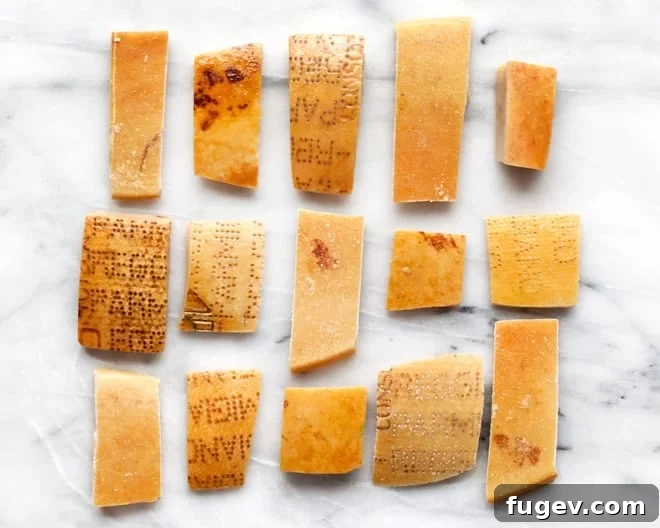
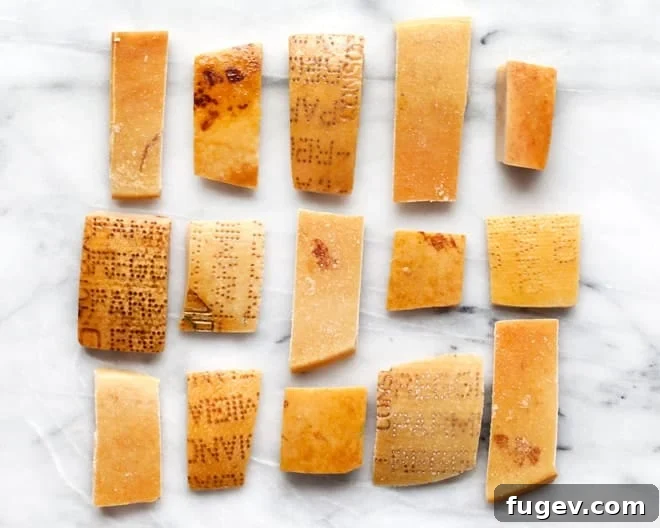
In the culinary world, true magic often lies in transforming humble ingredients into something extraordinary. This is precisely the case with Parmesan rinds, those seemingly insignificant ends of a glorious wedge of cheese. Far too often, these flavor-packed remnants are discarded without a second thought. But for those in the know, they are a secret weapon, capable of infusing your cooking with unparalleled depth and a savory richness known as umami. This guide will reveal how to turn these discarded rinds into a “liquid gold” that will elevate your soups, risottos, sauces, and so much more: homemade Parmesan broth.
My own journey into appreciating every last bit of Parmesan began, quite unexpectedly, with my two-year-old son. Whenever I’d ask him what the moon was made of, his earnest reply would always be, “Parmesan!” My husband and I were initially puzzled, but it soon clicked. Parmesan isn’t just his favorite cheese; it’s practically a food group in our household. We go through wedge after expensive wedge, and despite my attempts to introduce other varieties, his preference for Parmesan remains unwavering. While my wallet occasionally sighs, I can’t help but be proud of his discerning palate. This affection for Parmesan only deepened my commitment to making sure no rind ever goes to waste.
The Umami Secret: Why Parmesan Rinds Are Liquid Gold
For years, I instinctively tossed Parmesan rinds into pots of simmering tomato sauce or hearty soups. They would slowly melt, releasing a subtle, almost salty undertone that seasoned the dish beautifully. The culinary term for this incredibly satisfying taste sensation is “umami,” often described as savory deliciousness. It’s that fifth basic taste, distinct from sweet, sour, bitter, and salty, and Parmesan cheese is a prime example of an umami powerhouse.
But simply adding rinds to another dish, while effective, barely scratches the surface of their potential. The true revelation comes when you dedicate them to making a concentrated broth. This process extracts every last drop of flavor from the rinds, creating a versatile base that can transform ordinary meals into gourmet experiences. It’s a testament to the idea that some of the most profound flavors come from the simplest, and often overlooked, ingredients.
Embracing Zero Waste Cooking with Parmesan Broth
Beyond its incredible flavor, making Parmesan broth is an exemplary practice in zero-waste cooking. In an age where food waste is a growing concern, finding innovative ways to utilize every part of our ingredients is more important than ever. Those hard, often discarded rinds are not merely waste; they are a concentrated source of flavor waiting to be unleashed. By turning them into broth, you not only reduce your household’s food waste but also save money by creating a gourmet ingredient from something you might have otherwise thrown away.
Collecting enough rinds typically doesn’t take long for Parmesan lovers. However, if your cheese consumption is more moderate or you need a batch of broth quickly, don’t despair! Many specialty grocery store cheese counters sell Parmesan rinds at a fraction of the cost of the cheese itself. Sometimes, a friendly request at your local deli or cheese shop can even yield a stash of these precious scraps. Once acquired, rinds can be stored in an airtight container in the freezer indefinitely until you’re ready to make your next batch of exquisite broth.
Crafting Your Own Liquid Gold: How To Make Parmesan Broth
Making Parmesan broth is a wonderfully simple process that yields incredibly rewarding results. It requires minimal effort but a little patience as the flavors slowly meld and deepen. Here’s how to create this versatile culinary base in your own kitchen:
Parmesan Broth
Save the rinds from your cheese to make parmesan broth. You can use this liquid gold in soups and risottos to add a little umami flavor to your cooking.
By: Paige Adams
Prep Time: 10 mins
Cook Time: 2 hrs 5 mins
Total Time: 2 hrs 15 mins
Servings: 4 cups
Ingredients
- 2 tablespoons olive oil
- 1 onion, peeled and quartered
- 1 head of garlic, halved crosswise
- 1 bunch fresh thyme
- 1 bay leaf
- 3-4 parsley sprigs
- 1 teaspoon black peppercorns
- 1 cup dry white wine (such as Sauvignon Blanc or Pinot Grigio)
- 1 pound Parmesan rinds
- 8 cups water
Instructions
- In a large, heavy-bottomed soup pot or Dutch oven, heat the olive oil over medium-high heat. Add the quartered onion, halved garlic head, fresh thyme, bay leaf, parsley sprigs, and whole black peppercorns. Sauté these aromatics for about 5 minutes, stirring occasionally, until the garlic turns a light golden brown and the kitchen fills with a delightful fragrance. This initial sautéing step is crucial for building a strong flavor base for your broth.
- Pour in the dry white wine. Increase the heat slightly and bring the wine to a simmer, allowing it to reduce by half. As the wine simmers, use a wooden spoon to scrape up any flavorful brown bits that have stuck to the bottom of the pot. These “fond” bits are packed with flavor and will dissolve into the broth, adding even more complexity.
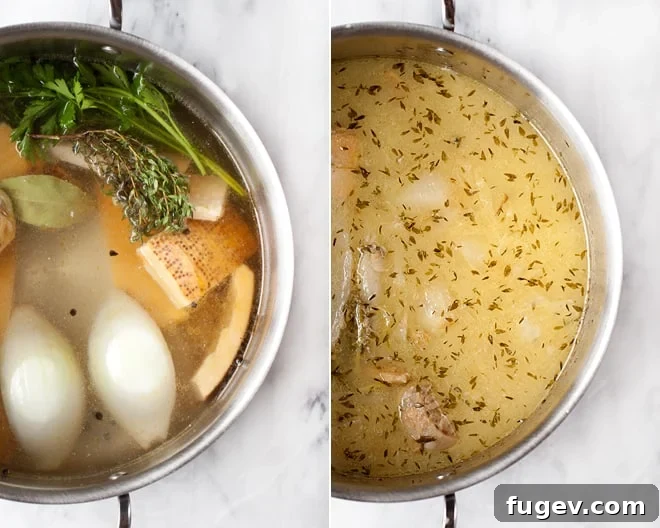
- Once the wine has reduced, add the Parmesan rinds to the pot, ensuring they are somewhat submerged. Pour in 8 cups of fresh water. Bring the mixture to a rolling boil over high heat, then immediately reduce the heat to a low simmer. Continue to simmer gently for at least 2 hours, stirring occasionally to prevent the cheese rinds from sticking to the bottom of the pot. During this long simmer, the rinds will soften and release their deep, cheesy essence into the liquid, transforming it into a rich, savory broth.
- After simmering, carefully remove the pot from the heat. Strain the entire mixture through a fine-mesh sieve into a clean bowl or container, pressing gently on the solids to extract as much liquid as possible. Discard the spent aromatics and rinds. You should be left with approximately 4 cups of aromatic Parmesan broth.
- If not using the broth immediately, allow it to cool completely to room temperature before transferring it to airtight containers. The broth can be stored in the refrigerator for up to 4 days, or frozen for up to 3 months for longer storage. Freezing in ice cube trays or smaller portions makes it easy to thaw just what you need for future recipes.
Notes
This recipe is adapted from an original version published in Bon Appetit, December 2014.
Nutrition Information (Approximate)
- Serving: 1 cup
- Calories: 154 kcal
- Carbohydrates: 5g
- Protein: 3g
- Fat: 9g
- Saturated Fat: 2g
- Polyunsaturated Fat: 1g
- Monounsaturated Fat: 6g
- Cholesterol: 5mg
- Sodium: 118mg
- Potassium: 109mg
- Fiber: 1g
- Sugar: 2g
- Vitamin A: 75 IU
- Vitamin C: 3mg
- Calcium: 103mg
- Iron: 0.5mg
Nutrition information is automatically calculated, so should only be used as an approximation and may vary based on specific ingredients and preparation methods.
Tips for the Best Parmesan Broth
- Quality Rinds Matter: For the most flavorful broth, use rinds from high-quality, aged Parmesan cheese (Parmigiano-Reggiano is ideal). Avoid rinds from pre-grated or lower-quality Parmesan-style cheeses, as they may contain additives or lack the depth of flavor.
- Don’t Rush the Simmer: The extended simmering time is key to extracting maximum flavor. A gentle simmer is preferred over a rolling boil, as it allows the flavors to meld slowly and prevents cloudiness.
- Don’t Skimp on Aromatics: The onion, garlic, thyme, parsley, and peppercorns are not just for show. They create a foundational layer of flavor that complements the richness of the Parmesan without overpowering it. Feel free to add a carrot or a celery stalk for extra vegetable depth, if desired.
- Season to Taste (Later): Parmesan rinds are naturally salty, so avoid adding extra salt to the broth during cooking. You can always adjust the seasoning when you use the broth in your final dish.
- Cool Completely Before Storing: Always allow the broth to cool fully before refrigerating or freezing to prevent bacterial growth and preserve its quality.
Unleash Umami: Versatile Ways to Use Your Parmesan Broth
Once you have a batch of this savory Parmesan broth, a world of culinary possibilities opens up. Its deep, umami-rich flavor can enhance a myriad of dishes. Here are just a few ideas to get you started:
- Soups: Use it as a base for almost any soup, from a simple vegetable soup or minestrone to a hearty lentil or tortellini soup. It adds an immediate gourmet touch.
- Risottos: This is where Parmesan broth truly shines! Substitute it for vegetable or chicken broth in any risotto recipe – mushroom risotto, asparagus risotto, or a classic Parmesan risotto will reach new heights of flavor.
- Pasta Dishes: Deglaze your pan with Parmesan broth after sautéing vegetables or proteins for a pasta sauce. Or, add a splash to finish a simple aglio e olio, giving it an extra layer of richness.
- Braising Liquids: Use it to braise chicken thighs, pork shoulder, or short ribs. The slow cooking will infuse the meat with incredible savory notes.
- Cooking Grains: Cook rice, quinoa, couscous, or farro in Parmesan broth instead of water for a flavorful side dish that requires minimal effort.
- Sauces: Reduce it down with a bit of cream for a quick, luxurious pan sauce for chicken or fish. It also makes a fantastic base for gravies.
- Steaming Vegetables: Add a small amount to the pot when steaming vegetables like green beans or broccoli for an added layer of flavor.
Making Parmesan broth is a simple yet impactful way to elevate your home cooking, reduce food waste, and savor every last bit of that delicious, expensive cheese. It’s a foundational ingredient that proves that some of the most profound flavors come from the simplest, and often overlooked, parts of our food. So, next time you finish a block of Parmesan, don’t throw away those rinds. Save them, simmer them, and transform them into a truly exceptional “liquid gold” that will bring a touch of gourmet flair to all your culinary creations.
Did you make this recipe?
Mention @lastingredient on Instagram and tag it #lastingredient!