

Indulge in a truly exceptional **squash soup recipe** that promises both comfort and rich flavor. This delightful dish features a harmonious blend of perfectly roasted squash, fragrant fresh herbs, savory onion, and aromatic garlic. It’s not just a meal; it’s a culinary experience designed to be your favorite easy, healthy, and satisfying vegan lunch or dinner.

Recipe at a Glance
- Prep Time: 15 minutes
- Cook Time: 40 minutes
- Total Time: 55 minutes
- Servings: 6 bowls
- Calories: ~120 kcal (per serving, estimated)
- Technique: Roast squash, sauté aromatics, blend with stock.
- Flavor Profile: Silky, deeply herbaceous, naturally sweet.
- Difficulty: Easy, perfect for beginners.
Why You’ll Adore This Velvety Squash Soup
- Rich, Cozy Flavor from Dual Squash Varieties: We don’t just use one squash; our secret lies in combining the sweet notes of butternut with the creamy depth of kabocha (or Blue Hubbard). This pairing elevates the soup, creating a complex and incredibly satisfying taste from humble ingredients.
- Consistently Velvety-Smooth Texture: Achieving that restaurant-quality silkiness is key. Our method, which includes carefully roasting the squash, blending the ingredients gradually with vegetable stock, and easily peeling the squash while still warm, guarantees a luxuriously smooth soup every single time.
- Fresh Herbs for Unrivaled Depth: While some recipes rely on heavy cream for richness, this recipe allows fresh herbs and a delightful crunchy garnish to shine. The vibrant notes of rosemary, sage, and thyme infuse the soup with an irresistible aroma and flavor that’s both light and profoundly comforting.
Featured Comment
⭐⭐⭐⭐⭐ “This soup was incredible! The note about fresh produce was so helpful because the squashes near me are almost the size of housecats, so knowing how to adjust the roasting time really made a difference. I couldn’t believe how creamy this turned out for a vegan recipe. Definitely adding this one to my fall rotation!” —Lauren
Table of Contents
- Recipe at a Glance
- Why You’ll Adore This Velvety Squash Soup
- Essential Ingredients & Smart Substitutions
- Selecting the Perfect Butternut Squash for Soup
- Creative Variations for Your Creamy Squash Soup
- Professional Chef’s Tips for Success
- Crafting Your Dream Squash Soup: Step-by-Step
- How to Roast Butternut Squash for Soup
- How to Roast Kabocha or Blue Hubbard Squash for Soup
- Bringing It All Together: Making Roasted Squash Soup
- How to Make Flavorful Roasted Pepitas
- Chef Lindsey’s Expert Tip
- Squash Soup Recipe FAQs
- More Delightful Squash Recipes
- Complete Squash Soup Recipe Card
- Before You Go
Throughout the cooler months, this **velvety squash soup** or a delightful variation of it makes a regular appearance in my kitchen. It’s simply *that* comforting, *that* silky, and *that* unfailingly delicious. The magic begins with roasting the squash, a process that beautifully coaxes out its natural sweetness and depth. Combined with a medley of fresh, aromatic herbs, the flavor profile becomes profoundly comforting and complex.
This recipe is incredibly versatile; while roasted squash offers the best flavor, you can even use canned butternut puree if you’re pressed for time. For an added layer of texture and taste, I highly recommend topping each bowl with a sprinkle of warmly spiced pepitas, a drizzle of high-quality olive oil, or some crispy homemade croutons. These garnishes provide a wonderful contrast to the soup’s smooth consistency.
If you’re seeking more hearty and warm recipes for the winter, you might also enjoy my hearty rosemary lamb stew, wholesome quinoa vegetarian meatballs, or my robust red chili with ground beef. Each offers a unique way to embrace the cozy season.
Essential Ingredients & Smart Substitutions
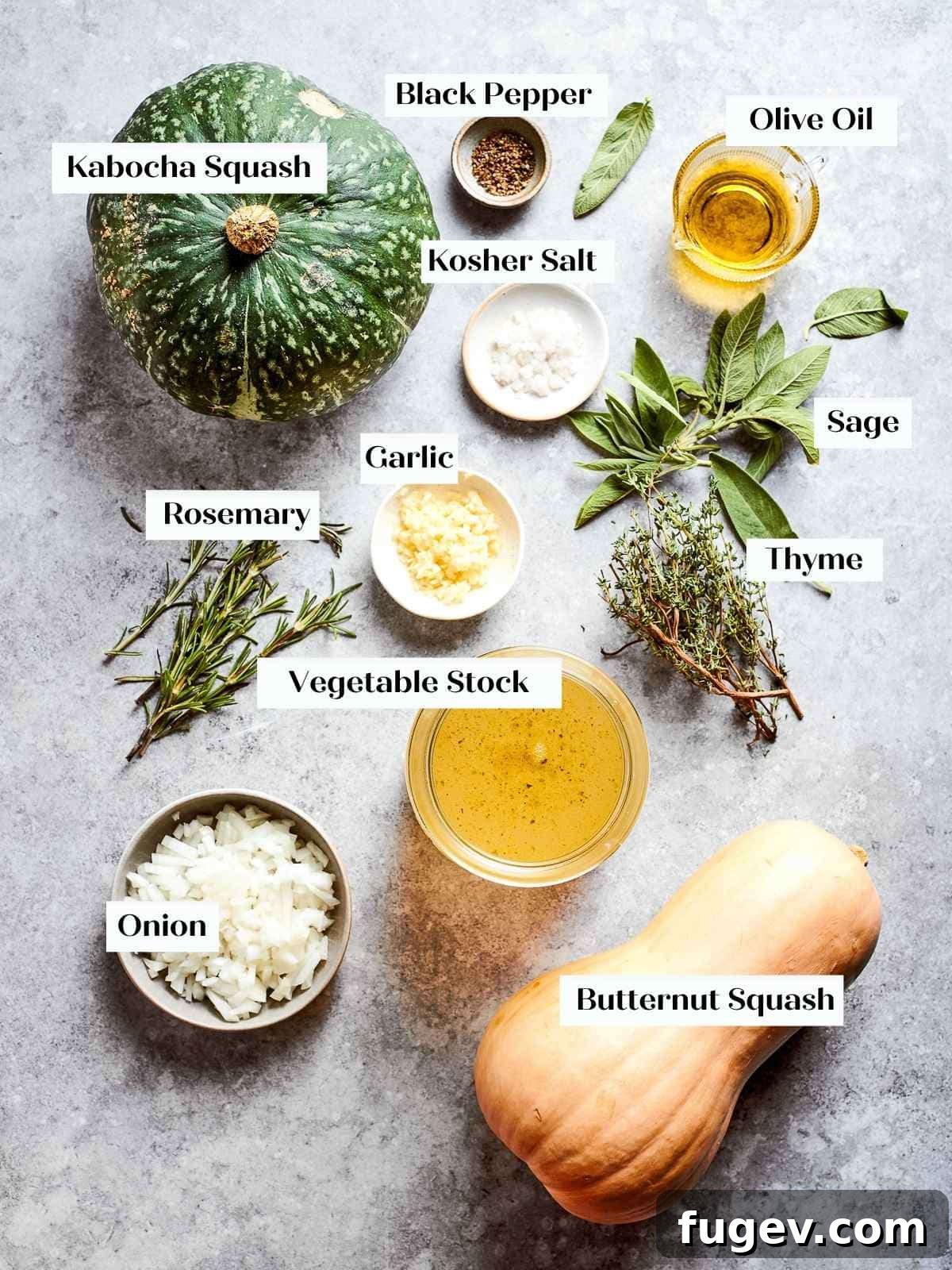
- Vegetable Stock or Broth: The foundation of our soup. Use a good quality vegetable stock for the best flavor. Low-sodium options allow for better control over the final seasoning.
- Kosher Salt: My go-to salt for cooking. Its coarse texture and less intense salinity per teaspoon (compared to table salt) make it ideal for seasoning dishes gradually and evenly.
- Butternut Squash: Provides the primary sweet and creamy base. Look for firm, unblemished squash.
- Onions: Essential aromatics. Sweet, white, or yellow onions will all work beautifully. I often opt for yellow or sweet onions for their balanced flavor, similar to those I use in my Best French Onion Soup recipe. They add a foundational sweetness when properly sweated.
- Garlic: Freshly minced garlic is crucial for a pungent, aromatic kick that complements the squash. Don’t skimp here!
- Olive Oil: Used for roasting the squash and sautéing the aromatics. A good quality extra virgin olive oil adds to the overall flavor. Avocado oil is a suitable alternative for high-heat cooking.
- Black Pepper: Freshly ground black pepper adds a subtle warmth and sharpness, enhancing all the other flavors.
- Kabocha Squash or Blue Hubbard: These provide a deeper, nuttier flavor and an incredibly silky texture that truly sets this soup apart. Roasting them brings out their best qualities.
- Fresh Sage, Thyme, and Rosemary: The herb trio that elevates this soup to gourmet status. Using fresh, woody herbs is key; cooking them gently in olive oil helps to extract and intensify their delicate flavors, which might otherwise get lost. If fresh isn’t available, dried herbs can be used – just add them with the garlic and onion to give them time to soften and release their essence.
- Pepitas (Pumpkin Seeds): While optional, these spiced, roasted pepitas add a fantastic crunch and textural contrast to the smooth soup. They’re a simple yet impactful garnish. You can also use homemade croutons, perhaps made from leftover pumpkin dinner rolls or pumpkin challah for an extra festive touch!
Refer to the complete recipe card below for precise quantities and additional details on each ingredient.
Selecting the Perfect Butternut Squash for Soup
- Understand Size Variation: Fresh produce, especially squash, comes in a wide range of sizes. This recipe accounts for that by using measurements in cups (4 cups = 1 quart), offering a degree of standardization. Don’t be afraid to use a larger squash; just be prepared to adjust other ingredients.
- Adjust Seasoning and Liquids: For a larger squash, you might use a slightly larger onion, a rounded tablespoon of minced garlic, and potentially more herbs. Crucially, anticipate needing additional vegetable stock to achieve the desired consistency for your soup. Always taste and adjust seasoning as you go.
- Look for Quality: When selecting butternut squash, choose one that is free of any green patches, indicating full ripeness. It should also **feel heavy for its size**, a sign of dense, flavorful flesh. Pick up a few and consider making a batch of my vegan butternut squash chili next!
Creative Variations for Your Creamy Butternut Squash Soup
- Explore Different Vegetables: While squash is the star, don’t hesitate to experiment! You can swap in other root vegetables like parsnips, russet potatoes, or sweet potatoes for a slightly different flavor profile and texture. For more squash-centric ideas, consider trying my delightful pumpkin soup recipe.
- A Hint of Tart Apple: For an autumnal twist, add a tart apple, such as a Granny Smith, to the roasting pan alongside your squash. The apple’s acidity will provide a wonderful sweet-tangy lift, creating a unique and refreshing flavor dimension.
- Freshly Roasted Squash Seeds (or Pepitas!): While you *could* clean and roast the seeds from your fresh squash, pepitas (shelled pumpkin seeds) are readily available, easier to prepare, and generally more palatable for garnishing. Save yourself time and use pepitas for that perfect crunch!

Professional Chef’s Tips for Success
- Roast for Flavor, Not Just Softness: The key to a deeply flavorful squash soup lies in proper roasting. Place your squash cut-side down on the baking sheet to encourage caramelization on the edges. This process develops natural sugars, intensifying sweetness and preventing your soup from becoming watery or bland.
- Peeling the Squash: While some squash skins are technically edible after roasting (especially if baked covered), for a truly silky-smooth soup, it’s best to peel the squash. I find it easiest to remove the skin when the squash is still warm, though it’s still quite manageable once cooled. Peeling ensures a superior texture for blending.
- Add Stock Gradually During Blending: To achieve that perfect creamy consistency, add your vegetable stock in stages as you blend the soup. This technique allows you to control the thickness, ensuring a rich, viscous soup without accidentally thinning it out too much. You want it pourable, but still substantial.
- Don’t Rush the Aromatics: “Sweating” the onions and herbs over medium-low heat until translucent is vital. This process gently releases their moisture and sweet flavors without browning, which could add a bitter note. Patience here pays off in a more harmonious flavor base.
- Taste and Adjust Seasoning Frequently: Seasoning is personal. Always taste your soup before and after blending, and at the end. Vegetable stocks vary in sodium content, so start with less salt and add more to taste. A final touch of freshly ground black pepper can make a big difference.
Crafting Your Dream Squash Soup: Step-by-Step
Follow these detailed instructions to create a perfect, flavorful squash soup every time. You’ll find further specific measurements in the comprehensive recipe card below.
How to Roast Butternut Squash for Soup:
- Preheat the Oven: Set your oven to 350°F (175°C). I prefer a slow roast for butternut squash to allow for gentle caramelization, which deepens its sweetness. This step is optional but highly recommended for optimal flavor.
- Prepare the Squash: Carefully cut off the top and bottom ends of the butternut squash using a large chef’s knife. Stand the squash upright on the newly flattened base to create a stable surface. Slice the squash in half lengthwise, pushing down firmly on the knife and keeping your fingers well clear of the blade.
- Scoop Out Seeds: Using a spoon, scoop out all the seeds and fibrous strings from the squash halves. You can discard them, or if you’re feeling ambitious, clean and roast them separately for another snack! (Refer to image 1 in original for visual)
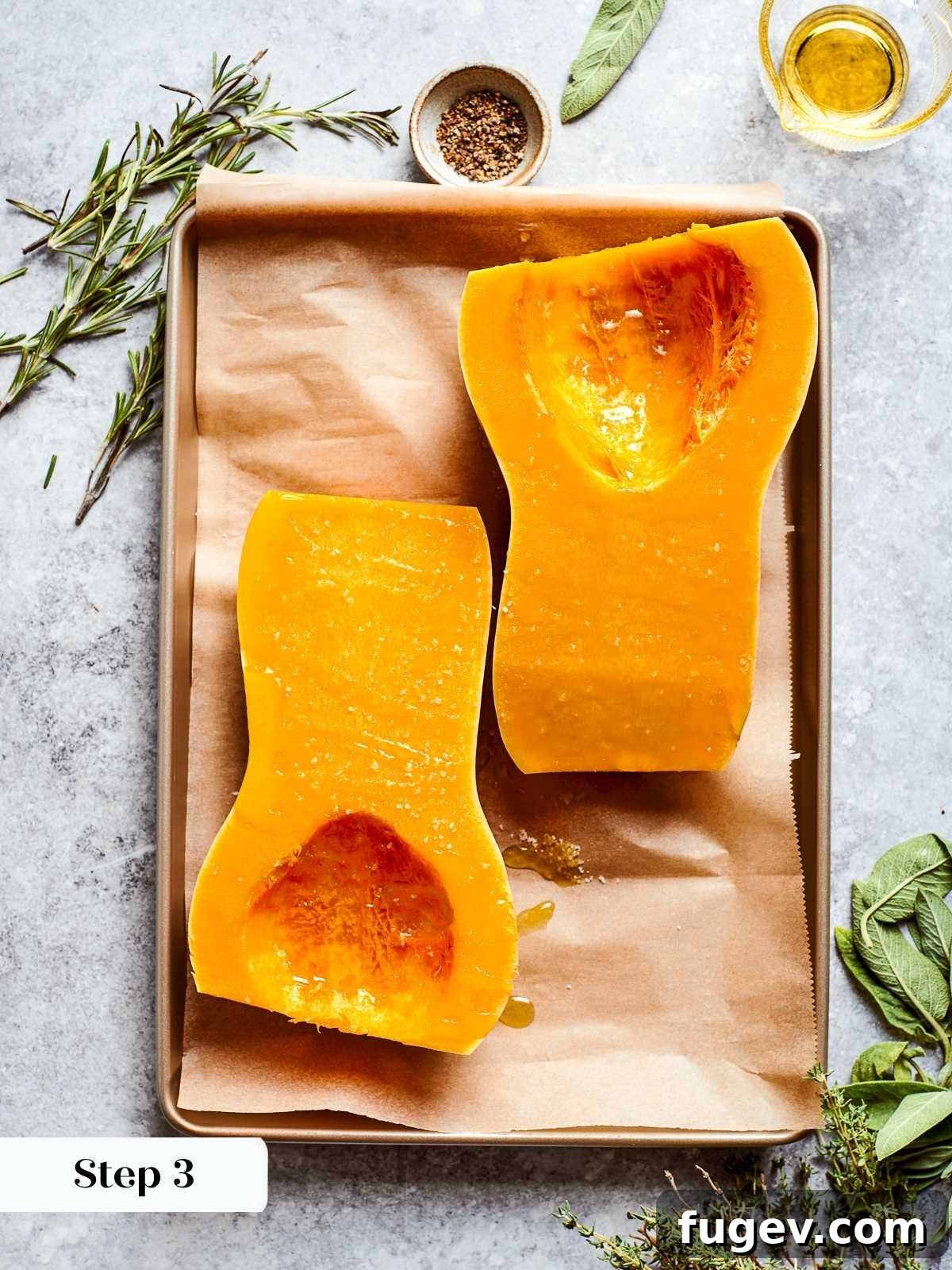
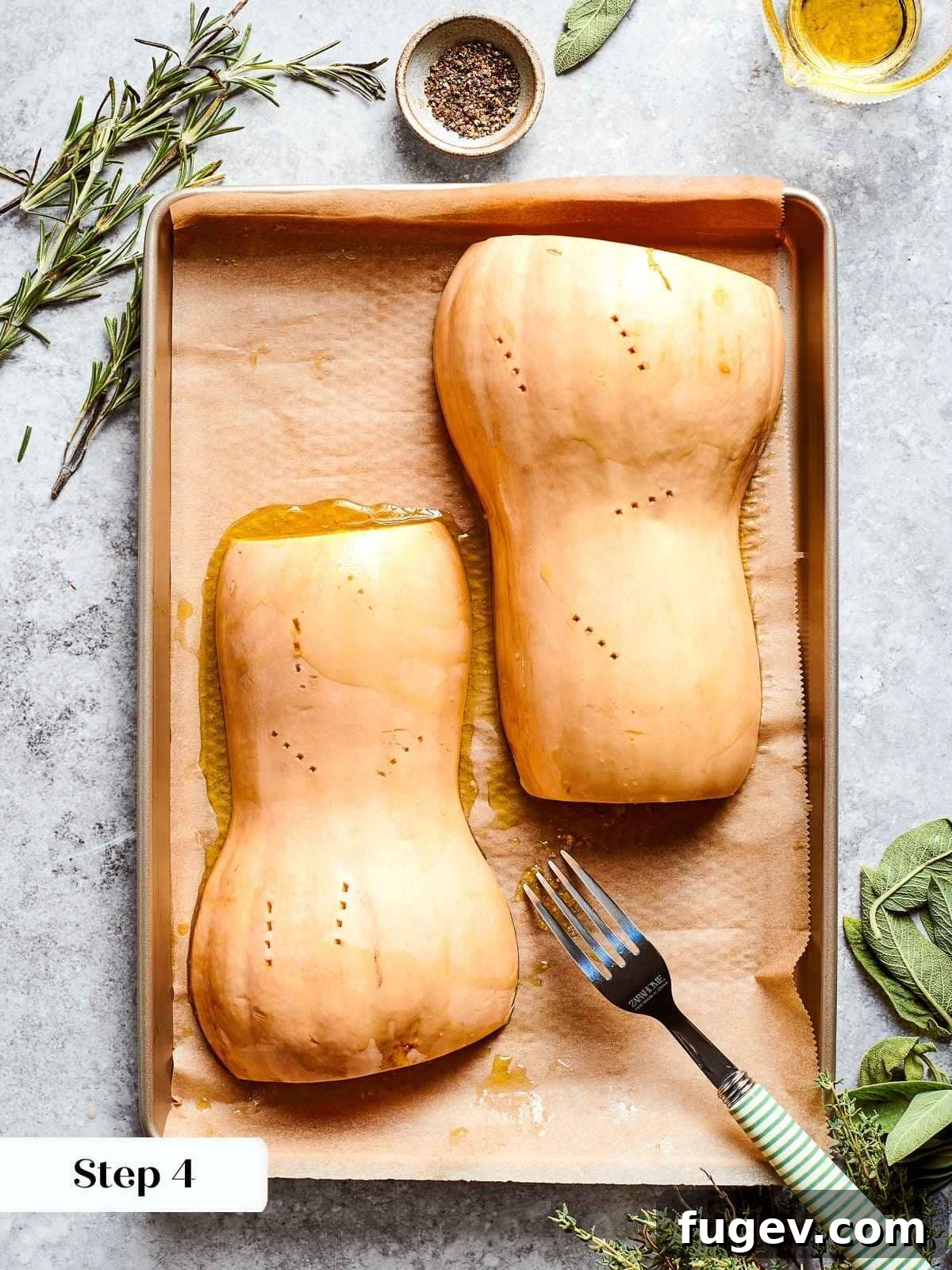
- Season and Arrange for Roasting: Line a baking sheet with a piece of parchment paper. Place the squash halves cut-side up on the baking pan. Drizzle generously with olive oil and sprinkle with kosher salt. Now, flip them over so they are cut-side down. Using a fork or the tip of your knife (exercise caution!), poke several holes along the length of each squash half. This helps steam escape and prevents bursting. (Refer to image 2 in original for visual)
- Roast Until Tender: Place the baking sheet in the preheated oven. Bake until the squash is very tender when pressed with your finger or offers no resistance when pierced with a paring knife. Roasting time can vary significantly based on the size of your squash, typically ranging from 25 to 40 minutes.
- Extract the Flesh: Once roasted and slightly cooled (it’s easier when warm but still possible when cold), scoop all the soft, flavorful butternut squash flesh from the skins. Set it aside, or cool completely and store in an airtight container in the refrigerator for later use.
How to Roast Kabocha or Blue Hubbard Squash for Soup:
- Preheat the Oven: Again, preheat your oven to 350°F (175°C).
- Carefully Cut the Squash: Using a large, sturdy chef’s knife, carefully cut off the top and bottom of the kabocha squash. Stand the squash upright on a flat end, just as with the butternut. Slice the squash in half lengthwise. Kabocha squash have notoriously thick rinds, so this may require considerable force. For safety, you can even lift the entire squash and gently bang it down on the cutting board while maintaining a firm grip on the knife, ensuring your fingers are far from the blade. A cleaver would be an even better tool if you have one! If your grocery store sells pre-cut halves, grab them – it’s worth the slight extra cost for the convenience.
- Remove Seeds: Scoop out the seeds and stringy bits. Discard them or save them for roasting.
- Chop into Pieces: Work with one half of the squash at a time. Cut strips approximately 2 inches wide, then chop each strip into 2-inch pieces. The exact size isn’t critical, but aim for roughly similar pieces to ensure even cooking. Repeat with the other half if you have it! (Refer to image 3 in original for visual of pieces)
- Prepare for Covered Baking: Arrange all the squash pieces, skin-side down (cut-side facing up!), on a baking sheet lined with parchment paper. It’s fine if they are a bit crowded. Sprinkle with a little kosher salt, then cover the squash with another piece of parchment paper, followed by a large piece of aluminum foil. Seal the edges of the foil tightly around the rim of the baking pan to create a steamy environment. (This can also be done in a large roasting pan or baking dish depending on your quantity and available bakeware.)
- Bake Until Very Tender: Bake in the preheated oven until the squash is completely soft and can be easily pierced with a cake tester or paring knife. This usually takes about 25 minutes. Remove from the oven, then carefully remove the parchment and foil. Once cooled enough to handle, scrape the soft flesh from the thick skin of each piece.
Bringing It All Together: Making Roasted Squash Soup
For best results, use a Dutch oven or a thick-bottomed skillet. Heat the olive oil over medium heat until it’s hot but not smoking.
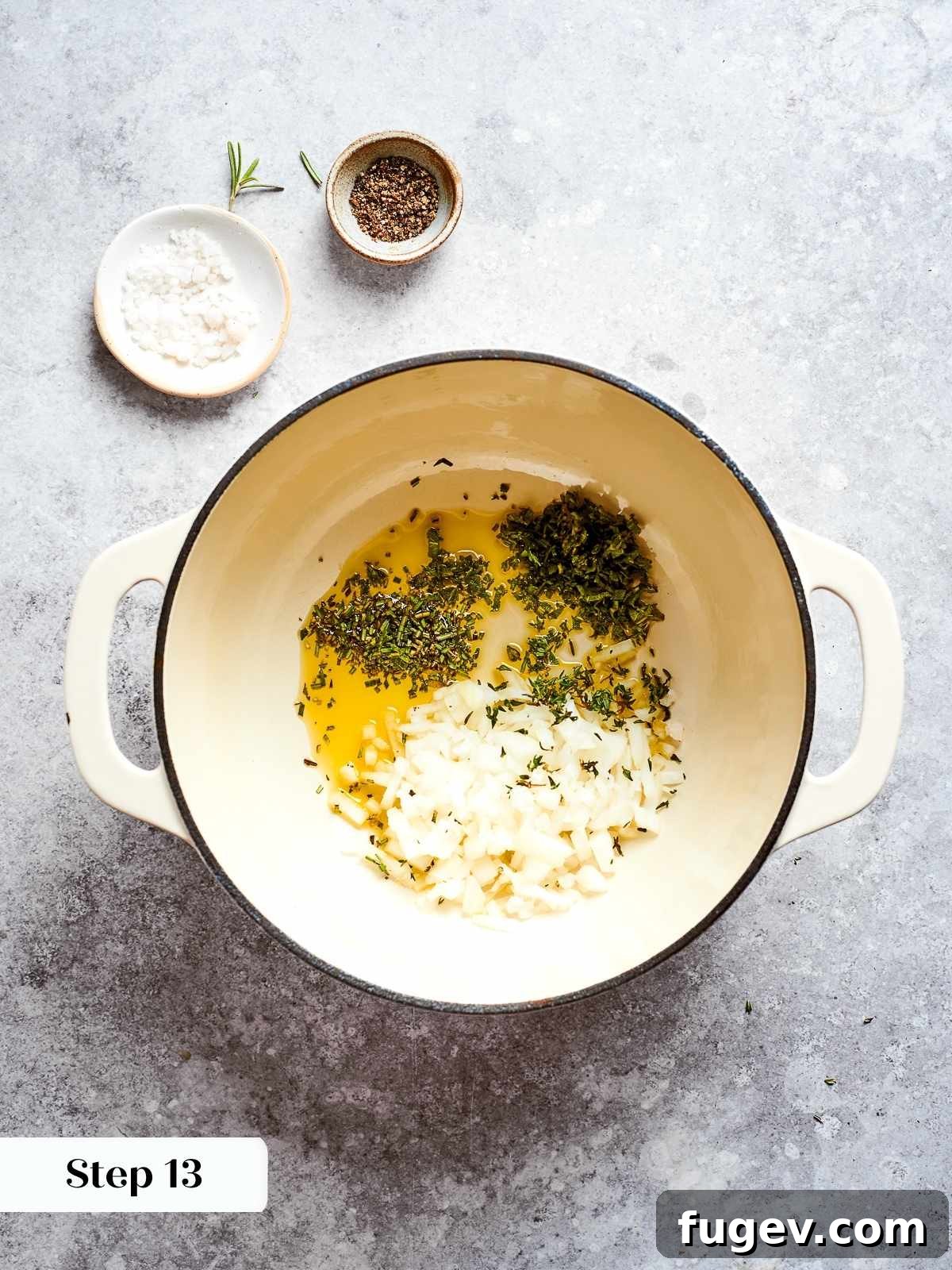
- Sweat the Aromatics: In your chosen pot, add 2 tablespoons of olive oil, the finely chopped onion, and fresh herbs (rosemary, sage, thyme). Reduce the heat to medium-low and gently “sweat” the herbs and onion until they become translucent. This means cooking them slowly enough to release their moisture and sweetness without browning them. (Refer to image 4 in original for visual)
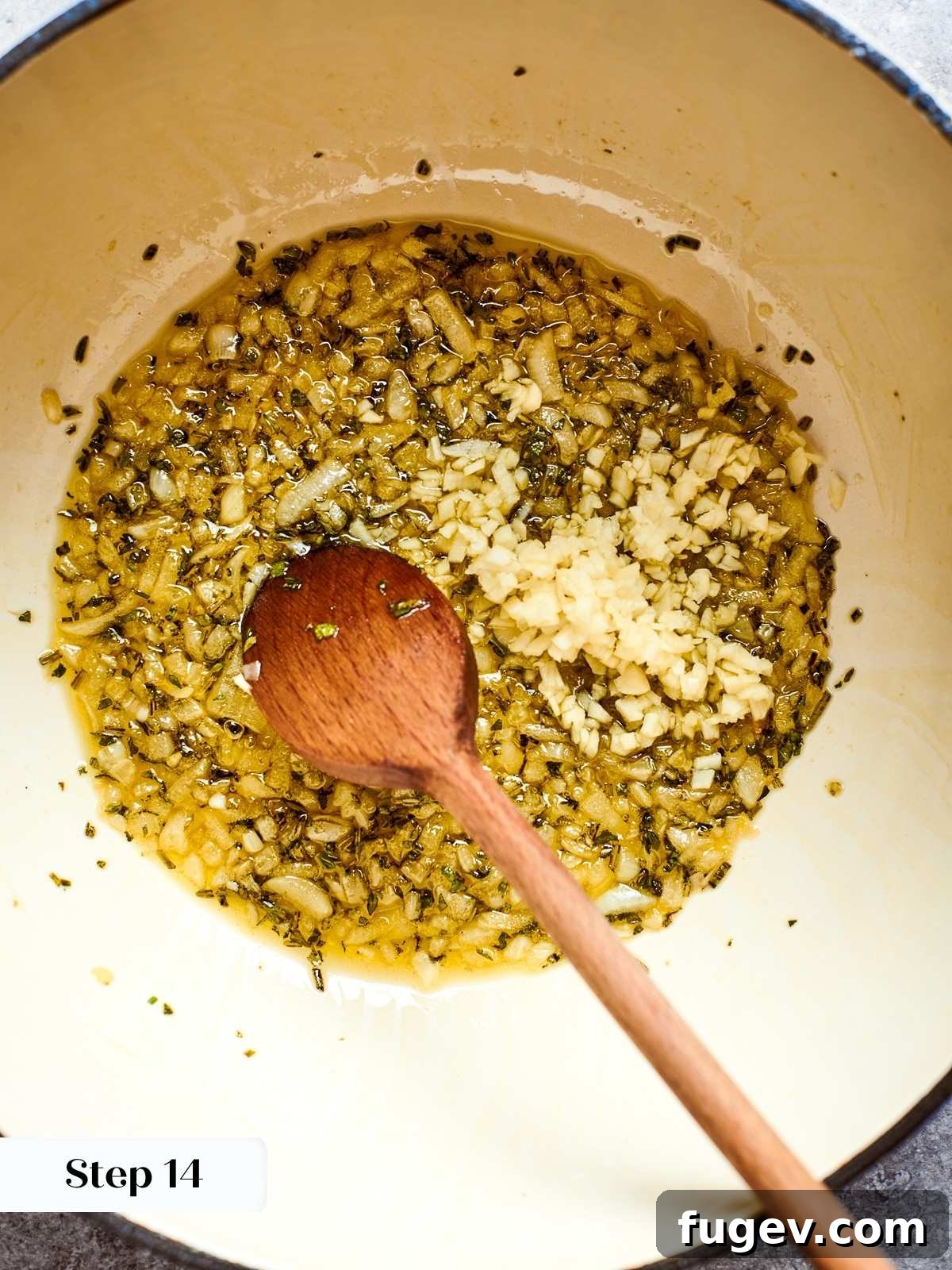
- Introduce Garlic: Add the minced garlic to the pot. If the onions start to stick, even on low heat, add a tiny bit more olive oil. Continue to sweat until the onions are fully transparent and the garlic is fragrant, about 1-2 minutes. (Refer to image 5 in original for visual)
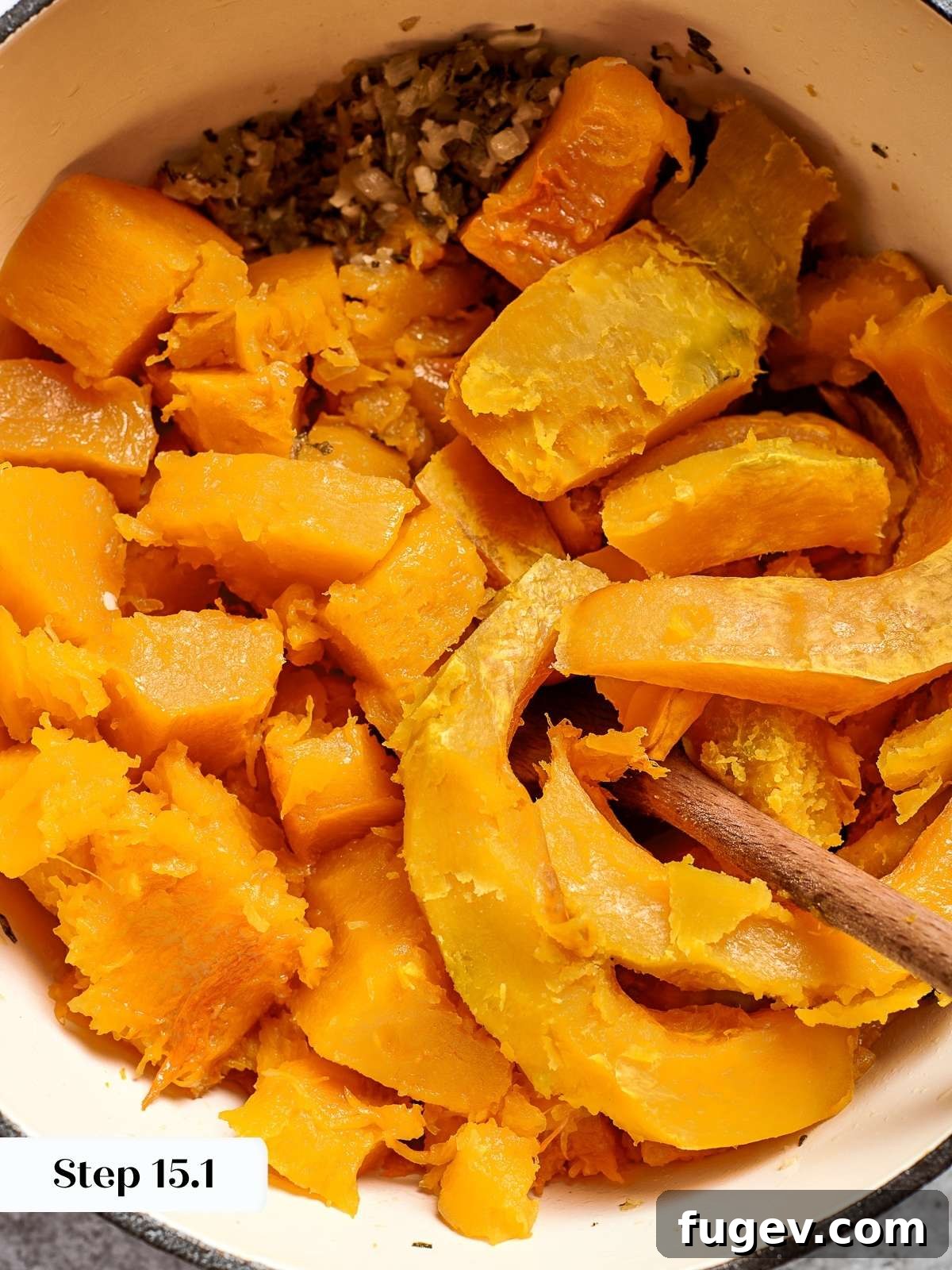
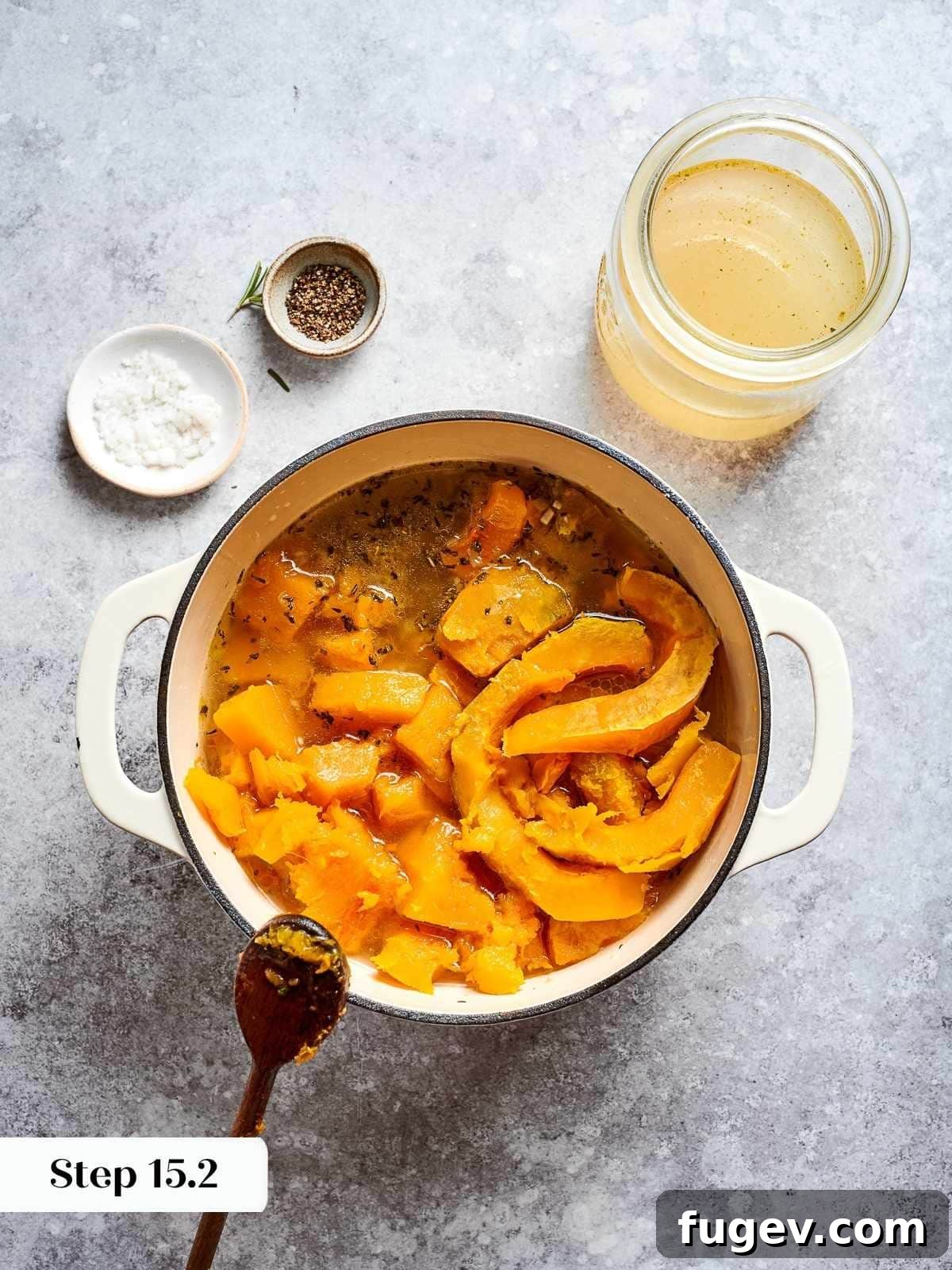
- Combine with Squash and Stock: Add the roasted squash flesh to the pot, along with half of the vegetable stock. Let it simmer gently over medium-low heat. This allows the squash to further break down and meld its flavors with the aromatics and stock. (Refer to images 6 & 7 in original for visual)
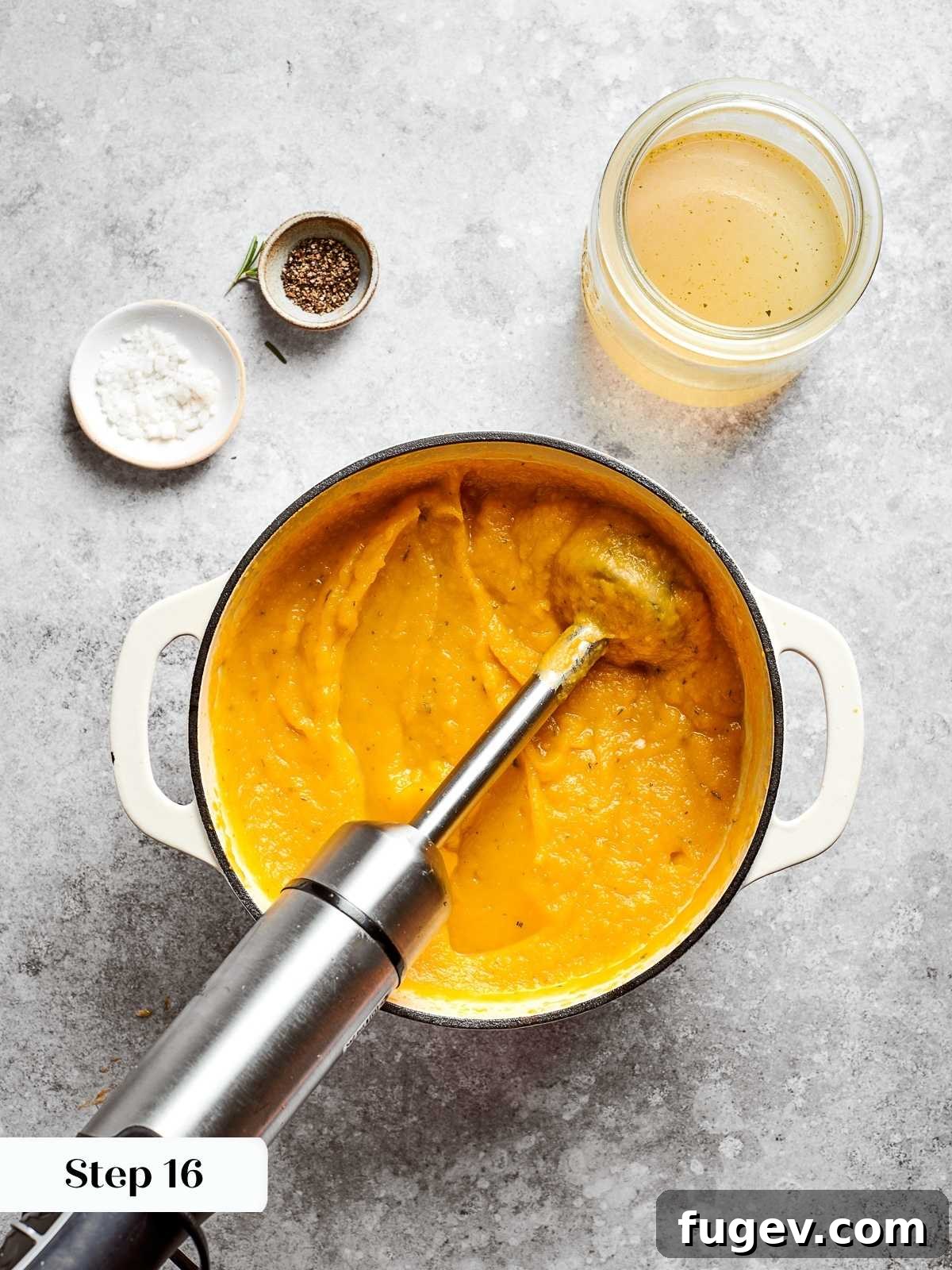
- Blend to Perfection: Using an immersion blender, carefully blend the soup directly in the pot. Add the remaining vegetable stock gradually, a little at a time, until your soup reaches your desired consistency – smooth, pourable, yet wonderfully viscous. (Refer to image 8 in original for visual)
Alternatively, you can purée the soup in a traditional stand blender. If doing so, remember to keep the pour spout open to allow steam to escape and prevent pressure buildup. A folded kitchen towel placed over the opening can protect against hot splatters. You may need to blend in batches, ensuring you don’t exceed the maximum fill line. You can still loosen the soup with additional stock as needed in the blender.
- Taste and Season: Once blended, taste the soup for seasoning. Add freshly ground black pepper and additional kosher salt to your preference. Remember, flavors can intensify as the soup sits, so start conservatively.

How to Make Flavorful Roasted Pepitas:
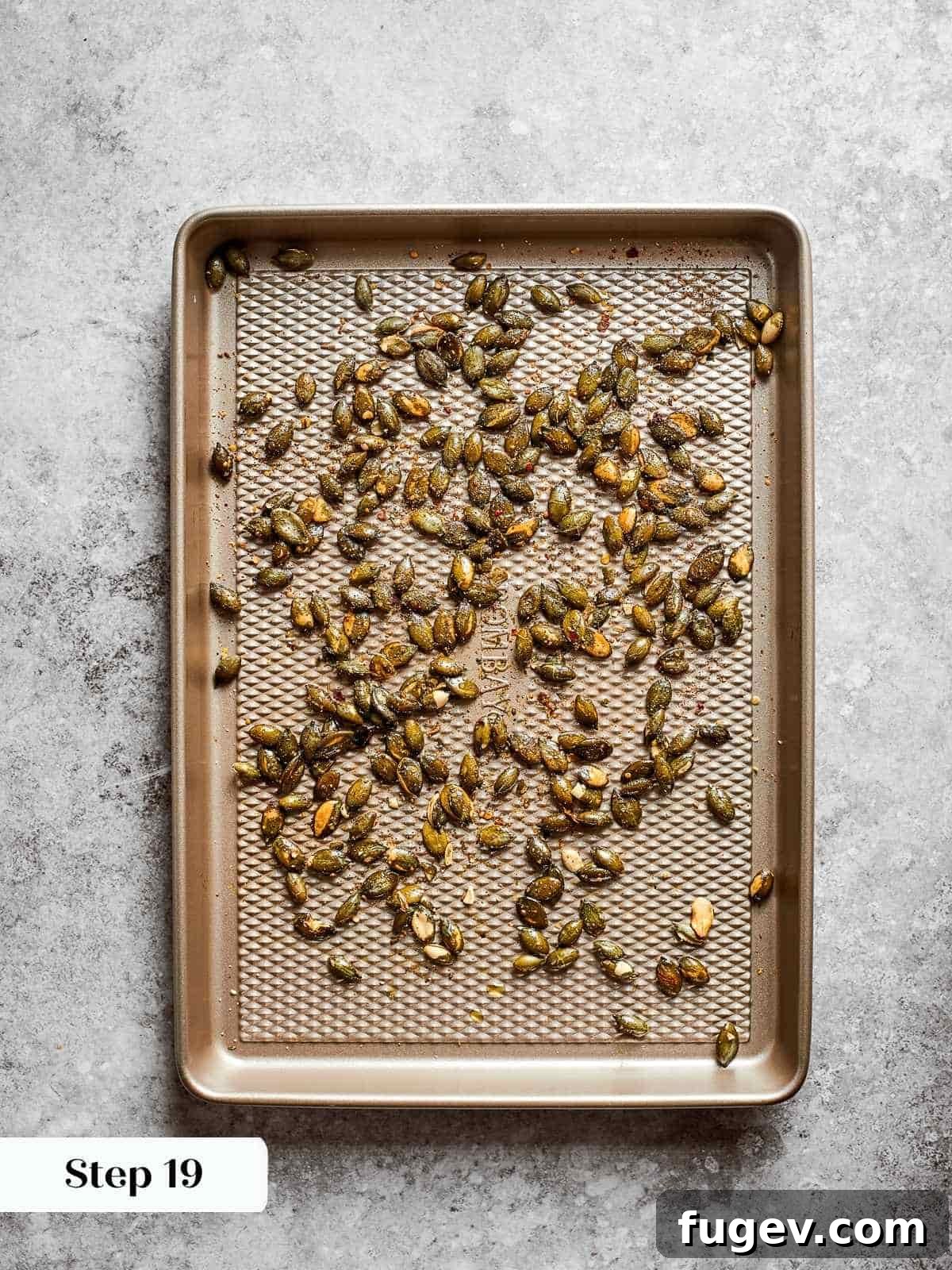
- Toss with Seasoning: In a medium bowl, combine the raw pumpkin seeds (pepitas) with olive oil, salt, and your chosen spices (smoked paprika, ground cumin, cayenne pepper, brown sugar). Toss well to ensure the seeds are evenly coated. Spread them in a single layer onto a baking pan lined with parchment paper.
- Roast Until Golden: Roast the pepitas in the oven (or pan-roast on the stovetop) stirring or tossing frequently. Keep an eye on them; once they lose their shiny appearance and turn a lovely golden brown, they are done. Remove them from the heat and let them cool completely on the baking sheet. (Refer to image 9 in original for visual)
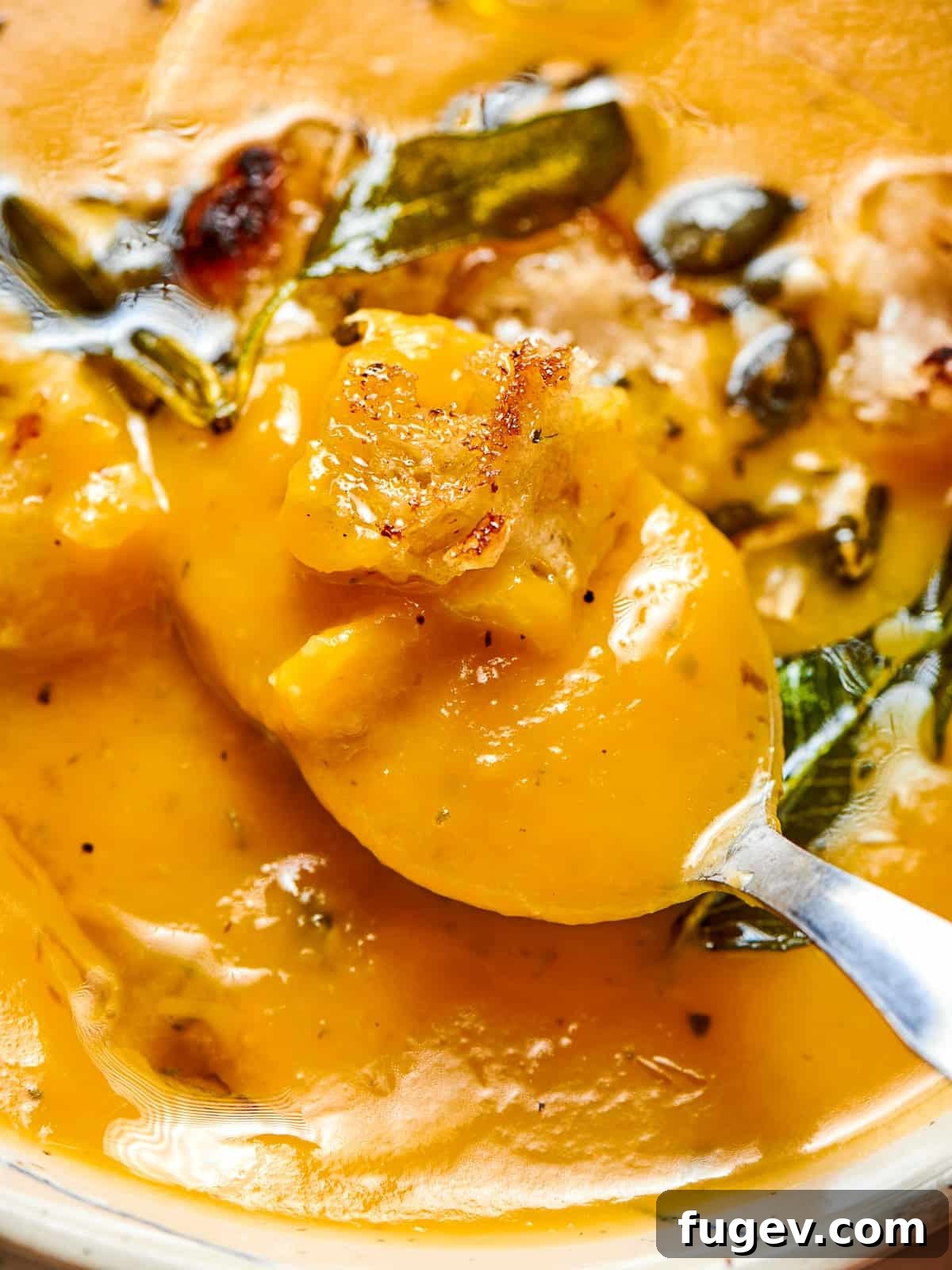
- Serve and Enjoy: Ladle the hot squash soup into bowls and generously sprinkle with the homemade spiced pepitas and/or crunchy croutons. (Refer to image 10 in original for visual)
Chef Lindsey’s Expert Tip
Unlike butternut or pumpkin, it’s virtually impossible to scoop the soft flesh from kabocha squash skin as a whole piece. Instead, you’ll need to scrape the flesh from each individual roasted piece where the color transitions from orange to green. Don’t worry about removing every last bit of skin or the subtle green areas; it won’t impact the soup’s flavor or texture in the slightest!
Squash Soup Recipe FAQs
This soup tastes even better the next day as the flavors deepen! Store any leftover soup in an airtight container in the refrigerator for 3-5 days. It’s also an excellent candidate for freezing.
For individual servings, reheat the soup in the microwave in 30-second intervals, stirring in between, until it is thoroughly heated. For larger quantities, gently warm the soup in a saucepan over medium-low heat on the stovetop, stirring occasionally, until hot.
Absolutely! This soup freezes beautifully. Once the soup has cooled completely, transfer it to freezer-safe containers or heavy-duty freezer bags, leaving a little headspace for expansion. Freeze for up to 3 months. When you’re ready to enjoy it, thaw the soup overnight in the refrigerator before reheating gently on the stovetop or in the microwave.
While fresh, roasted squash yields the best flavor, you can certainly use pre-cut fresh squash or even frozen squash for convenience. If using frozen, thaw it first and then roast as directed. You might need to adjust roasting times slightly.
For an extra decadent touch, you can stir in a splash of full-fat coconut milk, cashew cream, or a drizzle of heavy cream (if not keeping it strictly vegan) after blending the soup. This will add another layer of richness without overpowering the natural squash and herb flavors.

More Delightful Squash Recipes to Explore
Easy Side Dish Recipes
Roasted Spiced Butternut Squash
Date Night
Vegan Chili
Easy Side Dish Recipes
Baked Acorn Squash Halves
Winter Dinner Recipes
Twice Baked Spaghetti Squash
If you tried this recipe and loved it, please leave a 🌟 star rating and let me know how it goes in the comments below. I love hearing from you; your comments make my day!

5 from 1 ratings
Squash Soup
A silky, flavorful squash soup recipe using a combination of roasted squash, fresh herbs, onion, and garlic. An easy, healthy vegan lunch or dinner!
Comment
Print Recipe
Ingredients
- 3-4 cups roasted butternut squash
- ½ roasted kabocha squash or Blue Hubbard
- 4 cups vegetable stock (32 ounces)
- 2 tablespoons fresh rosemary, finely minced
- 1-2 tablespoons fresh sage
- 1 tablespoon fresh thyme, picked
- 1 small onion, small dice (finely chopped)
- 1 tablespoon minced garlic
- 2 tablespoons olive oil
- kosher salt to taste
- black pepper to taste
For the spiced pepitas:
- ½ cup raw pumpkin seeds (pepitas)
- 1 teaspoon olive oil
- ½ teaspoon smoked paprika
- ¼ teaspoon ground cumin
- ¼ teaspoon cayenne pepper (optional, for heat)
- ½ teaspoon brown sugar
- ¼ teaspoon kosher salt
Instructions
How to roast butternut squash for soup:
- Preheat the oven to 350°F (175°C).
- Cut the top and bottom off the butternut squash with a large chef’s knife. Stand the squash upright on the bottom to create a stable base. Use the chef’s knife to cut the squash in half lengthwise, pushing down from the top of the knife, keeping your fingers clear of the blade!
- Scoop out the seeds and either discard them or set them aside to clean and roast.
- Line a baking sheet with parchment paper and place the squash cut side up on the pan. Drizzle with olive oil and sprinkle with kosher salt. Flip them over, cut side down. Poke some holes using a fork or the tip of your knife (carefully!) up and down the length of the squash.
- Place in the oven and bake until they are soft when pressed with your finger or provide no resistance with a paring knife. Roasting time will vary greatly by the size of your squash! Expect anywhere from 25 – 40 minutes.
- Scoop all the soft, roasted butternut squash flesh from the skins and set aside, or cool and store in an airtight container in the refrigerator.
How to roast kabocha or Blue Hubbard squash for soup:
- Preheat the oven to 350°F (175°C).
- Cut the top and bottom off the kabocha squash with a large chef’s knife. Stand the squash upright on the bottom for stability. Use the chef’s knife to cut the squash in half lengthwise, pushing down from the top of the knife, keeping your fingers clear of the blade! Kabocha have thick rinds, so this might take some force; you can also pick the whole thing up and bang it down on the cutting board while keeping your fingers clear of the knife blade!
- Scoop out the seeds and either discard them or set them aside to clean and roast.
- Working one half of the squash at a time, cut strips about 2 inches wide. Then cut each of those strips into 2-inch pieces. This is approximate, but you want them to be of a similar size for even cooking. Repeat with the other half, if you have one!
- Place all the pieces skin side down (cut side face up!) on a parchment paper lined baking sheet. They can be crowded; don’t worry about it. Sprinkle with a little kosher salt and cover with another piece of parchment paper and then a large piece of aluminum foil. Seal the edges down around the squash by curling the foil around the rim of the baking pan.
- Bake in a preheated oven until the squash is soft and can be pierced easily with a cake tester or pairing knife. This typically takes around 25 minutes. Remove from the oven and remove parchment and foil from the top.
How to Make Roasted Squash Soup:
- In a medium sauce pot add 2 tablespoons olive oil, the onion and herbs. Turn the heat to medium-low and sweat the herbs and onion until almost translucent.
- Add the minced garlic to the pot. If the onions stick even on low heat, add a little more olive oil. Continue to sweat until the onions are transparent.
- Add the roasted squash flesh & half of the stock. Simmer over medium-low to allow the squash to break down into the stock.
- Using an immersion blender, blend the soup while still in the pot, adding the remaining stock a little at a time until the resulting soup is smooth, pourable but viscous, or where you want it!
- Taste the soup for seasoning and add fresh ground black pepper and kosher salt to taste.
How to make the roasted pepitas:
- In a medium bowl, toss the pumpkin seeds with olive oil, salt, and spices. Spread onto a baking pan lined with a piece of parchment paper.
- Stir or toss the seeds frequently either while roasting in the oven or pan. Once they look matte (no longer shiny) and have started to turn a golden brown, remove them to cool on the baking sheet.
- Serve in bowls with pepitas and/or croutons sprinkled on top.
Notes
Yield: 6 bowls
Flavor Tips: When I use vegetable stock that isn’t reduced-sodium, I typically do not need to add much, if any, additional salt. Always taste and adjust.
Variations: Adding a tart apple, like a Granny Smith, when you roast the squash will give you a unique sweet-tangy lift that’s especially delightful in autumn.
Storage: Store leftover soup in an airtight container in the refrigerator for 3-5 days. This soup also freezes exceptionally well for up to 3 months.
Nutrition
Carbohydrates: 19g |
Protein: 2g |
Fat: 5g |
Saturated Fat: 1g |
Polyunsaturated Fat: 1g |
Monounsaturated Fat: 3g |
Sodium: 634mg |
Potassium: 557mg |
Fiber: 3g |
Sugar: 5g |
Vitamin A: 8875IU |
Vitamin C: 28mg |
Calcium: 75mg |
Iron: 1mg
Before You Go
I genuinely hope you enjoyed preparing and savoring this cozy, comforting squash soup. It’s truly a perfect recipe for a nourishing weeknight meal or a delightful weekend lunch. Don’t forget to explore our other delicious soup and stew recipes for more culinary inspiration!