
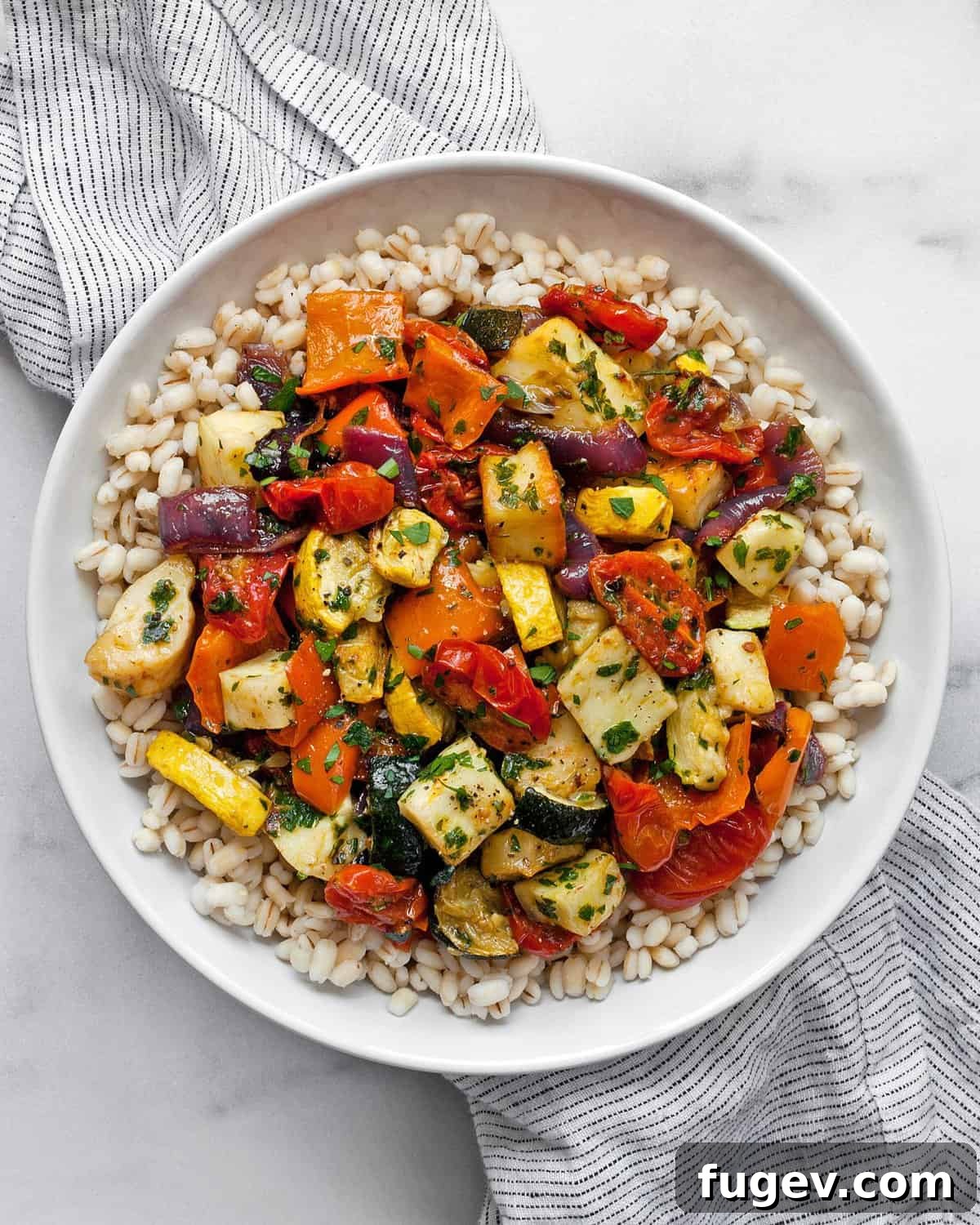
Embark on a culinary journey to the sun-drenched shores of the Mediterranean with this incredibly simple yet profoundly flavorful roasted Mediterranean vegetables and halloumi recipe. Featuring a vibrant medley of zucchini, yellow squash, juicy tomatoes, sweet bell peppers, and savory onions, this dish promises to be your new go-to vegetarian sheet pan favorite. Everything roasts together beautifully, including succulent cubes of halloumi cheese and whole garlic cloves. These roasted garlic cloves are then transformed into an irresistible, herby sauce, blended with fresh parsley and bright lemon juice, adding a burst of fresh flavor. It’s an ingenious way to utilize an abundance of fresh seasonal vegetables and create a truly satisfying meal with minimal effort.
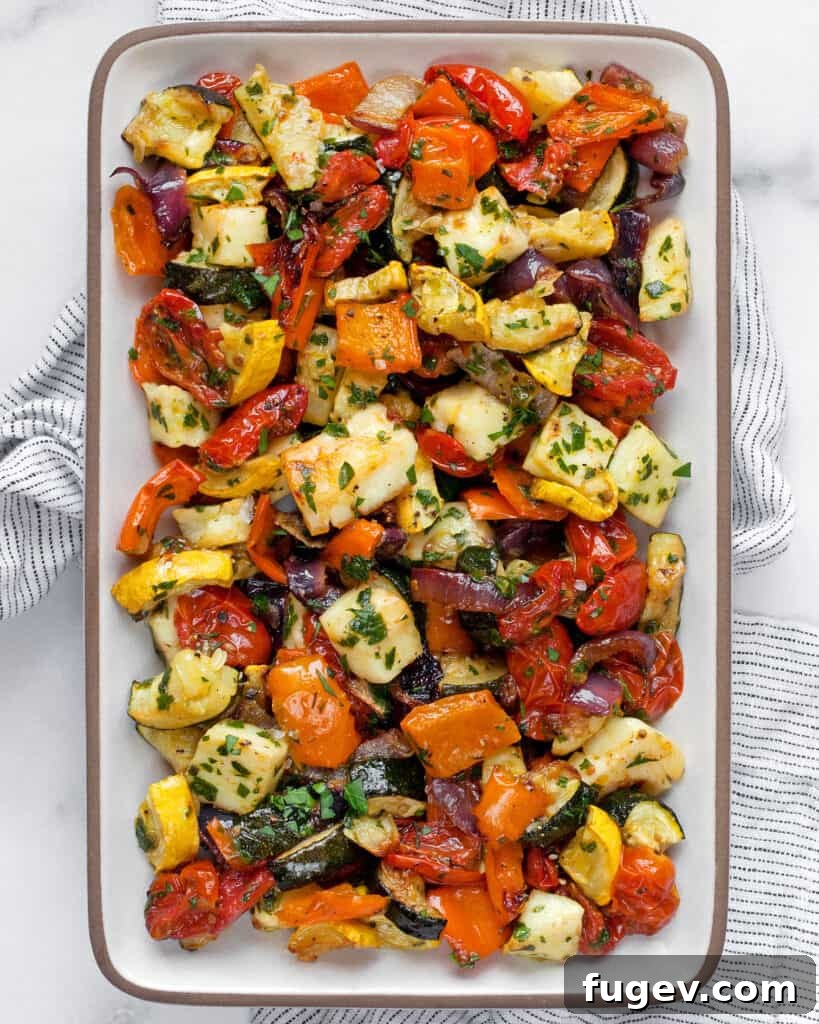
Table of Contents
- Why You’ll Adore This Recipe
- Understanding Halloumi: The Star Cheese
- The Essential Ingredients for Mediterranean Roasting
- How to Master Roasted Mediterranean Vegetables and Halloumi
- Serving Suggestions for Your Roasted Vegetables
- Leftovers & Storage Tips
- Frequently Asked Questions
- More Delightful Vegetarian Sheet Pan Recipes
- Roasted Mediterranean Vegetables and Halloumi Recipe Card
Why You’ll Adore This Recipe
This roasted Mediterranean vegetables and halloumi dish isn’t just a meal; it’s a testament to the beauty of simple, wholesome cooking. Here are compelling reasons why this recipe will quickly become a cherished part of your culinary repertoire:
Effortless Sheet Pan Cooking: Sheet pan meals represent the pinnacle of convenience, and you truly can’t have enough of them. The preparation for this recipe is astonishingly straightforward, primarily involving the simple task of slicing vegetables. The high, consistent heat of your oven then takes over, transforming fresh produce and creamy halloumi into golden, tender, and perfectly roasted bites. This hands-off approach leaves you with more time to relax and less time scrubbing countless pots and pans.
A Stellar Vegetarian Main Course: While often considered a side, this dish shines brightly as a fulfilling vegetarian main course. With a generous bounty of zucchini, squash, bell peppers, sweet tomatoes, and aromatic onions, it offers a diverse array of textures and essential nutrients. The addition of protein-rich halloumi ensures a well-rounded and satisfying meal. Serve it alongside your favorite ancient grains like quinoa or farro, or a crisp bed of salad greens for a complete and healthy dining experience that caters to both your taste buds and your well-being.
The Irresistible Charm of Halloumi: Any opportunity to incorporate halloumi into a recipe should be seized without hesitation. This unique Cypriot cheese brings a delightful salty tang and a satisfying, chewy texture that perfectly complements the natural sweetness of the roasted vegetables and the vibrant freshness of the herby sauce. Unlike most cheeses, halloumi holds its shape under high heat, allowing it to develop a beautiful golden crust without melting away, providing a truly special culinary experience.
A Simple Yet Flavorful Herby Sauce: The accompanying sauce is nothing short of brilliant in its simplicity and depth of flavor. All it requires is a food processor to effortlessly blend fresh parsley, tangy lemon juice, rich olive oil, and the unexpectedly sweet and mellow roasted garlic. The roasting process transforms the garlic from pungent to subtly sweet, creating a “nut-free pesto” style sauce that elevates the entire dish. Its bright, herbaceous notes cut through the richness of the cheese and vegetables, tying all the Mediterranean flavors together harmoniously.
Understanding Halloumi: The Star Cheese
Originating from the island of Cyprus, halloumi is a remarkable semi-hard, unripened brined cheese that has gained global popularity for its distinctive characteristics. What sets halloumi apart is its impressively high melting point, a rare quality among cheeses. This unique attribute means you can grill it, pan-fry it, or roast it without it losing its shape and turning into a puddle. Instead, it develops a wonderfully golden, slightly crispy exterior and a delightfully chewy, salty interior that is absolutely addictive.
Traditionally, halloumi is crafted from a blend of goat’s and sheep’s milk, or sometimes exclusively from one of them. Its salty, tangy flavor profile makes it an excellent counterpoint to sweet vegetables, fresh herbs, and acidic components like lemon. Beyond its delicious taste, halloumi offers a substantial protein boost, making it a fantastic addition to vegetarian and Mediterranean-inspired diets. It’s truly a versatile ingredient that can transform a simple vegetable dish into something extraordinary. If you enjoy grilled versions, you might also like grilled halloumi and veggies or convenient grilled halloumi & vegetables on skewers.
The Essential Ingredients for Mediterranean Roasting
Crafting these delectable roasted Mediterranean vegetables and halloumi requires a selection of fresh, high-quality ingredients, each playing a crucial role in building layers of flavor. Here’s what you’ll need to gather:
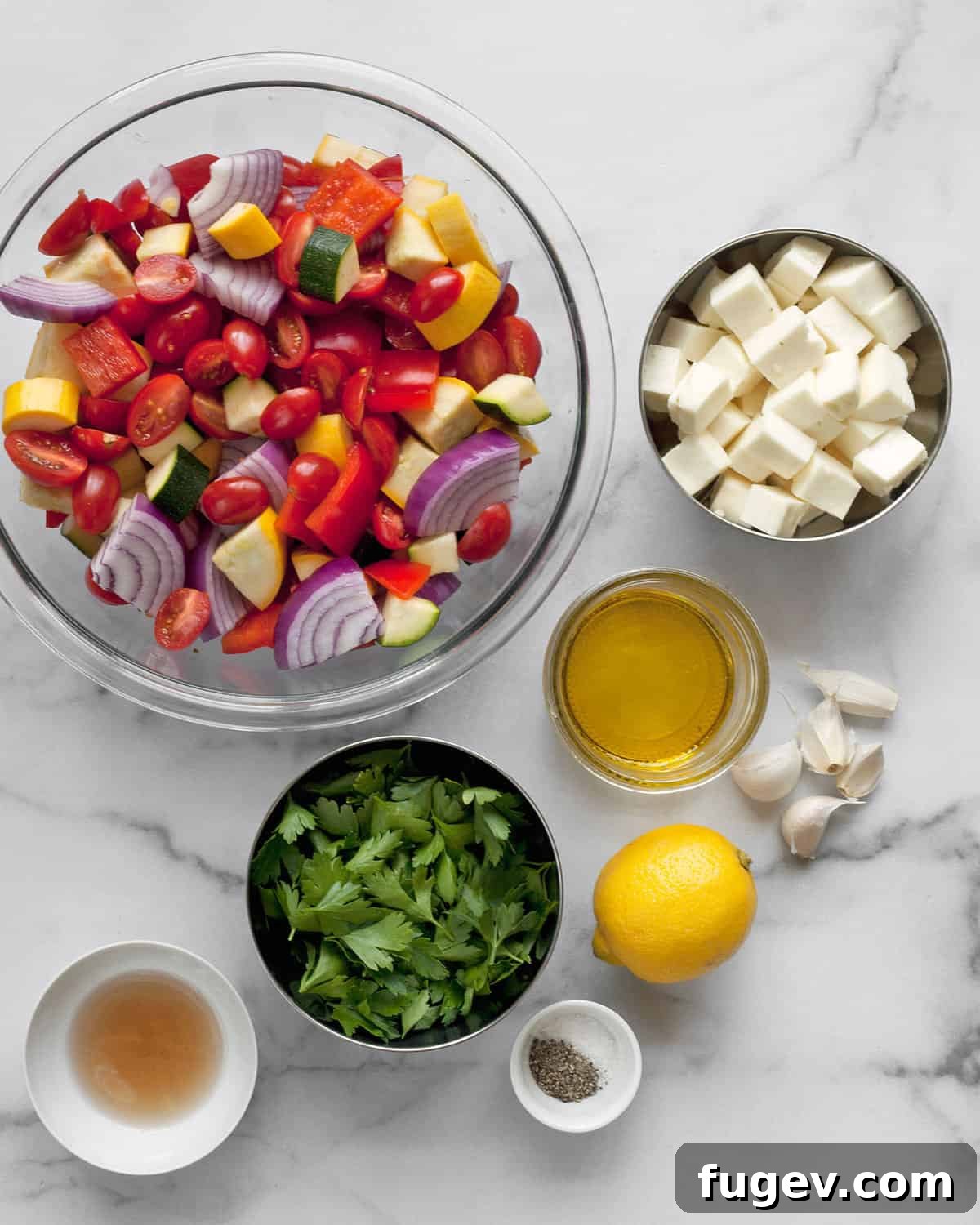
- Vibrant Vegetables: The heart of this dish is a rainbow of fresh produce. We use crisp zucchini, tender yellow squash, sweet red onions, vibrant bell peppers (red, orange, or yellow for a pop of color), and sweet halved grape tomatoes or cherry tomatoes. This combination ensures a beautiful spectrum of colors, diverse textures, and a harmonious balance of flavors that are characteristic of Mediterranean cuisine.
- Quality Olive Oil: No Mediterranean recipe would be complete without the liquid gold that is olive oil. For roasting, we toss the vegetables directly on the sheet pan with extra virgin olive oil, along with a generous sprinkle of salt and pepper, before they enter the oven. The oil helps them caramelize and become wonderfully tender. You’ll also need a measure of good quality olive oil for emulsifying the herby sauce, adding richness and a silky texture.
- Aromatic Garlic: Whole, unpeeled garlic cloves are roasted alongside the vegetables. This process mellows their pungent bite, transforming them into soft, sweet, and incredibly flavorful morsels. Once roasted, these cloves are easily squeezed from their skins and become a cornerstone of our vibrant herby sauce, infusing it with a depth that cannot be achieved with raw garlic.
- Distinctive Halloumi Cheese: Once you experience halloumi, you’ll likely find yourself perpetually hooked on its unique salty, tangy, and squeaky bite. Its ability to hold its shape while roasting and develop a golden crust makes it an ideal complement to the tender vegetables. If you find halloumi elusive in your local grocery store, a good alternative is firm feta cheese. Simply break or cut it into half-inch cubes and add it during the final stages of roasting for a similar salty kick, though its texture will be softer.
- Bright Herby Sauce: This simple yet impactful sauce is the crowning glory of the dish. It’s a vibrant blend of fresh parsley leaves, freshly squeezed lemon juice for zest, the mellow sweetness of roasted garlic, a touch of white wine vinegar for acidity, and a seasoning of salt and pepper. All these ingredients are pulsed together in a food processor, with a steady drizzle of olive oil, to create a pesto-inspired sauce that is bright, herbaceous, and utterly delicious.
How to Master Roasted Mediterranean Vegetables and Halloumi
Creating this flavorful roasted Mediterranean vegetables and halloumi dish is surprisingly straightforward, relying on the magic of your oven to do most of the heavy lifting. Follow these simple steps for a perfect meal every time:
Step 1: Prepare Your Oven and Vegetables.
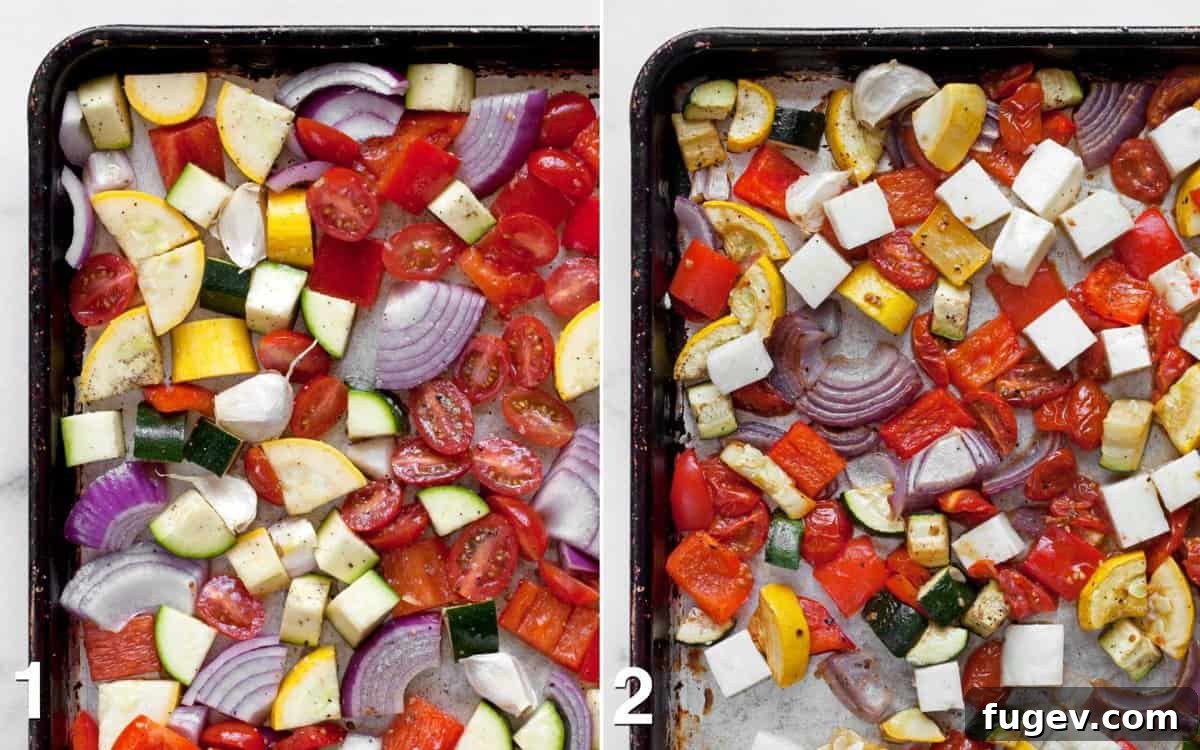
Begin by preheating your oven to a robust 400 degrees F (200 degrees C). This ensures the oven is perfectly hot for optimal roasting, leading to beautifully caramelized vegetables. On a large, sturdy baking sheet (no need to line it, direct contact with the metal helps with browning!), combine your prepared zucchini, yellow squash, red onions, bell peppers, grape tomatoes, and the whole, skin-on garlic cloves. Drizzle generously with 1 tablespoon of olive oil, then season with 1 teaspoon of kosher salt and 1/2 teaspoon of black pepper. Toss everything together right on the baking sheet until all the vegetables are evenly coated. Spread them out into a single layer to ensure they roast rather than steam, allowing them to achieve that desirable tender-crisp texture and lovely golden-brown edges. This initial roasting phase is crucial for developing deep flavor.
Step 2: Roast the Vegetables, Then Add Halloumi.
Place the baking sheet with the seasoned vegetables into your preheated oven. Roast for an initial 25-30 minutes. During this time, the vegetables will soften considerably and begin to caramelize around the edges, releasing their natural sweetness. Once this initial roasting period is complete, carefully remove the pan from the oven. Gently toss the partially roasted vegetables to ensure even cooking, then add the cubed halloumi cheese to the pan, distributing it among the vegetables. Spread everything back into a single layer. Return the sheet pan to the oven and continue roasting for another 10-12 minutes. During this second phase, the halloumi will develop a beautiful golden crust, becoming wonderfully savory and slightly crispy, while the vegetables finish cooking to perfection.
Step 3: Craft the Bright Herby Sauce.
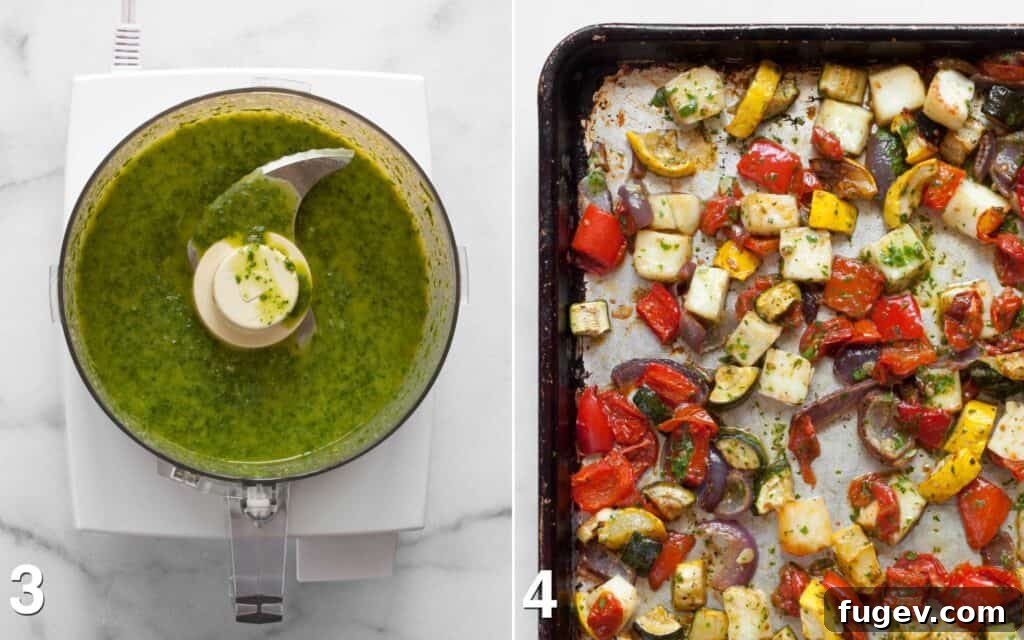
While the halloumi and vegetables are finishing their roast, prepare the vibrant herby sauce. Carefully remove the roasted garlic cloves from their skins; they should be soft and easily squeezed. Transfer the sweet, mellow garlic pulp to a food processor. Add the fresh parsley leaves, the juice of one lemon for bright acidity, 1 teaspoon of white wine vinegar, 1/2 teaspoon of kosher salt, and 1/4 teaspoon of black pepper. Pulse the ingredients until the parsley is finely chopped and the mixture is well combined. With the food processor motor running, slowly drizzle 1/4 to 1/3 cup of olive oil through the feeder tube. Continue processing until the sauce is beautifully emulsified and smooth, resembling a rustic, nut-free pesto. Taste and adjust seasonings if necessary.
Step 4: Combine and Serve.
Once the halloumi is golden and the vegetables are perfectly tender, remove the sheet pan from the oven. Spoon the freshly made herby sauce generously over the warm Mediterranean vegetables and halloumi. Gently toss everything on the pan to ensure every piece is thoroughly coated in the fragrant, zesty sauce. Serve immediately, allowing the warm, robust flavors to shine. The combination of savory halloumi, sweet roasted vegetables, and bright herb sauce is truly a harmonious delight.
Serving Suggestions for Your Roasted Vegetables
This versatile dish of roasted Mediterranean vegetables and halloumi offers endless possibilities for serving, whether you envision it as a hearty vegetarian main course or a flavorful side dish. Its rich flavors and satisfying textures make it adaptable to many meal scenarios.
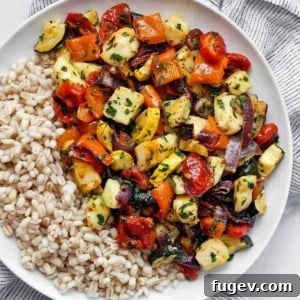
As a Vegetarian Main Course: As previously mentioned, this recipe is an excellent choice for a complete and healthy vegetarian main. It pairs wonderfully with a variety of wholesome grains that soak up the delicious juices and sauce. Consider serving it over fluffy couscous, nutty farro, chewy barley, or protein-rich quinoa. For a comforting and substantial meal, you can also stir the warm roasted veggies and halloumi into bowls of short pasta shapes like penne, fusilli, or orecchiette, allowing the sauce to cling to every crevice. To complete the meal with a touch of freshness, accompany it with a vibrant green salad such as a crisp Arugula Salad with Lemon Vinaigrette, a classic House Salad, or a robust Italian Chopped Salad. The contrasting textures and flavors will create a truly memorable dining experience.
As a Complementary Side Dish: The vibrant flavors and appealing presentation of these Mediterranean roasted vegetables and halloumi also make them an ideal side dish. They pair beautifully with a variety of proteins, enhancing any meal without overpowering it. Imagine them alongside perfectly grilled chicken breasts, a tender pan-seared steak, or flaky baked salmon. The savory halloumi and bright sauce will complement the richness of meats and fish, adding a refreshing, herbaceous element to your plate. For a lighter touch, serve them with baked cod or pan-fried scallops.
Whether you’re hosting a dinner party, preparing a family meal, or simply enjoying a quiet weeknight dinner, these roasted vegetables and halloumi are guaranteed to impress with their ease and exquisite taste.
Leftovers & Storage Tips
One of the many benefits of this roasted Mediterranean vegetables and halloumi recipe is how well the leftovers keep, often tasting even better the next day as the flavors meld. To store any remaining portions, transfer them to an airtight container and place it in the refrigerator. They will remain fresh and delicious for up to 3 days.
When you’re ready to enjoy your leftovers, you have a few warming options. For the best texture, especially for the halloumi, reheat them gently in a 350-degree F (175 degrees C) oven until warmed through. Alternatively, for a quicker solution, the microwave will do the trick, though the vegetables might be slightly softer. Don’t feel obligated to serve them warm, however! These roasted vegetables and halloumi are also fantastic enjoyed cold. Consider tossing them into a fresh salad with crisp spinach, peppery arugula, or chopped romaine lettuce for a quick and healthy lunch. The vibrant flavors hold up beautifully, offering a refreshing and satisfying meal even when chilled.
Frequently Asked Questions
It is generally best not to line your baking sheet with parchment paper or aluminum foil when roasting vegetables. The primary reason is that you want the vegetables to make direct contact with the hot metal surface of the baking sheet. This direct contact facilitates browning and caramelization, which contributes significantly to the flavor and texture of roasted vegetables. When a pan is lined, it creates a barrier that can prevent this crucial browning, leading to steamed rather than truly roasted vegetables. Rest assured, the olive oil you toss the vegetables in before roasting will create a natural non-stick layer, preventing them from adhering to the pan.
A consistent temperature of 400 degrees F (200 degrees C) is widely considered a reliable and ideal temperature for roasting most vegetables on a sheet pan. This high heat ensures that the vegetables cook quickly, achieving a tender interior while developing wonderfully browned and slightly crisp edges. If the temperature is too low, vegetables tend to steam and become mushy. If it’s too high, they might char on the outside before the inside is fully cooked. 400 degrees F strikes the perfect balance, leading to perfectly roasted, flavorful results every time.
While the dish is best enjoyed fresh out of the oven, you can certainly do some prep work in advance. You can chop all the vegetables and store them in an airtight container in the refrigerator up to a day before roasting. The herby sauce can also be made a day in advance and stored in the refrigerator; just give it a good stir or a quick pulse in the food processor before serving to emulsify again. This streamlines the cooking process on a busy weeknight.
This recipe is incredibly flexible! Feel free to customize the vegetable mix based on what’s seasonal or what you have on hand. Excellent additions or substitutions include eggplant, cherry tomatoes, asparagus, broccoli florets, or even potatoes (though root vegetables might require a slightly longer initial roasting time). Just ensure all vegetables are cut into roughly uniform sizes to ensure even cooking.
More Delightful Vegetarian Sheet Pan Recipes
If you loved the simplicity and flavor of this roasted Mediterranean vegetables and halloumi dish, you’ll be thrilled to discover more easy and delicious sheet pan options for your vegetarian menu:
- Sheet Pan Vegetarian Fajitas
- Chipotle Roasted Cauliflower Tacos
- Roasted Ratatouille Quinoa
- Sheet Pan Baked Feta and Vegetables
- Roasted Eggplant and Tomatoes with Halloumi
Did you make these incredible roasted vegetables and halloumi? We’d love to hear your thoughts! Please leave a rating and comment below. Thanks!
Roasted Mediterranean Vegetables and Halloumi
Print Recipe
This roasted Mediterranean vegetables and halloumi dish is a vibrant and easy vegetarian sheet pan meal. Fresh zucchini, yellow squash, tomatoes, onions, and bell peppers are roasted to perfection with savory halloumi cheese and a bright, herby roasted garlic sauce.
Ingredients
For vegetables and halloumi
- 1 zucchini, quartered lengthwise and sliced 1/2-inch thick
- 1 yellow squash, quartered lengthwise and sliced 1/2-inch thick
- 1 small red onion, halved and sliced 1/2-inch thick
- 1 bell pepper, red, orange or yellow, diced 1/2-inch
- 1-1/2 cups halved grape tomatoes
- 5 garlic cloves, skin-on (for roasting with vegetables and later use in sauce)
- 1 tablespoon olive oil (for tossing vegetables)
- 1 teaspoon kosher salt
- 1/2 teaspoon black pepper
- 1/2 pound halloumi cheese, cut into 1/2-inch cubes
For herby sauce
- 1 cup parsley leaves
- Juice of 1 lemon
- 1 teaspoon white wine vinegar
- 1/2 teaspoon kosher salt
- 1/4 teaspoon black pepper
- 1/4-1/3 cup olive oil (for the sauce)
- Cooked grains for serving i.e. barley, quinoa, farro, couscous (optional)
Instructions
- Preheat your oven to 400 degrees F (200 degrees C).
- On a large sheet pan, toss the sliced zucchini, yellow squash, red onions, bell peppers, halved grape tomatoes, and the skin-on garlic cloves with 1 tablespoon of olive oil, 1 teaspoon of kosher salt, and 1/2 teaspoon of black pepper. Ensure all vegetables are evenly coated and spread them into a single layer across the pan. Roast for 25 minutes, or until the vegetables begin to soften and lightly brown at the edges.
- Remove the sheet pan from the oven. Gently toss the vegetables, then add the cubed halloumi cheese to the pan, distributing it evenly among the vegetables. Return to the oven and continue cooking for an additional 10-15 minutes, or until the halloumi is lightly golden and the vegetables are fully tender. Reserve the roasted garlic cloves for the sauce.
- While the vegetables and halloumi are roasting, prepare the herby sauce. Squeeze the soft roasted garlic cloves from their skins into a food processor. Add the fresh parsley, lemon juice, white wine vinegar, 1/2 teaspoon of kosher salt, and 1/4 teaspoon of black pepper. Pulse until the parsley is finely chopped and the ingredients are well combined. With the motor running, slowly drizzle 1/4 to 1/3 cup of olive oil through the feeder tube until the mixture is fully combined and emulsified into a smooth sauce.
- Once the roasting is complete, remove the sheet pan from the oven. Spoon the prepared herby sauce generously over the roasted vegetables and halloumi. Gently toss everything on the pan to coat evenly. Serve warm as a main course or a side dish.
Video
Watch our step-by-step video guide to see how easily this delicious Roasted Mediterranean Vegetables and Halloumi dish comes together!
Notes
Feel free to use either grape tomatoes or cherry tomatoes, halved for best results.
If halloumi cheese is unavailable, you can substitute it with firm feta cheese, cut into 1/2-inch cubes. Add it at the same stage as the halloumi.
For a complete main dish, serve the roasted vegetables and halloumi with cooked grains such as rice, barley, quinoa, or farro. Alternatively, toss them with your favorite pasta. They also make an excellent side dish alongside grilled chicken, steak, or fish.
Store any leftovers in an airtight container in the refrigerator for up to 3 days. Reheat in a 350-degree F (175 degrees C) oven or in the microwave. Leftovers can also be enjoyed cold as part of a refreshing salad.
Nutrition
Calories: 383kcal | Carbohydrates: 12g | Protein: 15g | Fat: 32g | Saturated Fat: 12g | Polyunsaturated Fat: 2g | Monounsaturated Fat: 16g | Sodium: 1570mg | Potassium: 526mg | Fiber: 3g | Sugar: 6g | Vitamin A: 2552IU | Vitamin C: 88mg | Calcium: 626mg | Iron: 2mg
Nutrition information is automatically calculated and should be used as an approximation.
Additional Info
Recipe originally published May 3, 2021. Updated: May 16, 2023.