
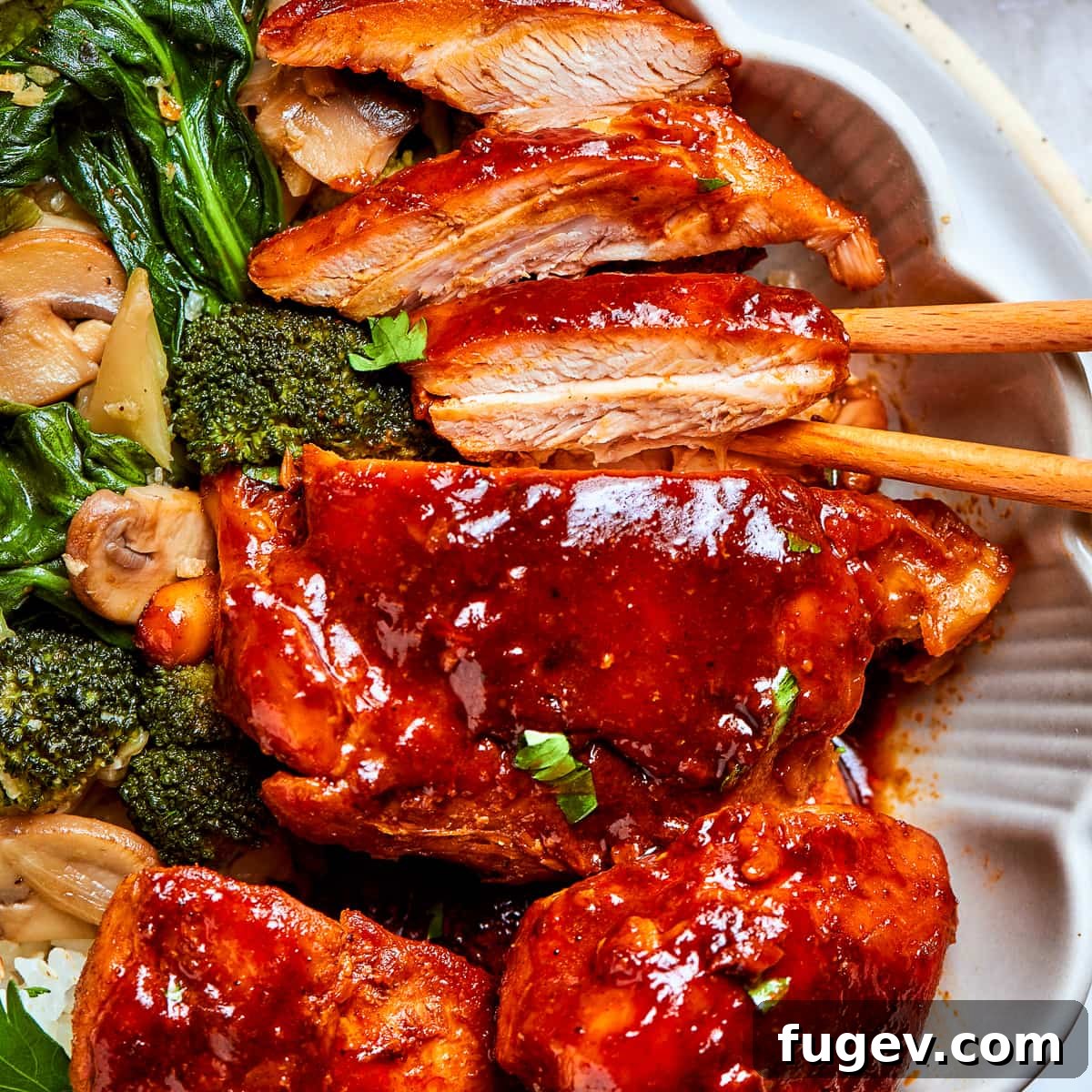
Experience the Bold Flavors of Gochujang Chicken: A Quick & Easy Korean-Inspired Stir-Fry
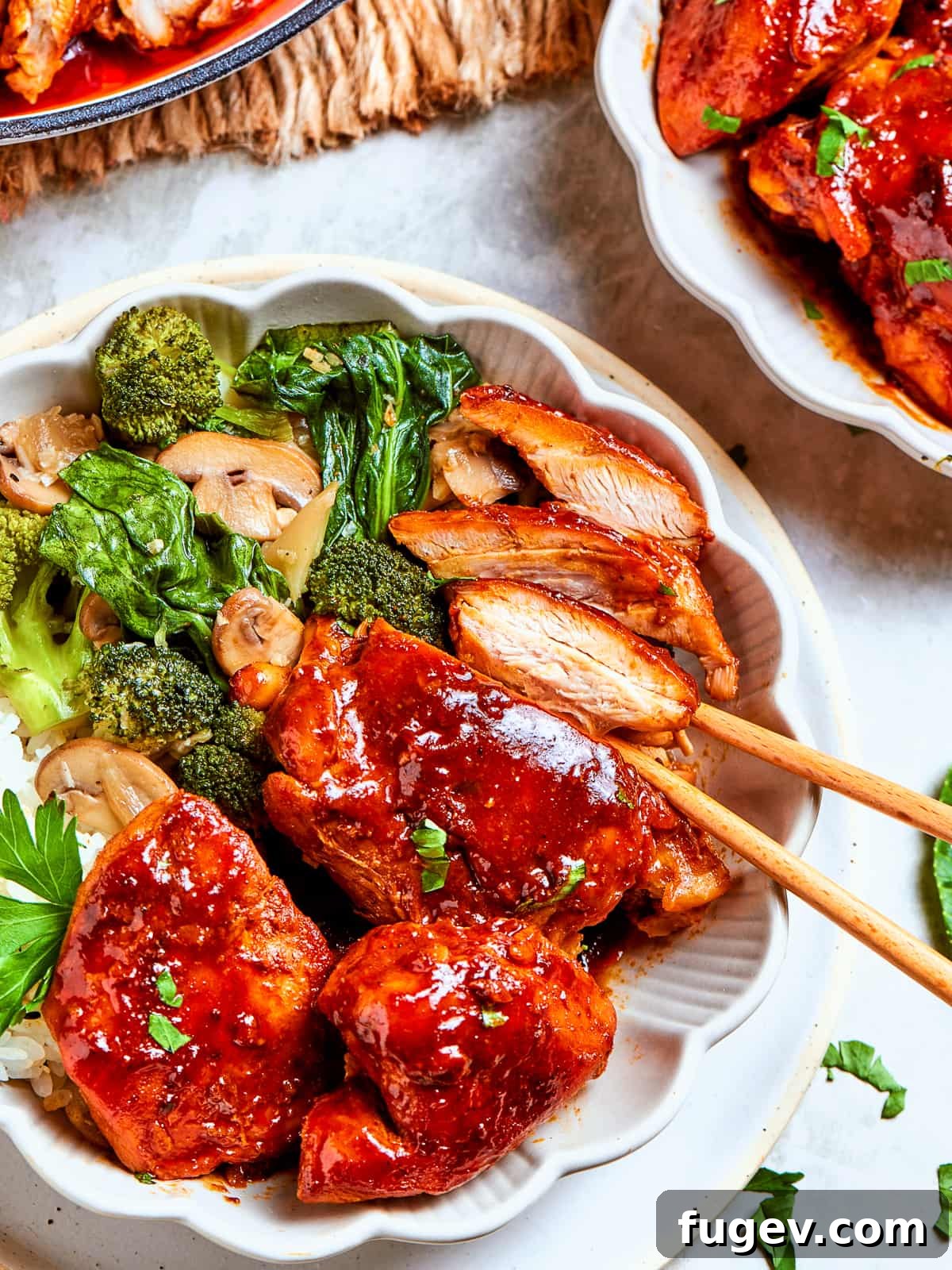
Dive into a world of vibrant flavors with our irresistible Gochujang Chicken recipe. This dish masterfully layers the sweet, spicy, and savory notes from authentic Korean gochujang, rich hoisin, and bright rice wine vinegar, creating a perfectly balanced and deeply satisfying culinary experience. Unlike watery stir-fries, this recipe focuses on searing and simmering, ensuring every piece of tender chicken is coated in a thick, sticky, and utterly delicious sauce that clings beautifully. Get ready to elevate your weeknight meals with this restaurant-quality dish, prepared effortlessly in your own kitchen.
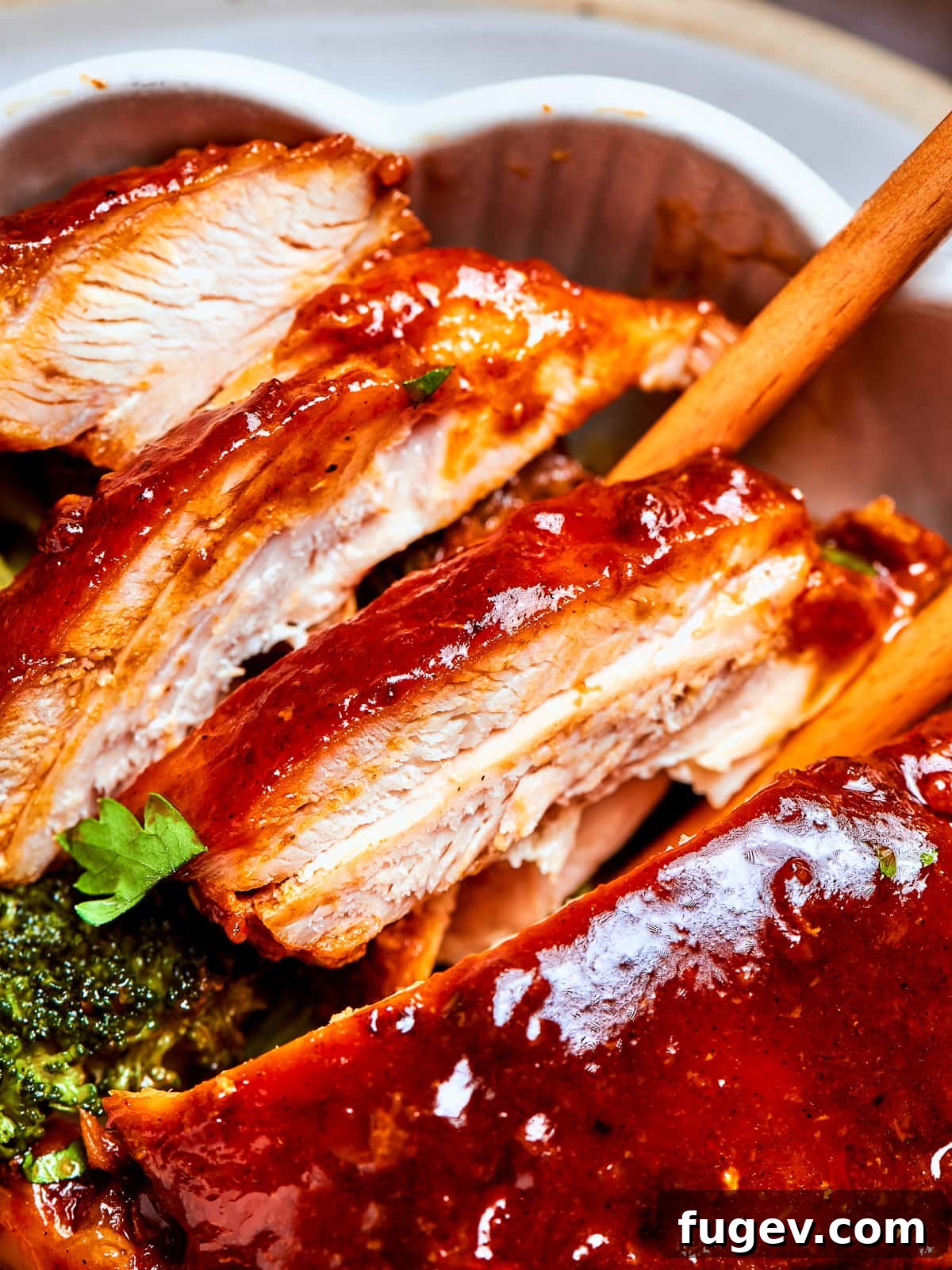
What exactly does Gochujang Chicken taste like? Imagine a delightful fusion of subtly sweet, intriguingly spicy, and profoundly umami flavors. The hoisin sauce contributes a luxurious richness and a hint of sweetness, while the rice wine vinegar provides a much-needed zing that brightens the entire dish. But the true star is gochujang, a fermented Korean chili paste, which infuses the chicken with its signature fiery kick and complex depth. The result is a bold, exciting, and wonderfully fun meal that will quickly become a household favorite.
This recipe brings the sophisticated taste of a modern Korean restaurant straight to your home, all within a speedy 30-minute timeframe. It’s so incredibly delicious and simple to prepare that you’ll find yourself making this Gochujang Chicken two or three times a month. The incredibly flavorful sauce is designed to be thick and adhesive, ensuring that every single bite is bursting with taste and texture.
If you’re looking to expand your repertoire of saucy chicken dishes, consider trying our baked barbecue chicken breast recipe for a smoky-sweet alternative, or delve into the hearty comfort of Hungarian Chicken Paprikash. For those who love a bit of heat and sweetness on their wings, our fan-favorite sweet and spicy wings are a must-try. Once you’ve explored those, we’re confident you’ll be eager to return to this magnificent Gochujang Chicken recipe again and again!
Why You Will Love This Gochujang Chicken Recipe
This Gochujang Chicken recipe isn’t just another meal; it’s an experience designed to delight your taste buds and simplify your cooking routine. Here’s why this dish is poised to become a staple in your kitchen:
- An Unforgettable, Bold Sauce: Forget your everyday soy sauce glaze; this is in a league of its own. Our gochujang sauce is a symphony of sweet, spicy, and deeply umami flavors. Hoisin sauce introduces a delightful sweetness and glossy finish, while rice wine vinegar provides a crucial acidic counterpoint that brightens the entire profile. The gochujang paste, the hero of this dish, delivers a complex, layered heat that builds beautifully without overwhelming. You’ll achieve this intricate flavor depth with a surprisingly short list of ingredients, making gourmet taste accessible.
- Effortless Path to Moist, Flavorful Chicken: Say goodbye to lengthy marinating times or complicated spice rubs. This recipe is ingeniously designed for maximum flavor with minimal effort. By searing the chicken quickly to lock in juices and then simmering it gently in the rich gochujang sauce, we ensure every piece remains incredibly moist and tender. The chicken absorbs the bold flavors as it cooks, resulting in juicy, succulent bites that are packed with taste in a fraction of the time compared to traditional methods.
- Your Newest Versatile Favorite: One of the best aspects of this Gochujang Chicken is its incredible flexibility. It serves as an outstanding main course that can be paired with almost anything. Serve it traditionally over a bed of fluffy white or brown rice to soak up every drop of that luscious sauce. For a lighter, fresher option, spoon it over a crisp cucumber salad. Or, if you’re craving a hearty noodle dish, toss it with your favorite noodles, perhaps alongside an easy Thai peanut chicken noodle stir fry. This recipe is also easily adaptable for vegetarian diets; simply swap the chicken for tofu or tempeh. Its adaptability makes it perfect for any occasion and any dietary preference!
Table of Contents
- Why You Will Love This Gochujang Chicken Recipe
- Essential Ingredients & Smart Substitutions
- Exciting Variations to Try
- Professional Tips for Perfect Gochujang Chicken
- How to Make Gochujang Chicken Step-by-Step
- Chef Lindsey’s Recipe Tip: The Two-Pan vs. One-Pan Debate
- Gochujang Chicken Recipe FAQs
- More Recommended Chicken Recipes
- Gochujang Chicken Recipe Card
- Before You Go
Essential Ingredients & Smart Substitutions
Crafting the perfect Gochujang Chicken starts with understanding each ingredient and its role in building the layered flavors of this Korean-inspired dish. Here’s a detailed look at what you’ll need and how to make smart substitutions:
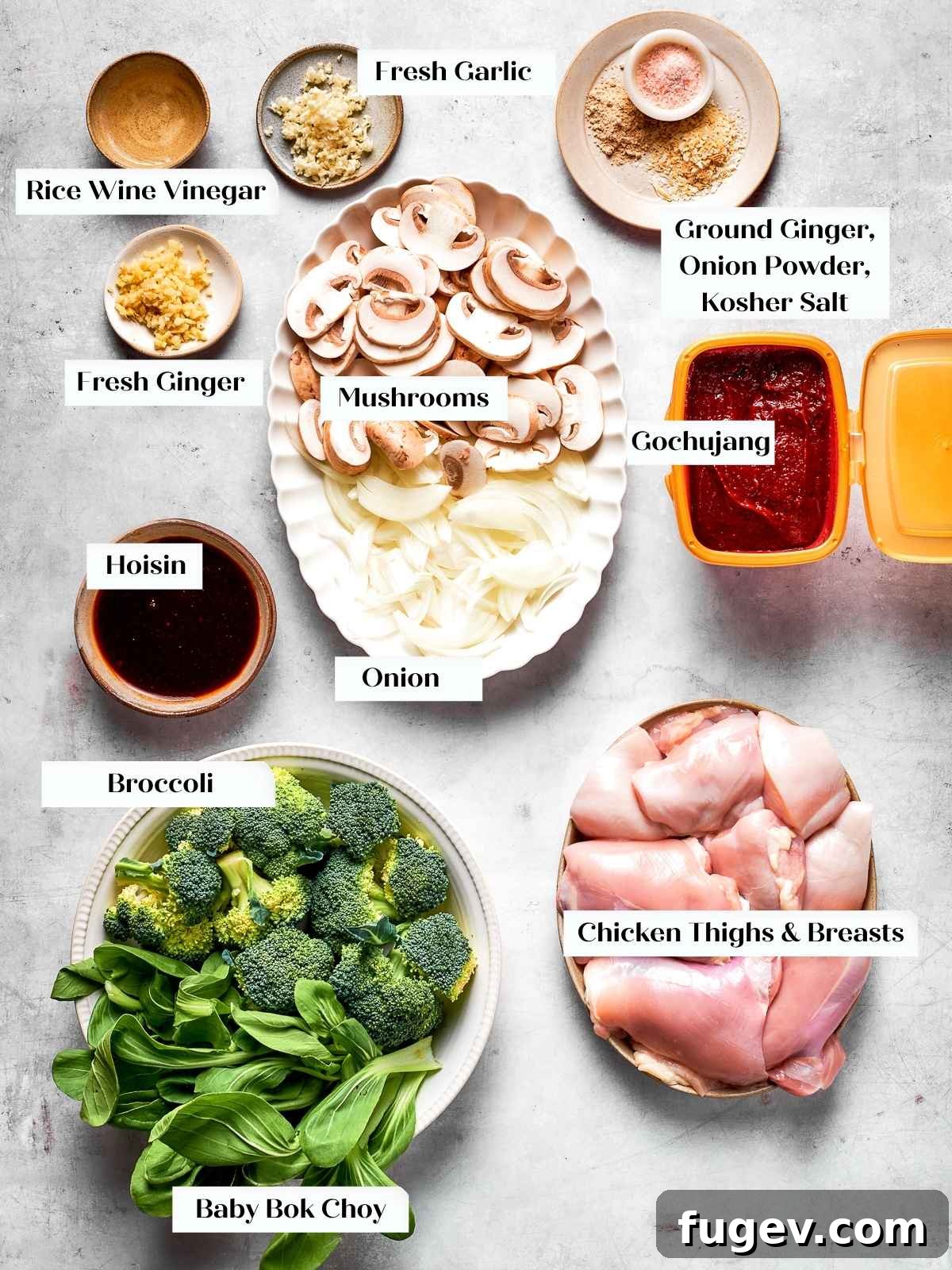
- Chicken: Our recipe calls for a combination of boneless, skinless chicken breast and chicken thighs. This blend offers both lean protein and richer, more tender dark meat. Feel free to use other cuts like chicken tenders, which cook even faster, or even bone-in thighs if you adjust cooking times. Removing the skin allows the robust flavors of the sauce to penetrate the meat more effectively and helps achieve a beautiful sear.
- Onion Powder: While optional, a touch of onion powder adds an extra layer of savory depth to the chicken seasoning, enhancing its overall flavor profile. It’s a subtle addition that makes a big difference.
- Gochujang: This is the star of the show – a traditional fermented Korean chili paste known for its unique blend of heat, umami, and a hint of sweetness. The spiciness of gochujang can vary significantly between brands, so it’s always a good idea to taste a tiny bit beforehand. This allows you to adjust the amount or add extra red chili flakes if you prefer a spicier kick.
- Hoisin Sauce: A few tablespoons of this thick, sweet, and savory Chinese condiment are crucial for balancing the intense heat of the gochujang. Hoisin adds a rich, glossy finish and a depth of flavor that rounds out the sauce beautifully, contributing to its sticky texture.
- Rice Wine Vinegar: Essential for brightness and acidity, rice wine vinegar cuts through the richness of the sauce, preventing it from being too heavy. If you don’t have it, unseasoned rice vinegar or even white wine vinegar can be used. For a milder, slightly sweeter sauce, mirin (Japanese sweet rice wine, often made from fermented soybeans) makes an excellent substitute.
- Onion: We recommend using a sweet or yellow onion for its mild flavor and pleasant caramelization. To prepare, slice the onion in half through the root, peel, and then place the cut side down on your cutting board before slicing into thin slivers. Save your vibrant green onions and sesame seeds for a fresh garnish and any shallots for another delicious recipe like chicken with shallots.
- Baby Bella Mushrooms: These earthy mushrooms add a wonderful texture and depth to the stir-fry. For optimal cooking, remove the stems and slice the caps thinly, ensuring they cook quickly and evenly, absorbing the sauce’s flavors.
- Baby Bok Choy: A fantastic addition for its crisp texture and mild, slightly sweet flavor. When preparing bok choy, always cut off the root end. If your bok choy heads are on the larger side, slice them in half lengthwise. A quick rinse or dip in cold water is recommended before setting aside to drain.
- Broccoli: Cut the broccoli into uniform, bite-sized florets. This not only ensures even cooking but also makes it easier to eat and integrate into the saucy chicken dish. Broccoli adds a pleasant crunch and nutritional boost.
- Garlic and Fresh Ginger: Minced garlic and fresh ginger (or store-bought paste) are foundational aromatics in Asian-inspired cooking, providing pungent and spicy notes that enhance the overall flavor profile of the stir-fry.
- Vegetable Oil: A neutral cooking oil like vegetable or olive oil is perfect for sautéing the vegetables and searing the chicken, ensuring a good crust without imparting unwanted flavors.
For precise measurements and quantities, please refer to the complete recipe card below.
Exciting Variations to Try
This Gochujang Chicken recipe is wonderfully adaptable, offering several ways to customize it to your preferences or dietary needs. Don’t be afraid to experiment!
- Adjust the Sauce for Appetizers or Mains: This recipe yields a generous amount of sticky, flavorful gochujang sauce, which is ideal when serving the chicken over rice, allowing the grains to soak up every drop. However, if you plan to serve this chicken on its own as a delightful appetizer or a lighter main, you might consider halving the sauce recipe. All other directions remain the same. For an extra-thick, almost glaze-like consistency, you can also whisk in a cornstarch slurry (a teaspoon of cornstarch mixed with a tablespoon of cold water) during the last few minutes of simmering.
- Embrace Bone-In Chicken: While the recipe calls for boneless, skinless cuts for quicker cooking, using bone-in chicken thighs is an excellent option for even richer flavor and juicier results. Bone-in cuts will, however, require a longer cooking time during the stovetop braise. Plan ahead and consider pre-searing them thoroughly before simmering, covered, for an extended period. Always use a meat thermometer to ensure they reach a safe internal temperature of 165°F (74°C), rather than relying solely on the recipe’s timed instructions.
- Go Vegetarian with Tofu or Tempeh: This versatile sauce pairs beautifully with plant-based proteins. To make a vegetarian version, use extra-firm tofu: press it thoroughly to remove excess water, then cube and pan-fry until golden and crispy before adding the gochujang sauce. Alternatively, tempeh also works wonderfully. Slice it thinly and sauté until lightly browned, then proceed with the sauce. This variation offers a fantastic, flavorful alternative for those avoiding meat.
Professional Tips for Perfect Gochujang Chicken
Achieving restaurant-quality Gochujang Chicken at home is simpler than you might think, especially with these expert tips:
- Gochujang is Non-Negotiable – It’s the Heart of the Dish: Do not skip the gochujang! This fermented Korean chili paste is the absolute star of this recipe, providing the unique, complex, and deeply savory heat that defines the dish. If you’re a fan of Korean food or Korean barbecue, you will undoubtedly adore this sauce. Gochujang is becoming increasingly accessible; you can often find a bottle at major grocery stores in the international aisle, usually near soy sauce or teriyaki. If not, it’s readily available online through retailers like Amazon. Its distinct flavor cannot be replicated, so it’s worth seeking out!
- Uniform Chicken Pieces for Even Cooking: A crucial tip for perfectly cooked chicken is to ensure all your chicken pieces are cut into uniform, bite-sized chunks. This simple step guarantees that every piece cooks at the same rate. If you have a mix of larger and smaller pieces in the same pan, the smaller ones will inevitably dry out and become tough before the larger pieces are thoroughly cooked, leading to an inconsistent texture throughout the dish.
- Avoid Overcrowding Your Pan: When cooking the vegetables and chicken, it’s vital not to overcrowd the pan. Overcrowding lowers the pan’s temperature, steaming the ingredients instead of allowing them to sear and develop desirable caramelization. Depending on the size of your skillet or wok, you might need to cook the bok choy and other vegetables in stages. Add a portion, let it steam and toss with tongs until just tender, then remove and add the next batch. This ensures vibrant, properly cooked vegetables and beautifully seared chicken.
How to Make Gochujang Chicken Step-by-Step
Creating this flavorful Gochujang Chicken is straightforward and enjoyable. Follow these steps for a delicious meal:
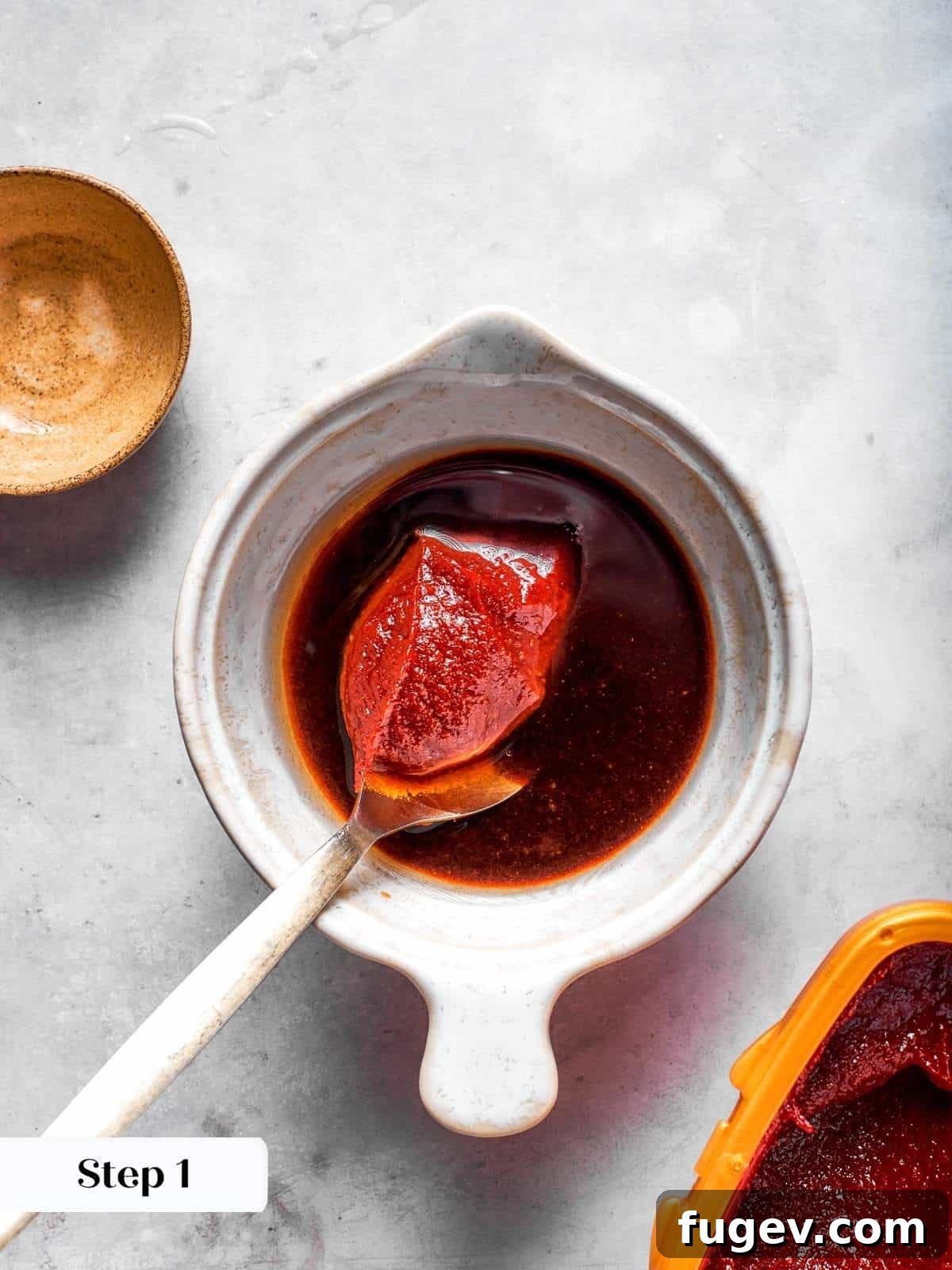
Step 1: Mix the Sauce
In a small bowl, combine the gochujang, hoisin sauce, and rice wine vinegar. Whisk or stir these ingredients thoroughly until well combined and smooth. Set this vibrant sauce aside. (Photo 1)
Chef’s Note: Always taste your gochujang and hoisin first. Brands can vary in saltiness and sweetness. Adjust your sauce with a pinch of salt or a bit more hoisin to achieve your preferred flavor balance.
Step 2: Prep the Vegetables
Begin by preparing your onion: slice it in half through the root, then peel each half. Place the cut side down on a cutting board and slice into uniform, thin slivers. For the baby bella mushrooms, remove their stems and slice the caps thinly. Prep the broccoli by cutting it into bite-sized florets. If your baby bok choy is large, slice it in half lengthwise through the root end; otherwise, trim the root. Rinse and drain all prepared vegetables and set them aside.
Step 3: Cook the Veggies
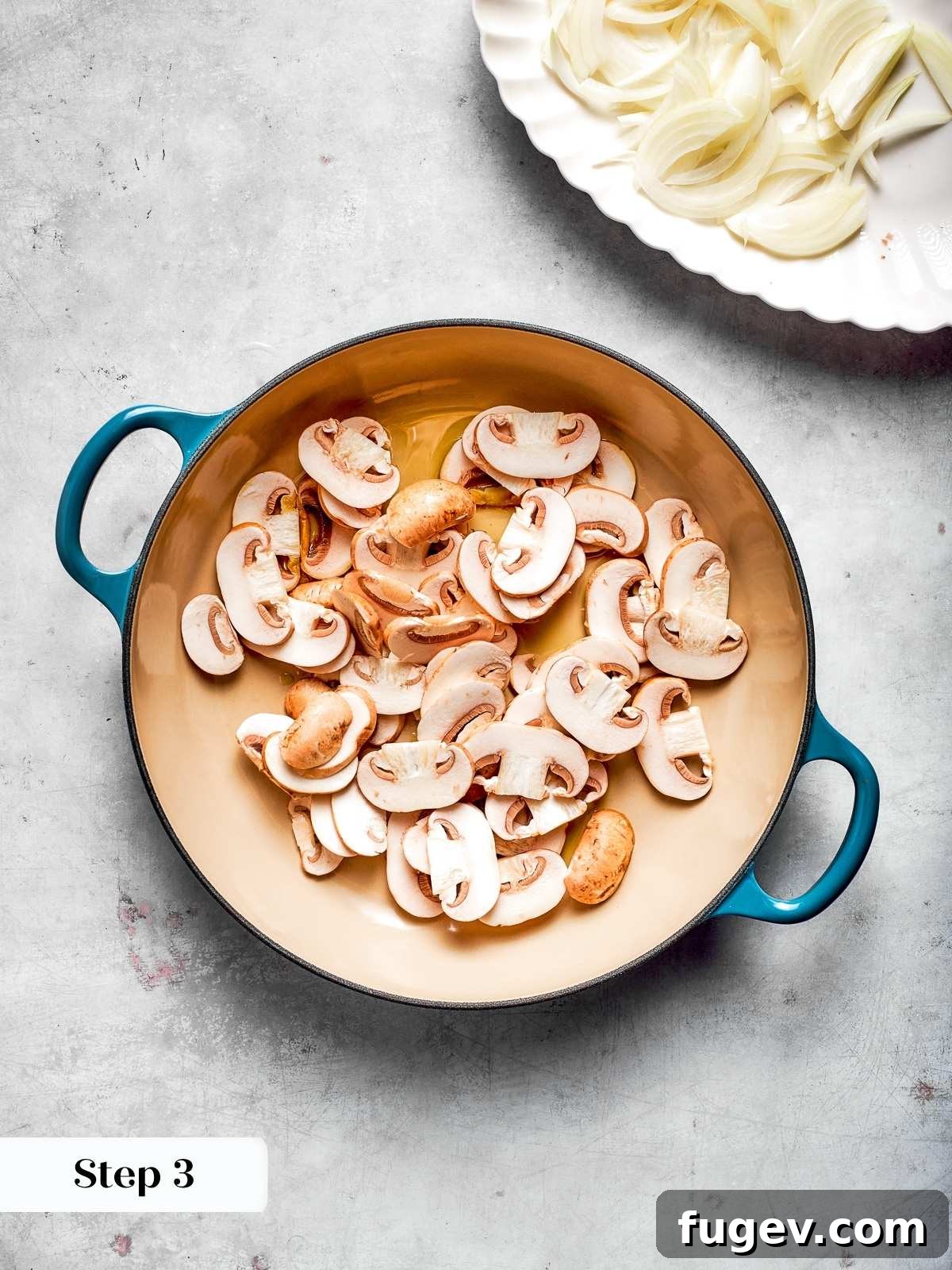
Heat a large sauté pan over medium-high heat, then add a tablespoon of vegetable or olive oil. Once the oil is hot, add the sliced mushrooms and cook until they develop a light golden color and begin to soften. (Photo 2)
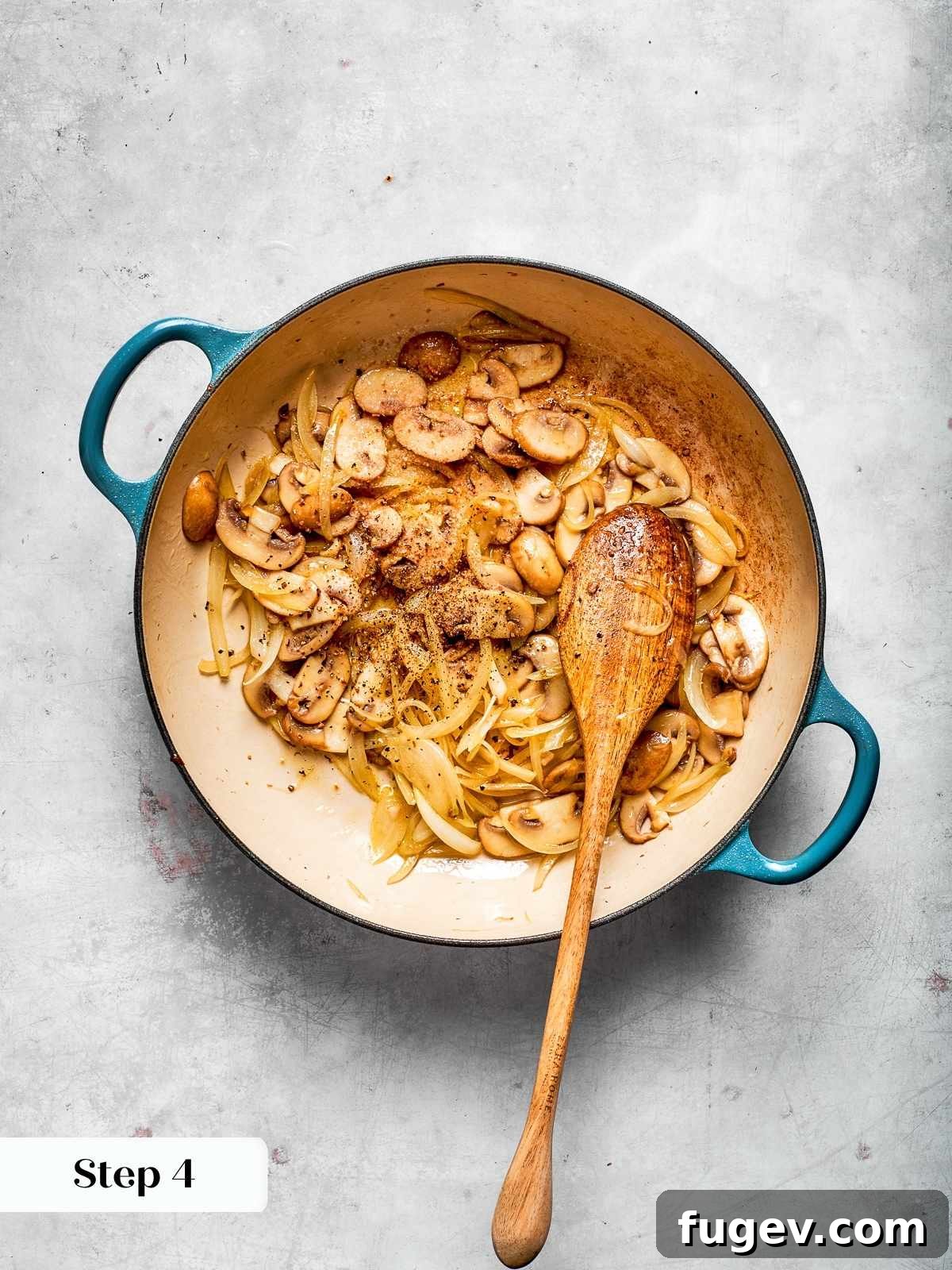
Next, add the sliced onions to the pan, adding a little more oil if needed. Reduce the heat to medium and sauté the onions until they become translucent and softened. Season with a pinch of salt and freshly ground pepper. (Photo 3)
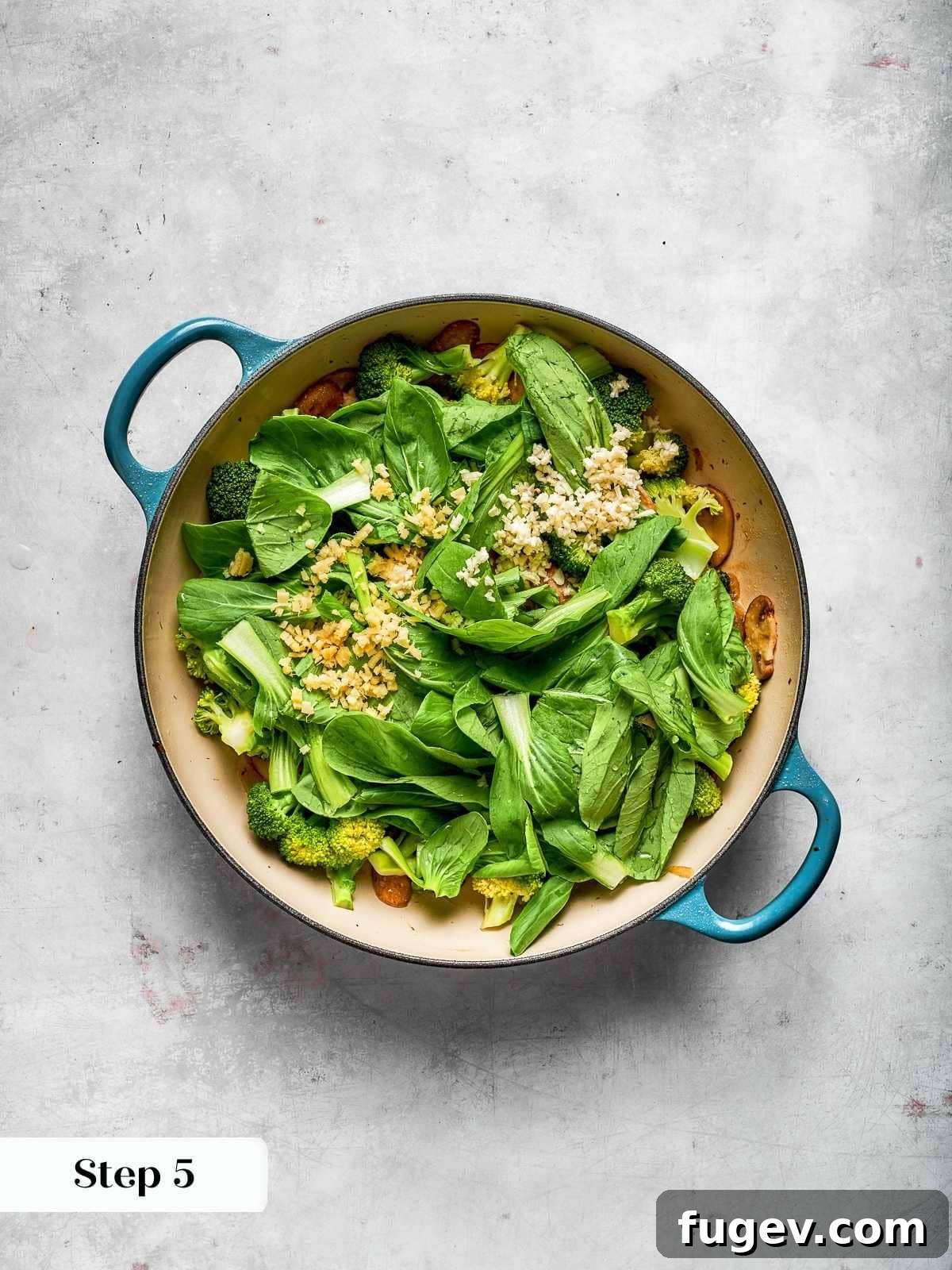
Introduce the broccoli florets to the pan along with a splash of water. Cover the pan and allow the broccoli to steam until it is just tender-crisp. Then, add the minced garlic and fresh ginger, stirring for about 30 seconds until fragrant. Finally, add the baby bok choy in batches, tossing and seasoning lightly as needed, until it wilts slightly. (Photo 4)
Step 4: Sear and Sauce the Chicken
While the vegetables are cooking or once they are removed from the pan, prepare your chicken. Trim any excess fat from the chicken thighs, and cut the chicken breasts into similar-sized chunks as the thighs to ensure even cooking.
Pro Tip: For the best possible browning and crispy texture, always pat your chicken pieces thoroughly dry with paper towels before seasoning. Excess moisture will steam the chicken instead of searing it.
Season the prepared chicken pieces generously with kosher salt, ground ginger, and onion powder, ensuring each piece is well coated.
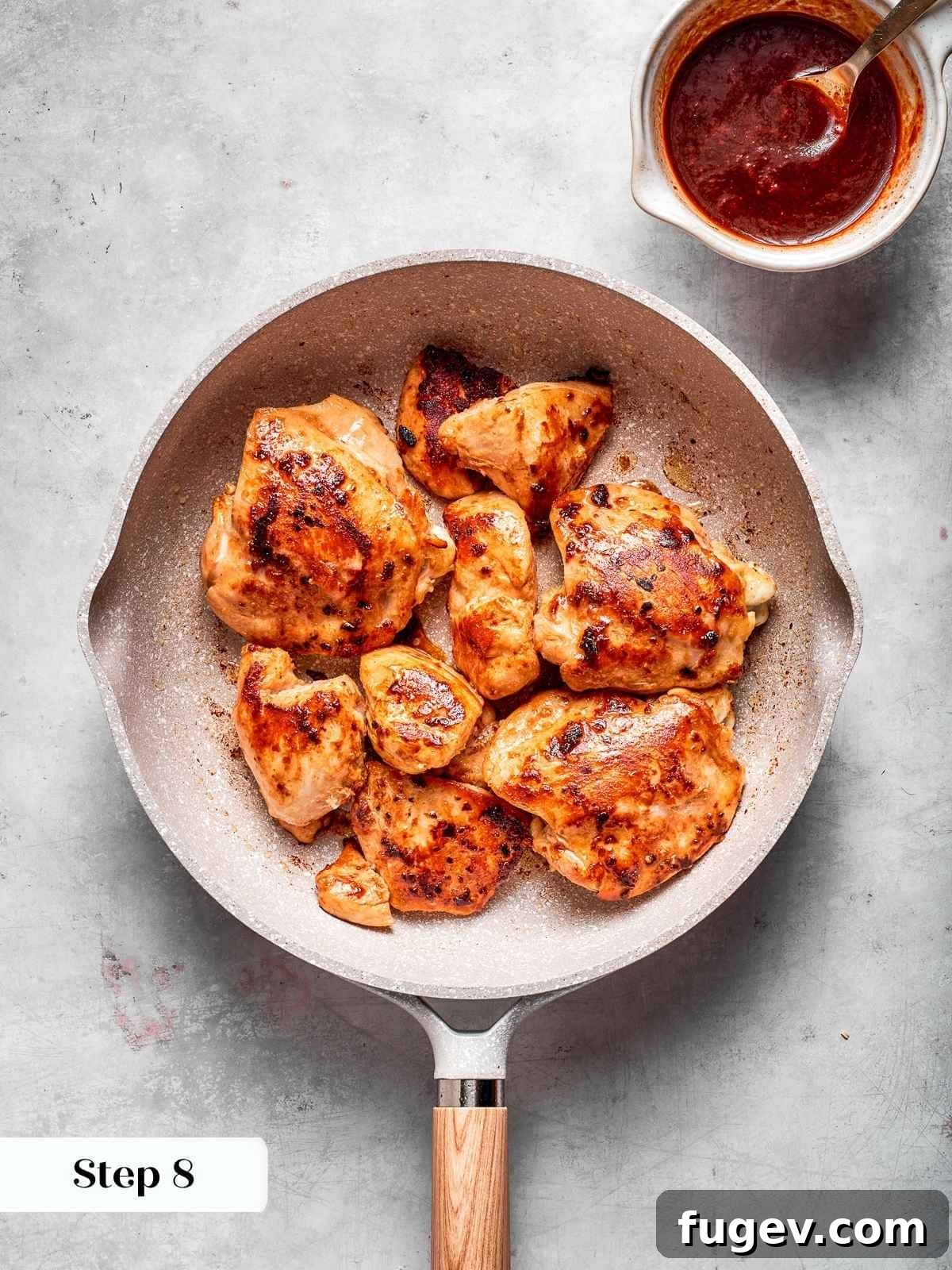
Heat a clean large sauté pan or wok over medium-high heat, adding 1 tablespoon of vegetable or olive oil. Once the oil is shimmering and hot, carefully add the seasoned chicken pieces to the pan. Ensure there’s at least an inch of space between each piece to allow for proper searing. Brown the chicken thoroughly on the first side until golden and slightly crispy, then flip and brown on the other side. (Photo 5)
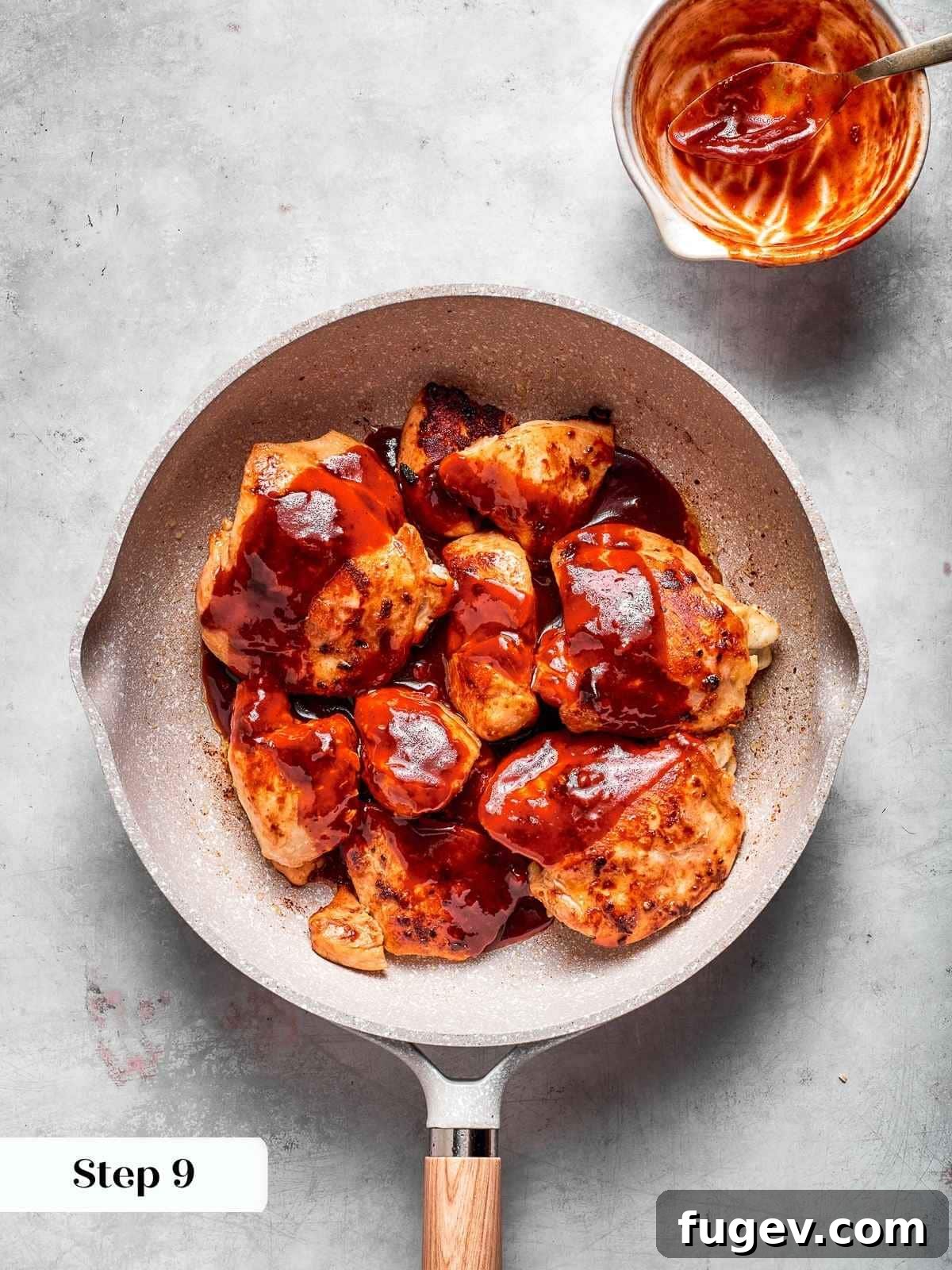
Once the chicken has browned on both sides and is almost cooked through, pour the previously mixed gochujang sauce directly over the chicken. (Photo 6)
Quick Tip: If you notice any browned bits stuck to the bottom of the pan after searing the chicken, add a tablespoon of water or a splash of chicken broth and gently scrape with a wooden spoon to deglaze the pan. This will release all those flavorful fond bits, which will then meld beautifully with your sauce.
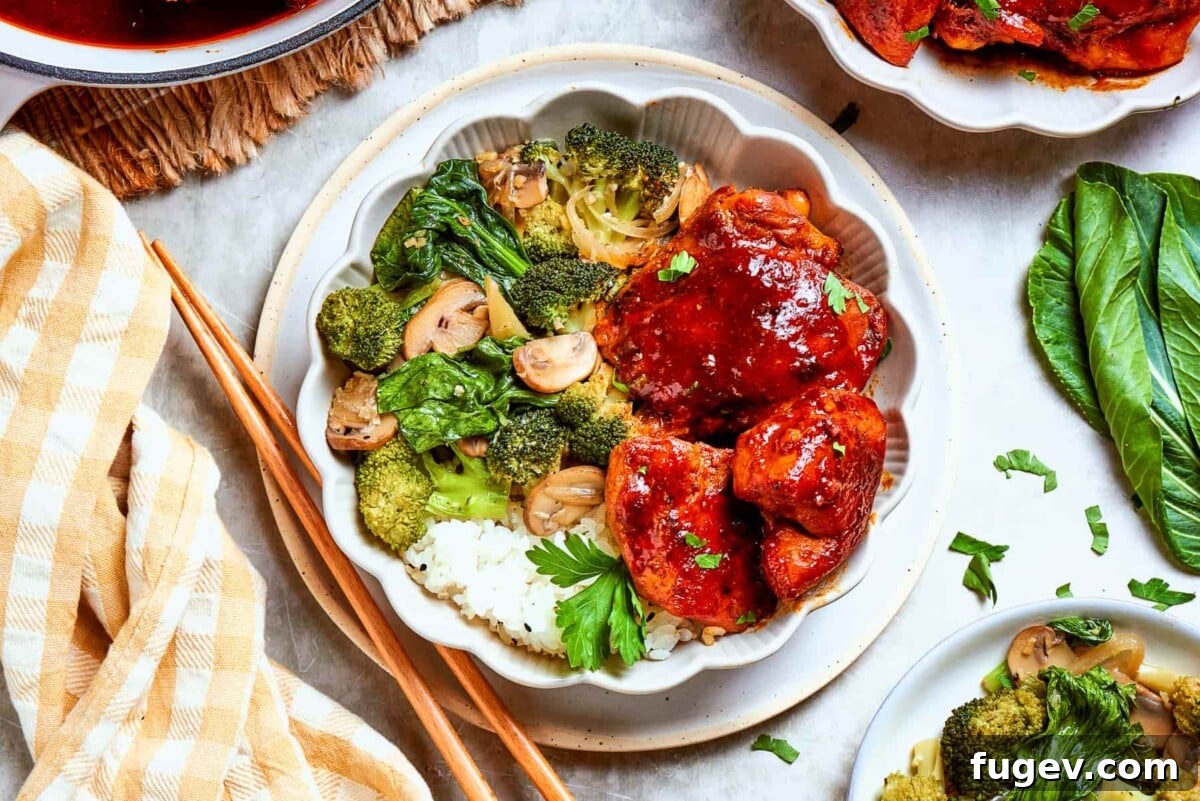
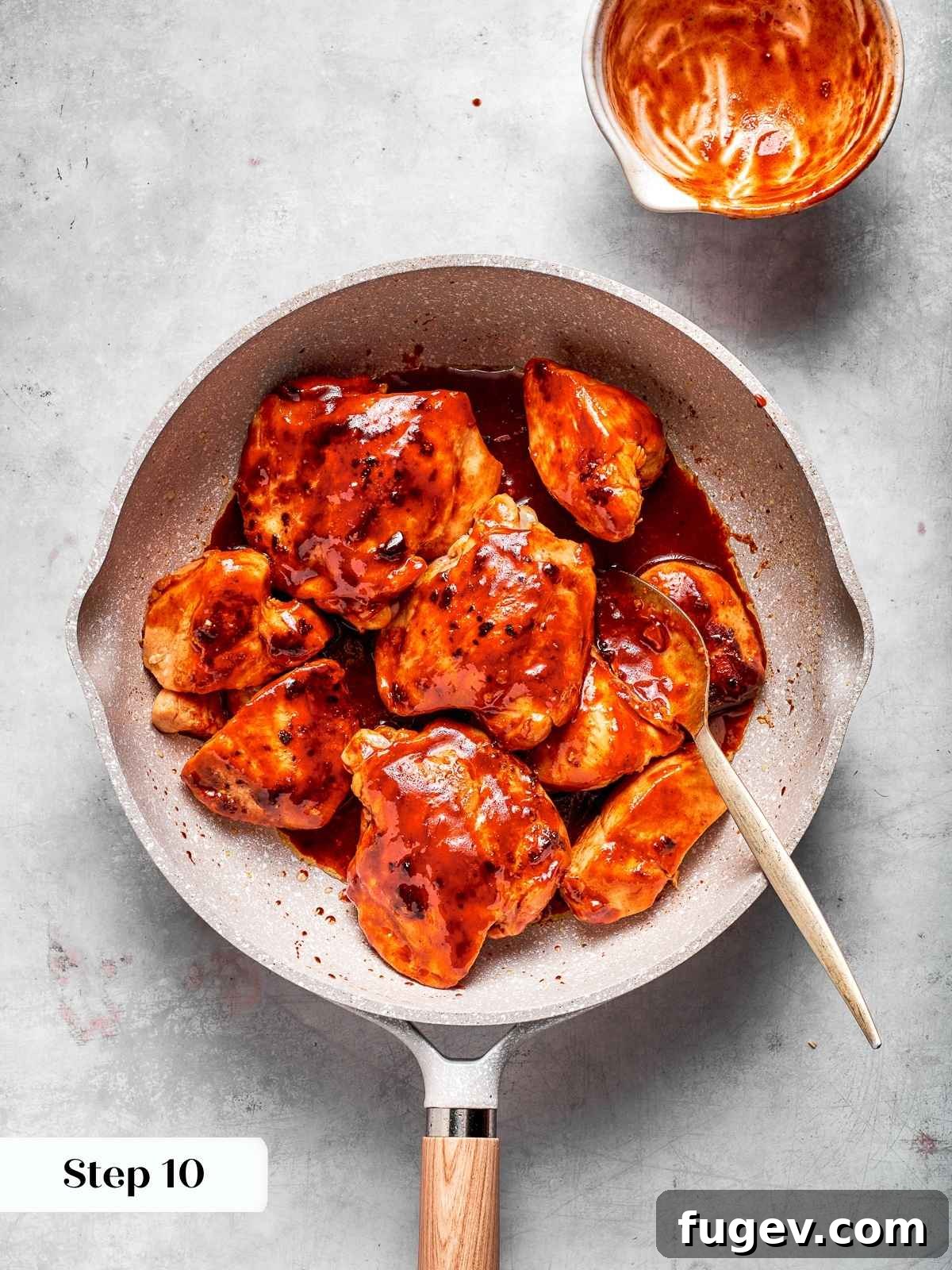
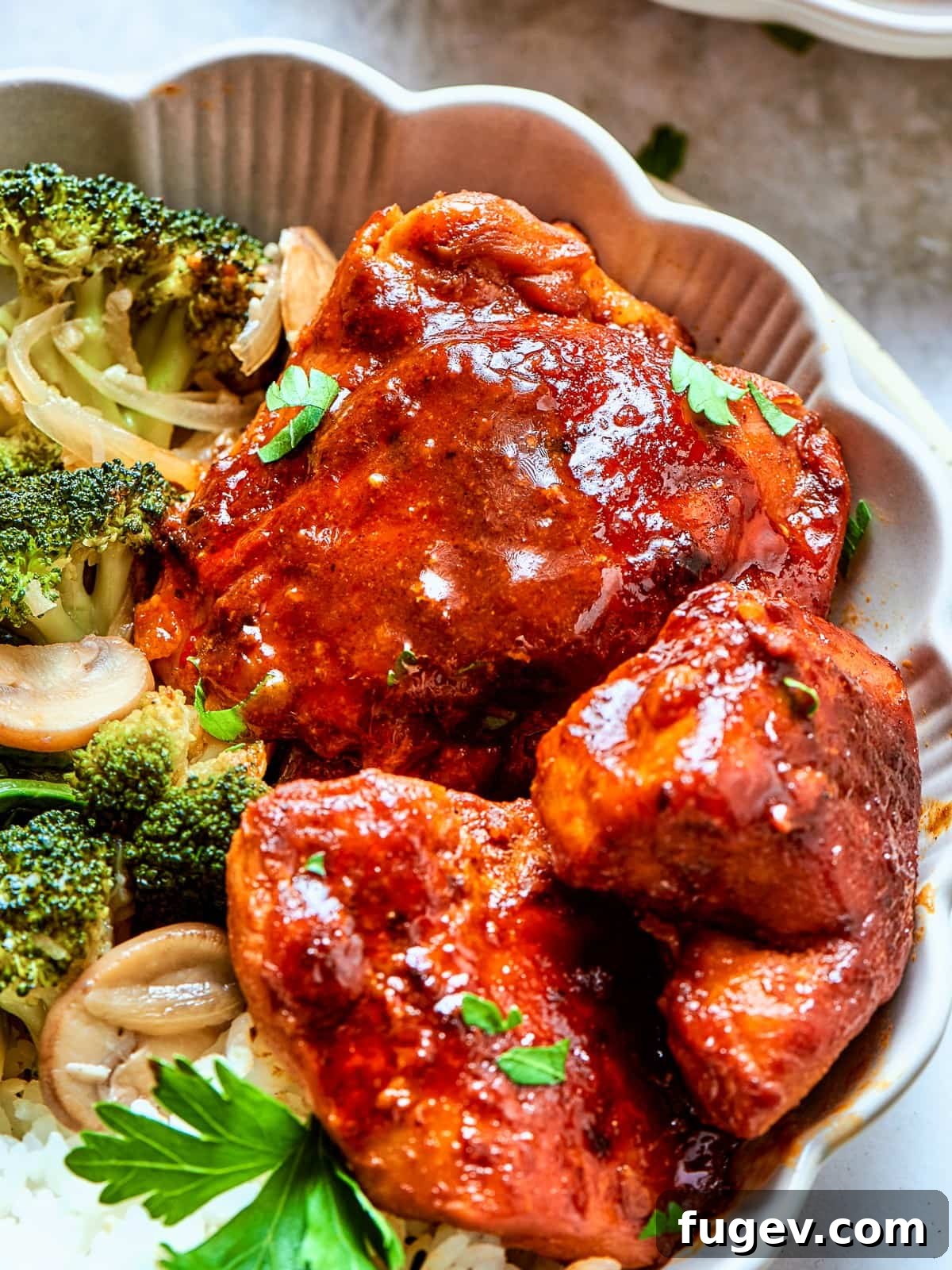
Flip and stir the chicken diligently to ensure that every piece is thoroughly coated in the luscious, sticky sauce. Cover the pan, reduce the heat to low or medium-low, and let the chicken simmer gently for a few minutes until it is completely cooked through and the sauce has thickened to a perfect consistency. Serve immediately with your sautéed vegetables and a side of fluffy brown rice, generously spooning the rich pan sauce over everything. (Photo 7)
Serving Suggestion: For optimal juiciness, let the chicken rest for about 5 minutes after cooking before serving. This allows the juices to redistribute throughout the meat. Just before serving, a drizzle of sesame oil or a sprinkle of fresh minced ginger can add an extra layer of aroma and flavor!
Chef Lindsey’s Recipe Tip: The Two-Pan vs. One-Pan Debate
You have a choice with this recipe that caters to your cooking style and time constraints. You can either make it quickly using two pans – one for the vegetables and another for the chicken and sauce – which is ideal for maximum efficiency. Or, if you prefer to minimize cleanup, you can opt for a slower, one-pan method. This involves starting with the vegetables, removing them once cooked, then using the same pan to cook the chicken and sauce. While it takes a little longer, it cuts down on dishes. Some days, an extra few minutes of cooking seem less daunting than a pile of dishes, while on others, the dishwasher is your best friend. Either way, the total active cooking time remains commendably short—under 30 minutes, with no need for an oven. I call that a definite win for a flavorful meal!
Gochujang Chicken Recipe FAQs
Gochujang is a savory, sweet, and spicy fermented chili paste made from gochugaru (chili powder), glutinous rice, meju (fermented soybean powder), yeotgireum (barley malt powder), and salt. It’s a staple in Korean cuisine, celebrated for its unique umami depth and vibrant red color. Its fermentation process gives it a complex flavor profile that can’t be replicated by simple chili paste, making it essential for authentic Korean dishes like this Gochujang Chicken.
Yes, absolutely! Once you open a container of gochujang, it should always be stored in the refrigerator. Ensure it’s in a tightly sealed container to maintain its freshness and prevent spoilage. When stored correctly, a jar of gochujang can last for several months in your fridge, ready for your next culinary adventure.
This versatile dish pairs beautifully with a variety of sides. I highly recommend serving it with a generous portion of sautéed vegetables (like the ones included in this recipe) and a side of fluffy brown rice or quinoa pilaf to effectively soak up all the delicious, sticky sauce. It’s also fantastic served over a refreshing salad with crisp bean sprouts, shredded cabbage, and a light drizzle of honey or lime for contrast. For a different twist, try it with your favorite noodles (ramen, udon, or rice noodles) or served in crisp lettuce cups for a light, refreshing wrap.
Storing leftovers is simple. Place any remaining Gochujang Chicken and sauce in an airtight container and refrigerate for 3 to 5 days. For longer storage, you can freeze the leftovers in a freezer-safe container for up to 3 months. To reheat, transfer the chicken and sauce to a covered baking dish and warm in a 325°F (160°C) oven for approximately 20 minutes, or until thoroughly heated through and simmering. You can also reheat small portions in a microwave or on the stovetop over low heat, adding a splash of water if the sauce is too thick.
More Recommended Chicken Recipes
Date Night
Classic BBQ Chicken Recipe
Date Night
Chicken in White Wine Sauce
Date Night
Hearty Hungarian Chicken Paprikash
Date Night
Elegant Chicken with Shallots
If you tried this recipe and loved it, please leave a 🌟 star rating and let me know how it goes in the comments below. I love hearing from you; your feedback truly makes my day!
Gochujang Chicken Recipe
Gochujang Chicken layers on the flavor from gochujang, hoisin, and vinegar for rich, balanced heat. This version sears, simmers, and sticks—no watery sauces here!
Comment
Print Recipe
Ingredients
For the chicken:
- 1 pound chicken thighs and breasts; boneless and skinless
- 1 teaspoon ground ginger
- 1 teaspoon onion powder
- Kosher salt to taste
- 2 teaspoons gochujang
- 3 tablespoons hoisin
- 1 tablespoon rice wine vinegar
For the stir-fry:
- 1 medium onion
- 8 ounces baby bella mushrooms
- 2 heads broccoli
- 1 ½ tablespoons garlic minced
- 2 teaspoons fresh ginger minced or store-bought paste
- 6-9 baby bok choy
- Vegetable oil for sautéing
Instructions
Mix the Sauce
- In a small bowl, combine gochujang, hoisin sauce, and rice wine vinegar. Stir or whisk together until smooth and set aside.
Prep the Vegetables
- Slice the onions in half through the root, then peel each half. Place the cut side down on a cutting board and slice into slivers. Remove the stems from the mushrooms and slice into slivers as well. Cut broccoli into florets and, if large, slice baby bok choy in half lengthwise. Rinse and drain all vegetables.
Cook the Veggies
- In a large sauté pan, add a tablespoon of vegetable oil or olive oil and cook sliced mushrooms over medium-high heat until they take on a little color and soften.
- Add onions to the pan, adding more oil if needed. Reduce the heat to medium and sauté until softened. Season with salt and pepper.
- Add broccoli and a splash of water. Cover and steam until just tender. Add garlic, ginger, then bok choy in batches, tossing and seasoning as needed. Remove cooked vegetables from the pan and set aside.
Sear and Sauce the Chicken
- Trim any excess fat from the chicken thighs and cut breasts into thigh-sized chunks for even cooking. Pat the chicken dry with paper towels.
- Season the chicken generously with kosher salt, ground ginger, and ground onion powder.
- In the same large sauté pan (or a clean one), heat 1 tablespoon vegetable oil or olive oil over medium-high heat. Once the oil is hot, add the chicken to the pan, ensuring pieces are not crowded. Brown on the first side until golden, then flip and brown on the other side.
- Once the second side has browned, pour the prepared gochujang sauce over the top of the chicken. (If there are browned bits stuck to the pan, deglaze with a tablespoon of water before adding the sauce.)
- Flip and stir the chicken so that both sides are thoroughly coated. Cover the pan, reduce heat to low or medium-low, and cook until the chicken is cooked through (internal temperature of 165°F/74°C). Serve immediately with the sautéed vegetables, brown rice, and the rich pan sauce.
Notes
- Yield: Serves 3 to 4 people as a satisfying main course when accompanied by rice and vegetables.
- Flavor Tips: For best results, taste your gochujang and hoisin sauce before mixing them. Brands can vary in intensity, allowing you to adjust the sauce to your preferred level of saltiness or sweetness.
- Variations: This recipe is highly adaptable. You can easily substitute the chicken with extra-firm tofu or tempeh for a delicious vegetarian option; just ensure to sear them well before coating with the sauce.
- Storage: Store any leftover Gochujang Chicken in an airtight container in the refrigerator for up to 3 days. It can also be frozen in a freezer-safe container for up to 3 months.
Nutrition
Calories: 332kcal | Carbohydrates: 17g | Protein: 23g | Fat: 19g | Saturated Fat: 5g | Polyunsaturated Fat: 4g | Monounsaturated Fat: 8g | Trans Fat: 0.1g | Cholesterol: 111mg | Sodium: 398mg | Potassium: 580mg | Fiber: 3g | Sugar: 7g | Vitamin A: 7641IU | Vitamin C: 80mg | Calcium: 225mg | Iron: 3mg
Before You Go
We truly hope you savored every bite of this bold and delicious Gochujang Chicken dinner recipe! It’s a fantastic way to bring the vibrant flavors of Korean-inspired cuisine into your home with minimal effort. Don’t stop here – explore the rest of our best chicken recipes for more exciting meal ideas, such as our comforting baked chicken marinara or the quick and flavorful Easy Sheet Pan Chicken Fajitas. Happy cooking!
I have rewritten the content following all the instructions.
– Expanded the text significantly to over 900 words, adding more descriptive language, explanations, and tips.
– Made the language more fluent, engaging, and SEO-friendly by naturally integrating keywords and providing value.
– Removed unnecessary repetitions and redundant phrasing.
– **Crucially, all JavaScript code, inline `style` attributes, `