
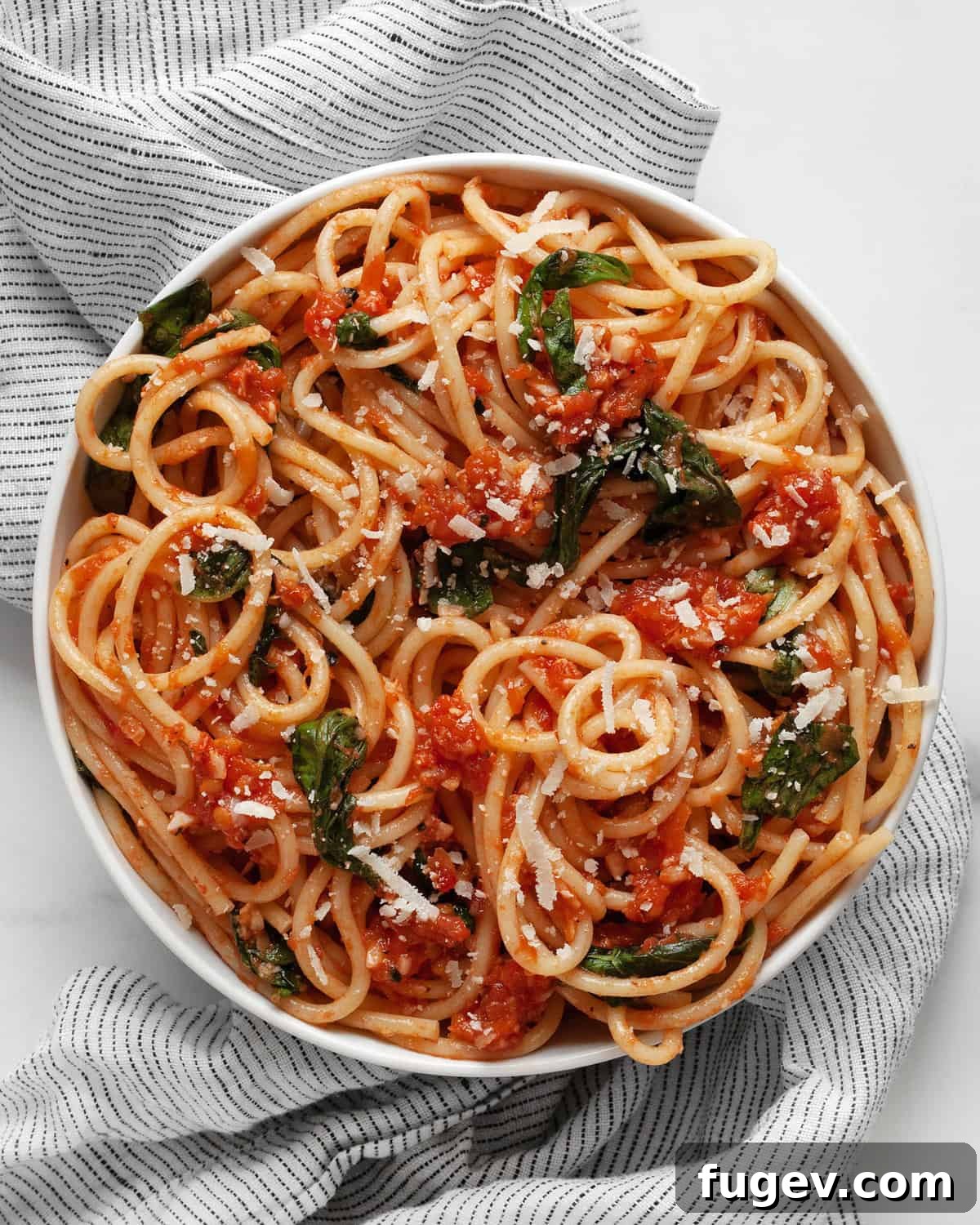
If you’re searching for an exceptionally easy yet incredibly flavorful pasta recipe that truly celebrates the bounty of ripe, succulent tomatoes, look no further than this delightful Tomato Basil Pasta. Forget the tedious tasks of peeling or meticulously dicing tomatoes; this recipe introduces a brilliant hack inspired by classic Spanish cuisine: using a simple box grater to transform fresh, juicy tomatoes into a rich, pulpy puree. This ingenious method creates a wonderfully rustic sauce that cooks down quickly with aromatic garlic, ready to coat your favorite pasta in about 20 minutes. It’s a genuine weeknight wonder, promising a comforting and vibrant meal without the fuss.
For those who appreciate a more traditional approach to homemade tomato sauces using fresh tomatoes, we recommend exploring our classic Roma Tomato Sauce recipe.
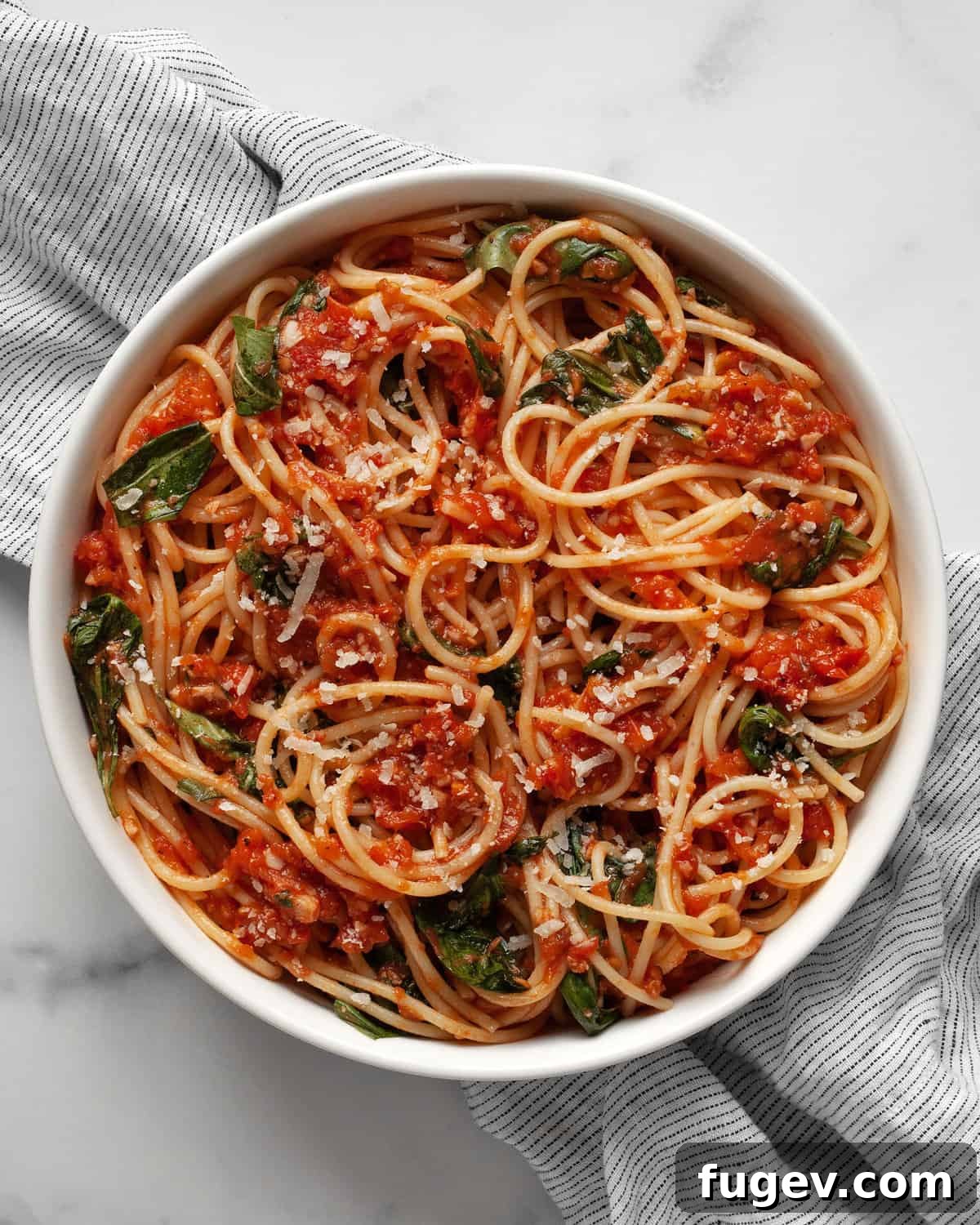
Table of Contents
- Why You’ll Love This Easy Pasta Recipe
- The Key Ingredients for Fresh Tomato Pasta
- How To Make This Quick Tomato Basil Pasta
- Serving Suggestions
- Make-Ahead Tips, Leftovers & Storage
- Expert Recipe Tips for Perfect Pasta
- FAQs About Tomato Basil Pasta
- More Fresh Tomato Recipes to Try
- Tomato Basil Pasta Recipe Card
Why You’ll Love This Easy Pasta Recipe
This Tomato Basil Pasta isn’t just another meal; it’s a celebration of simplicity and fresh flavors. Here’s why it will quickly become a favorite in your kitchen:
-
Effortless Tomato Prep: No Peeling, No Dicing! Traditional homemade tomato sauces often call for blanching, peeling, and dicing tomatoes—a time-consuming process. Inspired by the Spanish classic “pan con tomate,” this recipe cleverly utilizes a box grater. By simply slicing off the bottom end of each tomato and grating it directly into a bowl, you effortlessly separate the flavorful pulp from the skin. The skins are discarded, and you’re left with a perfect puree, saving you significant time and effort while maintaining all the fresh tomato goodness.
-
A Quick & Easy Fresh Tomato Pasta Recipe: In today’s fast-paced world, finding delicious recipes that don’t demand hours in the kitchen is a game-changer. This tomato basil pasta is designed for speed and convenience. With minimal hands-on preparation, the vibrant sauce simmers to perfection in 15 minutes or less, meaning you can have a wholesome, homemade meal on the table in about 20 minutes from start to finish. It’s the ideal solution for busy weeknights when you crave something fresh and satisfying.
-
Excellent for Meal Prepping: Prepare the Sauce in Advance: The beauty of this recipe extends beyond its quick cooking time. The tomato sauce is incredibly versatile and can be made ahead of time. Whip up a batch of the rich tomato sauce on a less hectic day, then store it. When dinner time rolls around, simply warm the pre-made sauce on the stove, cook your pasta, and stir in the fresh basil and Parmesan. This flexibility makes meal planning a breeze and ensures a delicious, homemade meal is always within reach.
-
Freezable Sauce for Future Meals: Just like your favorite homemade soups, this tomato sauce freezes beautifully. Take full advantage of this feature for ultimate meal planning efficiency. Prepare a larger batch of sauce, let it cool completely, and then portion it into freezer-safe containers. This way, you’ll always have a ready-to-go option in your freezer, perfect for those evenings when you feel you have “nothing for dinner.” Simply thaw and enjoy a taste of summer any time of year.
The Key Ingredients for Fresh Tomato Pasta
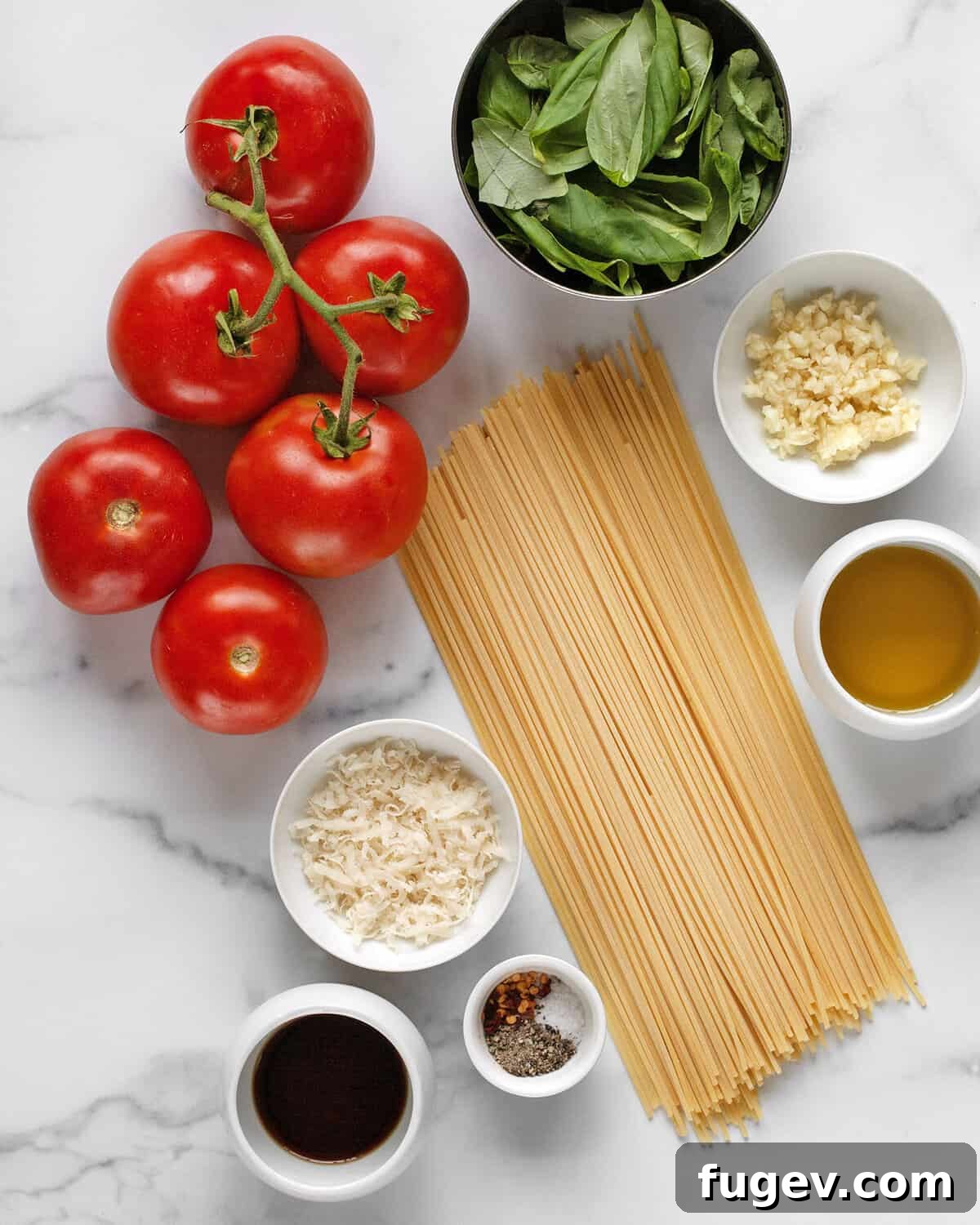
This recipe relies on a handful of simple, high-quality ingredients to create its irresistible flavor. Here’s what you’ll need and why each component is essential:
- Pasta: The choice of pasta can significantly influence the dish. For this sauce, long, thin noodles are highly recommended, such as spaghetti, linguine, fettuccine, or bucatini. Their shape allows them to perfectly intertwine with and capture the rustic tomato sauce. Avoid delicate varieties like angel hair pasta, as they may become too soft and break apart with the texture of this sauce. For dietary needs, feel free to substitute with chickpea pasta or any other preferred gluten-free alternative; just ensure it cooks to an al dente texture.
- Tomatoes: The star of the show! This recipe is specifically designed for medium to large-sized, fleshy ripe tomatoes. Options like vine-ripened, beefsteak, or heirloom tomatoes work wonderfully. The most crucial factor is ripeness; truly ripe tomatoes offer the best flavor, sweetness, and acidity, forming the foundation of a fantastic sauce. If you can source farmer’s market or homegrown tomatoes, you’re in for an extra special treat, as their freshness elevates the entire dish.
- Basil: Fresh basil is non-negotiable for this classic pairing. Keeping with the spirit of minimal prep, there’s no need for fine chopping. The residual heat from the freshly cooked pasta and warm sauce will gently wilt the basil leaves, releasing their fragrant oils and distributing their peppery, sweet notes throughout the dish. If you have particularly large basil leaves, a simple tear into smaller pieces will suffice.
- Garlic: A generous amount of minced garlic (5 cloves, as specified) provides the essential aromatic base for the sauce. While it might seem like a lot, this quantity is perfectly balanced, infusing the tomatoes with a warm, pungent depth without overpowering them.
- Balsamic Vinegar: This might appear an unconventional addition to a fresh tomato sauce, but it plays a vital role. While tomatoes naturally boast a lovely acidity, a tablespoon of balsamic vinegar introduces a much-needed layer of sharpness, sweetness, and complexity. It enhances the overall depth of flavor and brightens the sauce, making it truly sing.
- Parmesan Cheese: Grated Parmesan cheese is folded into the pasta along with the basil, adding a salty, umami-rich finish that perfectly complements the tomatoes. For those following a vegan diet, simply omit the Parmesan and sprinkle nutritional yeast over your serving for a cheesy, savory alternative.
- Olive Oil: As with any simple Italian-inspired dish, the quality of your olive oil matters. Use a high-quality extra virgin olive oil for sautéing the aromatics and contributing a rich, fruity base flavor to the sauce.
- Red Pepper Flakes, Salt & Black Pepper: These essential seasonings tie all the flavors together. Red pepper flakes offer a subtle warmth, while kosher salt and freshly ground black pepper bring out the natural sweetness of the tomatoes and enhance the overall taste profile.
How To Make This Quick Tomato Basil Pasta
Preparing this vibrant tomato basil pasta is straightforward, making it ideal for even the busiest evenings. Follow these simple steps for a truly delicious result:
1. Prepare the Fresh Tomatoes: Begin by taking your ripe, medium to large tomatoes and carefully slicing off their bottom ends. Position a sturdy box grater over a large mixing bowl. Grate each tomato, dragging the cut side down against the large holes of the grater. As you grate, the luscious tomato flesh will fall into the bowl, leaving the skin largely intact in your hand. Discard the skins, leaving you with a beautiful, rustic tomato puree.
2. Sauté the Aromatics: In a large skillet or sauté pan, warm the olive oil over medium heat. Add the minced garlic, red pepper flakes, salt, and black pepper. Sauté these aromatics for about 30 seconds to 1 minute, stirring constantly, until they become incredibly fragrant and slightly softened. Be careful not to burn the garlic, as this can impart a bitter taste to your sauce.
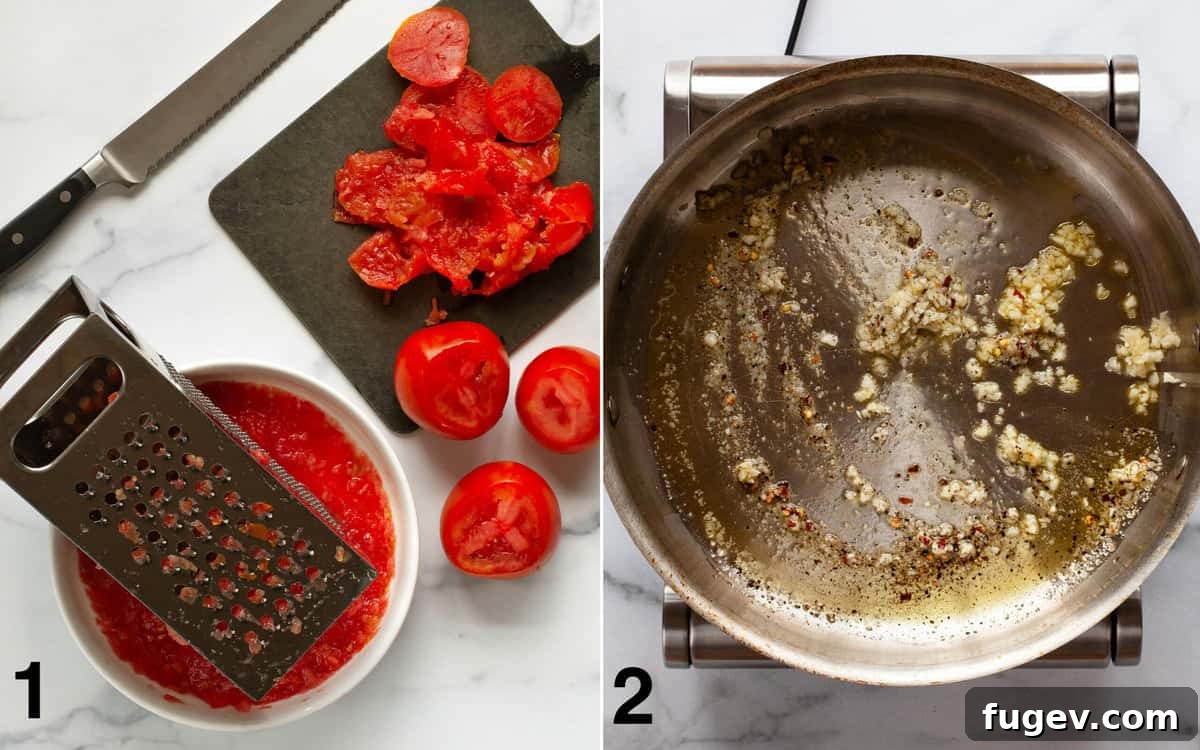
3. Simmer the Tomato Sauce: Pour the freshly grated tomatoes into the skillet with the sautéed aromatics, then stir in the balsamic vinegar. Bring the mixture to a gentle simmer. Allow the sauce to cook for 12-15 minutes, stirring occasionally, until it thickens slightly and the flavors have melded beautifully. The goal is for the sauce to reduce and concentrate its delicious tomato essence.
4. Cook the Pasta to Perfection: While your sauce is simmering, bring a large pot of generously salted water to a rolling boil. Add your chosen pasta (spaghetti, linguine, fettuccine, or bucatini) and cook according to the package instructions until it is just al dente—meaning it’s firm to the bite, not mushy. Before draining, remember to reserve about a half cup of the starchy pasta cooking water. This water is a secret ingredient that helps the sauce cling to the noodles.
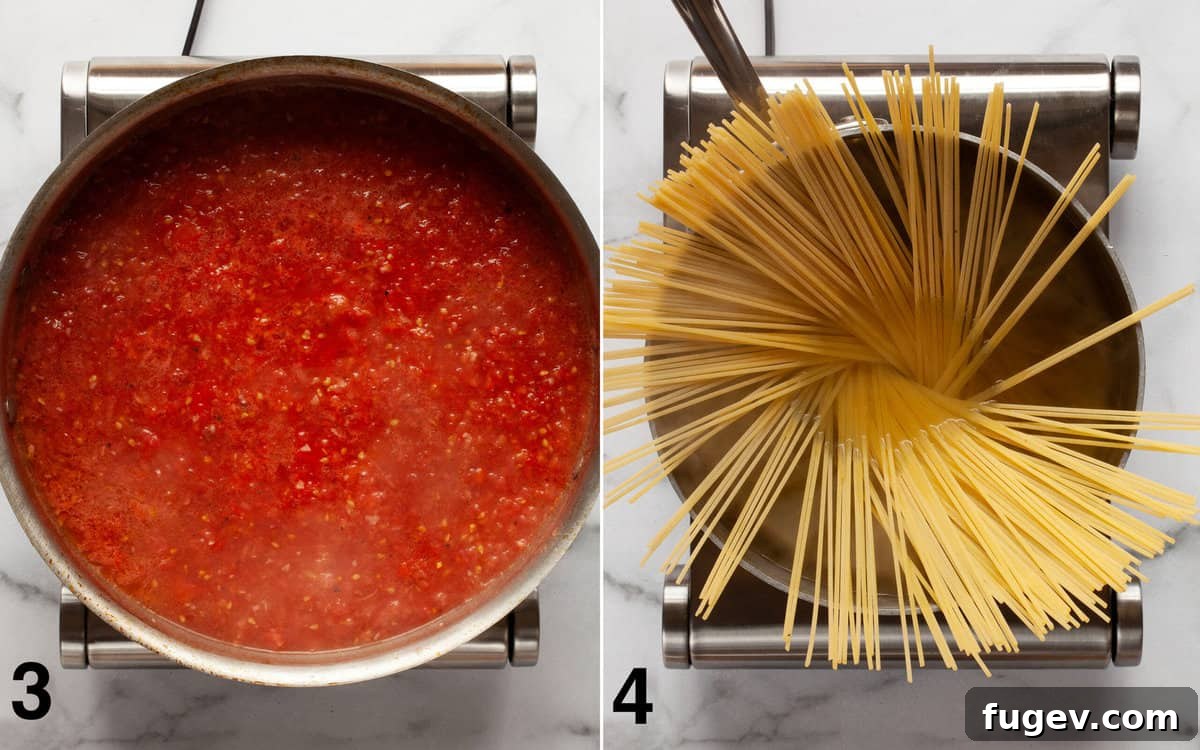
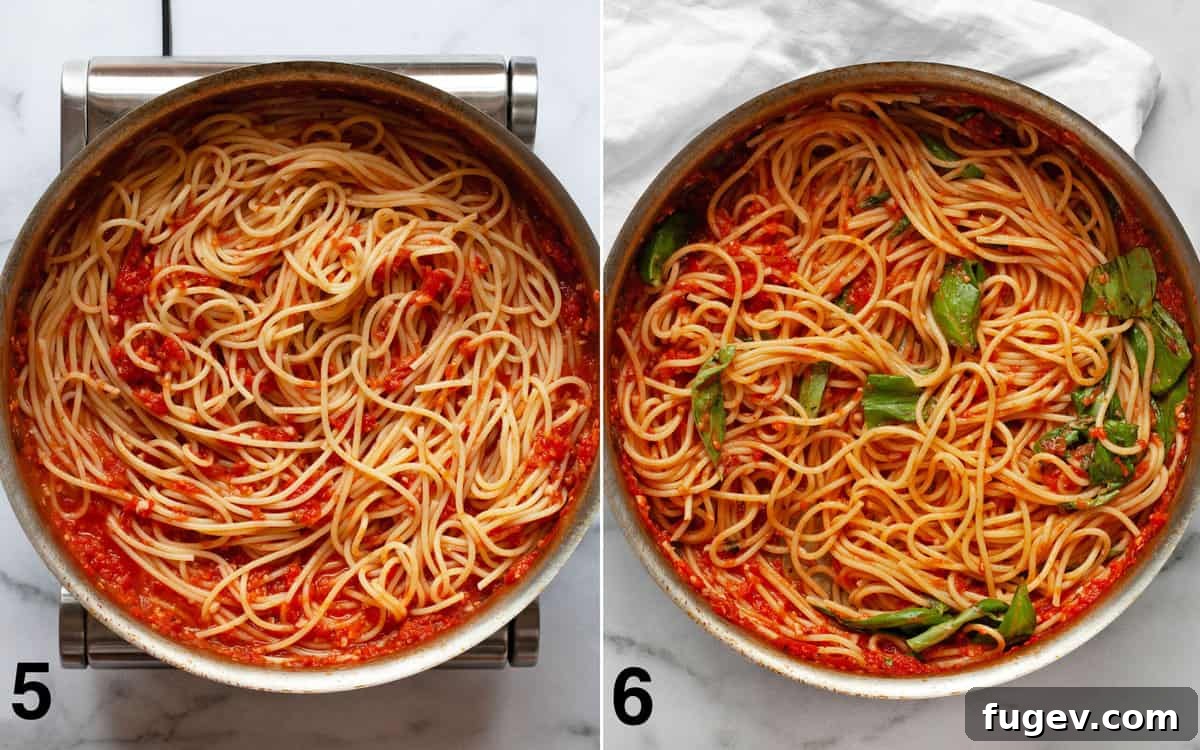
5. Combine Pasta and Sauce: With the tomato sauce still over medium heat, add the cooked, drained pasta directly into the skillet. Pour in about half of the reserved pasta cooking water. Stir vigorously, tossing the pasta with the sauce for 1-2 minutes. The starch from the pasta water will help create a silky emulsion, allowing the sauce to beautifully coat every strand of pasta, enhancing both texture and flavor. Add more pasta water if the sauce seems too thick.
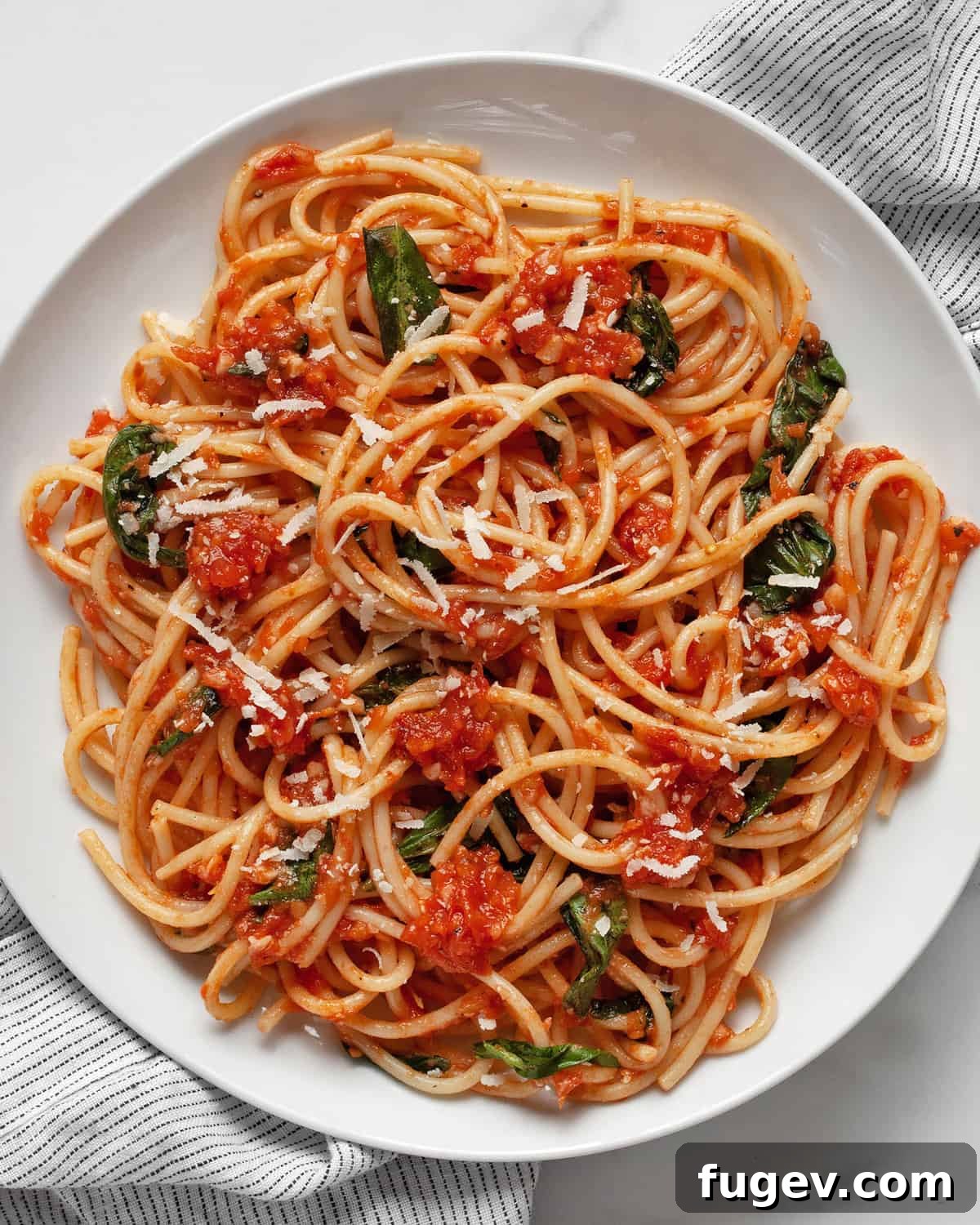
6. Finish with Freshness: Remove the skillet from the heat. Gently fold in the fresh basil leaves and the grated Parmesan cheese. The residual heat will slightly wilt the basil, releasing its aroma without overcooking it, and the Parmesan will melt into the sauce, adding a creamy, savory finish. Serve the pasta immediately in individual bowls or a large serving dish, garnishing with extra grated Parmesan and a few fresh basil leaves for an inviting presentation.
Serving Suggestions
This vibrant Tomato Basil Pasta is a complete meal on its own, but it also pairs wonderfully with a variety of side dishes to create a more elaborate dinner. Consider serving it alongside a crisp green salad, such as an Arugula Salad with Lemon Vinaigrette, a Classic House Salad, or a hearty Italian Chopped Salad. For a complementary vegetable side, try Parmesan Roasted Zucchini. Don’t forget a rustic piece of crusty bread or garlic bread, perfect for soaking up every last drop of the delicious fresh tomato sauce.
Make-Ahead Tips, Leftovers & Storage
Planning ahead and handling leftovers properly can extend the enjoyment of your Tomato Basil Pasta. Here are some detailed tips:
- Storing Leftover Pasta: If you find yourself with leftover pasta already mixed with the sauce, store it in an airtight container in the refrigerator for up to 3 days. To reheat, gently warm in the microwave or in a skillet over medium-low heat on the stove, adding a splash of water or vegetable broth if the pasta seems dry.
- Optimizing Leftovers for Best Texture: For the best leftover experience, especially if you anticipate having extra, it’s advisable to only cook the amount of pasta you plan to eat in a single meal. Spoon out the desired portion of sauce before adding pasta, and reduce the amount of cooking water you stir in with the pasta for that specific serving. This prevents the pasta from becoming overly soft or absorbing too much liquid during storage.
- Storing the Sauce Separately: The tomato sauce (without the pasta) is incredibly freezer-friendly. It can be stored in an airtight container in the fridge for up to 3 days or frozen for up to 1 month. Always allow the sauce to cool completely to room temperature before refrigerating or freezing to ensure food safety and quality.
- Freezing for Convenience: To make future meal prep even easier, portion out the sauce into individual or meal-sized containers before freezing. This way, you can thaw only the amount you need, avoiding the hassle of defrosting a large batch.
- Thawing Frozen Sauce: To thaw frozen sauce, transfer it from the freezer to the refrigerator overnight. For a quicker thaw, let it sit out at room temperature for an hour or two to partially melt and soften. Then, warm the sauce in a pan over low to medium heat, stirring frequently, until it is thoroughly heated through and smooth.
Expert Recipe Tips for Perfect Pasta
Achieving the best possible Tomato Basil Pasta involves paying attention to a few key details. Here are some expert tips to ensure your dish is consistently delicious:
- Select Truly Ripe Tomatoes: The foundation of this sauce is fresh tomatoes, so their quality directly impacts the final taste. Always choose tomatoes that are firm, heavy for their size, and have a rich, vibrant color. They should also emit a sweet, earthy aroma. While some minor blemishes are acceptable, avoid using underripe or flavorless tomatoes, as they will result in a bland sauce that lacks the natural sweetness and acidity crucial to this dish.
- Cook Pasta Al Dente: The texture of the pasta is paramount. Cook your spaghetti, linguine, or other chosen noodles until they are just al dente, which means “to the tooth.” This signifies that the pasta is cooked through but still has a slight firmness and resistance when bitten. Overcooked, mushy pasta will detract from the overall enjoyment of the dish. Remember that the pasta will continue to cook slightly when combined with the hot sauce, so a true al dente is essential.
- Taste and Adjust Seasonings: Before serving, always taste your pasta dish. This is your opportunity to fine-tune the flavors. The natural sweetness and acidity of tomatoes can vary, so you might need to add a little more salt to enhance their flavor or a pinch more black pepper for a touch of warmth. It’s also a great practice to taste the sauce on its own before adding the pasta; this allows you to adjust the seasonings perfectly for the base of your dish.
- Don’t Skip the Pasta Water: The reserved pasta cooking water is a crucial ingredient. Its starch content helps emulsify the sauce, creating a glossy, rich texture that clings beautifully to the noodles. It also helps to bind the sauce to the pasta, ensuring every bite is flavorful. Don’t be afraid to add a little extra if your sauce seems too thick.
- Fresh Herbs Make a Difference: While dried basil has its place, for a dish as simple and fresh as this, fresh basil is irreplaceable. Its vibrant, aromatic flavor is a core component. Add it at the very end, off the heat, to preserve its delicate notes and prevent it from becoming dull or discolored.
FAQs About Tomato Basil Pasta
The amount of red pepper flakes specified in this recipe is intended to provide a very subtle warmth and a gentle “kick” rather than intense spiciness. It’s meant to enhance the flavor profile without overwhelming it. If you are particularly sensitive to heat, you can certainly reduce the amount of red pepper flakes or omit them entirely to suit your preference.
When it comes to this tomato basil pasta, fresh basil truly provides a unique and essential flavor that is difficult to replicate. No other fresh herb has the same distinct sweet, peppery, and slightly anise-like notes. While not a direct substitute, if fresh basil is unavailable, you could try stirring in a few spoonfuls of high-quality pesto at the end for a similar flavor profile. However, dried basil is not recommended as a substitute for fresh basil in this recipe, as its flavor is much weaker and less vibrant.
For the best results with fresh basil in a tomato sauce, it is generally recommended to add the basil leaves at the very end of the cooking process, after the sauce has finished simmering and the pasta is ready to be combined. The residual heat from the pasta and sauce will gently wilt the basil leaves, allowing them to release their aromatic oils and fresh flavor without overcooking or turning brown. Cooking basil for too long can diminish its vibrant taste and color.
While this recipe specifically celebrates the flavor of fresh, ripe tomatoes prepared with a grater, you can use high-quality canned crushed tomatoes as a substitute if fresh tomatoes are not in season or unavailable. Opt for San Marzano crushed tomatoes for the best flavor. However, be aware that the flavor profile will be different, leaning towards a more traditional cooked tomato sauce rather than the bright, raw-like freshness achieved with the grating method.
If your sauce appears too thin after simmering, continue to cook it for a few more minutes, uncovered, over medium-low heat to allow more liquid to evaporate and the sauce to reduce. If it’s too thick, especially after adding the pasta, gradually stir in some of the reserved pasta cooking water, a tablespoon at a time, until it reaches your desired consistency. The starchy pasta water will help loosen the sauce while keeping it cohesive.
More Fresh Tomato Recipes to Try
If you love the taste of fresh tomatoes, explore these other delicious recipes:
- Burst Tomato Pasta
- 5-Ingredient Cherry Tomato Sauce
- Roasted Tomato Zucchini Orzo
- Sheet Pan Cherry Tomato Gnocchi
- Cherry Tomato Eggplant Pasta
- Roasted Tomato Pesto Pasta Salad
- Rigatoni Tomato Pasta
- Baked Gnocchi with Mushrooms & Spinach
- Roasted Tomato Orecchiette
This pasta recipe is also a highlight in our comprehensive guide to easy pasta recipes for every season, featuring delightful vegetarian ideas suitable for spring, summer, fall, and winter.
Tomato Basil Pasta
Paige Adams
5
15
20
4
Pin
Ingredients
- 2 pounds medium to large ripe tomatoes
- 2 tablespoons olive oil
- 5 garlic cloves minced
- 1/4 teaspoon red pepper flakes
- 1/2 teaspoon kosher salt
- 1/4 teaspoon black pepper
- 1 tablespoon balsamic vinegar
- 8 ounces spaghetti, linguine, fettuccine or bucatini
- 1 cup basil leaves larger ones torn
- 1/4 cup grated Parmesan plus more for serving
Save this recipe
Get it sent to your inbox plus new recipes every week.
Instructions
-
Slice the bottom end off each of the tomatoes. Place a box grater over a bowl. Grate the tomatoes, dragging the cut side down the large holes of the grater. Discard the skins once you have removed the flesh.
-
Heat olive oil in a large skillet or sauté pan over medium-high heat. Sauté the garlic, red pepper flakes, salt, and pepper until they become fragrant, about 30 seconds to 1 minute.
-
Pour in the tomatoes and balsamic vinegar. Simmer the sauce for 12-15 minutes until it thickens.
-
Cook the pasta in a large pot of salted boiling water according to package instructions until just al dente. Drain, reserving 1/2 cup pasta cooking water. (You can make the pasta while the sauce is simmering).
-
With the sauce over medium heat, add the pasta and the reserved cooking water. Stir the spaghetti and sauce together, giving it 1-2 minutes to simmer and for the pasta to be fully coated in the sauce.
-
Remove from the heat and stir in the basil and Parmesan.
-
Divide into a serving dish or onto plates and garnish with more Parmesan.
Video
Notes
Store leftovers in an airtight container in the refrigerator for up to 3 days. Warm them in the microwave or in a skillet over medium heat on the stove. Make sure to let them cool to room temperature before storing.
If you are planning to have leftovers, it’s best to only cook the pasta you are going to eat in a single meal. Spoon out some of the sauce and reduce the amount of cooking water you stir into the pasta depending on the amount you’re going to serve.
The tomato sauce (without the pasta) can be stored in the fridge for up to 3 days or frozen for up to 1 month. To thaw it, let it sit out at room temperature to partially melt and soften. Then warm it over low to medium heat on the stove, stirring frequently.
Nutrition
Nutrition information is automatically calculated, so should only be used as an approximation.
Additional Info
Pasta & Noodles
Italian
Did you make this recipe?
Mention @lastingredient on Instagram and tag it #lastingredient!