
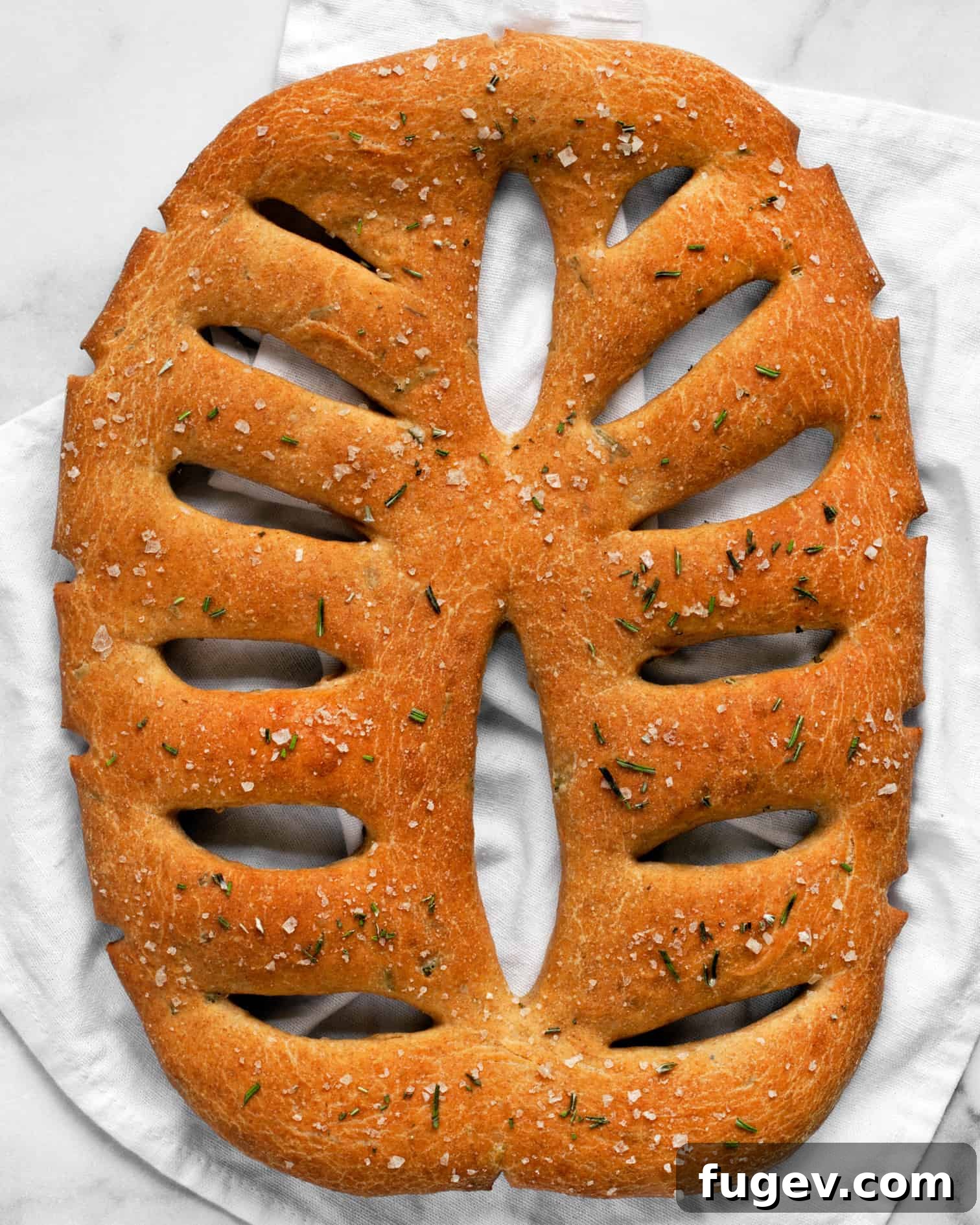
Rosemary Fougasse: Bake Your Own Elegant French Flatbread at Home
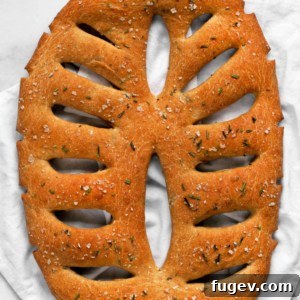
Imagine the aroma of freshly baked bread filling your home, its crust golden and crisp, its interior soft and chewy, infused with aromatic rosemary and rich olive oil. This leaf-shaped loaf of rosemary fougasse not only looks incredibly sophisticated but is surprisingly simple to bake. It’s the ultimate tear-and-share bread, perfect for impressing your guests or simply enjoying with your family.
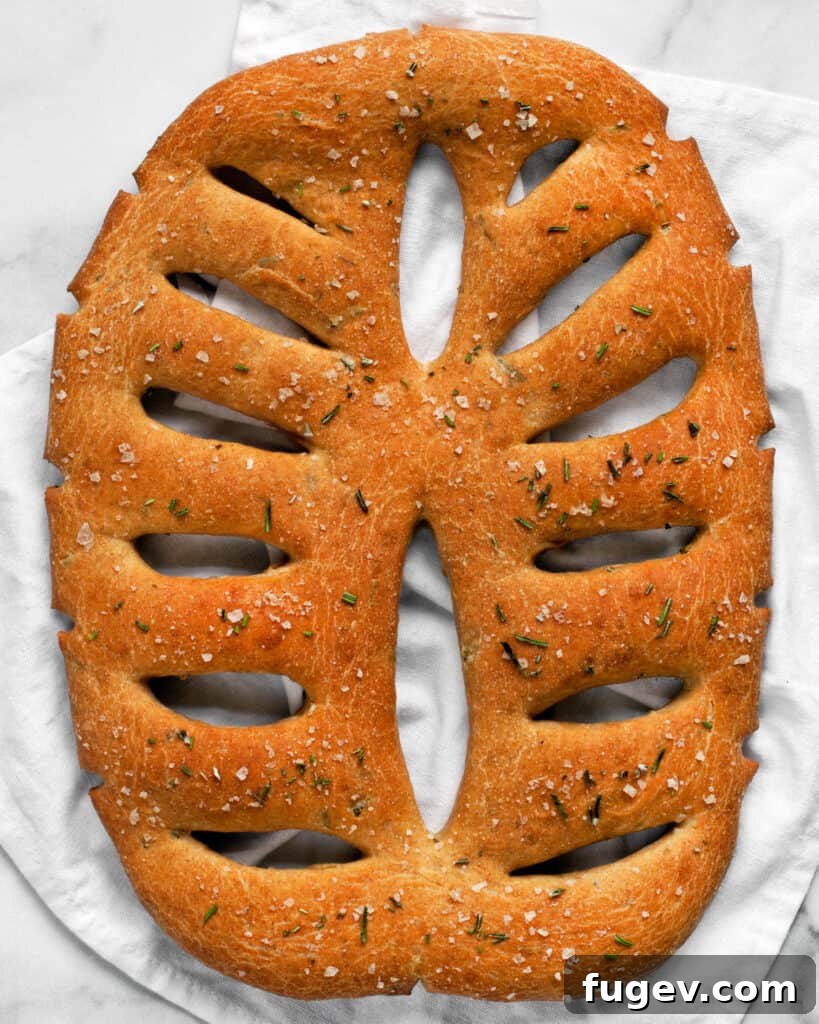
Table of Contents
- The Allure of Homemade Bread
- What is Fougasse? A Taste of Provence
- The Essential Ingredients for Fougasse
- Creative Flavor Variations for Your Fougasse
- Mastering the Fougasse Dough
- Shaping and Baking Your Fougasse to Perfection
- Serving Your Exquisite Fougasse
- Pro Tips for Fougasse Success
- Common Fougasse Baking Issues & How to Fix Them
- Explore More Bread Recipes
- Rosemary Fougasse Recipe Card
The Allure of Homemade Bread
There’s a special kind of magic that happens when you bake bread at home. While artisanal loaves from the farmer’s market are undeniably delightful, there’s an immense satisfaction in creating a beautiful, flavorful bread from scratch in your own kitchen. This rosemary fougasse recipe offers that very experience, blending rustic charm with elegant presentation.
Crafting fougasse is a surprisingly straightforward process, often compared to making pizza dough due to its simplicity. The shaping, while visually impressive, is more about embracing a natural, organic form than strict precision. This forgiving nature makes it an ideal project for both novice bakers and seasoned pros looking for a rewarding bake. The end result is a rustic, flavorful flatbread that exudes warmth and hospitality, perfect for any occasion, whether sweet or savory.
What is Fougasse? A Taste of Provence
If you’re not yet acquainted with this delightful flatbread, fougasse originates from Provence, a sun-drenched region in the south of France. Often described as the French cousin to Italy’s beloved focaccia, fougasse shares common Mediterranean roots with its ingredients like quality flour, fragrant olive oil, and fresh herbs. Historically, fougasse was baked in the embers of a wood-fired oven and used as a way to test the oven’s temperature before baking larger loaves. Its signature slashes allowed for quick baking and easy tearing.
While both fougasse and focaccia are flatbreads, their primary distinction lies in their shape and baking method. Fougasse is typically shaped into an intricate leaf or ladder pattern and baked directly on a sheet pan, resulting in a chewier texture with more crispy edges. Focaccia, on the other hand, is usually baked nestled within a pan, its dough extending to the edges, creating a softer, more pillowy interior. The distinct cuts in fougasse are not just for aesthetics; they increase the surface area, allowing for a delightful crispness and making it incredibly easy to tear and share among friends and family.
The Essential Ingredients for Fougasse
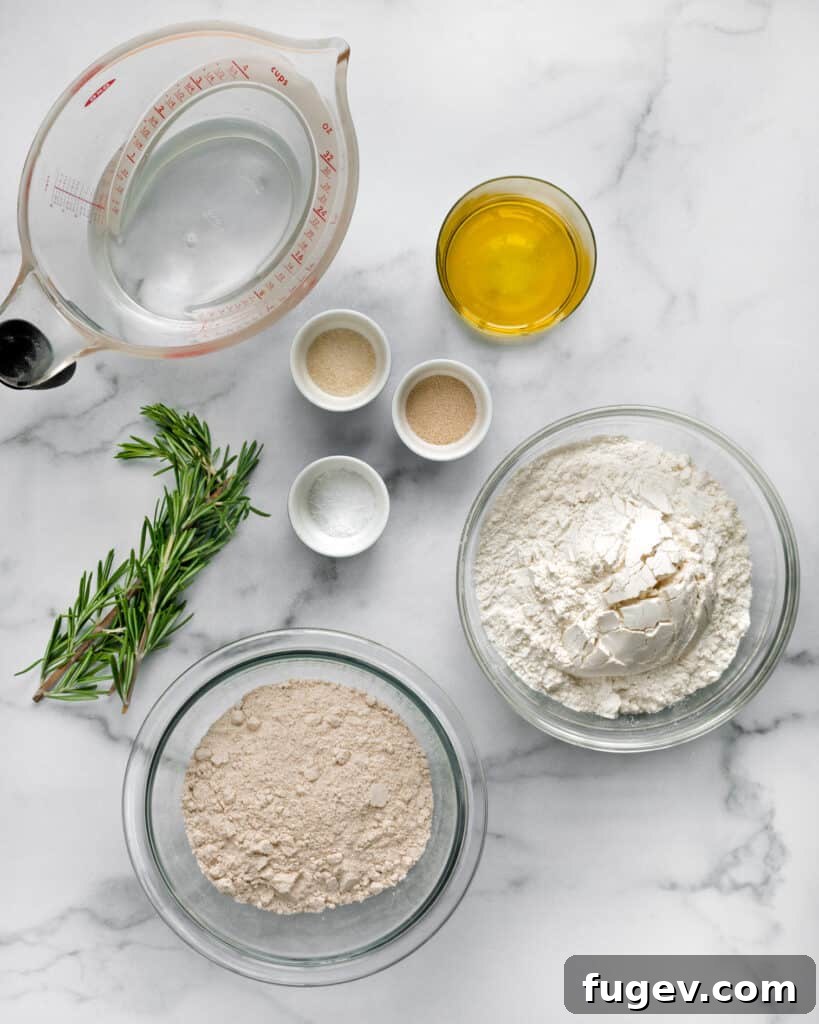
To create two generous loaves of this wonderful bread, gather these key components:
- Warm Water: The temperature of your water is crucial for activating the yeast. Aim for lukewarm, around 105-115°F (40-46°C), similar to bathwater. Water that’s too hot will kill the yeast, while water that’s too cold won’t activate it effectively, hindering your dough’s rise.
- Active Dry Yeast: This recipe relies on active dry yeast, which needs to be dissolved and activated in warm water with a touch of sugar. You’ll know it’s active when it becomes foamy and fragrant after a few minutes.
- Granulated Sugar: A small amount of sugar isn’t added for sweetness but acts as food for the yeast, giving it a quick boost to encourage robust rising and a tender crumb.
- Olive Oil: High-quality olive oil is fundamental to fougasse, lending richness and flavor to the dough itself. An extra drizzle before baking also contributes to a beautiful golden crust and enhanced aroma.
- Bread Flour: The majority of the flour should be bread flour, which has a higher protein content than all-purpose flour. This higher protein content develops more gluten, giving the fougasse its characteristic chewy texture and structural integrity.
- Whole Wheat Flour: Incorporating whole wheat flour adds a delightful nutty depth of flavor and increases the bread’s nutritional value with whole grains. It also contributes to a more complex texture.
- Kosher Salt: Essential for seasoning the dough, kosher salt enhances all the flavors in the bread. It’s best mixed in with the flours and rosemary to ensure even distribution.
- Fresh Rosemary: For the most vibrant and authentic flavor, fresh rosemary is highly recommended over dried. Its pungent, piney notes are a hallmark of this classic bread.
- Flaky Sea Salt: A final sprinkle of flaky sea salt (like Maldon) just before baking adds a beautiful sparkle, a delightful textural crunch, and an extra burst of savory flavor to the finished fougasse.
Creative Flavor Variations for Your Fougasse
While fresh rosemary is a classic and wonderful choice, fougasse is incredibly versatile. Don’t hesitate to experiment with these delicious flavor combinations to customize your bread:
- Parmesan Cheese: For a cheesy twist, sprinkle finely grated Parmesan cheese over the fougasse during the last few minutes of baking. The cheese will melt and slightly crisp, adding a savory, umami-rich crust.
- Olives: Knead 1/3 to 1/2 cup of roughly chopped pitted Kalamata or green olives into the dough during the kneading stage. The briny olives provide a wonderful counterpoint to the rich bread.
- Roasted Tomatoes: Incorporate 1/3 to 1/2 cup of roughly chopped, marinated roasted tomatoes (the kind often found jarred for antipasti) into the dough. Be sure to pat them dry with a paper towel first to remove excess oil and moisture, which could affect the dough’s consistency.
- Garlic and Herbs: Beyond rosemary, consider adding minced garlic, thyme, or oregano to your dough. A blend of “Herbes de Provence” can transport you straight to the south of France.
- Sun-Dried Tomato & Basil: Chop sun-dried tomatoes (oil-packed, drained and patted dry) and fresh basil, then knead them into the dough for a taste of Italian sunshine.
- Everything Seasoning: While not traditional, a generous sprinkle of “Everything Bagel” seasoning before baking adds a fantastic blend of garlic, onion, sesame, and poppy seeds, delivering an undeniably delicious crunch and flavor profile.
- Caramelized Onion & Gruyère: For a richer, more indulgent fougasse, fold in some beautifully caramelized onions and grated Gruyère cheese into the dough. This is perfect as a standalone snack or appetizer.
Mastering the Fougasse Dough
Creating the perfect fougasse dough is a foundational step that promises a light, airy, and flavorful bread. Follow these detailed steps to ensure your dough rises beautifully and develops the ideal texture:
- Activate the Yeast: In a small bowl, combine the warm water, active dry yeast, sugar, and 1 tablespoon of olive oil. Stir gently and let the mixture sit for approximately 5-10 minutes. The yeast should become visibly foamy and bloom on the surface, indicating it is active and ready to work. If it doesn’t foam, your yeast may be old or the water temperature was incorrect.
- Combine Dry Ingredients: In a large mixing bowl, thoroughly whisk together the bread flour, whole wheat flour, kosher salt, and 1 tablespoon of chopped fresh rosemary. Ensuring these dry ingredients are well combined prevents pockets of unmixed salt or herb.
- Form a Shaggy Dough: Pour the activated wet ingredients into the dry mixture. Using a sturdy spoon or your hands, mix until all the flour is hydrated and a “shaggy” dough forms. It will look rough and sticky at this stage, but that’s perfectly normal.
- Knead to Perfection: Turn the shaggy dough out onto a lightly floured work surface. Knead the dough vigorously for about 10 minutes. During this process, the dough will transform from sticky and rough to smooth, elastic, and supple. You can test for proper kneading by performing the “windowpane test”: gently stretch a small piece of dough; if it stretches thin enough to be translucent without tearing, it’s ready.
- First Rise (Bulk Fermentation): Gently shape the kneaded dough into a smooth ball. Lightly oil a clean bowl with olive oil, place the dough in it, and turn it once to coat all sides. Cover the bowl tightly with plastic wrap or a clean kitchen towel. Let the dough rise in a warm, draft-free place until it has doubled in size, which typically takes about 2 hours, depending on your room temperature and humidity. This first rise develops much of the bread’s flavor.
Shaping and Baking Your Fougasse to Perfection
The distinctive leaf shape is what truly sets fougasse apart. It’s a fun and artistic step that makes this bread so appealing. Baking it at the right temperature ensures a crisp crust and a tender interior.
- Divide the Dough: Once your dough has completed its first rise and doubled in volume, gently punch it down to release the air. Transfer the dough to a lightly floured surface and divide it in half.
- Roll into Ovals: Take one half of the dough and roll it into an oval shape, aiming for approximately 12 inches long and 8 inches at its widest point. Repeat with the second piece of dough.
- Prepare Baking Sheets: Carefully transfer each oval of dough onto a separate baking sheet lined with parchment paper. This prevents sticking and makes for easy cleanup.
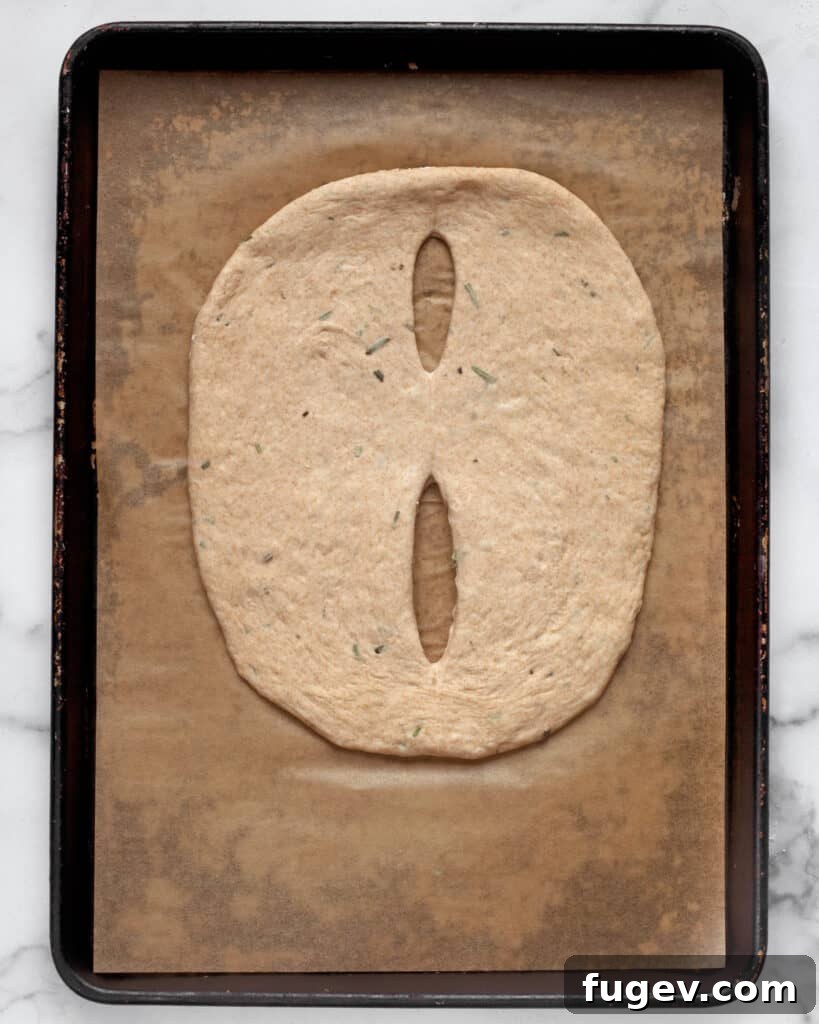
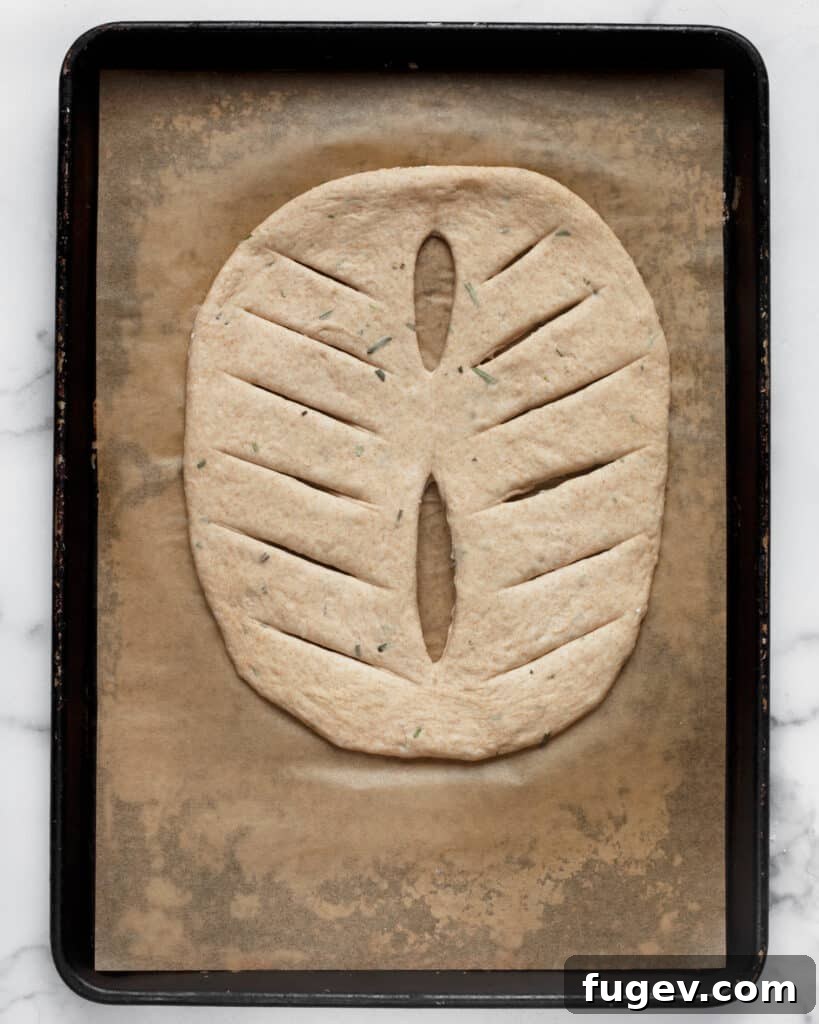
- Create Center Slashes: Using a pizza cutter or a very sharp knife, make two parallel slashes down the length of the center of each oval. Be careful not to cut all the way through the dough, leaving about an inch at the top and bottom connected. Gently pull open these slits with your fingers to widen them.
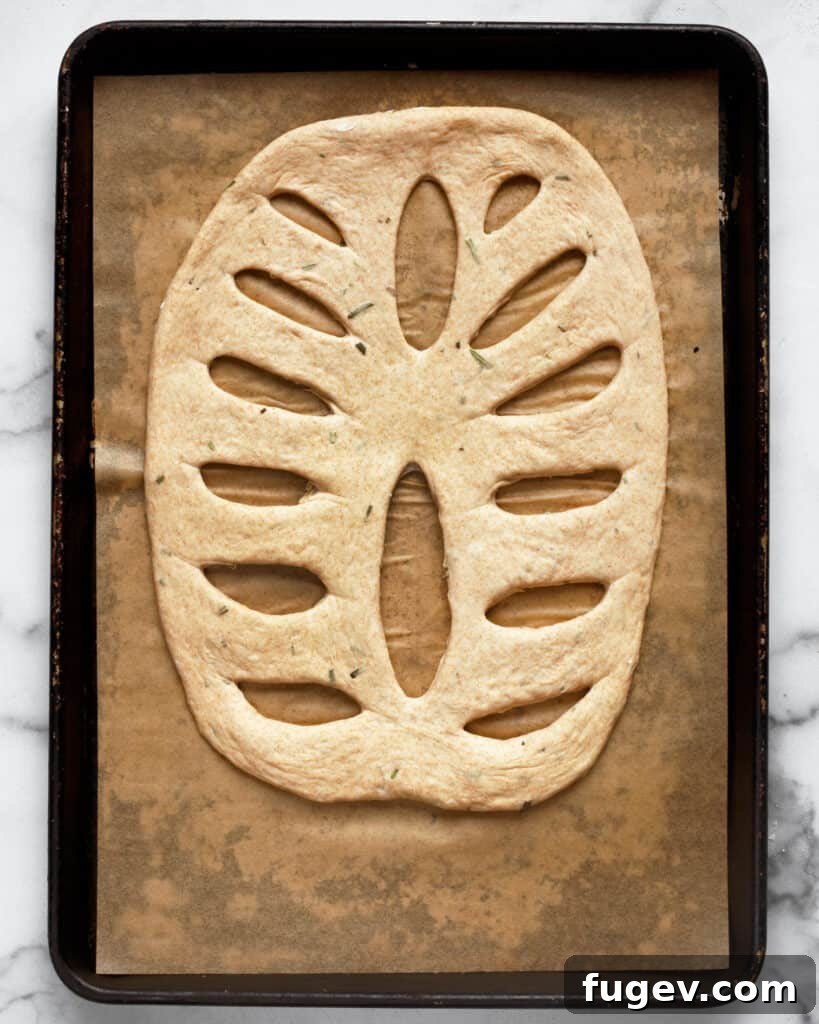
- Diagonal Slashes: Next, make shorter diagonal slashes on both sides of the center cuts, extending from the middle slashes towards the edges of the oval. Again, gently pull these open to create the leaf-like pattern.
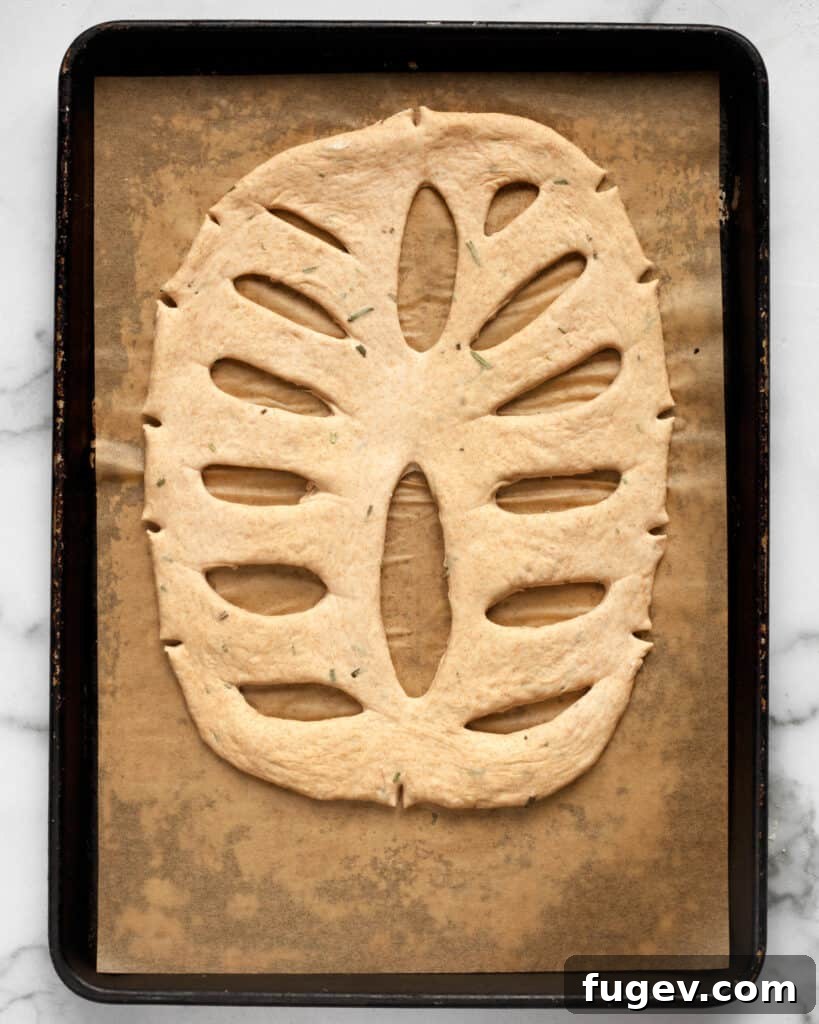
- Outer Edge Cuts: For added texture and visual appeal, make small, short slashes around the outside edge of the ovals, between the diagonal cuts. This further enhances the rustic, organic look.
- Second Rise (Proofing): Cover the shaped dough loosely with plastic wrap or a clean kitchen towel. Let it rise and puff up for another 30 minutes in a warm place. This short second rise allows the gluten to relax and the dough to become slightly airy.
- Preheat Oven: While the dough is proofing for its second rise, preheat your oven to 450 degrees F (232 degrees C). A hot oven is key to achieving a beautifully crisp crust.
- Brush and Season: Just before baking, gently brush the surface of each fougasse loaf with additional olive oil. This adds flavor and helps create a golden crust. Then, generously sprinkle with flaky sea salt.
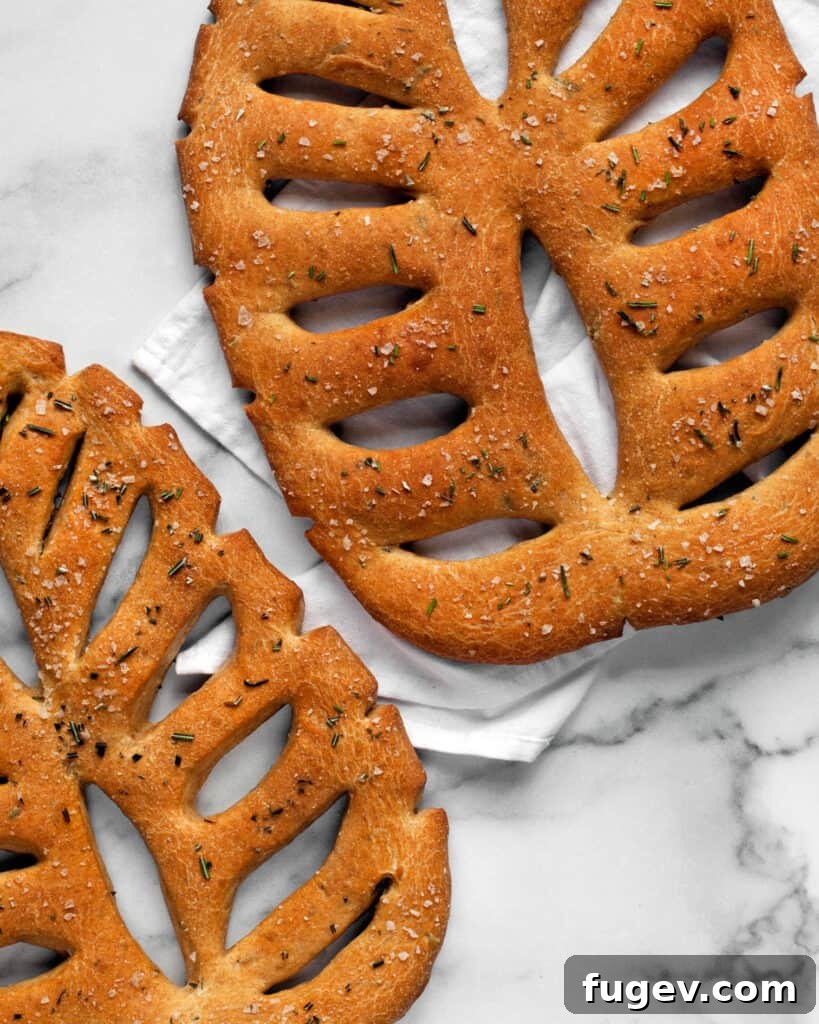
- Bake to Golden Perfection: Bake the fougasse for 15-20 minutes, or until it turns a beautiful golden brown and sounds hollow when tapped on the bottom.
- Final Rosemary Touch: In the last few minutes of baking, sprinkle the remaining chopped fresh rosemary over the loaves. This helps to release its vibrant aroma and prevents it from burning during the full bake time.
Serving Your Exquisite Fougasse
The beauty of fougasse lies not only in its taste but also in its presentation and effortless shareability. Its distinctive shape makes it inherently inviting, as small hunks are easily torn off for dipping or enjoying. Here are some suggestions for serving your freshly baked fougasse:
- Simple Dipping: Serve it warm with a small bowl of high-quality extra virgin olive oil for dipping. A sprinkle of freshly ground black pepper or a pinch of red pepper flakes in the oil adds a nice kick.
- Appetizer Star: Present fougasse as a stunning appetizer. It pairs wonderfully with a charcuterie board, a selection of cheeses, or a vibrant antipasti platter.
- Accompaniment to Meals: Elevate your main course by serving fougasse instead of a conventional breadbasket. It’s a magnificent side for soups, stews, grilled meats, or pasta dishes, adding a touch of rustic elegance to any meal.
- Sandwich Base: Slice larger pieces horizontally and fill them with your favorite sandwich ingredients for a unique and flavorful lunch.
- With Salads: Break off pieces to accompany a fresh, crisp salad, allowing the bread to soak up any delicious dressing.
Whether it’s the centerpiece of a gathering or a humble side dish, fougasse brings a touch of Provençal charm to your table.
Pro Tips for Fougasse Success
- Measure Accurately: Especially with flour, use a kitchen scale for precise measurements or the “spoon and level” method rather than scooping directly from the bag, which can lead to too much flour.
- Warm Environment for Rising: Dough loves warmth! If your kitchen is cool, place the covered bowl in a slightly warm (but turned off) oven, or near a sunny window. A warm environment helps the yeast activate and the dough rise effectively.
- Don’t Over-Flour Your Work Surface: While some flour is needed to prevent sticking during kneading and shaping, too much can make the dough dry and tough. Use just enough to keep it manageable.
- Trust Your Senses: The best way to know if your dough is properly kneaded is by feel – it should be smooth, elastic, and springy. For rising, visual cues (doubled in size) are more reliable than strict timing, as environmental factors vary.
- Handle Gently After First Rise: After the first rise, deflate the dough gently. Excessive punching or rough handling can knock out too much air and result in a denser bread.
- Hot Oven for Crispness: Ensure your oven is fully preheated to the specified temperature. A hot oven creates a burst of steam when the dough goes in, leading to a beautiful oven spring and a crisp crust.
- Don’t Skimp on Olive Oil: Both in the dough and brushed on top, good quality olive oil significantly contributes to the flavor and texture of fougasse.
Common Fougasse Baking Issues & How to Fix Them
- Dough Didn’t Rise:
- Cause: Yeast wasn’t active (water too hot/cold, old yeast) or environment was too cold.
- Solution: Ensure water is between 105-115°F (40-46°C). Test yeast in warm water with sugar first; if it doesn’t foam, get new yeast. Find a warmer spot for rising.
- Bread is Too Dense/Hard:
- Cause: Too much flour, under-kneading, or over-kneading (rarely).
- Solution: Measure flour accurately (by weight if possible). Knead until elastic but not overly stiff. Ensure adequate rising time.
- Crust is Not Crisp:
- Cause: Oven not hot enough, or not enough olive oil brushed on top.
- Solution: Fully preheat oven. Brush generously with olive oil before baking. Consider a baking stone or steel if you have one, preheated in the oven, for extra bottom crust crispness.
- Fougasse Sticks to the Pan:
- Cause: Pan not adequately lined or greased.
- Solution: Always use parchment paper when baking fougasse to prevent sticking.
- Rosemary Burns on Top:
- Cause: Added too early in the baking process.
- Solution: Add the final sprinkle of fresh rosemary during the last few minutes of baking to preserve its flavor and prevent burning.
Explore More Bread Recipes
If you’ve enjoyed baking this fougasse, you might love these other delightful bread recipes:
- Salt & Pepper Biscuits
- Pear Blue Cheese Onion Focaccia
- Pull-Apart Bread
- Rosemary Olive Knots
- Whole Wheat Focaccia
- Whole Wheat Bread
Rosemary Fougasse
By Paige Adams
Print Recipe
This leaf-shaped loaf of rosemary fougasse only looks fancy. It’s easy to bake and is the perfect tear and share bread to serve your guests.
Prep Time: 30 mins
Cook Time: 20 mins
Rising Time: 2 hrs 30 mins
Total Time: 3 hrs 20 mins
Servings: 16
Ingredients
- 1-1/3 cups warm water
- 1 teaspoon active dry yeast
- 1 teaspoon granulated sugar
- 1 tablespoon olive oil plus more for oiling bowl and brushing bread
- 2 cups bread flour plus more for work surface
- 1 cup whole wheat flour
- 1 teaspoon kosher salt
- 2 tablespoons chopped fresh rosemary
- 2 teaspoons flaky sea salt
Instructions
- In a small bowl, combine the water, yeast, sugar, and 1 tablespoon olive oil. Let stand until foamy, about 5 minutes. In a large bowl, combine the bread flour, whole wheat flour, kosher salt, and 1 tablespoon chopped fresh rosemary. Stir in the wet ingredients until it forms a shaggy dough.
- Turn out the dough on a lightly floured work surface and knead until it is smooth and elastic, about 10 minutes.
- Shape the dough into a ball. Transfer to a bowl greased with olive oil. Cover and let rise until doubled in volume, about 2 hours.
- Divide the dough in half.
- On a work surface dusted with flour, roll out each half of the dough into an oval about 12 inches long and 8 inches at the widest point.
- Place each oval on a parchment paper-lined sheet pan. Using a pizza wheel or sharp knife, cut two parallel slits down the length of the center of the oval without splitting it in half. Gently pull them open slightly.
- Then make shorter diagonal slashes on either side of the center slits. And again, gently pull them open to enhance the leaf shape.
- Make small cuts around the outside of the oval, between the diagonal slashes, to complete the leaf pattern.
- Cover the shaped dough and let it rise and puff up for 30 minutes.
- Preheat the oven to 450 degrees F (232 degrees C).
- Brush the dough with olive oil and sprinkle with flaky sea salt.
- Bake for 15-20 minutes until golden brown. In the last few minutes of baking, sprinkle the loaves with the remaining 1 tablespoon of fresh rosemary.
Notes
This recipe makes 2 loaves of fougasse.
Nutrition
Calories: 95kcal | Carbohydrates: 17g | Protein: 3g | Fat: 2g | Saturated Fat: 0.3g | Polyunsaturated Fat: 0.3g | Monounsaturated Fat: 1g | Sodium: 438mg | Potassium: 46mg | Fiber: 1g | Sugar: 0.3g | Vitamin A: 8IU | Vitamin C: 0.1mg | Calcium: 7mg | Iron: 0.4mg
Nutrition information is automatically calculated, so it should only be used as an approximation.
Additional Info
Course: Bread
Cuisine: French
Did you make this recipe?
Mention @lastingredient on Instagram and tag it #lastingredient!