
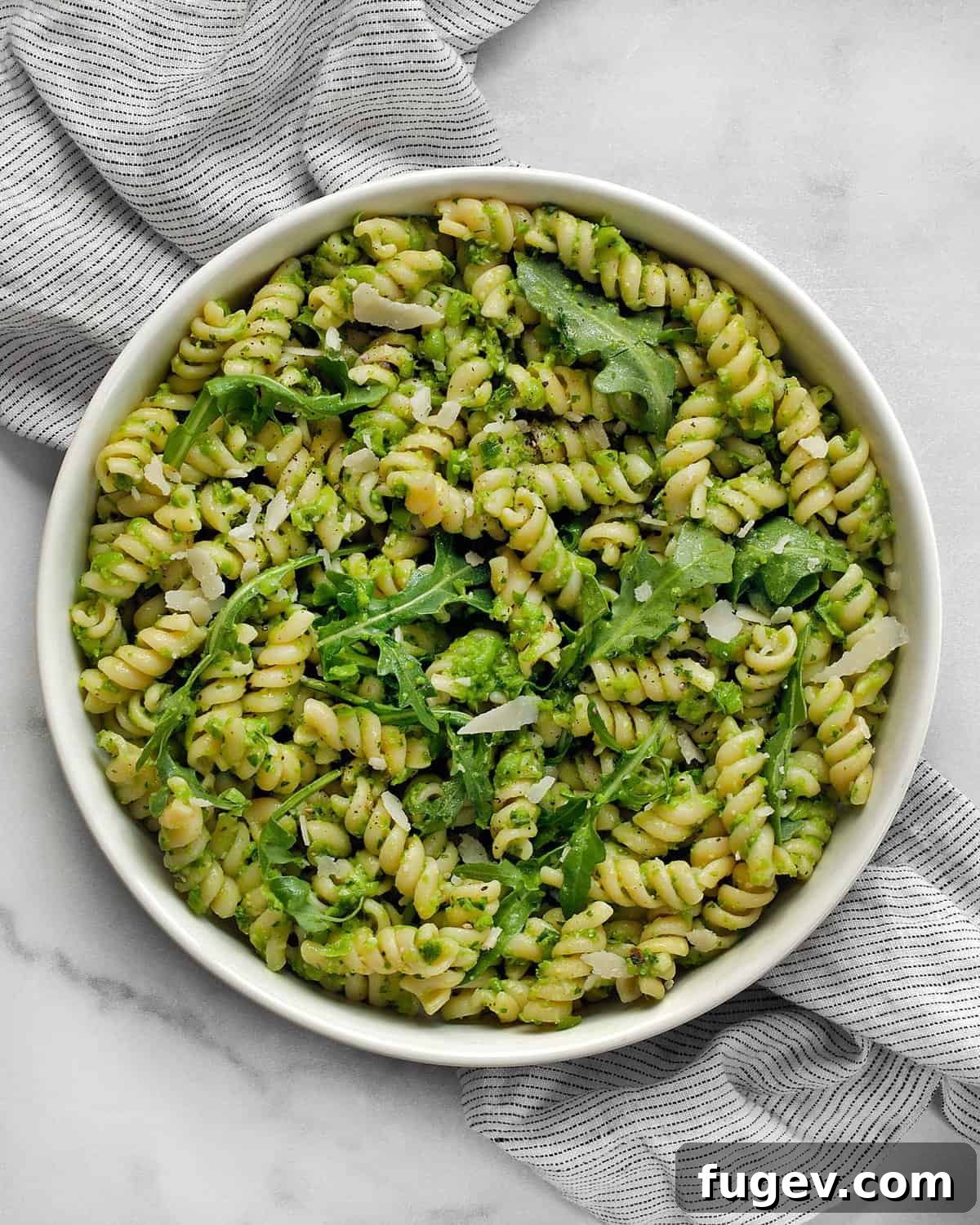
Welcome the fresh, vibrant flavors of spring with this incredibly simple yet utterly delicious Pea Pesto Pasta. Crafted from convenient frozen peas, peppery arugula, bright lemon, fragrant garlic, and savory Parmesan, this recipe delivers a burst of seasonal taste in a dish that comes together in mere minutes. It’s an ideal vegetarian meal, perfect for busy weeknights or a light, refreshing lunch, especially as the days grow longer and warmer.
Its vibrant green hue and fresh aroma will instantly transport you to a sun-drenched spring garden, even if you’re enjoying it indoors. The beauty of this recipe lies in its simplicity and the clever use of everyday ingredients to create something truly extraordinary.
Looking for more pea-inspired delights? Don’t miss this crispy gnocchi with smashed peas and arugula.
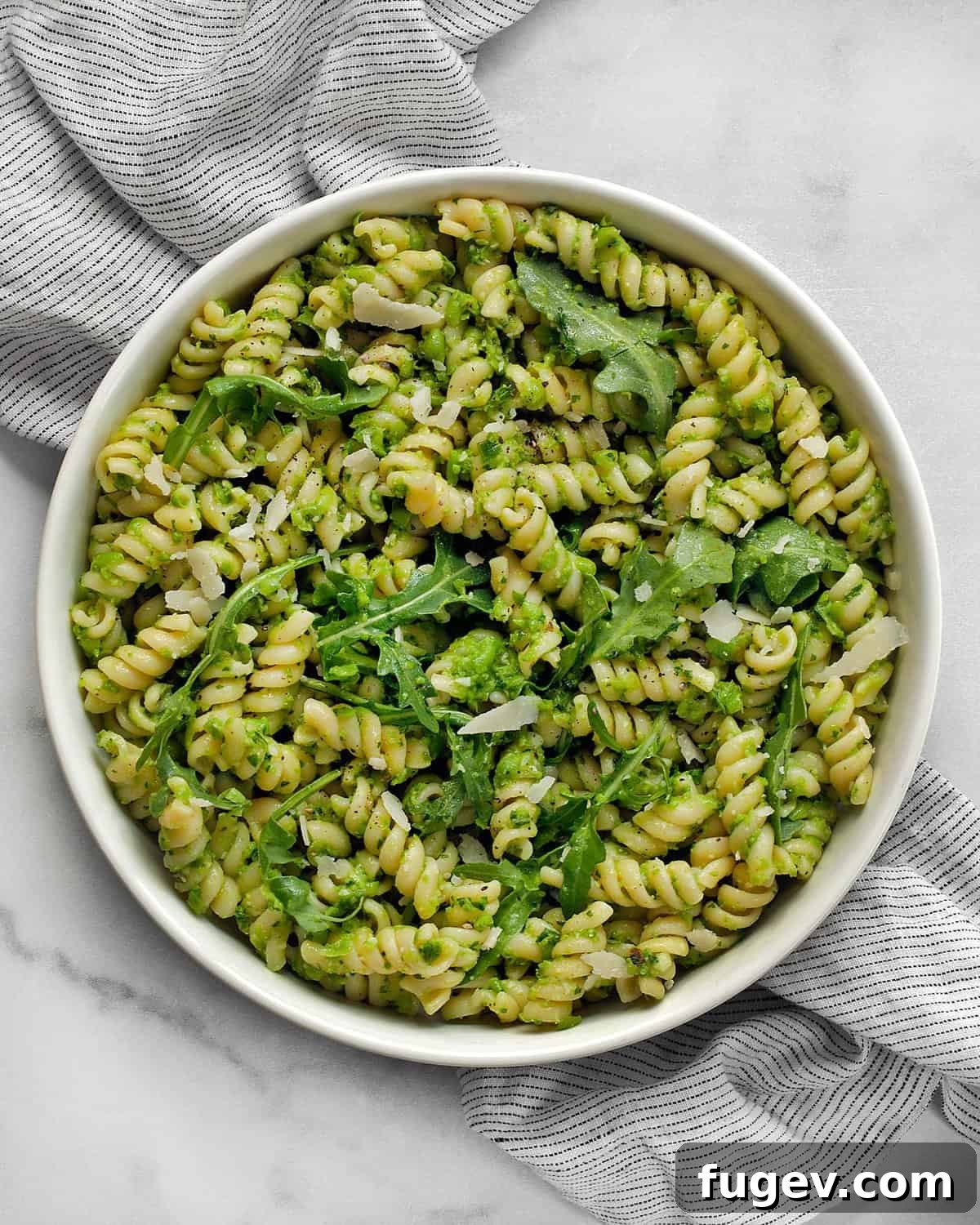
Table of Contents
- Why Choose Frozen Peas for Pesto?
- A Delightfully Nut-Free Pesto
- Essential Ingredients & Clever Substitutions
- Step-by-Step: How To Make Pea Pesto Pasta
- Serving Suggestions for Your Pea Pesto Pasta
- Storing and Enjoying Leftovers
- Creative Ways to Enjoy Pea Pesto Beyond Pasta
- More Delicious Spring Recipes
- Pea Pesto Pasta Recipe Card
After enduring the long, cold winter months filled with hearty stews and root vegetables, a collective longing for fresh, bright flavors often takes hold. While the arrival of farmer’s market season and its bounty of tender greens and vibrant produce is always a cause for celebration, there’s one particular spring gem that I paradoxically reach for from the freezer section rather than the fresh aisle. Can you guess what it is?
It’s the humble pea, of course!
You might wonder why I don’t enjoy peas all year round if they’re so readily available in the freezer. While I certainly incorporate them into dishes like stir-fries throughout the year, there’s something uniquely special about this pea pesto pasta during its natural season, typically from March through June. The anticipation of spring makes this dish taste even more refreshing and delightful.
The pesto itself is a vibrant symphony of flavors: thawed peas, pungent garlic, mild scallions, a hint of peppery arugula, sharp Parmesan cheese, bright lemon juice, rich olive oil, and a touch of salt and pepper. All these ingredients come together effortlessly in a food processor, creating a smooth, creamy sauce that clings perfectly to cooked pasta. It’s truly “easy peasy” to whip up! (I simply couldn’t resist.)
Why Choose Frozen Peas for Pesto?
When you peruse the frozen vegetable aisle, you’ll often see the term “flash-frozen” proudly displayed on bags of peas. This isn’t just a marketing gimmick; it’s a testament to superior freshness and flavor. Flash-freezing involves rapidly freezing vegetables at their absolute peak of ripeness, often within hours of being picked. This process locks in their sweet flavor, vibrant color, and vital nutrients, making them, in many cases, even better than their “fresh” counterparts that might have traveled long distances and lost some of their vitality.
Beyond their exceptional quality, frozen peas offer unbeatable convenience and are incredibly budget-friendly. They eliminate the need for shelling, a task that, while charming, can be time-consuming and messy. This makes them a fantastic, no-fuss vegetable option for quick meals.
While freshly shelled English peas, found at farmer’s markets, possess an undeniable rustic charm, their shelf life is remarkably short. They demand immediate attention and careful preparation to truly shine. While I do indulge in fresh peas at least once a season, perhaps in a delicate salad with leafy greens, fresh mint, shaved Pecorino, and a lemon dressing, for the consistency and vibrant flavor needed in this pesto, frozen peas truly reign supreme. They provide a consistent sweetness and tenderness that’s hard to beat.
To prepare frozen peas for this pesto, simply thaw them according to package instructions. You can do this by running them under cold water, letting them sit at room temperature for a bit, or even a quick blanch in boiling water if you’re in a hurry. Ensure they are well-drained before adding them to the food processor to prevent a watery pesto.
A Delightfully Nut-Free Pesto
If pesto had a superfan club, I’d undoubtedly be a founding member, perhaps tied with my mom. While I adore traditional basil pesto, I also believe in the joy of creative adaptation. This pea pesto recipe is a perfect example of bending the traditional “rules” of what constitutes pesto. You’ll notice a significant departure here: there are no nuts.
The decision to omit nuts is deliberate and offers several advantages. Firstly, I find that this particular pesto doesn’t need nuts for either taste or texture. The combination of sweet peas and peppery arugula (which replaces traditional basil) already creates a naturally thick and luscious consistency. Adding pine nuts or walnuts would only make it excessively dense, potentially overwhelming the delicate pea flavor.
Secondly, and perhaps more importantly, this makes the pesto an excellent option for those with nut allergies. In a world where food allergies are increasingly common, creating delicious, inclusive recipes is a priority. If you or someone you’re cooking for needs a nut-free option, this pea pesto is a fantastic solution, proving that you don’t need to sacrifice flavor or texture to accommodate dietary needs. Don’t feel obligated to follow traditional recipes rigidly; view them as inspiring starting points for your culinary creativity.
The nut-free aspect also contributes to a lighter, fresher mouthfeel, allowing the sweet and slightly grassy notes of the peas to truly shine through. It’s a brighter, more spring-like pesto that will surprise and delight your taste buds.
Essential Ingredients & Clever Substitutions
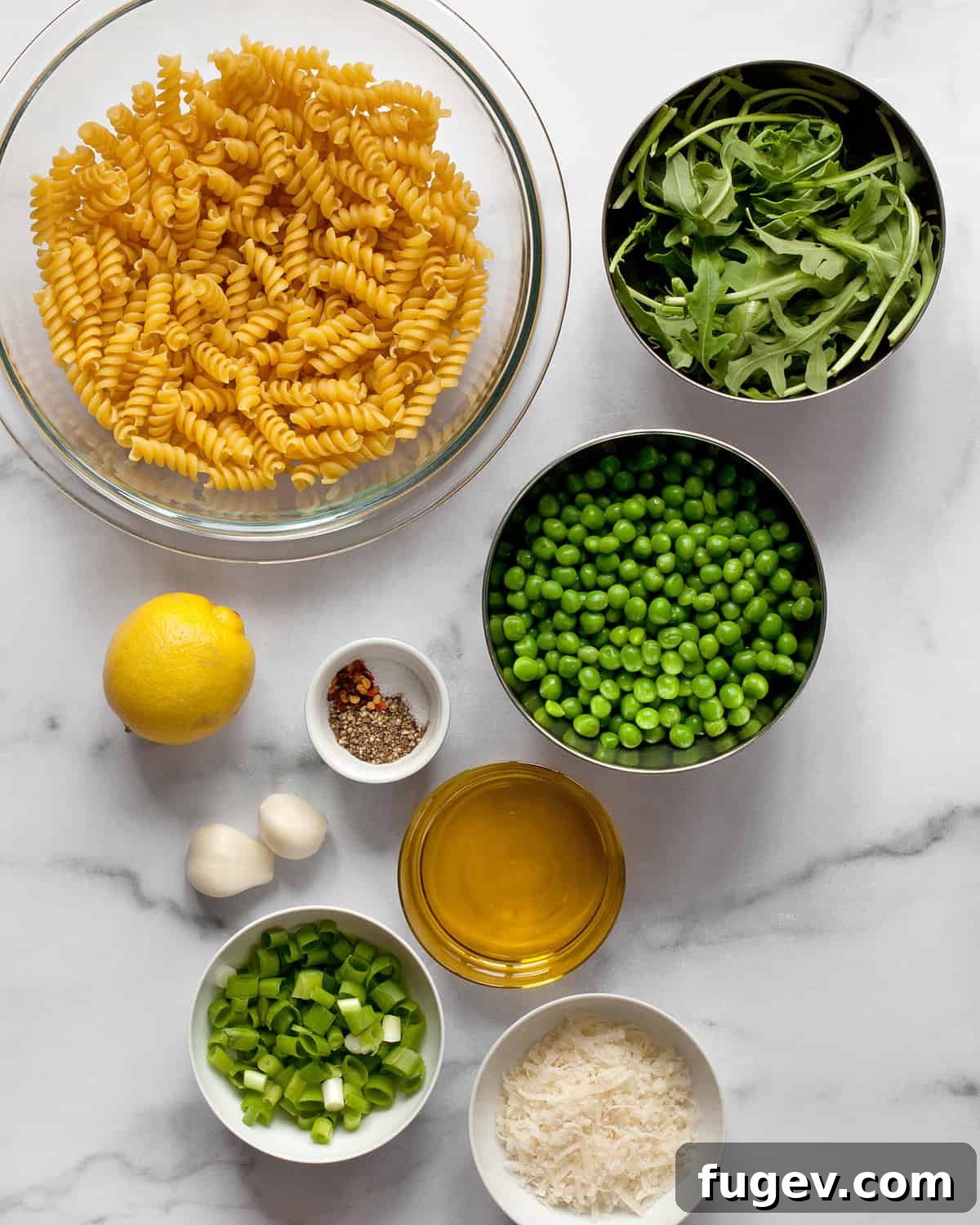
Here’s what you’ll need to create this amazing pea pesto, along with some great ideas for tailoring it to your taste:
- Frozen Peas: As discussed, these are the superstars! Opt for high-quality flash-frozen peas for the best flavor and texture. Ensure they are thawed before use. There’s no substitute for peas in a pea pesto, but for a different flavor profile, you could explore edamame or fava beans.
- Arugula: Its distinctive peppery bite beautifully complements the sweetness of the peas. It serves as an excellent alternative to basil or other fresh herbs typically found in pesto. If arugula isn’t your preference, baby spinach offers a milder, earthier note and a similar vibrant green color. Mixed spring greens or even a blend of herbs like mint and parsley could also be used for a unique twist.
- Garlic: A couple of fresh garlic cloves provide that essential aromatic foundation. Adjust the amount to your liking – more for a bolder flavor, less for a subtler hint. Roasted garlic can add a sweeter, mellower depth.
- Scallions: Also known as green onions, these add a delicate, fresh oniony flavor without being overpowering. If you don’t have scallions, a tiny pinch of finely minced red onion or chives could work, but use sparingly.
- Parmesan Cheese: Grated Parmesan adds a salty, umami depth to the pesto. It’s incorporated into the food processor and also used as a garnish for serving. For a different flavor, Pecorino Romano offers a sharper, tangier profile. To make this recipe vegan, simply omit the Parmesan or use a high-quality nutritional yeast for a cheesy flavor.
- Olive Oil: Extra-virgin olive oil is highly recommended for its rich, fruity flavor, which is crucial for a delicious pesto. Use a good quality oil as it significantly impacts the final taste. For a lighter touch, a blend with a neutral oil could be used, but the depth of EVOO is preferred.
- Lemon Juice: Freshly squeezed lemon juice brightens all the flavors and adds a zesty tang that cuts through the richness of the oil and cheese. Don’t skip this! A tiny hint of lemon zest could also elevate the aroma.
- Red Pepper Flakes: Just a pinch provides a subtle warmth and gentle heat, enhancing the overall flavor complexity. Feel free to adjust the amount to your heat preference, or omit if you prefer no spice.
- Salt & Pepper: Essential seasonings that bring out the best in the peas and arugula. Taste and adjust as needed, remembering that Parmesan also contributes saltiness.
- Pasta: The choice of pasta shape is important for optimal pesto adherence! Ridged pasta like penne, or corkscrew shapes like fusilli or rotini, are fantastic because their nooks and crannies truly “grab” onto the pesto, ensuring every bite is flavorful. Other good choices include orecchiette, cavatappi, or even long pasta like linguine if you prefer a slightly thinner sauce. Gluten-free pasta works perfectly as well.
Step-by-Step: How To Make Pea Pesto Pasta
This recipe is designed for ease and efficiency, making it a perfect addition to your quick meal rotation. The key is to prepare your pesto while the pasta cooks, ensuring everything is ready at the same time for maximum freshness.
First, cook your pasta in a large pot of generously salted boiling water according to package instructions until it reaches a perfect al dente. “Al dente” means it should be firm to the bite, not mushy. Before draining, remember to reserve about a half-cup of the starchy pasta cooking water. This magic ingredient is essential for achieving the perfect pesto consistency, helping to emulsify the sauce and make it wonderfully creamy.
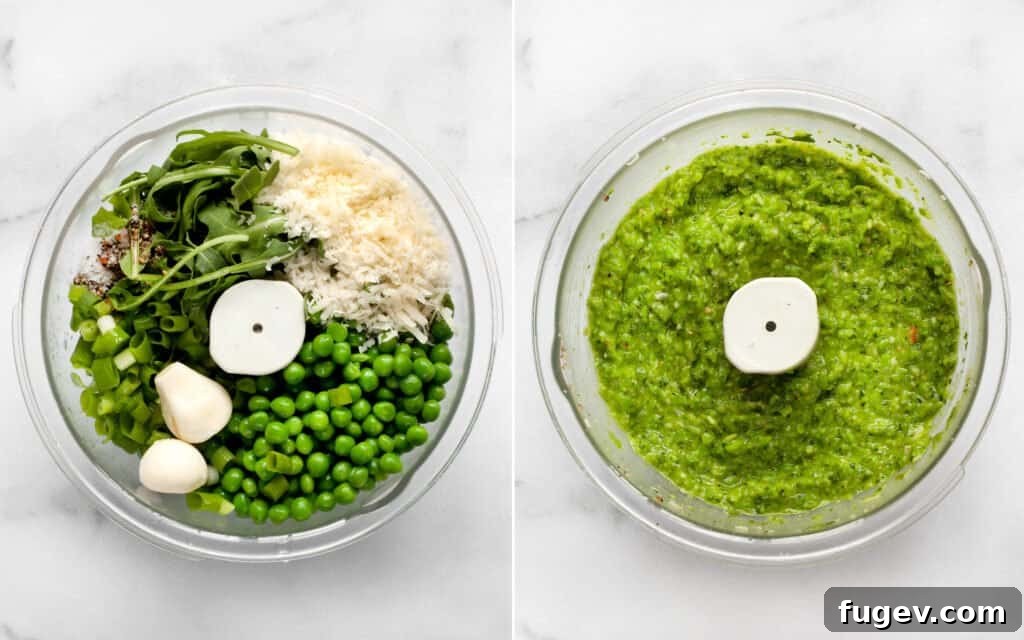
1. Prepare the Pesto. In the bowl of your food processor, combine the thawed frozen peas, 1 cup of baby arugula (reserving the remaining for later), minced garlic cloves, thinly sliced scallions, freshly squeezed lemon juice, ¼ cup of grated Parmesan cheese, a pinch of red pepper flakes, kosher salt, and black pepper. Pulse these ingredients several times until they are finely chopped and just starting to come together. Then, with the food processor motor running continuously, slowly drizzle in the extra-virgin olive oil through the feeder tube. Continue processing until the pesto is smooth, creamy, and fully combined. Scrape down the sides of the bowl as needed to ensure everything is incorporated.
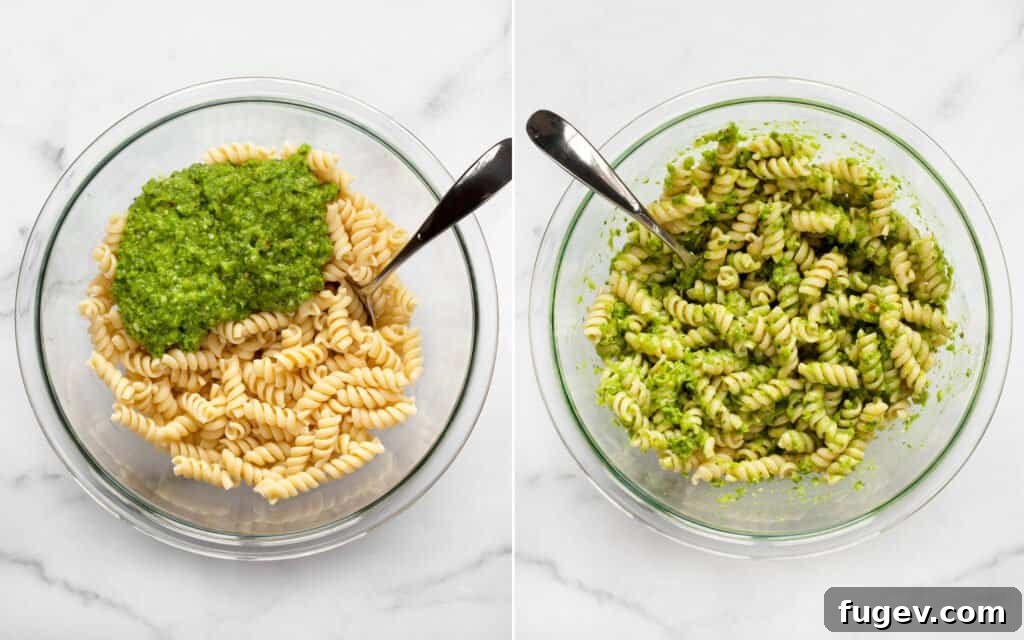
2. Combine Pesto and Pasta. Once your pasta is cooked and drained (with the reserved pasta water nearby), transfer it to a large mixing bowl. Add the freshly made pea pesto to the warm pasta. Gently toss to coat every piece of pasta evenly. If the pesto appears too thick or isn’t coating the noodles as smoothly as you’d like, gradually drizzle in a tablespoon or two of the reserved pasta cooking water. The starch in the water will help the sauce cling beautifully to the pasta, creating a wonderfully cohesive dish. Be careful not to add too much at once; start with a little and add more if needed.
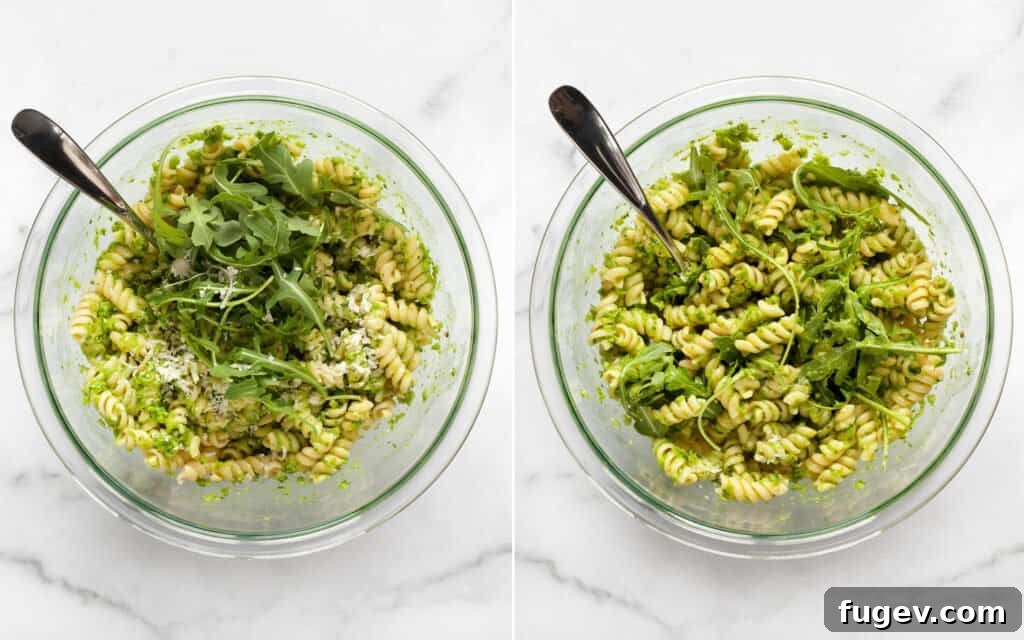
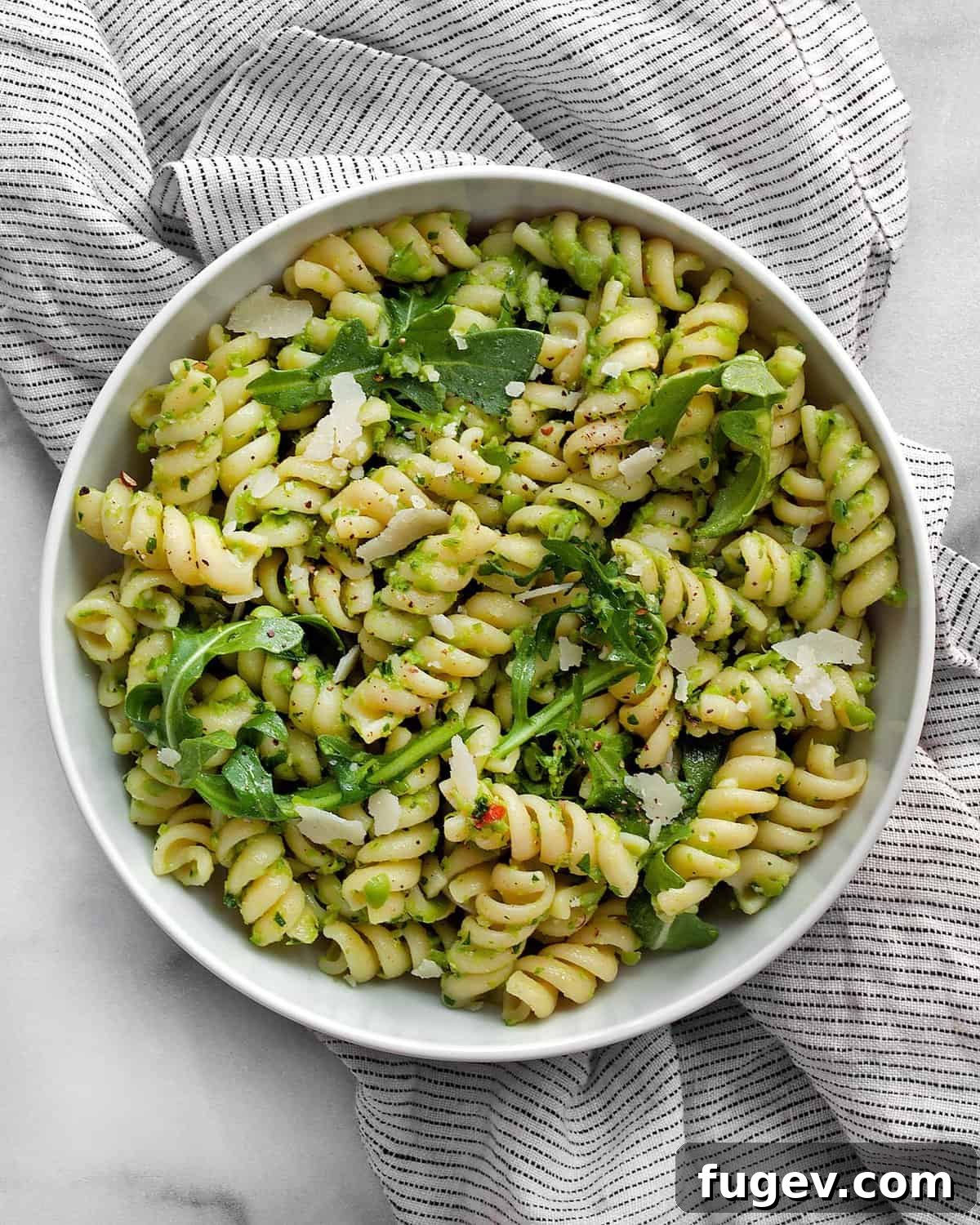
3. Finishing Touches and Serve. To add a final flourish of freshness and texture, stir in the remaining baby arugula and the remaining Parmesan cheese. This not only enhances the flavor but also adds a lovely visual contrast. Spoon the finished pea pesto pasta into individual bowls or plates. For an extra touch, you can garnish with a sprinkle of fresh cracked black pepper, a tiny drizzle of olive oil, or additional Parmesan before serving immediately.
Serving Suggestions for Your Pea Pesto Pasta
This pea pesto pasta is incredibly versatile and makes a fantastic centerpiece for a spring or summer meal. Its light yet satisfying nature means it pairs wonderfully with a variety of sides and additions, whether you’re planning a casual lunch, a weeknight family dinner, or even a delightful potluck dish.
For a complete and balanced meal, consider serving it alongside a fresh, crisp salad. A simple arugula salad with lemon vinaigrette will echo the peppery notes of the pesto, while a classic house salad offers a refreshing contrast. A light Caesar salad or a caprese salad with juicy tomatoes and fresh mozzarella would also be excellent choices.
If you prefer a vegetable side dish, complement the pasta with some seasonal roasted veggies. Roasted asparagus with lemon and garlic is a natural fit for spring, or you could try roasted broccoli, green beans, or even roasted red cabbage for a pop of color and earthy flavor. A side of crusty bread or garlic bread is always welcome for soaking up any extra pesto!
For those who wish to add a protein element, this pea pesto pasta is incredibly adaptable. Grilled or roasted chicken breast, pan-seared scallops, or a handful of succulent grilled shrimp stirred directly into the pasta would all be delicious. For a plant-based protein boost, consider adding sautéed chickpeas, white beans, or crispy baked tofu cubes. The fresh flavors of the pesto complement these additions beautifully without overpowering them.
Storing and Enjoying Leftovers
One of the many benefits of this pea pesto pasta is how well it keeps, making it excellent for meal prep or quick lunches. Store any leftover pasta in an airtight container in the refrigerator for up to 3 days. The flavors often meld and deepen overnight, sometimes tasting even better the next day!
When reheating, you have a few options. You can gently warm the pasta in a skillet on the stovetop over low heat, stirring frequently, adding a splash of water or olive oil if it seems a bit dry. Alternatively, a quick zap in the microwave will do the trick. However, don’t feel obligated to reheat it! This pea pesto pasta is also fantastic served cold, making it a delicious and convenient pasta salad for picnics, packed lunches, or a refreshing light meal on a warm day.
If you’ve made extra pesto (the recipe yields about 1⅓ cups, enough for the pasta and a little more), you can easily freeze the leftover pesto separately. Transfer it to an airtight container or even an ice cube tray, and freeze for up to 1 month. When ready to use, thaw at room temperature or gently warm. This is a great way to have a taste of spring ready whenever you need it!
Creative Ways to Enjoy Pea Pesto Beyond Pasta
While pea pesto pasta is undoubtedly a star, the versatile pea pesto itself has many applications beyond just coating noodles. Its fresh, bright flavor makes it a fantastic ingredient to elevate countless dishes. Don’t let any leftover pesto go to waste – get creative!
- Spreads and Dips: Slather it generously on toasted crostini, crusty bread, or crackers for an instant appetizer. It makes a vibrant and flavorful base for avocado toast, replacing or complementing mashed avocado, especially when topped with sweet roasted tomatoes. Mix it with cream cheese or Greek yogurt for a creamy dip.
- Grain Bowls: Stir a dollop of pea pesto into sturdy cooked grains like farro, barley, quinoa, or couscous for a flavorful and nutritious side dish or base for a grain bowl. Add roasted vegetables and a protein for a complete meal.
- Sandwiches & Wraps: Use it as a flavorful spread in sandwiches, wraps, or quesadillas to add moisture and a burst of fresh flavor. It’s particularly delicious with turkey, chicken, or grilled vegetables.
- Vegetable Enhancement: Toss roasted or steamed vegetables (like potatoes, carrots, or green beans) with pea pesto while they’re still warm to infuse them with incredible taste.
- Pizza Base: Instead of traditional tomato sauce, spread pea pesto on pizza dough for a unique, fresh, and gourmet pizza base. Top with mozzarella, cherry tomatoes, and fresh basil after baking.
- Egg Dishes: Swirl a spoonful into scrambled eggs, omelets, or frittatas for a pop of color and flavor. It also makes a great accompaniment to fried eggs on toast.
- Soups & Stews: A spoonful of pea pesto stirred into a vegetable soup or a creamy potato soup just before serving can add depth, freshness, and a beautiful green swirl.
- Marinade: Use it as a quick marinade for chicken, fish, or tofu before grilling or baking to infuse them with a herby, zesty flavor.
More Delicious Spring Recipes
Embrace the freshness of the season with these other delightful spring recipes:
- Udon Noodle Stir-Fry with Asparagus, Mushrooms and Peas
- Roasted Asparagus Soup
- Chickpea Spinach Pasta
- Carrot Salad with Lemon Tahini Vinaigrette
- Strawberry Cucumber Pasta Salad
- Pistachio Goat Cheese Strawberry Salad
- Sesame Tofu Asparagus
This pea pesto pasta recipe is a highlight in my comprehensive guide to easy pasta recipes for every season, offering veggie-packed inspiration all year long.
Pea Pesto Pasta
5 from 1 vote
Paige Adams
10 mins
10 mins
20 mins
4
Pin Recipe
Print Recipe
The sauce for this simple pea pesto pasta is made with convenient frozen peas, fresh arugula, zesty lemon, aromatic garlic, mild scallions, rich Parmesan, and high-quality olive oil. Its vibrant flavors are best tossed with pasta shapes like fusilli or penne, which excel at holding onto every bit of that delicious pesto.
Ingredients
- 1-1/2 cups frozen peas, thawed
- 1-1/2 cups baby arugula, divided
- 2 garlic cloves
- 2 scallions, thinly sliced
- Juice of 1 lemon
- 1/4 cup plus 1 tablespoon grated Parmesan, divided
- Pinch red pepper flakes
- 1/2 teaspoon kosher salt
- 1/2 teaspoon black pepper
- 1/3 cup olive oil, extra-virgin recommended
- 8 ounces fusilli, rotini, or penne pasta
Instructions
-
In a food processor, combine the thawed peas, 1 cup of baby arugula, garlic cloves, sliced scallions, lemon juice, 1/4 cup of Parmesan cheese, red pepper flakes, salt, and black pepper. Pulse until finely chopped. With the motor running, slowly drizzle in the olive oil through the feeder tube until the pesto is smooth and fully combined. Scrape down the sides as needed.
-
Cook the pasta in a large pot of salted boiling water until al dente, according to package instructions. Before draining, reserve about 1/2 cup of the pasta cooking water. Drain the pasta and transfer it to a large mixing bowl.
-
Add the prepared pea pesto to the warm pasta. Toss to coat the noodles thoroughly. If the pesto appears too thick, add a small amount of the reserved pasta water (start with 1 tablespoon) to thin it out and create a creamy consistency. You may not need all of it, or any at all, depending on your preference.
-
Stir in the remaining 1/2 cup of baby arugula and the remaining 1 tablespoon of Parmesan cheese. Serve immediately, garnished as desired.
Notes
This recipe yields approximately 1-1/3 cups of vibrant pea pesto.
For a vegan version, simply omit the Parmesan cheese or substitute with a plant-based alternative or nutritional yeast.
If you don’t have arugula, baby spinach makes an excellent and equally delicious substitute.
Store any leftovers in an airtight container in the refrigerator for up to 3 days. The pesto itself can be frozen for up to 1 month. Thaw frozen pesto at room temperature, then warm gently in a skillet over low heat, stirring frequently, adding a splash of water or olive oil if needed to restore consistency.
Nutrition
Calories: 449kcal | Carbohydrates: 53g | Protein: 13g | Fat: 21g | Saturated Fat: 4g | Polyunsaturated Fat: 2g | Monounsaturated Fat: 14g | Cholesterol: 4mg | Sodium: 401mg | Potassium: 337mg | Fiber: 6g | Sugar: 5g | Vitamin A: 707IU | Vitamin C: 31mg | Calcium: 123mg | Iron: 2mg
Nutrition information is automatically calculated and should only be used as an approximation.
Additional Info
Pasta, Main Course
Italian, Mediterranean
Vegetarian, Nut-Free
Did you make this recipe?
Mention @lastingredient on Instagram and tag it #lastingredient!