
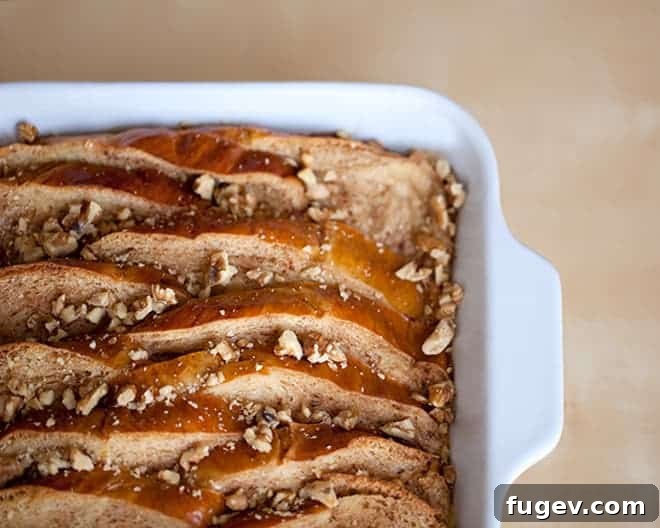
Imagine waking up on a relaxed weekend morning, the aroma of cinnamon and warm bread gently filling your home. You didn’t have to rush, measure, or even whisk a single egg. Instead, a delightful breakfast masterpiece was patiently waiting, ready to transform into golden, fluffy perfection with minimal effort. This isn’t a dream; it’s the magic of Overnight French Toast – a dish that redefines leisurely mornings and makes you the ultimate weekend brunch host, even if it’s just for yourself. It’s a game-changer for anyone who loves a gourmet breakfast but prefers to savor their precious morning hours.
Every Saturday and Sunday morning, a ritual unfolds in neighborhoods far and wide: the pilgrimage to a favorite brunch spot. No matter the weather, lines form, often stretching for an hour or more, all for the promise of oversized omelets, fluffy pancakes, and perfectly brewed coffee. There’s a certain charm in this shared experience, a commitment to savoring a lazy weekend morning, catching up with friends, and indulging in sweet or savory delights. It’s a cherished tradition, but let’s be honest, not every weekend calls for braving the crowds and enduring lengthy waits.
For those mornings when patience for a queue is in short supply, but the craving for a special, comforting breakfast persists, there’s a simpler, more serene solution. While spontaneous mornings might lead to whipping up classic waffles, a tiny bit of forward planning elevates your weekend with homemade French toast. Specifically, this Overnight French Toast recipe is a revelation. By assembling it the night before, you grant thick slices of challah bread ample time to luxuriate in a rich, cinnamon-spiked egg-and-milk mixture. This prolonged soak is the secret to a French toast that’s exceptionally tender, deeply flavorful, and perfectly uniform in its custardy texture from edge to edge. The result is an intricately layered French toast, ready for a quick bake in the morning, then finished with a delightful crunch of walnuts and a generous drizzle of golden maple syrup.
The Magic of Overnight French Toast: Reclaiming Your Weekend Mornings
The beauty of an overnight French toast recipe lies in its sheer convenience and superior flavor. Traditional French toast requires immediate preparation and cooking, often leading to a hectic kitchen if you’re serving a crowd or simply trying to relax. With the overnight method, all the heavy lifting – whisking the custard, slicing the bread, and arranging it in the baking dish – happens when you have time, usually the evening before. This frees up your morning entirely, allowing you to sip your coffee, read a book, or simply enjoy the quietude before the day truly begins. It’s a stress-free approach to weekend entertaining or simply treating your family to something special without the rush.
A Flavor Transformation: Why Soaking Matters
Beyond convenience, the overnight soak is crucial for achieving an unparalleled depth of flavor and texture. As the bread sits in the custardy mixture, it acts like a sponge, absorbing every nuance of the cinnamon, vanilla, and sweet egg batter. This isn’t just a surface-level coating; the liquid penetrates deeply into each slice, ensuring that every bite is moist, tender, and infused with deliciousness. You avoid the common pitfall of rushed French toast, where the exterior is cooked but the interior remains dry or undercooked. Instead, you get a consistently custardy interior that melts in your mouth, enveloped by a perfectly golden-brown, slightly crispy exterior straight from the oven.
Choosing the Right Bread: The Foundation of Flavor and Texture
The bread you choose is arguably the most important ingredient for exceptional French toast. While many types of bread can be used, certain varieties truly shine. For this overnight recipe, a rich, sturdy bread that can withstand prolonged soaking without becoming soggy is essential. Challah bread, with its slightly sweet, eggy, and dense crumb, is a perfect candidate. Its robust structure holds up beautifully to the liquid, absorbing it thoroughly to create that desired custardy texture. Brioche is another excellent choice, offering similar richness and a buttery flavor that complements the sweet batter. Even a day-old artisan loaf with a good crumb density can work wonderfully. The key is to use bread that is at least a day old, as slightly stale bread absorbs the custard more effectively, preventing a watery final product. Slice the bread thickly – about 1/2 to 3/4 inch – to ensure a substantial, satisfying piece of French toast that can fully absorb the luscious egg mixture.
Perfect Overnight French Toast
Paige Adams
10 minutes
40 minutes
8 hours
8 hours
50 minutes
8
Ingredients
- Butter for greasing dish
- 1/2 to 3/4 loaf challah cut into 1/2-inch thick slices
- 2 cups milk
- 4 eggs
- 2 tablespoons granulated sugar
- 1 teaspoon ground cinnamon
- 2 teaspoons vanilla extract
- 1/2 teaspoon salt
- 1/4 cup walnuts roughly chopped
- Maple syrup for serving
Unlock More Delicious Recipes!
Sign up for our newsletter to receive new recipes directly in your inbox every week. Never miss a flavorful update and elevate your home cooking with our curated selections!
Instructions
-
Butter an 8-inch square baking dish (or a 9×13 inch if doubling the recipe) generously to prevent sticking and add a subtle richness to the crust. Arrange the thick bread slices in snug, slightly overlapping rows. This ensures each slice has maximum contact with the custard mixture.
-
In a medium-sized bowl, whisk together the milk, eggs, granulated sugar, ground cinnamon, vanilla extract, and salt until the mixture is smooth and well combined. This forms your rich, aromatic custard. Carefully pour this mixture evenly over the arranged bread slices, making sure every piece is thoroughly saturated. Cover the dish tightly with plastic wrap and place it in the refrigerator to chill and soak overnight (for at least 8 hours, or up to 24 hours). This extended chilling time is vital for the bread to absorb the custard fully, creating that signature custardy texture.
-
The next morning, preheat your oven to 350 degrees F (175 degrees C). Remove the baking dish from the refrigerator. You’ll notice some liquid may have settled at the bottom; use a spoon to scoop up any unabsorbed liquid and gently baste the tops of the bread slices. This ensures even moisture and flavor. Bake for 30 minutes. After 30 minutes, open the oven and evenly sprinkle the roughly chopped walnuts on top of the French toast. Return to the oven and bake for an additional 10 minutes, or until the French toast is golden brown, puffed, and the center is set. The walnuts will toast slightly, adding a wonderful crunch.
-
Remove from the oven and let it rest for a few minutes before serving warm. Drizzle generously with your favorite pure maple syrup. For an extra touch, consider a dusting of powdered sugar, a dollop of whipped cream, or fresh berries.
Expert Tips for Perfect Overnight French Toast
- Use Stale Bread: Slightly stale or day-old bread works best as it absorbs the custard more efficiently without falling apart. If your bread is fresh, you can gently toast it in a low oven for 10-15 minutes to dry it out.
- Don’t Skimp on Soaking Time: The “overnight” aspect is key! At least 8 hours allows for maximum flavor absorption and the custardy texture you desire. Rushing this step will result in a less flavorful and potentially dry French toast.
- Generous Buttering: Buttering the baking dish well not only prevents sticking but also contributes to a deliciously crispy bottom crust.
- Customize Your Toppings: While walnuts and maple syrup are classic, feel free to get creative. Fresh berries (strawberries, blueberries, raspberries), sliced bananas, chocolate chips, a sprinkle of powdered sugar, or a dollop of whipped cream are all fantastic additions.
- Even Baking: Ensure your oven is fully preheated. If you notice edges browning too quickly, you can loosely tent the dish with aluminum foil.
Delicious Variations to Try
Once you’ve mastered the classic, don’t hesitate to experiment with these delightful variations:
- Berry Bliss French Toast: Layer fresh or frozen mixed berries (raspberries, blueberries, sliced strawberries) between your bread slices before pouring the custard. They’ll release their juices during baking, creating pockets of fruity goodness.
- Spiced Apple French Toast: Add thinly sliced apples and a pinch of nutmeg or allspice to the custard mixture. A swirl of caramel or a sprinkle of brown sugar on top before baking would be divine.
- Orange Zest & Cardamom: Incorporate the zest of one orange and 1/2 teaspoon of ground cardamom into the egg mixture for a bright, aromatic twist.
- Chocolate Chip Delight: Sprinkle a handful of chocolate chips over the bread before pouring the custard, and again during the last 10 minutes of baking.
- Cream Cheese Swirl: For a decadent treat, dollop small spoonfuls of softened cream cheese (sweetened with a touch of sugar and vanilla) over the bread before baking, creating creamy swirls.
Nutrition
Carbohydrates: 20g |
Protein: 8g |
Fat: 8g |
Saturated Fat: 3g |
Polyunsaturated Fat: 3g |
Monounsaturated Fat: 2g |
Trans Fat: 0.01g |
Cholesterol: 104mg |
Sodium: 308mg |
Potassium: 173mg |
Fiber: 1g |
Sugar: 7g |
Vitamin A: 279IU |
Vitamin C: 0.1mg |
Calcium: 120mg |
Iron: 1mg
Nutrition information is automatically calculated, so should only be used as an approximation.
Additional Info
Breakfast
American
Did you make this recipe?
Mention @lastingredient on Instagram and tag it #lastingredient!
This Overnight French Toast recipe is more than just a dish; it’s an invitation to slow down, savor, and enjoy the simple pleasures of a homemade breakfast without any morning rush. The minimal prep for maximum flavor makes it a true culinary hero for weekends and special occasions alike. Whether you’re hosting a brunch, celebrating a holiday, or simply treating yourself to a well-deserved indulgent morning, this recipe promises delicious results and a remarkably relaxed start to your day. So, plan ahead, assemble tonight, and wake up to the effortless elegance of perfect French toast.