
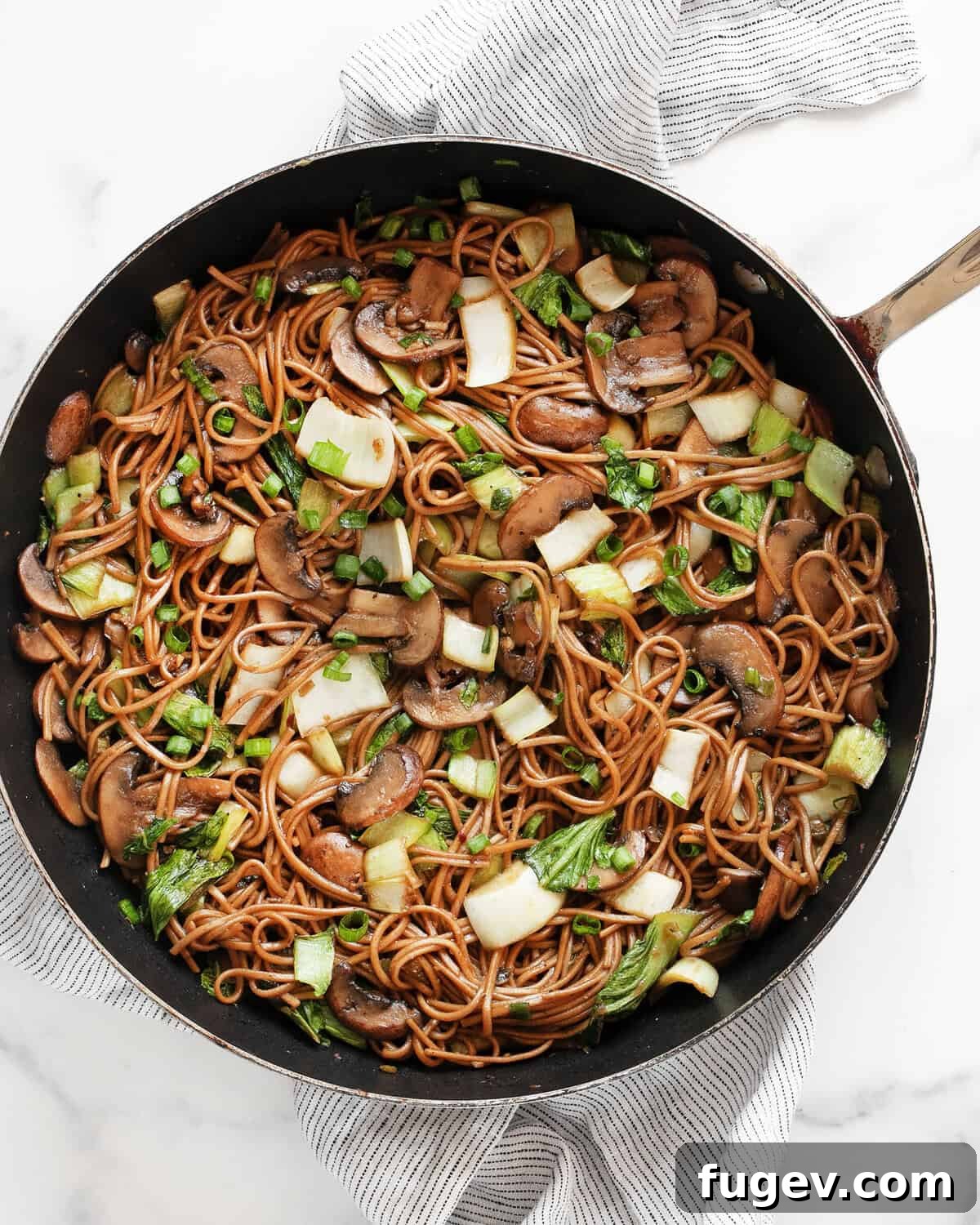
Craving a quick, nourishing, and incredibly flavorful meal? This simple yet exquisite soba noodle recipe delivers on all fronts. Loaded with savory mushrooms and vibrant bok choy, it’s the ideal choice for those evenings when you desire a wholesome, filling, and utterly satisfying vegan dinner without spending hours in the kitchen. Each strand of soba noodle becomes a canvas for a symphony of flavors, infused with the aromatic punch of fresh ginger, the subtle warmth of minced garlic, and the delicate bite of scallions, all coming together in a harmonious stir-fry.
For more delectable soba inspiration, explore our Soba Noodle Salad with Red Peppers, Carrots, and Cabbage, another fantastic recipe that highlights the versatility of these delightful buckwheat noodles.
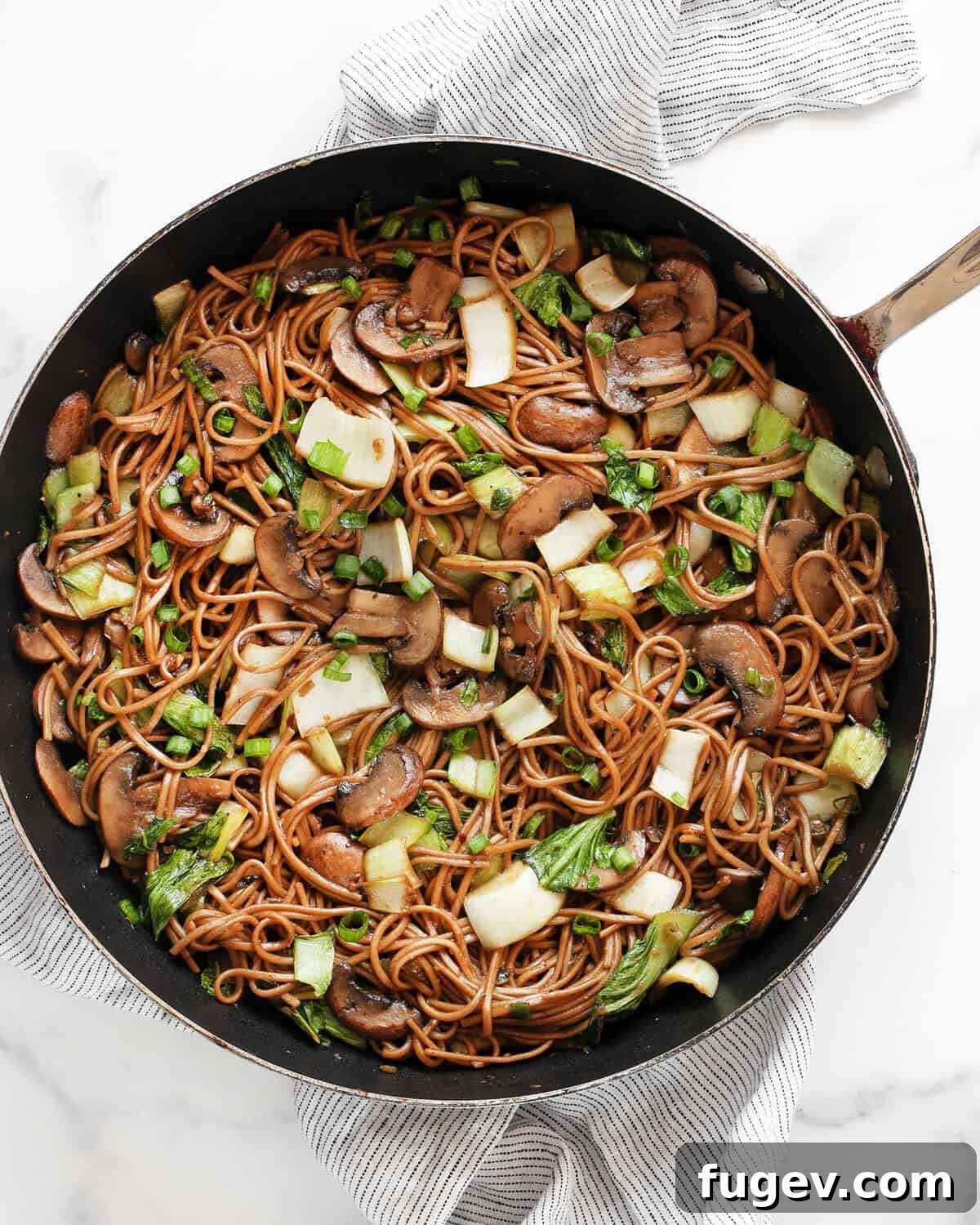
Table of Contents
- Why This Soba Stir-Fry Will Become Your Go-To Meal
- What Exactly is Bok Choy?
- Preparing Bok Choy for Your Stir-Fry
- Buckwheat Soba Noodles: Naturally Gluten-Free and Nutritious
- Essential Ingredients for Your Soba Noodle Stir-Fry
- Step-by-Step Guide: Crafting Your Soba Noodle Stir-Fry
- Serving Suggestions for Your Soba Delight
- Tips for Leftovers and Storage
- Expert Recipe Tips for Perfect Stir-Frying
- Explore More Flavorful Stir-Fry Creations
- Full Recipe: Soba Noodles with Mushrooms and Bok Choy
Why This Soba Stir-Fry Will Become Your Go-To Meal
Stir-fries are renowned for their incredible speed and versatility, making them perfect candidates for busy weeknights. This particular soba noodle recipe, packed with fresh vegetables and aromatic spices, offers countless reasons to fall in love with it. It’s a genuine weeknight wonder that promises a delicious and healthy meal in minutes.
Beyond its quick preparation, this soba noodle dish boasts an exceptional combination of complementary flavors and textures. We expertly pair the mild, refreshing crunch of bok choy with the earthy depth of mushrooms, all brought to life by the vibrant heat of fresh ginger and the pungent aroma of garlic. The dish is then delicately coated in a well-balanced sauce, a masterful blend of umami-rich soy sauce, nutty sesame oil, and a hint of acidity from rice vinegar. This creates a complex yet approachable flavor profile that will tantalize your taste buds.
If you’re new to cooking with bok choy, this recipe presents the perfect opportunity to introduce this fantastic vegetable into your culinary repertoire. Each head of bok choy offers a delightful duality: crisp, juicy stems and tender, verdant leafy greens. From root to tip (after trimming the very bottom end), every part is edible and contributes a unique texture and flavor to the stir-fry. Embracing bok choy is a simple step towards adding more exciting, nutritious greens to your diet.
A Healthy & Wholesome Vegan Option
For those seeking delicious plant-based meals, this soba noodle stir-fry is a dream come true. It’s naturally vegan, relying on the goodness of vegetables and buckwheat noodles for a satisfying and nutritious experience. Soba noodles themselves are a fantastic source of complex carbohydrates and fiber, while bok choy and mushrooms contribute essential vitamins, minerals, and antioxidants. This dish proves that healthy eating can be incredibly flavorful and enjoyable, making it an excellent addition to any diet, especially for those prioritizing plant-forward living.
Customizable to Your Taste
One of the beauties of stir-fries is their adaptability. While this recipe is perfect as written, it also serves as a wonderful base for customization. Feel free to add your favorite vegetables, adjust the level of spice, or even incorporate a plant-based protein like pan-fried tofu or tempeh for an extra boost. This flexibility ensures that you can tailor the dish to suit your personal preferences or whatever ingredients you have on hand, making it a truly versatile and endlessly repeatable meal.
What Exactly is Bok Choy?
Bok choy, also widely known as pak choi, is a remarkable leafy green vegetable belonging to the Chinese cabbage family. It shares a lineage with other nutritional powerhouses like cabbage, broccoli, kale, and turnips, all members of the cruciferous vegetable group. What makes bok choy particularly interesting is its distinct two-part structure, both of which are entirely edible. The lower stems are thick, white or pale green, and boast a wonderfully crisp, almost celery-like texture. In contrast, the upper leaves are dark green, tender, and soften beautifully when cooked, resembling spinach in texture and mild flavor. This dual texture provides a delightful contrast in every bite, adding complexity to stir-fries and other dishes. Beyond its culinary appeal, bok choy is a nutritional powerhouse, rich in vitamins A, C, and K, as well as folate and calcium, making it a fantastic addition to a balanced diet.
Preparing Bok Choy for Your Stir-Fry
Proper preparation of bok choy is key to achieving the best texture and flavor in your stir-fry. For this particular recipe, begin by trimming off the very bottom root end of each head of bok choy, as this part can be tough and somewhat fibrous. After trimming, thoroughly rinse the bok choy under cold running water, paying close attention to the base of the stems where dirt can sometimes accumulate between the layers. You might need to separate the stems slightly to ensure a complete wash. Once clean, pat them dry. Then, carefully separate the crisp stems from the leafy greens. Slice the white or pale green stems crosswise into uniform 1/2-inch wide pieces. For the dark green leaves, a simple tear by hand or a rough chop is sufficient. We separate these components because they have different cooking times: the firmer stems require a bit more heat to become crisp-tender, so we sauté them earlier with the other aromatics. The delicate leaves, on the other hand, are added later, just after the noodles and sauce, allowing the residual heat to gently wilt them to perfection without overcooking.
Buckwheat Soba Noodles: Naturally Gluten-Free and Nutritious
Soba noodles, a beloved staple in Japanese cuisine, are traditionally crafted from buckwheat flour. The term “buckwheat” can sometimes be misleading, leading many to assume it contains gluten due to the presence of “wheat” in its name. However, buckwheat is entirely unrelated to wheat. It is, in fact, a naturally gluten-free flowering plant, a close botanical cousin to rhubarb and sorrel. This makes authentic soba noodles a fantastic option for individuals with gluten sensitivities or those following a gluten-free diet.
Despite their simplicity, soba noodles offer a wealth of nutritional benefits. They are an excellent source of dietary fiber, aiding in digestion and promoting a feeling of fullness. Furthermore, buckwheat is rich in protein, providing essential amino acids, and contains beneficial minerals such as manganese, magnesium, and phosphorus. Its unique, slightly nutty flavor and satisfying chewiness make it a delightful alternative to traditional wheat-based pasta.
Choosing the Right Soba Noodles
While buckwheat is naturally gluten-free, it is crucial to exercise caution when purchasing soba noodles if you have gluten sensitivities. Many commercial brands of soba noodles blend buckwheat flour with wheat flour for a different texture or cost-effectiveness. Therefore, always make it a practice to meticulously check the ingredient list on the package. Look for labels that explicitly state “100% buckwheat” or “gluten-free certified” to ensure your soba noodles are completely free from wheat contaminants. This small step guarantees you can enjoy this delicious dish worry-free.
Essential Ingredients for Your Soba Noodle Stir-Fry
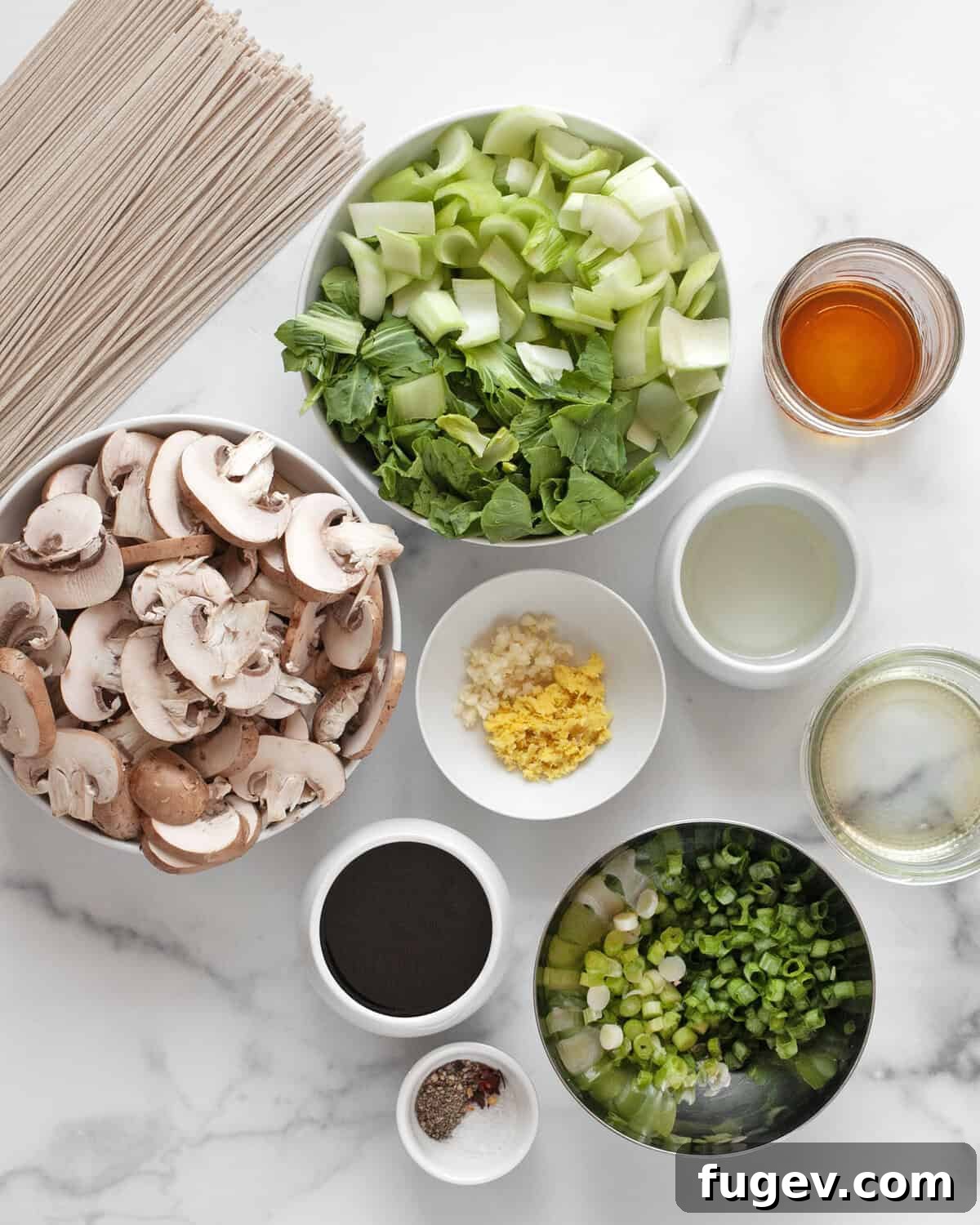
To create this incredibly flavorful mushroom and bok choy soba noodle stir-fry, you will need a selection of fresh produce and pantry staples:
- Soba Noodles: The star of our dish! You can typically locate soba noodles in the Asian cuisine section of most well-stocked grocery stores. As mentioned, if adhering to a gluten-free diet, always verify the ingredient list to ensure they are made from 100% buckwheat flour and not a blend with wheat. The quality of your soba noodles can significantly impact the final texture of your stir-fry.
- Mushrooms: For this recipe, we recommend using baby bella or cremini mushrooms. These varieties are a slightly more mature version of white button mushrooms, offering a deeper, wonderfully earthy, and robust umami flavor that perfectly complements the other ingredients. Slice them evenly for consistent cooking.
- Bok Choy: Two heads of fresh bok choy are called for. When selecting bok choy, look for firm, bright white or pale green stems and vibrant, unwilted dark green leaves. Avoid any heads with yellowing leaves or soft spots, as these indicate they are past their prime.
- Low-Sodium Soy Sauce: Essential for that signature umami depth in Asian cuisine. Opting for low-sodium soy sauce is crucial to control the overall saltiness of the stir-fry, allowing you to season to taste without the dish becoming overly salty. If using regular soy sauce, you may want to reduce the amount slightly.
- Sesame Oil: A small amount of toasted sesame oil adds an incredibly fragrant, nutty, and distinctly Asian flavor to the sauce. It’s often used as a finishing oil due to its potent aroma. Be sure to use toasted sesame oil for maximum flavor impact.
- Rice Vinegar: Derived from fermented rice, this mild vinegar introduces a subtle, clean acidity to the sauce, balancing the savory and nutty notes. It’s less sharp than other vinegars, making it perfect for delicate stir-fry sauces.
- Scallions (Green Onions): These versatile alliums provide a fresh, oniony flavor. We’ll separate the white and light green parts from the darker green tops. The white parts are sautéed with the other aromatics to build a foundational flavor, while the vibrant green tops are stirred in at the very end, much like fresh herbs, for a burst of color and a milder, fresher onion essence.
- Fresh Ginger: A non-negotiable ingredient for any authentic stir-fry. Freshly minced ginger adds a warm, spicy, and highly aromatic quality that invigorates the entire dish. There’s no substitute for fresh ginger’s bright and pungent notes.
- Garlic: Alongside ginger and scallions, minced garlic forms the aromatic trinity that defines many Asian stir-fries. A single clove, finely minced, contributes a sweet, pungent depth that ties all the flavors together.
- Red Pepper Flakes: For those who appreciate a hint of warmth and gentle spice, red pepper flakes are an excellent addition. Adjust the quantity to your preferred level of heat – a quarter teaspoon provides a subtle kick without overwhelming the other flavors.
- Kosher Salt & Black Pepper: Even with the flavorful sauce, a touch of kosher salt and freshly ground black pepper is essential. These foundational seasonings help to amplify and bring out the natural flavors of all the fresh ingredients, ensuring a well-rounded and delicious final dish.
- Vegetable Oil: A neutral-flavored oil with a high smoke point, such as canola, grapeseed, or sunflower oil, is ideal for stir-frying. It allows the other ingredients’ flavors to shine without imparting its own taste.
Step-by-Step Guide: Crafting Your Soba Noodle Stir-Fry
Creating this delicious soba noodle stir-fry is a straightforward process when you have all your ingredients prepped and ready. Follow these steps for a perfectly executed meal:
1. Cook the Soba Noodles to Al Dente Perfection. Begin by bringing a large pot of generously salted water to a rolling boil. Carefully add the soba noodles and cook them according to the package directions, typically 3-5 minutes, aiming for an al dente texture—tender yet with a slight chew. Stir the noodles periodically during cooking to prevent them from sticking together. Once cooked, drain them immediately in a colander and rinse thoroughly with cold water. This rinsing step stops the cooking process, removes excess starch, and keeps the noodles from clumping, ensuring they remain perfectly separate and firm for your stir-fry. Set them aside.
2. Whisk Together the Aromatic Stir-Fry Sauce. In a small bowl, combine the low-sodium soy sauce, fragrant sesame oil, and tangy rice vinegar. Whisk these ingredients vigorously until they are well combined. This is your flavor base, offering the perfect balance of umami, nutty notes, and bright acidity. Having the sauce ready before you start cooking the vegetables is part of good stir-fry mise en place.

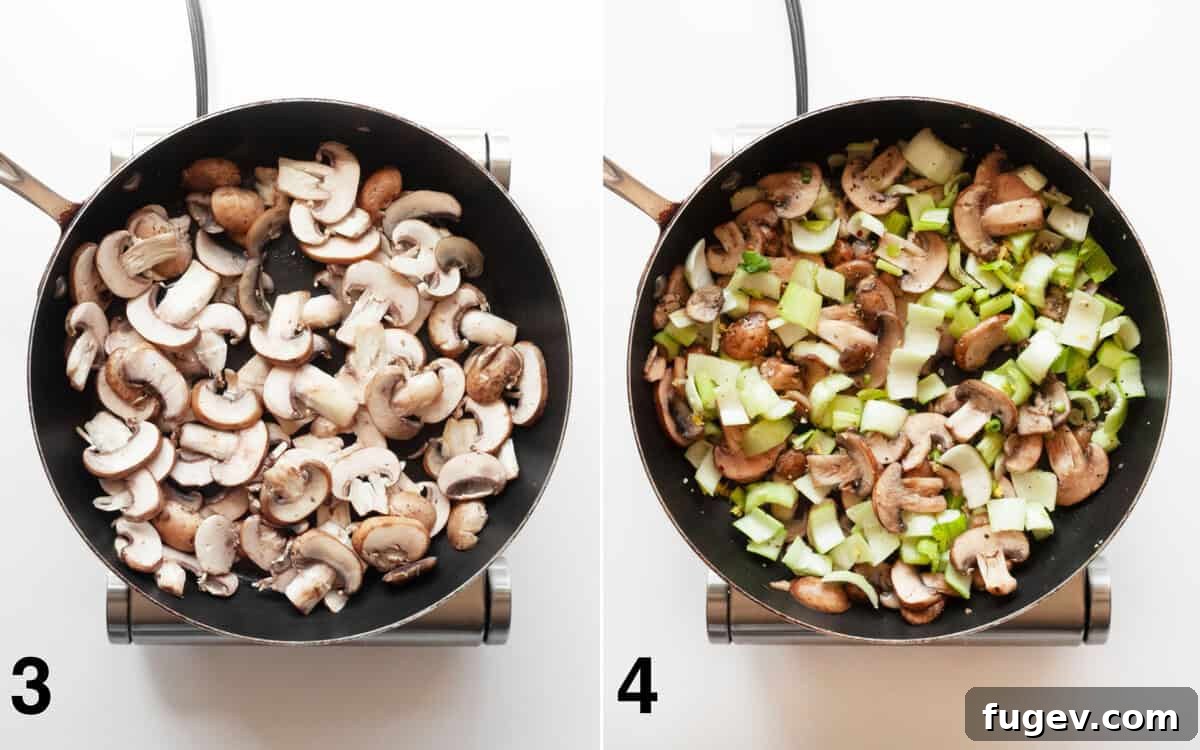
3. Sauté the Mushrooms Until Beautifully Browned. Place a wok or a large, heavy-bottomed skillet over high heat. Allow it to get very hot before adding the vegetable oil, swirling it to coat the bottom evenly. When the oil is shimmering and just starting to smoke lightly, add the sliced mushrooms. Sauté them for 3-4 minutes, stirring occasionally. Resist the urge to overcrowd the pan, as this will steam the mushrooms instead of browning them. You want them to develop a nice golden-brown color and release their moisture, intensifying their earthy flavor.
4. Infuse Aromatics and Crisp the Bok Choy Stems. To the sautéed mushrooms, add the sliced bok choy stems, the white and light green parts of the scallions, minced garlic, fresh minced ginger, red pepper flakes, kosher salt, and black pepper. Continue to sauté this mixture for another 2-3 minutes, stirring constantly. The goal here is to cook the bok choy stems until they are crisp-tender, still retaining a slight bite, and for the aromatics to become incredibly fragrant, filling your kitchen with an enticing aroma. Avoid overcooking, as we want to preserve the vegetables’ texture.
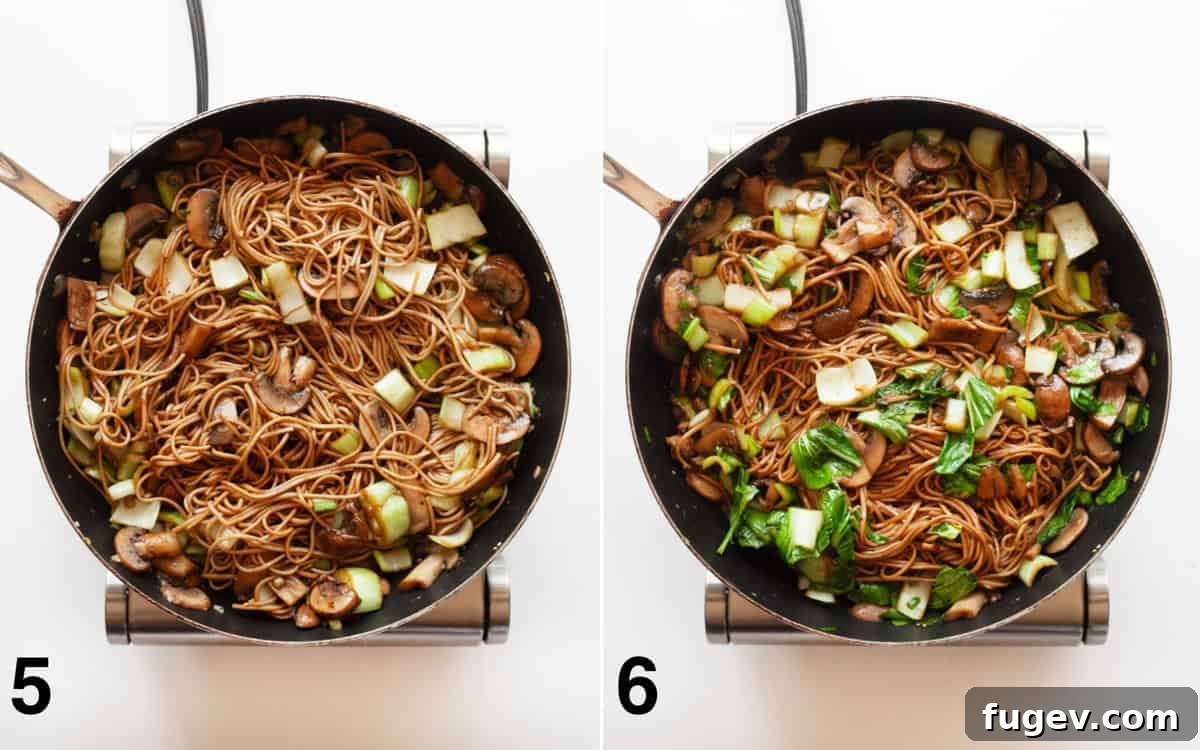
5. Combine Noodles and Sauce, Allowing Flavors to Mingle. Reduce the heat slightly if needed, then add the cooked and rinsed soba noodles directly into the skillet with the vegetables. Pour the prepared soy sauce mixture over everything. Toss gently but thoroughly to ensure the noodles and vegetables are completely coated in the flavorful sauce. Let the mixture bubble and simmer for a couple of minutes, allowing the noodles to absorb the sauce and for all the flavors to meld beautifully. This step ensures every bite is packed with deliciousness.
6. Gently Fold in the Bok Choy Leaves and Green Scallion Tops. Finally, add the torn bok choy leaves and the vibrant green parts of the scallions to the skillet. Gently fold them into the stir-fry. The residual heat from the pan and the other ingredients will be sufficient to lightly wilt the delicate bok choy leaves, leaving them tender yet still bright green. Cook for just about 30 seconds to a minute until the leaves are just softened. Serve immediately for the best texture and flavor.
Serving Suggestions for Your Soba Delight
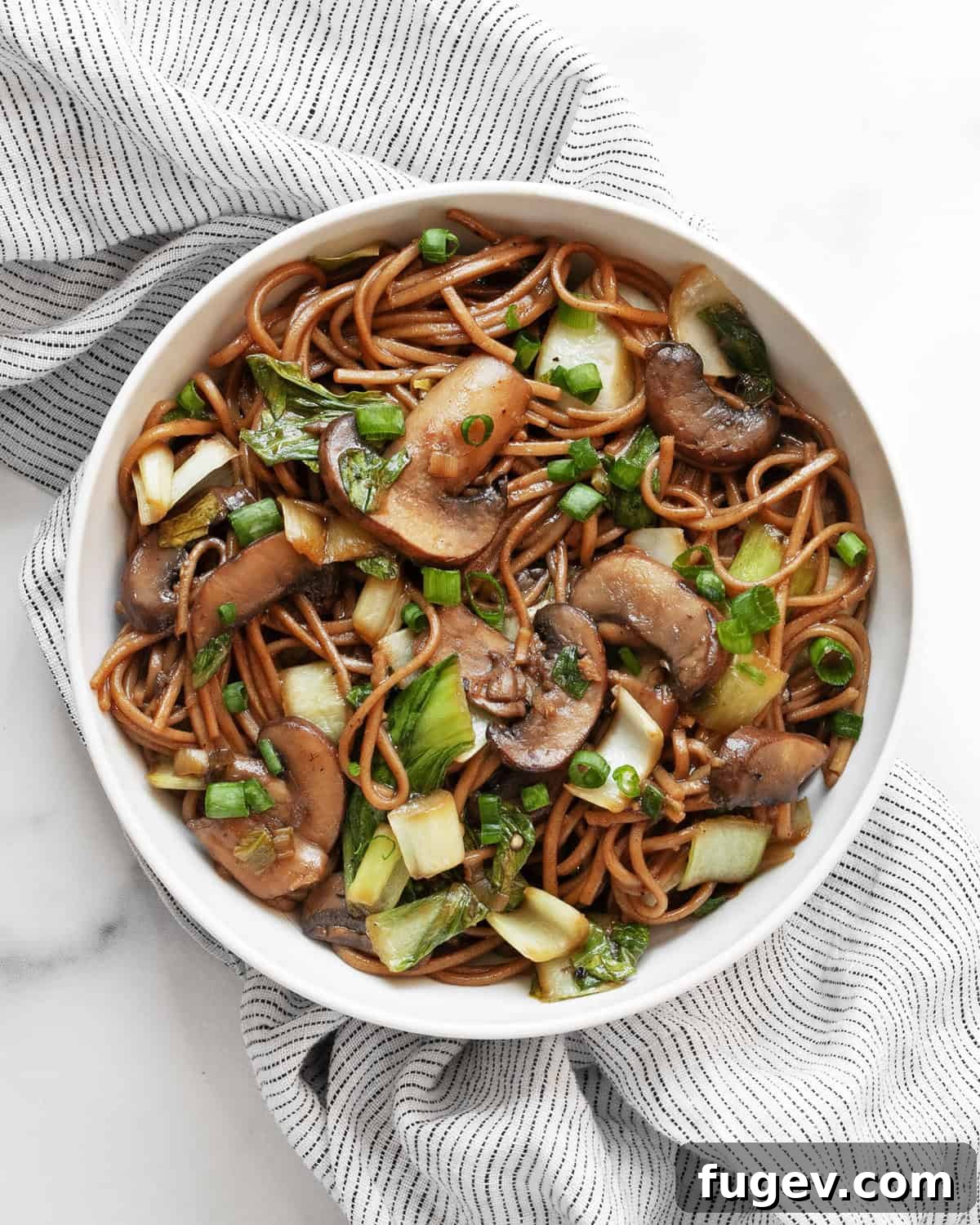
This mushroom and bok choy soba noodle stir-fry is a complete meal on its own, offering a wonderful balance of carbohydrates, protein, and vegetables. However, if you’re looking to expand your meal or add a refreshing contrast, it pairs beautifully with a light and crisp side salad. We highly recommend serving this stir-fry alongside an Asian-inspired salad to complement its flavors. Some excellent choices include a vibrant Cucumber Carrot Salad, an Asian Cabbage Salad with Almond Ginger Vinaigrette, a satisfying Crunchy Edamame Salad with Tahini Ginger Dressing, or a refreshing Napa Cabbage Salad. For an extra touch of flavor and texture, consider garnishing your finished stir-fry with a sprinkle of toasted sesame seeds, a drizzle of chili oil for more heat, or a few extra fresh scallion greens.
Tips for Leftovers and Storage
One of the many benefits of stir-fries is how wonderfully they hold up as leftovers, making them perfect for meal prepping. You can store any remaining soba noodle stir-fry in an airtight container in the refrigerator for up to 4 days. Keep in mind that the noodles will naturally soften a bit more over time as they absorb the sauce, but they will still be delicious. To reheat, you have a couple of options: gently warm them in a skillet on the stove over medium-low heat with a tiny splash of oil to prevent sticking, or use the microwave for a quicker reheat. Interestingly, this dish is also delightful eaten cold, straight from the refrigerator, making it an excellent option for a packed lunch! However, we do not recommend freezing leftovers, as the texture of the noodles and vegetables can become mushy and unappealing upon thawing and reheating.
Expert Recipe Tips for Perfect Stir-Frying
Mastering the art of stir-frying comes down to a few key techniques. Follow these expert tips to ensure your soba noodle stir-fry is consistently perfect:
- Do Not Overcook the Noodles: Just like with Italian pasta, the key to perfect soba noodles is to cook them al dente. They should be tender but still have a pleasant bite to them. Overcooked soba noodles can become mushy and lose their desirable texture, so pay close attention to the package instructions and rinse them promptly after draining.
- Practice “Mise en Place” – Prep All Ingredients First: This is arguably the most critical rule for any stir-fry. Stir-frying is a very fast cooking method, and once you start, there’s no time to chop vegetables or measure sauces. Have all your ingredients—sliced, minced, and measured—laid out and ready before you even turn on the stove. This ensures a smooth, stress-free cooking process and prevents anything from burning while you’re scrambling for the next ingredient.
- Use a Hot Wok or Large Skillet: High heat is essential for effective stir-frying. A properly heated wok or large skillet creates that characteristic “wok hei” (breath of the wok), imparting a smoky, charred flavor to the ingredients. Ensure your pan is smoking hot before adding any oil or vegetables.
- Avoid Overcrowding the Pan: When sautéing vegetables, particularly the mushrooms, work in batches if necessary. Crowding the pan will lower its temperature, causing the vegetables to steam rather than sear and brown. This results in soft, watery vegetables instead of crisp-tender ones.
- Balance Your Flavors: The sauce is the heart of a stir-fry. Taste and adjust as you go. If you like more spice, add extra red pepper flakes. For a sweeter profile, a touch of maple syrup or agave can be added to the sauce. A squeeze of lime juice at the end can also brighten the flavors.
- Don’t Be Afraid of Fresh Aromatics: Fresh ginger and garlic make a huge difference in the vibrancy of your stir-fry. While powdered versions can be used in a pinch, fresh ingredients provide a superior depth of flavor and aroma.
Explore More Flavorful Stir-Fry Creations
If you loved this soba noodle stir-fry, you’ll be excited to discover the versatility and endless possibilities of stir-frying. We have a variety of other delicious and easy stir-fry recipes that are perfect for quick and healthy meals:
- Tofu Peanut Vegetable Stir-Fry
- Frozen Vegetable Stir-Fry
- Vegetable Tofu Stir-Fry with Ginger Garlic
- Rainbow Vegetable Peanut Stir-Fry
- Broccoli Edamame Pea Fried-Rice
- Cashew Veggie Stir-Fry
Soba Noodles with Mushrooms and Bok Choy
Paige Adams
5 mins
15 mins
20 mins
4
Print Recipe
Ingredients (Yields 4 Servings)
- 6 ounces soba noodles (100% buckwheat for gluten-free)
- 1/3 cup low-sodium soy sauce
- 1 tablespoon sesame oil (toasted)
- 2 tablespoons rice vinegar
- 1 tablespoon vegetable oil
- 8 ounces baby bella, cremini or white mushrooms, sliced
- 2 bok choy, stems sliced crosswise 1/2-inch wide and leaves torn
- 2 scallions, thinly sliced, white and green parts separated
- 1 tablespoon minced fresh ginger
- 1 garlic clove, minced
- 1/4 teaspoon red pepper flakes (optional, for heat)
- 1 teaspoon kosher salt
- 1/2 teaspoon black pepper
Save This Recipe
Enter your email below to receive this recipe directly in your inbox, along with new delicious recipes every week!
(Email submission functionality requires JavaScript and is omitted as per instructions. Please manually save or print this page.)
Instructions
- Cook the soba noodles according to package instructions in a large saucepan of salted boiling water. Stir occasionally to prevent sticking. Drain the noodles in a strainer and rinse thoroughly with cold water to stop cooking and remove excess starch.
- In a small bowl, whisk together the soy sauce, sesame oil, and rice vinegar until well combined. Set aside.
- Heat a wok or large skillet over high heat until very hot. Add the vegetable oil, swirling to coat the pan. When the oil is shimmering, add the sliced mushrooms and sauté for 3-4 minutes until they begin to brown. Avoid overcrowding the pan.
- Add the sliced bok choy stems, white parts of the scallions, minced garlic, minced ginger, red pepper flakes (if using), salt, and pepper to the skillet. Continue sautéing for 2-3 minutes, stirring frequently, until the bok choy stems are crisp-tender and the aromatics are fragrant.
- Stir in the cooked soba noodles and pour the prepared soy sauce mixture over the ingredients. Toss gently to coat everything. Allow it to bubble for a couple of minutes, letting the noodles absorb the sauce.
- Finally, fold in the torn bok choy leaves and the green parts of the scallions. Cook for just about 30 seconds to a minute until the leaves are gently wilted. Serve immediately.
Notes
If you wish to add a protein such as tofu, chicken, or shrimp, sauté it in the skillet first until cooked through. Remove it to a plate, wipe out the skillet, and then proceed with the recipe as written. You can stir the cooked protein back into the stir-fry along with the soba noodles.
Nutrition
Nutrition information is automatically calculated and should only be used as an approximation.
Additional Info
Did you make this recipe?
We’d love to see your delicious creation! Mention @lastingredient on Instagram and tag it #lastingredient!