
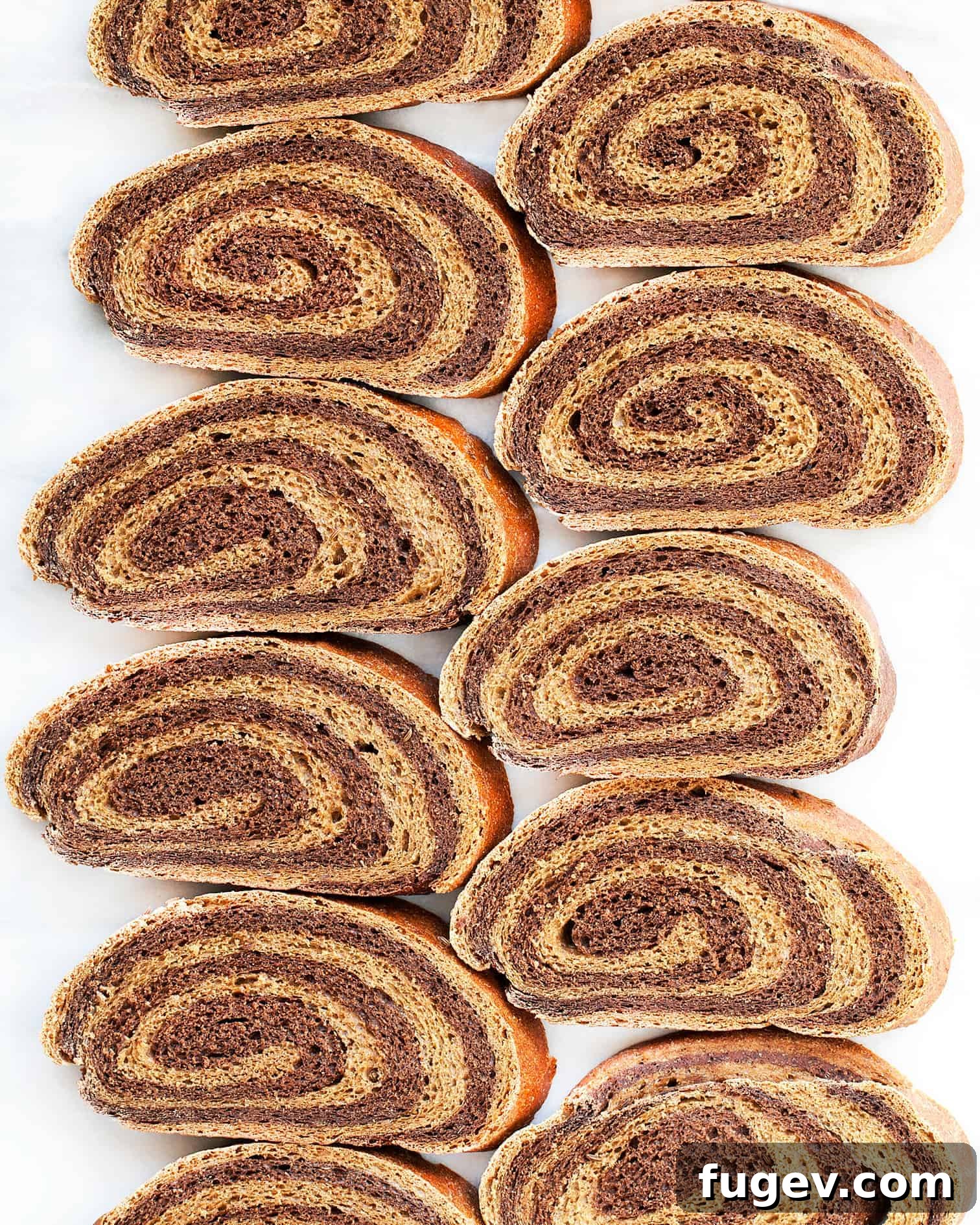
Master the Art of Marble Rye Bread: A Homemade Baking Delight
Unleash your inner baker and prepare to be mesmerized by the beautiful swirls of this seeded Marble Rye Bread. Combining the distinct characteristics of both dark and light rye doughs, this loaf promises not only a stunning appearance but also a rich, complex flavor profile that will elevate any meal. Each slice reveals a unique, hypnotizing pattern, making it a true masterpiece of home baking.
There’s a certain magic in baking a loaf of bread that offers both visual appeal and a delightful taste. While rye bread can sometimes be a “love-it-or-hate-it” proposition for some, this marble rye recipe has a way of converting even the skeptics. Its balanced flavors and soft texture, complemented by the subtle crunch of caraway seeds, create an experience that’s hard to resist.
The Allure of Rye: More Than Just a Loaf
Rye bread boasts a long and rich history, dating back centuries in European cuisines. Valued for its robust flavor and dense texture, rye has been a staple grain in many cultures. Marble rye takes this classic bread to an artistic level, blending the familiar tangy notes of light rye with the deeper, slightly sweeter tones of dark rye. The addition of unsweetened cocoa powder to the dark rye dough not only enhances its color but also adds a subtle depth of flavor without imparting any chocolate taste, creating a truly sophisticated bread.
For those who appreciate the distinctive taste of rye, this recipe is a dream come true. Even if you’ve had mixed experiences with rye in the past, the beautiful marbling and the harmonious blend of flavors in this loaf might just win you over. My own journey with this bread has been incredibly rewarding. Despite my three-year-old’s refusal to try it (even with those captivating swirls!) and my husband’s general disinterest in rye, I’ve savored every single slice. There’s a special joy in indulging in a perfectly baked pumpernickel bagel with cream cheese, and this homemade marble rye evokes a similar comforting satisfaction.
Authentic Seeded Marble Rye Bread Recipe
This comprehensive recipe guides you through creating a truly spectacular Marble Rye Bread. The process involves preparing two distinct doughs, a light rye and a dark rye, then skillfully combining them to achieve the iconic swirl. The result is a flavorful, aromatic loaf, perfect for a variety of culinary uses, from gourmet sandwiches to a simple breakfast toast.
Recipe Overview
- By: Paige Adams
- Prep Time: Approximately 2 hours 30 minutes (includes rising time)
- Cook Time: 45 minutes
- Total Time: Approximately 3 hours 15 minutes
- Yields: 12 generous servings
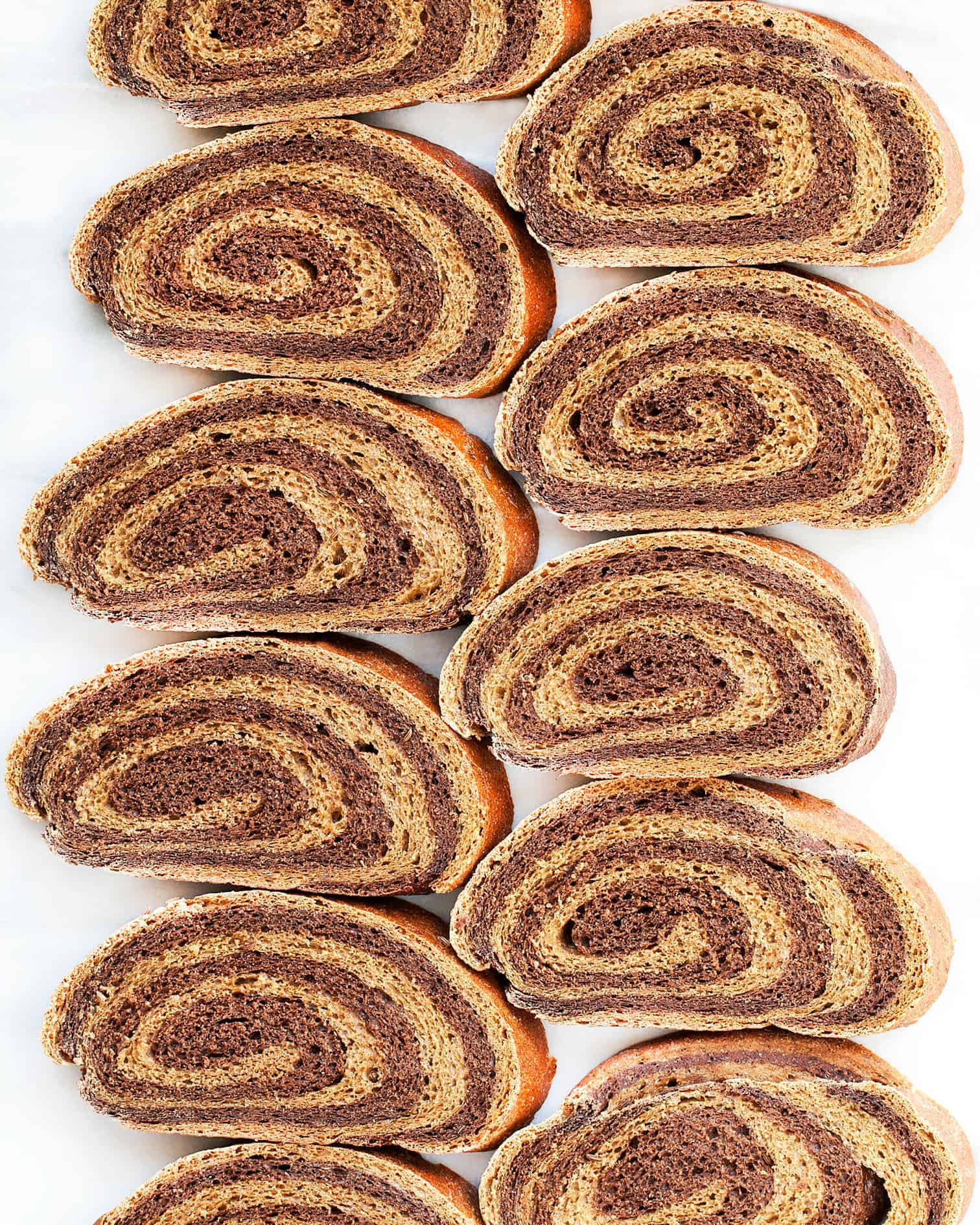
Print Recipe
Ingredients You’ll Need
For the Light Rye Dough:
- 2/3 cup warm water (around 105-115°F or 40-46°C)
- 1 teaspoon active dry yeast
- 1 tablespoon unsulfured molasses
- 1 teaspoon kosher salt
- 1 cup bread flour
- 1 cup light rye flour
- 1 teaspoon caraway seeds (plus extra for sprinkling on top)
- 1 tablespoon safflower oil (plus additional for greasing the bowl)
For the Dark Rye Dough:
- 2/3 cup warm water (around 105-115°F or 40-46°C)
- 1 teaspoon active dry yeast
- 1 tablespoon unsulfured molasses
- 1 teaspoon kosher salt
- 1 cup bread flour
- 1 cup light rye flour
- 2 tablespoons unsweetened cocoa powder (for color and depth, not chocolate flavor)
- 1 teaspoon caraway seeds (plus extra for sprinkling on top)
- 1 tablespoon safflower oil (plus additional for greasing the bowl)
For the Egg Wash:
- 1 egg white
Step-by-Step Instructions
- Prepare the Light Rye Dough: In a large mixing bowl, combine the warm water and active dry yeast. Allow it to sit undisturbed for about 5 minutes until the mixture becomes foamy, indicating the yeast is active. Stir in the molasses and kosher salt until well combined. Gradually add both the bread flour and light rye flour, along with the caraway seeds and safflower oil. Mix thoroughly until a shaggy, cohesive dough begins to form.
- Knead the Light Rye Dough: Transfer the dough from the bowl to a lightly floured surface. Knead the dough vigorously for approximately 5 minutes. The goal is to develop the gluten, resulting in a smooth, elastic dough that springs back when gently pressed. Place the kneaded dough into a clean bowl that has been lightly oiled. Cover the bowl loosely with plastic wrap or a clean kitchen towel and let it rise in a warm, draft-free place until its volume has doubled, which typically takes about 1 hour.
- Prepare the Dark Rye Dough: Follow the exact same steps as for the light rye dough. After stirring in the flours and before kneading, incorporate the unsweetened cocoa powder. Ensure the cocoa powder is fully blended into the mixture for an even dark color. Knead for 5 minutes until smooth and elastic, then place in an oiled bowl, cover, and let rise for about 1 hour, or until doubled in volume.
- Shape the Marble Rye Loaf: Once both doughs have completed their first rise, gently punch them down to release the air. On a lightly floured surface, roll each dough separately into a rectangular shape, approximately 10 inches by 15 inches. Carefully place the dark rye dough rectangle directly on top of the light rye dough rectangle. Beginning from one of the short ends, tightly roll the layered dough into a log. Gently roll the log back and forth a few times to even it out and seal the seam. Tuck in the ends to create a neat loaf, aiming for a final length of about 13 inches.
- Second Rise (Proofing): Transfer the shaped dough log to a parchment-lined baking sheet, placing it seam-side down. Loosely cover the loaf with plastic wrap or a clean towel to prevent drying. Allow it to rise again in a warm, draft-free spot until it has visibly doubled in volume, usually another 1 hour. This second rise is crucial for a light and airy texture.
- Bake the Bread: Preheat your oven to 450 degrees Fahrenheit (230 degrees Celsius) while the bread is on its second rise. Just before baking, use a sharp knife or a bread lame to make three diagonal slashes, about 1/2-inch deep, across the top of the loaf. In a small bowl, whisk the egg white with 1 teaspoon of water to create an egg wash. Lightly brush the entire surface of the loaf with this egg wash, then sprinkle generously with additional caraway seeds, if desired.
- Final Baking: Immediately reduce the oven temperature to 350 degrees Fahrenheit (175 degrees Celsius) after placing the loaf inside. Bake for approximately 40-45 minutes, or until the crust is a beautiful golden brown and a thermometer inserted into the center of the loaf registers an internal temperature of 200 degrees Fahrenheit (93 degrees Celsius).
- Cool Completely: Once baked, remove the loaf from the oven and transfer it to a wire rack to cool completely. This step is vital; slicing the bread while it’s still warm can compromise its texture and flavor. Allow it to cool entirely before slicing and serving.
Recipe Notes and Adaptations
This delectable recipe has been thoughtfully adapted from an excellent source: Martha Stewart Living, specifically the November 2017 issue. Small adjustments have been made to optimize the home baking experience.
Nutrition Facts (per serving)
Based on 12 servings:
- Calories: 171 kcal
- Carbohydrates: 31g
- Protein: 5g
- Fat: 3g
- Saturated Fat: 0.3g
- Polyunsaturated Fat: 1g
- Monounsaturated Fat: 2g
- Trans Fat: 0.002g
- Sodium: 396mg
- Potassium: 159mg
- Fiber: 3g
- Sugar: 3g
- Vitamin A: 2 IU
- Vitamin C: 0.1mg
- Calcium: 19mg
- Iron: 1mg
Please note: Nutrition information is automatically calculated and should be considered an approximation. Dietary needs may vary.
Additional Recipe Information
- Course: Bread
- Cuisine: American (with European rye influences)
Expert Tips for Perfect Marble Rye Bread Every Time
Achieving a bakery-quality marble rye loaf at home is incredibly rewarding. Here are some pro tips to ensure your baking experience is smooth and your bread turns out spectacular:
- Yeast Activation is Key: Always check your yeast by allowing it to foam in warm water. If it doesn’t foam, your yeast might be old or the water temperature incorrect.
- Molasses Matters: Unsulfured molasses contributes to the rich color and distinct flavor of traditional rye bread. Don’t skip it!
- Don’t Over-Flour: While kneading, resist the urge to add too much extra flour. A slightly sticky dough is often better than a dry one. Adjust with small amounts as needed until the dough is smooth but still pliable.
- The Power of Cocoa: Remember, the unsweetened cocoa powder in the dark rye is purely for color and a subtle earthy note, not chocolate flavor. It’s what gives the dark rye its deep hue.
- Mastering the Swirl: For the most dramatic swirl, ensure both dough rectangles are roughly the same size and rolled to an even thickness. Roll the log tightly but gently to prevent tearing and create clear layers.
- Proofing Environment: A warm, humid, draft-free spot is ideal for rising dough. If your kitchen is cool, place the covered bowls/loaf in a slightly warm (but turned off) oven or near a sunny window.
- Scoring Benefits: The slashes on top of the loaf aren’t just for aesthetics. They allow the bread to expand predictably in the oven, preventing uncontrolled cracking.
- Cooling is Crucial: Patience is a virtue, especially with bread. Cooling completely allows the internal structure of the bread to set and prevents a gummy texture. It also deepens the flavor.
Serving Suggestions and Delicious Pairing Ideas
Marble Rye Bread is incredibly versatile and pairs wonderfully with a variety of foods. Its robust flavor and unique texture make it a standout on its own or as part of a more elaborate meal:
- Classic Reuben: Undoubtedly the most famous pairing! Stack slices high with corned beef, Swiss cheese, sauerkraut, and Russian dressing.
- Breakfast Toast: Simply toasted with butter, cream cheese (especially plain or scallion), or your favorite jam.
- Open-Faced Sandwiches: Top with smoked salmon, dill, and cream cheese for an elegant brunch. Or try with cured meats and pickles for a hearty lunch.
- Soup Companion: A thick slice of marble rye is the perfect accompaniment to hearty stews, goulash, or a simple bowl of vegetable soup.
- Cheese Board: Serve alongside a selection of artisanal cheeses and fruit for a delightful appetizer spread.
- Avocado Toast: For a modern twist, spread with mashed avocado, a sprinkle of red pepper flakes, and a squeeze of lemon.
Bake Your Own Artisan Bread Today!
There’s immense satisfaction in baking a loaf of bread from scratch, especially one as beautiful and flavorful as Marble Rye. The process, from activating the yeast to witnessing the perfect swirl emerge, is a rewarding journey for any home baker. We encourage you to try this recipe and experience the joy of biting into a slice of homemade artisan bread. It’s a culinary adventure that promises both a visual treat and a delightful experience for your taste buds.
Did you bake this recipe? We’d love to see your creations! Mention @lastingredient on Instagram and make sure to tag it with #lastingredient!