
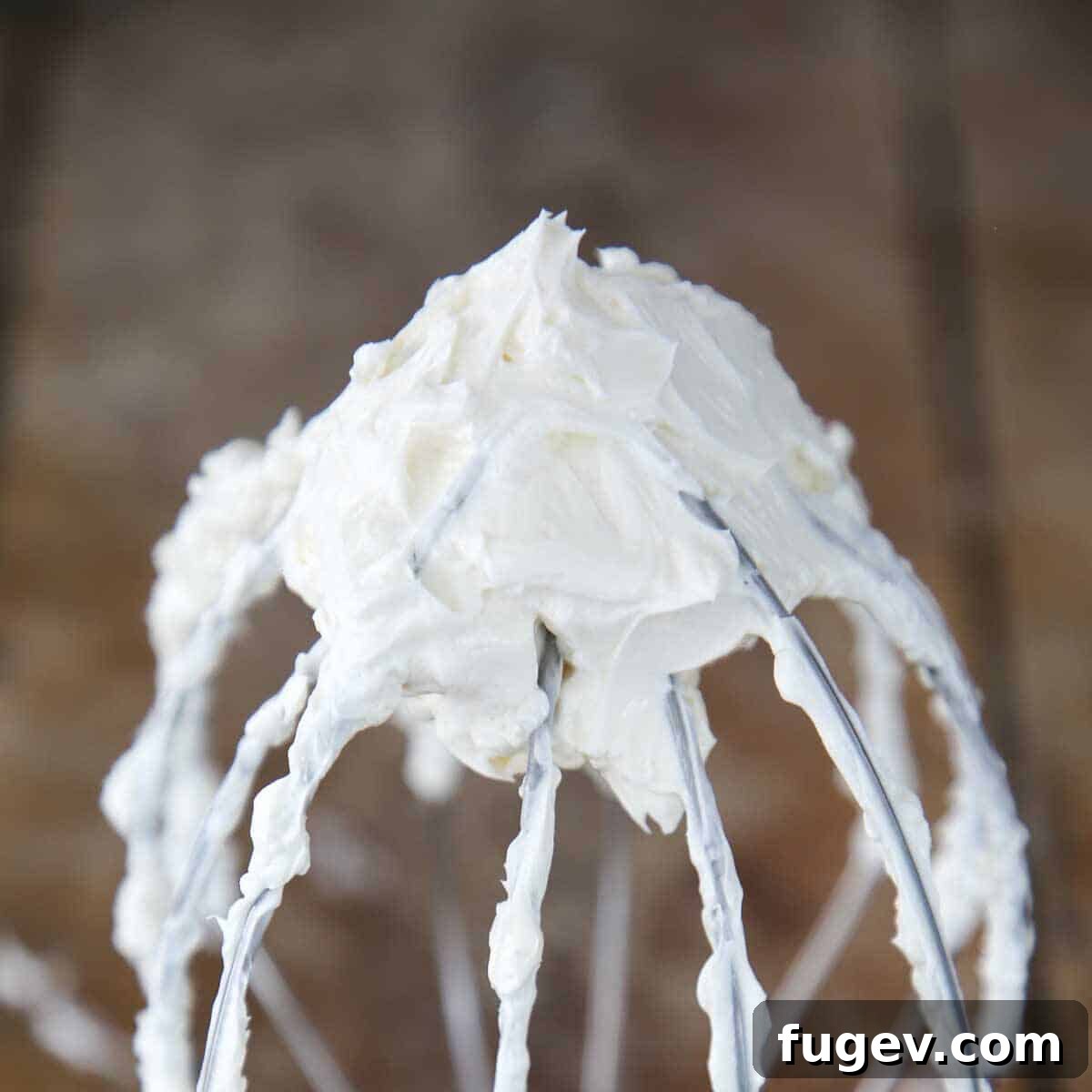
Mastering Swiss Meringue Buttercream: Your Go-To Guide for Silky Smooth Frosting
Discover the art of creating the perfect Swiss Meringue Buttercream (SMB) – a truly exceptional frosting that is effortlessly smooth, perfectly balanced in sweetness, and boasts a wonderfully light, silky texture. This recipe is more than just a topping; it’s the ideal foundation for any cake or cupcake, ensuring a professional, flawless finish. Its unparalleled consistency makes it the top choice for achieving that coveted, perfectly smooth coating on elegant layer cakes, promising both beauty and deliciousness in every bite.
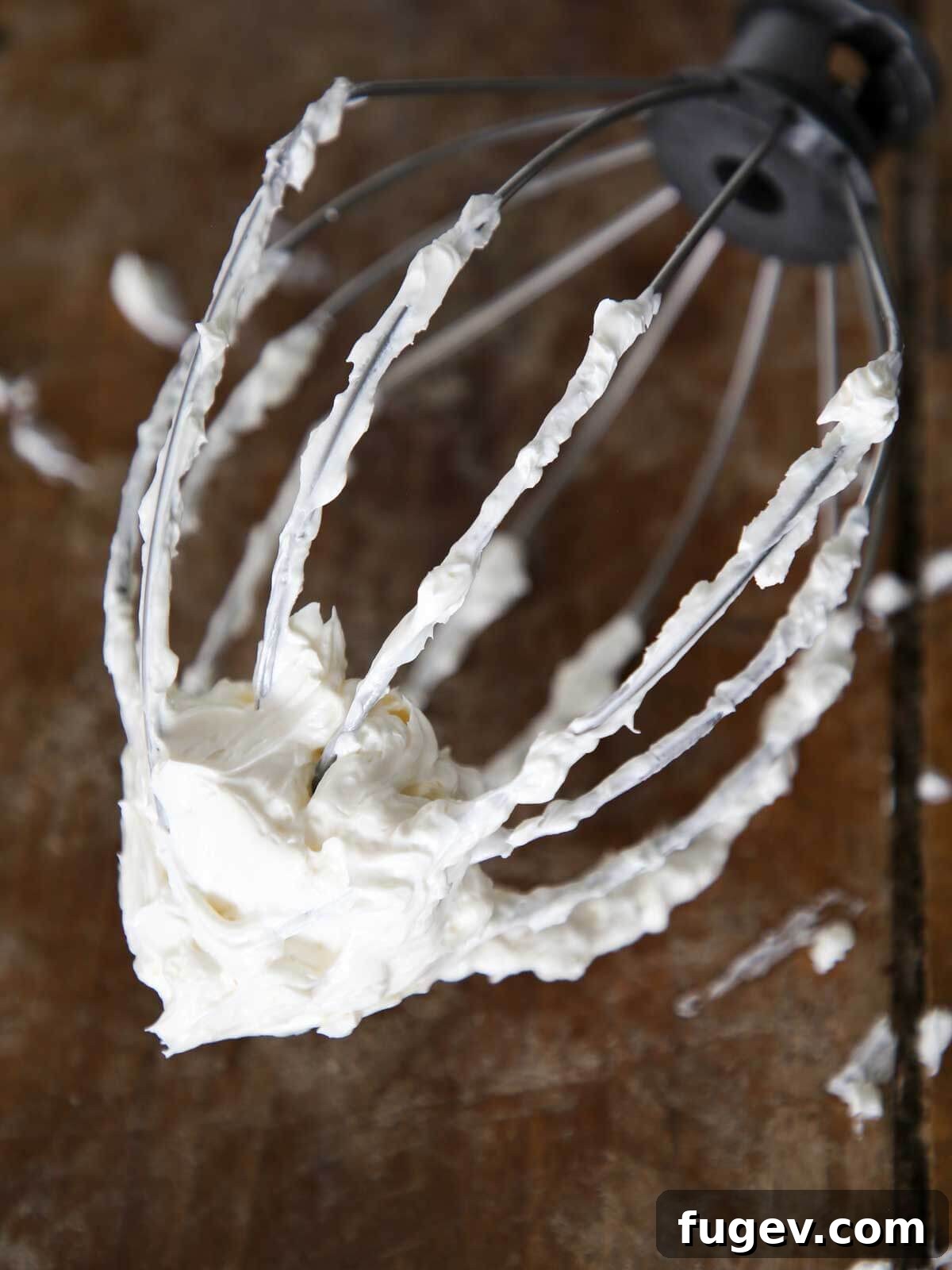
Swiss Meringue Buttercream stands out in the world of frostings. It’s not just delicious; it’s incredibly stable and reliable, like that steadfast friend who always has your back. This delicate buttercream is characterized by its light body and velvety texture, melting delightfully in your mouth. Unlike its often overly sweet American counterparts, SMB offers a refined sweetness that allows other flavors to shine through beautifully.
While this recipe highlights the classic vanilla flavor, its versatility is truly remarkable. You can easily adapt it to suit any palate or occasion. Consider incorporating up to ¾ cup of rich salted caramel sauce for a decadent twist, or a vibrant ½ cup of bright lemon curd for a zesty kick. For chocolate lovers, folding in 200g of melted (and slightly cooled) dark chocolate creates an indulgent delight. Alternatively, introduce fruity notes with mixed berry jam or experiment with various extracts. This buttercream truly serves as the ultimate canvas for any flavor creation, including our popular chocolate Swiss Meringue Buttercream.
Table of Contents
- Why You Will Love This Recipe
- Professional Tips for Making Swiss Meringue Buttercream
- Essential Ingredients for Perfect SMB
- Exciting Flavor and Color Variations
- Advantages of Swiss Meringue Buttercream
- Step-by-Step Guide: How to Make SMB
- Troubleshooting Common SMB Issues
- Chef Lindsey’s Expert Tip
- Frequently Asked Questions About SMB
- Swiss Meringue Buttercream Recipe Card
- Before You Go: Explore More Baking
Why You Will Fall in Love with This Swiss Meringue Buttercream Recipe
This recipe isn’t just another buttercream; it’s a game-changer for home bakers and seasoned professionals alike. Here’s why you’ll find yourself reaching for this Swiss Meringue Buttercream recipe again and again:
- Almost Foolproof Success: Many bakers are intimidated by meringue-based buttercreams, but this recipe is designed for success. We provide both precise temperature guidelines and intuitive sensory cues, allowing you to master it whether you prefer strict measurements or baking by feel. The detailed instructions minimize room for error, making it incredibly approachable.
- Unrivaled Silky Smooth Texture & Impressive Stability: Prepare for a frosting that is so luxuriously silky, it practically dissolves on your tongue. Yet, despite its delicate mouthfeel, this buttercream is robust. When chilled, it becomes solid enough to provide exceptional structural integrity, making it perfect for supporting multiple tiers on grand celebration cakes. Its firmness also allows it to create a reliable “dam” to hold in looser, more fluid fillings, preventing them from oozing out between cake layers.
- A Delightful Balance of Sweetness: One of the most common complaints about traditional American buttercreams is their overwhelming sweetness, often due to the high volume of powdered sugar. Swiss Meringue Buttercream offers a refreshing alternative. The cooking process for the meringue creates a stable base without relying on excessive confectioner’s sugar, resulting in a frosting that is significantly less sweet, allowing the true flavors of your cake and the buttercream itself to shine.
Professional Tips for Making Flawless Swiss Meringue Buttercream
Achieving bakery-quality Swiss Meringue Buttercream is within your reach with these expert insights:
- Incorporate Salt Early for Enhanced Stability: While many recipes suggest adding salt at the very end, incorporating it into the egg whites and sugar before heating can significantly boost the meringue’s stability. The salt helps tighten the protein structure of the egg whites, leading to a stronger, more resilient meringue, which in turn results in a more stable buttercream. Plus, it ensures an even distribution of flavor, tempering the sweetness right from the start. This simple adjustment is a small trick that elevates your baking to a professional level.
- Understand Its Temperature Limitations: Swiss Meringue Buttercream is incredibly stable when refrigerated, holding its shape beautifully. However, its optimal flavor and texture are experienced at room temperature, when it’s soft, creamy, and melts in your mouth. For the best tasting experience, allow your frosted cake to sit at room temperature for at least 2 hours before serving. If you need to cut clean slices, you can slice it cold, then let the individual slices come to room temperature to enjoy its best qualities.
- Weigh Your Ingredients for Unmatched Precision: For truly consistent and reliable results, especially if you’re undertaking significant projects like wedding cakes, weighing your ingredients—particularly egg whites—is crucial. The weight of an egg white can vary by as much as 30% depending on the size of the egg and how cleanly it’s separated from the yolk. This variance can drastically alter the egg white to sugar ratio, directly impacting the stability of your meringue. While volumetric measurements might suffice for casual baking, precision weighing with a kitchen scale ensures a perfectly balanced and stable buttercream every time.
- Don’t Overstress About Trace Fat in Meringues: The myth of meringue being utterly ruined by a speck of fat is often exaggerated. In reality, as long as there are no visible traces of egg yolk in your whites and your mixing bowl feels genuinely clean, you are likely fine. Avoid the unnecessary step of wiping your bowl with vinegar, as this can subtly affect the flavor of your delicate meringue. If, for some reason, your meringue isn’t whipping up properly, a small addition of cream of tartar (a teaspoon at a time) can help stabilize it. Start with a quarter teaspoon and add more if needed, until it reaches stiff peaks. If you can taste the cream of tartar in the final product, it means you added too much, but this is a rare occurrence. Remember, life is far too short to agonize over every tiny detail when baking; enjoy the process!
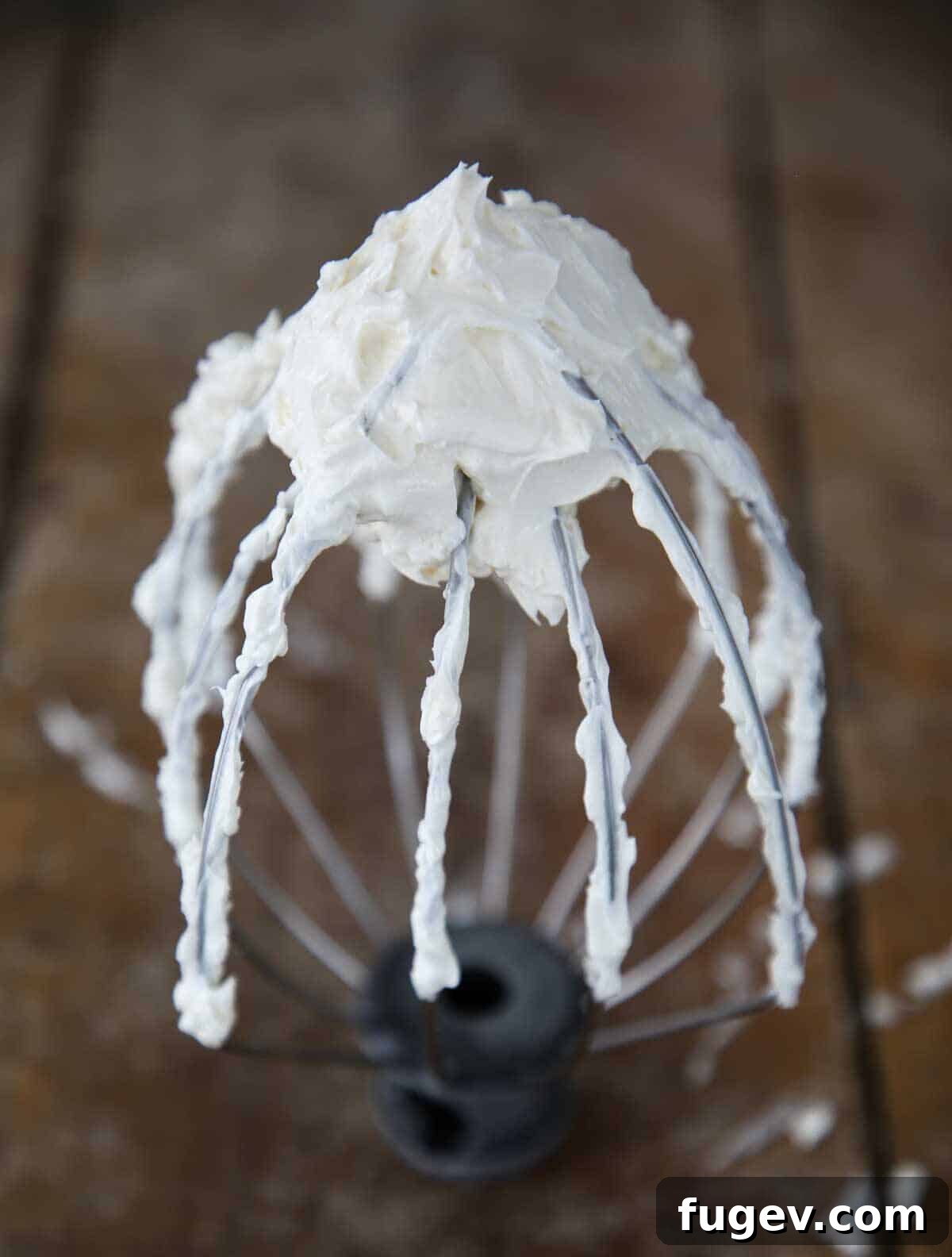
Essential Ingredients for Your Perfect Swiss Meringue Buttercream
Crafting exceptional Swiss Meringue Buttercream begins with selecting the right ingredients. Here’s a detailed look at what you’ll need and why each component is crucial:
- Egg Whites: The foundation of our meringue. It is absolutely essential to use fresh, separated egg whites for a stable meringue. Carton egg whites, due to their pasteurization process, often lack the protein structure necessary to whip into stiff, stable peaks. Carefully separate your eggs, making every effort to keep the whites free from any yolk. Don’t worry if a tiny speck gets in; as long as there are no visible streaks or large pieces of yolk, you’ll be fine. Pro tip: save those rich yolks for other delightful recipes like the best chocolate ice cream or a luxurious hot chocolate.
- Granulated Sugar: This provides both sweetness and structure to the meringue. For the smoothest possible buttercream, especially if you’re concerned about a slightly gritty texture, opting for extra-fine granulated sugar is beneficial as it dissolves more readily. However, don’t let the lack of extra-fine sugar deter you; regular granulated sugar will still yield excellent results, just ensure it fully dissolves during the heating process.
- Kosher Salt: More than just a seasoning, kosher salt plays a dual role in this recipe. Its coarser texture compared to table salt means it’s less salty by volume, allowing for precise control. Critically, it aids in stabilizing the egg white proteins, contributing to a stronger meringue, and expertly balances the sweetness of the buttercream, preventing it from tasting cloying.
- Unsalted Butter: Butter is a star ingredient here, forming the rich, creamy body of the buttercream. I exclusively use unsalted butter in all my baking, particularly in this recipe, as it allows for complete control over the salt content. Since butter is a prominent flavor, choose a high-quality brand that you genuinely enjoy the taste of. If your goal is to achieve a pristine white buttercream, select the whitest butter available; these often have a lower fat percentage, which can also slightly affect the final color.
- Vanilla Extract: The classic flavor for this versatile buttercream. I typically use pure vanilla extract for its rich and aromatic profile. For an even more complex flavor, you could use a combination of vanilla beans and extract, or opt for vanilla bean paste which also adds beautiful specks of vanilla. Be aware that pure vanilla extract can impart a slight off-white or yellowish tint to the buttercream. If you desire a brilliant white frosting, consider omitting the vanilla or using a clear imitation vanilla extract instead.
Refer to the recipe card below for the precise quantities and full ingredient details.
Exciting Flavor and Color Variations for Your Swiss Meringue Buttercream
One of the true joys of Swiss Meringue Buttercream is its incredible adaptability. Once you’ve mastered the basic vanilla, a world of creative possibilities opens up. Here’s how you can customize your SMB:
- Coloring Swiss Meringue Buttercream for Visual Impact:
- Powdered Food Colorings: For the most vibrant, deeply saturated colors without affecting the buttercream’s consistency, powdered food colorings are your best bet. They integrate beautifully and deliver intense hues.
- Gel Food Colorings: Gel colors are a convenient option, especially for achieving lighter, more pastel shades. However, be cautious; adding too much gel coloring can introduce excess liquid, potentially loosening the buttercream and compromising its stability. Add sparingly and mix well before adding more.
- Liquid Food Colors: Generally, liquid food colors are not recommended for SMB as they add too much moisture and can easily destabilize the buttercream, making it soupy.
- Transforming the Flavor Profile: The possibilities for flavoring SMB are nearly endless. Add your chosen flavor once the buttercream has fully come together and is light and fluffy.
- Extracts: Start by adding a small amount (e.g., ½ to 1 teaspoon) of any extract you desire – almond, peppermint, coffee, coconut, etc. Taste as you go and adjust to your preference.
- Nut Butters: For a rich, nutty flavor, fold in about ½ cup of smooth nut butter, such as peanut, almond, or cashew butter. Ensure it’s well incorporated.
- Curds and Sauces: Incorporate ½ cup of bright lemon curd or up to ¾ cup of rich caramel sauce for a delightful twist.
- Fruit Preserves: Up to ¾ cup of fruit preserves, jams, or jellies can add wonderful fruity notes. Remember that the buttercream has a limit to how much acidity it can tolerate before breaking, so add these gradually. For an ultra-smooth buttercream, strain any preserves to remove seeds or large fruit pieces before adding.
- Chocolate: For an indulgent chocolate buttercream, melt 200g (about 7 oz) of good quality dark chocolate. Allow it to cool slightly (it should still be liquid but not hot) before slowly drizzling it into the finished buttercream while the mixer runs on low.
The Unbeatable Advantages of Choosing Swiss Meringue Buttercream
Among the various buttercream types, Swiss Meringue Buttercream consistently earns its reputation as a baker’s favorite for a multitude of compelling reasons:
- Exceptional Stability: Swiss Meringue Buttercream is renowned for being one of the most stable buttercreams available. Compared to Italian Meringue Buttercream, SMB often contains slightly more sugar, which contributes to its robust structure. This superior stability means your frosted creations can withstand warmer room temperatures for an hour or two without fear of melting or losing shape, offering greater peace of mind for events and displays.
- Superior Structural Support for Elaborate Cakes: The cooked meringue base provides incredible structural integrity, making SMB the ideal choice for intricate decorating and ambitious layered cakes. It’s perfect for those extravagant designs or for cakes with softer, looser fillings, such as our Lemon Meringue Cheesecake. The combination of butter and meringue sets firmly when refrigerated, allowing you to stack tiers with confidence. However, remember that even the strongest buttercream has its limits; always use proper cake support like cake straws or wooden dowels to bear the weight of additional layers, fillings, and frosting. It’s a miracle worker, but not magic!
- Faster Preparation Compared to Other Meringue-Based Buttercreams: While all meringue buttercreams require a bit more attention than a simple American buttercream, Swiss Meringue Buttercream generally boasts a quicker preparation time than Italian Meringue Buttercream. The method of heating the egg whites and sugar directly over a bain-marie streamlines the process, getting you to a fluffy, stable frosting faster.
- Accessible Even Without a Stand Mixer: Unlike Italian Meringue, which truly benefits from (and is safer with) the continuous beating of a stand mixer, Swiss Meringue Buttercream can be successfully made with a high-quality hand mixer. This makes it a more accessible option for home bakers who may not have a stand mixer in their arsenal, allowing everyone to enjoy this exquisite frosting.
- A Refreshingly Less Sweet Profile: Perhaps one of its most celebrated qualities, SMB offers a significantly less sweet flavor compared to traditional American vanilla buttercream. American frostings rely heavily on confectioner’s sugar for stability and structure, leading to an often cloying sweetness. In SMB, the cooked meringue provides all the necessary structure and stability, allowing for a much lower sugar content overall, resulting in a sophisticated, balanced sweetness that enhances rather than overpowers your dessert.
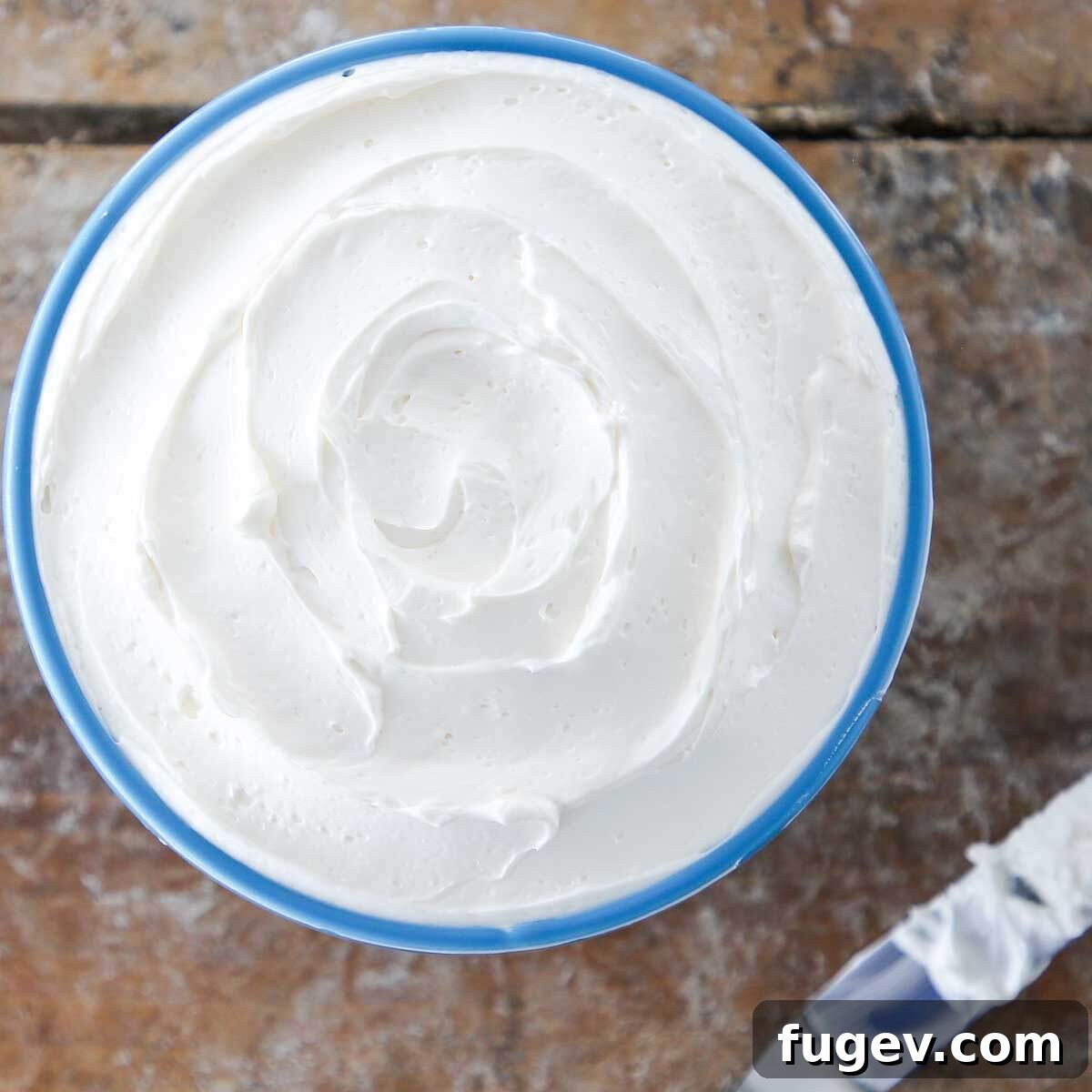
Step-by-Step Guide: How to Make the Perfect Vanilla Swiss Meringue Buttercream
Follow these detailed instructions to create consistently perfect vanilla Swiss Meringue Buttercream every time. For precise measurements, please refer to the recipe card located further down this page.
Preparation is Key (Mise en Place):
Before you begin the meringue, remove your unsalted butter (cut into cubes) from the refrigerator. It needs to reach the ideal temperature: pliable to the touch, meaning you can easily indent it with your finger, but still slightly cool. This ensures it emulsifies correctly into the meringue.
Step 1: Set Up Your Bain-Marie (Water Bath)
Pour about an inch of water into a medium-sized saucepot and bring it to a gentle simmer over medium-low heat. The most crucial aspect here is ensuring that the bowl of your stand mixer (or a heatproof mixing bowl) fits snugly over the pot, creating a “nest” where the bottom of the bowl does not touch the simmering water. This allows for gentle, indirect heat.
Expert Tip: Ensure the bowl’s bottom doesn’t touch the water to prevent the eggs from scrambling. The steam is what gently cooks the mixture.
Step 2: Gently Cook the Meringue Base
In your stand mixer bowl, whisk together the egg whites, granulated sugar, and kosher salt until just combined. Place this bowl over your simmering bain-marie. Continue whisking constantly to prevent the egg whites from cooking too quickly. Heat the mixture until it reaches 130°F (54°C) on an instant-read thermometer. Alternatively, you can test it by feel: the sugar crystals should be completely dissolved when you rub a small amount between your fingers, and the mixture should feel warm to the touch and slightly lighter in volume.
Safety Note: This temperature is sufficient to dissolve the sugar and pasteurize the eggs for most. If you have concerns about consuming raw or undercooked eggs, heat the meringue mixture to 160°F (71°C).
Step 3: Whip the Meringue to Stiff Peaks
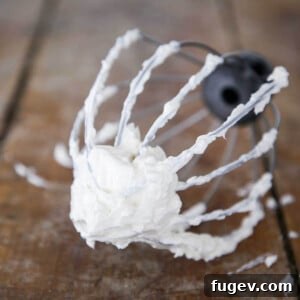
Carefully remove the hot bowl from the bain-marie (use a towel or oven mitts, especially if you have a gas burner, as the bowl will be very hot). Attach the bowl to your stand mixer and fit it with the whisk attachment. Beat the meringue on high speed until it forms stiff, glossy peaks. This process also cools the meringue down significantly, which is essential before adding butter. The bowl should feel only slightly warm to the touch, or even cool.
Step 4: Incorporate the Butter
Once the meringue is cool and has reached stiff peaks, switch from the whisk attachment to the paddle attachment. Begin adding the softened, cubed butter, a few pieces at a time, while the mixer runs on medium speed. Continue beating. Initially, the mixture might look curdled or even separated, resembling cottage cheese or scrambled eggs. Do not panic! This is a normal stage in the process. Keep beating on medium speed; the butter will eventually fully emulsify into the meringue, transforming into a silky, smooth, and cohesive buttercream. Patience is key here!
Step 5: Finish with Vanilla and Whip to Fluffiness
Once your buttercream has come together and is beautifully smooth, switch back to the whisk attachment. Add your vanilla extract (or other chosen flavorings). Increase the speed to medium-high and beat for another 1-2 minutes until the buttercream becomes incredibly light, airy, and fluffy. It will gain a significant amount of volume and become visibly whiter. Your perfect Swiss Meringue Buttercream is now ready to use for frosting, filling, or piping! Store it as directed or get ready to frost your favorite desserts.
Troubleshooting Common Swiss Meringue Buttercream Issues
Even seasoned bakers encounter hiccups. Here’s how to tackle common SMB challenges with confidence:
- Dealing with Stubborn Butter Bits: If, after mixing, you find a few small, unmelted chunks of butter, don’t despair. You can gently warm the sides of your mixing bowl with a kitchen torch for a very brief moment. Keep the torch moving constantly and quickly across the surface to just barely melt those stubborn pieces. Be extremely careful not to overheat any single spot or melt too much butter, as this can break the emulsion and make recovery much harder.
- When Your Buttercream Becomes a “Soup”: This usually happens if your meringue wasn’t sufficiently cooled before you added the butter. If you’ve added butter to a warm meringue and now have a liquidy, soupy mess, stay calm! Continue mixing on medium speed to ensure all the butter is fully incorporated (otherwise, it will solidify into chunky bits in the fridge). Then, place the entire mixing bowl (with the paddle attachment still inside) into the refrigerator for 20-30 minutes. The goal is to chill the butter and the mixture. Once sufficiently cooled, return the bowl to the mixer and continue beating on medium-high speed. It should come together beautifully as it re-emulsifies.
- The Golden Rule: Embrace Patience! More often than not, issues with Swiss Meringue Buttercream are resolved with simple patience. If things aren’t coming together as expected, take a deep breath. Pop the entire bowl (with the attachment) into the fridge for a short chill, then return it to the mixer and let it run. Sometimes, a few extra minutes of mixing is all it takes for the emulsion to form and for your buttercream to transform into the silky smooth consistency you’re looking for. Walk away, come back, and often you’ll find everything is right in your baking world!
Chef Lindsey’s Expert Tip for Ultra-Smooth Cakes
To achieve that flawlessly smooth, professional cake surface, utilize a clean metal bench scraper, a long palette knife, or a plexiglass smoother. For an even more pristine and glassy finish, gently warm your bench scraper under hot water (then wipe dry) before smoothing the buttercream. Be aware, however, that warming the scraper may subtly change the color or sheen of the buttercream in that spot, so practice this technique to ensure desired results.
Frequently Asked Questions About Swiss Meringue Buttercream
Swiss Meringue Buttercream (SMB) is remarkably versatile in storage. You can keep it in an airtight container in the refrigerator for up to 2 weeks. For longer preservation, it freezes beautifully for up to 3 months. Interestingly, SMB is also stable enough to be left at a cool room temperature overnight (up to 24 hours), although refrigeration is recommended for extended storage.
The ideal method for thawing SMB is to transfer it from the freezer to the refrigerator overnight. Once thawed, it will need to be reconditioned (see below) before use. If you need to expedite the process, you can place the frozen or chilled buttercream in the bowl of a stand mixer fitted with the paddle attachment and let it mix on low speed. For even quicker thawing, gently warm the sides of the mixing bowl with a kitchen torch, moving the flame constantly and stopping frequently to avoid melting the butter directly.
Refreshing buttercream means restoring its soft, light, and fluffy texture after it has been chilled or frozen. Place the cold, firm buttercream into the bowl of a stand mixer fitted with a paddle attachment. Start mixing on low speed, gradually increasing to medium. The buttercream will likely appear curdled or separated at first; this is completely normal and no cause for concern. Continue mixing! As it warms up and re-emulsifies, it will become smooth and creamy again. To speed this process, you can gently warm the sides of the bowl with a kitchen torch as it mixes, ensuring constant movement of the heat and frequent stops to prevent melting the butter.
Absolutely! SMB is perfect for making in advance. You can prepare it up to 2 weeks ahead and store it in the refrigerator, or up to 3 months in the freezer. Just remember to allow it to thaw and recondition it as described above before you’re ready to use it for frosting or decorating.
When stored properly in an airtight container, Swiss Meringue Buttercream can last for about 2 weeks in the refrigerator or up to 3 months in the freezer. At a cool room temperature, it’s generally stable for up to 24 hours.
If you tried this recipe and loved it, please leave a 🌟 star rating and let me know how it goes in the comments below. I love hearing from you; your comments make my day!
Vanilla Swiss Meringue Buttercream
Chef Lindsey
45
45
1.5 Quarts (approx. 16 servings)
Comment
Print Recipe
Ingredients
- 5 large egg whites
- 1 ¼ cup granulated sugar
- ¼ teaspoon kosher salt
- 2 cups unsalted butter (4 sticks, cool but still pliable)
- 2 teaspoons vanilla extract
Instructions
-
Before starting, cut your butter into cubes and allow it to come to a cool, pliable room temperature. Heat about an inch of water in a medium saucepot until it’s just about simmering. Ensure your stand mixer bowl fits over it without touching the water.
-
Whisk together egg whites, salt, and sugar in your stand mixer bowl. Place the bowl over the simmering water and continue whisking constantly. Cook until the mixture reaches 130°F (54°C) on an instant-read thermometer, or until the sugar has completely dissolved and the mixture feels warm to the touch and slightly lighter.
-
Carefully remove the bowl from heat (it will be hot!) and attach it to your stand mixer fitted with the whisk attachment. Beat on high speed until the meringue reaches stiff, glossy peaks and the bowl has cooled significantly to the touch.
-
Switch to the paddle attachment. With the mixer on medium speed, gradually add all the softened butter, a few cubes at a time. Continue beating. The mixture may look curdled or soupy initially – this is normal! Keep mixing until all the butter is incorporated and a silky smooth buttercream forms. This requires patience.
-
If you observe a few stubborn bits of butter remaining, you can very gently warm the sides of the bowl with a kitchen torch, moving it constantly to melt only those pieces without overheating.
-
Should your buttercream become soupy because the meringue was too warm, don’t worry! Let the mixer run to ensure all butter is fully worked in. Then, place the entire bowl (with attachment) into the refrigerator for 20-30 minutes to chill. Once cooled, resume mixing on medium-high speed until it comes together. Remember, patience is the number one rule!
-
Once the buttercream is beautifully smooth, switch back to the whisk attachment and add your vanilla extract. Beat on medium-high speed for another 1-2 minutes until it’s light, airy, and fluffy. Now it’s ready to frost!
Video
Notes
Variations: Experiment by adding up to ¾ cup of jams, jellies, caramel sauce, or lemon curd. For nutty flavors, incorporate up to ½ cup of nut butter. For chocolate, melt 7 oz (200g) of dark chocolate and fold in once cooled but still liquid.
Storage: Store the buttercream in a clean, airtight container in the refrigerator for up to 2 weeks, or freeze it for up to 3 months. It can also be left at a cool room temperature overnight for convenience. Always recondition (rewhip) chilled or frozen buttercream until light and fluffy before use.
Nutrition (per serving)
Carbohydrates: 18g |
Protein: 1g |
Fat: 23g |
Saturated Fat: 14g |
Polyunsaturated Fat: 1g |
Monounsaturated Fat: 6g |
Trans Fat: 1g |
Cholesterol: 60mg |
Sodium: 198mg |
Potassium: 25mg |
Sugar: 18g |
Vitamin A: 703IU |
Calcium: 8mg |
Iron: 1mg
Dessert
French
Enjoyed this recipe? Leave a comment below!
Before You Go: Explore More Baking Adventures
I sincerely hope you enjoyed creating and tasting this professional chef-tested recipe for Swiss Meringue Buttercream. Mastering this versatile frosting opens up a world of possibilities for your baking. Don’t stop here!
Continue your culinary journey by checking out our other delicious, chef-developed buttercream recipes for more inspiration and techniques. Or, put your newly acquired SMB skills to the test by pairing it with our delightful carrot cake cupcakes – while the recipe calls for cream cheese frosting, imagine the elegant twist with your homemade Swiss Meringue Buttercream! Happy baking!