
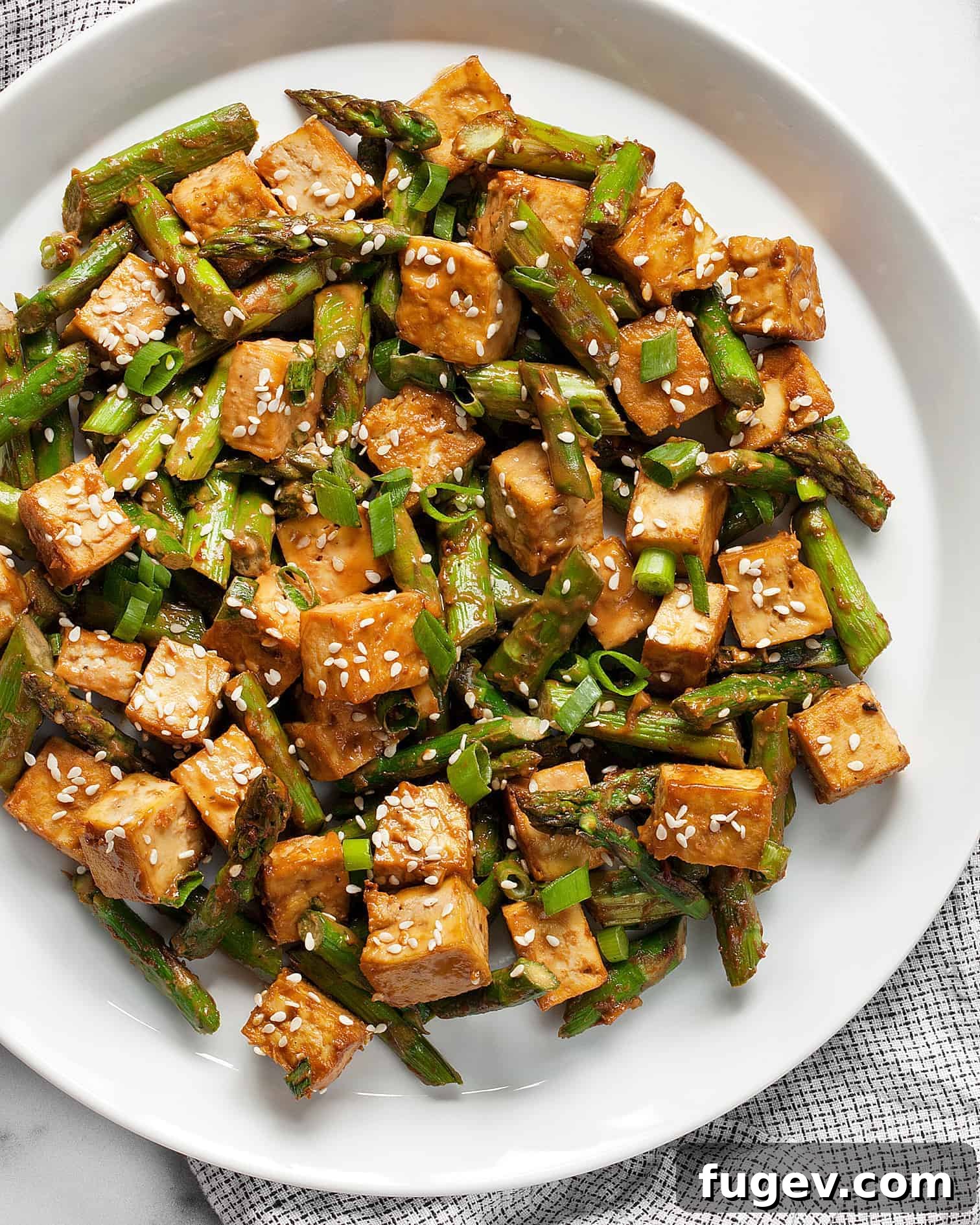
Embark on a culinary journey to deliciousness with this incredibly simple yet profoundly flavorful sheet pan sesame tofu and asparagus recipe. This ingenious meal brings together perfectly baked tofu cubes and vibrant, tender-crisp asparagus, all cooked on a single baking sheet. While your ingredients roast to perfection, you can effortlessly whisk together a rich, creamy sesame sauce on the stovetop in mere minutes. The result? A wholesome, satisfying, and utterly delicious vegan dinner that’s perfect for any night of the week. Serve it alongside fluffy brown rice or hearty quinoa for a complete and balanced plant-based feast that will quickly become a household favorite.
Craving more simple sauces with immense flavor? You might also love our Sheet Pan Kung Pao Tofu for another quick and tasty option.
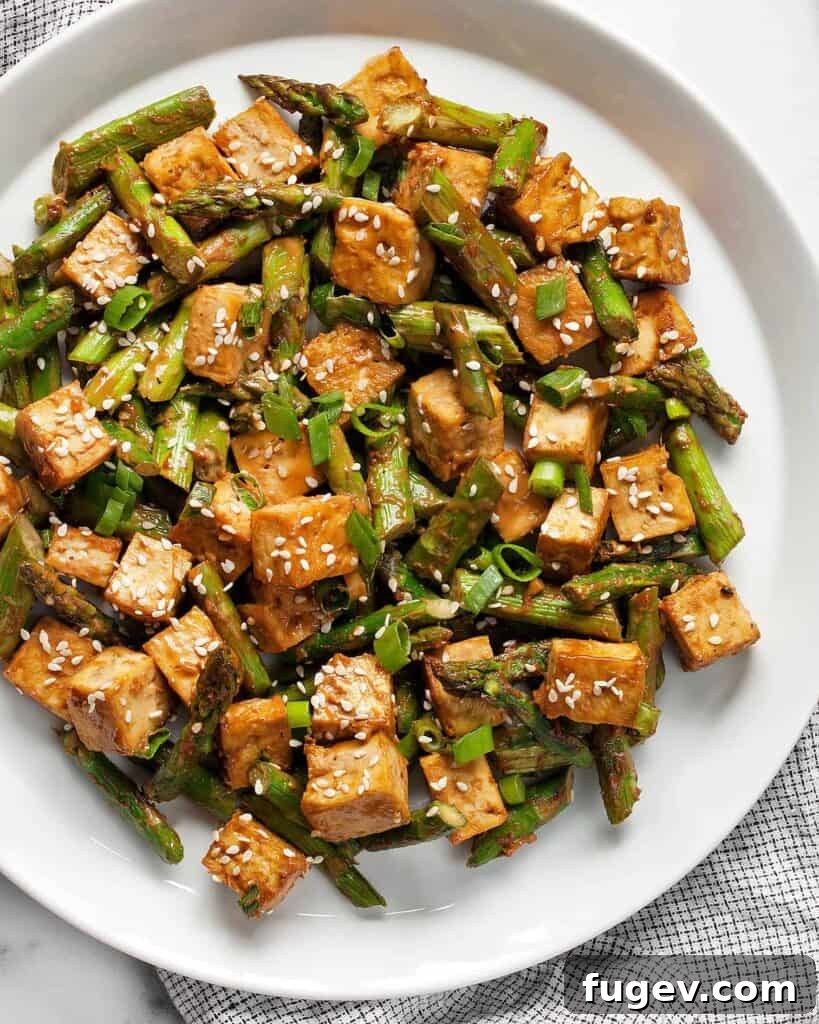
Table of Contents
- Why You’ll Love This Easy Sheet Pan Recipe
- Essential Ingredients for Sesame Tofu
- Mastering Tofu Pressing for Perfect Texture
- Step-by-Step Guide: Crafting Your Sesame Tofu & Asparagus
- Serving Suggestions for a Complete Meal
- Storing and Reheating Leftovers
- Expert Tips for Success
- Frequently Asked Questions
- More Irresistible Tofu Recipes
- Sheet Pan Sesame Tofu and Asparagus Recipe Card
Why You’ll Love This Easy Sheet Pan Sesame Tofu and Asparagus Recipe
This sheet pan sesame tofu and asparagus recipe isn’t just another meal; it’s a testament to how simple, healthy, and incredibly flavorful vegan cooking can be. Here’s why this dish will quickly earn a permanent spot in your weekly rotation:
Baked for Health and Ease
Forget the fuss and excess oil of frying! Our tofu is perfectly baked on a baking sheet, creating a delightfully crispy exterior without constant tending. This hands-off cooking method means you can prepare other elements of your meal or simply relax while the oven does the work. Baking also makes this a significantly healthier option compared to traditional fried tofu, keeping it light and nourishing.
An Unforgettable Sesame Sauce
The magic truly happens with the sauce. Crafted with a harmonious blend of tahini for a wonderfully creamy and nutty base, fresh ginger and pungent garlic for aromatic depth, and a touch of sweetness from maple syrup, this sesame sauce is a flavor powerhouse. It’s incredibly quick to prepare while your tofu and asparagus are baking, minimizing active cooking time. Each bite promises a burst of savory, sweet, and umami notes that perfectly complement the subtle flavors of the tofu and asparagus.
The Ultimate Sheet Pan Convenience
One pan, minimal cleanup, maximum flavor – that’s the promise of this sheet pan dinner. The beauty of this recipe lies in its efficiency: both the tofu and asparagus cook together on the same pan, streamlining your cooking process. Pair it with brown rice or quinoa, which can be cooked simultaneously or prepared in advance and warmed when it’s time to serve. This all-in-one approach makes it an ideal solution for busy weeknights, offering a complete, nutritious meal without a mountain of dishes.
Dietary Friendly and Versatile
This recipe is naturally vegan and can be easily adapted to be gluten-free by simply substituting regular soy sauce with tamari. It’s a fantastic option for various dietary needs and preferences, offering a robust source of plant-based protein and essential nutrients from the vegetables. The versatility means you can effortlessly swap out asparagus for other seasonal vegetables, ensuring this recipe remains fresh and exciting all year round.
Essential Ingredients for Sesame Tofu and Asparagus
Creating this delicious sheet pan meal requires a selection of fresh produce and pantry staples. Here’s a detailed look at what you’ll need to bring this sesame tofu recipe to life:
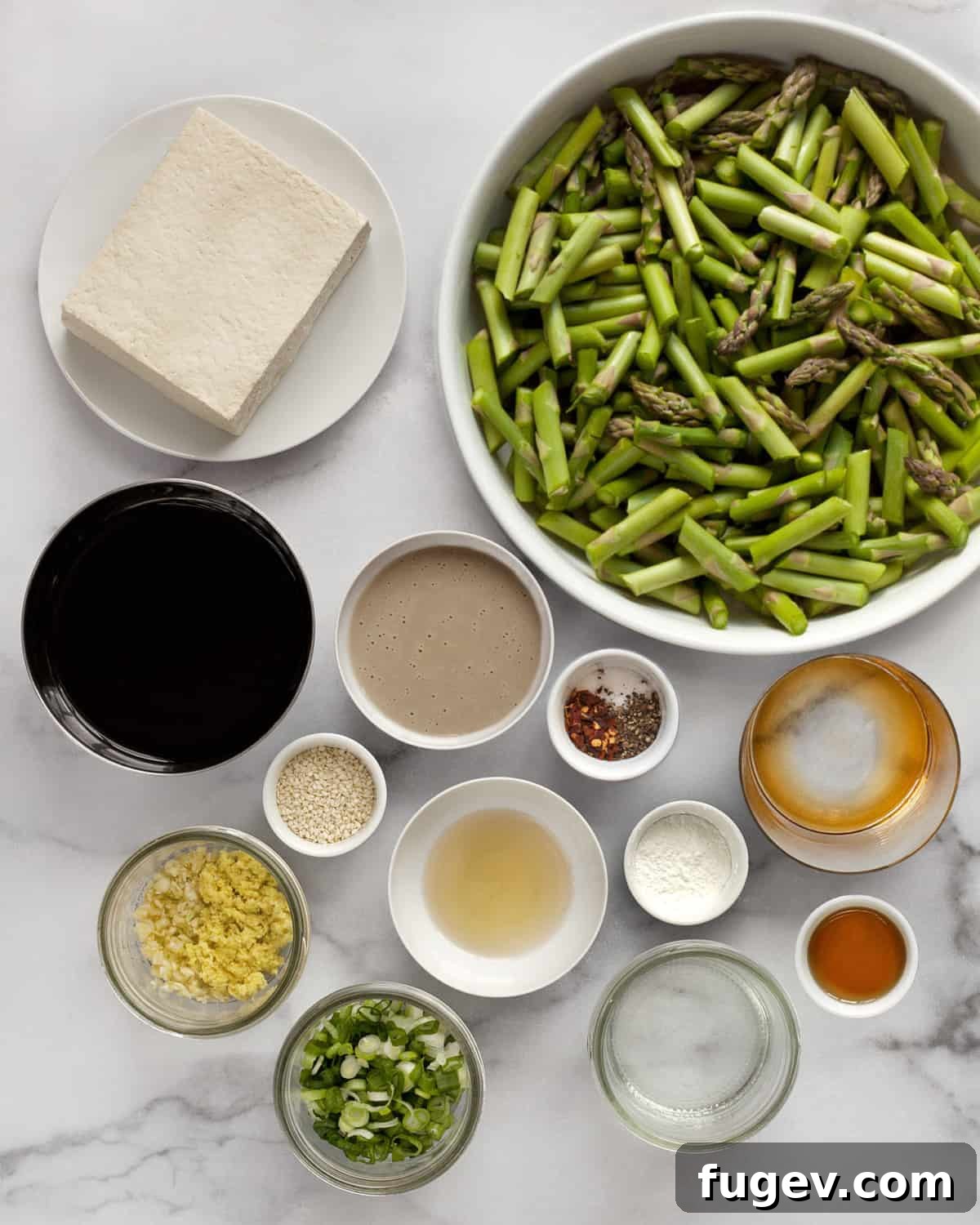
- Extra-Firm Tofu: The star of our plant-based protein show! It’s crucial to use extra-firm tofu for this recipe. Its dense texture holds up beautifully to pressing and baking, ensuring those coveted crispy edges without crumbling. Avoid soft or silken varieties, which are better suited for smoothies or creamy sauces.
- Asparagus: This vibrant spring vegetable adds a delightful crispness and earthy flavor to the dish. When selecting asparagus, look for firm, bright green stalks with tightly closed tips. Store them upright in a jar with a little water in the refrigerator to keep them fresh. Feel free to substitute with other quick-cooking vegetables like green beans, broccoli florets, or snow peas for variety.
- Low-Sodium Soy Sauce: Forming the savory backbone of our sesame sauce, low-sodium soy sauce is a must. This allows you to control the overall saltiness of the dish, giving you the freedom to adjust seasonings to your preference without making it overly salty. For a gluten-free alternative, substitute with tamari.
- Tahini: This creamy paste made from ground sesame seeds is the secret to the sauce’s luxurious texture and rich, nutty depth. It not only adds a wonderful flavor profile but also contributes to the sauce’s thickening. Choose a high-quality tahini for the best results.
- Maple Syrup: A natural and healthier sweetener, maple syrup balances the savory notes in the sauce beautifully. Its subtle caramel notes enhance the overall flavor. If you don’t have maple syrup, you can substitute with agave nectar for a vegan option. If not strictly vegan, honey can also be used.
- Rice Vinegar: Essential for adding a bright, tangy acidity, rice vinegar (made from fermented rice) cuts through the richness of the sauce, providing a refreshing counterpoint. Look for unseasoned rice vinegar for better control over the flavor.
- Toasted Sesame Oil: A little goes a long way with toasted sesame oil! Its intensely aromatic and nutty flavor is crucial for achieving that authentic sesame taste in the sauce, complementing the tahini perfectly. Add it towards the end of cooking for maximum impact.
- Fresh Garlic & Ginger: These aromatic powerhouses are non-negotiable for an Asian-inspired sauce. Minced garlic and freshly grated or minced ginger infuse the sauce with warmth, pungency, and incredible fragrance. Always opt for fresh over powdered for the best flavor.
- Red Pepper Flakes, Salt & Pepper: A pinch of red pepper flakes adds a gentle warmth and subtle kick, while kosher salt and freshly ground black pepper are fundamental for seasoning the sauce to perfection. Adjust the red pepper flakes to your preferred spice level.
- Cornstarch and Water (Slurry): This simple mixture is key to thickening the sauce to a glossy, pourable consistency. Cornstarch, when mixed with cold water, creates a slurry that, when added to a simmering liquid, prevents lumps and achieves a desirable viscosity.
- Scallions (Green Onions): Sliced scallions add a fresh, mild oniony bite and a pop of vibrant green color as a garnish. They provide a wonderful crisp contrast to the warm, saucy tofu and asparagus.
- Sesame Seeds: A final sprinkle of sesame seeds (white or black) not only enhances the sesame theme but also provides a delightful textural crunch and visual appeal to the finished dish.
- Brown Rice or Quinoa: These hearty, whole-grain options are ideal for soaking up all the delicious sauce and provide a complete nutritional profile for your meal. Feel free to use other grains like wild rice, farro, or even noodles.
Mastering Tofu Pressing for Perfect Texture and Flavor
If you’re new to cooking with tofu, the concept of pressing might seem unusual, but it’s an absolutely critical step that can transform your tofu from bland and spongy to firm, flavorful, and wonderfully crispy. Tofu, especially extra-firm varieties, is packed with water. Removing this excess liquid is vital for several reasons:
- Enhanced Texture: Pressing significantly firms up the tofu, giving it a much more satisfying, chewy texture that mimics meat. Without pressing, tofu can remain soft and watery, leading to a less enjoyable mouthfeel.
- Better Flavor Absorption: By expelling water, you create more space within the tofu’s structure for it to absorb marinades and sauces. This means your sesame tofu will be bursting with the rich, savory flavors of the tahini-ginger sauce.
- Crispier Results: Less water in the tofu means it browns and crisps up more effectively in the oven. The goal for baked tofu is often a golden, slightly chewy exterior, and pressing is the first step to achieving this.
Simple Steps to Press Tofu:
- Drain and Pat Dry: Begin by removing the block of tofu from its packaging and draining any accumulated water. Then, gently pat the entire block dry with paper towels or a clean kitchen towel to remove surface moisture.
- The DIY Method: Place the patted-dry tofu block on a plate or cutting board. Cover it with several layers of paper towels or another clean kitchen towel. Place something heavy on top – a cast iron pan, a stack of cookbooks, or even a few heavy cans work perfectly. Let it press for at least 15-30 minutes. The longer you press (up to an hour), the more water will be removed, resulting in a firmer, crispier tofu.
- Using a Tofu Press: For frequent tofu cooks, investing in a dedicated tofu press is a game-changer. These devices are designed to efficiently and conveniently squeeze out excess water, often with a reservoir to collect the liquid. They are a worthwhile, inexpensive investment if you plan to incorporate tofu regularly into your diet.
Once you’ve pressed the tofu, cut it into uniform 1-inch cubes. This ensures even cooking and allows each piece to get deliciously crispy and coated in sauce.
Step-by-Step Guide: Crafting Your Delicious Sesame Tofu and Asparagus
This sheet pan meal is designed for simplicity and maximum flavor with minimal effort. Follow these easy steps to create your perfect vegan dinner:
Step 1: Preheat and Prepare Your Pan
Preheat your oven to 425 degrees F (220 degrees C). Lightly grease a large baking sheet with non-stick cooking spray. There’s no need for parchment paper here; direct contact with the hot metal pan helps the tofu and vegetables achieve that desirable golden-brown crispiness.
Step 2: Press and Cube the Tofu
As detailed above, press your block of extra-firm tofu thoroughly. Wrap it in a clean kitchen towel and place a heavy object on top, allowing it to sit for at least 15 minutes to release excess moisture. Once pressed, pat it dry one more time and then cut the tofu into uniform 1-inch cubes.
Step 3: Initial Tofu Bake
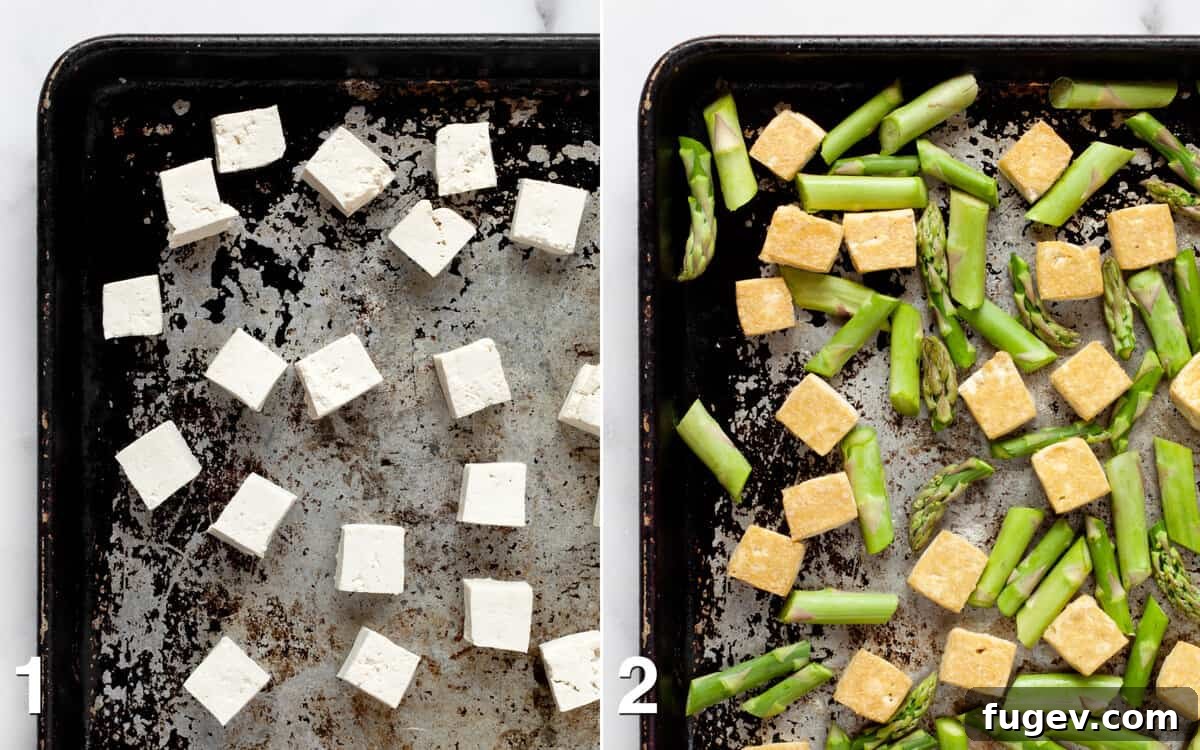
Arrange the tofu cubes in a single layer on your prepared baking sheet, ensuring they are not overcrowded. Bake for 10 minutes to begin the crisping process.
Step 4: Add Asparagus and Continue Roasting
After the initial 10 minutes, carefully remove the baking sheet from the oven. Gently flip the tofu cubes to another side. Add the trimmed and cut asparagus pieces to the hot pan, distributing them evenly around the tofu. Return the pan to the oven and continue roasting for another 7-8 minutes. Keep an eye on it – you want the tofu to be lightly golden brown and the asparagus bright green and tender-crisp, retaining a slight crunch.
Step 5: Prepare the Flavorful Sesame Sauce
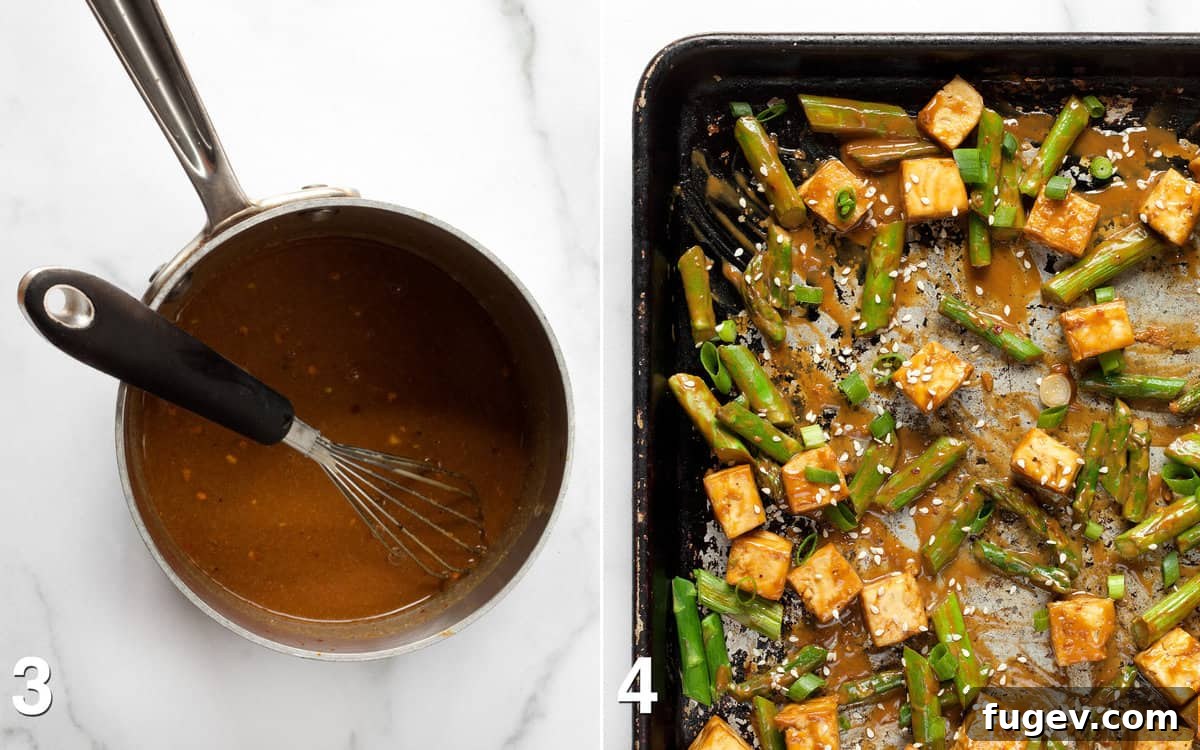
While your tofu and asparagus are roasting, you can prepare the incredible sesame sauce. In a small saucepan over medium heat, combine the low-sodium soy sauce, tahini, maple syrup, rice vinegar, toasted sesame oil, minced garlic, minced ginger, red pepper flakes, salt, and black pepper. Whisk these ingredients together until smooth and bring the mixture to a gentle simmer. Let it simmer for about 2 minutes to allow the flavors to meld. In a separate small bowl, whisk together the cornstarch and cold water to create a slurry. Pour this slurry into the simmering sauce, whisking continuously. Continue to simmer for another 2 minutes, or until the sauce thickens to your desired consistency – it should be glossy and able to coat the back of a spoon.
Step 6: Combine and Garnish
Once the tofu and asparagus are perfectly roasted, remove the sheet pan from the oven. Spoon the prepared sesame sauce over the tofu and asparagus. Don’t simply pour all of it at once; add a little at a time, tossing the ingredients gently after each addition, until everything is evenly coated to your taste. You might have a little extra sauce, which is great for serving on the side. Finally, generously sprinkle with sliced scallions and sesame seeds. Serve immediately with your choice of brown rice or quinoa.
Serving Suggestions for a Complete Meal
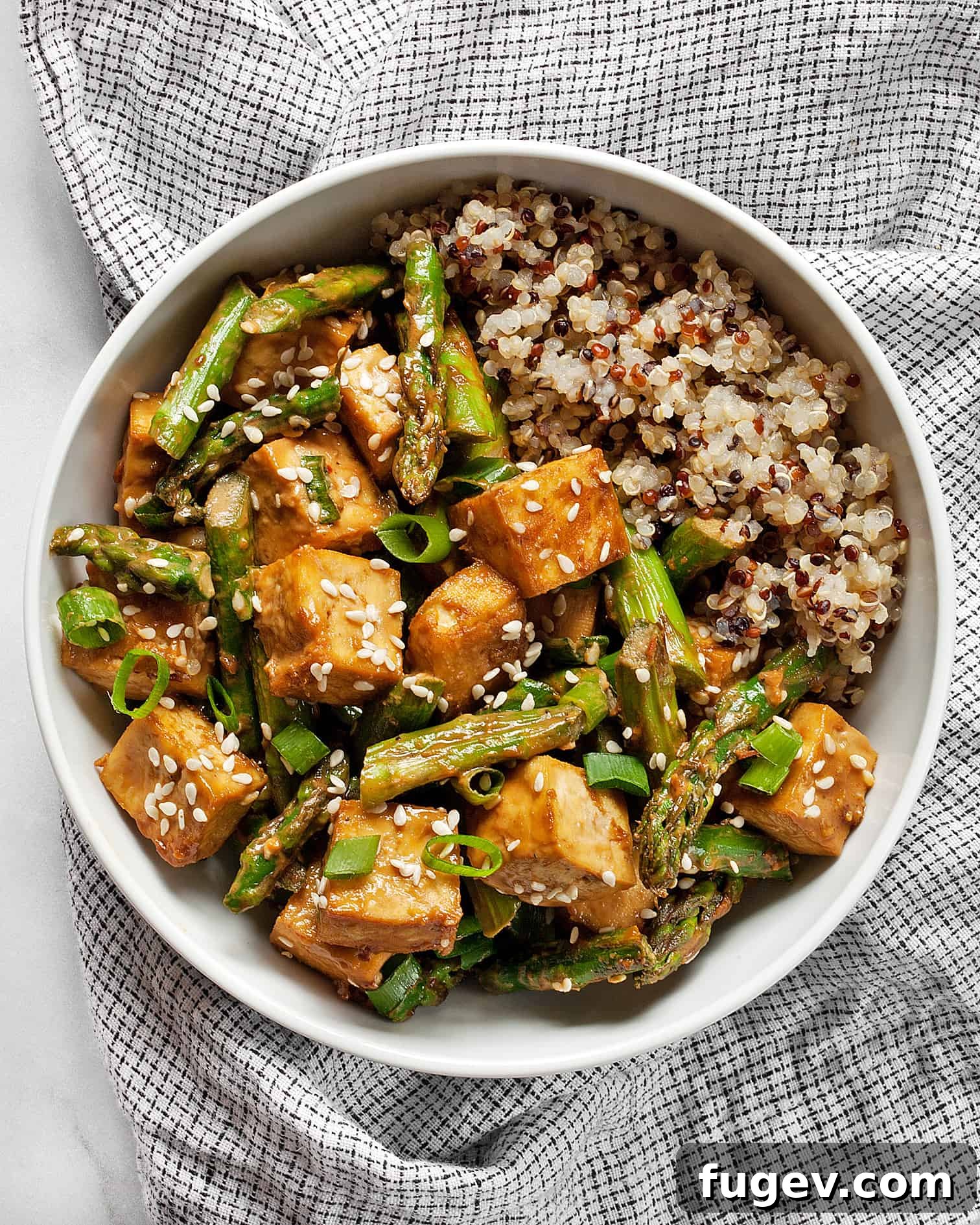
This sheet pan sesame tofu and asparagus is a complete and satisfying meal on its own, making it an excellent choice for a busy weeknight. The combination of protein-rich tofu, nutrient-dense asparagus, and a hearty grain like brown rice or quinoa ensures a well-balanced plate. However, if you wish to elevate your dining experience or add more variety, consider these complementary serving ideas:
- Classic Grains: As mentioned, brown rice or quinoa are perfect accompaniments, soaking up every drop of that delicious sesame sauce. For a lighter option, cauliflower rice can also be used.
- Fresh Salads: A crisp, refreshing salad can balance the rich flavors of the main dish. Try our cucumber carrot salad or napa cabbage salad, both featuring a delectable peanut dressing. Alternatively, this Asian cabbage salad with red bell peppers and an almond ginger vinaigrette offers another fantastic burst of freshness.
- Additional Vegetables: Boost your veggie intake by serving with a simple side of steamed edamame, sautéed bok choy, or a light stir-fry of bell peppers and snap peas.
- Noodle Bowls: For a twist, serve the sesame tofu and asparagus over a bed of rice noodles or even whole wheat spaghetti tossed with a little extra sauce.
- Soup Pairing: A light miso soup or a clear vegetable broth can be a delightful starter before this flavorful main course.
Storing and Reheating Leftovers for Best Enjoyment
One of the many advantages of this sesame tofu recipe is how well it keeps, making it fantastic for meal prep or enjoying a quick lunch the next day. Proper storage and reheating will ensure your leftovers remain delicious.
- Storage: Store any leftover sesame tofu and asparagus in an airtight container in the refrigerator. It will keep beautifully for up to 3 days. If you have extra sauce, it’s best to store it in a separate, sealed jar or container to maintain its optimal consistency and prevent the vegetables from becoming soggy.
- Reheating: For the best results, you can gently warm leftovers in the microwave. If you prefer a slightly crisper texture, especially for the tofu, you can reheat it in a preheated oven or toaster oven at 350°F (175°C) for 5-10 minutes, or until warmed through. Add a splash of fresh sauce if desired to revive the flavors.
- Freezing: We generally do not recommend freezing this particular recipe. Tofu can change its texture significantly when frozen and thawed, becoming more rubbery or crumbly, which detracts from the overall experience. Asparagus also tends to lose its appealing tender-crisp texture after freezing.
Expert Tips for Success with Sesame Tofu
Achieving perfectly crispy tofu and tender asparagus with a wonderfully balanced sauce is easier than you think. Here are a few expert tips to ensure your sheet pan sesame tofu and asparagus turns out absolutely perfect every time:
- Prioritize Tofu Pressing: This step cannot be overstated. Drier tofu means firmer texture and crispier edges. If you’re short on time, even 15 minutes of pressing will make a noticeable difference. For superior results, aim for 30 minutes to an hour.
- Don’t Overcrowd the Pan: For optimal crispiness, ensure the tofu cubes and later, the asparagus, are spread in a single layer on the baking sheet without touching too much. Overcrowding leads to steaming rather than roasting, resulting in soggy rather than crispy textures. If necessary, use two baking sheets.
- Taste and Adjust the Sesame Sauce: The beauty of homemade sauce is customization. As it simmers, taste the sesame sauce and adjust seasonings to your preference. You might want a little more sweetness (maple syrup), tang (rice vinegar), or heat (red pepper flakes). Remember, the sauce will thicken as it cooks, so adjust quickly.
- Monitor Asparagus Cooking: Asparagus cooks quickly. To prevent it from becoming limp, ensure it’s bright green and still has a slight snap to it. Overcooked asparagus can lose its vibrant color and pleasant texture.
- Hold Back Some Sauce: You will likely have a bit of extra sauce, which is a good thing! Instead of pouring all of it onto the hot tofu and asparagus, spoon it out gradually, tossing until everything is coated to your liking. The remaining sauce can be served on the side for those who prefer extra or saved for drizzling over leftovers.
- Uniform Tofu Cubes: Cutting the tofu into roughly equal-sized 1-inch cubes ensures that all pieces cook evenly, achieving consistent crispness throughout.
- Quality Ingredients Matter: Using fresh ginger and garlic, high-quality tahini, and a good low-sodium soy sauce will significantly impact the depth and richness of your final dish.
Recipe Frequently Asked Questions
The primary ingredient that makes a dish not gluten-free in this recipe is soy sauce, which typically contains wheat. However, you can easily make this recipe gluten-free by substituting regular soy sauce with tamari. Tamari is a Japanese soy sauce that is traditionally made without wheat, though it’s always wise to check the label of your chosen brand to ensure it’s certified gluten-free.
No, for this recipe, it’s actually better to skip the parchment paper. You want the tofu and asparagus to make direct contact with the hot metal of the baking sheet. This direct contact encourages better browning and crisping. Greasing the pan generously with non-stick cooking spray will prevent sticking and ensure easy cleanup.
Absolutely! This recipe is incredibly versatile. While asparagus is fantastic, you can substitute it with other quick-cooking vegetables like broccoli florets, green beans, snap peas, bell peppers, or even thinly sliced carrots. Adjust cooking times slightly based on the vegetable’s density to ensure they are tender-crisp.
Tahini is key for the creamy texture and nutty flavor of this specific sesame sauce. While there isn’t a perfect direct substitute for its unique profile, if absolutely necessary, you could try a small amount of smooth peanut butter or almond butter for creaminess and nuttiness. However, be aware that the flavor profile will change significantly. For the best result, we recommend sticking with tahini.
Explore More Delicious Tofu Recipes
Tofu is an incredibly versatile ingredient, perfect for absorbing flavors and creating healthy, satisfying meals. If you enjoyed this sesame tofu, be sure to explore these other fantastic tofu-centric recipes:
- Honey Garlic Tofu: A sweet and savory glaze makes this tofu irresistible.
- Tofu Pumpkin Curry: A warming and comforting curry dish perfect for cooler weather.
- Grilled Tofu Shawarma: Marinated and grilled to perfection, an excellent plant-based twist on a classic.
- Ginger Garlic Veggie Tofu Stir-Fry: A quick and easy stir-fry packed with fresh vegetables and aromatic flavors.
- Sheet Pan Sweet Potato Black Bean Tofu: Another convenient sheet pan meal combining hearty ingredients.
- Sheet Pan Teriyaki Tofu Broccolini: A savory and slightly sweet teriyaki dish made effortlessly on one pan.
- Broccoli Tofu and Peanut Noodles: A vibrant and satisfying bowl featuring creamy peanut sauce.
If you’re passionate about roasting vegetables, don’t miss our comprehensive seasonal recipe guide for roasted vegetables, offering ideas to inspire your cooking all year long.
Sheet Pan Sesame Tofu and Asparagus Recipe Card
With a quick sauce made with tahini, ginger, and garlic, this baked sesame tofu and asparagus is a simple yet incredibly flavorful dinner. Serve it with quinoa or brown rice for a complete and satisfying meal.
Prep Time: 15 mins
Cook Time: 18 mins
Total Time: 33 mins
Servings: 4

Ingredients
- Non-stick cooking spray
- 1-14 ounce block extra-firm tofu
- 1 pound asparagus, trimmed and cut into 1-1/2-inch pieces
- 3/4 cup low-sodium soy sauce (or tamari for gluten-free)
- 1/4 cup tahini
- 1 tablespoon maple syrup
- 1 tablespoon rice vinegar
- 1 tablespoon toasted sesame oil
- 2 garlic cloves, minced
- 1 tablespoon minced fresh ginger
- 1/4 teaspoon red pepper flakes (adjust to taste)
- 1/4 teaspoon kosher salt
- 1/2 teaspoon black pepper
- 1 tablespoon cornstarch
- 1 tablespoon water (for slurry)
- 2 scallions, sliced, for garnish
- 1 tablespoon white sesame seeds, for garnish
- Brown rice or quinoa, for serving
Instructions
- Preheat the oven to 425 degrees F (220 degrees C). Lightly grease a large baking sheet with non-stick cooking spray.
- Prepare the tofu: Pat the block of tofu dry with paper towels. Wrap it with a clean, dry paper towel and place it on a plate or cutting board. Place a heavy object (like a cast iron pan or several cookbooks) on top to press out excess liquid. Let it sit for at least 15 minutes. Once pressed, cut the tofu into 1-inch cubes.
- Initial tofu bake: Arrange the tofu cubes in a single layer on the prepared baking sheet. Bake for 10 minutes.
- Add asparagus: Carefully remove the pan from the oven. Flip the tofu cubes to another side and add the trimmed asparagus to the pan, spreading them evenly. Continue roasting for another 7-8 minutes, or until the tofu is lightly golden brown and the asparagus is bright green and tender-crisp.
- Make the sauce: While the tofu and asparagus are in the oven, combine the soy sauce, tahini, maple syrup, rice vinegar, toasted sesame oil, minced garlic, minced ginger, red pepper flakes, salt, and pepper in a small saucepan over medium heat. Whisk until smooth and bring to a gentle simmer for 2 minutes.
- Thicken the sauce: In a small bowl, stir together the cornstarch and 1 tablespoon of water to create a slurry. Whisk this slurry into the simmering sauce. Continue simmering and whisking for about 2 minutes, or until the sauce thickens to a glossy, coating consistency.
- Combine and serve: Remove the sheet pan from the oven. Spoon the prepared sauce over the tofu and asparagus, tossing gently until everything is evenly coated. Serve any extra sauce on the side.
- Garnish: Sprinkle generously with sliced scallions and white sesame seeds.
- Enjoy: Serve immediately with brown rice or quinoa for a complete and delicious meal.
Notes
- For a gluten-free version, use tamari instead of soy sauce. Always check labels.
- Brown rice or quinoa can be cooked up to 2 days in advance and warmed before serving to save time.
- Store leftovers in an airtight container in the refrigerator for up to 3 days. Keep any extra sauce in a separate container. Reheat gently in the microwave or oven. Freezing is not recommended for best texture.
Nutrition
Nutrition information is automatically calculated and should only be used as an approximation.
- Calories: 264kcal
- Carbohydrates: 19g
- Protein: 17g
- Fat: 15g
- Saturated Fat: 2g
- Polyunsaturated Fat: 7g
- Monounsaturated Fat: 5g
- Sodium: 1941mg
- Potassium: 675mg
- Fiber: 4g
- Sugar: 7g
- Vitamin A: 966IU
- Vitamin C: 9mg
- Calcium: 128mg
- Iron: 5mg
Additional Info
- Course: Main Course
- Cuisine: Asian
Did you make this recipe? Mention @lastingredient on Instagram and tag it #lastingredient!