
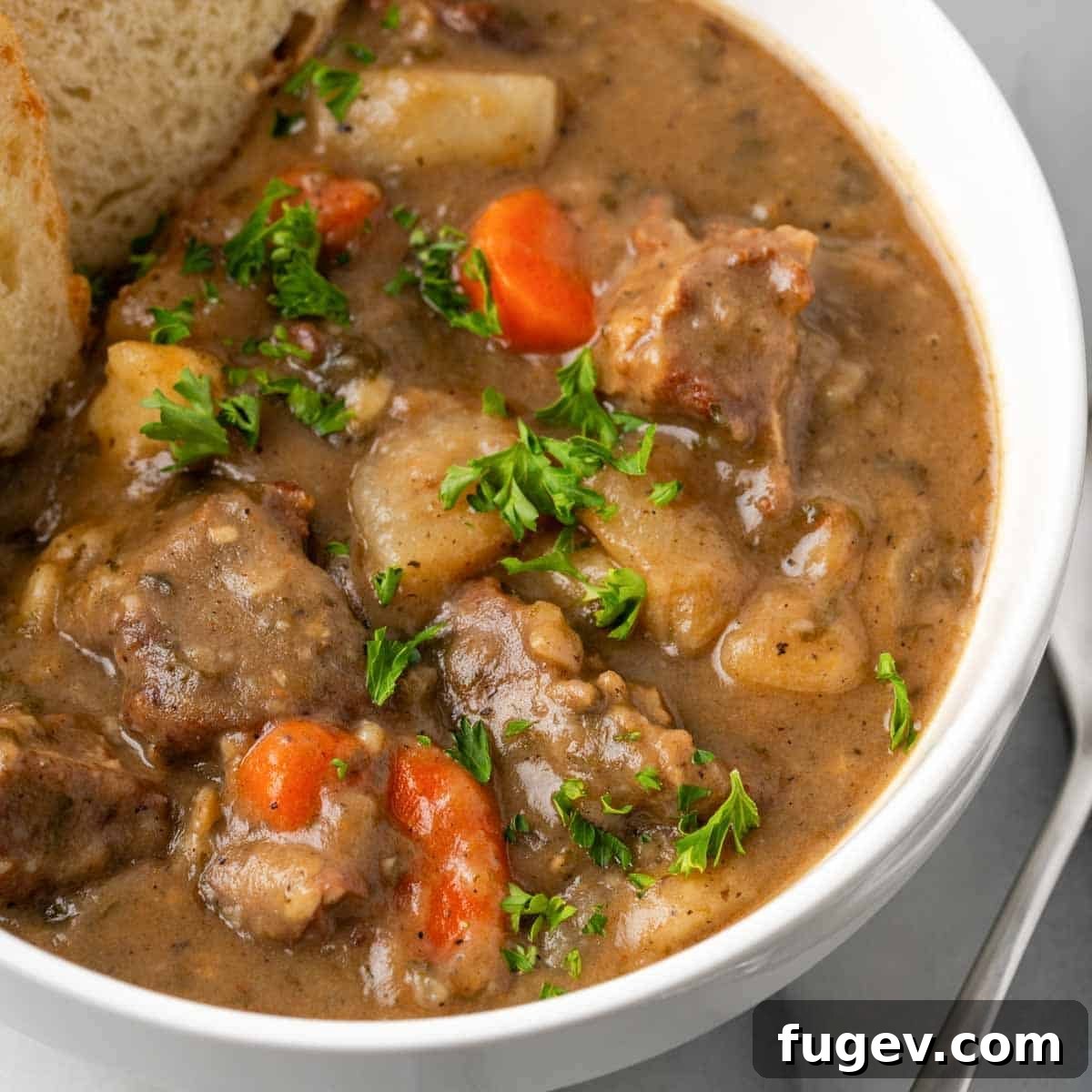
Ultimate Dutch Oven Beef Stew: A Hearty Winter Classic
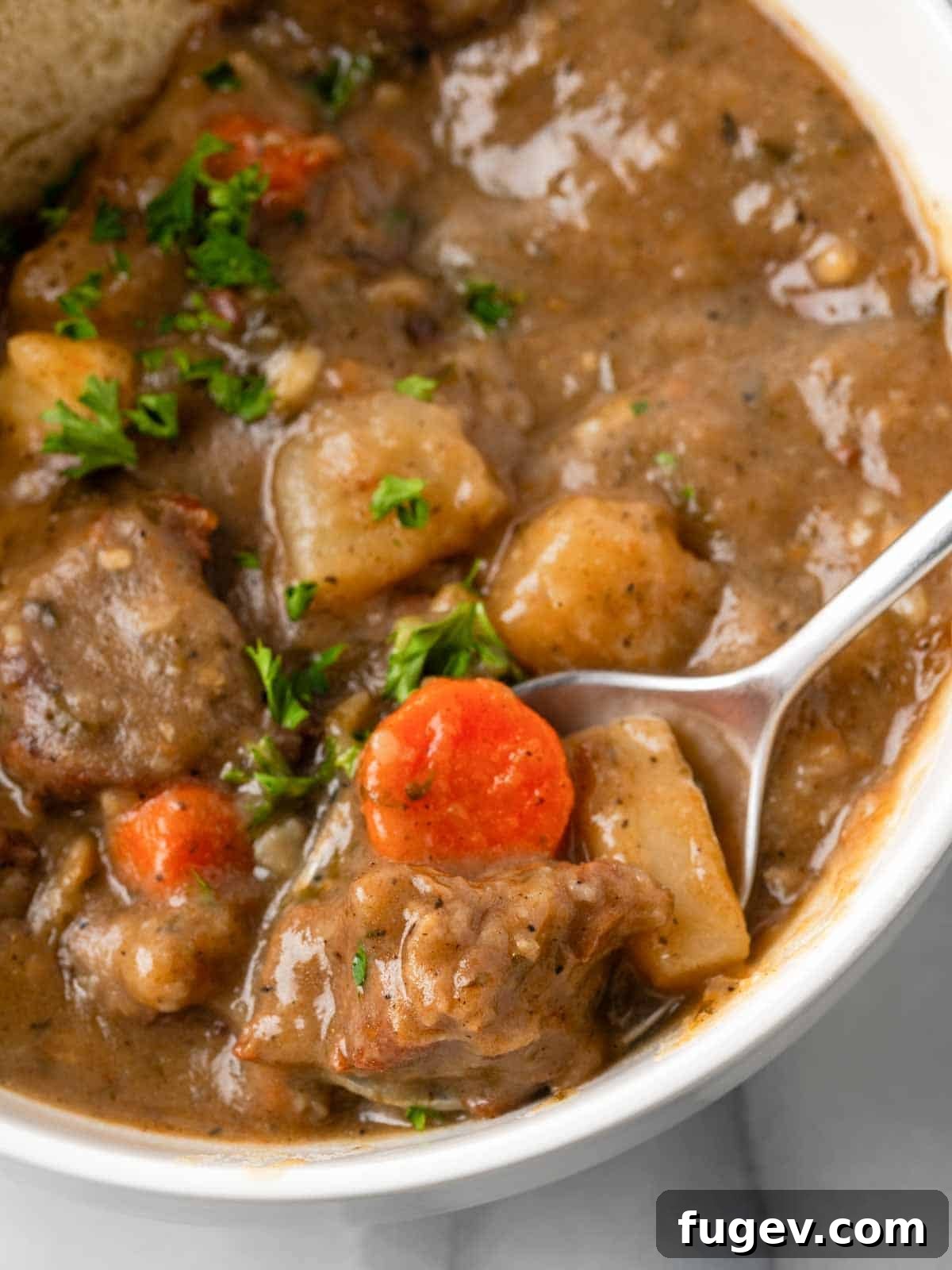
Embrace the comforting warmth of this exquisite Dutch oven beef stew, a true culinary masterpiece perfected for the colder months. Simmered for hours to achieve impossibly tender beef, this recipe combines robust, savory vegetables with a velvety, herb-infused broth. Far from just another stew, this dish promises to become a cherished favorite, delivering deep, satisfying flavors that evoke cozy evenings and hearty meals.
A Quick Look At The Recipe
This section offers a brief overview of the recipe’s key details. For complete instructions and measurements, please navigate to the full recipe card below.
Jump to Recipe
Prep Time
30 minutes
Cook Time
2 hours
Total Time
2 hours 30 minutes
Servings
8 people
Difficulty
Moderate
Calories *
420 kcal per serving
Technique
Browning meat, slow simmering, unique soda bread thickening.
Flavor Profile
Rich, savory beef stew with a hint of sweetness and hearty root vegetables.
* Based on nutrition panel
I just made this tonight and it is fantastic!!! It is seriously the best stew recipe I have ever made and I had pretty much given up on stew except the occasional beef burgundy recipe out. Not only that, but the picky eaters in my house not only tasted it, but LOVED it! The bread is brilliant!!! ⭐⭐⭐⭐⭐
Jennifer
What sets this particular beef stew apart is its inventive thickening method, utilizing a hunk of Irish soda bread. While unconventional, this addition not only creates a wonderfully thick, stick-to-your-ribs texture but also imparts a subtle, delightful sweetness that elevates the overall flavor profile. If soda bread isn’t to your liking or simply unavailable, this stew also achieves a delicious richness when thickened with creamy mashed potatoes, much like our popular lamb stew recipe.
This heritage recipe draws its inspiration from the esteemed Better Homes and Gardens Heritage cookbook. Its roots trace back even further, to the historic Monroe Family Cookbook, believed to be a treasured collection of recipes from the family of President James Monroe. Preparing this stew isn’t just cooking; it’s engaging with a piece of culinary history, bringing generations of flavor to your modern table.
Table of Contents
- Why You Will Love This Dutch Oven Beef Stew Recipe
- Professional Tips For Making Classic Beef Stew
- Essential Ingredients for Your Stew
- Exciting Variations to Try
- How to Make the Perfect Beef Stew: Step-by-Step
- Chef Lindsey’s Expert Tip
- Frequently Asked Questions About Beef Stew
- Complete Dutch Oven Beef Stew Recipe
- Explore More Delicious Recipes
Why You Will Love This Dutch Oven Beef Stew Recipe
This Dutch oven beef stew isn’t just a meal; it’s an experience. Here’s why it deserves a permanent spot in your recipe collection:
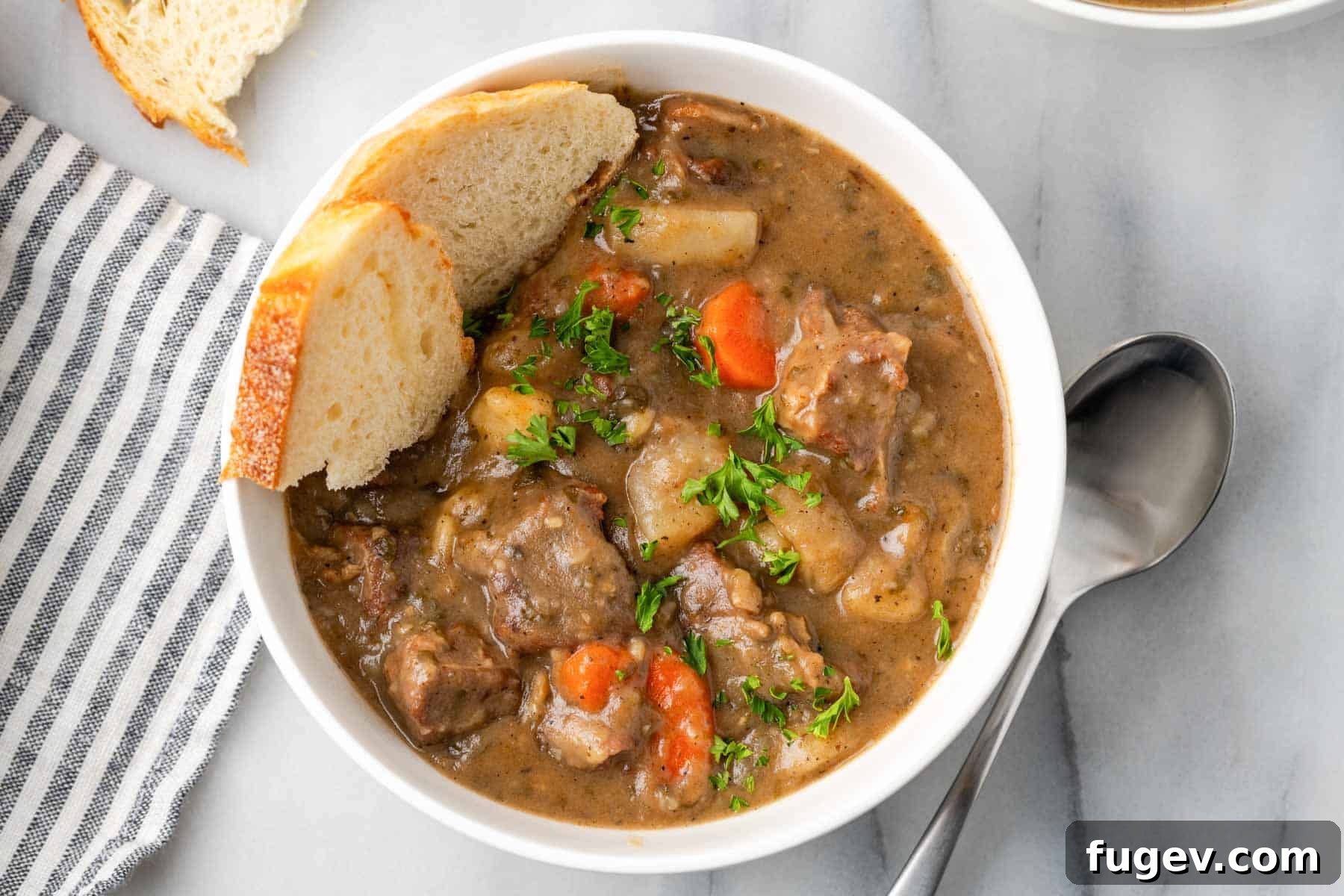
- A Hearty, Soul-Satisfying Dish: This stew is the epitome of comfort food – rich, substantial, and incredibly fulfilling. It’s generously packed with succulent, tender beef alongside an abundance of wholesome root vegetables like turnips, carrots, and potatoes, creating a meal that is both delicious and deeply satisfying. Its robust nature demands to be served with crusty bread, ensuring you can savor and soak up every last drop of the flavorful broth, leaving no goodness behind.
- Melt-in-Your-Mouth Beef in a Rich, Velvety Broth: The secret to this stew’s unparalleled tenderness lies in its preparation: cooked low and slow for an extended period. This method breaks down the beef’s connective tissues, resulting in meat that is incredibly tender and succulent, practically melting in your mouth. The accompanying broth is equally impressive, thick and luxurious, infused with a carefully selected blend of aromatic herbs and spices that contribute to its profound depth of flavor. This isn’t just a broth; it’s the rich, savory foundation of the entire dish.
- Unmatched Flavor Development Through Key Techniques: The extraordinary depth of flavor in this stew is meticulously built through a combination of professional cooking techniques. First, searing the beef creates a rich, caramelized crust through the Maillard reaction, locking in juices and developing complex savory notes. This is followed by deglazing the pan with a bright wine, which not only lifts all those delicious browned bits (fond) from the bottom of the pot but also introduces a crucial acidity that perfectly balances the richness of the meat and adds layers of nuanced flavor. Finally, hours of gentle, slow simmering allow all the ingredients to meld beautifully, ensuring every component contributes to a truly harmonious and unforgettable taste.
Professional Tips For Making Classic Beef Stew
Achieving a truly exceptional beef stew goes beyond just following a recipe. These professional insights will help you master the art of classic beef stew, ensuring perfect results every time:
- Master Uniform Knife Cuts: Precision in cutting is key for consistent texture and cooking. It’s crucial that your potatoes, carrots, and turnips are all cut into roughly even, bite-sized pieces. This ensures that every vegetable cooks through at the same rate, preventing some from becoming mushy while others remain undercooked. Similarly, if you’re dicing your own beef chuck roast, aim for uniform cubes for even browning and tenderization.
- Select the Optimal Cut of Beef: The choice of beef cut significantly impacts the stew’s final tenderness. For a slow-cooked stew, you’ll want a cut rich in connective tissue, such as chuck roast, bottom round, or pre-cut beef stew meat. These cuts, often tougher when cooked quickly, transform into incredibly tender, succulent morsels when subjected to long, slow simmering. The collagen within the connective tissue breaks down into gelatin, enriching the broth and adding a luxurious mouthfeel.
- Never Skip the Deglazing Step: Deglazing is a fundamental technique for building profound flavor in your stew. After searing the beef and sautéing the aromatics, the bottom of your Dutch oven will have a layer of browned, caramelized bits (known as “fond”). Pouring in wine and scraping up this fond with a wooden spoon infuses these concentrated flavors directly into your broth. This step adds immense depth and complexity that cannot be replicated. If wine isn’t an option, a few tablespoons of red or white wine vinegar, or even beef broth, can serve as an effective substitute for deglazing.
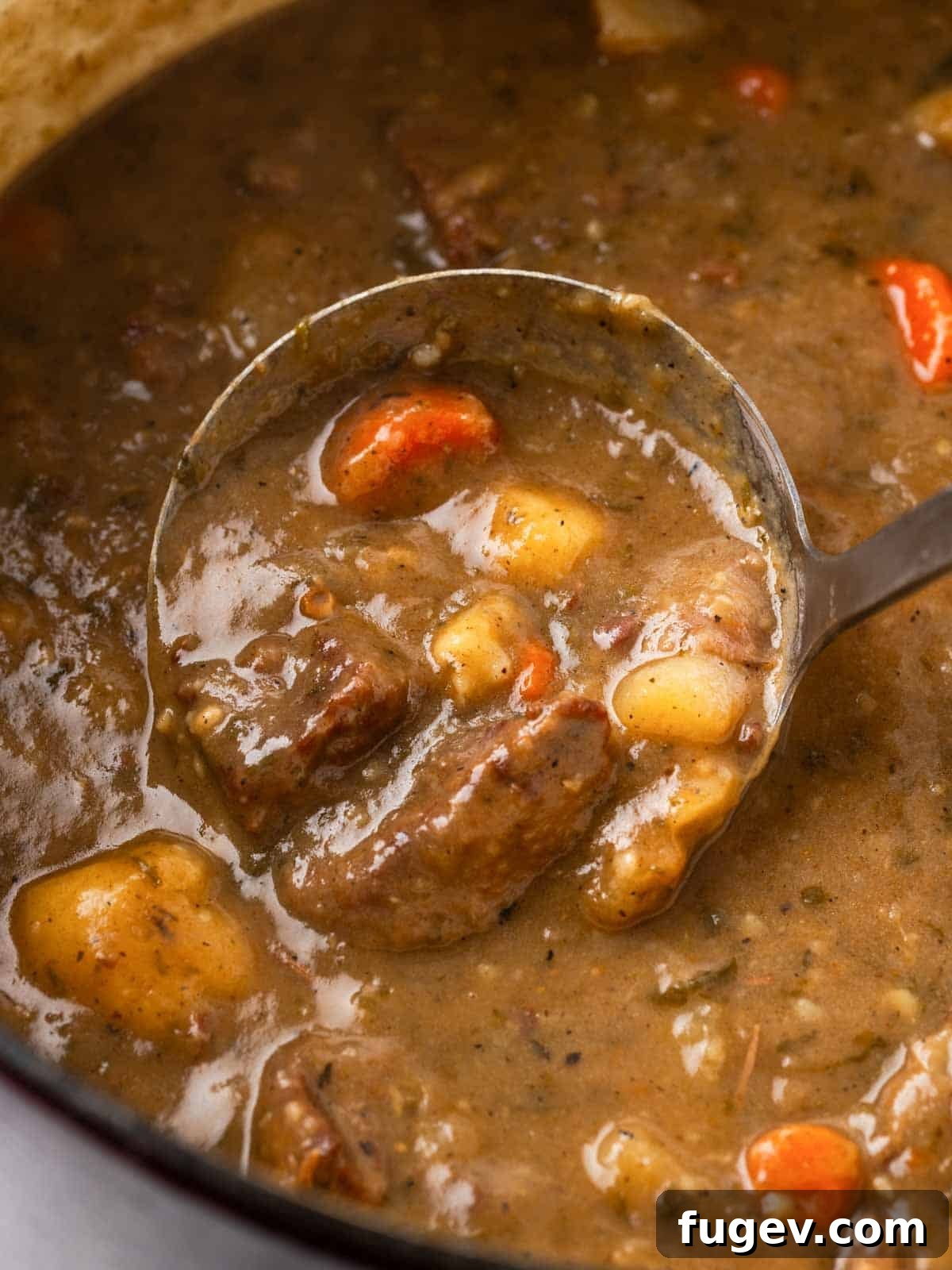
Essential Ingredients for Your Ultimate Beef Stew
Crafting the perfect beef stew begins with selecting high-quality ingredients. Here’s a closer look at what you’ll need and why each component is crucial:
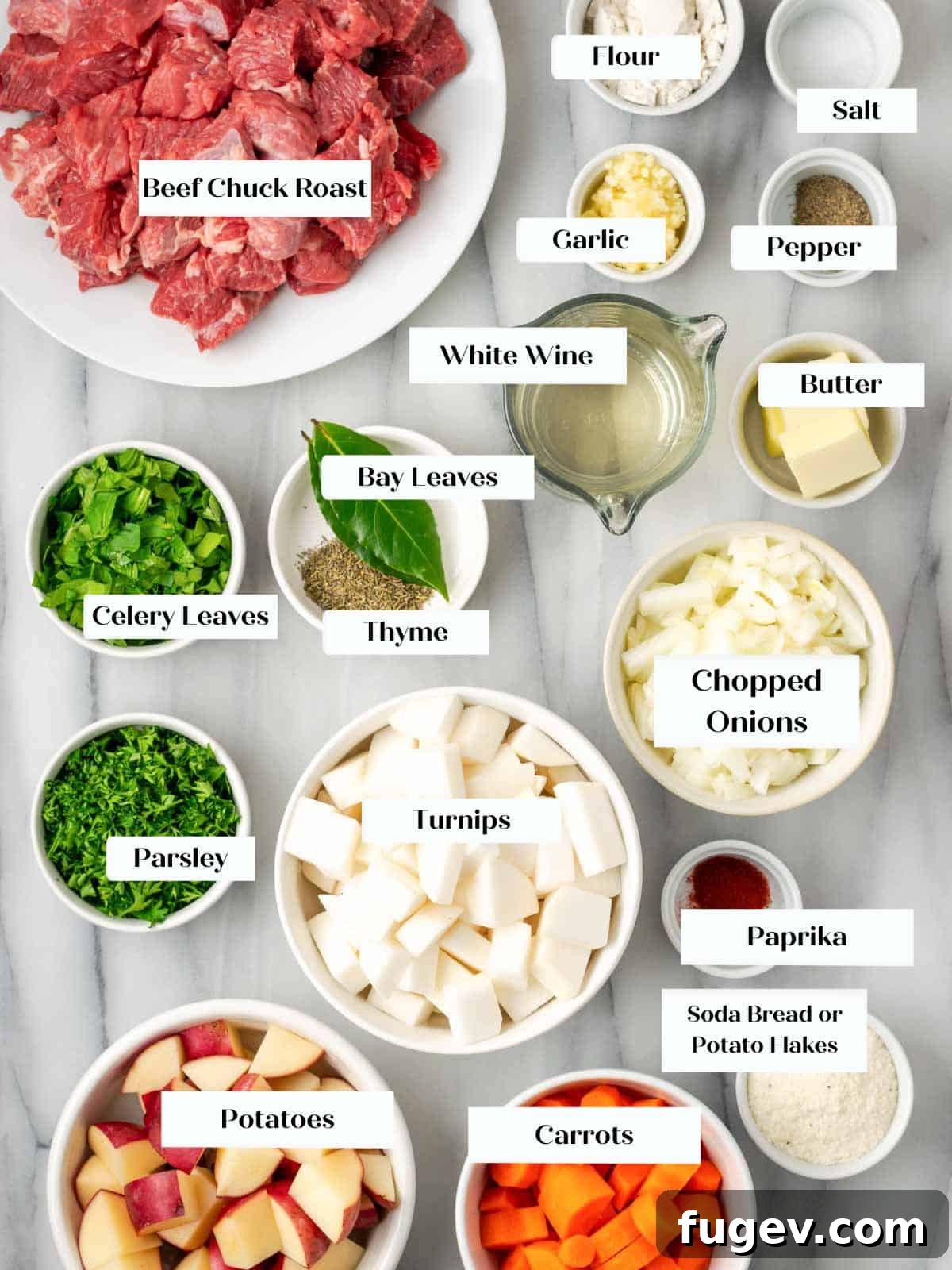
- Beef: The star of our stew! I personally prefer to use a beef chuck roast and cut it into uniform pieces myself. This ensures consistent size for even cooking and optimal tenderness. Alternatively, pre-cut beef stew meat is a convenient option, typically sourced from tougher cuts that break down beautifully during slow cooking.
- Flour: Standard all-purpose flour plays a dual role here. It coats the beef, aiding in the development of a rich, browned crust during searing, and later helps to thicken the stew, contributing to its luscious texture. For those seeking a gluten-free alternative, rice flour or millet flour can be excellent substitutes, providing similar thickening properties.
- Pepper: Freshly ground black pepper adds a pungent, spicy kick that enhances the savory notes of the beef and vegetables.
- Salt: Essential for seasoning, salt brings out the natural flavors of all the ingredients. Kosher salt is often preferred for its clean taste and coarser texture.
- Butter: Unsalted butter is used for browning the beef and sautéing aromatics, providing a rich, creamy flavor and helping to build that crucial fond at the bottom of the pot.
- Wine: A dry white wine is highly recommended for deglazing and infusing a bright, acidic counterpoint to the rich meat. Sauvignon Blanc or Pinot Grigio are excellent choices. You can also experiment with a dry red wine for a deeper, more robust flavor profile. Always choose a wine you would enjoy drinking!
- Garlic: Fresh garlic cloves, minced, are indispensable for their pungent, aromatic depth. While convenient, garlic powder cannot replicate the complex flavor of fresh garlic. If fresh heads are scarce, look for chopped garlic stored in water for the best flavor preservation.
- Bay Leaves: Dried bay leaves contribute a subtle, almost indescribable aromatic quality to the stew, often described as a blend of eucalyptus, savory, sweet, and floral notes. They add a sophisticated layer of flavor that develops beautifully during simmering.
- Thyme: Dried thyme is a convenient and potent herb for this dish, offering earthy, slightly minty undertones. If you have access to fresh thyme, feel free to use it; a good rule of thumb is to use three times the amount of fresh herbs compared to dried.
- Celery Leaves: Often overlooked, celery leaves are a fantastic secret ingredient. They deliver a slightly peppery, herbaceous flavor that is similar to celery stalks but with a more concentrated essence, adding another layer of savory depth.
- Parsley: Fresh parsley, coarsely chopped, is added towards the end to brighten the stew with its clean, herbaceous notes and vibrant color. For a different twist, consider fresh basil or even cilantro, depending on your desired flavor profile.
- Water/Broth: While 5 cups of fresh, cold water will do the job, using homemade beef broth or a good quality store-bought one will significantly deepen the overall flavor of your stew, much like in our Easy Beef Stroganoff recipe.
- Turnips: Adding fresh turnips contributes a robust, earthy flavor with a hint of sweetness, complementing the other root vegetables and making the stew exceptionally hearty and filling.
- Carrots: Large, vibrant carrots are preferred for their ease of dicing and sweet, earthy flavor. Avoiding small or baby carrots ensures all vegetable pieces are uniform in size, guaranteeing even cooking.
- Onion: About a cup of diced yellow or sweet onion provides a foundational aromatic sweetness and savory depth that is essential to any great stew.
- Potatoes: Hearty red potatoes, cubed, provide a satisfying texture and absorb the rich flavors of the broth, adding substance to the stew. Any waxy potato variety will work well.
- Paprika: A pinch of paprika—whether sweet, hot, or smoked—adds a beautiful color and a subtle layer of flavor. Smoked paprika, in particular, can introduce a delightful earthy and smoky undertone.
- Dried Currants (Optional): For an intriguing sweet-savory dimension, a tablespoon of dried currants makes a fantastic addition. These small, sweet berries can be found in our Irish soda bread recipe and provide a wonderful burst of sweetness in each bite of stew.
- Soda Bread (Optional, for thickening): The unique thickening agent for this stew! A fist-sized hunk of soda bread dissolves into the stew, creating a thick, rustic texture and adding a distinctive, slightly sweet flavor. If unavailable, potato flakes can also be used as an alternative thickener.
Please refer to the complete recipe card below for precise measurements and quantities.
Exciting Variations to Try for Your Beef Stew
While this classic Dutch oven beef stew is perfect as is, it’s also incredibly versatile. Feel free to experiment with these delicious variations to tailor it to your taste or cooking method:
- Slow Cooker Adaptation: For a hands-off approach, convert this stovetop recipe into a slow cooker meal. Begin by browning the beef on the stovetop and sautéing the onions and garlic, then deglaze the pan with wine to capture all those foundational flavors. Once these crucial initial steps are complete, transfer all ingredients—seared beef, aromatics, vegetables, herbs, and liquid—to your slow cooker. Cook on a low setting for approximately 8 hours, or on high for about 4 hours, until the beef is incredibly tender and the vegetables are perfectly cooked.
- Add a Tangy Sweetness with Tomato Paste: For an extra layer of savory depth and a delightful tangy-sweet note, incorporate a tablespoon or two of tomato paste. Add the tomato paste to the pot after the onions and garlic have softened, and sauté it for a minute or two before pouring in the wine to deglaze. This caramelizes the tomato paste, intensifying its flavor and adding a beautiful richness to the final broth.
- Explore Different Root Vegetables: Don’t limit yourself to just potatoes and carrots! This stew welcomes a variety of root vegetables. Consider adding parsnips for their sweet, anisy flavor, or sweet potatoes for a touch of vibrant color and an even sweeter profile. Rutabagas, celeriac, or even hearty mushrooms can also be excellent additions, each bringing their unique texture and taste to the comforting medley. Ensure they are cut into uniform pieces for even cooking.
How to Make the Perfect Beef Stew: Step-by-Step
Follow these detailed instructions to create a consistently perfect and flavorful beef stew every time. For precise measurements and a full ingredient list, please refer to the recipe card located further down the page.
Step 1: Prepare the Beef. Begin by thoroughly patting your beef cubes dry with paper towels. This crucial step removes excess moisture, which is essential for achieving a beautiful, even sear. Once dry, place the beef into a medium-sized bowl. If you are cutting your own beef (which is highly recommended for uniform pieces), aim for roughly 1-1.5 inch cubes to ensure they cook evenly and become tender at the same rate.
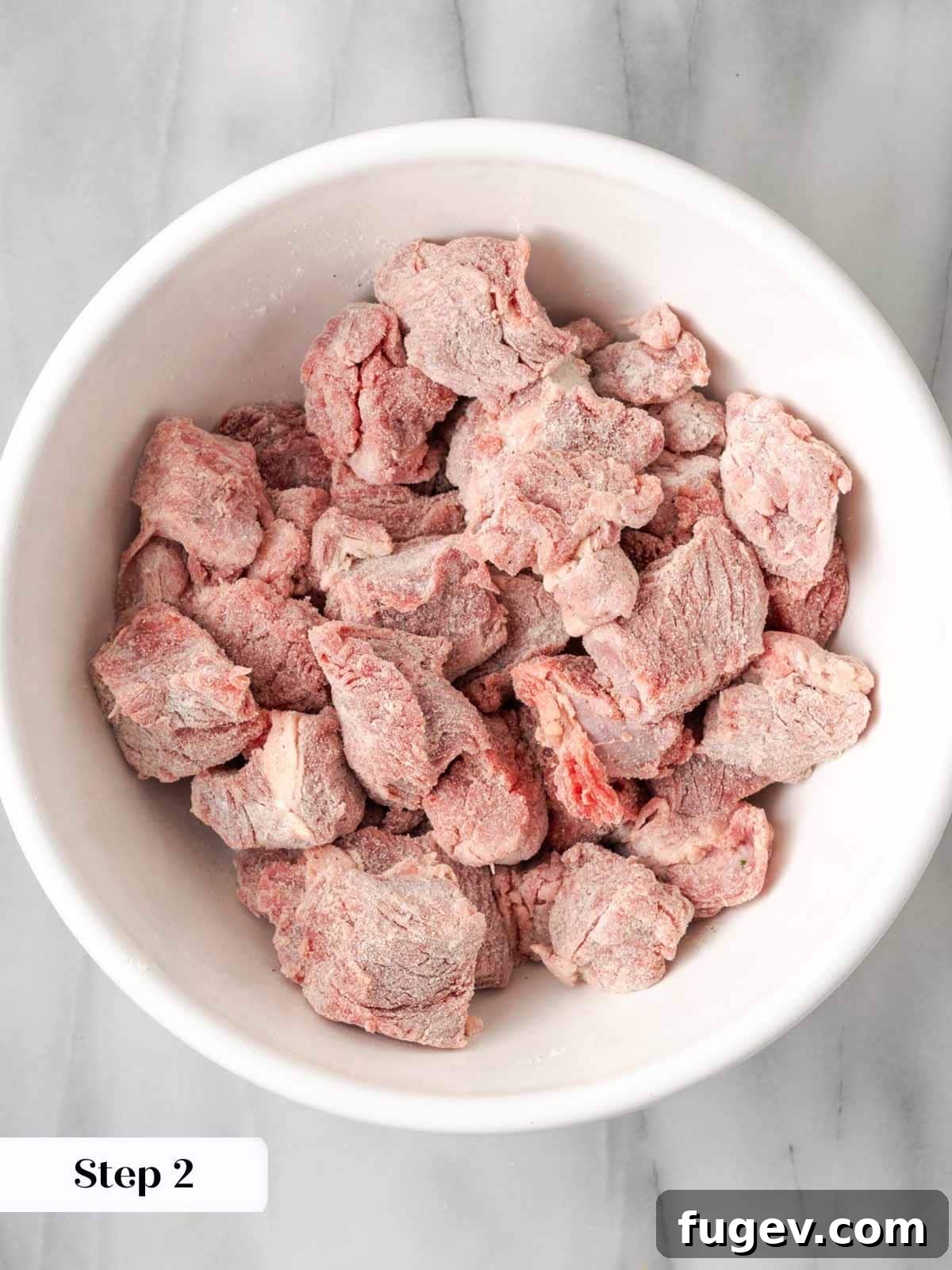
Step 2: Season and Flour the Beef. In a separate small bowl, combine the all-purpose flour with ½ teaspoon of salt and ½ teaspoon of freshly ground pepper. Sprinkle half of this flour mixture over the prepared beef and toss thoroughly to coat each piece. Then, add the remaining flour mixture and toss again, ensuring every surface of the beef is evenly dusted. This flour coating contributes to the browning and helps thicken the stew.
Step 3: Sear the Beef in Batches. Heat a large, heavy-bottomed Dutch oven or saucepan over medium-high heat until it is searing hot. Add 1 tablespoon of unsalted butter and allow it to melt and lightly brown. Working in small batches (approximately 1/3 of the beef at a time), add the flour-coated beef to the hot pot. Avoid overcrowding the pan, as this will steam the meat instead of browning it. Sear the beef until it develops a deep, golden-brown crust on at least three sides. This caramelization (the Maillard reaction) is fundamental for building complex, savory flavors in your stew. Remove each batch of browned beef to a separate plate and set aside, adding more butter or a little oil as needed for subsequent batches.
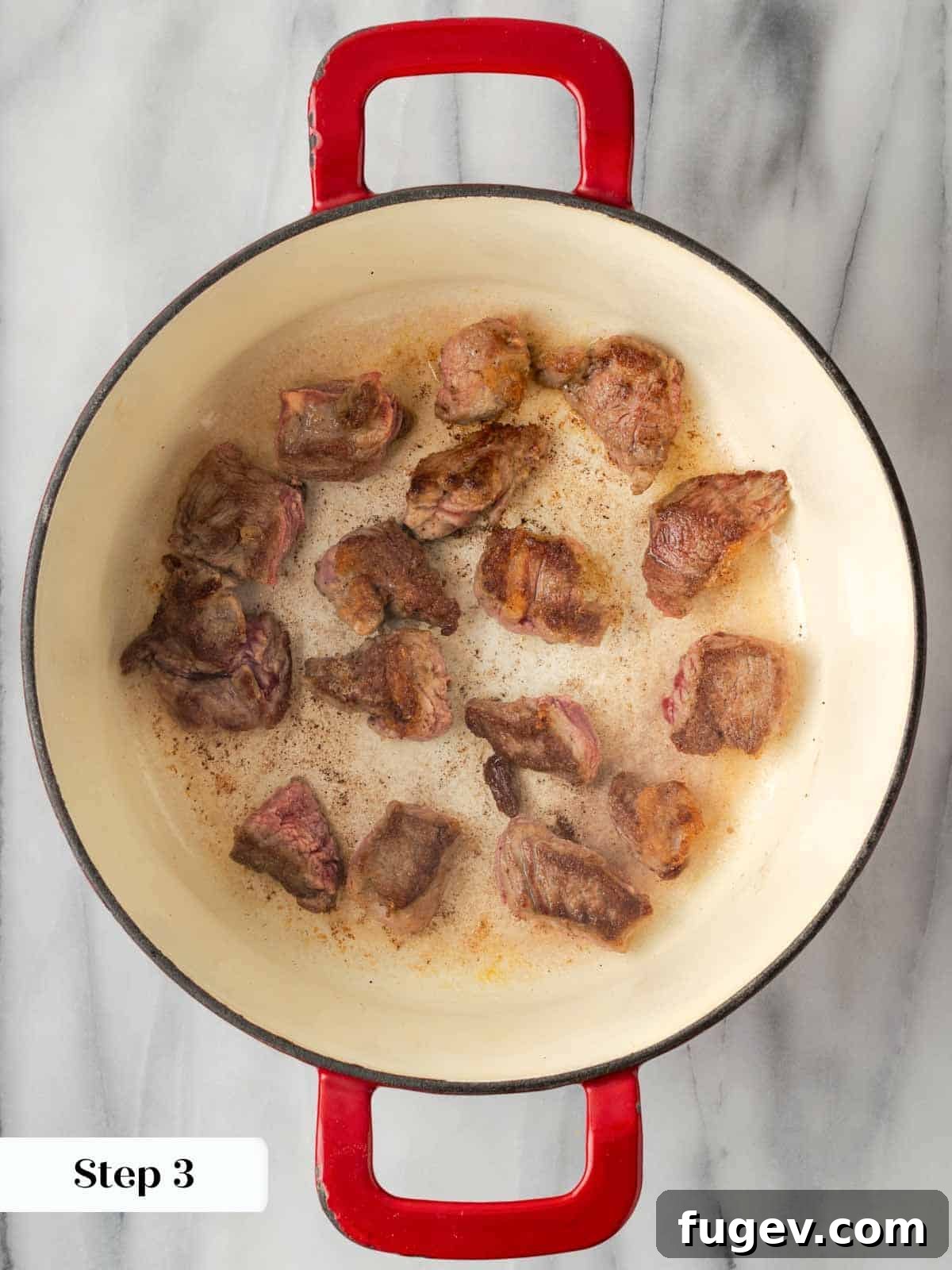
Expert Tip for Searing: It is crucial not to crowd the beef in the pot. Overcrowding lowers the temperature of the pan, causing the meat to steam rather than brown, which results in a lack of deep flavor development. Always work in batches, ensuring enough space around each piece of beef to allow for proper caramelization and the development of that essential golden-brown crust. Add additional butter or oil as needed between batches to maintain a consistent searing environment.
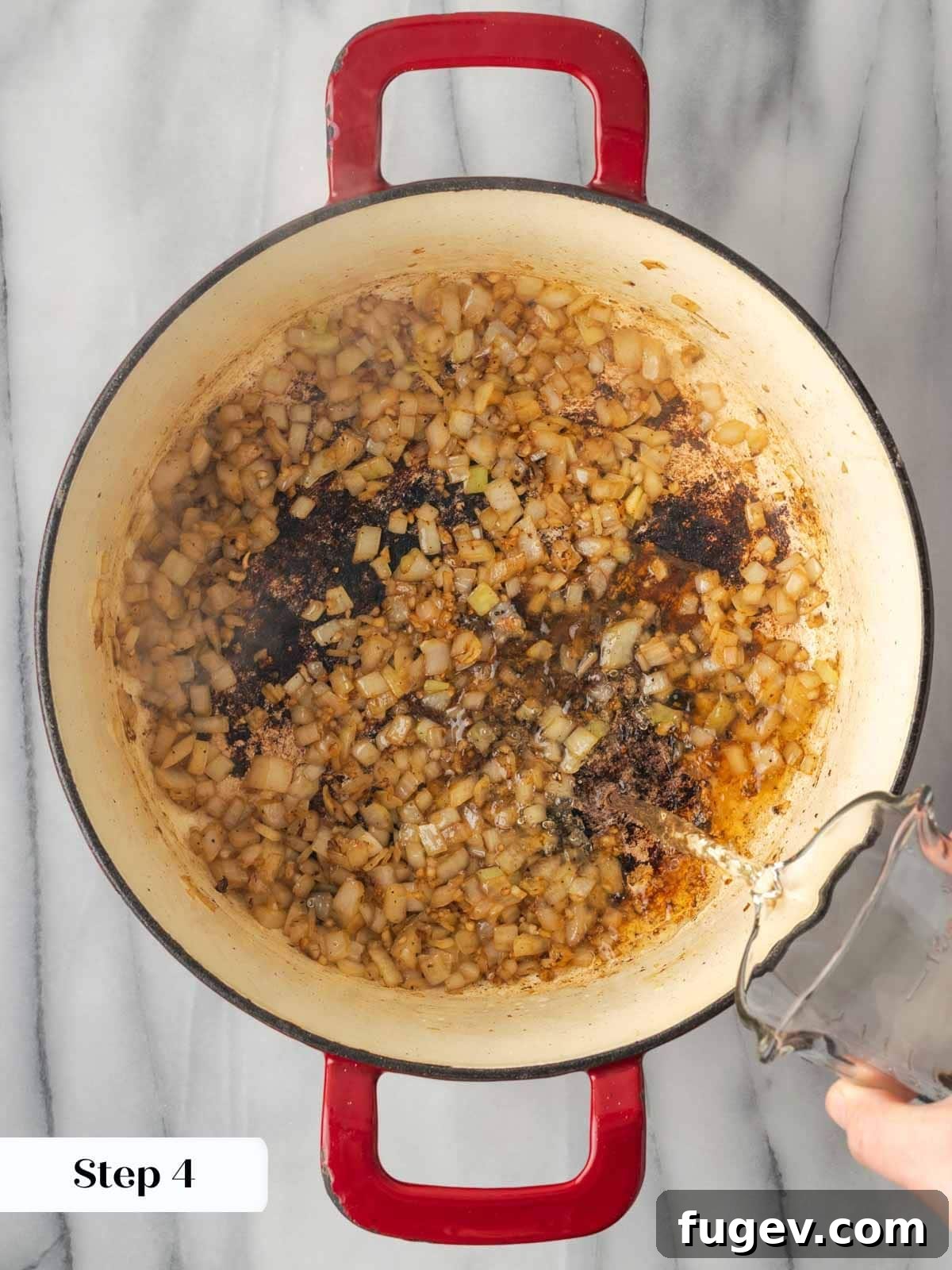
Step 4: Sauté Aromatics and Deglaze the Pan. Once all the beef has been browned and removed, return the Dutch oven to medium heat. Add the remaining butter if needed, then add the diced onions and minced garlic. Sauté, stirring occasionally, until the onions become translucent and begin to brown, about 5-7 minutes. Next, pour in the dry white wine. Using a flat, wooden spoon, stir vigorously, scraping up all the caramelized browned bits (fond) from the bottom of the pot. These bits are packed with flavor! Allow the wine to boil for about two minutes, stirring constantly, to reduce slightly and concentrate its flavors.
The Magic of Deglazing: This step is paramount for intensifying the flavors of your stew. As the wine boils, it not only thickens slightly but also efficiently pulls up all the delicious caramelized meat drippings and browned sugars from the bottom of the pot. This rich “fond” is then fully incorporated into your liquid, creating an incredibly flavorful base for your stew.
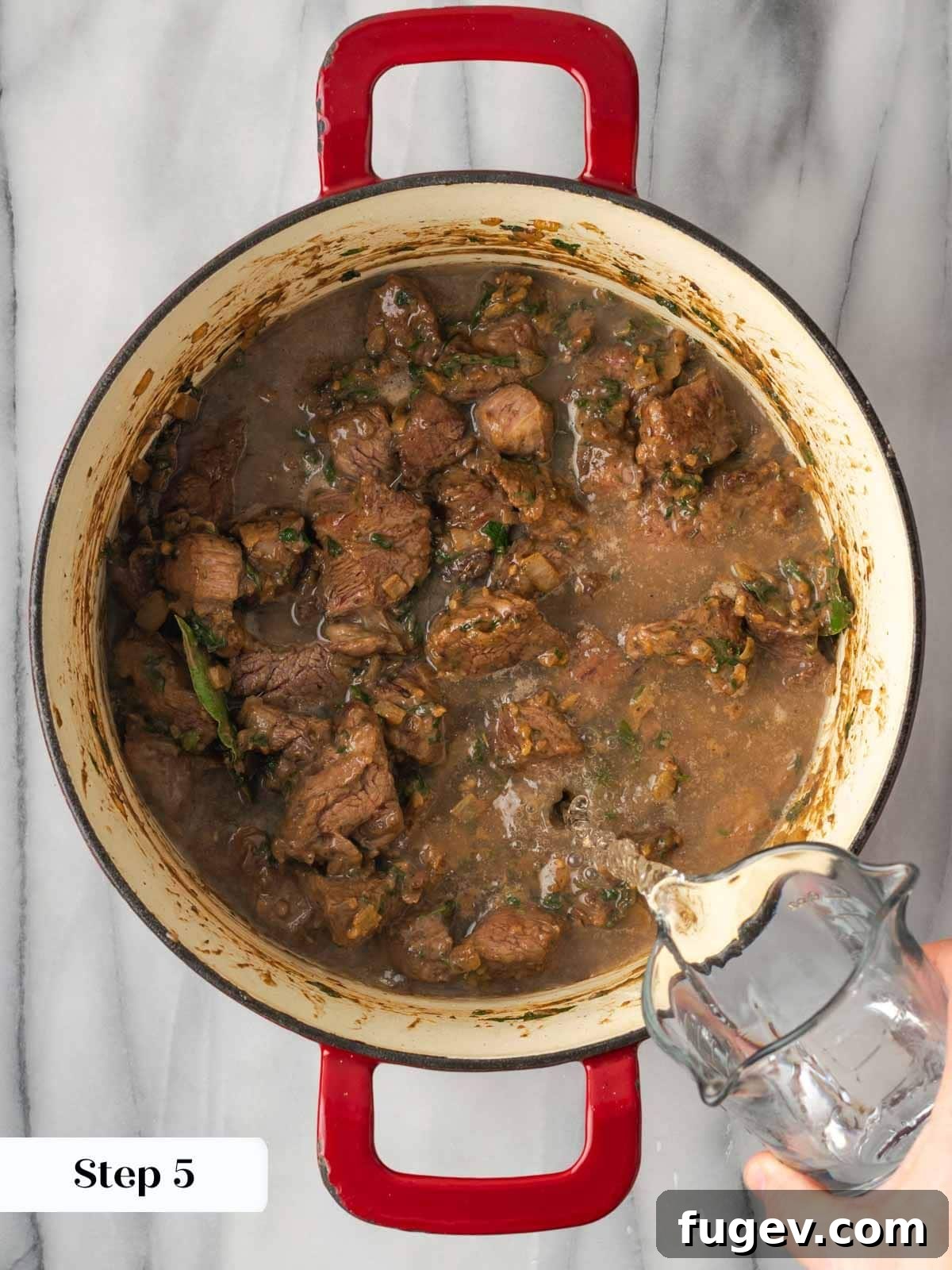
Step 5: Simmer the Stew. Return all the browned beef to the pot. Stir in the fresh parsley, celery leaves, bay leaves, and dried thyme. Add 5 cups of cold water, or enough to completely cover all the meat and vegetables. Then, add the diced carrots, cubed potatoes, diced turnips, diced onion (if any was reserved for this step), paprika, pepper, and a pinch of salt to taste. Bring the mixture to a gentle simmer, then reduce the heat to low, cover the Dutch oven, and let it cook. Allow the stew to simmer undisturbed for approximately 1 hour and 30 minutes, stirring occasionally to prevent sticking and ensure even cooking. Continue cooking until the meat is fall-apart tender and the potatoes begin to soften significantly, almost to the point of breaking down.
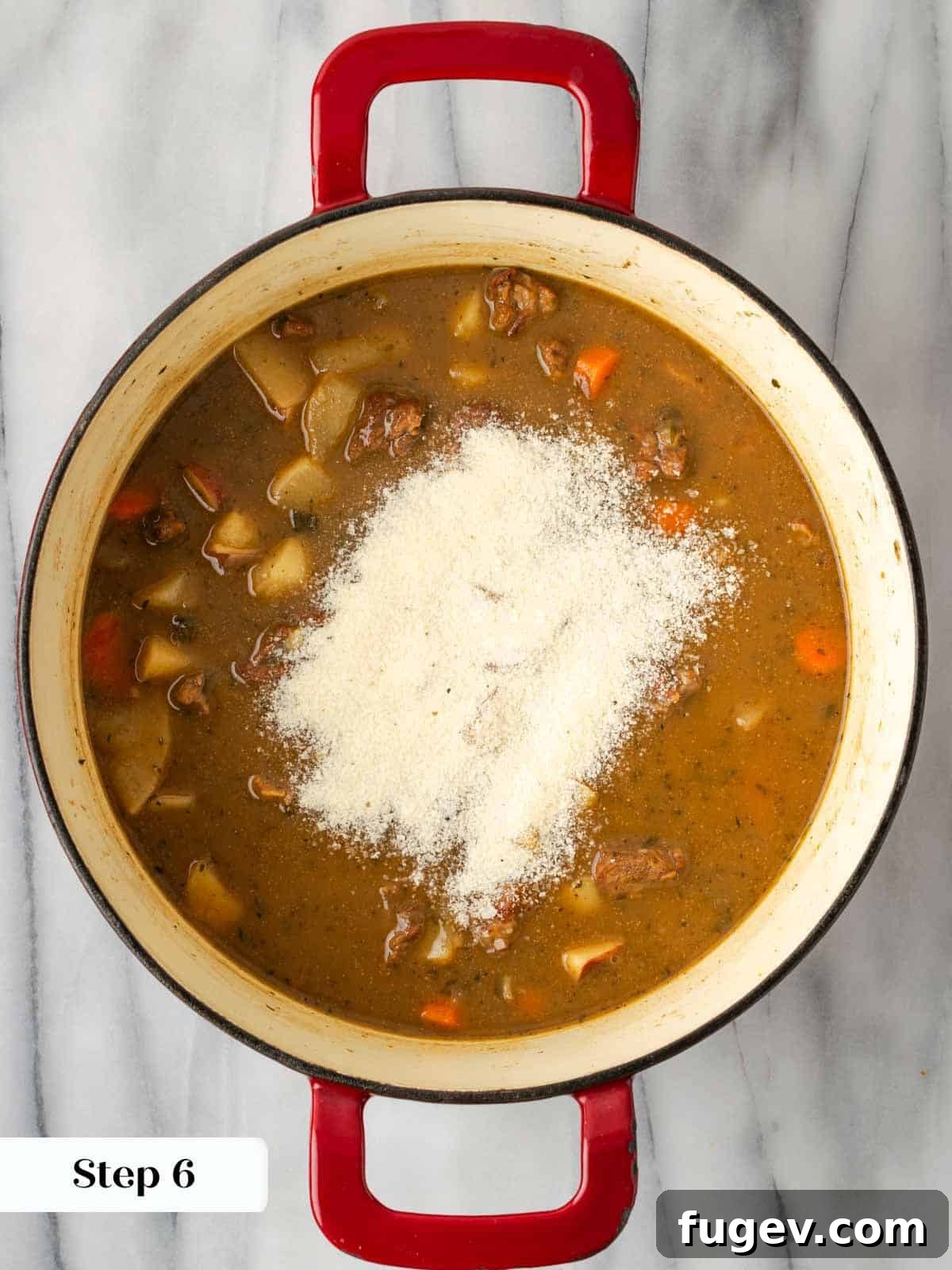
Step 6: Thicken and Finish. Carefully remove the bay leaves from the stew. Now, for the unique thickening step: add your fist-sized hunk of soda bread (or potato flakes, if using) directly into the simmering stew. Stir well to allow the bread to dissolve and integrate into the broth. Continue to cook for an additional 10 minutes, uncovered, stirring gently, to allow the stew to thicken to your desired consistency. Taste and adjust seasoning with salt and pepper as needed before serving hot.
Chef Lindsey’s Expert Tip
The Cornerstone of Flavor: Perfect Beef Browning. The most critical step for an intensely flavorful beef stew is proper browning of the beef. This isn’t just about color; it’s about developing deep, complex flavors through the Maillard reaction. To achieve this, ensure your pot is incredibly hot before adding the meat, and most importantly, do not overcrowd the pan. Giving the beef adequate space allows it to sear and caramelize rather than steam. Resist the urge to constantly stir; allow the beef to cook undisturbed on each side until it forms a beautiful, rich golden-brown crust. This meticulous searing lays the foundation for all the deliciousness to come.
Frequently Asked Questions About Beef Stew
Leftover beef stew can be stored in an airtight container in the refrigerator for 3 to 5 days. For longer storage, you can freeze it in a freezer-safe container or a resealable plastic bag for up to 3 months. Thaw overnight in the refrigerator before reheating.
Absolutely! Beef stew often tastes even better the next day as the flavors have more time to meld and deepen. You can prepare this recipe 3 to 4 days before you plan to serve it. When you’re ready to enjoy, simply remove it from the fridge, transfer it to a Dutch oven or a large stock pot, and gently reheat over medium heat on the stovetop until warmed through, stirring occasionally.
The tenderness of beef stew comes from a long, slow cooking process over low heat. Cuts of beef suitable for stew (like chuck roast) contain a good amount of connective tissue. This tissue, primarily collagen, breaks down into gelatin when simmered for an extended period, resulting in incredibly tender, succulent chunks of beef that practically fall apart. It’s crucial to cook the stew until the beef reaches this desired fall-apart texture.
Yes, for cuts of beef with significant connective tissue, cooking it longer over low heat will indeed make it more tender, up to a certain point. The prolonged gentle heat allows the tough connective tissues to fully convert into gelatin. For this Dutch oven beef stew, we recommend a minimum of 2 hours of simmering to ensure the beef reaches that perfectly tender, melt-in-your-mouth consistency. Avoid high heat, as this can toughen the meat.
If you tried this recipe and absolutely loved it, please consider leaving a 🌟 star rating and share your experience in the comments section below. Your feedback truly brightens my day!
Dutch Oven Beef Stew
Chef Lindsey
30 minutes
2 hours
2 hours
30 minutes
8
people
Comment
Print Recipe
Ingredients
- 2 lbs beef
- 3 tablespoons flour
- ½ teaspoon pepper
- ½ teaspoon kosher salt
- 3 tablespoons unsalted butter
- ½ cup dry white wine
- 1 ½ tablespoons garlic minced
- 2 bay leaves
- 1 teaspoon dried thyme or fresh if you prefer
- ½ cup celery leaves
- ½ cup parsley coarsely chopped
- 2 turnips diced
- 2 carrots diced
- 1 cup onion diced
- 2 red potatoes cubed
- ½ teaspoon paprika
- salt and pepper to taste
- 1 tablespoon dried currants optional
- fist sized hunk soda bread optional, to thicken
Instructions
-
Dry beef cubes on paper towels and then place in a medium bowl. I like to cut my own meat for stew so that the pieces are uniform and cook evenly.
-
Combine flour, ½ teaspoon salt, and ½ teaspoon of freshly ground pepper in a small bowl. Sprinkle half the mixture over the beef, and toss to coat. Sprinkle the remaining over the meat, toss to coat evenly.
-
Heat a large Dutch oven or saucepan over medium heat until it is searing hot. Working in batches, melt 1 tablespoon of butter and add about 1/3 of the flour-coated beef. Brown the meat on at least 3 sides.
-
Once you have browned all the meat, sauté the onions and the garlic until the onions are translucent and begin to brown. Pour in the wine. Stir and scrape the bottom of the pot with a flat, wooden spoon making sure to get up any browned bits! Let the wine boil for about two minutes, stirring constantly.
-
Return the meat to the pot, stir in parsley, celery leaves, bay leaves, and thyme. Stir in 5 cups of water or enough to cover all meat. Add carrots and potatoes, turnips, onion, paprika, pepper, and a pinch of salt. Cover and simmer until meat and vegetables are tender and potatoes are beginning to fall apart, about 1 hour and 30 minutes, stirring occasionally.
-
Remove bay leaves, add your soda bread or potato flakes, and continue to cook for an additional 10 minutes.
Notes
Variations – Slow Cooker: Rather than make this stew on the stovetop, you can use your slow cooker. Brown the meat on the stovetop, sauté the onions and garlic, deglaze with the wine, then add all of the remaining ingredients to the slow cooker. Cook on low for about 8 hours or high for 4 hours.
Storage – Store leftover beef stew in an airtight container in the fridge for 3-5 days. You can also freeze leftovers for up to 3 months.
Nutrition
Carbohydrates: 19g |
Protein: 22g |
Fat: 27g |
Saturated Fat: 11g |
Polyunsaturated Fat: 1g |
Monounsaturated Fat: 11g |
Trans Fat: 2g |
Cholesterol: 92mg |
Sodium: 312mg |
Potassium: 783mg |
Fiber: 3g |
Sugar: 5g |
Vitamin A: 3083IU |
Vitamin C: 20mg |
Calcium: 66mg |
Iron: 3mg
Main Dish, Soup, Stew
American, Irish-inspired
420
Like this? Leave a comment below!
Explore More Delicious Recipes
We trust you thoroughly enjoyed this professional chef-tested recipe for Dutch Oven Beef Stew. It’s a testament to the power of slow cooking and quality ingredients. If you’re eager to expand your culinary repertoire, we invite you to explore our other delicious, chef-developed stew recipes, perfect for any season. Or, for another hearty and comforting meal cooked to perfection in your Dutch oven, why not try our Classy Pot Roast next? Happy cooking!