
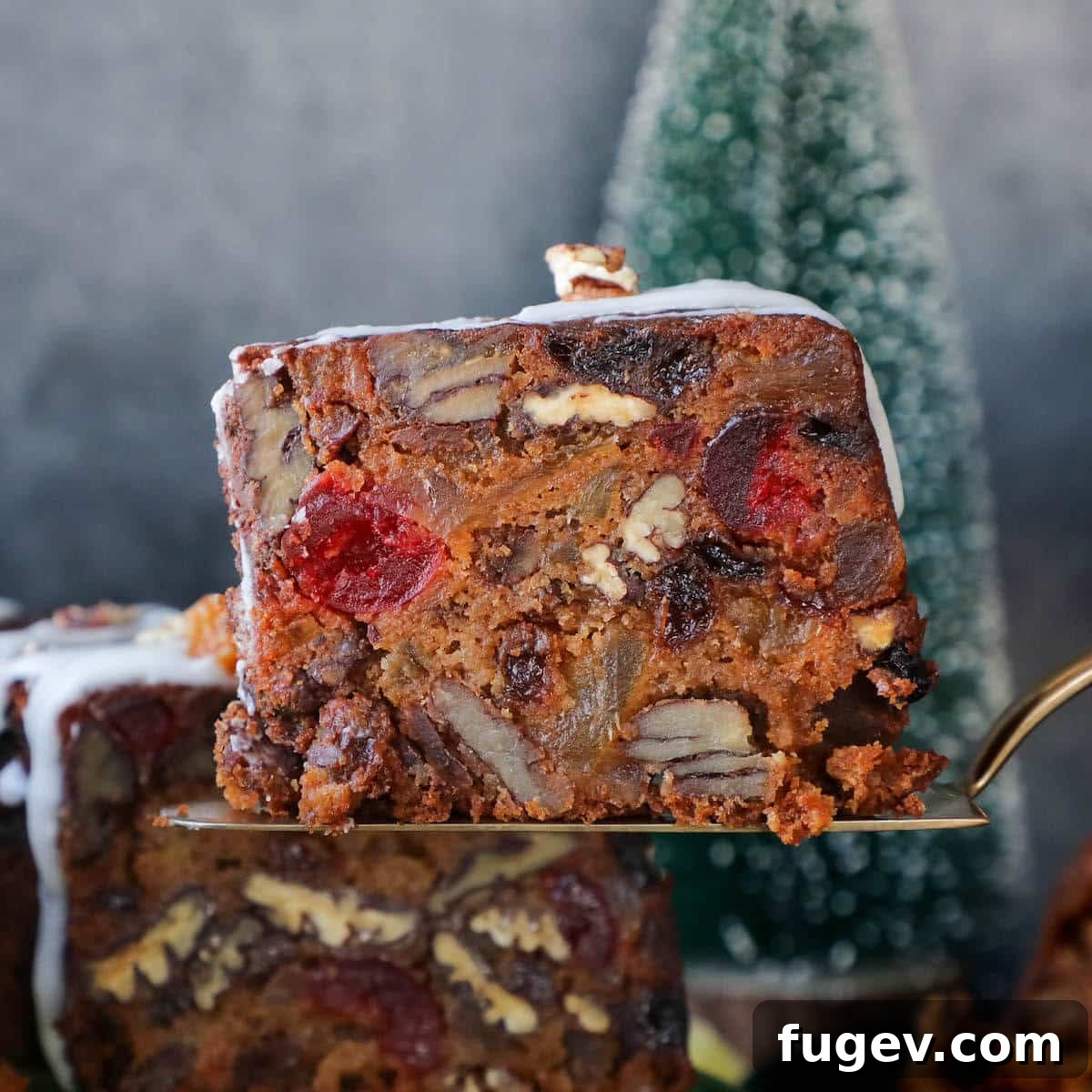
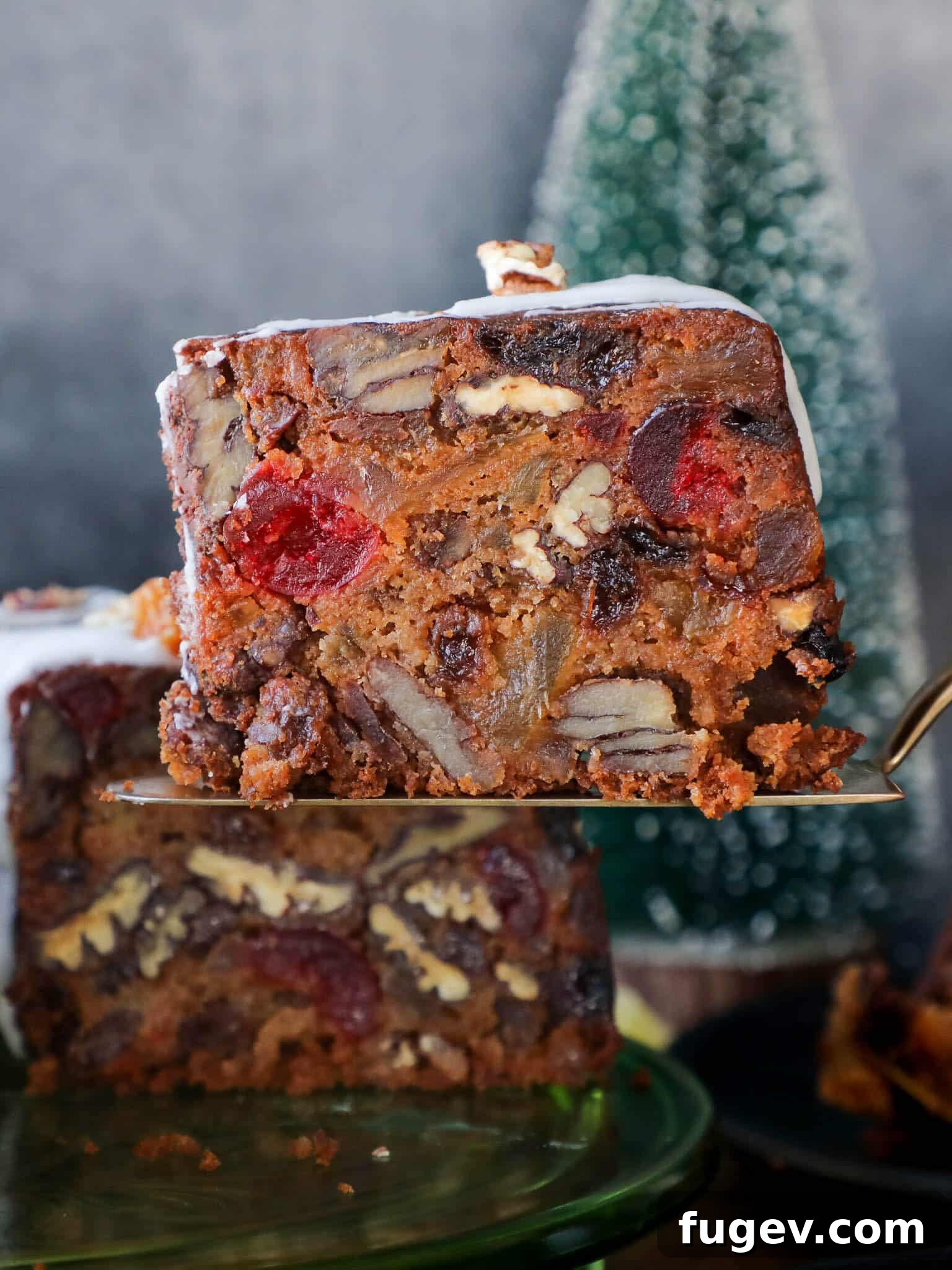
This is my grandmother’s cherished recipe for a wonderfully moist and incredibly flavorful fruit cake. Perfectly spiced with warming cinnamon and aromatic nutmeg, this cake is generously packed with a delightful assortment of dried fruits and crunchy nuts. What truly sets it apart is its remarkable moisture, even without prolonged soaking, making it an ideal, easy Christmas cake that can be enjoyed the very day it’s baked.
A Quick Look At The Recipe
This is a brief summary of the recipe. Jump to the recipe to get the full details.
Jump to Recipe
Prep Time
40 minutes
Cook Time
2 hours
Total Time
2 hours 40 minutes
Servings
16 slices
Difficulty
Easy
Calories *
591 kcal per serving
Technique
Make cake batter using creaming method, fold in fruit & nuts, bake, optionally wrap in soaked cloth, changing weekly, for 1-8 weeks.
Flavor Profile
Lightly spiced, dense cake filled with nuts and candied fruits.
* Based on nutrition panel
This is my second year making this fruitcake and the recipe makes a great fruit cake. I wrap in cheesecloth dipped in Peach brandy but it is wonderful right out of the hot pan. ⭐⭐⭐⭐⭐
Deborah Owens
This truly is the **best fruit cake recipe** you’ll ever find, perfectly balancing richness with a delightful mellow flavor. It’s incredibly moist and dense, yet surprisingly light, making it a fantastic choice for a Christmas cake, even if you opt to serve it fresh without any soaking. Unlike some traditional fruit cakes, this recipe offers a lighter touch on the spices, providing a more universally appealing taste than my old fashioned fruit cake recipe.
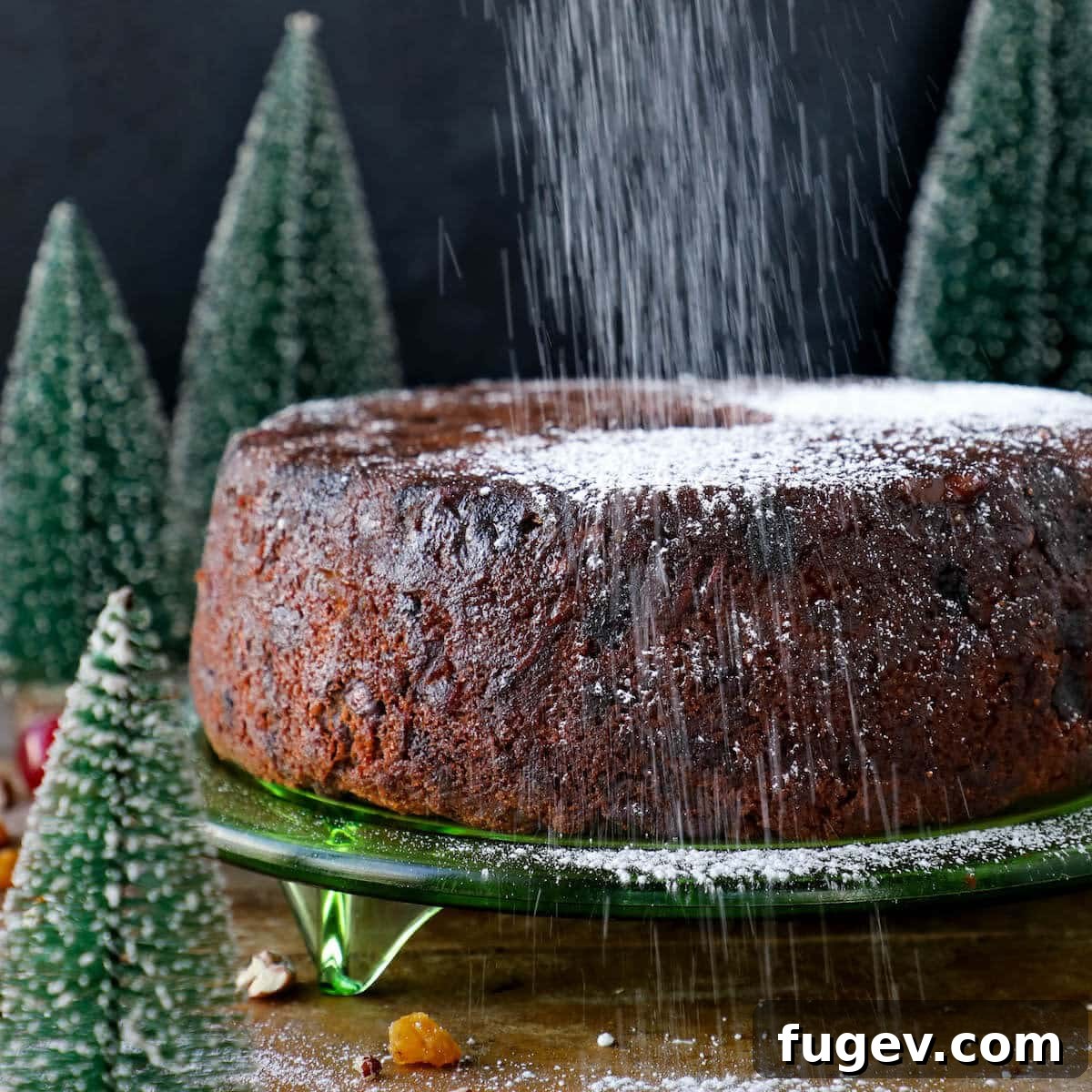
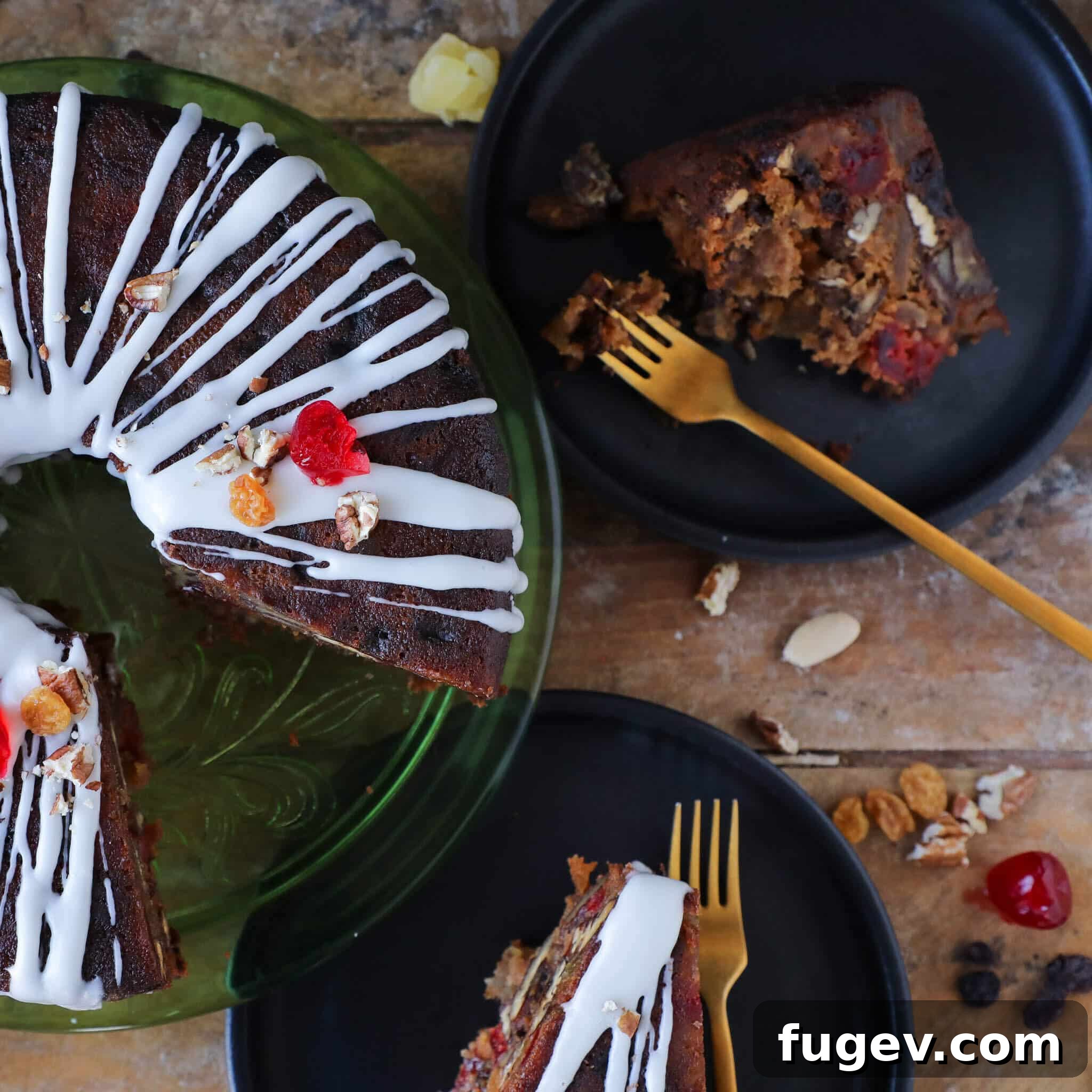
While this fruit cake is magnificent on its own, a simple dusting of powdered sugar can elevate its presentation. For a touch more indulgence, a straightforward cream cheese glaze, as I’ve demonstrated here, or even the best cream cheese buttercream, would be absolutely divine. As you embrace the festive spirit of holiday baking, consider exploring other comforting creations like this rich caramel molasses cake, a fragrant gingerbread cake, or a batch of my chewy molasses sugar cookies!
For those who adore the classic fruit cake flavors but prefer a different format, I also offer a wonderful old-fashioned fruit cake cookies recipe. These delightful cookies capture all the beloved spices, dried fruits, nuts, and textures of a traditional fruit cake, all wrapped up in a convenient cookie form.
Table of Contents
- Why This is the Best Fruit Cake Recipe
- The Secret to Moist Fruit Cake: Professional Baking Tips
- What is Fruit Cake? A Brief History
- Essential Ingredients for the Perfect Fruit Cake
- Substitutions & Variations: Personalize Your Fruit Cake
- How to Make Fruit Cake: Step-by-Step
- Chef Lindsey’s Recipe Tip
- Troubleshooting: Why is my homemade fruit cake dry?
- Frequently Asked Questions About Fruit Cake
- Best Fruit Cake Recipe (Full Details)
- Before You Go!
Why This is the Best Fruit Cake Recipe
My grandmother’s recipe stands out as the ultimate fruit cake for several compelling reasons:
- Unrivaled Moisture Without Soaking: This cake is famously rich and moist right out of the oven, eliminating the need for traditional prolonged soaking to achieve that perfect texture. While soaking the cake in brandy undoubtedly enhances its complex flavors, adds even more moisture, and extends its shelf life, it’s entirely optional if you prefer to enjoy it fresh. This characteristic makes it an exceptionally easy fruit cake to prepare for last-minute holiday celebrations.
- No Pre-Soaking Dried Fruit Required: Forget the tedious step of soaking dried fruits for days! In this recipe, the dried fruits are incorporated directly into the batter and bake beautifully into the cake. This saves you significant preparation time, making the fruit cake-making process much more accessible and enjoyable. The fruits hydrate and plump up deliciously during baking, becoming tender flavor bursts.
- Light and Airy Yet Richly Dense: The secret lies in the creaming method, where butter and sugar are beaten together until light and fluffy. This technique incorporates air into the batter, resulting in a cake crumb that is surprisingly delicate. However, the generous addition of a magnificent proportion of fruits and nuts ensures that each slice is packed with substance and flavor, giving you that satisfying, dense fruit cake experience without being heavy or gummy.
- A Cherished Grandmother’s Legacy: This isn’t just any recipe; it’s Nana’s recipe, a holiday staple that had everyone clamoring for a piece every single Christmas. I’ve taken her invaluable margin notes, combined them with my professional expertise, and incorporated all the hard-won lessons I’ve learned over the years to bring you a perfected version of this timeless family classic. It’s a taste of tradition, perfected for your kitchen.
The Secret to Moist Fruit Cake: Professional Baking Tips
Achieving the perfect, moist fruit cake is an art, but with these professional tips, you’ll master it:
- Choosing the Right Baking Pan: For the most consistently moist fruit cake, a standard tube pan is your best friend. The central tube allows the heat to penetrate the dense batter from both the outside and the inside, ensuring even baking and reducing overall baking time. Loaf pans are also an excellent alternative. However, I must caution against using a bundt pan or a removable-bottomed tube pan for this recipe. I learned this through unfortunate trial and error: the intricate designs of bundt pans make unmolding difficult for such a rich cake, and removable bottoms can lead to leaks, especially with a moist batter or during the water bath method. Stick to a solid tube or loaf pan to avoid disappointment.
- Baking Above a Water Bath (Not In It): This technique is crucial for maintaining moisture. Instead of placing your cake pan directly into a water bath, you’ll bake this fruit cake in a low oven with a pan of steaming hot water placed on the rack *below* it. This ingenious method creates a humid environment within the oven, preventing the cake from drying out while allowing for proper air circulation and even baking. It’s a double win for moisture and texture.
- Nana’s Secret: Apple Slices for Extra Moisture: Before you embark on the soaking and wrapping process, take a cue from my grandmother and place a few fresh apple slices in the center of the cake (where the tube was, if using a tube pan). This simple yet brilliant trick provides a continuous source of gentle moisture to the cake as it rests, infusing it with subtle apple flavor and ensuring it remains incredibly moist and flavorful for an extended period. It’s a touch of old-world wisdom that truly makes a difference.
What is Fruit Cake? A Brief History
Fruit cake is a rich, dense cake characterized by its generous inclusion of candied or dried fruits, nuts, and a fragrant medley of spices, often enhanced with a splash of brandy or other spirits. Originating in ancient Rome, where a mix of barley mash, pomegranates, nuts, and raisins was baked, it evolved through the Middle Ages as sugar became more available and preserved fruits were added. By the 16th century, with the discovery of sugar from the New World, fruit cake gained popularity across Europe, becoming a staple for special occasions.
Traditionally, these cakes are “fed” or soaked with brandy, rum, or other alcohol multiple times over weeks or even months. This process not only imparts a deep, complex flavor but also acts as a natural preservative, keeping the cake moist and allowing it to age beautifully. While historically served at weddings (often called “bride’s cake”), modern bakers most commonly associate fruit cake with Christmas and other festive holidays, where its rich flavors and long shelf life make it a perfect treat to share or give as a gift. The texture is typically dense and moist, a stark contrast to lighter sponge cakes, and its flavor profile is complex and deeply satisfying, evoking warmth and tradition.
Essential Ingredients Needed for the Perfect Fruit Cake
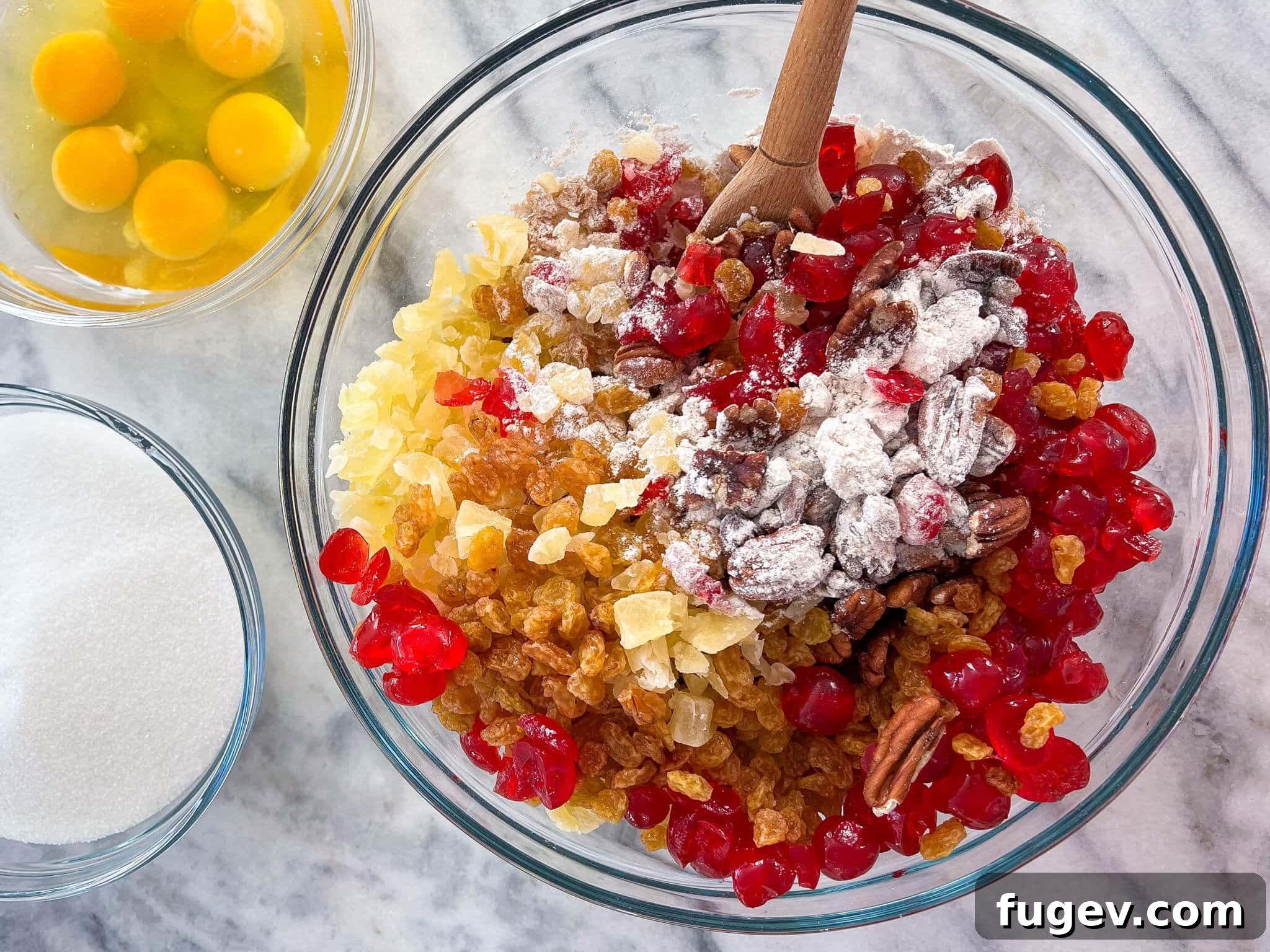
Each ingredient in this fruit cake recipe plays a vital role in creating its iconic flavor and moist texture:
- Dried & Candied Fruit: This recipe uses a harmonious blend of golden raisins, vibrant candied pineapple, and ruby-red candied cherries. These not only contribute delightful sweetness and chewiness but also act as “slow-release moisture vessels,” absorbing some of the liquid (especially if you choose to soak the cake) and helping to keep the cake incredibly moist from the inside out. If you’re craving a fresh fruit option, my Orange Upside Down Cake is a fantastic alternative!
- All-Purpose Flour: The backbone of our cake, all-purpose flour provides just the right amount of gluten to create a tender, soft crumb without becoming tough. To ensure a beautiful texture free from large holes or “tunnels,” be mindful not to overmix the batter. Incorporate the flour in several additions, folding gently, and when in doubt, finish the mixing by hand.
- Baking Powder: This double-acting leavening agent works its magic twice: first when it comes into contact with liquid (an acid), and again when heated in the oven. This double reaction ensures a consistent, stable, and even rise, giving the fruit cake its characteristic light yet dense structure.
- Kosher Salt: Often underestimated, kosher salt is essential for balancing and amplifying the complex flavors of the spices and fruits. It is less concentrated than table salt, so a teaspoon will weigh less. It prevents the cake from tasting bland or overly sweet, adding depth and dimension to every bite.
- Cinnamon: The warm, sweet, and slightly woody notes of cinnamon are quintessential to fruit cake. While I prefer Saigon cinnamon for its potent and rich flavor, any good quality ground cinnamon will infuse your cake with comforting holiday aromas.
- Ground Nutmeg: This recipe specifies pre-ground nutmeg, which offers a reliable flavor profile. If you opt for freshly ground nutmeg, which delivers a more intense and wonderful aroma, remember to adjust the quantity by half or even two-thirds, as its potency is significantly higher.
- Pecans: I particularly love Southern pecans for their buttery flavor and tender texture in baking. Nothing quite compares to fresh, plump pecans, but any good quality pecan halves will work beautifully. To maintain their freshness, especially if you buy in bulk or live in a warm climate, store them in the freezer for up to several months.
- Unsalted Butter: Using unsalted butter in baking gives you precise control over the overall salt content of your recipe. Butter contributes rich flavor and tenderness to the cake, and using it softened and creamed with sugar helps create that light, airy cake structure.
- Granulated Sugar: Beyond its obvious role in providing sweetness, granulated sugar plays multiple critical roles in this fruit cake. It assists in leavening by trapping air when creamed with butter, contributes to the cake’s moistness by attracting and retaining water, and helps achieve that desirable tender texture and structural stability.
- Large Eggs: Whole eggs are essential emulsifiers, helping to bind the fats and liquids in the batter, which results in a smooth, moist cake that isn’t greasy. They also add richness and contribute to the cake’s lift by trapping air during mixing with the sugar.
- Brandy: The addition of brandy or other alcohol serves a dual purpose: it deeply enhances the cake’s flavor profile and contributes to its exceptional moisture. Alcohol interacts differently with flour’s gluten than water does, leading to a more tender and delicate cake crumb.
- Honey: A touch of honey not only adds subtle sweetness but also helps create a beautiful golden crust and keeps the surface of the cake moist during baking.
See the recipe card for full information on specific ingredient quantities and detailed instructions.
Substitutions & Variations: Personalize Your Fruit Cake
One of the joys of baking is the ability to adapt a recipe to your personal taste. This fruit cake recipe is incredibly versatile:
- Dried Fruit Options: If the specified dried fruits aren’t quite to your liking, feel free to substitute with any dried fruit you adore. Chopped dried apricots, succulent pears, tiny currants, or sweet dried apples would all introduce a delightful twist. For a welcome burst of tartness to beautifully balance the cake’s sweetness, consider adding dried tart cherries.
- Candied Fruit Choices: Embrace your creativity with candied fruits! You can use any combination that appeals to you. Personally, for my next batch, I’m contemplating using all dried fruit and omitting the candied cherries and pineapple entirely for a different flavor dynamic.
- Nut Varieties: Don’t limit yourself to pecans! This fruit cake welcomes any of your favorite nuts. Almonds, walnuts, and vibrant pistachios are all excellent choices that will add their unique crunch and flavor. For a delightful tropical flair, you could even incorporate macadamia nuts – and then you’ll conveniently have some on hand for baking a batch of irresistible White Chocolate Macadamia Nut Cookies!
- Non-Alcoholic Version: To make this fruit cake alcohol-free, simply substitute orange juice, apple juice, or robust apple cider for the brandy in both the batter and any optional soaking. You can soak the baked cake in apple cider, or skip the soaking process altogether; the cake will still be wonderfully moist and flavorful. Please note that an unsoaked or non-alcoholic soaked fruit cake will not be shelf-stable and should be refrigerated for storage.
How to Make Fruit Cake: Step-by-Step
Follow these detailed instructions to create the ultimate moist fruit cake. Precise measurements and further specifics are conveniently listed in the full recipe card below.
Making the Cake:
Step 1: Prepare Your Pan. Thoroughly spray a 10-inch tube pan with baking spray, then line the bottom and sides with parchment paper for effortless release. A tube pan with a non-removable bottom works best to prevent leaks. Bonus points if it’s a nonstick pan! Alternatively, two standard loaf pans can also be used, though I still recommend lining them with parchment paper for best results.
Step 2: Preheat Oven. Set your oven to a low temperature of 275°F (135°C). This slow and gentle bake is key to achieving a moist, evenly cooked fruit cake. I personally prefer to use the convection setting if available, as it helps achieve a beautiful golden-brown top and slightly reduces baking time without compromising moisture.
Chef’s Note: The low temperature and gentle bake are crucial for such a dense cake, preventing the outside from burning before the inside cooks through. Convection can help circulate heat more evenly.
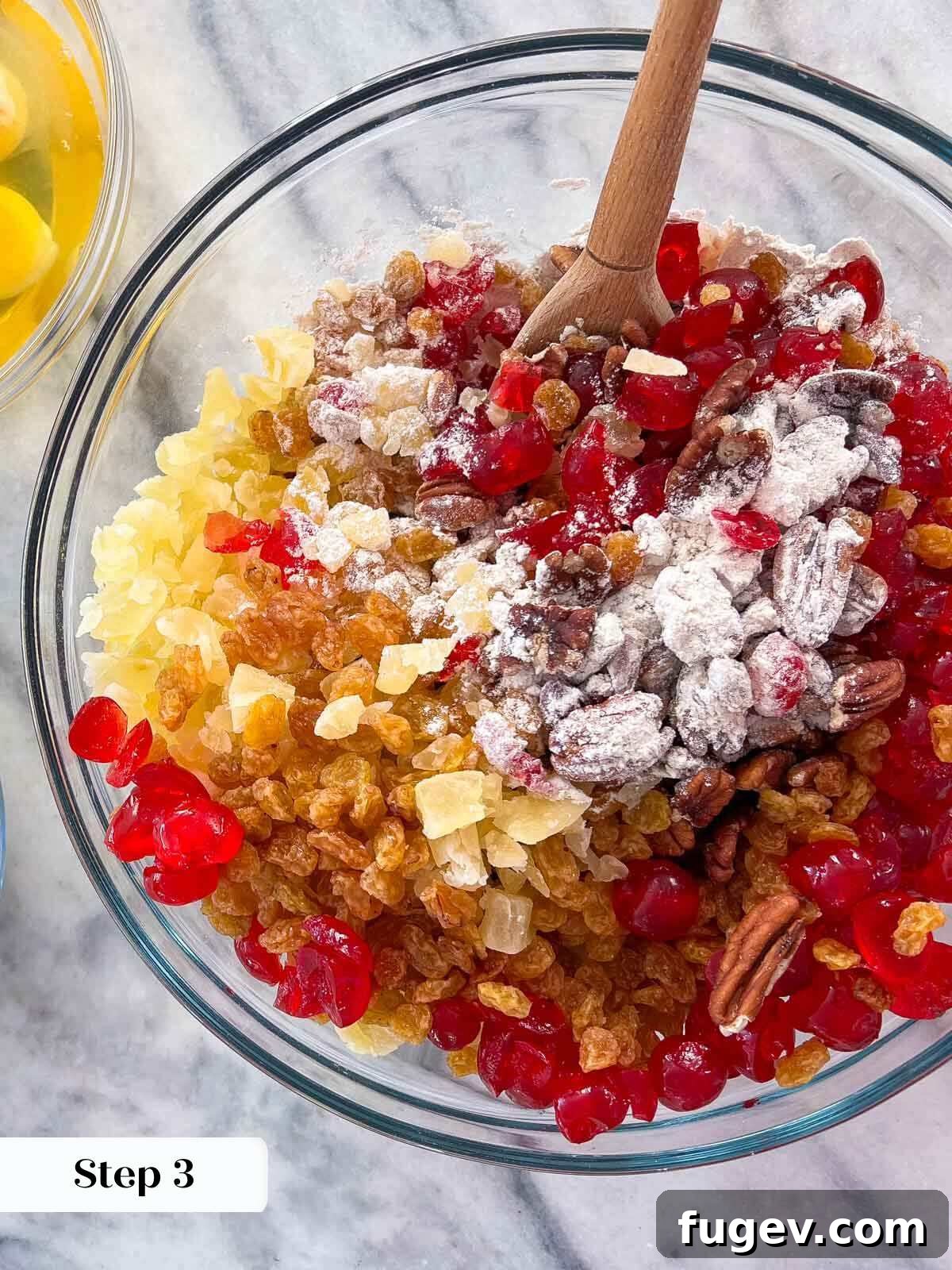
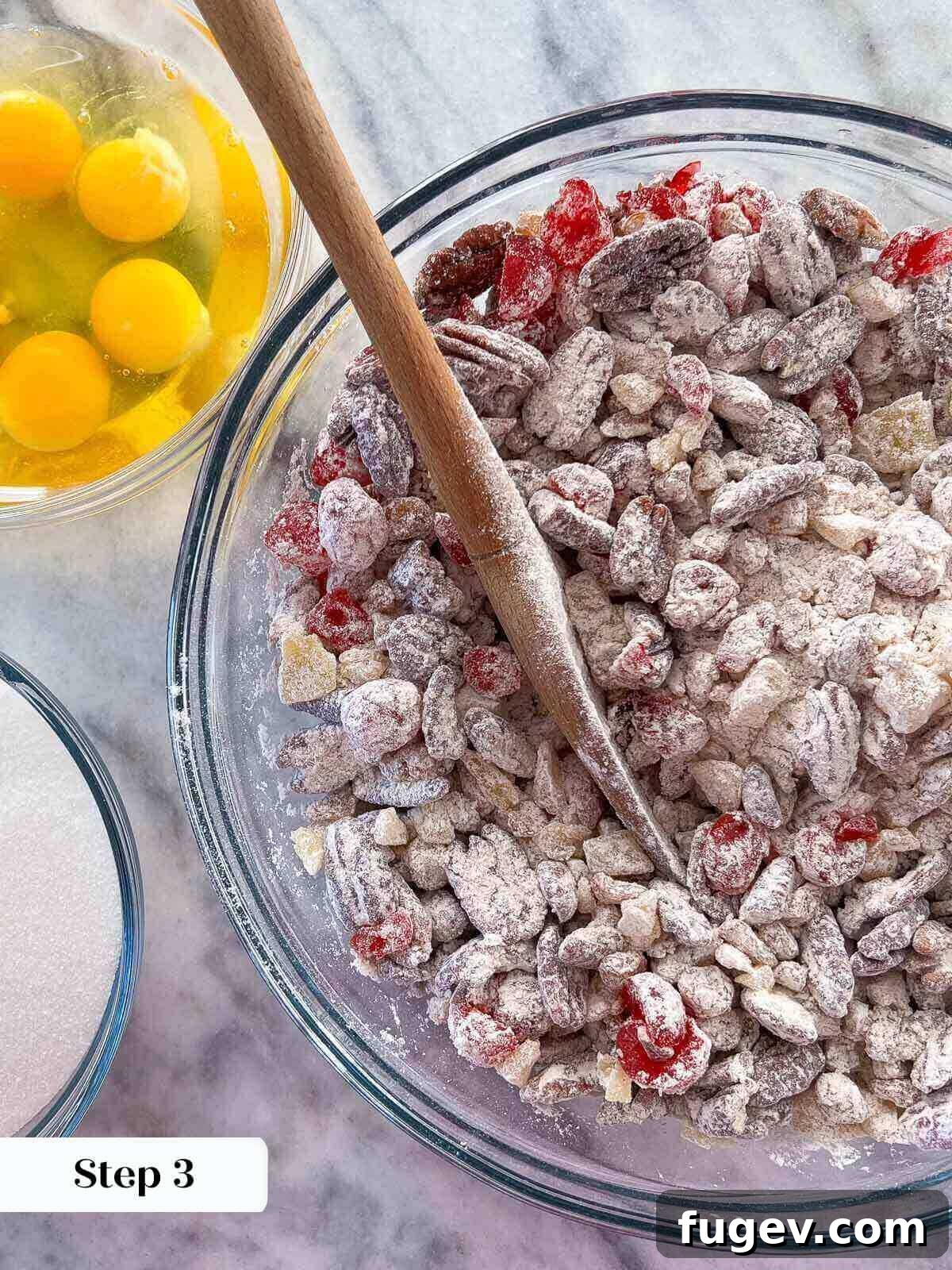
Step 3: Combine Dry Ingredients and Fruits/Nuts. In a very large mixing bowl, whisk together the all-purpose flour, baking powder, kosher salt, cinnamon, and nutmeg until well combined. This ensures even distribution of the spices. Next, add the chopped pecans, candied pineapple, candied cherries, and golden raisins. Toss the fruit and nuts thoroughly to coat them with the flour mixture. This step is vital as it prevents the heavy fruits and nuts from sinking to the bottom of the cake during baking, ensuring they are evenly distributed throughout each slice.
Step 4: Cream Butter and Sugar. In the bowl of a stand mixer fitted with the paddle attachment (or using a large bowl and a hand mixer), cream together the softened unsalted butter and granulated sugar. Beat them on medium-high speed until the mixture is light, fluffy, and pale in color, typically 3-5 minutes. This creaming method incorporates air, which is crucial for the cake’s tender texture.
Step 5: Incorporate Eggs and Brandy. Reduce the mixer speed to low. Add the large eggs one at a time, beating well after each addition until fully incorporated into the butter-sugar mixture. Scrape down the sides of the bowl as needed. Once all eggs are mixed in, beat in the brandy. The batter may look slightly curdled at this stage, but it will come together with the dry ingredients.
Step 6: Combine Wet and Dry Mixtures. Gradually add the flour-coated fruit and nut mixture to the wet batter. Using a spatula, gently fold the ingredients together until just combined. Be careful not to overmix, as this can develop the gluten too much, resulting in a tough cake.
Step 7: Bake in Prepared Pan. Pour the thick fruit cake batter evenly into your prepared tube or loaf pan(s). Gently smooth the top with a spatula. Place the pan into the preheated oven.
Step 8: Set Up Water Bath. On the oven rack directly below the cake, place a large baking dish or roasting pan filled with hot water. This creates the humid environment mentioned earlier. Remember: Do not bake the cake *in* the water; the water pan should be on a separate rack below.
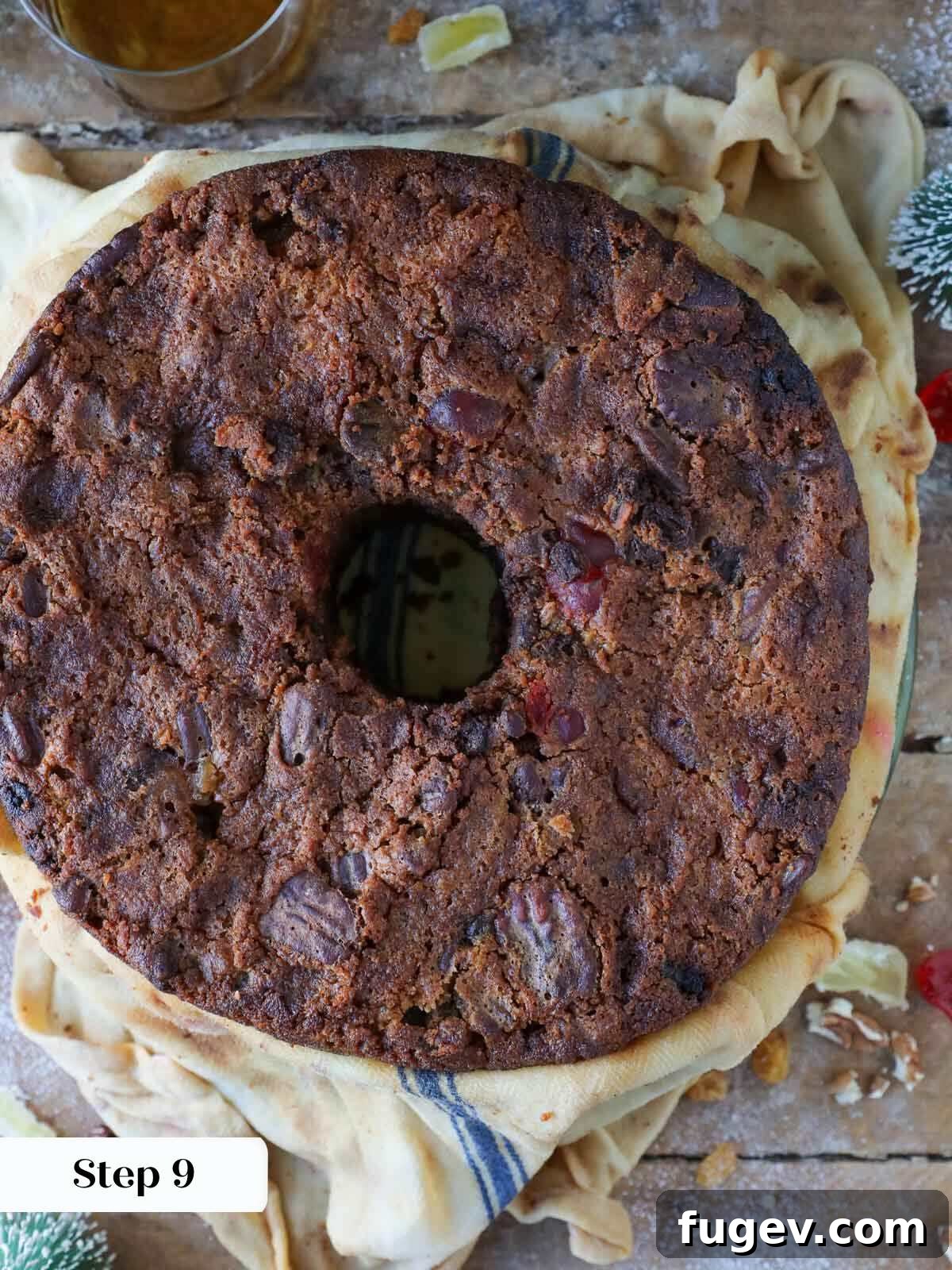
Step 9: Bake Until Done. Bake the fruit cake for approximately 2 hours. The exact baking time may vary based on your oven and pan size, so start checking for doneness around the 90-minute mark. Insert a wooden skewer or cake tester into the center of the cake; it should come out clean when the cake is fully baked. Around 90 minutes into baking, once the top crust has set but the cake isn’t fully baked, gently brush the top with warmed honey. This adds a beautiful sheen and extra moisture to the crust. Continue baking until the tester comes out clean.
Chef’s Note: Brushing with honey creates a delicate, slightly sticky crust that not only looks appealing but also helps seal in moisture. It’s a small step that adds a lot to the finished cake.
Step 10: Cool and Unmold. Once baked, remove the cake from the oven and let it cool in the pan on a wire rack for at least 30 minutes before attempting to unmold it. This allows the cake to firm up and prevents it from breaking. Once cooled sufficiently, carefully unmold the cake. You can then proceed to the optional soaking process if desired.
How to Soak a Fruit Cake (Optional for Enhanced Flavor and Moisture):
Step 1: Prepare for Wrapping. Lay out a large piece of plastic wrap on a clean counter surface. Carefully place the cooled fruit cake upside down on the plastic wrap.
Step 2: Prepare Soaking Liquid. Measure about ½ to ¾ cup of your chosen brandy or rum into a large measuring cup. Submerge a clean kitchen towel or tea towel into the alcohol until it is fully saturated. Squeeze out any excess liquid so it’s moist but not dripping.
Step 3: Apply Soaked Towel. Carefully place the alcohol-soaked towel over the bottom (which is currently the top) of the fruit cake. Then, while gently holding the towel in place, carefully flip the entire cake over so the top is now facing up. Drape the remaining soaked towel over the top and sides of the fruit cake.
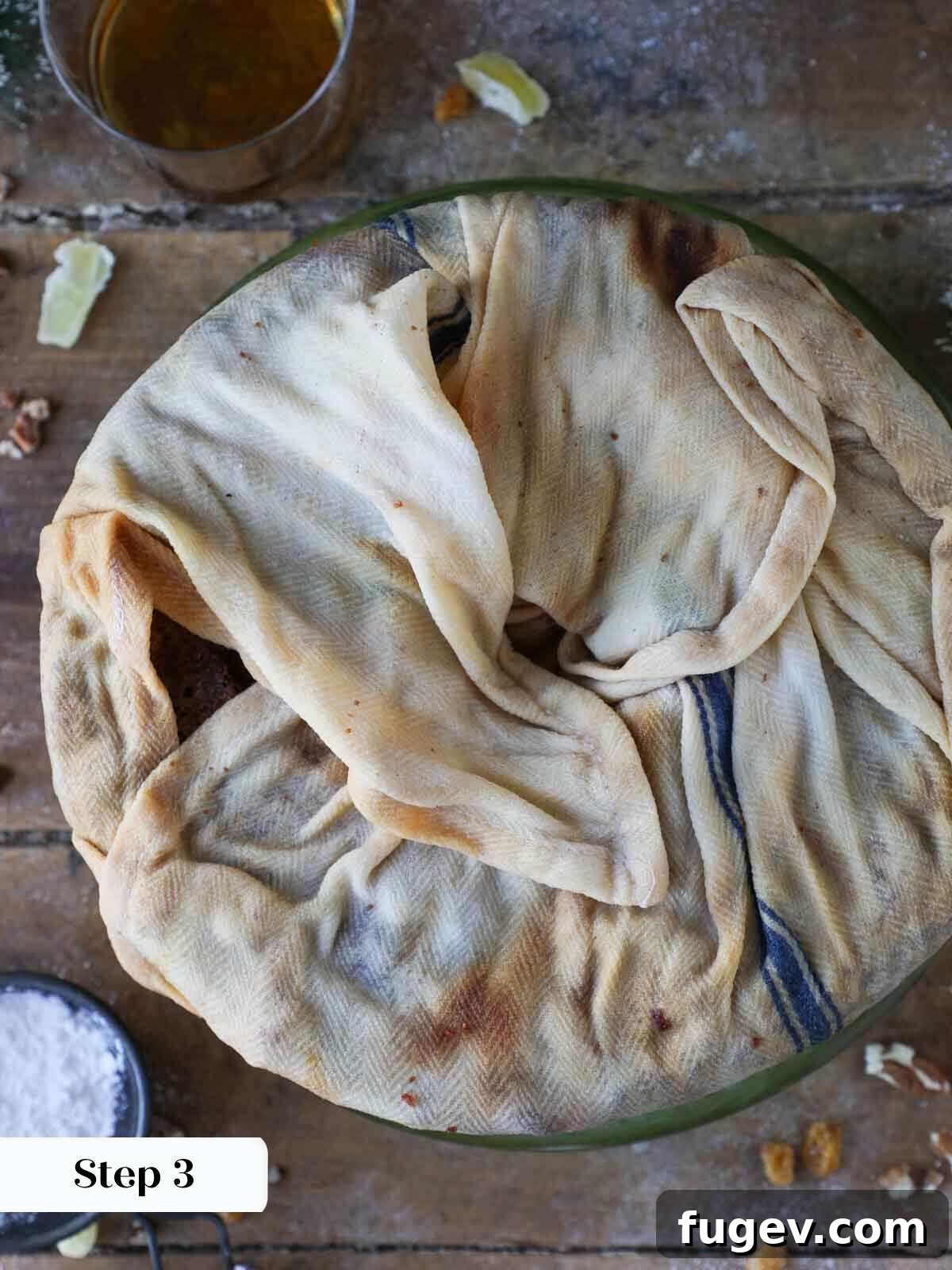
Step 4: Seal and Age. Using the plastic wrap already underneath the cake, tightly wrap the entire cake, securing the towel inside. Add several additional layers of plastic wrap to create a completely airtight seal. This prevents the alcohol from evaporating and keeps the cake fresh. Store the wrapped cake in a cool, dark place. My grandmother would traditionally re-soak her cakes twice a month for 3-4 months, allowing the flavors to deepen and mature beautifully. I typically soak mine twice, about a month apart, for excellent results.
Tradition Tip: The longer a fruit cake ages with regular soaking, the more complex and rich its flavors become. It’s a true labor of love that yields an incredible holiday treat.
Chef Lindsey’s Recipe Tip
For an absolutely effortless release of your fruit cake, always line the bottom of your tube pan with parchment paper! Here’s a quick trick: trace the outer edge of your pan bottom onto parchment, then reach your marker down through the center tube and trace a circle inside. Fold the paper and cut just inside your marker lines to create a perfect donut shape. This ensures your beautiful cake slides out cleanly every time!
Troubleshooting: Why is my homemade fruit cake dry?
A common complaint about homemade fruit cake is its tendency to be dry, which can be disheartening after all your efforts. Several factors can contribute to this issue:
- Over-baking: This is arguably the most frequent culprit. Because fruit cakes are dense and bake at a low temperature for an extended period, it’s easy to bake them a little too long. Even a few extra minutes in the oven can strip away vital moisture, leaving you with a crumbly, dry cake. Always rely on a cake tester inserted into the center; once it comes out clean, the cake is done.
- Oven Temperature Too High: Baking at an oven temperature that’s too high can cause the outside of the cake to set and dry out rapidly before the inside has a chance to cook through properly. The low, slow bake in this recipe (and the water bath method) is specifically designed to counteract this.
- Insufficient Moisture from Soaking (or lack thereof): Traditional fruit cakes rely heavily on being “fed” with alcohol (like brandy or rum) over weeks or months. This alcohol not only deepens the flavor but, critically, adds and locks in moisture. If you skip this soaking process entirely, or don’t soak enough, your cake will naturally be drier. However, this particular fruit cake recipe is formulated to be delightful even when un-soaked, provided it’s eaten fresh within about a week of baking. For longer storage and ultimate moisture, embrace the soaking tradition!
- Incorrect Ingredient Ratios: An imbalance in the fat, sugar, and liquid components of the batter can also lead to dryness. This recipe is carefully balanced to ensure maximum moisture retention.
To ensure your homemade fruit cake remains wonderfully moist, follow the baking times closely, utilize the water bath technique, and consider the optional (but highly recommended) alcohol soaking process for extended moisture and flavor. Enjoying this fruit cake fresh and un-soaked is perfectly acceptable and delicious, especially within a few days of baking!
Frequently Asked Questions About Fruit Cake
The “best” alcohol for soaking fruit cake truly comes down to personal preference! Choose an alcohol with an aroma and flavor profile that you find appealing. Classic choices include brandy, which imparts a warm, fruity, and slightly sweet note that beautifully complements the cake’s spices. Apple or pear brandies would also be fabulous choices, adding an extra layer of fruitiness. For a distinct Southern twist, consider using whiskey or Bourbon, which will give the cake a deeper, smoky-sweet complexity. Dark rum is another popular option, offering a rich, molasses-like flavor. Feel free to experiment to find your perfect pairing!
Absolutely, you can make a delicious fruit cake without alcohol! For the soaking process, you can substitute the alcohol with apple cider, orange juice, or another fruit juice of your choice. You can also simply soak the dried fruit in fruit juice before incorporating it into the batter, then forgo soaking the whole cake after baking. For the 1 ½ tablespoons of brandy specified in the batter of this recipe, simply replace it with an equal amount of apple cider or fruit juice. Keep in mind that a non-alcoholic fruit cake will not have the same shelf-stable properties as an alcohol-soaked one and should be stored in the refrigerator to maintain freshness. This recipe is designed to be delightful even when served fresh and un-soaked within a few days of baking!
Proper storage is key to enjoying your fruit cake for an extended period. An alcohol-soaked fruit cake, when wrapped exceptionally well, can be stored at room temperature for up to 6 months. To prevent it from drying out, it’s advisable to re-soak it with a little more alcohol approximately once a month during this period. Once you’ve decided to stop the soaking process or if you’ve made a non-alcoholic version, the fruitcake should be wrapped tightly in several layers of plastic wrap and then stored in the refrigerator for shorter periods (a few weeks) or in the freezer for longer storage (up to a year). Freezing maintains both moisture and flavor wonderfully.
For this fruit cake recipe, I found that a simple cream cheese glaze is an exquisite pairing. The creamy texture and slight tang of the cream cheese perfectly cut through the richness and robust, spiced flavors of the fruit cake, creating a delightful balance. A straightforward orange glaze, made with orange juice and confectioner’s sugar, would also be a delicious choice; it adds a bright citrus note and helps lock in additional moisture. Alternatively, a dusting of powdered sugar offers an elegant and minimalist presentation, allowing the cake’s inherent beauty and flavor to shine.
Beyond a glaze or dusting of powdered sugar, there are several wonderful accompaniments for this fruit cake that enhance the experience. I served mine with a dollop of lightly sweetened homemade whipped cream, but a rich crème fraîche whipped cream would also be a sophisticated pairing. The creamy dairy element beautifully highlights the cake’s spices and mellows its intensity. I would generally steer clear of overly sweet garnishes like caramel, as the cake is already rich. Instead, consider a scoop of creamy vanilla bean ice cream or a delicate crème anglaise. These additions provide a cool, smooth contrast to the dense, warm spices of the fruit cake, making each bite an absolute delight.
If you tried this recipe and loved it please leave a 🌟 star rating and let me know how it goes in the comments below. I love hearing from you; your comments make my day!
Best Fruit Cake
Chef Lindsey
40 minutes
2 hours
2 hours 40 minutes
16 slices
Pin Recipe
Comment
Print Recipe
Ingredients
For the Cake:
- 2 cups all-purpose flour
- ½ teaspoon baking powder
- 1 ½ teaspoons kosher salt
- 1 ½ teaspoons cinnamon
- 1 teaspoon ground nutmeg
- 3 ½ cups pecans chopped
- 1 ½ cups candied pineapple ¾ lb
- 2 cups candied cherries ¾ lb
- 1 ½ cups golden raisins ½ lb
- ½ cup unsalted butter softened
- 2 ¼ cup granulated sugar
- 6 eggs
- 1 ½ tablespoons brandy for the batter
- 2 tablespoons honey for brushing cake
- 1 cup brandy for soaking, optional
- ½ apple peeled & sliced, for storing, optional
For the Optional Glaze:
- 2 tablespoons cream cheese softened
- 1 cup powdered sugar
- 2 tablespoons milk or more to achieve desired consistency
Instructions
Make the Cake:
-
Spray and line a 10-inch tube pan with parchment paper. A non-removable bottomed tube pan works best. Bonus points for nonstick.
-
Preheat oven to 275°F. I preferred to bake it in the convection setting because the top got a nice golden brown and the cake baked faster.
-
In a large bowl, whisk together flour, baking powder, salt, cinnamon and nutmeg. Add pecans, pineapple, cherries, and golden raisins. Toss to coat.
-
In the bowl of a stand mixer fitted with the paddle attachment or in a bowl with a hand mixer, cream the butter and sugar until light and fluffy.
-
Beat in the eggs one at a time, waiting until the first has incorporated before adding the next.
-
Beat in the brandy.
-
Add the dry ingredient/nut mixture to the batter and fold to incorporate.
-
Pour into prepared pan and place in preheated oven.
-
Fill a large baking dish or roasting pan with hot water and place below the cake in the oven. Do not bake the cake in the water.
-
Bake 2 hours or until a cake tester comes out clean. Once the top crumb has set, but the cake is not done baking (after about 90 minutes), brush the top with warmed honey. Continue baking until done.
-
Cool and unmold cake.
Optional Soaking
-
Soak a clean kitchen towel in about ½ cup brandy. Wrap the cake in the kitchen towel, place a few slices of apple in the center and wrap the whole cake in plastic wrap. Allow to sit 2 weeks before unwrapping and serving. I repeated this soaking process one additional time. My grandmother would soak the cake twice a month for 3-4 months.
Optional Cream Cheese Glaze
-
Whisk together softened cream cheese, powdered sugar and milk until smooth.
-
Add additional milk to thin it to your desired consistency. I kept mine thick and then drizzled it across the top with a spoon.
Video
Notes
Make it non-alcoholic – You can substitute the 1 ½ tablespoons of brandy in this fruit cake recipe with apple cider or another fruit juice. If opting out of alcohol soaking, you can simply soak the cake in apple cider. Note that the resulting cake will not be shelf-stable and must be refrigerated.
Storage – Store alcohol-soaked fruit cake, well-wrapped, at room temperature for up to 6 months. For optimal moisture, re-soak it every month or two. Once the soaking process is complete, store the fruitcake tightly wrapped in plastic in the refrigerator or freezer for longer preservation.
Nana’s recipe is inspired by the timeless classics found in Best Loved Foods of Christmasbook by Pillsbury.
Nutrition
Carbohydrates: 85g |
Protein: 6g |
Fat: 23g |
Saturated Fat: 6g |
Polyunsaturated Fat: 5g |
Monounsaturated Fat: 11g |
Trans Fat: 0.2g |
Cholesterol: 77mg |
Sodium: 317mg |
Potassium: 249mg |
Fiber: 4g |
Sugar: 61g |
Vitamin A: 285IU |
Vitamin C: 1mg |
Calcium: 49mg |
Iron: 2mg
Dessert
American
591
Like this? Leave a comment below!
Before You Go!
Thank you for joining me on this culinary journey to create the best fruit cake! If you enjoyed this recipe, I invite you to explore our other delicious, chef-developed Cake Recipes, such as my authentic Gooey Butter Cake. For more festive inspiration, don’t miss our collection of Christmas Dessert Recipes, perfect for making your holiday season extra special.