
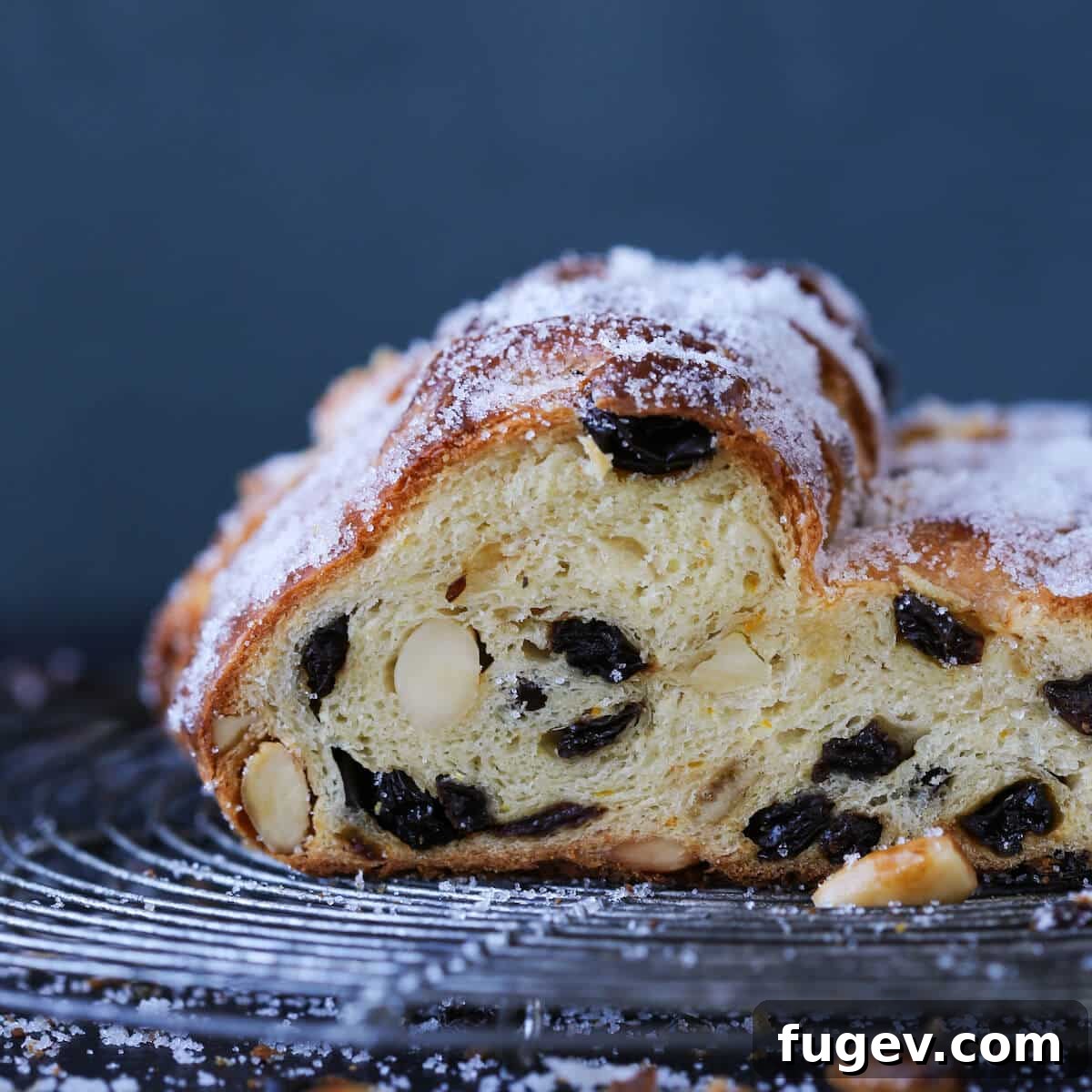
Welcome to the ultimate guide to baking the best Stollen recipe! As a professional pastry chef, I’m thrilled to share my step-by-step instructions for crafting a truly traditional Stollen bread that is consistently moist, incredibly flavorful, and a festive centerpiece. Whether you prefer your Stollen classic or with a delightful marzipan surprise, this comprehensive recipe has you covered.

A Quick Look At The Recipe
This is a brief summary of the recipe. Jump to the recipe to get the full details.
Jump to Recipe
Prep Time
40 minutes
Cook Time
40 minutes
Proof
1 hour 30 minutes
Total Time
2 hours 50 minutes
Servings
24 slices
Difficulty
Moderate (easy steps!)
Calories *
210 kcal per serving
Technique
Make sponge, mix dough, add fruit and nuts, shape, proof, and bake.
Flavor Profile
Rich, buttery, and fragrant with citrus, dried fruit, and almond notes.
* Based on nutrition panel
Summarize & Save this content on
I’ve always been scared to try stollen, but I finally went for it this year. The dough was soft and rich, and it actually wasn’t as hard as I expected! The sugar coating gave it the prettiest finish, like it came from a Christmas market! ⭐⭐⭐⭐⭐
Lauren
What is Stollen? The Heart of German Christmas Traditions
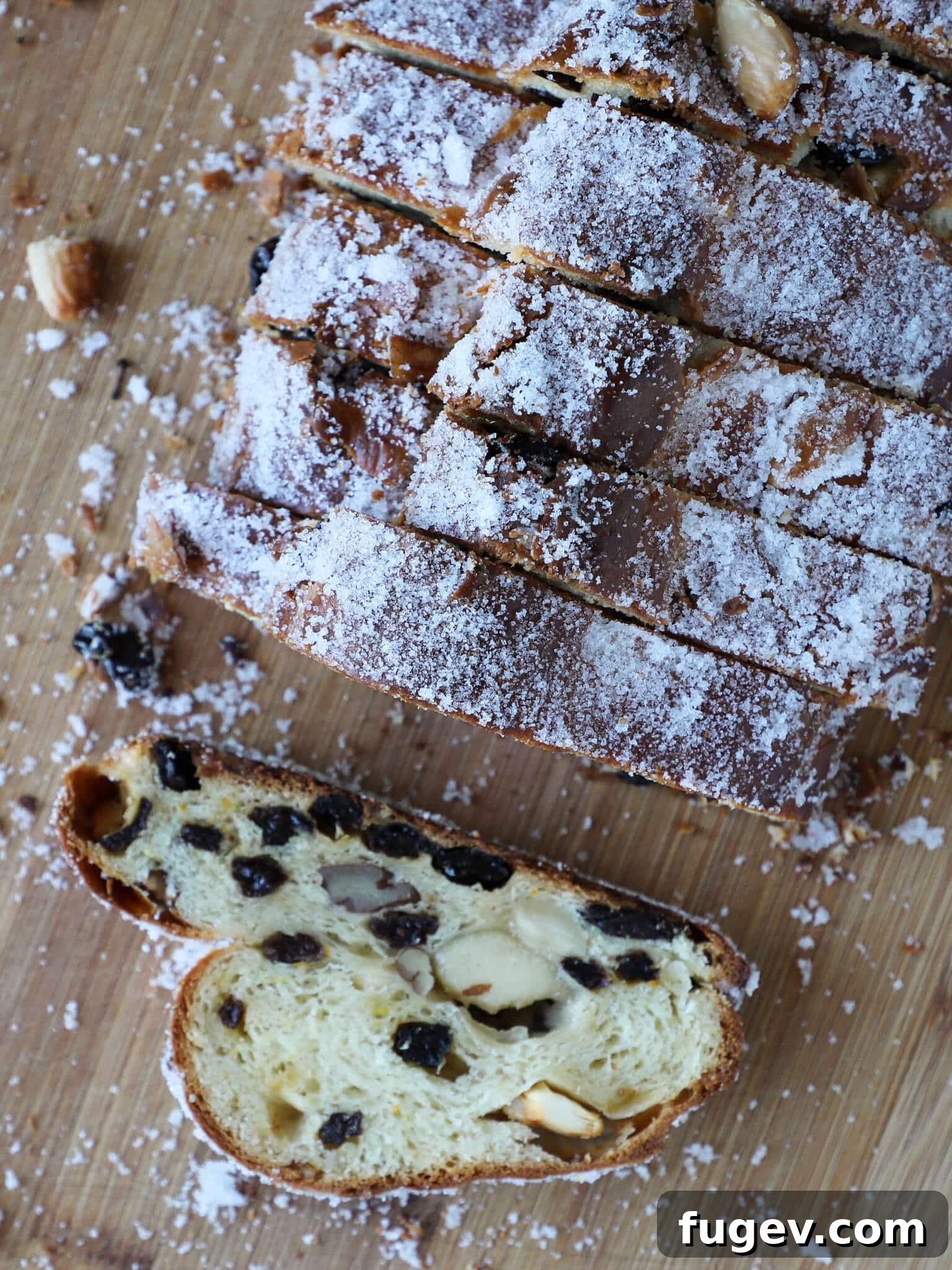
Stollen is an iconic enriched, yeasted bread deeply rooted in German culinary traditions, most famously served during the festive Christmas season. Its distinct flavor profile comes from a harmonious blend of fragrant lemon and orange zest, combined with a generous medley of nuts, plump raisins, and vibrant candied citrus peels. A hallmark of authentic Stollen involves brushing the warm, freshly baked loaves with melted butter, followed by a luxurious coating of granulated or powdered sugar. This final step not only adds a beautiful finish but also helps to preserve the bread, locking in moisture and flavor for an extended shelf life. Throughout Germany, Stollen is lovingly known by several names, including “Christstollen” and “Weihnachtsstollen,” both translating to German Christmas bread, highlighting its essential role in holiday celebrations.
Table of Contents
- What is Stollen?
- The Rich History of Stollen
- Why This Stollen Recipe Stands Out
- Key Ingredients for the Perfect Stollen
- Delicious Variations to Customize Your Stollen
- Stollen Serving and Enjoyment Tips
- The Science Behind the Sponge Method
- Step-by-Step Guide to Baking Stollen
- Stollen FAQs: Your Questions Answered
- Essential Tips for Stollen Baking Success
- More Delightful Bread Recipes
- The BEST Stollen Recipe
- Before You Go!
The Rich History of Stollen
The history of Stollen dates back to the 14th century in Dresden, Germany. Originally, Stollen was a much plainer bread, made during Advent, a period of fasting. It was made with only flour, water, and yeast, reflecting the dietary restrictions of the time. This simple bread was even referred to as “Striezel,” or a long loaf. Over centuries, as butter and richer ingredients became permissible, Stollen evolved. By the 15th century, the Pope granted permission to use butter, and by the 17th century, the bread truly transformed into the rich, buttery, fruit-filled delicacy we cherish today. The distinctive shape of Stollen, often covered in powdered sugar, is said to represent the Christ child wrapped in swaddling clothes, making it a powerful symbol of Christmas.
Why This Stollen Recipe Stands Out
Stollen holds a special place in my heart; it’s arguably my favorite Christmas bread, right alongside a perfectly crafted fruit cake! My childhood Christmases weren’t complete without eagerly anticipating its arrival in grocery stores, often sneaking a slice before we even left! That joyful memory fuels my passion for this traditional German bread. Now, as a professional pastry chef, I’m dedicated to sharing all my insider tips and tricks to ensure your homemade Stollen is never dry, but instead bursting with flavor and delightful moisture.
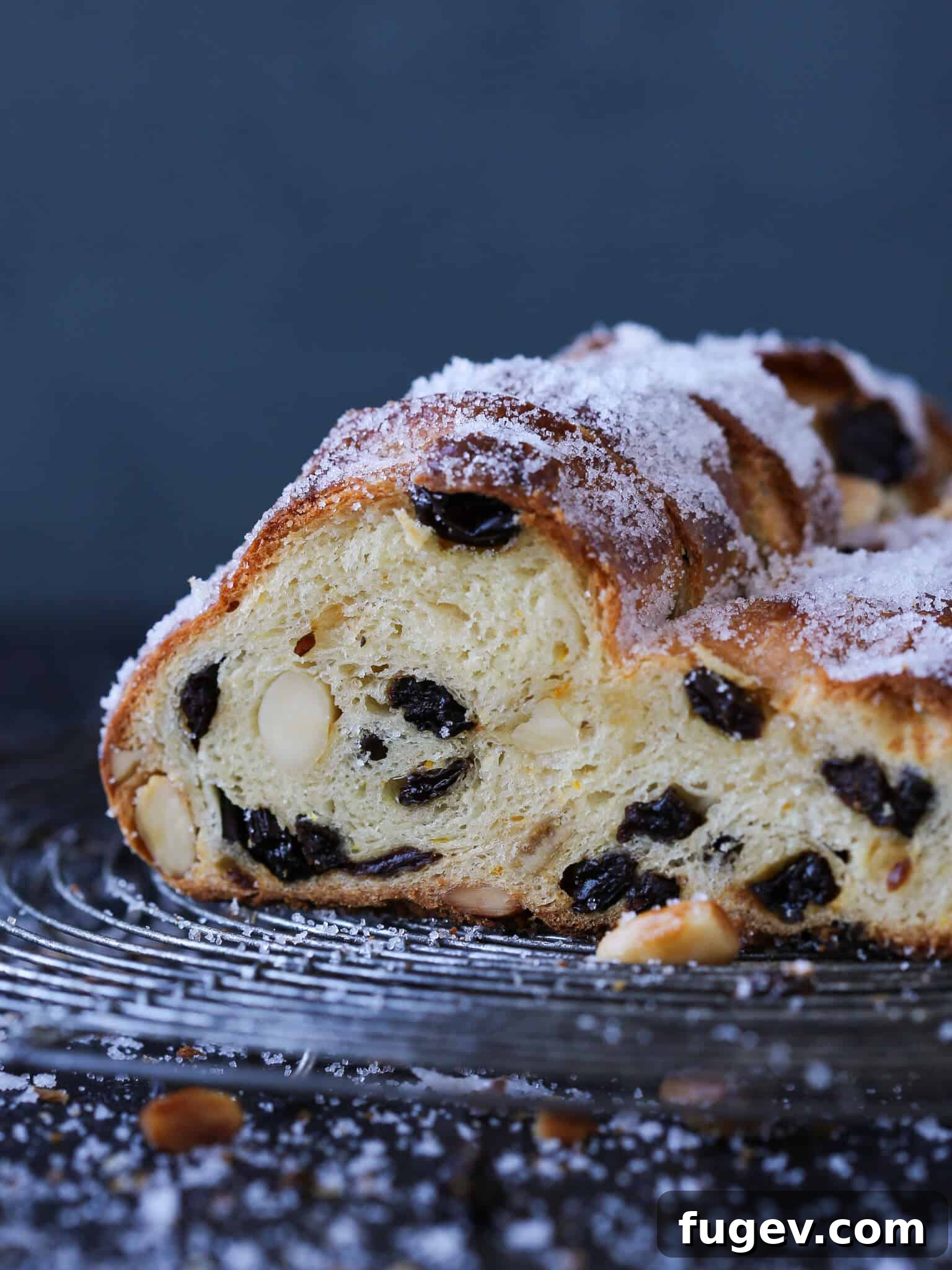
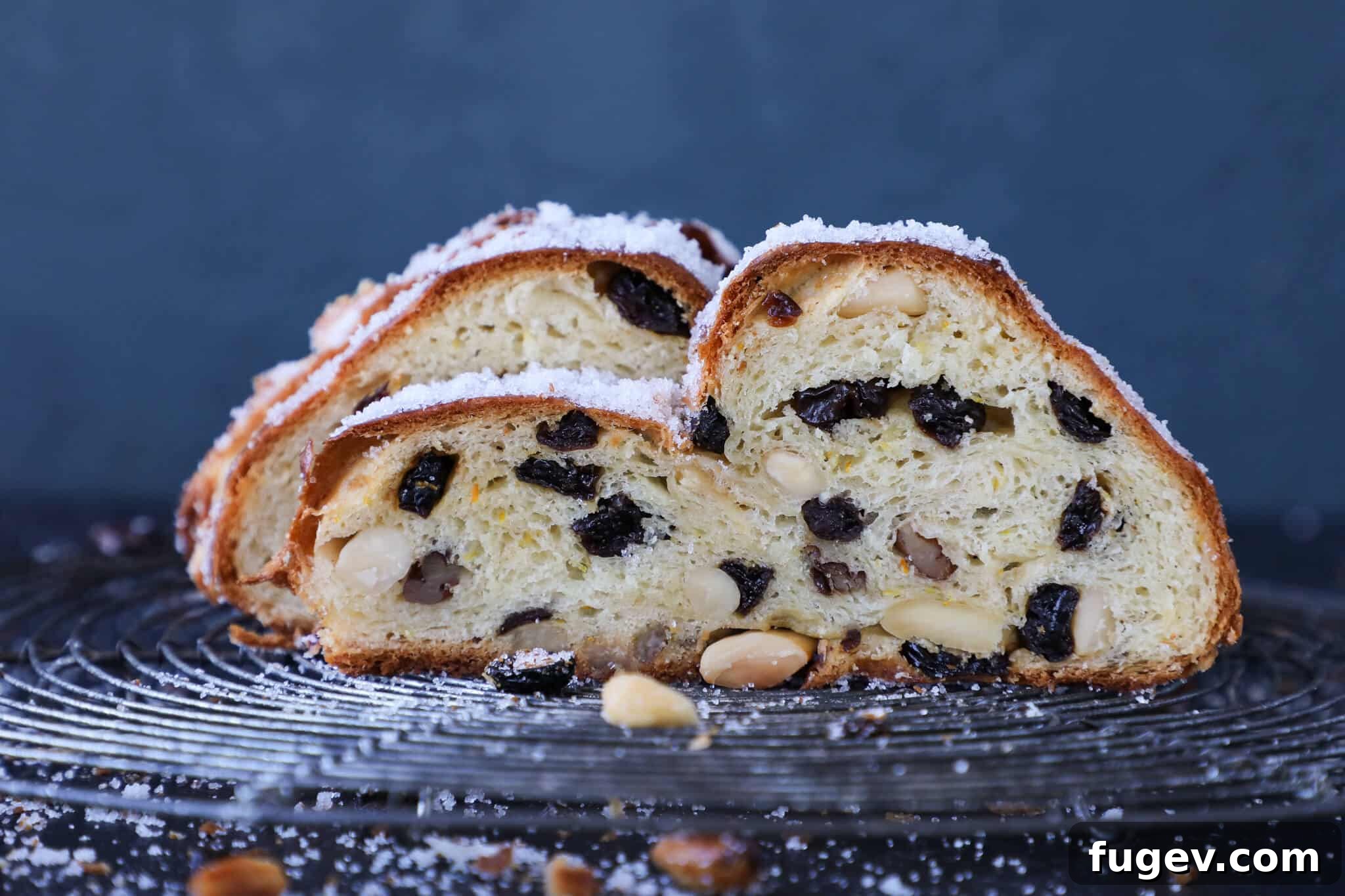
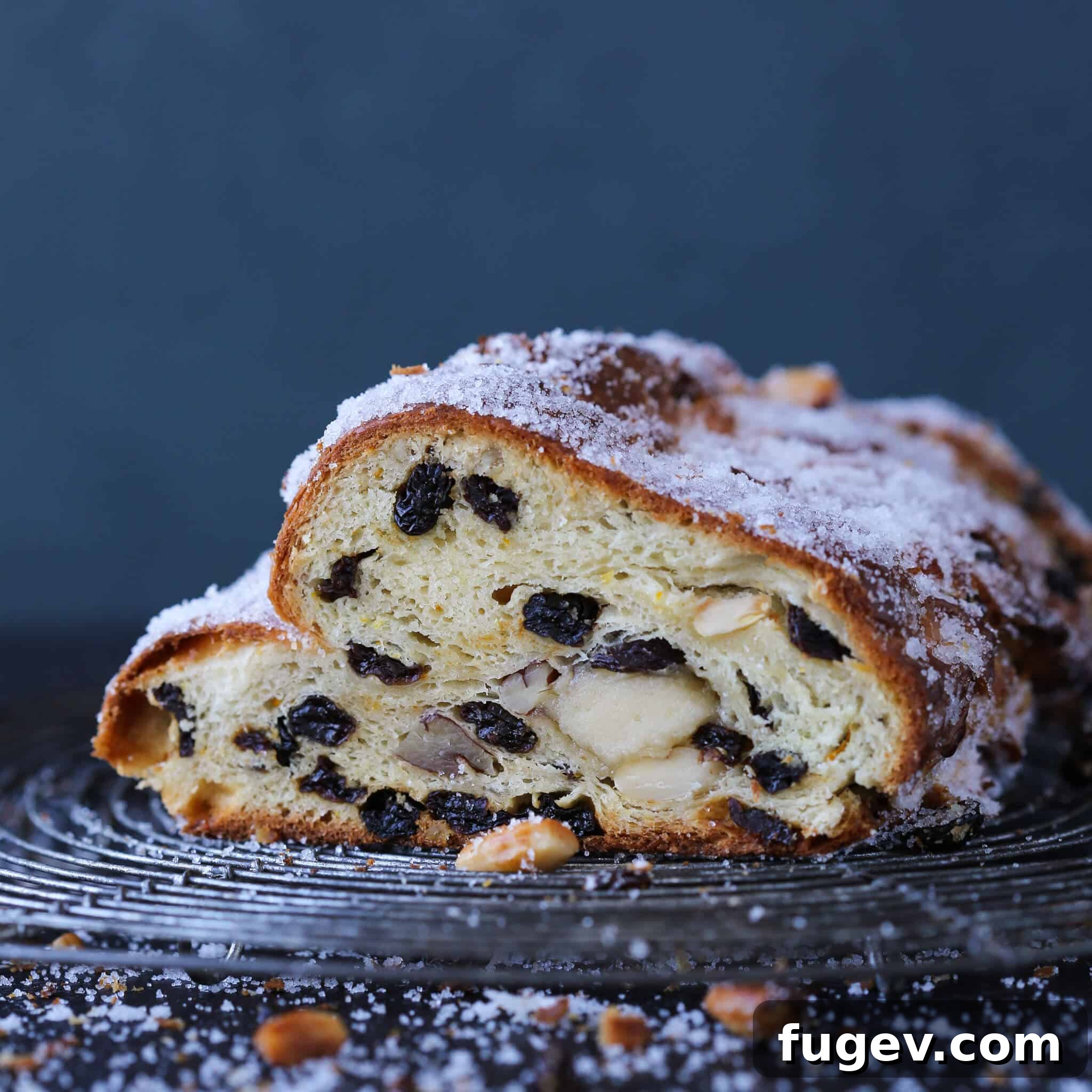
This recipe focuses on creating a truly tender, buttery, and soft dough, beautifully infused with the bright aromatics of fresh lemon and orange zest. I’ve generously loaded the dough with an abundance of blanched almonds, pecans, walnuts, and a mix of dark raisins and vibrant candied orange peel – as much as the dough can possibly hold! The secret to its enduring moistness and locked-in flavor lies in brushing the warm loaves with ample melted butter and then coating them lavishly in sugar. This not only adds a sweet crust but acts as a natural preservative. Plus, I’ll guide you through making this authentic Stollen bread with or without a luscious marzipan filling at its center, catering to all preferences!
Key Ingredients for the Perfect Stollen
Crafting exceptional Stollen begins with selecting high-quality ingredients. Each component plays a crucial role in achieving the desired flavor, texture, and aroma that define this classic holiday bread.
- Dry Active Yeast: Essential for leavening, these little granules require initial hydration to spring to life. Dry active yeast provides a robust, yet controllable fermentation, ensuring a beautifully risen and airy bread structure.
- Whole Milk: I always opt for whole milk in enriched yeasted breads. Its higher fat content and lower water percentage contribute significantly to a tender crumb and exceptional moistness, enriching the dough’s overall flavor.
- All-Purpose Flour: For most of my bread recipes, including Stollen, all-purpose flour is my go-to choice. It strikes the perfect balance, providing just enough gluten to develop a strong structural network while keeping the final bread tender and soft, not tough.
- Butter: Unsalted butter is preferred, allowing you complete control over the salt content in your dough. Beyond its rich flavor, butter is crucial for an enriched dough, contributing to its tender texture and golden crust. Ensure it’s softened for optimal incorporation.
- Granulated Sugar: A touch of sugar here serves multiple purposes: it enhances the flavor, promotes a beautiful caramelization on the crust, and provides a readily accessible food source for the yeast, helping kickstart their activity efficiently.
- Lemon Zest: The bright, aromatic oils in lemon zest infuse the Stollen with a delicate, refreshing citrus note. Remember to zest only the vibrant yellow part of the peel, avoiding the bitter white pith beneath.
- Orange Zest: Complementing the lemon, orange zest adds a deeper, sweeter citrus fragrance. Similar to lemons, only zest the outer, dark orange layer of the orange peel for the most concentrated flavor and to prevent bitterness.
- Kosher Salt: Kosher salt offers a cleaner taste and is less dense than table salt. It’s vital for balancing flavors and plays a supporting role in developing the dough’s gluten structure. I consider its weight and impact on hydration within the recipe.
- Candied Orange Peel: This ingredient is a cornerstone of traditional Stollen, adding bursts of chewy texture and intense citrus flavor. While store-bought candied orange peel is convenient, I highly recommend making homemade candied orange peel if you have the time, as its flavor is often superior, using only the most aromatic part of the rind.
- Raisins: I typically use dark raisins for their classic sweetness and chewiness, but golden raisins or a mix of both can be used. For more raisin goodness, explore my raisin bread recipe!
- Almonds: Whole, blanched (peeled) almonds are traditional in Stollen, offering a subtle crunch and nutty flavor. While traditionally untoasted, you can toast them lightly beforehand if you prefer a deeper, more pronounced nutty taste.
- Pecans: I particularly enjoy using fresh, plump Southern pecans for their rich, buttery flavor and satisfying texture. Any high-quality pecan halves will do. To maintain their freshness, especially if storing for over a month or in a warm kitchen, keep them in the freezer.
- Walnuts: Whole, untoasted walnuts contribute an earthy, slightly bitter note that beautifully complements the sweet fruits. Walnuts can turn rancid faster than other nuts, so always taste them before use. Store them in the freezer for optimal freshness.
- Marzipan: Optional but highly recommended for an extra layer of sweetness, moisture, and intense almond flavor, marzipan creates a delightful surprise in the center of your Stollen. I prefer marzipan over almond paste due to its slightly sweeter profile and better workability, ensuring it holds its shape when rolled.
Delicious Variations to Customize Your Stollen
While the classic Stollen recipe is perfect as is, there’s always room for creative expression. Feel free to experiment with different additions and forms to make this holiday bread uniquely yours.
- Nuts & Fruits: The medley of almonds, pecans, walnuts, raisins, and candied orange peel are traditional choices, but your Stollen can be a canvas for other delightful additions. Consider currants, dried cranberries, chopped apricots, or even a mix of exotic dried fruits. If you love incorporating diverse dried fruits, my Panettone recipe is another must-try! For an extra layer of flavor, you could also infuse the dough with warm spices like cinnamon, nutmeg, cardamom, or even a touch of ginger, similar to how I season my sourdough cinnamon rolls.
- Mini Stollen Bites: This versatile recipe can be transformed into adorable, bite-sized treats, perfect for holiday parties or gourmet gifts. At the restaurant, we often prepared these mini versions as VIP giveaways during Advent. To make approximately 110 mini Stollen bites, simply chop your nuts more finely for even distribution, then divide the dough into 35g pieces. Shape them into small rolls and bake them in greased mini muffin tins. Adjust baking time as needed for their smaller size.
- Marzipan Inclusion: The inclusion of a marzipan center is entirely optional but highly recommended for those who adore its sweet, rich almond flavor and added moisture. It elevates the Stollen, giving it a luxurious core. While it adds a small increase to the cost and an extra shaping step, the resulting Stollen is undeniably enhanced by this almondy delight. You can absolutely make this recipe with or without the marzipan baked inside.
Stollen Serving and Enjoyment Tips
Should Stollen be eaten warm? Stollen bread is absolutely delightful whether enjoyed warm or at room temperature. Many prefer it lightly warmed to enhance its aromatic spices and buttery notes, especially when paired with a pat of butter and a dollop of your favorite jam. However, its rich flavor and tender texture hold up beautifully at room temperature, making it perfect for slicing and serving throughout the day.
The Science Behind the Sponge Method
Why use a sponge in this Stollen recipe? The sponge method is a foundational bread-making technique where a portion of the flour, all of the yeast, and all of the liquids are mixed together and allowed to ferment before the remaining ingredients are added. This initial fermentation, often called a pre-ferment, serves several crucial purposes that significantly improve the final Stollen:
- Yeast Activation and Vigor: The sponge fully activates the dry active yeast, giving it a head start and allowing it to become highly active and vigorous before being introduced to the full, richer dough. This ensures a more consistent and reliable rise.
- Enhanced Flavor Development: The extended fermentation time of the sponge allows the yeast to produce more complex flavors and aromas, contributing to the nuanced, deep taste characteristic of authentic Stollen.
- Improved Gluten Development: The initial mixing and fermentation of a portion of the flour allows the gluten network to begin forming and relaxing. This pre-development reduces the total amount of mixing or kneading required for the final dough, resulting in a more tender crumb.
- Faster Overall Process: By building a strong gluten network and active yeast culture upfront, the subsequent mixing of the final dough is quicker, and the bulk fermentation time can often be shortened, streamlining the entire baking process.
Ultimately, using a sponge results in a Stollen that is not only lighter and more tender but also boasts a richer, more profound flavor, making it well worth the extra initial step.
How to Make Stollen: A Professional’s Method
Prepare the Sponge for Optimal Flavor
Step 1: In a small bowl, combine the dry active yeast, whole milk, and 110g of the all-purpose flour. Mix these ingredients thoroughly until just combined. Lightly sprinkle the surface of this mixture with a small amount of flour from the remaining final dough flour (this helps observe the activity). Cover the bowl loosely with plastic wrap or a clean kitchen towel and allow it to ferment in a warm place for 10-15 minutes. The sponge is ready when the flour on top displays noticeable cracks, indicating active yeast fermentation and gas production.
Crafting the Enriched Stollen Dough
Step 2: For maximum citrus aroma, combine the granulated sugar with the lemon and orange zests up to a day in advance. Rubbing the zest into the sugar helps release the essential oils, infusing the sugar with intense citrus flavor, which will then permeate the entire bread.
Step 3: In the bowl of a stand mixer fitted with the paddle attachment, combine the prepared sponge, softened unsalted butter, the zest-infused sugar, the remaining all-purpose flour, and any remaining zest. Mix on low speed for approximately 2 minutes, ensuring all ingredients are hydrated and no dry pockets of flour remain. If, after 2 minutes, you still see dry flour, add 1 tablespoon of whole milk and continue mixing until fully incorporated and the dough begins to come together.
Step 4: Switch to the dough hook attachment. Add the kosher salt to the dough. Mix on medium-low speed for about 4 minutes to develop the gluten. To check for proper gluten development, perform a “window pane test”: take a small piece of dough and gently stretch it into a thin square. An enriched dough like Stollen should be smooth and stretch thin enough for light to pass through without tearing. This indicates a well-developed gluten network.
Step 5: Transfer the dough to a lightly oiled bowl, turning it once to coat. Cover the bowl and allow the dough to rest for 10 minutes. This short rest allows the gluten to relax slightly, making the next step easier.
Step 6: Return the dough to your work surface. Gently incorporate the raisins, candied orange peel, blanched almonds, pecans, and walnuts by kneading them into the dough. It’s perfectly normal if not all the mix-ins are fully incorporated at this stage; you’ll have another opportunity during folding. Place the dough back into the oiled bowl, cover, and begin the bulk proofing for 20 minutes.
Step 7: After the first bulk proof, uncover the dough and gently flip it over in the bowl. Perform a series of gentle folds: starting from the top edge, carefully pull the dough up and fold it over itself towards the center. Rotate the bowl a quarter turn and repeat this folding process with all four sides. If there are any stray nuts or raisins, tuck them into the folds. This folding technique further strengthens the gluten and evenly distributes the fruits and nuts. Return the dough to the bowl, cover, and proof in a warm place for an additional 20 minutes.
Step 8: Once proofed, gently divide the dough in half. Each piece should weigh approximately 530g. The abundance of mix-ins can make precise division a bit challenging, but aim for equal halves – you’ve got this!
Step 9: Preheat your oven to 350°F (175°C) in preparation for baking.
Step 10: Take each half of the dough and pre-shape it into a round. To do this, flip each piece over, gather the corners into the center, and then flip it right side up so the smooth side is facing upwards. Gently tighten the ball by pulling it towards you with both hands, rotating a quarter turn and repeating until a taut, smooth round is formed, without cracking on the top. Cover the rounds and allow them to rest for 10 minutes. This critical resting period allows the gluten to relax, making the dough much easier to handle for final shaping.
Step 11: On a lightly floured surface, use a rolling pin to roll and flatten each round into an approximate rectangular shape, about one inch thick and 10-12 inches long. The short edges may be slightly rounded, which is ideal. Using a wooden dowel or the handle of a wooden spoon, create two distinct channels lengthwise down the dough. These channels should divide the dough into roughly three equal sections, mimicking the traditional Stollen shape.
Step 12: If you are opting for a marzipan-filled Stollen, divide your marzipan into two equal portions. Roll each portion into a rope that is just slightly shorter than the length of your dough rectangles. Carefully place one marzipan rope into the channel closest to you on each dough piece.
Step 13: Now, for the signature Stollen shape: gently lift the top section of the dough (the “bump”) and fold it over into the channel closest to you (the one containing the marzipan, if using). Then, fold the dough edge closest to you backwards over this, creating loaves with three distinct ridges. The middle ridge should be slightly higher than the other two, symbolizing the Christ child. Carefully transfer your shaped Stollen loaves onto a parchment-lined baking sheet.
Step 14: Cover the shaped loaves loosely and allow them to proof for 20-30 minutes in a warm, draft-free place. The dough should feel noticeably light and airy, but not overly puffed. To help set the shape and achieve a better rise, you can refrigerate the loaves for 10 minutes prior to baking.
Step 15: Lightly brush the surface of each Stollen with an egg wash (beaten egg). Bake in the preheated oven for 30-40 minutes, or until an instant-read thermometer inserted into the center of the loaf (avoiding any marzipan or large fruit pieces) reads 185°F (85°C). Alternatively, you can use a cake tester; the bread is fully baked when the tester comes out clean.
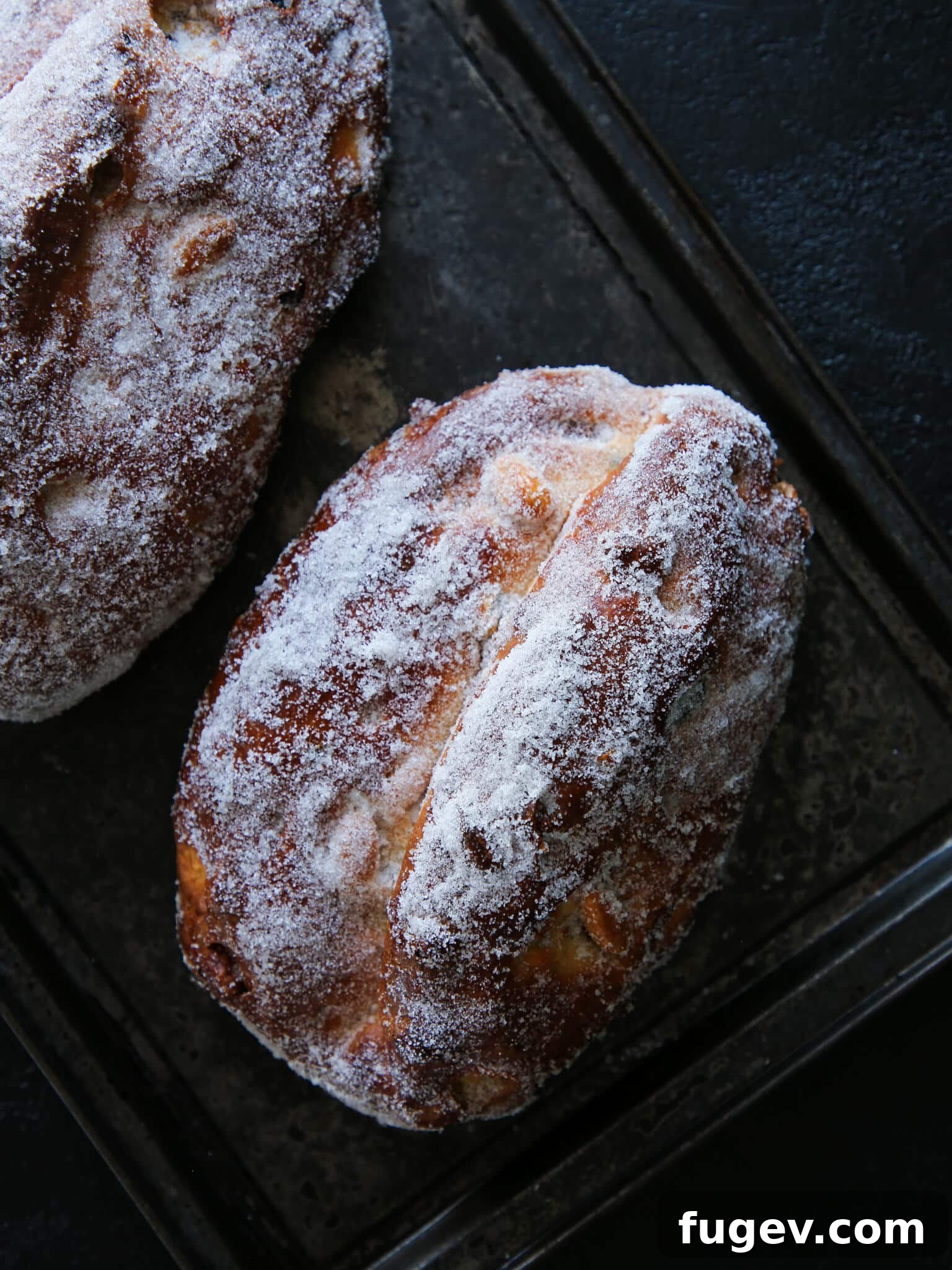
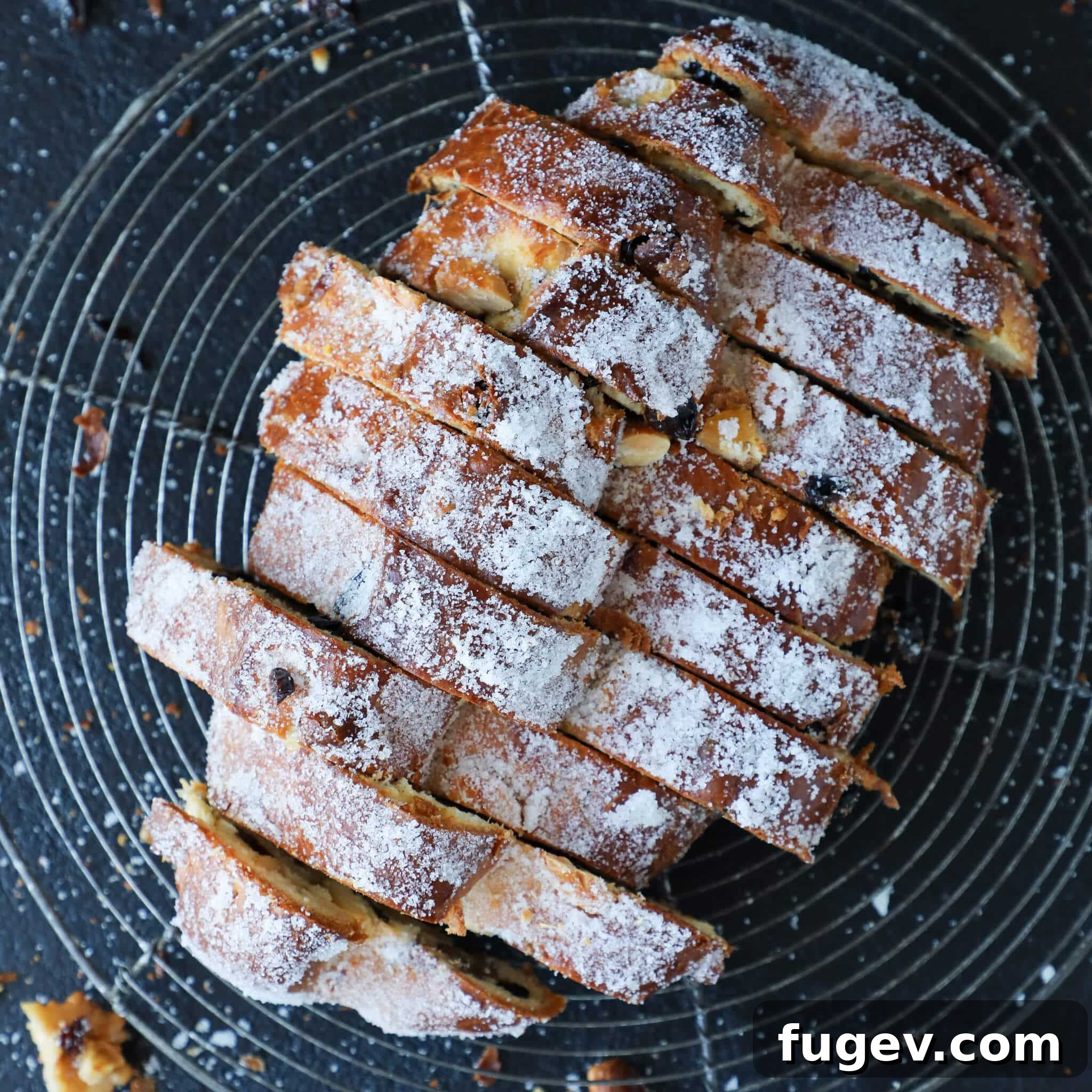
Step 16: Once baked, transfer the Stollen to a wire rack, still on the sheet pan, and let it cool for 10 minutes. While the loaves are still warm, carefully remove any dark, overly caramelized raisins from the surface if desired. Liberally brush the entire surface of each Stollen with plenty of melted unsalted butter, ensuring thorough coverage. Immediately after buttering, generously coat the loaves with granulated sugar. For an extra traditional finish, you can also use a mixture of half granulated sugar and half powdered sugar, or even dust solely with a thick layer of powdered sugar once completely cool.
Stollen FAQs: Your Questions Answered
Thanks to its generous butter coating and sugar crust, homemade Stollen is surprisingly shelf-stable. When properly brushed or dipped in melted butter and coated in sugar, it will keep beautifully wrapped for up to a month at room temperature. For longer preservation, Stollen freezes exceptionally well for up to 3 months. While it will gradually dry out if stored at room temperature for extended periods, I personally find that homemade Stollen is best enjoyed within 3 to 7 days for optimal flavor and texture.
To maintain its freshness, store Stollen wrapped tightly in plastic wrap, then perhaps a layer of aluminum foil. It can be kept at room temperature in a cool, dry place or frozen. I strongly advise against storing Stollen in the refrigerator, as the cold environment can accelerate the drying-out process and negatively impact its texture and flavor.
Absolutely! Baked Stollen freezes wonderfully, making it an excellent option for preparing ahead of the busy holiday season. For convenience, I often pre-slice the loaf before wrapping each slice individually or in small portions and then freezing. This allows me to thaw just the right amount whenever a craving strikes! Alternatively, you can freeze the entire loaf, tightly wrapped, and thaw it completely at room temperature before serving.
Yes, this bread recipe has been successfully tested and scaled up in a professional commercial bakery setting. Your ability to multiply the recipe is primarily limited by the capacity of your particular mixer. When multiplying any bread recipe, especially one as enriched as Stollen, I cannot stress enough the importance of measuring ingredients by weight rather than volume. Bread recipes are highly sensitive to even minute adjustments in flour and hydration levels, and scaling by weight ensures accuracy. I always scale my bread recipes, and it’s especially critical for larger batches to maintain consistency and quality.
Stollen bread makes a truly thoughtful and impressive Christmas gift, and it ships remarkably well due to its robust nature and natural preservation method. For the freshest possible bread upon arrival, ensure it is wrapped very tightly in multiple layers of plastic wrap before packaging. For a beautiful presentation, place the wrapped Stollen in a decorative Christmas tin or a cellophane bag tied with a festive bow. These simple packaging ideas will elevate your homemade gift.
Essential Tips for Stollen Baking Success
Can you bake yeasted bread from frozen? While yeast continues to be slowly active even in the freezer, a portion of it will inevitably die off during freezing and thawing. Therefore, I do not recommend storing unbaked, shaped Stollen dough in the freezer for longer than a week. For best results, it’s always preferable to bake from freshly prepared dough or freeze the fully baked product.
Why does the salt go in after the rest of the ingredients in this Stollen recipe? This is a deliberate technique in enriched dough baking. Salt is hygroscopic, meaning it attracts and absorbs moisture. If added at the very beginning with the initial ingredients, it can pull moisture away from the flour before the flour has had a chance to properly hydrate. In an enriched dough like Stollen, a significant percentage of the dough’s moisture comes from the butter. By delaying the addition of salt, we ensure that the flour properly hydrates and the gluten network can begin forming smoothly, resulting in a more uniform and tender dough without a stiff or “tough” start.
How do you serve Stollen? Stollen is wonderfully versatile in how it can be served. You can enjoy it simply plain, allowing its rich flavors to shine through. Many people prefer it lightly warmed and spread with a touch of butter or a spoonful of their favorite jam – I even have a killer mixed berry jam recipe you could make at home to accompany it! Personally, I find Stollen made with a marzipan center to be absolutely delightful on its own; the added sweetness and almond essence make it a complete treat. Beyond simply slicing, Stollen can also be transformed into a phenomenal French toast or a decadent bread pudding, offering delicious ways to use any leftovers (if there are any!).
More Delightful Bread Recipes from Chef Lindsey
Homemade Bread Recipes
Panettone
Homemade Bread Recipes
Potato Bread
Yeasted Bread Recipes
Raisin Bread Recipe
Yeasted Bread Recipes
Brioche Bread Recipe
If you tried this recipe and loved it, please leave a 🌟 star rating and let me know how it goes in the comments below. I love hearing from you; your comments make my day!

The BEST Stollen Recipe
Pin Recipe
Comment
Print Recipe
Ingredients
(US Customary/Metric)
Sponge:
- 25 g Dry Active Yeast
- 110 g Whole milk
- 110 g All-purpose flour
Final Dough:
- 270 g Sponge
- 150 g Unsalted Butter softened
- 45 g Granulated Sugar
- 230 g All-purpose flour
- 1 teaspoon Lemon zest
- 1 teaspoon Orange zest
- 1 ¼ teaspoons Kosher Salt
- 35 g Candied Orange peel
- 225 g Raisins
- 50 g Whole Blanched Almonds
- 25 g Whole pecans
- 25 g Whole walnuts
- 7 oz Marzipan optional
- 1 Egg beaten for egg wash
- Unsalted Butter melted
- Granulated Sugar as needed for coating
- Powdered Sugar as needed for dusting
Instructions
Sponge:
-
Combine all ingredients in a small bowl, sprinkle with some of the flour from the final dough, cover and ferment 10-15 minutes. The sponge is ready when the flour on top cracks.
Dough:
-
Up to a day ahead of time, combine the sugar and the zests. This will draw out the oils in the zest and make for a more flavorful bread.
-
Combine sponge, butter, sugar, flour and zests in the bowl of a stand mixer fitted with the paddle attachment. Mix to hydrate on low 2 minutes. There should be no dry pieces of dough or unincorporated flour. If you are finding that there is still flour after 2 minutes, add 1 tablespoon of milk and finish mixing.
-
Switch to the dough hook attachment, add salt and mix to develop gluten on medium-low, approximately 4 minutes. Check for window pane by taking a piece of the dough and gently stretching it in a square shape. This is an enriched dough so you are looking for a smooth dough that can be pulled thin enough to let light through.
-
Place in oiled bowl and cover. Proof for 10 minutes.
-
Incorporate raisins, candied zest, and nuts by kneading into the dough. It is okay if all the mix-ins do not incorporate at this stage. You will have another opportunity during folding to try and get more inside! Place in an oiled bowl and bulk proof 20 minutes.
-
Uncover the dough and flip it over in the bowl. Starting at the top edge, pull the dough gently and fold it over itself. Turn the bowl a quarter turn and then repeat with all the sides. Shove any unincorporated nuts or raisins inside. Proof in a warm place for 20 minutes.
-
Divide dough in half, approximately 530g each. The quantity of mix ins can make it difficult to judge but you’ve got this!
-
Preheat oven to 350°F.
-
Pre-shape loaves into rounds. Flip each half over and fold the corners into the center. Flip it right side up so that the smooth side is up. Tighten the ball by gently pulling towards you with both hands. Rotate a quarter turn and repeat until a tight round has formed but it not cracking on the top. Cover and allow to rest 10 minutes. This allows the gluten to relax enough to final shape.
-
Using a rolling pin, roll and flatten each round into a rectangle that is about an inch thick. It will be 10-12 inches long. The short edges will be slightly rounded, which is perfect. Using a wooden dowel or the handle of a wooden spoon, roll 2 channels into dough longwise. The channels will divide the dough into approximate thirds.
-
If you are filling the dough with marzipan, divide it into two and roll each piece into a rope that is just a little shorter than the dough. Place the marzipan rope into the channel closest to you.
-
Lift top bump up and place it into the channel closest to you (the one with the marzipan) and fold the dough edge backwards to create loaves that have 3 ridges. The one in the middle should be higher than the other 2. Place on parchment lined baking sheet.
-
Proof 20-30 minutes. The dough will feel light and airy. You can refrigerate 10 minutes prior to baking to set the shape.
-
Egg wash and bake 30-40 minutes or until an instant read thermometer reads 185°F. You can also use a cake tester to test. The bread is done when the tester comes out clean.
-
Cool on sheet pan 10 minutes.
-
While warm remove any dark raisins and discard. Brush with melted butter and coat with granulated sugar. You can also coat it in half granulated and half powdered sugar.
Video
Notes
Storage: Wrap tightly in plastic and keep at room temp for up to a month, or freeze for longer freshness.
Technique: Develop the gluten fully, then fold in the fruit and nuts gently to keep the dough soft and airy.
Variation: Add a marzipan rope for a richer center or swap in dried cherries and pistachios for a festive twist.
Nutrition
Before You Go!
Don’t stop your baking journey here! Explore our other delicious, chef-developed Bread Recipes to expand your culinary skills and delight your taste buds!