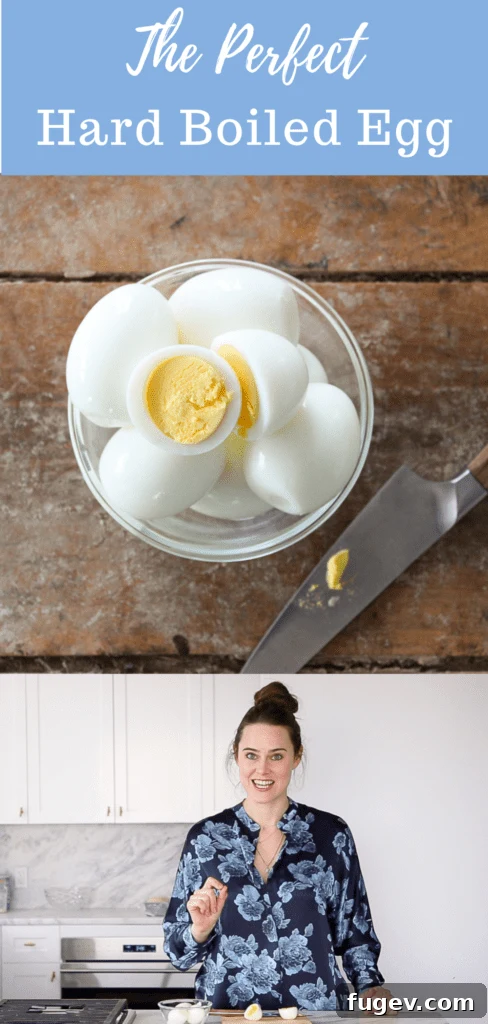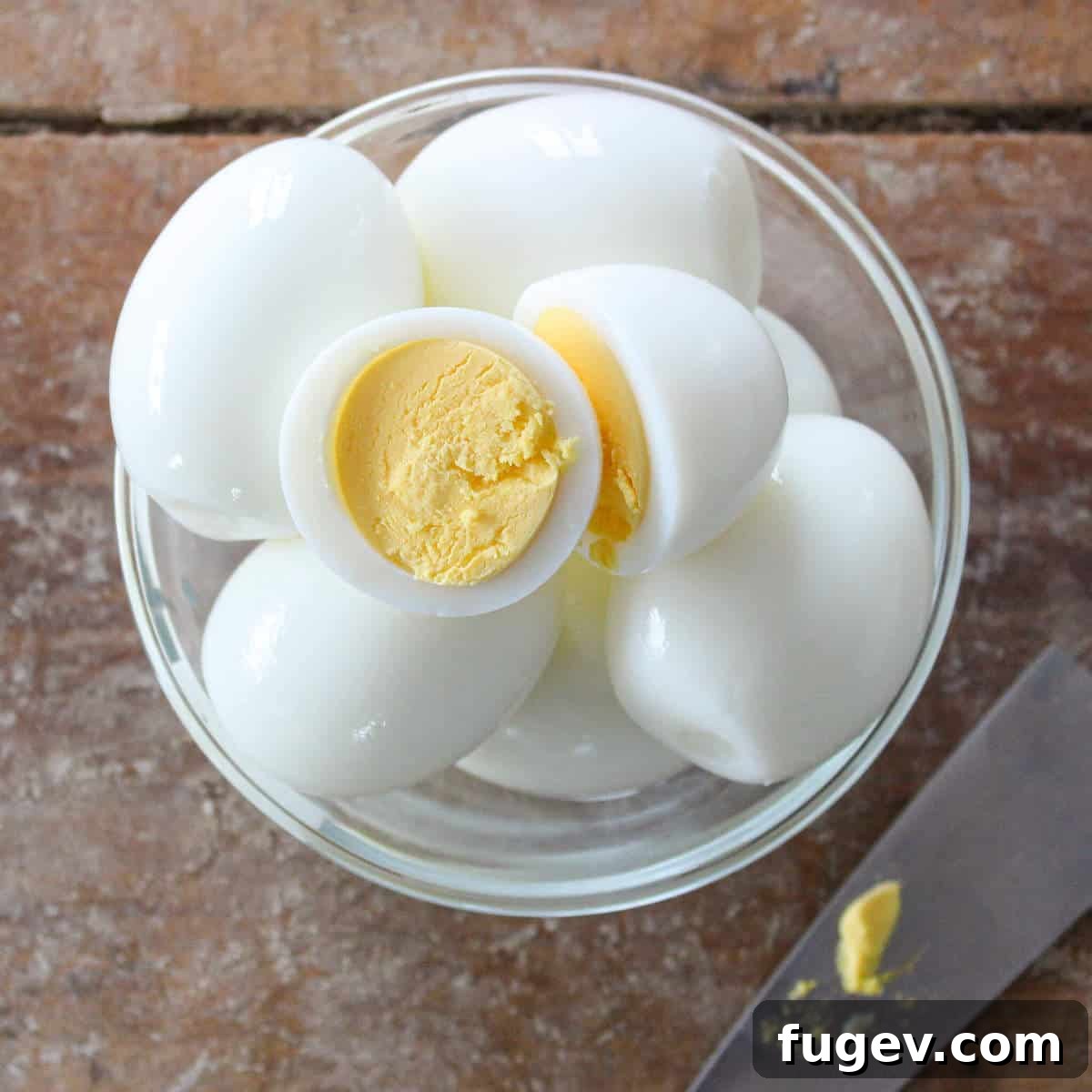
Unlock the secret to flawlessly cooked, effortlessly peelable hard-boiled eggs with this foolproof recipe from a professional pastry chef. Say goodbye to frustrating green rings, cracked shells, and stubbornly peeling eggs. This comprehensive guide will equip you with all the knowledge and techniques you need to achieve perfectly cooked hard-boiled eggs every single time, making “how long to boil eggs” a question of the past.
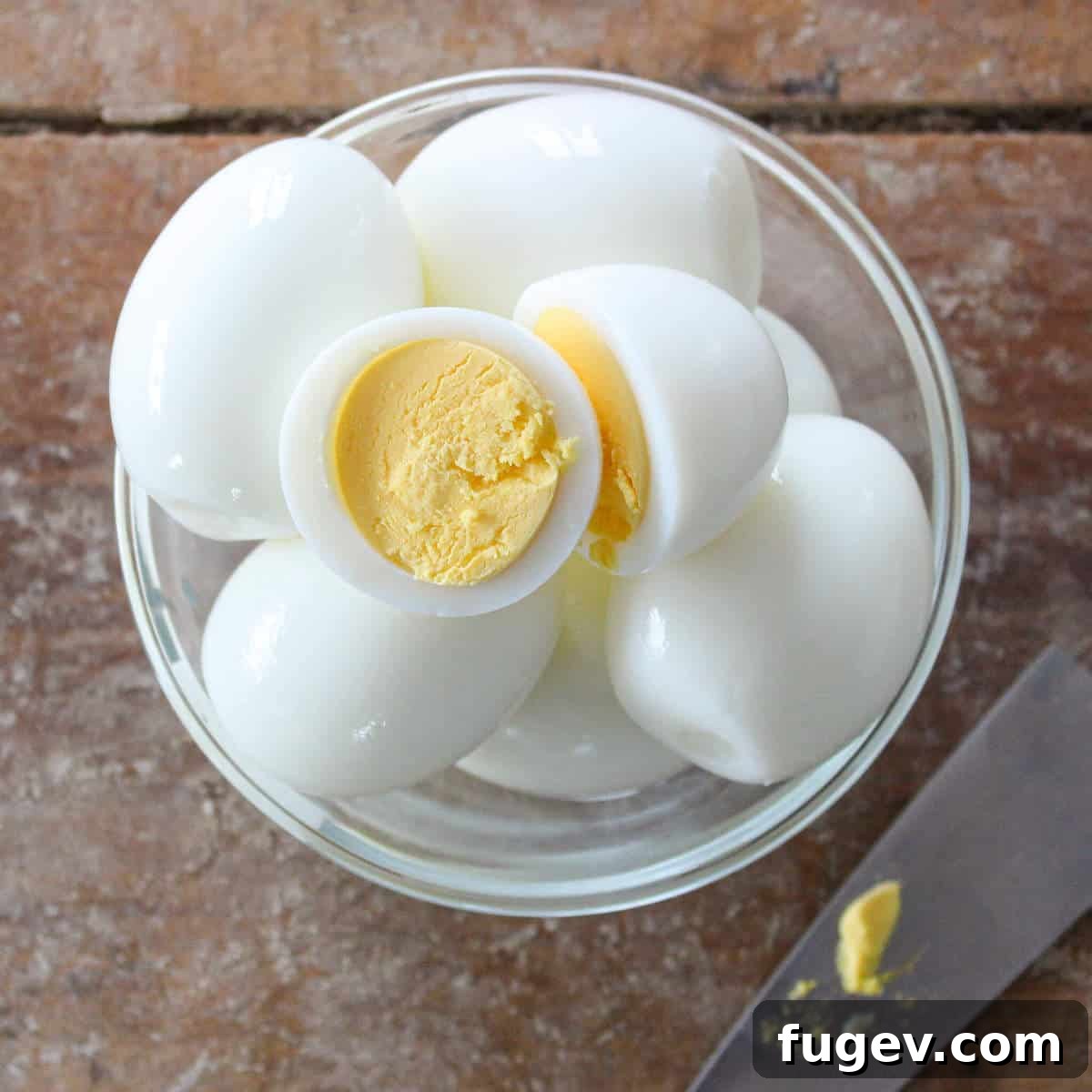
How do you truly validate a method’s effectiveness? You engage with fellow professionals and gather insights! Working across two dynamic New York City restaurant kitchens, Restaurant Marc Forgione and Peasant, I’ve had the unique opportunity to consult with countless opinionated chefs, seasoned cooks, and front-of-house staff. What I discovered was both surprising and amusing: “How to Hard Boil an Egg” is an unexpectedly contentious topic, sparking debates as heated as any political discussion!
My deep dive into the world of hard-boiled eggs began during a particularly intense phase. I incorporated them into virtually every meal and snack. They were a staple on vibrant salads, paired beautifully with crispy air fryer chicken tenders, transformed into classic deviled eggs, and became the star of my beloved deviled egg salad sandwiches. Even as a simple, satisfying snack with a dollop of sweet relish, they were a go-to. This personal obsession quickly translated into professional expertise.
During my tenure, I developed a delightful shortcake recipe where I ingeniously incorporated finely chopped hard-boiled egg yolks into the dry ingredients. This subtle addition created an exceptionally tender crumb, elevating the dessert to new heights. (Speaking of which, if you’re craving something sweet, check out my easy lemon strawberry shortcake for two!). In a typical week, the demands of the kitchen required me to hard boil an astounding three flats of eggs. For those unfamiliar with industry jargon, a “flat” refers to three dozen eggs, meaning I was expertly cooking 108 eggs weekly! As you can imagine, this extensive, hands-on experience honed my skills to perfection, allowing me to master the art of consistently producing the ideal hard-boiled egg.
It’s clear I’m deeply passionate about this seemingly simple culinary task. So, without further delay, let’s dive into the essential strategies and professional insights that guarantee hard-boiled egg success every single time.
Essential Tips for Perfect Hard-Boiled Eggs: A Chef’s Guide
Achieving consistently perfect hard-boiled eggs requires more than just boiling water. These professional tips will ensure your eggs are cooked just right, easy to peel, and delicious.
- Start with Cold Water: The Consistency Secret. Many chefs advocate adding eggs directly to boiling water, citing concerns that starting with cold water can prematurely coagulate proteins, leading to a tougher texture. However, my extensive kitchen experience has proven that beginning with cold water offers unparalleled consistency. By starting with cold water, I can confidently state that large eggs will be perfectly cooked at precisely 10 minutes from the moment the water reaches a consistent boil. This method provides a more controlled cooking process, preventing the whites from becoming rubbery and ensuring a uniformly cooked yolk. It eliminates guesswork and guarantees reliable results, batch after batch.
- Egg Size Matters: Precision Timing is Key. This recipe is specifically calibrated for large eggs. Using different sizes will alter the cooking time, leading to under or overcooked results. For instance, extra-large (XL) eggs require an additional minute, making their ideal cooking time 11 minutes. While I don’t typically work with medium eggs in a professional setting, it’s safe to assume they would cook faster, likely requiring around 8-9 minutes. Always adjust your timing based on the size of your eggs for optimal texture. Consistency in egg size per batch is also recommended for uniform cooking.
- The Game-Changing Secret to Easy Peeling: Distilled White Vinegar. This remarkable trick was an inadvertent discovery from my childhood, observed during Easter egg dyeing sessions. We always added white vinegar to the water to help the colors adhere better. In retrospect, I noticed that those dyed eggs were *always* significantly easier to peel than any other hard-boiled eggs I encountered. The science behind this is fascinating: the acetic acid in distilled white vinegar slightly softens the eggshell, making it more porous. This subtle change allows for a cleaner separation between the shell and the egg membrane, resulting in a smooth, frustration-free peel. Don’t worry, it won’t impart any vinegar taste to your eggs, only perfectly peeled results!
- The Indispensable Ice Bath: Halting the Cook. Never skip this crucial step! Immediately transferring your hot eggs into an ice bath serves two vital purposes. First, it rapidly stops the cooking process, preventing any residual heat from continuing to cook the egg and potentially creating that undesirable grey-green ring around the yolk. Second, the sudden change in temperature causes the egg white to contract and shrink slightly, pulling it away from the inner membrane. This separation is key to an easy peel, as it prevents the membrane from adhering stubbornly to the egg white. Ensure your eggs are fully submerged in the ice water for at least 10-15 minutes to cool completely.
- Peeling Under Cold Water: A Last Resort for Stubborn Shells. Even with all the right techniques, you might occasionally encounter a particularly stubborn egg. If you find yourself struggling to peel an egg without tearing the whites, try peeling it under a gentle stream of cold running water or submerged in the ice bath. The water helps to further loosen the membrane and provides lubrication, allowing the shell fragments to glide away more easily. While it might make your hands a little chilly, it’s a highly effective method for achieving a clean peel.
- Understanding Egg Characteristics: Freshness and Shell Type. Did you know that older eggs are generally easier to peel than very fresh ones? As an egg ages, its internal pH changes, and the membrane beneath the shell begins to separate more readily from the white. Conversely, farm-fresh eggs, while delicious, are notoriously difficult to peel due precisely to their freshness and tighter membrane adhesion. White eggs often have slightly thinner shells than brown eggs, which can sometimes make them marginally easier to peel, though the vinegar trick is far more impactful than shell color. Keep these facts in mind when selecting your eggs, and always remember that a little vinegar goes a long way, especially with fresh eggs.
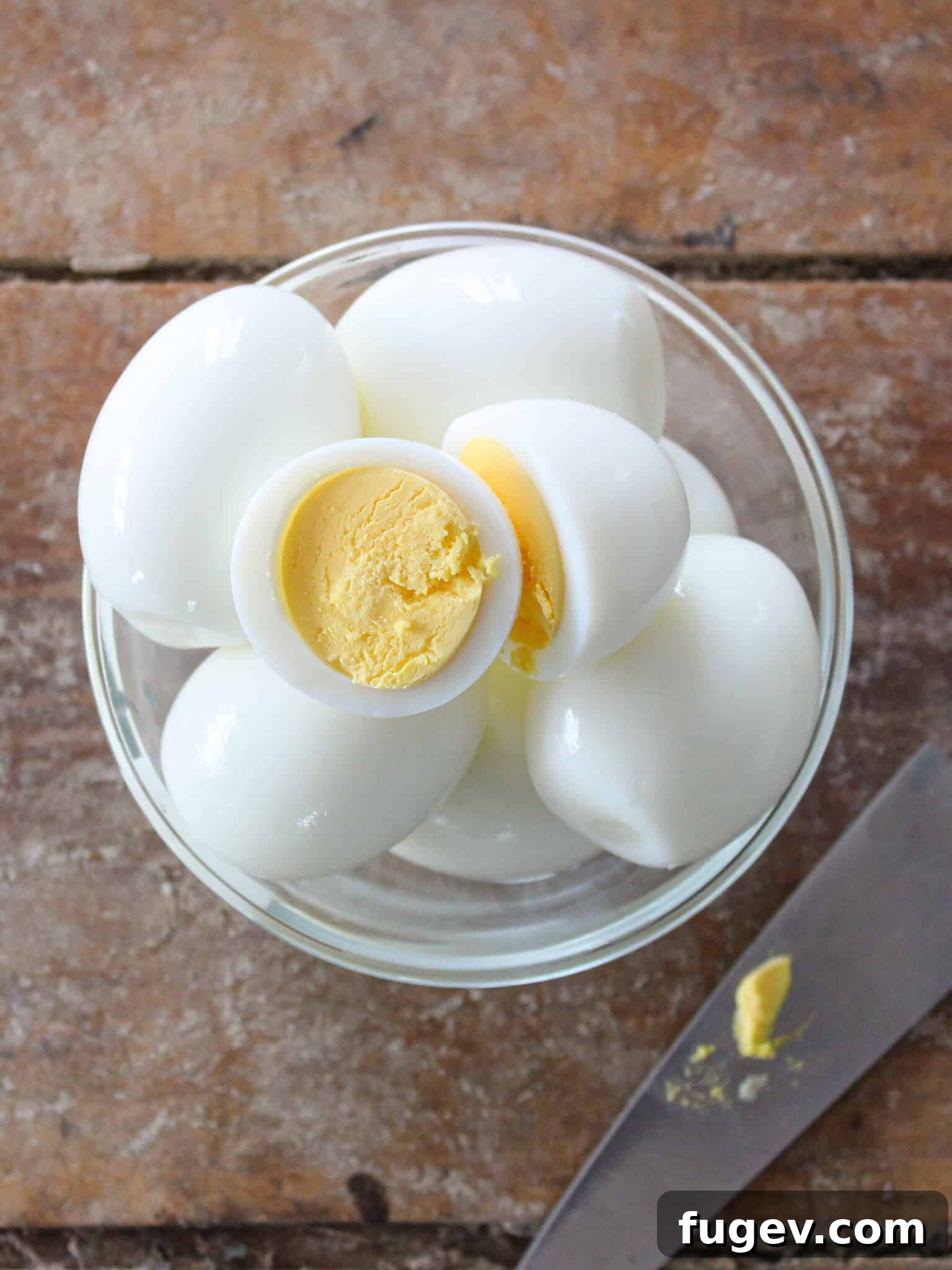
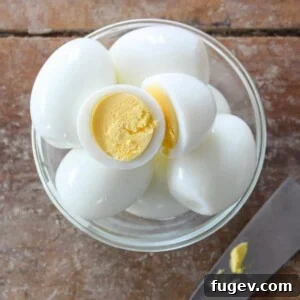
The Ultimate Hard Boiled Egg Recipe
⭐
⭐
⭐
⭐
How to Hard Boil an Egg
Chef Lindsey
0 minutes
10 minutes
10 minutes
6 people
Comment
Print Recipe
Ingredients
- 12 large eggs
- 1 qt Cold water to cover eggs
- 2 tbsp Distilled white vinegar approximately 2 Tablespoons for each quart of water
- Ice
Instructions
-
Place the eggs in a pot, ensuring they form a single layer on the bottom. Do not overcrowd the pot.
-
Fill the pot with cold water just until the water completely covers the eggs by about an inch.
-
Pour in approximately 2 tablespoons of distilled white vinegar. This critical step will make the eggs incredibly easy to peel later, without imparting any vinegar flavor.
-
Bring the water to a rolling boil over high heat.
-
As soon as you achieve a strong, consistent boil, set a timer for exactly 10 minutes. Resist the urge to cook them longer, as this can lead to overcooked yolks.
-
While the eggs are cooking, prepare a large bowl filled generously with ice. You will add water to this bowl later.
-
Once the timer goes off, use a slotted spoon to gently transfer the hot eggs from the pot directly into the prepared bowl of ice. Immediately add enough cold water to the bowl to ensure the eggs are fully submerged and encapsulated in the ice water. This rapid cooling, known as “shocking,” is essential for stopping the cooking process and facilitating easy peeling.
-
Allow the eggs to cool in the ice bath for at least 15 minutes. Once cooled, you can peel them immediately, or even better, peel them while they are still slightly warm after a shorter ice bath; many find them easiest to peel at this stage. Enjoy your perfectly hard-boiled eggs!
Video
Notes
Remember, this recipe is for Large eggs. If using Extra Large eggs, increase the cooking time to 11 minutes for perfect results.
Nutrition
Carbohydrates: 1g |
Protein: 11g |
Fat: 8g |
Saturated Fat: 3g |
Polyunsaturated Fat: 2g |
Monounsaturated Fat: 3g |
Trans Fat: 1g |
Cholesterol: 327mg |
Sodium: 133mg |
Potassium: 122mg |
Sugar: 1g |
Vitamin A: 475IU |
Calcium: 54mg |
Iron: 2mg
Snack
Worldwide
127
Beyond the Basics: Creative Ways to Enjoy Hard-Boiled Eggs
Hard-boiled eggs are incredibly versatile and can be incorporated into a multitude of dishes, far beyond just being a breakfast staple. Here are some ideas to inspire your culinary creations:
- Salads: Chop them and add to garden salads, Cobb salads, Nicoise salads, or a hearty chef’s salad for a protein boost.
- Sandwiches & Wraps: Mash them for classic egg salad sandwiches, or slice them into wraps with fresh vegetables and hummus.
- Deviled Eggs: The quintessential party appetizer! Mix the yolks with mayonnaise, mustard, and seasonings for a crowd-pleasing treat.
- Curries & Stews: Whole hard-boiled eggs can be added to Indian or Southeast Asian curries, absorbing the rich flavors of the sauce.
- Snacks: A simple, satisfying snack on their own, perhaps with a sprinkle of salt and pepper, or a dash of hot sauce.
- Garnish: Finely chop them to garnish soups, stews, or even a classic ramen bowl.
- Potluck Dishes: Layered salads, potato salads, or even tuna salads are elevated with the addition of hard-boiled eggs.
Common Hard-Boiled Egg Problems & Solutions
Even with the best techniques, challenges can arise. Here’s how to troubleshoot common hard-boiled egg issues:
The Green Ring Around the Yolk
This common issue, often referred to as a “sulfur ring,” occurs when eggs are cooked at too high a temperature or for too long. The sulfur in the egg white reacts with the iron in the yolk, creating iron sulfide, which has a greenish-grey hue. While harmless to eat, it’s not aesthetically pleasing. Our 10-minute cooking method and immediate ice bath are designed to prevent this by stopping the cooking process precisely when the yolk is set but before this reaction occurs.
Stubborn Shells Even With Vinegar
If you’re still struggling with peeling despite using vinegar and an ice bath, the most likely culprit is very fresh eggs. As mentioned, farm-fresh eggs are inherently harder to peel. You can try “aging” them for a few days in the refrigerator before boiling. Alternatively, ensure your ice bath is truly icy and that the eggs cool completely, as a slight warmth can still make peeling trickier. Peeling under running water or directly in the ice bath can also help.
Cracked Eggs During Boiling
Eggs can crack for several reasons: rapid temperature changes, overcrowding the pot, or thin shells. To prevent cracking, always start with cold water as this allows the eggs to gradually warm up with the water, reducing thermal shock. Avoid dropping eggs into the pot; gently place them. Ensure your pot is large enough so the eggs are in a single layer and not jostling against each other during boiling. A pinch of salt in the water can sometimes help seal small cracks if they do occur, though prevention is key.
Frequently Asked Questions About Hard-Boiled Eggs
Here are some of the most common questions people ask about cooking and using hard-boiled eggs:
Can I make soft-boiled eggs using this method?
Yes, absolutely! The beauty of this cold-water start method is its precision. For a perfectly soft-boiled egg with a runny yolk, reduce the boiling time to 6 minutes for large eggs. For a medium-boiled egg with a jammy, custardy yolk, aim for 8 minutes.
How long do hard-boiled eggs last in the refrigerator?
Properly stored hard-boiled eggs, either peeled or unpeeled, will last for up to one week in the refrigerator. Store them in an airtight container to prevent them from absorbing odors from other foods.
Is it better to peel hard-boiled eggs when they are warm or cold?
While many sources recommend peeling fully chilled eggs, my experience, and that of many chefs, suggests that peeling them while they are still slightly warm (after a good shock in the ice bath for 5-10 minutes, rather than the full 15) can actually make them easier to peel. The egg white is still slightly pliable and hasn’t fully “set” against the membrane in the same way. Experiment to find what works best for you!
Can I freeze hard-boiled eggs?
While you can technically freeze hard-boiled egg yolks, freezing whole hard-boiled eggs (whites and yolks together) is not recommended. The whites become rubbery and watery upon thawing, losing their desirable texture. If you have leftover yolks, they can be frozen for up to 3 months for use in dishes like deviled eggs or dressings.
What if my eggs float in the water?
Floating eggs are a sign that they are older, not necessarily bad, but they contain a larger air cell. While they can still be hard-boiled, they may be even easier to peel. Fresh eggs typically sink to the bottom.
Conclusion: Your Journey to Perfect Eggs Begins Now!
Mastering the art of the hard-boiled egg is a fundamental skill that unlocks a world of culinary possibilities. With this chef-approved recipe and these detailed tips, you are now equipped to create consistently perfect, easy-to-peel hard-boiled eggs every time. No more guesswork, no more frustration—just beautifully cooked eggs ready for any meal, snack, or garnish. Experiment with the timing for soft or medium yolks, explore new ways to incorporate them into your diet, and share your perfectly peeled creations with friends and family. Happy cooking!
Enjoyed this recipe? Share your thoughts and leave a comment below!