
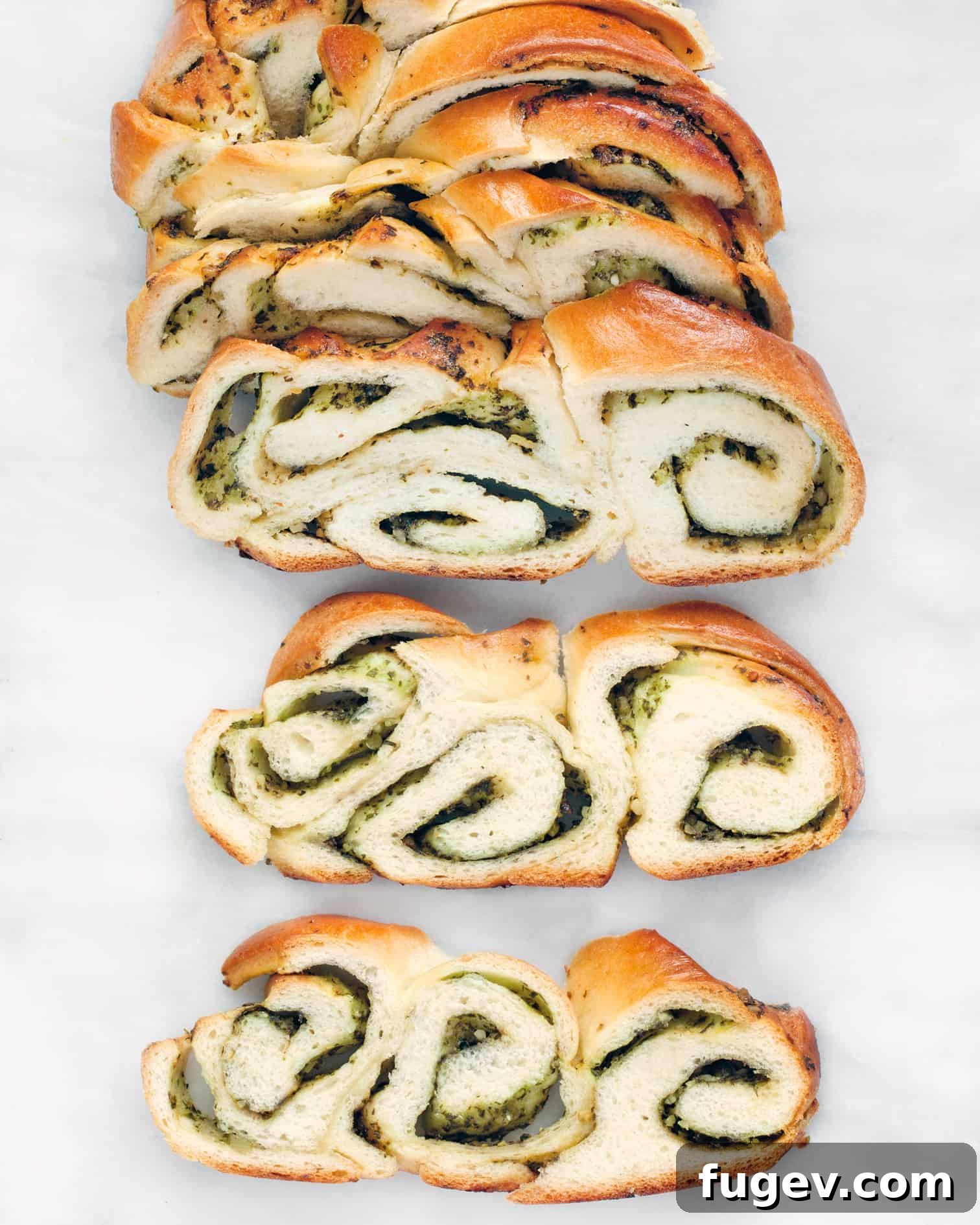
There’s nothing quite like the aroma of freshly baked bread filling your home, especially when it’s infused with the vibrant flavors of homemade pesto. This braided pesto bread recipe, featuring an abundance of fresh basil and rich Parmesan cheese, isn’t just a treat for your palate; it’s a feast for the eyes too, with a stunning, unique pattern revealed in every slice. This detailed guide will walk you through creating two magnificent loaves, perfect for sharing or savoring throughout the week.
Embracing Summer’s Bounty: The Magic of Fresh Basil
While scorching summer temperatures might not be everyone’s favorite, the season undeniably brings with it a host of delightful things. The ease of slipping on sandals, the freedom from heavy coats, and, for many culinary enthusiasts, the sheer abundance of fresh herbs – particularly basil – make summer truly special. In many gardens, basil thrives, growing vigorously almost like a delightful weed. This generous growth ensures a steady supply of its fragrant leaves, making it the perfect time to experiment with basil-centric recipes.
Having fresh pesto readily available in the fridge is a game-changer for quick and delicious meals. It elevates simple pasta dishes, adds a burst of flavor to scrambled eggs, or serves as a fantastic base for spreads and dressings. The bright, peppery, and slightly sweet notes of basil, combined with garlic, pine nuts, Parmesan, and olive oil, create a sauce that’s both versatile and incredibly satisfying.
The Art of Braided Pesto Bread: A Culinary Journey
The idea of a braided pesto bread often captures the imagination, promising both visual appeal and exquisite taste. While it might seem like a more involved project than a simple loaf, the extra steps – from crafting a fresh batch of aromatic pesto to carefully rolling out and braiding the individual dough strands – are immensely rewarding. That first bite into a warm, herby, pesto-swirled slice is an experience unto itself, a testament to the effort and care put into its creation.
This recipe isn’t just about combining ingredients; it’s about a culinary journey that transforms simple flour and herbs into a masterpiece. The braiding technique not only creates a stunning visual effect but also ensures that every bite is infused with the rich, savory goodness of pesto. It’s an ideal project for those looking to expand their baking skills and impress guests with a truly unique and flavorful bread.
Braided Pesto Bread: A Savory Masterpiece
By Paige Adams
Print Recipe
Experience the delightful combination of a fluffy, savory bread and aromatic homemade pesto. Each slice reveals a beautiful swirl, making this braided pesto bread a showstopper at any meal. This recipe yields two generous loaves.
Ingredients
For the Bread Dough
- 3/4 cup milk
- 3/4 cup warm water (around 105-115°F / 40-46°C)
- 4-1/2 teaspoons dry active yeast (equivalent to 2 standard packets)
- 1 tablespoon sugar
- 1/3 cup olive oil
- 1 tablespoon kosher salt
- 4 cups bread flour, plus extra for dusting your work surface
- Non-stick cooking spray
- 1 large egg
- 1 teaspoon water (for egg wash)
For the Fresh Pesto
- 2 garlic cloves, peeled
- 2 large bunches of fresh basil (approximately 2-1/2 cups of leaves and tender stems)
- 1-1/2 cups freshly grated Parmesan cheese
- Zest of 1 lemon (adds a bright, fresh note)
- 2 ounces (about 1/2 cup) toasted pine nuts
- 1/2 cup high-quality olive oil
Instructions
- Prepare the Milk: In a small saucepan, gently warm the milk over medium-low heat until small bubbles just begin to form around the edges. Be careful not to let it simmer or boil. Remove from heat and set aside to cool to room temperature. This step ensures the milk is warm enough to activate the yeast but not so hot that it kills it.
- Activate the Yeast: In the bowl of a stand mixer, fitted with the paddle attachment, combine the warm water, active dry yeast, and sugar. Stir gently and let this mixture sit undisturbed for about 5 minutes. You’ll know the yeast is active and healthy when it becomes foamy and bubbly, indicating it’s ready to work its magic on your dough.
- Combine Wet Ingredients: Once the yeast mixture is foamy, add the cooled milk, 1/3 cup olive oil, and kosher salt to the stand mixer bowl. Mix on medium speed for about 10 seconds to fully combine these liquid ingredients.
- Form the Dough: Gradually add the bread flour to the wet mixture, one cup at a time, mixing on low speed until all the flour is incorporated and the dough comes together into a shaggy, somewhat sticky mass.
- Knead the Dough: Switch the paddle attachment to the dough hook. Increase the mixer speed to medium and knead the dough for 5-7 minutes. Continue until the dough transforms into a smooth, elastic ball that springs back when gently pressed. Proper kneading is crucial for developing the gluten structure, which gives the bread its characteristic chewiness.
- First Rise (Bulk Fermentation): Lightly grease a large bowl with non-stick cooking spray. Transfer the kneaded dough to the greased bowl, turning it once to coat all sides. Cover the bowl tightly with plastic wrap to prevent the dough from drying out. Let it rise in a warm, draft-free place for 1 to 1-1/4 hours, or until it has almost doubled in size. This first rise develops much of the bread’s flavor.
- Prepare the Fresh Pesto: While the dough is rising, prepare your vibrant pesto. In a food processor, mince the peeled garlic cloves. Add the fresh basil leaves and tender stems, grated Parmesan cheese, fresh lemon zest, and toasted pine nuts. Pulse until the mixture is coarsely chopped. With the motor running, slowly drizzle in the 1/2 cup of olive oil through the feeder tube until the pesto is well combined and reaches your desired consistency – smooth but still with some texture. Set aside.
- Prepare for Shaping: Line a large baking sheet with parchment paper and set it aside. Cut two separate pieces of parchment paper, each approximately 9 inches by 12 inches. These will be used for shaping the individual loaves.
- Make the Egg Wash: In a small bowl, whisk together the large egg and 1/2 teaspoon of water. This will be used to give the bread a beautiful golden crust and shine.
- Divide and Roll the Dough: Gently punch down the risen dough to release the air. Transfer it to a lightly floured surface. Divide the dough into two equal halves. Then, divide each half into three smaller, equal pieces. You will have a total of six pieces. Take each piece and roll it out into a rough 8-inch square.
- Fill and Shape the Dough Tubes: Spread about 3 tablespoons of the prepared pesto over each dough square, leaving a 1/2-inch border around the edges. This border helps seal the pesto inside. Brush a little of the egg wash onto one of the long exposed edges of the dough square. Carefully roll the dough from the opposite long edge into a tight tube. Pinch the seam firmly to seal the pesto inside. Gently roll the tube back and forth until it is about 10 inches long and evenly shaped. Repeat this process for all six pieces of dough, creating three pesto-filled tubes for each loaf.
- Slash and Braid the Loaves: Lay out three of the pesto tubes parallel to each other on one of your 9×12-inch parchment paper pieces. Using a sharp knife or a clean pair of kitchen scissors, make a series of diagonal slashes down the length of each tube. These cuts should go halfway through the tube but not all the way to the bottom, ensuring the pesto swirls are visible after baking. Carefully braid the three slashed tubes together, starting from the center and working your way outwards. Gently tuck the ends underneath to create a neat finish. Transfer this braided loaf (still on its parchment paper) to the prepared large baking sheet. Repeat the slashing and braiding process for the second loaf.
- Second Rise (Proofing): Loosely cover both braided loaves with greased plastic wrap to prevent sticking. Let them rise in a warm place for an additional 30 minutes. During this time, preheat your oven to 400°F (200°C).
- Bake the Bread: Just before baking, gently brush the tops of both loaves with the remaining egg wash. Place the baking sheet into the preheated oven. Bake at 400°F (200°C) for 10 minutes. After 10 minutes, reduce the oven temperature to 350°F (175°C) and continue baking for another 30-35 minutes, or until the loaves are beautifully golden brown and sound hollow when tapped on the bottom.
- Cool and Serve: Remove the braided pesto bread from the oven and transfer it to a wire rack to cool slightly before slicing and serving. The aroma alone is enough to tempt anyone!
Recipe Notes & Tips
This recipe consistently yields two delicious and visually stunning loaves of braided pesto bread. Don’t be intimidated by the braiding; it’s simpler than it looks and adds so much character to the bread.
For an extra layer of flavor and aroma, lightly toast the pine nuts before adding them to the pesto. This intensifies their nutty taste.
Feel free to experiment with the pesto. You can substitute walnuts or almonds for pine nuts, or try a blend of Parmesan and Pecorino Romano for a sharper flavor profile. Sun-dried tomatoes or a pinch of red pepper flakes can also add interesting twists.
Adapted from: The Kitchn – A trusted source for home cooking insights and recipes.
Nutrition Information (per serving, approximation)
While home-baked goods vary, here’s an approximate nutritional breakdown for one serving (based on 20 servings per recipe):
- Calories: 234 kcal
- Carbohydrates: 21g
- Protein: 6g
- Fat: 14g
- Saturated Fat: 3g
- Polyunsaturated Fat: 2g
- Monounsaturated Fat: 8g
- Trans Fat: 0.001g
- Cholesterol: 16mg
- Sodium: 488mg
- Potassium: 86mg
- Fiber: 1g
- Sugar: 1g
- Vitamin A: 251 IU
- Vitamin C: 1mg
- Calcium: 90mg
- Iron: 1mg
Please note: Nutritional information is automatically calculated and should be used as an approximation due to variations in ingredient brands and preparation methods.
Additional Information
Course: Bread, Appetizer, Side Dish
Cuisine: Italian
Keywords: Braided Pesto Bread, Pesto Bread Recipe, Homemade Bread, Savory Bread, Basil Parmesan Loaf, Italian Bread, Yeast Bread, Baking
Did you make this recipe?
Share your creation on Instagram! Mention @lastingredient and tag it #lastingredient! We love seeing your delicious results!
Why Choose Homemade Braided Pesto Bread?
In a world of convenience, choosing to bake bread from scratch is a decision to savor. Homemade bread offers unparalleled freshness, texture, and flavor that simply cannot be replicated by store-bought alternatives. When you add the vibrant, herbaceous goodness of pesto to the mix, you create something truly extraordinary. This braided pesto bread is not just food; it’s an experience. The soft, airy crumb, the crisp crust, and the pockets of fragrant pesto make every slice a moment to cherish. It’s perfect as an appetizer, a side with your favorite Italian meal, or simply enjoyed on its own with a drizzle of olive oil.
The Joy of Dough: Tips for Perfect Bread Making
Working with yeast dough can feel intimidating for beginners, but it’s a wonderfully forgiving process that rewards patience. Here are a few tips to ensure your braided pesto bread turns out perfectly:
- Yeast Activation is Key: Ensure your water is the right temperature (105-115°F / 40-46°C). Too cold, and the yeast won’t activate; too hot, and it will die. The foamy appearance after 5 minutes is your green light!
- Kneading for Gluten Development: Don’t skimp on the kneading time. This develops the gluten, which is essential for the bread’s structure and chewiness. A well-kneaded dough will be smooth, elastic, and pass the “windowpane test” (you can stretch a small piece thin enough to see light through it without tearing).
- The Perfect Rise: A warm, draft-free environment is crucial for rising. If your kitchen is cool, try placing the bowl in a slightly warmed (but turned off) oven, or near a sunny window. Patience during the rising times will result in a lighter, more flavorful bread.
- Don’t Over-Flour: While a little extra flour for dusting is fine, too much can make your bread dense and dry. Add flour gradually until the dough is manageable but still slightly tacky.
Elevating Your Pesto: Beyond the Basic
While the classic basil pesto is a timeless favorite, don’t hesitate to get creative with your pesto fillings. The beauty of homemade pesto lies in its adaptability. Consider these delicious variations:
- Nut Alternatives: If pine nuts are pricey or unavailable, walnuts or almonds make excellent substitutes, offering a slightly different but equally delightful nutty flavor. Toasting them beforehand is always recommended to bring out their best.
- Cheese Combos: A mix of Parmesan and Pecorino Romano can add a sharper, more complex cheesy dimension to your pesto.
- Sun-Dried Tomato Pesto: Blend in a few rehydrated sun-dried tomatoes for a sweet and tangy twist, adding a beautiful reddish hue to your swirls.
- Roasted Garlic: Instead of raw garlic, use a few cloves of roasted garlic for a mellower, sweeter, and more profound garlic flavor.
- Spicy Kick: A pinch of red pepper flakes can introduce a subtle warmth that complements the basil wonderfully.
- Arugula or Spinach Boost: For a slightly different green, or to make your pesto go further, blend in some fresh arugula or spinach along with the basil.
Serving Suggestions for Your Braided Pesto Bread
This versatile bread can be enjoyed in numerous ways:
- As an Appetizer: Serve warm slices alongside a balsamic glaze or a simple marinara dipping sauce for an elegant starter.
- Alongside Soups and Salads: Its savory notes make it a perfect accompaniment to a hearty minestrone, a light tomato soup, or a fresh Caprese salad.
- Part of a Charcuterie Board: Pair with cured meats, artisanal cheeses, and olives for a sophisticated spread.
- For Sandwiches: While not a traditional sandwich bread, thicker slices can be used for open-faced sandwiches, topped with fresh mozzarella and tomatoes.
- With Dinner: A fantastic side dish for any Italian-inspired main course, from grilled chicken to baked fish.
- Breakfast or Brunch: Believe it or not, a slice lightly toasted and topped with a fried egg can be a delightful savory breakfast.
Conclusion: Your New Favorite Savory Bread
This braided pesto bread recipe is more than just a list of instructions; it’s an invitation to experience the joy of baking and the satisfaction of creating something truly special from scratch. The journey from simple ingredients to two stunning, aromatic loaves is incredibly rewarding. Whether you’re an experienced baker or new to the world of yeast, this recipe is designed to guide you to success, resulting in a bread that’s as beautiful to behold as it is delicious to eat. So, roll up your sleeves, gather your fresh basil, and prepare to bake a masterpiece that will undoubtedly become a cherished favorite in your culinary repertoire. Enjoy the process, and most importantly, savor every magnificent slice!