
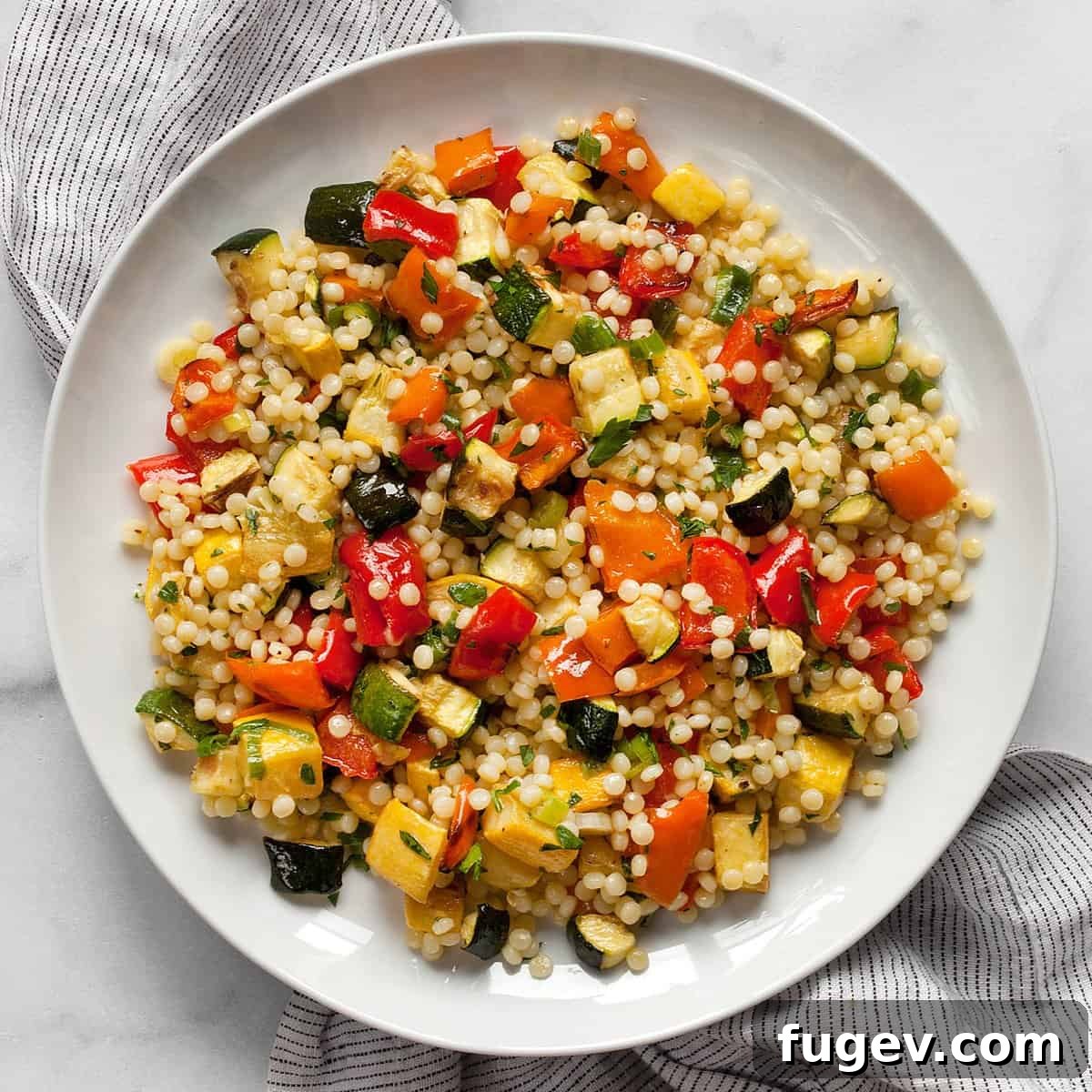
There are countless culinary possibilities waiting with a humble baking sheet of perfectly roasted zucchini, squash, and bell peppers. Among the most delightful and effortlessly satisfying is this vibrant vegetable couscous, brought to life with a bright lemon tahini dressing and fresh herbs. It’s a dish that celebrates the natural sweetness of summer produce, making it an ideal choice for a light lunch, a wholesome dinner, or a dynamic side dish.
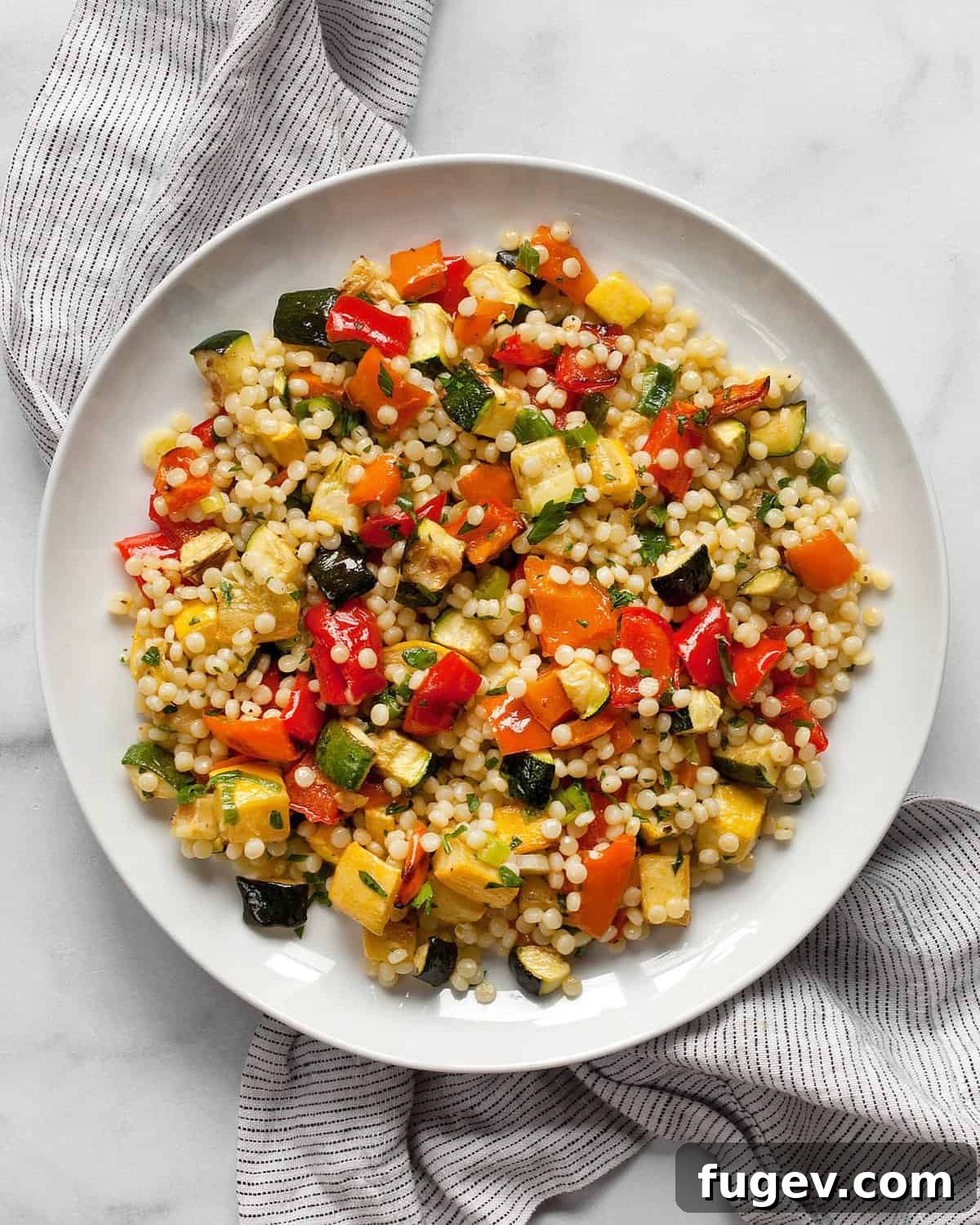
Table of Contents
- A Culinary Staple: The Magic of Roasted Vegetables
- Why Roasting is the Secret to Unforgettable Flavor
- Essential Ingredients & Smart Substitutions for Your Couscous
- Elevate Your Couscous: Optional Additions for Extra Flavor and Protein
- Step-by-Step Guide: How To Make Roasted Vegetable Lemon Tahini Couscous
- Serving Suggestions & Meal Pairings for Any Occasion
- Creative Variations for Every Season
- More Couscous Recipes & Culinary Inspiration
- Roasted Vegetable Lemon Tahini Couscous Recipe
A Culinary Staple: The Magic of Roasted Vegetables
My sheet pans are truly the unsung heroes of my kitchen. Regardless of the season, you’ll almost always find me roasting a batch of vegetables. It’s a remarkably straightforward and efficient method to create delicious, satisfying, and often entirely vegetarian or vegan meals. The beauty of roasting lies in its simplicity – it coaxes out the inherent sweetness of vegetables, giving them a tender, slightly caramelized exterior that’s simply irresistible.
Sometimes, these perfectly browned vegetables are scooped directly from the pan into a bowl, serving as a delightful side dish or a quick, healthy snack. On other occasions, their potential is fully realized when combined with grains or pasta, allowing the savory olive oil and concentrated flavors from the roasted vegetables to naturally dress and enhance every bite. This approach not only amplifies taste but also streamlines cleanup, as much of the magic happens on a single sheet pan.
This particular lemon tahini vegetable couscous recipe is a testament to the power of thoughtful ingredient combinations and efficient cooking. We start by roasting a vibrant medley of zucchini, yellow squash, and colorful bell peppers. While these vegetables are in the oven, transforming into golden, tender perfection, we cleverly utilize that time to multi-task. This includes whisking together a bright, creamy citrus tahini dressing and gently simmering the pearl couscous to a tender, al dente finish. The result is a harmonious blend of textures and flavors – warm, earthy roasted vegetables, chewy couscous, and a zesty, nutty dressing that ties it all together into an unforgettable dish that’s both healthy and incredibly satisfying.
Why Roasting is the Secret to Unforgettable Flavor
Roasting vegetables is more than just a cooking method; it’s a flavor transformation that elevates simple produce into something truly extraordinary. The high heat of the oven, combined with a touch of olive oil, initiates a process called the Maillard reaction, which creates those coveted golden-brown edges and a depth of flavor that steaming or boiling simply can’t achieve. This caramelization brings out the natural sugars in vegetables, making them inherently sweeter and more complex. It also softens their texture, turning crisp raw produce into tender, succulent bites with a delightful mouthfeel.
Beyond flavor, roasting offers incredible convenience and efficiency. It’s largely hands-off cooking, freeing you up to prepare other components of your meal, like our bright lemon tahini dressing and the fluffy couscous. The single-sheet-pan approach significantly minimizes dirty dishes, making cleanup a breeze – a definite win on busy weeknights. Plus, roasted vegetables are incredibly versatile; they can be used in salads, sandwiches, pasta dishes, or simply enjoyed on their own as a healthy snack. For this couscous, the residual olive oil and concentrated vegetable juices left on the sheet pan contribute a rich, savory essence that subtly infuses the entire dish once everything is combined, ensuring no flavor goes to waste.
Essential Ingredients & Smart Substitutions for Your Couscous
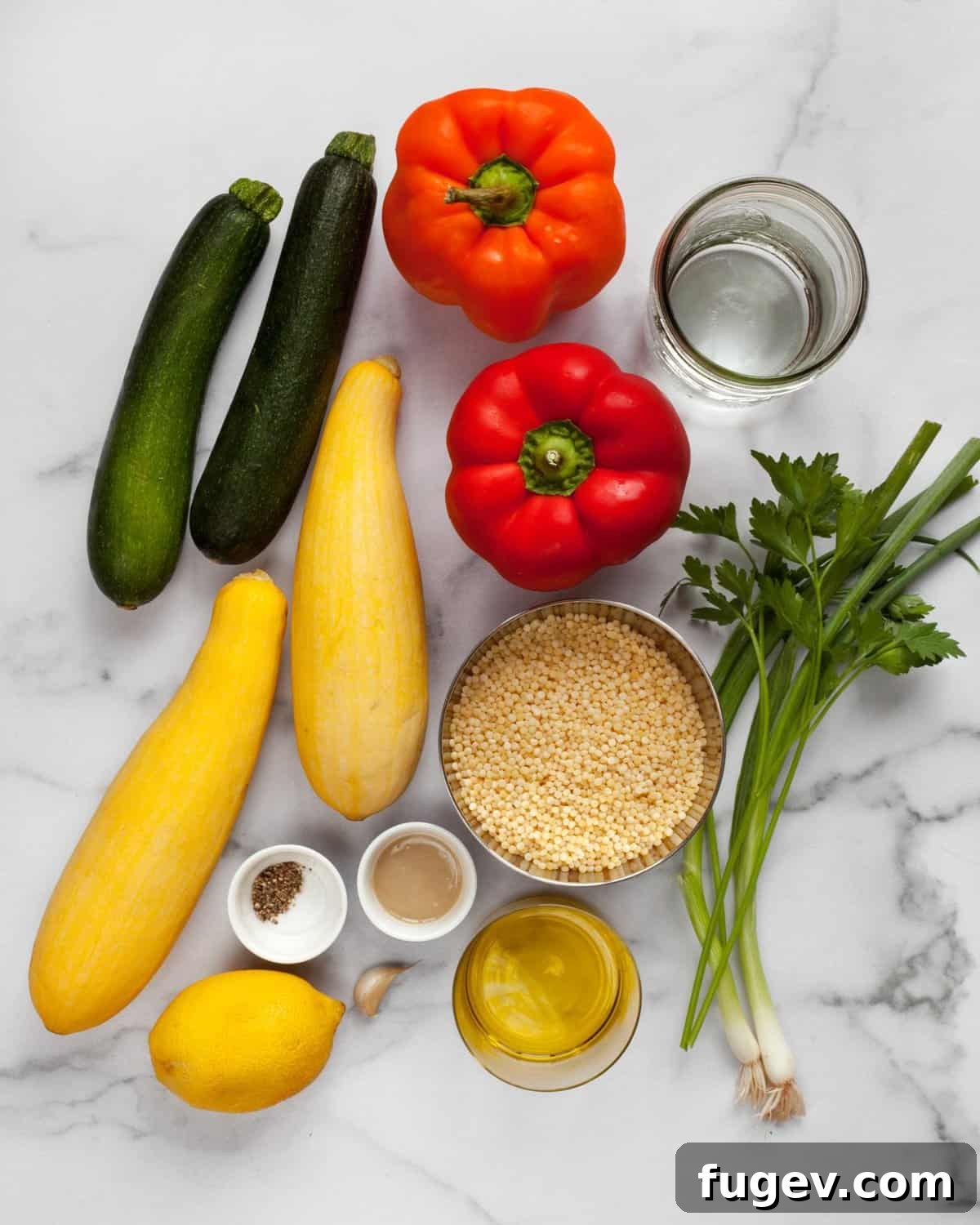
Crafting this flavorful roasted vegetable lemon tahini couscous begins with selecting high-quality ingredients. Here’s what you’ll need, along with some helpful substitution ideas to ensure you can always make this delicious recipe:
- Zucchini: When choosing zucchini, look for those that are smooth, firm to the touch, and boast a vibrant medium to dark green color. Avoid any with soft spots, blemishes, or a dull appearance, as these indicate older produce. When roasted, zucchini becomes wonderfully tender and slightly sweet, absorbing the flavors of the dressing beautifully.
- Yellow Squash: As a delightful member of the same family as zucchini, yellow squash is its flavorful cousin, often with a slightly different, sometimes curvier, shape. Again, the freshest ones will be smooth, firm, and bright in color. Using both zucchini and yellow squash adds both visual appeal and a subtle depth of flavor to your roasted vegetable medley.
- Bell Peppers: You have complete freedom here to use any color bell peppers you prefer! My personal favorites for this dish are yellow, orange, or red bell peppers. These varieties offer a naturally sweeter flavor profile that intensifies beautifully with roasting, and they retain a pleasant, crisp-tender bite. Green bell peppers are also an excellent option if you prefer a slightly more earthy and piquant flavor.
- Couscous: For this particular recipe, **pearl couscous**, often referred to as Israeli couscous, is my preferred choice. Its plump, round grains provide a delightful chewiness and a satisfying texture that stands up exceptionally well to the hearty roasted vegetables. Unlike the finer, tiny grains of Moroccan couscous, which require gentle fluffing, pearl couscous cooks more like pasta, resulting in distinct, satisfying grains.
- Substitution Tip: If pearl couscous is not readily available in your local grocery store, you can easily substitute it with other small pasta shapes like orzo, small ditalini, or even grains such as barley or rice (basmati or jasmine would work well). Just remember to carefully follow the package instructions for cooking your chosen grain or pasta to ensure it reaches perfect tenderness.
- Tahini: This essential ingredient is a creamy paste made from finely ground sesame seeds, typically blended with a touch of oil and salt. It’s naturally vegan and forms the rich, nutty, and creamy base of our vibrant dressing. A good quality tahini should be smooth and pourable, not overly thick or bitter. It adds a wonderfully earthy richness that perfectly balances the bright acidity of the lemon.
- Lemon Juice: Freshly squeezed lemon juice is absolutely crucial for this recipe! It provides a vital burst of acidity and brightness that cuts through the richness of the tahini and dramatically enhances the overall flavor of the roasted vegetables. Using fresh lemon juice truly makes a difference in the final taste.
- Garlic: A single minced garlic clove adds a subtle yet aromatic depth to the lemon tahini dressing. It’s intentionally mild, designed to complement rather than overpower the other fresh flavors in the dish, providing just a hint of its pungent warmth.
- Scallions: Thinly sliced scallions (also known as green onions) contribute a fresh, mild oniony flavor and a touch of vibrant green color. They offer a delicate counterpoint to the sweetness of the roasted vegetables and a pleasant textural element.
- Fresh Parsley: Chopped fresh parsley adds a burst of herbaceous freshness and a beautiful green garnish that brightens the entire dish.
- Substitution Tip: Feel free to experiment with other fresh herbs to tailor the flavor to your preference. Cilantro can offer a more zesty and vibrant profile, while chives provide a milder onion note. A combination of your favorite soft herbs can also be delightful, such as a mix of parsley and dill.
- Olive Oil: Extra-virgin olive oil is a cornerstone of Mediterranean cuisine and plays multiple, crucial roles in this recipe. It’s used to coat the vegetables for roasting, forms a key component of the dressing, and is also used to toast the couscous. Using a good quality, flavorful extra-virgin olive oil will significantly enhance the overall taste and aroma of your dish.
- Salt & Black Pepper: These fundamental seasonings are used generously to enhance the natural flavors of both the roasted vegetables and the lemon tahini dressing. Kosher salt is generally recommended for its pure flavor and larger, more manageable crystals, allowing for better control over seasoning. Freshly ground black pepper adds a pleasant warmth and subtle spice.
Elevate Your Couscous: Optional Additions for Extra Flavor and Protein
While this roasted vegetable lemon tahini couscous is incredibly satisfying and complete on its own, it also serves as a fantastic canvas for additional ingredients. These simple additions can boost both flavor and nutritional value, transforming it into an even heartier meal or adding intriguing new textures. Don’t hesitate to customize based on your pantry and preferences:
- Chickpeas: A true pantry powerhouse, chickpeas are one of my favorite additions. Roasted or even just pan-fried, they add a wonderful nutty flavor, a satisfying texture, and a significant protein boost, making the dish more filling and substantial. You can toss them with the vegetables before roasting or simply stir them in at the end.
- Crumbled Feta Cheese: For those who enjoy dairy, crumbled feta cheese introduces a delightful salty, tangy bite that beautifully complements the natural sweetness of the roasted vegetables and the creamy richness of the tahini dressing. Its crumbly texture adds another dimension to the dish.
- Goat Cheese: Similar to feta, crumbled goat cheese offers a milder tang and a wonderfully creamy texture that melts slightly into the warm couscous, adding a luxurious and indulgent touch. Its earthy notes pair exceptionally well with roasted produce.
- Toasted Nuts or Seeds: For an extra layer of crunch and nutty flavor, consider sprinkling a handful of toasted pine nuts, slivered almonds, chopped walnuts, or sunflower seeds over the finished dish. This adds a fantastic textural contrast.
- Sun-Dried Tomatoes: For an intense burst of concentrated umami and sweetness, especially in colder months when fresh tomatoes aren’t at their peak, rehydrated and finely chopped sun-dried tomatoes are a fantastic addition. They add a chewy texture and a deep, savory note.
- Olives: Sliced Kalamata or Castelvetrano olives can introduce a briny, savory, and slightly salty element that pairs beautifully with the Mediterranean flavors of the couscous and lemon tahini dressing.
- Artichoke Hearts: Quartered marinated artichoke hearts (drained and roughly chopped) can add a pleasant tang and tender texture, enhancing the Mediterranean profile.
- Arugula or Spinach: For an extra boost of greens, stir in a handful of fresh arugula or baby spinach just before serving. The residual heat of the couscous will lightly wilt them.
Step-by-Step Guide: How To Make Roasted Vegetable Lemon Tahini Couscous
This recipe is designed for efficiency and maximum flavor, allowing you to create a sophisticated and healthy meal with minimal effort. Follow these simple steps for a truly delicious result:
Smart Preparation Tip: To streamline your cooking process, you can easily prepare the bright lemon tahini dressing and cook the pearl couscous simultaneously while the vegetables are roasting in the oven. This multi-tasking approach ensures everything is ready around the same time.
Step 1: Preheat the Oven and Prepare Your Vegetables
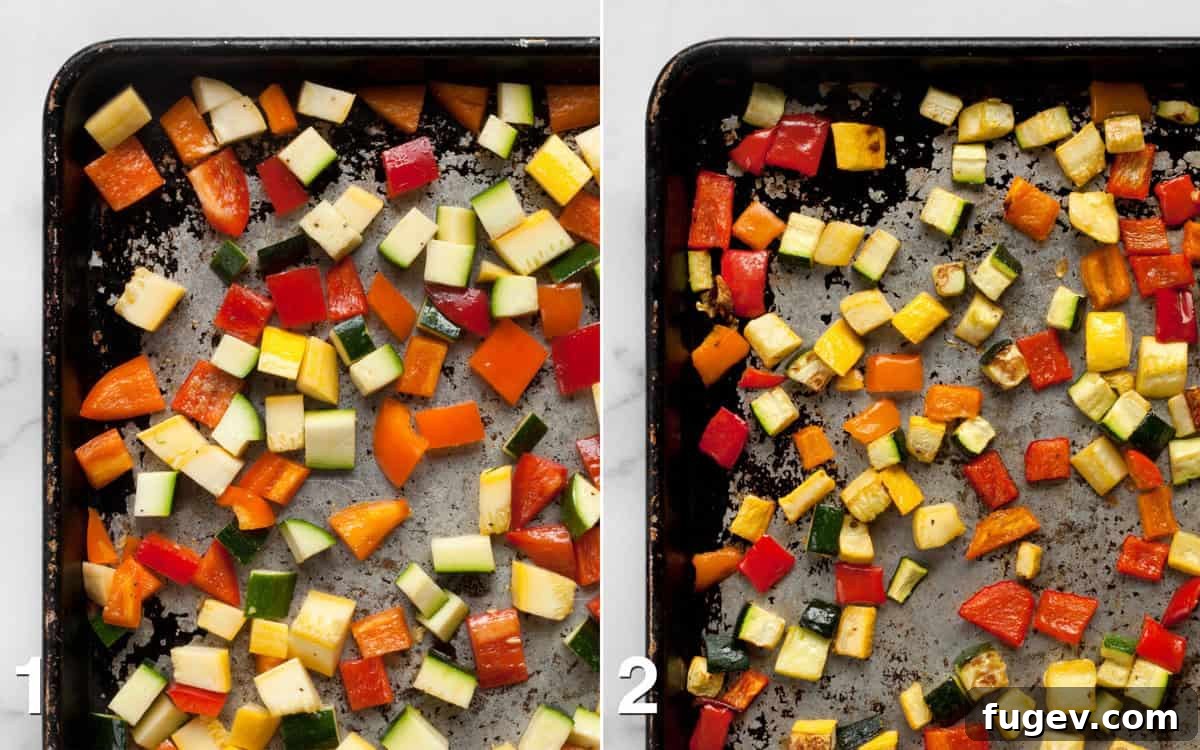
Begin by preheating your oven to a robust 400 degrees F (200 degrees C). On a large, sturdy baking sheet (or two if needed to avoid overcrowding), combine your uniformly diced zucchini, yellow squash, and colorful bell peppers. Drizzle them generously with 1 tablespoon of high-quality olive oil, then season meticulously with 1/2 teaspoon of kosher salt and 1/4 teaspoon of freshly ground black pepper. Toss everything together using your hands or a spatula until all the vegetables are evenly coated in the oil and seasonings. **Crucially, spread the vegetables out in a single layer** across the entire baking sheet. This prevents them from steaming and ensures they achieve that desirable golden-brown caramelization and tender texture.
Step 2: Roast the Vegetables to Golden Perfection
Carefully transfer the baking sheet to your preheated oven. Roast the vegetables for approximately 25-30 minutes, or until they are delightfully fork-tender and have developed beautiful, lightly browned, and slightly crispy edges. This caramelization is the secret to their intensified sweet and savory flavor, adding incredible depth to the couscous.
Step 3: Whisk Together the Zesty Lemon Tahini Dressing
While your vegetables are busy roasting in the oven, take this opportunity to prepare the vibrant dressing. In a small mixing bowl, vigorously whisk together the freshly squeezed lemon juice, 1/4 cup of extra-virgin olive oil, creamy tahini, finely minced garlic, 1/2 teaspoon of kosher salt, and 1/4 teaspoon of black pepper. Continue whisking until the dressing is completely smooth and beautifully emulsified. Taste and adjust seasonings as needed – you might find you prefer a little more lemon for brightness or a pinch more salt to enhance the flavors.
Step 4: Cook the Fluffy Pearl Couscous
In a medium saucepan, heat 1 tablespoon of olive oil over medium heat. Add the pearl couscous and toast it, stirring frequently with a wooden spoon, for about 2-3 minutes until the grains are lightly golden and emit a fragrant, nutty aroma. This toasting step significantly enhances the flavor of the couscous. Next, carefully add 1 cup plus 2 tablespoons of water to the saucepan. Bring the water to a rapid boil over medium-high heat. Once boiling, reduce the heat to low, cover the saucepan tightly, and let it simmer for approximately 10 minutes, or until the couscous is tender and most of the water has been absorbed. Avoid overcooking to maintain the couscous’s pleasant, al dente chewiness. If there’s any residual water, simply drain it. Transfer the perfectly cooked couscous to a large mixing bowl.
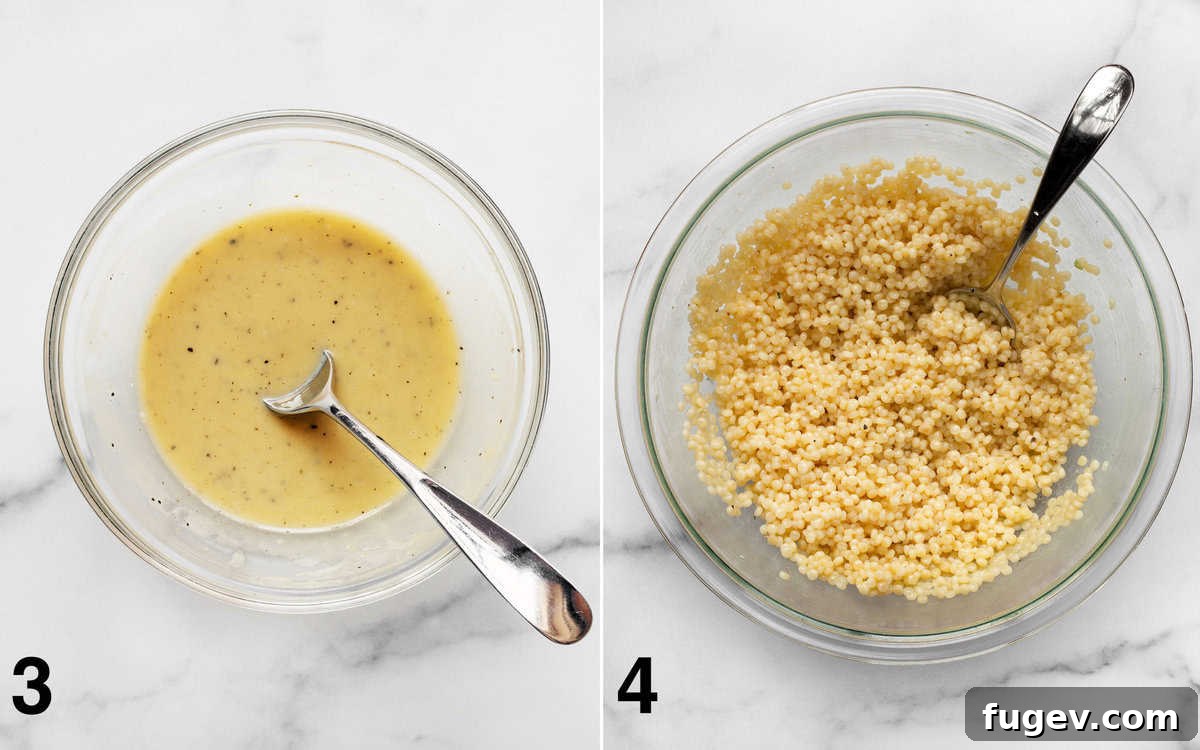
Once the couscous is cooked and in the large bowl, pour the prepared lemon tahini dressing generously over it and stir gently but thoroughly to ensure every single grain is coated. This crucial step infuses the couscous with incredible flavor right from the start, creating a cohesive and delicious base.
Step 5: Combine All Ingredients and Serve
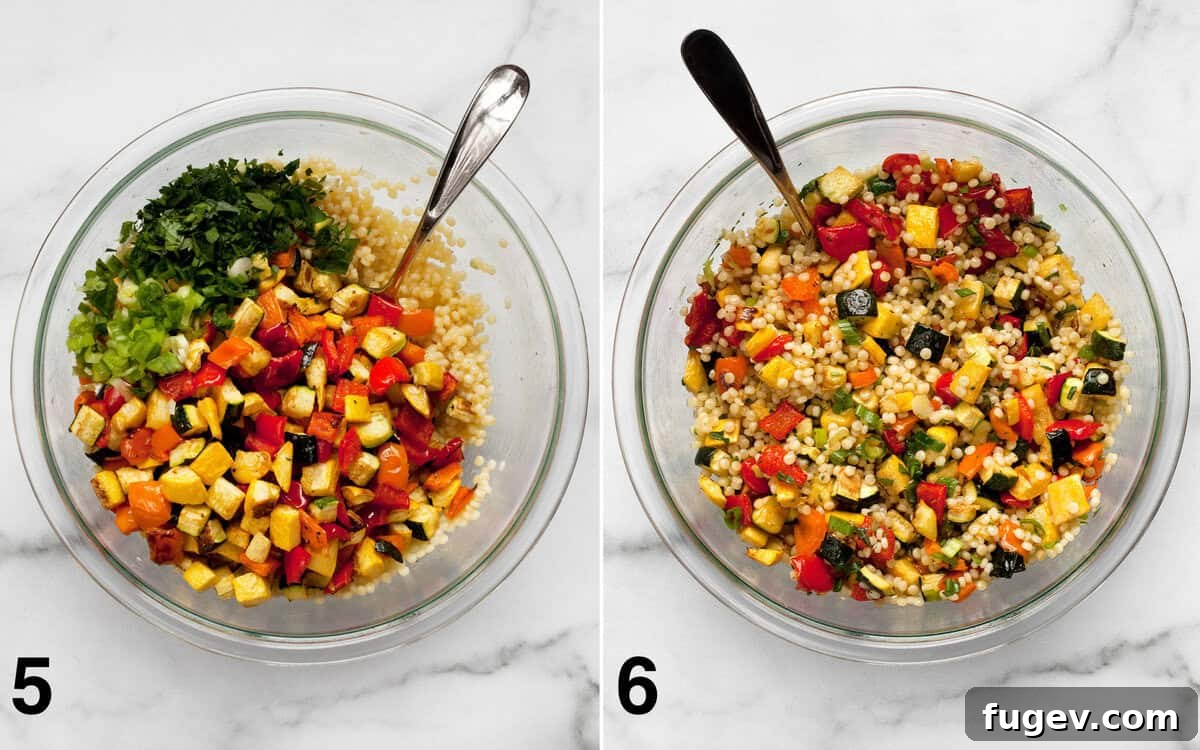
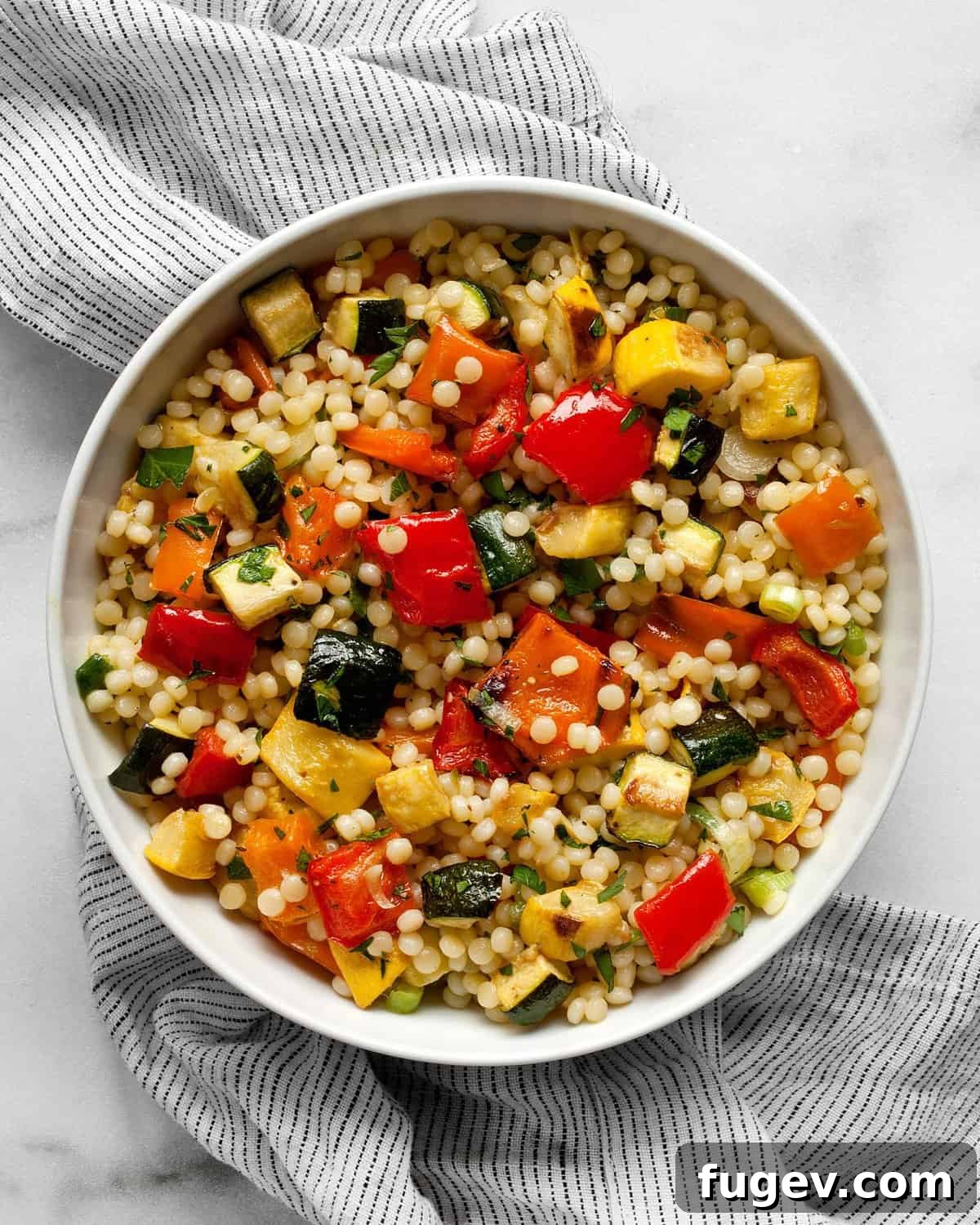
To the large bowl containing the beautifully dressed couscous, add your freshly roasted vegetables, the thinly sliced scallions for a mild oniony bite, and the chopped fresh parsley for a burst of herbaceous freshness. Gently **stir everything together** until all components are well combined and evenly distributed throughout the couscous. The residual warmth of the couscous and vegetables will help the flavors meld together beautifully. Serve your roasted vegetable lemon tahini couscous warm or at room temperature, making it a versatile option for any meal.
Serving Suggestions & Meal Pairings for Any Occasion
The beauty of this roasted vegetable lemon tahini couscous lies in its incredible versatility. It can effortlessly transition from a light and satisfying main course to a vibrant and flavorful side dish, depending on your needs, dietary preferences, and what else you have on your menu. This makes it a truly adaptable recipe for any occasion. Here are a few ideas to inspire your next meal:
- As a Standalone Main Course: For a delicious, wholesome, and completely vegetarian or vegan meal, simply serve generous portions of the couscous in bowls. It’s hearty and substantial enough on its own, especially if you’ve opted to include optional protein-rich additions like chickpeas or lentils. A simple green salad on the side would complete the meal.
- Paired with Lean Protein: The bright, fresh flavors of the couscous make it an excellent accompaniment to a variety of simply prepared lean proteins.
- Grilled or Baked Chicken/Fish: Serve it alongside tender grilled chicken breast, flaky baked salmon, seared scallops, or a mild white fish like cod or snapper. The lemon tahini dressing complements these proteins beautifully.
- Lamb or Beef: For a more substantial and rich meal, consider pairing it with roasted lamb chops, grilled steak, or even a flavorful Mediterranean-spiced kofta.
- Plant-Based Proteins: Beyond the optional chickpeas, consider serving it with grilled halloumi cheese (for non-vegans), baked marinated tofu, seared tempeh, or a homemade lentil patty for a well-rounded plant-forward plate.
- Part of a Mediterranean Mezze Platter: This couscous fits perfectly into a vibrant spread of Mediterranean-inspired dishes. Serve it alongside creamy hummus, warm pita bread, refreshing tabbouleh, a medley of olives, crunchy fresh cucumber and tomato salad, and perhaps some dolmades (stuffed grape leaves).
- Meal Prep Powerhouse: This dish holds up wonderfully in the refrigerator for up to 4 days. Prepare a larger batch at the beginning of the week for easy, healthy grab-and-go lunches that beat any takeout, or quick, effortless dinners when you’re short on time. Its flavors tend to meld and deepen beautifully over time, making it even more delicious the next day.
- Garnish & Finish: Before serving, consider a final flourish. A light drizzle of extra-virgin olive oil, a sprinkle of flaky sea salt for textural contrast, or a few extra fresh parsley leaves or lemon zest can elevate both the presentation and the taste, making each bite even more enticing.
Creative Variations for Every Season
The core concept of this recipe – tender roasted vegetables married with fluffy couscous and a bright, flavorful dressing – is incredibly flexible and endlessly adaptable. Don’t feel limited to just zucchini, yellow squash, and bell peppers! Embrace the bounty of seasonal produce to keep this dish fresh, exciting, and relevant throughout the entire year. The key to successful variation lies in understanding and accounting for the different cooking times of various vegetables.
- Summer & Late Summer Vegetable Variations:
- Cherry Tomatoes: Halved cherry tomatoes or diced ripe Roma tomatoes roast beautifully, becoming intensely sweet and bursting with concentrated flavor. Add them to the pan during the last 15-20 minutes of roasting to prevent them from getting mushy.
- Eggplant: Diced eggplant, roasted until tender and golden brown, makes a wonderfully hearty and absorbent addition, soaking up the dressing’s flavors.
- Fresh Corn: Fresh corn kernels (cut directly from the cob) can be added to the roasting pan for the last 10-15 minutes, or for a smoky flavor, grilled corn kernels can be stirred in at the end.
- Okra: Trimmed and halved okra pods, roasted until slightly charred, offer a unique texture and earthy flavor.
- Fall & Winter Vegetable Variations:
- Hearty Root Vegetables: Swap out the summer squash for more robust, earthy options like diced butternut squash, sweet potatoes, parsnips, or carrots. These denser vegetables typically require a longer roasting time (around 30-45 minutes at 400°F). You might need to give them a head start on the baking sheet, roasting them for 10-15 minutes before adding quicker-cooking vegetables like broccoli.
- Cruciferous Vegetables: Broccoli florets or cauliflower florets are fantastic when roasted, developing a nutty sweetness. They typically cook in 20-30 minutes at 400°F.
- Brussels Sprouts: Halved Brussels sprouts roast up beautifully, becoming tender on the inside and deliciously crispy on the outside.
- Mushrooms: Sliced cremini, shiitake, or even oyster mushrooms add an earthy, umami depth and a satisfying chewy texture.
- Spice it Up: Experiment with different spice blends when tossing your vegetables for roasting. A pinch of smoked paprika, ground cumin, coriander, or a touch of red pepper flakes can introduce fascinating new dimensions of flavor. For an authentic Middle Eastern twist, a sprinkle of za’atar or sumac can be absolutely delightful.
- Herb Variations: As mentioned earlier, cilantro, fresh dill, or mint can replace or complement the parsley, offering different aromatic profiles. Consider adding a touch of fresh oregano or thyme, especially when working with heartier fall and winter vegetables.
- Cheese Swaps: Beyond feta and goat cheese, consider a fine grating of Parmesan or Pecorino Romano cheese for a sharper, saltier kick that beautifully contrasts with the other flavors.
- Protein Boost: For a heartier meal, stir in some cooked lentils, cannellini beans, or even shredded roasted chicken or chickpeas (as mentioned in optional additions) for added protein.
The only real “trick” when incorporating different seasonal vegetables is to diligently consider their individual cooking times. If you’re combining vegetables with significantly different requirements (for example, dense root vegetables like sweet potatoes with delicate bell peppers), you may want to add the longer-cooking vegetables to the oven first. Allow them to roast for 10-15 minutes before adding the quicker-cooking ones to the same baking sheet. This staggered approach ensures that everything cooks to perfect tenderness without anything becoming overdone or, conversely, remaining undercooked.
More Couscous Recipes & Culinary Inspiration
If you’ve enjoyed the versatility, delightful texture, and vibrant flavor of this roasted vegetable lemon tahini couscous, you’ll be thrilled to explore other ways to incorporate this wonderful grain into your meals. Couscous, whether pearl or traditional, is incredibly adaptable, serving as a fantastic and quick-cooking base for a myriad of fresh, exciting, and globally inspired ingredients. Here are some more recipes to inspire your culinary adventures and expand your couscous repertoire:
- Snap Pea Lemon Couscous
- Roasted Delicata Squash Couscous
- Grilled Corn Couscous
- Harissa Roasted Cauliflower Couscous
- Roasted Tomato Olive Couscous
- Roasted Vegetable Salad (a great alternative if you prefer no grain!)
- Harissa Roasted Tomato Cucumber Couscous
If you’re passionate about the incredible flavors unlocked by roasting and wish to delve deeper into this versatile cooking method, don’t miss my comprehensive seasonal recipe guide for roasted vegetables. It’s packed with fresh ideas, tips, and techniques to inspire your cooking and ensure you’re making delicious roasted dishes all year long.
We’d absolutely love to hear from you if you give this delicious veggie couscous a try! Please take a moment to leave a comment below and share your experience, any delightful modifications you made, or simply your thoughts on the dish. Your feedback not only brightens our day but also helps other home cooks discover new favorites and feel confident trying new recipes. Thanks for cooking with us!
Roasted Vegetable Lemon Tahini Couscous Recipe
Roasted Vegetable Lemon Tahini Couscous
Rating: 4.87 out of 5 stars from 15 votes
By: Paige Adams
Prep Time: 10 minutes
Cook Time: 30 minutes
Total Time: 40 minutes
Servings: 4
Print Recipe
A vibrant and incredibly flavorful dish featuring tender roasted zucchini, yellow squash, and colorful bell peppers mixed with chewy pearl couscous and a zesty, creamy lemon tahini dressing. This versatile recipe is perfect as a healthy vegetarian main course or a satisfying side dish, offering a delightful taste of Mediterranean cuisine.
Ingredients
For the Roasted Vegetables:
- 2 medium zucchini, diced 1/2-inch
- 2 medium yellow squash, diced 1/2-inch
- 2 bell peppers (yellow, orange, or red recommended), diced 1/2-inch
- 1 tablespoon extra-virgin olive oil
- 1/2 teaspoon kosher salt
- 1/4 teaspoon black pepper
For the Lemon Tahini Dressing:
- Juice of 1 large lemon (approx. 2-3 tablespoons)
- 1/4 cup extra-virgin olive oil
- 1 tablespoon tahini
- 1 garlic clove, minced finely
- 1/2 teaspoon kosher salt
- 1/4 teaspoon black pepper
For the Couscous Assembly:
- 1 tablespoon extra-virgin olive oil
- 1 cup pearl couscous (Israeli couscous)
- 1 cup plus 2 tablespoons water
- 2 scallions, thinly sliced
- 1 tablespoon chopped fresh parsley
Instructions
- Prepare & Roast Vegetables: Preheat your oven to 400°F (200°C). On a large baking sheet, toss the diced zucchini, yellow squash, and bell peppers with 1 tablespoon olive oil, 1/2 teaspoon kosher salt, and 1/4 teaspoon black pepper. Spread the vegetables into a single layer across the pan. Roast for 25-30 minutes, or until they are lightly browned, tender, and slightly caramelized at the edges.
- Make the Lemon Tahini Dressing: While the vegetables are roasting, prepare the dressing. In a small bowl, whisk together the fresh lemon juice, 1/4 cup olive oil, tahini, minced garlic, 1/2 teaspoon kosher salt, and 1/4 teaspoon black pepper until the mixture is smooth and well combined. Set aside.
- Cook the Couscous: In a large saucepan, heat 1 tablespoon olive oil over medium heat. Add the pearl couscous and toast it, stirring constantly, for about 2-3 minutes until the grains are lightly golden and fragrant. Pour in 1 cup plus 2 tablespoons of water and bring the mixture to a boil. Reduce the heat to low, cover the saucepan, and let it simmer for approximately 10 minutes, or until the couscous is tender and most of the water has been absorbed. Drain any remaining water and transfer the cooked couscous to a large mixing bowl.
- Dress the Couscous: Pour the prepared lemon tahini dressing over the warm couscous in the large bowl. Stir gently but thoroughly to ensure all the couscous grains are evenly coated with the flavorful dressing.
- Combine & Serve: To the dressed couscous, add the freshly roasted vegetables, thinly sliced scallions, and chopped fresh parsley. Gently stir everything together until all components are well combined. Serve warm or at room temperature as a delicious main or side dish.
Video Guide
Notes
- The lemon tahini dressing and couscous can be efficiently prepared while the vegetables are roasting, maximizing your time in the kitchen.
- Store any leftover roasted vegetable couscous in an airtight container in the refrigerator for up to 4 days. Its flavors often deepen and meld beautifully overnight.
- For an extra boost of protein or flavor, consider adding optional ingredients such as roasted chickpeas, crumbled feta cheese, or creamy goat cheese.
Nutrition Information (Approximate per serving)
Calories: 346kcal | Carbohydrates: 43g | Protein: 8g | Fat: 17g | Saturated Fat: 2g | Polyunsaturated Fat: 3g | Monounsaturated Fat: 11g | Sodium: 600mg | Potassium: 551mg | Fiber: 5g | Sugar: 6g | Vitamin A: 2153IU | Vitamin C: 102mg | Calcium: 51mg | Iron: 2mg
Please note: Nutrition information is automatically calculated and should be used as an approximation. Actual values may vary based on specific ingredients and preparation methods.
Additional Info
Course: Side Dish, Main Dish, Salad
Cuisine: Mediterranean, Middle Eastern
Diet: Vegetarian, Vegan (if omitting optional cheese)
Did you make this recipe? Share your creation!
Mention @lastingredient on Instagram and tag it with #lastingredient! We’d love to see your delicious results!