
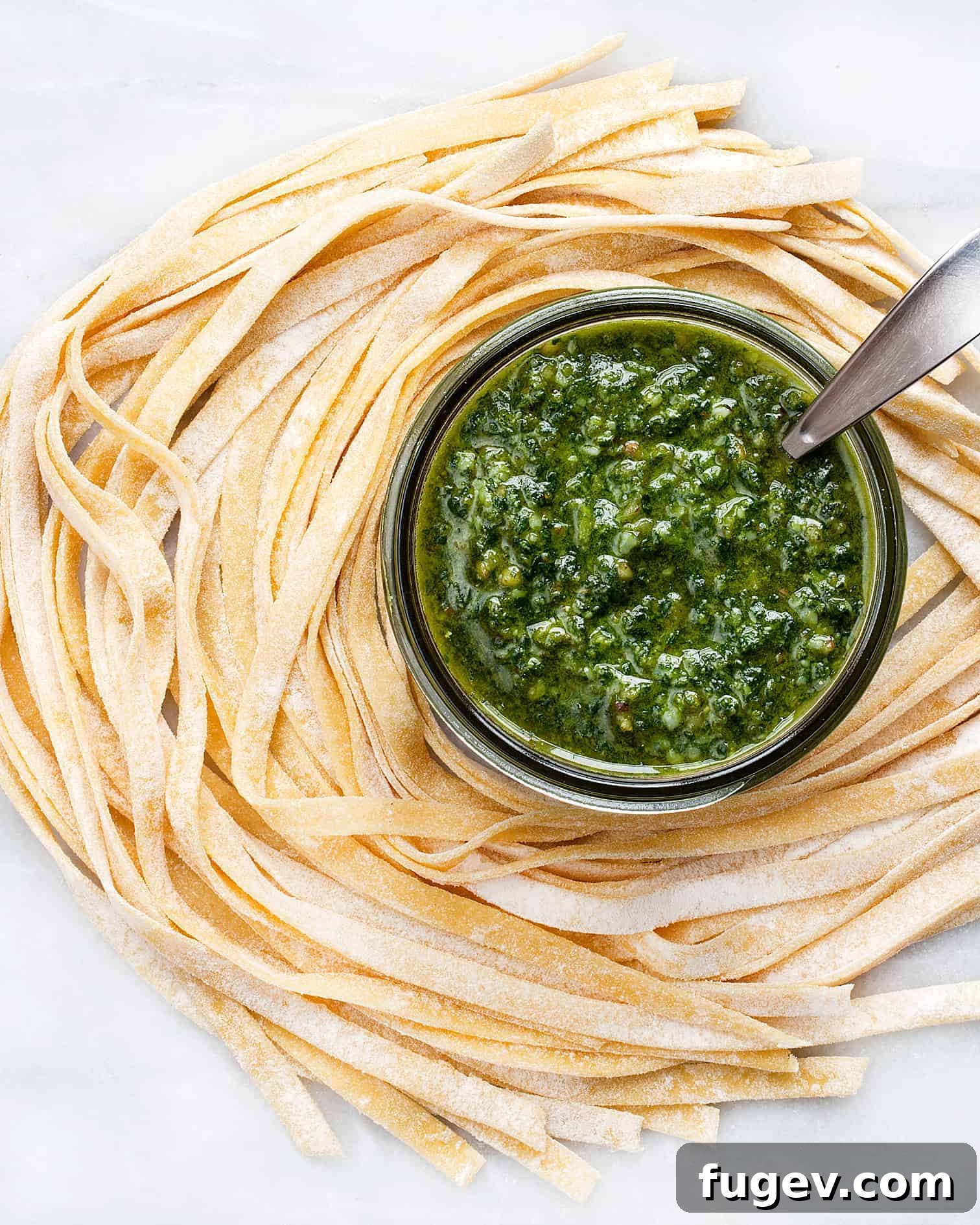
Fresh Pasta with Basil Pesto: A Culinary Journey from Garden to Plate
There’s an unparalleled joy in creating a classic dish entirely from scratch, and few experiences rival the delight of homemade fresh pasta served with a vibrant, aromatic basil pesto. This culinary endeavor, though it requires a little extra effort, promises a reward far greater than any store-bought equivalent. The tender bite of freshly made noodles, coated in a verdant, fragrant sauce bursting with garden-fresh flavors, transforms a simple meal into an unforgettable feast. Moreover, any leftover pesto is a versatile treasure, ready to elevate a multitude of dishes, from spreading on pizza and stirring into grains to whisking into a zesty vinaigrette.
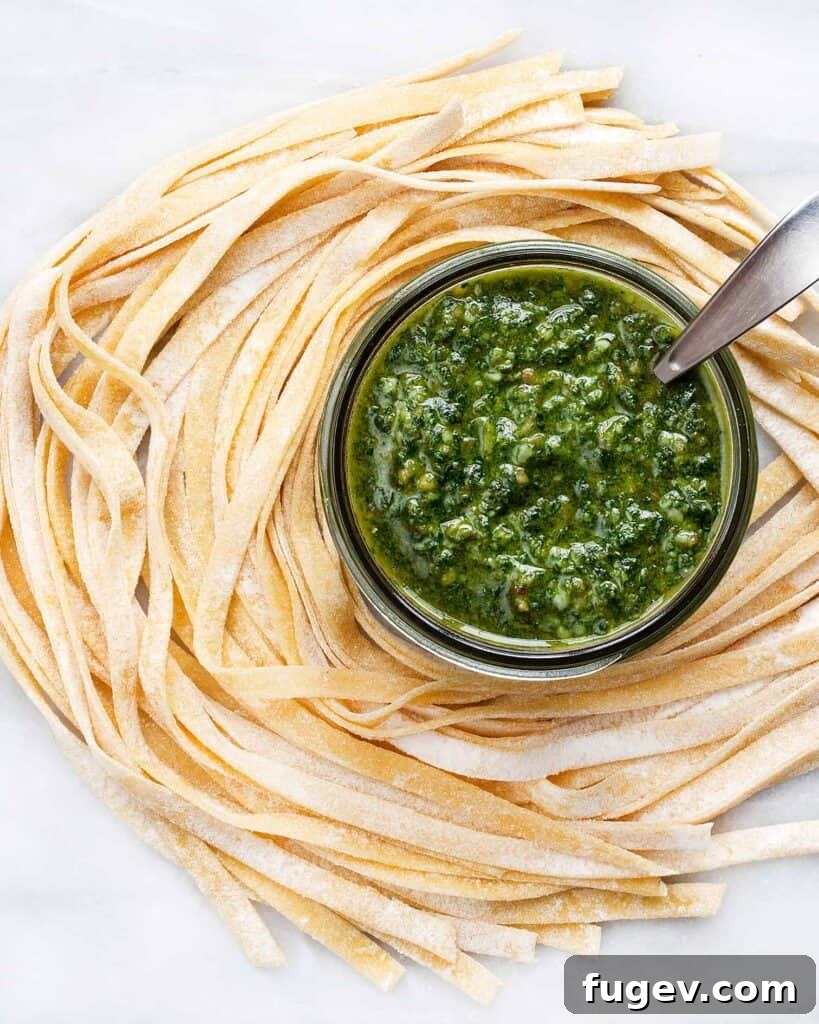
The Heart of the Meal: Nurturing Your Ingredients from the Ground Up
The secret to truly exceptional fresh pasta with basil pesto often begins long before the ingredients hit the kitchen counter. For us, it starts right in our backyard, where a flourishing container garden now boasts lush green foliage. I must confess, the credit for this verdant bounty belongs entirely to my husband. His incredible green thumb has transformed our back deck into a thriving oasis, a dream come true for someone like me who never imagined living in a home graced by such natural abundance.
Our partnership in this endeavor is simple yet effective: he cultivates the harvest, and I transform it into delicious meals. It’s a symbiotic relationship that fills me with immense gratitude. And, though I know it’s unwise to speak too soon, this year’s garden promises an impressive yield of sun-ripened tomatoes, crisp peppers, hearty potatoes, and an array of fragrant herbs. This bountiful prospect is particularly welcome after last year’s relentless heat, which left our garden, and us, feeling a bit burned and disappointed with the final output. Fortunately, Mother Nature seems to be cooperating beautifully this season.
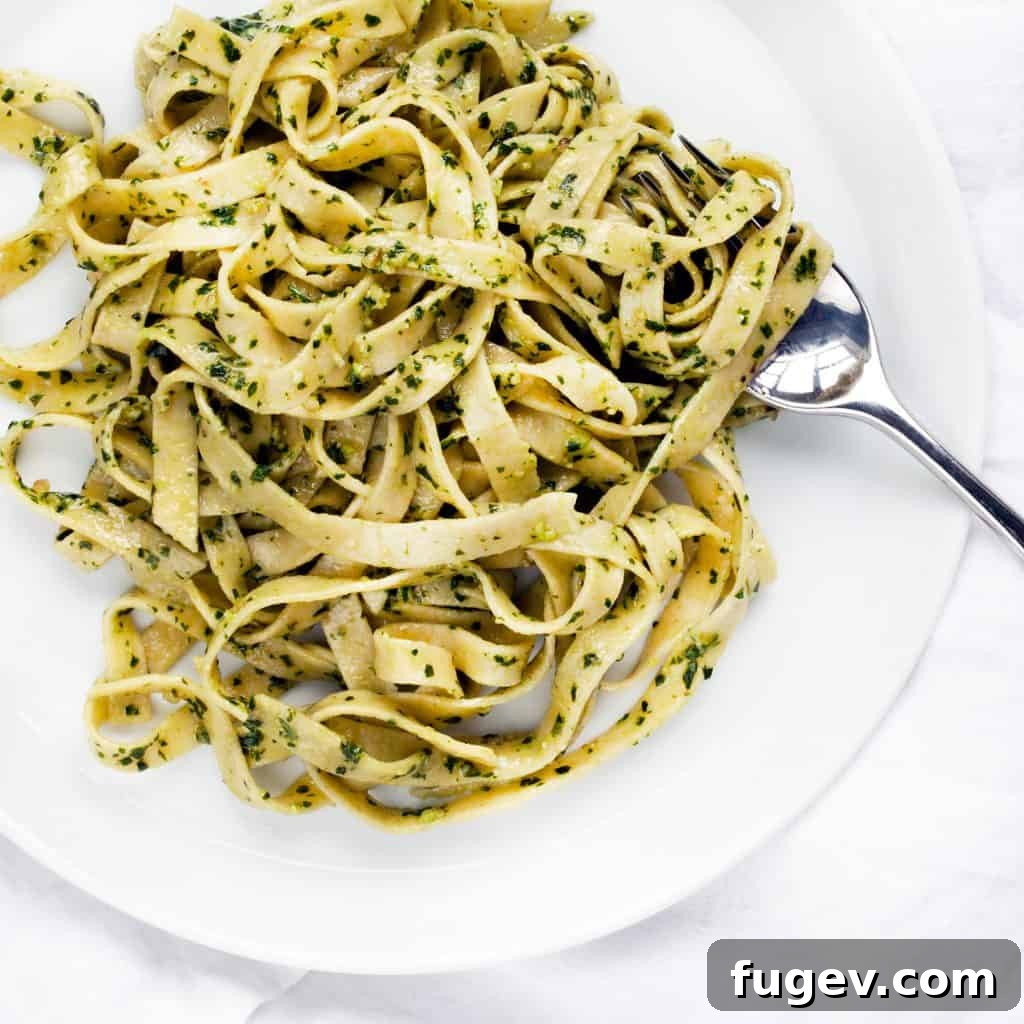
The Magic of Homemade Basil Pesto: A Taste of Summer
While my husband manages the bulk of the gardening, I enthusiastically assist with the harvest. Whenever our basil plants show signs of slowing down, I carefully pinch off enough leaves to create a fresh batch of pesto. This practice not only provides us with an abundance of fragrant basil but also encourages the plants to produce even more, ensuring a continuous supply throughout the growing season.
Pesto, often mistakenly confined to the role of a simple pasta sauce, is, in my opinion, a true culinary powerhouse. Its vibrant, herbaceous flavor makes it an incredibly versatile, all-purpose topping. Imagine it as a savory spread for sandwiches, a lively dressing for grain salads, or a flavorful marinade for grilled meats and vegetables. But when I truly want to celebrate my profound love for this nutty, garlicky, and herbaceous sauce, there’s no better way than to pair it with homemade fresh pasta. The combination is simply divine, a testament to the beauty of simple, high-quality ingredients.
The origins of pesto date back to Genoa, in the Liguria region of Italy, where the word “pesto” literally means “to crush” or “to pound” – traditionally referring to the method of preparing it with a mortar and pestle. This time-honored technique brings out the essential oils and aromas of the basil, garlic, and nuts, creating a depth of flavor that a food processor can mimic but rarely fully replicate. However, for convenience, a food processor is an excellent tool for achieving a delicious pesto with minimal effort.
The beauty of basil pesto lies in its core ingredients, each playing a crucial role in its distinct profile:
- **Fresh Basil:** The undisputed star, providing its characteristic sweet, peppery, and slightly anise-like aroma.
- **Garlic:** Adds a pungent, zesty kick that complements the basil perfectly.
- **Nuts:** Traditionally pine nuts are used, offering a buttery richness. However, I often opt for walnuts, which are more readily available, significantly less expensive, and lend a wonderful earthy note. Almonds or cashews can also be delicious alternatives, each imparting a unique twist.
- **Parmesan Cheese:** A grating of aged Parmesan or Pecorino Romano contributes a salty, umami depth that rounds out the flavors beautifully.
- **Olive Oil:** A good quality extra virgin olive oil is essential, not just as a binder but as a flavor enhancer, carrying the aromas and flavors of the other ingredients.
- **Salt & Black Pepper:** Simple seasonings to elevate and balance the overall taste.
For the freshest flavor, remember a few tips: always use fresh basil, not dried. Avoid over-processing the pesto, as too much heat from the food processor can oxidize the basil, turning it brown and muting its vibrant flavor. A slightly coarse texture is often preferred. To store leftover pesto, transfer it to an airtight container and pour a thin layer of olive oil over the surface before sealing; this prevents oxidation and helps maintain its bright green color.
Crafting Your Own Fresh Pasta: A Rewarding Endeavor
I confess I go through phases with pasta making. Sometimes weeks pass, and other times, I find myself regularly pulling out the pasta machine. But every single time I embark on the process of making pasta from scratch, I am reminded of the immense satisfaction found in working with dough. There’s something truly therapeutic about the tactile experience of kneading, rolling, and shaping, creating something beautiful and delicious from basic ingredients. The superior texture and fresh flavor of homemade pasta are simply unmatched by dried varieties, making the effort entirely worthwhile.
Making fresh pasta might sound daunting, but it’s surprisingly simple and requires only a handful of staple ingredients:
- **All-Purpose Flour:** While ’00’ flour (a finely milled Italian flour) is often considered ideal for its silky texture, standard all-purpose flour works beautifully for a rustic, satisfying pasta.
- **Salt:** A pinch to enhance the flavor of the dough.
- **Eggs:** Provide richness, structure, and a beautiful golden hue to the pasta.
- **Olive Oil:** Adds elasticity to the dough, making it smoother and easier to work with.
What often surprises people is how quickly pasta dough comes together. In a food processor, it’s a matter of minutes. Even by hand, using a fork to gradually incorporate the flour into the egg mixture, the dough forms relatively fast. The time spent kneading and resting the dough is crucial for developing the gluten, which gives fresh pasta its characteristic chewiness and elasticity. This waiting period is more than compensated for by the incredibly short cooking time – often just 2-3 minutes – a testament to its freshness.
**The Process of Perfection:**
- **Mixing:** Whether by hand or food processor, combine flour and salt, then create a well for the eggs and olive oil. Gradually mix until a shaggy dough forms.
- **Kneading:** Turn the dough onto a lightly floured surface and knead for several minutes. This develops the gluten, making the pasta strong and pliable. You’ll feel the dough transform from sticky to smooth and elastic.
- **Resting:** This step is non-negotiable. Covering the dough and allowing it to rest at room temperature for at least 30 minutes (or even overnight in the refrigerator) lets the gluten relax. This relaxation makes the dough much easier to roll out thinly without tearing, resulting in a more tender pasta.
- **Rolling:** Divide the rested dough into manageable pieces. Using a pasta machine, start at the widest setting and gradually roll the dough through increasingly thinner settings. Fold the dough in half each time it becomes too long, creating a consistent width. If you don’t have a machine, a rolling pin and a floured surface can achieve the same results with a bit more elbow grease and patience, aiming for a paper-thin sheet.
- **Cutting:** Once rolled thin, the pasta sheets can be cut into various shapes. For classic fettuccine or tagliatelle, sprinkle with flour, loosely roll up the sheets, and slice into even strips. Unroll immediately and dust with more flour to prevent sticking.
Step-by-Step Guide: Fresh Pasta with Basil Pesto Recipe
This recipe brings together two homemade classics for a dish that celebrates fresh flavors and rewarding culinary effort. You can’t beat the satisfaction of growing and cooking in collaboration.
Fresh Pasta With Basil Pesto
Paige Adams
30
2
30
1
2
4
Ingredients
- For pasta
-
2
cups
all-purpose flour plus more for work surface -
Pinch
of salt -
3
large eggs -
1
teaspoon
olive oil - For pesto
-
2
garlic cloves
peeled -
1/4
cup
walnuts plus more for garnish -
1/2
ounce
Parmesan
grated, plus more for garnish -
1
cup
basil leaves -
1/4
teaspoon
salt -
1/4
teaspoon
black pepper -
1/4
cup
olive oil
Save this recipe
Get it sent to your inbox plus new recipes every week.
Instructions
-
To make the pasta, place the flour and salt into the bowl of a food processor and pulse to combine. Add the eggs and olive oil and run the food processor until the dough forms.
-
Turn the dough onto a lightly floured work surface and knead for a couple minutes until the dough is smooth. Form the dough into a round disk and cover with plastic wrap. Allow the dough to rest at room temperature for 30 minutes or refrigerate overnight. (If the dough is refrigerated, make sure to let it come to room temperature before rolling out the pasta.)
-
(Note: Fresh pasta can be made by hand. Combine the flour and salt. Make a well in the center and add the eggs and olive oil. Whisk the eggs and olive oil and gradually incorporate the flour. Once the dough has formed, knead until it becomes smooth, about 10 minutes.)
-
While the pasta dough is resting, make the pesto. Mince the garlic cloves in the bowl of a food processor. Add the walnuts, Parmesan, basil, salt and pepper. Puree the mixture. While the motor is running, drizzle the olive oil through the feeder tube until the pesto is fully combined.
-
Divide the pasta dough into 4 pieces keeping them covered. Working with one piece of dough at a time, flatten slightly and feed through the smooth rollers of a pasta machine starting at the widest setting. Fold the pasta sheet in half each time it is fed through at a narrower setting until the pasta sheet is very thin but does not tear. Place the pasta sheets on a floured work surface to dry for 10 minutes. (Note: If you do not have a pasta machine, you can roll out the sheets of pasta with a rolling pin on a floured work surface.)
-
Cut the pasta sheets into 12-inch lengths. Sprinkle with flour and roll them up loosely. Using a knife, trim the rough edges and cut into 1/4-inch wide strips. Unroll and place the strips on a flour-dusted sheet pan. Repeat with the remaining dough.
-
Bring a large saucepan of salted water to a boil. Cook the pasta for 2 minutes until al dente.
-
Use a slotted spoon to transfer the pasta to a large bowl. Toss with pesto. Garnish with walnuts and Parmesan before serving.
Nutrition
Calories:
469
kcal
|
Carbohydrates:
50
g
|
Protein:
13
g
|
Fat:
24
g
|
Saturated Fat:
4
g
|
Polyunsaturated Fat:
6
g
|
Monounsaturated Fat:
13
g
|
Trans Fat:
0.01
g
|
Cholesterol:
125
mg
|
Sodium:
251
mg
|
Potassium:
173
mg
|
Fiber:
2
g
|
Sugar:
1
g
|
Vitamin A:
526
IU
|
Vitamin C:
2
mg
|
Calcium:
91
mg
|
Iron:
4
mg
Nutrition information is automatically calculated, so should only be used as an approximation.
Additional Info
Pasta & Noodles
Italian
Did you make this recipe?
Mention @lastingredient on Instagram and tag it #lastingredient!
Beyond the Plate: Pesto Storage and Creative Leftovers
One of the many benefits of making a generous batch of basil pesto is its incredible versatility and how well it keeps. Properly stored, fresh pesto can elevate countless future meals, making it a fantastic ingredient to have on hand. To ensure your pesto stays fresh and vibrant, transfer it to an airtight container. A crucial tip for preserving its bright green color and preventing oxidation is to pour a thin layer of olive oil over the top before sealing. This creates a protective barrier, keeping the pesto fresh in the refrigerator for up to a week. For longer storage, pesto freezes beautifully in ice cube trays or small containers, ready to be thawed and used whenever inspiration strikes.
Beyond its classic pairing with pasta, leftover pesto is a true culinary chameleon:
- **Pizza Perfection:** Use it as a flavorful base instead of traditional tomato sauce for a fresh, herbaceous pizza.
- **Grain Enhancer:** Stir a spoonful into cooked quinoa, rice, couscous, or farro for an instant burst of flavor in your side dishes or grain bowls.
- **Vinaigrette Booster:** Whisk it into your favorite vinaigrette for a creamy, zesty salad dressing that will impress any palate.
- **Sandwich Spread:** Ditch the mayo and spread pesto on sandwiches or wraps for a gourmet touch.
- **Marinade Magic:** It makes an excellent marinade for chicken, fish, or pork, infusing them with incredible aroma and taste before grilling or baking.
- **Roasted Vegetable Topping:** Dollop it onto roasted vegetables like zucchini, cherry tomatoes, or bell peppers just before serving.
- **Eggcellent Addition:** Swirl a bit into scrambled eggs or an omelet for a delightful breakfast or brunch.
Exploring these creative uses ensures that not a single drop of your precious homemade pesto goes to waste, making the initial effort even more rewarding.
Conclusion: Savoring the Taste of Homemade Excellence
The journey from fresh basil leaves in the garden to a plate of perfectly tossed fresh pasta with basil pesto is a deeply satisfying one. It’s a testament to the power of simple, quality ingredients and the rewarding nature of cooking from scratch. Each step, from kneading the elastic dough to blending the aromatic pesto, contributes to a dish that transcends mere sustenance, offering a sensory experience that delights the palate and nourishes the soul. This classic Italian comfort food, prepared with care and attention, is more than just a meal; it’s an invitation to slow down, savor the process, and enjoy the unmatched taste of homemade excellence. Whether you cultivate your own herbs or source them from local markets, I encourage you to embark on this culinary adventure. The vibrant flavors and profound satisfaction of fresh pasta with basil pesto await.